

Rejs morski · 10.05.2027 – 22.06.2027 · 43 nocy
Cuda Europy Zachodniej
Cena i dostępność kajutTrasa i informacje o rejsie
Premium- Lizbona
- Porto
- SANTIAGO Z COMPOSTELI
- La Coruna
- Gijon
- Bilbao
- Pauillac
- Pauillac
- Saint Peter Port
- Paryż
- Rotterdam
- Od Eymein
- Hamburg
- Hamburg
- Bruges
- Londyn
- Newcastle
- Edynburg
- Aberdeen
- Lerwick
- Kirkwall
- Stornoway, wyspa Lewis, Hebrydy
- Belfast
- Liverpool
- Cork
- Portland
- Londyn
- Skagen
- Kopenhaga
- Sztokholm
- Helsinki
- Tallinn
- Ryga
- Visby
- Berlin
- Aarhus
- Londyn
| Data | Port | Przypłynięcie | Wypłynięcie |
|---|---|---|---|
| 10.05.2027 |
Lizbona
Portugalia
|
07:00 | 17:00 |
| 11.05.2027 |
Porto
Portugalia
|
08:00 | 18:00 |
| 12.05.2027 |
SANTIAGO Z COMPOSTELI
|
07:00 | 17:00 |
| 13.05.2027 |
La Coruna
Hiszpania
|
08:00 | 18:00 |
| 14.05.2027 |
Gijon
Hiszpania
|
07:00 | 17:00 |
| 15.05.2027 |
Bilbao
Hiszpania
|
07:00 | 15:30 |
| 16.05.2027 |
Pauillac
Francja
|
05:30 | — |
| 17.05.2027 |
Pauillac
Francja
|
— | 19:00 |
| 18.05.2027 |
Dzień na morzu
|
— | — |
| 19.05.2027 |
Saint Peter Port
Guernsey
|
08:00 | 18:00 |
| 20.05.2027 |
Paryż
Francja
|
07:00 | 17:00 |
| 21.05.2027 |
Rotterdam
Holandia
|
11:00 | 19:00 |
| 22.05.2027 |
Od Eymein
Holandia
|
08:00 | 17:00 |
| 23.05.2027 |
Hamburg
Niemcy
|
11:00 | 20:00 |
| 24.05.2027 |
Hamburg
Niemcy
|
07:00 | 23:00 |
| 25.05.2027 |
Dzień na morzu
|
— | — |
| 26.05.2027 |
Bruges
Belgia
|
07:00 | 17:00 |
| 27.05.2027 |
Londyn
Wielka Brytania
|
07:00 | 17:00 |
| 28.05.2027 |
Dzień na morzu
|
— | — |
| 29.05.2027 |
Newcastle
Wielka Brytania
|
07:00 | 17:00 |
| 30.05.2027 |
Edynburg
Wielka Brytania
|
07:00 | 18:00 |
| 31.05.2027 |
Aberdeen
Wielka Brytania
|
05:30 | 18:00 |
| 01.06.2027 |
Lerwick
Wielka Brytania
|
08:00 | 18:00 |
| 02.06.2027 |
Kirkwall
Scotland
|
07:00 | 17:00 |
| 03.06.2027 |
Stornoway, wyspa Lewis, Hebrydy
Wielka Brytania
|
07:00 | 15:00 |
| 04.06.2027 |
Belfast
Wielka Brytania
|
08:00 | 20:00 |
| 05.06.2027 |
Liverpool
|
07:00 | 19:00 |
| 06.06.2027 |
Cork
Irlandia
|
08:00 | 18:00 |
| 07.06.2027 |
Portland
USA
|
08:00 | 16:00 |
| 08.06.2027 |
Londyn
Wielka Brytania
|
07:00 | 17:00 |
| 09.06.2027 |
Dzień na morzu
|
— | — |
| 10.06.2027 |
Skagen
Denmark
|
11:00 | 20:00 |
| 11.06.2027 |
Kopenhaga
Denmark
|
07:00 | 20:00 |
| 12.06.2027 |
Dzień na morzu
|
— | — |
| 13.06.2027 |
Sztokholm
Sweden
|
07:00 | 17:00 |
| 14.06.2027 |
Helsinki
Finland
|
11:00 | 20:00 |
| 15.06.2027 |
Tallinn
Estonia
|
07:00 | 14:00 |
| 16.06.2027 |
Ryga
Łotwa
|
09:00 | 17:00 |
| 17.06.2027 |
Visby
Sweden
|
07:00 | 13:00 |
| 18.06.2027 |
Berlin
Niemcy
|
08:00 | 22:00 |
| 19.06.2027 |
Aarhus
Denmark
|
10:00 | 18:00 |
| 20.06.2027 |
Dzień na morzu
|
— | — |
| 21.06.2027 |
Dzień na morzu
|
— | — |
| 22.06.2027 |
Londyn
Wielka Brytania
|
07:00 | 17:00 |
-
 Dzień 1: 07:00–17:00
Lizbona / Portugalia
Lizbona jest stolicą i największym miastem Portugalii, z szacowaną populacją 505 526 mieszkańców w granicach administracyjnych na obszarze 100,05 km². Jej obszar miejski rozciąga się poza granice administracyjne miasta i liczy około 2,8 miliona mieszkańców, co czyni go jedenastym najbardziej zaludnionym obszarem miejskim w Unii Europejskiej. Około 3 milionów ludzi mieszka w aglomeracji lizbońskiej (która stanowi około 27% populacji kraju). Jest to najbardziej wysunięta na zachód stolica kontynentalnej Europy i jedyna położona nad Oceanem Atlantyckim. Lizbona leży na zachodnim Półwyspie Iberyjskim nad Oceanem Atlantyckim i rzeką Tag. Najbardziej wysunięte na zachód obszary jej aglomeracji tworzą najbardziej wysunięty na zachód punkt kontynentalnej Europy, znany jako Cabo da Roca, położony w górach Sintra.
-
 Dzień 2: 08:00–18:00
Porto / Portugalia
Порту является вторым по величине городом Португалии после Лиссабона и одним из крупных городских районов Пиренейского полуострова. Население самого города составляет 237 591 человек, а в столичном районе Порту, который выходит за административные пределы города, проживает 1,9 миллиона человек (2011 год) на площади 2 395 км2 (925 кв. Миль), что делает его вторым самый большой городской район в Португалии. Он признан глобальным городом гамма-уровня Исследовательской группой по глобализации и глобальным городам (GaWC), единственным португальским городом, кроме Лиссабона, который был признан глобальным городом.
Расположенный вдоль устья реки Дору на севере Португалии, Порту является одним из старейших европейских центров, и его историческое ядро было объявлено ЮНЕСКО объектом Всемирного наследия в 1996 году. Западная часть его городской территории простирается до береговой линии Атлантического океана. Его поселение датируется много веков, когда он был форпостом Римской империи. Его объединенное кельтско-латинское имя, Portus Cale, было названо происхождением названия «Португалия», основанного на транслитерации и устной эволюции от латыни. На португальском языке название города пишется с определенной статьей о Порту ; следовательно, его английское название произошло от неправильного толкования устного произношения и упоминается как Опорто в современной литературе и многими ораторами.
-
Dzień 3: 07:00–17:00
SANTIAGO Z COMPOSTELI
-
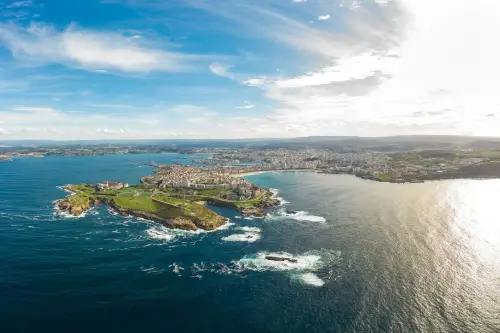 Dzień 4: 08:00–18:00
La Coruna / Hiszpania
Podróżnicy odnajdują w La Coruña idealne miejsce do poczucia atmosfery atlantyckiego wybrzeża Hiszpanii, gdzie nowoczesne promenady spotykają się z historycznymi zabytkami i przytulnymi plażami. Miasto słynie z najstarszej działającej rzymskiej latarni morskiej na świecie – Wieży Herkulesa, zbudowanej prawie 2000 lat temu, która wciąż wskazuje drogę statkom. Można tu spacerować jedną z najdłuższych promenad w Europie, podziwiając oceaniczne widoki i świeży wiatr.
W La Coruña goście odkrywają bogatą galicyjską kulturę kulinarną z owocami morza, które serwowane są w tradycyjnych barach tapas oraz nowoczesnych restauracjach. Lokalne targi zachwycają świeżymi produktami, a życie kulturalne miasta wypełniają festiwale, wystawy i muzyka na żywo na ulicach. To miejsce oferuje podróżnym unikalne połączenie historycznej głębi, morskich krajobrazów i ciepłej hiszpańskiej atmosfery, pozostawiając po podróży poczucie lekkości i inspiracji.
-
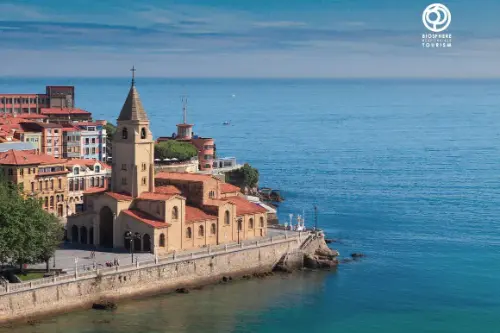 Dzień 5: 07:00–17:00
Gijon / Hiszpania
Na malowniczym wybrzeżu Zatoki Biskajskiej w hiszpańskim regionie Asturii położone jest urokliwe miasto Gijón, które zachwyca odwiedzających unikalnym połączeniem kultury, przyrody i gastronomii. Tutaj można spacerować po malowniczych plażach San Lorenzo, odwiedzać liczne muzea sztuki współczesnej oraz spróbować słynnego asturyjskiego cydru w tradycyjnych „chigres”.
Gijón to idealne miejsce dla tych, którzy cenią sobie połączenie historii i nowoczesnego życia. Poza pięknymi plażami i przytulnymi uliczkami miasto słynie z barwnych festiwali, takich jak Festiwal Morza i Festiwal Piosenki, które dodają podróży wyjątkowych wrażeń. Dla aktywnych turystów dostępne są różnorodne sporty wodne oraz szlaki piesze z zapierającymi dech w piersiach widokami na wybrzeże.
-
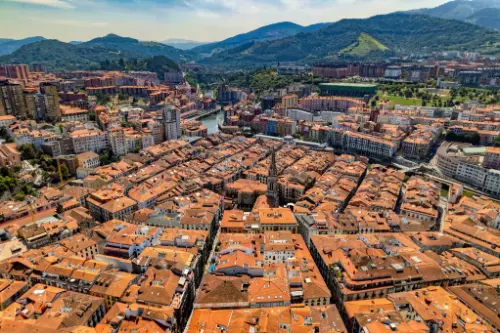 Dzień 6: 07:00–15:30
Bilbao / Hiszpania
Bilbao is a city in northern Spain, the largest city in the province of Biscay and in the Basque Country as a whole. It is also the largest city proper in northern Spain. Bilbao is the tenth largest city in Spain, with a population of 345,141 as of 2015. The Bilbao metropolitan area has roughly 1 million inhabitants, making it one of the most populous metropolitan areas in northern Spain; with a population of 875,552 the comarca of Greater Bilbao is the fifth-largest urban area in Spain. Bilbao is also the main urban area in what is defined as the Greater Basque region.
Bilbao is situated in the north-central part of Spain, some 16 kilometres (10 mi) south of the Bay of Biscay, where the economic social development is located, where the estuary of Bilbao is formed. Its main urban core is surrounded by two small mountain ranges with an average elevation of 400 metres (1,300 ft). Its climate is shaped by the Bay of Biscay low-pressure systems and mild air, moderating summer temperatures by Iberian standards, with low sunshine and high rainfall. The annual temperature range is low for its latitude.
After its foundation in the early 14th century by Diego López V de Haro, head of the powerful Haro family, Bilbao was a commercial hub of the Basque Country that enjoyed significant importance in Green Spain. This was due to its port activity based on the export of iron extracted from the Biscayan quarries. Throughout the nineteenth century and the beginning of the twentieth, Bilbao experienced heavy industrialisation, making it the centre of the second-most industrialised region of Spain, behind Barcelona. At the same time an extraordinary population explosion prompted the annexation of several adjacent municipalities. Nowadays, Bilbao is a vigorous service city that is experiencing an ongoing social, economic, and aesthetic revitalisation process, started by the iconic Bilbao Guggenheim Museum, and continued by infrastructure investments, such as the airport terminal, the rapid transit system, the tram line, the Azkuna Zentroa, and the currently under development Abandoibarra and Zorrozaurrerenewal projects.
Bilbao is also home to football club Athletic Club de Bilbao, a significant symbol for Basque nationalism due to its promotion of only Basque players and one of the most successful clubs in Spanish football history.
On 19 May 2010, the city of Bilbao was recognised with the Lee Kuan Yew World City Prize, awarded by the city state of Singapore, in collaboration with the Swedish Nobel Academy. Considered the Nobel Prize for urbanism, it was handed out on 29 June 2010. On 7 January 2013, its mayor, Iñaki Azkuna, received the 2012 World Mayor Prize awarded every two years by the British foundation The City Mayors Foundation, in recognition of the urban transformation experienced by the Biscayan capital since the 1990s. On 8 November 2017, Bilbao was chosen the Best European City 2018 at The Urbanism Awards 2018, awarded by the international organisation The Academy of Urbanism.
-
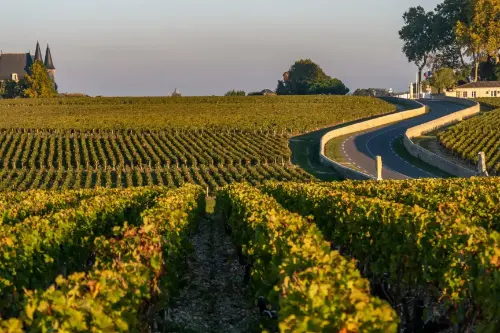 Dzień 7: 05:30
Pauillac / Francja
-
Dzień 8: 19:00
Pauillac / Francja
-
Dzień 9:
Dzień na morzu / Morze
-
 Dzień 10: 08:00–18:00
Saint Peter Port / Guernsey
-
 Dzień 11: 07:00–17:00
Paryż / Francja
the capital of France, on the Seine River; population 2,203,817 (2006). Paris was held by the Romans, who called it Lutetia, and by the Franks, and was established as the capital in 987 under Hugh Capet. It was organized into three parts—the Île de la Cité (an island in the Seine), the Right Bank, and the Left Bank—during the reign of Philippe-Auguste 1180–1223. The city's neoclassical architecture dates from the modernization of the Napoleonic era, which continued under Napoleon III, when the bridges and boulevards of the modern city were built.
-
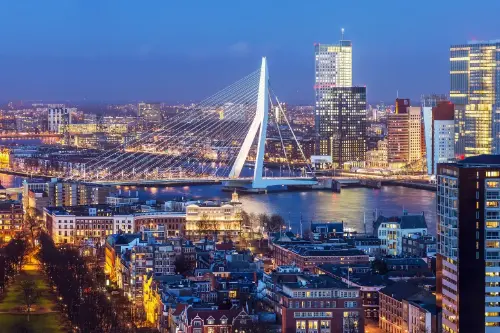 Dzień 12: 11:00–19:00
Rotterdam / Holandia
Jeden z największych miast Niderlandów — Rotterdam, równocześnie jest największym na świecie portem. Również Rotterdam dobrze jest znany jako miasto sztuki i kultury. W 1469 roku właśnie tutaj urodził się Desideriusz — wszystkim znany Erazm z Rotterdamu. Na skrzyżowaniu ulic Blaak i Coolsingel znajduje się statua największego humanisty, w zadumanej pozie. W 1960 roku tutaj została zbudowana wieża, obecnie nosząca nazwę Euromaszt, której wysokość osiąga 104 metry, i z niej otwiera się niewiarygodna panorama miasta. Miasto, jak żadne inne, przygarnęło tutaj wielu ludzi różnych narodowości, żyjących w pokoju i zgodzie w tym zakątku Świata.
-
Dzień 13: 08:00–17:00
Od Eymein / Holandia
-
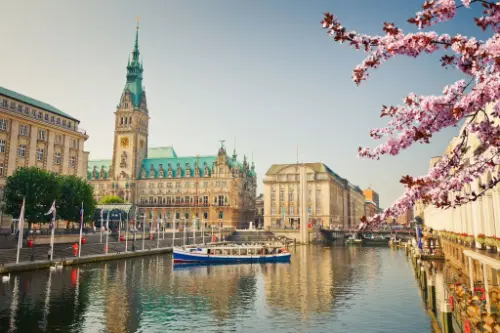 Dzień 14: 11:00–20:00
Hamburg / Niemcy
Hamburg ; officially the Free and Hanseatic City of Hamburg is the second-largest city in Germany with a population of over 1.8 million.
One of Germany's 16 federal states, it is surrounded by Schleswig-Holstein to the north and Lower Saxony to the south. The city's metropolitan region is home to more than five million people. Hamburg lies on the River Elbe and two of its tributaries, the River Alster and the River Bille.
-
Dzień 15: 07:00–23:00
Hamburg / Niemcy
Hamburg ; officially the Free and Hanseatic City of Hamburg is the second-largest city in Germany with a population of over 1.8 million.
One of Germany's 16 federal states, it is surrounded by Schleswig-Holstein to the north and Lower Saxony to the south. The city's metropolitan region is home to more than five million people. Hamburg lies on the River Elbe and two of its tributaries, the River Alster and the River Bille.
-
Dzień 16:
Dzień na morzu / Morze
-
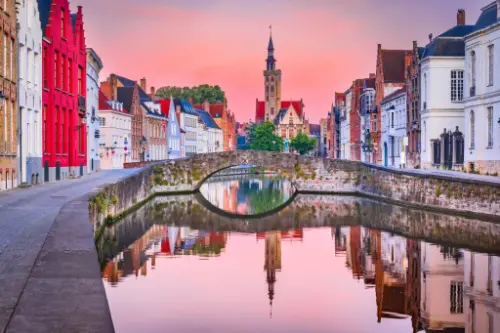 Dzień 17: 07:00–17:00
Bruges / Belgia
Bruges is the capital and largest city of the province of West Flanders in the Flemish Region of Belgium, in the northwest of the country.
The area of the whole city amounts to more than 13,840 hectares (138.4 sq km; 53.44 sq miles), including 1,075 hectares off the coast, at Zeebrugge (from Brugge aan zee, meaning "Bruges by the Sea"). The historic city centre is a prominent World Heritage Site of UNESCO. It is oval in shape and about 430 hectares in size. The city's total population is 117,073 (1 January 2008), of whom around 20,000 live in the city centre. The metropolitan area, including the outer commuter zone, covers an area of 616 km2 (238 sq mi) and has a total of 255,844 inhabitants as of 1 January 2008.
Along with a few other canal-based northern cities, such as Amsterdam, it is sometimes referred to as the Venice of the North. Bruges has a significant economic importance, thanks to its port, and was once one of the world's chief commercial cities. Bruges is well known as the seat of the College of Europe, a university institute for European studies.
-
 Dzień 18: 07:00–17:00
Londyn / Wielka Brytania
-
Dzień 19:
Dzień na morzu / Morze
-
 Dzień 20: 07:00–17:00
Newcastle / Wielka Brytania
-
 Dzień 21: 07:00–18:00
Edynburg / Wielka Brytania
-
 Dzień 22: 05:30–18:00
Aberdeen / Wielka Brytania
-
 Dzień 23: 08:00–18:00
Lerwick / Wielka Brytania
-
 Dzień 24: 07:00–17:00
Kirkwall / Scotland
Kirkwall is the largest settlement and capital of Orkney, an archipelago to the north of mainland Scotland.
The name Kirkwall comes from the Norse name Kirkjuvagr (Church Bay), which later changed to Kirkvoe, Kirkwaa and Kirkwall.
-
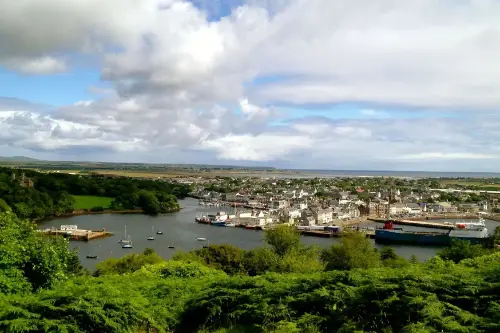 Dzień 25: 07:00–15:00
Stornoway, wyspa Lewis, Hebrydy / Wielka Brytania
Przytulny zakątek w szkockich Hebrydach kusi swoją niepowtarzalną atmosferą: Stornoway na wyspie Lewis to brama do świata dzikiej przyrody, celtyckiej kultury i morskich przygód. Tutaj spotykają się atlantyckie wiatry, piaszczyste plaże i zielone wzgórza, tworząc idealne miejsce dla podróżników poszukujących zarówno ciszy, jak i aktywnego wypoczynku.
Stornoway słynie z historycznego dziedzictwa, w tym słynnego zamku Lews, stojącego tuż przy brzegu, oraz tradycyjnych festiwali muzycznych, które wypełniają ulice dźwiękami dud i celtyckich melodii. Na lokalnych targach na turystów czekają świeże ryby, owoce morza i rękodzieło, a okolice kuszą szlakami pieszymi i widokami na bezkresne przestrzenie Hebrydów.
-
 Dzień 26: 08:00–20:00
Belfast / Wielka Brytania
Belfast is a port city in the United Kingdom and the capital city of Northern Ireland, on the banks of the River Lagan on the east coast of Ireland. It is the largest city in Northern Ireland and second largest on the island of Ireland. It had a population of 333,871 in 2015.
By the early 1800s Belfast was a major port. It played a key role in the Industrial Revolution, becoming the biggest linen producer in the world, earning it the nickname "Linenopolis". By the time it was granted city status in 1888, it was a major centre of Irish linen production, tobacco-processing and rope-making. Shipbuilding was also a key industry; the Harland and Wolff shipyard, where the RMS Titanic was built, was the world's biggest shipyard. It also has a major aerospace and missiles industry. Industrialisation and the inward migration it brought made Belfast Ireland's biggest city and it became the capital of Northern Ireland following the Partition of Ireland in 1922. Its status as a global industrial centre ended in the decades after the Second World War.
Belfast suffered greatly in the Troubles, and in the 1970s and 1980s was one of the world's most dangerous cities. However, the city is now considered to be one of the safest within the United Kingdom. Throughout the 21st century, the city has seen a sustained period of calm, free from the intense political violence of former years and has benefitted from substantial economic and commercial growth. Belfast remains a centre for industry, as well as the arts, higher education, business, and law, and is the economic engine of Northern Ireland. Belfast is still a major port, with commercial and industrial docks dominating the Belfast Lough shoreline, including the Harland and Wolff shipyard. It is served by two airports: George Best Belfast City Airport, and Belfast International Airport 15 miles (24 km) west of the city. It is listed by the Globalization and World Cities Research Network (GaWC) as a Gamma global city.
-
Dzień 27: 07:00–19:00
Liverpool
-
 Dzień 28: 08:00–18:00
Cork / Irlandia
Cork is a city in south-west Ireland, in the province of Munster, which had a population of 125,657 in 2016.
The city is on the River Lee which splits into two channels at the western end and divides the city centre into islands. They reconverge at the eastern end where the quays and docks along the river banks lead outwards towards Lough Mahon and Cork Harbour, one of the largest natural harbours in the world.
Expanded by Viking invaders around 915, the city's charter was granted by Prince John, as Lord of Ireland, in 1185. Cork city was once fully walled, and the remnants of the old medieval town centre can be found around South and North Main streets.
The third largest city on the island of Ireland, the city's cognomen of "the rebel city" originates in its support for the Yorkist cause in the Wars of the Roses. Corkonians often refer to the city as "the real capital", a reference to its opposition to the Anglo-Irish Treaty in the Irish Civil War.
-
 Dzień 29: 08:00–16:00
Portland / USA
-
Dzień 30: 07:00–17:00
Londyn / Wielka Brytania
-
Dzień 31:
Dzień na morzu / Morze
-
 Dzień 32: 11:00–20:00
Skagen / Denmark
-
 Dzień 33: 07:00–20:00
Kopenhaga / Denmark
the capital and chief port of Denmark, a city that occupies the eastern part of Zealand and northern part of the island of Amager; population 518,574 (2009).
-
Dzień 34:
Dzień na morzu / Morze
-
 Dzień 35: 07:00–17:00
Sztokholm / Sweden
Stockholm is the capital of Sweden and the most populous urban area in the Nordic countries; 960,031 people live in the municipality, approximately 1.5 million in the urban area, and 2.3 million in the metropolitan area. The city stretches across fourteen islands where Lake Mälaren flows into the Baltic Sea. Just outside the city and along the coast is the island chain of the Stockholm archipelago. The area has been settled since the Stone Age, in the 6th millennium BC, and was founded as a city in 1252 by Swedish statesman Birger Jarl. It is also the capital of Stockholm County.
Stockholm is the cultural, media, political, and economic centre of Sweden. The Stockholm region alone accounts for over a third of the country's GDP, and is among the top 10 regions in Europe by GDP per capita. It is an important global city, and the main centre for corporate headquarters in the Nordic region. The city is home to some of Europe's top ranking universities, such as the Stockholm School of Economics, Karolinska Institute and Royal Institute of Technology (KTH). It hosts the annual Nobel Prize ceremonies and banquet at the Stockholm Concert Hall and Stockholm City Hall. One of the city's most prized museums, the Vasa Museum, is the most visited non-art museum in Scandinavia. The Stockholm metro, opened in 1950, is well known for the decor of its stations; it has been called the longest art gallery in the world. Sweden's national football arena is located north of the city centre, in Solna. Ericsson Globe, the national indoor arena, is in the southern part of the city. The city was the host of the 1912 Summer Olympics, and hosted the equestrian portion of the 1956 Summer Olympicsotherwise held in Melbourne, Victoria, Australia.
Stockholm is the seat of the Swedish government and most of its agencies, including the highest courts in the judiciary, and the official residencies of the Swedish monarch and the Prime Minister. The government has its seat in the Rosenbad building, the Riksdag (Swedish parliament) is seated in the Parliament House, and the Prime Minister's residence is adjacent at Sager House. Stockholm Palace is the official residence and principal workplace of the Swedish monarch, while Drottningholm Palace, a World Heritage Site on the outskirts of Stockholm, serves as the Royal Family's private residence.
-
 Dzień 36: 11:00–20:00
Helsinki / Finland
Helsinki located in the southern Finland, and has a population of 648,650. The city's urban area has a population of 1,268,296, it’s the most important center for politics, education, finance, culture, and research. Helsinki is located 80 kilometers (50 mi) north of Tallinn, Estonia, 400 km (250 mi) east of Stockholm, Sweden, and 390 km (240 mi) west of Saint Petersburg, Russia. It has close ties with these three cities.
Together with the cities of Espoo, Vantaa, and Kauniainen, and the surrounding commuter towns, Helsinki forms the Greater Helsinki metropolitan area, which has a population of nearly 1.5 million. Often being considered a metropolis of the EU member state. After Stockholm and Oslo, Helsinki is the third largest city in the Nordic countries. It is located in the city of Vantaa and is located in the city of Vantaa.
Helsinki was the World Design Capital for 2012, the 1952 Summer Olympics and the 52nd Eurovision Song Contest.
-
 Dzień 37: 07:00–14:00
Tallinn / Estonia
Tallinn is the capital and largest city of Estonia. It is on the northern coast of the country, on the shore of the Gulf of Finland in Harju County. From the 13th century until 1918 (and briefly during the Nazi occupation of Estonia from 1941 to 1944), the city was known as Reval. Tallinn occupies an area of 159.2 km2 (61.5 sq mi) and has a population of 453,033.
Tallinn, first mentioned in 1219, received city rights in 1248, but the earliest human settlements date back 5,000 years. The initial claim over the land was laid by the Danes in 1219, after a successful raid of Lindanise led by Valdemar II of Denmark, followed by a period of alternating Scandinavian and German rule. Due to its strategic location, the city became a major trade hub, especially from the 14th to the 16th century, when it grew in importance as part of the Hanseatic League.
-
 Dzień 38: 09:00–17:00
Ryga / Łotwa
Riga is the capital and largest city of Latvia. With 637,827 inhabitants (2018), it is also the largest city in the three Baltic states, home to one third of Latvia's population and one tenth of the three Baltic states' combined population. The city lies on the Gulf of Riga, at the mouth of the Daugava. Riga's territory covers 307.17 km2 (118.60 sq mi) and lies 1–10 m (3 ft 3 in–32 ft 10 in) above sea level, on a flat and sandy plain.
Riga was founded in 1201 and is a former Hanseatic League member. Riga's historical centre is a UNESCO World Heritage Site, noted for its Art Nouveau/Jugendstil architecture and 19th century wooden architecture. Riga was the European Capital of Culture during 2014, along with Umeå in Sweden. Riga hosted the 2006 NATO Summit, the Eurovision Song Contest 2003, the 2006 IIHF Men's World Ice Hockey Championships and the 2013 World Women's Curling Championship. It is home to the European Union's office of European Regulators for Electronic Communications (BEREC).
In 2016, Riga received over 1.4 million visitors. It is served by Riga International Airport, the largest and busiest airport in the Baltic states. Riga is a member of Eurocities, the Union of the Baltic Cities (UBC) and Union of Capitals of the European Union (UCEU).
-
 Dzień 39: 07:00–13:00
Visby / Sweden
-
 Dzień 40: 08:00–22:00
Berlin / Niemcy
Berlin – stolica, największe miasto Niemiec i zarazem kraj związkowy. Zajmuje powierzchnię ok. 891,70 km² i zamieszkuje go 3 878 100 osób (31 grudnia 2023). Jest największym miastem w Unii Europejskiej pod względem liczby mieszkańców w granicach administracyjnych.
Berlin jest podzielony na dwanaście okręgów administracyjnych (Bezirk). Przez przestrzeń miejską przepływają m.in. rzeki Sprewa i Hawela, a ponadto znajduje się wiele jezior i zatok, w tym największe Müggelsee.
-
 Dzień 41: 10:00–18:00
Aarhus / Denmark
Aarhus is the second-largest city in Denmark and the seat of Aarhus municipality. It is located on the east coast of the Jutlandpeninsula, in the geographical centre of Denmark, 187 kilometres (116 mi) northwest of Copenhagen and 289 kilometres (180 mi) north of Hamburg, Germany. The inner urban area contains 273,077 inhabitants (as of 1 January 2018) and the municipal population is 340,421 (as of 2018). Aarhus is the central city in Business Region Aarhus and in the East Jutland metropolitan area, which had a total population of 1.378 million in 2016.
The history of Aarhus began as a fortified Viking settlement founded in the 8th century and with the first written records stemming from the bishopric seated here from at least 948. The city was founded on the northern shores of a fjord at a natural harbour and the primary driver of growth was for centuries seaborne trade in agricultural products. Market town privileges were granted in 1441, but growth stagnated in the 17th century as the city suffered blockades and bombardments during the Swedish Wars. In the 19th century it was occupied twice by German troops during the Schleswig Wars but avoided destruction. As the industrial revolution took hold, the city grew to become the second-largest in the country by the 20th century.
-
Dzień 42:
Dzień na morzu / Morze
-
Dzień 43:
Dzień na morzu / Morze
-
Dzień 44: 07:00–17:00
Londyn / Wielka Brytania
Twój Świat w cenie
Dzięki Twojemu Światu w cenie, będziesz cieszyć się szeroką gamą udogodnień, zapewniających najwyższy komfort i wartość rejsów ultra-premium.
Niezapomniane doznania kulinarne w licznych, wykwintnych restauracjach — wszystko bez dodatkowych opłat.
Bezpłatne kawy specjalistyczne, napoje gazowane, świeżo wyciskane soki oraz woda gazowana i niegazowana Vero Water® serwowane na całym statku.
Nielimitowany, bezpłatny dostęp do Wi-Fi w apartamentach, kabinach i wszystkich pomieszczeniach ogólnodostępnych.
Posiłki serwowane w pokoju z doskonałym wyborem dań na ciepło i zimno.
Koktajle, koktajle mleczne, gelato i firmowe lody Humphry Slocombe — zawsze w cenie.
Grupowe zajęcia fitness w Aquamar® Spa + Vitality Center są bezpłatne.
Napiwki są wliczone w cenę dla Twojej wygody.
Pranie jest bezpłatne dla wszystkich gości.
Dzięki bezpłatnym pralniom samoobsługowym na pokładzie, a także usługom prania i prasowania dla kategorii Concierge i Suite, zawsze będziesz wyglądać olśniewająco. Oprócz naszej charakterystycznej, spersonalizowanej obsługi, zapewnimy Ci wzbogacający rejs bez ukrytych kosztów i prowizji.
Podnieś poziom swoich wrażeń
Kajuty Concierge Level Veranda oferują niezrównane połączenie luksusu, przywilejów i wartości. Bogactwo udogodnień i ekskluzywnych korzyści sprawi, że Twoje wrażenia będą jeszcze bardziej wzniosłe — od dań do wyboru z The Grand Dining Room, przez bezpłatne usługi pralnicze, po nieograniczony dostęp do tarasu Aquamar Spa.
Na pokładzie Oceania Marina i Oceania Riviera możesz również skorzystać z usług dedykowanego Concierge i ekskluzywnego dostępu do prywatnego salonu Concierge Lounge.
Kajuty Concierge Level Veranda, zlokalizowane w najbardziej pożądanych miejscach statku, to coś więcej niż tylko kabiny — to niezapomniane przeżycie.
Concierge Level Veranda — Ekskluzywne przywileje
Rozszerzone menu posiłków do pokoju na lunch i kolację z The Grand Dining Room
Usługi pralnicze — do 3 sztuk bagażu na kabinę
Ekskluzywny dostęp do prywatnego salonu Concierge Lounge na statkach Oceania Marina, Oceania Riviera, Oceania Vista i Oceania Allura za pomocą karty-klucza, oferujący bezpłatne napoje, kawę, przekąski i usługi dedykowanego Concierge'a
Powitalna butelka wyśmienitego włoskiego Prosecco
Priorytetowe rezerwacje online w restauracjach specjalistycznych
Nieograniczony dostęp do tarasu Aquamar Spa
Torba z logo Oceania Cruises
Kaszmirowe koce na kolana — idealne do relaksu i przytulania
Prasowanie odzieży po wejściu na pokład
Bezpłatna usługa czyszczenia butów
Stan na 01.11.2026
Depozyt i płatności – Oceania Cruises
Depozyt ogólny:
W przypadku apartamentów typu Owner’s, Vista i Oceania Suites wymagany jest depozyt w wysokości 20% ceny rejsu od osoby.
W przypadku wszystkich pozostałych kategorii apartamentów/kabin, depozyt wynosi 500 USD od osoby.
W przypadku Grand Voyages depozyt wynosi 1500 USD od osoby.
Terminy depozytu i płatności końcowej:
Rezerwacje dokonane na ponad 150 dni przed rejsem:
Depozyt w wysokości 20% w przypadku apartamentów typu Owner’s, Vista i Oceania Suites oraz 500 USD w przypadku wszystkich pozostałych kategorii wymagany jest w ciągu 5 dni od rezerwacji.
Rezerwacje dokonane na 90–120 dni przed rejsem:
Pełna płatność wymagana w ciągu 3 dni od rezerwacji.
Rezerwacje dokonane na 0–90 dni przed rejsem:
Pełna płatność wymagana w dniu rezerwacji.
Ważne:
Rezerwacje, które nie zostaną wpłacone lub opłacone w całości zgodnie z niniejszym harmonogramem, zostaną automatycznie anulowane. O ile nie zaznaczono inaczej, płatność końcowa musi wpłynąć do Oceania Cruises na 150 dni przed wypłynięciem w przypadku rejsów krótszych niż 15 dni oraz na 150 dni w przypadku rejsów trwających 15 dni lub dłużej.
Oceania Cruises zastrzega sobie prawo do anulowania rezerwacji, które nie zostały w pełni opłacone w momencie płatności końcowej.
Informacje dodatkowe:
Dane paszportowe i specjalne prośby dotyczące usług pokładowych należy przesłać w momencie płatności końcowej.
Płatności można dokonać czekiem osobistym, kartą American Express, Discover, MasterCard lub Visa.
Dla wygody płatność końcowa może zostać automatycznie pobrana z karty kredytowej użytej do wpłaty początkowej.
Oceania Cruises nie ponosi odpowiedzialności za opłaty walutowe ani opłaty transakcyjne pobierane niezależnie przez banki wystawiające karty. Opłaty te nie przysługują Oceania Cruises.
Płatności kartami kredytowymi osób trzecich są akceptowane wyłącznie po uzyskaniu ważnej autoryzacji od posiadacza karty.
Depozyt i płatność – rejsy 180-dniowe
W przypadku rejsów 180-dniowych wymagany jest depozyt w wysokości 20% ceny rejsu od osoby za wszystkie apartamenty i kabiny w ciągu 7 dni od rezerwacji.
Ostateczna płatność musi zostać otrzymana najpóźniej 181 dni przed wypłynięciem, wraz z danymi paszportowymi i wszelkimi specjalnymi prośbami o usługi na pokładzie.
W przeciwnym razie rezerwacja może zostać natychmiast anulowana, a naliczone zostaną stosowne kary.
Forma płatności (FORMA PŁATNOŚCI)
Oceania Cruises akceptuje płatności za rezerwacje kartą kredytową/debetową lub przelewem bankowym.
Niestety, czeki osobiste nie są akceptowane.
Karty kredytowe/debetowe:
Akceptowane są karty American Express, Visa i Mastercard.
Uwaga: Oceania Cruises nie ponosi odpowiedzialności za opłaty za wymianę waluty/transakcje naliczane przez bank wystawiający kartę.
Ceny podane w USD — orientacyjnie 1 USD ≈ 4,12 zł według kursu z dnia rezerwacji
Proszę czekać…
Organizator
Biznes i Turystyka Piotr Skupiewski
- ul. Łukowa 41, 32-823 Szczepanów
- NIP 8691148381
- REGON 850455159
- +48 576 977 555
- +48 570 700 273
Organizator jest wpisany do Centralnej Ewidencji Organizatorów Turystyki i Przedsiębiorców Ułatwiających Nabywanie Powiązanych Usług Turystycznych. Posiada gwarancję ubezpieczeniową UNIQA nr 3800003856, ważną od 5 maja 2026 r. do 4 maja 2027 r. Suma gwarancyjna wynosi 379 404,00 zł. Organizator odprowadza składki do Turystycznego Funduszu Gwarancyjnego i Turystycznego Funduszu Pomocowego.
Masz jeszcze pytania?
Pomożemy wybrać rejs i odpowiemy na Twoje pytania.