| Region rejsu : Europa, Północna Europa |
| Firma : Azamara Cruises |
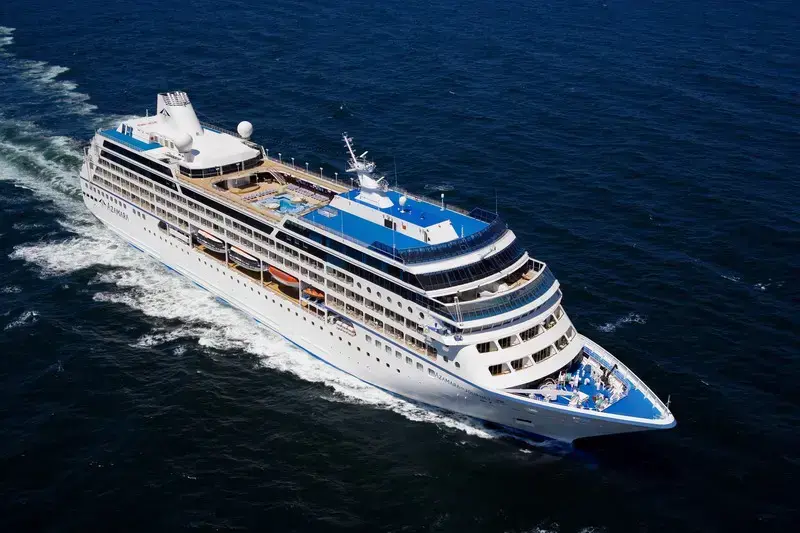
| Statek : Azamara Quest |
| Data rozpoczęcia : czw. 10 sie 2028 |
| Data zakończenia : sob. 28 paź 2028 |
| Liczba nocy : 79 nocy |
| Dzień | Data | Port | Wypłynięcie | Odpłynięcie |
|---|---|---|---|---|
| 1 | 10.08 czw. | Sztokholm / Sweden | 17:00 | |
| 2 | 11.08 pt. | Helsinki / Finland | 11:30 | 22:00 |
| 3 | 12.08 sob. | Tallinn / Estonia | 08:00 | 22:00 |
| 4 | 13.08 niedz. | Dzień na morzu / Morze | 15:00 | |
| 5 | 14.08 pon. | Ryga / Łotwa | 07:00 | 18:00 |
| 6 | 15.08 wt. | Kłajpeda (Memel) / Litwa | 13:00 | 22:00 |
| 7 | 16.08 śr. | Gdańsk / Polska | 07:30 | 20:00 |
| 8 | 17.08 czw. | Bandol / Francja | 09:00 | 18:00 |
| 9 | 18.08 pt. | Ronne / Denmark | 08:00 | 18:00 |
| 11 | 20.08 niedz. | Helsingborg / Sweden | 08:00 | 16:00 |
| 12 | 21.08 pon. | Kopenhaga / Denmark | 20:00 | |
| 13 | 22.08 wt. | Kopenhaga / Denmark | 09:00 | 17:00 |
| 14 | 23.08 śr. | Dzień na morzu / Morze | 15:00 | |
| 15 | 24.08 czw. | Leith, Edynburg / Wielka Brytania | 17:30 | |
| 16 | 25.08 pt. | Leith, Edynburg / Wielka Brytania | 16:15 | |
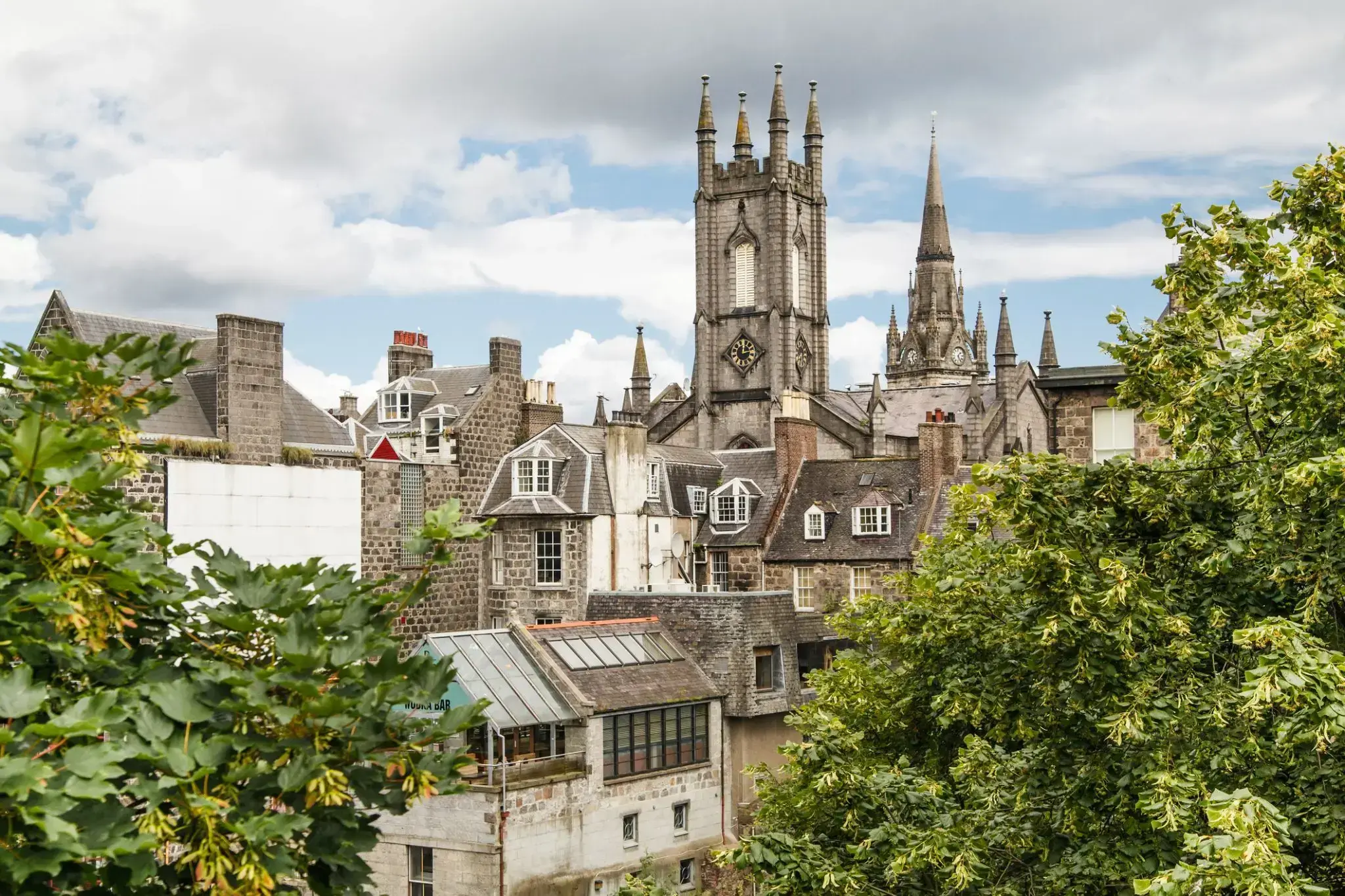
| 17 | 26.08 sob. | Aberdeen / Wielka Brytania | 07:00 | 16:00 |
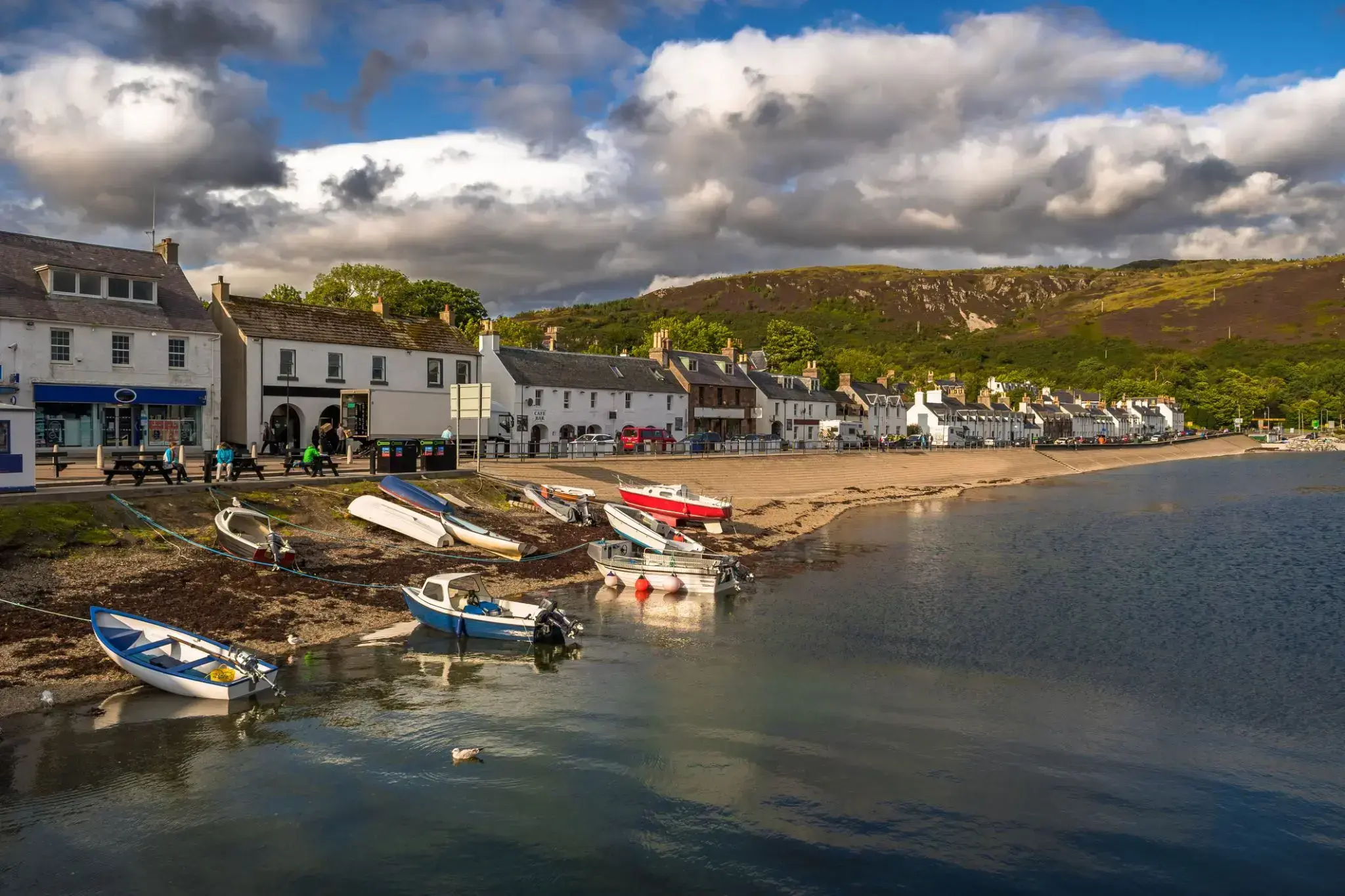
| 18 | 27.08 niedz. | Ullapool / Scotland | 09:00 | 18:00 |
| 19 | 28.08 pon. | Derry / Wielka Brytania | 10:00 | 20:30 |
| 20 | 29.08 wt. | Greenock / Scotland | 09:00 | 20:00 |
| 21 | 30.08 śr. | Belfast / Wielka Brytania | 08:00 | 20:00 |
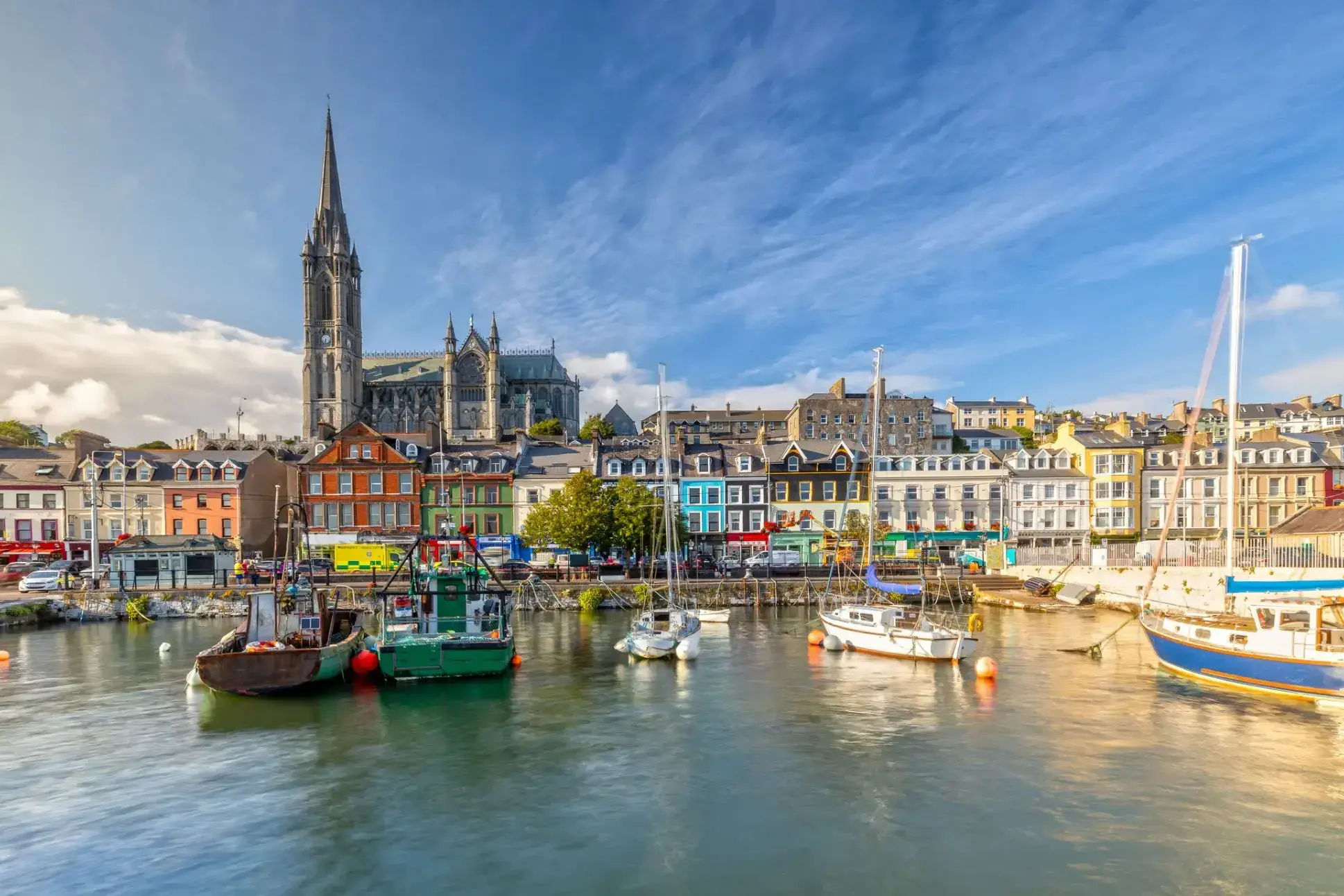
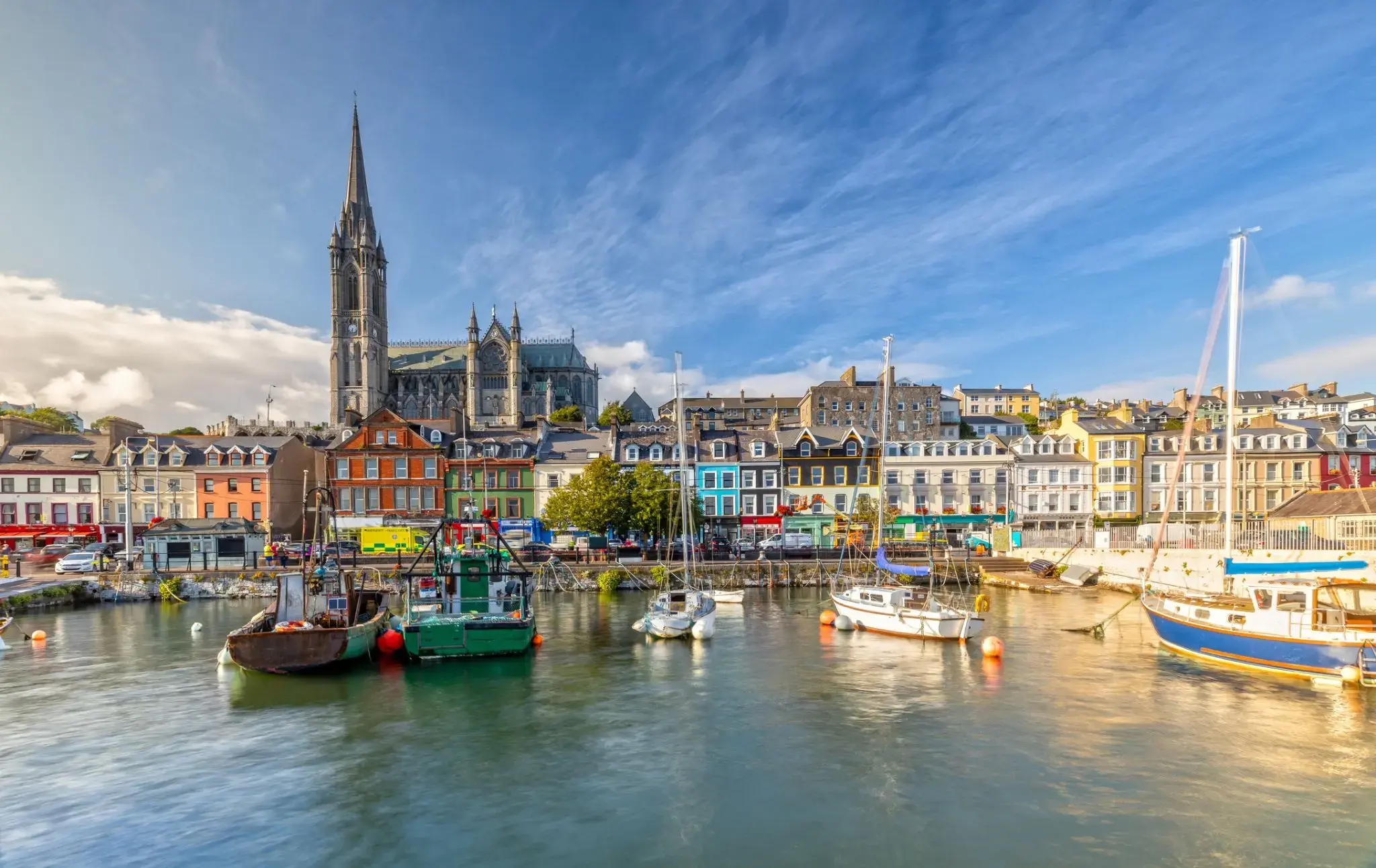
| 23 | 1.09 pt. | Cobh / Irlandia | 08:30 | 18:00 |
| 24 | 2.09 sob. | Ceniłem | 09:30 | 17:00 |
| 25 | 3.09 niedz. | Portsmouth / Dominica | 06:00 | 18:00 |
| 27 | 5.09 wt. | Saint-Malo / Francja | 08:00 | 20:00 |
| 28 | 6.09 śr. | Dzień na morzu / Morze | 15:00 | |
| 29 | 7.09 czw. | Bordeaux / Francja | 10:30 | |
| 30 | 8.09 pt. | Bordeaux / Francja | ||
| 31 | 9.09 sob. | Bordeaux / Francja | 10:30 | |
| 32 | 10.09 niedz. | Bilbao / Hiszpania | 08:00 | 22:00 |
| 33 | 11.09 pon. | Gijon / Hiszpania | 08:00 | 13:30 |
| 34 | 12.09 wt. | Vigo / Hiszpania | 10:00 | 20:00 |
| 35 | 13.09 śr. | Porto / Portugalia | 07:00 | 15:30 |
| 36 | 14.09 czw. | Lizbona / Portugalia | 06:00 | 17:00 |
| 37 | 15.09 pt. | Portiman / Portugalia | 07:30 | 18:00 |
| 38 | 16.09 sob. | Sewilla / Hiszpania | 13:00 | |
| 39 | 17.09 niedz. | Sewilla / Hiszpania | ||
| 40 | 18.09 pon. | Sewilla / Hiszpania | 13:00 | |
| 41 | 19.09 wt. | Gibraltar / Wielka Brytania | 08:00 | 22:00 |
| 42 | 20.09 śr. | Malaga / Hiszpania | 08:00 | 22:00 |
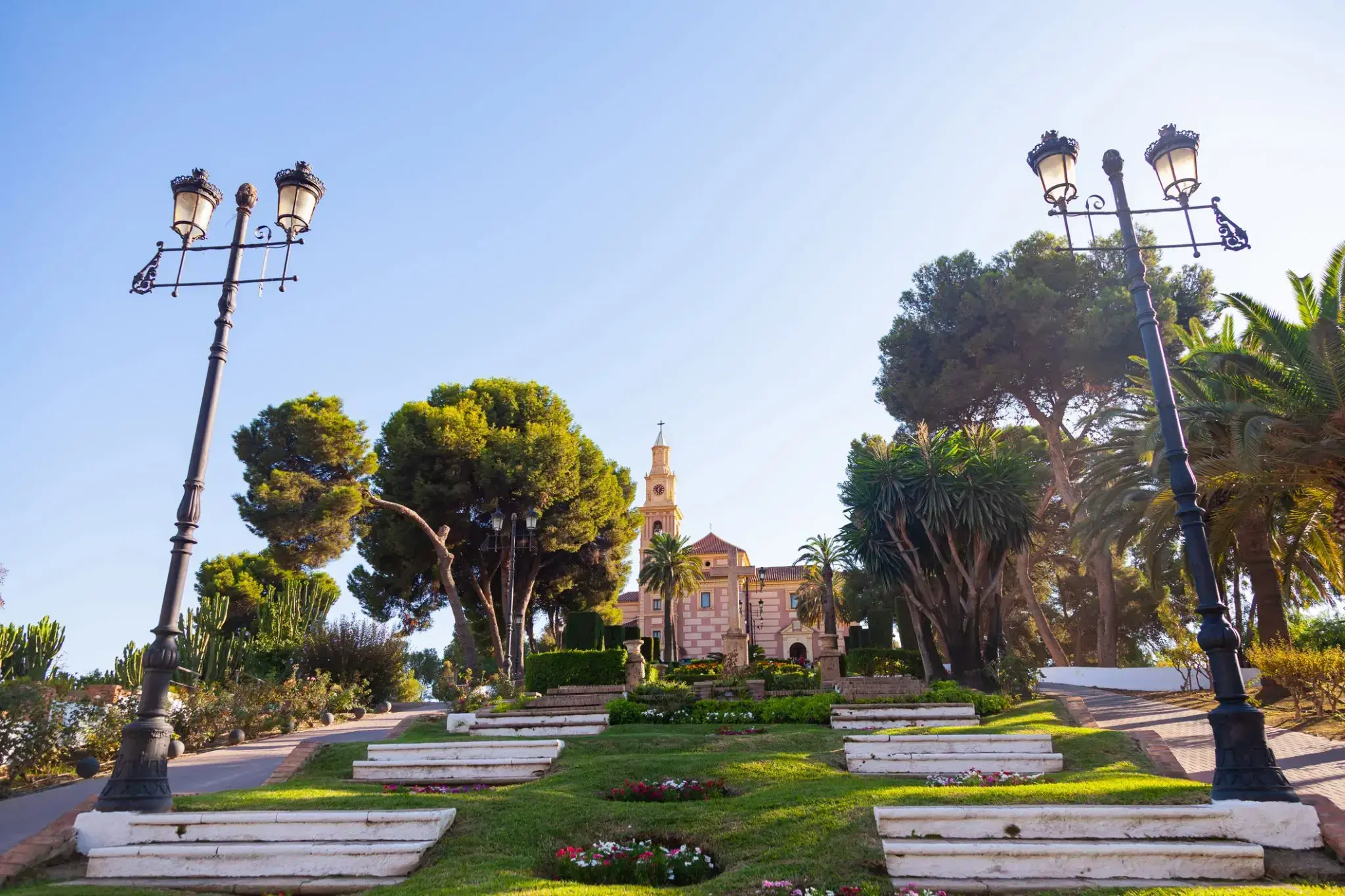
| 43 | 21.09 czw. | Motril / Hiszpania | 08:00 | 20:00 |
| 44 | 22.09 pt. | Cartagena (Bolívar) / Kolumbia | 08:00 | 18:00 |
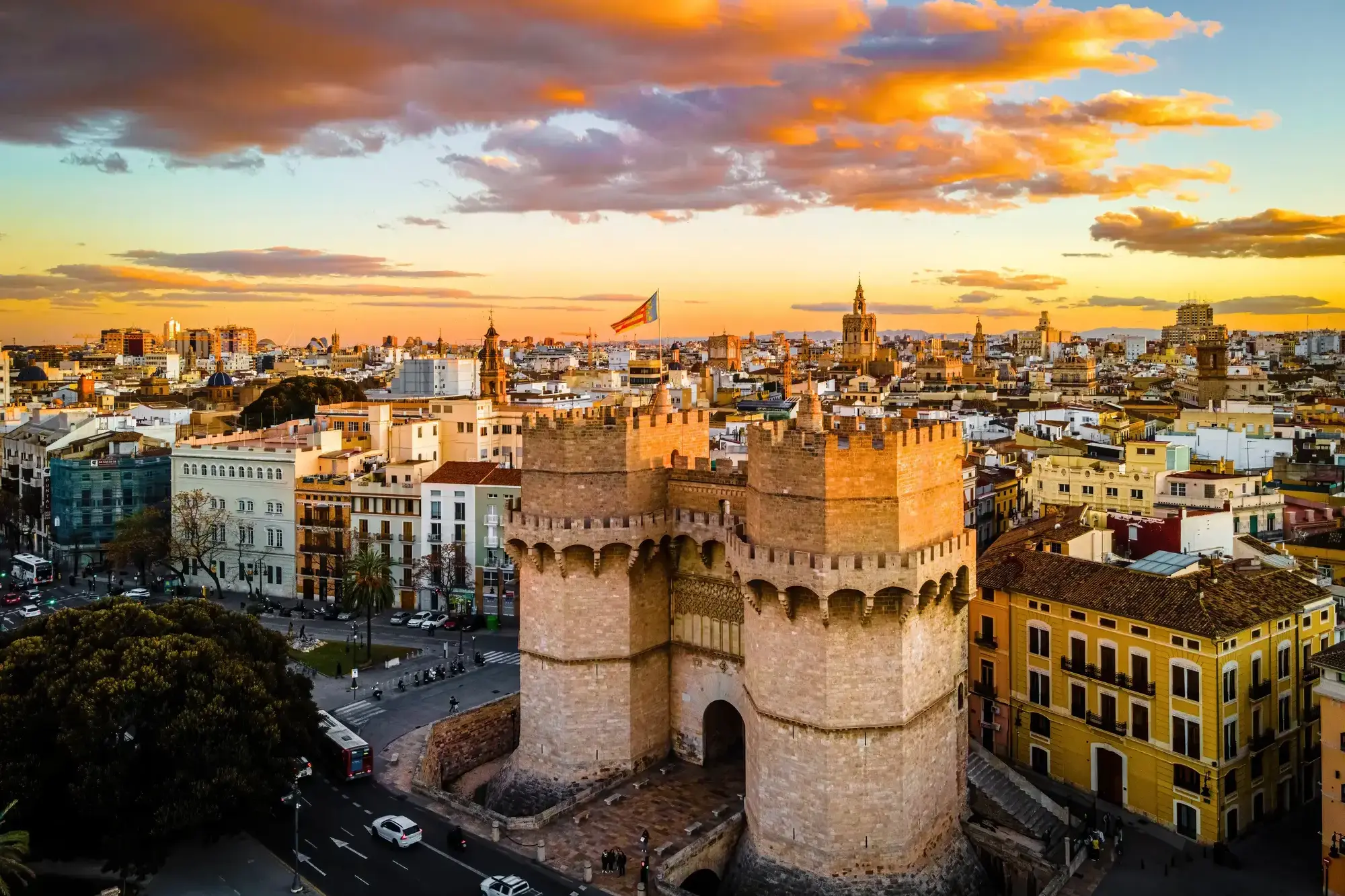
| 45 | 23.09 sob. | Walencja / Hiszpania | 07:00 | 18:00 |
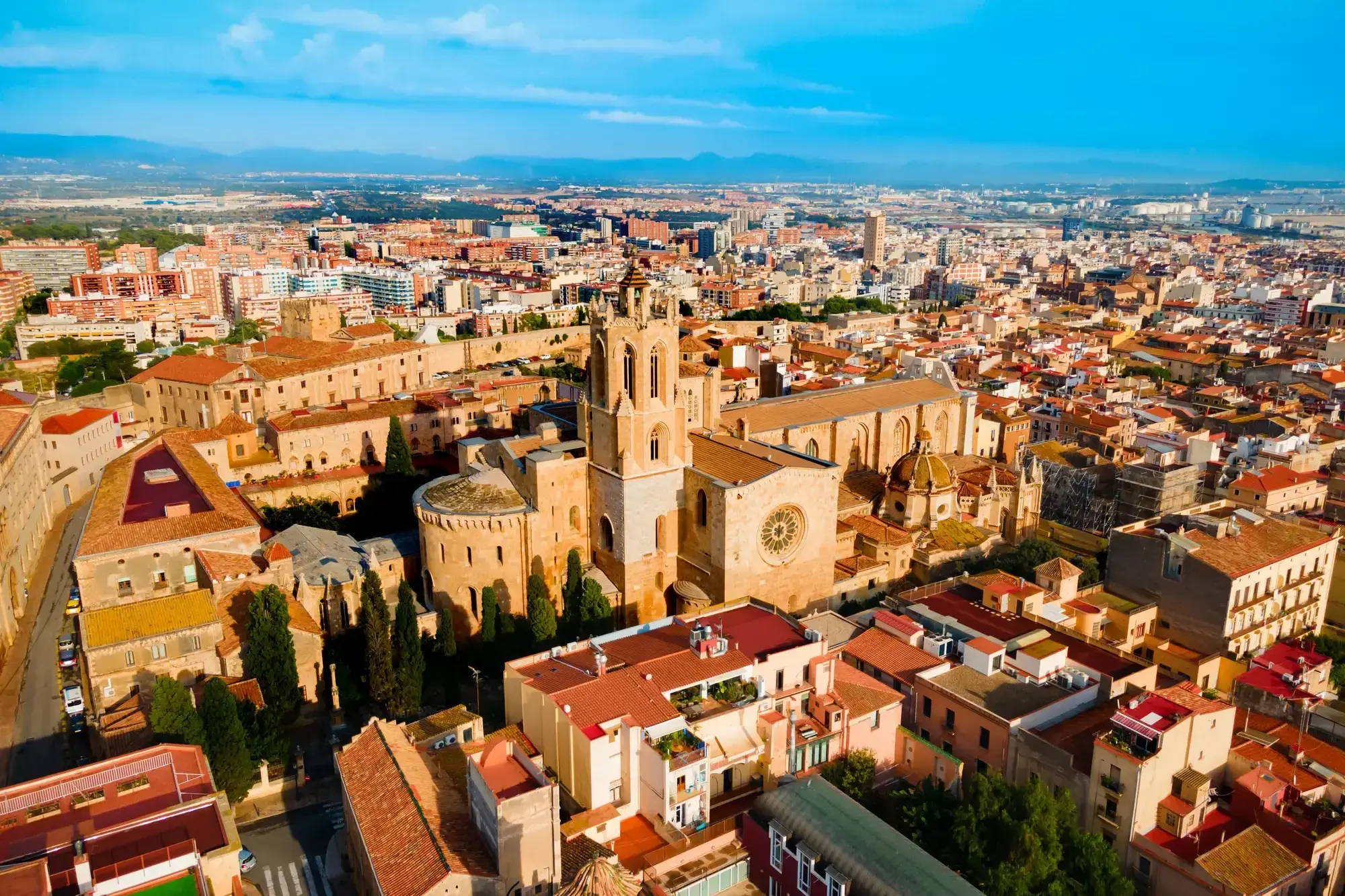
| 46 | 24.09 niedz. | Tarragona / Hiszpania | 06:00 | 17:00 |
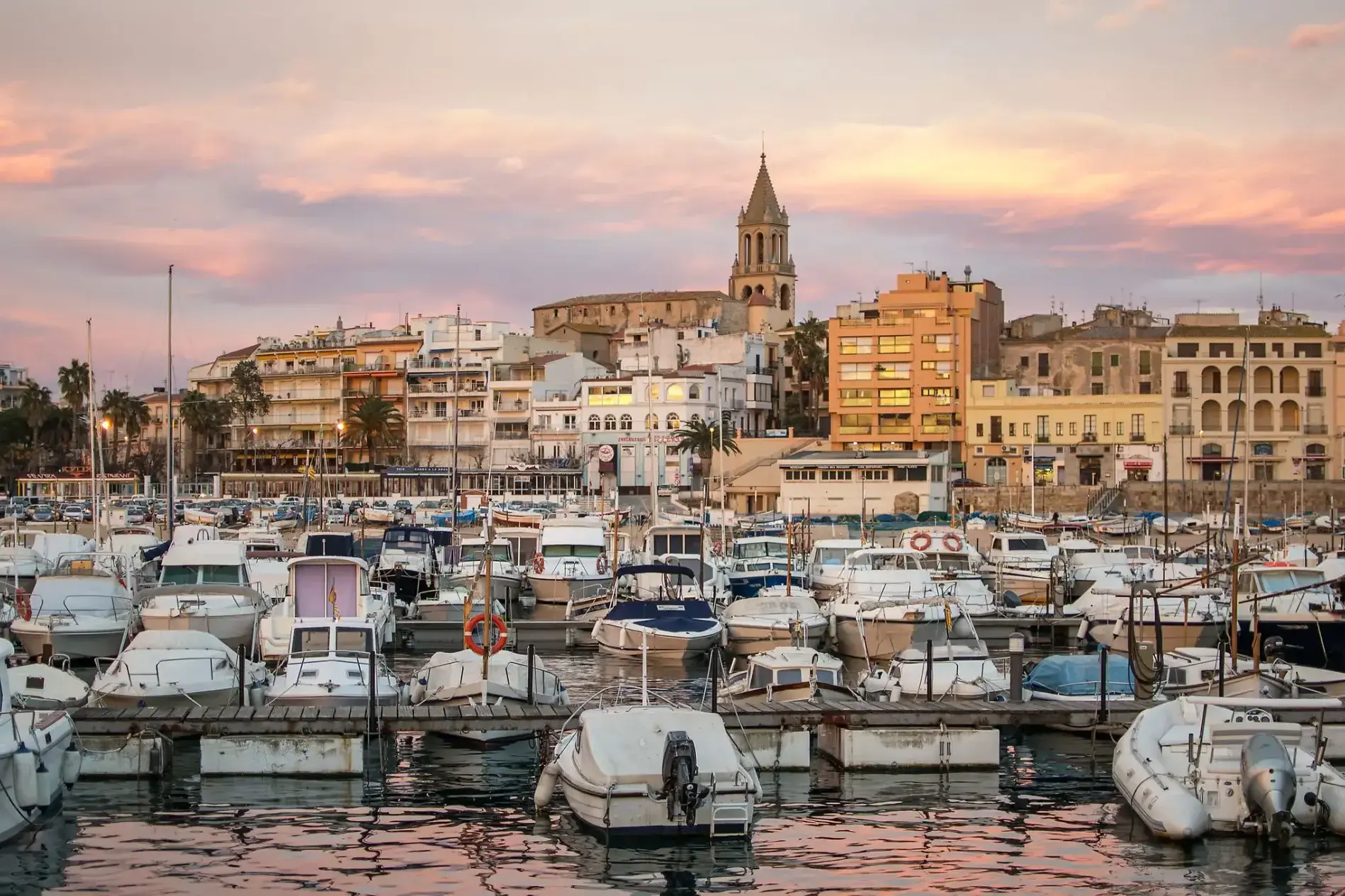
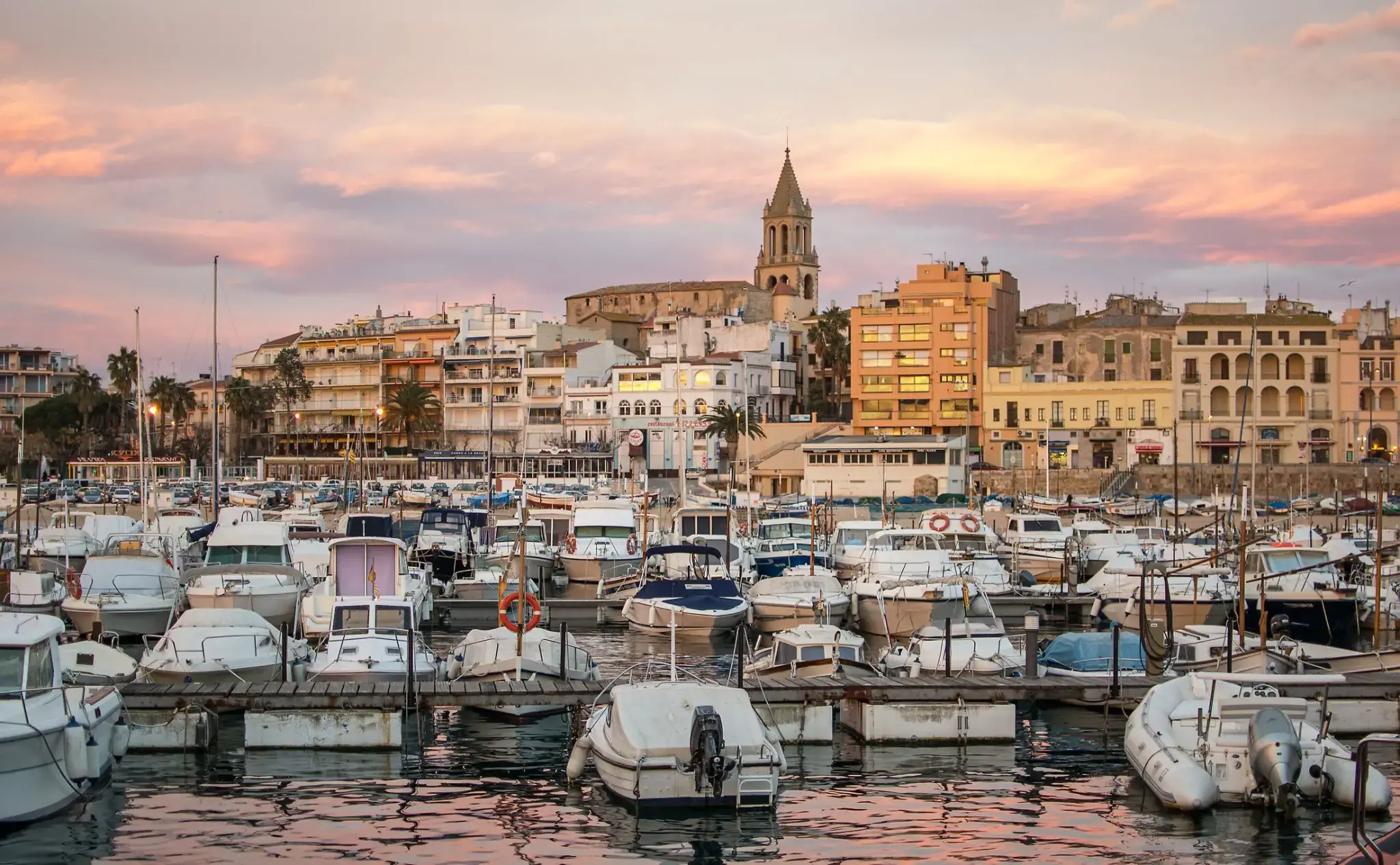
| 47 | 25.09 pon. | Palamos / Hiszpania | 08:00 | 20:00 |
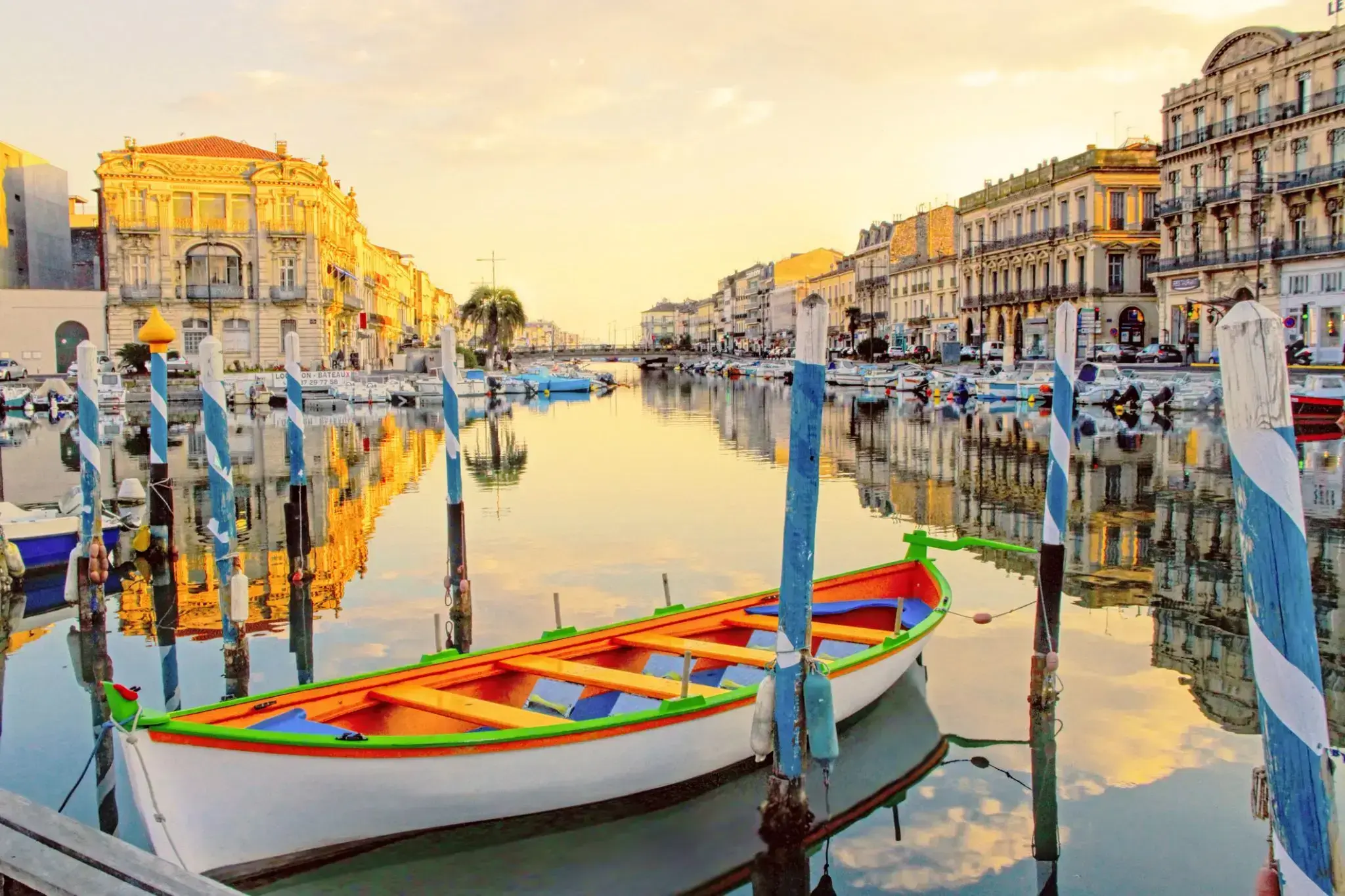
| 48 | 26.09 wt. | Sete/Seta / Francja | 08:00 | 20:00 |
| 49 | 27.09 śr. | Marsylia / Francja | 08:00 | 20:00 |
| 50 | 28.09 czw. | Nicea / Francja | 08:00 | 22:00 |
| 51 | 29.09 pt. | Saint Tropez / Francja | 08:00 | 18:00 |
| 52 | 30.09 sob. | Ayachcho / Francja | 08:00 | 18:00 |
| 53 | 1.10 niedz. | Nicea / Francja | 07:00 | 18:00 |
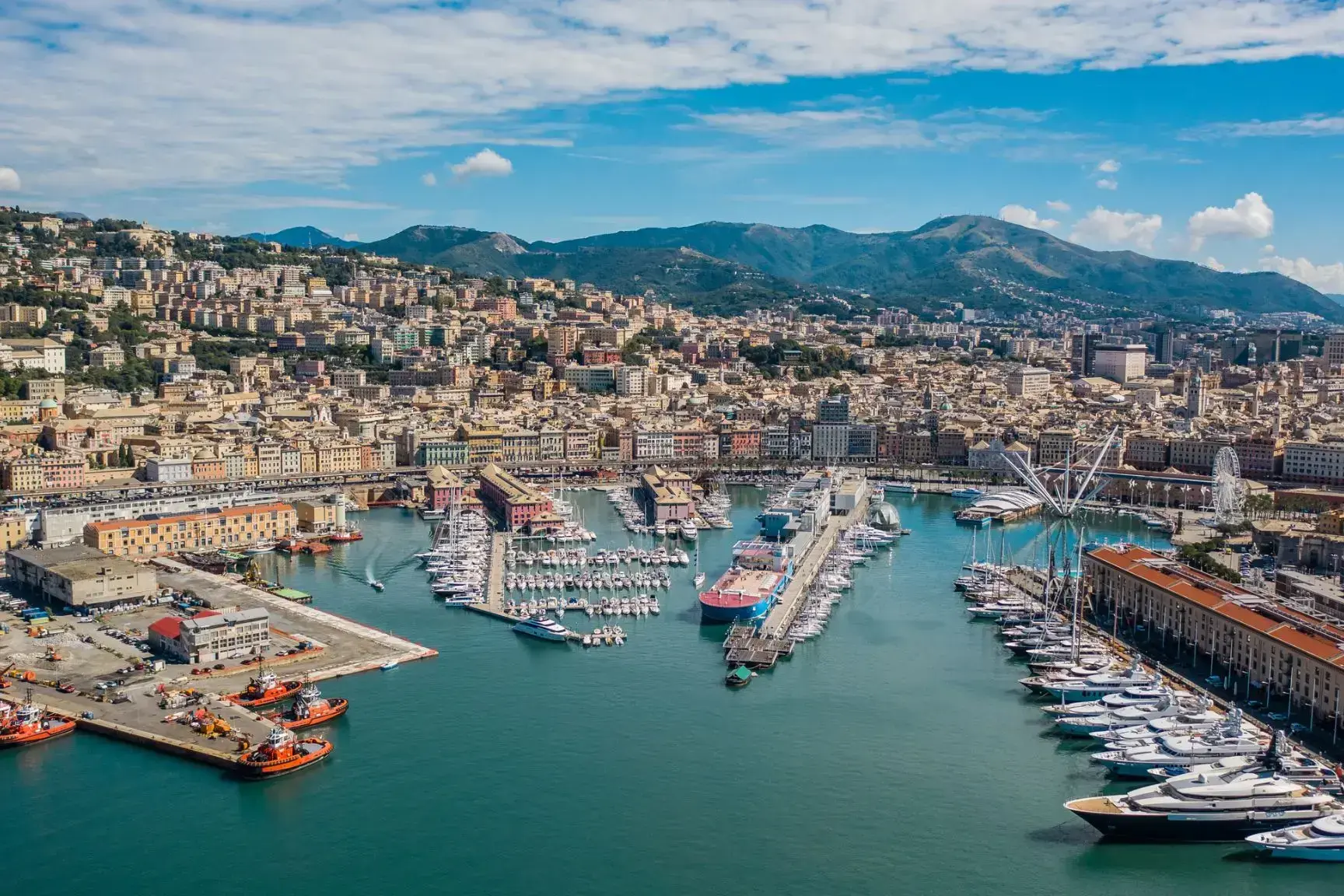
| 54 | 2.10 pon. | Genua / Włochy | 08:00 | 20:00 |
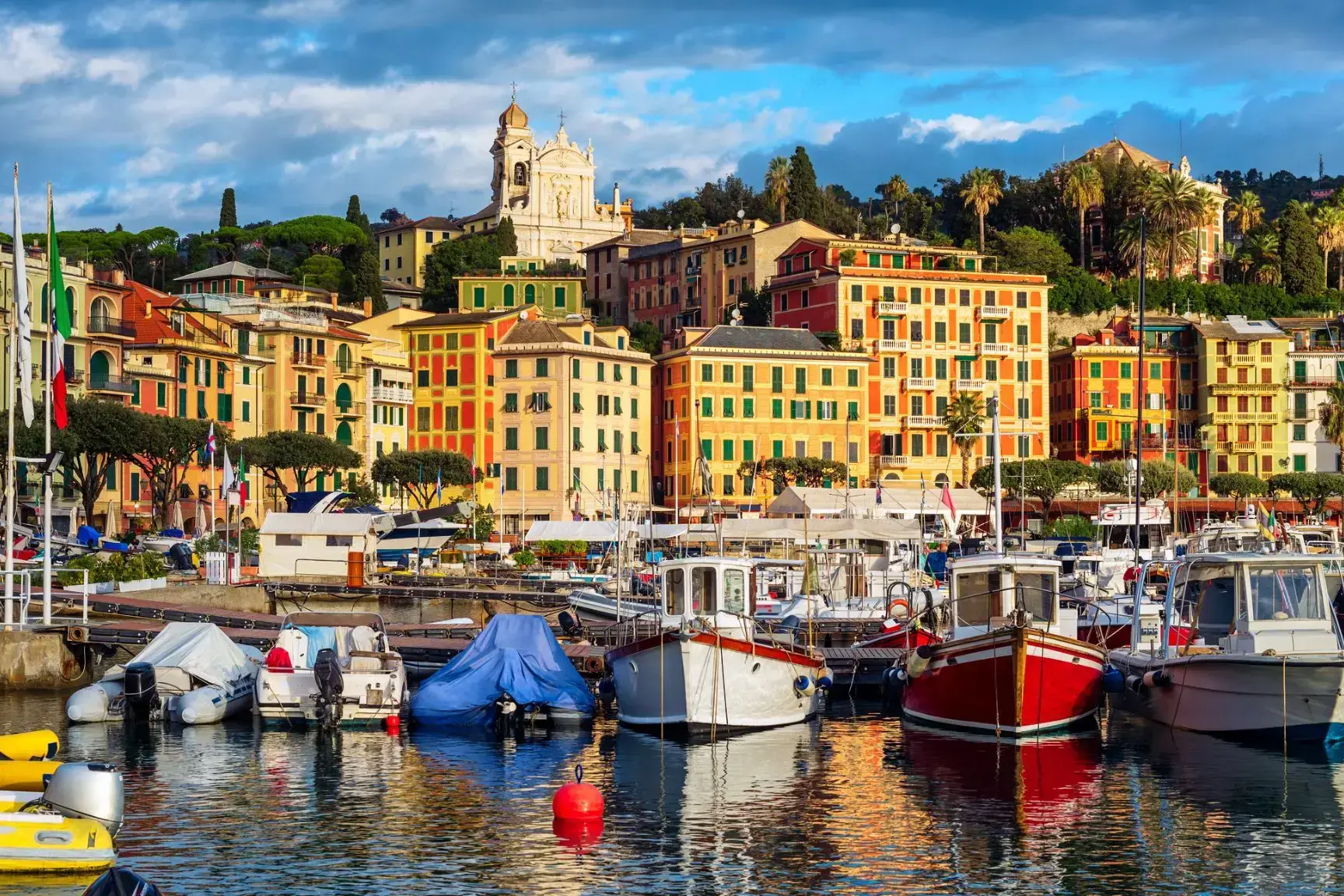
| 55 | 3.10 wt. | Santa Margherita Ligure / Włochy | 08:00 | 20:00 |
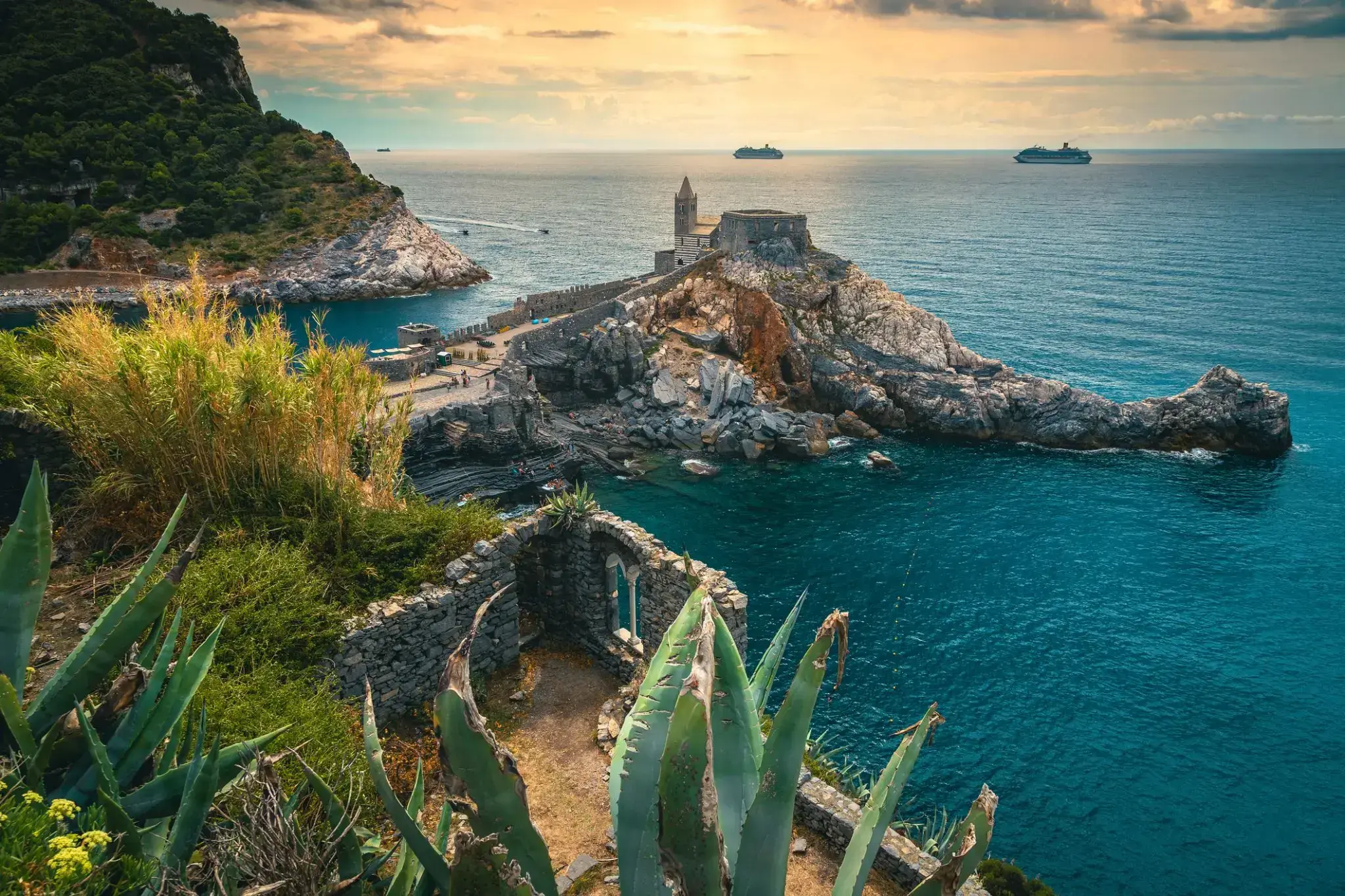
| 56 | 4.10 śr. | Portovenere / Włochy | 08:00 | 18:00 |
| 57 | 5.10 czw. | FLORENCJA PISA | 08:00 | |
| 58 | 6.10 pt. | FLORENCJA PISA | 20:00 | |
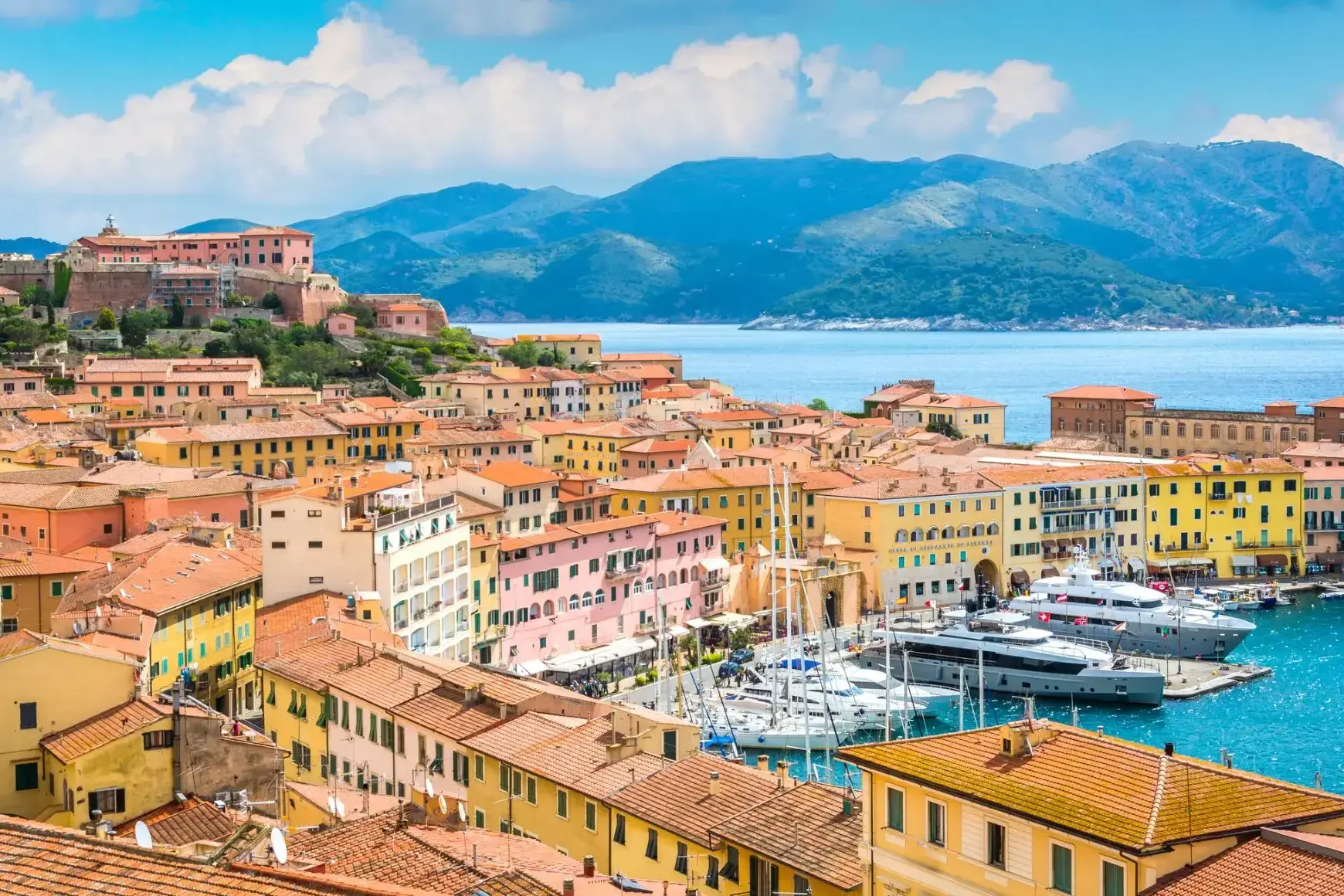
| 59 | 7.10 sob. | Portoferraio / Włochy | 09:00 | 21:00 |
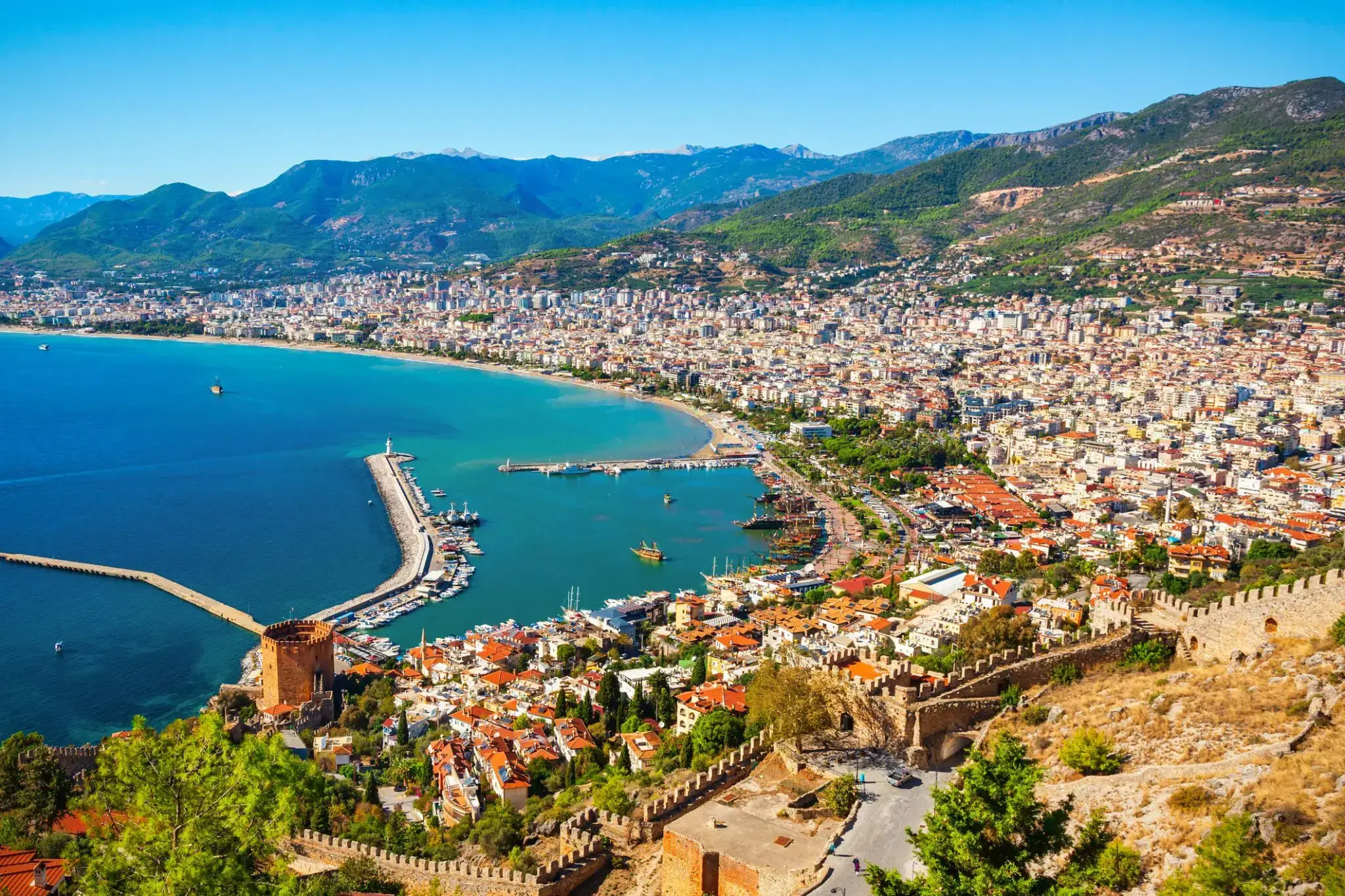
| 60 | 8.10 niedz. | Antalya / Turcja | 08:00 | 20:00 |
| 61 | 9.10 pon. | Porto Santo Stefano | 08:00 | 17:00 |
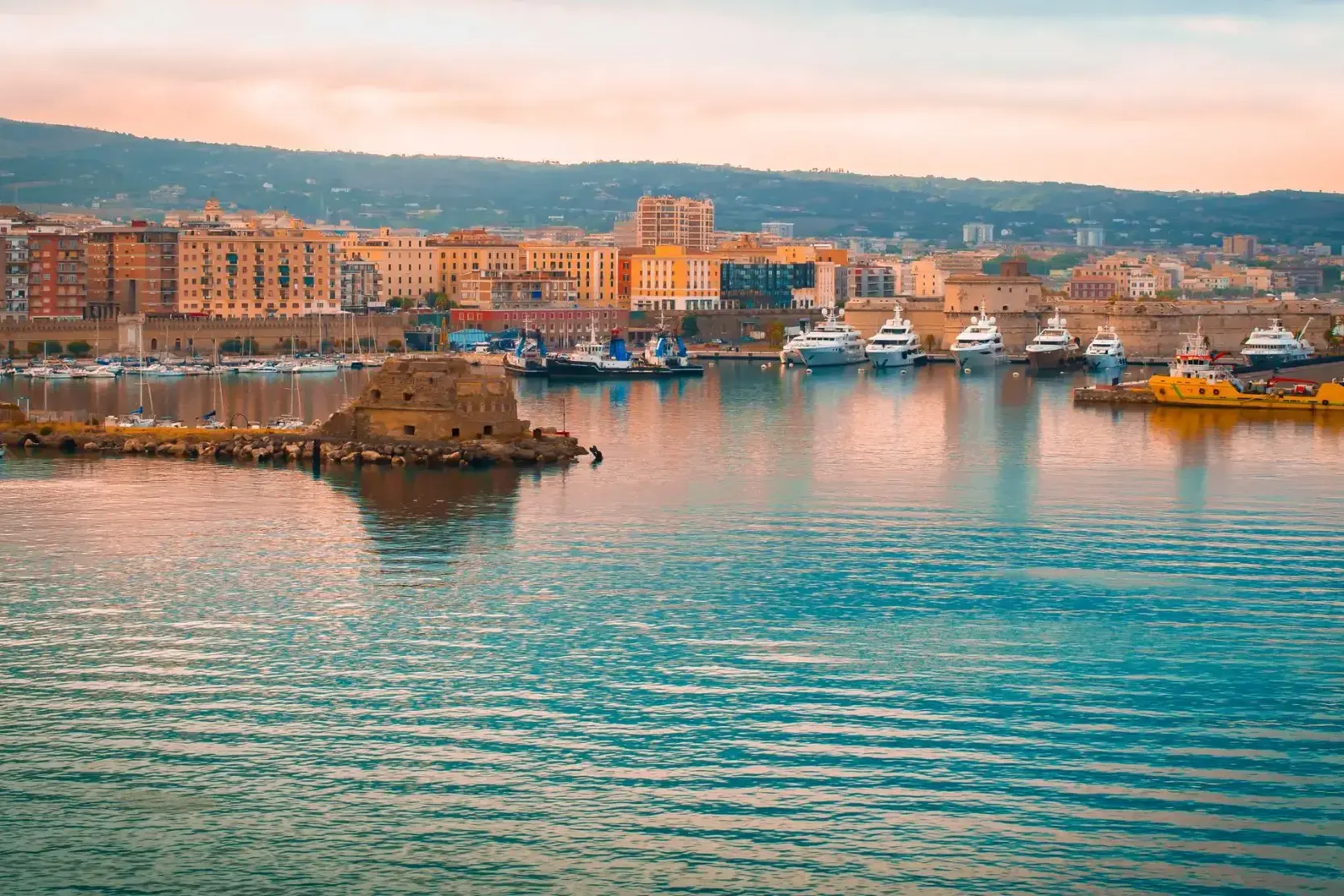
| 62 | 10.10 wt. | Rzym (Civitavecchia) / Włochy | 06:00 | 17:00 |
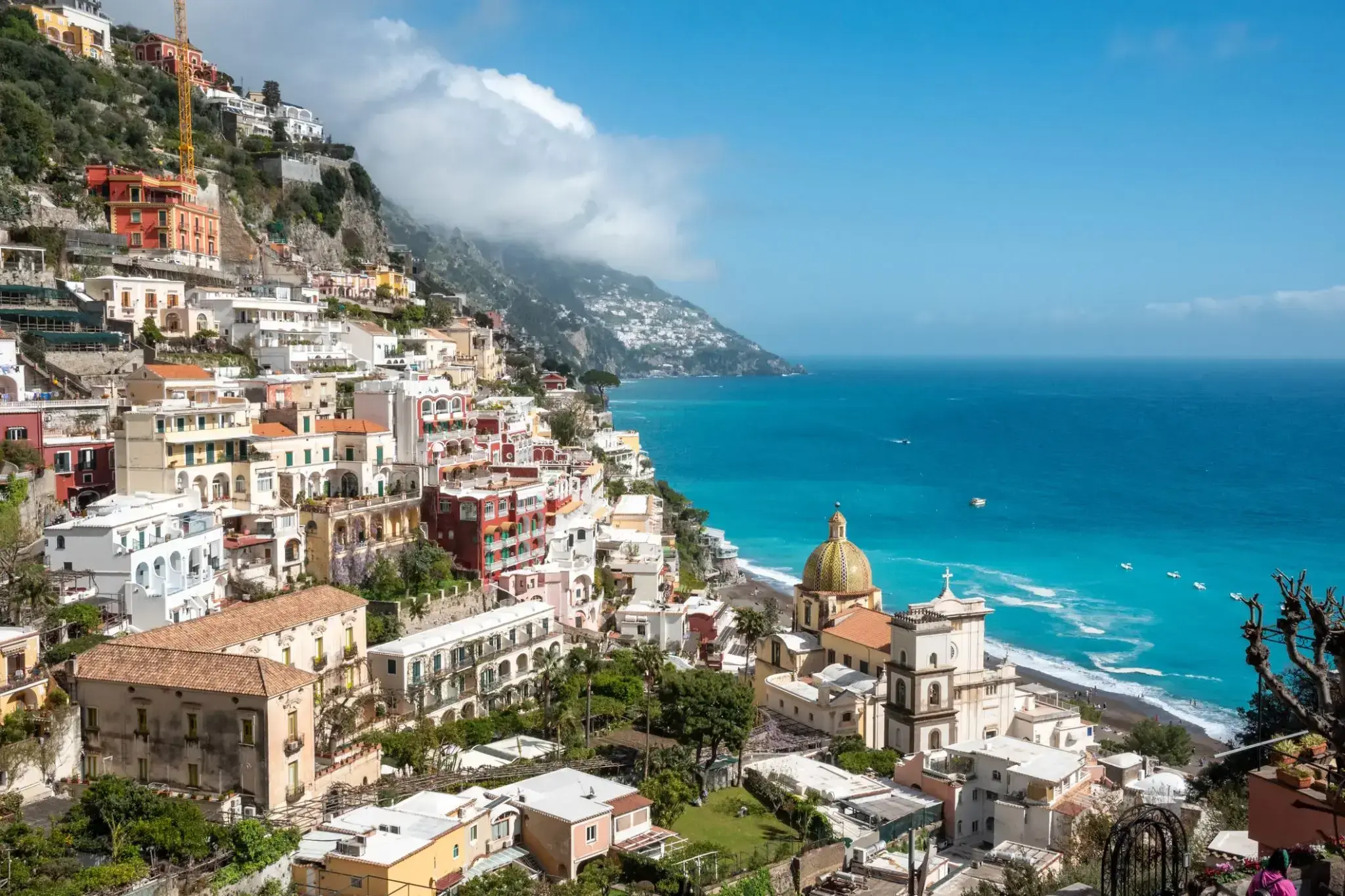
| 63 | 11.10 śr. | Sorrento, Capri / Włochy | 08:00 | 20:00 |
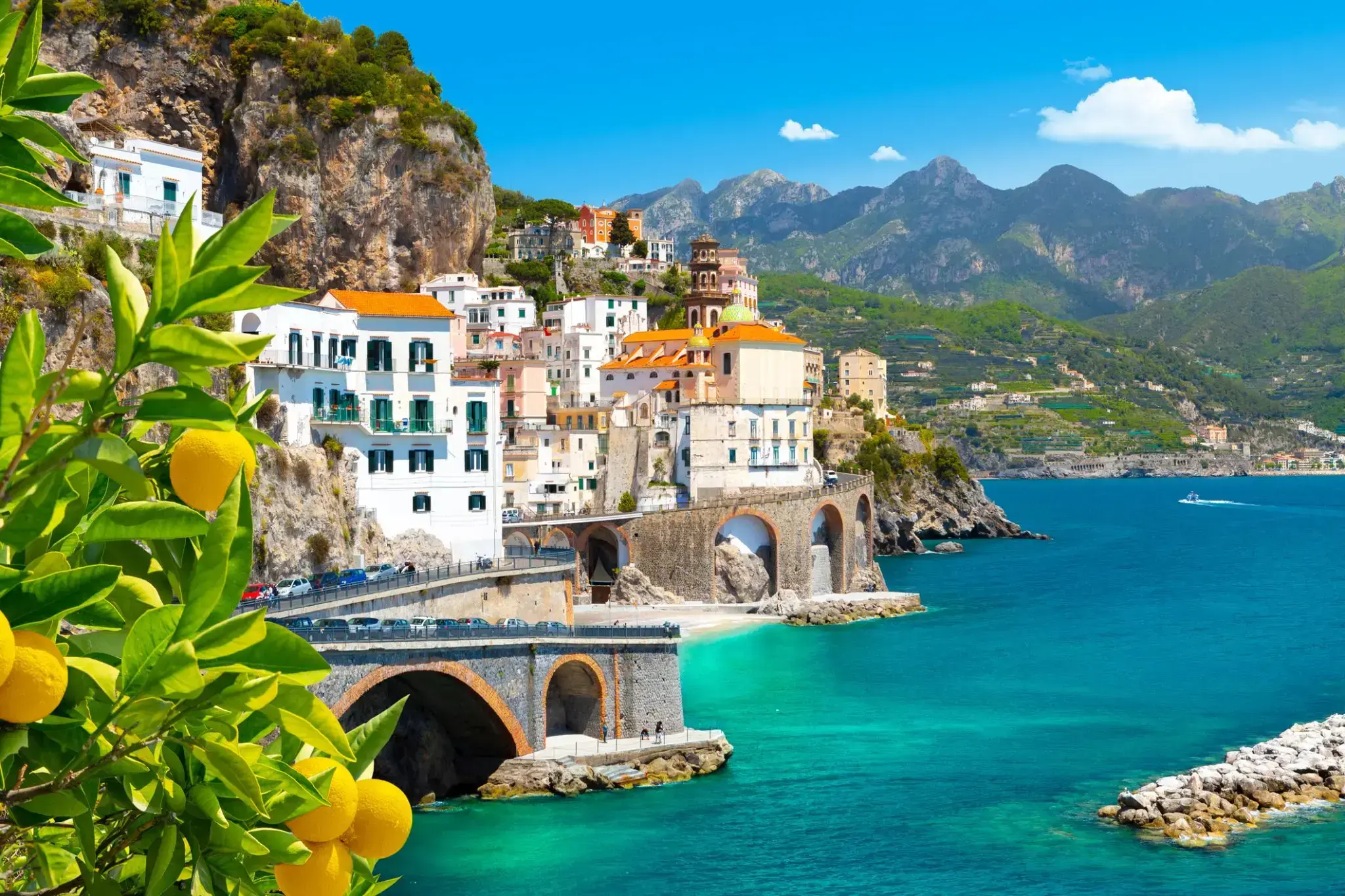
| 64 | 12.10 czw. | Amalfi / Włochy | 08:00 | 18:00 |
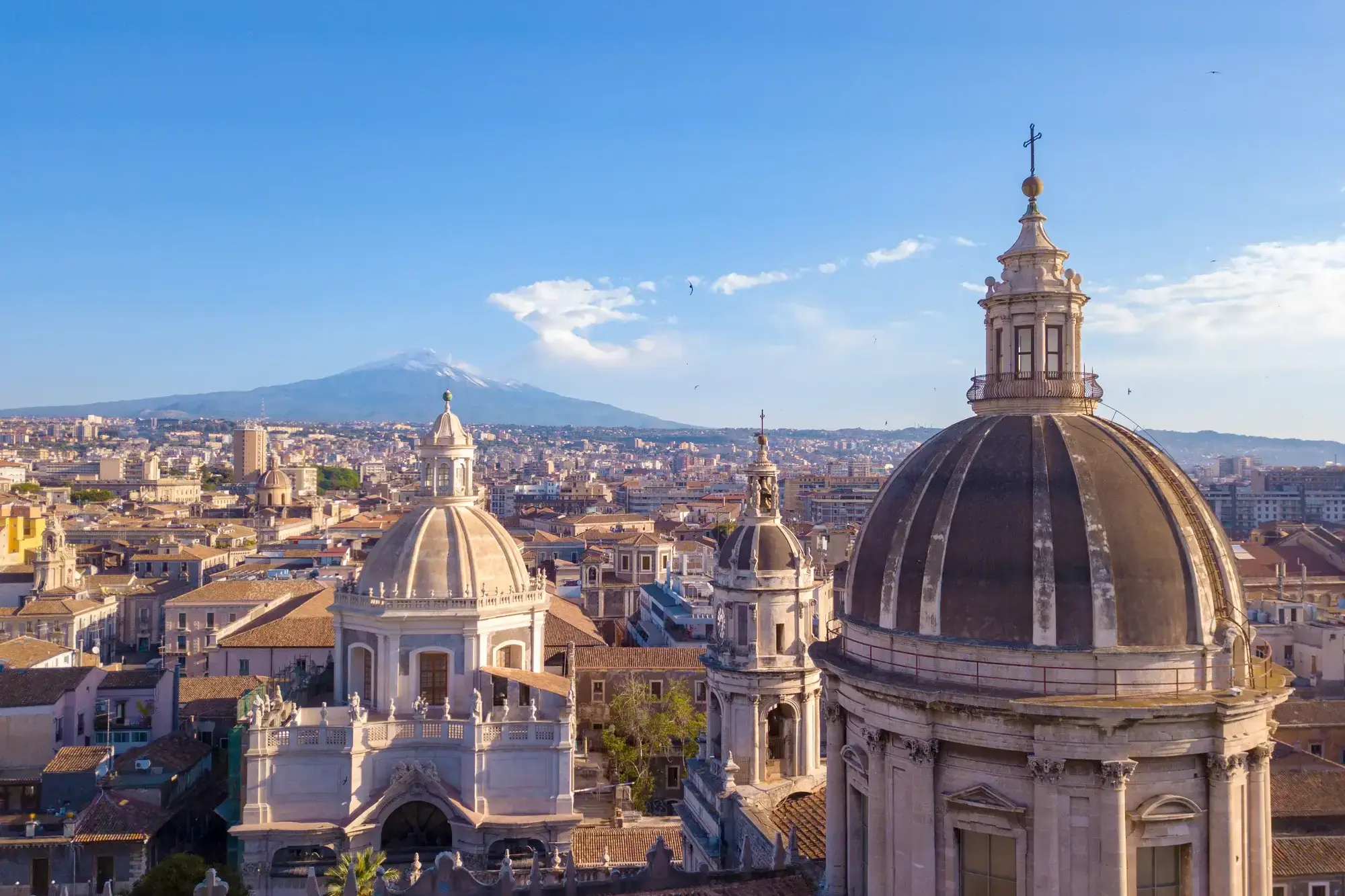
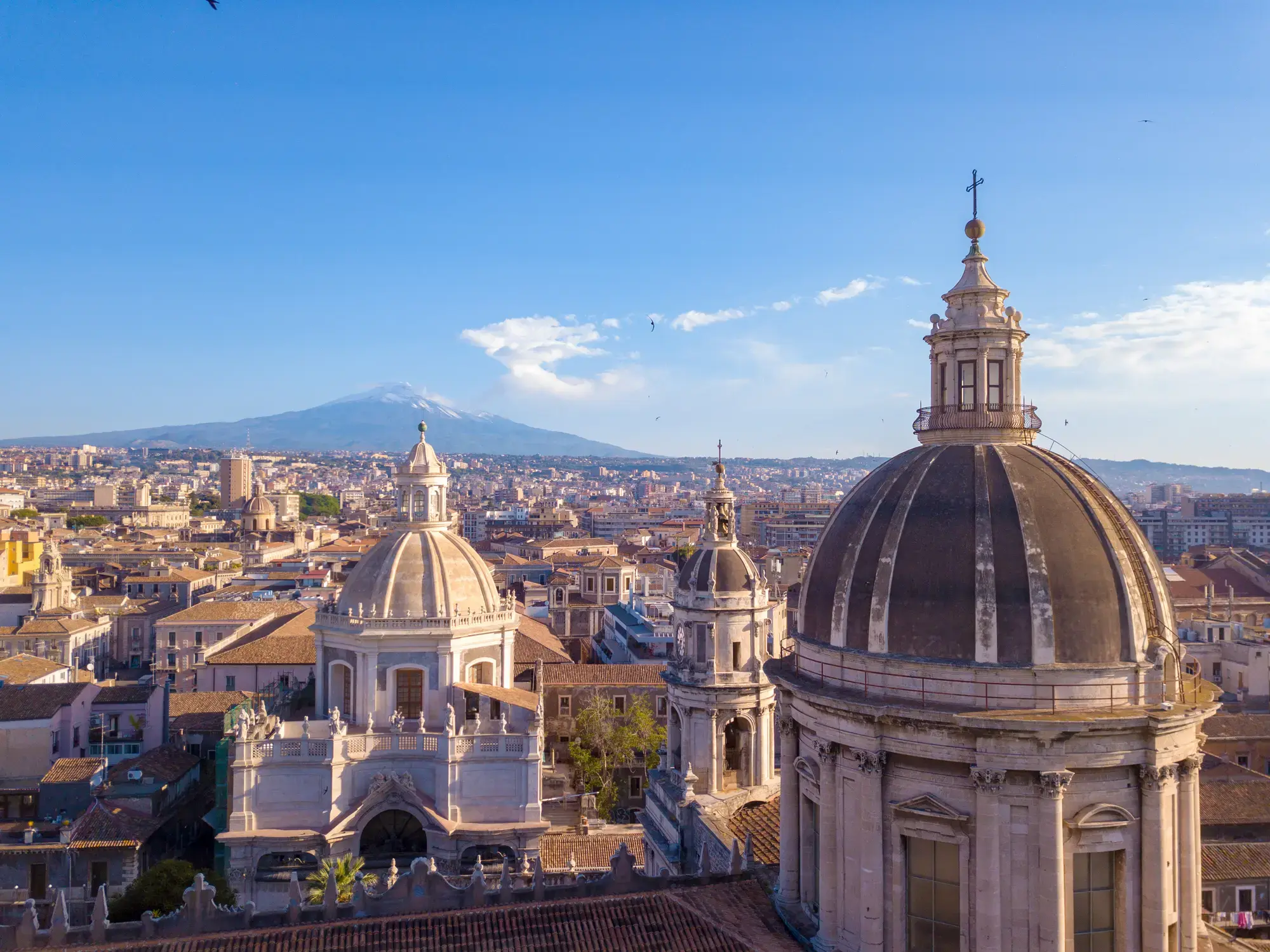
| 65 | 13.10 pt. | Katania / Włochy | 09:00 | 20:00 |
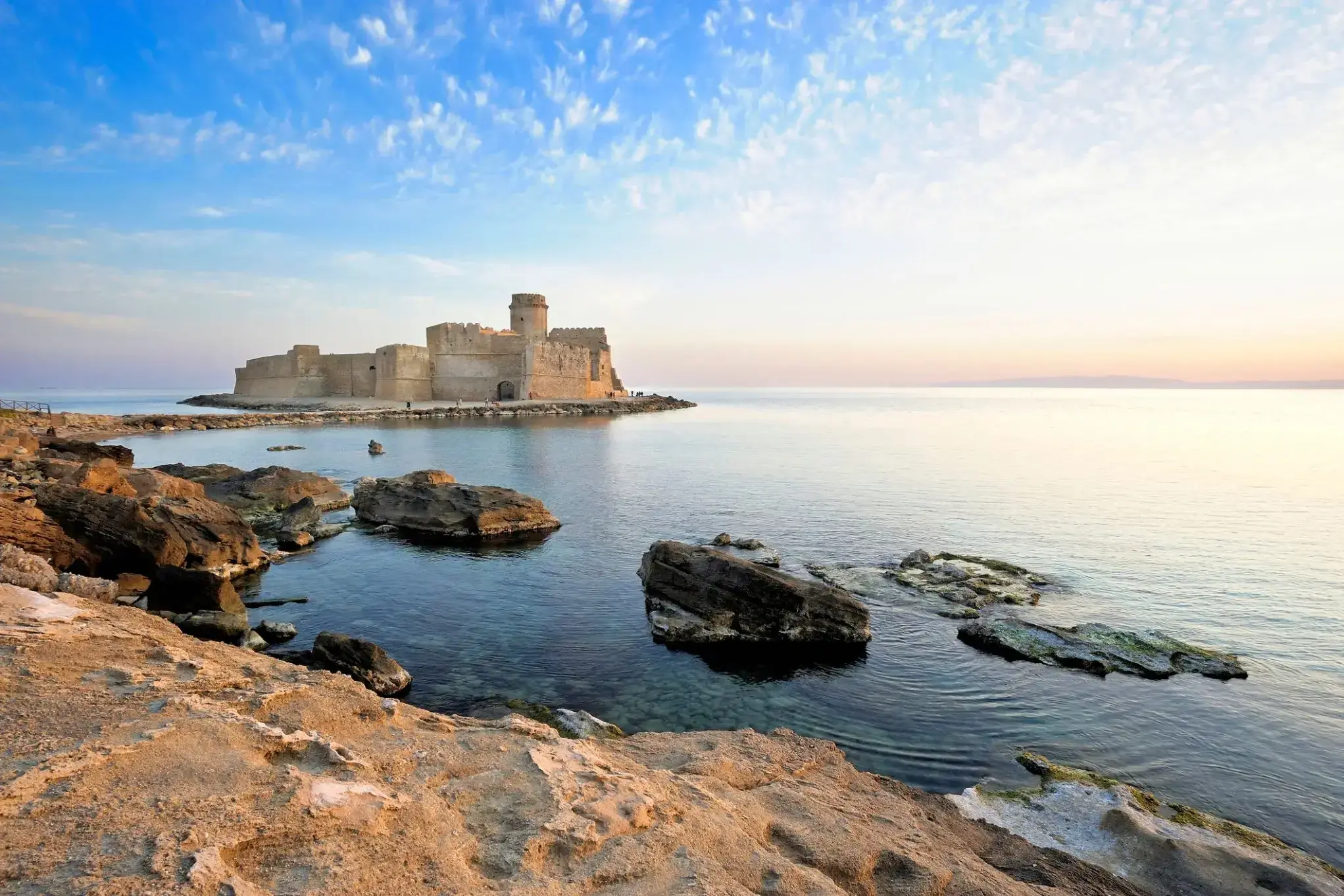
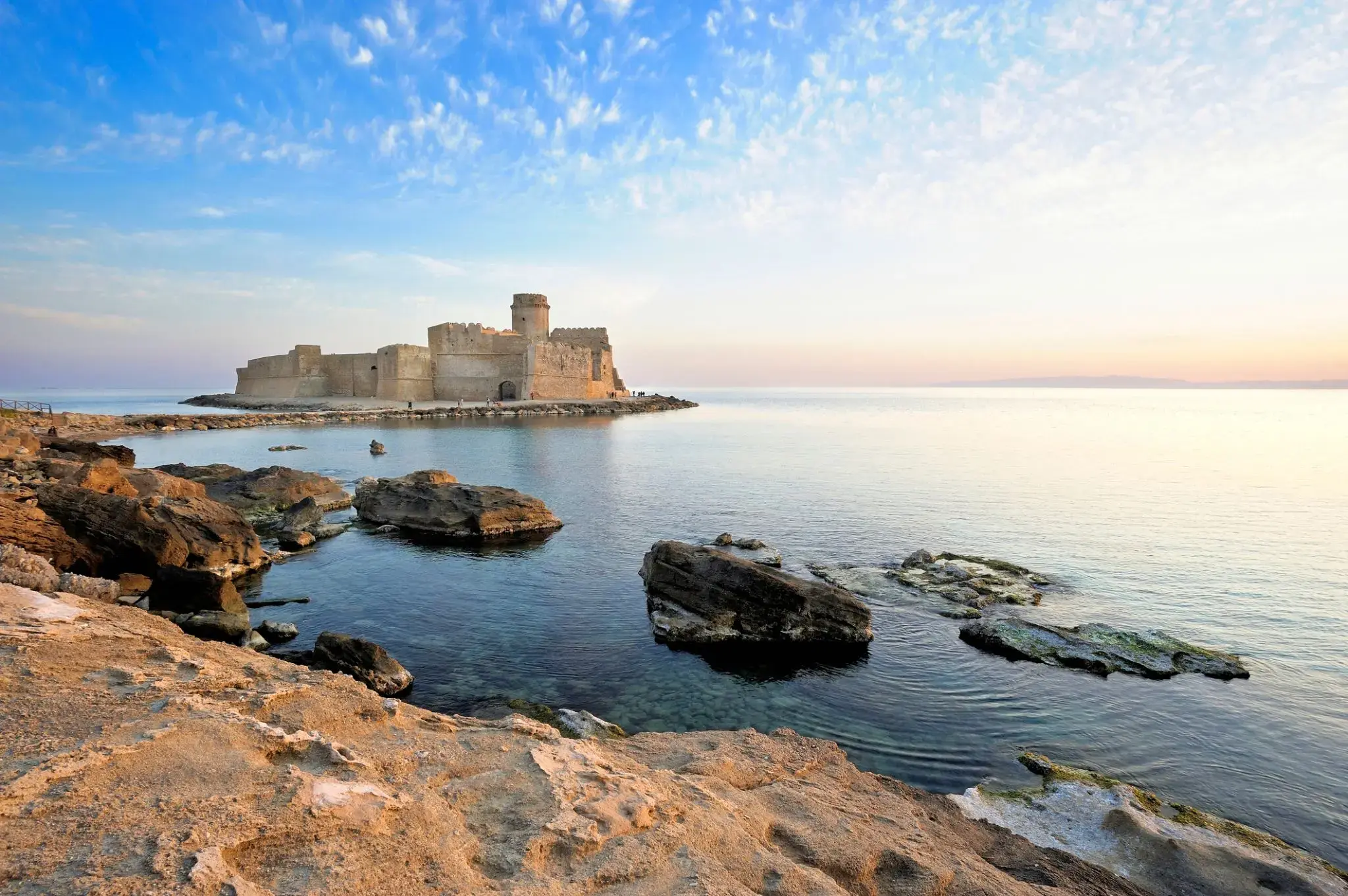
| 66 | 14.10 sob. | Crotone / Włochy | 08:00 | 18:00 |
| 67 | 15.10 niedz. | Kotor / Czarna Góra | 13:00 | 22:00 |
| 68 | 16.10 pon. | Dzień na morzu / Morze | 15:00 | |
| 69 | 17.10 wt. | Wenecja / Włochy | 08:00 | |
| 70 | 18.10 śr. | Wenecja / Włochy | 09:00 | 18:00 |
| 71 | 19.10 czw. | Miedź / Slovenia | 08:00 | 20:00 |
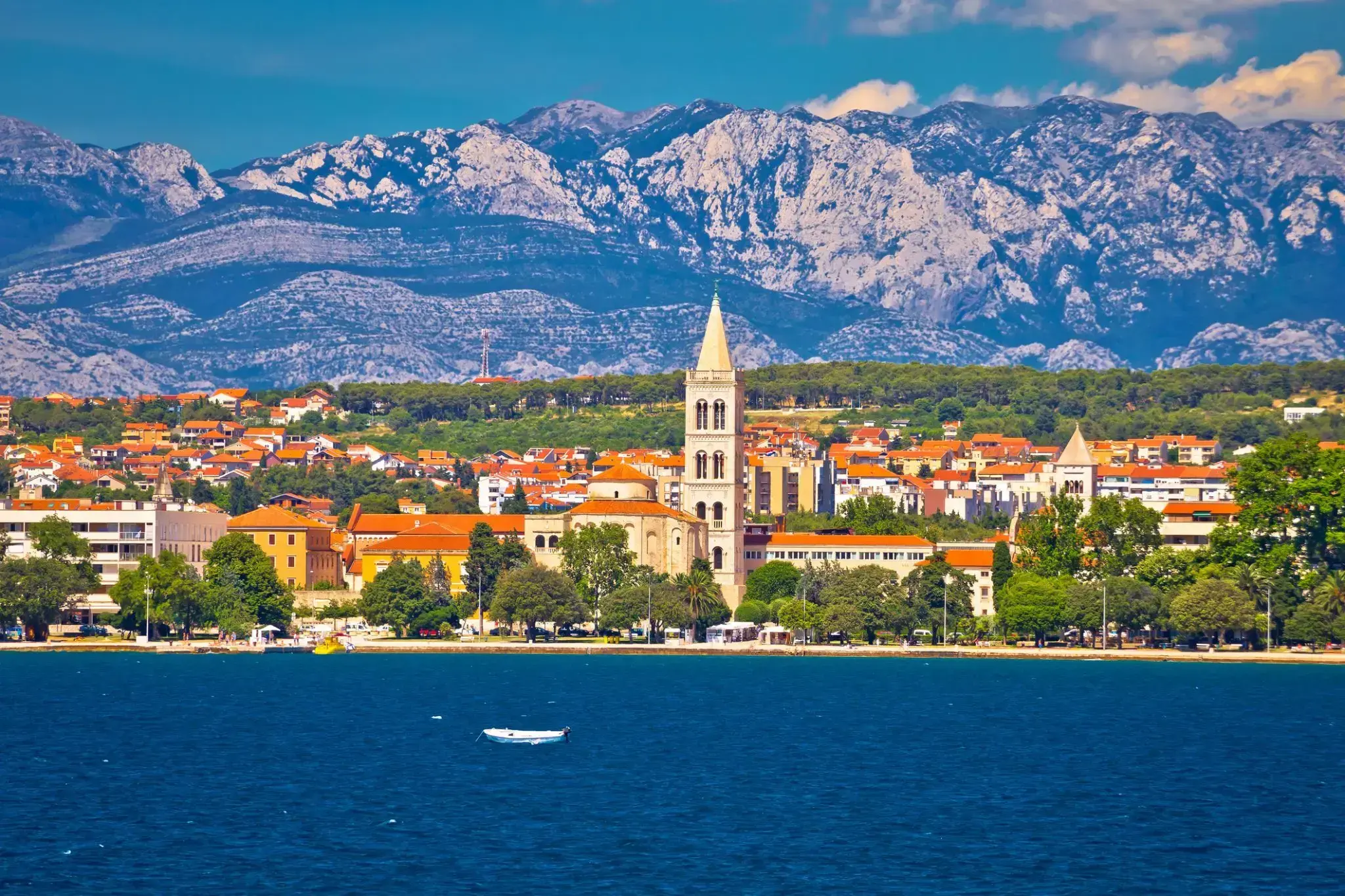
| 72 | 20.10 pt. | Zadar / Chorwacja | 08:00 | 20:00 |
| 73 | 21.10 sob. | Split / Chorwacja | 08:00 | 21:00 |
| 74 | 22.10 niedz. | Dubrownik / Chorwacja | 08:00 | 22:00 |
| 75 | 23.10 pon. | Kotor / Czarna Góra | 08:00 | 19:00 |
| 76 | 24.10 wt. | Korfu / Grecja | 11:00 | 20:00 |
| 77 | 25.10 śr. | Dzień na morzu / Morze | 15:00 | |
| 78 | 26.10 czw. | Heraklion / Grecja | 08:00 | 22:00 |
| 79 | 27.10 pt. | Santorini, Cyklady / Grecja | 08:00 | 18:00 |
| 80 | 28.10 sob. | Syros / Grecja | 08:00 | 18:00 |
| 81 | 29.10 niedz. | Pireus (Ateny) / Grecja | 05:00 |
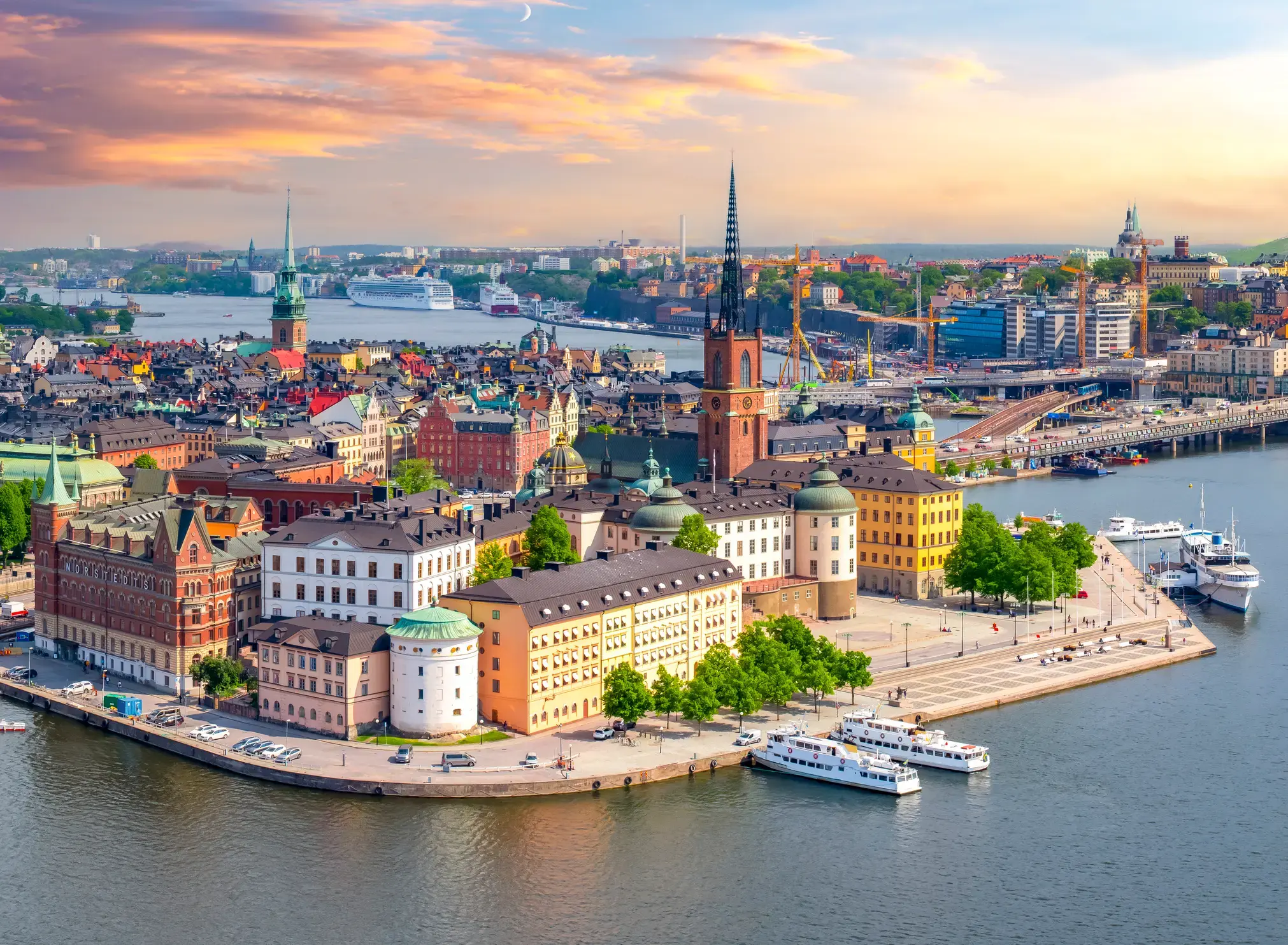
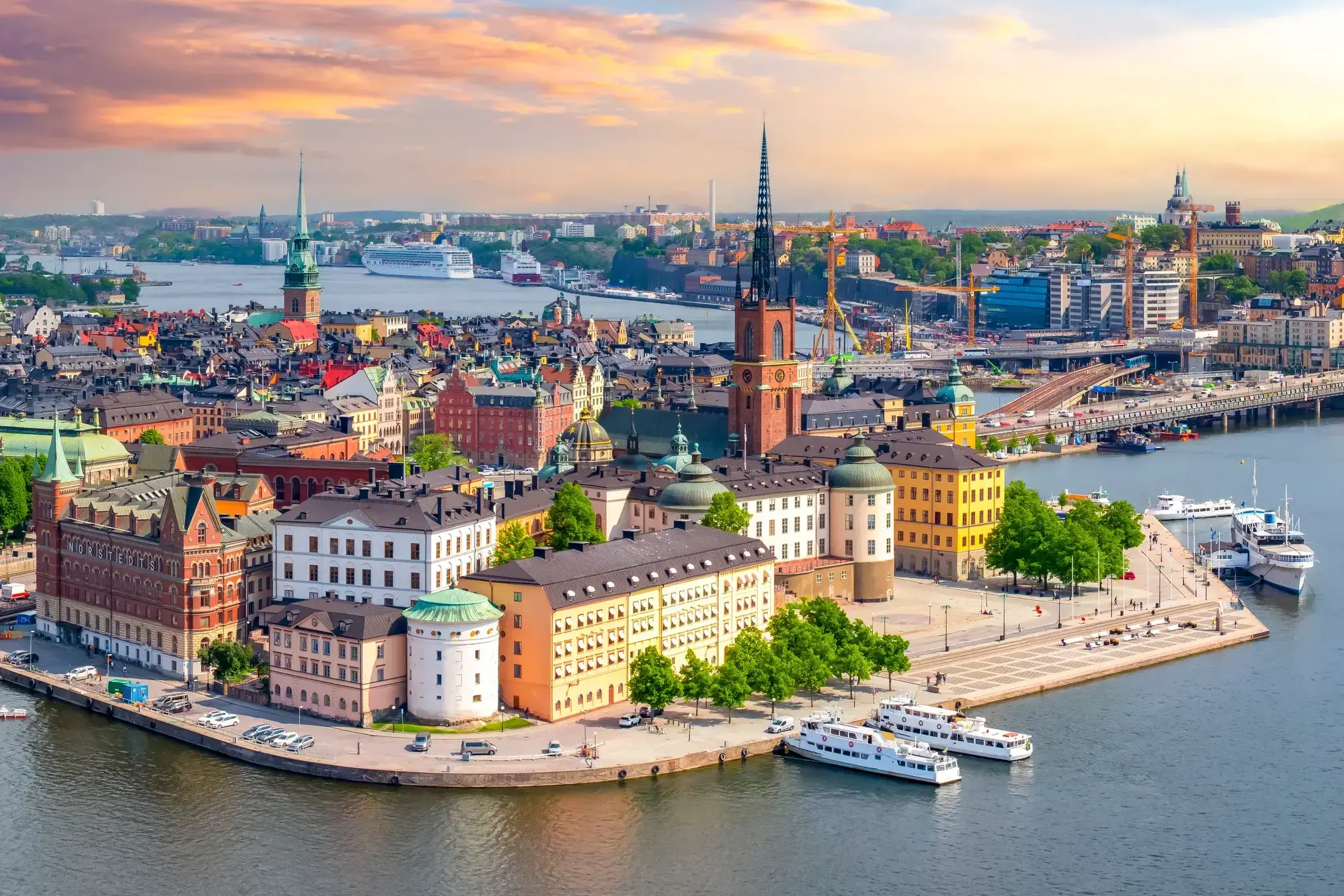
Stockholm is the capital of Sweden and the most populous urban area in the Nordic countries; 960,031 people live in the municipality, approximately 1.5 million in the urban area, and 2.3 million in the metropolitan area. The city stretches across fourteen islands where Lake Mälaren flows into the Baltic Sea. Just outside the city and along the coast is the island chain of the Stockholm archipelago. The area has been settled since the Stone Age, in the 6th millennium BC, and was founded as a city in 1252 by Swedish statesman Birger Jarl. It is also the capital of Stockholm County.
Stockholm is the cultural, media, political, and economic centre of Sweden. The Stockholm region alone accounts for over a third of the country's GDP, and is among the top 10 regions in Europe by GDP per capita. It is an important global city, and the main centre for corporate headquarters in the Nordic region. The city is home to some of Europe's top ranking universities, such as the Stockholm School of Economics, Karolinska Institute and Royal Institute of Technology (KTH). It hosts the annual Nobel Prize ceremonies and banquet at the Stockholm Concert Hall and Stockholm City Hall. One of the city's most prized museums, the Vasa Museum, is the most visited non-art museum in Scandinavia. The Stockholm metro, opened in 1950, is well known for the decor of its stations; it has been called the longest art gallery in the world. Sweden's national football arena is located north of the city centre, in Solna. Ericsson Globe, the national indoor arena, is in the southern part of the city. The city was the host of the 1912 Summer Olympics, and hosted the equestrian portion of the 1956 Summer Olympicsotherwise held in Melbourne, Victoria, Australia.
Stockholm is the seat of the Swedish government and most of its agencies, including the highest courts in the judiciary, and the official residencies of the Swedish monarch and the Prime Minister. The government has its seat in the Rosenbad building, the Riksdag (Swedish parliament) is seated in the Parliament House, and the Prime Minister's residence is adjacent at Sager House. Stockholm Palace is the official residence and principal workplace of the Swedish monarch, while Drottningholm Palace, a World Heritage Site on the outskirts of Stockholm, serves as the Royal Family's private residence.
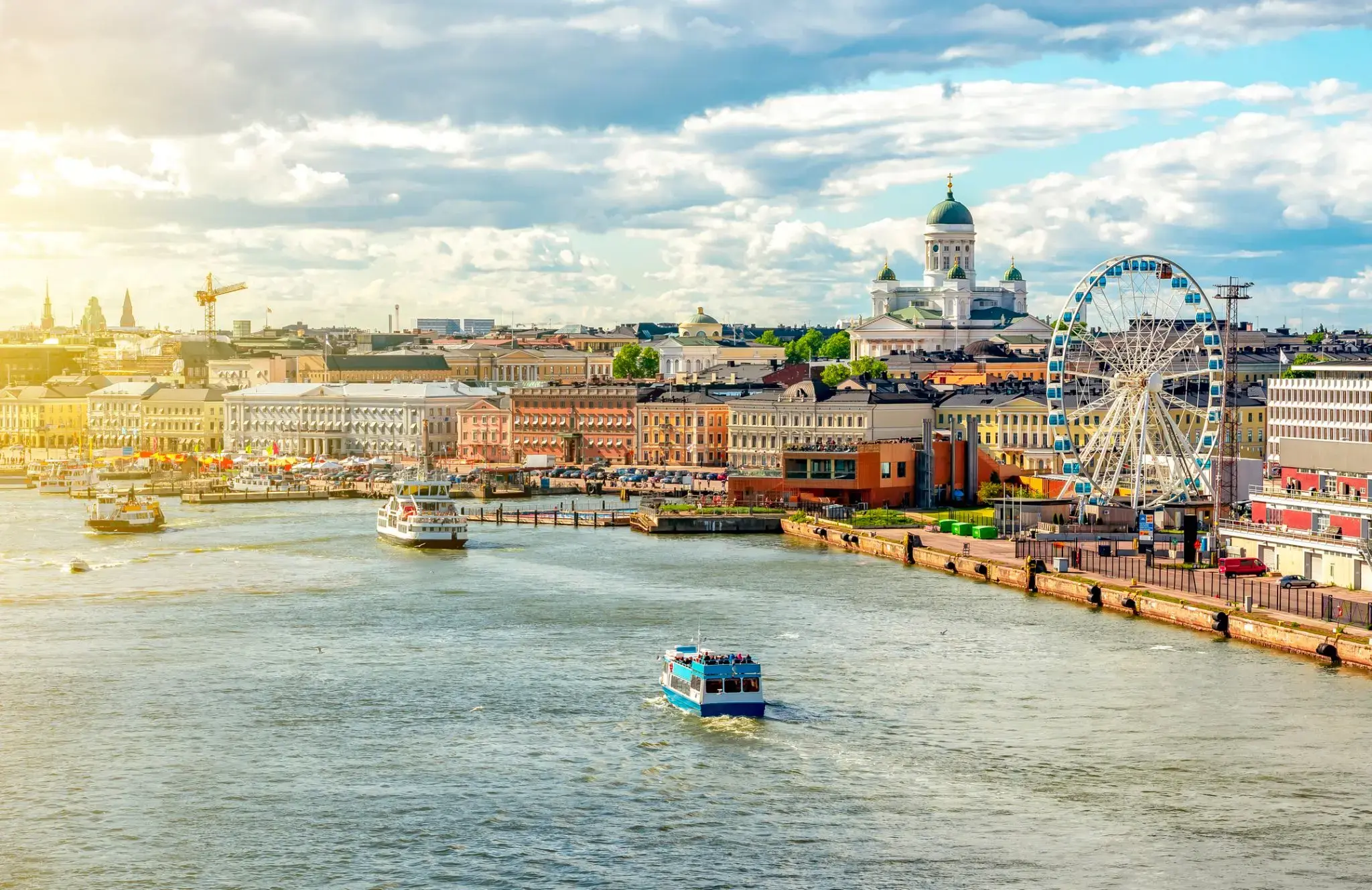
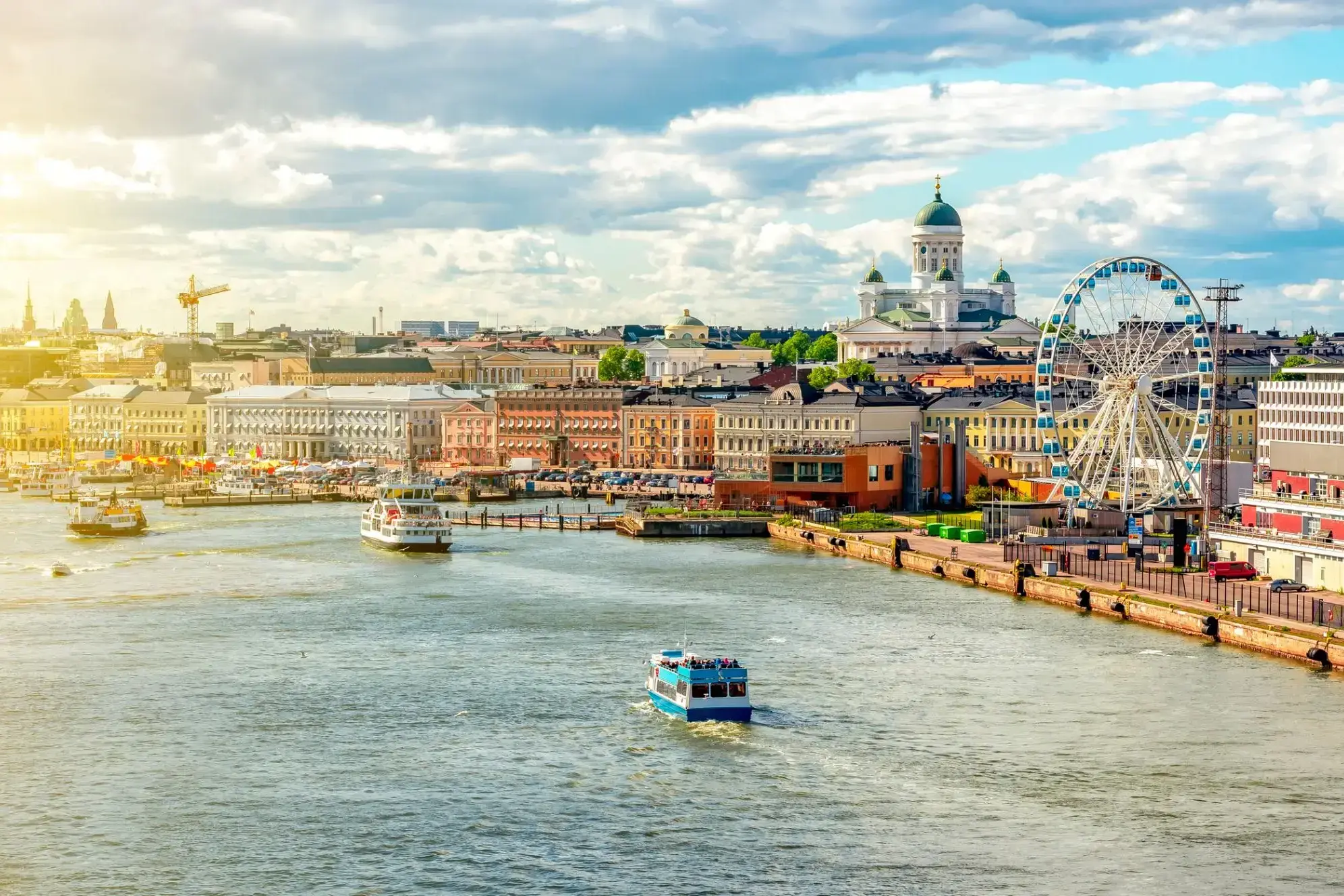
Helsinki located in the southern Finland, and has a population of 648,650. The city's urban area has a population of 1,268,296, it’s the most important center for politics, education, finance, culture, and research. Helsinki is located 80 kilometers (50 mi) north of Tallinn, Estonia, 400 km (250 mi) east of Stockholm, Sweden, and 390 km (240 mi) west of Saint Petersburg, Russia. It has close ties with these three cities.
Together with the cities of Espoo, Vantaa, and Kauniainen, and the surrounding commuter towns, Helsinki forms the Greater Helsinki metropolitan area, which has a population of nearly 1.5 million. Often being considered a metropolis of the EU member state. After Stockholm and Oslo, Helsinki is the third largest city in the Nordic countries. It is located in the city of Vantaa and is located in the city of Vantaa.
Helsinki was the World Design Capital for 2012, the 1952 Summer Olympics and the 52nd Eurovision Song Contest.
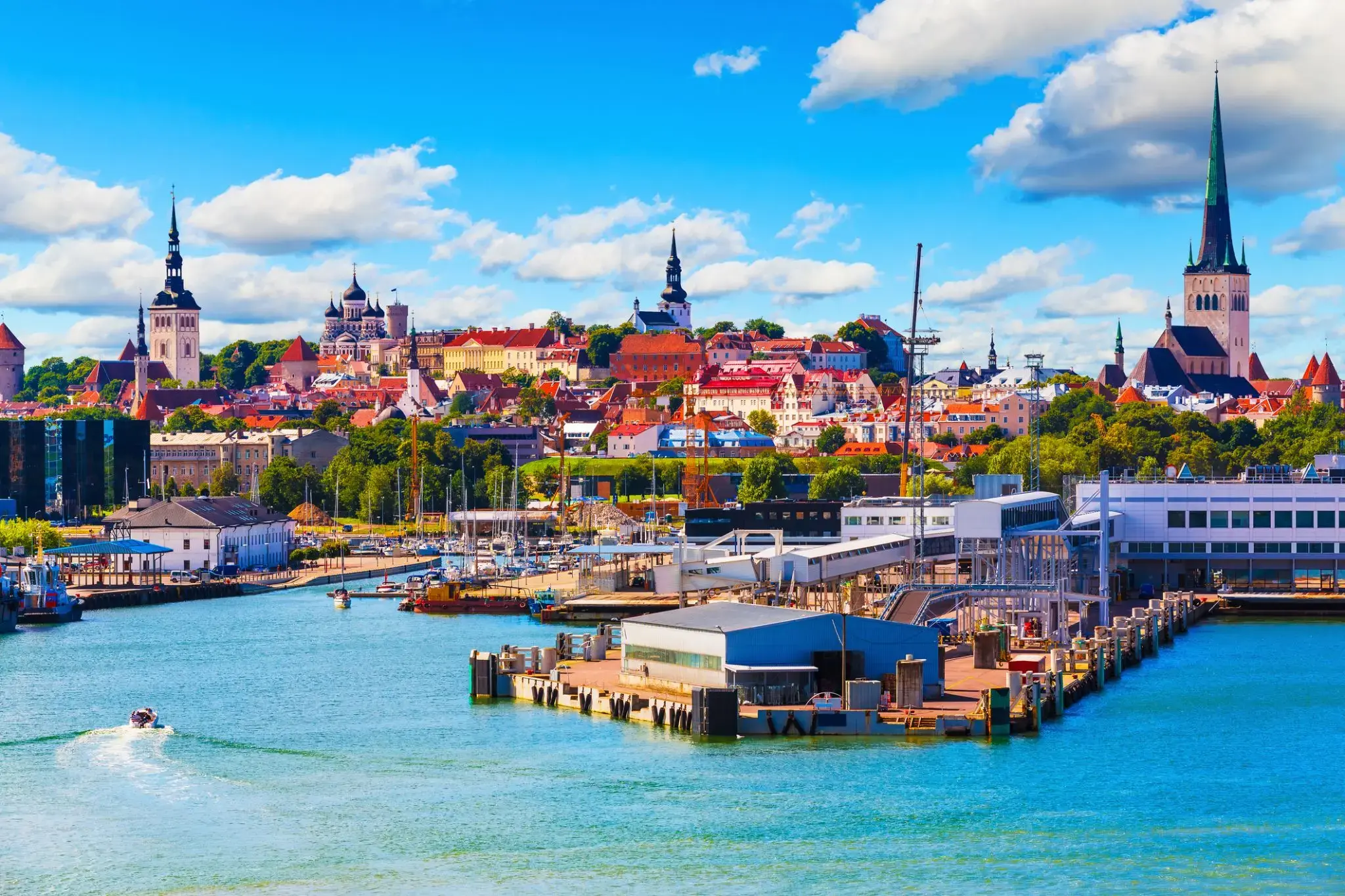
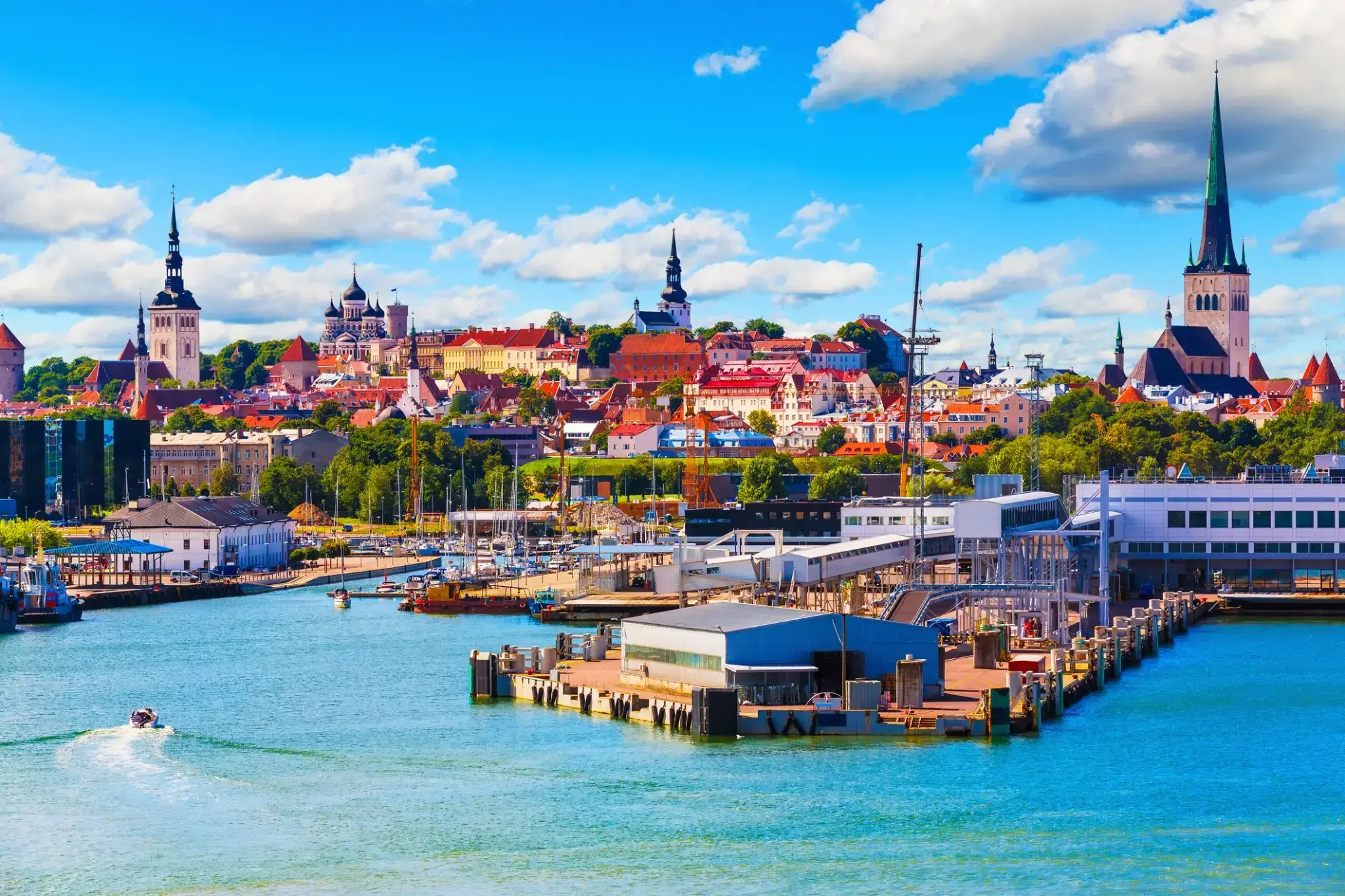
Tallinn is the capital and largest city of Estonia. It is on the northern coast of the country, on the shore of the Gulf of Finland in Harju County. From the 13th century until 1918 (and briefly during the Nazi occupation of Estonia from 1941 to 1944), the city was known as Reval. Tallinn occupies an area of 159.2 km2 (61.5 sq mi) and has a population of 453,033.
Tallinn, first mentioned in 1219, received city rights in 1248, but the earliest human settlements date back 5,000 years. The initial claim over the land was laid by the Danes in 1219, after a successful raid of Lindanise led by Valdemar II of Denmark, followed by a period of alternating Scandinavian and German rule. Due to its strategic location, the city became a major trade hub, especially from the 14th to the 16th century, when it grew in importance as part of the Hanseatic League.
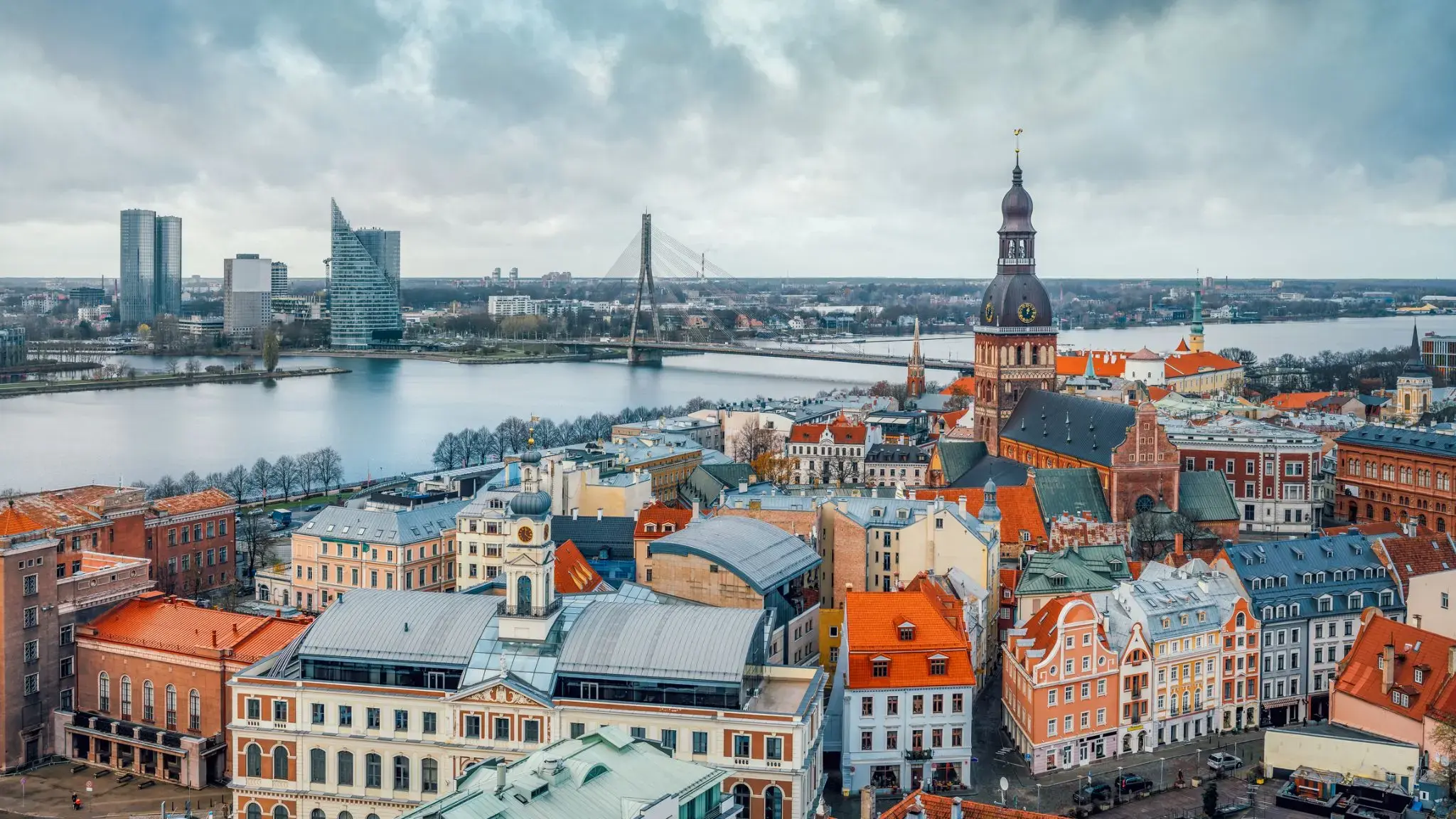
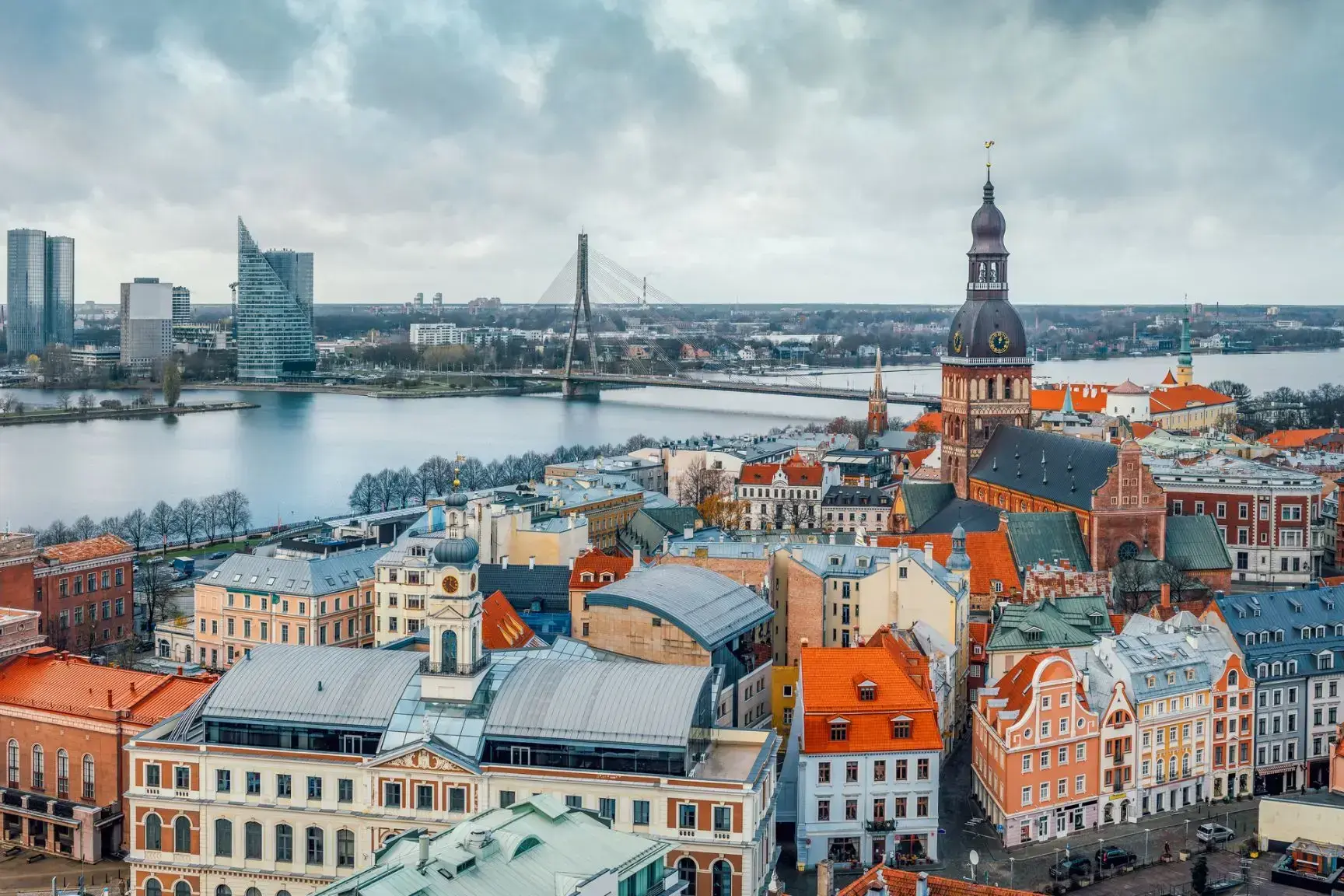
Riga is the capital and largest city of Latvia. With 637,827 inhabitants (2018), it is also the largest city in the three Baltic states, home to one third of Latvia's population and one tenth of the three Baltic states' combined population. The city lies on the Gulf of Riga, at the mouth of the Daugava. Riga's territory covers 307.17 km2 (118.60 sq mi) and lies 1–10 m (3 ft 3 in–32 ft 10 in) above sea level, on a flat and sandy plain.
Riga was founded in 1201 and is a former Hanseatic League member. Riga's historical centre is a UNESCO World Heritage Site, noted for its Art Nouveau/Jugendstil architecture and 19th century wooden architecture. Riga was the European Capital of Culture during 2014, along with Umeå in Sweden. Riga hosted the 2006 NATO Summit, the Eurovision Song Contest 2003, the 2006 IIHF Men's World Ice Hockey Championships and the 2013 World Women's Curling Championship. It is home to the European Union's office of European Regulators for Electronic Communications (BEREC).
In 2016, Riga received over 1.4 million visitors. It is served by Riga International Airport, the largest and busiest airport in the Baltic states. Riga is a member of Eurocities, the Union of the Baltic Cities (UBC) and Union of Capitals of the European Union (UCEU).
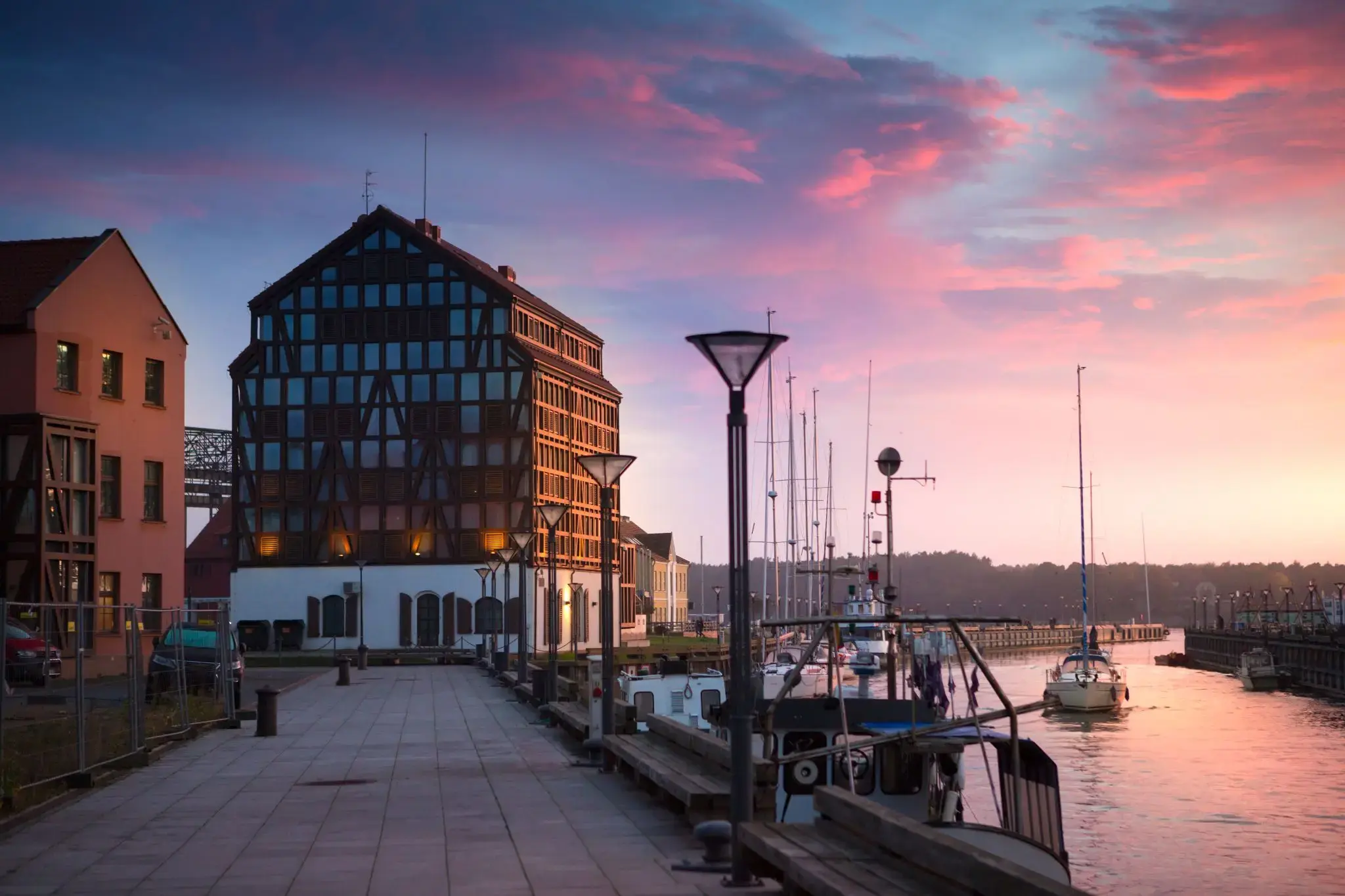
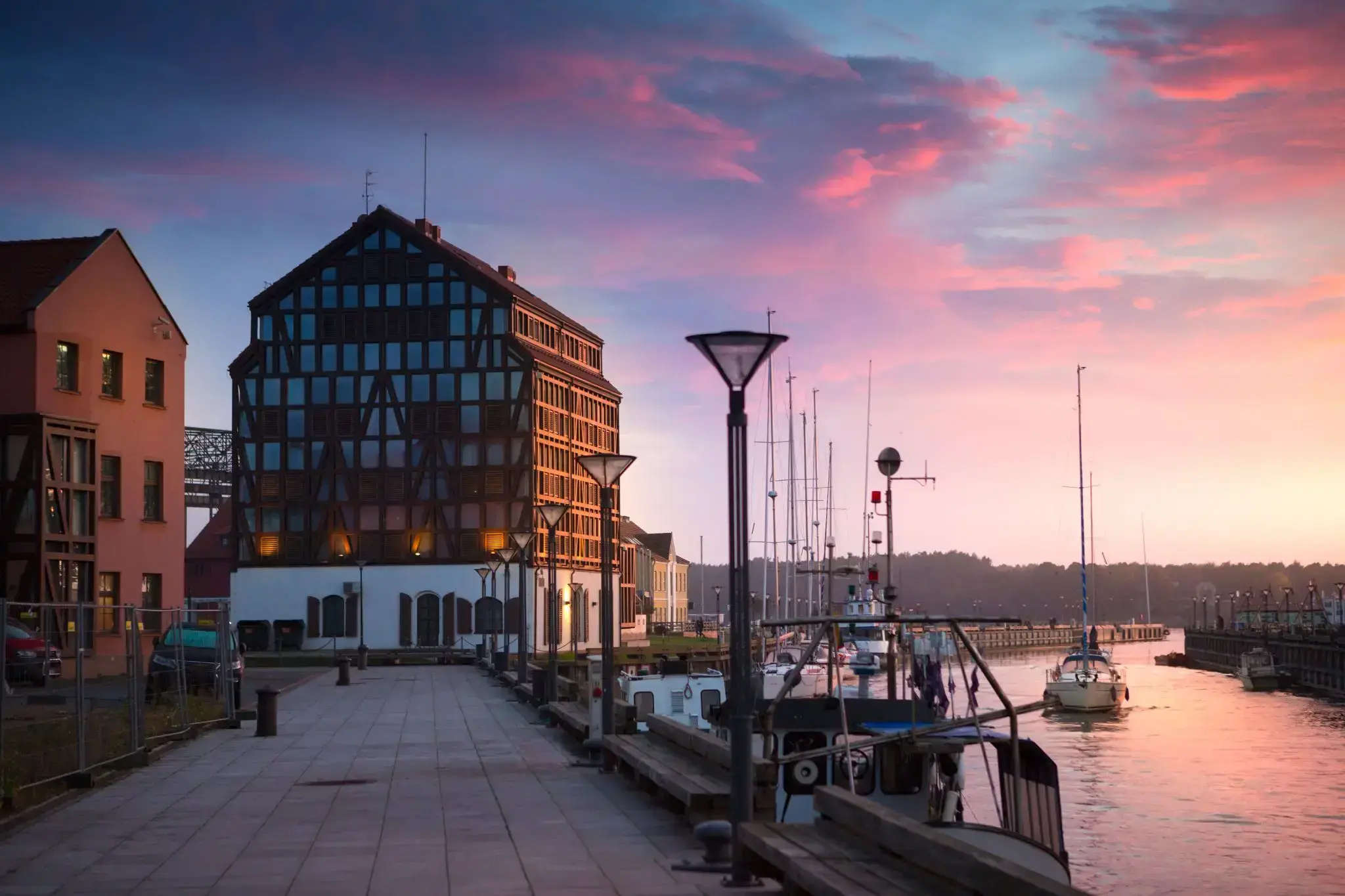
Klaipėda is a city in Lithuania on the Baltic Sea coast. It is the third largest city in Lithuania and the capital of Klaipėda County.
The city has a complex recorded history, partially due to the combined regional importance of the usually ice-free Port of Klaipėda at the mouth of the Akmena-Danė River. It was controlled by successive German states until the 1919 Treaty of Versailles. As a result of the 1923 Klaipėda Revolt it was added to Lithuania and has remained with Lithuania to this day, except for the period between 1939 and 1945 when it returned to Germany following the 1939 German ultimatum to Lithuania and the German–Soviet Union Molotov–Ribbentrop Pact.
The population has shrunk from the city to suburbs and the hinterland. The city had a population of 207,100 in 1992 to 157,350 in 2014 but the city is growing again. Popular seaside resorts found close to Klaipėda are Nida to the south on the Curonian Spit and Palanga to the north.
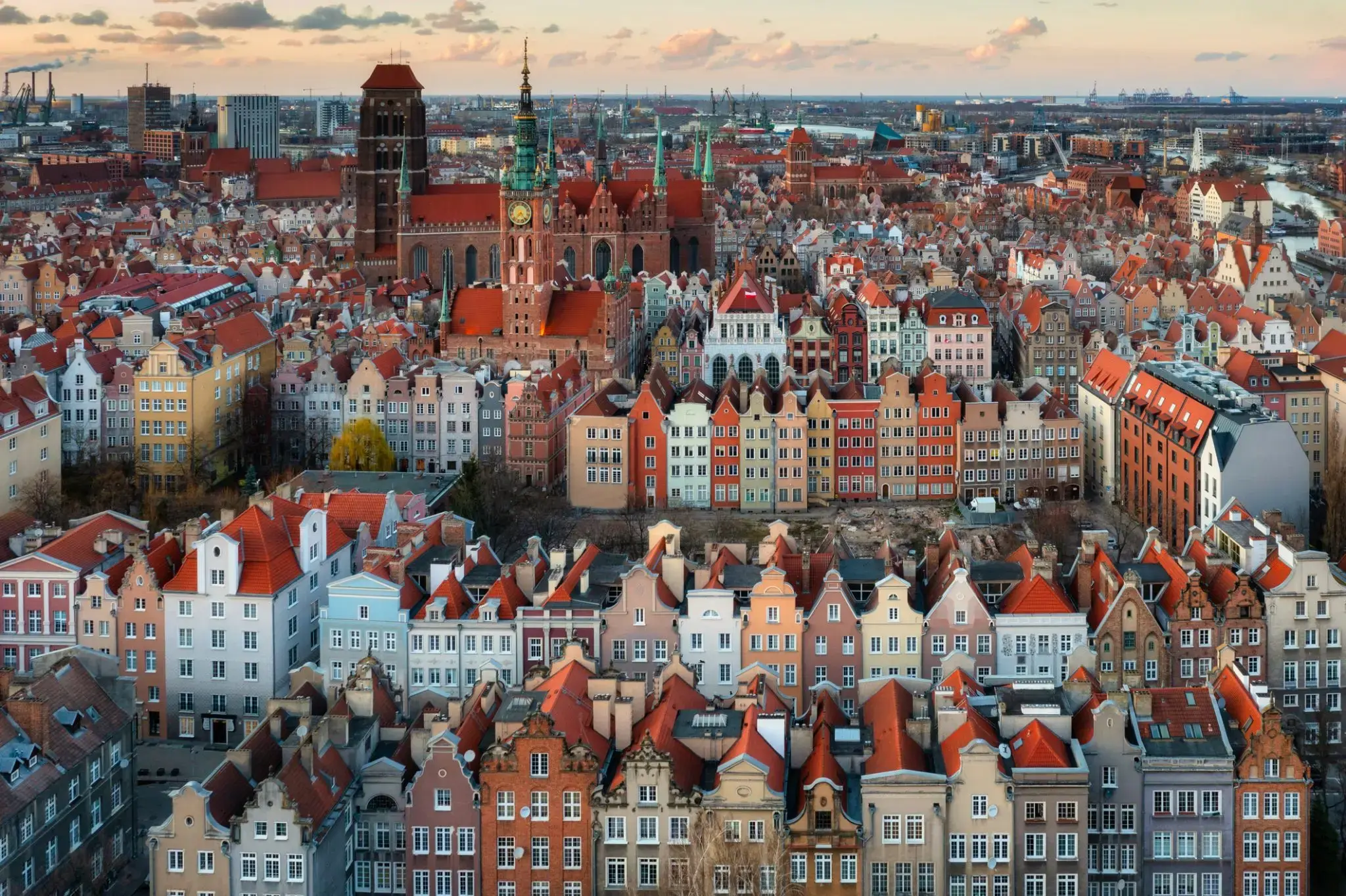
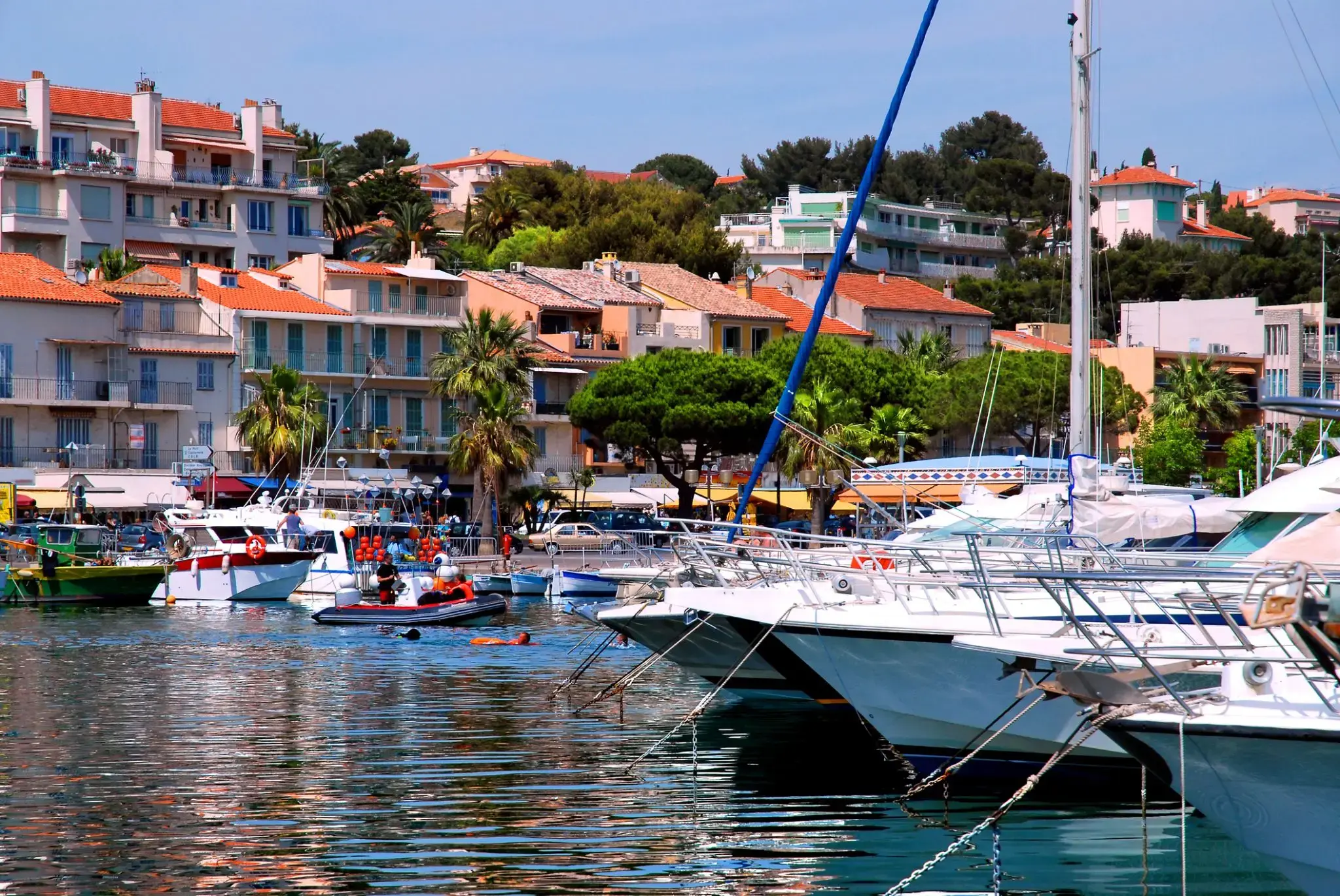
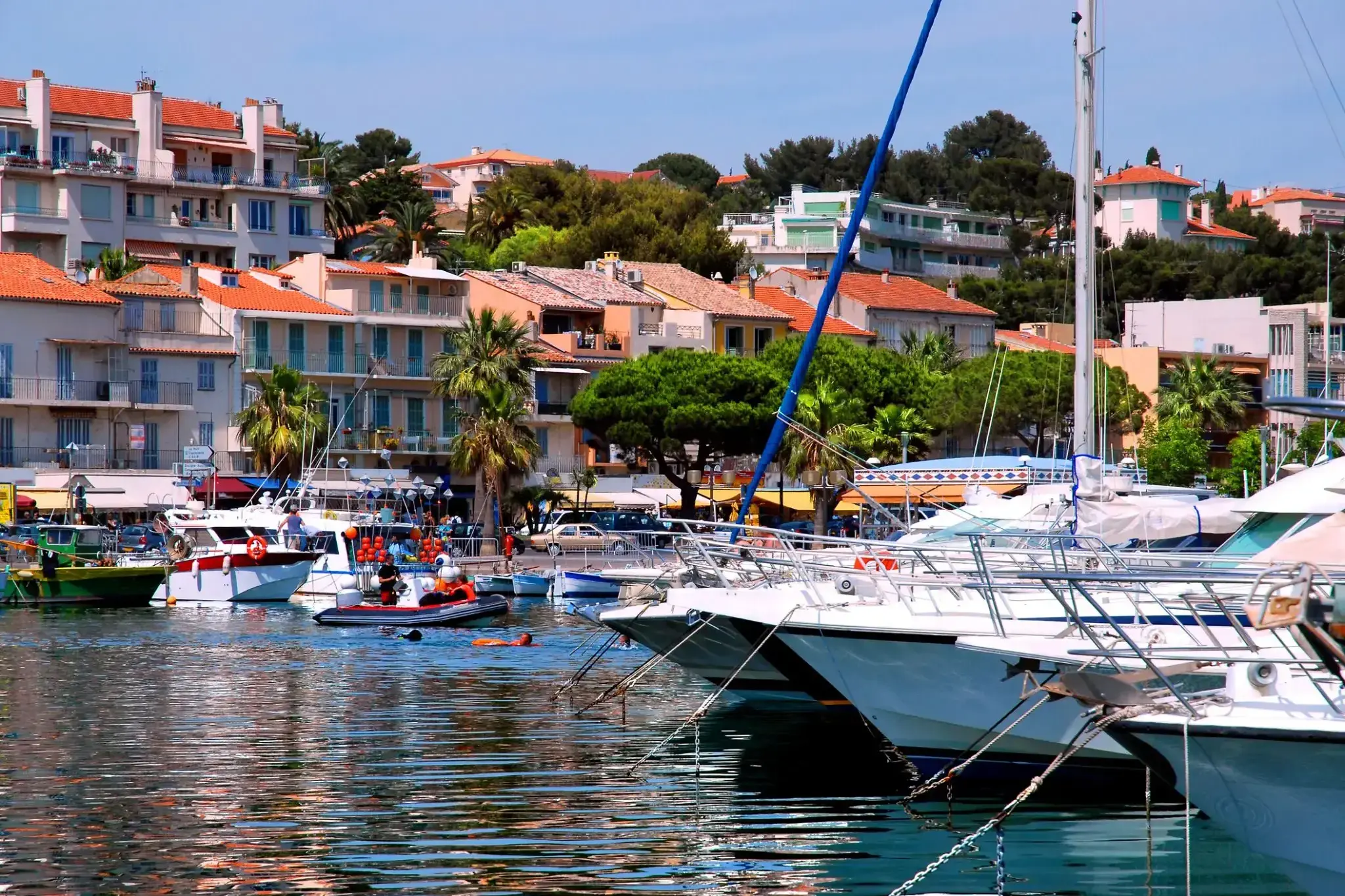
Bandol is a commune in Var department, Provence-Alpes-Côte d'Azur region, southeastern France. Bandol and the seat of its eponymous commune, was founded in 1595 and built around a small military fort.
The Bandol wine region, located near the coast east of Marseille and Cassis, is one of Provence’s most internationally recognized wine regions. Built around the village of Bandol, west of Toulon, the Bandol AOC covers the production of 8 communes with silicon & limestone soils. Those soils and the warm, coastal climate are ideally suited for the late ripening Mourvèdre grape which is the major variety of the region. For both the red and rosé wines, Mourvèdre must account for at least 50% of the blend, though most producers will use significantly more, with Grenache & Cinsaut usually filling out the rest of the wine’s composition.
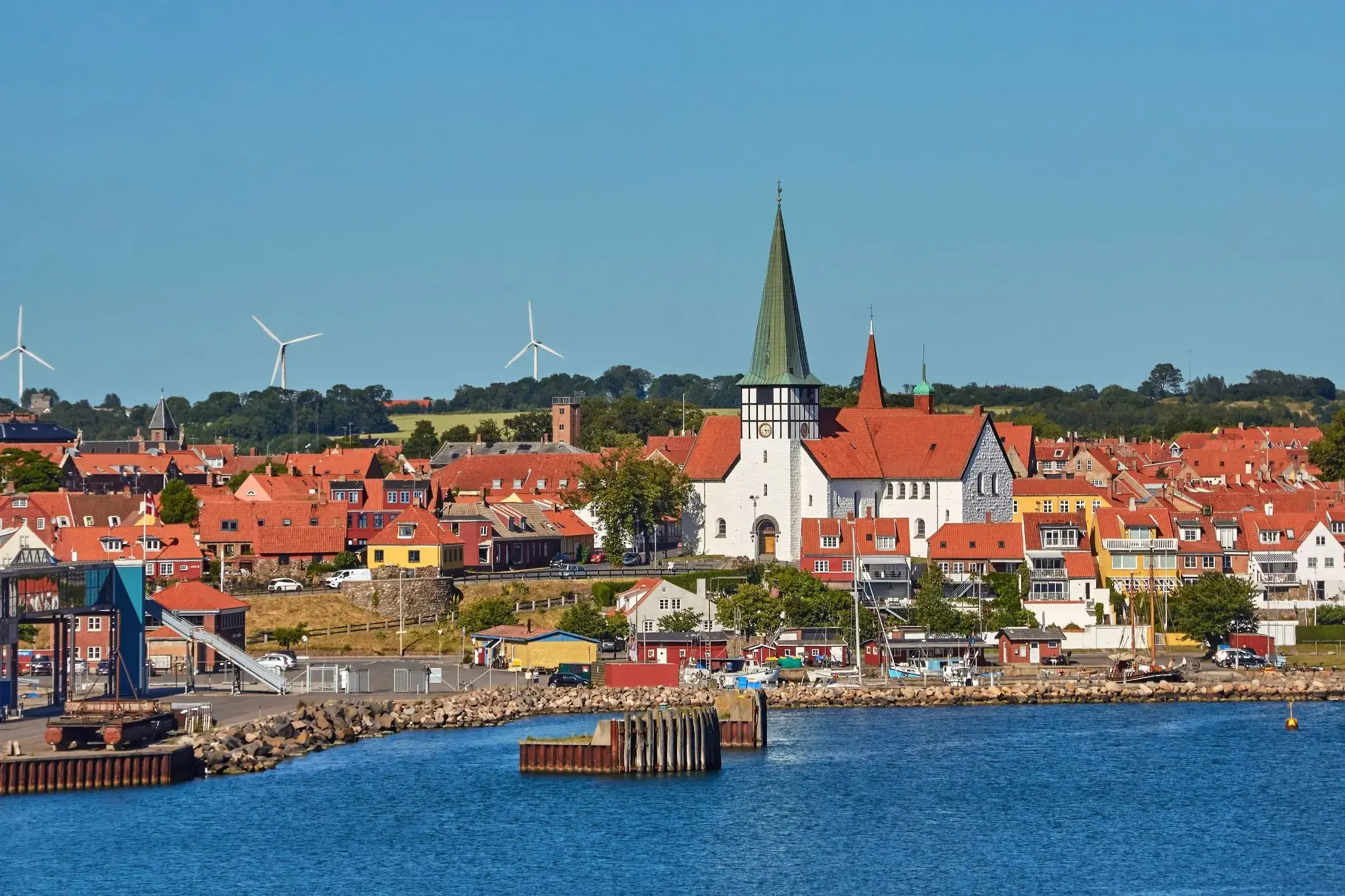
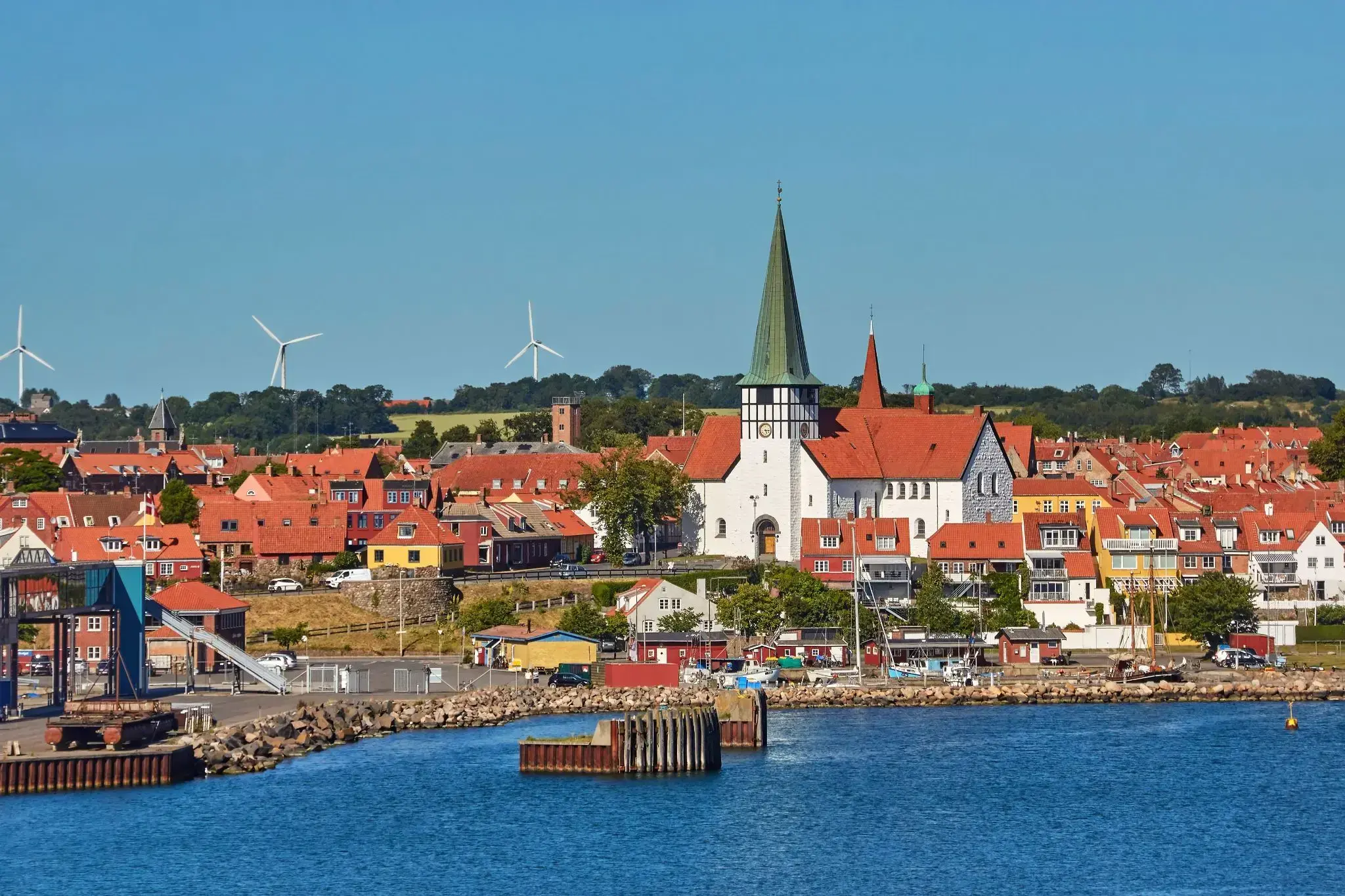
Ciche uliczki z domami szachulcowymi sprawiają, że Ronne (Rønne) jest przytulnym zakątkiem na duńskiej wyspie Bornholm, gdzie każdy krok wypełniony jest zapachem morza i świeżego pieczywa z lokalnych piekarni. Miasto słynie z warsztatów ceramiki i szkła oraz przytulnej atmosfery portu rybackiego, w którym można spróbować świeżo wędzonego śledzia i obserwować, jak statki powoli wpływają do portu. Tutaj czas zwalnia, pozwalając cieszyć się spacerami po starym mieście z brukowanymi uliczkami i malowniczymi domami z XVIII wieku.
W Ronne podróżnych czeka spokojny wypoczynek z nutą duńskiego przytulnego klimatu i kreatywnej atmosfery wyspy. Muzeum Bornholmu przybliża historię wyspy i tradycje morskie, a spacery wzdłuż wybrzeża ukazują skaliste brzegi i czyste plaże zapraszające do odpoczynku przez cały rok. To miasto jest idealnym miejscem dla tych, którzy chcą poczuć autentyczną Danię, zaczerpnąć morskiego powietrza i odkryć ciepłą gościnność Bornholmu.
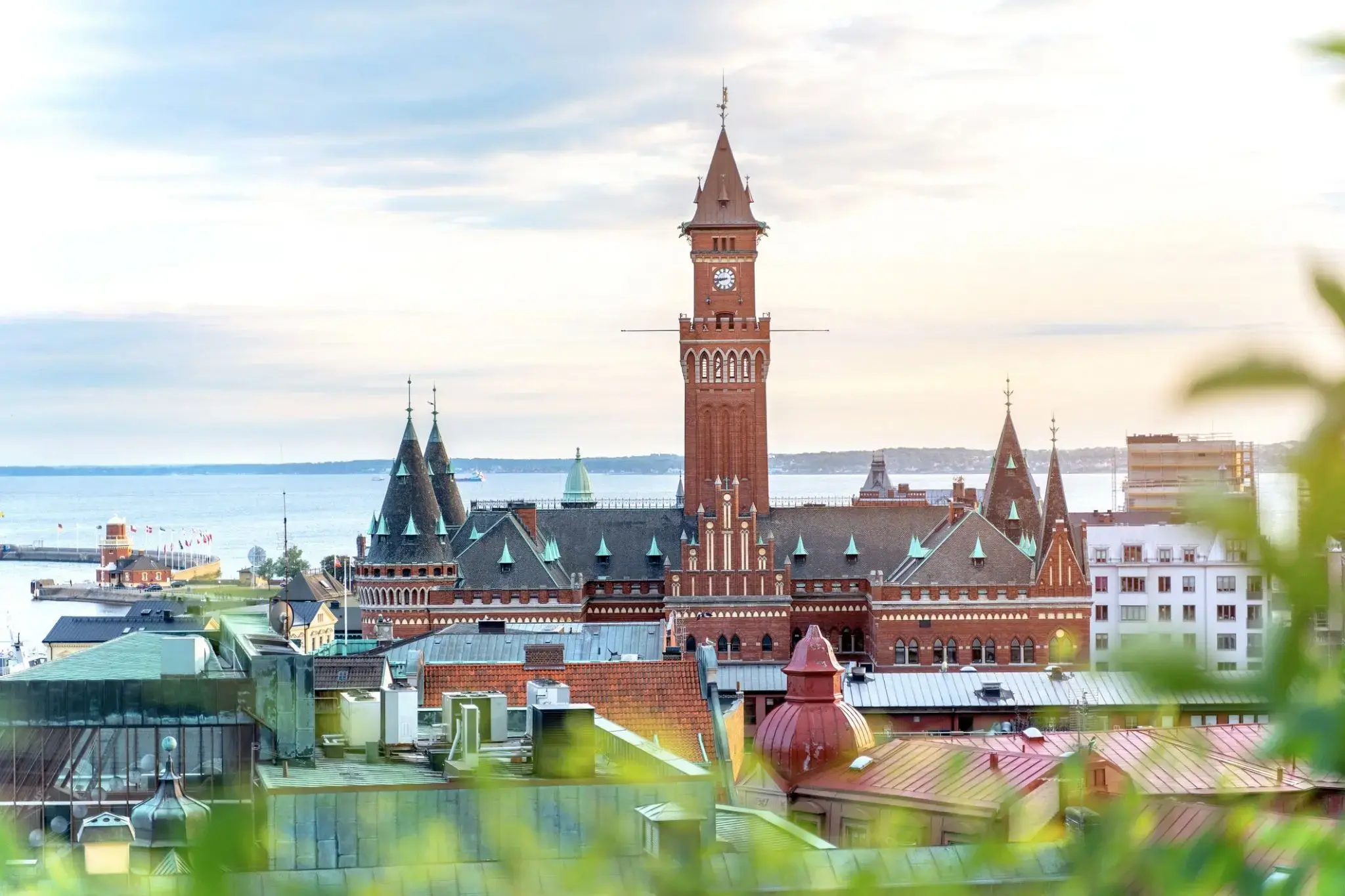
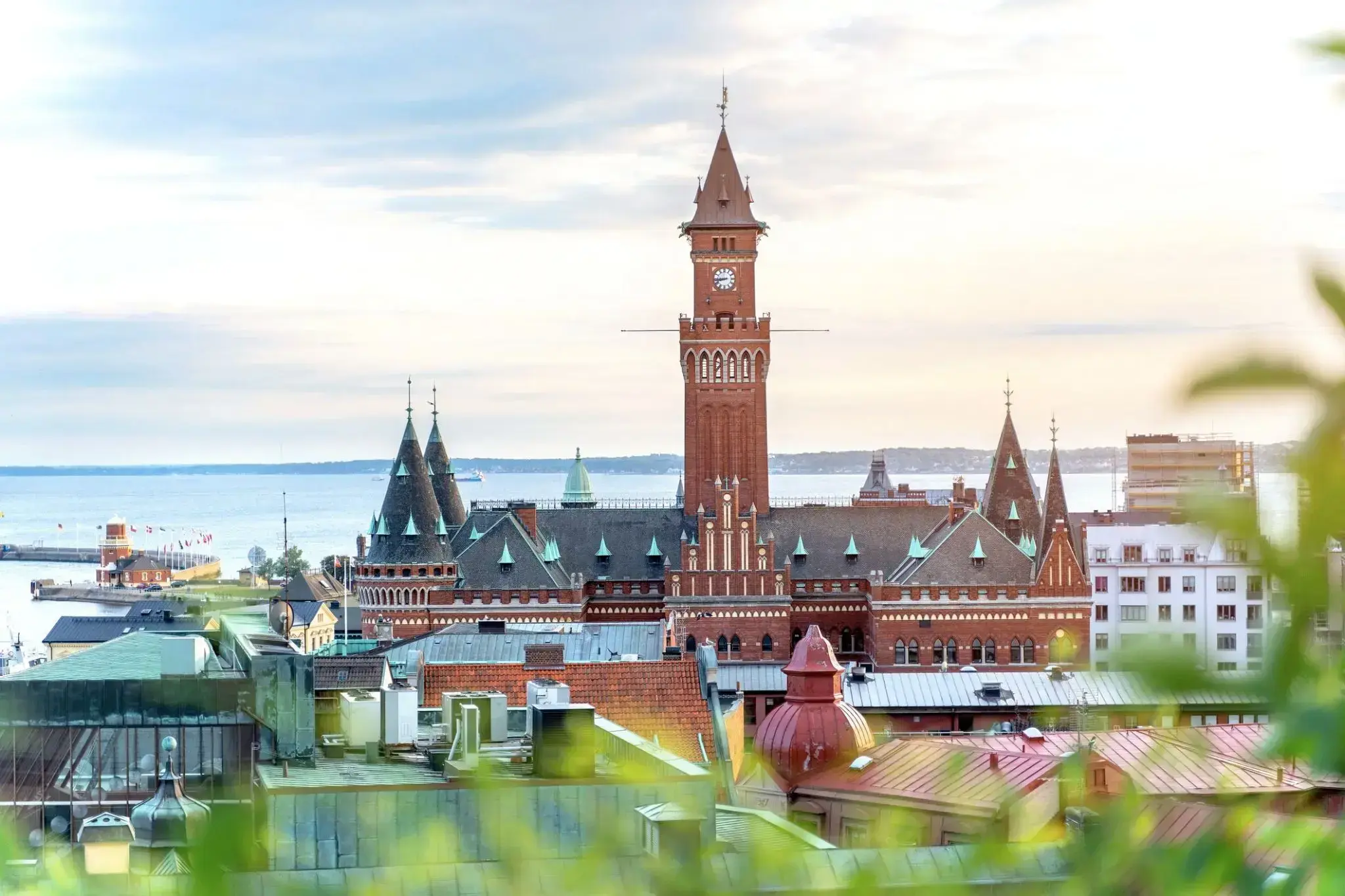
Położony malowniczo nad cieśniną Öresund, Helsingborg urzeka podróżnych szwedzkim urokiem, nadmorskim klimatem i zabytkową architekturą. To jedno z najstarszych miast Szwecji, a do duńskiego Helsingøru można stąd dotrzeć promem w zaledwie 20 minut. Wąskie uliczki starego miasta prowadzą do średniowiecznej wieży Kärnan, z której roztacza się zapierający dech w piersiach widok na miasto i morze.
Spacerując wzdłuż nabrzeża Helsingborga, natkniemy się na kawiarnie z owocami morza, galerie sztuki i przytulne sklepy skandynawskie. Miasto słynie również z zielonych parków oraz zamku Sofiero z królewskim ogrodem, który szczególnie zachwyca wiosną i latem. Helsingborg to miejsce, gdzie historia spotyka się ze współczesnością w atmosferze nadmorskiego spokoju i kulturalnego bogactwa.
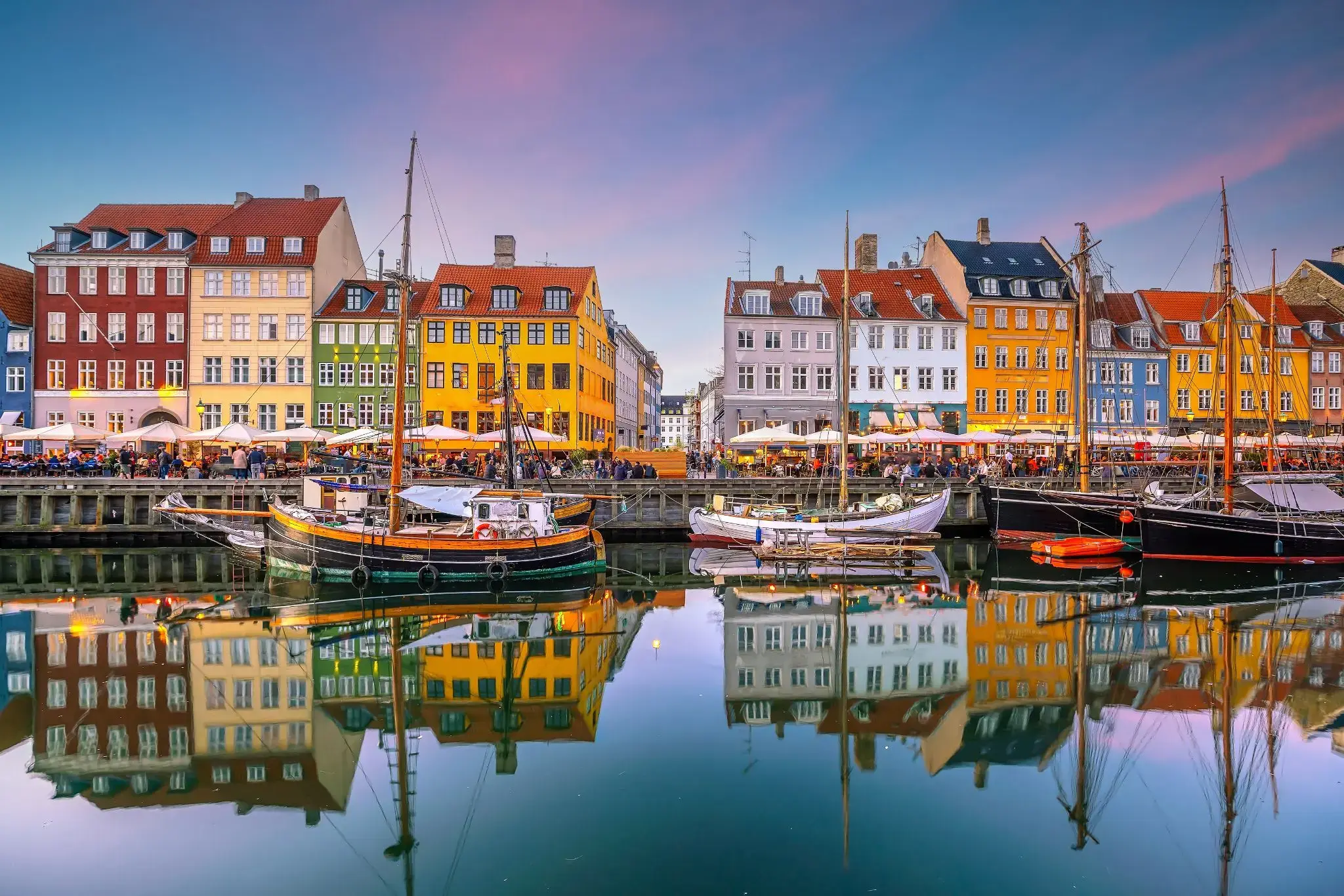
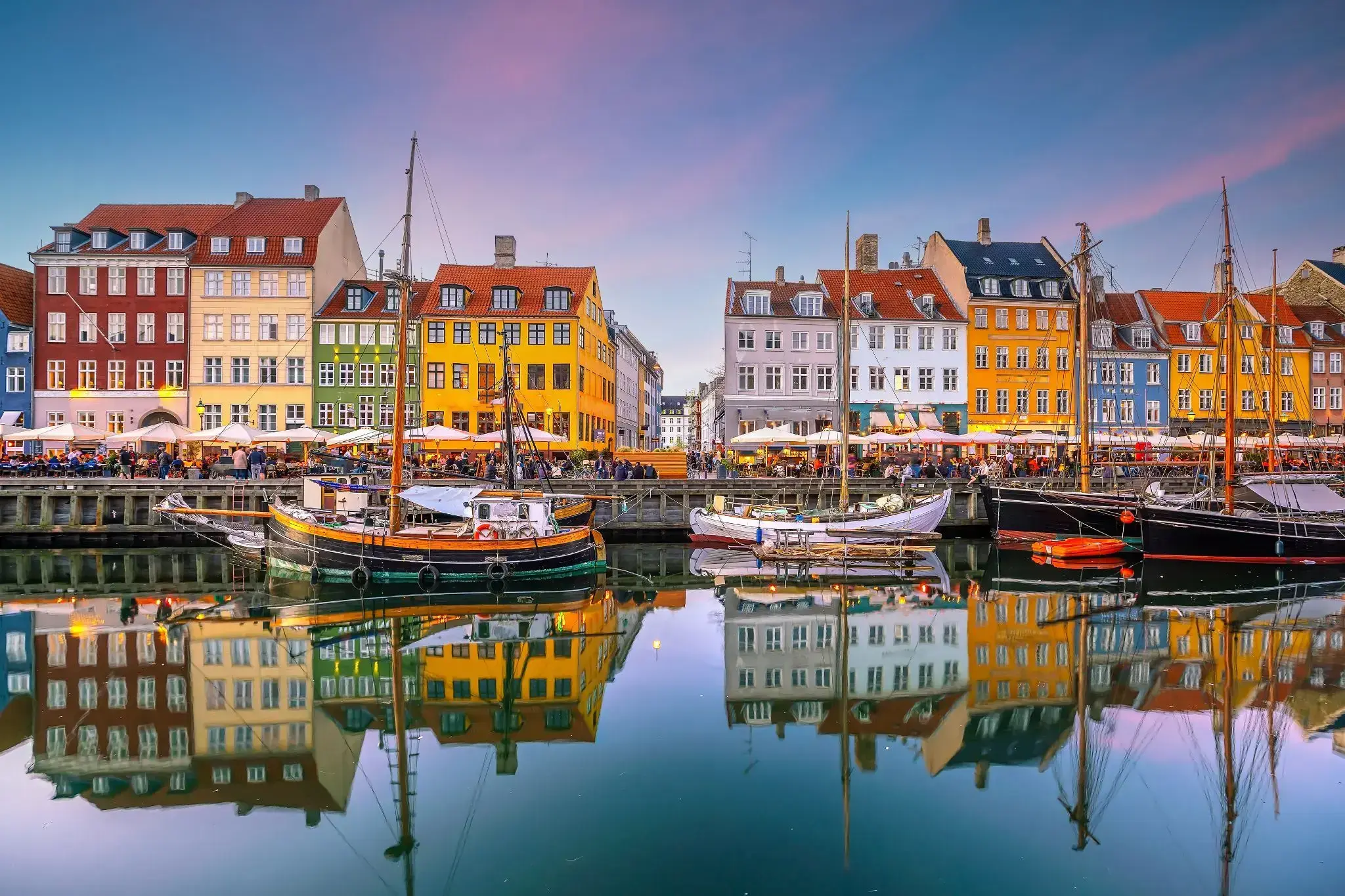
the capital and chief port of Denmark, a city that occupies the eastern part of Zealand and northern part of the island of Amager; population 518,574 (2009).
the capital and chief port of Denmark, a city that occupies the eastern part of Zealand and northern part of the island of Amager; population 518,574 (2009).
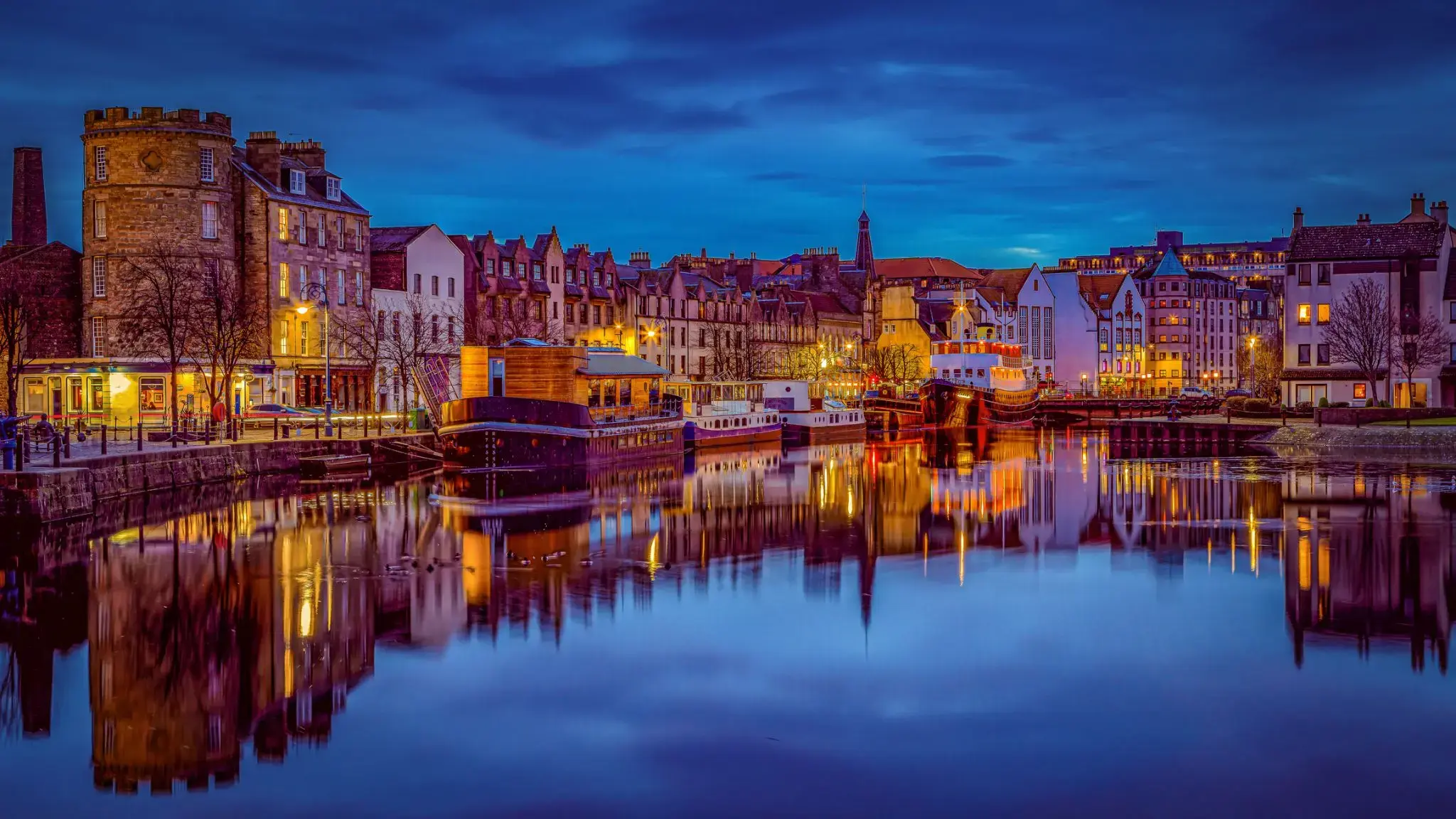
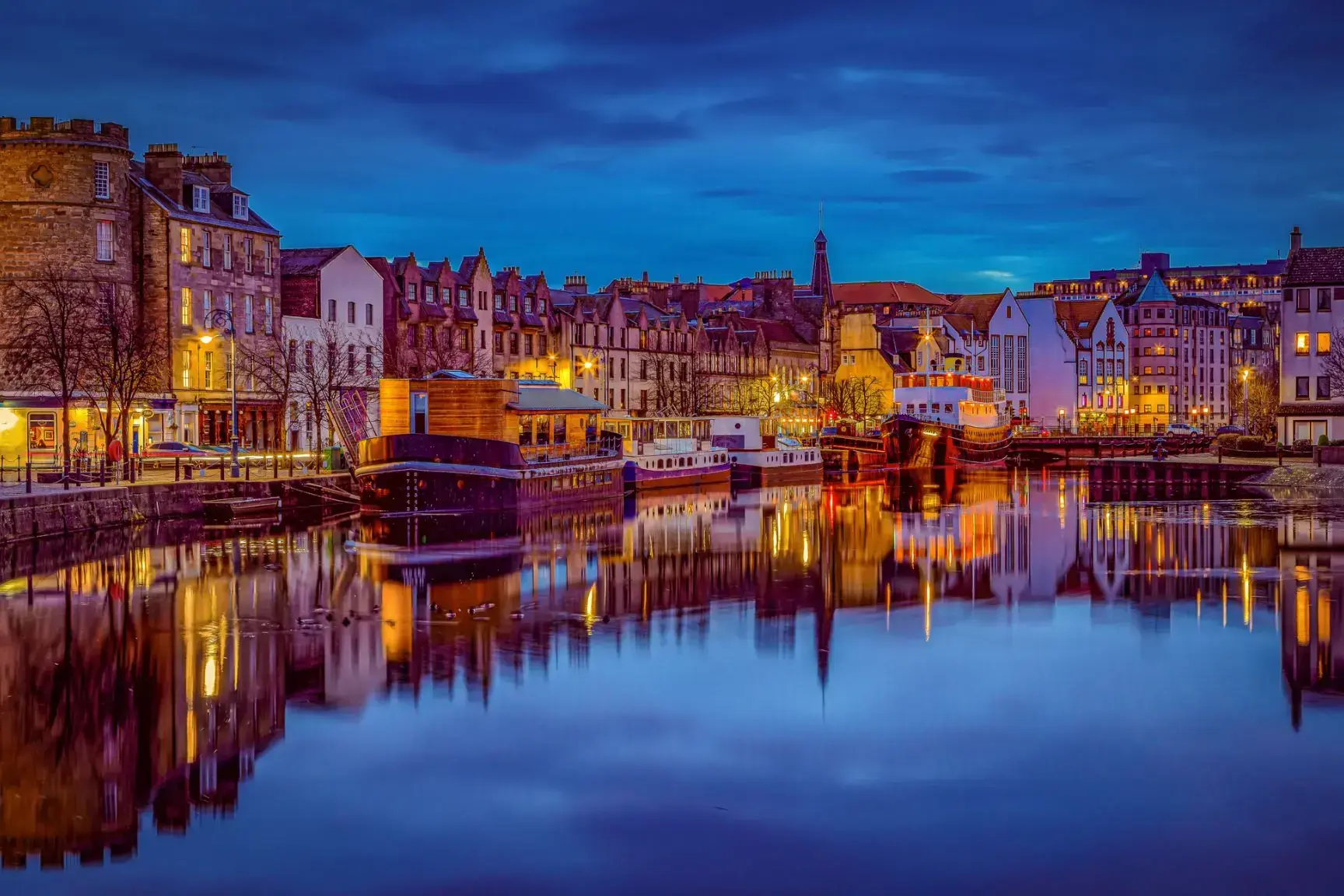
Leith is an area to the north of the city of Edinburgh, Scotland, at the mouth of the Water of Leith.
The earliest surviving historical references are in the royal charter authorising the construction of Holyrood Abbey in 1128. The medieval settlements of Leith had grown into a burgh by 1833, and the burgh was merged into Edinburgh in 1920.
Historically part of the county of Midlothian, Leith is sited on the coast of the Firth of Forth and lies within the council area of the City of Edinburgh.
The port remains one of its most valuable enterprises, handling over 1.5 million tonnes of cargo in 2003.
Previous to the bridge being built in the late 15th century, Leith had settlements on either side of the river, lacking an easy crossing.
South Leith was larger and was controlled by the lairds of Restalrig: the Logan family. It was based on trade and had many merchants' houses and warehouses. This was where ships offloaded their cargoes at The Shore where they were collected by Edinburgh merchants. Leithers were explicitly forbidden by statute to participate directly in the trade at the port, to ensure that landed goods were not sold elsewhere.
North Leith was smaller but proportionately richer, coming under the jurisdiction of Holyrood Abbey. It was effectively a fishing village consisting of one street, now Sandport Street and Quayside Lane. Burgage plots ran down to the river from each house.[6] This has traditionally been the shipbuilding side of Leith with several wet and dry docks built over time. The first dry dock in Scotland was built here in 1720. A small peninsula of land on the east bank also came under the same jurisdiction on what is now Sheriff Brae/Sheriff Bank.
The first bridge to link both banks of the river was built in 1493 by Abbot Bellenden, who controlled the church at North Leith. The bridge was a toll bridge, the revenue supplementing the church's income. Reputedly Leith's oldest building, it was demolished in 1780 to allow ships to sail further upstream.
Leith is an area to the north of the city of Edinburgh, Scotland, at the mouth of the Water of Leith.
The earliest surviving historical references are in the royal charter authorising the construction of Holyrood Abbey in 1128. The medieval settlements of Leith had grown into a burgh by 1833, and the burgh was merged into Edinburgh in 1920.
Historically part of the county of Midlothian, Leith is sited on the coast of the Firth of Forth and lies within the council area of the City of Edinburgh.
The port remains one of its most valuable enterprises, handling over 1.5 million tonnes of cargo in 2003.
Previous to the bridge being built in the late 15th century, Leith had settlements on either side of the river, lacking an easy crossing.
South Leith was larger and was controlled by the lairds of Restalrig: the Logan family. It was based on trade and had many merchants' houses and warehouses. This was where ships offloaded their cargoes at The Shore where they were collected by Edinburgh merchants. Leithers were explicitly forbidden by statute to participate directly in the trade at the port, to ensure that landed goods were not sold elsewhere.
North Leith was smaller but proportionately richer, coming under the jurisdiction of Holyrood Abbey. It was effectively a fishing village consisting of one street, now Sandport Street and Quayside Lane. Burgage plots ran down to the river from each house.[6] This has traditionally been the shipbuilding side of Leith with several wet and dry docks built over time. The first dry dock in Scotland was built here in 1720. A small peninsula of land on the east bank also came under the same jurisdiction on what is now Sheriff Brae/Sheriff Bank.
The first bridge to link both banks of the river was built in 1493 by Abbot Bellenden, who controlled the church at North Leith. The bridge was a toll bridge, the revenue supplementing the church's income. Reputedly Leith's oldest building, it was demolished in 1780 to allow ships to sail further upstream.
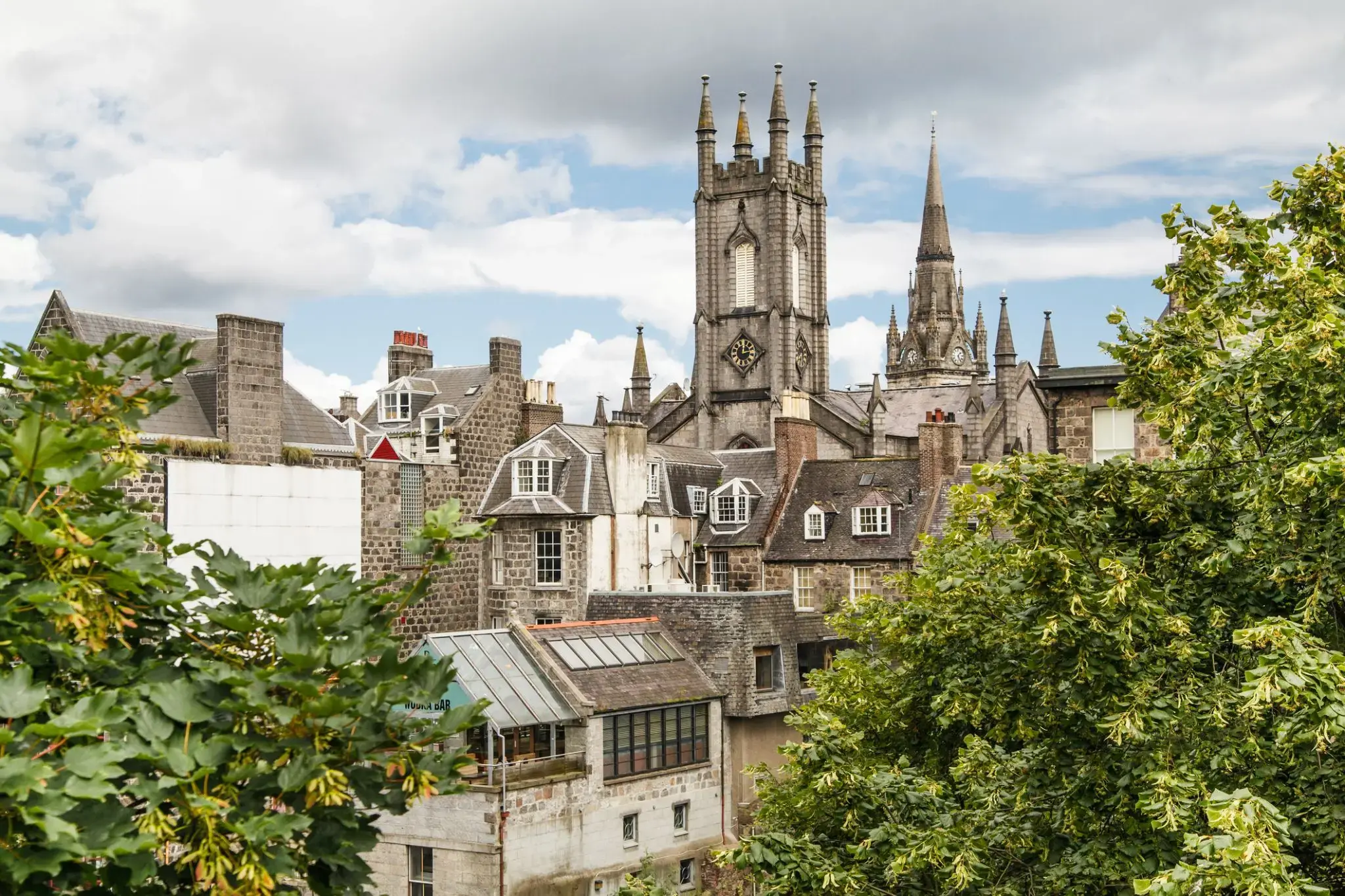
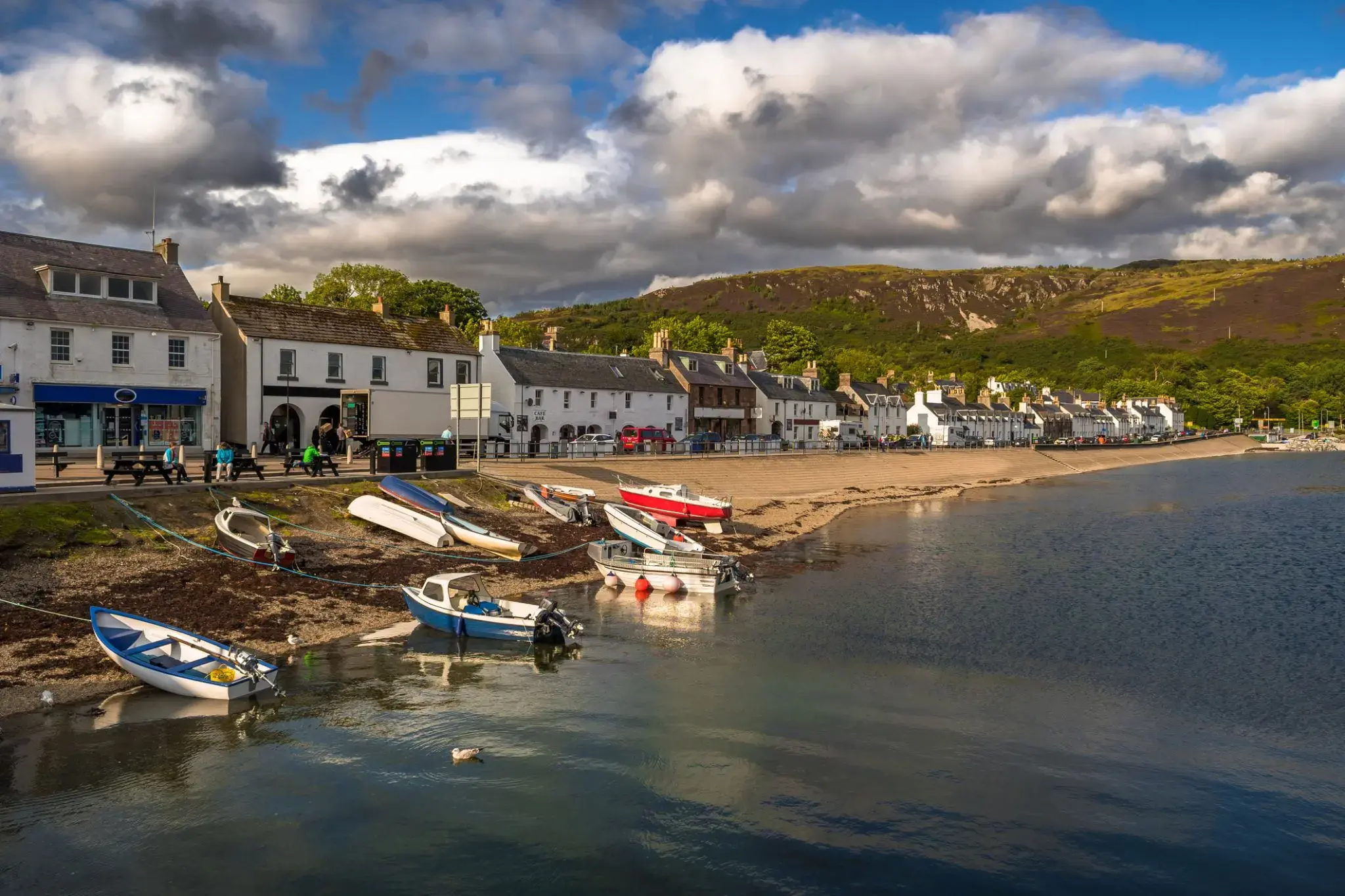
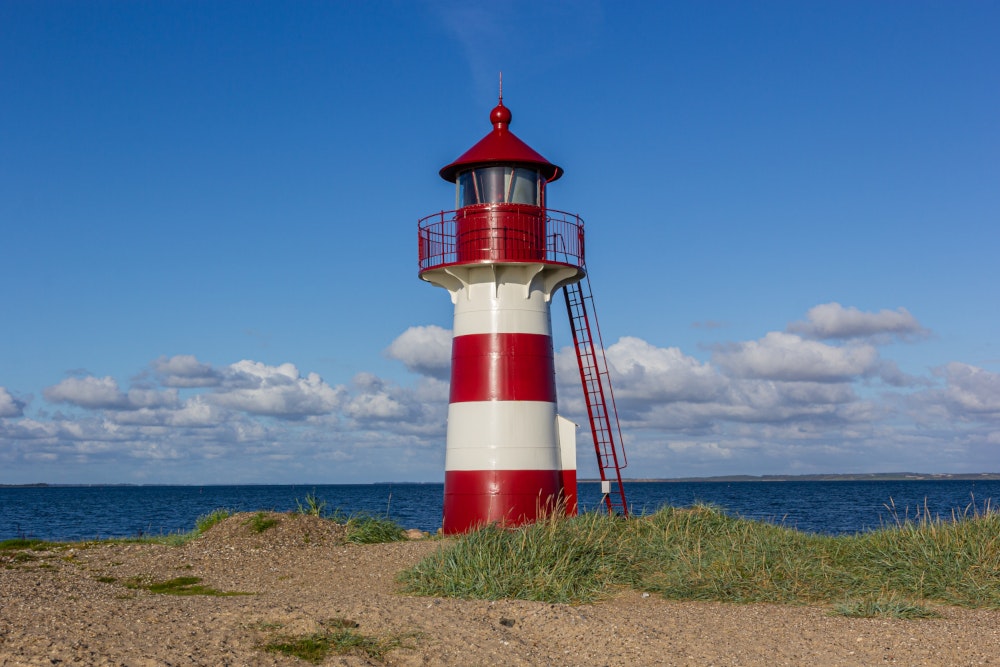

Greenock to miasto w Szkocji, położone na południowo-zachodnim wybrzeżu, 32 kilometry na zachód od Glasgow. Greenock zostało założone jako port, a jego historyczne znaczenie związane jest z rozwojem przemysłu stoczniowego i handlu. Przez wiele lat było ważnym centrum żeglugi, a dziś miasto nadal pełni rolę istotnego węzła transportowego, z dużym portem i nowoczesną infrastrukturą. Greenock słynie również ze swoich historycznych budowli, takich jak latarnia morska w Greenock, a w pobliżu można zobaczyć muzeum żeglugi oraz wiele starych magazynów, które zachowały atmosferę minionych czasów.
Dla turystów Greenock to malownicze miejsce do spacerów wzdłuż nabrzeża i w parkach, a także doskonałe miejsce do poznania historii szkockiego żeglarstwa. Miasto stało się także popularnym miejscem dla podróżnych na statkach wycieczkowych, ponieważ jego port zapewnia dostęp do najpiękniejszych części zachodniego wybrzeża kraju. W okolicach miasta znajduje się wiele naturalnych atrakcji, w tym pobliskie wyspy oraz piękne plaże, gdzie można odpocząć i podziwiać widoki na morze i wybrzeże.
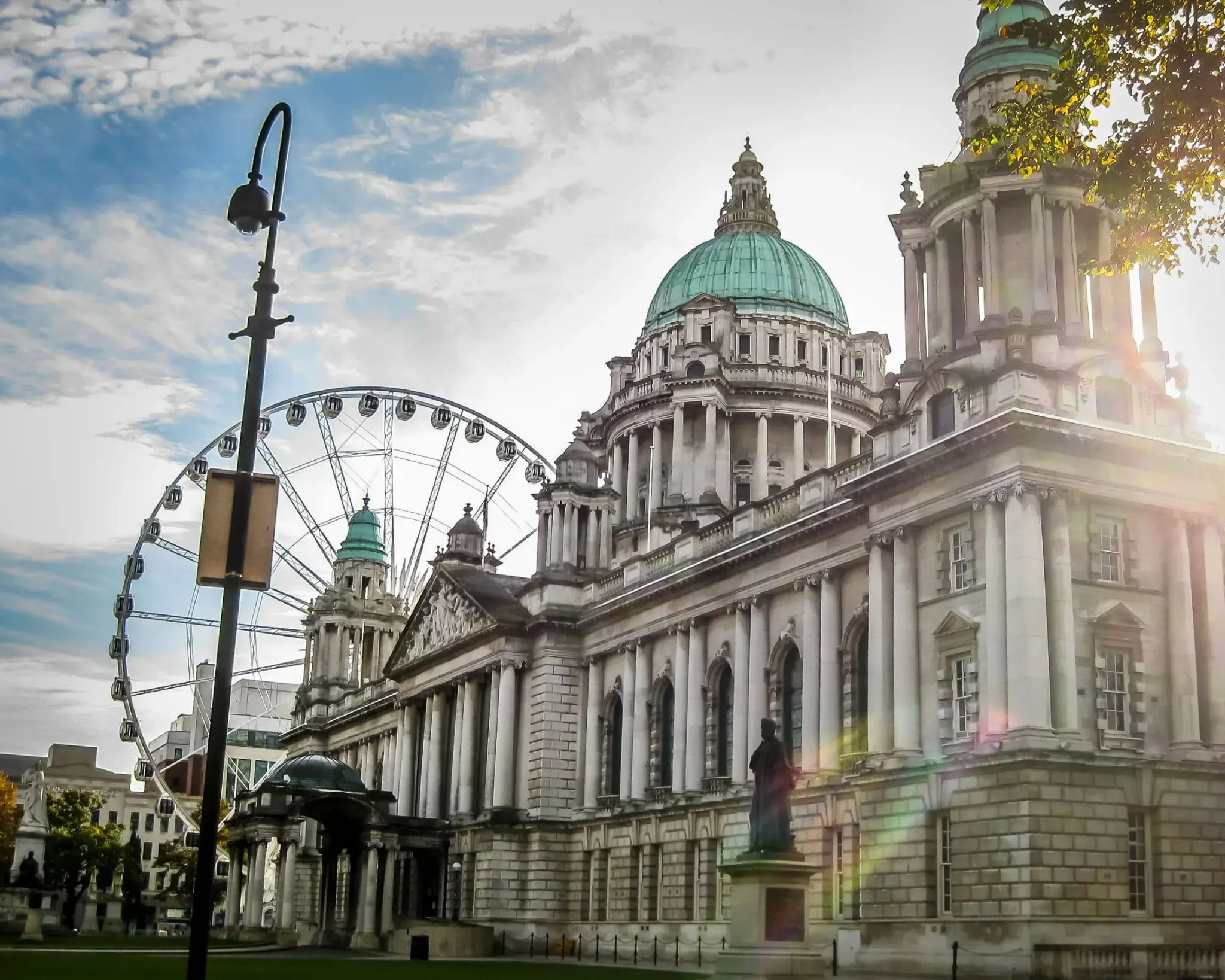
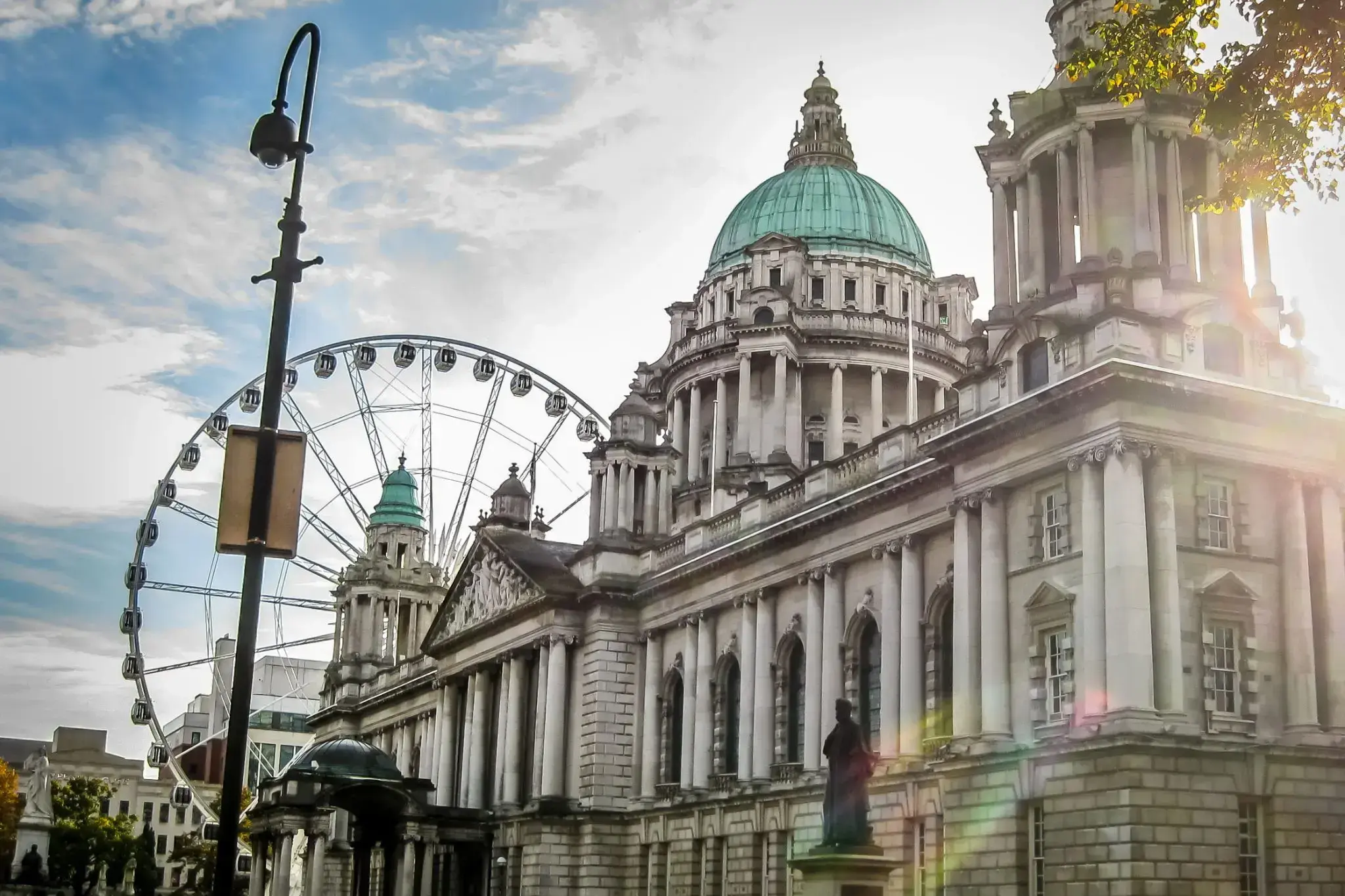
Belfast is a port city in the United Kingdom and the capital city of Northern Ireland, on the banks of the River Lagan on the east coast of Ireland. It is the largest city in Northern Ireland and second largest on the island of Ireland. It had a population of 333,871 in 2015.
By the early 1800s Belfast was a major port. It played a key role in the Industrial Revolution, becoming the biggest linen producer in the world, earning it the nickname "Linenopolis". By the time it was granted city status in 1888, it was a major centre of Irish linen production, tobacco-processing and rope-making. Shipbuilding was also a key industry; the Harland and Wolff shipyard, where the RMS Titanic was built, was the world's biggest shipyard. It also has a major aerospace and missiles industry. Industrialisation and the inward migration it brought made Belfast Ireland's biggest city and it became the capital of Northern Ireland following the Partition of Ireland in 1922. Its status as a global industrial centre ended in the decades after the Second World War.
Belfast suffered greatly in the Troubles, and in the 1970s and 1980s was one of the world's most dangerous cities. However, the city is now considered to be one of the safest within the United Kingdom. Throughout the 21st century, the city has seen a sustained period of calm, free from the intense political violence of former years and has benefitted from substantial economic and commercial growth. Belfast remains a centre for industry, as well as the arts, higher education, business, and law, and is the economic engine of Northern Ireland. Belfast is still a major port, with commercial and industrial docks dominating the Belfast Lough shoreline, including the Harland and Wolff shipyard. It is served by two airports: George Best Belfast City Airport, and Belfast International Airport 15 miles (24 km) west of the city. It is listed by the Globalization and World Cities Research Network (GaWC) as a Gamma global city.
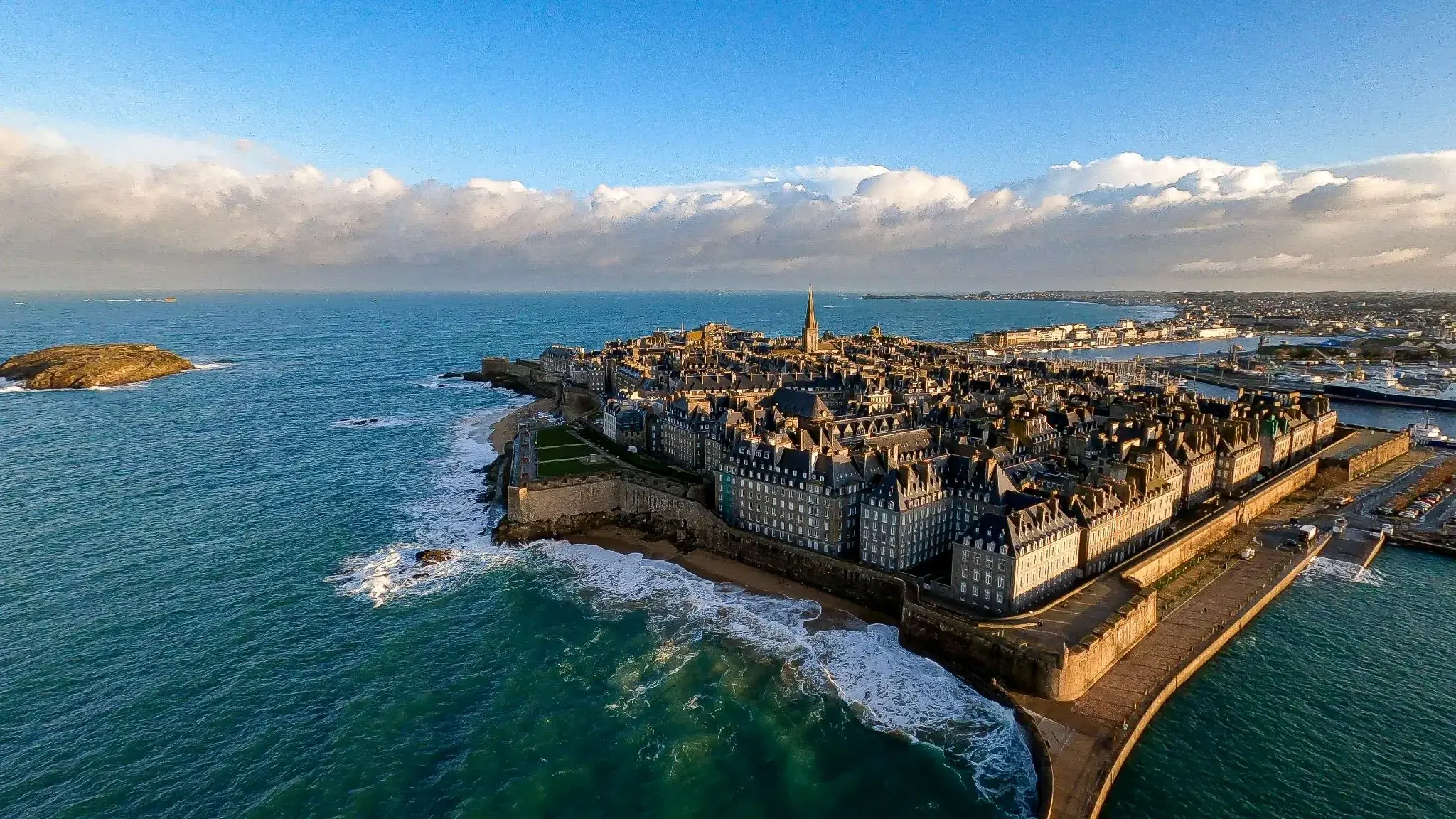
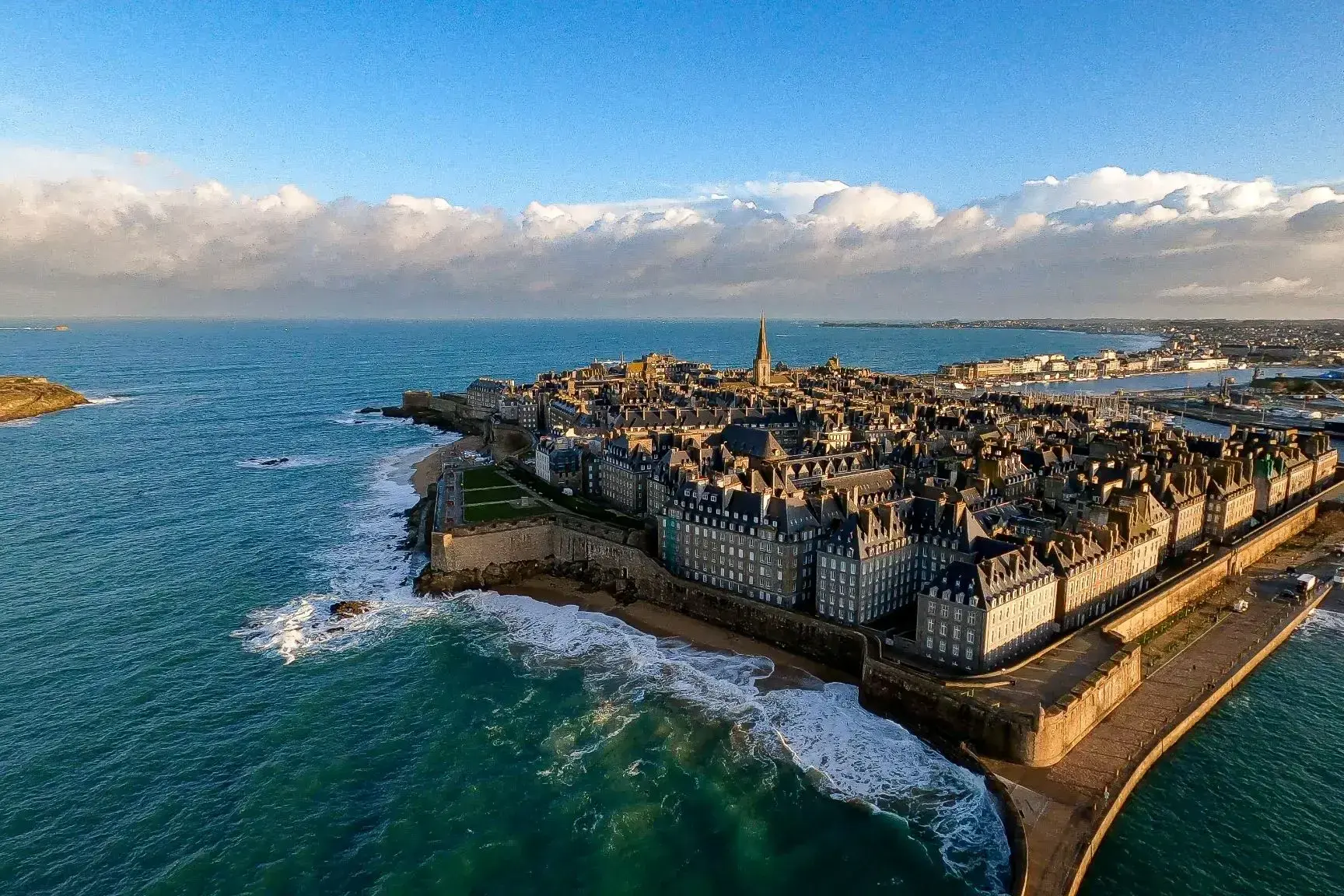
Morska bryza i krzyki mew towarzyszą Ci w Saint-Malo, mieście na wybrzeżu Bretanii, które zachowało ducha morskich przygód i niezależności. Wysokie mury obronne otaczają tu wąskie uliczki, a brukowane ścieżki prowadzą do przytulnych kawiarni z widokiem na ocean. Historia piratów i żeglarzy ożywa, gdy spacerujesz po bastionach, obserwujesz, jak przypływy zmieniają linię brzegową, lub wybierasz się łodzią na słynną wyspę Grand Bé, gdzie pochowany jest pisarz Chateaubriand.
W Saint-Malo możesz cieszyć się świeżymi owocami morza w lokalnych restauracjach, spróbować ostryg złowionych w pobliskich wodach lub urządzić piknik na piaszczystych plażach, które odsłaniają się podczas odpływu. Miasto daje poczucie jednoczesnego spokoju i wolności, łącząc malowniczą architekturę z energią Atlantyku, a morski wiatr i zapach soli w powietrzu przypominają, że tutaj historia i natura są zawsze blisko.
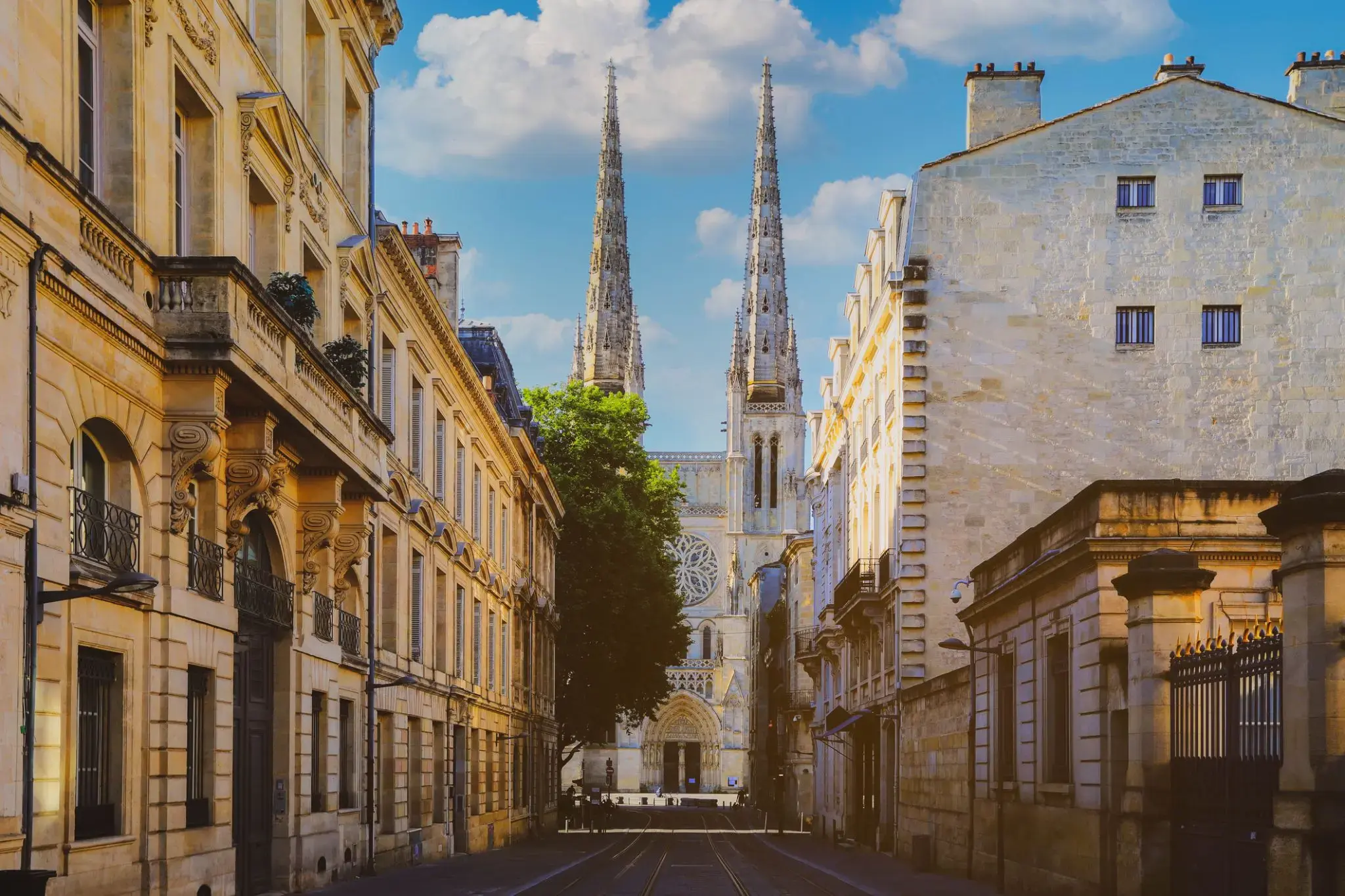
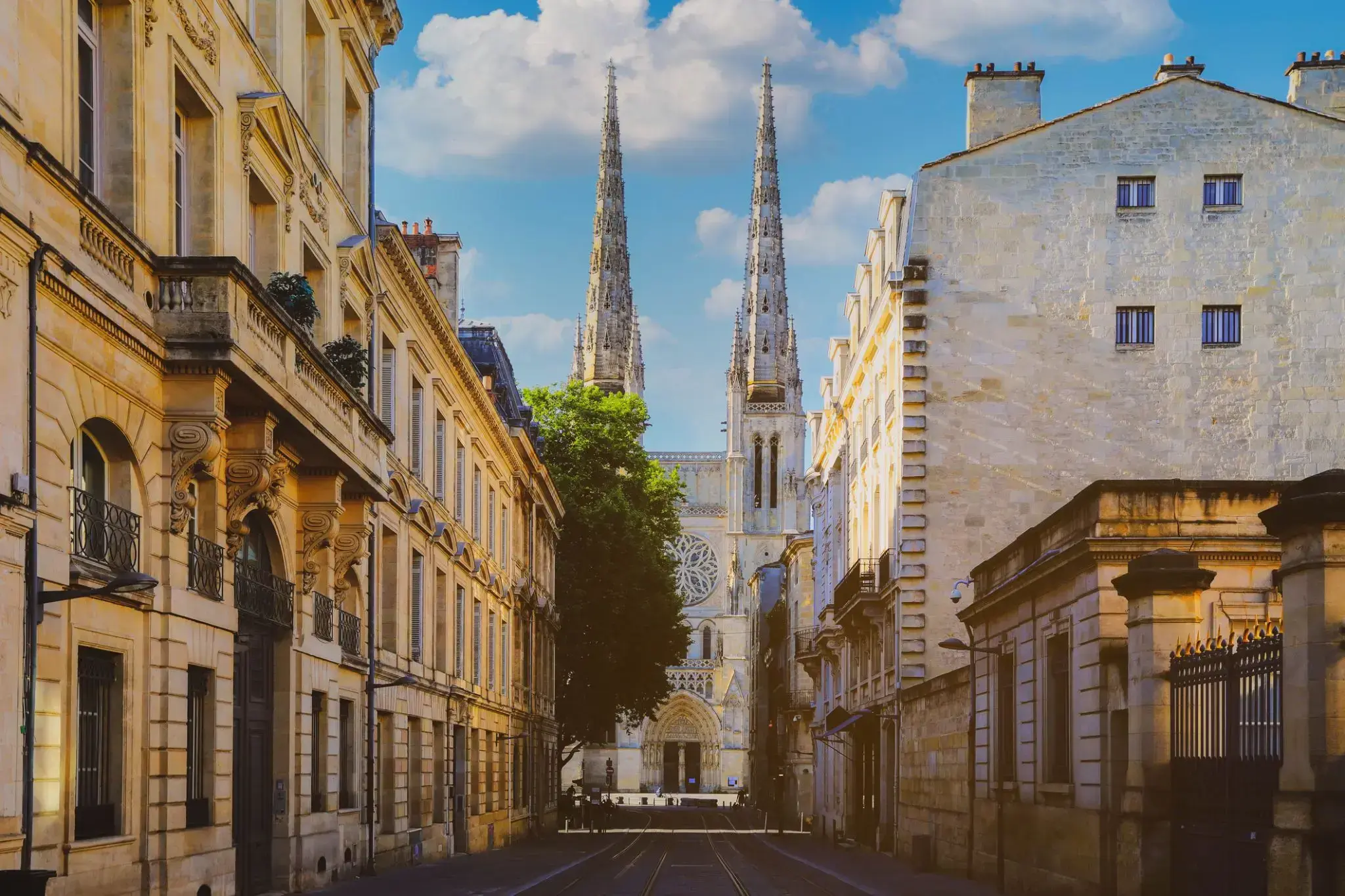
Bordeaux jest miastem portowym nad Garonną w departamencie Żyronda w południowo-zachodniej Francji.
Sama gmina Bordeaux liczy 246 586 mieszkańców (2014). Wraz z przedmieściami i miastami satelickimi Bordeaux jest centrum metropolii Bordeaux. Z 1 195 335 mieszkańcami w obszarze metropolitalnym jest szóstym co do wielkości we Francji, po Paryżu, Marsylii, Lyonie, Tuluzie i Lille. Jest stolicą regionu Nowa Akwitania, a także prefekturą departamentu Żyronda. Jego mieszkańców nazywa się "Bordelais" (mężczyźni) lub "Bordelaises" (kobiety). Określenie "Bordelais" może również odnosić się do miasta i jego okolic.
Będąc w centrum ważnego regionu uprawy i produkcji wina, Bordeaux pozostaje znaczącym ośrodkiem i wywiera znaczący wpływ na światową branżę winiarską, chociaż w granicach miasta nie odbywa się żadna produkcja wina. Jest siedzibą głównych światowych targów wina, Vinexpo, a gospodarka winiarska w obszarze metropolitalnym przynosi 14,5 miliarda euro rocznie. Wino z Bordeaux jest produkowane w regionie od VIII wieku. Historyczna część miasta znajduje się na Liście Światowego Dziedzictwa UNESCO jako "wyjątkowy zespół miejski i architektoniczny" z XVIII wieku. Po Paryżu Bordeaux ma największą liczbę zachowanych zabytkowych budynków spośród wszystkich miast we Francji.
Bordeaux jest miastem portowym nad Garonną w departamencie Żyronda w południowo-zachodniej Francji.
Sama gmina Bordeaux liczy 246 586 mieszkańców (2014). Wraz z przedmieściami i miastami satelickimi Bordeaux jest centrum metropolii Bordeaux. Z 1 195 335 mieszkańcami w obszarze metropolitalnym jest szóstym co do wielkości we Francji, po Paryżu, Marsylii, Lyonie, Tuluzie i Lille. Jest stolicą regionu Nowa Akwitania, a także prefekturą departamentu Żyronda. Jego mieszkańców nazywa się "Bordelais" (mężczyźni) lub "Bordelaises" (kobiety). Określenie "Bordelais" może również odnosić się do miasta i jego okolic.
Będąc w centrum ważnego regionu uprawy i produkcji wina, Bordeaux pozostaje znaczącym ośrodkiem i wywiera znaczący wpływ na światową branżę winiarską, chociaż w granicach miasta nie odbywa się żadna produkcja wina. Jest siedzibą głównych światowych targów wina, Vinexpo, a gospodarka winiarska w obszarze metropolitalnym przynosi 14,5 miliarda euro rocznie. Wino z Bordeaux jest produkowane w regionie od VIII wieku. Historyczna część miasta znajduje się na Liście Światowego Dziedzictwa UNESCO jako "wyjątkowy zespół miejski i architektoniczny" z XVIII wieku. Po Paryżu Bordeaux ma największą liczbę zachowanych zabytkowych budynków spośród wszystkich miast we Francji.
Bordeaux jest miastem portowym nad Garonną w departamencie Żyronda w południowo-zachodniej Francji.
Sama gmina Bordeaux liczy 246 586 mieszkańców (2014). Wraz z przedmieściami i miastami satelickimi Bordeaux jest centrum metropolii Bordeaux. Z 1 195 335 mieszkańcami w obszarze metropolitalnym jest szóstym co do wielkości we Francji, po Paryżu, Marsylii, Lyonie, Tuluzie i Lille. Jest stolicą regionu Nowa Akwitania, a także prefekturą departamentu Żyronda. Jego mieszkańców nazywa się "Bordelais" (mężczyźni) lub "Bordelaises" (kobiety). Określenie "Bordelais" może również odnosić się do miasta i jego okolic.
Będąc w centrum ważnego regionu uprawy i produkcji wina, Bordeaux pozostaje znaczącym ośrodkiem i wywiera znaczący wpływ na światową branżę winiarską, chociaż w granicach miasta nie odbywa się żadna produkcja wina. Jest siedzibą głównych światowych targów wina, Vinexpo, a gospodarka winiarska w obszarze metropolitalnym przynosi 14,5 miliarda euro rocznie. Wino z Bordeaux jest produkowane w regionie od VIII wieku. Historyczna część miasta znajduje się na Liście Światowego Dziedzictwa UNESCO jako "wyjątkowy zespół miejski i architektoniczny" z XVIII wieku. Po Paryżu Bordeaux ma największą liczbę zachowanych zabytkowych budynków spośród wszystkich miast we Francji.
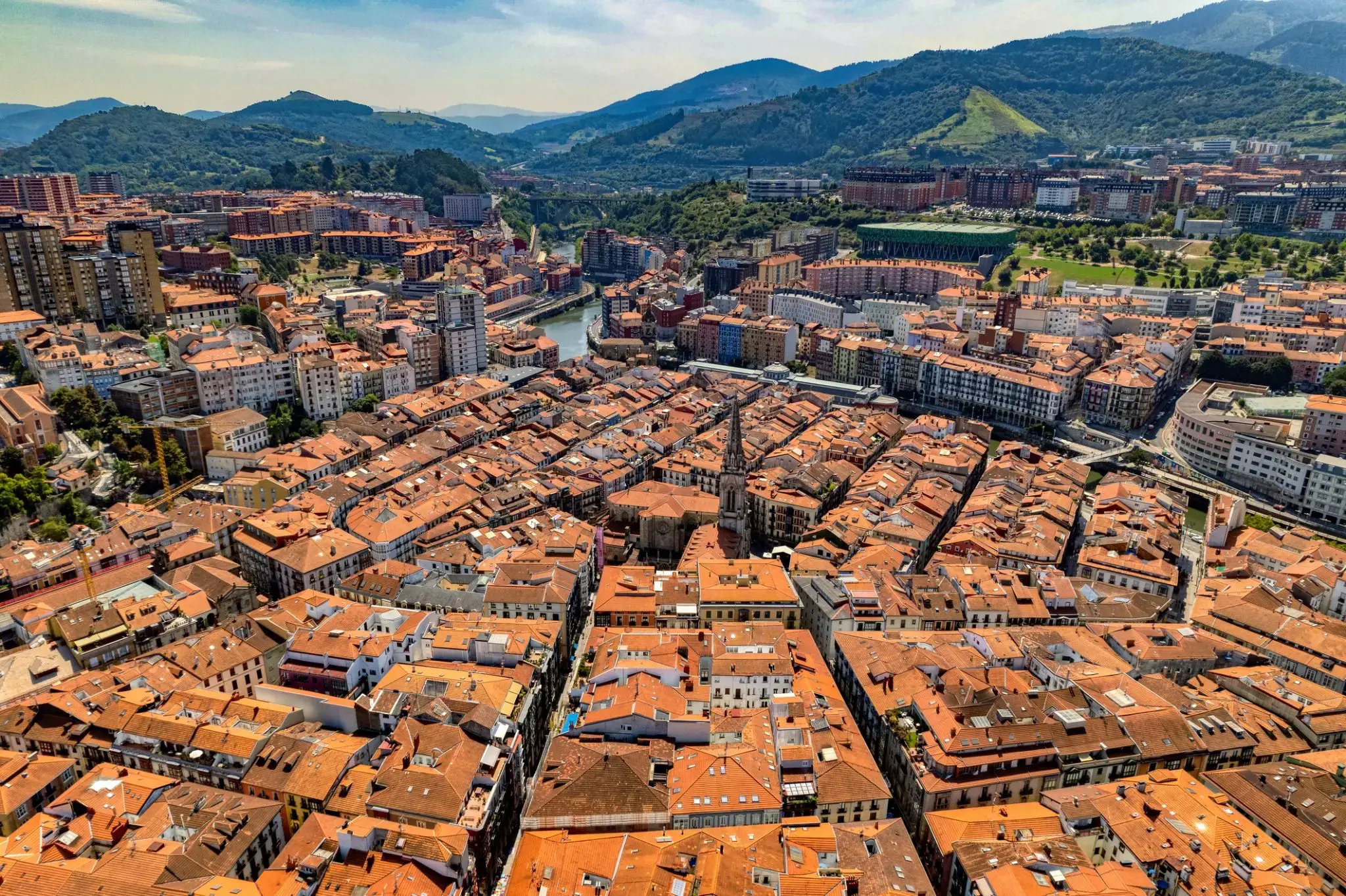
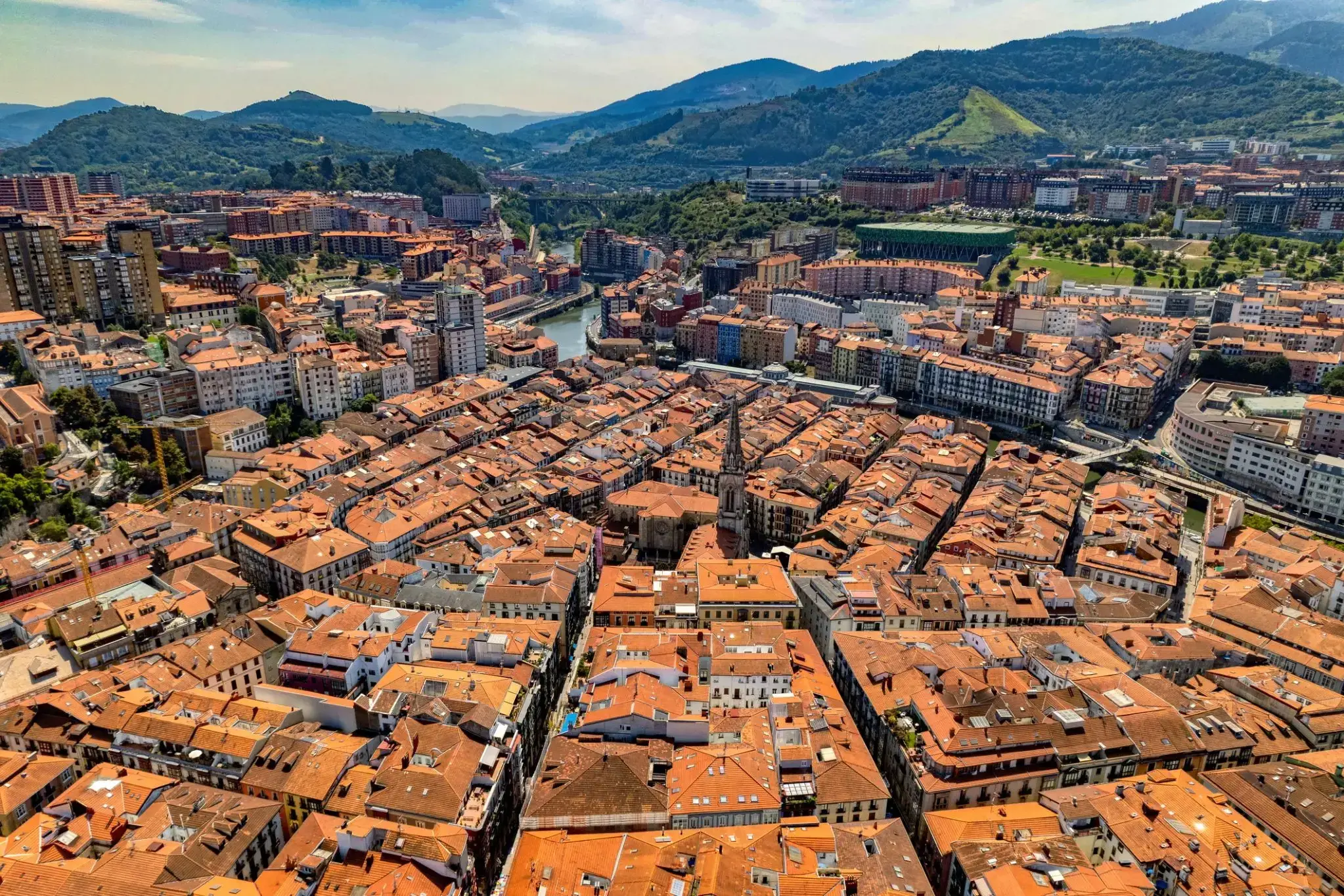
Bilbao is a city in northern Spain, the largest city in the province of Biscay and in the Basque Country as a whole. It is also the largest city proper in northern Spain. Bilbao is the tenth largest city in Spain, with a population of 345,141 as of 2015. The Bilbao metropolitan area has roughly 1 million inhabitants, making it one of the most populous metropolitan areas in northern Spain; with a population of 875,552 the comarca of Greater Bilbao is the fifth-largest urban area in Spain. Bilbao is also the main urban area in what is defined as the Greater Basque region.
Bilbao is situated in the north-central part of Spain, some 16 kilometres (10 mi) south of the Bay of Biscay, where the economic social development is located, where the estuary of Bilbao is formed. Its main urban core is surrounded by two small mountain ranges with an average elevation of 400 metres (1,300 ft). Its climate is shaped by the Bay of Biscay low-pressure systems and mild air, moderating summer temperatures by Iberian standards, with low sunshine and high rainfall. The annual temperature range is low for its latitude.
After its foundation in the early 14th century by Diego López V de Haro, head of the powerful Haro family, Bilbao was a commercial hub of the Basque Country that enjoyed significant importance in Green Spain. This was due to its port activity based on the export of iron extracted from the Biscayan quarries. Throughout the nineteenth century and the beginning of the twentieth, Bilbao experienced heavy industrialisation, making it the centre of the second-most industrialised region of Spain, behind Barcelona. At the same time an extraordinary population explosion prompted the annexation of several adjacent municipalities. Nowadays, Bilbao is a vigorous service city that is experiencing an ongoing social, economic, and aesthetic revitalisation process, started by the iconic Bilbao Guggenheim Museum, and continued by infrastructure investments, such as the airport terminal, the rapid transit system, the tram line, the Azkuna Zentroa, and the currently under development Abandoibarra and Zorrozaurrerenewal projects.
Bilbao is also home to football club Athletic Club de Bilbao, a significant symbol for Basque nationalism due to its promotion of only Basque players and one of the most successful clubs in Spanish football history.
On 19 May 2010, the city of Bilbao was recognised with the Lee Kuan Yew World City Prize, awarded by the city state of Singapore, in collaboration with the Swedish Nobel Academy. Considered the Nobel Prize for urbanism, it was handed out on 29 June 2010. On 7 January 2013, its mayor, Iñaki Azkuna, received the 2012 World Mayor Prize awarded every two years by the British foundation The City Mayors Foundation, in recognition of the urban transformation experienced by the Biscayan capital since the 1990s. On 8 November 2017, Bilbao was chosen the Best European City 2018 at The Urbanism Awards 2018, awarded by the international organisation The Academy of Urbanism.
Na malowniczym wybrzeżu Zatoki Biskajskiej w hiszpańskim regionie Asturii położone jest urokliwe miasto Gijón, które zachwyca odwiedzających unikalnym połączeniem kultury, przyrody i gastronomii. Tutaj można spacerować po malowniczych plażach San Lorenzo, odwiedzać liczne muzea sztuki współczesnej oraz spróbować słynnego asturyjskiego cydru w tradycyjnych „chigres”.
Gijón to idealne miejsce dla tych, którzy cenią sobie połączenie historii i nowoczesnego życia. Poza pięknymi plażami i przytulnymi uliczkami miasto słynie z barwnych festiwali, takich jak Festiwal Morza i Festiwal Piosenki, które dodają podróży wyjątkowych wrażeń. Dla aktywnych turystów dostępne są różnorodne sporty wodne oraz szlaki piesze z zapierającymi dech w piersiach widokami na wybrzeże.
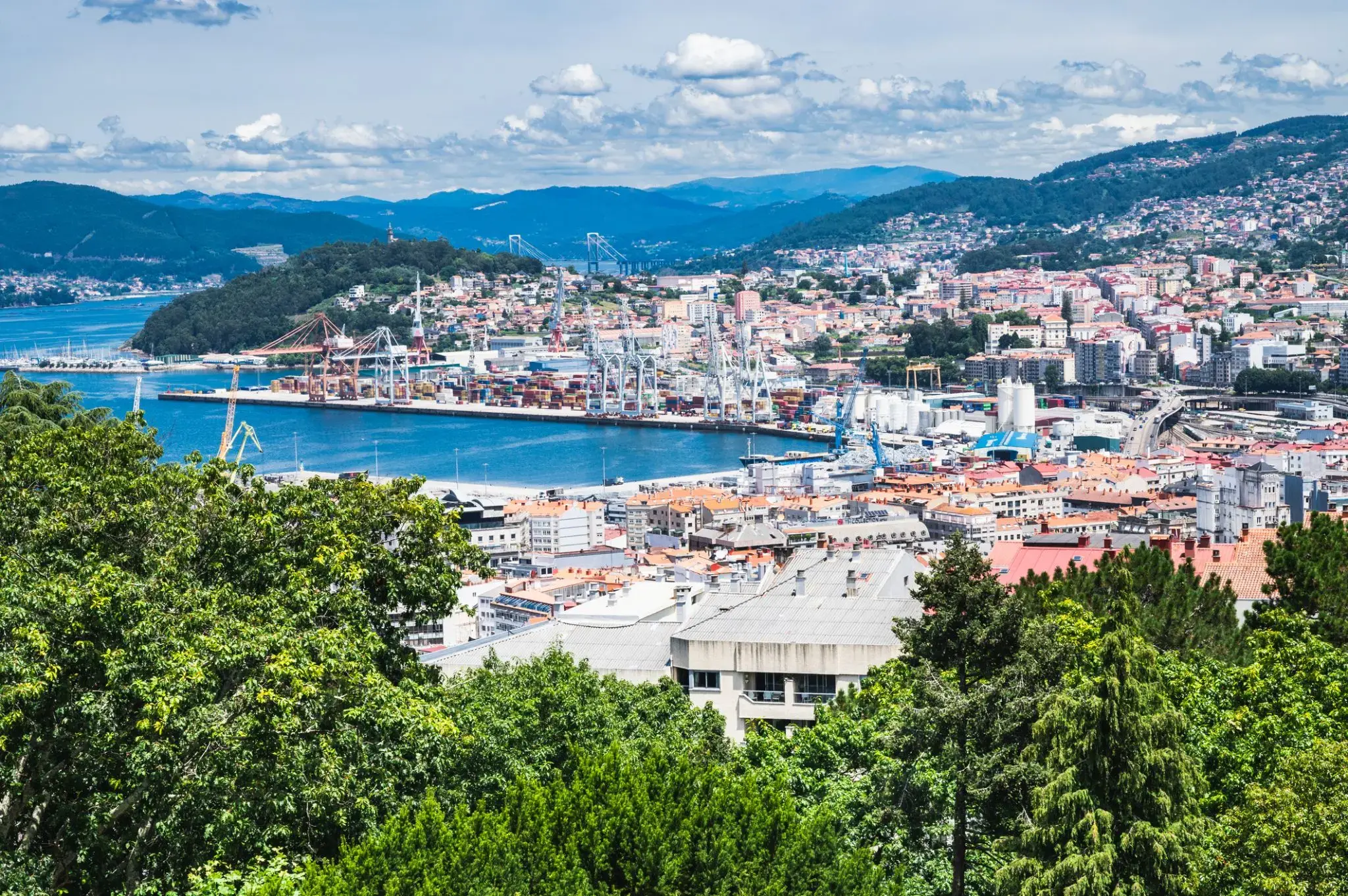
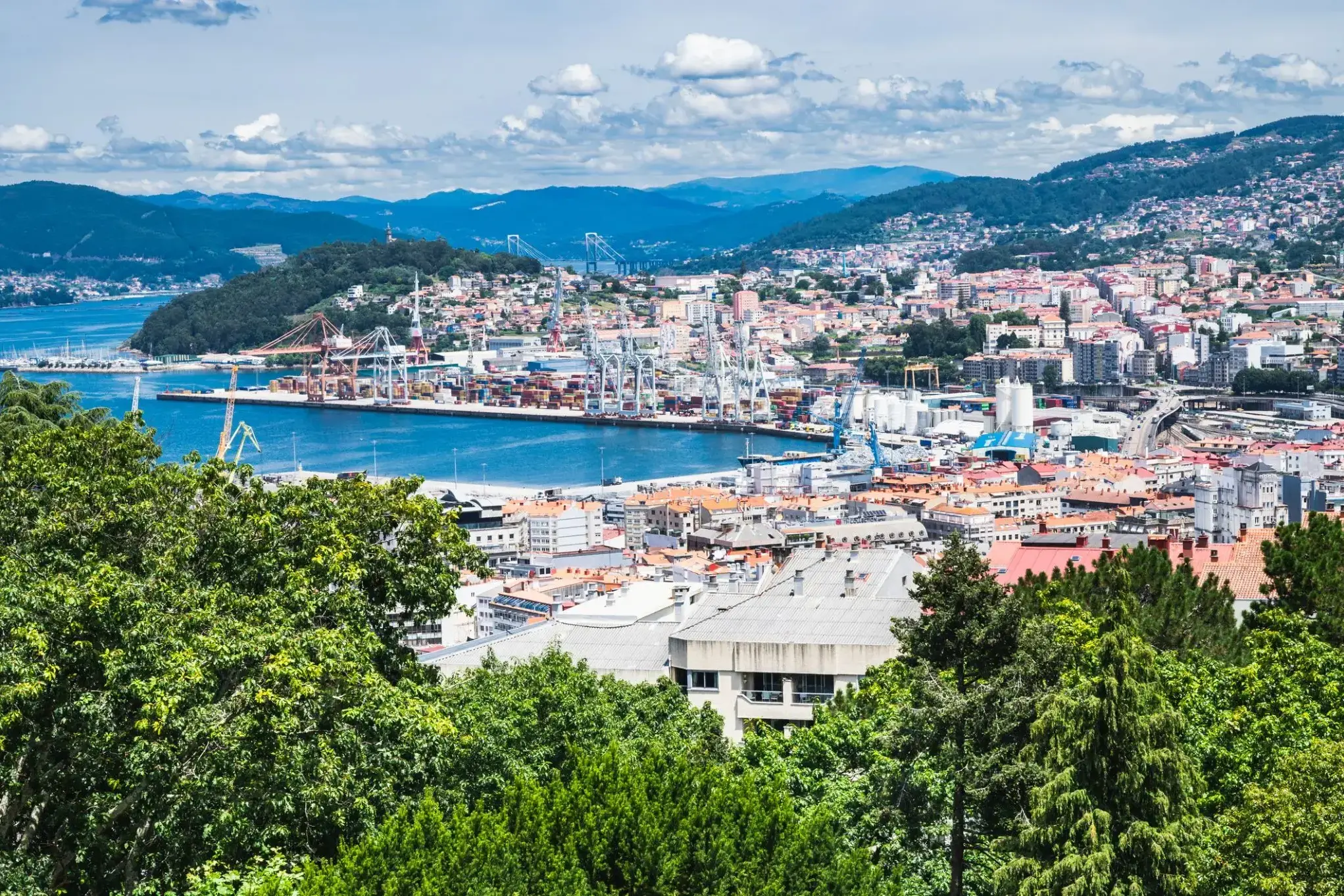
Vigo is a city and municipality adjoining the Atlantic Ocean in the province of Pontevedra in Galicia, northwest Spain. It is the capital of the comarca of Vigo and Vigo metropolitan area.
Vigo is the most populous municipality of Galicia, the 14th in Spain, and the most populous Spanish municipality that is not the capital of a province. It has an area of 109.06 km2 (42.11 sq mi) and had a population of 292,817 in 2016.
The city is located in the southwest of Galicia, in the southern part of Vigo Ria, one of Europe's rainiest areas. In the northeast, it borders the municipality of Redondela; in the east, Mos; in the south, O Porriño and Gondomar; and in the southwest, Nigrán. On the other side of its bay are the municipalities of Cangas and Moaña. They are all part of the southern Galician region called Rías Baixas. Vigo is just north of the border with Portugal; its nearest larger city is Porto, Portugal's second-largest city.
Vigo and its metropolitan area are one of the region's primary economic agents.
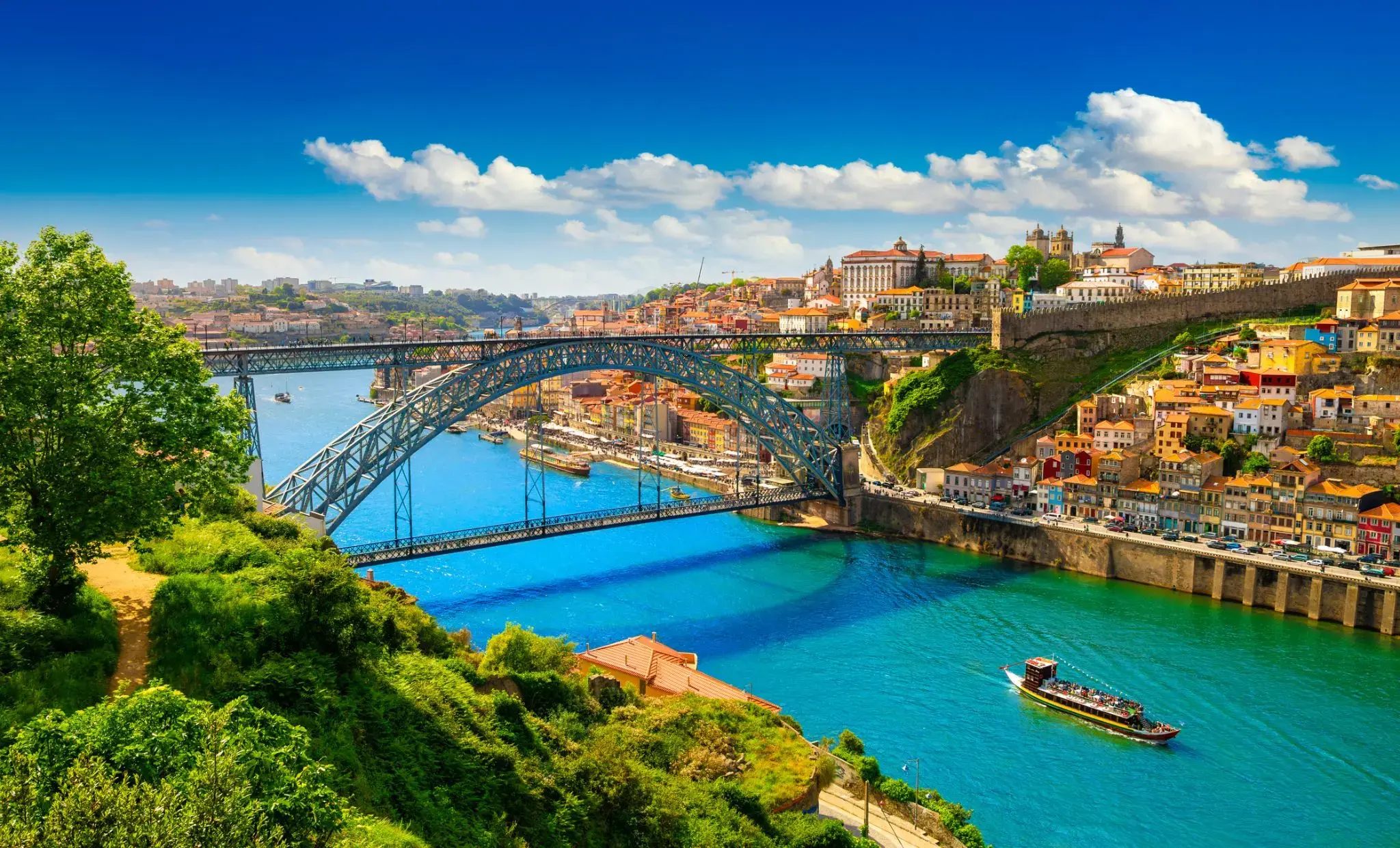
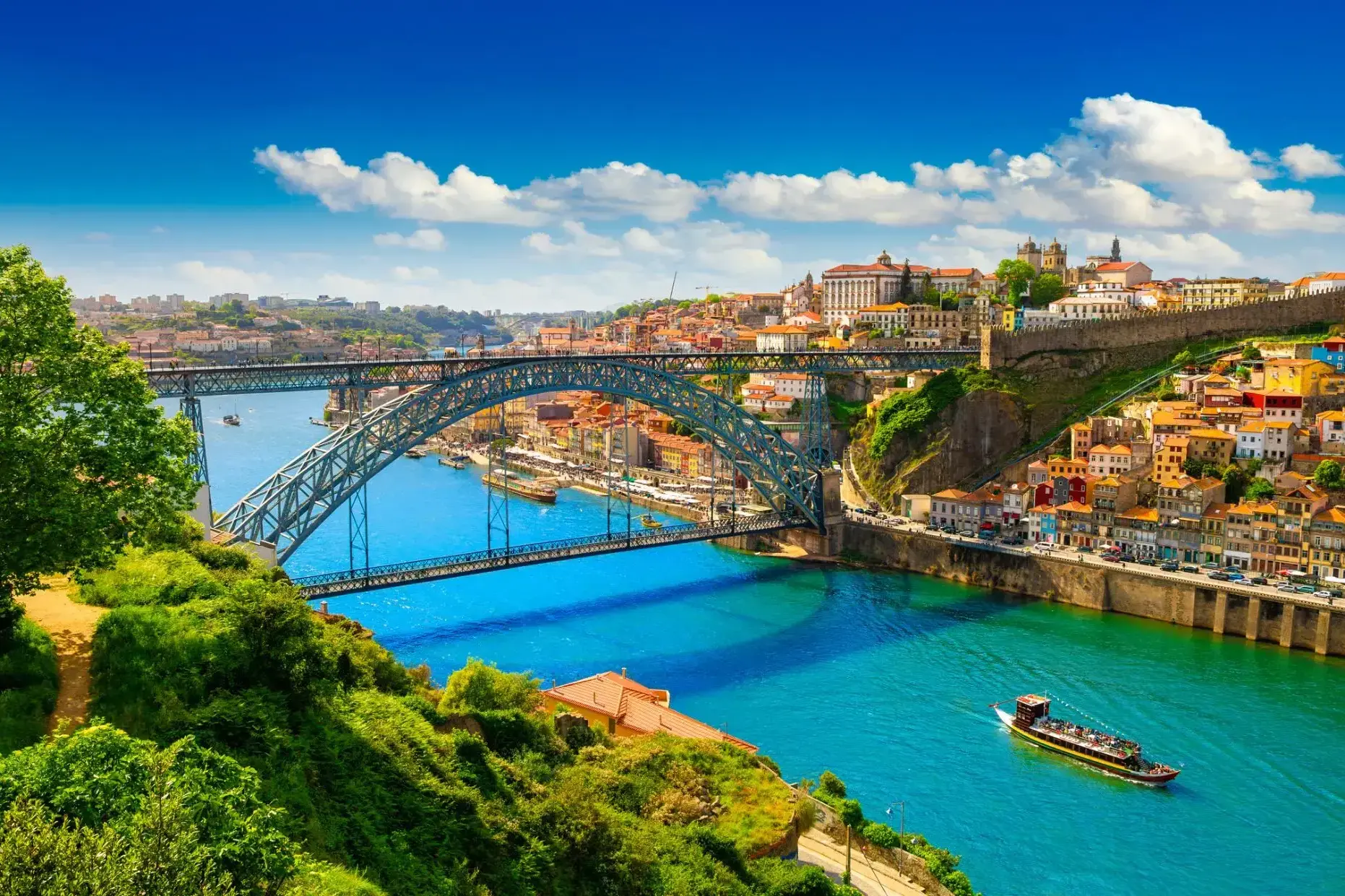
Порту является вторым по величине городом Португалии после Лиссабона и одним из крупных городских районов Пиренейского полуострова. Население самого города составляет 237 591 человек, а в столичном районе Порту, который выходит за административные пределы города, проживает 1,9 миллиона человек (2011 год) на площади 2 395 км2 (925 кв. Миль), что делает его вторым самый большой городской район в Португалии. Он признан глобальным городом гамма-уровня Исследовательской группой по глобализации и глобальным городам (GaWC), единственным португальским городом, кроме Лиссабона, который был признан глобальным городом.
Расположенный вдоль устья реки Дору на севере Португалии, Порту является одним из старейших европейских центров, и его историческое ядро было объявлено ЮНЕСКО объектом Всемирного наследия в 1996 году. Западная часть его городской территории простирается до береговой линии Атлантического океана. Его поселение датируется много веков, когда он был форпостом Римской империи. Его объединенное кельтско-латинское имя, Portus Cale, было названо происхождением названия «Португалия», основанного на транслитерации и устной эволюции от латыни. На португальском языке название города пишется с определенной статьей о Порту ; следовательно, его английское название произошло от неправильного толкования устного произношения и упоминается как Опорто в современной литературе и многими ораторами.
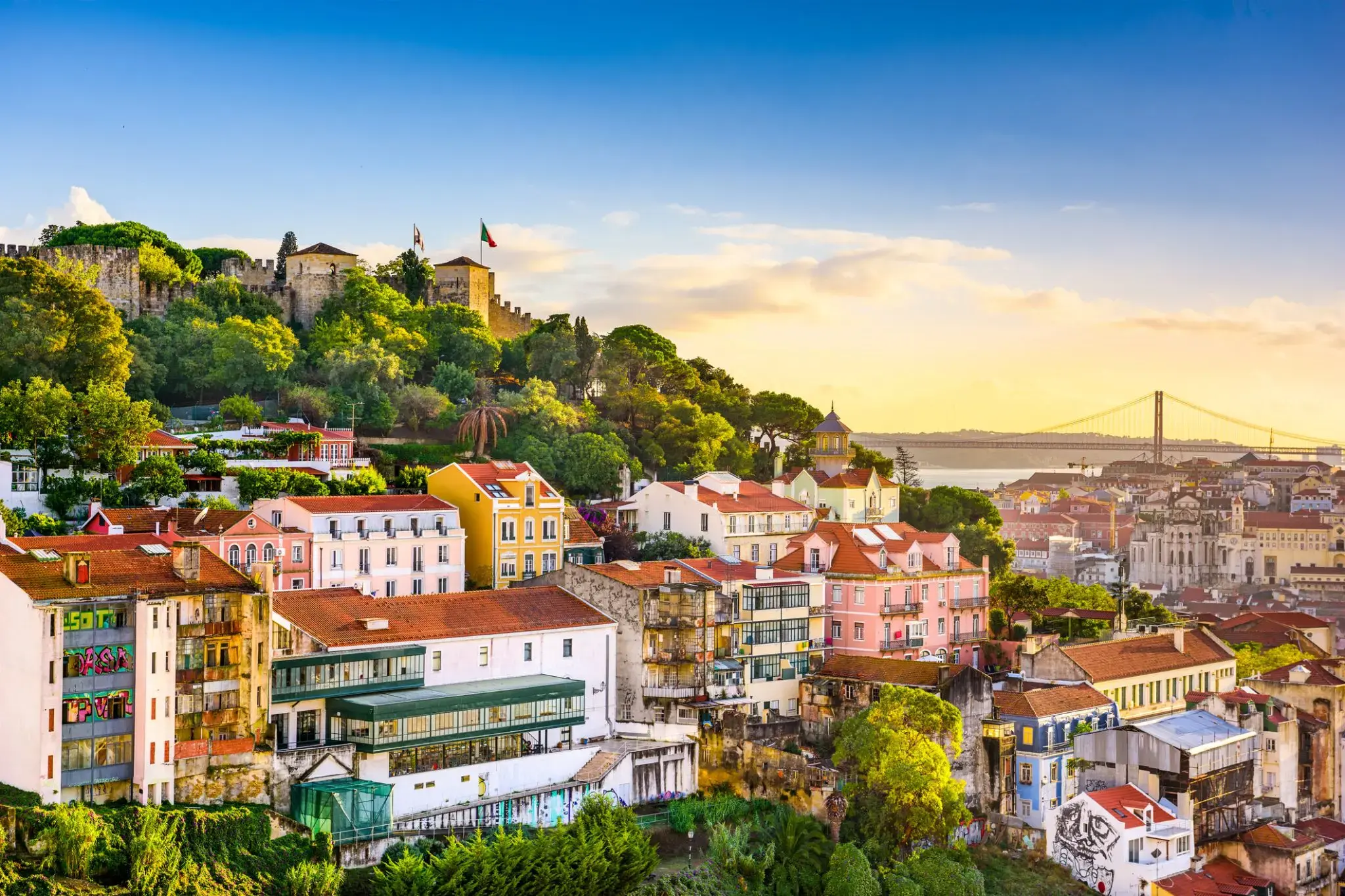
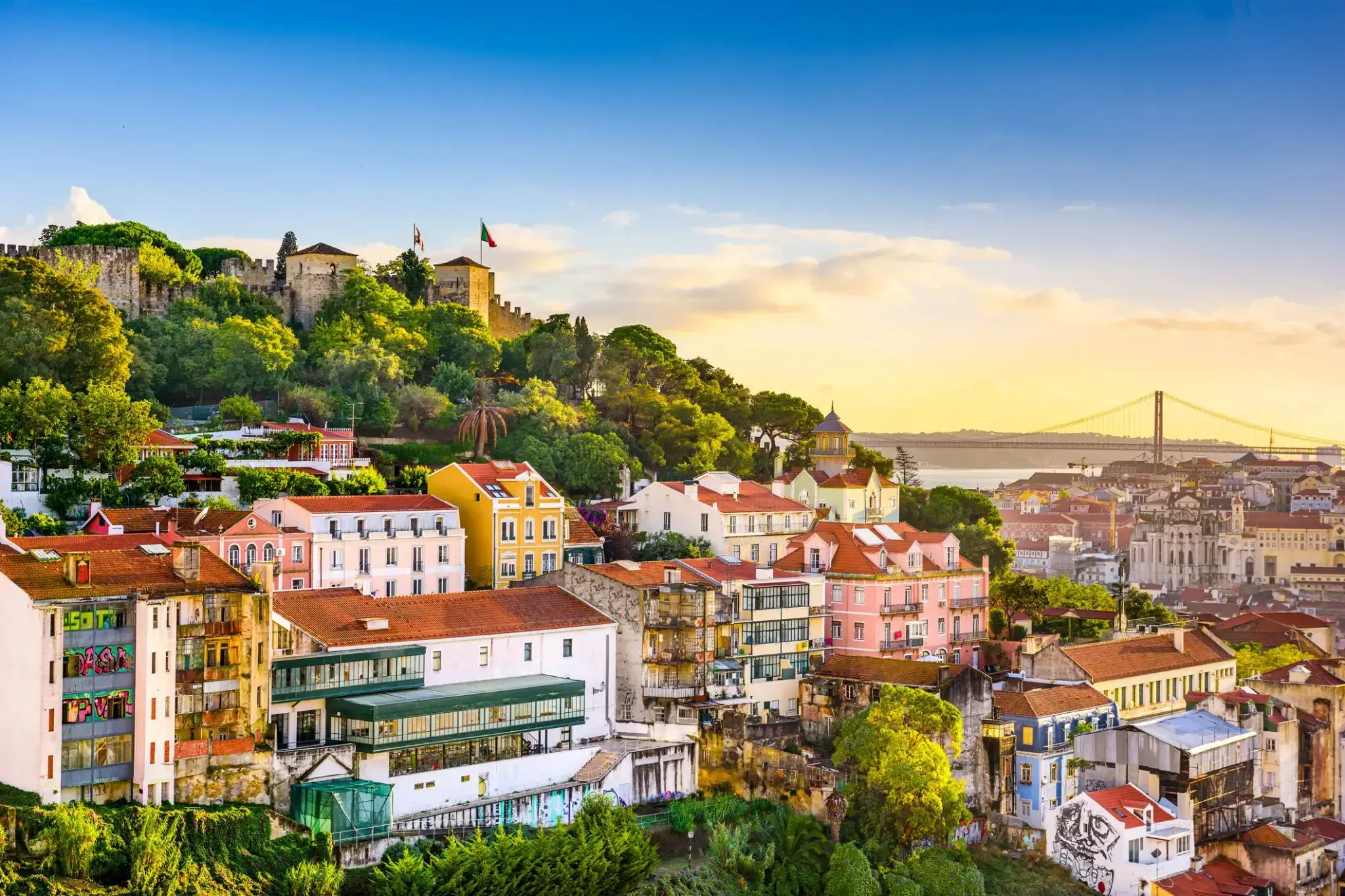
Lizbona jest stolicą i największym miastem Portugalii, z szacowaną populacją 505 526 mieszkańców w granicach administracyjnych na obszarze 100,05 km². Jej obszar miejski rozciąga się poza granice administracyjne miasta i liczy około 2,8 miliona mieszkańców, co czyni go jedenastym najbardziej zaludnionym obszarem miejskim w Unii Europejskiej. Około 3 milionów ludzi mieszka w aglomeracji lizbońskiej (która stanowi około 27% populacji kraju). Jest to najbardziej wysunięta na zachód stolica kontynentalnej Europy i jedyna położona nad Oceanem Atlantyckim. Lizbona leży na zachodnim Półwyspie Iberyjskim nad Oceanem Atlantyckim i rzeką Tag. Najbardziej wysunięte na zachód obszary jej aglomeracji tworzą najbardziej wysunięty na zachód punkt kontynentalnej Europy, znany jako Cabo da Roca, położony w górach Sintra.
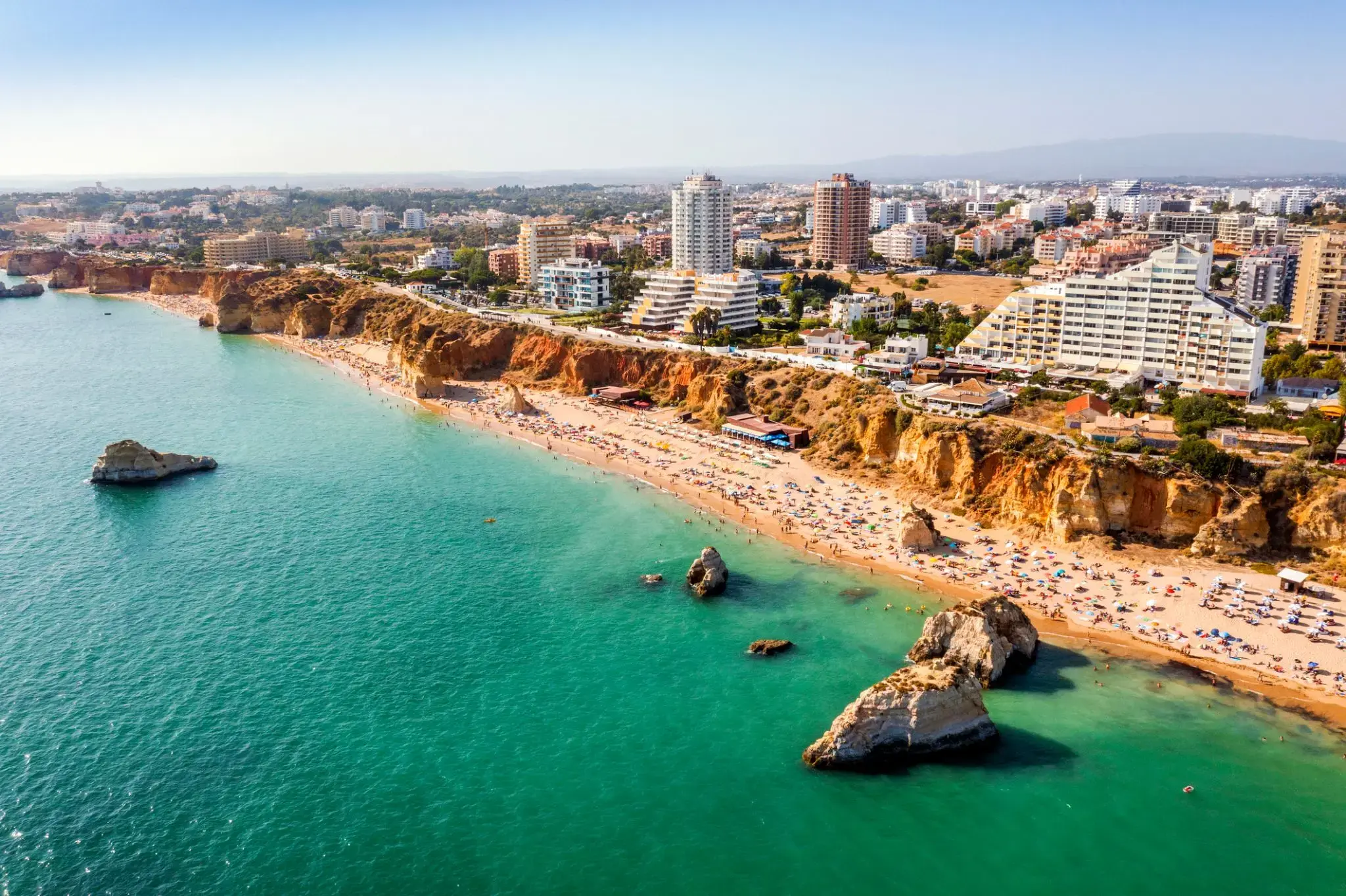
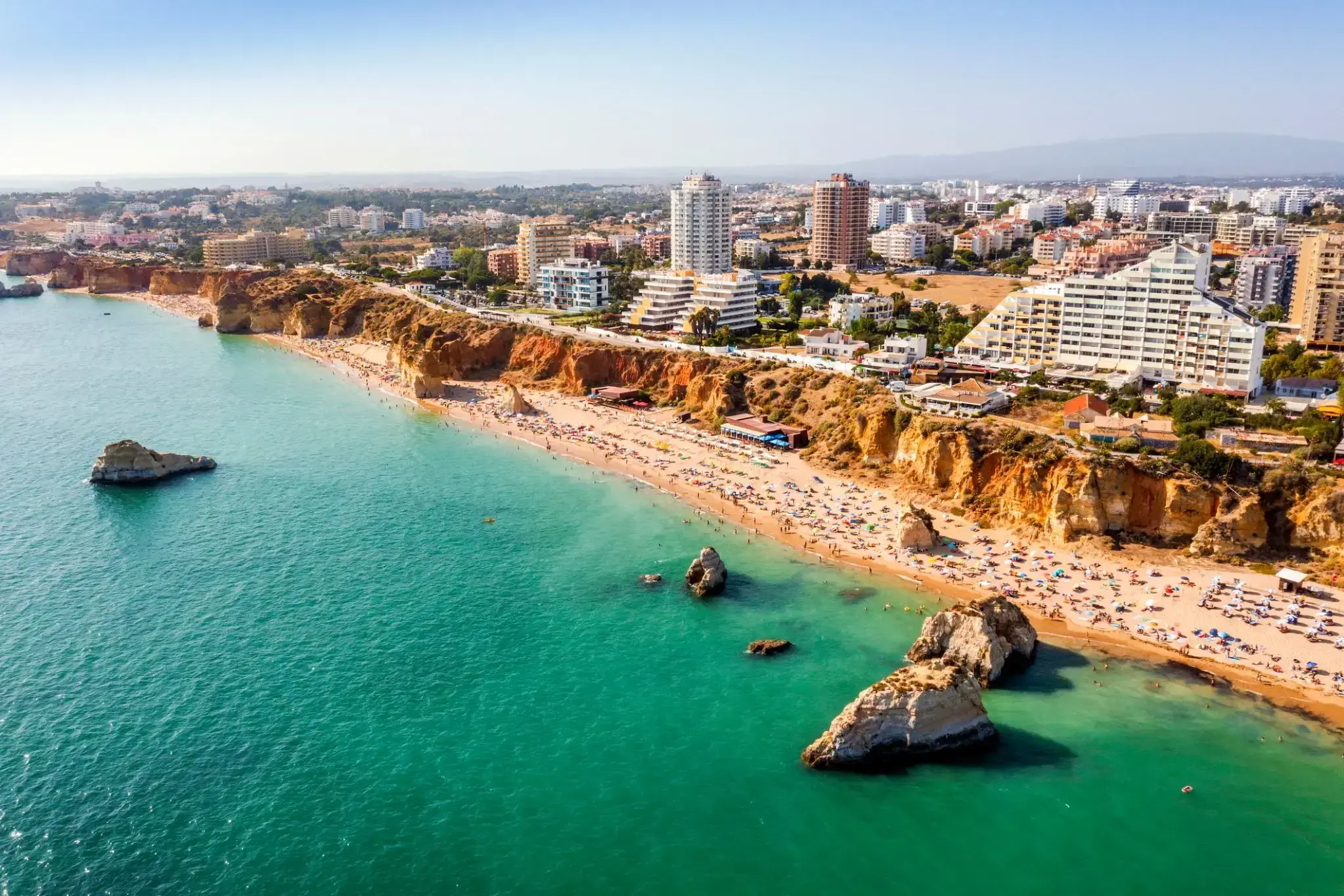
Portimão is a town and a municipality in the district of Faro, in the Algarve region of southern Portugal. The population in 2011 was 55,614, in an area of 182.06 km². It was formerly known as Vila Nova de Portimão. In 1924, it was incorporated as a cidadeand became known merely as Portimão. Historically a fishing and shipbuilding centre, it has nonetheless developed into a strong tourist centre oriented along its beaches and southern coast. The two most populous towns in the Algarve are Portimão and Faro.
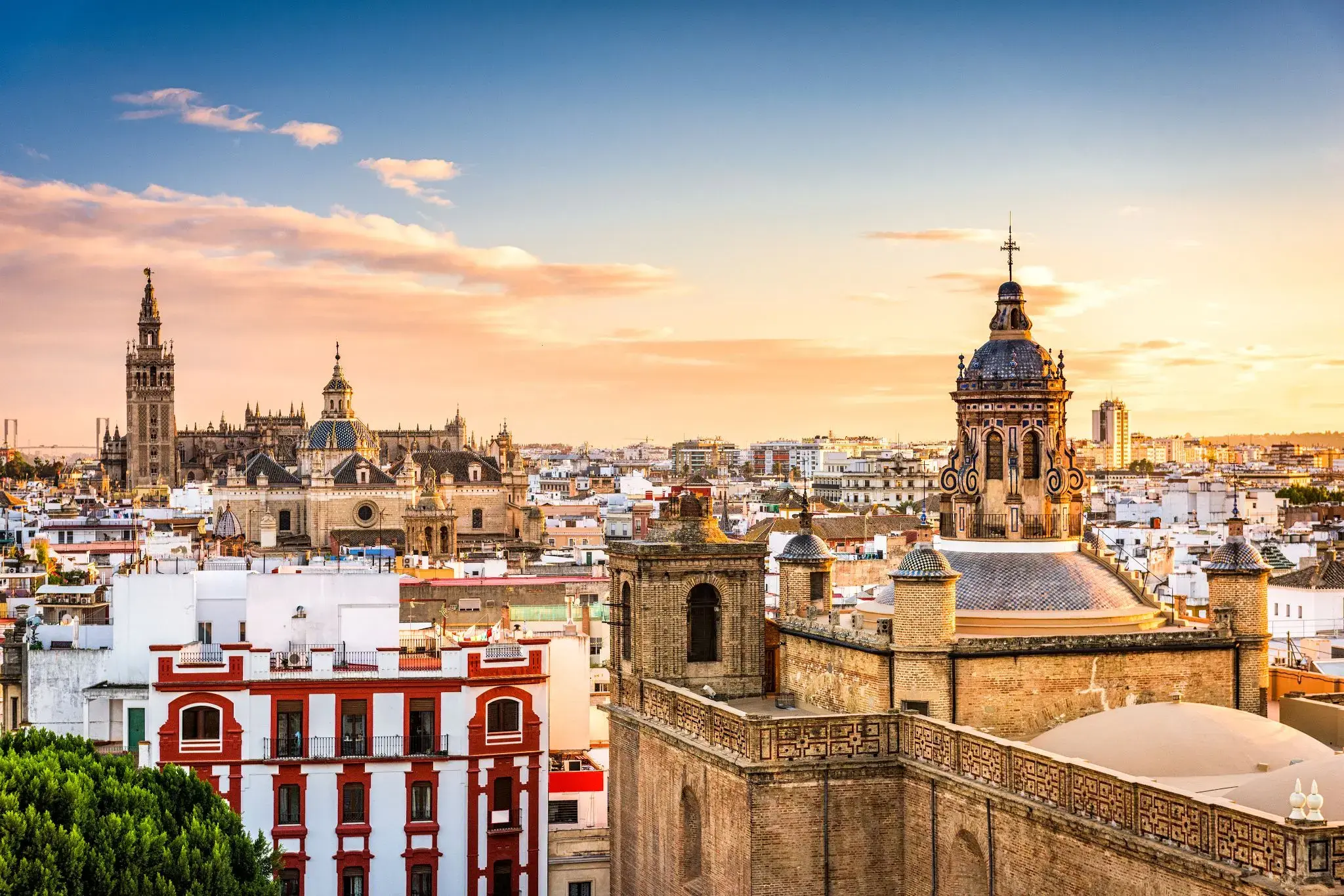
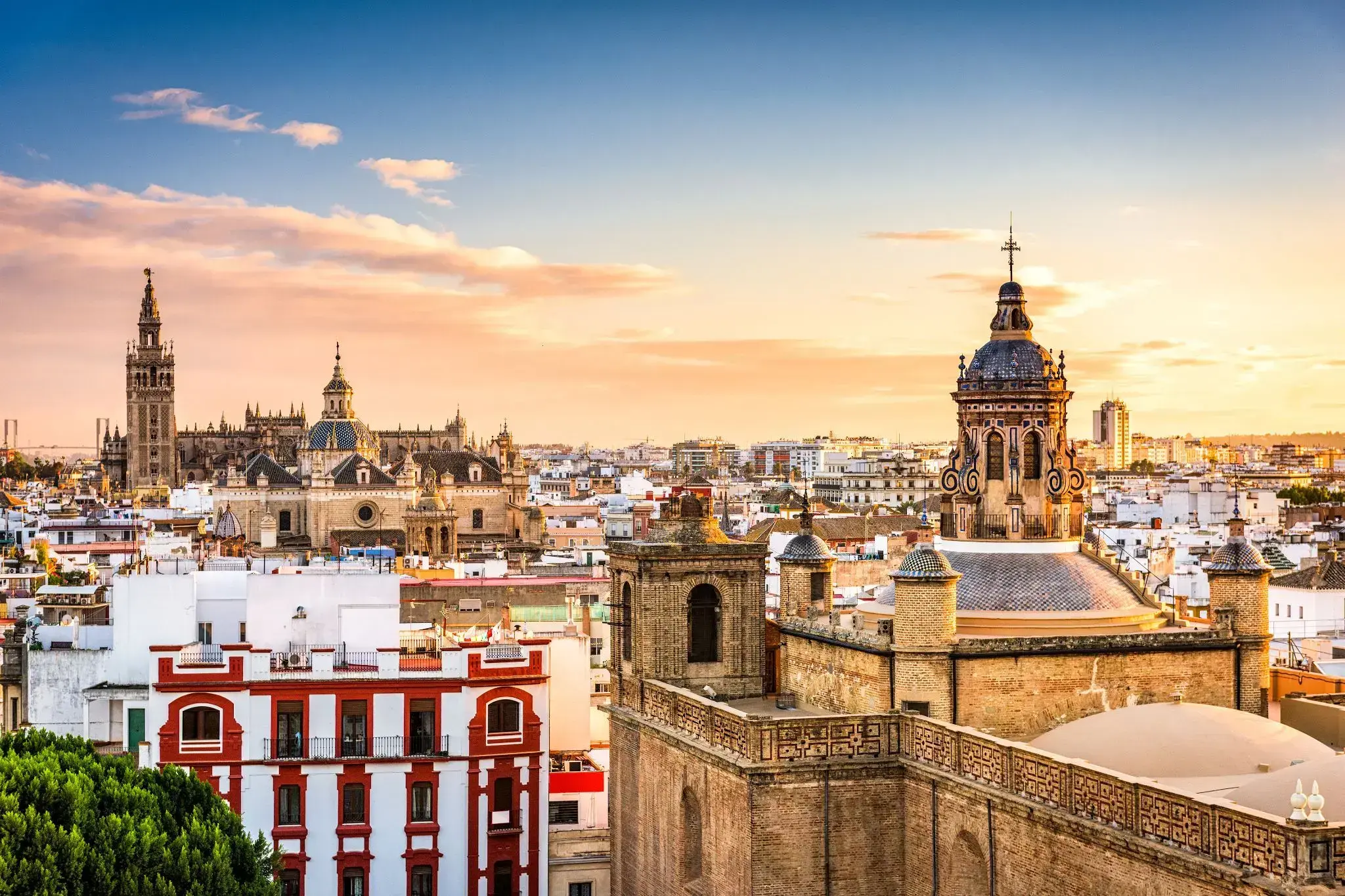
Sewilla jest stolicą i największym miastem autonomicznej wspólnoty Andaluzji oraz prowincji Sewilla w Hiszpanii. Położona jest na równinie rzeki Gwadalkiwir. Mieszkańców miasta nazywa się sevillanos (forma żeńska: sevillanas) lub hispalenses, od rzymskiej nazwy miasta, Hispalis. Sewilla liczy około 690 000 mieszkańców (dane z 2016 roku), a jej obszar metropolitalny około 1,5 miliona, co czyni ją czwartym co do wielkości miastem w Hiszpanii i 30. najbardziej zaludnioną gminą w Unii Europejskiej. Jej Stare Miasto o powierzchni 4 kilometrów kwadratowych (2 mile kwadratowe) zawiera trzy obiekty światowego dziedzictwa UNESCO: zespół pałacowy Alcázar, Katedrę i Archiwum Indii. Port w Sewilli, położony około 80 kilometrów (50 mil) od Oceanu Atlantyckiego, jest jedynym portem rzecznym w Hiszpanii.
Sewilla jest stolicą i największym miastem autonomicznej wspólnoty Andaluzji oraz prowincji Sewilla w Hiszpanii. Położona jest na równinie rzeki Gwadalkiwir. Mieszkańców miasta nazywa się sevillanos (forma żeńska: sevillanas) lub hispalenses, od rzymskiej nazwy miasta, Hispalis. Sewilla liczy około 690 000 mieszkańców (dane z 2016 roku), a jej obszar metropolitalny około 1,5 miliona, co czyni ją czwartym co do wielkości miastem w Hiszpanii i 30. najbardziej zaludnioną gminą w Unii Europejskiej. Jej Stare Miasto o powierzchni 4 kilometrów kwadratowych (2 mile kwadratowe) zawiera trzy obiekty światowego dziedzictwa UNESCO: zespół pałacowy Alcázar, Katedrę i Archiwum Indii. Port w Sewilli, położony około 80 kilometrów (50 mil) od Oceanu Atlantyckiego, jest jedynym portem rzecznym w Hiszpanii.
Sewilla jest stolicą i największym miastem autonomicznej wspólnoty Andaluzji oraz prowincji Sewilla w Hiszpanii. Położona jest na równinie rzeki Gwadalkiwir. Mieszkańców miasta nazywa się sevillanos (forma żeńska: sevillanas) lub hispalenses, od rzymskiej nazwy miasta, Hispalis. Sewilla liczy około 690 000 mieszkańców (dane z 2016 roku), a jej obszar metropolitalny około 1,5 miliona, co czyni ją czwartym co do wielkości miastem w Hiszpanii i 30. najbardziej zaludnioną gminą w Unii Europejskiej. Jej Stare Miasto o powierzchni 4 kilometrów kwadratowych (2 mile kwadratowe) zawiera trzy obiekty światowego dziedzictwa UNESCO: zespół pałacowy Alcázar, Katedrę i Archiwum Indii. Port w Sewilli, położony około 80 kilometrów (50 mil) od Oceanu Atlantyckiego, jest jedynym portem rzecznym w Hiszpanii.
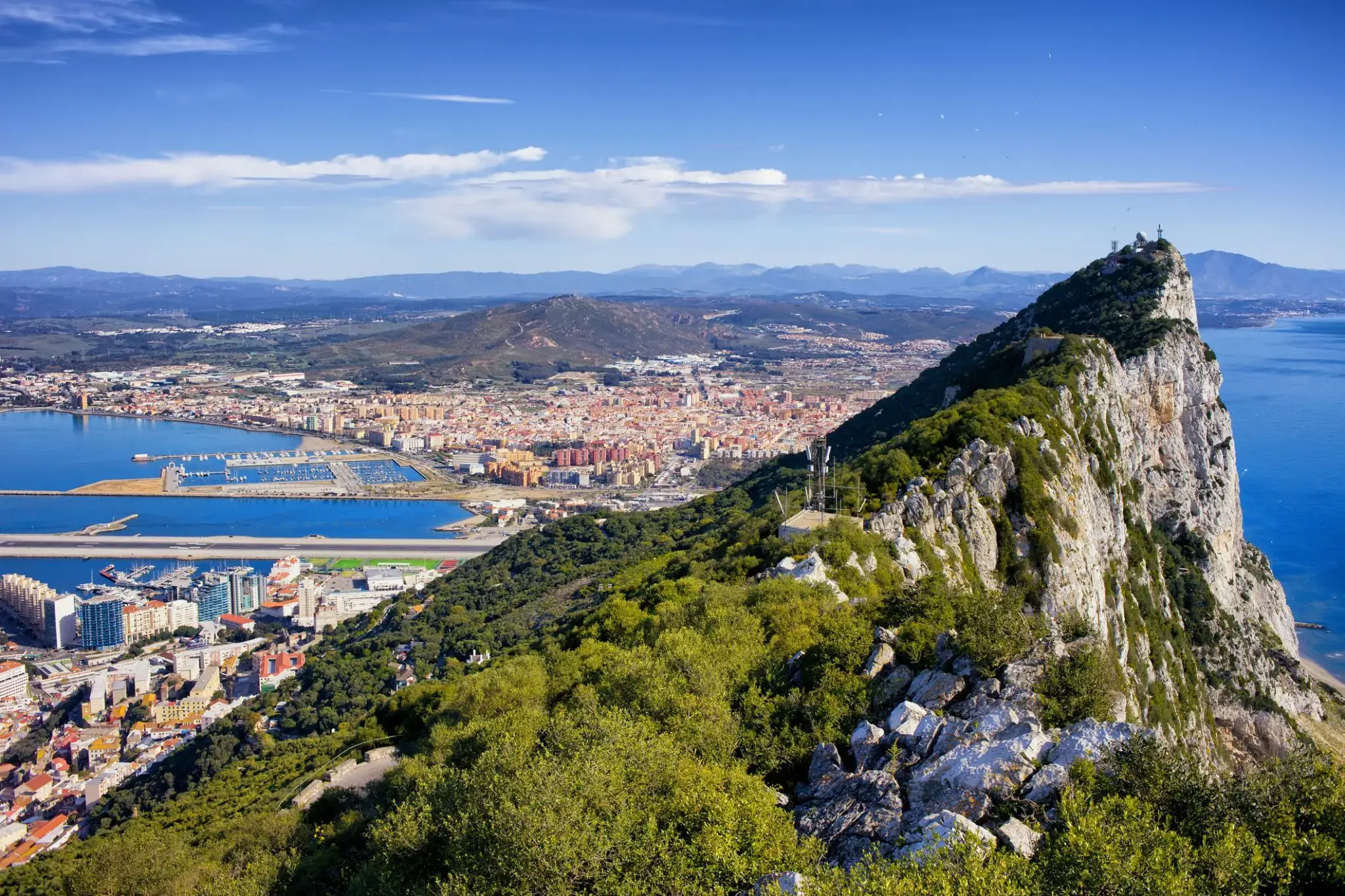
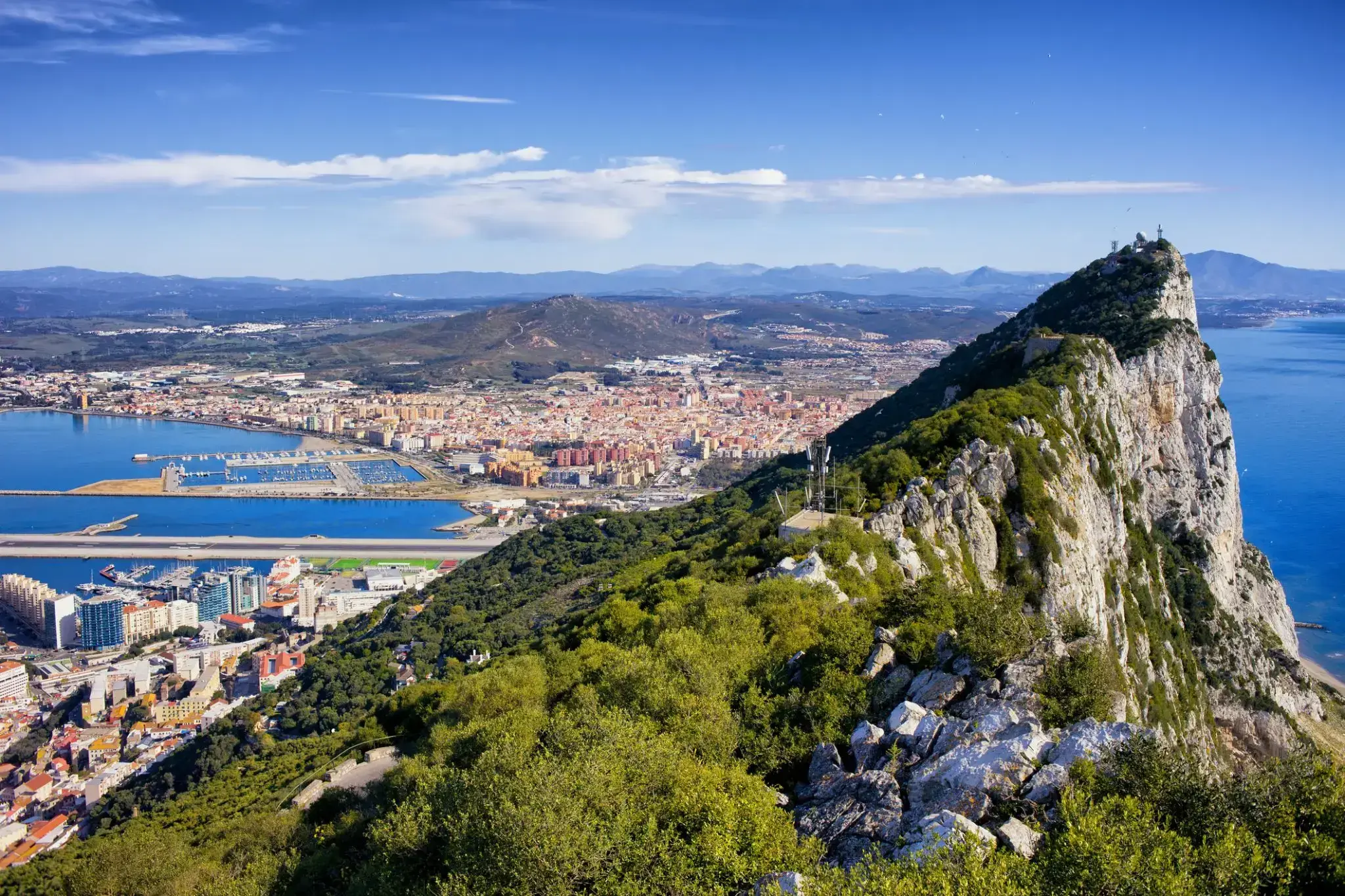
Gibraltar is a British Overseas Territory located at the southern tip of the Iberian Peninsula. It has an area of 6.7 km2 (2.6 sq mi) and is bordered to the north by Spain. The landscape is dominated by the Rock of Gibraltar at the foot of which is a densely populated town area, home to over 30,000 people, primarily Gibraltarians. It shares a maritime border with Morocco.
In 1704, Anglo-Dutch forces captured Gibraltar from Spain during the War of the Spanish Succession on behalf of the Habsburg claim to the Spanish throne. The territory was ceded to Great Britain in perpetuity under the Treaty of Utrechtin 1713. During World War II it was an important base for the Royal Navy as it controlled the entrance and exit to the Mediterranean Sea, which is only 8 miles (13 km) wide at this naval choke point. It remains strategically important, with half the world's seaborne trade passing through the strait. Today Gibraltar's economy is based largely on tourism, online gambling, financial services and cargo ship refuelling.
The sovereignty of Gibraltar is a point of contention in Anglo-Spanish relations because Spain asserts a claim to the territory. Gibraltarians rejected proposals for Spanish sovereignty in a 1967 referendum and, in a 2002 referendum, the idea of shared sovereignty was also rejected.
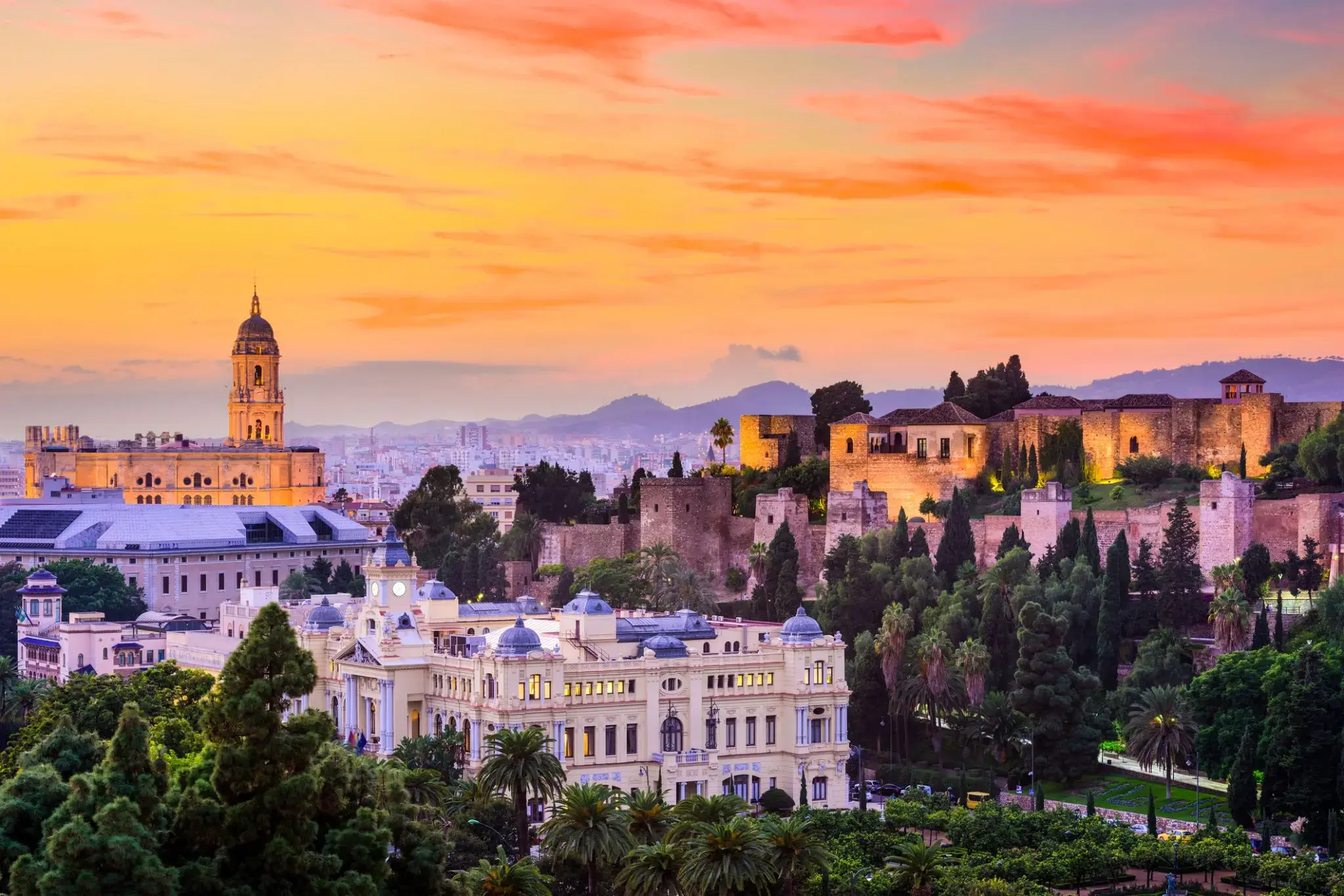
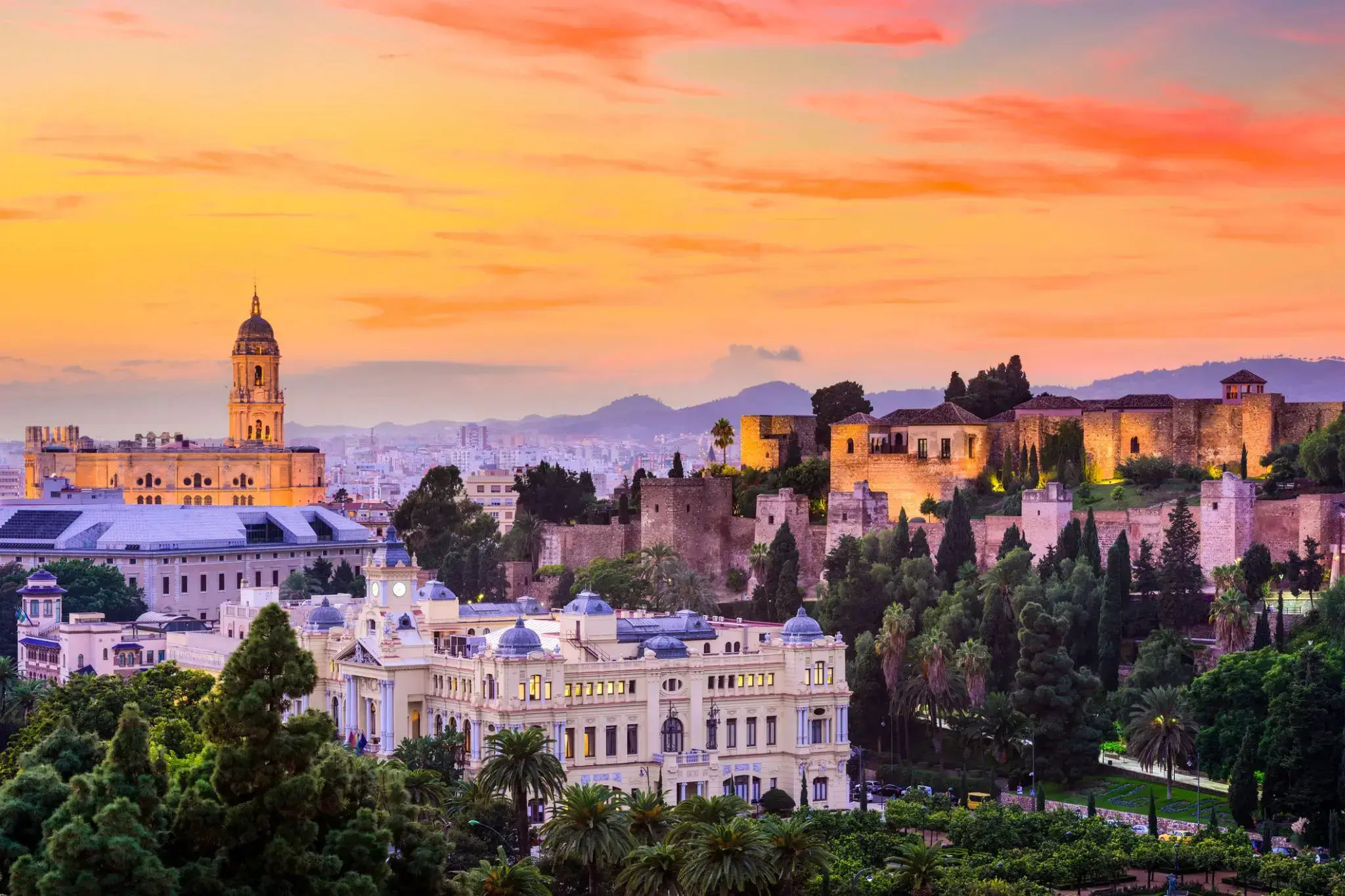
Málaga is a municipality, capital of the Province of Málaga, in the Autonomous Community of Andalusia, Spain. With a population of 569,130 in 2015, it is the second-most populous city of Andalusia and the sixth-largest in Spain. The southernmost large city in Europe, it lies on the Costa del Sol (Coast of the Sun) of the Mediterranean, about 100 kilometres (62.14 miles) east of the Strait of Gibraltar and about 130 km (80.78 mi) north of Africa.
Málaga's history spans about 2,800 years, making it one of the oldest cities in the world. According to most scholars, it was founded about 770 BC by the Phoenicians as Malaka From the 6th century BC the city was under the hegemony of Ancient Carthage, and from 218 BC, it was ruled by the Roman Republic and then empire as Malaca (Latin). After the fall of the empire and the end of Visigothic rule, it was under Islamic rule as Mālaqah for 800 years, but in 1487, the Crown of Castille gained control after the Reconquista. The archaeological remains and monuments from the Phoenician, Roman, Arabic and Christian eras make the historic center of the city an "open museum", displaying its history of nearly 3,000 years.
This important cultural infrastructure and the artistic heritage have culminated in the nomination of Málaga as a candidate for the 2016 European Capital of Culture.
The painter and sculptor Pablo Picasso, Hebrew poet and Jewish philosopher Solomon Ibn Gabirol and the actor Antonio Banderas were born in Málaga. The magnum opus of Cuban composer Ernesto Lecuona, "Malagueña", is named after the music of this region of Spain.
The most important business sectors in Málaga are tourism, construction and technology services, but other sectors such as transportation and logistics are beginning to expand. The Andalusia Technology Park (PTA), located in Málaga, has enjoyed significant growth since its inauguration in 1992. Málaga is the main economic and financial centre of southern Spain, home of the region's largest bank, Unicaja, and the fourth-ranking city in economic activity in Spain behind Madrid, Barcelona and Valencia.
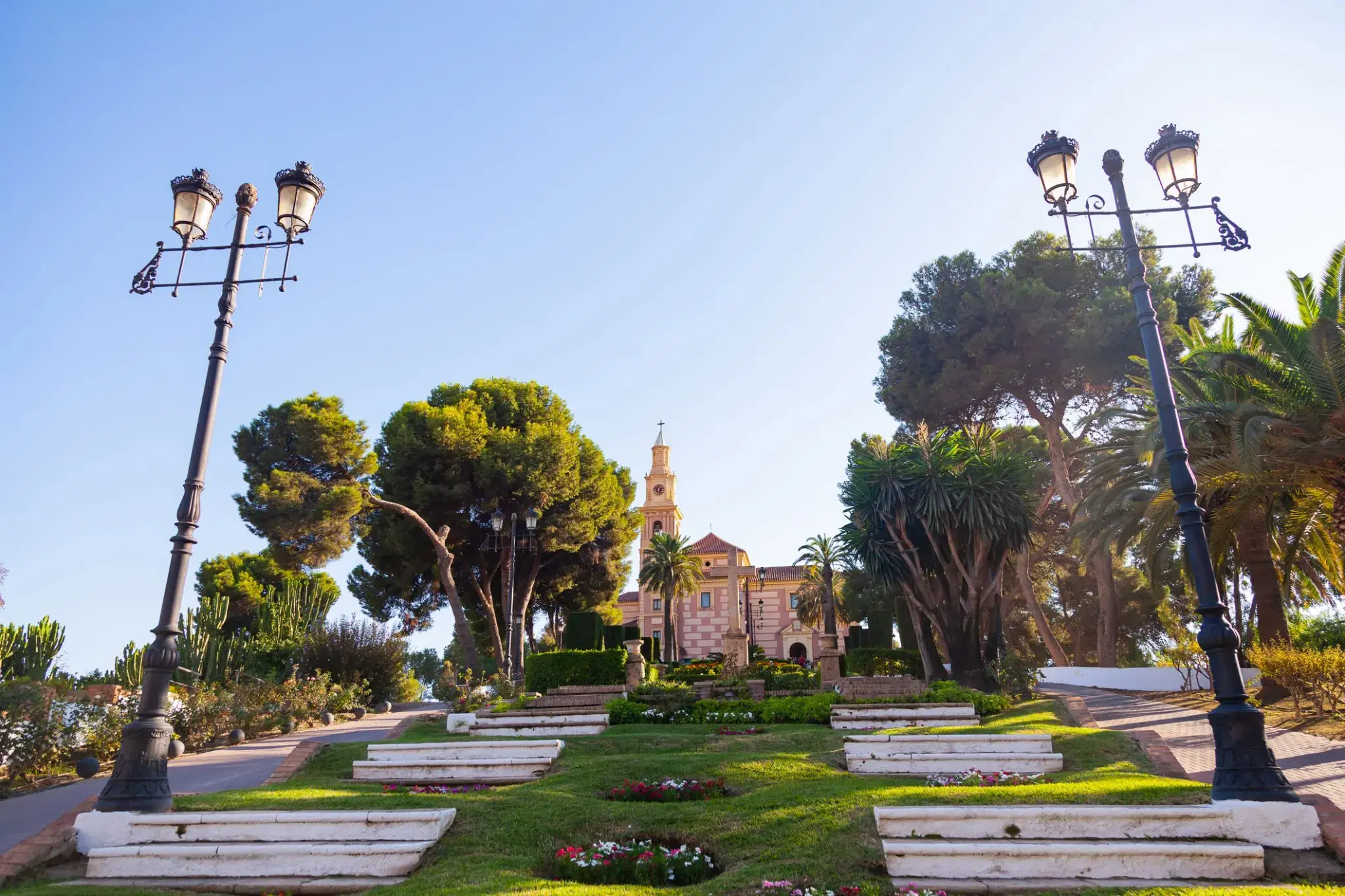
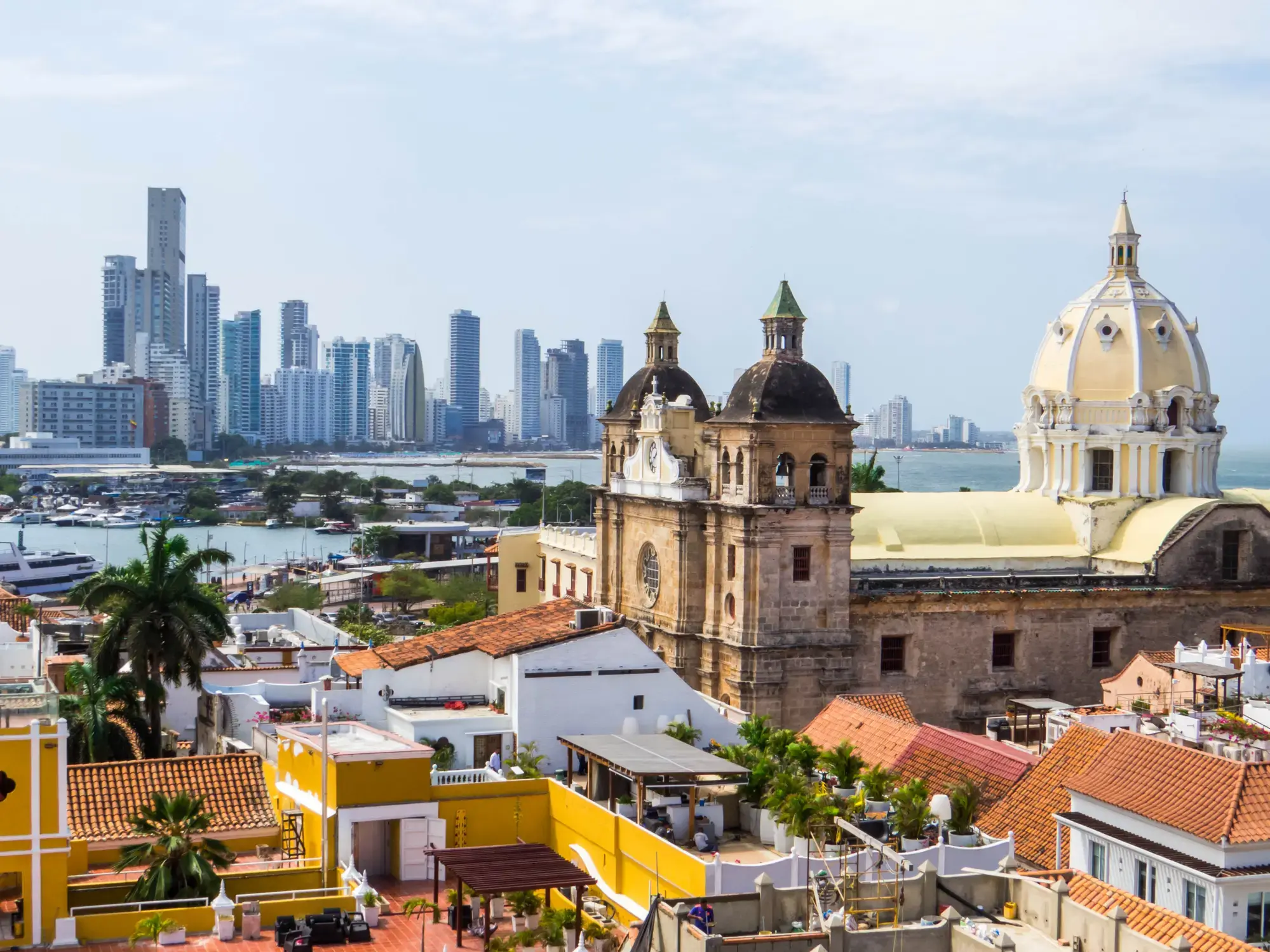
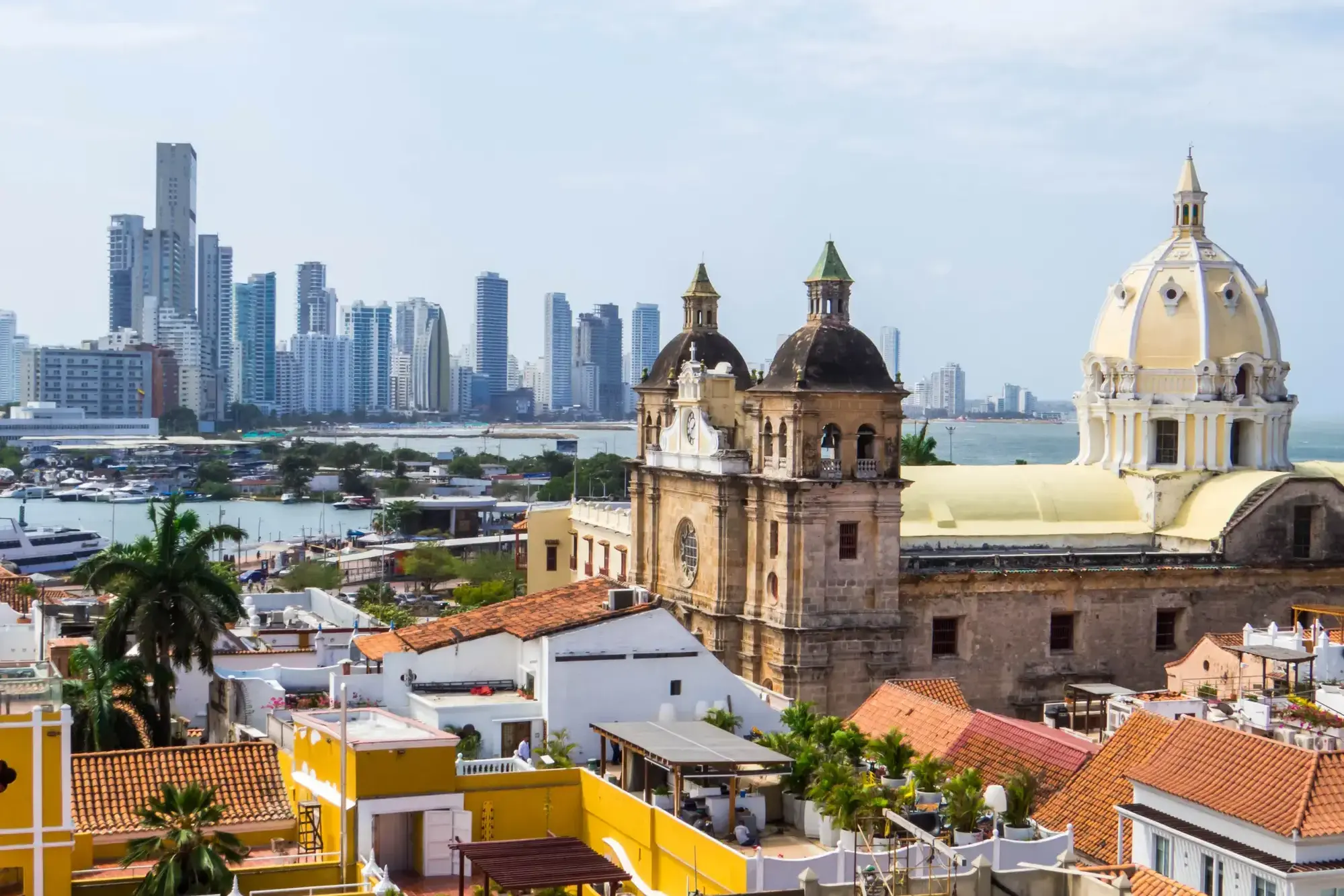
Starożytne mury forteczne, uliczni muzycy i karaibskie słońce tworzą niepowtarzalną atmosferę w Cartagenie (Bolívar) – perle kolumbijskiego wybrzeża. Miasto wpisane na listę światowego dziedzictwa UNESCO zachwyca kolonialną architekturą, uroczymi dziedzińcami i aromatem świeżo parzonej kawy z licznych kawiarni.
Zanurz się w tętniący życiem rytm Cartageny, spacerując brukowanymi uliczkami Starego Miasta, gdzie każdy zakątek kryje opowieści o piratach i hiszpańskich konkwistadorach. Zachód słońca przy starożytnej twierdzy Castillo San Felipe de Barajas to idealne zakończenie dnia pełnego kultury, historii i tropikalnego uroku.
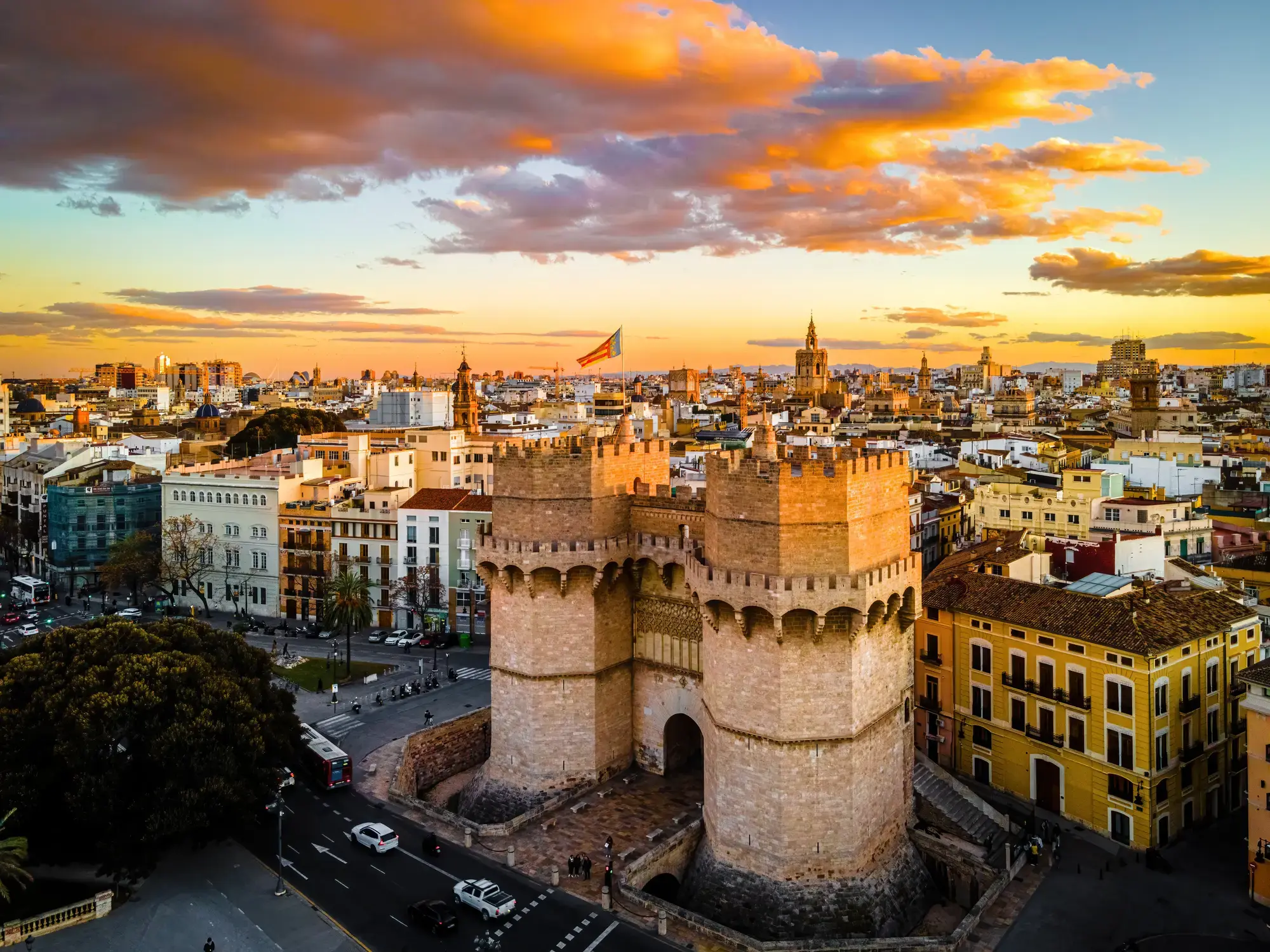
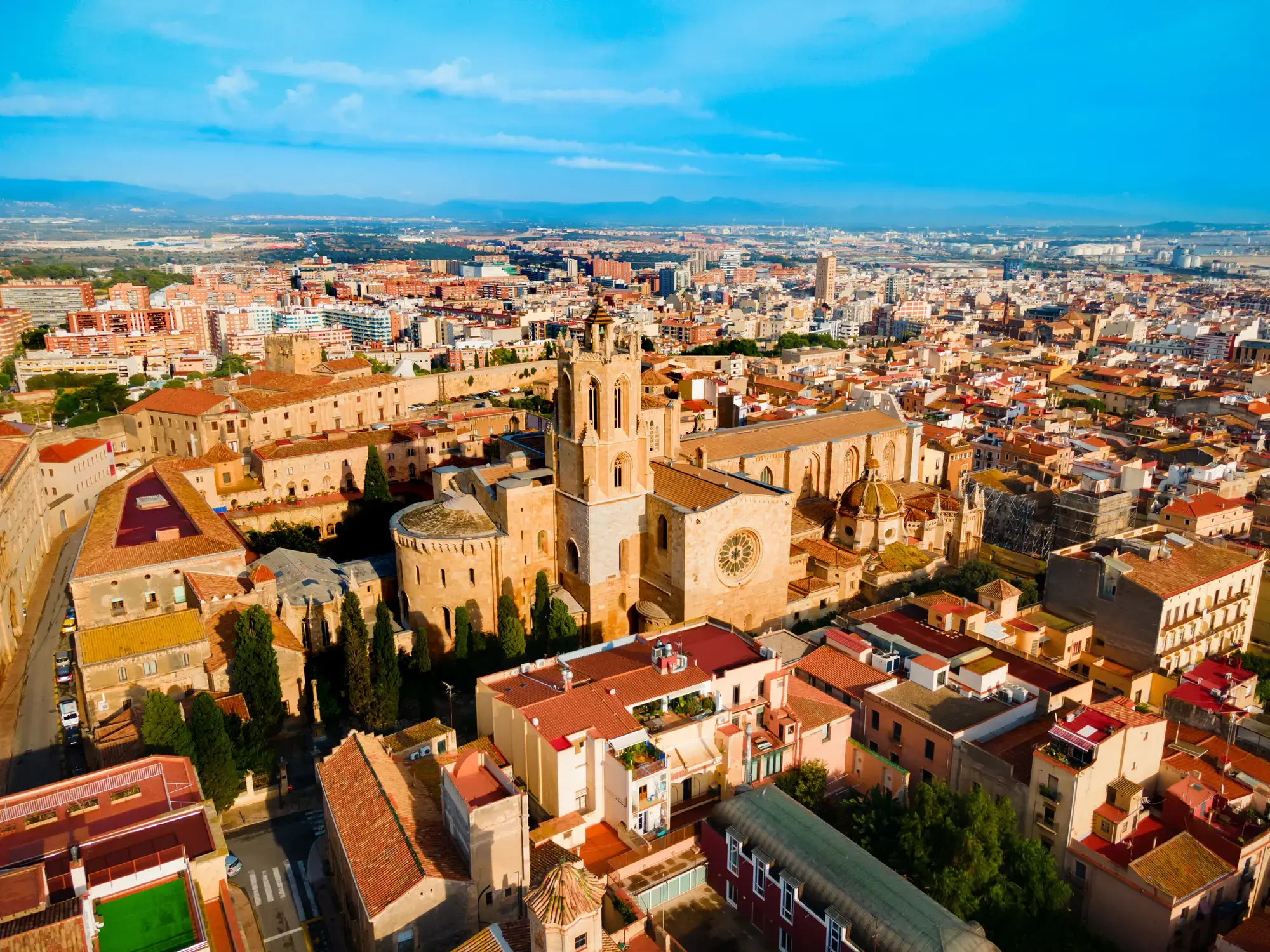
Tarragona is a port city located in northeast Spain on the Costa Daurada by the Mediterranean Sea. Founded before the 5th century BC, it is the capital of the Province of Tarragona, and part of Tarragonès and Catalonia. Geographically, it is bordered on the north by the Province of Barcelona and the Province of Lleida. The city has a population of 201,199 (2014).
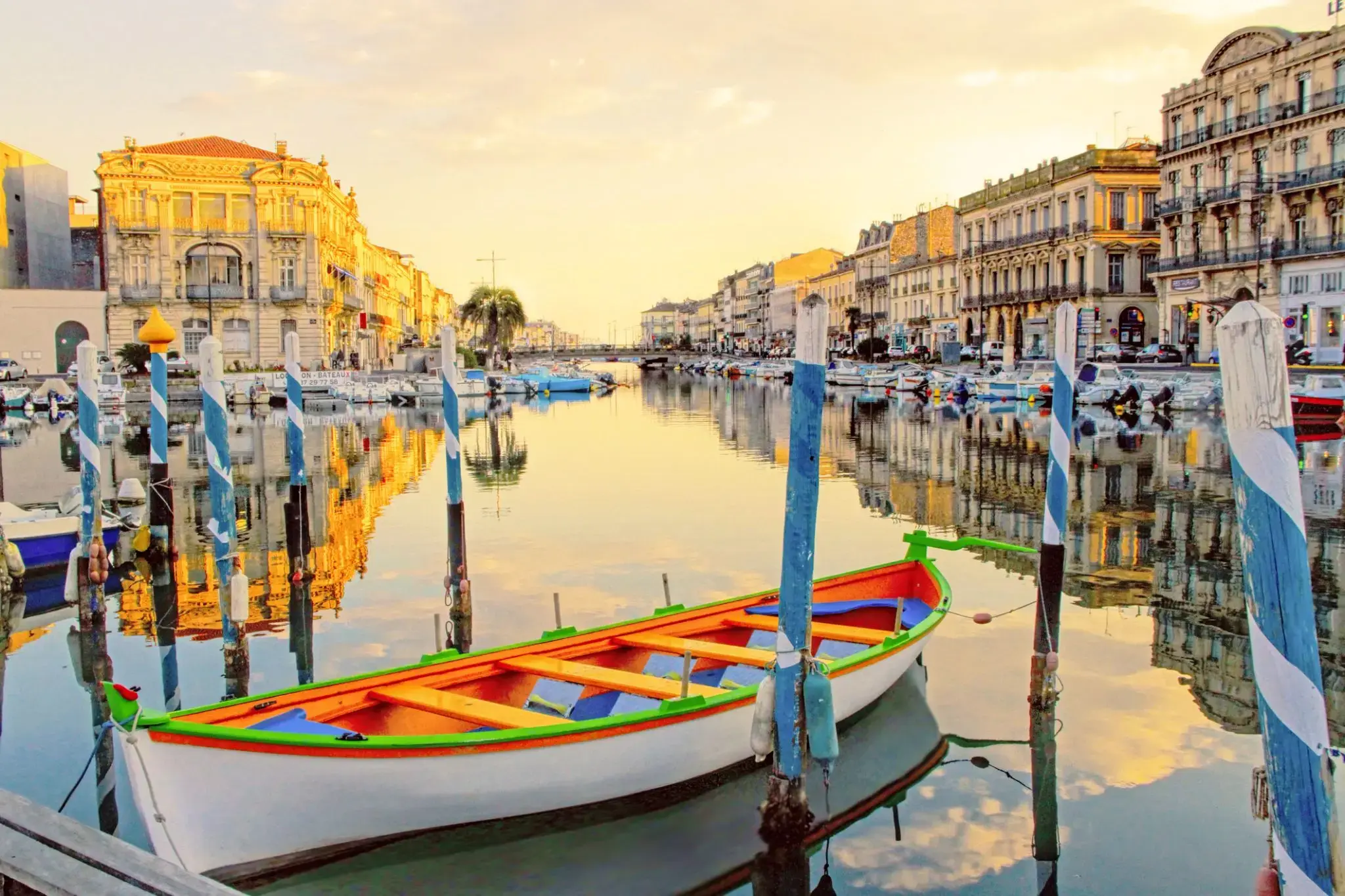
Miasto Sete, położone na południu Francji między laguną Thau a Morzem Śródziemnym, często nazywane jest „Wenecją Langwedocji” ze względu na malownicze kanały, po których pływają łodzie rybackie i wycieczkowe. Sète zostało założone w XVII wieku jako port dla Kanału Południowego (Canal du Midi) i do dziś pozostaje ważnym ośrodkiem rybołówstwa i handlu. Nad miastem góruje wzgórze Mont Saint-Clair, z którego roztacza się panoramiczny widok na słone mokradła i lazurowe wody zatoki.
Sète znane jest nie tylko ze swojego morskiego uroku, ale także z bogatego życia kulturalnego. To rodzinne miasto poety Paula Valéry’ego, którego imieniem nazwano muzeum i morski cmentarz, na którym został pochowany. Latem odbywają się tu wyjątkowe uroczystości — turnieje rycerskie na łodziach (joutes nautiques), tradycja sięgająca średniowiecza. Kuchnia lokalna słynie ze świeżych owoców morza, zwłaszcza ostryg i małży z laguny. Sète to miejsce, gdzie spotykają się duch Morza Śródziemnego, historia, gastronomia i poezja.
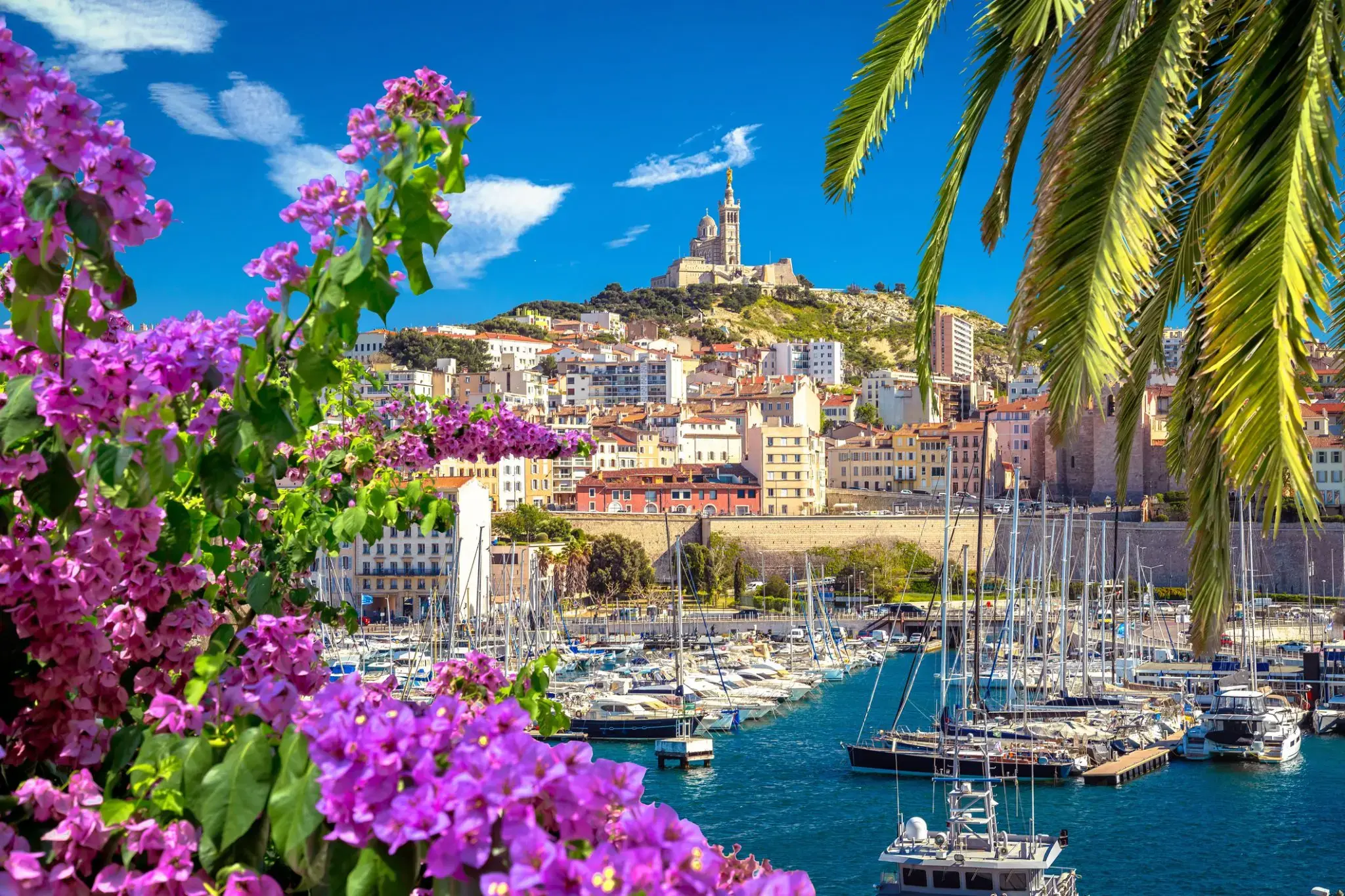
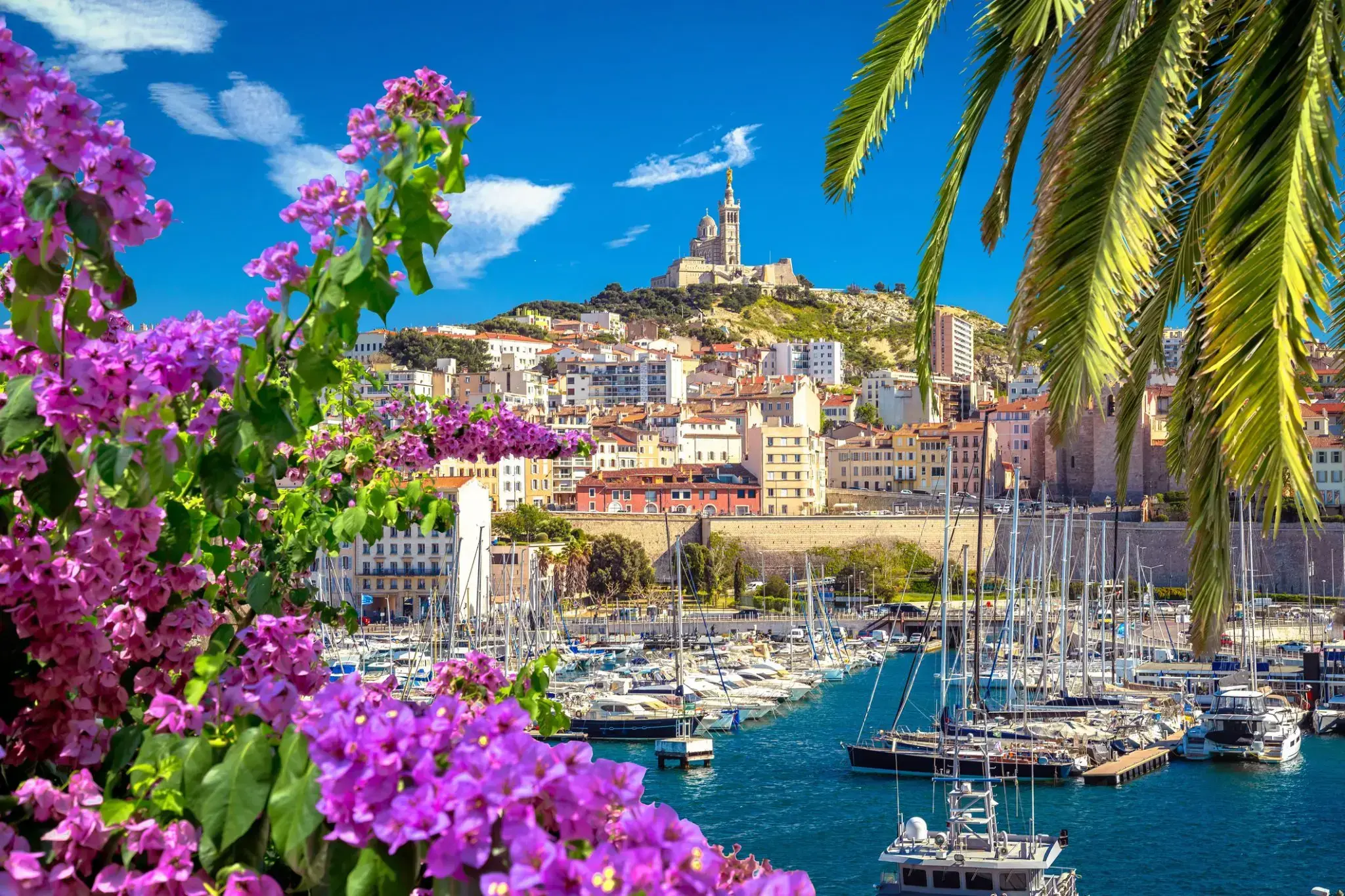
Witamy w gościnnym Prowansie! Bramą do tego regionu jest Marsylia – miasto „Marsylianki”, hymnu Francji, oraz słynnego Zamku If. Symbolem Marsylii jest bazylika Notre-Dame de la Garde. Latem można wziąć udział w oprowadzaniu po francusku (3 EUR), a dopłacając 5 EUR wejść na dach, skąd rozciąga się wspaniała panorama miasta. W pobliżu znajduje się opactwo św. Wiktora z ciekawymi katakumbami.
Rejs turystycznym statkiem na Wyspy Frioul pozwala zobaczyć Zamek If – znany z powieści o hrabim Monte Christo. Kulturalnym sercem Marsylii są Cours Julien i plac Jeana Jaurèsa – pełne księgarni, alternatywnych sklepów, klubów i kawiarni. Dwa razy w tygodniu odbywa się tu wielki targ (czwartek i sobota). Wśród atrakcji miasta znajdują się liczne muzea, galerie i dzieła architektury, a także malownicze zatoki zwane kalankami, uznawane za francuskie fiordy.
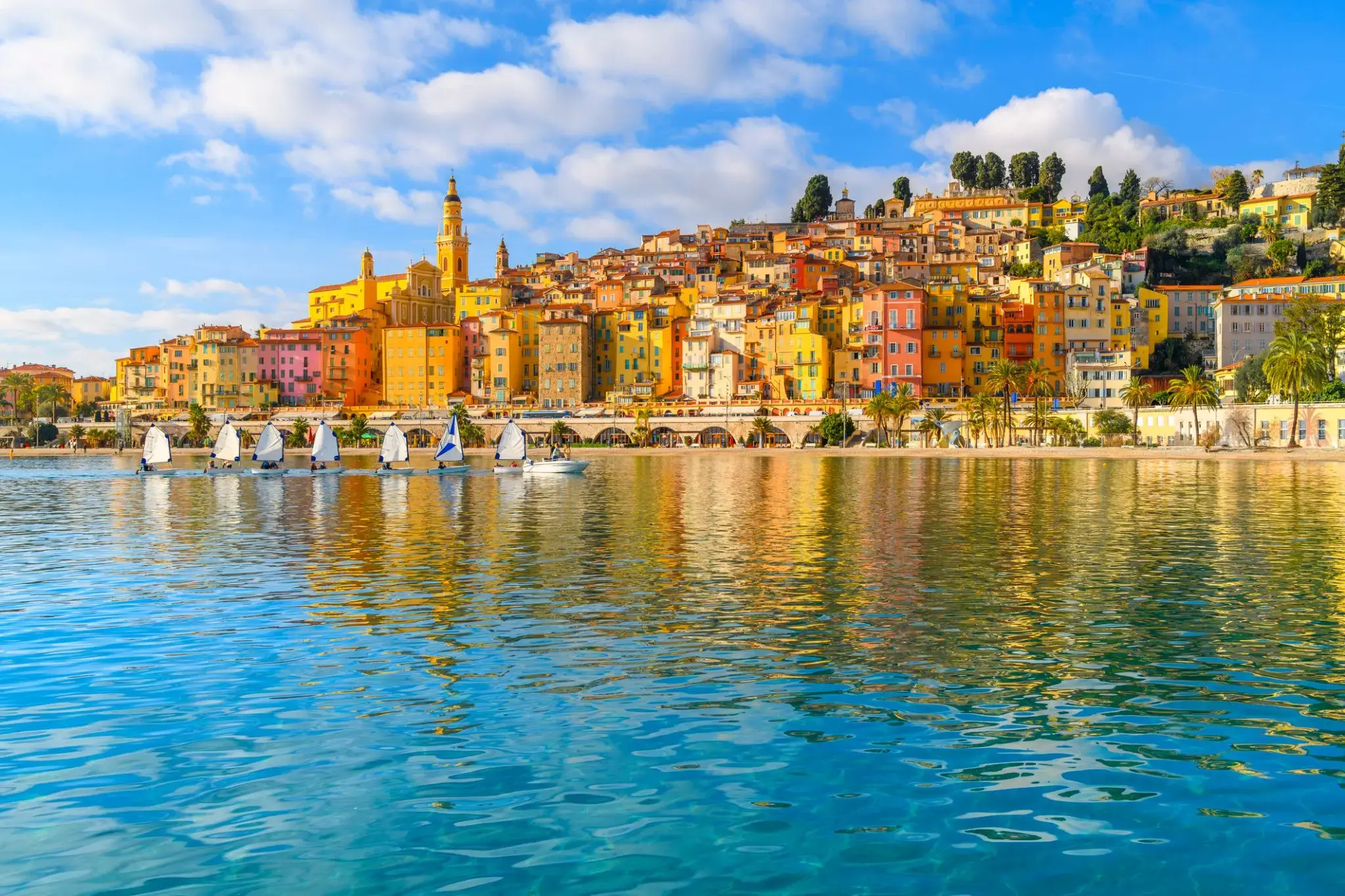
Nice is the seventh most populous urban area in France and the capital of the Alpes-Maritimes département. The metropolitan area of Nice extends beyond the administrative city limits, with a population of about 1 million on an area of 721 km2 (278 sq mi). Located in the French Riviera, on the south east coast of France on the Mediterranean Sea, at the foot of the Alps, Nice is the second-largest French city on the Mediterranean coast and the second-largest city in the Provence-Alpes-Côte d'Azur region after Marseille. Nice is approximately 13 kilometres (8.1 mi) from the principality of Monaco and 30 kilometres (19 mi) from the French-Italian border. Nice's airport serves as a gateway to the region.
The city is nicknamed Nice la Belle (Nissa La Bella in Niçard), which means Nice the Beautiful, which is also the title of the unofficial anthem of Nice, written by Menica Rondelly in 1912.
The area of today's Nice contains Terra Amata, an archaeological site which displays evidence of a very early use of fire. Around 350 BC, Greeks of Marseille founded a permanent settlement and called it Nikaia, after Nike, the goddess of victory. Through the ages, the town has changed hands many times. Its strategic location and port significantly contributed to its maritime strength. For centuries it was a dominion of Savoy, and was then part of France between 1792 and 1815, when it was returned to Piedmont-Sardinia until its re-annexation by France in 1860.
The natural environment of the Nice area and its mild Mediterranean climate came to the attention of the English upper classes in the second half of the 18th century, when an increasing number of aristocratic families took to spending their winters there. The city's main seaside promenade, the Promenade des Anglais ("Walkway of the English") owes its name to visitors to the resort. The clear air and soft light have particularly appealed to notable painters, such as Marc Chagall, Henri Matisse, Niki de Saint Phalle and Arman. Their work is commemorated in many of the city's museums, including Musée Marc Chagall, Musée Matisse and Musée des Beaux-Arts. Nice has the second largest hotel capacity in the country and it is one of its most visited cities, receiving 4 million tourists every year. It also has the third busiest airport in France, after the two main Parisian ones. It is the historical capital city of the County of Nice(Comté de Nice).
Nice is the seventh most populous urban area in France and the capital of the Alpes-Maritimes département. The metropolitan area of Nice extends beyond the administrative city limits, with a population of about 1 million on an area of 721 km2 (278 sq mi). Located in the French Riviera, on the south east coast of France on the Mediterranean Sea, at the foot of the Alps, Nice is the second-largest French city on the Mediterranean coast and the second-largest city in the Provence-Alpes-Côte d'Azur region after Marseille. Nice is approximately 13 kilometres (8.1 mi) from the principality of Monaco and 30 kilometres (19 mi) from the French-Italian border. Nice's airport serves as a gateway to the region.
The city is nicknamed Nice la Belle (Nissa La Bella in Niçard), which means Nice the Beautiful, which is also the title of the unofficial anthem of Nice, written by Menica Rondelly in 1912.
The area of today's Nice contains Terra Amata, an archaeological site which displays evidence of a very early use of fire. Around 350 BC, Greeks of Marseille founded a permanent settlement and called it Nikaia, after Nike, the goddess of victory. Through the ages, the town has changed hands many times. Its strategic location and port significantly contributed to its maritime strength. For centuries it was a dominion of Savoy, and was then part of France between 1792 and 1815, when it was returned to Piedmont-Sardinia until its re-annexation by France in 1860.
The natural environment of the Nice area and its mild Mediterranean climate came to the attention of the English upper classes in the second half of the 18th century, when an increasing number of aristocratic families took to spending their winters there. The city's main seaside promenade, the Promenade des Anglais ("Walkway of the English") owes its name to visitors to the resort. The clear air and soft light have particularly appealed to notable painters, such as Marc Chagall, Henri Matisse, Niki de Saint Phalle and Arman. Their work is commemorated in many of the city's museums, including Musée Marc Chagall, Musée Matisse and Musée des Beaux-Arts. Nice has the second largest hotel capacity in the country and it is one of its most visited cities, receiving 4 million tourists every year. It also has the third busiest airport in France, after the two main Parisian ones. It is the historical capital city of the County of Nice(Comté de Nice).
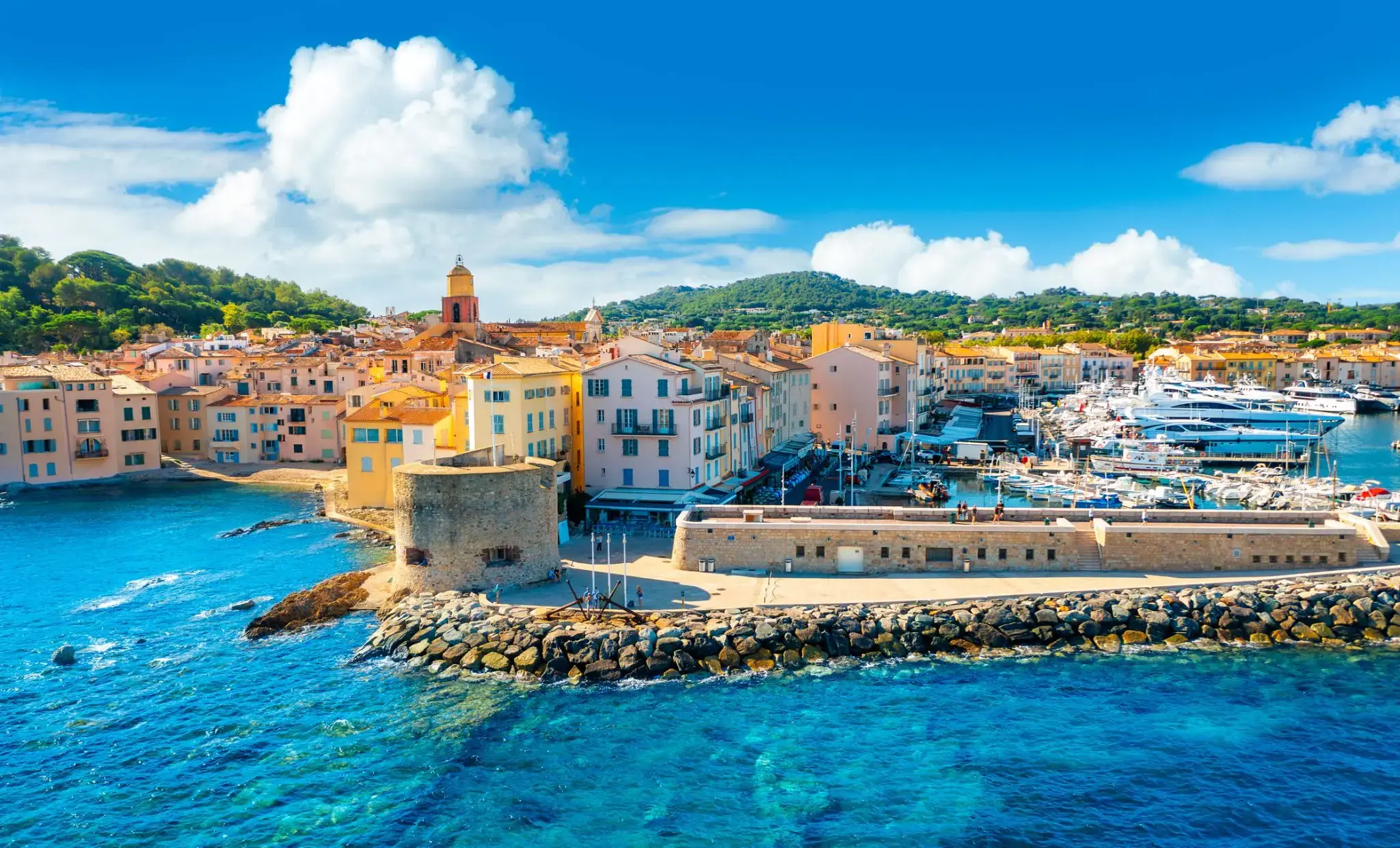
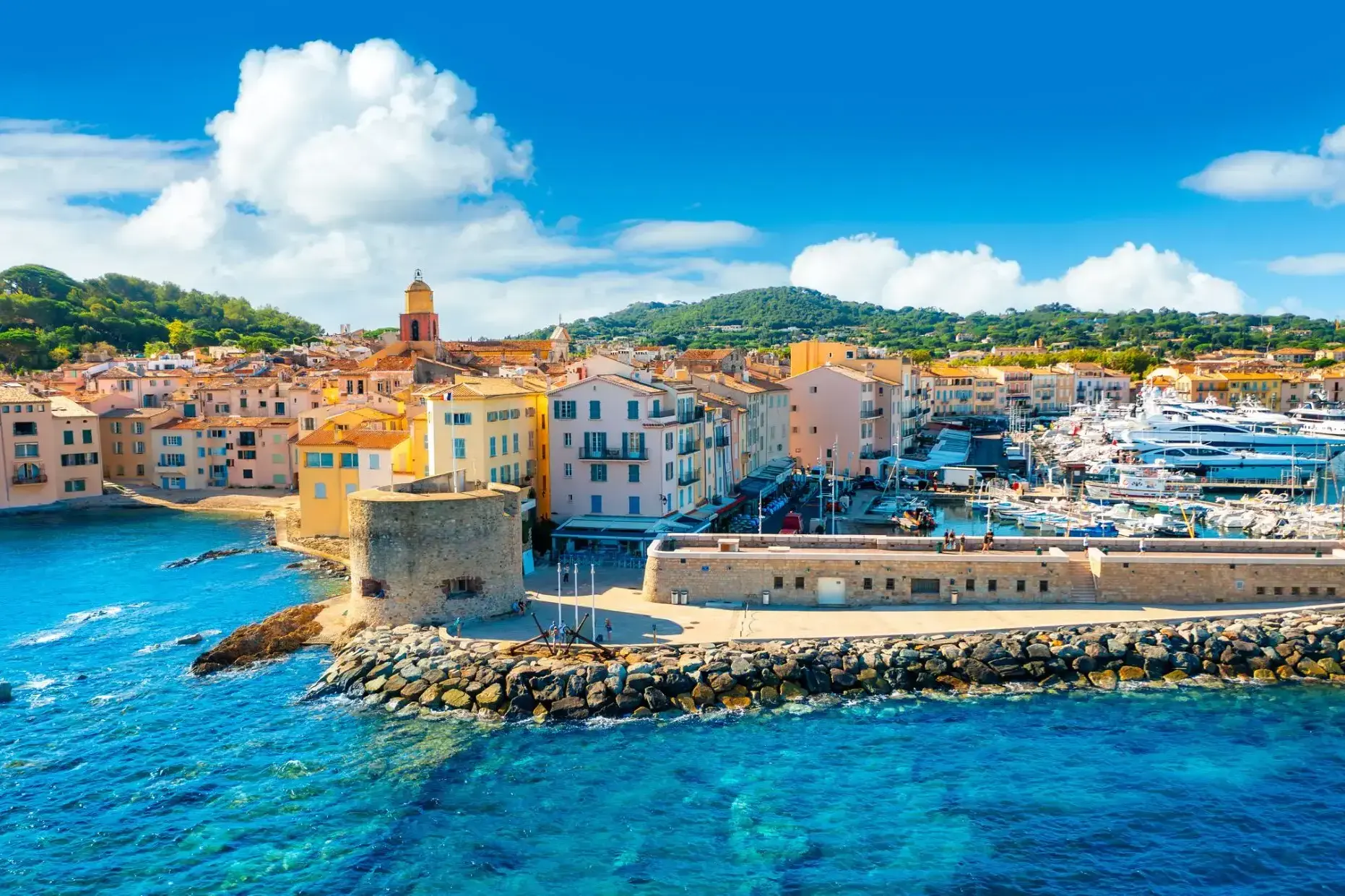
Saint-Tropez is a town on the French Riviera, 100 kilometres (62 miles) west of Nice in the Var department of the Provence-Alpes-Côte d'Azur region of southeastern France.
Saint-Tropez was a military stronghold and fishing village until the beginning of the 20th century. It was the first town on this coast to be liberated during World War II as part of Operation Dragoon. After the war, it became an internationally known seaside resort, renowned principally because of the influx of artists of the French New Wave in cinema and the Yé-yé movement in music. It later became a resort for the European and American jet set and tourists.
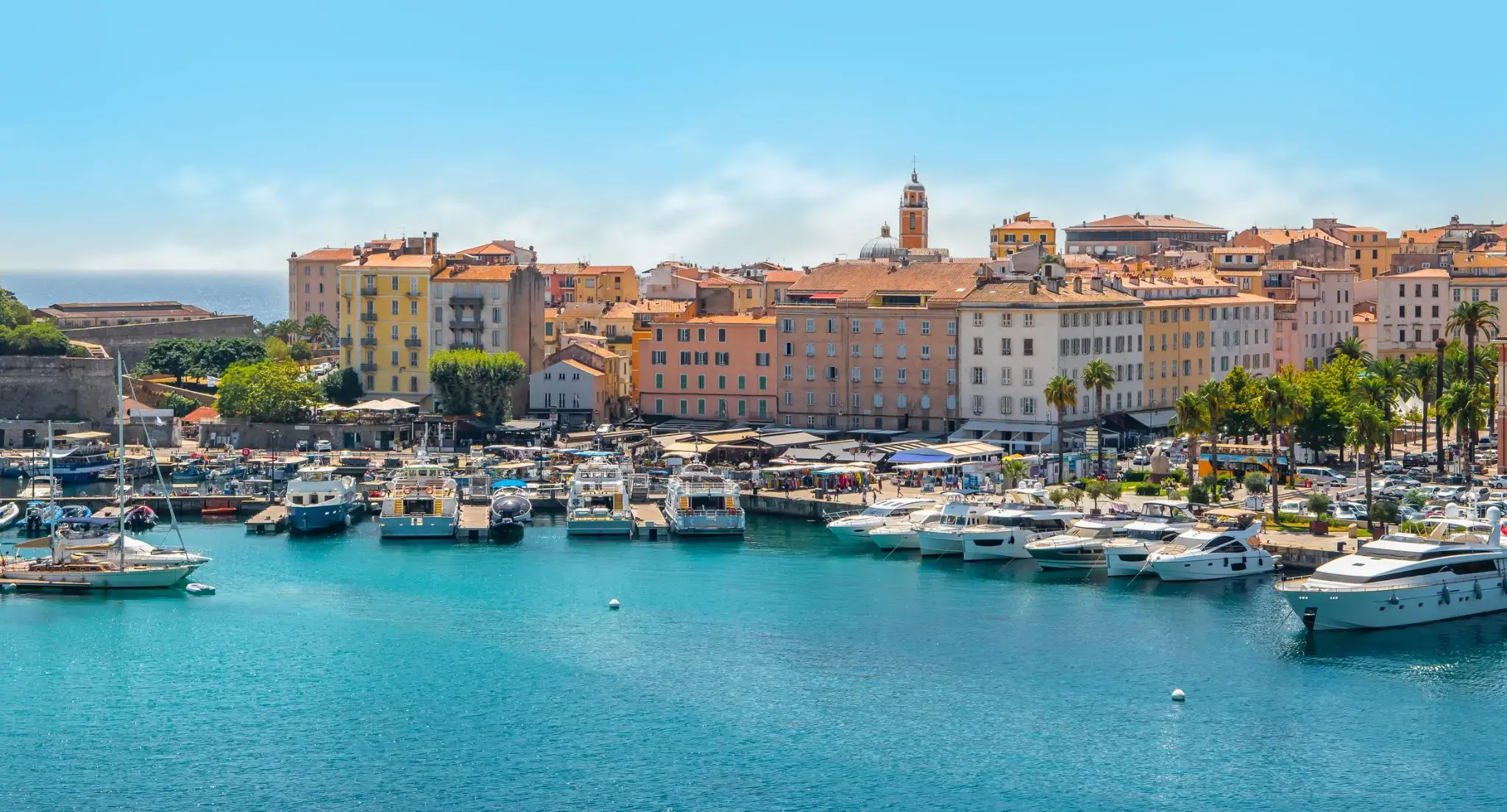
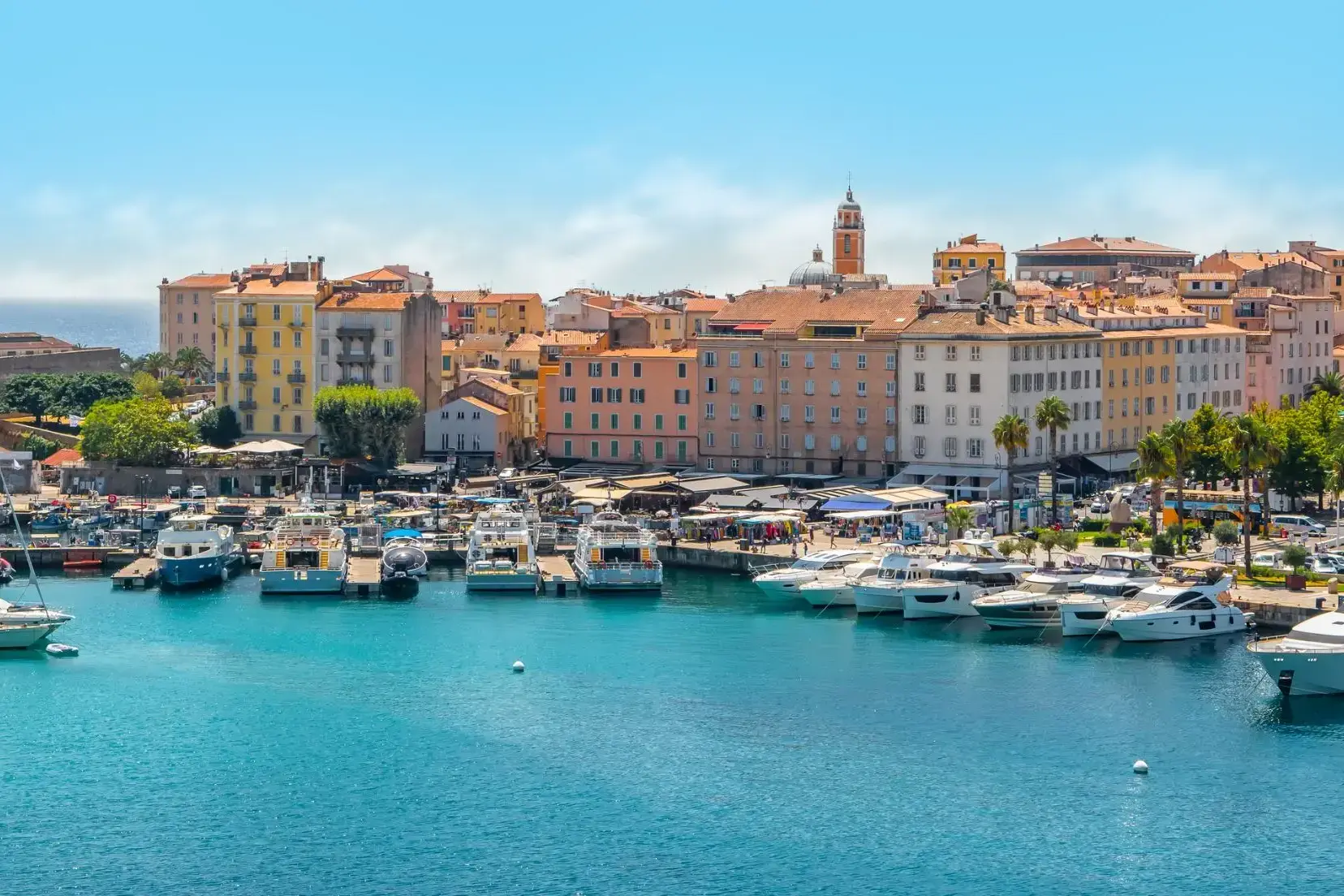
Ajaccio is a French commune, prefecture of the department of Corse-du-Sud, and head office of the Collectivité territoriale de Corse (capital city of Corsica). It is also the largest settlement on the island. Ajaccio is located on the west coast of the island of Corsica, 210 nautical miles (390 km) southeast of Marseille.
The original city went into decline in the Middle Ages, but began to prosper again after the Genoese built a citadel in 1492 to the south of the earlier settlement. After the Corsican Republic was declared in 1755 the Genoese continued to hold several citadels, including Ajaccio, until the French took control of the island.
The inhabitants of the commune are known as Ajacciens or Ajacciennes. The most famous of these is Napoleon Bonaparte who was born in Ajaccio in 1769, and whose ancestral home, the Maison Bonaparte, is now a museum. Other dedications to him in the city include Ajaccio Napoleon Bonaparte Airport.
Nice is the seventh most populous urban area in France and the capital of the Alpes-Maritimes département. The metropolitan area of Nice extends beyond the administrative city limits, with a population of about 1 million on an area of 721 km2 (278 sq mi). Located in the French Riviera, on the south east coast of France on the Mediterranean Sea, at the foot of the Alps, Nice is the second-largest French city on the Mediterranean coast and the second-largest city in the Provence-Alpes-Côte d'Azur region after Marseille. Nice is approximately 13 kilometres (8.1 mi) from the principality of Monaco and 30 kilometres (19 mi) from the French-Italian border. Nice's airport serves as a gateway to the region.
The city is nicknamed Nice la Belle (Nissa La Bella in Niçard), which means Nice the Beautiful, which is also the title of the unofficial anthem of Nice, written by Menica Rondelly in 1912.
The area of today's Nice contains Terra Amata, an archaeological site which displays evidence of a very early use of fire. Around 350 BC, Greeks of Marseille founded a permanent settlement and called it Nikaia, after Nike, the goddess of victory. Through the ages, the town has changed hands many times. Its strategic location and port significantly contributed to its maritime strength. For centuries it was a dominion of Savoy, and was then part of France between 1792 and 1815, when it was returned to Piedmont-Sardinia until its re-annexation by France in 1860.
The natural environment of the Nice area and its mild Mediterranean climate came to the attention of the English upper classes in the second half of the 18th century, when an increasing number of aristocratic families took to spending their winters there. The city's main seaside promenade, the Promenade des Anglais ("Walkway of the English") owes its name to visitors to the resort. The clear air and soft light have particularly appealed to notable painters, such as Marc Chagall, Henri Matisse, Niki de Saint Phalle and Arman. Their work is commemorated in many of the city's museums, including Musée Marc Chagall, Musée Matisse and Musée des Beaux-Arts. Nice has the second largest hotel capacity in the country and it is one of its most visited cities, receiving 4 million tourists every year. It also has the third busiest airport in France, after the two main Parisian ones. It is the historical capital city of the County of Nice(Comté de Nice).
Nice is the seventh most populous urban area in France and the capital of the Alpes-Maritimes département. The metropolitan area of Nice extends beyond the administrative city limits, with a population of about 1 million on an area of 721 km2 (278 sq mi). Located in the French Riviera, on the south east coast of France on the Mediterranean Sea, at the foot of the Alps, Nice is the second-largest French city on the Mediterranean coast and the second-largest city in the Provence-Alpes-Côte d'Azur region after Marseille. Nice is approximately 13 kilometres (8.1 mi) from the principality of Monaco and 30 kilometres (19 mi) from the French-Italian border. Nice's airport serves as a gateway to the region.
The city is nicknamed Nice la Belle (Nissa La Bella in Niçard), which means Nice the Beautiful, which is also the title of the unofficial anthem of Nice, written by Menica Rondelly in 1912.
The area of today's Nice contains Terra Amata, an archaeological site which displays evidence of a very early use of fire. Around 350 BC, Greeks of Marseille founded a permanent settlement and called it Nikaia, after Nike, the goddess of victory. Through the ages, the town has changed hands many times. Its strategic location and port significantly contributed to its maritime strength. For centuries it was a dominion of Savoy, and was then part of France between 1792 and 1815, when it was returned to Piedmont-Sardinia until its re-annexation by France in 1860.
The natural environment of the Nice area and its mild Mediterranean climate came to the attention of the English upper classes in the second half of the 18th century, when an increasing number of aristocratic families took to spending their winters there. The city's main seaside promenade, the Promenade des Anglais ("Walkway of the English") owes its name to visitors to the resort. The clear air and soft light have particularly appealed to notable painters, such as Marc Chagall, Henri Matisse, Niki de Saint Phalle and Arman. Their work is commemorated in many of the city's museums, including Musée Marc Chagall, Musée Matisse and Musée des Beaux-Arts. Nice has the second largest hotel capacity in the country and it is one of its most visited cities, receiving 4 million tourists every year. It also has the third busiest airport in France, after the two main Parisian ones. It is the historical capital city of the County of Nice(Comté de Nice).
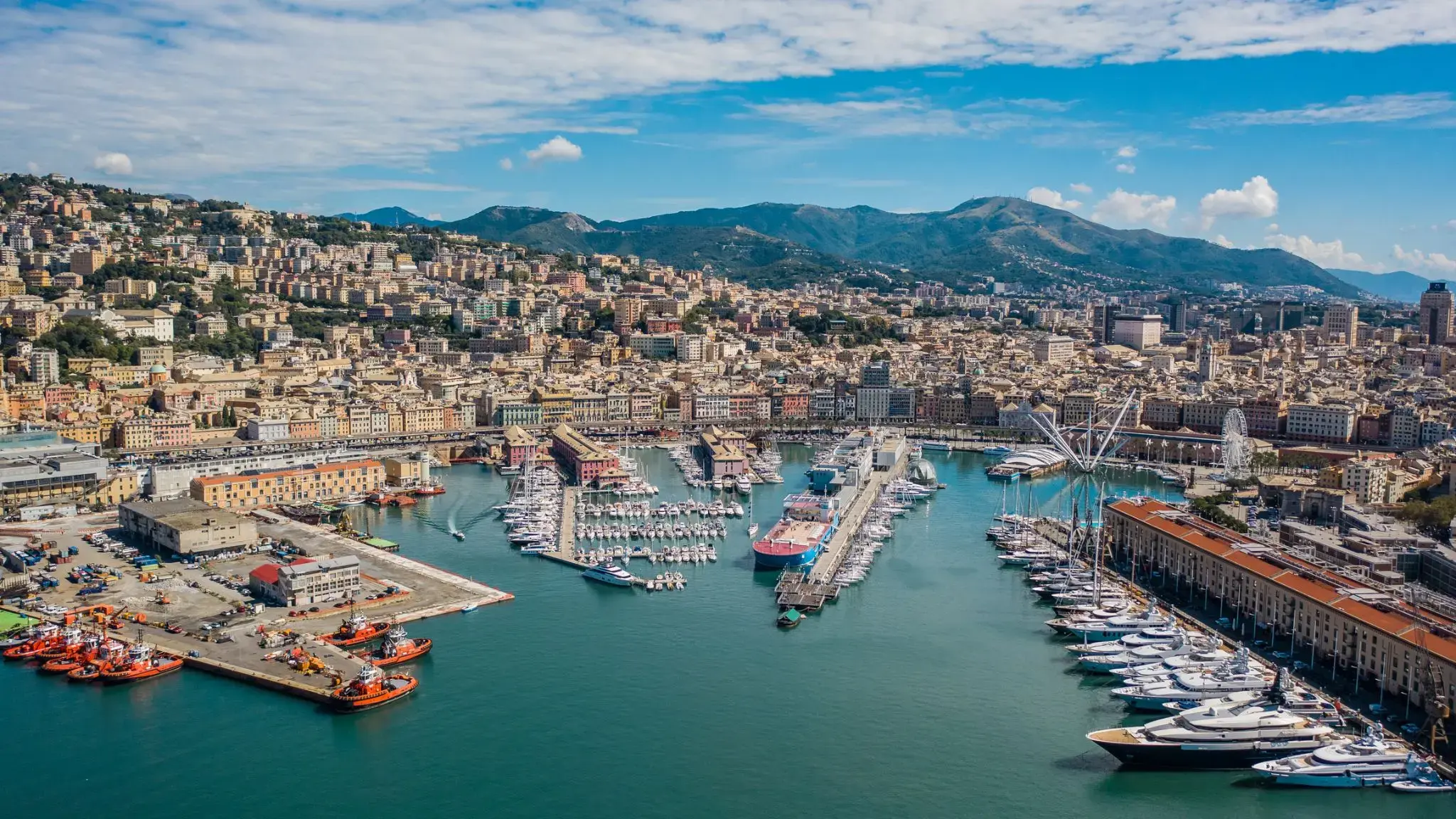
Genua – portowe miasto w północnych Włoszech, położone w Zatoce Genueńskiej nad Morzem Liguryjskim. Już od czasów Imperium Rzymskiego przyciągało uwagę arystokracji i do dziś jest miejscem rezydencji wpływowych ludzi. Spacerując nadmorską promenadą, warto zajrzeć do jednej z licznych kawiarni i spróbować doskonałej kuchni morskiej przy kieliszku wina. Miłośnicy podwodnego świata mogą odwiedzić słynne akwarium, gdzie zobaczyć można ponad 500 gatunków ryb i ssaków morskich.
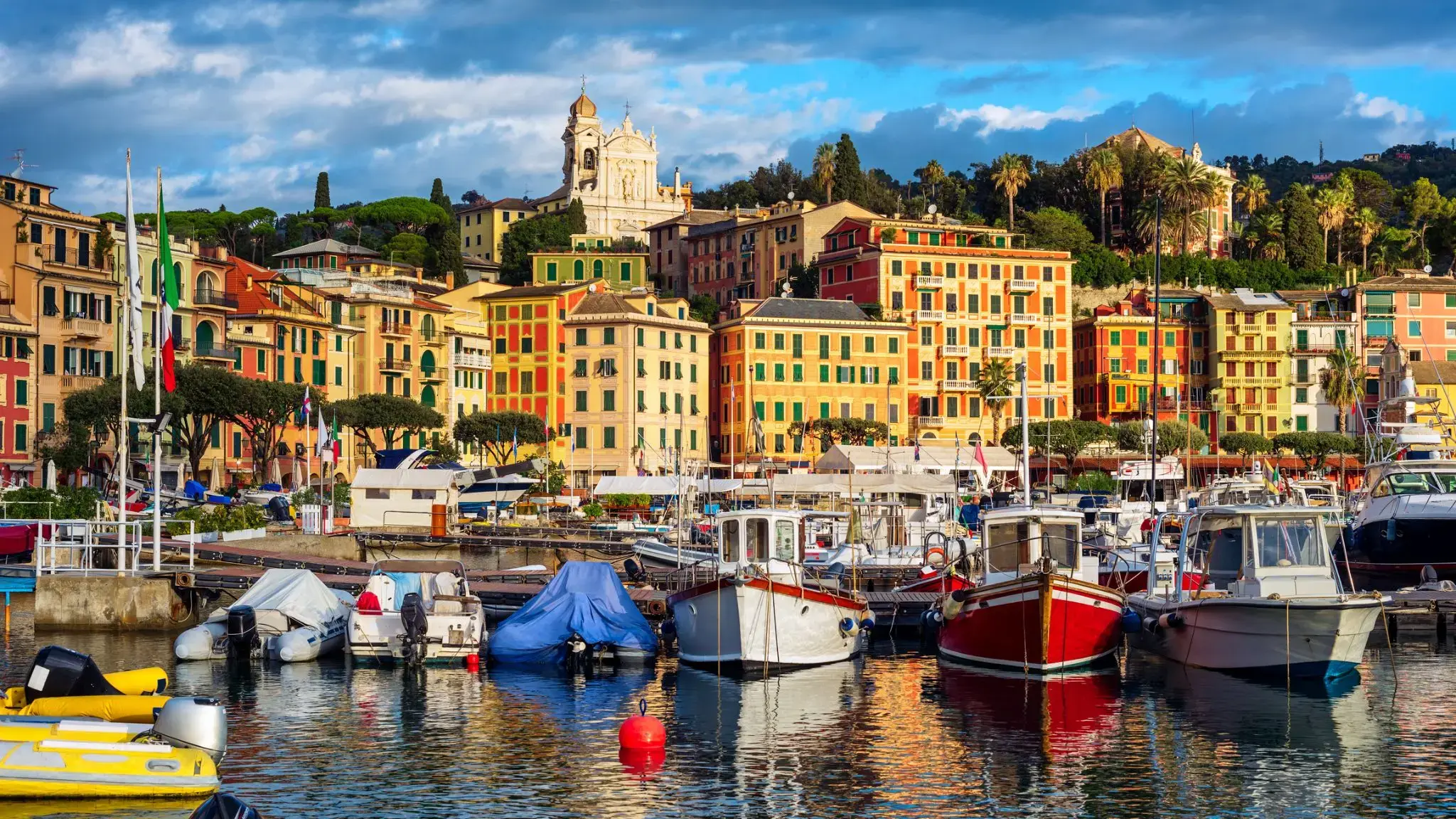
Santa Margherita Ligure to malownicze miasteczko nad Liguryjskim wybrzeżem we Włoszech, położone zaledwie kilka kilometrów od słynnego Portofino. Jego urokliwe uliczki, zabytkowe wille i pachnące ogrody tworzą atmosferę spokoju i komfortu. Miasto przyciąga turystów swoją przytulną atmosferą oraz zapierającymi dech w piersiach widokami na błękitne morze i zielone wzgórza, które je otaczają.
Oprócz malowniczych krajobrazów, Santa Margherita Ligure oferuje wiele atrakcji kulturalnych i historycznych. Znajduje się tutaj historyczny kościół św. Marcina oraz zamek, z którego rozciąga się panoramiczny widok na wybrzeże. To miejsce idealne dla tych, którzy szukają spokoju, ale jednocześnie chcą cieszyć się bogatym życiem kulturalnym i gastronomią.
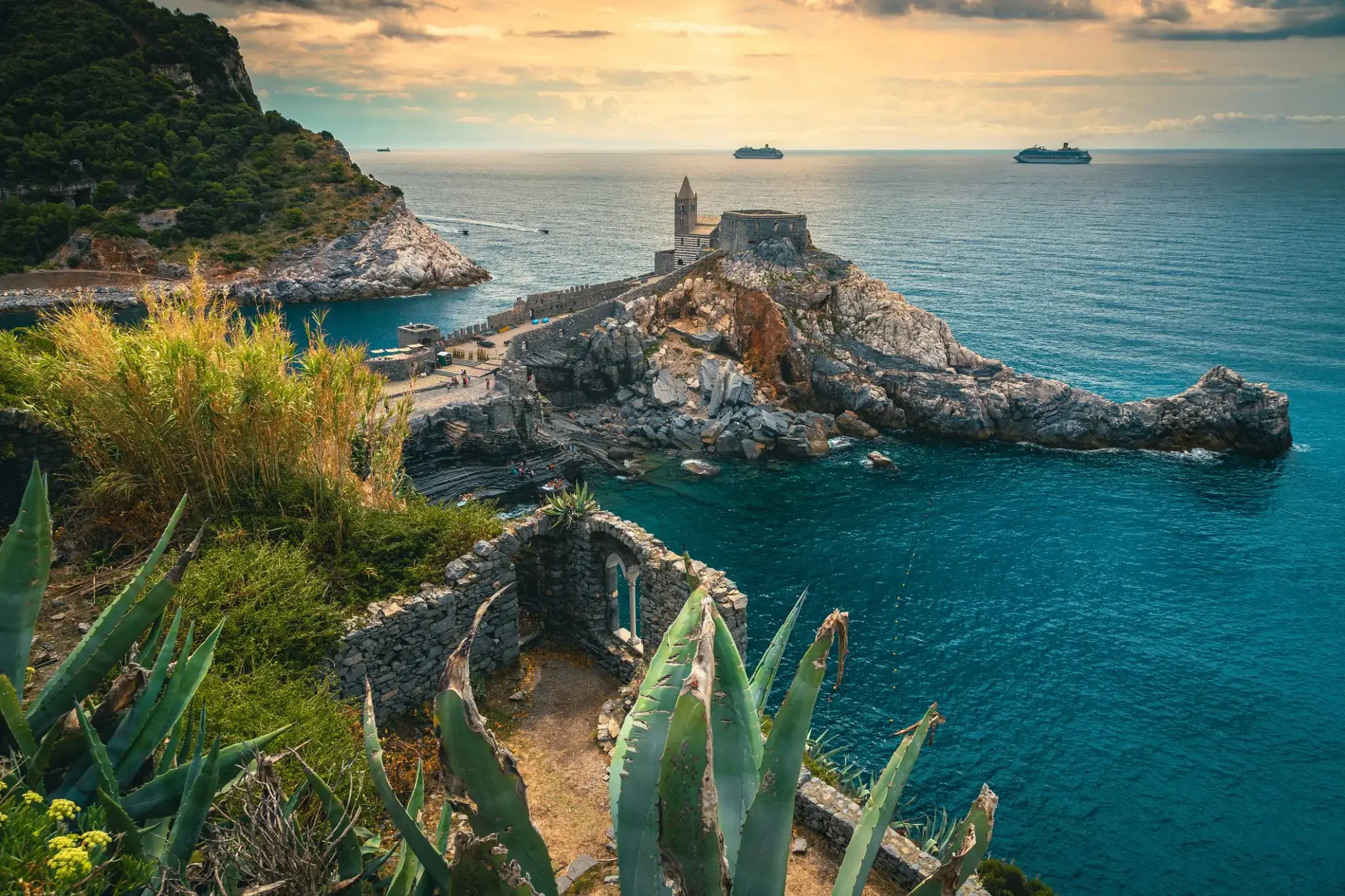
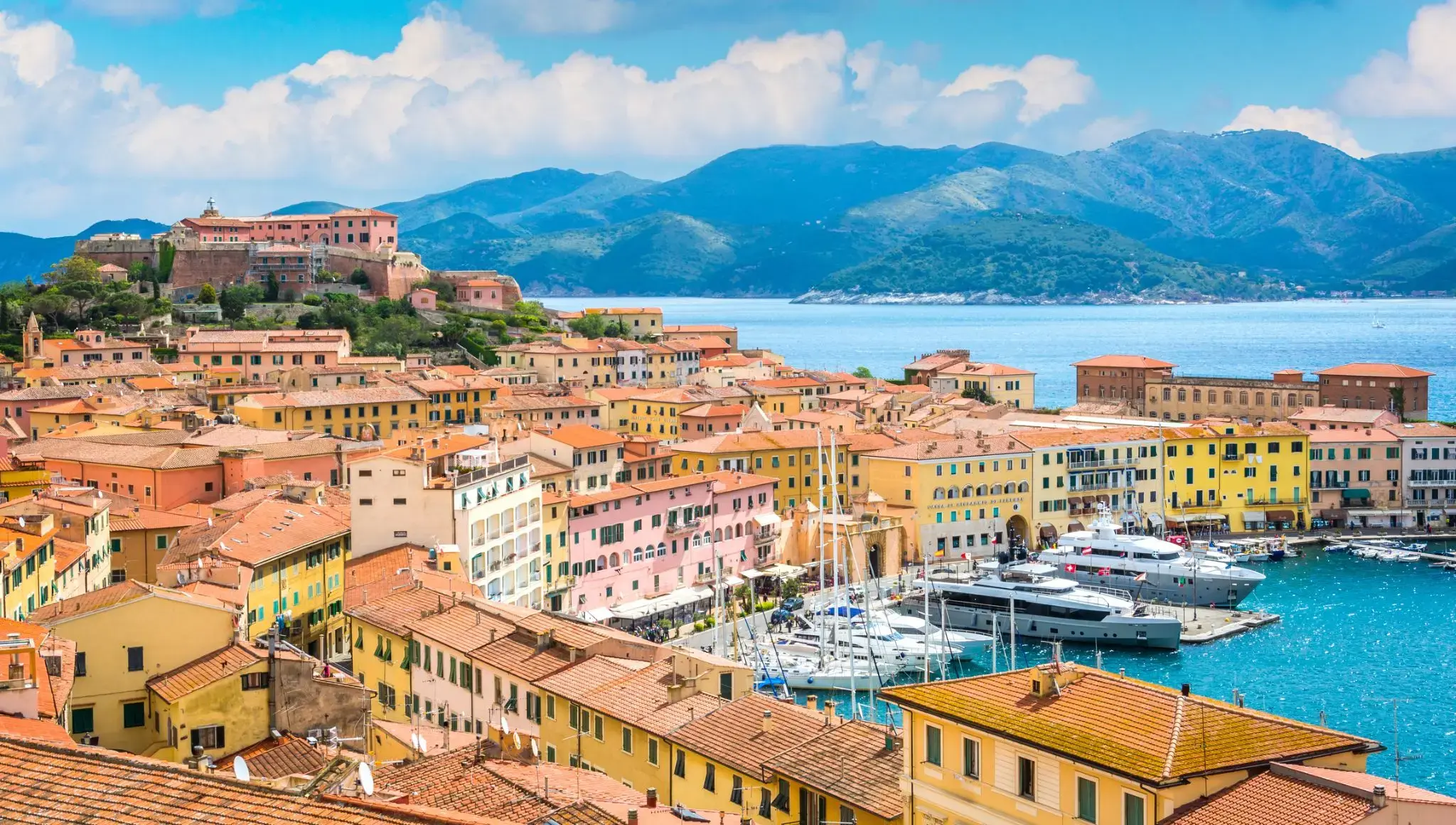
Portoferraio to historyczne miasto na wyspie Elba w Toskanii, Włochy. Jako główny port i centrum administracyjne wyspy, Portoferraio przyciąga turystów swoją unikalną atmosferą, zachowaną od czasów Renesansu. Miasto zostało założone w 1548 roku i do dziś zachowało wiele historycznych zabytków, w tym wenecką twierdzę oraz stare ulice prowadzące do pięknych placów i urokliwych sklepów.
Ponadto Portoferraio jest znane z bliskości do naturalnych piękności, takich jak malownicze plaże i zielone wzgórza, idealne do spacerów i aktywnego wypoczynku. Ważną atrakcją jest Villa dei Mulini, gdzie Napoleon spędzał czas na wygnaniu, a zwiedzający mogą poznać historię jego życia. Portoferraio to idealne miejsce dla tych, którzy chcą cieszyć się spokojem, historią i naturą w jednym z najpiękniejszych zakątków Włoch.
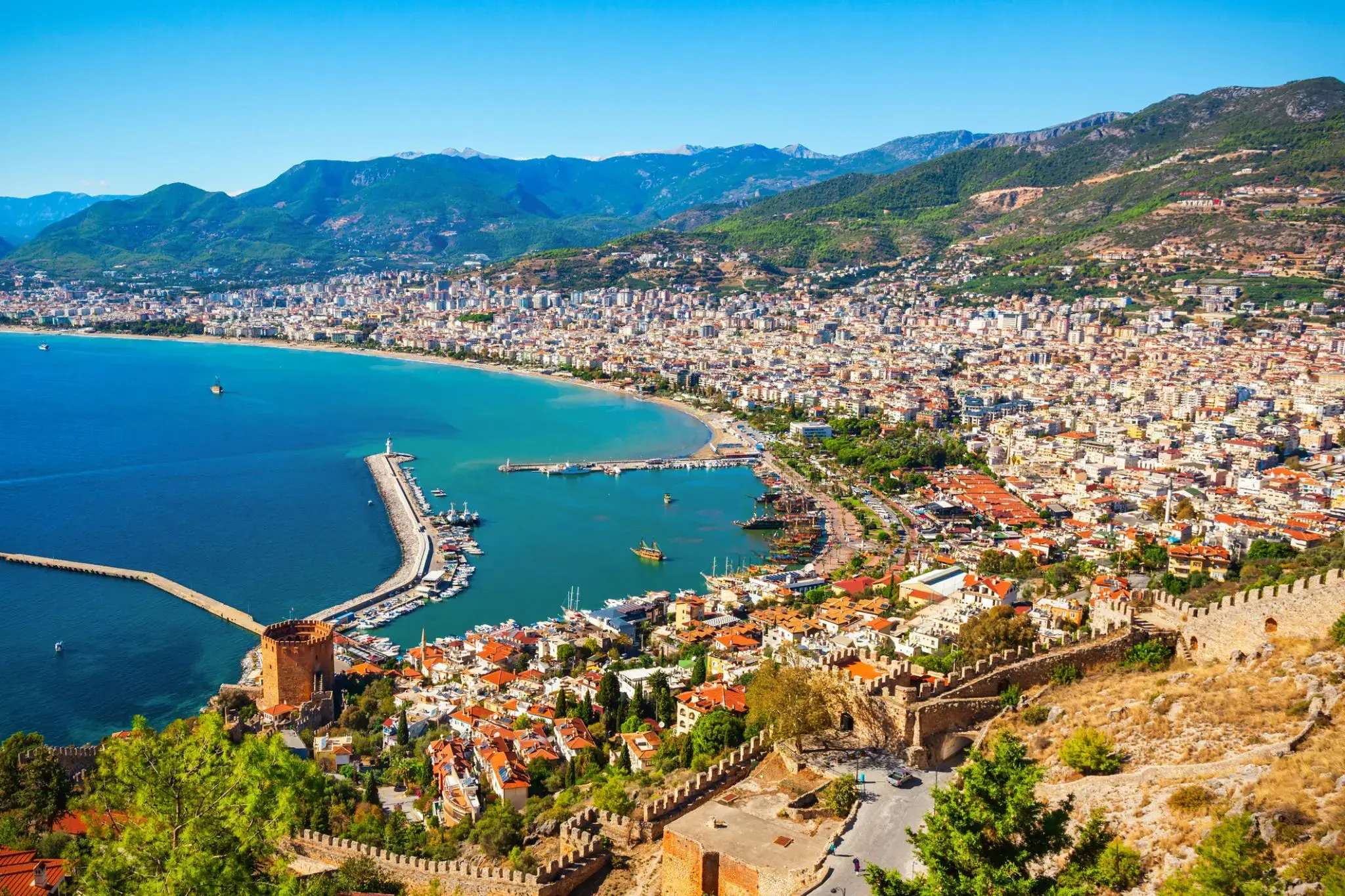
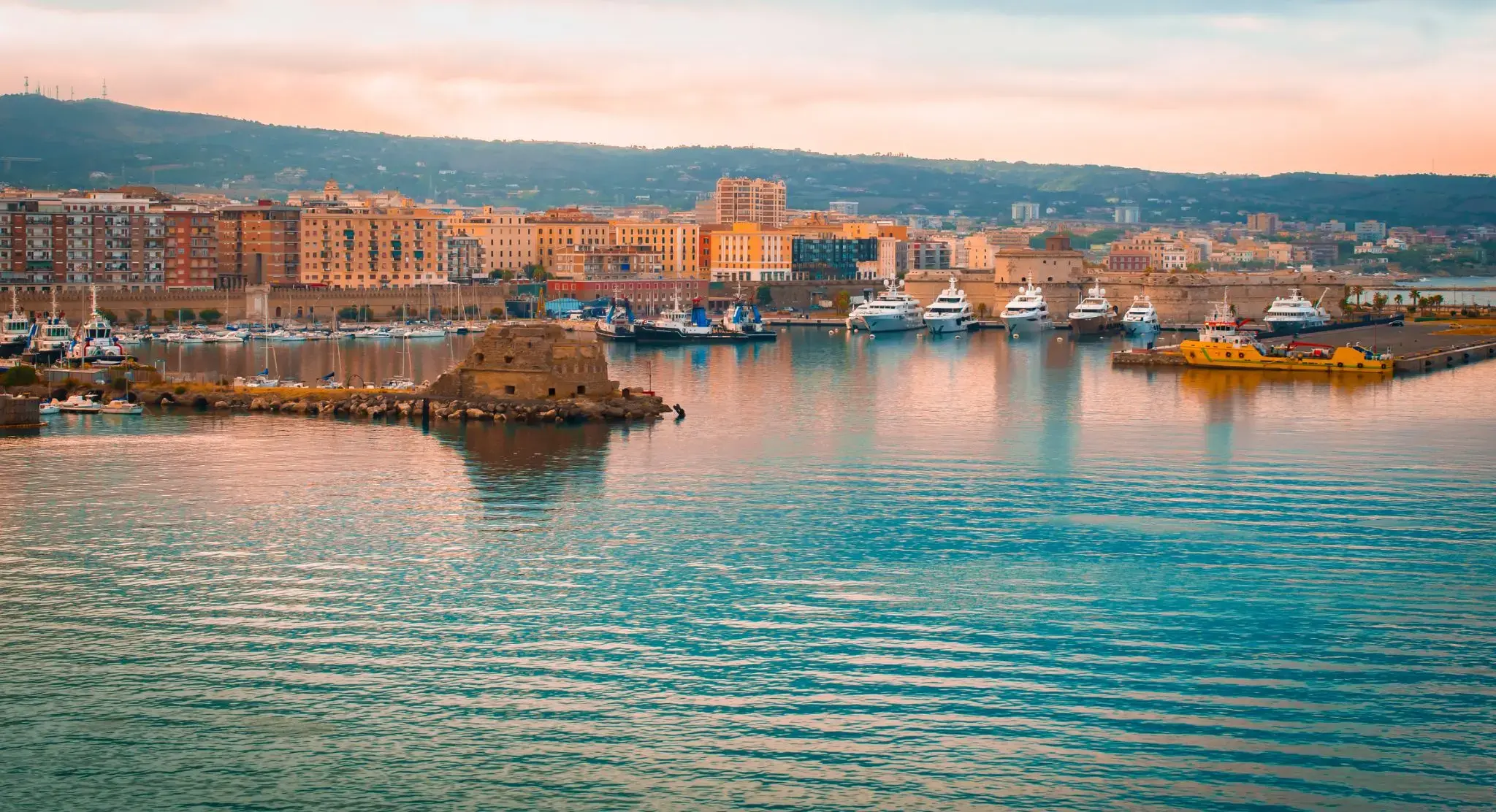
Rzym – jedno z najstarszych miast świata, niegdyś stolica Cesarstwa Rzymskiego, dziś stolica Włoch. Położony na siedmiu wzgórzach nad Tybrem, zachwyca pięknem i majestatem, którego nie da się oddać słowami – trzeba tu być. Każda rzeźba, fontanna czy budowla to dzieło sztuki pozostawione przez dawnych mistrzów. Najsłynniejsze atrakcje, które przyciągają turystów, to Koloseum – miejsce dawnych walk gladiatorów, Fontanna di Trevi, Schody Hiszpańskie, Bazylika św. Piotra – największy kościół Europy, a także Fora Cesarskie i Forum Romanum.
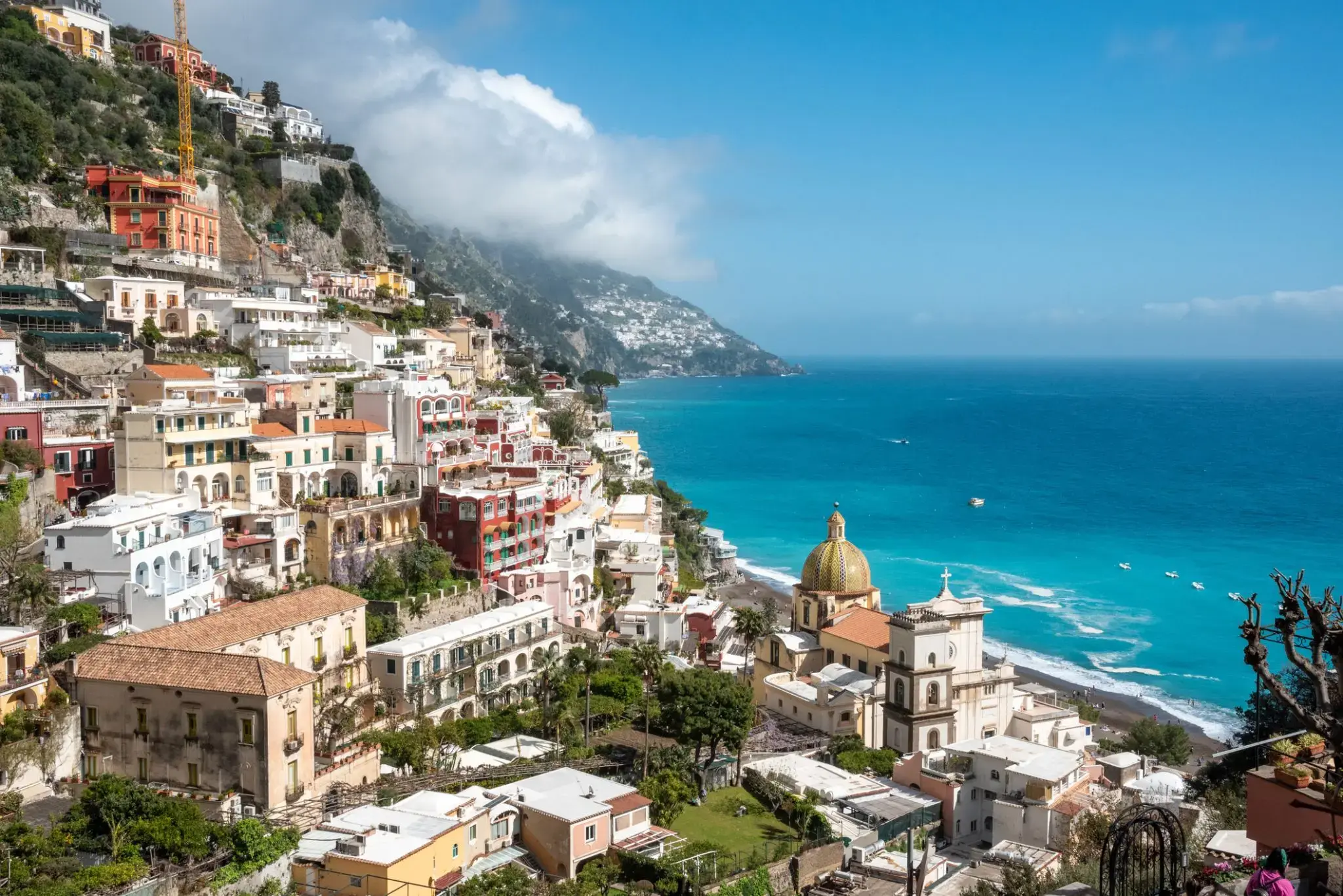
Sorrento is a town overlooking the Bay of Naples in Southern Italy. A popular tourist destination due to its variety of small antique shops and location on the Amalfi Coast, it can be reached easily from Naples and Pompeii as it is at the south-eastern end of the Circumvesuviana rail line. The town is most commonly known for its small shops selling an arrangement of ceramics, lacework and marquetry (woodwork).
The Sorrentine Peninsula has views of Naples, Vesuvius and the Isle of Capri. The Amalfi Drive, connecting Sorrento and Amalfi, is a narrow road that threads along the high cliffs above the Tyrrhenian Sea.
Ferries and hydrofoils connect the town to Naples, Amalfi, Positano, Capri and Ischia. Sorrento's sea cliffs and luxury hotels have attracted celebrities including Enrico Caruso and Luciano Pavarotti.
Limoncello, a digestif made from lemon rinds, alcohol, water and sugar, is produced in Sorrento. Other agricultural production includes citrus fruit, wine, nuts and olives.
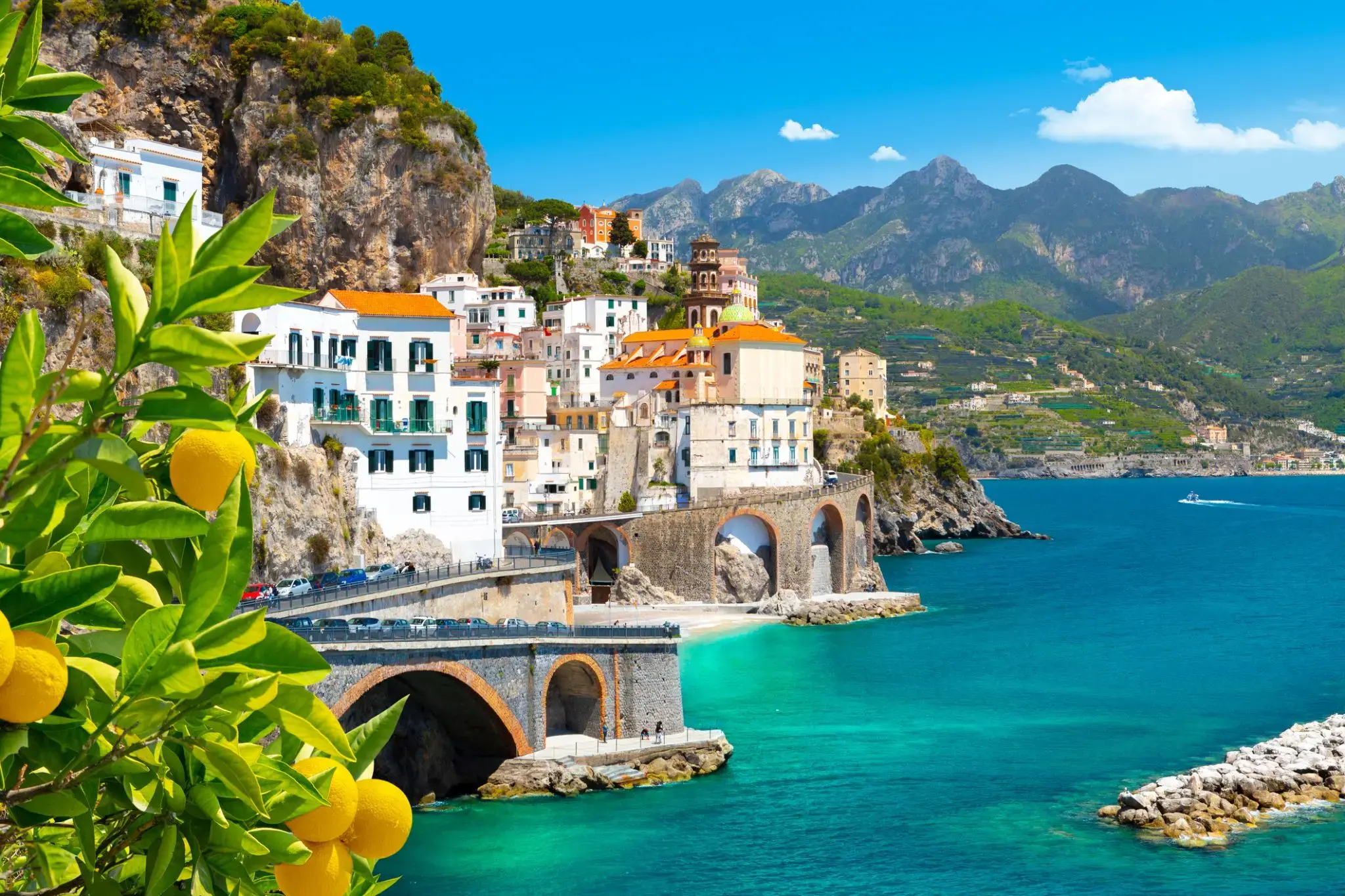
Амальфи это город и коммуна в провинции Салерно, в регионе Кампания, Италия, в заливе Салерно. Он расположен в устье глубокого ущелья, у подножия горы Монето Черрето (1315 метров, 4314 футов), в окружении драматических скал и прибрежных пейзажей. Город Амальфи был столицей морской республики, известной как герцогство Амальфи, важной торговой державой в Средиземноморье между 839 и около 1200 годами.
В 1920-х и 1930-х годах Амальфи был популярным местом отдыха британского высшего класса и аристократии.
Амальфи - главный город побережья, на котором он расположен, называется Costiera Amalfitana (побережье Амальфи) и сегодня является важным туристическим направлением вместе с другими городами на том же побережье, такими как Позитано, Равелло и другие. Амальфи включен в список объектов Всемирного наследия ЮНЕСКО.
Покровителем Амальфи является святой Андрей, апостол, мощи которого хранятся здесь, в соборе Амальфи (Cattedrale di Sant'Andrea / Duomo di Amalfi).
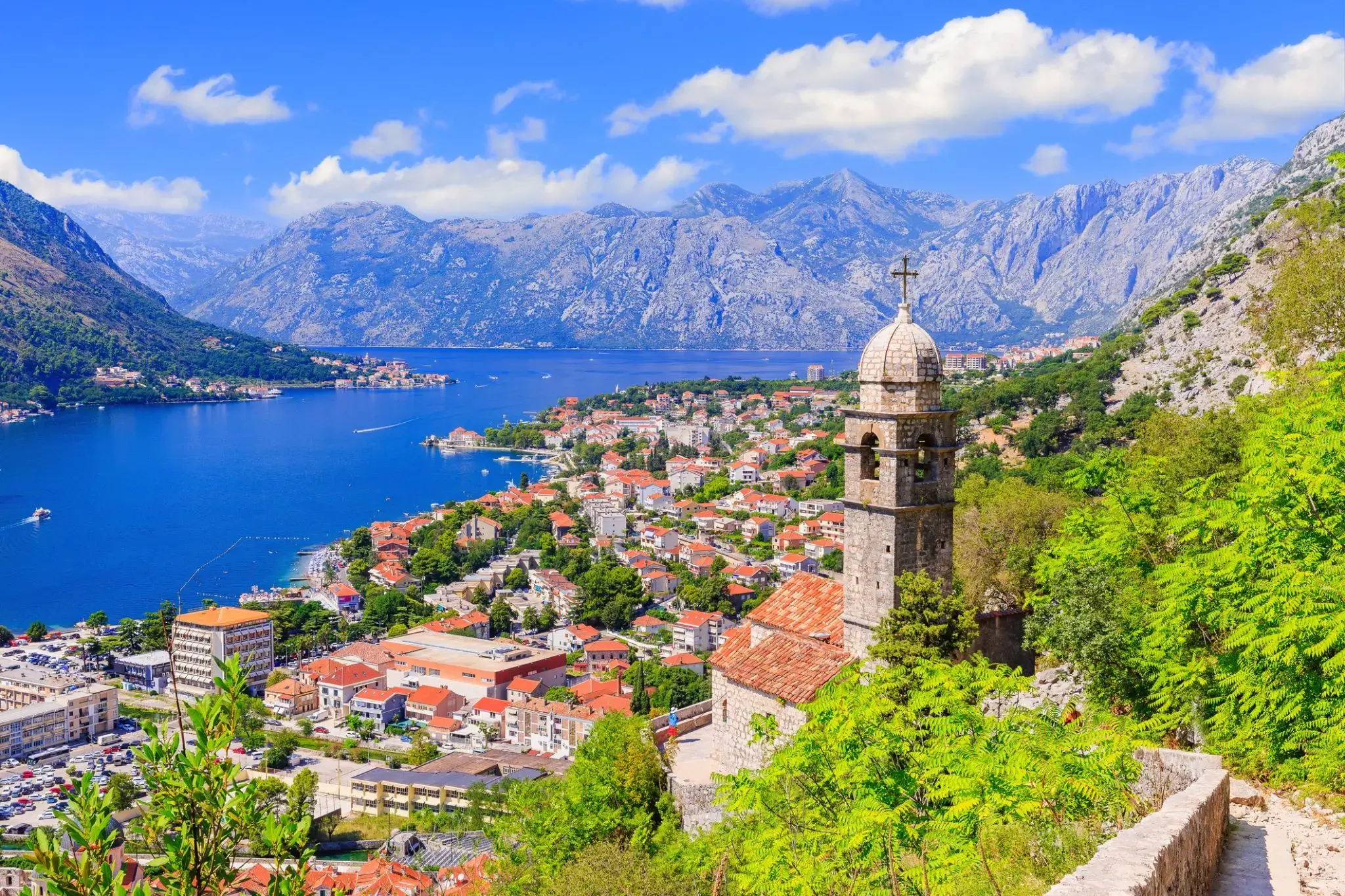
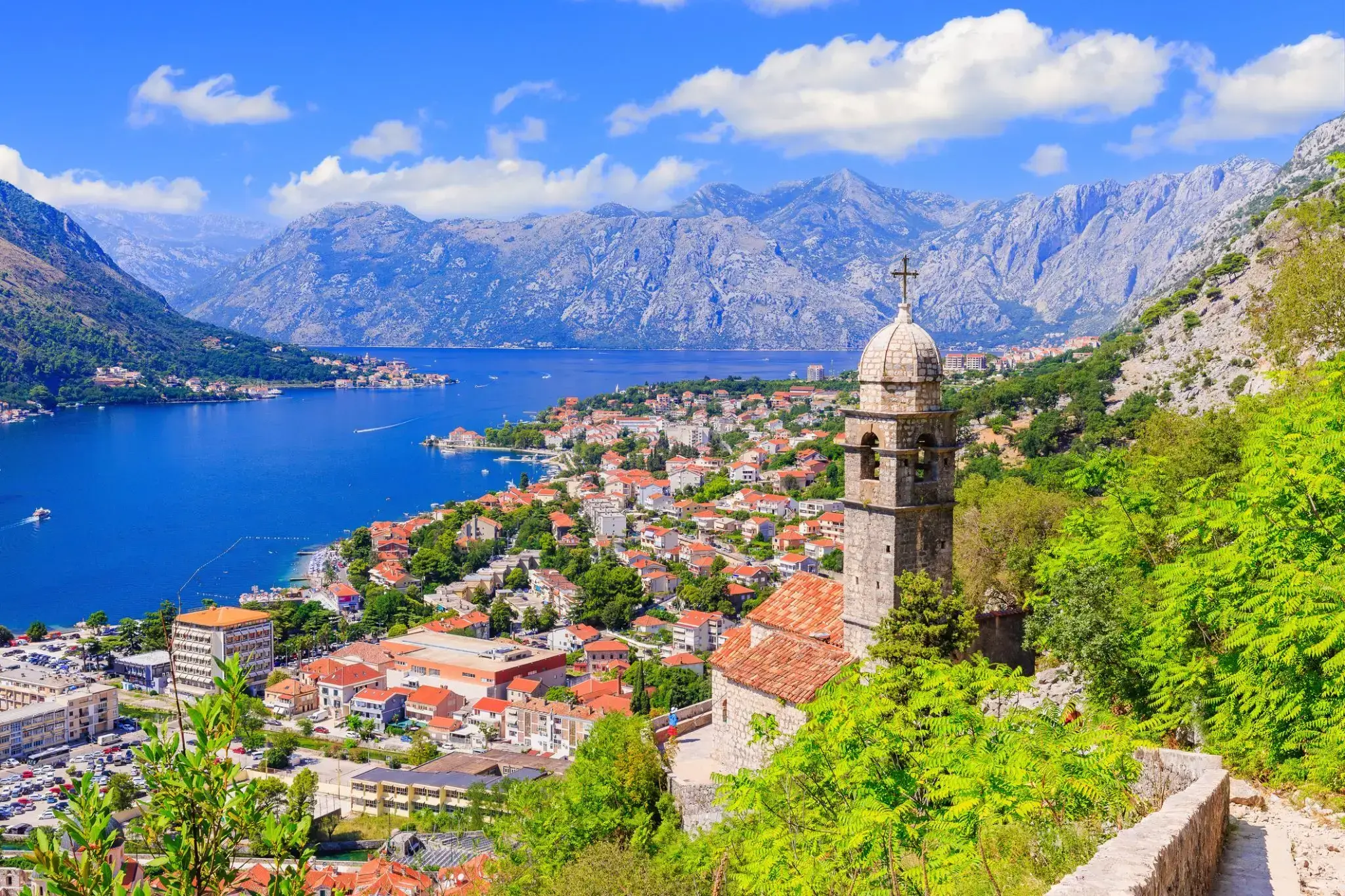
Kotor is a coastal town in Montenegro. It is located in a secluded part of the Gulf of Kotor. The city has a population of 13,510 and is the administrative center of Kotor Municipality.
The old Mediterranean port of Kotor is surrounded by fortifications built during the Venetian period. It is located on the Bay of Kotor (Boka Kotorska), one of the most indented parts of the Adriatic Sea. Some have called it the southern-most fjord in Europe, but it is a ria, a submerged river canyon. Together with the nearly overhanging limestone cliffs of Orjen and Lovćen, Kotor and its surrounding area form an impressive landscape.
Since the early 2000s Kotor has seen an increase in tourists , many of them coming by cruise ship. Visitors are attracted by the natural environment of the Gulf of Kotor and by the old town of Kotor. Kotor is part of the World Heritage Site dubbed the Natural and Culturo-Historical Region of Kotor.
The fortified city of Kotor was also included in UNESCO's World Heritage Site list as part of Venetian Works of Defence between 15th and 17th centuries: Stato da Terra – western Stato da Mar in 201
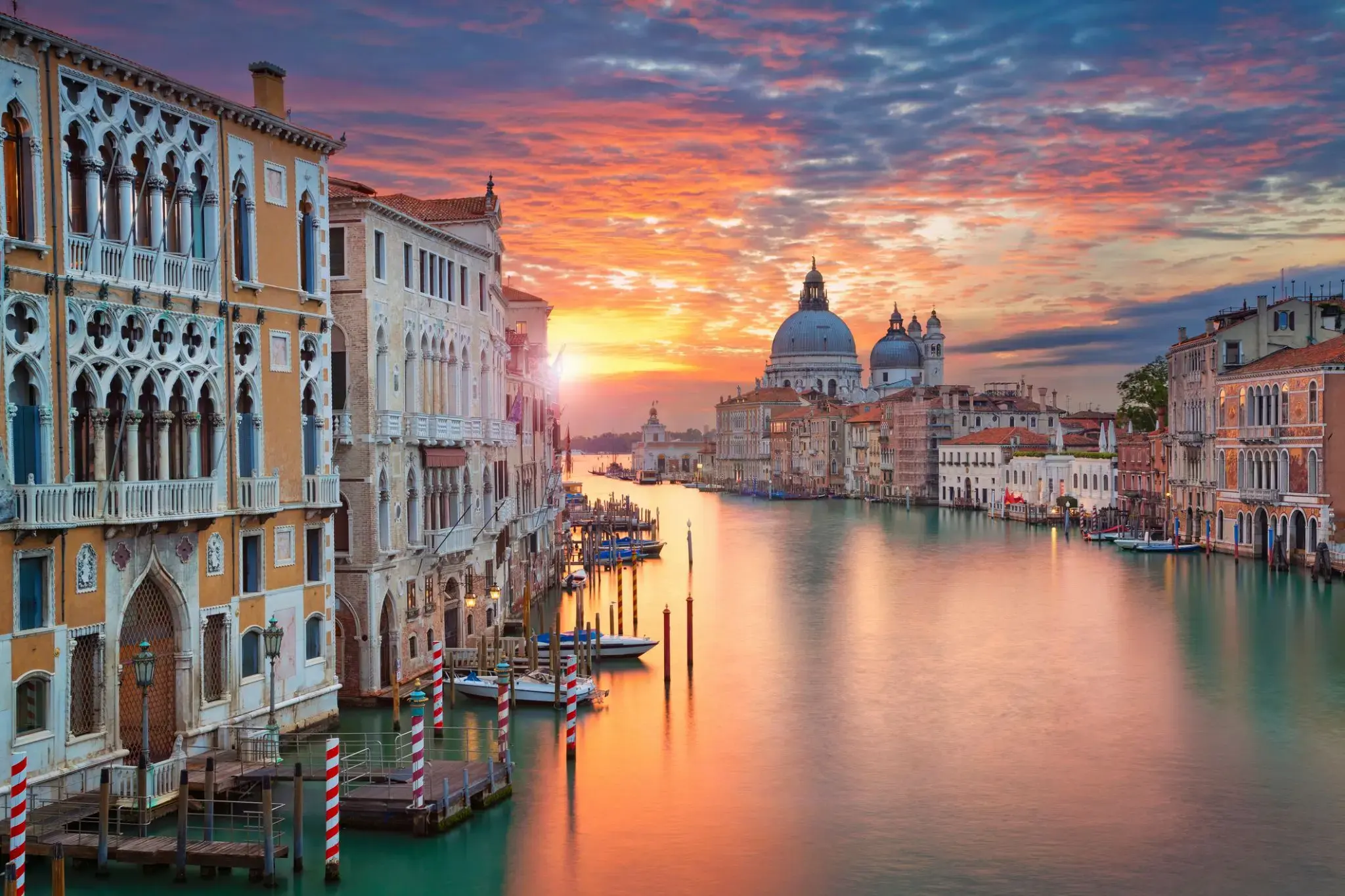
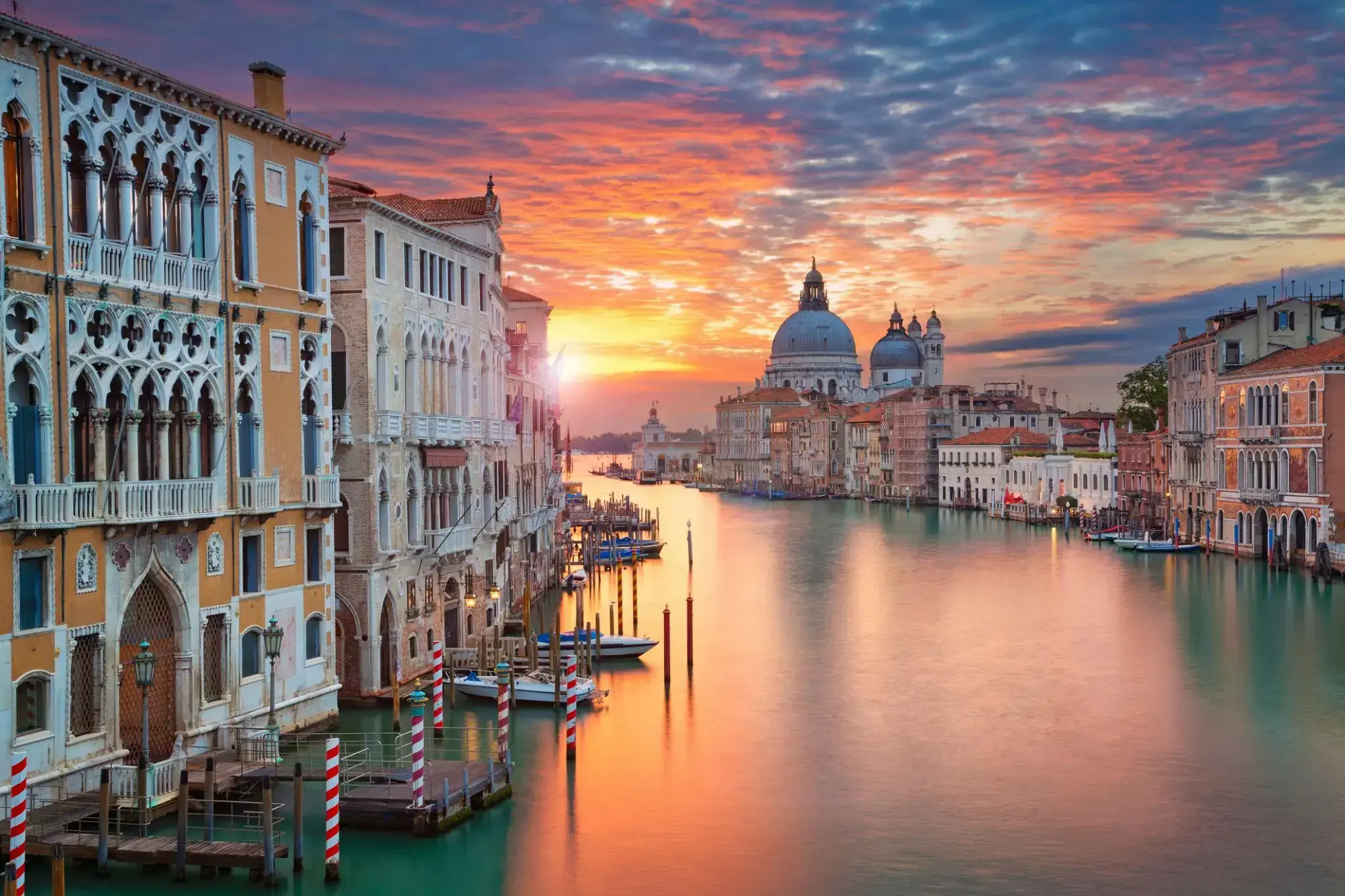
Wenecja — najbardziej znane i niezwykłe miasto na świecie. Znajduje się na północy Włoch, na wybrzeżu Morza Adriatyckiego. Teren miasta przecina ponad 150 kanałów i strumieni, nad którymi przerzucono ponad 400 mostów.
Wenecja — miasto kurortowe, które jest centrum międzynarodowej turystyki o światowym znaczeniu, miejscem organizacji wystaw artystycznych i architektonicznych oraz międzynarodowych festiwali filmowych. Zupełnie niezwykła atmosfera panująca w mieście zachwyca od pierwszego spojrzenia. Wąskie uliczki z małymi, przytulnymi kawiarenkami, sunące gondole i serenady gondolierów wprowadzają w romantyczny nastrój i przyciągają zakochanych z całego świata.
Wenecja — najbardziej znane i niezwykłe miasto na świecie. Znajduje się na północy Włoch, na wybrzeżu Morza Adriatyckiego. Teren miasta przecina ponad 150 kanałów i strumieni, nad którymi przerzucono ponad 400 mostów.
Wenecja — miasto kurortowe, które jest centrum międzynarodowej turystyki o światowym znaczeniu, miejscem organizacji wystaw artystycznych i architektonicznych oraz międzynarodowych festiwali filmowych. Zupełnie niezwykła atmosfera panująca w mieście zachwyca od pierwszego spojrzenia. Wąskie uliczki z małymi, przytulnymi kawiarenkami, sunące gondole i serenady gondolierów wprowadzają w romantyczny nastrój i przyciągają zakochanych z całego świata.
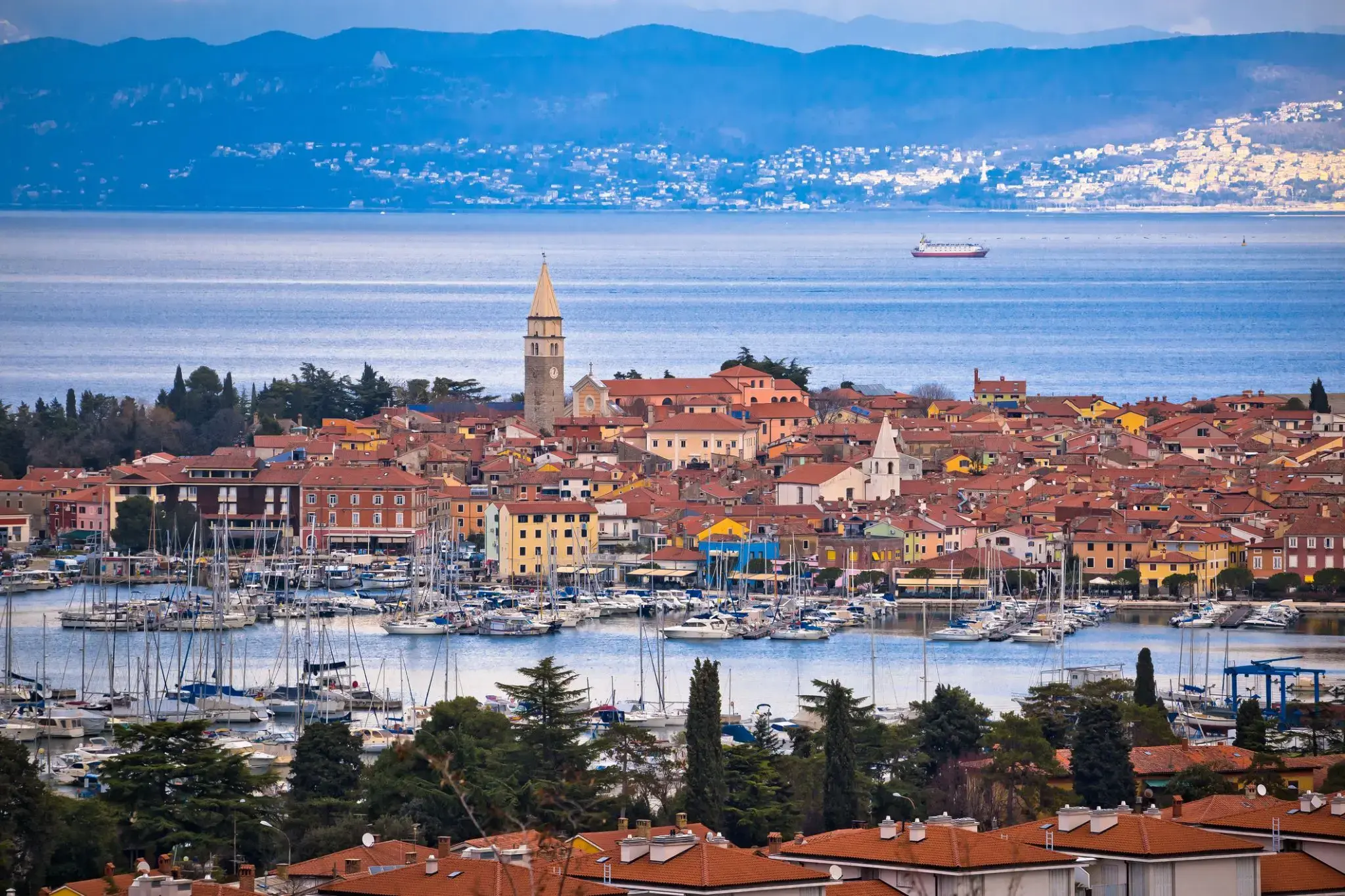
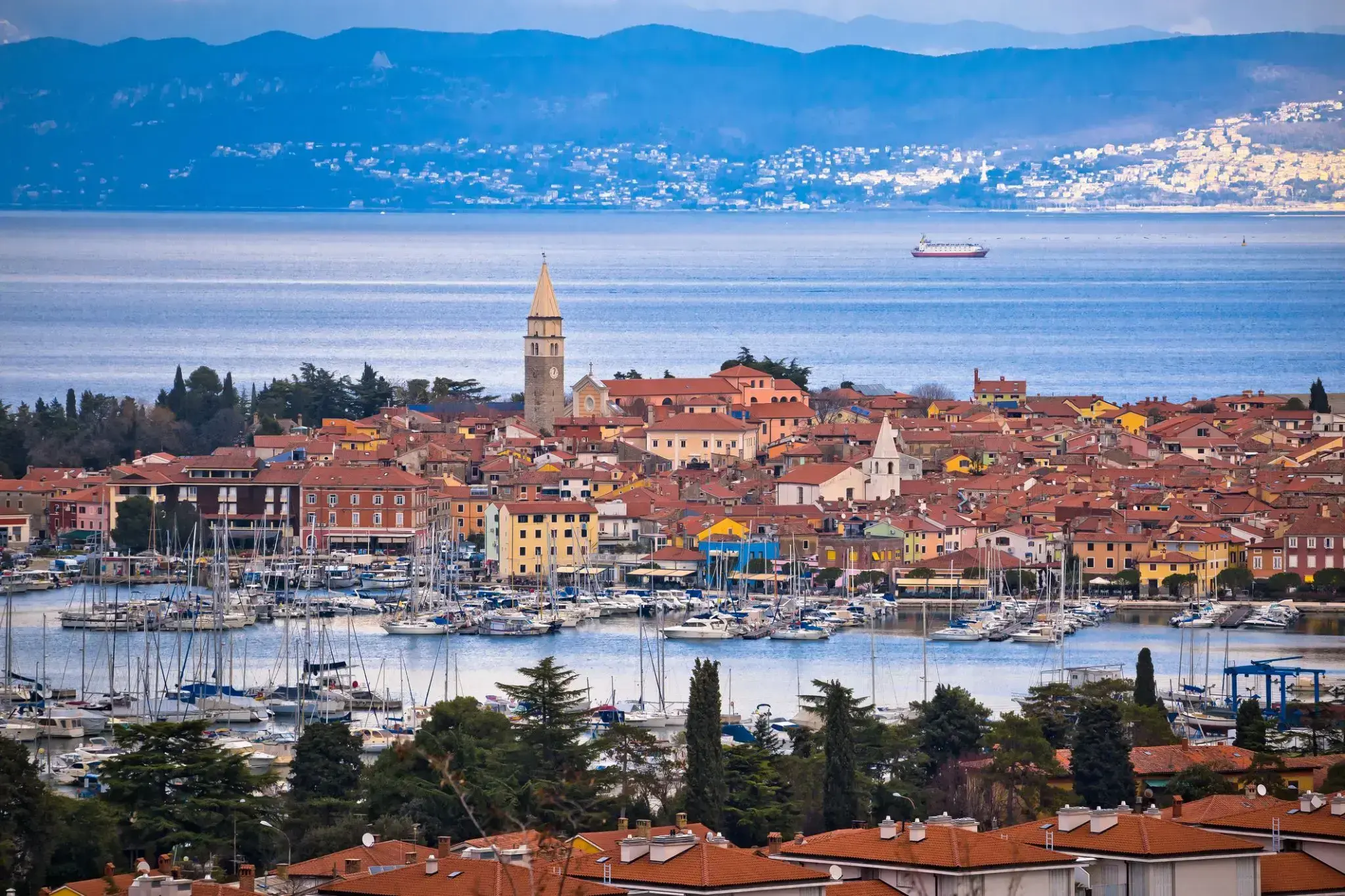
Koper is the fifth largest city in Slovenia. Located in the southwestern part of the country, approximately five kilometres (3.1 miles) south of the border with Italy and 20 kilometers (12 miles) from Trieste, Koper is the largest coastal city in the country. It is bordered by the satellite towns of Izola and Ankaran, and anchors the Istrian region. With a unique ecology and biodiversity, it is considered an important national natural resource. It is the oldest recorded urban settlement in Slovenia. The city's Port of Koper is the major contributor to the economy of the eponymous city municipality. With only one percent of Slovenia having a coastline, the influence that the Port of Koper also has on tourism was a factor in Ankaran deciding to leave the municipality in a referendum in 2011 to establish its own. The city is a destination on a number of Mediterranean cruising lines. In 2016, the city expects 65 cruise ship arrivals (for example: Norwegian Spirit, MSC Magnifica, Norwegian Jade, MS Rhapsody of the Seas...) with the season spanning from March to December. Koper is the main urban centre of the Slovenian Istria, with a population of about 25,000.
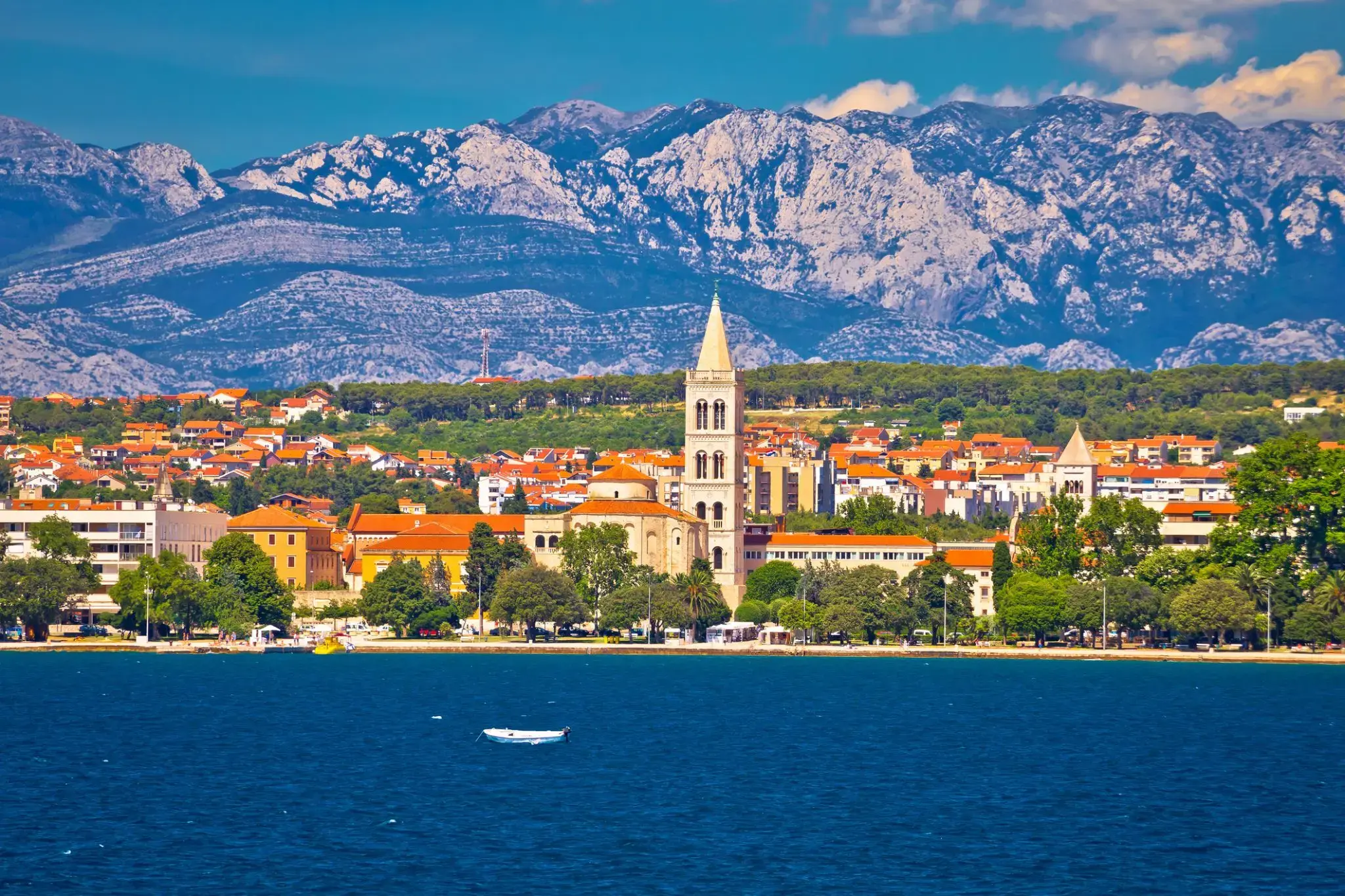
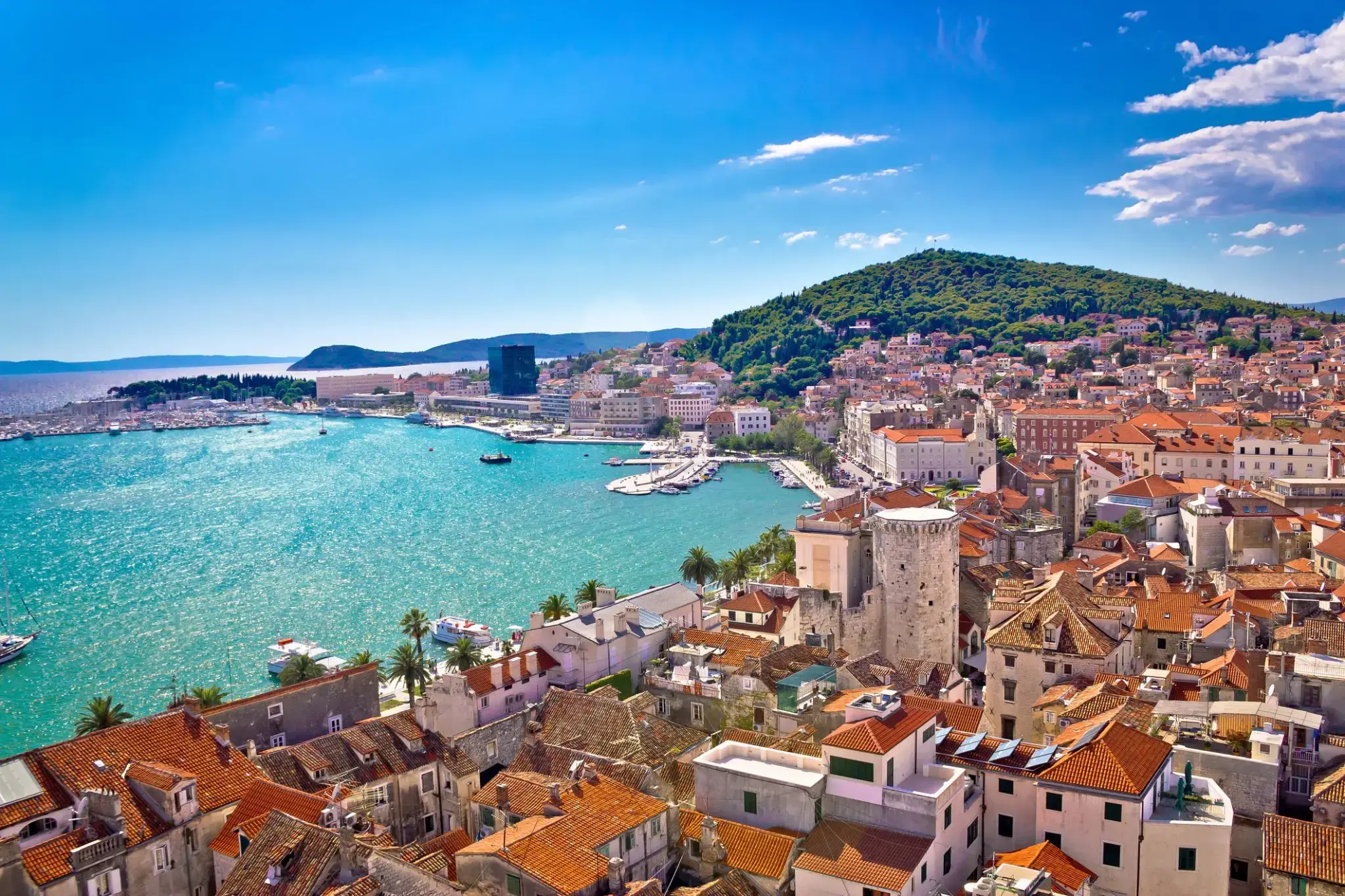
Split – perła Dalmacji
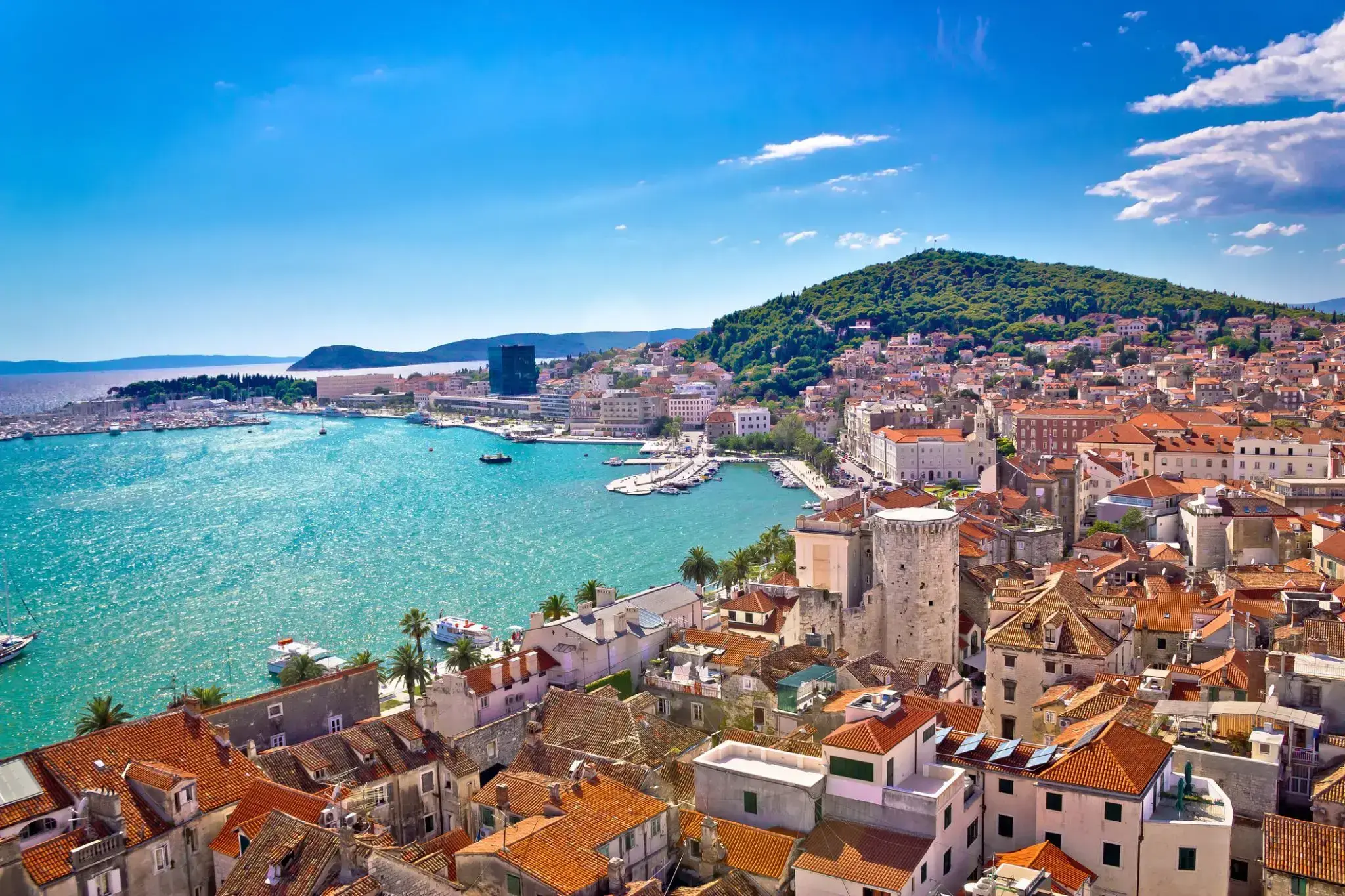
Split to drugie największe miasto Chorwacji, położone nad Adriatykiem. Jego symbolem jest Pałac Dioklecjana, wpisany na listę UNESCO, otoczony wąskimi uliczkami i katedrą św. Duje.
Miasto tętni życiem na nadmorskiej promenadzie Riva, pełnej kawiarni i restauracji. W okolicy czekają plaże, m.in. słynna Bacvice.
Split to także ważny port, skąd łatwo popłynąć na chorwackie wyspy – Hvar, Brač czy Korčulę. Atmosfera śródziemnomorska i dalmatyńska kuchnia sprawiają, że Split to idealne miejsce na urlop.
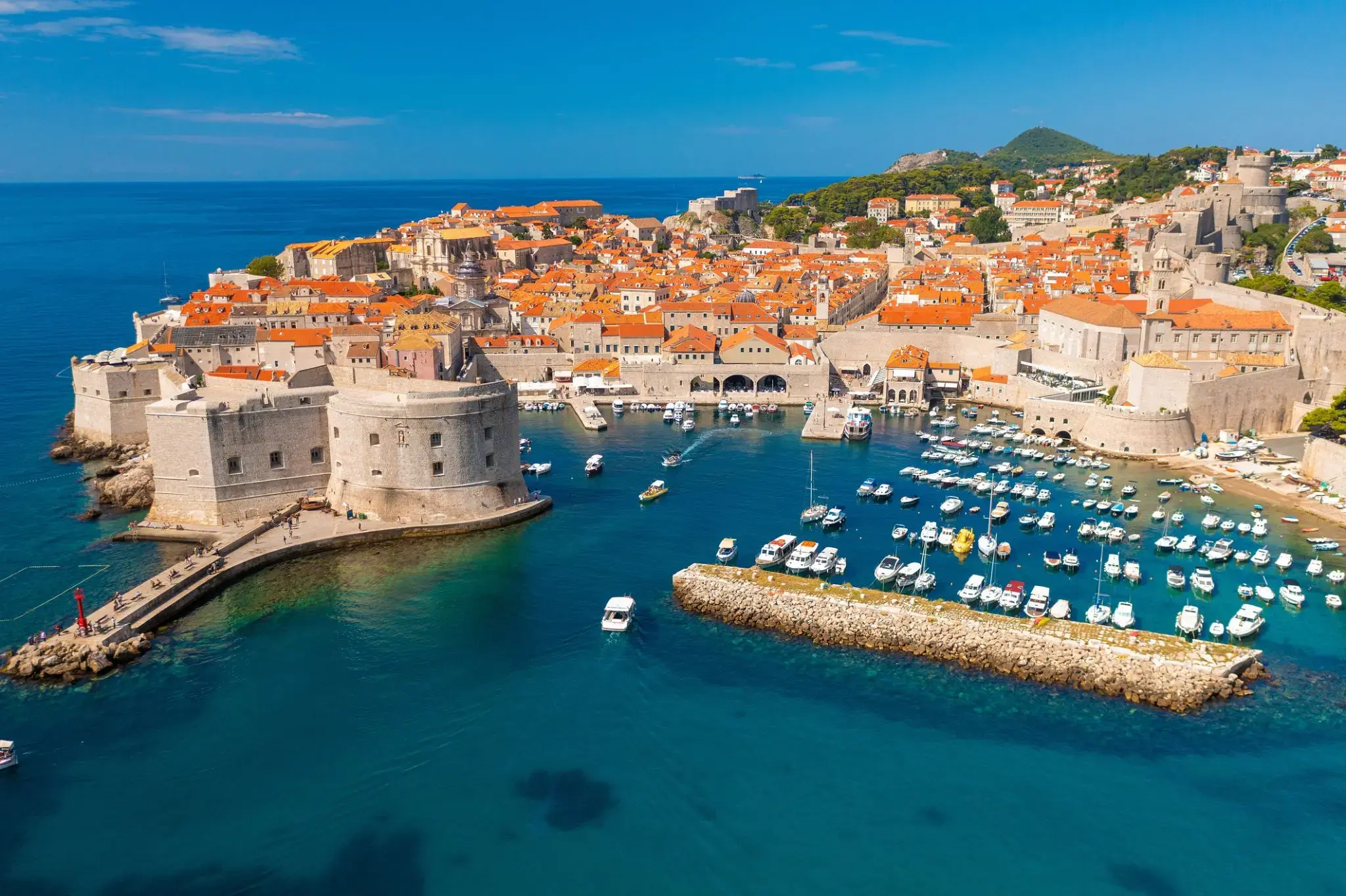
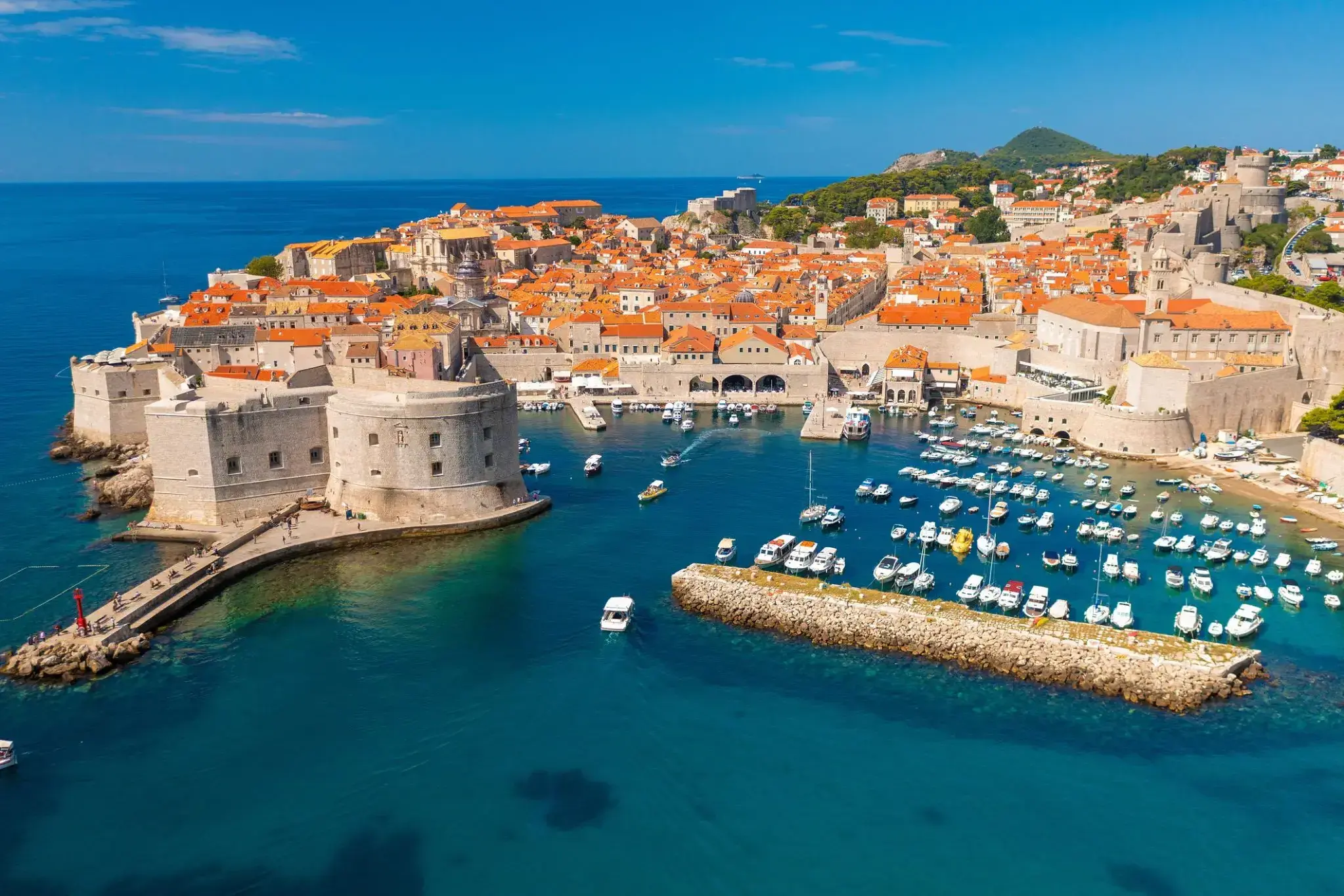
Dubrovnik is a Croatian city on the Adriatic Sea. It is one of the most prominent tourist destinations in the Mediterranean Sea, a seaport and the centre of Dubrovnik-Neretva County. Its total population is 42,615 (census 2011). In 1979, the city of Dubrovnik joined the UNESCO list of World Heritage sites.
The prosperity of the city was historically based on maritime trade; as the capital of the maritime Republic of Ragusa, it achieved a high level of development, particularly during the 15th and 16th centuries, as it became notable for its wealth and skilled diplomacy.
In 1991, after the break-up of Yugoslavia, Dubrovnik was besieged by Serbian and Montenegrin soldiers of the Yugoslav People's Army (JNA) for seven months and suffered significant damage from shelling. After repair and restoration works in the 1990s and early 2000s, Dubrovnik re-emerged as one of the top tourist destinations in the Mediterranean.
Kotor is a coastal town in Montenegro. It is located in a secluded part of the Gulf of Kotor. The city has a population of 13,510 and is the administrative center of Kotor Municipality.
The old Mediterranean port of Kotor is surrounded by fortifications built during the Venetian period. It is located on the Bay of Kotor (Boka Kotorska), one of the most indented parts of the Adriatic Sea. Some have called it the southern-most fjord in Europe, but it is a ria, a submerged river canyon. Together with the nearly overhanging limestone cliffs of Orjen and Lovćen, Kotor and its surrounding area form an impressive landscape.
Since the early 2000s Kotor has seen an increase in tourists , many of them coming by cruise ship. Visitors are attracted by the natural environment of the Gulf of Kotor and by the old town of Kotor. Kotor is part of the World Heritage Site dubbed the Natural and Culturo-Historical Region of Kotor.
The fortified city of Kotor was also included in UNESCO's World Heritage Site list as part of Venetian Works of Defence between 15th and 17th centuries: Stato da Terra – western Stato da Mar in 201
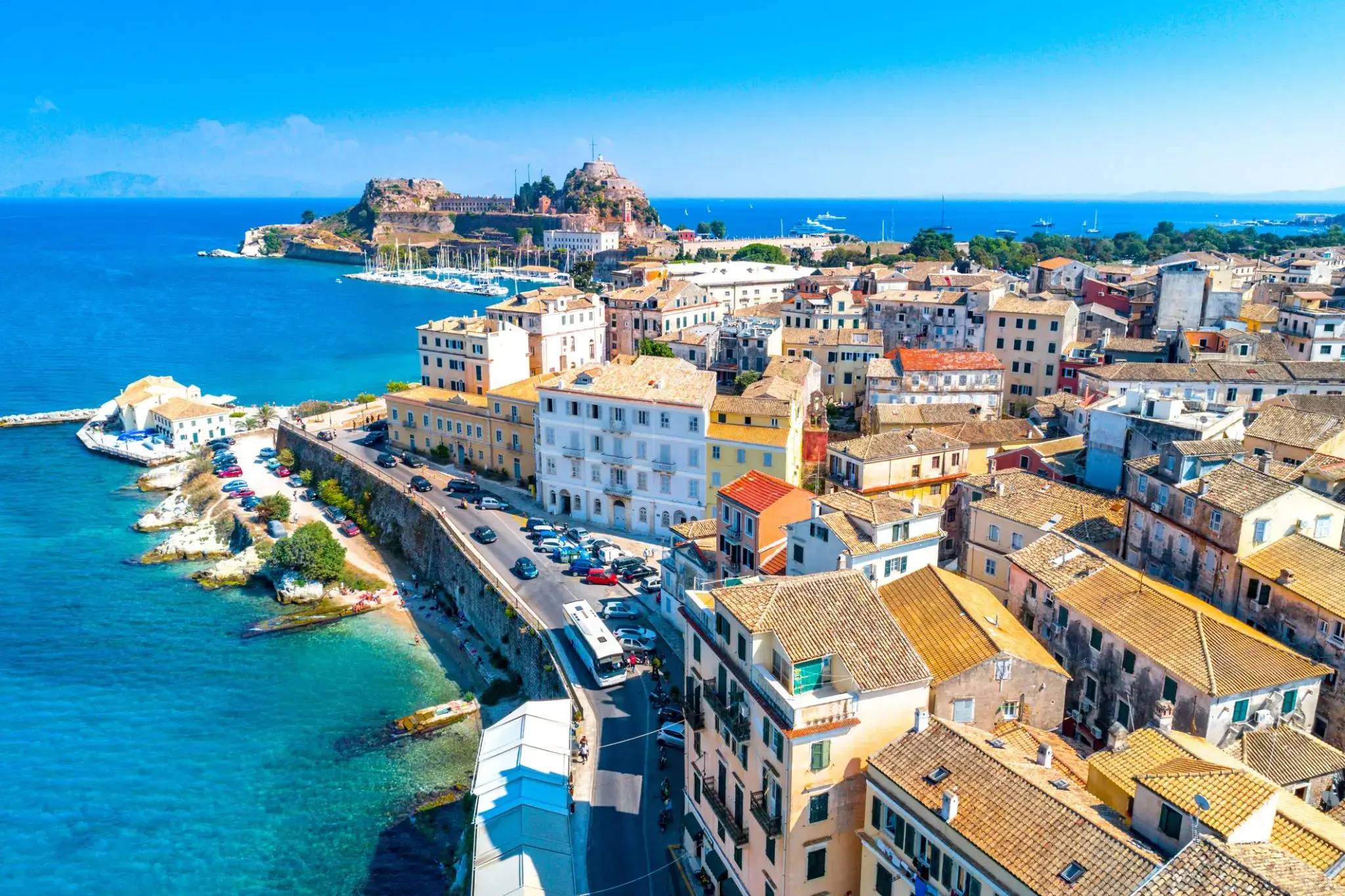
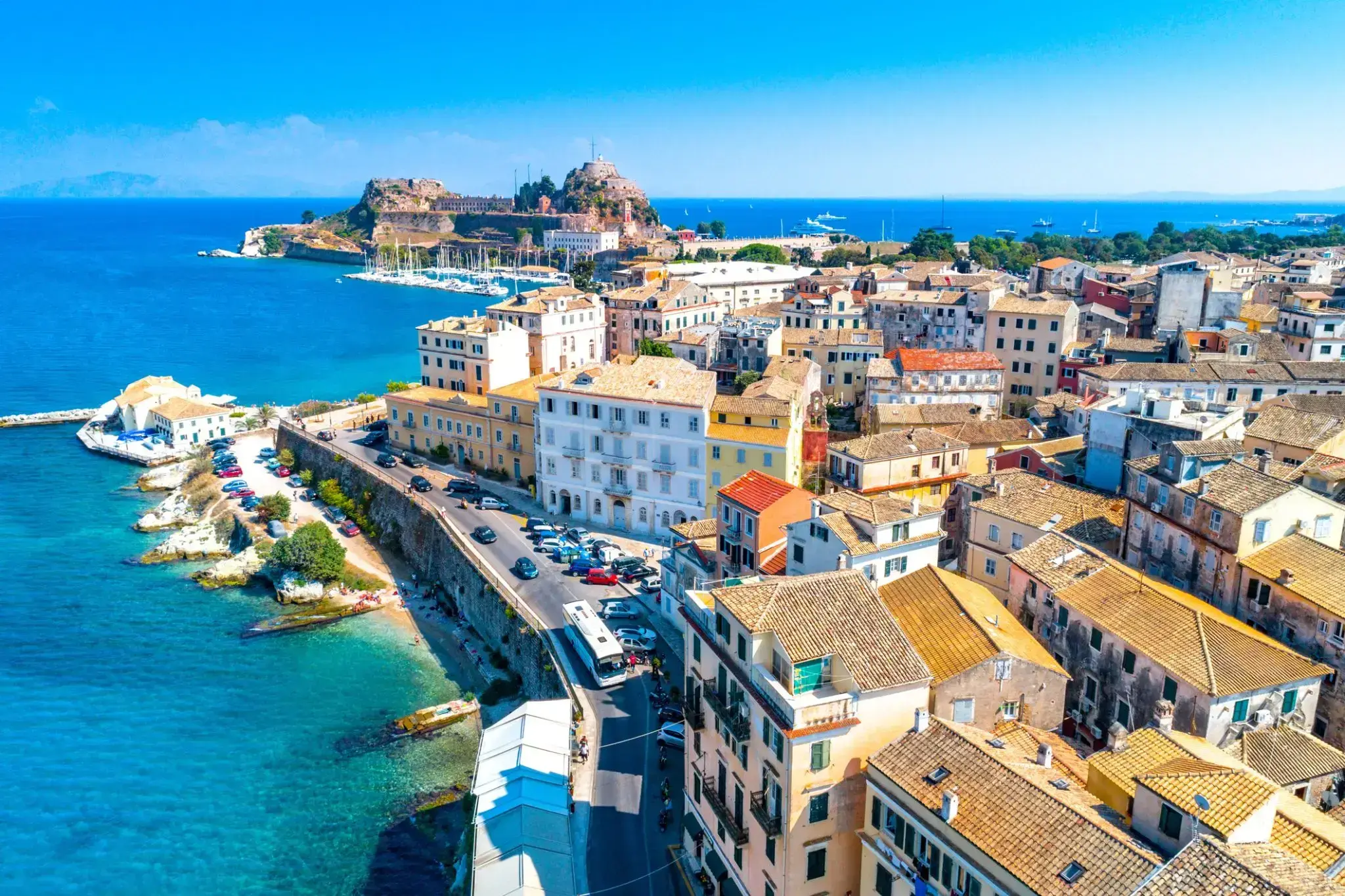
Korfu uchodzi za najpiękniejszą wyspę archipelagu Jońskiego. Wyspa jest niezwykle żyzna – głównymi produktami są oliwa z oliwek, owoce południowe i wino. Stara część miasta Korfu zachwyca malowniczymi uliczkami i architekturą różnych kultur europejskich. Wyspa ma bogatą historię – przez wieki przyciągała najeźdźców, a największy wpływ na jej kulturę wywarły Włochy, co łatwo wytłumaczyć bliskością tego kraju. Korfu odwiedzali m.in. Goethe i Napoleon, a cesarzowa Elżbieta Austriacka mieszkała tu przez długi czas. Klimat sprzyja turystom – nawet latem morska bryza przynosi przyjemne orzeźwienie.
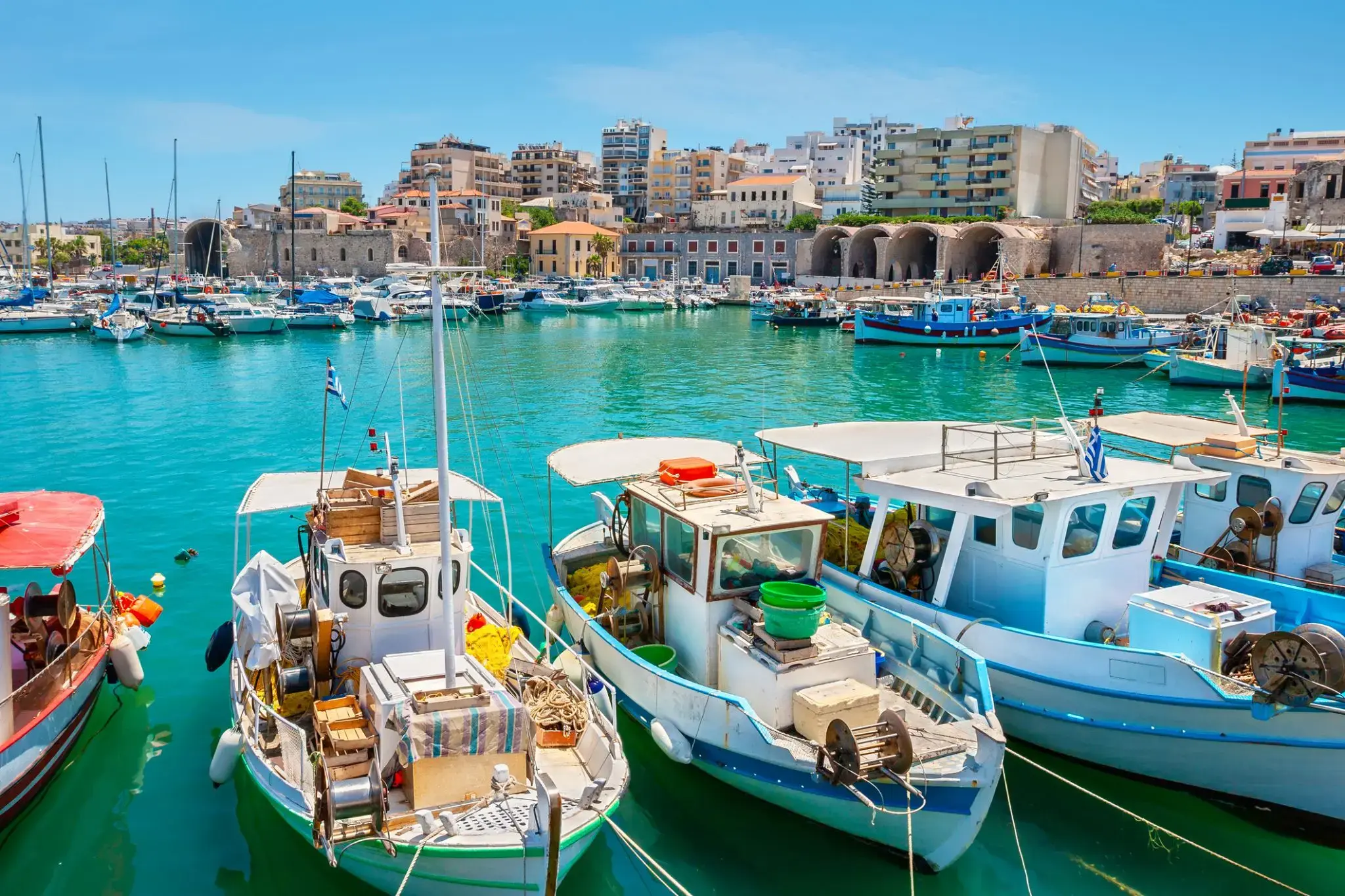
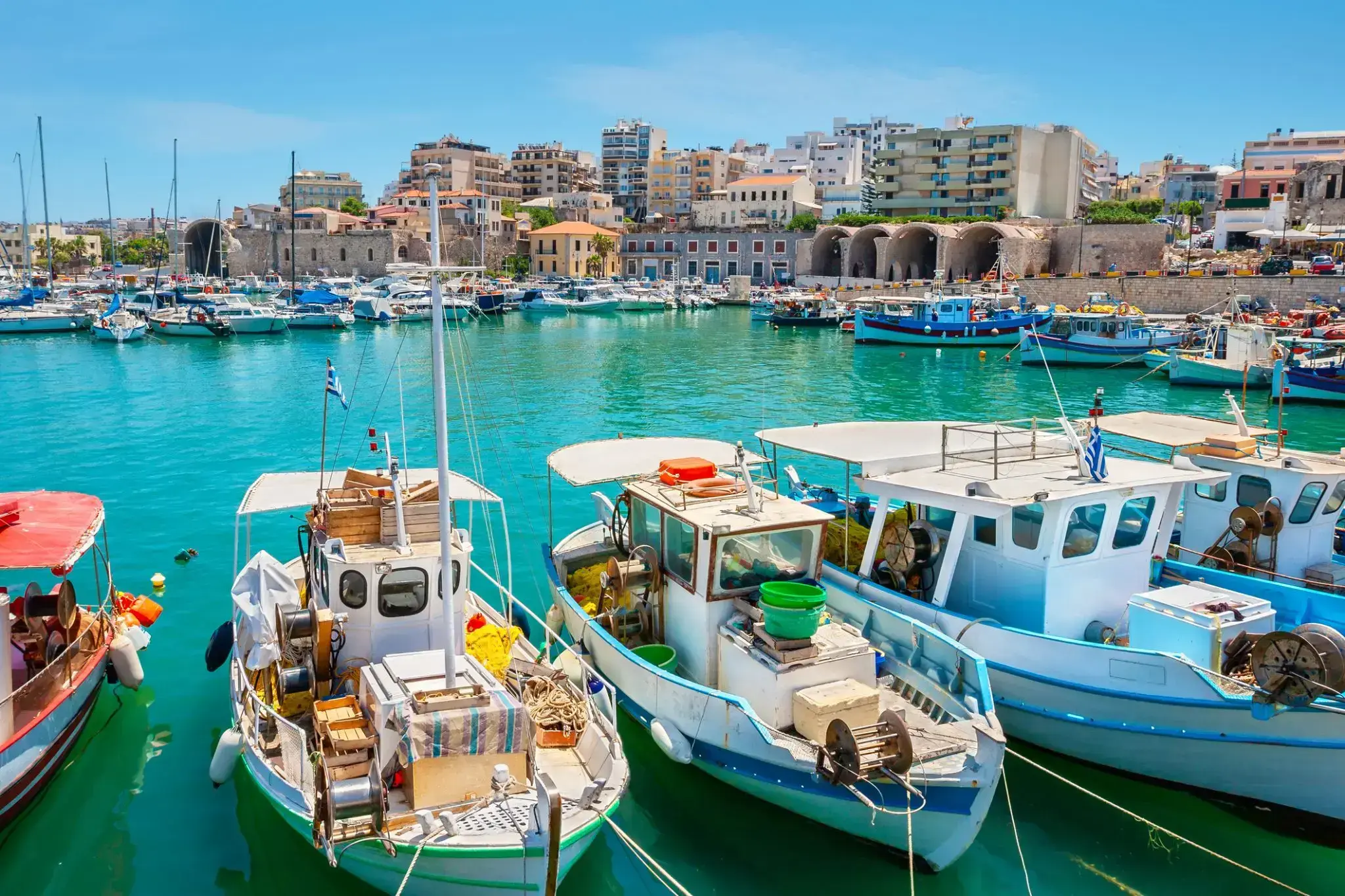
Heraklion or Heraclion is the largest city and the administrative capital of the island of Crete. It is the fourth largest city in Greece. According to the results of the 2011 census, the population of the city proper was 166,209 inhabitants, the municipality's was 173,993 while the Heraklion urban area has a population of 225,574 and it extends over an area of 684.3 km2 (264.2 sq mi).
Heraklion is the capital of Heraklion regional unit.
The Bronze Age palace of Knossos, also known as the Palace of Minos, is located nearby.
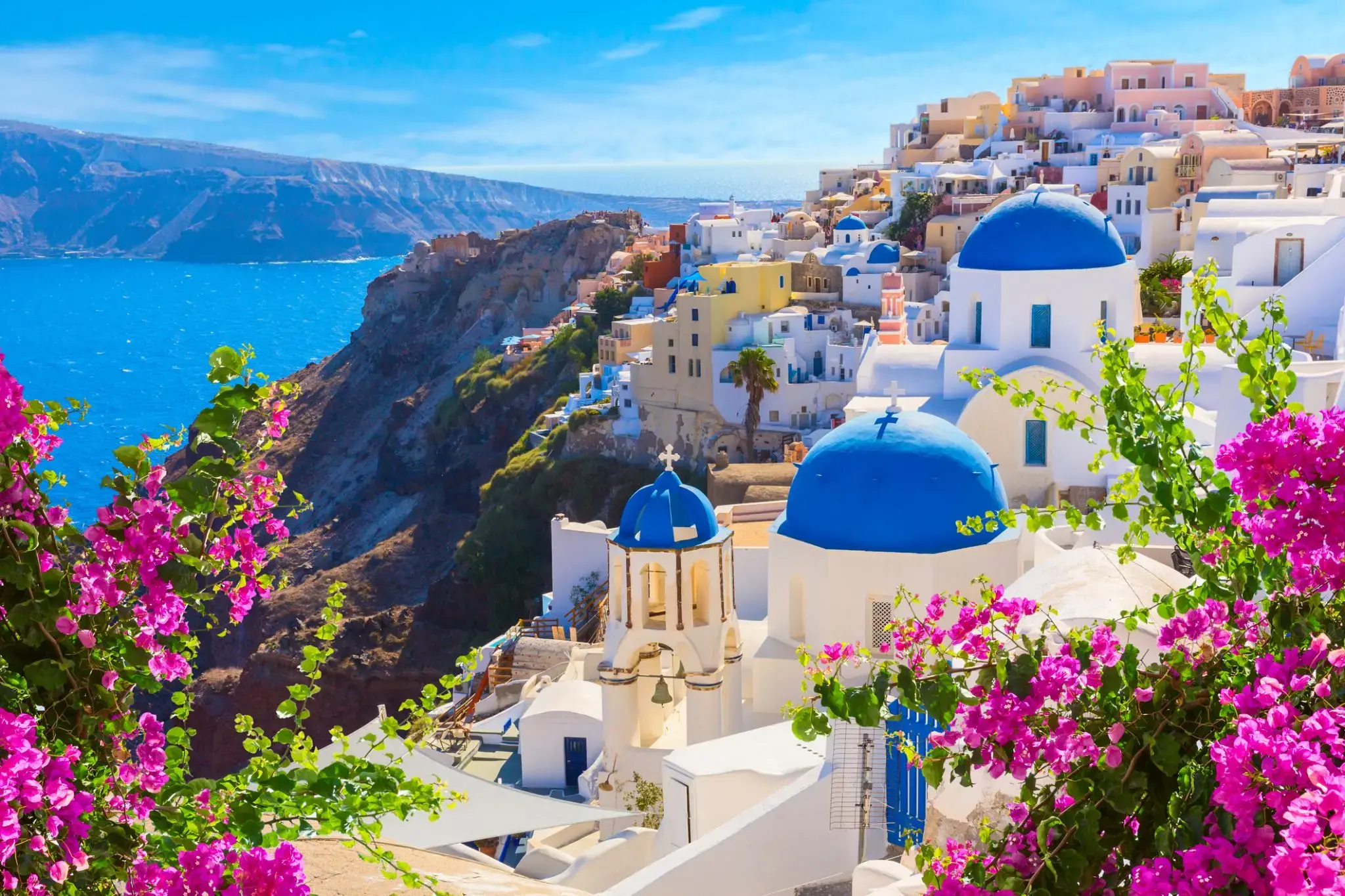
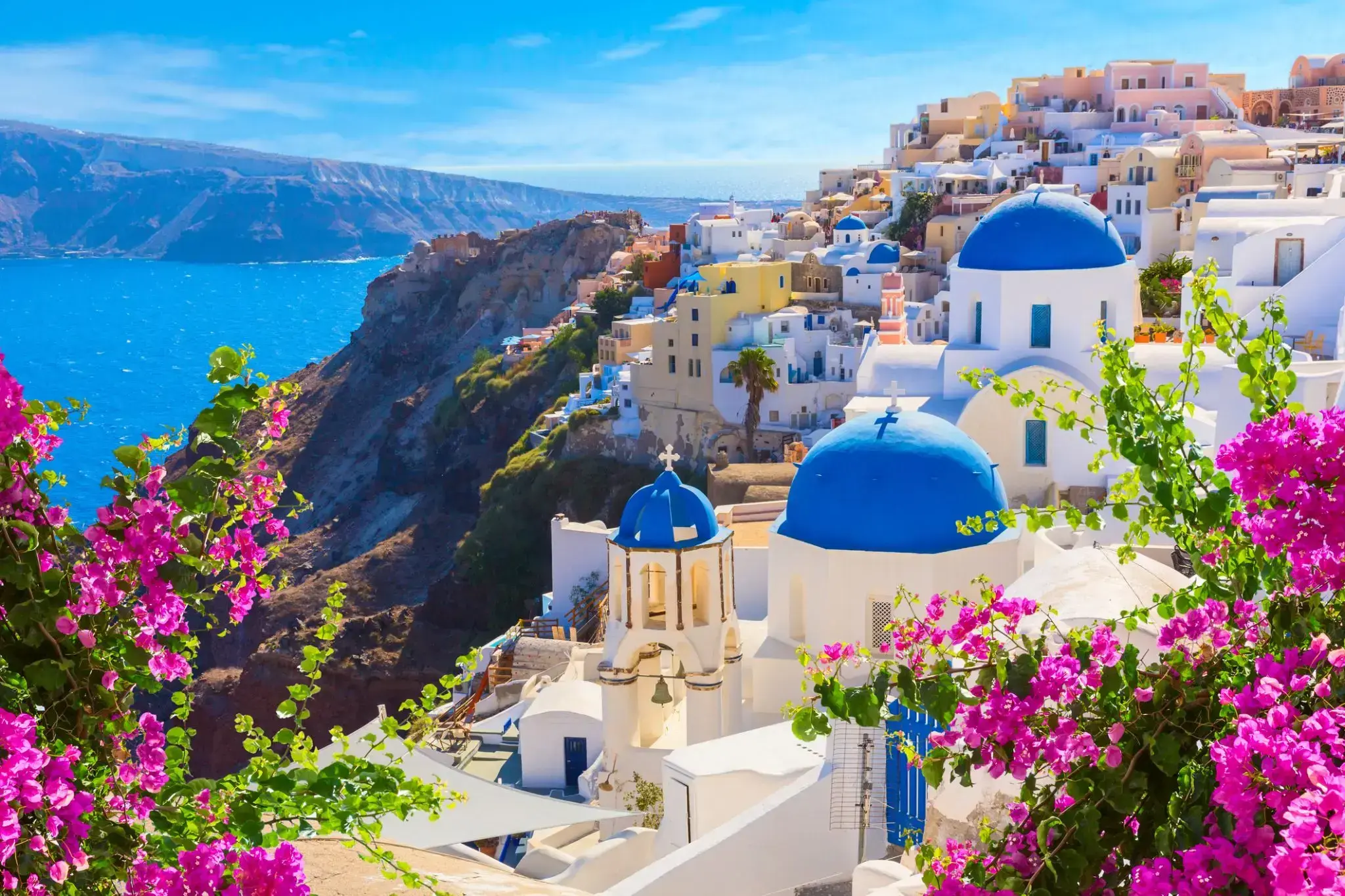
Grecja dzieli się z Tobą pięknem jednego z najczarowniejszych wulkanicznych archipelagów Morza Egejskiego – Santorini. Wulkan wciąż jest aktywny, ale dla turystów stworzono bezpieczne warunki, dzięki czemu można tu śmiało przyjeżdżać. To właśnie jemu zawdzięczamy czarne plaże, krajobrazy ze stwardniałej czerwono-brunatnej lawy, turkusowe widoki morza i kontrastujące z nimi bielone domki. Jeśli odwiedzisz Santorini, nie zapomnij o stanowisku archeologicznym w Akrotiri, gdzie zachowały się pozostałości minojskiej cywilizacji.
Syros to malownicza wyspa w archipelagu Cyklad, znana z bogatej historii i zróżnicowanej architektury. Jej stolica, Ermoupoli, to jedno z nielicznych greckich miast, w których bizantyjskie kościoły sąsiadują z neoklasycznymi rezydencjami. Dawniej najważniejszy ośrodek morski Grecji, dziś nadal zachowuje elegancki i kulturowo bogaty charakter.
Wyspa idealna dla podróżnych szukających nie tylko plażowego relaksu, ale i autentycznych wrażeń. Urokliwe zatoczki, malownicze szlaki i lokalna kuchnia — od świeżych owoców morza po "lagano", tradycyjny chleb pieczony z oliwą. Ciekawostka: w Ermoupoli znajduje się jeden z najstarszych teatrów w Grecji — teatr Apollon, wzorowany na mediolańskiej La Scali.
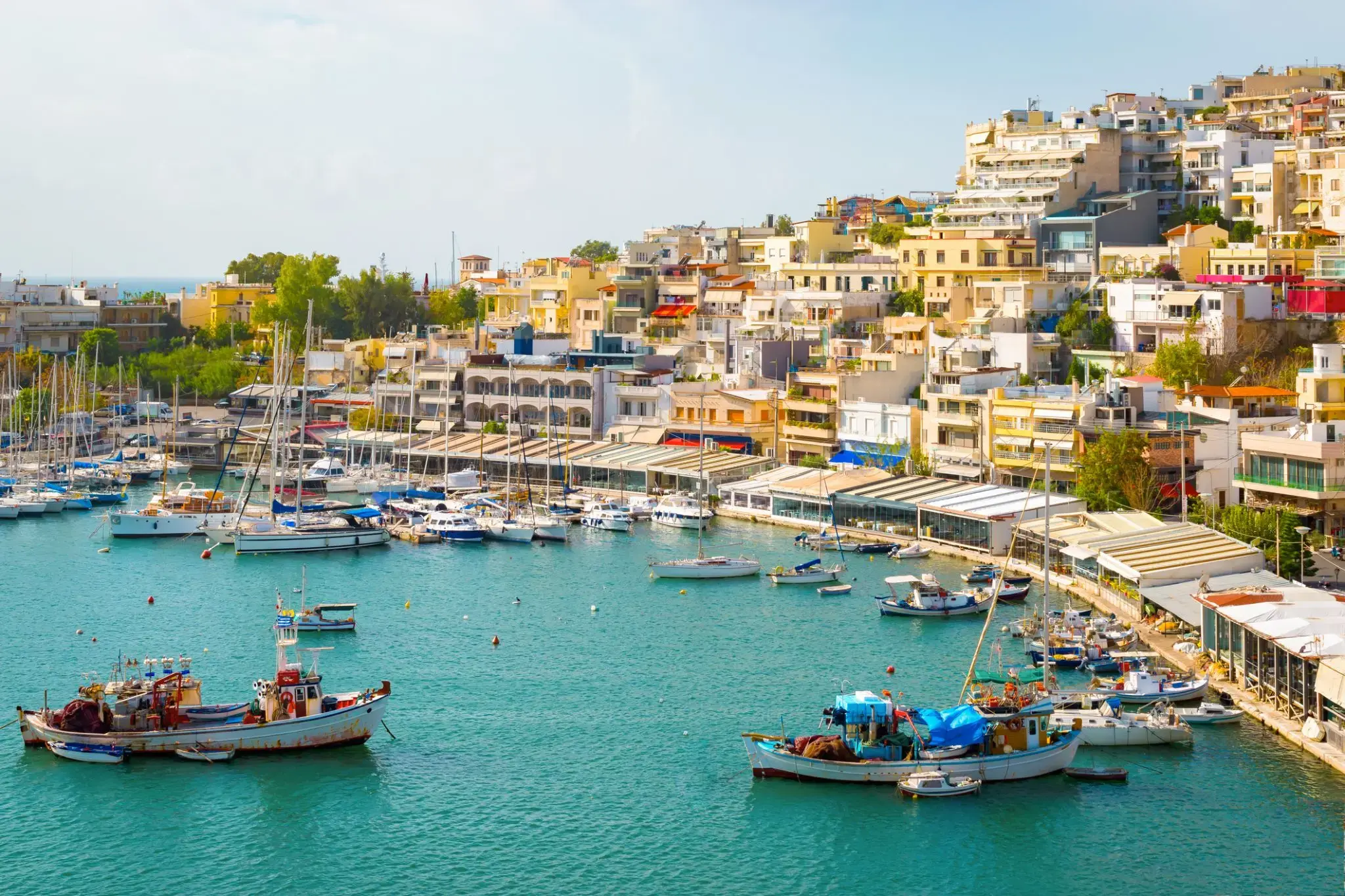
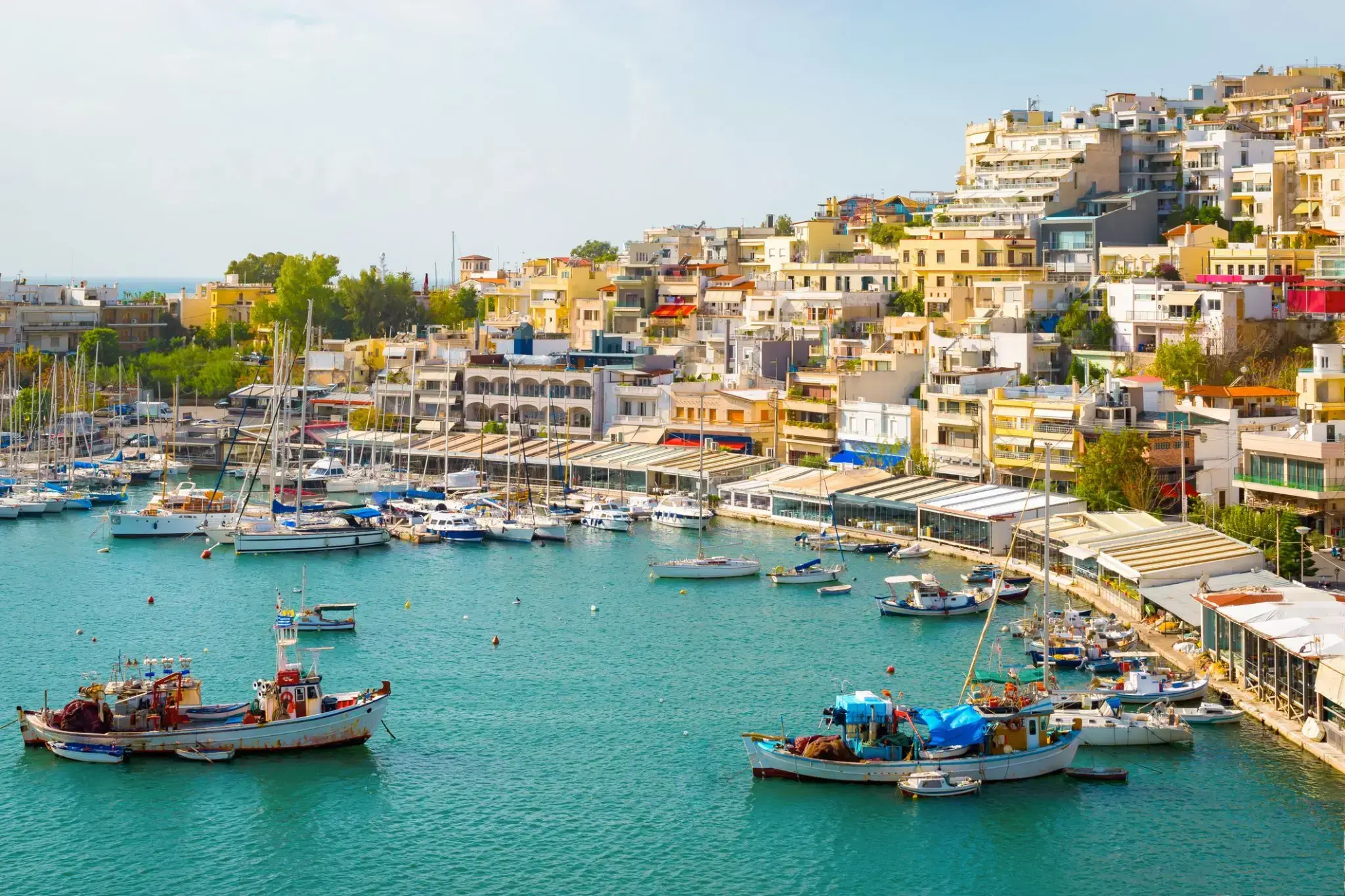
Pireus to stare miasto portowe, będące portem Aten i jednocześnie największym portem Grecji w dniu dzisiejszym. Pireus stanowi część wielkich Aten, które mogą poszczycić się bogactwem atrakcji, w tym unikalnymi zabytkami narodowej sztuki plastycznej.
Ponad dwieście muzeów i galerii, w tym Muzeum Historii Uniwersytetu, Muzeum Archeologiczne Keramejkos i wiele innych, gościnnie powita Państwa w swoich murach i zapozna z kulturą tej okolicy.