
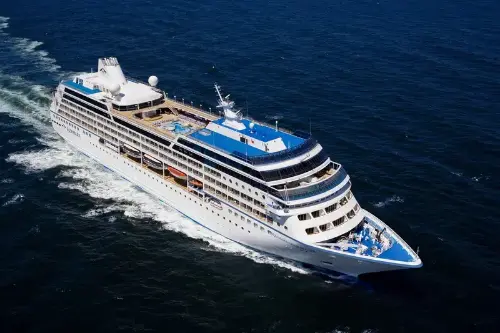
Rejs morski · 30.09.2028 – 09.10.2028 · 9 nocy
9 nocy z Nicei
Cena i dostępność kajutTrasa i informacje o rejsie
Premium- Nicea
- Genua
- Santa Margherita Ligure
- Portovenere
- Livorno
- Livorno
- Portoferraio
- Antalya
- Porto Santo Stefano
- Rzym (Civitavecchia)
| Data | Port | Przypłynięcie | Wypłynięcie |
|---|---|---|---|
| 30.09.2028 |
Nicea
Francja
|
— | 18:00 |
| 01.10.2028 |
Genua
Włochy
|
08:00 | 20:00 |
| 02.10.2028 |
Santa Margherita Ligure
Włochy
|
08:00 | 20:00 |
| 03.10.2028 |
Portovenere
Włochy
|
08:00 | 18:00 |
| 04.10.2028 |
Livorno
Włochy
|
08:00 | — |
| 05.10.2028 |
Livorno
Włochy
|
— | 20:00 |
| 06.10.2028 |
Portoferraio
Włochy
|
09:00 | 21:00 |
| 07.10.2028 |
Antalya
Turcja
|
08:00 | 20:00 |
| 08.10.2028 |
Porto Santo Stefano
|
08:00 | 17:00 |
| 09.10.2028 |
Rzym (Civitavecchia)
Włochy
|
06:00 | — |
-
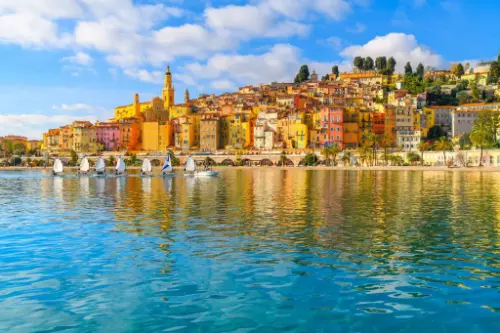 Dzień 1: 18:00
Nicea / Francja
Nice is the seventh most populous urban area in France and the capital of the Alpes-Maritimes département. The metropolitan area of Nice extends beyond the administrative city limits, with a population of about 1 million on an area of 721 km2 (278 sq mi). Located in the French Riviera, on the south east coast of France on the Mediterranean Sea, at the foot of the Alps, Nice is the second-largest French city on the Mediterranean coast and the second-largest city in the Provence-Alpes-Côte d'Azur region after Marseille. Nice is approximately 13 kilometres (8.1 mi) from the principality of Monaco and 30 kilometres (19 mi) from the French-Italian border. Nice's airport serves as a gateway to the region.
The city is nicknamed Nice la Belle (Nissa La Bella in Niçard), which means Nice the Beautiful, which is also the title of the unofficial anthem of Nice, written by Menica Rondelly in 1912.
The area of today's Nice contains Terra Amata, an archaeological site which displays evidence of a very early use of fire. Around 350 BC, Greeks of Marseille founded a permanent settlement and called it Nikaia, after Nike, the goddess of victory. Through the ages, the town has changed hands many times. Its strategic location and port significantly contributed to its maritime strength. For centuries it was a dominion of Savoy, and was then part of France between 1792 and 1815, when it was returned to Piedmont-Sardinia until its re-annexation by France in 1860.
The natural environment of the Nice area and its mild Mediterranean climate came to the attention of the English upper classes in the second half of the 18th century, when an increasing number of aristocratic families took to spending their winters there. The city's main seaside promenade, the Promenade des Anglais ("Walkway of the English") owes its name to visitors to the resort. The clear air and soft light have particularly appealed to notable painters, such as Marc Chagall, Henri Matisse, Niki de Saint Phalle and Arman. Their work is commemorated in many of the city's museums, including Musée Marc Chagall, Musée Matisse and Musée des Beaux-Arts. Nice has the second largest hotel capacity in the country and it is one of its most visited cities, receiving 4 million tourists every year. It also has the third busiest airport in France, after the two main Parisian ones. It is the historical capital city of the County of Nice(Comté de Nice).
Nice is the seventh most populous urban area in France and the capital of the Alpes-Maritimes département. The metropolitan area of Nice extends beyond the administrative city limits, with a population of about 1 million on an area of 721 km2 (278 sq mi). Located in the French Riviera, on the south east coast of France on the Mediterranean Sea, at the foot of the Alps, Nice is the second-largest French city on the Mediterranean coast and the second-largest city in the Provence-Alpes-Côte d'Azur region after Marseille. Nice is approximately 13 kilometres (8.1 mi) from the principality of Monaco and 30 kilometres (19 mi) from the French-Italian border. Nice's airport serves as a gateway to the region.The city is nicknamed Nice la Belle (Nissa La Bella in Niçard), which means Nice the Beautiful, which is also the title of the unofficial anthem of Nice, written by Menica Rondelly in 1912.
The area of today's Nice contains Terra Amata, an archaeological site which displays evidence of a very early use of fire. Around 350 BC, Greeks of Marseille founded a permanent settlement and called it Nikaia, after Nike, the goddess of victory. Through the ages, the town has changed hands many times. Its strategic location and port significantly contributed to its maritime strength. For centuries it was a dominion of Savoy, and was then part of France between 1792 and 1815, when it was returned to Piedmont-Sardinia until its re-annexation by France in 1860.
The natural environment of the Nice area and its mild Mediterranean climate came to the attention of the English upper classes in the second half of the 18th century, when an increasing number of aristocratic families took to spending their winters there. The city's main seaside promenade, the Promenade des Anglais ("Walkway of the English") owes its name to visitors to the resort. The clear air and soft light have particularly appealed to notable painters, such as Marc Chagall, Henri Matisse, Niki de Saint Phalle and Arman. Their work is commemorated in many of the city's museums, including Musée Marc Chagall, Musée Matisse and Musée des Beaux-Arts. Nice has the second largest hotel capacity in the country and it is one of its most visited cities, receiving 4 million tourists every year. It also has the third busiest airport in France, after the two main Parisian ones. It is the historical capital city of the County of Nice(Comté de Nice).
-
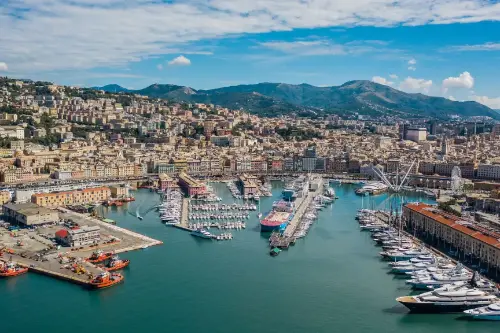 Dzień 2: 08:00–20:00
Genua / Włochy
Genua – portowe miasto w północnych Włoszech, położone w Zatoce Genueńskiej nad Morzem Liguryjskim. Już od czasów Imperium Rzymskiego przyciągało uwagę arystokracji i do dziś jest miejscem rezydencji wpływowych ludzi. Spacerując nadmorską promenadą, warto zajrzeć do jednej z licznych kawiarni i spróbować doskonałej kuchni morskiej przy kieliszku wina. Miłośnicy podwodnego świata mogą odwiedzić słynne akwarium, gdzie zobaczyć można ponad 500 gatunków ryb i ssaków morskich.
-
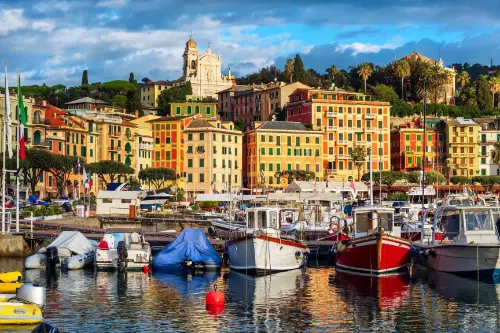 Dzień 3: 08:00–20:00
Santa Margherita Ligure / Włochy
Santa Margherita Ligure to malownicze miasteczko nad Liguryjskim wybrzeżem we Włoszech, położone zaledwie kilka kilometrów od słynnego Portofino. Jego urokliwe uliczki, zabytkowe wille i pachnące ogrody tworzą atmosferę spokoju i komfortu. Miasto przyciąga turystów swoją przytulną atmosferą oraz zapierającymi dech w piersiach widokami na błękitne morze i zielone wzgórza, które je otaczają.
Oprócz malowniczych krajobrazów, Santa Margherita Ligure oferuje wiele atrakcji kulturalnych i historycznych. Znajduje się tutaj historyczny kościół św. Marcina oraz zamek, z którego rozciąga się panoramiczny widok na wybrzeże. To miejsce idealne dla tych, którzy szukają spokoju, ale jednocześnie chcą cieszyć się bogatym życiem kulturalnym i gastronomią.
-
 Dzień 4: 08:00–18:00
Portovenere / Włochy
-
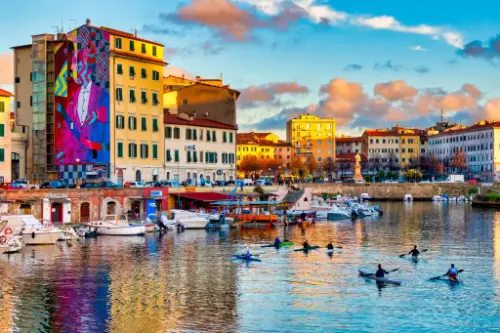 Dzień 5: 08:00
Livorno / Włochy
Livorno is a port city on the Ligurian Sea on the western coast of Tuscany, Italy. It is the capital of the Province of Livorno, having a population of 158,493 residents in December 2017. It has traditionally been known in English as Leghorn.
The origins of Livorno are controversial, although the place was inhabited since the Neolithic Age as shown by worked bones, pieces of copper and ceramic found on the Livorno Hills in a cave between Ardenza and Montenero. The construction of the Via Aurelia coincided with the occupation of the region by the Romans, who left traces of their presence in the toponyms and ruins of towers. The natural cove called Liburna, later transformed into Livorna, before becoming Livorno, is a reference to the type of ship, the liburna, used by Roman navy. Others ancient toponyms include: Salviano (Salvius), Antignano (Ante ignem) which was the place situated before Ardenza (Ardentia) where were the beacons for the ships directed to Porto Pisano.
The name Livorna is mentioned for the first time in 1017 as a small coastal village, the port and the remains of a Roman tower. In 1077, a tower was built by Matilda of Tuscany. The Republic of Pisa owned Livorno from 1103 and built a quadrangular Fort called Quadratura dei Pisani ("Quarter of the Pisans") to defend the port. Porto Pisano was destroyed after the crushing defeat of the Pisan fleet in the Battle of Meloria in 1284. In 1399, Pisa sold Livorno to the Visconti of Milan, in 1405 it was sold to the Republic of Genoa and on 28 August 1421 it was bought by the Republic of Florence.
Between 1427 and 1429, a census counted 118 families in Livorno, including 423 persons. Monks, Jews, military personnel, and the homeless were not included in the census. The only remainder of medieval Livorno is a fragment of two towers and a wall, located inside the Fortezza Vecchia.
-
Dzień 6: 20:00
Livorno / Włochy
Livorno is a port city on the Ligurian Sea on the western coast of Tuscany, Italy. It is the capital of the Province of Livorno, having a population of 158,493 residents in December 2017. It has traditionally been known in English as Leghorn.
The origins of Livorno are controversial, although the place was inhabited since the Neolithic Age as shown by worked bones, pieces of copper and ceramic found on the Livorno Hills in a cave between Ardenza and Montenero. The construction of the Via Aurelia coincided with the occupation of the region by the Romans, who left traces of their presence in the toponyms and ruins of towers. The natural cove called Liburna, later transformed into Livorna, before becoming Livorno, is a reference to the type of ship, the liburna, used by Roman navy. Others ancient toponyms include: Salviano (Salvius), Antignano (Ante ignem) which was the place situated before Ardenza (Ardentia) where were the beacons for the ships directed to Porto Pisano.
The name Livorna is mentioned for the first time in 1017 as a small coastal village, the port and the remains of a Roman tower. In 1077, a tower was built by Matilda of Tuscany. The Republic of Pisa owned Livorno from 1103 and built a quadrangular Fort called Quadratura dei Pisani ("Quarter of the Pisans") to defend the port. Porto Pisano was destroyed after the crushing defeat of the Pisan fleet in the Battle of Meloria in 1284. In 1399, Pisa sold Livorno to the Visconti of Milan, in 1405 it was sold to the Republic of Genoa and on 28 August 1421 it was bought by the Republic of Florence.
Between 1427 and 1429, a census counted 118 families in Livorno, including 423 persons. Monks, Jews, military personnel, and the homeless were not included in the census. The only remainder of medieval Livorno is a fragment of two towers and a wall, located inside the Fortezza Vecchia.
-
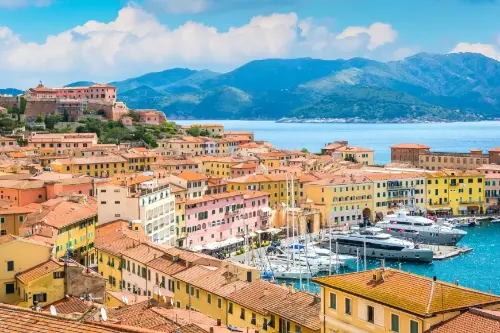 Dzień 7: 09:00–21:00
Portoferraio / Włochy
Portoferraio to historyczne miasto na wyspie Elba w Toskanii, Włochy. Jako główny port i centrum administracyjne wyspy, Portoferraio przyciąga turystów swoją unikalną atmosferą, zachowaną od czasów Renesansu. Miasto zostało założone w 1548 roku i do dziś zachowało wiele historycznych zabytków, w tym wenecką twierdzę oraz stare ulice prowadzące do pięknych placów i urokliwych sklepów.
Ponadto Portoferraio jest znane z bliskości do naturalnych piękności, takich jak malownicze plaże i zielone wzgórza, idealne do spacerów i aktywnego wypoczynku. Ważną atrakcją jest Villa dei Mulini, gdzie Napoleon spędzał czas na wygnaniu, a zwiedzający mogą poznać historię jego życia. Portoferraio to idealne miejsce dla tych, którzy chcą cieszyć się spokojem, historią i naturą w jednym z najpiękniejszych zakątków Włoch.
-
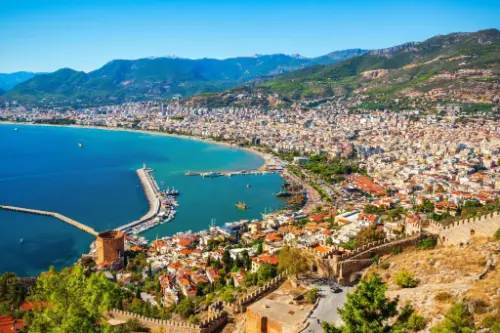 Dzień 8: 08:00–20:00
Antalya / Turcja
Анталья расположена на средиземноморском побережье Турции.
Живописная Анталия возвышается на платформе, в живописном заливе. Турецкий центр путешествий с использованием радиоэлектроники и развитой индустрии развлечений.
Анталья со своими многочисленными современными отелями, спортивными комплексами, ночной жизнью, ресторанами, дискотеками, увлекательными морскими путешествиями вдоль восхитительного побережья, беззаботными катаниями с горок в "Аквапарке", который является центром туризма и отдыха.
-
Dzień 9: 08:00–17:00
Porto Santo Stefano
-
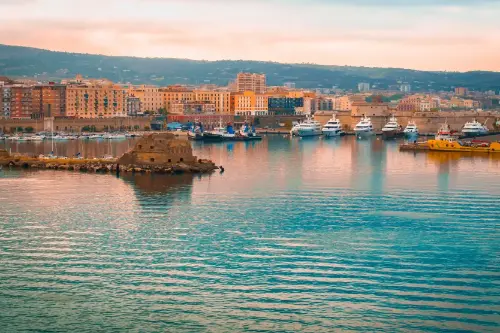 Dzień 10: 06:00
Rzym (Civitavecchia) / Włochy
Rzym – jedno z najstarszych miast świata, niegdyś stolica Cesarstwa Rzymskiego, dziś stolica Włoch. Położony na siedmiu wzgórzach nad Tybrem, zachwyca pięknem i majestatem, którego nie da się oddać słowami – trzeba tu być. Każda rzeźba, fontanna czy budowla to dzieło sztuki pozostawione przez dawnych mistrzów. Najsłynniejsze atrakcje, które przyciągają turystów, to Koloseum – miejsce dawnych walk gladiatorów, Fontanna di Trevi, Schody Hiszpańskie, Bazylika św. Piotra – największy kościół Europy, a także Fora Cesarskie i Forum Romanum.
Proszę czekać…
Organizator
Biznes i Turystyka Piotr Skupiewski
- ul. Łukowa 41, 32-823 Szczepanów
- NIP 8691148381
- REGON 850455159
- +48 576 977 555
- +48 570 700 273
Organizator jest wpisany do Centralnej Ewidencji Organizatorów Turystyki i Przedsiębiorców Ułatwiających Nabywanie Powiązanych Usług Turystycznych. Posiada gwarancję ubezpieczeniową UNIQA nr 3800003856, ważną od 5 maja 2026 r. do 4 maja 2027 r. Suma gwarancyjna wynosi 379 404,00 zł. Organizator odprowadza składki do Turystycznego Funduszu Gwarancyjnego i Turystycznego Funduszu Pomocowego.
Masz jeszcze pytania?
Pomożemy wybrać rejs i odpowiemy na Twoje pytania.