
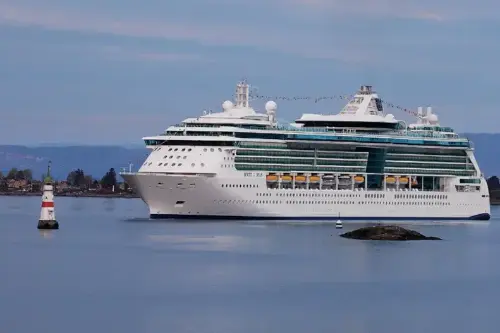
Rejs morski · 08.08.2028 – 19.08.2028 · 11 nocy
11 nocy z Kopenhagi
Cena i dostępność kajutTrasa i informacje o rejsie
- Kopenhaga
- Skagen
- Osło
- Aarhus
- Berlin
- Kłajpeda (Memel)
- Ryga
- Visby
- Tallinn
- Sztokholm
- Sztokholm
| Data | Port | Przypłynięcie | Wypłynięcie |
|---|---|---|---|
| 08.08.2028 |
Kopenhaga
Denmark
|
— | 16:00 |
| 09.08.2028 |
Skagen
Denmark
|
08:00 | 18:00 |
| 10.08.2028 |
Osło
Norway
|
08:00 | 16:00 |
| 11.08.2028 |
Aarhus
Denmark
|
10:00 | 20:00 |
| 12.08.2028 |
Berlin
Niemcy
|
08:00 | 22:00 |
| 13.08.2028 |
Dzień na morzu
|
— | — |
| 14.08.2028 |
Kłajpeda (Memel)
Litwa
|
07:00 | 16:00 |
| 15.08.2028 |
Ryga
Łotwa
|
07:00 | 17:00 |
| 16.08.2028 |
Visby
Sweden
|
08:00 | 17:00 |
| 17.08.2028 |
Tallinn
Estonia
|
08:00 | 17:00 |
| 18.08.2028 |
Sztokholm
Sweden
|
08:15 | — |
| 19.08.2028 |
Sztokholm
Sweden
|
— | — |
-
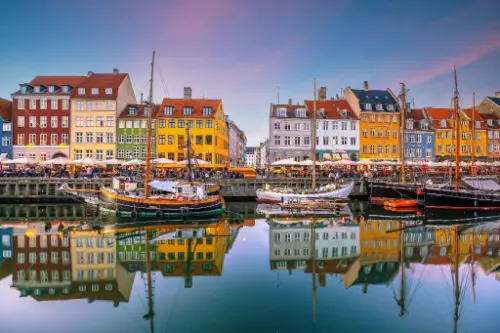 Dzień 1: 16:00
Kopenhaga / Denmark
the capital and chief port of Denmark, a city that occupies the eastern part of Zealand and northern part of the island of Amager; population 518,574 (2009).
-
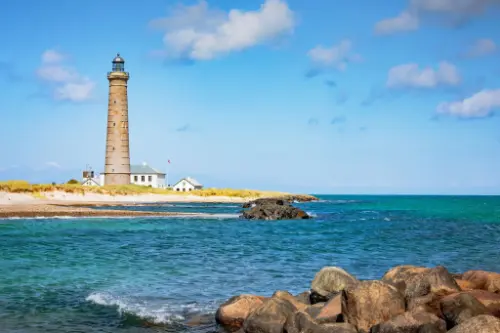 Dzień 2: 08:00–18:00
Skagen / Denmark
-
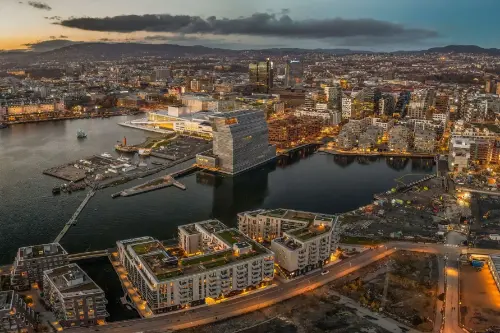 Dzień 3: 08:00–16:00
Osło / Norway
Oslo is the capital and most populous city of Norway. It constitutes both a county and a municipality. Founded in the year 1040 as Ánslo, and established as a trading place in 1048 by Harald Hardrada, the city was elevated to a bishopric in 1070 and a capital under Haakon V of Norway around 1300. Personal unions with Denmark from 1397 to 1523 and again from 1536 to 1814 reduced its influence, and with Sweden from 1814 to 1905 it functioned as a co-official capital. After being destroyed by a fire in 1624, during the reign of King Christian IV, a new city was built closer to Akershus Fortress and named Christiania in the king's honour. It was established as a municipality on 1 January 1838. The city's name was spelled Kristiania between 1877 and 1897 by state and municipal authorities. In 1925 the city was renamed Oslo.
-
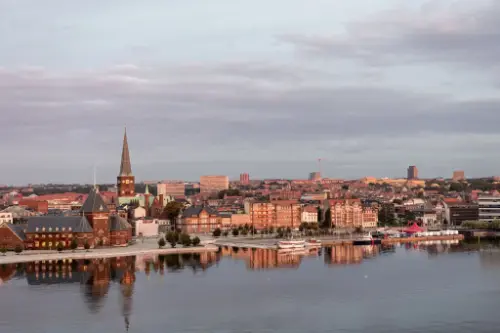 Dzień 4: 10:00–20:00
Aarhus / Denmark
Aarhus is the second-largest city in Denmark and the seat of Aarhus municipality. It is located on the east coast of the Jutlandpeninsula, in the geographical centre of Denmark, 187 kilometres (116 mi) northwest of Copenhagen and 289 kilometres (180 mi) north of Hamburg, Germany. The inner urban area contains 273,077 inhabitants (as of 1 January 2018) and the municipal population is 340,421 (as of 2018). Aarhus is the central city in Business Region Aarhus and in the East Jutland metropolitan area, which had a total population of 1.378 million in 2016.
The history of Aarhus began as a fortified Viking settlement founded in the 8th century and with the first written records stemming from the bishopric seated here from at least 948. The city was founded on the northern shores of a fjord at a natural harbour and the primary driver of growth was for centuries seaborne trade in agricultural products. Market town privileges were granted in 1441, but growth stagnated in the 17th century as the city suffered blockades and bombardments during the Swedish Wars. In the 19th century it was occupied twice by German troops during the Schleswig Wars but avoided destruction. As the industrial revolution took hold, the city grew to become the second-largest in the country by the 20th century.
-
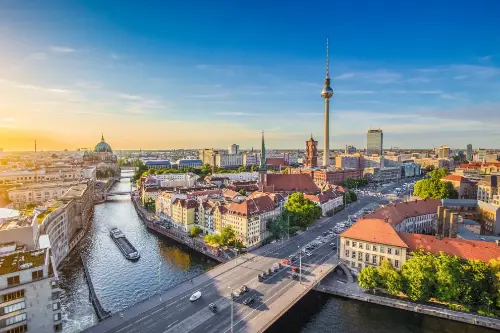 Dzień 5: 08:00–22:00
Berlin / Niemcy
Berlin – stolica, największe miasto Niemiec i zarazem kraj związkowy. Zajmuje powierzchnię ok. 891,70 km² i zamieszkuje go 3 878 100 osób (31 grudnia 2023). Jest największym miastem w Unii Europejskiej pod względem liczby mieszkańców w granicach administracyjnych.
Berlin jest podzielony na dwanaście okręgów administracyjnych (Bezirk). Przez przestrzeń miejską przepływają m.in. rzeki Sprewa i Hawela, a ponadto znajduje się wiele jezior i zatok, w tym największe Müggelsee.
-
Dzień 6:
Dzień na morzu / Morze
-
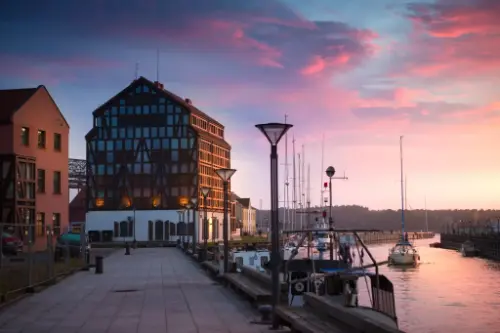 Dzień 7: 07:00–16:00
Kłajpeda (Memel) / Litwa
Klaipėda is a city in Lithuania on the Baltic Sea coast. It is the third largest city in Lithuania and the capital of Klaipėda County.
The city has a complex recorded history, partially due to the combined regional importance of the usually ice-free Port of Klaipėda at the mouth of the Akmena-Danė River. It was controlled by successive German states until the 1919 Treaty of Versailles. As a result of the 1923 Klaipėda Revolt it was added to Lithuania and has remained with Lithuania to this day, except for the period between 1939 and 1945 when it returned to Germany following the 1939 German ultimatum to Lithuania and the German–Soviet Union Molotov–Ribbentrop Pact.
The population has shrunk from the city to suburbs and the hinterland. The city had a population of 207,100 in 1992 to 157,350 in 2014 but the city is growing again. Popular seaside resorts found close to Klaipėda are Nida to the south on the Curonian Spit and Palanga to the north.
-
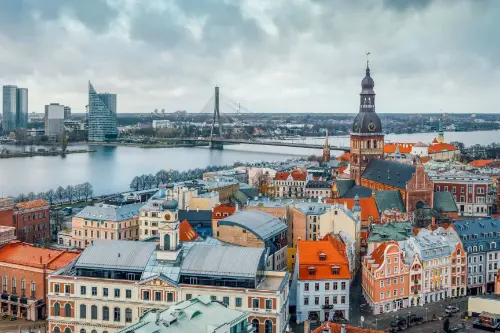 Dzień 8: 07:00–17:00
Ryga / Łotwa
Riga is the capital and largest city of Latvia. With 637,827 inhabitants (2018), it is also the largest city in the three Baltic states, home to one third of Latvia's population and one tenth of the three Baltic states' combined population. The city lies on the Gulf of Riga, at the mouth of the Daugava. Riga's territory covers 307.17 km2 (118.60 sq mi) and lies 1–10 m (3 ft 3 in–32 ft 10 in) above sea level, on a flat and sandy plain.
Riga was founded in 1201 and is a former Hanseatic League member. Riga's historical centre is a UNESCO World Heritage Site, noted for its Art Nouveau/Jugendstil architecture and 19th century wooden architecture. Riga was the European Capital of Culture during 2014, along with Umeå in Sweden. Riga hosted the 2006 NATO Summit, the Eurovision Song Contest 2003, the 2006 IIHF Men's World Ice Hockey Championships and the 2013 World Women's Curling Championship. It is home to the European Union's office of European Regulators for Electronic Communications (BEREC).
In 2016, Riga received over 1.4 million visitors. It is served by Riga International Airport, the largest and busiest airport in the Baltic states. Riga is a member of Eurocities, the Union of the Baltic Cities (UBC) and Union of Capitals of the European Union (UCEU).
-
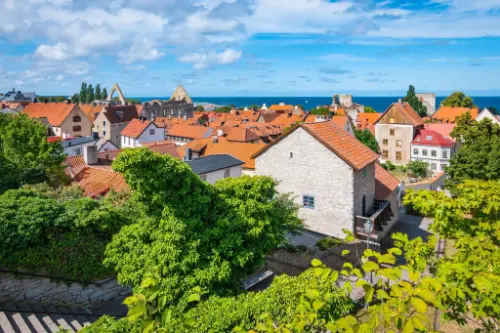 Dzień 9: 08:00–17:00
Visby / Sweden
-
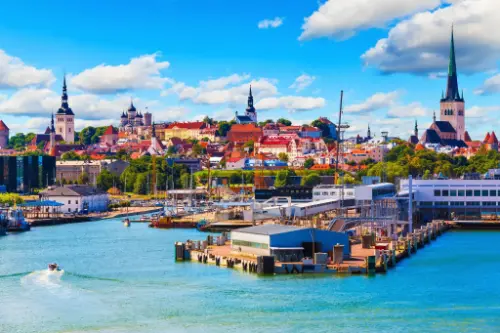 Dzień 10: 08:00–17:00
Tallinn / Estonia
Tallinn is the capital and largest city of Estonia. It is on the northern coast of the country, on the shore of the Gulf of Finland in Harju County. From the 13th century until 1918 (and briefly during the Nazi occupation of Estonia from 1941 to 1944), the city was known as Reval. Tallinn occupies an area of 159.2 km2 (61.5 sq mi) and has a population of 453,033.
Tallinn, first mentioned in 1219, received city rights in 1248, but the earliest human settlements date back 5,000 years. The initial claim over the land was laid by the Danes in 1219, after a successful raid of Lindanise led by Valdemar II of Denmark, followed by a period of alternating Scandinavian and German rule. Due to its strategic location, the city became a major trade hub, especially from the 14th to the 16th century, when it grew in importance as part of the Hanseatic League.
-
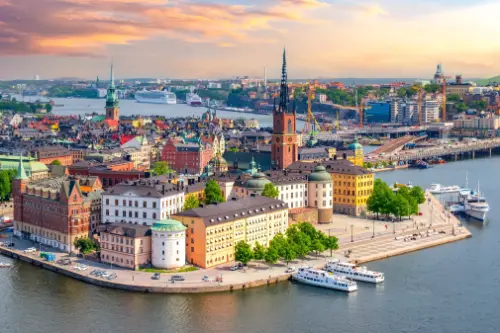 Dzień 11: 08:15
Sztokholm / Sweden
Stockholm is the capital of Sweden and the most populous urban area in the Nordic countries; 960,031 people live in the municipality, approximately 1.5 million in the urban area, and 2.3 million in the metropolitan area. The city stretches across fourteen islands where Lake Mälaren flows into the Baltic Sea. Just outside the city and along the coast is the island chain of the Stockholm archipelago. The area has been settled since the Stone Age, in the 6th millennium BC, and was founded as a city in 1252 by Swedish statesman Birger Jarl. It is also the capital of Stockholm County.
Stockholm is the cultural, media, political, and economic centre of Sweden. The Stockholm region alone accounts for over a third of the country's GDP, and is among the top 10 regions in Europe by GDP per capita. It is an important global city, and the main centre for corporate headquarters in the Nordic region. The city is home to some of Europe's top ranking universities, such as the Stockholm School of Economics, Karolinska Institute and Royal Institute of Technology (KTH). It hosts the annual Nobel Prize ceremonies and banquet at the Stockholm Concert Hall and Stockholm City Hall. One of the city's most prized museums, the Vasa Museum, is the most visited non-art museum in Scandinavia. The Stockholm metro, opened in 1950, is well known for the decor of its stations; it has been called the longest art gallery in the world. Sweden's national football arena is located north of the city centre, in Solna. Ericsson Globe, the national indoor arena, is in the southern part of the city. The city was the host of the 1912 Summer Olympics, and hosted the equestrian portion of the 1956 Summer Olympicsotherwise held in Melbourne, Victoria, Australia.
Stockholm is the seat of the Swedish government and most of its agencies, including the highest courts in the judiciary, and the official residencies of the Swedish monarch and the Prime Minister. The government has its seat in the Rosenbad building, the Riksdag (Swedish parliament) is seated in the Parliament House, and the Prime Minister's residence is adjacent at Sager House. Stockholm Palace is the official residence and principal workplace of the Swedish monarch, while Drottningholm Palace, a World Heritage Site on the outskirts of Stockholm, serves as the Royal Family's private residence.
-
Dzień 12:
Sztokholm / Sweden
Stockholm is the capital of Sweden and the most populous urban area in the Nordic countries; 960,031 people live in the municipality, approximately 1.5 million in the urban area, and 2.3 million in the metropolitan area. The city stretches across fourteen islands where Lake Mälaren flows into the Baltic Sea. Just outside the city and along the coast is the island chain of the Stockholm archipelago. The area has been settled since the Stone Age, in the 6th millennium BC, and was founded as a city in 1252 by Swedish statesman Birger Jarl. It is also the capital of Stockholm County.
Stockholm is the cultural, media, political, and economic centre of Sweden. The Stockholm region alone accounts for over a third of the country's GDP, and is among the top 10 regions in Europe by GDP per capita. It is an important global city, and the main centre for corporate headquarters in the Nordic region. The city is home to some of Europe's top ranking universities, such as the Stockholm School of Economics, Karolinska Institute and Royal Institute of Technology (KTH). It hosts the annual Nobel Prize ceremonies and banquet at the Stockholm Concert Hall and Stockholm City Hall. One of the city's most prized museums, the Vasa Museum, is the most visited non-art museum in Scandinavia. The Stockholm metro, opened in 1950, is well known for the decor of its stations; it has been called the longest art gallery in the world. Sweden's national football arena is located north of the city centre, in Solna. Ericsson Globe, the national indoor arena, is in the southern part of the city. The city was the host of the 1912 Summer Olympics, and hosted the equestrian portion of the 1956 Summer Olympicsotherwise held in Melbourne, Victoria, Australia.
Stockholm is the seat of the Swedish government and most of its agencies, including the highest courts in the judiciary, and the official residencies of the Swedish monarch and the Prime Minister. The government has its seat in the Rosenbad building, the Riksdag (Swedish parliament) is seated in the Parliament House, and the Prime Minister's residence is adjacent at Sager House. Stockholm Palace is the official residence and principal workplace of the Swedish monarch, while Drottningholm Palace, a World Heritage Site on the outskirts of Stockholm, serves as the Royal Family's private residence.
- Zakwaterowanie w wybranej kategorii kajuty.
- Wyżywienie w systemie “All Inclusive” (z wyjątkiem alternatywnych restauracji).
- Bezpłatne napoje: woda, herbata, kawa w punktach samoobsługowych na statku.
- Program kulturalny na pokładzie: wieczorne przedstawienia, teatr, muzyka na żywo i inne atrakcje.
- Dostęp do klubów nocnych i dyskotek.
- Aktywne rozrywki na pokładzie.
- Możliwość korzystania z biblioteki.
- Dla dzieci organizowane są zajęcia w klubach dla dzieci.
- Dostęp do basenów i jacuzzi.
- Siłownia i kort sportowy.
- Usługi stewarda i codzienne sprzątanie kajuty.
- Opłaty portowe i podatki.
Royal Caribbean International dba o swoich pasażerów, zapewniając im komfort i różnorodność atrakcji na pokładzie.
Pakiet Deluxe z napojami
Jeśli chcesz pić kilka napojów alkoholowych dziennie podczas rejsu, to zakup tego pakietu będzie dla Ciebie idealnym rozwiązaniem.
Pakiet zawiera:
- koktajle, alkohole, likiery;
- piwo;
- wino (na kieliszki);
- koktajle bezalkoholowe;
- kawę i herbatę premium;
- napoje gazowane z dystrybutora / napoje Coca-Cola Freestyle;
- pamiątkowy kubek Coca-Cola w cenie;
- wodę niegazowaną i gazowaną w butelkach;
- świeżo wyciskane soki.
Cena pakietu:
Cena pakietu Deluxe różni się w zależności od statku i może ulec zmianie.
Dodatkowo, zamawiając pakiet, otrzymasz -40% zniżki na wina butelkowane do 100 USD i -20% na wina butelkowane powyżej 100 USD.
Cena na pokładzie wynosi obecnie 93 USD za dzień.
Royal Refreshment
Jeśli nie przepadasz za alkoholem lub jesteś za młody, aby go pić, to Refreshment jest właśnie dla Ciebie. To idealne rozwiązanie dla miłośników koktajli.
Pakiet zawiera:
- koktajle bezalkoholowe;
- napoje gazowane;
- pamiątkowy kubek Coca-Coli i napoje Coca-Cola Freestyle;
- wodę gazowaną i niegazowaną;
- kawę i herbatę premium
- świeżo wyciskane soki
Cena pakietu:
Cena pakietu Refreshment różni się w zależności od statku i może ulec zmianie.
Cena na pokładzie wynosi obecnie 36 USD/dzień.
Klasyczny pakiet napojów gazowanych
Klasyczny pakiet napojów gazowanych. Ciesz się chłodnymi napojami gazowanymi na całym statku wycieczkowym.
Pakiet zawiera:
- napoje Coca-Cola Freestyle;
- napoje gazowane z dystrybutora i dolewanie w dowolnym miejscu;
- pamiątkowy kubek Coca-Cola w cenie.
Cena pakietu:
Ceny pakietów napojów gazowanych różnią się w zależności od statku i mogą ulec zmianie.
Ceny na pokładzie zaczynają się obecnie od 13 USD/dzień.
Pakiet z wodą butelkowaną
Utrzymuj nawodnienie podczas rejsu dzięki wodzie źródlanej Evian Natural Spring Water, butelce świeżej wody z francuskich Alp.
Pakiet zawiera:
Wodę źródlaną Evian Natural Spring Water (butelki 1 l) dostarczoną do kabiny w dniu wejścia na pokład (12 lub 24 butelki).
Cena pakietu:
Cena pakietu z wodą - 20 USD
Oprócz pakietów napojów, goście mogą zarezerwować KARTĘ KAWOWĄ, która daje dostęp do 15 wybranych rodzajów kawy, herbaty, klasy premium i gorącej czekolady. Kupując tę kartę, oszczędzasz 50%. Koszt karty wynosi 31 USD.
Dodatkowe informacje o pakietach napojów Royal Caribbean
- Pakiety napojów można kupić na pokładzie statku w trakcie rejsu, a także przed wypłynięciem.
- Kupując pakiet napojów Deluxe dla jednego gościa, należy dodać ten sam pakiet dla wszystkich dorosłych gości w kabinie.
- Pakiety napojów bezalkoholowych mogą być kupowane indywidualnie przez gości, ale nie można ich przekazywać innym osobom.
- Podane ceny pakietów odzwierciedlają dzienny koszt za osobę i nie zawierają 18% napiwku, który zostanie doliczony do ceny.
- Pakiety nie obejmują napojów sprzedawanych w sklepach z pamiątkami, minibarach ani w kabinach pasażerskich.
- Aby kupować i spożywać napoje alkoholowe na statkach Royal Caribbean, musisz mieć ukończone 21 lat.
Ceny podane w USD — orientacyjnie 1 USD ≈ 4,12 zł według kursu z dnia rezerwacji
W zależności od daty rejsu, wymagana jest płatność w celu potwierdzenia rezerwacji kabiny. Po dokonaniu przedpłaty, kierownik potwierdza zgłoszenie w systemie rejsowym i powiadamia o tym e-mailem.
Czas trwania rejsu Zaliczka (przedpłata)
1-5 nocy 100 USD/osoba
6-9 nocy 250 USD/osoba
10 i więcej nocy 450 USD/osoba
Płatność całkowita
60 dni przed rejsem
Płatność całkowita (rejsy od 24 do 31 grudnia)
90 dni przed rejsem
Ceny podane w USD — orientacyjnie 1 USD ≈ 4,12 zł według kursu z dnia rezerwacji
Proszę czekać…
Organizator
Biznes i Turystyka Piotr Skupiewski
- ul. Łukowa 41, 32-823 Szczepanów
- NIP 8691148381
- REGON 850455159
- +48 576 977 555
- +48 570 700 273
Organizator jest wpisany do Centralnej Ewidencji Organizatorów Turystyki i Przedsiębiorców Ułatwiających Nabywanie Powiązanych Usług Turystycznych. Posiada gwarancję ubezpieczeniową UNIQA nr 3800003856, ważną od 5 maja 2026 r. do 4 maja 2027 r. Suma gwarancyjna wynosi 379 404,00 zł. Organizator odprowadza składki do Turystycznego Funduszu Gwarancyjnego i Turystycznego Funduszu Pomocowego.
Masz jeszcze pytania?
Pomożemy wybrać rejs i odpowiemy na Twoje pytania.