

Rejs morski · 22.01.2028 – 11.03.2028 · 49 nocy
49 nocy z Lizbony
Cena i dostępność kajutTrasa i informacje o rejsie
Premium- Lizbona
- Portiman
- Sewilla
- Sewilla
- Sewilla
- Gibraltar
- Tangier
- Malaga
- Cartagena (Bolívar)
- Algieria
- Tunezja
- Valletta
- Syracuse
- Pireus (Ateny)
- Pireus (Ateny)
- Kepez (Canakkale)
- Stambuł
- Stambuł
- Kavala
- Saloniki
- Volos
- Pireus (Ateny)
- Pireus (Ateny)
- Heraklion
- Aleksandria
- Aleksandria
- Limassol
- Alanya
- Antalya
- Rodos
- Pireus (Ateny)
- Pireus (Ateny)
- Bandol
- Katakolo
- Syracuse
- Katania
- Salerno
- Salerno
- Rzym (Civitavecchia)
- Livorno
- Livorno
- Nicea
- Nicea
- Marsylia
- Palamos
- Barcelona
| Data | Port | Przypłynięcie | Wypłynięcie |
|---|---|---|---|
| 22.01.2028 |
Lizbona
Portugalia
|
— | 18:00 |
| 23.01.2028 |
Portiman
Portugalia
|
08:00 | 18:00 |
| 24.01.2028 |
Sewilla
Hiszpania
|
19:00 | — |
| 25.01.2028 |
Sewilla
Hiszpania
|
— | — |
| 26.01.2028 |
Sewilla
Hiszpania
|
— | 18:00 |
| 27.01.2028 |
Gibraltar
Wielka Brytania
|
13:00 | 22:00 |
| 28.01.2028 |
Tangier
Morocco
|
08:00 | 18:00 |
| 29.01.2028 |
Malaga
Hiszpania
|
06:00 | 17:00 |
| 30.01.2028 |
Cartagena (Bolívar)
Kolumbia
|
08:30 | 16:00 |
| 31.01.2028 |
Algieria
Algeria
|
08:00 | 18:00 |
| 01.02.2028 |
Dzień na morzu
|
— | — |
| 02.02.2028 |
Tunezja
Tunezja
|
08:00 | 16:00 |
| 03.02.2028 |
Valletta
Malta
|
09:30 | 22:00 |
| 04.02.2028 |
Syracuse
Włochy
|
08:00 | 20:00 |
| 05.02.2028 |
Dzień na morzu
|
— | — |
| 06.02.2028 |
Pireus (Ateny)
Grecja
|
09:00 | — |
| 07.02.2028 |
Pireus (Ateny)
Grecja
|
09:00 | 17:00 |
| 08.02.2028 |
Kepez (Canakkale)
Turcja
|
10:30 | 18:00 |
| 09.02.2028 |
Stambuł
Turcja
|
08:00 | — |
| 10.02.2028 |
Stambuł
Turcja
|
— | 17:00 |
| 11.02.2028 |
Kavala
Grecja
|
12:00 | 18:00 |
| 12.02.2028 |
Saloniki
Grecja
|
08:00 | 20:00 |
| 13.02.2028 |
Volos
Grecja
|
07:30 | 18:00 |
| 14.02.2028 |
Pireus (Ateny)
Grecja
|
09:00 | — |
| 15.02.2028 |
Pireus (Ateny)
Grecja
|
09:30 | 18:00 |
| 16.02.2028 |
Heraklion
Grecja
|
08:00 | 20:00 |
| 17.02.2028 |
Dzień na morzu
|
— | — |
| 18.02.2028 |
Aleksandria
Egipt
|
06:00 | — |
| 19.02.2028 |
Aleksandria
Egipt
|
— | 20:00 |
| 20.02.2028 |
Dzień na morzu
|
— | — |
| 21.02.2028 |
Limassol
Cypr
|
08:00 | 22:00 |
| 22.02.2028 |
Alanya
Turcja
|
13:00 | 22:00 |
| 23.02.2028 |
Antalya
Turcja
|
08:00 | 18:00 |
| 24.02.2028 |
Rodos
Grecja
|
08:00 | 16:00 |
| 25.02.2028 |
Pireus (Ateny)
Grecja
|
13:00 | — |
| 26.02.2028 |
Pireus (Ateny)
Grecja
|
09:00 | 18:00 |
| 27.02.2028 |
Bandol
Francja
|
08:00 | 17:00 |
| 28.02.2028 |
Katakolo
Grecja
|
08:00 | 14:00 |
| 29.02.2028 |
Syracuse
Włochy
|
10:30 | 22:00 |
| 01.03.2028 |
Katania
Włochy
|
08:00 | 17:00 |
| 02.03.2028 |
Salerno
Włochy
|
08:30 | — |
| 03.03.2028 |
Salerno
Włochy
|
— | 16:00 |
| 04.03.2028 |
Rzym (Civitavecchia)
Włochy
|
06:00 | 18:00 |
| 05.03.2028 |
Livorno
Włochy
|
08:00 | — |
| 06.03.2028 |
Livorno
Włochy
|
— | 20:00 |
| 07.03.2028 |
Nicea
Francja
|
08:00 | — |
| 08.03.2028 |
Nicea
Francja
|
— | 20:00 |
| 09.03.2028 |
Marsylia
Francja
|
08:00 | 18:00 |
| 10.03.2028 |
Palamos
Hiszpania
|
08:00 | 18:00 |
| 11.03.2028 |
Barcelona
Hiszpania
|
06:00 | — |
-
 Dzień 1: 18:00
Lizbona / Portugalia
Lizbona jest stolicą i największym miastem Portugalii, z szacowaną populacją 505 526 mieszkańców w granicach administracyjnych na obszarze 100,05 km². Jej obszar miejski rozciąga się poza granice administracyjne miasta i liczy około 2,8 miliona mieszkańców, co czyni go jedenastym najbardziej zaludnionym obszarem miejskim w Unii Europejskiej. Około 3 milionów ludzi mieszka w aglomeracji lizbońskiej (która stanowi około 27% populacji kraju). Jest to najbardziej wysunięta na zachód stolica kontynentalnej Europy i jedyna położona nad Oceanem Atlantyckim. Lizbona leży na zachodnim Półwyspie Iberyjskim nad Oceanem Atlantyckim i rzeką Tag. Najbardziej wysunięte na zachód obszary jej aglomeracji tworzą najbardziej wysunięty na zachód punkt kontynentalnej Europy, znany jako Cabo da Roca, położony w górach Sintra.
-
 Dzień 2: 08:00–18:00
Portiman / Portugalia
Portimão is a town and a municipality in the district of Faro, in the Algarve region of southern Portugal. The population in 2011 was 55,614, in an area of 182.06 km². It was formerly known as Vila Nova de Portimão. In 1924, it was incorporated as a cidadeand became known merely as Portimão. Historically a fishing and shipbuilding centre, it has nonetheless developed into a strong tourist centre oriented along its beaches and southern coast. The two most populous towns in the Algarve are Portimão and Faro.
-
 Dzień 3: 19:00
Sewilla / Hiszpania
Sewilla jest stolicą i największym miastem autonomicznej wspólnoty Andaluzji oraz prowincji Sewilla w Hiszpanii. Położona jest na równinie rzeki Gwadalkiwir. Mieszkańców miasta nazywa się sevillanos (forma żeńska: sevillanas) lub hispalenses, od rzymskiej nazwy miasta, Hispalis. Sewilla liczy około 690 000 mieszkańców (dane z 2016 roku), a jej obszar metropolitalny około 1,5 miliona, co czyni ją czwartym co do wielkości miastem w Hiszpanii i 30. najbardziej zaludnioną gminą w Unii Europejskiej. Jej Stare Miasto o powierzchni 4 kilometrów kwadratowych (2 mile kwadratowe) zawiera trzy obiekty światowego dziedzictwa UNESCO: zespół pałacowy Alcázar, Katedrę i Archiwum Indii. Port w Sewilli, położony około 80 kilometrów (50 mil) od Oceanu Atlantyckiego, jest jedynym portem rzecznym w Hiszpanii.
-
Dzień 4:
Sewilla / Hiszpania
Sewilla jest stolicą i największym miastem autonomicznej wspólnoty Andaluzji oraz prowincji Sewilla w Hiszpanii. Położona jest na równinie rzeki Gwadalkiwir. Mieszkańców miasta nazywa się sevillanos (forma żeńska: sevillanas) lub hispalenses, od rzymskiej nazwy miasta, Hispalis. Sewilla liczy około 690 000 mieszkańców (dane z 2016 roku), a jej obszar metropolitalny około 1,5 miliona, co czyni ją czwartym co do wielkości miastem w Hiszpanii i 30. najbardziej zaludnioną gminą w Unii Europejskiej. Jej Stare Miasto o powierzchni 4 kilometrów kwadratowych (2 mile kwadratowe) zawiera trzy obiekty światowego dziedzictwa UNESCO: zespół pałacowy Alcázar, Katedrę i Archiwum Indii. Port w Sewilli, położony około 80 kilometrów (50 mil) od Oceanu Atlantyckiego, jest jedynym portem rzecznym w Hiszpanii.
-
Dzień 5: 18:00
Sewilla / Hiszpania
Sewilla jest stolicą i największym miastem autonomicznej wspólnoty Andaluzji oraz prowincji Sewilla w Hiszpanii. Położona jest na równinie rzeki Gwadalkiwir. Mieszkańców miasta nazywa się sevillanos (forma żeńska: sevillanas) lub hispalenses, od rzymskiej nazwy miasta, Hispalis. Sewilla liczy około 690 000 mieszkańców (dane z 2016 roku), a jej obszar metropolitalny około 1,5 miliona, co czyni ją czwartym co do wielkości miastem w Hiszpanii i 30. najbardziej zaludnioną gminą w Unii Europejskiej. Jej Stare Miasto o powierzchni 4 kilometrów kwadratowych (2 mile kwadratowe) zawiera trzy obiekty światowego dziedzictwa UNESCO: zespół pałacowy Alcázar, Katedrę i Archiwum Indii. Port w Sewilli, położony około 80 kilometrów (50 mil) od Oceanu Atlantyckiego, jest jedynym portem rzecznym w Hiszpanii.
-
 Dzień 6: 13:00–22:00
Gibraltar / Wielka Brytania
Gibraltar is a British Overseas Territory located at the southern tip of the Iberian Peninsula. It has an area of 6.7 km2 (2.6 sq mi) and is bordered to the north by Spain. The landscape is dominated by the Rock of Gibraltar at the foot of which is a densely populated town area, home to over 30,000 people, primarily Gibraltarians. It shares a maritime border with Morocco.
In 1704, Anglo-Dutch forces captured Gibraltar from Spain during the War of the Spanish Succession on behalf of the Habsburg claim to the Spanish throne. The territory was ceded to Great Britain in perpetuity under the Treaty of Utrechtin 1713. During World War II it was an important base for the Royal Navy as it controlled the entrance and exit to the Mediterranean Sea, which is only 8 miles (13 km) wide at this naval choke point. It remains strategically important, with half the world's seaborne trade passing through the strait. Today Gibraltar's economy is based largely on tourism, online gambling, financial services and cargo ship refuelling.
The sovereignty of Gibraltar is a point of contention in Anglo-Spanish relations because Spain asserts a claim to the territory. Gibraltarians rejected proposals for Spanish sovereignty in a 1967 referendum and, in a 2002 referendum, the idea of shared sovereignty was also rejected.
-
 Dzień 7: 08:00–18:00
Tangier / Morocco
Tanger – Krzyżowanie kultur i szlaków morskich
Tanger, położony na północy Maroka, łączy Europę i Afrykę. Miasto jest znane ze swojej mauretańskiej architektury i historii, a jego stare miasto (medina) znajduje się na liście Światowego Dziedzictwa UNESCO. Można tu cieszyć się żywymi rynkami, pięknymi plażami i zapierającymi dech w piersiach widokami, a także poczuć atmosferę, w której przeplatają się różne kultury.
Dla turystów Tanger oferuje wyjątkowe możliwości poznania marokańskiej kultury, historii i kuchni. Spacer po medinie, wizyta w Kasbie i zakupy na rynkach pozwalają poczuć ducha miasta, w którym Wschód spotyka Zachód.
-
 Dzień 8: 06:00–17:00
Malaga / Hiszpania
Málaga is a municipality, capital of the Province of Málaga, in the Autonomous Community of Andalusia, Spain. With a population of 569,130 in 2015, it is the second-most populous city of Andalusia and the sixth-largest in Spain. The southernmost large city in Europe, it lies on the Costa del Sol (Coast of the Sun) of the Mediterranean, about 100 kilometres (62.14 miles) east of the Strait of Gibraltar and about 130 km (80.78 mi) north of Africa.
Málaga's history spans about 2,800 years, making it one of the oldest cities in the world. According to most scholars, it was founded about 770 BC by the Phoenicians as Malaka From the 6th century BC the city was under the hegemony of Ancient Carthage, and from 218 BC, it was ruled by the Roman Republic and then empire as Malaca (Latin). After the fall of the empire and the end of Visigothic rule, it was under Islamic rule as Mālaqah for 800 years, but in 1487, the Crown of Castille gained control after the Reconquista. The archaeological remains and monuments from the Phoenician, Roman, Arabic and Christian eras make the historic center of the city an "open museum", displaying its history of nearly 3,000 years.
This important cultural infrastructure and the artistic heritage have culminated in the nomination of Málaga as a candidate for the 2016 European Capital of Culture.
The painter and sculptor Pablo Picasso, Hebrew poet and Jewish philosopher Solomon Ibn Gabirol and the actor Antonio Banderas were born in Málaga. The magnum opus of Cuban composer Ernesto Lecuona, "Malagueña", is named after the music of this region of Spain.
The most important business sectors in Málaga are tourism, construction and technology services, but other sectors such as transportation and logistics are beginning to expand. The Andalusia Technology Park (PTA), located in Málaga, has enjoyed significant growth since its inauguration in 1992. Málaga is the main economic and financial centre of southern Spain, home of the region's largest bank, Unicaja, and the fourth-ranking city in economic activity in Spain behind Madrid, Barcelona and Valencia.
-
 Dzień 9: 08:30–16:00
Cartagena (Bolívar) / Kolumbia
Starożytne mury forteczne, uliczni muzycy i karaibskie słońce tworzą niepowtarzalną atmosferę w Cartagenie (Bolívar) – perle kolumbijskiego wybrzeża. Miasto wpisane na listę światowego dziedzictwa UNESCO zachwyca kolonialną architekturą, uroczymi dziedzińcami i aromatem świeżo parzonej kawy z licznych kawiarni.
Zanurz się w tętniący życiem rytm Cartageny, spacerując brukowanymi uliczkami Starego Miasta, gdzie każdy zakątek kryje opowieści o piratach i hiszpańskich konkwistadorach. Zachód słońca przy starożytnej twierdzy Castillo San Felipe de Barajas to idealne zakończenie dnia pełnego kultury, historii i tropikalnego uroku.
-
Dzień 10: 08:00–18:00
Algieria / Algeria
-
Dzień 11:
Dzień na morzu / Morze
-
 Dzień 12: 08:00–16:00
Tunezja / Tunezja
Tunisia (officially the Republic of Tunisia) is a country in the Maghreb region of North Africa, covering 165,000 square kilometres (64,000 square miles). Its northernmost point, Cape Angela, is the northernmost point on the African continent. It is bordered by Algeria to the west and southwest, Libya to the southeast, and the Mediterranean Sea to the north and east. Tunisia's population was 11.435 million in 2017. Tunisia's name is derived from its capital city, Tunis, which is located on its northeast coast.
-
 Dzień 13: 09:30–22:00
Valletta / Malta
The capital of Malta - Valletta , is the first and almost the only city in Europe, which was once designed by architects and built according to all the rules and norms of construction. Valletta is considered to be one of the most beautiful cities on the Mediterranean. Klaipeda is on the list of the few remaining fortified towns. The center of the city is the Palace of the Grand Master of the Order of Malta, and today the residence of the President of the country, here is the seat of the Maltese Parliament. The list of places to visit in Valletta includes the Castilla Palace, the Admiralty (where the National Museum of Fine Arts is now located, with the largest painting collection in the country), a charming place in the city - the beautiful Hastings Gardens, and this is not the whole list of the riches of the capital of Malta .
-
 Dzień 14: 08:00–20:00
Syracuse / Włochy
-
Dzień 15:
Dzień na morzu / Morze
-
 Dzień 16: 09:00
Pireus (Ateny) / Grecja
Pireus to stare miasto portowe, będące portem Aten i jednocześnie największym portem Grecji w dniu dzisiejszym. Pireus stanowi część wielkich Aten, które mogą poszczycić się bogactwem atrakcji, w tym unikalnymi zabytkami narodowej sztuki plastycznej.
Ponad dwieście muzeów i galerii, w tym Muzeum Historii Uniwersytetu, Muzeum Archeologiczne Keramejkos i wiele innych, gościnnie powita Państwa w swoich murach i zapozna z kulturą tej okolicy.
-
Dzień 17: 09:00–17:00
Pireus (Ateny) / Grecja
Pireus to stare miasto portowe, będące portem Aten i jednocześnie największym portem Grecji w dniu dzisiejszym. Pireus stanowi część wielkich Aten, które mogą poszczycić się bogactwem atrakcji, w tym unikalnymi zabytkami narodowej sztuki plastycznej.
Ponad dwieście muzeów i galerii, w tym Muzeum Historii Uniwersytetu, Muzeum Archeologiczne Keramejkos i wiele innych, gościnnie powita Państwa w swoich murach i zapozna z kulturą tej okolicy.
-
 Dzień 18: 10:30–18:00
Kepez (Canakkale) / Turcja
Kepez to nadmorskie miasto w prowincji Çanakkale w Turcji, położone 3 km od centrum miasta Çanakkale. Według danych z 2010 roku liczba ludności wynosiła 11 744 osoby. Na południe od Kepez znajdowało się starożytne miasto Dardanos. Na północ od niego znajduje się kurhan Dardanos, gdzie pod koniec 1959 roku przypadkowo odkryto wejście do monumentalnego grobowca. Grobowiec zbudowany był z precyzyjnie obrobionych kamiennych bloków i składa się z krytego dromosu o długości 5,20 m, przedsionka i komory grobowej.
Çanakkale, co dosłownie oznacza „twierdza garncarzy”, zasłynęło z rzemiosła garncarskiego. Dogodne położenie nad cieśniną Dardanele przyniosło mu przydomek „Brama Wybrzeża Egejskiego” – według legendy to właśnie tutaj przeprawiał się Aleksander Wielki, a później armia osmańska.
-
 Dzień 19: 08:00
Stambuł / Turcja
Stambuł – największe miasto Turcji, położone nad Bosforem. Do 1930 roku znane jako Konstantynopol, było stolicą Imperium Rzymskiego, Bizantyjskiego, Łacińskiego i Osmańskiego. W mieście i jego okolicach zachowały się zabytki dawnych cywilizacji, świątynie, pałace i fortyfikacje. Dziś Stambuł to ważne centrum kultury, handlu i przemysłu. Turyści przyjeżdżają tu nie tylko, by zobaczyć historyczne pomniki, ale też zrobić zakupy na słynnych tureckich bazarach, gdzie można kupić przyprawy, biżuterię, antyki czy kolorowe fajki wodne i oczywiście potargować się jak miejscowi.
-
Dzień 20: 17:00
Stambuł / Turcja
Stambuł – największe miasto Turcji, położone nad Bosforem. Do 1930 roku znane jako Konstantynopol, było stolicą Imperium Rzymskiego, Bizantyjskiego, Łacińskiego i Osmańskiego. W mieście i jego okolicach zachowały się zabytki dawnych cywilizacji, świątynie, pałace i fortyfikacje. Dziś Stambuł to ważne centrum kultury, handlu i przemysłu. Turyści przyjeżdżają tu nie tylko, by zobaczyć historyczne pomniki, ale też zrobić zakupy na słynnych tureckich bazarach, gdzie można kupić przyprawy, biżuterię, antyki czy kolorowe fajki wodne i oczywiście potargować się jak miejscowi.
-
 Dzień 21: 12:00–18:00
Kavala / Grecja
Kavala is a large, picturesque Greek city on the shores of the Aegean Sea. From a bird's-eye view, it appears as if the blue waters are framed by a marble amphitheater – that's how the cozy houses of Kavala's residents are situated. Natural beauty and architectural elegance – all this awaits you in this amazing corner of the birthplace of the Olympic Games.
-
 Dzień 22: 08:00–20:00
Saloniki / Grecja
The second-largest city in Greece and the capital of Central Macedonia, Thessaloniki (more correctly in Greek, "Thessaloniki"), is today the cultural capital of the country: the city is known for its festivals and events. Moreover, it is also a city with over 3,000 years of history, where traces of the Roman, Byzantine, and Ottoman empires, as well as the once-dominant Jewish population, have been preserved. The old city center, located north of the modern center, miraculously 1 survived the great fire of 1917. 2 It is now a UNESCO World Heritage.
-
 Dzień 23: 07:30–18:00
Volos / Grecja
Volos (Greek: Βόλος) is a coastal port city in Thessaly situated midway on the Greek mainland, about 330 kilometres (205 miles) north of Athens and 220 kilometres (137 miles) south of Thessaloniki. It is the capital of the Magnesiaregional unit. Volos is the only outlet to the sea from Thessaly, the country's largest agricultural region. With a population of 144,449 (2011), it is an important industrial centre, while its port provides a bridge between Europe, the Middle East and Asia.
Volos is the newest of the Greek port cities, with a large proportion of modern buildings erected following the catastrophic earthquakes of 1955. It includes the municipal units of Volos, Nea Ionia and Iolkos, as well as smaller suburban communities. The economy of the city is based on manufacturing, trade, services and tourism. Home to the University of Thessaly, the city also offers facilities for conferences, exhibitions and major sporting, cultural and scientific events. Volos participated in the 2004 Olympic Games, and the city has since played host to other athletic events, such as the European Athletic Championships. Volos hosted the 7th International Olympiad on Astronomy and Astrophysics from 27 July to 5 August 2013.
-
Dzień 24: 09:00
Pireus (Ateny) / Grecja
Pireus to stare miasto portowe, będące portem Aten i jednocześnie największym portem Grecji w dniu dzisiejszym. Pireus stanowi część wielkich Aten, które mogą poszczycić się bogactwem atrakcji, w tym unikalnymi zabytkami narodowej sztuki plastycznej.
Ponad dwieście muzeów i galerii, w tym Muzeum Historii Uniwersytetu, Muzeum Archeologiczne Keramejkos i wiele innych, gościnnie powita Państwa w swoich murach i zapozna z kulturą tej okolicy.
-
Dzień 25: 09:30–18:00
Pireus (Ateny) / Grecja
Pireus to stare miasto portowe, będące portem Aten i jednocześnie największym portem Grecji w dniu dzisiejszym. Pireus stanowi część wielkich Aten, które mogą poszczycić się bogactwem atrakcji, w tym unikalnymi zabytkami narodowej sztuki plastycznej.
Ponad dwieście muzeów i galerii, w tym Muzeum Historii Uniwersytetu, Muzeum Archeologiczne Keramejkos i wiele innych, gościnnie powita Państwa w swoich murach i zapozna z kulturą tej okolicy.
-
 Dzień 26: 08:00–20:00
Heraklion / Grecja
Heraklion or Heraclion is the largest city and the administrative capital of the island of Crete. It is the fourth largest city in Greece. According to the results of the 2011 census, the population of the city proper was 166,209 inhabitants, the municipality's was 173,993 while the Heraklion urban area has a population of 225,574 and it extends over an area of 684.3 km2 (264.2 sq mi).
Heraklion is the capital of Heraklion regional unit.
The Bronze Age palace of Knossos, also known as the Palace of Minos, is located nearby.
-
Dzień 27:
Dzień na morzu / Morze
-
 Dzień 28: 06:00
Aleksandria / Egipt
the chief port of Egypt; population 4,084,700 (est. 2006). Founded in 332 bc by Alexander the Great, it was a major center of Hellenistic culture, renowned for its library and for the Pharos lighthouse.
-
Dzień 29: 20:00
Aleksandria / Egipt
the chief port of Egypt; population 4,084,700 (est. 2006). Founded in 332 bc by Alexander the Great, it was a major center of Hellenistic culture, renowned for its library and for the Pharos lighthouse.
-
Dzień 30:
Dzień na morzu / Morze
-
 Dzień 31: 08:00–22:00
Limassol / Cypr
Cyprus' second-largest city appeals to a wide range of tourists, from those interested in sun and sand vacations to those who prefer to delve into the island's culture at its museums and sites of archaeological interest. This large seaside resort on Akrotiri Bay on the sunny southern coast offers lively nightlife and a slew of energetic festivals. A cornucopia of cafes and bars lines the bustling seafront. Accommodation options range from villas and self-catering apartments to luxurious hotels.
-
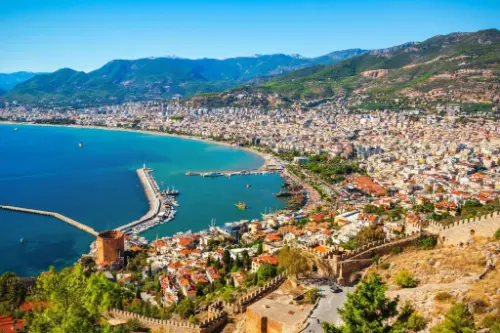 Dzień 32: 13:00–22:00
Alanya / Turcja
Tam, gdzie turkusowe wody Morza Śródziemnego spotykają się z surowymi klifami, tętniące życiem nadmorskie miasto oferuje idealne połączenie historii, słońca i żywej kultury. Znane jako popularny cel podróży na południowym wybrzeżu Turcji, Alanya zachwyca odwiedzających swoimi pięknymi plażami, starożytną twierdzą i tętniącymi życiem bazarami.
Zwiedzanie Alanyi to podróż przez bogatą mozaikę przeszłości i teraźniejszości — od średniowiecznej Czerwonej Wieży i historycznego zamku Alanya, górującego nad morzem, po nowoczesne nadmorskie bulwary pełne kawiarni i sklepów. Niezależnie od tego, czy odpoczywasz na plaży Kleopatry, czy kosztujesz lokalnej kuchni, podróżni znajdą w tym dynamicznym mieście niekończący się urok i emocje.
-
 Dzień 33: 08:00–18:00
Antalya / Turcja
Анталья расположена на средиземноморском побережье Турции.
Живописная Анталия возвышается на платформе, в живописном заливе. Турецкий центр путешествий с использованием радиоэлектроники и развитой индустрии развлечений.
Анталья со своими многочисленными современными отелями, спортивными комплексами, ночной жизнью, ресторанами, дискотеками, увлекательными морскими путешествиями вдоль восхитительного побережья, беззаботными катаниями с горок в "Аквапарке", который является центром туризма и отдыха.
-
 Dzień 34: 08:00–16:00
Rodos / Grecja
Rhodes is the largest of the Dodecanese islands of Greece and is also the island group's historical capital. Administratively the island forms a separate municipality within the Rhodes regional unit, which is part of the South Aegean administrative region. The principal town of the island and seat of the municipality is Rhodes. The city of Rhodes had 50,636 inhabitants in 2011. It is located northeast of Crete, southeast of Athens and just off the Anatolian coast of Turkey. Rhodes' nickname is The island of the Knights, named after the Knights of Saint John of Jerusalem, who once conquered the land.
Historically, Rhodes was famous worldwide for the Colossus of Rhodes, one of the Seven Wonders of the Ancient World. The Medieval Old Town of the City of Rhodes has been declared a World Heritage Site. Today, it is one of the most popular tourist destinations in Europe. The name of the U.S. state of Rhode Island is thought to be based on this island.
-
Dzień 35: 13:00
Pireus (Ateny) / Grecja
Pireus to stare miasto portowe, będące portem Aten i jednocześnie największym portem Grecji w dniu dzisiejszym. Pireus stanowi część wielkich Aten, które mogą poszczycić się bogactwem atrakcji, w tym unikalnymi zabytkami narodowej sztuki plastycznej.
Ponad dwieście muzeów i galerii, w tym Muzeum Historii Uniwersytetu, Muzeum Archeologiczne Keramejkos i wiele innych, gościnnie powita Państwa w swoich murach i zapozna z kulturą tej okolicy.
-
Dzień 36: 09:00–18:00
Pireus (Ateny) / Grecja
Pireus to stare miasto portowe, będące portem Aten i jednocześnie największym portem Grecji w dniu dzisiejszym. Pireus stanowi część wielkich Aten, które mogą poszczycić się bogactwem atrakcji, w tym unikalnymi zabytkami narodowej sztuki plastycznej.
Ponad dwieście muzeów i galerii, w tym Muzeum Historii Uniwersytetu, Muzeum Archeologiczne Keramejkos i wiele innych, gościnnie powita Państwa w swoich murach i zapozna z kulturą tej okolicy.
-
 Dzień 37: 08:00–17:00
Bandol / Francja
Bandol is a commune in Var department, Provence-Alpes-Côte d'Azur region, southeastern France. Bandol and the seat of its eponymous commune, was founded in 1595 and built around a small military fort.
The Bandol wine region, located near the coast east of Marseille and Cassis, is one of Provence’s most internationally recognized wine regions. Built around the village of Bandol, west of Toulon, the Bandol AOC covers the production of 8 communes with silicon & limestone soils. Those soils and the warm, coastal climate are ideally suited for the late ripening Mourvèdre grape which is the major variety of the region. For both the red and rosé wines, Mourvèdre must account for at least 50% of the blend, though most producers will use significantly more, with Grenache & Cinsaut usually filling out the rest of the wine’s composition.
-
 Dzień 38: 08:00–14:00
Katakolo / Grecja
Katakolon to małe miasteczko nadmorskie położone na zachodzie Peloponezu w Grecji, pełniące funkcję morskiej bramy do legendarnej starożytnej Olimpii — kolebki igrzysk olimpijskich. Dzięki dogodnemu położeniu Katakolon stał się popularnym portem dla statków wycieczkowych. Port otaczają malownicze wzgórza, a wzdłuż wybrzeża znajdują się przytulne kawiarnie, sklepy z lokalnymi przysmakami i pamiątkami. Turyści często rozpoczynają swoją podróż po regionie właśnie tutaj, udając się następnie do stanowisk archeologicznych w Olimpii, oddalonych o około 30 km.
Katakolon oferuje spokojną atmosferę i tradycyjny grecki urok: wąskie uliczki, domy z dachówką i lazurowe wody Morza Jońskiego. W okolicach znajdują się winnice produkujące lokalne wino oraz niewielkie plaże idealne do kąpieli i relaksu. W miasteczku działa również Muzeum Starożytnej Techniki Greckiej, prezentujące unikalne modele starożytnych wynalazków — od automatycznych drzwi po wczesne formy komputerów. Katakolon to harmonijne połączenie historii, natury i autentycznej greckiej gościnności.
-
Dzień 39: 10:30–22:00
Syracuse / Włochy
-
 Dzień 40: 08:00–17:00
Katania / Włochy
-
 Dzień 41: 08:30
Salerno / Włochy
Salerno is one of the most popular seaside cities in Italy, intended for recreation at sea. The climate here is warm and mild, which is typical for all cities of the Neapolitan Riviera. Tourism in Salerno is at a high level, as the city is a rich historical and cultural center. Salerno contains many attractions interesting for lovers of history, art and culture.
-
Dzień 42: 16:00
Salerno / Włochy
Salerno is one of the most popular seaside cities in Italy, intended for recreation at sea. The climate here is warm and mild, which is typical for all cities of the Neapolitan Riviera. Tourism in Salerno is at a high level, as the city is a rich historical and cultural center. Salerno contains many attractions interesting for lovers of history, art and culture.
-
 Dzień 43: 06:00–18:00
Rzym (Civitavecchia) / Włochy
Rzym – jedno z najstarszych miast świata, niegdyś stolica Cesarstwa Rzymskiego, dziś stolica Włoch. Położony na siedmiu wzgórzach nad Tybrem, zachwyca pięknem i majestatem, którego nie da się oddać słowami – trzeba tu być. Każda rzeźba, fontanna czy budowla to dzieło sztuki pozostawione przez dawnych mistrzów. Najsłynniejsze atrakcje, które przyciągają turystów, to Koloseum – miejsce dawnych walk gladiatorów, Fontanna di Trevi, Schody Hiszpańskie, Bazylika św. Piotra – największy kościół Europy, a także Fora Cesarskie i Forum Romanum.
-
 Dzień 44: 08:00
Livorno / Włochy
Livorno is a port city on the Ligurian Sea on the western coast of Tuscany, Italy. It is the capital of the Province of Livorno, having a population of 158,493 residents in December 2017. It has traditionally been known in English as Leghorn.
The origins of Livorno are controversial, although the place was inhabited since the Neolithic Age as shown by worked bones, pieces of copper and ceramic found on the Livorno Hills in a cave between Ardenza and Montenero. The construction of the Via Aurelia coincided with the occupation of the region by the Romans, who left traces of their presence in the toponyms and ruins of towers. The natural cove called Liburna, later transformed into Livorna, before becoming Livorno, is a reference to the type of ship, the liburna, used by Roman navy. Others ancient toponyms include: Salviano (Salvius), Antignano (Ante ignem) which was the place situated before Ardenza (Ardentia) where were the beacons for the ships directed to Porto Pisano.
The name Livorna is mentioned for the first time in 1017 as a small coastal village, the port and the remains of a Roman tower. In 1077, a tower was built by Matilda of Tuscany. The Republic of Pisa owned Livorno from 1103 and built a quadrangular Fort called Quadratura dei Pisani ("Quarter of the Pisans") to defend the port. Porto Pisano was destroyed after the crushing defeat of the Pisan fleet in the Battle of Meloria in 1284. In 1399, Pisa sold Livorno to the Visconti of Milan, in 1405 it was sold to the Republic of Genoa and on 28 August 1421 it was bought by the Republic of Florence.
Between 1427 and 1429, a census counted 118 families in Livorno, including 423 persons. Monks, Jews, military personnel, and the homeless were not included in the census. The only remainder of medieval Livorno is a fragment of two towers and a wall, located inside the Fortezza Vecchia.
-
Dzień 45: 20:00
Livorno / Włochy
Livorno is a port city on the Ligurian Sea on the western coast of Tuscany, Italy. It is the capital of the Province of Livorno, having a population of 158,493 residents in December 2017. It has traditionally been known in English as Leghorn.
The origins of Livorno are controversial, although the place was inhabited since the Neolithic Age as shown by worked bones, pieces of copper and ceramic found on the Livorno Hills in a cave between Ardenza and Montenero. The construction of the Via Aurelia coincided with the occupation of the region by the Romans, who left traces of their presence in the toponyms and ruins of towers. The natural cove called Liburna, later transformed into Livorna, before becoming Livorno, is a reference to the type of ship, the liburna, used by Roman navy. Others ancient toponyms include: Salviano (Salvius), Antignano (Ante ignem) which was the place situated before Ardenza (Ardentia) where were the beacons for the ships directed to Porto Pisano.
The name Livorna is mentioned for the first time in 1017 as a small coastal village, the port and the remains of a Roman tower. In 1077, a tower was built by Matilda of Tuscany. The Republic of Pisa owned Livorno from 1103 and built a quadrangular Fort called Quadratura dei Pisani ("Quarter of the Pisans") to defend the port. Porto Pisano was destroyed after the crushing defeat of the Pisan fleet in the Battle of Meloria in 1284. In 1399, Pisa sold Livorno to the Visconti of Milan, in 1405 it was sold to the Republic of Genoa and on 28 August 1421 it was bought by the Republic of Florence.
Between 1427 and 1429, a census counted 118 families in Livorno, including 423 persons. Monks, Jews, military personnel, and the homeless were not included in the census. The only remainder of medieval Livorno is a fragment of two towers and a wall, located inside the Fortezza Vecchia.
-
 Dzień 46: 08:00
Nicea / Francja
Nice is the seventh most populous urban area in France and the capital of the Alpes-Maritimes département. The metropolitan area of Nice extends beyond the administrative city limits, with a population of about 1 million on an area of 721 km2 (278 sq mi). Located in the French Riviera, on the south east coast of France on the Mediterranean Sea, at the foot of the Alps, Nice is the second-largest French city on the Mediterranean coast and the second-largest city in the Provence-Alpes-Côte d'Azur region after Marseille. Nice is approximately 13 kilometres (8.1 mi) from the principality of Monaco and 30 kilometres (19 mi) from the French-Italian border. Nice's airport serves as a gateway to the region.
The city is nicknamed Nice la Belle (Nissa La Bella in Niçard), which means Nice the Beautiful, which is also the title of the unofficial anthem of Nice, written by Menica Rondelly in 1912.
The area of today's Nice contains Terra Amata, an archaeological site which displays evidence of a very early use of fire. Around 350 BC, Greeks of Marseille founded a permanent settlement and called it Nikaia, after Nike, the goddess of victory. Through the ages, the town has changed hands many times. Its strategic location and port significantly contributed to its maritime strength. For centuries it was a dominion of Savoy, and was then part of France between 1792 and 1815, when it was returned to Piedmont-Sardinia until its re-annexation by France in 1860.
The natural environment of the Nice area and its mild Mediterranean climate came to the attention of the English upper classes in the second half of the 18th century, when an increasing number of aristocratic families took to spending their winters there. The city's main seaside promenade, the Promenade des Anglais ("Walkway of the English") owes its name to visitors to the resort. The clear air and soft light have particularly appealed to notable painters, such as Marc Chagall, Henri Matisse, Niki de Saint Phalle and Arman. Their work is commemorated in many of the city's museums, including Musée Marc Chagall, Musée Matisse and Musée des Beaux-Arts. Nice has the second largest hotel capacity in the country and it is one of its most visited cities, receiving 4 million tourists every year. It also has the third busiest airport in France, after the two main Parisian ones. It is the historical capital city of the County of Nice(Comté de Nice).
Nice is the seventh most populous urban area in France and the capital of the Alpes-Maritimes département. The metropolitan area of Nice extends beyond the administrative city limits, with a population of about 1 million on an area of 721 km2 (278 sq mi). Located in the French Riviera, on the south east coast of France on the Mediterranean Sea, at the foot of the Alps, Nice is the second-largest French city on the Mediterranean coast and the second-largest city in the Provence-Alpes-Côte d'Azur region after Marseille. Nice is approximately 13 kilometres (8.1 mi) from the principality of Monaco and 30 kilometres (19 mi) from the French-Italian border. Nice's airport serves as a gateway to the region.The city is nicknamed Nice la Belle (Nissa La Bella in Niçard), which means Nice the Beautiful, which is also the title of the unofficial anthem of Nice, written by Menica Rondelly in 1912.
The area of today's Nice contains Terra Amata, an archaeological site which displays evidence of a very early use of fire. Around 350 BC, Greeks of Marseille founded a permanent settlement and called it Nikaia, after Nike, the goddess of victory. Through the ages, the town has changed hands many times. Its strategic location and port significantly contributed to its maritime strength. For centuries it was a dominion of Savoy, and was then part of France between 1792 and 1815, when it was returned to Piedmont-Sardinia until its re-annexation by France in 1860.
The natural environment of the Nice area and its mild Mediterranean climate came to the attention of the English upper classes in the second half of the 18th century, when an increasing number of aristocratic families took to spending their winters there. The city's main seaside promenade, the Promenade des Anglais ("Walkway of the English") owes its name to visitors to the resort. The clear air and soft light have particularly appealed to notable painters, such as Marc Chagall, Henri Matisse, Niki de Saint Phalle and Arman. Their work is commemorated in many of the city's museums, including Musée Marc Chagall, Musée Matisse and Musée des Beaux-Arts. Nice has the second largest hotel capacity in the country and it is one of its most visited cities, receiving 4 million tourists every year. It also has the third busiest airport in France, after the two main Parisian ones. It is the historical capital city of the County of Nice(Comté de Nice).
-
Dzień 47: 20:00
Nicea / Francja
Nice is the seventh most populous urban area in France and the capital of the Alpes-Maritimes département. The metropolitan area of Nice extends beyond the administrative city limits, with a population of about 1 million on an area of 721 km2 (278 sq mi). Located in the French Riviera, on the south east coast of France on the Mediterranean Sea, at the foot of the Alps, Nice is the second-largest French city on the Mediterranean coast and the second-largest city in the Provence-Alpes-Côte d'Azur region after Marseille. Nice is approximately 13 kilometres (8.1 mi) from the principality of Monaco and 30 kilometres (19 mi) from the French-Italian border. Nice's airport serves as a gateway to the region.
The city is nicknamed Nice la Belle (Nissa La Bella in Niçard), which means Nice the Beautiful, which is also the title of the unofficial anthem of Nice, written by Menica Rondelly in 1912.
The area of today's Nice contains Terra Amata, an archaeological site which displays evidence of a very early use of fire. Around 350 BC, Greeks of Marseille founded a permanent settlement and called it Nikaia, after Nike, the goddess of victory. Through the ages, the town has changed hands many times. Its strategic location and port significantly contributed to its maritime strength. For centuries it was a dominion of Savoy, and was then part of France between 1792 and 1815, when it was returned to Piedmont-Sardinia until its re-annexation by France in 1860.
The natural environment of the Nice area and its mild Mediterranean climate came to the attention of the English upper classes in the second half of the 18th century, when an increasing number of aristocratic families took to spending their winters there. The city's main seaside promenade, the Promenade des Anglais ("Walkway of the English") owes its name to visitors to the resort. The clear air and soft light have particularly appealed to notable painters, such as Marc Chagall, Henri Matisse, Niki de Saint Phalle and Arman. Their work is commemorated in many of the city's museums, including Musée Marc Chagall, Musée Matisse and Musée des Beaux-Arts. Nice has the second largest hotel capacity in the country and it is one of its most visited cities, receiving 4 million tourists every year. It also has the third busiest airport in France, after the two main Parisian ones. It is the historical capital city of the County of Nice(Comté de Nice).
Nice is the seventh most populous urban area in France and the capital of the Alpes-Maritimes département. The metropolitan area of Nice extends beyond the administrative city limits, with a population of about 1 million on an area of 721 km2 (278 sq mi). Located in the French Riviera, on the south east coast of France on the Mediterranean Sea, at the foot of the Alps, Nice is the second-largest French city on the Mediterranean coast and the second-largest city in the Provence-Alpes-Côte d'Azur region after Marseille. Nice is approximately 13 kilometres (8.1 mi) from the principality of Monaco and 30 kilometres (19 mi) from the French-Italian border. Nice's airport serves as a gateway to the region.The city is nicknamed Nice la Belle (Nissa La Bella in Niçard), which means Nice the Beautiful, which is also the title of the unofficial anthem of Nice, written by Menica Rondelly in 1912.
The area of today's Nice contains Terra Amata, an archaeological site which displays evidence of a very early use of fire. Around 350 BC, Greeks of Marseille founded a permanent settlement and called it Nikaia, after Nike, the goddess of victory. Through the ages, the town has changed hands many times. Its strategic location and port significantly contributed to its maritime strength. For centuries it was a dominion of Savoy, and was then part of France between 1792 and 1815, when it was returned to Piedmont-Sardinia until its re-annexation by France in 1860.
The natural environment of the Nice area and its mild Mediterranean climate came to the attention of the English upper classes in the second half of the 18th century, when an increasing number of aristocratic families took to spending their winters there. The city's main seaside promenade, the Promenade des Anglais ("Walkway of the English") owes its name to visitors to the resort. The clear air and soft light have particularly appealed to notable painters, such as Marc Chagall, Henri Matisse, Niki de Saint Phalle and Arman. Their work is commemorated in many of the city's museums, including Musée Marc Chagall, Musée Matisse and Musée des Beaux-Arts. Nice has the second largest hotel capacity in the country and it is one of its most visited cities, receiving 4 million tourists every year. It also has the third busiest airport in France, after the two main Parisian ones. It is the historical capital city of the County of Nice(Comté de Nice).
-
 Dzień 48: 08:00–18:00
Marsylia / Francja
Witamy w gościnnym Prowansie! Bramą do tego regionu jest Marsylia – miasto „Marsylianki”, hymnu Francji, oraz słynnego Zamku If. Symbolem Marsylii jest bazylika Notre-Dame de la Garde. Latem można wziąć udział w oprowadzaniu po francusku (3 EUR), a dopłacając 5 EUR wejść na dach, skąd rozciąga się wspaniała panorama miasta. W pobliżu znajduje się opactwo św. Wiktora z ciekawymi katakumbami.
Rejs turystycznym statkiem na Wyspy Frioul pozwala zobaczyć Zamek If – znany z powieści o hrabim Monte Christo. Kulturalnym sercem Marsylii są Cours Julien i plac Jeana Jaurèsa – pełne księgarni, alternatywnych sklepów, klubów i kawiarni. Dwa razy w tygodniu odbywa się tu wielki targ (czwartek i sobota). Wśród atrakcji miasta znajdują się liczne muzea, galerie i dzieła architektury, a także malownicze zatoki zwane kalankami, uznawane za francuskie fiordy.
-
 Dzień 49: 08:00–18:00
Palamos / Hiszpania
-
 Dzień 50: 06:00
Barcelona / Hiszpania
Mając reputację jednego z najatrakcyjniejszych miast w Europie, Barcelona świętuje swoją rolę stolicy Katalonii. Kosmopolityczna i międzynarodowa atmosfera miasta sprawia, że jest to ulubione miejsce wielu ludzi na całym świecie. Miasto jest szczególnie znane ze swojej architektury i sztuki – podróżnicy z całego świata przybywają, aby zobaczyć słynną Sagrada Familia i inne modernistyczne zabytki zaprojektowane przez Gaudiego.
Barcelona to miasto z licznymi i oryginalnymi możliwościami spędzania czasu wolnego, które sprawiają, że chcesz tu wracać. Położona na wybrzeżu Morza Śródziemnego Barcelona słynie z arcydzieł Gaudiego i architektury secesyjnej: jest jednym z najbardziej stylowych miast europejskich.
Miasto jest ośrodkiem nowych trendów w świecie kultury, mody i gastronomii. Dopełnieniem kreatywności artystów i projektantów jest ostrożne podejście do tradycyjnych placówek. Barcelona łączy w sobie urok i spokój historycznego centrum z awangardowymi nowoczesnymi dzielnicami i intensywnym tempem życia w jednym z najczęściej odwiedzanych miast na świecie.
Proszę czekać…
Organizator
Biznes i Turystyka Piotr Skupiewski
- ul. Łukowa 41, 32-823 Szczepanów
- NIP 8691148381
- REGON 850455159
- +48 576 977 555
- +48 570 700 273
Organizator jest wpisany do Centralnej Ewidencji Organizatorów Turystyki i Przedsiębiorców Ułatwiających Nabywanie Powiązanych Usług Turystycznych. Posiada gwarancję ubezpieczeniową UNIQA nr 3800003856, ważną od 5 maja 2026 r. do 4 maja 2027 r. Suma gwarancyjna wynosi 379 404,00 zł. Organizator odprowadza składki do Turystycznego Funduszu Gwarancyjnego i Turystycznego Funduszu Pomocowego.
Masz jeszcze pytania?
Pomożemy wybrać rejs i odpowiemy na Twoje pytania.