
Sea cruise · 06.01.2027 – 07.09.2027 · 244 nights
Epic global adventure
Cabin prices and availabilityRoute and cruise information
Premium- Miami
- Leesburg
- Cartagena (Bolívar)
- Puerto Quetzal
- Acapulco
- Manzanillo
- San Diego California
- Los Angeles
- Nawiliwili, oh. Kauai, Hawaii
- Honolulu, Oahu, Hawaii
- Hilo
- Kahului, oh. Maui
- Bora Bora, Society Islands
- Raiatea, Society Islands
- Moorea Islands Society
- Papeete
- Huahine
- Rarotonga
- Pago-Pago
- Savusavu
- PORT DENARAU
- Lautoka
- Port Vila
- LIFOU ISLAND
- Noumea
- Sydney
- Mooloolaba
- WHITSUNDAY ISLAND
- Cairns
- Cairns
- Darwin
- Darwin
- Komodo
- Praia
- Tangjung Benoa
- Semarang
- Jakarta
- Singapore
- Samui Island / Koh Samui
- Kampong Saom (Sihanoukville)
- Bangkok
- Ho Chi Minh
- Da Nang
- Hanoi
- Limbe
- Shanghai
- Shanghai
- Seoul
- Nagasaki
- Hiroshima
- Kochi
- Kyoto
- Shimizu
- Yokohama (Tokyo)
- Yokohama (Tokyo)
- Miyakojima Okinawa
- Taipei
- Kaohsiung
- Manila
- Coron Island
- Puerto Princesa
- Kota Kinabalu
- Singapore
- Georgetown
- Phuket
- Hambantota
- Male
- Victoria, Mahe Island
- Nosy Be
- Mamoudzou
- Maputo
- Port Elizabeth
- Port Elizabeth
- Cape Town
- Walvis Bay
- San Tome
- Sekondi-Takoradi
- Banjul
- Mindelo
- Santa Cruz de Tenerife(Canary Islands)
- Almeria
- Alicante
- Barcelona
- Sete
- Monte Carlo
- FLORENCE PISA TUSCANY
- Rome (Civitavecchia)
- FLORENCE PISA TUSCANY
- Monte Carlo
- Barcelona
- Valencia
- Grenada
- Seville
- Gibraltar
- Lisbon
- Porto
- La Coruna
- Bilbao
- Saint-Jean-de-Luz (Biarritz)
- Bordeaux
- Bordeaux
- Failure
- ST. HELIER
- Paris
- London
- Edinburgh
- Invergordon
- Kirkwall
- Portree
- Glasgow
- Belfast
- Dublin
- Cork
- Paris
- London
- Used
- Amsterdam
- Kristiansand
- Oslo
- Aarhus
- Like
- Helsingborg
- Copenhagen
- Copenhagen
- Berlin
- Ronne
- Gdańsk
- Klaipeda (Memel)
- Liepaja
- Riga
- Tallinn
- Helsinki
- Stockholm
- Stockholm
- Visby
- Ronne
- Copenhagen
- Gothenburg
- Haugesund
- Flom
- Mons
- Alesund
- Djupivogur
- Husavik
- Isafjordur
- Reykjavik
- Reykjavik
- Grundarfjordur
- Paamiut
- Nuuk
- Corner Brook
- Charlottetown
- Sydney
- Halifax
- Boston
- New York
| Date | Port | Arrival | Departure |
|---|---|---|---|
| 06.01.2027 |
Miami
USA
|
07:00 | 16:00 |
| 07.01.2027 |
Day at sea
|
— | — |
| 08.01.2027 |
Leesburg
USA
|
09:00 | 17:00 |
| 09.01.2027 |
Day at sea
|
— | — |
| 10.01.2027 |
Cartagena (Bolívar)
Colombia
|
08:00 | 15:00 |
| 11.01.2027 |
Day at sea
|
— | — |
| 12.01.2027 |
Day at sea
|
— | — |
| 13.01.2027 |
Day at sea
|
— | — |
| 14.01.2027 |
Puerto Quetzal
Guatemala
|
07:00 | 18:00 |
| 15.01.2027 |
Day at sea
|
— | — |
| 16.01.2027 |
Acapulco
Mexico
|
07:00 | 14:00 |
| 17.01.2027 |
Manzanillo
Mexico
|
09:00 | 16:00 |
| 18.01.2027 |
Day at sea
|
— | — |
| 19.01.2027 |
Day at sea
|
— | — |
| 20.01.2027 |
San Diego California
USA
|
12:00 | 22:00 |
| 21.01.2027 |
Los Angeles
USA
|
07:00 | 16:00 |
| 22.01.2027 |
Day at sea
|
— | — |
| 23.01.2027 |
Day at sea
|
— | — |
| 24.01.2027 |
Day at sea
|
— | — |
| 25.01.2027 |
Day at sea
|
— | — |
| 26.01.2027 |
Day at sea
|
— | — |
| 27.01.2027 |
Nawiliwili, oh. Kauai, Hawaii
Hawaii
|
08:30 | 17:00 |
| 28.01.2027 |
Honolulu, Oahu, Hawaii
Hawaii
|
08:00 | 17:00 |
| 29.01.2027 |
Hilo
Hawaii
|
08:00 | 17:00 |
| 30.01.2027 |
Kahului, oh. Maui
Hawaii
|
08:00 | 17:00 |
| 31.01.2027 |
Day at sea
|
— | — |
| 01.02.2027 |
Day at sea
|
— | — |
| 02.02.2027 |
Day at sea
|
— | — |
| 03.02.2027 |
Day at sea
|
— | — |
| 04.02.2027 |
Day at sea
|
— | — |
| 05.02.2027 |
Bora Bora, Society Islands
French Polynesia
|
08:00 | 20:00 |
| 06.02.2027 |
Raiatea, Society Islands
French Polynesia
|
08:00 | 17:00 |
| 07.02.2027 |
Moorea Islands Society
French Polynesia
|
07:00 | 19:00 |
| 08.02.2027 |
Papeete
French Polynesia
|
03:00 | 23:59 |
| 09.02.2027 |
Huahine
|
08:00 | 17:00 |
| 10.02.2027 |
Day at sea
|
— | — |
| 11.02.2027 |
Rarotonga
Cook Islands
|
08:00 | 16:00 |
| 12.02.2027 |
Day at sea
|
— | — |
| 13.02.2027 |
Day at sea
|
— | — |
| 14.02.2027 |
Pago-Pago
Samoa
|
08:00 | 16:00 |
| 15.02.2027 |
Day at sea
|
— | — |
| 16.02.2027 |
Day at sea
|
— | — |
| 17.02.2027 |
Savusavu
Fiji
|
07:00 | 16:00 |
| 18.02.2027 |
PORT DENARAU
|
09:00 | 22:00 |
| 19.02.2027 |
Lautoka
Fiji
|
08:00 | 17:00 |
| 20.02.2027 |
Day at sea
|
— | — |
| 21.02.2027 |
Port Vila
Vanuatu
|
08:00 | 17:00 |
| 22.02.2027 |
LIFOU ISLAND
|
08:00 | 17:00 |
| 23.02.2027 |
Noumea
New Caledonia
|
07:00 | 14:00 |
| 24.02.2027 |
Day at sea
|
— | — |
| 25.02.2027 |
Day at sea
|
— | — |
| 26.02.2027 |
Sydney
Australia
|
07:00 | 22:00 |
| 27.02.2027 |
Day at sea
|
— | — |
| 28.02.2027 |
Mooloolaba
Australia
|
08:00 | 17:00 |
| 01.03.2027 |
Day at sea
|
— | — |
| 02.03.2027 |
WHITSUNDAY ISLAND
|
08:00 | 17:00 |
| 03.03.2027 |
Cairns
Australia
|
11:00 | — |
| 04.03.2027 |
Cairns
Australia
|
— | 18:00 |
| 05.03.2027 |
Day at sea
|
— | — |
| 06.03.2027 |
Day at sea
|
— | — |
| 07.03.2027 |
Darwin
Australia
|
20:00 | — |
| 08.03.2027 |
Darwin
Australia
|
— | 16:00 |
| 09.03.2027 |
Day at sea
|
— | — |
| 10.03.2027 |
Day at sea
|
— | — |
| 11.03.2027 |
Komodo
Indonesia
|
08:00 | 16:00 |
| 12.03.2027 |
Praia
Cape Verde
|
10:00 | 18:00 |
| 13.03.2027 |
Tangjung Benoa
Indonesia
|
07:00 | 19:00 |
| 14.03.2027 |
Day at sea
|
— | — |
| 15.03.2027 |
Semarang
Indonesia
|
07:00 | 18:00 |
| 16.03.2027 |
Jakarta
Indonesia
|
10:00 | 18:00 |
| 17.03.2027 |
Day at sea
|
— | — |
| 18.03.2027 |
Singapore
Singapore
|
07:00 | 17:00 |
| 19.03.2027 |
Day at sea
|
— | — |
| 20.03.2027 |
Samui Island / Koh Samui
Thailand
|
07:00 | 16:00 |
| 21.03.2027 |
Kampong Saom (Sihanoukville)
Cambodia
|
07:00 | 14:00 |
| 22.03.2027 |
Bangkok
Thailand
|
07:00 | 16:00 |
| 23.03.2027 |
Day at sea
|
— | — |
| 24.03.2027 |
Ho Chi Minh
Vietnam
|
09:00 | 18:00 |
| 25.03.2027 |
Day at sea
|
— | — |
| 26.03.2027 |
Da Nang
Vietnam
|
07:00 | 16:00 |
| 27.03.2027 |
Hanoi
Vietnam
|
10:00 | 20:00 |
| 28.03.2027 |
Day at sea
|
— | — |
| 29.03.2027 |
Limbe
Cameroon
|
06:00 | 18:00 |
| 30.03.2027 |
Day at sea
|
— | — |
| 31.03.2027 |
Day at sea
|
— | — |
| 01.04.2027 |
Shanghai
China
|
08:00 | — |
| 02.04.2027 |
Shanghai
China
|
— | 17:00 |
| 03.04.2027 |
Day at sea
|
— | — |
| 04.04.2027 |
Seoul
Korea
|
08:00 | 17:00 |
| 05.04.2027 |
Day at sea
|
— | — |
| 06.04.2027 |
Nagasaki
Japan
|
07:00 | 16:00 |
| 07.04.2027 |
Hiroshima
Japan
|
11:00 | 19:00 |
| 08.04.2027 |
Kochi
India
|
10:00 | 18:00 |
| 09.04.2027 |
Kyoto
|
07:00 | 18:00 |
| 10.04.2027 |
Shimizu
Japan
|
12:00 | 20:00 |
| 11.04.2027 |
Yokohama (Tokyo)
Japan
|
07:00 | — |
| 12.04.2027 |
Yokohama (Tokyo)
Japan
|
— | 17:00 |
| 13.04.2027 |
Day at sea
|
— | — |
| 14.04.2027 |
Day at sea
|
— | — |
| 15.04.2027 |
Miyakojima Okinawa
|
08:00 | 17:00 |
| 16.04.2027 |
Taipei
Taiwan
|
08:00 | 17:00 |
| 17.04.2027 |
Kaohsiung
Taiwan
|
09:00 | 18:00 |
| 18.04.2027 |
Day at sea
|
— | — |
| 19.04.2027 |
Manila
Philippine Islands
|
08:00 | 16:00 |
| 20.04.2027 |
Coron Island
Philippine Islands
|
08:00 | 17:00 |
| 21.04.2027 |
Puerto Princesa
Philippine Islands
|
08:00 | 17:00 |
| 22.04.2027 |
Kota Kinabalu
Malaysia
|
13:00 | 21:00 |
| 23.04.2027 |
Day at sea
|
— | — |
| 24.04.2027 |
Day at sea
|
— | — |
| 25.04.2027 |
Singapore
Singapore
|
07:00 | 18:00 |
| 26.04.2027 |
Day at sea
|
— | — |
| 27.04.2027 |
Georgetown
Cayman Islands
|
08:00 | 16:00 |
| 28.04.2027 |
Phuket
Thailand
|
08:00 | 17:00 |
| 29.04.2027 |
Day at sea
|
— | — |
| 30.04.2027 |
Day at sea
|
— | — |
| 01.05.2027 |
Hambantota
Sri Lanka
|
08:00 | 17:00 |
| 02.05.2027 |
Day at sea
|
— | — |
| 03.05.2027 |
Male
Maldives
|
07:00 | 23:59 |
| 04.05.2027 |
Day at sea
|
— | — |
| 05.05.2027 |
Day at sea
|
— | — |
| 06.05.2027 |
Day at sea
|
— | — |
| 07.05.2027 |
Victoria, Mahe Island
Seychelles
|
07:00 | 20:00 |
| 08.05.2027 |
Day at sea
|
— | — |
| 09.05.2027 |
Day at sea
|
— | — |
| 10.05.2027 |
Nosy Be
Madagascar
|
07:00 | 17:00 |
| 11.05.2027 |
Mamoudzou
Mayotte
|
07:00 | 16:00 |
| 12.05.2027 |
Day at sea
|
— | — |
| 13.05.2027 |
Day at sea
|
— | — |
| 14.05.2027 |
Maputo
Mozambique
|
11:00 | 18:00 |
| 15.05.2027 |
Day at sea
|
— | — |
| 16.05.2027 |
Day at sea
|
— | — |
| 17.05.2027 |
Port Elizabeth
South Africa
|
07:30 | — |
| 18.05.2027 |
Port Elizabeth
South Africa
|
— | 19:00 |
| 19.05.2027 |
Day at sea
|
— | — |
| 20.05.2027 |
Cape Town
South Africa
|
05:00 | 17:00 |
| 21.05.2027 |
Day at sea
|
— | — |
| 22.05.2027 |
Walvis Bay
Namibia
|
13:00 | 22:00 |
| 23.05.2027 |
Day at sea
|
— | — |
| 24.05.2027 |
Day at sea
|
— | — |
| 25.05.2027 |
Day at sea
|
— | — |
| 26.05.2027 |
San Tome
Sao Tome and Principe
|
10:00 | 19:00 |
| 27.05.2027 |
Day at sea
|
— | — |
| 28.05.2027 |
Sekondi-Takoradi
Ghana
|
08:00 | 18:00 |
| 29.05.2027 |
Day at sea
|
— | — |
| 30.05.2027 |
Day at sea
|
— | — |
| 31.05.2027 |
Day at sea
|
— | — |
| 01.06.2027 |
Banjul
Gambia
|
07:00 | 17:00 |
| 02.06.2027 |
Day at sea
|
— | — |
| 03.06.2027 |
Mindelo
Cape Verde
|
07:00 | 18:00 |
| 04.06.2027 |
Day at sea
|
— | — |
| 05.06.2027 |
Day at sea
|
— | — |
| 06.06.2027 |
Santa Cruz de Tenerife(Canary Islands)
Spain
|
08:00 | 18:00 |
| 07.06.2027 |
Day at sea
|
— | — |
| 08.06.2027 |
Day at sea
|
— | — |
| 09.06.2027 |
Almeria
Spain
|
07:00 | 18:00 |
| 10.06.2027 |
Alicante
Spain
|
08:00 | 18:00 |
| 11.06.2027 |
Barcelona
Spain
|
09:00 | 18:00 |
| 12.06.2027 |
Sete
France
|
08:00 | 18:00 |
| 13.06.2027 |
Monte Carlo
Monaco
|
08:00 | 19:00 |
| 14.06.2027 |
FLORENCE PISA TUSCANY
|
07:00 | 19:00 |
| 15.06.2027 |
Rome (Civitavecchia)
Italy
|
07:00 | 16:00 |
| 16.06.2027 |
FLORENCE PISA TUSCANY
|
07:00 | 19:00 |
| 17.06.2027 |
Monte Carlo
Monaco
|
07:00 | 16:00 |
| 18.06.2027 |
Barcelona
Spain
|
10:30 | 20:30 |
| 19.06.2027 |
Valencia
Spain
|
09:00 | 19:00 |
| 20.06.2027 |
Day at sea
|
— | — |
| 21.06.2027 |
Grenada
Grenada
|
07:00 | 21:30 |
| 22.06.2027 |
Seville
Spain
|
11:00 | 22:00 |
| 23.06.2027 |
Gibraltar
Great Britain
|
07:00 | 12:30 |
| 24.06.2027 |
Lisbon
Portugal
|
07:00 | 16:00 |
| 25.06.2027 |
Porto
Portugal
|
08:00 | 17:00 |
| 26.06.2027 |
La Coruna
Spain
|
08:00 | 17:00 |
| 27.06.2027 |
Bilbao
Spain
|
10:00 | 19:00 |
| 28.06.2027 |
Saint-Jean-de-Luz (Biarritz)
France
|
08:00 | 17:00 |
| 29.06.2027 |
Bordeaux
France
|
14:45 | — |
| 30.06.2027 |
Bordeaux
France
|
— | 16:00 |
| 01.07.2027 |
Day at sea
|
— | — |
| 02.07.2027 |
Failure
France
|
07:00 | 17:00 |
| 03.07.2027 |
ST. HELIER
|
08:00 | 16:00 |
| 04.07.2027 |
Paris
France
|
07:00 | 21:00 |
| 05.07.2027 |
London
Great Britain
|
07:00 | 16:00 |
| 06.07.2027 |
Day at sea
|
— | — |
| 07.07.2027 |
Edinburgh
Great Britain
|
08:00 | 17:00 |
| 08.07.2027 |
Invergordon
Great Britain
|
08:00 | 17:00 |
| 09.07.2027 |
Kirkwall
Great Britain
|
08:00 | 17:00 |
| 10.07.2027 |
Portree
Great Britain
|
07:00 | 16:00 |
| 11.07.2027 |
Glasgow
Great Britain
|
11:00 | 19:00 |
| 12.07.2027 |
Belfast
Great Britain
|
08:00 | 17:00 |
| 13.07.2027 |
Dublin
Ireland
|
08:00 | 17:00 |
| 14.07.2027 |
Cork
Ireland
|
08:00 | 17:00 |
| 15.07.2027 |
Day at sea
|
— | — |
| 16.07.2027 |
Paris
France
|
07:00 | 16:00 |
| 17.07.2027 |
London
Great Britain
|
08:00 | 17:00 |
| 18.07.2027 |
Used
|
08:00 | 17:00 |
| 19.07.2027 |
Amsterdam
Netherlands
|
08:00 | 17:00 |
| 20.07.2027 |
Day at sea
|
— | — |
| 21.07.2027 |
Kristiansand
Norway
|
08:00 | 17:00 |
| 22.07.2027 |
Oslo
Norway
|
07:00 | 16:00 |
| 23.07.2027 |
Aarhus
Denmark
|
11:00 | 19:00 |
| 24.07.2027 |
Like
|
08:00 | 22:00 |
| 25.07.2027 |
Helsingborg
Sweden
|
10:00 | 20:00 |
| 26.07.2027 |
Copenhagen
Denmark
|
07:00 | — |
| 27.07.2027 |
Copenhagen
Denmark
|
— | 16:00 |
| 28.07.2027 |
Berlin
Germany
|
07:00 | 22:00 |
| 29.07.2027 |
Day at sea
|
— | — |
| 30.07.2027 |
Ronne
Denmark
|
08:00 | 17:00 |
| 31.07.2027 |
Gdańsk
Poland
|
08:00 | 17:00 |
| 01.08.2027 |
Klaipeda (Memel)
Lithuania
|
08:00 | 17:00 |
| 02.08.2027 |
Liepaja
Lithuania
|
07:00 | 16:00 |
| 03.08.2027 |
Riga
Latvia
|
07:00 | 16:00 |
| 04.08.2027 |
Tallinn
Estonia
|
10:00 | 18:00 |
| 05.08.2027 |
Helsinki
Finland
|
08:00 | 17:00 |
| 06.08.2027 |
Stockholm
Sweden
|
09:00 | — |
| 07.08.2027 |
Stockholm
Sweden
|
— | 16:00 |
| 08.08.2027 |
Visby
Sweden
|
07:30 | 16:30 |
| 09.08.2027 |
Ronne
Denmark
|
07:00 | 15:00 |
| 10.08.2027 |
Copenhagen
Denmark
|
10:30 | 19:30 |
| 11.08.2027 |
Gothenburg
Sweden
|
08:00 | 17:00 |
| 12.08.2027 |
Day at sea
|
— | — |
| 13.08.2027 |
Haugesund
Norway
|
08:00 | 17:00 |
| 14.08.2027 |
Flom
Norway
|
08:00 | 17:00 |
| 15.08.2027 |
Mons
Belgium
|
08:00 | 17:00 |
| 16.08.2027 |
Alesund
Norway
|
08:00 | 17:00 |
| 17.08.2027 |
Day at sea
|
— | — |
| 18.08.2027 |
Djupivogur
Iceland
|
07:00 | 16:00 |
| 19.08.2027 |
Husavik
Iceland
|
08:00 | 17:00 |
| 20.08.2027 |
Isafjordur
Iceland
|
08:00 | 17:00 |
| 21.08.2027 |
Reykjavik
Iceland
|
07:00 | — |
| 22.08.2027 |
Reykjavik
Iceland
|
— | 17:00 |
| 23.08.2027 |
Grundarfjordur
Iceland
|
08:00 | 17:00 |
| 24.08.2027 |
Day at sea
|
— | — |
| 25.08.2027 |
Day at sea
|
— | — |
| 26.08.2027 |
Paamiut
Greenland
|
08:00 | 17:00 |
| 27.08.2027 |
Nuuk
Greenland
|
08:00 | 17:00 |
| 28.08.2027 |
Day at sea
|
— | — |
| 29.08.2027 |
Day at sea
|
— | — |
| 30.08.2027 |
Corner Brook
Canada
|
09:00 | 18:00 |
| 31.08.2027 |
Day at sea
|
— | — |
| 01.09.2027 |
Charlottetown
Canada
|
08:00 | 17:00 |
| 02.09.2027 |
Sydney
Australia
|
08:00 | 17:00 |
| 03.09.2027 |
Halifax
Canada
|
10:00 | 18:00 |
| 04.09.2027 |
Day at sea
|
— | — |
| 05.09.2027 |
Boston
USA
|
08:00 | 17:00 |
| 06.09.2027 |
Day at sea
|
— | — |
| 07.09.2027 |
New York
USA
|
07:00 | 19:00 |
-
 Day 1: 07:00–16:00
Miami / USA
Miami, officially the City of Miami, is the cultural, economic and financial center of South Florida. Miami is the seat of Miami-Dade County, the most populous county in Florida. The city covers an area of about 56.6 square miles (147 km2), between the Everglades to the west and Biscayne Bay on the east; with a 2017 estimated population of 463,347, Miami is the sixth most densely populated major city in the United States. The Miami metropolitan area is home to 6.1 million people and the seventh-largest metropolitan area in the nation. Miami's metro area is the second-most populous metropolis in the southeastern United States and fourth-largest urban area in the U.S.
Miami is a major center, and a leader in finance, commerce, culture, media, entertainment, the arts, and international trade. The Miami Metropolitan Area is by far the largest urban economy in Florida and the 12th largest in the United States with a GDP of $344.9 billion as of 2017. In 2012, Miami was classified as an "Alpha−" level world city in the World Cities Study Group's inventory. In 2010, Miami ranked seventh in the United States and 33rd among global cities in terms of business activity, human capital, information exchange, cultural experience, and political engagement. In 2008, Forbes magazine ranked Miami "America's Cleanest City", for its year-round good air quality, vast green spaces, clean drinking water, clean streets, and citywide recycling programs. According to a 2009 UBS study of 73 world cities, Miami was ranked as the richest city in the United States, and the world's seventh-richest city in terms of purchasing power. Miami is nicknamed the "Capital of Latin America" and is the largest city with a Cuban-American plurality.
Greater Downtown Miami has one of the largest concentrations of international banks in the United States, and is home to many large national and international companies. The Civic Center is a major center for hospitals, research institutes, medical centers, and biotechnology industries. For more than two decades, the Port of Miami, known as the "Cruise Capital of the World", has been the number one cruise passenger port in the world. It accommodates some of the world's largest cruise ships and operations, and is the busiest port in both passenger traffic and cruise lines. Metropolitan Miami is also a major tourism hub in the southeastern U.S. for international visitors, ranking number two in the country after New York City.
-
Day 2:
Day at sea / Sea
-
 Day 3: 09:00–17:00
Leesburg / USA
-
Day 4:
Day at sea / Sea
-
 Day 5: 08:00–15:00
Cartagena (Bolívar) / Colombia
Ancient fortress walls, street musicians, and the Caribbean sun create an unforgettable atmosphere in Cartagena (Bolívar) — the gem of Colombia's coast. This city, listed as a UNESCO World Heritage Site, enchants visitors with its colonial architecture, charming courtyards, and the aroma of fresh coffee wafting from countless cafés.
Immerse yourself in the vibrant rhythm of Cartagena, strolling through the cobbled streets of the Old Town, where every corner holds tales of pirates and Spanish conquistadors. And the sunset near the ancient Castillo San Felipe de Barajas is the perfect ending to a day filled with culture, history, and tropical romance.
-
Day 6:
Day at sea / Sea
-
Day 7:
Day at sea / Sea
-
Day 8:
Day at sea / Sea
-
 Day 9: 07:00–18:00
Puerto Quetzal / Guatemala
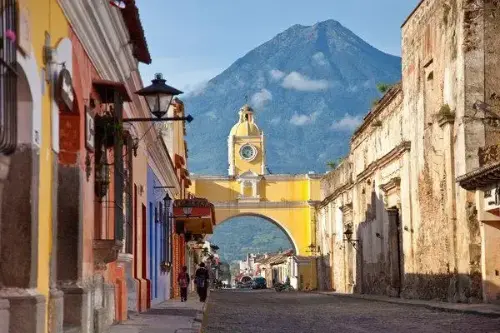
Puerto Quetzal is an important port city on the Pacific coast of Guatemala. It is one of the most popular cruise destinations, making it a key transport hub and a gateway for travelers arriving in the country. Puerto Quetzal is also a starting point for exploring Guatemala’s natural wonders, including famous volcanoes and picturesque beaches. Nearby attractions include the Acatenango Volcano and the Monterico National Park, renowned for its ecosystem and beaches suitable for surfing.
In addition to its natural beauty, Puerto Quetzal offers travelers a unique atmosphere. The city retains the charm of the Pacific coastline, with cozy fishing villages and restaurants where visitors can enjoy fresh seafood. Its strategic location and developed infrastructure make Puerto Quetzal a convenient starting point for exploring Guatemala, whether for those wishing to discover ancient Mayan ruins like Tikal or for those seeking a relaxing beach vacation.
-
Day 10:
Day at sea / Sea
-
 Day 11: 07:00–14:00
Acapulco / Mexico
-
 Day 12: 09:00–16:00
Manzanillo / Mexico
Manzanillo is a picturesque port city on the Pacific coast in the Mexican state of Colima. It is known for its golden sand beaches and crystal-clear waters, making it an ideal destination for beach holidays, snorkeling, and surfing. The city also boasts a rich historical heritage, including an old seaport that plays a key role in the region's economy.
Manzanillo has a unique microclimate that allows for year-round enjoyment. In the city center, visitors can explore vibrant markets and sample local cuisine based on fresh seafood. Nearby nature reserves offer great opportunities for ecotourism. With each passing year, Manzanillo becomes increasingly popular among travelers, offering the perfect blend of beach relaxation and cultural discovery.
-
Day 13:
Day at sea / Sea
-
Day 14:
Day at sea / Sea
-
 Day 15: 12:00–22:00
San Diego California / USA
-
 Day 16: 07:00–16:00
Los Angeles / USA
Los Angeles officially the City of Los Angeles and often known colloquially by its initials L.A., is the most populous city in California and the second most populous city in the United States, after New York. With an estimated population of four million, Los Angeles is the cultural, financial, and commercial center of Southern California. Nicknamed the "City of Angels" partly because of its name's Spanish meaning, Los Angeles is known for its Mediterranean climate, ethnic diversity, Hollywood, and the entertainment industry, and sprawling metropolis.
Los Angeles is in a large basin bounded by the Pacific Ocean on one side and by mountains as high as 10,000 feet (3,000 m) on the others. The city proper, which covers about 469 square miles (1,210 km2), is the seat of Los Angeles County, the most populated county in the country. Los Angeles is also the principal city of the Los Angeles metropolitan area, the second largest in the United States after that of New York City, with a population of 13.1 million. It is part of the Los Angeles-Long Beach combined statistical area, also the nation's second most populous area with a 2015 estimated population of 18.7 million.
Los Angeles is one of the most substantial economic engines within the United States, with a diverse economy in a broad range of professional and cultural fields. Los Angeles is also famous as the home of Hollywood, a major center of the world entertainment industry. A global city, it has been ranked 6th in the Global Cities Index and 9th in the Global Economic Power Index. The Los Angeles combined statistical area also has a gross metropolitan productof $831 billion (as of 2008), making it the third-largest in the world, after the Tokyo and New York metropolitan areas. Los Angeles hosted the 1932 and 1984 Summer Olympics and will host the event for a third time in 2028. The city also hosted the Miss Universe pageant twice, in 1990 and 2006, and was one of 9 American cities to host the 1994 FIFA men's soccer World Cup and one of 8 to host the 1999 FIFA women's soccer World Cup, hosting the finalmatch for both tournaments.
Historically home to the Chumash and Tongva, Los Angeles was claimed by Juan Rodríguez Cabrillo for Spain in 1542 along with the rest of what would become Alta California. The city was officially founded on September 4, 1781, by Spanish governor Felipe de Neve. It became a part of Mexico in 1821 following the Mexican War of Independence. In 1848, at the end of the Mexican–American War, Los Angeles and the rest of California were purchased as part of the Treaty of Guadalupe Hidalgo, becoming part of the United States. Los Angeles was incorporated as a municipality on April 4, 1850, five months before California achieved statehood. The discovery of oil in the 1890s brought rapid growth to the city. The completion of the Los Angeles Aqueduct in 1913, delivering water from Eastern California, later assured the city's continued rapid growth.
-
Day 17:
Day at sea / Sea
-
Day 18:
Day at sea / Sea
-
Day 19:
Day at sea / Sea
-
Day 20:
Day at sea / Sea
-
Day 21:
Day at sea / Sea
-
 Day 22: 08:30–17:00
Nawiliwili, oh. Kauai, Hawaii / Hawaii
-
 Day 23: 08:00–17:00
Honolulu, Oahu, Hawaii / Hawaii
Honolulu is the capital and largest city of the U.S. state of Hawaiʻi. It is an unincorporated part of and the county seat of the City and County of Honolulu along the southeast coast of the island of Oʻahu. The city is the main gateway to Hawaiʻi and a major portal into the United States. The city is also a major hub for international business, military defense, as well as famously being host to a diverse variety of east-west and Pacific culture, cuisine, and traditions.
Honolulu is the most remote city of its size in the world and is the westernmost major U.S. city. For statistical purposes, the United States Census Bureau recognizes the approximate area commonly referred to as "City of Honolulu" (not to be confused with the "City and County") as a census county division (CCD). Honolulu is a major financial center of the islands and of the Pacific Ocean. The population of the Honolulu census designated place(CDP) was 359,870 as of the 2017 population estimate, while the Honolulu CCD was 390,738 and the population of the consolidated city and county was 953,207.
Honolulu means "sheltered harbor" or "calm port". The old name is Kou, a district roughly encompassing the area from Nuʻuanu Avenue to Alakea Street and from Hotel Street to Queen Street which is the heart of the present downtown district. The city has been the capital of the Hawaiian Islands since 1845 and gained historical recognition following the attack on Pearl Harbor by Japan near the city on December 7, 1941.
As of 2015, Honolulu was ranked high on world livability rankings, and was also ranked as the 2nd safest city in the U.S. It is also the most populated Oceanian city outside Australasia and ranks second to Auckland as the most-populous city in Polynesia.
-
 Day 24: 08:00–17:00
Hilo / Hawaii
Hilo is the largest settlement and census-designated place (CDP) in Hawaii County, Hawaii, United States, which encompasses the Island of Hawaiʻi. The population was 43,263 at the 2010 census.
Hilo is the county seat of the County of Hawaiʻi and is in the District of South Hilo. The town overlooks Hilo Bay, at the base of two shield volcanoes, Mauna Loa, an active volcano, and Mauna Kea, a dormant volcano and the site of some of the world's most important ground-based astronomical observatories. Much of the city is at some risk from lava flows from Mauna Loa. The majority of human settlement in Hilo stretches from Hilo Bay to Waiākea-Uka, on the flanks of Mauna Loa.
Hilo is home to the University of Hawaiʻi at Hilo, ʻImiloa Astronomy Center of Hawaiʻi, as well as the Merrie Monarch Festival, a week-long celebration of ancient and modern hula that takes place annually after Easter. Hilo is also home to the Mauna Loa Macadamia Nut Corporation, one of the world's leading producers of macadamia nuts. The town is served by Hilo International Airport.
-
 Day 25: 08:00–17:00
Kahului, oh. Maui / Hawaii
Kahului is a census-designated place (CDP) on the island of Maui in the U.S. state of Hawaii. It hosts Maui's main airport (Kahului Airport), deep-draft harbor, light industrial areas, and commercial shopping centers. The population was 26,337 at the 2010 census. Kahului is part of the Kahului-Wailuku-Lahaina Metropolitan Statistical Area which includes nearby Wailuku and the town and former whaling village of Lahaina.
The retail center for Maui residents, Kahului has several malls and major stores (including department stores in the Queen Kaahumanu Center); other significant groupings of stores are in Lāhainā such as the Lahaina Cannery Mall, the Happy Valley area of Wailuku, Maui Market Place and Maui Mall, which are both also located in Kahului; and The Shops at Wailea in Wailea.
Kahului is not generally considered a tourist destination. It does feature the Alexander & Baldwin Sugar Museum, Kanaha Pond State Wildlife Sanctuary, Kanaha Beach County Park, and the Maui Arts and Cultural Center.
Kahului is served by Kahului Airport, located outside the CDP.
-
Day 26:
Day at sea / Sea
-
Day 27:
Day at sea / Sea
-
Day 28:
Day at sea / Sea
-
Day 29:
Day at sea / Sea
-
Day 30:
Day at sea / Sea
-
 Day 31: 08:00–20:00
Bora Bora, Society Islands / French Polynesia
-
 Day 32: 08:00–17:00
Raiatea, Society Islands / French Polynesia
Considered the heart of Polynesia, Raiatea is surrounded by turquoise lagoons and green mountains, creating landscapes that remain in the memory of every traveler. This island attracts adventurers with the chance to hike to waterfalls, walk through blooming valleys, and explore ancient archaeological sites, including the sacred Marae Taputapuatea, a UNESCO World Heritage site.
Raiatea is also known as a starting point for yacht journeys around the Society Islands, thanks to its developed infrastructure and cozy harbors. Here, you can enjoy diving in crystal-clear waters, see colorful fish and corals, or simply spend a day on white sandy beaches, enjoying the peace of tropical Polynesia.
-
 Day 33: 07:00–19:00
Moorea Islands Society / French Polynesia
The island was formed as a volcano 1.5 to 2.5 million years ago, the result of a Society hotspot in the mantle under the oceanic plate that formed the whole of the Society Archipelago. It is theorized that the current bays were formerly river basins that filled during the Holocene searise.
Mo'orea is about 10 miles in width from the west to the east. There are two small, nearly symmetrical bays on the north shore. The one to the west is called 'Ōpūnohu Bay, which is not very populated but many travelers have come into the bay. The main surrounding communes of the bay are Piha'ena in the east and Papetō'ai to the west. The one to the east is Cook's Bay, also called Pao Pao Bay since the largest commune of Mo'orea is at the bottom of the bay. The other communes are Piha'ena to the west and busy Maharepa to the east. The highest point is Mount Tohi'e'a, near the center of Mo'orea. It dominates the vista from the two bays and can be seen from Tahiti. There are also hiking trails in the mountains. The Vai'are Bay is another small inlet, smaller than the two main bays, on the east shore. This bay has been settled a lot and has a lot of business. The main village is located just south of the bay.
-
 Day 34: 03:00–23:59
Papeete / French Polynesia
Papeete is the capital city of French Polynesia, an overseas collectivity of France in the Pacific Ocean. The commune of Papeete is located on the island of Tahiti, in the administrative subdivision of the Windward Islands, of which Papeete is the administrative capital. The French High Commissioner also resides in Papeete. It is the primary center of Tahitian and French Polynesian public and private governmental, commercial, industrial and financial services, the hub of French Polynesian tourism and a commonly used port of call. The Windward Islands are themselves part of the Society Islands. The name Papeete means "water from a basket".
The urban area of Papeete had a total population of 136,771 inhabitants at the August 2017 census, 26,926 of whom lived in the commune of Papeete proper.
-
Day 35: 08:00–17:00
Huahine
-
Day 36:
Day at sea / Sea
-
 Day 37: 08:00–16:00
Rarotonga / Cook Islands
Rarotonga is the most populous island of the Cook Islands, with a population of 10,572 (census 2011), out of the country's total resident population of 14,974. Captain John Dibbs, master of the colonial brig Endeavour, is credited as the European discoverer on 25 July 1823, while transporting the missionary Rev. John Williams.
The Cook Islands' Parliament buildings and international airport are on Rarotonga. Rarotonga is a very popular tourist destination with many resorts, hotels and motels. The chief town, Avarua, on the north coast, is the capital of the Cook Islands.
-
Day 38:
Day at sea / Sea
-
Day 39:
Day at sea / Sea
-
 Day 40: 08:00–16:00
Pago-Pago / Samoa
Pago Pago is the territorial capital of American Samoa. It is in Maoputasi County on the main island of American Samoa, Tutuila. It is home to one of the best and deepest natural deepwater harbors in the South Pacific Ocean, sheltered from wind and rough seas, and strategically located. The harbor is also one of the best protected in the South Pacific, which gives American Samoa a natural advantage with respect to landing fish for processing. Tourism, entertainment, food, and tunacanning are its main industries. Pago Pago was the world's 4th largest tuna processor as of 1993. It was home to two of the largest tuna companies in the world: Chicken of the Sea and StarKist, which exported an estimated $445 million in canned tuna to the U.S. mainland.
Pago Pago is the only modern urban center in American Samoa. The Greater Pago Pago Metropolitan Area encompasses several villages strung together along Pago Pago Harbor. One of the villages is itself named Pago Pago, and in 2010 had a population of 3,656. The constituent villages are, in order, Utulei, Fagatogo, Malaloa, Pago Pago, Satala and Atu'u. Fagatogo is the downtown area referred to as Town and is home to the legislature, while the executive is located in Utulei. In Fagatogo is the Fono, Police Department, Port of Pago Pago, many shops and hotels. The Greater Pago Pago Area was home to 8,000 residents in 2000.
Rainmaker Mountain (Mount Pioa) is located in Pago Pago, and gives the city the highest annual rainfall of any harbor in the world.
-
Day 41:
Day at sea / Sea
-
Day 42:
Day at sea / Sea
-
 Day 43: 07:00–16:00
Savusavu / Fiji
Savusavu is a town in the Fijian Province of Cakaudrove. The town is located on the south coast of Vanua Levu Island and had a population of 3,372 in the 2007 census.
Savusavu is known as "the hidden paradise of Fiji."
-
Day 44: 09:00–22:00
PORT DENARAU
-
 Day 45: 08:00–17:00
Lautoka / Fiji
-
Day 46:
Day at sea / Sea
-
 Day 47: 08:00–17:00
Port Vila / Vanuatu
Port Vila is the capital and largest city of Vanuatu and is on the island of Efate.
Its population in the last census (2009) was 44,040, an increase of 35% on the previous census result (29,356 in 1999). In 2009, the population of Port Vila formed 18.8% of the country's population, and 66.9% of the population of Efate.
On the south coast of the island of Efate, in Shefa Province, Port Vila is the economic and commercial centre of Vanuatu. The mayor is Mambo Albert Sandy Daniel, of the Vanua'aku Pati, elected in January 2018; his deputy is Eric Puyo Festa, of the Grin Confederation.
On March 13, 2015, Port Vila bore extensive damage from Cyclone Pam.
-
Day 48: 08:00–17:00
LIFOU ISLAND
-
 Day 49: 07:00–14:00
Noumea / New Caledonia
Nouméa is the capital and largest city of the French special collectivity of New Caledonia. It is situated on a peninsula in the south of New Caledonia's main island, Grande Terre, and is home to the majority of the island's European, Polynesian (Wallisians, Futunians, Tahitians), Indonesian, and Vietnamesepopulations, as well as many Melanesians, Ni-Vanuatu and Kanaks who work in one of the South Pacific's most industrialised cities. The city lies on a protected deepwater harbour that serves as the chief port for New Caledonia.
At the August 2014 census, there were 179,509 inhabitants in the metropolitan area of Greater Nouméa (French: agglomération du Grand Nouméa), 99,926 of whom lived in the city (commune) of Nouméa proper. 66.8% of the population of New Caledonia live in Greater Nouméa, which covers the communes of Nouméa, Le Mont-Dore, Dumbéa and Païta.
-
Day 50:
Day at sea / Sea
-
Day 51:
Day at sea / Sea
-
 Day 52: 07:00–22:00
Sydney / Australia
Sydney is the state capital of New South Wales and the most populous city in Australiaand Oceania. Located on Australia's east coast, the metropolis surrounds Port Jackson and extends about 70 km (43.5 mi) on its periphery towards the Blue Mountains to the west, Hawkesbury to the north, and Macarthur to the south. Sydney is made up of 658 suburbs, 40 local government areas and 15 contiguous regions. Residents of the city are known as "Sydneysiders". As of June 2017, Sydney's estimated metropolitan population was 5,131,326, and is home to approximately 65% of the state's population.
-
Day 53:
Day at sea / Sea
-
 Day 54: 08:00–17:00
Mooloolaba / Australia
Mooloolaba is a picturesque coastal town on the Sunshine Coast in Queensland, Australia, known for its ideal conditions for beach holidays and water sports. The town boasts one of the region's most popular beaches, attracting tourists with its clean sand, calm waters, and excellent opportunities for surfing, swimming, and fishing. Mooloolaba is also famous for its beautiful promenade lined with cafes, restaurants, and shops where visitors can enjoy local cuisine and pick up souvenirs.
In addition to its beaches, Mooloolaba offers a variety of natural attractions. The surrounding area is home to the Mooloolaba National Park and a marine center where visitors can learn about the local flora and fauna, including dolphins and sea turtles. For those seeking seclusion and an opportunity to explore unique ecosystems, islands like Moreton Island are easily accessible. Mooloolaba is the perfect place for active outdoor activities and relaxing seaside moments.
-
Day 55:
Day at sea / Sea
-
Day 56: 08:00–17:00
WHITSUNDAY ISLAND
-
 Day 57: 11:00
Cairns / Australia
Cairns City is the suburb at the centre of Cairns in the local government area of Cairns Region, Queensland, Australia.It can also be referred to as the Cairns Central Business District (CBD). In the 2011 census, the population of Cairns City was 2,737 people.
-
Day 58: 18:00
Cairns / Australia
Cairns City is the suburb at the centre of Cairns in the local government area of Cairns Region, Queensland, Australia.It can also be referred to as the Cairns Central Business District (CBD). In the 2011 census, the population of Cairns City was 2,737 people.
-
Day 59:
Day at sea / Sea
-
Day 60:
Day at sea / Sea
-
 Day 61: 20:00
Darwin / Australia
Darwin is the capital city of the Northern Territory of Australia, situated on the Timor Sea. It is the largest city in the sparsely populated Northern Territory, with a population of 145,916. It is the smallest and most northerly of the Australian capital cities, and acts as the Top End's regional centre.
-
Day 62: 16:00
Darwin / Australia
Darwin is the capital city of the Northern Territory of Australia, situated on the Timor Sea. It is the largest city in the sparsely populated Northern Territory, with a population of 145,916. It is the smallest and most northerly of the Australian capital cities, and acts as the Top End's regional centre.
-
Day 63:
Day at sea / Sea
-
Day 64:
Day at sea / Sea
-
 Day 65: 08:00–16:00
Komodo / Indonesia
Komodo is one of the 17,508 islands that comprise the Republic of Indonesia. The island is particularly notable as the habitat of the Komodo dragon, the largest lizard on Earth, which is named after the island. Komodo Island has a surface area of 390 square kilometres and a human population of over two thousand. The people of the island are descendants of former convicts who were exiled to the island and who have mixed with Bugis from Sulawesi. The people are primarily adherents of Islam but there are also Christian and Hindu congregations.
Komodo is part of the Lesser Sunda chain of islands and forms part of the Komodo National Park. In addition, the island is a popular destination for diving. Administratively, it is part of the East Nusa Tenggara province.
-
 Day 66: 10:00–18:00
Praia / Cape Verde
Washed by the Atlantic Ocean, Praia is the sunny heart of Cape Verde, where African energy intertwines with Portuguese flair. This coastal city on the island of Santiago offers travelers a laid-back atmosphere, vibrant markets, and the historic Plateau district with colonial architecture and panoramic views. A walk through its cozy streets reveals the rhythms of Creole culture and the legacy of Portuguese influence. Praia is not just the capital but a perfect starting point to explore the fascinating archipelago. Here, you can try seafood dishes to the sound of live morna music, visit museums dedicated to the history of Cape Verde, or go hiking in the island's green hills. Cozy and authentic, Praia enchants those who seek not only beach relaxation but culture with soul. -
 Day 67: 07:00–19:00
Tangjung Benoa / Indonesia
-
Day 68:
Day at sea / Sea
-
 Day 69: 07:00–18:00
Semarang / Indonesia
Semarang is the capital and largest city of Central Java province in Indonesia. It has an area of 373.78 square kilometres (144.32 sq mi) and a population of approximately 1.8 million people, making it Indonesia's seventh most populous city after Jakarta, Surabaya, Bandung, Bekasi, Medan, and Tangerang. The built-up (metro) area had 3,183,516 inhabitants at the 2010 census spread on 2 cities and 26 districts. Greater Semarang (a.k.a. Kedungsapur) has a population of close to 6 million (see Greater Semarang section), and is located at 6°58′S 110°25′E. A major port during the Dutch colonial era, and still an important regional center and port today, the city has a dominant Javanese population.
-
 Day 70: 10:00–18:00
Jakarta / Indonesia
Amidst the endless city lights, Jakarta emerges as a true metropolis of contrasts, where modern skyscrapers stand alongside ancient temples and open-air markets. This city is a real cultural kaleidoscope: Chinese quarters, colonial architecture, and modern business centers blend here in an amazing harmony. Tourists can stroll through the old Kota Tua district, where Dutch-era buildings have been preserved, and then head to modern shopping malls offering goods from around the world.
Food lovers will be delighted by the diversity of dishes, as Jakarta is famous for its street food — aromatic satay, nasi goreng, and fresh seafood are must-tries. For those seeking cultural experiences, the city offers museums, theaters, and art galleries. This is a place where you can feel the pulse of modern Indonesia while touching its rich heritage.
-
Day 71:
Day at sea / Sea
-
 Day 72: 07:00–17:00
Singapore / Singapore
Сингапур довольно необычный город Азии — это город-государство, которое расположилось на островах в Индийском океане. Его колониальные кварталы, храмы, музеи, великолепны парки, аттракционы, современные небоскребы и крупнейший морской порт, придают городу уникальный колорит и неповторимость. Город получил важное экономическое и политическое значение среди стран Восточной Азии. Все основные достопримечательности сосредоточены в четырех районах города. Основными из них являются: здание Импресс-Плейс-Билдинг, армянская церковь Св. Грегора-Святителя, Концертный зал и театр Виктории, англиканский собор Св. Андрея, католический собор Гуд-Шеферд, здания Парламента, а так же много других памятников архитектуры, дворцов, храмов и просто интересных улиц и кварталов.
-
Day 73:
Day at sea / Sea
-
 Day 74: 07:00–16:00
Samui Island / Koh Samui / Thailand
Among the tropical islands of Thailand, Koh Samui stands out with its unique nature and atmosphere. This island attracts travelers from all over the world with its white sandy beaches, picturesque waterfalls, and dense jungles. It's an ideal place for relaxation, whether it’s engaging in water sports, exploring nature, or simply enjoying peace and beauty.
Moreover, Koh Samui is known for its cultural heritage, including many Buddhist temples and sanctuaries. One of the most famous is the Big Buddha Temple, which is not only a religious center but also one of the island's main attractions. The local cuisine, featuring fresh seafood and exotic fruits, will make the trip even more exciting and delicious.
-
 Day 75: 07:00–14:00
Kampong Saom (Sihanoukville) / Cambodia
Kompong Som (Sihanoukville)
-
 Day 76: 07:00–16:00
Bangkok / Thailand
Bangkok is the capital and most populous city of Thailand. It is known in Thai as Krung Thep Maha Nakhon or simply Krung Thep. The city occupies 1,568.7 square kilometres (605.7 sq mi) in the Chao Phraya River delta in central Thailand, and has a population of over eight million, or 12.6 percent of the country's population. Over fourteen million people (22.2 percent) lived within the surrounding Bangkok Metropolitan Region at the 2010 census, making Bangkok the nation's primate city, significantly dwarfing Thailand's other urban centres in terms of importance.
-
Day 77:
Day at sea / Sea
-
 Day 78: 09:00–18:00
Ho Chi Minh / Vietnam
Ho Chi Minh City, also known by its former name of Saigon is the most populous city in Vietnam with a population of 8.4 million (13 million in the metropolitan area) as of 2017. Located in southeast Vietnam, the metropolis surrounds the Saigon River and covers about 2,061 square kilometres (796 square miles).
Under the name Saigon, it was the capital of French Indochina from 1887 to 1902 and again from 1945 to 1954. Saigon would later become the capital of South Vietnam from 1955 until its fall in 1975. On 2 July 1976, Saigon merged with the surrounding Gia Định Province and was officially renamed Ho Chi Minh City after revolutionary leader Hồ Chí Minh (although the name Sài Gòn is still widely used).
Ho Chi Minh City is the financial centre of Vietnam and is classifed as a Beta+ World City by Globalization and World Cities Research Network. It is home to the Ho Chi Minh City Stock Exchange, the largest stock exchange by total market capitalization in Vietnam and the headquarters of many national and international banks and companies.
Ho Chi Minh City is the most visited city in Vietnam, with 6.3 million visitors in 2017. Many of the city's landmarks which are well known to international visitors include the Bến Thành Market, Ho Chi Minh City Hall, Notre-Dame Cathedral Basilica of Saigon, Independence Palace and the Municipal Theatre. The main passenger airport serving the metropolitan area is Tan Son Nhat International Airport, it is the busiest airport in Vietnam handling 36 million passengers in 2017.
-
Day 79:
Day at sea / Sea
-
 Day 80: 07:00–16:00
Da Nang / Vietnam
A warm sea breeze and soft sand make Da Nang the perfect place for those seeking seaside relaxation and lightness in every step. Here, modern cafés sit next to traditional markets, while the evening promenade fills with lights and the aroma of fresh seafood. You can enjoy long walks along My Khe and Non Nuoc beaches, ranked among Asia’s best, and discover cozy corners with Vietnamese coffee and the smiles of locals.
For lovers of history and nature, Da Nang offers unique routes to the Marble Mountains with caves and pagodas, providing breathtaking views of the coastline. From here, it is easy to reach the ancient town of Hoi An, preserving the atmosphere of the past, or to take a trip along the Hai Van Pass, where each turn reveals new panoramas of mountains and sea. The city combines a relaxing beach holiday with the chance to discover Vietnam’s beauty and breathe in the fresh sea air that fills you with energy and lightness.
-
 Day 81: 10:00–20:00
Hanoi / Vietnam
Hanoi is the capital of Vietnam, a city with a thousand-year history, formerly known as Thang Long, which translates as “City of the Soaring Dragon.” Despite the abundance of pagodas, architectural landmarks, and bustling marketplaces, the city is not overcrowded with tourists, allowing visitors to enjoy its charm without haste or crowds.
-
Day 82:
Day at sea / Sea
-
 Day 83: 06:00–18:00
Limbe / Cameroon
-
Day 84:
Day at sea / Sea
-
Day 85:
Day at sea / Sea
-
 Day 86: 08:00
Shanghai / China
Shanghai is one of the four municipalities under the direct administration of the central government of the Republic of China, the largest city in China by population, and the second most populous city proper in the world, with a population of 24.18 million as of 2017. It is a global financial centre and transport hub, with the world's busiest container port. Located in the Yangtze River Delta, it sits on the south edge of the estuary of the Yangtze in the middle portion of the East Chinacoast. The municipality borders the provinces of Jiangsu and Zhejiang to the north, south and west, and is bounded to the east by the East China Sea.
As a major administrative, shipping and trading city, Shanghai grew in importance in the 19th century due to trade and recognition of its favourable port location and economic potential. The city was one of five treaty ports forced open to foreign trade following the British victory over China in the First Opium War. The subsequent 1842 Treaty of Nankingand 1844 Treaty of Whampoa allowed the establishment of the Shanghai International Settlement and the French Concession. The city then flourished as a centre of commerce between China and other parts of the world (predominantly the Occident), and became the primary financial hub of the Asia-Pacific region in the 1930s. However, with the Communist Party takeover of the mainland in 1949, trade was limited to other socialist countries, and the city's global influence declined. In the 1990s, the economic reforms introduced by Deng Xiaoping resulted in an intense re-development of the city, aiding the return of finance and foreign investment to the city. It has since re-emerged as a hub for international trade and finance; it is the home of the Shanghai Stock Exchange, one of the world's largest by market capitalization.
Shanghai has been described as the "showpiece" of the booming economy of mainland China; renowned for its Lujiazui skyline, and museums and historic buildings, such as those along The Bund, as well as the City God Templeand the Yu Garden.
-
Day 87: 17:00
Shanghai / China
Shanghai is one of the four municipalities under the direct administration of the central government of the Republic of China, the largest city in China by population, and the second most populous city proper in the world, with a population of 24.18 million as of 2017. It is a global financial centre and transport hub, with the world's busiest container port. Located in the Yangtze River Delta, it sits on the south edge of the estuary of the Yangtze in the middle portion of the East Chinacoast. The municipality borders the provinces of Jiangsu and Zhejiang to the north, south and west, and is bounded to the east by the East China Sea.
As a major administrative, shipping and trading city, Shanghai grew in importance in the 19th century due to trade and recognition of its favourable port location and economic potential. The city was one of five treaty ports forced open to foreign trade following the British victory over China in the First Opium War. The subsequent 1842 Treaty of Nankingand 1844 Treaty of Whampoa allowed the establishment of the Shanghai International Settlement and the French Concession. The city then flourished as a centre of commerce between China and other parts of the world (predominantly the Occident), and became the primary financial hub of the Asia-Pacific region in the 1930s. However, with the Communist Party takeover of the mainland in 1949, trade was limited to other socialist countries, and the city's global influence declined. In the 1990s, the economic reforms introduced by Deng Xiaoping resulted in an intense re-development of the city, aiding the return of finance and foreign investment to the city. It has since re-emerged as a hub for international trade and finance; it is the home of the Shanghai Stock Exchange, one of the world's largest by market capitalization.
Shanghai has been described as the "showpiece" of the booming economy of mainland China; renowned for its Lujiazui skyline, and museums and historic buildings, such as those along The Bund, as well as the City God Templeand the Yu Garden.
-
Day 88:
Day at sea / Sea
-
 Day 89: 08:00–17:00
Seoul / Korea
Seoul, officially the Seoul Special City, is the capital and largest metropolis of South Korea. With surrounding Incheon metropolis and Gyeonggi province, Seoul forms the heart of the Seoul Capital Area, home to roughly half of the country's population. Seoul is ranked as the fourth largest metropolitan economy in the world and is larger than London and Paris.
Strategically situated on the Han River, Seoul's history stretches back over two thousand years, when it was founded in 18 BCE by the people of Baekje, one of the Three Kingdoms of Korea. The city was later designated the capital of Korea under the Joseon dynasty. Seoul is surrounded by a mountainous and hilly landscape, with Bukhan Mountainlocated on the northern edge of the city. As with its long history, the Seoul Capital Area contains five UNESCO World Heritage Sites: Changdeok Palace, Hwaseong Fortress, Jongmyo Shrine, Namhansanseong and the Royal Tombs of the Joseon Dynasty. More recently, Seoul has been a major site of modern architectural construction – major modern landmarks include the N Seoul Tower, the 63 Building, the Lotte World Tower, the Dongdaemun Design Plaza, Lotte World, Trade Tower, COEX, and the Parc1 Tower. Seoul was named the 2010 World Design Capital. As the birthplace of K-pop and the Korean Wave, Seoul received over 10 million international visitors in 2014, making it the world's 9th most visited city and 4th largest earner in tourism.
Today, Seoul is considered a leading and rising global city, resulting from the South Korean economic boom - commonly referred to as the Miracle on the Han River - which transformed it into the world's 7th largest metropolitan economy with a GDP of US$635.4 billion in 2014 after Tokyo, New York City and Los Angeles. International visitors generally reach Seoul via AREX from the Incheon International Airport, notable for having been rated the best airport for nine consecutive years (2005–2013) by the Airports Council International. In 2015, it was rated Asia's most livable city with the second highest quality of life globally by Arcadis, with the GDP per capita (PPP) in Seoul being $39,786. Inhabitants of Seoul are faced with a high cost of living, for which the city was ranked 6th globally in 2017. Seoul is also an extremely expensive real estate market, ranked 5th in the world for the price of apartments in the downtown center. With major technology hubs centered in Gangnam and Digital Media City, the Seoul Capital Area is home to the headquarters of 15 Fortune Global 500 companies, including Samsung, LG, and Hyundai. Ranked sixth in the Global Power City Index and Global Financial Centres Index, the metropolis exerts a major influence in global affairs as one of the five leading hosts of global conferences. Seoul has hosted the 1986 Asian Games, 1988 Summer Olympics, 2002 FIFA World Cup, and more recently the 2010 G-20 Seoul summit.
-
Day 90:
Day at sea / Sea
-
 Day 91: 07:00–16:00
Nagasaki / Japan
Nagasaki is the capital and the largest city of Nagasaki Prefecture on the island of Kyushu in Japan. The city's name means "long cape" in Japanese. Nagasaki became a centre of colonial Portuguese and Dutch influence in the 16th through 19th centuries, and the Hidden Christian Sites in the Nagasaki Region have been recognized and included in the UNESCO World Heritage List. Part of Nagasaki was home to a major Imperial Japanese Navy base during the First Sino-Japanese War and Russo-Japanese War.
During World War II, the American atomic bombings of Hiroshima and Nagasaki made Nagasaki the second and, to date, last city in the world to experience a nuclear attack (at 11:02 a.m., August 9, 1945 'Japan Standard Time (UTC+9)').
As of 1 March 2017, the city has an estimated population of 425,723 and a population density of 1,000 people per km2. The total area is 406.35 km2 (156.89 sq mi).
-
 Day 92: 11:00–19:00
Hiroshima / Japan
a city in southwestern Japan, on the southern coast of the island of Honshu; population 1,144,572 (2007). It was the target of the first atom bomb, which was dropped by the US on August 6, 1945, and resulted in the deaths of about one third of the city's population of 300,000. This, with a second attack on Nagasaki three days later, led to Japan's surrender and to the end of World War II.
-
 Day 93: 10:00–18:00
Kochi / India
a seaport and naval base on the Malabar Coast of southwestern India, in the state of Kerala; population 254,500 (est. 2009).
-
Day 94: 07:00–18:00
Kyoto
-
 Day 95: 12:00–20:00
Shimizu / Japan
-
 Day 96: 07:00
Yokohama (Tokyo) / Japan
Tokyo, officially Tokyo Metropolis, one of the 47 prefectures of Japan, has served as the Japanese capital since 1869. As of 2014, the Greater Tokyo Arearanked as the most populous metropolitan area in the world. The urban area houses the seat of the Emperor of Japan, of the Japanese government and of the National Diet. Tokyo forms part of the Kantō region on the southeastern side of Japan's main island, Honshu, and includes the Izu Islands and Ogasawara Islands. Tokyo was formerly named Edo when Shōgun Tokugawa Ieyasu made the city his headquarters in 1603. It became the capital after Emperor Meiji moved his seat to the city from Kyoto in 1868; at that time Edo was renamed Tokyo. Tokyo Metropolis formed in 1943 from the merger of the former Tokyo Prefecture and the city of Tokyo. Tokyo is often referred to as a city but is officially known and governed as a "metropolitan prefecture", which differs from and combines elements of a city and a prefecture, a characteristic unique to Tokyo.
The 23 Special Wards of Tokyo were formerly Tokyo City. On July 1, 1943, it merged with Tokyo Prefecture and became Tokyo Metropolis with an additional 26 municipalities in the western part of the prefecture, and the Izu islandsand Ogasawara islands south of Tokyo. The population of the special wards is over 9 million people, with the total population of Tokyo Metropolis exceeding 13.8 million. The prefecture is part of the world's most populous metropolitan area called the Greater Tokyo Area with over 38 million people and the world's largest urban agglomeration economy. As of 2011, Tokyo hosted 51 of the Fortune Global 500 companies, the highest number of any city in the world at that time. Tokyo ranked third (twice) in the International Financial Centres Development Index. The city is home to various television networks such as Fuji TV, Tokyo MX, TV Tokyo, TV Asahi, Nippon Television, NHK and the Tokyo Broadcasting System.
-
Day 97: 17:00
Yokohama (Tokyo) / Japan
Tokyo, officially Tokyo Metropolis, one of the 47 prefectures of Japan, has served as the Japanese capital since 1869. As of 2014, the Greater Tokyo Arearanked as the most populous metropolitan area in the world. The urban area houses the seat of the Emperor of Japan, of the Japanese government and of the National Diet. Tokyo forms part of the Kantō region on the southeastern side of Japan's main island, Honshu, and includes the Izu Islands and Ogasawara Islands. Tokyo was formerly named Edo when Shōgun Tokugawa Ieyasu made the city his headquarters in 1603. It became the capital after Emperor Meiji moved his seat to the city from Kyoto in 1868; at that time Edo was renamed Tokyo. Tokyo Metropolis formed in 1943 from the merger of the former Tokyo Prefecture and the city of Tokyo. Tokyo is often referred to as a city but is officially known and governed as a "metropolitan prefecture", which differs from and combines elements of a city and a prefecture, a characteristic unique to Tokyo.
The 23 Special Wards of Tokyo were formerly Tokyo City. On July 1, 1943, it merged with Tokyo Prefecture and became Tokyo Metropolis with an additional 26 municipalities in the western part of the prefecture, and the Izu islandsand Ogasawara islands south of Tokyo. The population of the special wards is over 9 million people, with the total population of Tokyo Metropolis exceeding 13.8 million. The prefecture is part of the world's most populous metropolitan area called the Greater Tokyo Area with over 38 million people and the world's largest urban agglomeration economy. As of 2011, Tokyo hosted 51 of the Fortune Global 500 companies, the highest number of any city in the world at that time. Tokyo ranked third (twice) in the International Financial Centres Development Index. The city is home to various television networks such as Fuji TV, Tokyo MX, TV Tokyo, TV Asahi, Nippon Television, NHK and the Tokyo Broadcasting System.
-
Day 98:
Day at sea / Sea
-
Day 99:
Day at sea / Sea
-
Day 100: 08:00–17:00
Miyakojima Okinawa
-
 Day 101: 08:00–17:00
Taipei / Taiwan
Taiwan it is a state in East Asia. It includes the neighbors of the Republic of China and the Philippines to the south. It is not a member of the United Nations.
The island of Taiwan was formerly known as the island of mass migration. The island was annexed in 1683 by the Qing dynasty, the last dynasty. The Qing ceded Taiwan to Japan in 1895 after the Sino-Japanese War. The Republic of China (ROC) was established after the fall of the Qing dynasty. The following is the Japanese surrender to the Allies in 1945; However, it’s not a problem, but it’s not a problem. It has been up to 99% of its de facto territory. The United States of America is the United States of America in the United States of America until 1971, when it’s lost.
-
 Day 102: 09:00–18:00
Kaohsiung / Taiwan
Kaohsiung — The Maritime Gateway to Taiwan with the Heart of a Megacity and the Soul of the Tropics
Welcome to Kaohsiung — a vibrant city on Taiwan's southern coast, where the energy of the port blends seamlessly with the peaceful atmosphere of the ocean. Not just an industrial hub, but a cultural center that impresses with its mild climate, abundant nature, and lively atmosphere. In 2009, Kaohsiung hosted the World Games, solidifying its status as an important international hub. Here, the sun shines almost every day, and the horizon, where mountain ridges, bays, and modern buildings meet, never fails to captivate.
Travelers will find a wealth of experiences: from tranquil walks along the Love River to breathtaking views from the summit of Mount Shoushan. The city also offers immense cultural diversity, from the ancient streets of the Zuoyin district to the village of Meinong, where traditional crafts can be admired. Kaohsiung is not just a place on the map; it's a journey into an atmosphere where nature, history, and modernity blend into a unique experience.
-
Day 103:
Day at sea / Sea
-
 Day 104: 08:00–16:00
Manila / Philippine Islands
Manila, the capital of the Philippines, is located on the shores of Luzon Island and bordered by Manila Bay. Within the old city of Intramuros, built by the Spanish in 1571, you can find preserved Spanish architectural monuments and churches. The city is also home to the country's main port, which plays a vital role in the Philippine economy. Manila is famous for industries such as chemical, electronics, textiles, food production, and tobacco manufacturing.
For tourists, the Chinatown district is particularly interesting, where pearl and gold products can be purchased. Visitors can also explore various museums and basilicas and enjoy the beauty of Rizal Park. Moreover, Manila is a shopping paradise, offering all the world-famous brands at prices significantly lower than those in Europe.
-
 Day 105: 08:00–17:00
Coron Island / Philippine Islands
-
 Day 106: 08:00–17:00
Puerto Princesa / Philippine Islands
Puerto Princesa is a city on the island of Palawan in the Philippines, widely known for one of the natural wonders of the world — the Puerto Princesa Underground River, a UNESCO World Heritage Site. This subterranean system of caves and rivers, passing through limestone formations, attracts travelers from around the globe with the opportunity to ride a boat along the river and see stalactites, stalagmites, and a unique ecosystem. The city also serves as a starting point for exploring the breathtaking nature of Palawan: tropical forests, coastlines, and nature reserves.
In addition to its natural attractions, Puerto Princesa is known for its clean streets, friendly atmosphere, and well-developed tourist infrastructure. Here you can taste fresh seafood, visit night markets, or go on island-hopping tours in Honda Bay. The city actively promotes ecotourism, maintaining a balance between development and environmental preservation. For travelers seeking a combination of adventure, relaxation, and immersion in Filipino culture, Puerto Princesa is becoming an increasingly attractive destination.
-
 Day 107: 13:00–21:00
Kota Kinabalu / Malaysia
Kota Kinabalu, formerly known as Jesselton, is the capital of Sabah state and the Kota Kinabalu District in Malaysia. Located on the northwest coast of Borneo facing the South China Sea, the city is near the Tunku Abdul Rahman National Park and Mount Kinabalu, which inspired its name. The metropolitan area has a population of over 600,000.
In the 15th century, the area was influenced by the Bruneian Empire. In the 19th century, the British North Borneo Company established a settlement called Jesselton, which was heavily damaged during World War II. After the war, it became the capital of North Borneo and was renamed Kota Kinabalu in 1967. The city gained official city status in 2000.
Today, Kota Kinabalu is a major industrial and tourist hub in East Malaysia and a popular gateway for travelers visiting Sabah and Borneo. Its rapid growth is driven by tourism and economic development.
-
Day 108:
Day at sea / Sea
-
Day 109:
Day at sea / Sea
-
Day 110: 07:00–18:00
Singapore / Singapore
Сингапур довольно необычный город Азии — это город-государство, которое расположилось на островах в Индийском океане. Его колониальные кварталы, храмы, музеи, великолепны парки, аттракционы, современные небоскребы и крупнейший морской порт, придают городу уникальный колорит и неповторимость. Город получил важное экономическое и политическое значение среди стран Восточной Азии. Все основные достопримечательности сосредоточены в четырех районах города. Основными из них являются: здание Импресс-Плейс-Билдинг, армянская церковь Св. Грегора-Святителя, Концертный зал и театр Виктории, англиканский собор Св. Андрея, католический собор Гуд-Шеферд, здания Парламента, а так же много других памятников архитектуры, дворцов, храмов и просто интересных улиц и кварталов.
-
Day 111:
Day at sea / Sea
-
 Day 112: 08:00–16:00
Georgetown / Cayman Islands
Georgetown is the capital of the Cayman Islands, located on Grand Cayman Island in the Caribbean Sea. This picturesque city is known for its beautiful beaches, crystal-clear waters, and cozy atmosphere. The heart of Georgetown features a vibrant waterfront with shops, restaurants, and cafes, where visitors can enjoy local delicacies and buy products from local artisans. The city is also famous for its colonial architecture and historic buildings, with notable landmarks like the old Catholic Church of St. Theresa and the Cayman Islands Museum, where visitors can learn more about the culture and history of the region.
For those seeking adventure, Georgetown does not disappoint. The local waters hide coral gardens, where visitors can encounter not only fish but also majestic sea turtles with whom they can swim. Snorkeling and diving in these areas are not just activities but a chance to witness the pristine ecosystem of the Caribbean Sea. History and nature enthusiasts can explore routes across the island, passing through its green corners, ancient reefs, and waterfalls, offering the perfect blend of natural exploration and cultural discovery.
-
 Day 113: 08:00–17:00
Phuket / Thailand
Phuket is one of the southern provinces (changwat) of Thailand. It consists of the island of Phuket, the country's largest island, and another 32 smaller islands off its coast. It lies off the west coast of Thailand in the Andaman Sea. Phuket Island is connected by the Sarasin Bridge to Phang Nga Province to the north. The next nearest province is Krabi, to the east across Phang Nga Bay.
-
Day 114:
Day at sea / Sea
-
Day 115:
Day at sea / Sea
-
 Day 116: 08:00–17:00
Hambantota / Sri Lanka
Hidden on the southern coast of Sri Lanka, Hambantota serves as a gateway to a region where exotic nature meets the country's modern ambitions. Deserted beaches give way to green hills, and cozy fishing villages sit alongside major infrastructure projects, including a modern port and airport, making the city a key strategic hub.
Hambantota is perfect for travelers seeking off-the-beaten-path adventures: safaris in nearby Yala National Park, birdwatching in the Bundala sanctuary, or exploring local Buddhist temples offer unforgettable experiences. The local cuisine, based on the freshest seafood and fragrant spices, completes the picture of an ideal retreat away from the tourist crowds.
-
Day 117:
Day at sea / Sea
-
 Day 118: 07:00–23:59
Male / Maldives
This picturesque island in the heart of the Indian Ocean attracts travelers with its unique atmosphere and rich culture. Male, Maldives offers a blend of traditional Maldivian life and modern urban rhythm, where narrow streets coexist with vibrant markets and historic mosques. For lovers of sea adventures and beach relaxation, Male, Maldives is the perfect starting point to explore famous coral reefs and luxurious resorts. Thanks to its location, the city serves as an important transport hub connecting many islands of the archipelago, making travel convenient and exciting. -
Day 119:
Day at sea / Sea
-
Day 120:
Day at sea / Sea
-
Day 121:
Day at sea / Sea
-
 Day 122: 07:00–20:00
Victoria, Mahe Island / Seychelles
Turquoise waters and lush jungles frame Victoria on Mahé Island, the capital of Seychelles and one of the smallest capitals in the world. Here, colorful markets with exotic fruits and spices blend with colonial-era architecture, and in the city center, you will find a miniature replica of London’s Big Ben — one of Victoria’s symbols. Nearby, visitors can explore the Botanical Garden, home to rare palm and orchid species, and see giant tortoises living in their natural environment.
A journey to Victoria is an opportunity to feel the slow rhythm of Seychellois life and enjoy a truly tropical atmosphere. Strolling along the waterfront, visiting the National Art Gallery, or tasting freshly caught fish in local cafés will bring you closer to the islanders’ culture and everyday life. Just a few minutes from the city center, white sandy beaches and turquoise waters invite you to underwater adventures among Mahé’s coral reefs.
-
Day 123:
Day at sea / Sea
-
Day 124:
Day at sea / Sea
-
 Day 125: 07:00–17:00
Nosy Be / Madagascar
Nosy Be is a tropical island off the coast of Madagascar, known for its pristine beaches and vibrant marine life. The island attracts tourists with its stunning nature: white sandy beaches, emerald waters, coral reefs, and lush greenery. Nosy Be is an excellent destination for those seeking to relax away from the hustle and bustle of the city and immerse themselves in tranquility. Visitors can enjoy activities like diving, snorkeling, or simply relaxing on the beach while watching sunsets.
The island is also famous for its unique natural reserves, such as the Lemur Park, where rare animals, including lemurs and other endemic species of Madagascar, can be seen. Nosy Be is not only a place for beach relaxation but also a cultural destination: the island hosts vibrant holidays and festivals, and the local cuisine offers unique dishes blending African, Arab, and French traditions.
-
 Day 126: 07:00–16:00
Mamoudzou / Mayotte
Turquoise lagoons, mangrove forests, and the scent of spices in the air — all of this instantly transports you into the atmosphere of Mamoudzou, the administrative center of the island of Mayotte. This town is a vibrant reflection of cultural fusion: French infrastructure blends with Comorian traditions, and mosques stand alongside Creole markets where you can hear Shimaore spoken and buy fresh lobsters.
Mamoudzou attracts travelers looking for an off-the-beaten-path exotic experience: you can go on a marine safari to spot whales and dolphins in a lagoon protected by the world's third-largest coral reef, or simply enjoy the sunset overlooking the neighboring island of Petite-Terre. It’s a place for those seeking a new facet of French overseas romance — wild, authentic, and remarkably warm.
-
Day 127:
Day at sea / Sea
-
Day 128:
Day at sea / Sea
-
 Day 129: 11:00–18:00
Maputo / Mozambique
Maputo is the capital and largest city of Mozambique, stretching along the coast of the Indian Ocean. The city is known for its eclectic architecture, where Portuguese colonial buildings stand side by side with modern structures. One of its main landmarks is the central railway station, designed by students of Gustave Eiffel, according to some sources. Tourists are also drawn to the city’s palm-lined waterfront, markets offering local fruits and handmade crafts, and museums that tell the rich story of the country.
Despite its capital status, Maputo retains a warm and relaxed atmosphere. Visitors can enjoy traditional cuisine rich in seafood and spices, and listen to live marrabenta music in street cafés. Thanks to its proximity to natural reserves like Maputo National Park, the city is also ideal for travelers seeking a blend of cultural experiences and encounters with nature.
-
Day 130:
Day at sea / Sea
-
Day 131:
Day at sea / Sea
-
 Day 132: 07:30
Port Elizabeth / South Africa
-
Day 133: 19:00
Port Elizabeth / South Africa
-
Day 134:
Day at sea / Sea
-
 Day 135: 05:00–17:00
Cape Town / South Africa
Cape Town is the oldest city in South Africa, colloquially named the Mother City. It is the legislative capital of South Africa and primate city of the Western Cape province. It forms part of the City of Cape Town metropolitan municipality.
The Parliament of South Africa sits in Cape Town. The other two capitals are located in Pretoria (the administrative capital where the Presidency is based) and Bloemfontein (the judicial capital where the Supreme Court of Appeal is located). The city is known for its harbour, for its natural setting in the Cape Floristic Region, and for landmarks such as Table Mountain and Cape Point. As of 2014, it is the 10th most populous city in Africa and home to 64% of the Western Cape's population. It is one of the most multicultural cities in the world, reflecting its role as a major destination for immigrants and expatriates to South Africa. The city was named the World Design Capital for 2014 by the International Council of Societies of Industrial Design. In 2014, Cape Town was named the best place in the world to visit by both The New York Times and The Daily Telegraph.
Located on the shore of Table Bay, Cape Town, as the oldest urban area in South Africa, was developed by the Dutch East India Company (VOC) as a supply station for Dutch ships sailing to East Africa, India, and the Far East. Jan van Riebeeck's arrival on 6 April 1652 established Dutch Cape Colony, the first permanent European settlement in South Africa. Cape Town outgrew its original purpose as the first European outpost at the Castle of Good Hope, becoming the economic and cultural hub of the Cape Colony. Until the Witwatersrand Gold Rush and the development of Johannesburg, Cape Town was the largest city in South Africa.
-
Day 136:
Day at sea / Sea
-
 Day 137: 13:00–22:00
Walvis Bay / Namibia
Walvis Bay — Namibia’s Maritime Gateway
Walvis Bay, located on the Atlantic coast of Namibia, offers a rare blend of an industrial port and a natural haven. The town is famous for its vast lagoon—one of the largest in Africa—where flamingos, pelicans, and other water birds can be observed year-round. It's also one of the top places on the continent to witness marine life: visitors often take boat trips to spot seals, dolphins, and sometimes even whales. The lagoon is also popular among kite surfers and windsurfers, thanks to steady winds and wide open waters.
The city plays a key economic role as Namibia’s main port and a hub for the fishing industry. Yet, Walvis Bay attracts not only through its utility, but also through the stunning desert landscapes of the Namib, which begin just outside the town. The famous dunes and lunar scenery create a unique contrast with the ocean. This rare meeting of sea and desert makes Walvis Bay an unforgettable stop on any journey through southwestern Africa.
-
Day 138:
Day at sea / Sea
-
Day 139:
Day at sea / Sea
-
Day 140:
Day at sea / Sea
-
 Day 141: 10:00–19:00
San Tome / Sao Tome and Principe
-
Day 142:
Day at sea / Sea
-
Day 143: 08:00–18:00
Sekondi-Takoradi / Ghana
-
Day 144:
Day at sea / Sea
-
Day 145:
Day at sea / Sea
-
Day 146:
Day at sea / Sea
-
 Day 147: 07:00–17:00
Banjul / Gambia
-
Day 148:
Day at sea / Sea
-
 Day 149: 07:00–18:00
Mindelo / Cape Verde
The turquoise waves of the Atlantic embrace the bay of Mindelo on the island of São Vicente, inviting travelers to dive into the rhythms of Cape Verdean music and its warm atmosphere. Known as the cultural capital of Cape Verde, this city enchants with its colorful colonial buildings, the live sounds of morna and coladeira, and street cafés where you can taste fresh seafood to the sound of guitars.
In Mindelo, visitors can stroll along the waterfront with views of the mountains and port, discover cozy shops with local crafts, and relax on sandy beaches where the soft breeze carries the scent of the ocean. This city offers a chance to feel the slow pace of island life, immerse yourself in music that plays on every corner, and take home memories of true Cape Verde, full of smiles and warm sunshine.
-
Day 150:
Day at sea / Sea
-
Day 151:
Day at sea / Sea
-
 Day 152: 08:00–18:00
Santa Cruz de Tenerife(Canary Islands) / Spain
-
Day 153:
Day at sea / Sea
-
Day 154:
Day at sea / Sea
-
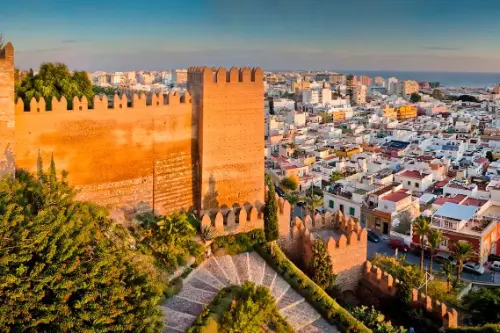 Day 155: 07:00–18:00
Almeria / Spain
The resort of Almeria is located in the southeast of Spain. It is the main city of the province of the same name on the Costa de Almería, in the autonomous region of Andalusia. Although relatively young, this resort is developing promisingly and flourishing, attracting more and more tourists every year. Visitors come here for excellent vacations, ensured by beautiful beaches, a mild climate, stunning nature, well-developed tourist infrastructure, and the unique history of the region. Almeria is favored by tourists who enjoy active recreation, as well as lovers of various entertainment and excursions to local attractions.
-
 Day 156: 08:00–18:00
Alicante / Spain
Alicante, or Alacant , both the Spanish and Valencian being official names, is a city and port in Spain on the Costa Blanca, the capital of the province of Alicante and of the comarca of Alacantí, in the south of the Valencian Community. It is also a historic Mediterranean port. The population of the city of Alicante proper was 330,525, estimated as of 2016, ranking as the second-largest Valencian city. Including nearby municipalities, the Alicante conurbation had 452,462 residents. The population of the metropolitan area (including Elche and satellite towns) was 757,085 as of 2014 estimates, ranking as the eighth-largest metropolitan area of Spain.
-
 Day 157: 09:00–18:00
Barcelona / Spain
Barcelona is a city in Spain. It is the capital and largest city of Catalonia, as well as the second most populous municipality of Spain. With a population of 1.6 million within city limits, its urban area extends to numerous neighbouring municipalities within the Province of Barcelona and is home to around 4.8 million people, making it the sixth most populous urban area in the European Union after Paris, London, Madrid, the Ruhr area and Milan. It is one of the largest metropolises on the Mediterranean Sea, located on the coast between the mouths of the rivers Llobregat and Besòs, and bounded to the west by the Serra de Collserola mountain range, the tallest peak of which is 512 metres (1,680 feet) high.
Founded as a Roman city, in the Middle Ages Barcelona became the capital of the County of Barcelona. After merging with the Kingdom of Aragon, Barcelona continued to be an important city in the Crown of Aragon as an economic and administrative centre of this Crown and the capital of the Principality of Catalonia. Barcelona has a rich cultural heritage and is today an important cultural centre and a major tourist destination. Particularly renowned are the architectural works of Antoni Gaudí and Lluís Domènech i Montaner, which have been designated UNESCO World Heritage Sites. The headquarters of the Union for the Mediterranean are located in Barcelona. The city is known for hosting the 1992 Summer Olympics as well as world-class conferences and expositions and also many international sport tournaments.
Barcelona is one of the world's leading tourist, economic, trade fair and cultural centres, and its influence in commerce, education, entertainment, media, fashion, science, and the arts all contribute to its status as one of the world's major global cities. It is a major cultural and economic centre in southwestern Europe, 24th in the world (before Zürich, after Frankfurt) and a financial centre. In 2008 it was the fourth most economically powerful city by GDP in the European Union and 35th in the world with GDP amounting to €177 billion. In 2012 Barcelona had a GDP of $170 billion; and it was leading Spain in employment rate in that moment.
In 2009 the city was ranked Europe's third and one of the world's most successful as a city brand. In the same year the city was ranked Europe's fourth best city for business and fastest improving European city, with growth improved by 17% per year, and the city has been experiencing strong and renewed growth for the past three years. Since 2011 Barcelona has been a leading smart city in Europe. Barcelona is a transport hub, with the Port of Barcelona being one of Europe's principal seaports and busiest European passenger port, an international airport, Barcelona–El Prat Airport, which handles over 50 million passengers per year, an extensive motorway network, and a high-speed rail line with a link to France and the rest of Europe.
-
 Day 158: 08:00–18:00
Sete / France
The town of Sete, located in the south of France between the Thau Lagoon and the Mediterranean Sea, is often called the "Venice of Languedoc" thanks to its picturesque canals, where fishing boats and tour boats bustle about. Founded in the 17th century as a port for the Canal du Midi, Sète remains an important fishing and commercial hub. The city is overlooked by Mount Saint-Clair, which offers panoramic views of the surrounding area, including endless salt flats and the azure waters of the gulf.
Sète is known not only for its maritime charm but also for its rich cultural life. It is the birthplace of poet Paul Valéry, who is commemorated by a museum and a marine cemetery where he is buried. In summer, the city hosts a unique celebration — water jousting tournaments (joutes nautiques), a tradition dating back to the Middle Ages. The local cuisine is renowned for its fresh seafood, especially oysters and mussels from the lagoon. Sète is a place where Mediterranean spirit, history, gastronomy, and poetry come together.
-
 Day 159: 08:00–19:00
Monte Carlo / Monaco
Monte Carlo officially refers to an administrative area of the Principality of Monaco, specifically the ward of Monte Carlo/Spélugues, where the Monte Carlo Casino is located. Informally the name also refers to a larger district, the Monte Carlo Quarter (corresponding to the former municipality of Monte Carlo), which besides Monte Carlo/Spélugues also includes the wards of La Rousse/Saint Roman, Larvotto/Bas Moulins, and Saint Michel. The permanent population of the ward of Monte Carlo is about 3,500, while that of the quarter is about 15,000. Monaco has four traditional quarters. From west to east they are: Fontvieille (the newest), Monaco-Ville (the oldest), La Condamine, and Monte Carlo.
Monte Carlo (literally "Mount Charles") is situated on a prominent escarpment at the base of the Maritime Alpsalong the French Riviera. Near the quarter's western end is the world-famous Place du Casino, the gamblingcenter which has made Monte Carlo "an international byword for the extravagant display and reckless dispersal of wealth". It is also the location of the Hôtel de Paris, the Café de Paris, and the Salle Garnier (the casino theatre which is the home of the Opéra de Monte-Carlo).
The quarter's eastern part includes the community of Larvotto with Monaco's only public beach, as well as its new convention center (the Grimaldi Forum), and the Monte-Carlo Bay Hotel & Resort. At the quarter's eastern border, one crosses into the French town of Beausoleil (sometimes referred to as Monte-Carlo-Supérieur), and just 8 kilometres (5 mi) to its east is the western border of Italy.
-
Day 160: 07:00–19:00
FLORENCE PISA TUSCANY
-
 Day 161: 07:00–16:00
Rome (Civitavecchia) / Italy
Rome is the capital city and a special comune of Italy (named Comune di Roma Capitale). Rome also serves as the capital of the Lazio region. With 2,872,800 residents in 1,285 km2(496.1 sq mi), it is also the country's most populated comune. It is the fourth-most populous city in the European Union by population within city limits. It is the centre of the Metropolitan City of Rome, which has a population of 4,355,725 residents, thus making it the most populous metropolitan city in Italy. Rome is located in the central-western portion of the Italian Peninsula, within Lazio (Latium), along the shores of the Tiber. The Vatican City (the smallest country in the world) is an independent country inside the city boundaries of Rome, the only existing example of a country within a city: for this reason Rome has been often defined as capital of two states.
Rome's history spans 28 centuries. While Roman mythology dates the founding of Rome at around 753 BC, the site has been inhabited for much longer, making it one of the oldest continuously occupied sites in Europe. The city's early population originated from a mix of Latins, Etruscans, and Sabines. Eventually, the city successively became the capital of the Roman Kingdom, the Roman Republic and the Roman Empire, and is regarded as the birthplace of Western civilization and by some as the first ever metropolis. It was first called The Eternal City (Latin: Urbs Aeterna; Italian: La Città Eterna) by the Roman poet Tibullus in the 1st century BC, and the expression was also taken up by Ovid, Virgil, and Livy. Rome is also called the "Caput Mundi" (Capital of the World). After the fall of the Western Empire, which marked the beginning of the Middle Ages, Rome slowly fell under the political control of the Papacy, which had settled in the city since the 1st century AD, until in the 8th century it became the capital of the Papal States, which lasted until 1870. Beginning with the Renaissance, almost all the popes since Nicholas V (1447–1455) pursued over four hundred years a coherent architectural and urban programme aimed at making the city the artistic and cultural centre of the world. In this way, Rome became first one of the major centres of the Italian Renaissance, and then the birthplace of both the Baroque style and Neoclassicism. Famous artists, painters, sculptors and architects made Rome the centre of their activity, creating masterpieces throughout the city. In 1871, Rome became the capital of the Kingdom of Italy, which, in 1946, became the Italian Republic.
Rome has the status of a global city. In 2016, Rome ranked as the 14th-most-visited city in the world, 3rd most visited in the European Union, and the most popular tourist attraction in Italy. Its historic centre is listed by UNESCO as a World Heritage Site. The famous Vatican Museums are among the world's most visited museums while the Colosseum was the most popular tourist attraction in world with 7.4 million visitors in 2018. Host city for the 1960 Summer Olympics, Rome is the seat of several specialized agencies of the United Nations, such as the Food and Agriculture Organization (FAO), the World Food Programme (WFP) and the International Fund for Agricultural Development (IFAD). The city also hosts the Secretariat of the Parliamentary Assembly of the Union for the Mediterranean (UfM) as well as the headquarters of many international business companies such as Eni, Enel, TIM, Leonardo S.p.A., and national and international banks such as Unicredit and BNL. Its business district, called EUR, is the base of many companies involved in the oil industry, the pharmaceutical industry, and financial services. Rome is also an important fashion and design centre thanks to renowned international brands centered in the city. Rome's Cinecittà Studios have been the set of many Academy Award–winning movies.
-
Day 162: 07:00–19:00
FLORENCE PISA TUSCANY
-
Day 163: 07:00–16:00
Monte Carlo / Monaco
Monte Carlo officially refers to an administrative area of the Principality of Monaco, specifically the ward of Monte Carlo/Spélugues, where the Monte Carlo Casino is located. Informally the name also refers to a larger district, the Monte Carlo Quarter (corresponding to the former municipality of Monte Carlo), which besides Monte Carlo/Spélugues also includes the wards of La Rousse/Saint Roman, Larvotto/Bas Moulins, and Saint Michel. The permanent population of the ward of Monte Carlo is about 3,500, while that of the quarter is about 15,000. Monaco has four traditional quarters. From west to east they are: Fontvieille (the newest), Monaco-Ville (the oldest), La Condamine, and Monte Carlo.
Monte Carlo (literally "Mount Charles") is situated on a prominent escarpment at the base of the Maritime Alpsalong the French Riviera. Near the quarter's western end is the world-famous Place du Casino, the gamblingcenter which has made Monte Carlo "an international byword for the extravagant display and reckless dispersal of wealth". It is also the location of the Hôtel de Paris, the Café de Paris, and the Salle Garnier (the casino theatre which is the home of the Opéra de Monte-Carlo).
The quarter's eastern part includes the community of Larvotto with Monaco's only public beach, as well as its new convention center (the Grimaldi Forum), and the Monte-Carlo Bay Hotel & Resort. At the quarter's eastern border, one crosses into the French town of Beausoleil (sometimes referred to as Monte-Carlo-Supérieur), and just 8 kilometres (5 mi) to its east is the western border of Italy.
-
Day 164: 10:30–20:30
Barcelona / Spain
Barcelona is a city in Spain. It is the capital and largest city of Catalonia, as well as the second most populous municipality of Spain. With a population of 1.6 million within city limits, its urban area extends to numerous neighbouring municipalities within the Province of Barcelona and is home to around 4.8 million people, making it the sixth most populous urban area in the European Union after Paris, London, Madrid, the Ruhr area and Milan. It is one of the largest metropolises on the Mediterranean Sea, located on the coast between the mouths of the rivers Llobregat and Besòs, and bounded to the west by the Serra de Collserola mountain range, the tallest peak of which is 512 metres (1,680 feet) high.
Founded as a Roman city, in the Middle Ages Barcelona became the capital of the County of Barcelona. After merging with the Kingdom of Aragon, Barcelona continued to be an important city in the Crown of Aragon as an economic and administrative centre of this Crown and the capital of the Principality of Catalonia. Barcelona has a rich cultural heritage and is today an important cultural centre and a major tourist destination. Particularly renowned are the architectural works of Antoni Gaudí and Lluís Domènech i Montaner, which have been designated UNESCO World Heritage Sites. The headquarters of the Union for the Mediterranean are located in Barcelona. The city is known for hosting the 1992 Summer Olympics as well as world-class conferences and expositions and also many international sport tournaments.
Barcelona is one of the world's leading tourist, economic, trade fair and cultural centres, and its influence in commerce, education, entertainment, media, fashion, science, and the arts all contribute to its status as one of the world's major global cities. It is a major cultural and economic centre in southwestern Europe, 24th in the world (before Zürich, after Frankfurt) and a financial centre. In 2008 it was the fourth most economically powerful city by GDP in the European Union and 35th in the world with GDP amounting to €177 billion. In 2012 Barcelona had a GDP of $170 billion; and it was leading Spain in employment rate in that moment.
In 2009 the city was ranked Europe's third and one of the world's most successful as a city brand. In the same year the city was ranked Europe's fourth best city for business and fastest improving European city, with growth improved by 17% per year, and the city has been experiencing strong and renewed growth for the past three years. Since 2011 Barcelona has been a leading smart city in Europe. Barcelona is a transport hub, with the Port of Barcelona being one of Europe's principal seaports and busiest European passenger port, an international airport, Barcelona–El Prat Airport, which handles over 50 million passengers per year, an extensive motorway network, and a high-speed rail line with a link to France and the rest of Europe.
-
 Day 165: 09:00–19:00
Valencia / Spain
-
Day 166:
Day at sea / Sea
-
Day 167: 07:00–21:30
Grenada / Grenada
-
 Day 168: 11:00–22:00
Seville / Spain
Seville is the capital and largest city of the autonomous community of Andalusia and the province of Seville, Spain. It is situated on the plain of the river Guadalquivir. The inhabitants of the city are known as sevillanos (feminine form: sevillanas) or hispalenses, after the Roman name of the city, Hispalis. Seville has a municipal population of about 690,000 as of 2016, and a metropolitan population of about 1.5 million, making it the fourth-largest city in Spain and the 30th most populous municipality in the European Union. Its Old Town, with an area of 4 square kilometres (2 sq mi), contains three UNESCO World Heritage Sites: the Alcázar palace complex, the Cathedral and the General Archive of the Indies. The Seville harbour, located about 80 kilometres (50 miles) from the Atlantic Ocean, is the only river port in Spain. Seville is also the hottest major metropolitan area in the geographical Southwestern Europe, with summer average high temperatures of above 35 °C (95 °F).
Seville was founded as the Roman city of Hispalis. It later became known as Ishbiliyya after the Muslim conquest in 712. During the Muslim rule in Spain, Seville came under the jurisdiction of the Caliphate of Córdoba before becoming the independent Taifa of Seville; later it was ruled by the Muslim Almoravids and the Almohads until finally being incorporated into the Christian Kingdom of Castile under Ferdinand III in 1248. After the discovery of the Americas, Seville became one of the economic centres of the Spanish Empire as its port monopolised the trans-oceanic trade and the Casa de Contratación (House of Trade) wielded its power, opening a Golden Age of arts and literature. In 1519, Ferdinand Magellan departed from Seville for the first circumnavigation of the Earth. Coinciding with the Baroque period of European history, the 17th century in Seville represented the most brilliant flowering of the city's culture; then began a gradual economic and demographic decline as silting in the Guadalquivirforced the trade monopoly to relocate to the nearby port of Cádiz.
The 20th century in Seville saw the tribulations of the Spanish Civil War, decisive cultural milestones such as the Ibero-American Exposition of 1929 and Expo '92, and the city's election as the capital of the Autonomous Community of Andalusia.
-
 Day 169: 07:00–12:30
Gibraltar / Great Britain
Gibraltar is a British Overseas Territory located at the southern tip of the Iberian Peninsula. It has an area of 6.7 km2 (2.6 sq mi) and is bordered to the north by Spain. The landscape is dominated by the Rock of Gibraltar at the foot of which is a densely populated town area, home to over 30,000 people, primarily Gibraltarians. It shares a maritime border with Morocco.
In 1704, Anglo-Dutch forces captured Gibraltar from Spain during the War of the Spanish Succession on behalf of the Habsburg claim to the Spanish throne. The territory was ceded to Great Britain in perpetuity under the Treaty of Utrechtin 1713. During World War II it was an important base for the Royal Navy as it controlled the entrance and exit to the Mediterranean Sea, which is only 8 miles (13 km) wide at this naval choke point. It remains strategically important, with half the world's seaborne trade passing through the strait. Today Gibraltar's economy is based largely on tourism, online gambling, financial services and cargo ship refuelling.
The sovereignty of Gibraltar is a point of contention in Anglo-Spanish relations because Spain asserts a claim to the territory. Gibraltarians rejected proposals for Spanish sovereignty in a 1967 referendum and, in a 2002 referendum, the idea of shared sovereignty was also rejected.
-
 Day 170: 07:00–16:00
Lisbon / Portugal
Lisbon is the capital and the largest city of Portugal, with an estimated population of 505,526 within its administrative limits in an area of 100.05 km2. Its urban area extends beyond the city's administrative limits with a population of around 2.8 million people, being the 11th-most populous urban area in the European Union. About 3 million people live in the Lisbon Metropolitan Area (which represents approximately 27% of the country's population). It is mainland Europe's westernmost capital city and the only one along the Atlantic coast. Lisbon lies in the western Iberian Peninsula on the Atlantic Ocean and the River Tagus. The westernmost areas of its metro area form the westernmost point of Continental Europe, which is known as Cabo da Roca, located in the Sintra Mountains.
-
 Day 171: 08:00–17:00
Porto / Portugal
Порту является вторым по величине городом Португалии после Лиссабона и одним из крупных городских районов Пиренейского полуострова. Население самого города составляет 237 591 человек, а в столичном районе Порту, который выходит за административные пределы города, проживает 1,9 миллиона человек (2011 год) на площади 2 395 км2 (925 кв. Миль), что делает его вторым самый большой городской район в Португалии. Он признан глобальным городом гамма-уровня Исследовательской группой по глобализации и глобальным городам (GaWC), единственным португальским городом, кроме Лиссабона, который был признан глобальным городом.
Расположенный вдоль устья реки Дору на севере Португалии, Порту является одним из старейших европейских центров, и его историческое ядро было объявлено ЮНЕСКО объектом Всемирного наследия в 1996 году. Западная часть его городской территории простирается до береговой линии Атлантического океана. Его поселение датируется много веков, когда он был форпостом Римской империи. Его объединенное кельтско-латинское имя, Portus Cale, было названо происхождением названия «Португалия», основанного на транслитерации и устной эволюции от латыни. На португальском языке название города пишется с определенной статьей о Порту ; следовательно, его английское название произошло от неправильного толкования устного произношения и упоминается как Опорто в современной литературе и многими ораторами.
-
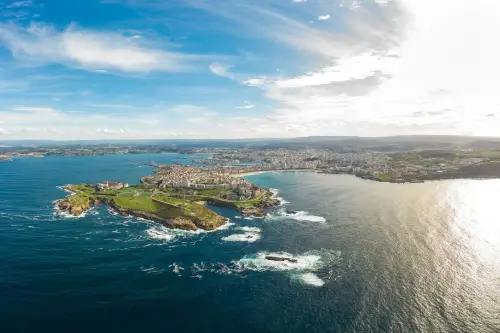 Day 172: 08:00–17:00
La Coruna / Spain
Travelers find in La Coruña the perfect place to experience the atmosphere of Spain’s Atlantic coast, where modern promenades meet historical landmarks and cozy beaches. The city is known for having the world’s oldest functioning Roman lighthouse – the Tower of Hercules, built nearly 2000 years ago and still guiding ships today. Here, you can enjoy a stroll along one of Europe’s longest seafront promenades, taking in ocean panoramas and the fresh breeze.
In La Coruña, guests discover the rich Galician gastronomic culture, with seafood served in traditional tapas bars and contemporary restaurants. Local markets delight with fresh products, while the city’s cultural life is filled with festivals, exhibitions, and live street music. This destination offers travelers a unique blend of historical depth, sea views, and warm Spanish atmosphere, leaving a sense of lightness and inspiration after the visit.
-
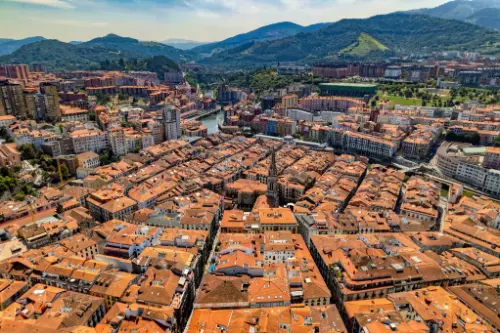 Day 173: 10:00–19:00
Bilbao / Spain
Bilbao is a city in northern Spain, the largest city in the province of Biscay and in the Basque Country as a whole. It is also the largest city proper in northern Spain. Bilbao is the tenth largest city in Spain, with a population of 345,141 as of 2015. The Bilbao metropolitan area has roughly 1 million inhabitants, making it one of the most populous metropolitan areas in northern Spain; with a population of 875,552 the comarca of Greater Bilbao is the fifth-largest urban area in Spain. Bilbao is also the main urban area in what is defined as the Greater Basque region.
Bilbao is situated in the north-central part of Spain, some 16 kilometres (10 mi) south of the Bay of Biscay, where the economic social development is located, where the estuary of Bilbao is formed. Its main urban core is surrounded by two small mountain ranges with an average elevation of 400 metres (1,300 ft). Its climate is shaped by the Bay of Biscay low-pressure systems and mild air, moderating summer temperatures by Iberian standards, with low sunshine and high rainfall. The annual temperature range is low for its latitude.
After its foundation in the early 14th century by Diego López V de Haro, head of the powerful Haro family, Bilbao was a commercial hub of the Basque Country that enjoyed significant importance in Green Spain. This was due to its port activity based on the export of iron extracted from the Biscayan quarries. Throughout the nineteenth century and the beginning of the twentieth, Bilbao experienced heavy industrialisation, making it the centre of the second-most industrialised region of Spain, behind Barcelona. At the same time an extraordinary population explosion prompted the annexation of several adjacent municipalities. Nowadays, Bilbao is a vigorous service city that is experiencing an ongoing social, economic, and aesthetic revitalisation process, started by the iconic Bilbao Guggenheim Museum, and continued by infrastructure investments, such as the airport terminal, the rapid transit system, the tram line, the Azkuna Zentroa, and the currently under development Abandoibarra and Zorrozaurrerenewal projects.
Bilbao is also home to football club Athletic Club de Bilbao, a significant symbol for Basque nationalism due to its promotion of only Basque players and one of the most successful clubs in Spanish football history.
On 19 May 2010, the city of Bilbao was recognised with the Lee Kuan Yew World City Prize, awarded by the city state of Singapore, in collaboration with the Swedish Nobel Academy. Considered the Nobel Prize for urbanism, it was handed out on 29 June 2010. On 7 January 2013, its mayor, Iñaki Azkuna, received the 2012 World Mayor Prize awarded every two years by the British foundation The City Mayors Foundation, in recognition of the urban transformation experienced by the Biscayan capital since the 1990s. On 8 November 2017, Bilbao was chosen the Best European City 2018 at The Urbanism Awards 2018, awarded by the international organisation The Academy of Urbanism.
-
 Day 174: 08:00–17:00
Saint-Jean-de-Luz (Biarritz) / France
-
 Day 175: 14:45
Bordeaux / France
Bordeaux is a port city on the Garonne in the Gironde department in Southwestern France.
The municipality (commune) of Bordeaux proper has a population of 246,586 (2014). Together with its suburbs and satellite towns, Bordeaux is the centre of the Bordeaux Métropole. With 1,195,335 in the metropolitan area, it is the sixth-largest in France, after Paris, Marseille, Lyon, Toulouse, and Lille. It is the capital of the Nouvelle-Aquitaineregion, as well as the prefecture of the Gironde department. Its inhabitants are called "Bordelais" (for men) or "Bordelaises" (women). The term "Bordelais" may also refer to the city and its surrounding region.
Being at the center of a major wine-growing and wine-producing region, Bordeaux remains a prominent powerhouse and exercises significant influence on the world wine industry although no wine production is conducted within the city limits. It is home to the world's main wine fair, Vinexpo, and the wine economy in the metro area takes in 14.5 billion euros each year. Bordeaux wine has been produced in the region since the 8th century. The historic part of the city is on the UNESCO World Heritage List as "an outstanding urban and architectural ensemble" of the 18th century.[7] After Paris, Bordeaux has the highest number of preserved historical buildings of any city in France.
-
Day 176: 16:00
Bordeaux / France
Bordeaux is a port city on the Garonne in the Gironde department in Southwestern France.
The municipality (commune) of Bordeaux proper has a population of 246,586 (2014). Together with its suburbs and satellite towns, Bordeaux is the centre of the Bordeaux Métropole. With 1,195,335 in the metropolitan area, it is the sixth-largest in France, after Paris, Marseille, Lyon, Toulouse, and Lille. It is the capital of the Nouvelle-Aquitaineregion, as well as the prefecture of the Gironde department. Its inhabitants are called "Bordelais" (for men) or "Bordelaises" (women). The term "Bordelais" may also refer to the city and its surrounding region.
Being at the center of a major wine-growing and wine-producing region, Bordeaux remains a prominent powerhouse and exercises significant influence on the world wine industry although no wine production is conducted within the city limits. It is home to the world's main wine fair, Vinexpo, and the wine economy in the metro area takes in 14.5 billion euros each year. Bordeaux wine has been produced in the region since the 8th century. The historic part of the city is on the UNESCO World Heritage List as "an outstanding urban and architectural ensemble" of the 18th century.[7] After Paris, Bordeaux has the highest number of preserved historical buildings of any city in France.
-
Day 177:
Day at sea / Sea
-
Day 178: 07:00–17:00
Failure / France
-
Day 179: 08:00–16:00
ST. HELIER
-
 Day 180: 07:00–21:00
Paris / France
the capital of France, on the Seine River; population 2,203,817 (2006). Paris was held by the Romans, who called it Lutetia, and by the Franks, and was established as the capital in 987 under Hugh Capet. It was organized into three parts—the Île de la Cité (an island in the Seine), the Right Bank, and the Left Bank—during the reign of Philippe-Auguste 1180–1223. The city's neoclassical architecture dates from the modernization of the Napoleonic era, which continued under Napoleon III, when the bridges and boulevards of the modern city were built.
-
 Day 181: 07:00–16:00
London / Great Britain
-
Day 182:
Day at sea / Sea
-
 Day 183: 08:00–17:00
Edinburgh / Great Britain
-
 Day 184: 08:00–17:00
Invergordon / Great Britain
The town is well known for the Invergordon Mutiny of 1931. More recently it has also become known for the repair of oil rigs which line up in the Cromarty Firth on which the town is situated. In the 1970s and 1980s nearby Nigg was known for the construction of these rigs. The yard used for this is now attempting to re-establish itself as a fabricator of large offshore wind turbines and oil rig refurbishment since being purchased by Global Energy Group.
For a number of years Invergordon was the site of an aluminium smelter until 1981 when British Aluminium closed it down. The pipeline that covered the conveyor belt from the smelter to the BA pier was not dismantled until the early 2000s and the two large tanks still stand today as well as a water tower.
It still has a grain whisky distillery, operated by Philippines-owned whisky giant Whyte and Mackay, the output of which contributes to many blended whiskies. Connected to the distillery was the Invergordon Distillery Pipe Band.
At present the port is visited by many large cruise liners each year, as the deep water port allows disembarkation for coach tours in the northern Highlands.
Since the 1970s some would perceive the town as a 'Glasgow colony', since many workers were recruited from southern Scotland to work in the oil rig fabrication and aluminium smelting industries. As a result, the residents' accents often show more influence from Glasgow, than the surrounding Easter Ross dialect of Highland Englishalthough this has changed in recent years.
In recent years Global Energy Group have been expanding, with the purchase of the Nigg fabrication yard it has also brought much appreciated work to Invergordon's Docks with the town again full of oil company workers through the day.
-
 Day 185: 08:00–17:00
Kirkwall / Great Britain
-
 Day 186: 07:00–16:00
Portree / Great Britain
-
 Day 187: 11:00–19:00
Glasgow / Great Britain
Исконно шотландский город Глазго, расположен всего в 50 км от Эдинбурга. Это достаточно оживленный город с множеством интересных мест. В центре города Вас порадует множество достопримечательностей, в том числе район Сочиххол Сэнт, в котором сосредоточено много магазинов, пабов и кафе.
Восточнее расположена старая часть города, в которой можно полюбоваться Собором Глазго, посетить Музей религии и искусства Сент Мунго.
В парке Кантри расположена коллекция Баррелл — главная достопримечательность Глазго, здесь представлен китайский фарфор, антикварная мебель, импрессионистические картины. Вся эта роскошь расположена под крышей одного современного здания.
-
 Day 188: 08:00–17:00
Belfast / Great Britain
Belfast is a port city in the United Kingdom and the capital city of Northern Ireland, on the banks of the River Lagan on the east coast of Ireland. It is the largest city in Northern Ireland and second largest on the island of Ireland. It had a population of 333,871 in 2015.
By the early 1800s Belfast was a major port. It played a key role in the Industrial Revolution, becoming the biggest linen producer in the world, earning it the nickname "Linenopolis". By the time it was granted city status in 1888, it was a major centre of Irish linen production, tobacco-processing and rope-making. Shipbuilding was also a key industry; the Harland and Wolff shipyard, where the RMS Titanic was built, was the world's biggest shipyard. It also has a major aerospace and missiles industry. Industrialisation and the inward migration it brought made Belfast Ireland's biggest city and it became the capital of Northern Ireland following the Partition of Ireland in 1922. Its status as a global industrial centre ended in the decades after the Second World War.
Belfast suffered greatly in the Troubles, and in the 1970s and 1980s was one of the world's most dangerous cities. However, the city is now considered to be one of the safest within the United Kingdom. Throughout the 21st century, the city has seen a sustained period of calm, free from the intense political violence of former years and has benefitted from substantial economic and commercial growth. Belfast remains a centre for industry, as well as the arts, higher education, business, and law, and is the economic engine of Northern Ireland. Belfast is still a major port, with commercial and industrial docks dominating the Belfast Lough shoreline, including the Harland and Wolff shipyard. It is served by two airports: George Best Belfast City Airport, and Belfast International Airport 15 miles (24 km) west of the city. It is listed by the Globalization and World Cities Research Network (GaWC) as a Gamma global city.
-
 Day 189: 08:00–17:00
Dublin / Ireland
Dublin is the capital of, and largest city in, Ireland. It is on the east coast of Ireland, in the province of Leinster, at the mouth of the River Liffey, and is bordered on the south by the Wicklow mountains. It has an urban area population of 1,173,179, while the population of the Dublin Region (formerly County Dublin), as of 2016, was 1,347,359, and the population of the Greater Dublin area was 1,904,806.
There is archaeological debate regarding precisely where Dublin was established by Celtic-speaking people in the 7th century AD. Later expanded as a Viking settlement, the Kingdom of Dublin, the city became Ireland's principal settlement following the Norman invasion. The city expanded rapidly from the 17th century and was briefly the second largest city in the British Empire before the Acts of Union in 1800. Following the partition of Ireland in 1922, Dublin became the capital of the Irish Free State, later renamed Ireland.
Dublin is a historical and contemporary centre for education, the arts, administration and industry. As of 2018 the city was listed by the Globalization and World Cities Research Network (GaWC) as a global city, with a ranking of "Alpha -", which places it amongst the top thirty cities in the world.
-
 Day 190: 08:00–17:00
Cork / Ireland
Cork is a city in south-west Ireland, in the province of Munster, which had a population of 125,657 in 2016.
The city is on the River Lee which splits into two channels at the western end and divides the city centre into islands. They reconverge at the eastern end where the quays and docks along the river banks lead outwards towards Lough Mahon and Cork Harbour, one of the largest natural harbours in the world.
Expanded by Viking invaders around 915, the city's charter was granted by Prince John, as Lord of Ireland, in 1185. Cork city was once fully walled, and the remnants of the old medieval town centre can be found around South and North Main streets.
The third largest city on the island of Ireland, the city's cognomen of "the rebel city" originates in its support for the Yorkist cause in the Wars of the Roses. Corkonians often refer to the city as "the real capital", a reference to its opposition to the Anglo-Irish Treaty in the Irish Civil War.
-
Day 191:
Day at sea / Sea
-
Day 192: 07:00–16:00
Paris / France
the capital of France, on the Seine River; population 2,203,817 (2006). Paris was held by the Romans, who called it Lutetia, and by the Franks, and was established as the capital in 987 under Hugh Capet. It was organized into three parts—the Île de la Cité (an island in the Seine), the Right Bank, and the Left Bank—during the reign of Philippe-Auguste 1180–1223. The city's neoclassical architecture dates from the modernization of the Napoleonic era, which continued under Napoleon III, when the bridges and boulevards of the modern city were built.
-
Day 193: 08:00–17:00
London / Great Britain
-
Day 194: 08:00–17:00
Used
-
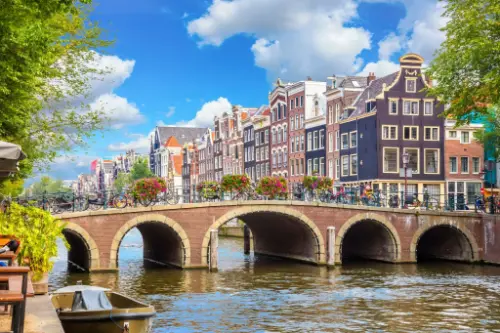 Day 195: 08:00–17:00
Amsterdam / Netherlands
Amsterdam is the capital city and most populous municipality of the Netherlands. Its status as the capital is mandated by the Constitution of the Netherlands, although it is not the seat of the government, which is The Hague. Amsterdam has a population of 851,373 within the city proper, 1,351,587 in the urban area] and 2,410,960 in the metropolitan area. The city is located in the province of North Holland in the west of the country but is not its capital, which is Haarlem. The metropolitan area comprises much of the northern part of the Randstad, one of the larger conurbations in Europe, with a population of approximately 8 million.
-
Day 196:
Day at sea / Sea
-
 Day 197: 08:00–17:00
Kristiansand / Norway
The southernmost coast of Norway invites you to discover the amazing city of Kristiansand. This charming town is surrounded by the sea on three sides. It is the fifth-largest city in the country, and although its center fits within a small area of just 1 km², Kristiansand has much to offer its visitors. It’s not only about the incredibly clean Norwegian air but also many other interesting attractions.
Among them is Norway’s largest zoo, home to 80 species of animals. A visit here will delight both children and adults. You can enjoy rides on carousels, laugh wholeheartedly at the circus, and take the whole family on a sea excursion or spend time together at a playground.
-
 Day 198: 07:00–16:00
Oslo / Norway
Oslo is the capital and most populous city of Norway. It constitutes both a county and a municipality. Founded in the year 1040 as Ánslo, and established as a trading place in 1048 by Harald Hardrada, the city was elevated to a bishopric in 1070 and a capital under Haakon V of Norway around 1300. Personal unions with Denmark from 1397 to 1523 and again from 1536 to 1814 reduced its influence, and with Sweden from 1814 to 1905 it functioned as a co-official capital. After being destroyed by a fire in 1624, during the reign of King Christian IV, a new city was built closer to Akershus Fortress and named Christiania in the king's honour. It was established as a municipality on 1 January 1838. The city's name was spelled Kristiania between 1877 and 1897 by state and municipal authorities. In 1925 the city was renamed Oslo.
-
 Day 199: 11:00–19:00
Aarhus / Denmark
Aarhus is the second-largest city in Denmark and the seat of Aarhus municipality. It is located on the east coast of the Jutlandpeninsula, in the geographical centre of Denmark, 187 kilometres (116 mi) northwest of Copenhagen and 289 kilometres (180 mi) north of Hamburg, Germany. The inner urban area contains 273,077 inhabitants (as of 1 January 2018) and the municipal population is 340,421 (as of 2018). Aarhus is the central city in Business Region Aarhus and in the East Jutland metropolitan area, which had a total population of 1.378 million in 2016.
The history of Aarhus began as a fortified Viking settlement founded in the 8th century and with the first written records stemming from the bishopric seated here from at least 948. The city was founded on the northern shores of a fjord at a natural harbour and the primary driver of growth was for centuries seaborne trade in agricultural products. Market town privileges were granted in 1441, but growth stagnated in the 17th century as the city suffered blockades and bombardments during the Swedish Wars. In the 19th century it was occupied twice by German troops during the Schleswig Wars but avoided destruction. As the industrial revolution took hold, the city grew to become the second-largest in the country by the 20th century.
-
Day 200: 08:00–22:00
Like
-
 Day 201: 10:00–20:00
Helsingborg / Sweden
Nestled on the shores of the Öresund Strait, Helsingborg enchants travelers with its blend of Swedish charm, coastal atmosphere, and historical architecture. One of the oldest cities in Sweden, it offers a unique closeness to Denmark—just a 20-minute ferry ride to Helsingør across the strait. The narrow streets of the old town lead to the medieval Kärnan tower, from which you can enjoy breathtaking views of the city and the sea.
Strolling along the Helsingborg waterfront, you’ll find seafood cafés, art galleries, and cozy Scandinavian shops. The city is also known for its green parks and Sofiero Castle with its royal gardens, especially beautiful in spring and summer. Helsingborg is a place where history and modern life blend in an atmosphere of coastal peace and cultural richness.
-
 Day 202: 07:00
Copenhagen / Denmark
the capital and chief port of Denmark, a city that occupies the eastern part of Zealand and northern part of the island of Amager; population 518,574 (2009).
-
Day 203: 16:00
Copenhagen / Denmark
the capital and chief port of Denmark, a city that occupies the eastern part of Zealand and northern part of the island of Amager; population 518,574 (2009).
-
 Day 204: 07:00–22:00
Berlin / Germany
Berlin is the capital and largest city of Germany, by both area and population. With 3.7 million inhabitants, it has the highest population within its city limits of any city in the European Union. The city is also one of the states of Germany, being the third smallest state in the country by area. Berlin is surrounded by the state of Brandenburg, and Brandenburg's capital Potsdam is nearby. The urban area of Berlin has a population of over 4.6 million and is therefore the most populous urban area in Germany.The Berlin-Brandenburg capital region has around 6.2 million inhabitants and is Germany's second-largest metropolitan region after the Rhine-Ruhr;region,as well as the fifth-biggest metropolitan region by GDP in the European Union.
-
Day 205:
Day at sea / Sea
-
 Day 206: 08:00–17:00
Ronne / Denmark
Quiet streets lined with half-timbered houses make Ronne (Rønne) a cozy corner on the Danish island of Bornholm, where every step is filled with the scent of the sea and fresh pastries from local bakeries. The town is known for its ceramics and glass workshops, as well as the cozy atmosphere of its fishing port, where you can taste freshly smoked herring while watching ships slowly enter the harbor. Here, time seems to slow down, allowing you to enjoy strolls through the old town with its cobblestone streets and picturesque houses that have preserved their 18th-century charm.
In Ronne, travelers will find a peaceful retreat with a touch of Danish coziness and the creative spirit of the island. The Bornholm Museum offers insights into the island's history and maritime traditions, while walks along the coast reveal rocky shores and clean beaches inviting relaxation year-round. This town is the perfect place for those who wish to experience authentic Denmark, breathe in the sea air, and discover the warm hospitality of Bornholm.
-
 Day 207: 08:00–17:00
Gdańsk / Poland
-
 Day 208: 08:00–17:00
Klaipeda (Memel) / Lithuania
Klaipėda is a city in Lithuania on the Baltic Sea coast. It is the third largest city in Lithuania and the capital of Klaipėda County.
The city has a complex recorded history, partially due to the combined regional importance of the usually ice-free Port of Klaipėda at the mouth of the Akmena-Danė River. It was controlled by successive German states until the 1919 Treaty of Versailles. As a result of the 1923 Klaipėda Revolt it was added to Lithuania and has remained with Lithuania to this day, except for the period between 1939 and 1945 when it returned to Germany following the 1939 German ultimatum to Lithuania and the German–Soviet Union Molotov–Ribbentrop Pact.
The population has shrunk from the city to suburbs and the hinterland. The city had a population of 207,100 in 1992 to 157,350 in 2014 but the city is growing again. Popular seaside resorts found close to Klaipėda are Nida to the south on the Curonian Spit and Palanga to the north.
-
Day 209: 07:00–16:00
Liepaja / Lithuania
-
 Day 210: 07:00–16:00
Riga / Latvia
Riga is the capital and largest city of Latvia. With 637,827 inhabitants (2018), it is also the largest city in the three Baltic states, home to one third of Latvia's population and one tenth of the three Baltic states' combined population. The city lies on the Gulf of Riga, at the mouth of the Daugava. Riga's territory covers 307.17 km2 (118.60 sq mi) and lies 1–10 m (3 ft 3 in–32 ft 10 in) above sea level, on a flat and sandy plain.
Riga was founded in 1201 and is a former Hanseatic League member. Riga's historical centre is a UNESCO World Heritage Site, noted for its Art Nouveau/Jugendstil architecture and 19th century wooden architecture. Riga was the European Capital of Culture during 2014, along with Umeå in Sweden. Riga hosted the 2006 NATO Summit, the Eurovision Song Contest 2003, the 2006 IIHF Men's World Ice Hockey Championships and the 2013 World Women's Curling Championship. It is home to the European Union's office of European Regulators for Electronic Communications (BEREC).
In 2016, Riga received over 1.4 million visitors. It is served by Riga International Airport, the largest and busiest airport in the Baltic states. Riga is a member of Eurocities, the Union of the Baltic Cities (UBC) and Union of Capitals of the European Union (UCEU).
-
 Day 211: 10:00–18:00
Tallinn / Estonia
Tallinn is the capital and largest city of Estonia. It is on the northern coast of the country, on the shore of the Gulf of Finland in Harju County. From the 13th century until 1918 (and briefly during the Nazi occupation of Estonia from 1941 to 1944), the city was known as Reval. Tallinn occupies an area of 159.2 km2 (61.5 sq mi) and has a population of 453,033.
Tallinn, first mentioned in 1219, received city rights in 1248, but the earliest human settlements date back 5,000 years. The initial claim over the land was laid by the Danes in 1219, after a successful raid of Lindanise led by Valdemar II of Denmark, followed by a period of alternating Scandinavian and German rule. Due to its strategic location, the city became a major trade hub, especially from the 14th to the 16th century, when it grew in importance as part of the Hanseatic League.
-
 Day 212: 08:00–17:00
Helsinki / Finland
Helsinki located in the southern Finland, and has a population of 648,650. The city's urban area has a population of 1,268,296, it’s the most important center for politics, education, finance, culture, and research. Helsinki is located 80 kilometers (50 mi) north of Tallinn, Estonia, 400 km (250 mi) east of Stockholm, Sweden, and 390 km (240 mi) west of Saint Petersburg, Russia. It has close ties with these three cities.
Together with the cities of Espoo, Vantaa, and Kauniainen, and the surrounding commuter towns, Helsinki forms the Greater Helsinki metropolitan area, which has a population of nearly 1.5 million. Often being considered a metropolis of the EU member state. After Stockholm and Oslo, Helsinki is the third largest city in the Nordic countries. It is located in the city of Vantaa and is located in the city of Vantaa.
Helsinki was the World Design Capital for 2012, the 1952 Summer Olympics and the 52nd Eurovision Song Contest.
-
 Day 213: 09:00
Stockholm / Sweden
Stockholm is the capital of Sweden and the most populous urban area in the Nordic countries; 960,031 people live in the municipality, approximately 1.5 million in the urban area, and 2.3 million in the metropolitan area. The city stretches across fourteen islands where Lake Mälaren flows into the Baltic Sea. Just outside the city and along the coast is the island chain of the Stockholm archipelago. The area has been settled since the Stone Age, in the 6th millennium BC, and was founded as a city in 1252 by Swedish statesman Birger Jarl. It is also the capital of Stockholm County.
Stockholm is the cultural, media, political, and economic centre of Sweden. The Stockholm region alone accounts for over a third of the country's GDP, and is among the top 10 regions in Europe by GDP per capita. It is an important global city, and the main centre for corporate headquarters in the Nordic region. The city is home to some of Europe's top ranking universities, such as the Stockholm School of Economics, Karolinska Institute and Royal Institute of Technology (KTH). It hosts the annual Nobel Prize ceremonies and banquet at the Stockholm Concert Hall and Stockholm City Hall. One of the city's most prized museums, the Vasa Museum, is the most visited non-art museum in Scandinavia. The Stockholm metro, opened in 1950, is well known for the decor of its stations; it has been called the longest art gallery in the world. Sweden's national football arena is located north of the city centre, in Solna. Ericsson Globe, the national indoor arena, is in the southern part of the city. The city was the host of the 1912 Summer Olympics, and hosted the equestrian portion of the 1956 Summer Olympicsotherwise held in Melbourne, Victoria, Australia.
Stockholm is the seat of the Swedish government and most of its agencies, including the highest courts in the judiciary, and the official residencies of the Swedish monarch and the Prime Minister. The government has its seat in the Rosenbad building, the Riksdag (Swedish parliament) is seated in the Parliament House, and the Prime Minister's residence is adjacent at Sager House. Stockholm Palace is the official residence and principal workplace of the Swedish monarch, while Drottningholm Palace, a World Heritage Site on the outskirts of Stockholm, serves as the Royal Family's private residence.
-
Day 214: 16:00
Stockholm / Sweden
Stockholm is the capital of Sweden and the most populous urban area in the Nordic countries; 960,031 people live in the municipality, approximately 1.5 million in the urban area, and 2.3 million in the metropolitan area. The city stretches across fourteen islands where Lake Mälaren flows into the Baltic Sea. Just outside the city and along the coast is the island chain of the Stockholm archipelago. The area has been settled since the Stone Age, in the 6th millennium BC, and was founded as a city in 1252 by Swedish statesman Birger Jarl. It is also the capital of Stockholm County.
Stockholm is the cultural, media, political, and economic centre of Sweden. The Stockholm region alone accounts for over a third of the country's GDP, and is among the top 10 regions in Europe by GDP per capita. It is an important global city, and the main centre for corporate headquarters in the Nordic region. The city is home to some of Europe's top ranking universities, such as the Stockholm School of Economics, Karolinska Institute and Royal Institute of Technology (KTH). It hosts the annual Nobel Prize ceremonies and banquet at the Stockholm Concert Hall and Stockholm City Hall. One of the city's most prized museums, the Vasa Museum, is the most visited non-art museum in Scandinavia. The Stockholm metro, opened in 1950, is well known for the decor of its stations; it has been called the longest art gallery in the world. Sweden's national football arena is located north of the city centre, in Solna. Ericsson Globe, the national indoor arena, is in the southern part of the city. The city was the host of the 1912 Summer Olympics, and hosted the equestrian portion of the 1956 Summer Olympicsotherwise held in Melbourne, Victoria, Australia.
Stockholm is the seat of the Swedish government and most of its agencies, including the highest courts in the judiciary, and the official residencies of the Swedish monarch and the Prime Minister. The government has its seat in the Rosenbad building, the Riksdag (Swedish parliament) is seated in the Parliament House, and the Prime Minister's residence is adjacent at Sager House. Stockholm Palace is the official residence and principal workplace of the Swedish monarch, while Drottningholm Palace, a World Heritage Site on the outskirts of Stockholm, serves as the Royal Family's private residence.
-
 Day 215: 07:30–16:30
Visby / Sweden
-
Day 216: 07:00–15:00
Ronne / Denmark
Quiet streets lined with half-timbered houses make Ronne (Rønne) a cozy corner on the Danish island of Bornholm, where every step is filled with the scent of the sea and fresh pastries from local bakeries. The town is known for its ceramics and glass workshops, as well as the cozy atmosphere of its fishing port, where you can taste freshly smoked herring while watching ships slowly enter the harbor. Here, time seems to slow down, allowing you to enjoy strolls through the old town with its cobblestone streets and picturesque houses that have preserved their 18th-century charm.
In Ronne, travelers will find a peaceful retreat with a touch of Danish coziness and the creative spirit of the island. The Bornholm Museum offers insights into the island's history and maritime traditions, while walks along the coast reveal rocky shores and clean beaches inviting relaxation year-round. This town is the perfect place for those who wish to experience authentic Denmark, breathe in the sea air, and discover the warm hospitality of Bornholm.
-
Day 217: 10:30–19:30
Copenhagen / Denmark
the capital and chief port of Denmark, a city that occupies the eastern part of Zealand and northern part of the island of Amager; population 518,574 (2009).
-
 Day 218: 08:00–17:00
Gothenburg / Sweden
Gothenburg is the second-largest city in Sweden, fifth-largest in the Nordic countries, and capital of the Västra Götaland County. It is situated by Kattegat, on the west coast of Sweden, and has a population of approximately 570,000 in the city center and about 1 million inhabitants in the metropolitan area.
Gothenburg was founded as a heavily fortified, primarily Dutch, trading colony, by royal charter in 1621 by King Gustavus Adolphus. In addition to the generous privileges (e.g. tax relaxation) given to his Dutch allies from the then-ongoing Thirty Years' War, the king also attracted significant numbers of his German and Scottish allies to populate his only town on the western coast. At a key strategic location at the mouth of the Göta älv, where Scandinavia's largest drainage basin enters the sea, the Port of Gothenburg is now the largest port in the Nordic countries.
Gothenburg is home to many students, as the city includes the University of Gothenburg and Chalmers University of Technology. Volvo was founded in Gothenburg in 1927. The original parent Volvo Group and the now separate Volvo Car Corporation are still headquartered on the island of Hisingen in the city. Other key companies are SKF and Astra Zeneca.
The city hosts the Gothia Cup, the world's largest youth football tournament, alongside some of the largest annual events in Scandinavia. The Gothenburg Film Festival, held in January since 1979, is the leading Scandinavian film festival with over 155,000 visitors each year. In summer, a wide variety of music festivals are held in the city, including the popular Way Out West Festival.
-
Day 219:
Day at sea / Sea
-
 Day 220: 08:00–17:00
Haugesund / Norway
The cozy town of Haugesund on Norway's southwest coast welcomes visitors with fresh sea air and the true atmosphere of the Norwegian coast. Here, the stories of the Vikings come alive: it was near Haugesund that important trade routes once passed, and nearby stands the Haraldshaugen monument, erected in honor of Norway’s first king. The town’s streets are filled with cozy cafes, boutiques, and galleries, while the pier with white boats and fishermen’s houses invites you to enjoy peaceful seaside walks.
Every year, Haugesund hosts film festivals, maritime celebrations, and music events, keeping the town lively and warm. It’s the perfect place to discover Norwegian traditions, taste fresh seafood straight from the fishing boats, and take a walk along the North Sea coast, enjoying views of green hills and cliffs diving into the ocean.
-
 Day 221: 08:00–17:00
Flom / Norway
Flom
-
 Day 222: 08:00–17:00
Mons / Belgium
-
 Day 223: 08:00–17:00
Alesund / Norway
Nestled between majestic fjords and the open sea, Ålesund captivates visitors with its unique blend of natural beauty and distinctive architecture. Known for its stunning Art Nouveau style, rebuilt after a devastating fire in 1904, the town offers a charming atmosphere where colorful buildings line the waterfront, creating a picturesque setting unlike any other in Norway.
Adventurers and culture lovers alike find plenty to enjoy in Ålesund. From hiking up the viewpoint at Aksla Hill for panoramic views of the archipelago to exploring local museums and fresh seafood markets, this coastal town invites travelers to immerse themselves in Norway’s maritime heritage and breathtaking landscapes. Whether cruising the nearby fjords or wandering the narrow streets, every moment in Ålesund promises memorable discoveries.
-
Day 224:
Day at sea / Sea
-
 Day 225: 07:00–16:00
Djupivogur / Iceland
This picturesque corner of Iceland, Djupivogur, enchants with its untouched nature and the peaceful atmosphere of a fishing village. Here, you can witness traditional Icelandic crafts, enjoy views of the Atlantic Ocean, and admire unique outdoor sculptures, including the famous installation "The Birds" — a collection of 34 bronze figures created by the renowned artist Ragnar Kjartansson. Djúpivogur is the perfect place for those seeking to escape the hustle and bustle and enjoy the tranquility of northern nature while exploring scenic landscapes and local culture. Hiking enthusiasts will appreciate nearby trails over hills and rocky shores, while the fishing port remains alive, preserving traditions passed down through generations. -
 Day 226: 08:00–17:00
Husavik / Iceland
-
 Day 227: 08:00–17:00
Isafjordur / Iceland
Isafjörður, meaning ice fjord or fjord of ice, ice in plural genitive) is a town in the northwest of Iceland.
The oldest part of Ísafjörður with the town centre is located on a spit of sand, or eyri, in Skutulsfjörður, a fjord which meets the waters of the larger fjord Ísafjarðardjúp. With a population of about 2,600, Ísafjörður is the largest settlement in the peninsula of Vestfirðir (Westfjords) and the administration centre of the Ísafjarðarbær municipality, which includes – besides Ísafjörður – the nearby villages of Hnífsdalur, Flateyri, Suðureyri, and Þingeyri.
-
 Day 228: 07:00
Reykjavik / Iceland
Reykjavík is the capital and largest city of Iceland. It is located in southwestern Iceland, on the southern shore of Faxa Bay. Its latitude is 64°08' N, making it the world's northernmost capital of a sovereign state. With a population of around 123,300 (and over 216,940 in the Capital Region), it is the heart of Iceland's cultural, economic and governmental activity, and is a popular tourist destination.
Reykjavík is believed to be the location of the first permanent settlement in Iceland, which, according to Ingólfr Arnarson, was established in AD 874. Until the 19th century, there was no urban development in the city location. The city was founded in 1786 as an official trading town and grew steadily over the following decades, as it transformed into a regional and later national centre of commerce, population, and governmental activities. It is among the cleanest, greenest, and safest cities in the world.
-
Day 229: 17:00
Reykjavik / Iceland
Reykjavík is the capital and largest city of Iceland. It is located in southwestern Iceland, on the southern shore of Faxa Bay. Its latitude is 64°08' N, making it the world's northernmost capital of a sovereign state. With a population of around 123,300 (and over 216,940 in the Capital Region), it is the heart of Iceland's cultural, economic and governmental activity, and is a popular tourist destination.
Reykjavík is believed to be the location of the first permanent settlement in Iceland, which, according to Ingólfr Arnarson, was established in AD 874. Until the 19th century, there was no urban development in the city location. The city was founded in 1786 as an official trading town and grew steadily over the following decades, as it transformed into a regional and later national centre of commerce, population, and governmental activities. It is among the cleanest, greenest, and safest cities in the world.
-
 Day 230: 08:00–17:00
Grundarfjordur / Iceland
Grundarfjordur is a picturesque town located on the western coast of Iceland, at the foot of the majestic Kirkjufell mountain. This small settlement attracts tourists with its breathtaking views of the fjord and mountainous landscapes, as well as its unique nature, including numerous waterfalls and geothermal springs. One of the main attractions in the region is the Kirkjufell mountain, which became famous due to its distinctive silhouette and popularity among photographers. Grundarfjordur is an excellent starting point for exploring nearby natural landmarks such as Skaftafell National Park and the Skaftatall Glacier.
For those who enjoy active recreation, Grundarfjordur offers great opportunities for fishing, hiking, and birdwatching. The town also has cozy cafes and restaurants serving fresh seafood and traditional Icelandic dishes. Additionally, Grundarfjordur is located near Iceland's main tourist routes, making it a convenient place to stop on the way to the country's famous natural wonders.
-
Day 231:
Day at sea / Sea
-
Day 232:
Day at sea / Sea
-
 Day 233: 08:00–17:00
Paamiut / Greenland
Immerse yourself in the atmosphere of northern nature, where icy waters and picturesque landscapes create a unique scene for every traveler. In this corner of Greenland, in the small town of Paamiut, bright traditions and friendly locals preserve the Inuit culture and a maritime heritage reflected in their fishing lifestyle.
Paamiut is the perfect place for those who want to experience Arctic silence and the grandeur of nature, as well as explore the unique flora and fauna of the region. Here, you can take coastal walks, watch whales and the northern lights, and enjoy fresh seafood prepared by locals with skill and care. This is a quiet and authentic spot offering a true northern adventure.
-
 Day 234: 08:00–17:00
Nuuk / Greenland
-
Day 235:
Day at sea / Sea
-
Day 236:
Day at sea / Sea
-
 Day 237: 09:00–18:00
Corner Brook / Canada
-
Day 238:
Day at sea / Sea
-
 Day 239: 08:00–17:00
Charlottetown / Canada
Charlottetown is the capital and largest city of the Canadian province of Prince Edward Island, and the county seat of Queens County. Named after Charlotte of Mecklenburg-Strelitz, queen consort of King George III of the United Kingdom, Charlottetown was originally an unincorporated town that incorporated as a city in 1855.
It was famously the site of the Charlottetown Conference in 1864, the first gathering of Canadian and Maritimestatesmen to debate the proposed Maritime Union and the more persuasive British North American Union, now known as Canadian Confederation. From this, the city adopted as its motto Cunabula Foederis—"Birthplace of Confederation".
The population of Charlottetown in the 2016 census was 36,094;[7] this forms the centre of a census agglomeration of 69,325, which is slightly less than half of the province's population (142,907).
-
Day 240: 08:00–17:00
Sydney / Australia
Sydney is the state capital of New South Wales and the most populous city in Australiaand Oceania. Located on Australia's east coast, the metropolis surrounds Port Jackson and extends about 70 km (43.5 mi) on its periphery towards the Blue Mountains to the west, Hawkesbury to the north, and Macarthur to the south. Sydney is made up of 658 suburbs, 40 local government areas and 15 contiguous regions. Residents of the city are known as "Sydneysiders". As of June 2017, Sydney's estimated metropolitan population was 5,131,326, and is home to approximately 65% of the state's population.
-
 Day 241: 10:00–18:00
Halifax / Canada
Halifax, also known as the Halifax Regional Municipality (HRM), is the capital of the Canadian province of Nova Scotia. The municipality had a population of 403,131 in 2016, with 316,701 in the urban area centred on Halifax Harbour. The regional municipality consists of four former municipalities that were amalgamated in 1996: Halifax, Dartmouth, Bedford, and Halifax County.
Halifax is a major economic centre in Atlantic Canada with a large concentration of government services and private sector companies. Major employers and economic generators include the Department of National Defence, Dalhousie University, Saint Mary's University, the Halifax Shipyard, various levels of government, and the Port of Halifax. Agriculture, fishing, mining, forestry and natural gas extraction are major resource industries found in the rural areas of the municipality.
-
Day 242:
Day at sea / Sea
-
 Day 243: 08:00–17:00
Boston / USA
Boston is the capital and most populous municipality of the Commonwealth of Massachusetts in the United States. The city proper covers 48 square miles (124 km2) with an estimated population of 685,094 in 2017, making it also the most populous city in New England. Boston is the seat of Suffolk County as well, although the county government was disbanded on July 1, 1999. The city is the economic and cultural anchor of a substantially larger metropolitan area known as Greater Boston, a metropolitan statistical area (MSA) home to a census-estimated 4.8 million people in 2016 and ranking as the tenth-largest such area in the country. As a combined statistical area (CSA), this wider commuting region is home to some 8.2 million people, making it the sixth-largest in the United States.
Boston is one of the oldest cities in the United States, founded on the Shawmut Peninsula in 1630 by Puritansettlers from England. It was the scene of several key events of the American Revolution, such as the Boston Massacre, the Boston Tea Party, the Battle of Bunker Hill, and the Siege of Boston. Upon gaining U.S. independence from Great Britain, it continued to be an important port and manufacturing hub as well as a center for education and culture. The city has expanded beyond the original peninsula through land reclamation and municipal annexation. Its rich history attracts many tourists, with Faneuil Hall alone drawing more than 20 million visitors per year. Boston's many firsts include the United States' first public park (Boston Common, 1634), first public or state school (Boston Latin School, 1635) and first subway system (Tremont Street Subway, 1897).
The Boston area's many colleges and universities make it an international center of higher education, including law, medicine, engineering, and business, and the city is considered to be a world leader in innovationand entrepreneurship, with nearly 2,000 startups. Boston's economic base also includes finance, professional and business services, biotechnology, information technology, and government activities. Households in the city claim the highest average rate of philanthropy in the United States; businesses and institutions rank among the top in the country for environmental sustainability and investment. The city has one of the highest costs of living in the United States as it has undergone gentrification, though it remains high on world livability rankings.
-
Day 244:
Day at sea / Sea
-
 Day 245: 07:00–19:00
New York / USA
The world famous city of New York , the largest city in the United States, with a population of 8.5 million people, and with suburbs - 20.6 million. New York is the largest economic, political, scientific, and cultural center of the United States. It is rightly called the "Main Gate" in the United States, and the world's largest John F. Kennedy Airport is located here. One of the distinguishing features of the city is the variegated national composition of the population, also called the United States in Miniature.
New York gathered in itself the whole essence of this country: fashion, religion, goods, pace and rhythm of American life. The UN headquarters is located here. There are also many universities in New York, the Academy of Sciences, and many other scientific institutions. Like any other metropolis in the world, New York invites you to visit numerous museums in the city, theaters and concert halls, including the Metropolitan Opera and Carnegie Hall. A great place to relax in New York is Central Park, where you can feed hand-held squirrels, which, to everyone's surprise, are not afraid of people. You can also appreciate the beauty of the famous Empire State Building, with a height of 102 floors, it is an example of skyscrapers, although it was built in 1829-1831. "Must see" in New York, of course, the Statue of Liberty ("Lady Liberty"), located at the mouth of the Hudson River, on the small island of Liberty. And of course, don't forget to stroll along Broadway.
Your World Included
With Your World Included, you’ll enjoy a wide array of included amenities for the ultimate comfort and value in ultra-premium cruising.
Unforgettable dining experiences at a variety of exquisite restaurants — all at no extra charge.
Complimentary specialty coffees, sodas, freshly pressed juices, and still and sparkling Vero Water® served throughout the ship.
Unlimited free Wi-Fi available in your suite, stateroom, and all public areas.
In-room dining with a superb variety of hot and cold selections.
Smoothies, milkshakes, gelato, and signature Humphry Slocombe ice cream — always included.
Group fitness classes at Aquamar® Spa + Vitality Center are complimentary.
Gratuities are included for your convenience.
Laundry is free for all guests.
With complimentary self-service launderettes on board, plus laundry and pressing services for Concierge and Suite categories, you’ll always look your finest.
Along with our hallmark personalized service, you’ll enjoy an enriching cruise experience with no hidden costs or nickel-and-diming.
Elevate Your Experience
Concierge Level Veranda Staterooms offer an unrivaled combination of luxury, privilege, and value. A wealth of amenities and exclusive benefits elevate your experience to the sublime — from in-room dining selections from The Grand Dining Room and complimentary laundry services to unlimited access to the Aquamar Spa Terrace.
On board Oceania Marina and Oceania Riviera, you’ll also enjoy the services of a dedicated Concierge and exclusive access to the private Concierge Lounge.
Located in the most desired areas of the ship, Concierge Level Veranda Staterooms are far more than just staterooms — they are an experience in themselves.
Concierge Level Veranda — Exclusive Privileges
Expanded in-room dining menu for lunch and dinner from The Grand Dining Room
Laundry service — up to 3 bags per stateroom
Exclusive key-card access to the private Concierge Lounge aboard Oceania Marina, Oceania Riviera, Oceania Vista, and Oceania Allura, featuring complimentary beverages, coffees, snacks, and the services of a dedicated Concierge
Welcome bottle of fine Italian Prosecco
Priority online reservations for specialty restaurants
Unlimited access to the Aquamar Spa Terrace
Oceania Cruises logo tote bag
Cashmere lap blankets — perfect for relaxing or snuggling
Pressing of garments upon embarkation
Complimentary shoeshine service
Deposit and Payments – Oceania Cruises
General Deposit:
For Owner’s, Vista, and Oceania Suites, a deposit of 20% of the cruise fare per person is required.
For all other suite/stateroom categories, the deposit is $500 per person.
For Grand Voyages, the deposit is $1,500 per person.
Deposit and Final Payment Deadlines:
Bookings more than 150 days from sailing:
Deposit 20% for Owner’s, Vista, and Oceania Suites and $500 for all other categories is required within 5 days of booking.
Bookings 90–120 days from sailing:
Full payment required within 3 days of booking.
Bookings 0–90 days from sailing:
Full payment due on the day of booking.
Important:
Bookings that are not deposited or paid in full according to this schedule will be automatically cancelled.
Unless otherwise noted, final payment must be received by Oceania Cruises 150 days prior to departure for cruises less than 15 days, and 150 days for cruises 15 days or longer.
Oceania Cruises reserves the right to cancel any booking not fully paid at the time of final payment.
Additional Information:
Passport details and special onboard service requests are due at final payment.
Payment may be made by personal check, American Express, Discover, MasterCard, or Visa.
For convenience, final payment may be automatically charged to the credit card used for the initial deposit.
Oceania Cruises is not responsible for foreign currency or transaction fees independently charged by issuing banks. These fees do not benefit Oceania Cruises.
Third-party credit card payments are accepted only with valid authorization from the cardholder.
Deposit and Payment – 180-Day Voyages
For 180-day voyages, a deposit of 20% of the cruise fare per person for all suites and staterooms is required within 7 days of booking.
Final payment must be received no later than 181 days prior to departure, along with passport details and any special onboard service requests.
Otherwise, the booking may be immediately cancelled, and applicable penalties will apply.
Form of Payment (FORM OF PAYMENT)
Oceania Cruises accepts payment for reservations by credit/debit card or bank transfer.
Unfortunately, personal checks are not accepted.
Credit/Debit Cards:
American Express, Visa, and Mastercard are accepted.
Please note: Oceania Cruises assumes no responsibility for foreign currency/transaction processing fees assessed by your issuing bank.
Prices are quoted in USD — roughly 1 USD ≈ 4,12 zł at the exchange rate on the day of booking
Please wait…
Tour operator
Biznes i Turystyka Piotr Skupiewski
- ul. Łukowa 41, 32-823 Szczepanów
- NIP 8691148381
- REGON 850455159
- +48 576 977 555
- +48 570 700 273
The tour operator is entered in the Central Register of Tour Operators and Entrepreneurs Facilitating the Purchase of Linked Travel Arrangements. It holds UNIQA insurance guarantee no. 3800003856, valid from 5 May 2026 to 4 May 2027. The guarantee sum is PLN 379,404.00. The operator pays contributions to the Tourist Guarantee Fund and the Tourist Assistance Fund.
Still have a question?
We'll help you choose a cruise and answer your questions.