

Sea cruise · 18.12.2026 – 05.01.2027 · 18 nights
18 nights, from Miami
Route and cruise information
Premium- Miami
- Cabo Rojo / Red Cape
- Cartagena (Bolívar)
- Panama Canal
- Puntarenas
- Puerto Quetzal
- Puerto Vallarta
- San Diego California
- San Francisco
| Date | Port | Arrival | Departure |
|---|---|---|---|
| 18.12.2026 |
Miami
USA
|
— | 17:00 |
| 19.12.2026 |
Day at sea
|
— | — |
| 20.12.2026 |
Day at sea
|
— | — |
| 21.12.2026 |
Cabo Rojo / Red Cape
|
08:00 | 18:00 |
| 22.12.2026 |
Day at sea
|
— | — |
| 23.12.2026 |
Cartagena (Bolívar)
Colombia
|
07:00 | 13:00 |
| 24.12.2026 |
Panama Canal
Panama
|
05:00 | 17:00 |
| 25.12.2026 |
Day at sea
|
— | — |
| 26.12.2026 |
Puntarenas
Costa Rica
|
08:00 | 20:00 |
| 27.12.2026 |
Day at sea
|
— | — |
| 28.12.2026 |
Puerto Quetzal
Guatemala
|
08:00 | 16:00 |
| 29.12.2026 |
Day at sea
|
— | — |
| 30.12.2026 |
Day at sea
|
— | — |
| 31.12.2026 |
Puerto Vallarta
Mexico
|
09:00 | 23:00 |
| 01.01.2027 |
Day at sea
|
— | — |
| 02.01.2027 |
Day at sea
|
— | — |
| 03.01.2027 |
San Diego California
USA
|
15:00 | 22:00 |
| 04.01.2027 |
Day at sea
|
— | — |
| 05.01.2027 |
San Francisco
USA
|
06:00 | — |
-
 Day 1: 17:00
Miami / USA
Miami, officially the City of Miami, is the cultural, economic and financial center of South Florida. Miami is the seat of Miami-Dade County, the most populous county in Florida. The city covers an area of about 56.6 square miles (147 km2), between the Everglades to the west and Biscayne Bay on the east; with a 2017 estimated population of 463,347, Miami is the sixth most densely populated major city in the United States. The Miami metropolitan area is home to 6.1 million people and the seventh-largest metropolitan area in the nation. Miami's metro area is the second-most populous metropolis in the southeastern United States and fourth-largest urban area in the U.S.
Miami is a major center, and a leader in finance, commerce, culture, media, entertainment, the arts, and international trade. The Miami Metropolitan Area is by far the largest urban economy in Florida and the 12th largest in the United States with a GDP of $344.9 billion as of 2017. In 2012, Miami was classified as an "Alpha−" level world city in the World Cities Study Group's inventory. In 2010, Miami ranked seventh in the United States and 33rd among global cities in terms of business activity, human capital, information exchange, cultural experience, and political engagement. In 2008, Forbes magazine ranked Miami "America's Cleanest City", for its year-round good air quality, vast green spaces, clean drinking water, clean streets, and citywide recycling programs. According to a 2009 UBS study of 73 world cities, Miami was ranked as the richest city in the United States, and the world's seventh-richest city in terms of purchasing power. Miami is nicknamed the "Capital of Latin America" and is the largest city with a Cuban-American plurality.
Greater Downtown Miami has one of the largest concentrations of international banks in the United States, and is home to many large national and international companies. The Civic Center is a major center for hospitals, research institutes, medical centers, and biotechnology industries. For more than two decades, the Port of Miami, known as the "Cruise Capital of the World", has been the number one cruise passenger port in the world. It accommodates some of the world's largest cruise ships and operations, and is the busiest port in both passenger traffic and cruise lines. Metropolitan Miami is also a major tourism hub in the southeastern U.S. for international visitors, ranking number two in the country after New York City.
-
Day 2:
Day at sea / Sea
-
Day 3:
Day at sea / Sea
-
 Day 4: 08:00–18:00
Cabo Rojo / Red Cape
Secluded beaches, turquoise waters, and untouched nature make Cabo Rojo one of the most picturesque corners of Puerto Rico. Located on the island's southwestern coast, this region attracts travelers not only with its views but also with its unique ecosystem—including salt flats and coastal mangrove forests. One of its gems is the Cabo Rojo Lighthouse, offering stunning views of the cliffs and the Caribbean Sea.
Cabo Rojo is especially popular among those seeking peace away from the tourist crowds. Visitors can enjoy kayaking, hiking along wild trails, or birdwatching in the protected reserve. The local cuisine, rich in seafood, will delight fans of fresh delicacies, and the evening sunset at Playa Sucia will remain a romantic memory for years to come.
-
Day 5:
Day at sea / Sea
-
 Day 6: 07:00–13:00
Cartagena (Bolívar) / Colombia
Ancient fortress walls, street musicians, and the Caribbean sun create an unforgettable atmosphere in Cartagena (Bolívar) — the gem of Colombia's coast. This city, listed as a UNESCO World Heritage Site, enchants visitors with its colonial architecture, charming courtyards, and the aroma of fresh coffee wafting from countless cafés.
Immerse yourself in the vibrant rhythm of Cartagena, strolling through the cobbled streets of the Old Town, where every corner holds tales of pirates and Spanish conquistadors. And the sunset near the ancient Castillo San Felipe de Barajas is the perfect ending to a day filled with culture, history, and tropical romance.
-
 Day 7: 05:00–17:00
Panama Canal / Panama
The Panama Canal is an artificial 82 km (51 mi) waterway in Panama that connects the Atlantic Ocean with the Pacific Ocean. The canal cuts across the Isthmus of Panama and is a conduit for maritime trade. Canal locks are at each end to lift ships up to Gatun Lake, an artificial lake created to reduce the amount of excavation work required for the canal, 26 m (85 ft) above sea level, and then lower the ships at the other end. The original locks are 34 m (110 ft) wide. A third, wider lane of locks was constructed between September 2007 and May 2016. The expanded canal began commercial operation on June 26, 2016. The new locks allow transit of larger, post-Panamax ships, capable of handling more cargo.
France began work on the canal in 1881, but stopped due to engineering problems and a high worker mortality rate. The United States took over the project in 1904 and opened the canal on August 15, 1914. One of the largest and most difficult engineering projects ever undertaken, the Panama Canal shortcut greatly reduced the time for ships to travel between the Atlantic and Pacific Oceans, enabling them to avoid the lengthy, hazardous Cape Horn route around the southernmost tip of South America via the Drake Passage or Strait of Magellan.
Colombia, France, and later the United States controlled the territory surrounding the canal during construction. The US continued to control the canal and surrounding Panama Canal Zone until the 1977 Torrijos–Carter Treatiesprovided for handover to Panama. After a period of joint American–Panamanian control, in 1999, the canal was taken over by the Panamanian government. It is now managed and operated by the government-owned Panama Canal Authority.
-
Day 8:
Day at sea / Sea
-
 Day 9: 08:00–20:00
Puntarenas / Costa Rica
Puntarenas is the capital and largest city in the Province of Puntarenas, on the Pacific coast of Costa Rica.
-
Day 10:
Day at sea / Sea
-
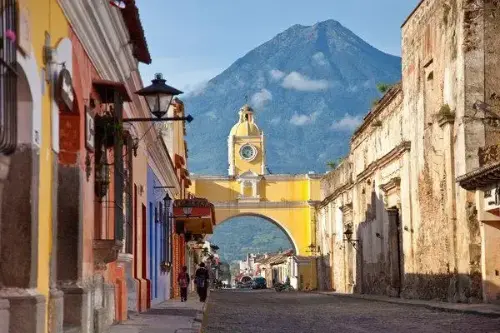 Day 11: 08:00–16:00
Puerto Quetzal / Guatemala
Puerto Quetzal is an important port city on the Pacific coast of Guatemala. It is one of the most popular cruise destinations, making it a key transport hub and a gateway for travelers arriving in the country. Puerto Quetzal is also a starting point for exploring Guatemala’s natural wonders, including famous volcanoes and picturesque beaches. Nearby attractions include the Acatenango Volcano and the Monterico National Park, renowned for its ecosystem and beaches suitable for surfing.
In addition to its natural beauty, Puerto Quetzal offers travelers a unique atmosphere. The city retains the charm of the Pacific coastline, with cozy fishing villages and restaurants where visitors can enjoy fresh seafood. Its strategic location and developed infrastructure make Puerto Quetzal a convenient starting point for exploring Guatemala, whether for those wishing to discover ancient Mayan ruins like Tikal or for those seeking a relaxing beach vacation.
-
Day 12:
Day at sea / Sea
-
Day 13:
Day at sea / Sea
-
 Day 14: 09:00–23:00
Puerto Vallarta / Mexico
A warm ocean breeze greets visitors in Puerto Vallarta, a picturesque resort on the Pacific coast where the Sierra Madre mountains meet golden beaches. The city is known for its cozy atmosphere, narrow cobblestone streets in its historic center, and the famous Malecon boardwalk adorned with modern sculptures and street art. Here, you can not only bask under the sun but also spot whales in Banderas Bay during the migration season.
For travelers, Puerto Vallarta offers rich culture and culinary delights, from traditional tacos and fresh seafood to art galleries and Mexican music festivals. The city is also popular among diving and snorkeling enthusiasts thanks to its coral reefs and crystal-clear waters. It is a place where you can combine relaxing by the ocean with exploring the nature and cultural life of Mexico.
-
Day 15:
Day at sea / Sea
-
Day 16:
Day at sea / Sea
-
 Day 17: 15:00–22:00
San Diego California / USA
-
Day 18:
Day at sea / Sea
-
 Day 19: 06:00
San Francisco / USA
San Francisco , officially the City and County of San Francisco, is the cultural, commercial, and financial center of Northern California. San Francisco is the 13th-most populous city in the United States, and the fourth-most populous in California, with 884,363 residents as of 2017. It covers an area of about 46.89 square miles (121.4 km2), mostly at the north end of the San Francisco Peninsula in the San Francisco Bay Area, making it the second-most densely populated large US city, and the fifth-most densely populated U.S. county, behind only four of the five New York City boroughs. San Francisco is also part of the fifth-most populous primary statistical area in the United States, the San Jose–San Francisco–Oakland, CA Combined Statistical Area (9.7 million residents).
Tour operator
Biznes i Turystyka Piotr Skupiewski
- ul. Łukowa 41, 32-823 Szczepanów
- NIP 8691148381
- REGON 850455159
- +48 576 977 555
- +48 570 700 273
The tour operator is entered in the Central Register of Tour Operators and Entrepreneurs Facilitating the Purchase of Linked Travel Arrangements. It holds UNIQA insurance guarantee no. 3800003856, valid from 5 May 2026 to 4 May 2027. The guarantee sum is PLN 379,404.00. The operator pays contributions to the Tourist Guarantee Fund and the Tourist Assistance Fund.
Still have a question?
We'll help you choose a cruise and answer your questions.