

Sea cruise · 15.06.2028 – 25.06.2028 · 10 nights
10 nights, from Lisbon
Cabin prices and availabilityRoute and cruise information
Premium| Date | Port | Arrival | Departure |
|---|---|---|---|
| 15.06.2028 |
Lisbon
Portugal
|
— | 17:00 |
| 16.06.2028 |
Porto
Portugal
|
09:00 | 20:00 |
| 17.06.2028 |
Day at sea
|
— | — |
| 18.06.2028 |
Bilbao
Spain
|
08:00 | 22:00 |
| 19.06.2028 |
Pasaia Pasaia
Spain
|
06:45 | 15:00 |
| 20.06.2028 |
Bordeaux
France
|
07:00 | — |
| 21.06.2028 |
Bordeaux
France
|
— | 19:00 |
| 22.06.2028 |
Day at sea
|
— | — |
| 23.06.2028 |
Saint-Malo
France
|
08:00 | 20:00 |
| 24.06.2028 |
Le Havre
France
|
08:00 | 18:00 |
| 25.06.2028 |
Dover
Great Britain
|
07:00 | — |
-
 Day 1: 17:00
Lisbon / Portugal
Lisbon is the capital and the largest city of Portugal, with an estimated population of 505,526 within its administrative limits in an area of 100.05 km2. Its urban area extends beyond the city's administrative limits with a population of around 2.8 million people, being the 11th-most populous urban area in the European Union. About 3 million people live in the Lisbon Metropolitan Area (which represents approximately 27% of the country's population). It is mainland Europe's westernmost capital city and the only one along the Atlantic coast. Lisbon lies in the western Iberian Peninsula on the Atlantic Ocean and the River Tagus. The westernmost areas of its metro area form the westernmost point of Continental Europe, which is known as Cabo da Roca, located in the Sintra Mountains.
-
 Day 2: 09:00–20:00
Porto / Portugal
Порту является вторым по величине городом Португалии после Лиссабона и одним из крупных городских районов Пиренейского полуострова. Население самого города составляет 237 591 человек, а в столичном районе Порту, который выходит за административные пределы города, проживает 1,9 миллиона человек (2011 год) на площади 2 395 км2 (925 кв. Миль), что делает его вторым самый большой городской район в Португалии. Он признан глобальным городом гамма-уровня Исследовательской группой по глобализации и глобальным городам (GaWC), единственным португальским городом, кроме Лиссабона, который был признан глобальным городом.
Расположенный вдоль устья реки Дору на севере Португалии, Порту является одним из старейших европейских центров, и его историческое ядро было объявлено ЮНЕСКО объектом Всемирного наследия в 1996 году. Западная часть его городской территории простирается до береговой линии Атлантического океана. Его поселение датируется много веков, когда он был форпостом Римской империи. Его объединенное кельтско-латинское имя, Portus Cale, было названо происхождением названия «Португалия», основанного на транслитерации и устной эволюции от латыни. На португальском языке название города пишется с определенной статьей о Порту ; следовательно, его английское название произошло от неправильного толкования устного произношения и упоминается как Опорто в современной литературе и многими ораторами.
-
Day 3:
Day at sea / Sea
-
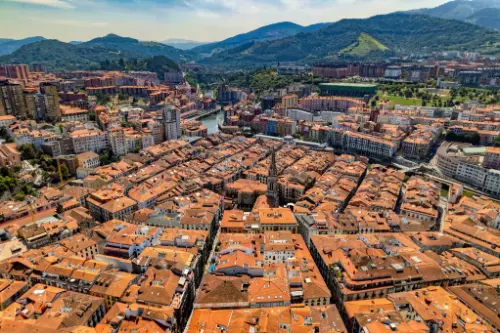 Day 4: 08:00–22:00
Bilbao / Spain
Bilbao is a city in northern Spain, the largest city in the province of Biscay and in the Basque Country as a whole. It is also the largest city proper in northern Spain. Bilbao is the tenth largest city in Spain, with a population of 345,141 as of 2015. The Bilbao metropolitan area has roughly 1 million inhabitants, making it one of the most populous metropolitan areas in northern Spain; with a population of 875,552 the comarca of Greater Bilbao is the fifth-largest urban area in Spain. Bilbao is also the main urban area in what is defined as the Greater Basque region.
Bilbao is situated in the north-central part of Spain, some 16 kilometres (10 mi) south of the Bay of Biscay, where the economic social development is located, where the estuary of Bilbao is formed. Its main urban core is surrounded by two small mountain ranges with an average elevation of 400 metres (1,300 ft). Its climate is shaped by the Bay of Biscay low-pressure systems and mild air, moderating summer temperatures by Iberian standards, with low sunshine and high rainfall. The annual temperature range is low for its latitude.
After its foundation in the early 14th century by Diego López V de Haro, head of the powerful Haro family, Bilbao was a commercial hub of the Basque Country that enjoyed significant importance in Green Spain. This was due to its port activity based on the export of iron extracted from the Biscayan quarries. Throughout the nineteenth century and the beginning of the twentieth, Bilbao experienced heavy industrialisation, making it the centre of the second-most industrialised region of Spain, behind Barcelona. At the same time an extraordinary population explosion prompted the annexation of several adjacent municipalities. Nowadays, Bilbao is a vigorous service city that is experiencing an ongoing social, economic, and aesthetic revitalisation process, started by the iconic Bilbao Guggenheim Museum, and continued by infrastructure investments, such as the airport terminal, the rapid transit system, the tram line, the Azkuna Zentroa, and the currently under development Abandoibarra and Zorrozaurrerenewal projects.
Bilbao is also home to football club Athletic Club de Bilbao, a significant symbol for Basque nationalism due to its promotion of only Basque players and one of the most successful clubs in Spanish football history.
On 19 May 2010, the city of Bilbao was recognised with the Lee Kuan Yew World City Prize, awarded by the city state of Singapore, in collaboration with the Swedish Nobel Academy. Considered the Nobel Prize for urbanism, it was handed out on 29 June 2010. On 7 January 2013, its mayor, Iñaki Azkuna, received the 2012 World Mayor Prize awarded every two years by the British foundation The City Mayors Foundation, in recognition of the urban transformation experienced by the Biscayan capital since the 1990s. On 8 November 2017, Bilbao was chosen the Best European City 2018 at The Urbanism Awards 2018, awarded by the international organisation The Academy of Urbanism.
-
Day 5: 06:45–15:00
Pasaia Pasaia / Spain
-
 Day 6: 07:00
Bordeaux / France
Bordeaux is a port city on the Garonne in the Gironde department in Southwestern France.
The municipality (commune) of Bordeaux proper has a population of 246,586 (2014). Together with its suburbs and satellite towns, Bordeaux is the centre of the Bordeaux Métropole. With 1,195,335 in the metropolitan area, it is the sixth-largest in France, after Paris, Marseille, Lyon, Toulouse, and Lille. It is the capital of the Nouvelle-Aquitaineregion, as well as the prefecture of the Gironde department. Its inhabitants are called "Bordelais" (for men) or "Bordelaises" (women). The term "Bordelais" may also refer to the city and its surrounding region.
Being at the center of a major wine-growing and wine-producing region, Bordeaux remains a prominent powerhouse and exercises significant influence on the world wine industry although no wine production is conducted within the city limits. It is home to the world's main wine fair, Vinexpo, and the wine economy in the metro area takes in 14.5 billion euros each year. Bordeaux wine has been produced in the region since the 8th century. The historic part of the city is on the UNESCO World Heritage List as "an outstanding urban and architectural ensemble" of the 18th century.[7] After Paris, Bordeaux has the highest number of preserved historical buildings of any city in France.
-
Day 7: 19:00
Bordeaux / France
Bordeaux is a port city on the Garonne in the Gironde department in Southwestern France.
The municipality (commune) of Bordeaux proper has a population of 246,586 (2014). Together with its suburbs and satellite towns, Bordeaux is the centre of the Bordeaux Métropole. With 1,195,335 in the metropolitan area, it is the sixth-largest in France, after Paris, Marseille, Lyon, Toulouse, and Lille. It is the capital of the Nouvelle-Aquitaineregion, as well as the prefecture of the Gironde department. Its inhabitants are called "Bordelais" (for men) or "Bordelaises" (women). The term "Bordelais" may also refer to the city and its surrounding region.
Being at the center of a major wine-growing and wine-producing region, Bordeaux remains a prominent powerhouse and exercises significant influence on the world wine industry although no wine production is conducted within the city limits. It is home to the world's main wine fair, Vinexpo, and the wine economy in the metro area takes in 14.5 billion euros each year. Bordeaux wine has been produced in the region since the 8th century. The historic part of the city is on the UNESCO World Heritage List as "an outstanding urban and architectural ensemble" of the 18th century.[7] After Paris, Bordeaux has the highest number of preserved historical buildings of any city in France.
-
Day 8:
Day at sea / Sea
-
 Day 9: 08:00–20:00
Saint-Malo / France
The sea breeze and the cries of seagulls accompany you in Saint-Malo, a city on the Brittany coast that has preserved its spirit of maritime adventure and independence. Here, high fortress walls embrace narrow streets, while cobblestone paths lead you to cozy cafes overlooking the ocean. The history of pirates and sailors comes alive as you walk along the ramparts, watch the tides transform the coastline, or take a boat to visit the famous Grand Bé island, where the writer Chateaubriand is buried.
In Saint-Malo, you can enjoy fresh seafood in local restaurants, taste oysters harvested from nearby waters, or simply have a picnic on the sandy beaches revealed at low tide. The city offers a sense of both coziness and freedom, blending picturesque architecture with the energy of the Atlantic, while the sea breeze and salty air remind you that here, history and nature always walk beside you.
-
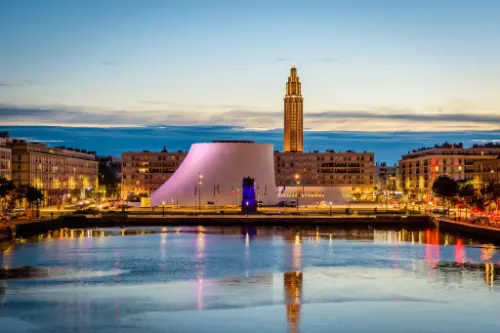 Day 10: 08:00–18:00
Le Havre / France
Le Havre is a port city located in the northwest of France, on the coast of the English Channel. It is an important center of maritime trade and shipbuilding. Founded in the 16th century, Le Havre quickly developed thanks to its strategic location, becoming one of the largest ports in the country. The city is known for its modern architecture, carefully planned after the destructions of World War II. In 2005, the historic center of the city was included in the UNESCO World Heritage list, and the famous architectural ensemble designed by Auguste Perret became an essential part of the city's identity.
Today, Le Havre attracts tourists with its unique atmosphere, blending old and new elements. One of its main attractions is the Notre-Dame-de-Grâce, as well as the Dunkirk Cultural Center, which hosts concerts, exhibitions, and theatrical performances. The local beaches and promenades are perfect places for walks and relaxation, while numerous restaurants offer fresh seafood dishes. Le Havre has also become an important cultural and economic center, welcoming guests not only from France but also from all over the world.
-
 Day 11: 07:00
Dover / Great Britain
Dover is a major ferry port in Kent, South East England. It faces France across the Strait of Dover, the narrowest part of the English Channel, and lies south-east of Canterbury and east of Maidstone. The town is the administrative centre of the Dover District and home of the Dover Calais ferry through the Port of Dover. The surrounding chalk cliffs are known as the White Cliffs of Dover.
Archaeological finds have revealed that the area has always been a focus for peoples entering and leaving Britain. The name derives from the River Dour that flows through it.
The Port of Dover provides much of the town's employment, as does tourism.
Please wait…
Tour operator
Biznes i Turystyka Piotr Skupiewski
- ul. Łukowa 41, 32-823 Szczepanów
- NIP 8691148381
- REGON 850455159
- +48 576 977 555
- +48 570 700 273
The tour operator is entered in the Central Register of Tour Operators and Entrepreneurs Facilitating the Purchase of Linked Travel Arrangements. It holds UNIQA insurance guarantee no. 3800003856, valid from 5 May 2026 to 4 May 2027. The guarantee sum is PLN 379,404.00. The operator pays contributions to the Tourist Guarantee Fund and the Tourist Assistance Fund.
Still have a question?
We'll help you choose a cruise and answer your questions.