
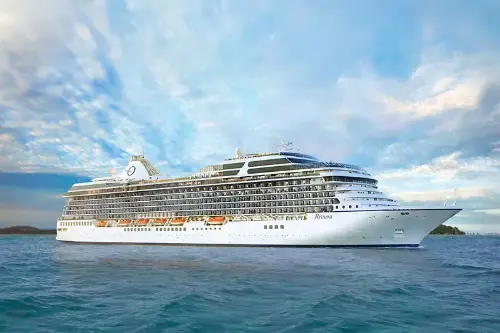
Sea cruise · 07.09.2028 – 08.10.2028 · 31 nights
Pacific passage to japan
Cabin prices and availabilityRoute and cruise information
Premium- Seattle, Washington
- Ketchikan
- Juneau
- Anchorage
- Kushiro
- Hakodate, Hokkaidoo
- Muroran
- Miyakojima Miyako
- Hitachi-Naka
- Yokohama (Tokyo)
- Yokohama (Tokyo)
- Osaka
- Kochi
- Beppu
- Hiroshima
- Fukuoka
- Busan
- Nagasaki
- Kagoshima
- Yokohama (Tokyo)
| Date | Port | Arrival | Departure |
|---|---|---|---|
| 07.09.2028 |
Seattle, Washington
USA
|
07:00 | 17:00 |
| 08.09.2028 |
Day at sea
|
— | — |
| 09.09.2028 |
Ketchikan
Alaska
|
09:00 | 16:00 |
| 10.09.2028 |
Juneau
Alaska
|
09:00 | 17:00 |
| 11.09.2028 |
Day at sea
|
— | — |
| 12.09.2028 |
Anchorage
|
09:00 | 20:00 |
| 13.09.2028 |
Day at sea
|
— | — |
| 14.09.2028 |
Day at sea
|
— | — |
| 15.09.2028 |
Day at sea
|
— | — |
| 16.09.2028 | — | — | |
| 18.09.2028 |
Day at sea
|
— | — |
| 19.09.2028 |
Day at sea
|
— | — |
| 20.09.2028 |
Day at sea
|
— | — |
| 21.09.2028 |
Kushiro
Japan
|
09:00 | 17:00 |
| 22.09.2028 |
Hakodate, Hokkaidoo
Japan
|
08:00 | 17:00 |
| 23.09.2028 |
Muroran
Japan
|
08:00 | 17:00 |
| 24.09.2028 |
Miyakojima Miyako
Japan
|
08:00 | 17:00 |
| 25.09.2028 |
Hitachi-Naka
|
08:00 | 17:00 |
| 26.09.2028 |
Yokohama (Tokyo)
Japan
|
08:00 | — |
| 27.09.2028 |
Yokohama (Tokyo)
Japan
|
— | 17:00 |
| 28.09.2028 |
Day at sea
|
— | — |
| 29.09.2028 |
Osaka
Japan
|
07:00 | 17:00 |
| 30.09.2028 |
Kochi
India
|
07:00 | 17:00 |
| 01.10.2028 |
Beppu
Japan
|
07:00 | 17:00 |
| 02.10.2028 |
Hiroshima
Japan
|
07:00 | 19:00 |
| 03.10.2028 |
Day at sea
|
— | — |
| 03.10.2028 |
Fukuoka
Japan
|
11:00 | 20:00 |
| 04.10.2028 |
Busan
Korea
|
07:00 | 17:00 |
| 05.10.2028 |
Nagasaki
Japan
|
07:00 | 17:00 |
| 06.10.2028 |
Kagoshima
Japan
|
07:00 | 16:00 |
| 07.10.2028 |
Day at sea
|
— | — |
| 08.10.2028 |
Yokohama (Tokyo)
Japan
|
07:00 | 17:00 |
-
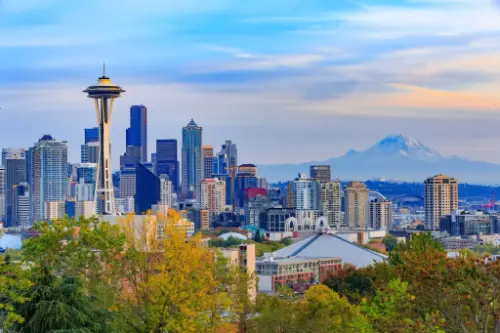 Day 1: 07:00–17:00
Seattle, Washington / USA
На Тихоокеанском побережье США расположился замечательный, современный город Сиэтл, символом которого является Спейс-Нидл, башня, находящаяся на территории выставочного комплекса Seattle Center.
Эта узнаваемая достопримечательность представляет собой башню высотой почти 184 метра, более 40 метров шириной, а также она построена так, что выдержит ураганы с порывами ветра до 320 км/ч. Особенность этого величайшего сооружения в его обзорной площадке, расположенной на высоте 159 метров, где находится ресторан Sky City и магазин подарков. Каждый гость города просто обязан побывать в Керри Парке, пейзажи которого не оставляют равнодушными даже жителей Сиэтла. И эта не единственный знаменитый парк города. Также стоит посетить Гэзуоркс Парк, с великолепным видам на прибрежный Даунтаун. А еще в городе есть множество, интересных для посещения, рынков, в числе которых и Майк маркет-рынок морепродуктов, который также может похвастаться своеобразной сценой для уличных артистов, что, несомненно, делает его очень популярным для туристов, а также Пайк-Плейс-маркет — популярный среди туристов общественный рынок.
-
Day 2:
Day at sea / Sea
-
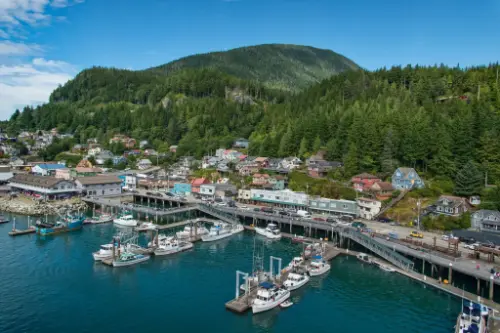 Day 3: 09:00–16:00
Ketchikan / Alaska
Ketchikan is a city in the Ketchikan Gateway Borough, Alaska, United States, the southeasternmost city in Alaska. With a population at the 2010 census of 8,050, it is the fifth-most populous city in the state, and tenth-most populous community when census-designated places are included. The surrounding borough, encompassing suburbs both north and south of the city along the Tongass Highway (most of which are commonly regarded as a part of Ketchikan, albeit not a part of the city itself), plus small rural settlements accessible mostly by water, registered a population of 13,477 in that same census. Estimates put the 2017 population at 13,754 people. Incorporated on August 25, 1900, Ketchikan is the earliest extant incorporated city in Alaska, because consolidation or unification elsewhere in Alaska resulted in dissolution of those communities' city governments. Ketchikan is located on Revillagigedo Island, so named in 1793 by Captain George Vancouver.
Ketchikan is named after Ketchikan Creek, which flows through the town, emptying into the Tongass Narrows a short distance southeast of its downtown. "Ketchikan" comes from the Tlingit name for the creek, Kitschk-hin, the meaning of which is unclear. It may mean "the river belonging to Kitschk"; other accounts claim it means "Thundering Wings of an Eagle". In modern Tlingit this name is rendered as Kichx̱áan.
-
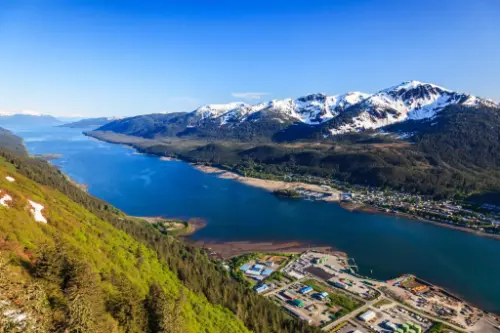 Day 4: 09:00–17:00
Juneau / Alaska
Столица штата Аляска — город Джуно, был основан в 1881 году, после открытия месторождения золота и назван в честь золотоискателя Джозефа Джуно. В городе развиты рыболовство и туризм. В список достопримечательностей этого очаровательного городка входят Музей истории Аляски и церковь Святого Николая. Это русская православная церковь, но поскольку среди ее прихожан русских нет, то служба идет на английском языке. Также интересным для туристов будет и Tongass National Forest (национальный парк), и Фьорд Трейси-Арм. Поразит своей красотой и прилегающая к Джуно территория. Здесь расположились живописные ледники, высочайшие горы, интригующие ущелья, что ежегодно привлекает сюда тысячи туристов, любящих пешеходные прогулки.
-
Day 5:
Day at sea / Sea
-
Day 6: 09:00–20:00
Anchorage
-
Day 7:
Day at sea / Sea
-
Day 8:
Day at sea / Sea
-
Day 9:
Day at sea / Sea
-
Day 10:
-
Day 12:
Day at sea / Sea
-
Day 13:
Day at sea / Sea
-
Day 14:
Day at sea / Sea
-
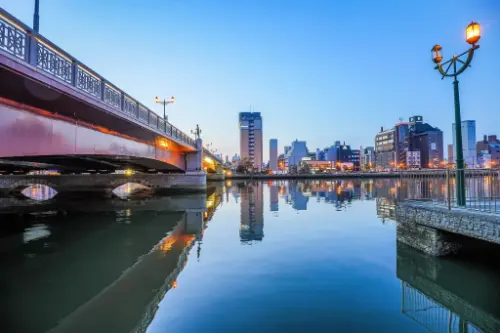 Day 15: 09:00–17:00
Kushiro / Japan
-
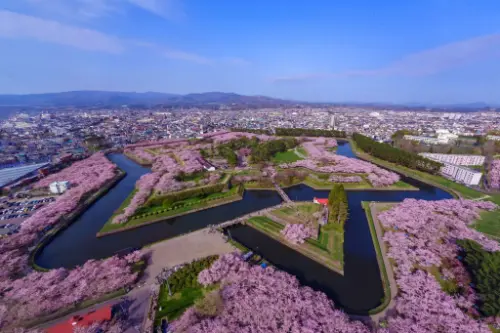 Day 16: 08:00–17:00
Hakodate, Hokkaidoo / Japan
-
Day 17: 08:00–17:00
Muroran / Japan
-
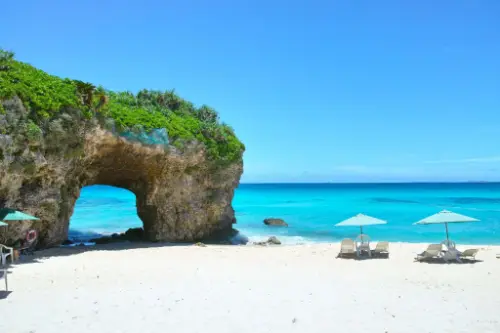 Day 18: 08:00–17:00
Miyakojima Miyako / Japan
-
Day 19: 08:00–17:00
Hitachi-Naka
-
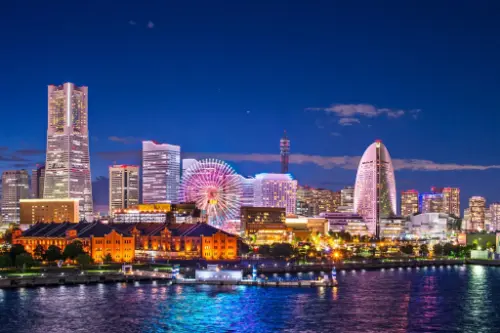 Day 20: 08:00
Yokohama (Tokyo) / Japan
Tokyo, officially Tokyo Metropolis, one of the 47 prefectures of Japan, has served as the Japanese capital since 1869. As of 2014, the Greater Tokyo Arearanked as the most populous metropolitan area in the world. The urban area houses the seat of the Emperor of Japan, of the Japanese government and of the National Diet. Tokyo forms part of the Kantō region on the southeastern side of Japan's main island, Honshu, and includes the Izu Islands and Ogasawara Islands. Tokyo was formerly named Edo when Shōgun Tokugawa Ieyasu made the city his headquarters in 1603. It became the capital after Emperor Meiji moved his seat to the city from Kyoto in 1868; at that time Edo was renamed Tokyo. Tokyo Metropolis formed in 1943 from the merger of the former Tokyo Prefecture and the city of Tokyo. Tokyo is often referred to as a city but is officially known and governed as a "metropolitan prefecture", which differs from and combines elements of a city and a prefecture, a characteristic unique to Tokyo.
The 23 Special Wards of Tokyo were formerly Tokyo City. On July 1, 1943, it merged with Tokyo Prefecture and became Tokyo Metropolis with an additional 26 municipalities in the western part of the prefecture, and the Izu islandsand Ogasawara islands south of Tokyo. The population of the special wards is over 9 million people, with the total population of Tokyo Metropolis exceeding 13.8 million. The prefecture is part of the world's most populous metropolitan area called the Greater Tokyo Area with over 38 million people and the world's largest urban agglomeration economy. As of 2011, Tokyo hosted 51 of the Fortune Global 500 companies, the highest number of any city in the world at that time. Tokyo ranked third (twice) in the International Financial Centres Development Index. The city is home to various television networks such as Fuji TV, Tokyo MX, TV Tokyo, TV Asahi, Nippon Television, NHK and the Tokyo Broadcasting System.
-
Day 21: 17:00
Yokohama (Tokyo) / Japan
Tokyo, officially Tokyo Metropolis, one of the 47 prefectures of Japan, has served as the Japanese capital since 1869. As of 2014, the Greater Tokyo Arearanked as the most populous metropolitan area in the world. The urban area houses the seat of the Emperor of Japan, of the Japanese government and of the National Diet. Tokyo forms part of the Kantō region on the southeastern side of Japan's main island, Honshu, and includes the Izu Islands and Ogasawara Islands. Tokyo was formerly named Edo when Shōgun Tokugawa Ieyasu made the city his headquarters in 1603. It became the capital after Emperor Meiji moved his seat to the city from Kyoto in 1868; at that time Edo was renamed Tokyo. Tokyo Metropolis formed in 1943 from the merger of the former Tokyo Prefecture and the city of Tokyo. Tokyo is often referred to as a city but is officially known and governed as a "metropolitan prefecture", which differs from and combines elements of a city and a prefecture, a characteristic unique to Tokyo.
The 23 Special Wards of Tokyo were formerly Tokyo City. On July 1, 1943, it merged with Tokyo Prefecture and became Tokyo Metropolis with an additional 26 municipalities in the western part of the prefecture, and the Izu islandsand Ogasawara islands south of Tokyo. The population of the special wards is over 9 million people, with the total population of Tokyo Metropolis exceeding 13.8 million. The prefecture is part of the world's most populous metropolitan area called the Greater Tokyo Area with over 38 million people and the world's largest urban agglomeration economy. As of 2011, Tokyo hosted 51 of the Fortune Global 500 companies, the highest number of any city in the world at that time. Tokyo ranked third (twice) in the International Financial Centres Development Index. The city is home to various television networks such as Fuji TV, Tokyo MX, TV Tokyo, TV Asahi, Nippon Television, NHK and the Tokyo Broadcasting System.
-
Day 22:
Day at sea / Sea
-
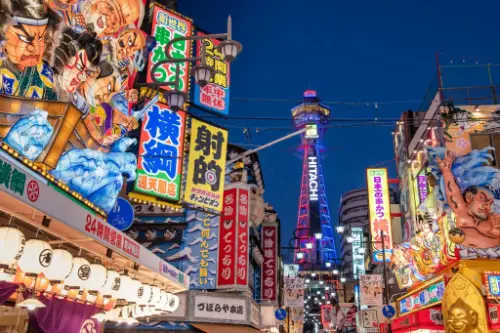 Day 23: 07:00–17:00
Osaka / Japan
Osaka is a designated city in the Kansai regionof Japan. It is the capital city of Osaka Prefecture and the largest component of the Keihanshin Metropolitan Area, the second largest metropolitan area in Japan and among the largest in the world with over 19 million inhabitants. Osaka will host Expo 2025. The current mayor of Osaka is Hirohumi Yoshimura.
-
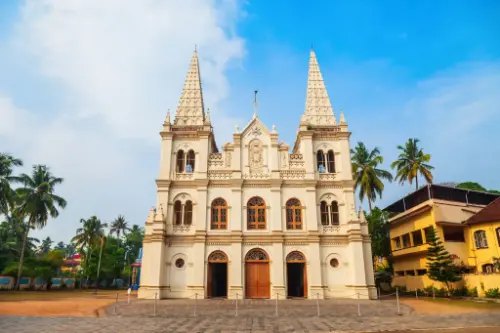 Day 24: 07:00–17:00
Kochi / India
a seaport and naval base on the Malabar Coast of southwestern India, in the state of Kerala; population 254,500 (est. 2009).
-
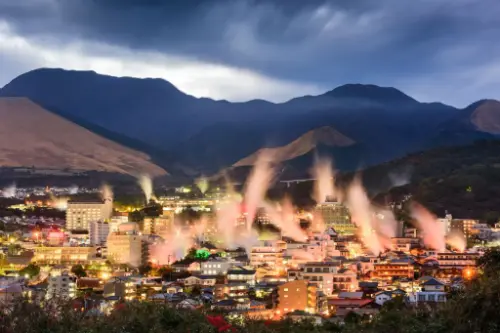 Day 25: 07:00–17:00
Beppu / Japan
Beppu is a city in Ōita Prefecture on the island of Kyushu, Japan, at the west end of Beppu Bay. As of March 31, 2017, the city had a population of 122,643 and a population density of 980/km2 (2,500/sq mi). The total area is 125.13 km2 (48.31 sq mi). Beppu is famous for its hot springs.
-
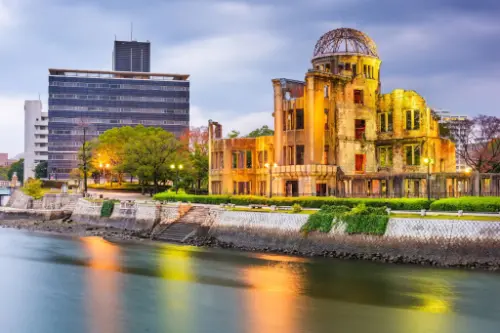 Day 26: 07:00–19:00
Hiroshima / Japan
a city in southwestern Japan, on the southern coast of the island of Honshu; population 1,144,572 (2007). It was the target of the first atom bomb, which was dropped by the US on August 6, 1945, and resulted in the deaths of about one third of the city's population of 300,000. This, with a second attack on Nagasaki three days later, led to Japan's surrender and to the end of World War II.
-
Day 27:
Day at sea / Sea
-
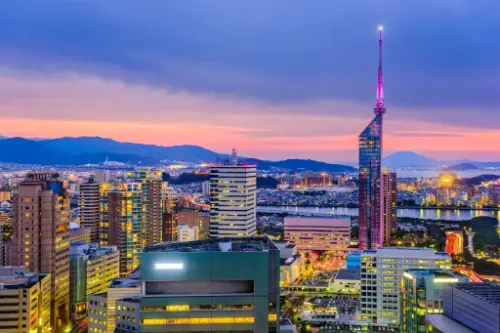 Day 27: 11:00–20:00
Fukuoka / Japan
-
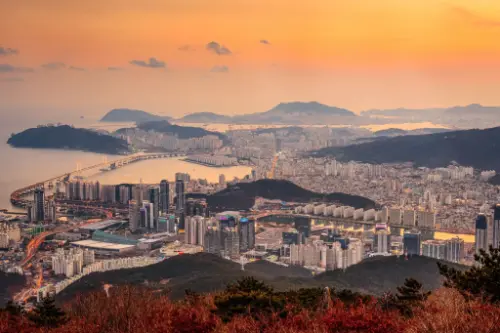 Day 28: 07:00–17:00
Busan / Korea
Busan, formerly known as Pusan and now officially Busan Metropolitan City, is South Korea's second most-populous city after Seoul, with a population of over 3.5 million inhabitants. It is the economic, cultural and educational center of southeastern Korea, with its port—Korea's busiest and the 9th-busiest in the world—only about 120 miles (190 km) from the Japanese islands of Kyushu and Honshu. The surrounding "Southeast Economic Zone" (including Ulsan and South Gyeongsang) is now South Korea's largest industrial area.
-
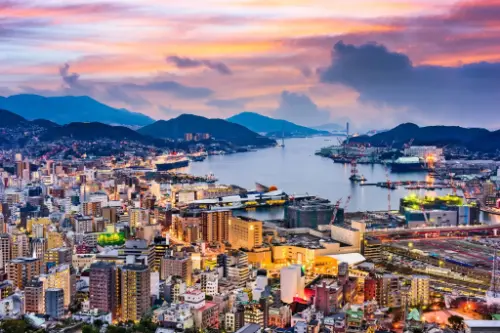 Day 29: 07:00–17:00
Nagasaki / Japan
Nagasaki is the capital and the largest city of Nagasaki Prefecture on the island of Kyushu in Japan. The city's name means "long cape" in Japanese. Nagasaki became a centre of colonial Portuguese and Dutch influence in the 16th through 19th centuries, and the Hidden Christian Sites in the Nagasaki Region have been recognized and included in the UNESCO World Heritage List. Part of Nagasaki was home to a major Imperial Japanese Navy base during the First Sino-Japanese War and Russo-Japanese War.
During World War II, the American atomic bombings of Hiroshima and Nagasaki made Nagasaki the second and, to date, last city in the world to experience a nuclear attack (at 11:02 a.m., August 9, 1945 'Japan Standard Time (UTC+9)').
As of 1 March 2017, the city has an estimated population of 425,723 and a population density of 1,000 people per km2. The total area is 406.35 km2 (156.89 sq mi).
-
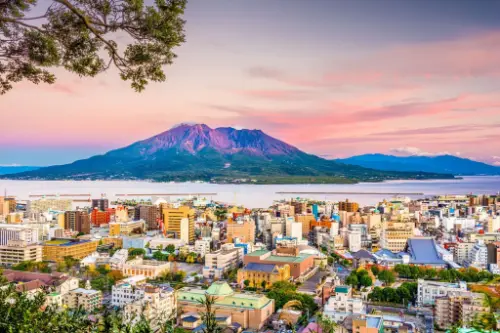 Day 30: 07:00–16:00
Kagoshima / Japan
Kagoshima is the capital city of Kagoshima Prefecture at the south western tip of the island of Kyushu in Japan, and the largest city in the prefecture by some margin. It has been nicknamed the "Naples of the Eastern world" for its bay location (Aira Caldera), hot climate, and emblematic stratovolcano, Sakurajima. The city was officially founded on April 1, 1889.
-
Day 31:
Day at sea / Sea
-
Day 32: 07:00–17:00
Yokohama (Tokyo) / Japan
Tokyo, officially Tokyo Metropolis, one of the 47 prefectures of Japan, has served as the Japanese capital since 1869. As of 2014, the Greater Tokyo Arearanked as the most populous metropolitan area in the world. The urban area houses the seat of the Emperor of Japan, of the Japanese government and of the National Diet. Tokyo forms part of the Kantō region on the southeastern side of Japan's main island, Honshu, and includes the Izu Islands and Ogasawara Islands. Tokyo was formerly named Edo when Shōgun Tokugawa Ieyasu made the city his headquarters in 1603. It became the capital after Emperor Meiji moved his seat to the city from Kyoto in 1868; at that time Edo was renamed Tokyo. Tokyo Metropolis formed in 1943 from the merger of the former Tokyo Prefecture and the city of Tokyo. Tokyo is often referred to as a city but is officially known and governed as a "metropolitan prefecture", which differs from and combines elements of a city and a prefecture, a characteristic unique to Tokyo.
The 23 Special Wards of Tokyo were formerly Tokyo City. On July 1, 1943, it merged with Tokyo Prefecture and became Tokyo Metropolis with an additional 26 municipalities in the western part of the prefecture, and the Izu islandsand Ogasawara islands south of Tokyo. The population of the special wards is over 9 million people, with the total population of Tokyo Metropolis exceeding 13.8 million. The prefecture is part of the world's most populous metropolitan area called the Greater Tokyo Area with over 38 million people and the world's largest urban agglomeration economy. As of 2011, Tokyo hosted 51 of the Fortune Global 500 companies, the highest number of any city in the world at that time. Tokyo ranked third (twice) in the International Financial Centres Development Index. The city is home to various television networks such as Fuji TV, Tokyo MX, TV Tokyo, TV Asahi, Nippon Television, NHK and the Tokyo Broadcasting System.
Your World Included
With Your World Included, you’ll enjoy a wide array of included amenities for the ultimate comfort and value in ultra-premium cruising.
Unforgettable dining experiences at a variety of exquisite restaurants — all at no extra charge.
Complimentary specialty coffees, sodas, freshly pressed juices, and still and sparkling Vero Water® served throughout the ship.
Unlimited free Wi-Fi available in your suite, stateroom, and all public areas.
In-room dining with a superb variety of hot and cold selections.
Smoothies, milkshakes, gelato, and signature Humphry Slocombe ice cream — always included.
Group fitness classes at Aquamar® Spa + Vitality Center are complimentary.
Gratuities are included for your convenience.
Laundry is free for all guests.
With complimentary self-service launderettes on board, plus laundry and pressing services for Concierge and Suite categories, you’ll always look your finest.
Along with our hallmark personalized service, you’ll enjoy an enriching cruise experience with no hidden costs or nickel-and-diming.
Elevate Your Experience
Concierge Level Veranda Staterooms offer an unrivaled combination of luxury, privilege, and value. A wealth of amenities and exclusive benefits elevate your experience to the sublime — from in-room dining selections from The Grand Dining Room and complimentary laundry services to unlimited access to the Aquamar Spa Terrace.
On board Oceania Marina and Oceania Riviera, you’ll also enjoy the services of a dedicated Concierge and exclusive access to the private Concierge Lounge.
Located in the most desired areas of the ship, Concierge Level Veranda Staterooms are far more than just staterooms — they are an experience in themselves.
Concierge Level Veranda — Exclusive Privileges
Expanded in-room dining menu for lunch and dinner from The Grand Dining Room
Laundry service — up to 3 bags per stateroom
Exclusive key-card access to the private Concierge Lounge aboard Oceania Marina, Oceania Riviera, Oceania Vista, and Oceania Allura, featuring complimentary beverages, coffees, snacks, and the services of a dedicated Concierge
Welcome bottle of fine Italian Prosecco
Priority online reservations for specialty restaurants
Unlimited access to the Aquamar Spa Terrace
Oceania Cruises logo tote bag
Cashmere lap blankets — perfect for relaxing or snuggling
Pressing of garments upon embarkation
Complimentary shoeshine service
Deposit and Payments – Oceania Cruises
General Deposit:
For Owner’s, Vista, and Oceania Suites, a deposit of 20% of the cruise fare per person is required.
For all other suite/stateroom categories, the deposit is $500 per person.
For Grand Voyages, the deposit is $1,500 per person.
Deposit and Final Payment Deadlines:
Bookings more than 150 days from sailing:
Deposit 20% for Owner’s, Vista, and Oceania Suites and $500 for all other categories is required within 5 days of booking.
Bookings 90–120 days from sailing:
Full payment required within 3 days of booking.
Bookings 0–90 days from sailing:
Full payment due on the day of booking.
Important:
Bookings that are not deposited or paid in full according to this schedule will be automatically cancelled.
Unless otherwise noted, final payment must be received by Oceania Cruises 150 days prior to departure for cruises less than 15 days, and 150 days for cruises 15 days or longer.
Oceania Cruises reserves the right to cancel any booking not fully paid at the time of final payment.
Additional Information:
Passport details and special onboard service requests are due at final payment.
Payment may be made by personal check, American Express, Discover, MasterCard, or Visa.
For convenience, final payment may be automatically charged to the credit card used for the initial deposit.
Oceania Cruises is not responsible for foreign currency or transaction fees independently charged by issuing banks. These fees do not benefit Oceania Cruises.
Third-party credit card payments are accepted only with valid authorization from the cardholder.
Deposit and Payment – 180-Day Voyages
For 180-day voyages, a deposit of 20% of the cruise fare per person for all suites and staterooms is required within 7 days of booking.
Final payment must be received no later than 181 days prior to departure, along with passport details and any special onboard service requests.
Otherwise, the booking may be immediately cancelled, and applicable penalties will apply.
Form of Payment (FORM OF PAYMENT)
Oceania Cruises accepts payment for reservations by credit/debit card or bank transfer.
Unfortunately, personal checks are not accepted.
Credit/Debit Cards:
American Express, Visa, and Mastercard are accepted.
Please note: Oceania Cruises assumes no responsibility for foreign currency/transaction processing fees assessed by your issuing bank.
Prices are quoted in USD — roughly 1 USD ≈ 4,12 zł at the exchange rate on the day of booking
Please wait…
Tour operator
Biznes i Turystyka Piotr Skupiewski
- ul. Łukowa 41, 32-823 Szczepanów
- NIP 8691148381
- REGON 850455159
- +48 576 977 555
- +48 570 700 273
The tour operator is entered in the Central Register of Tour Operators and Entrepreneurs Facilitating the Purchase of Linked Travel Arrangements. It holds UNIQA insurance guarantee no. 3800003856, valid from 5 May 2026 to 4 May 2027. The guarantee sum is PLN 379,404.00. The operator pays contributions to the Tourist Guarantee Fund and the Tourist Assistance Fund.
Still have a question?
We'll help you choose a cruise and answer your questions.