
Sea cruise · 21.05.2028 – 13.06.2028 · 23 nights
Isles of the midnight sun
Cabin prices and availabilityRoute and cruise information
Premium- Stockholm
- Stockholm
- Riga
- Klaipeda (Memel)
- Gdańsk
- Ronne
- Berlin
- Aarhus
- Copenhagen
- Mandal
- IJmuiden
- Newcastle
- Dundee
- Invergordon
- Kirkwall
- Ullapool
- Torshavn
- Seydisfjordur
- Husavik
- Isafjordur
- Reykjavik
| Date | Port | Arrival | Departure |
|---|---|---|---|
| 21.05.2028 |
Stockholm
Sweden
|
— | 16:00 |
| 22.05.2028 |
Stockholm
Sweden
|
08:00 | 17:00 |
| 23.05.2028 |
Riga
Latvia
|
09:00 | 16:00 |
| 24.05.2028 |
Klaipeda (Memel)
Lithuania
|
11:00 | 19:00 |
| 25.05.2028 |
Gdańsk
Poland
|
07:00 | 16:00 |
| 26.05.2028 |
Ronne
Denmark
|
07:00 | 18:00 |
| 27.05.2028 |
Berlin
Germany
|
06:00 | 21:00 |
| 28.05.2028 |
Aarhus
Denmark
|
09:00 | 18:00 |
| 29.05.2028 |
Copenhagen
Denmark
|
07:00 | 18:00 |
| 30.05.2028 |
Mandal
|
10:00 | 19:00 |
| 31.05.2028 |
Day at sea
|
— | — |
| 01.06.2028 |
IJmuiden
|
07:00 | 17:00 |
| 02.06.2028 |
Day at sea
|
— | — |
| 03.06.2028 |
Newcastle
Great Britain
|
11:00 | 21:00 |
| 04.06.2028 |
Dundee
Great Britain
|
11:00 | 21:00 |
| 05.06.2028 |
Invergordon
Great Britain
|
10:00 | 20:00 |
| 06.06.2028 |
Kirkwall
Great Britain
|
07:00 | 17:00 |
| 07.06.2028 |
Ullapool
Scotland
|
07:00 | 16:00 |
| 08.06.2028 |
Torshavn
Faroe Islands
|
10:00 | 19:00 |
| 09.06.2028 |
Day at sea
|
— | — |
| 10.06.2028 |
Seydisfjordur
Iceland
|
07:00 | 16:00 |
| 11.06.2028 |
Husavik
Iceland
|
08:00 | 18:00 |
| 12.06.2028 |
Isafjordur
Iceland
|
07:00 | 17:00 |
| 13.06.2028 |
Reykjavik
Iceland
|
07:00 | 17:00 |
-
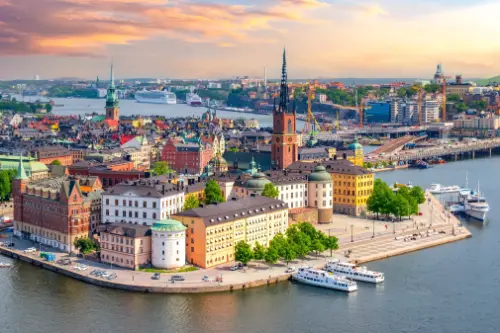 Day 1: 16:00
Stockholm / Sweden
Stockholm is the capital of Sweden and the most populous urban area in the Nordic countries; 960,031 people live in the municipality, approximately 1.5 million in the urban area, and 2.3 million in the metropolitan area. The city stretches across fourteen islands where Lake Mälaren flows into the Baltic Sea. Just outside the city and along the coast is the island chain of the Stockholm archipelago. The area has been settled since the Stone Age, in the 6th millennium BC, and was founded as a city in 1252 by Swedish statesman Birger Jarl. It is also the capital of Stockholm County.
Stockholm is the cultural, media, political, and economic centre of Sweden. The Stockholm region alone accounts for over a third of the country's GDP, and is among the top 10 regions in Europe by GDP per capita. It is an important global city, and the main centre for corporate headquarters in the Nordic region. The city is home to some of Europe's top ranking universities, such as the Stockholm School of Economics, Karolinska Institute and Royal Institute of Technology (KTH). It hosts the annual Nobel Prize ceremonies and banquet at the Stockholm Concert Hall and Stockholm City Hall. One of the city's most prized museums, the Vasa Museum, is the most visited non-art museum in Scandinavia. The Stockholm metro, opened in 1950, is well known for the decor of its stations; it has been called the longest art gallery in the world. Sweden's national football arena is located north of the city centre, in Solna. Ericsson Globe, the national indoor arena, is in the southern part of the city. The city was the host of the 1912 Summer Olympics, and hosted the equestrian portion of the 1956 Summer Olympicsotherwise held in Melbourne, Victoria, Australia.
Stockholm is the seat of the Swedish government and most of its agencies, including the highest courts in the judiciary, and the official residencies of the Swedish monarch and the Prime Minister. The government has its seat in the Rosenbad building, the Riksdag (Swedish parliament) is seated in the Parliament House, and the Prime Minister's residence is adjacent at Sager House. Stockholm Palace is the official residence and principal workplace of the Swedish monarch, while Drottningholm Palace, a World Heritage Site on the outskirts of Stockholm, serves as the Royal Family's private residence.
-
Day 2: 08:00–17:00
Stockholm / Sweden
Stockholm is the capital of Sweden and the most populous urban area in the Nordic countries; 960,031 people live in the municipality, approximately 1.5 million in the urban area, and 2.3 million in the metropolitan area. The city stretches across fourteen islands where Lake Mälaren flows into the Baltic Sea. Just outside the city and along the coast is the island chain of the Stockholm archipelago. The area has been settled since the Stone Age, in the 6th millennium BC, and was founded as a city in 1252 by Swedish statesman Birger Jarl. It is also the capital of Stockholm County.
Stockholm is the cultural, media, political, and economic centre of Sweden. The Stockholm region alone accounts for over a third of the country's GDP, and is among the top 10 regions in Europe by GDP per capita. It is an important global city, and the main centre for corporate headquarters in the Nordic region. The city is home to some of Europe's top ranking universities, such as the Stockholm School of Economics, Karolinska Institute and Royal Institute of Technology (KTH). It hosts the annual Nobel Prize ceremonies and banquet at the Stockholm Concert Hall and Stockholm City Hall. One of the city's most prized museums, the Vasa Museum, is the most visited non-art museum in Scandinavia. The Stockholm metro, opened in 1950, is well known for the decor of its stations; it has been called the longest art gallery in the world. Sweden's national football arena is located north of the city centre, in Solna. Ericsson Globe, the national indoor arena, is in the southern part of the city. The city was the host of the 1912 Summer Olympics, and hosted the equestrian portion of the 1956 Summer Olympicsotherwise held in Melbourne, Victoria, Australia.
Stockholm is the seat of the Swedish government and most of its agencies, including the highest courts in the judiciary, and the official residencies of the Swedish monarch and the Prime Minister. The government has its seat in the Rosenbad building, the Riksdag (Swedish parliament) is seated in the Parliament House, and the Prime Minister's residence is adjacent at Sager House. Stockholm Palace is the official residence and principal workplace of the Swedish monarch, while Drottningholm Palace, a World Heritage Site on the outskirts of Stockholm, serves as the Royal Family's private residence.
-
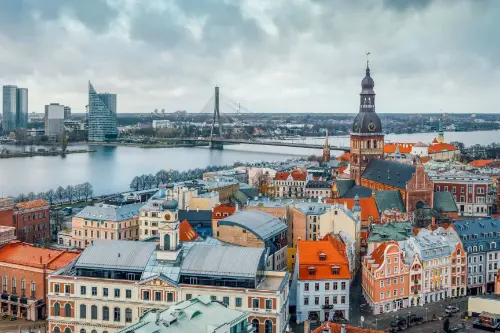 Day 3: 09:00–16:00
Riga / Latvia
Riga is the capital and largest city of Latvia. With 637,827 inhabitants (2018), it is also the largest city in the three Baltic states, home to one third of Latvia's population and one tenth of the three Baltic states' combined population. The city lies on the Gulf of Riga, at the mouth of the Daugava. Riga's territory covers 307.17 km2 (118.60 sq mi) and lies 1–10 m (3 ft 3 in–32 ft 10 in) above sea level, on a flat and sandy plain.
Riga was founded in 1201 and is a former Hanseatic League member. Riga's historical centre is a UNESCO World Heritage Site, noted for its Art Nouveau/Jugendstil architecture and 19th century wooden architecture. Riga was the European Capital of Culture during 2014, along with Umeå in Sweden. Riga hosted the 2006 NATO Summit, the Eurovision Song Contest 2003, the 2006 IIHF Men's World Ice Hockey Championships and the 2013 World Women's Curling Championship. It is home to the European Union's office of European Regulators for Electronic Communications (BEREC).
In 2016, Riga received over 1.4 million visitors. It is served by Riga International Airport, the largest and busiest airport in the Baltic states. Riga is a member of Eurocities, the Union of the Baltic Cities (UBC) and Union of Capitals of the European Union (UCEU).
-
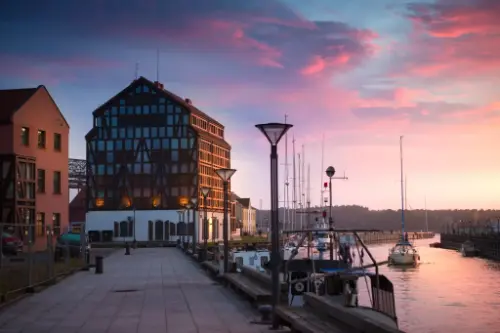 Day 4: 11:00–19:00
Klaipeda (Memel) / Lithuania
Klaipėda is a city in Lithuania on the Baltic Sea coast. It is the third largest city in Lithuania and the capital of Klaipėda County.
The city has a complex recorded history, partially due to the combined regional importance of the usually ice-free Port of Klaipėda at the mouth of the Akmena-Danė River. It was controlled by successive German states until the 1919 Treaty of Versailles. As a result of the 1923 Klaipėda Revolt it was added to Lithuania and has remained with Lithuania to this day, except for the period between 1939 and 1945 when it returned to Germany following the 1939 German ultimatum to Lithuania and the German–Soviet Union Molotov–Ribbentrop Pact.
The population has shrunk from the city to suburbs and the hinterland. The city had a population of 207,100 in 1992 to 157,350 in 2014 but the city is growing again. Popular seaside resorts found close to Klaipėda are Nida to the south on the Curonian Spit and Palanga to the north.
-
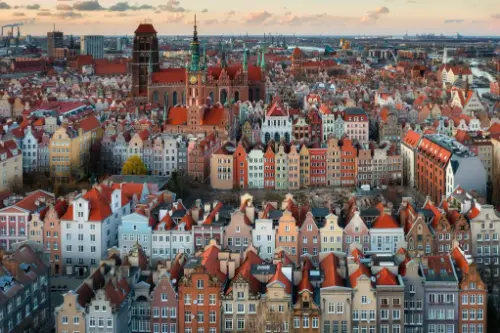 Day 5: 07:00–16:00
Gdańsk / Poland
-
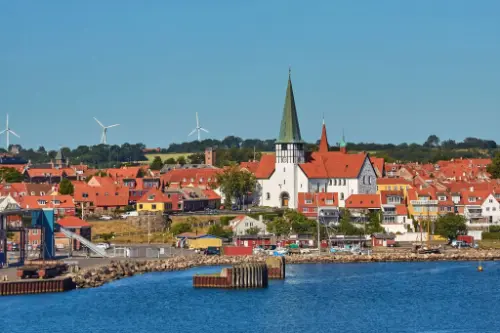 Day 6: 07:00–18:00
Ronne / Denmark
Quiet streets lined with half-timbered houses make Ronne (Rønne) a cozy corner on the Danish island of Bornholm, where every step is filled with the scent of the sea and fresh pastries from local bakeries. The town is known for its ceramics and glass workshops, as well as the cozy atmosphere of its fishing port, where you can taste freshly smoked herring while watching ships slowly enter the harbor. Here, time seems to slow down, allowing you to enjoy strolls through the old town with its cobblestone streets and picturesque houses that have preserved their 18th-century charm.
In Ronne, travelers will find a peaceful retreat with a touch of Danish coziness and the creative spirit of the island. The Bornholm Museum offers insights into the island's history and maritime traditions, while walks along the coast reveal rocky shores and clean beaches inviting relaxation year-round. This town is the perfect place for those who wish to experience authentic Denmark, breathe in the sea air, and discover the warm hospitality of Bornholm.
-
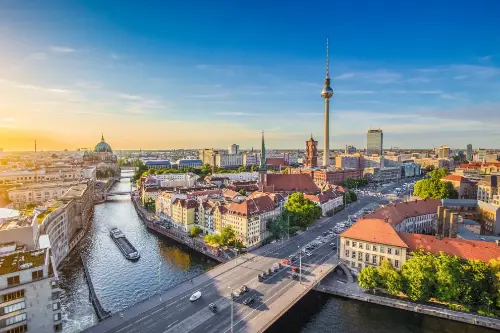 Day 7: 06:00–21:00
Berlin / Germany
Berlin is the capital and largest city of Germany, by both area and population. With 3.7 million inhabitants, it has the highest population within its city limits of any city in the European Union. The city is also one of the states of Germany, being the third smallest state in the country by area. Berlin is surrounded by the state of Brandenburg, and Brandenburg's capital Potsdam is nearby. The urban area of Berlin has a population of over 4.6 million and is therefore the most populous urban area in Germany.The Berlin-Brandenburg capital region has around 6.2 million inhabitants and is Germany's second-largest metropolitan region after the Rhine-Ruhr;region,as well as the fifth-biggest metropolitan region by GDP in the European Union.
-
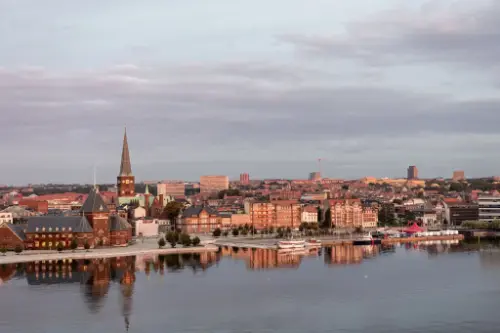 Day 8: 09:00–18:00
Aarhus / Denmark
Aarhus is the second-largest city in Denmark and the seat of Aarhus municipality. It is located on the east coast of the Jutlandpeninsula, in the geographical centre of Denmark, 187 kilometres (116 mi) northwest of Copenhagen and 289 kilometres (180 mi) north of Hamburg, Germany. The inner urban area contains 273,077 inhabitants (as of 1 January 2018) and the municipal population is 340,421 (as of 2018). Aarhus is the central city in Business Region Aarhus and in the East Jutland metropolitan area, which had a total population of 1.378 million in 2016.
The history of Aarhus began as a fortified Viking settlement founded in the 8th century and with the first written records stemming from the bishopric seated here from at least 948. The city was founded on the northern shores of a fjord at a natural harbour and the primary driver of growth was for centuries seaborne trade in agricultural products. Market town privileges were granted in 1441, but growth stagnated in the 17th century as the city suffered blockades and bombardments during the Swedish Wars. In the 19th century it was occupied twice by German troops during the Schleswig Wars but avoided destruction. As the industrial revolution took hold, the city grew to become the second-largest in the country by the 20th century.
-
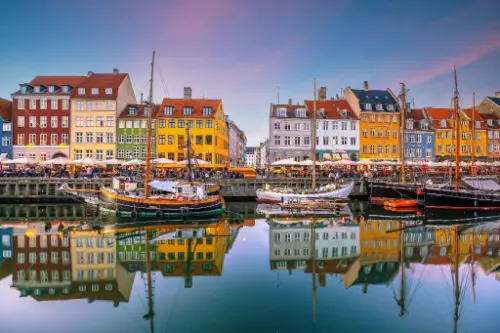 Day 9: 07:00–18:00
Copenhagen / Denmark
the capital and chief port of Denmark, a city that occupies the eastern part of Zealand and northern part of the island of Amager; population 518,574 (2009).
-
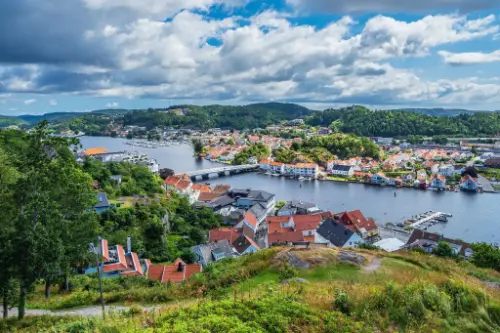 Day 10: 10:00–19:00
Mandal
-
Day 11:
Day at sea / Sea
-
Day 12: 07:00–17:00
IJmuiden
-
Day 13:
Day at sea / Sea
-
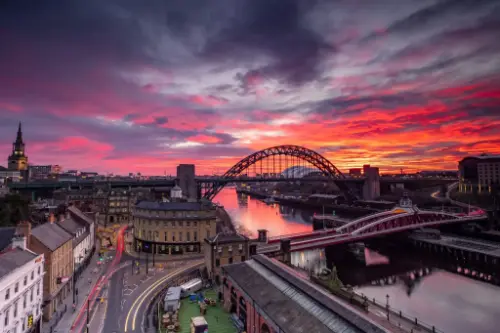 Day 14: 11:00–21:00
Newcastle / Great Britain
-
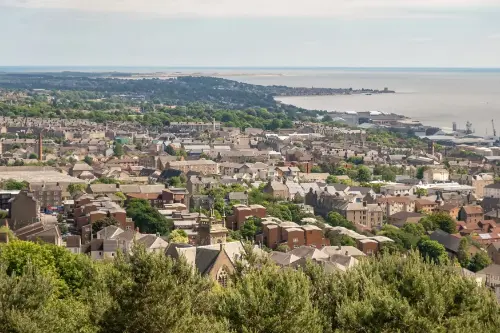 Day 15: 11:00–21:00
Dundee / Great Britain
-
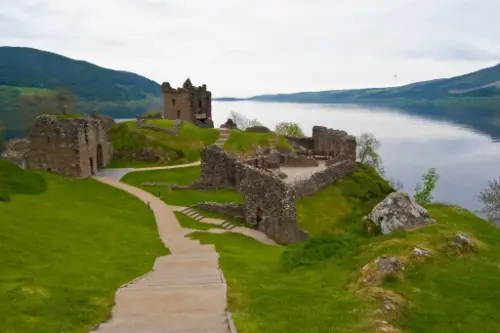 Day 16: 10:00–20:00
Invergordon / Great Britain
The town is well known for the Invergordon Mutiny of 1931. More recently it has also become known for the repair of oil rigs which line up in the Cromarty Firth on which the town is situated. In the 1970s and 1980s nearby Nigg was known for the construction of these rigs. The yard used for this is now attempting to re-establish itself as a fabricator of large offshore wind turbines and oil rig refurbishment since being purchased by Global Energy Group.
For a number of years Invergordon was the site of an aluminium smelter until 1981 when British Aluminium closed it down. The pipeline that covered the conveyor belt from the smelter to the BA pier was not dismantled until the early 2000s and the two large tanks still stand today as well as a water tower.
It still has a grain whisky distillery, operated by Philippines-owned whisky giant Whyte and Mackay, the output of which contributes to many blended whiskies. Connected to the distillery was the Invergordon Distillery Pipe Band.
At present the port is visited by many large cruise liners each year, as the deep water port allows disembarkation for coach tours in the northern Highlands.
Since the 1970s some would perceive the town as a 'Glasgow colony', since many workers were recruited from southern Scotland to work in the oil rig fabrication and aluminium smelting industries. As a result, the residents' accents often show more influence from Glasgow, than the surrounding Easter Ross dialect of Highland Englishalthough this has changed in recent years.
In recent years Global Energy Group have been expanding, with the purchase of the Nigg fabrication yard it has also brought much appreciated work to Invergordon's Docks with the town again full of oil company workers through the day.
-
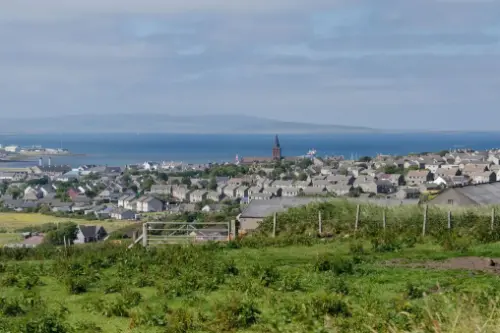 Day 17: 07:00–17:00
Kirkwall / Great Britain
-
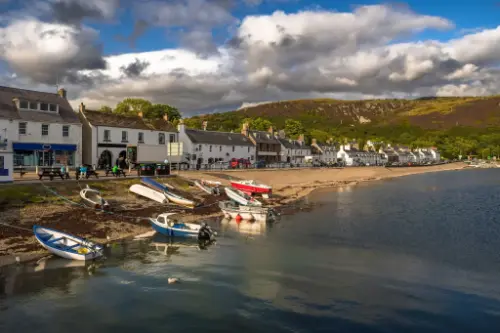 Day 18: 07:00–16:00
Ullapool / Scotland
-
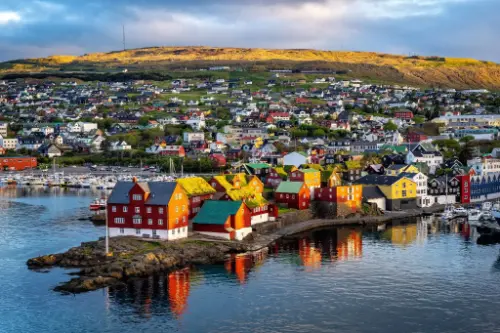 Day 19: 10:00–19:00
Torshavn / Faroe Islands
Tórshavn is the capital and largest town of the Faroe Islands. Tórshavn is in the southern part on the east coast of Streymoy. To the northwest of the city lies the 347-meter-high (1,138 ft) mountain Húsareyn, and to the southwest, the 350-meter-high (1,150 ft) Kirkjubøreyn. They are separated by the Sandá River. The town proper has a population of 13,089 (2017), and the greater urban area a population of 21,000.
The Norse established their parliament on the Tinganes peninsula in AD 850.[3] Tórshavn thus became the capital of the Faroe Islands and has remained so ever since. All through the Middle Ages the narrow peninsula jutting out into the sea made up the main part of Tórshavn. Early on, Tórshavn became the centre of the islands' trade monopoly, thereby being the only legal place for the islanders to sell and buy goods. In 1856, the trade monopoly was abolished and the islands were left open to free trade.
-
Day 20:
Day at sea / Sea
-
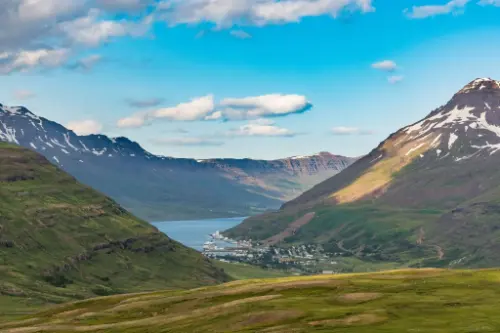 Day 21: 07:00–16:00
Seydisfjordur / Iceland
Cozy nestled among the fjords of Iceland, Seydisfjordur enchants travelers with its colorful houses and creative atmosphere. This small port town comes alive with the first rays of the northern sun: the air carries the scent of the sea, coffee from local cafés, and the fresh breeze rolling in from the Atlantic. Seydisfjordur is known for its art galleries and musical events, and in summer, it hosts the LungA Art Festival, attracting young artists and musicians from around the world.
A walk along the wooden piers by the bay allows you to feel the unhurried rhythm of Icelandic countryside life, with impressive waterfalls and mountain trails hidden nearby, leading to breathtaking views. Tourists can explore the old Norwegian church built in 1922, the famous blue church of Seydisfjordur, and then relax in local cafés while enjoying freshly baked goods and fish caught right off the fjord's shores. This corner of Iceland inspires those seeking solitude, silence, and the chance to witness the authentic life of the north.
-
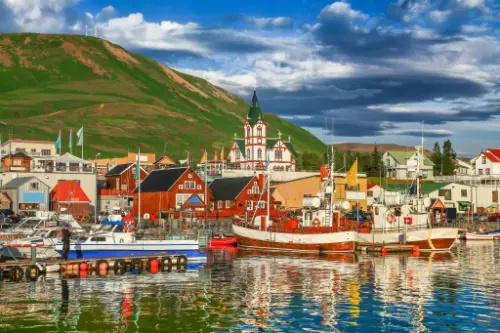 Day 22: 08:00–18:00
Husavik / Iceland
-
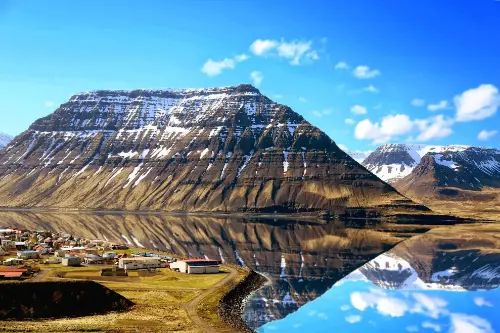 Day 23: 07:00–17:00
Isafjordur / Iceland
Isafjörður, meaning ice fjord or fjord of ice, ice in plural genitive) is a town in the northwest of Iceland.
The oldest part of Ísafjörður with the town centre is located on a spit of sand, or eyri, in Skutulsfjörður, a fjord which meets the waters of the larger fjord Ísafjarðardjúp. With a population of about 2,600, Ísafjörður is the largest settlement in the peninsula of Vestfirðir (Westfjords) and the administration centre of the Ísafjarðarbær municipality, which includes – besides Ísafjörður – the nearby villages of Hnífsdalur, Flateyri, Suðureyri, and Þingeyri.
-
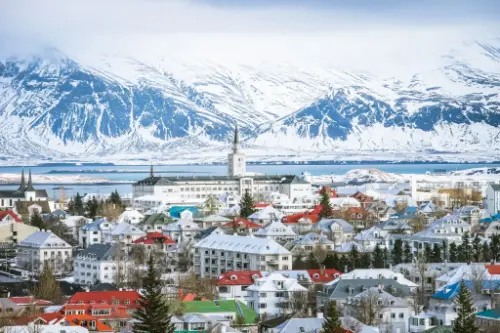 Day 24: 07:00–17:00
Reykjavik / Iceland
Reykjavík is the capital and largest city of Iceland. It is located in southwestern Iceland, on the southern shore of Faxa Bay. Its latitude is 64°08' N, making it the world's northernmost capital of a sovereign state. With a population of around 123,300 (and over 216,940 in the Capital Region), it is the heart of Iceland's cultural, economic and governmental activity, and is a popular tourist destination.
Reykjavík is believed to be the location of the first permanent settlement in Iceland, which, according to Ingólfr Arnarson, was established in AD 874. Until the 19th century, there was no urban development in the city location. The city was founded in 1786 as an official trading town and grew steadily over the following decades, as it transformed into a regional and later national centre of commerce, population, and governmental activities. It is among the cleanest, greenest, and safest cities in the world.
Your World Included
With Your World Included, you’ll enjoy a wide array of included amenities for the ultimate comfort and value in ultra-premium cruising.
Unforgettable dining experiences at a variety of exquisite restaurants — all at no extra charge.
Complimentary specialty coffees, sodas, freshly pressed juices, and still and sparkling Vero Water® served throughout the ship.
Unlimited free Wi-Fi available in your suite, stateroom, and all public areas.
In-room dining with a superb variety of hot and cold selections.
Smoothies, milkshakes, gelato, and signature Humphry Slocombe ice cream — always included.
Group fitness classes at Aquamar® Spa + Vitality Center are complimentary.
Gratuities are included for your convenience.
Laundry is free for all guests.
With complimentary self-service launderettes on board, plus laundry and pressing services for Concierge and Suite categories, you’ll always look your finest.
Along with our hallmark personalized service, you’ll enjoy an enriching cruise experience with no hidden costs or nickel-and-diming.
Elevate Your Experience
Concierge Level Veranda Staterooms offer an unrivaled combination of luxury, privilege, and value. A wealth of amenities and exclusive benefits elevate your experience to the sublime — from in-room dining selections from The Grand Dining Room and complimentary laundry services to unlimited access to the Aquamar Spa Terrace.
On board Oceania Marina and Oceania Riviera, you’ll also enjoy the services of a dedicated Concierge and exclusive access to the private Concierge Lounge.
Located in the most desired areas of the ship, Concierge Level Veranda Staterooms are far more than just staterooms — they are an experience in themselves.
Concierge Level Veranda — Exclusive Privileges
Expanded in-room dining menu for lunch and dinner from The Grand Dining Room
Laundry service — up to 3 bags per stateroom
Exclusive key-card access to the private Concierge Lounge aboard Oceania Marina, Oceania Riviera, Oceania Vista, and Oceania Allura, featuring complimentary beverages, coffees, snacks, and the services of a dedicated Concierge
Welcome bottle of fine Italian Prosecco
Priority online reservations for specialty restaurants
Unlimited access to the Aquamar Spa Terrace
Oceania Cruises logo tote bag
Cashmere lap blankets — perfect for relaxing or snuggling
Pressing of garments upon embarkation
Complimentary shoeshine service
Deposit and Payments – Oceania Cruises
General Deposit:
For Owner’s, Vista, and Oceania Suites, a deposit of 20% of the cruise fare per person is required.
For all other suite/stateroom categories, the deposit is $500 per person.
For Grand Voyages, the deposit is $1,500 per person.
Deposit and Final Payment Deadlines:
Bookings more than 150 days from sailing:
Deposit 20% for Owner’s, Vista, and Oceania Suites and $500 for all other categories is required within 5 days of booking.
Bookings 90–120 days from sailing:
Full payment required within 3 days of booking.
Bookings 0–90 days from sailing:
Full payment due on the day of booking.
Important:
Bookings that are not deposited or paid in full according to this schedule will be automatically cancelled.
Unless otherwise noted, final payment must be received by Oceania Cruises 150 days prior to departure for cruises less than 15 days, and 150 days for cruises 15 days or longer.
Oceania Cruises reserves the right to cancel any booking not fully paid at the time of final payment.
Additional Information:
Passport details and special onboard service requests are due at final payment.
Payment may be made by personal check, American Express, Discover, MasterCard, or Visa.
For convenience, final payment may be automatically charged to the credit card used for the initial deposit.
Oceania Cruises is not responsible for foreign currency or transaction fees independently charged by issuing banks. These fees do not benefit Oceania Cruises.
Third-party credit card payments are accepted only with valid authorization from the cardholder.
Deposit and Payment – 180-Day Voyages
For 180-day voyages, a deposit of 20% of the cruise fare per person for all suites and staterooms is required within 7 days of booking.
Final payment must be received no later than 181 days prior to departure, along with passport details and any special onboard service requests.
Otherwise, the booking may be immediately cancelled, and applicable penalties will apply.
Form of Payment (FORM OF PAYMENT)
Oceania Cruises accepts payment for reservations by credit/debit card or bank transfer.
Unfortunately, personal checks are not accepted.
Credit/Debit Cards:
American Express, Visa, and Mastercard are accepted.
Please note: Oceania Cruises assumes no responsibility for foreign currency/transaction processing fees assessed by your issuing bank.
Prices are quoted in USD — roughly 1 USD ≈ 4,12 zł at the exchange rate on the day of booking
Please wait…
Tour operator
Biznes i Turystyka Piotr Skupiewski
- ul. Łukowa 41, 32-823 Szczepanów
- NIP 8691148381
- REGON 850455159
- +48 576 977 555
- +48 570 700 273
The tour operator is entered in the Central Register of Tour Operators and Entrepreneurs Facilitating the Purchase of Linked Travel Arrangements. It holds UNIQA insurance guarantee no. 3800003856, valid from 5 May 2026 to 4 May 2027. The guarantee sum is PLN 379,404.00. The operator pays contributions to the Tourist Guarantee Fund and the Tourist Assistance Fund.
Still have a question?
We'll help you choose a cruise and answer your questions.