
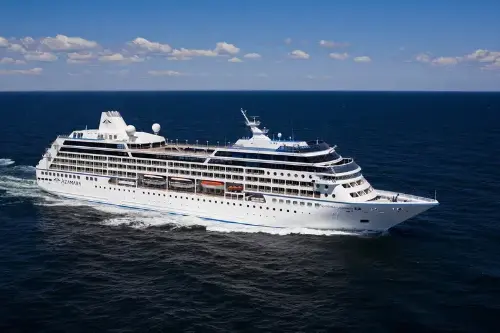
Sea cruise · 17.02.2027 – 29.03.2027 · 40 nights
40 nights, from Buenos Aires
Route and cruise information
Premium- Buenos Aires
- Buenos Aires
- Montevideo
- Punta del Este
- Port Stanley, Falkland Islands
- Ushuaia
- Sailing the Beagle Channel
- Ushuaia
- Punta Arenas
- Chilean fjords
- Chilean fjords
- Puerto Chacabuco
- Puerto Montt
- San Anton
- Coquimbo
- Iquique
- Arica (Chile)
- Pisco
- Callao
- Callao
- Panama City, Florida
- Panama Canal
- Puerto Limon
- San Andres
- San Miguel, Cozumel Island
- Miami
| Date | Port | Arrival | Departure |
|---|---|---|---|
| 17.02.2027 |
Buenos Aires
Argentina
|
— | — |
| 18.02.2027 |
Buenos Aires
Argentina
|
— | 18:00 |
| 19.02.2027 |
Montevideo
Uruguay
|
08:00 | 22:00 |
| 20.02.2027 |
Punta del Este
Uruguay
|
08:00 | 22:00 |
| 21.02.2027 |
Day at sea
|
— | — |
| 22.02.2027 |
Day at sea
|
— | — |
| 23.02.2027 |
Day at sea
|
— | — |
| 24.02.2027 |
Port Stanley, Falkland Islands
Great Britain
|
07:30 | 17:00 |
| 25.02.2027 |
Day at sea
|
— | — |
| 02.03.2027 |
Day at sea
|
— | — |
| 03.03.2027 |
Day at sea
|
— | — |
| 04.03.2027 |
Ushuaia
Argentina
|
08:00 | — |
| 05.03.2027 |
Sailing the Beagle Channel
|
08:00 | 12:00 |
| 06.03.2027 |
Ushuaia
Argentina
|
— | 07:00 |
| 07.03.2027 |
Punta Arenas
Chile
|
07:00 | 19:30 |
| 08.03.2027 |
Chilean fjords
Chile
|
06:00 | — |
| 09.03.2027 |
Chilean fjords
Chile
|
— | 18:00 |
| 10.03.2027 |
Puerto Chacabuco
Chile
|
07:00 | 14:30 |
| 11.03.2027 |
Puerto Montt
Chile
|
08:00 | 17:00 |
| 12.03.2027 |
Day at sea
|
— | — |
| 13.03.2027 |
San Anton
Cuba
|
07:00 | 17:00 |
| 14.03.2027 |
Coquimbo
Chile
|
11:00 | 17:00 |
| 15.03.2027 |
Day at sea
|
— | — |
| 16.03.2027 |
Iquique
|
09:30 | 20:00 |
| 17.03.2027 |
Arica (Chile)
Chile
|
08:00 | 22:00 |
| 18.03.2027 |
Day at sea
|
— | — |
| 19.03.2027 |
Pisco
Peru
|
08:00 | 20:00 |
| 20.03.2027 |
Callao
Peru
|
07:30 | — |
| 21.03.2027 |
Callao
Peru
|
07:00 | 18:00 |
| 22.03.2027 |
Day at sea
|
— | — |
| 23.03.2027 |
Day at sea
|
— | — |
| 24.03.2027 |
Day at sea
|
— | — |
| 25.03.2027 |
Panama City, Florida
USA
|
09:30 | 22:00 |
| 26.03.2027 |
Panama Canal
Panama
|
05:00 | 17:00 |
| 27.03.2027 |
Puerto Limon
Costa Rica
|
08:00 | 18:00 |
| 28.03.2027 |
San Andres
Colombia
|
08:00 | 16:00 |
| 29.03.2027 |
Day at sea
|
— | — |
| 30.03.2027 |
San Miguel, Cozumel Island
Mexico
|
08:00 | 18:00 |
| 31.03.2027 |
Day at sea
|
— | — |
| 01.04.2027 |
Miami
USA
|
06:00 | — |
-
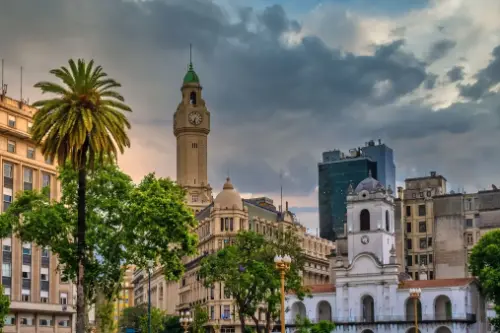 Day 1:
Buenos Aires / Argentina
the capital city and chief port of Argentina, in the eastern central part of the country, on the Plata River; population 3,042,600 (est. 2008).
-
Day 2: 18:00
Buenos Aires / Argentina
the capital city and chief port of Argentina, in the eastern central part of the country, on the Plata River; population 3,042,600 (est. 2008).
-
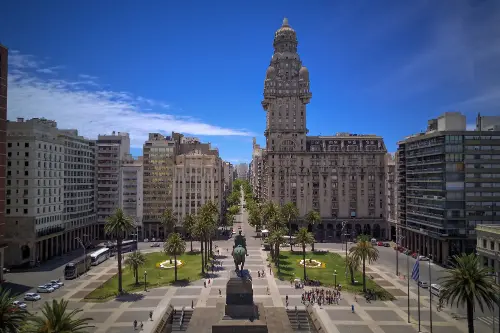 Day 3: 08:00–22:00
Montevideo / Uruguay
Montevideo is the capital and largest city of Uruguay. According to the 2011 census, the city proper has a population of 1,319,108 (about one-third of the country's total population) in an area of 201 square kilometres (78 sq mi). The southernmost capital city in the Americas, Montevideo is situated on the southern coast of the country, on the northeastern bank of the Río de la Plata.
The city was established in 1724 by a Spanish soldier, Bruno Mauricio de Zabala, as a strategic move amidst the Spanish-Portuguese dispute over the platine region. It was also under brief British rule in 1807. Montevideo is the seat of the administrative headquarters of Mercosur and ALADI, Latin America’s leading trade blocs, a position that entailed comparisons to the role of Brussels in Europe.
-
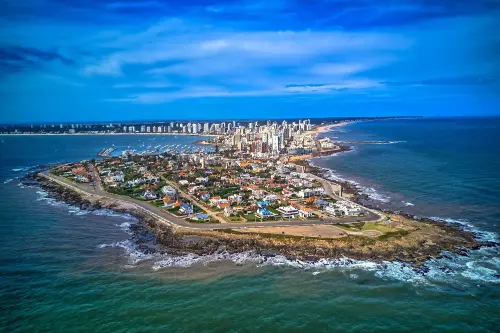 Day 4: 08:00–22:00
Punta del Este / Uruguay
Punta del Este — Uruguay’s Premier Resort on the Atlantic Coast
Punta del Este is one of South America’s most renowned resort cities, located on Uruguay’s southern coast where the Atlantic Ocean meets the Río de la Plata estuary. The city is known for its unique contrasts—on one side, upscale neighborhoods with modern skyscrapers, yachts, and gourmet restaurants, and on the other, tranquil sandy beaches, scenic dunes, and surf-friendly waves. It’s often dubbed the “Monaco of South America” for its luxurious infrastructure and popularity among international celebrities.
Beyond the beaches, Punta del Este offers both cultural and natural attractions: the iconic “La Mano” sculpture, the Ralli Museum of contemporary art, and nearby islands home to sea lions. Visitors can explore the bohemian district of La Barra or enjoy sunset views by the Punta del Este lighthouse. The city comes alive during the summer season (December to February), when tourists from around the globe arrive in search of sunshine, comfort, and vibrant nightlife.
-
Day 5:
Day at sea / Sea
-
Day 6:
Day at sea / Sea
-
Day 7:
Day at sea / Sea
-
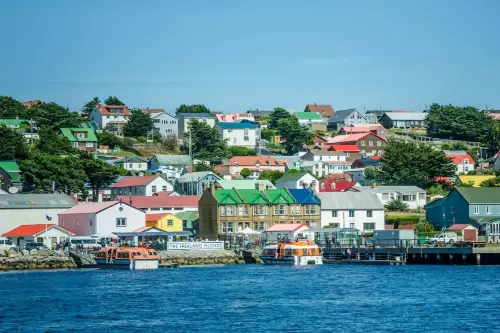 Day 8: 07:30–17:00
Port Stanley, Falkland Islands / Great Britain
Port Stanley — The Edge of the World with a British Touch
Port Stanley is the main city and administrative center of the Falkland Islands, located on the eastern coast of East Falkland Island. It is the southernmost capital of the United Kingdom and one of the most sparsely populated capitals in the world, with around 2,500 residents. The city surprises with a harmony between wild nature and recognizable British traits: here you can find red phone booths, cozy pubs, English-style houses, and well-maintained gardens.
Surrounded by stunning landscapes of hilly plains, picturesque bays, and penguin colonies, Port Stanley offers unique views. The city also has an interesting museum dedicated to the history of the archipelago and the 1982 military conflict. This unique destination attracts nature lovers, those seeking tranquility, and travelers looking for unusual routes — it’s a place for those seeking true isolation at the edge of the world.
-
Day 9:
Day at sea / Sea
-
Day 14:
Day at sea / Sea
-
Day 15:
Day at sea / Sea
-
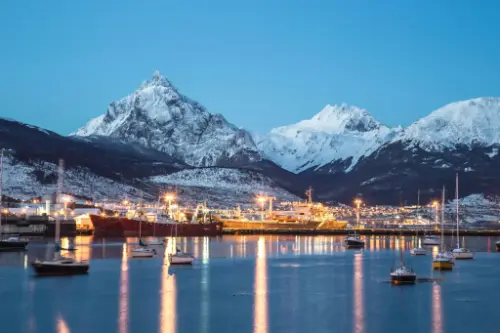 Day 16: 08:00
Ushuaia / Argentina
Ushuaia is the capital of Tierra del Fuego, Antártida e Islas del Atlántico Sur Province, Argentina. It is commonly regarded as the southernmost city in the world. Ushuaia is located in a wide bay on the southern coast of Isla Grande de Tierra del Fuego, bounded on the north by the Martial mountain range, and on the south by the Beagle Channel. It is the only municipality in the Department of Ushuaia, which has an area of 9,390 km2 (3,625 sq mi). It was founded October 12 of 1884 by Augusto Lasserreand is located on the shores of the Beagle Channel surrounded by the mountain range of the Martial Glacier, in the Bay of Ushuaia. Besides being an administrative center, it is a light industrial port and tourist hub.
-
Day 17: 08:00–12:00
Sailing the Beagle Channel
-
Day 18: 07:00
Ushuaia / Argentina
Ushuaia is the capital of Tierra del Fuego, Antártida e Islas del Atlántico Sur Province, Argentina. It is commonly regarded as the southernmost city in the world. Ushuaia is located in a wide bay on the southern coast of Isla Grande de Tierra del Fuego, bounded on the north by the Martial mountain range, and on the south by the Beagle Channel. It is the only municipality in the Department of Ushuaia, which has an area of 9,390 km2 (3,625 sq mi). It was founded October 12 of 1884 by Augusto Lasserreand is located on the shores of the Beagle Channel surrounded by the mountain range of the Martial Glacier, in the Bay of Ushuaia. Besides being an administrative center, it is a light industrial port and tourist hub.
-
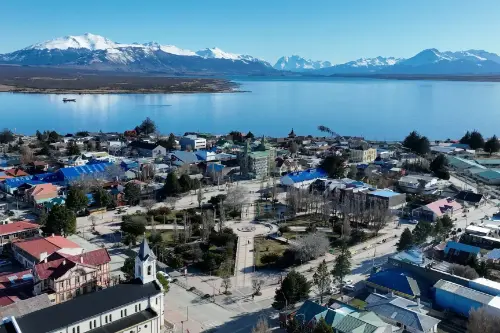 Day 19: 07:00–19:30
Punta Arenas / Chile
-
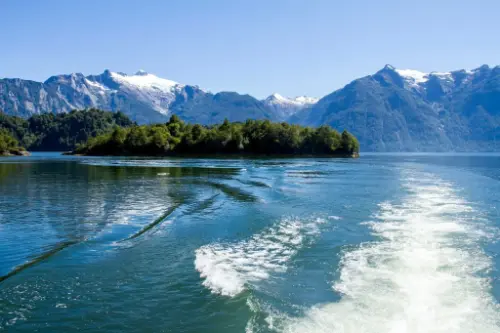 Day 20: 06:00
Chilean fjords / Chile
Not only Europe can boast the enchanting nature of the Norwegian fjords, but also Chilean fjords. The Chilean fjords consist of islands of various sizes, islets, enormous boulders, and ice formations emerging from the water, showcasing a range of colors — from snow-white to greenish. The glaciers on the rocks and mountain slopes create the feeling of theatrical scenery. The Chilean fjords delight visitors with their landscapes, where land and sea merge into a labyrinth of islands, fjords, rivers with tributaries, lakes, and hills covered in ancient trees.
The Chilean fjords are a unique place that has miraculously escaped human interference. When the mist dissipates under the sun, a magnificent panorama of the Andes, the cold waters of the Pacific Ocean, and lush emerald forests unfolds before your eyes.
-
Day 21: 18:00
Chilean fjords / Chile
Not only Europe can boast the enchanting nature of the Norwegian fjords, but also Chilean fjords. The Chilean fjords consist of islands of various sizes, islets, enormous boulders, and ice formations emerging from the water, showcasing a range of colors — from snow-white to greenish. The glaciers on the rocks and mountain slopes create the feeling of theatrical scenery. The Chilean fjords delight visitors with their landscapes, where land and sea merge into a labyrinth of islands, fjords, rivers with tributaries, lakes, and hills covered in ancient trees.
The Chilean fjords are a unique place that has miraculously escaped human interference. When the mist dissipates under the sun, a magnificent panorama of the Andes, the cold waters of the Pacific Ocean, and lush emerald forests unfolds before your eyes.
-
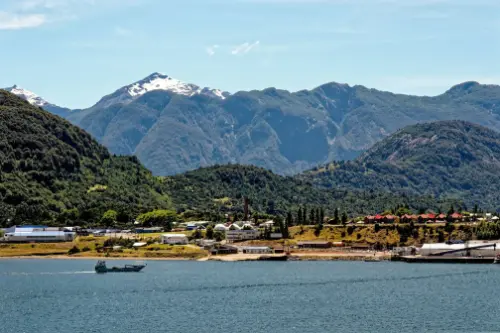 Day 22: 07:00–14:30
Puerto Chacabuco / Chile
-
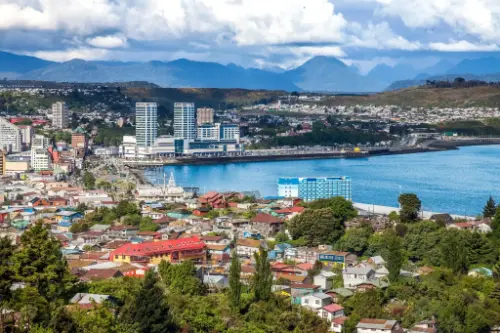 Day 23: 08:00–17:00
Puerto Montt / Chile
Puerto Montt is a port city and commune in southern Chile, located at the northern end of the Reloncaví Sound in the Llanquihue Province, Los Lagos Region, 1,055 km to the south of the capital, Santiago. The commune spans an area of 1,673 km2 (646 sq mi) and has a population of 245,902 in 2017. It is bounded by the communes of Puerto Varas to the north, Cochamó to the east and southeast, Calbuco to the southwest and Maullín and Los Muermos to the west.
Founded as late as 1853 during the German colonization of southern Chile, Puerto Montt soon outgrew older neighboring cities due to its strategic position at the southern end of the Chilean Central Valley being a gateway city into Chiloé Archipelago, Llanquihue and Nahuel Huapi lakes and Western Patagonia.
Puerto Montt has gained renown and grown significantly due to the rise of Chile as the second largest salmon producer of the world during the 1990s and 2000s. However, the Chilean salmon aquaculture crisis of the late 2000s resulted at least temporarily in severe unemployment and exposed weaknesses in the local economy. The city's cultural heritage mixes elements of Chiloé culture with German heritage although the city has attracted a significant number of newcomers from all over Chile in the last 30 years due to employment opportunities.
-
Day 24:
Day at sea / Sea
-
Day 25: 07:00–17:00
San Anton / Cuba
-
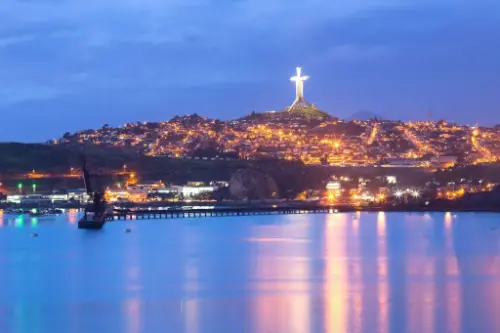 Day 26: 11:00–17:00
Coquimbo / Chile
An unforgettable encounter with the Pacific coast awaits every traveler venturing into Coquimbo—a charming town where modernity and history intertwine in an extraordinary harmony. From the morning breeze by the bay to the luxurious sunsets over the port, this resort offers the true atmosphere of the Chilean coastline, where life flows at a gentle pace and every street is infused with the scent of the sea. Here you can savor fresh seafood at cozy restaurants or stroll along the elegant waterfront, soaking up the views and the cries of seagulls.
Coquimbo is also known for its historical and cultural landmarks: ancient churches, artisan markets, and contemporary art galleries create a unique blend of traditions and new experiences. Adventure lovers can explore the surrounding hills or discover the mysterious fortress—a testament to the city’s pirate-filled past. This city seems to invite every traveler to write their own chapter of an amazing story on the coast of Chile.
-
Day 27:
Day at sea / Sea
-
Day 28: 09:30–20:00
Iquique
-
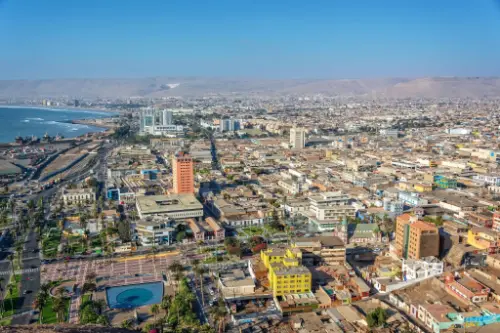 Day 29: 08:00–22:00
Arica (Chile) / Chile
Where the dry expanses of northern Chile meet the gentle waves of the Pacific Ocean, Arica welcomes travelers with a unique blend of eternal summer, cultural richness, and natural beauty. Known for its mild climate all year round, Arica has become a beloved destination for beach lovers and water sports enthusiasts. The city also boasts one of the driest climates in the world — in some areas, it hasn’t rained for decades.
A walk through the city’s colonial streets leads to the striking San Marcos Cathedral, designed by Gustave Eiffel. Not far away, the El Morro cliff rises high above the ocean, offering breathtaking panoramic views. In the surrounding region, visitors can explore archaeological museums with the world’s oldest Chinchorro mummies and admire the stark beauty of the Atacama Desert alongside green oases sustained by underground waters.
-
Day 30:
Day at sea / Sea
-
 Day 31: 08:00–20:00
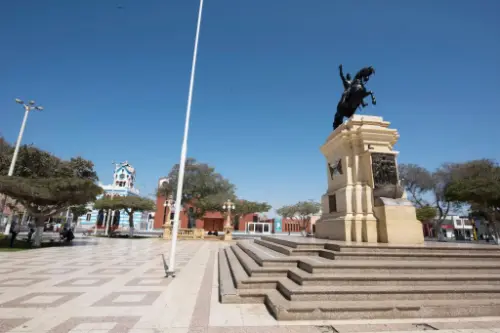
Pisco / Peru
This picturesque port city on the Pacific coast attracts travelers with its rich history and proximity to unique natural attractions. Pisco (Peru) is the gateway to the famous Paracas National Reserve, where visitors can see rare wildlife and enjoy stunning landscapes of desert dunes, beaches, and sea caves.
Moreover, Pisco is known for its strong grape brandy of the same name, considered one of the best in Latin America. The city also serves as a starting point for boat trips to the Ballestas Islands, home to sea lions, penguins, and many seabirds, making it a must-visit destination for nature lovers and adventure seekers.
-
 Day 32: 07:30
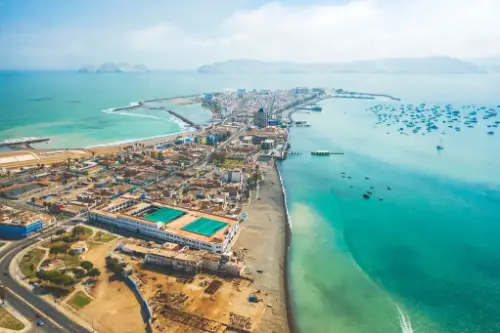
Callao / Peru
-
Day 33: 07:00–18:00
Callao / Peru
-
Day 34:
Day at sea / Sea
-
Day 35:
Day at sea / Sea
-
Day 36:
Day at sea / Sea
-
 Day 37: 09:30–22:00
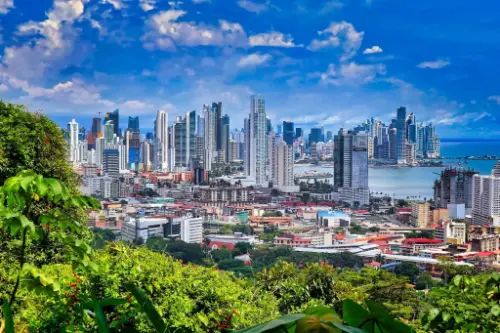
Panama City, Florida / USA
Panama City, located on the northwestern coast of Florida, is known for its long white beaches with soft quartz sand and the warm emerald waters of the Gulf of Mexico. This resort town is popular among both family vacationers and lovers of water activities: here you can enjoy kayaking, parasailing, diving, and fishing. One of the highlights is the local promenade — Pier Park — home to shops, restaurants, and entertainment venues.
In addition to beach relaxation, Panama City offers unique natural attractions. Nearby is the St. Andrews State Park, where visitors can watch dolphins, walk along trails through dunes and pine forests, or take a trip to Shell Island, a place of untouched nature. The city blends a resort atmosphere with Southern charm, offering a peaceful yet activity-filled vacation experience.
-
 Day 38: 05:00–17:00
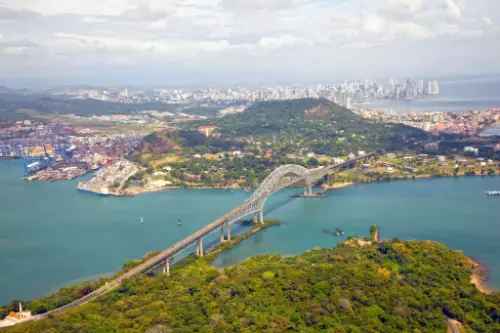
Panama Canal / Panama
The Panama Canal is an artificial 82 km (51 mi) waterway in Panama that connects the Atlantic Ocean with the Pacific Ocean. The canal cuts across the Isthmus of Panama and is a conduit for maritime trade. Canal locks are at each end to lift ships up to Gatun Lake, an artificial lake created to reduce the amount of excavation work required for the canal, 26 m (85 ft) above sea level, and then lower the ships at the other end. The original locks are 34 m (110 ft) wide. A third, wider lane of locks was constructed between September 2007 and May 2016. The expanded canal began commercial operation on June 26, 2016. The new locks allow transit of larger, post-Panamax ships, capable of handling more cargo.
France began work on the canal in 1881, but stopped due to engineering problems and a high worker mortality rate. The United States took over the project in 1904 and opened the canal on August 15, 1914. One of the largest and most difficult engineering projects ever undertaken, the Panama Canal shortcut greatly reduced the time for ships to travel between the Atlantic and Pacific Oceans, enabling them to avoid the lengthy, hazardous Cape Horn route around the southernmost tip of South America via the Drake Passage or Strait of Magellan.
Colombia, France, and later the United States controlled the territory surrounding the canal during construction. The US continued to control the canal and surrounding Panama Canal Zone until the 1977 Torrijos–Carter Treatiesprovided for handover to Panama. After a period of joint American–Panamanian control, in 1999, the canal was taken over by the Panamanian government. It is now managed and operated by the government-owned Panama Canal Authority.
-
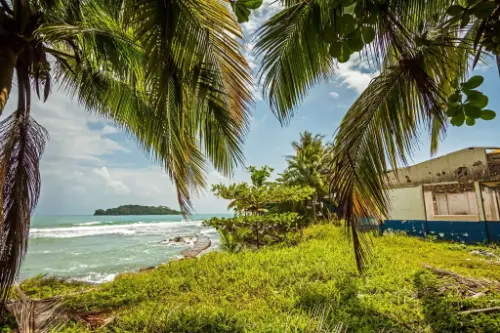 Day 39: 08:00–18:00
Puerto Limon / Costa Rica
Puerto Limón, commonly known as Limón (Spanish for "lemon"), is the capital city and main hub of Limón province, as well as of the cantón (county) of Limón in Costa Rica. It is the second largest city in Costa Rica, with a population of over 55,000, and is home of the Afro-Costa Rican community. Part of the community traces its roots to Italian, Jamaican and Chinese laborers who worked on a late nineteenth-century railroad project that connected San José to Puerto Limón. Until 1948, the Costa Rican government did not recognize Afro-Caribbean people as citizens and restricted their movement outside Limón province. As a result of this "travel ban", this Afro-Caribbean population became firmly established in the region, which influenced decisions not to move even after it was legally permitted. Nowadays, there is a significant outflow of Limón natives who move to the country's Central Valley in search for better employment and education. The Afro-Caribbean community speaks Spanish and Limonese Creole, a creole of English.
Puerto Limón contains two port terminals, Limón and Moín, which permit the shipment of Costa Rican exports as well as the anchoring of cruise ships. In 2016, the government pledged ₡93 million ($166,000) for a new cruise ship terminal for Puerto Limón.
Health care is provided for the city by Hospital Dr. Tony Facio Castro. Two small islands, Uvita Island and Isla de Pájaros, are just offshore.
-
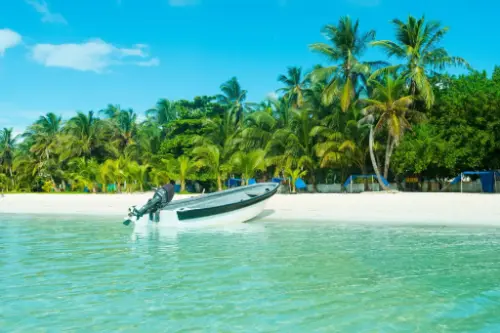 Day 40: 08:00–16:00
San Andres / Colombia
The endless expanses of the Caribbean Sea conceal real treasures, and one such place is San Andrés—a Colombian island where the turquoise waters shimmer in every shade of blue. This tropical haven has long been a favorite for both beach lovers and diving enthusiasts: the reefs off its shores are considered among the most beautiful in the region. White sands, coconut palms, and a laid-back atmosphere make it the perfect destination for those dreaming of a true Caribbean escape.
San Andrés is not only a paradise for swimming and sunbathing. Here, you can take a boat trip to the tiny islet of Johnny Cay, explore the natural aquarium El Acuario, or immerse yourself in the culture of the Raizal people—an Afro-Caribbean community native to the island. Add traditional reggaeton music and dishes made with fresh seafood, and you have the perfect vacation in the rhythm of the Caribbean.
-
Day 41:
Day at sea / Sea
-
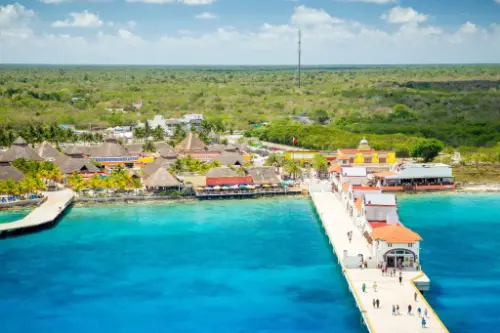 Day 42: 08:00–18:00
San Miguel, Cozumel Island / Mexico
-
Day 43:
Day at sea / Sea
-
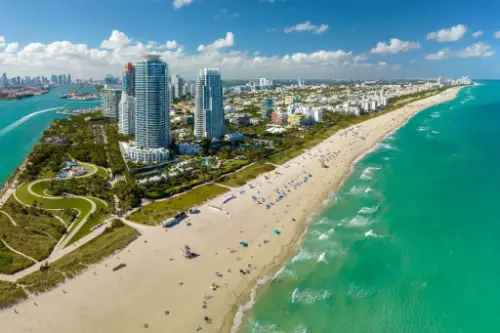 Day 44: 06:00
Miami / USA
Miami, officially the City of Miami, is the cultural, economic and financial center of South Florida. Miami is the seat of Miami-Dade County, the most populous county in Florida. The city covers an area of about 56.6 square miles (147 km2), between the Everglades to the west and Biscayne Bay on the east; with a 2017 estimated population of 463,347, Miami is the sixth most densely populated major city in the United States. The Miami metropolitan area is home to 6.1 million people and the seventh-largest metropolitan area in the nation. Miami's metro area is the second-most populous metropolis in the southeastern United States and fourth-largest urban area in the U.S.
Miami is a major center, and a leader in finance, commerce, culture, media, entertainment, the arts, and international trade. The Miami Metropolitan Area is by far the largest urban economy in Florida and the 12th largest in the United States with a GDP of $344.9 billion as of 2017. In 2012, Miami was classified as an "Alpha−" level world city in the World Cities Study Group's inventory. In 2010, Miami ranked seventh in the United States and 33rd among global cities in terms of business activity, human capital, information exchange, cultural experience, and political engagement. In 2008, Forbes magazine ranked Miami "America's Cleanest City", for its year-round good air quality, vast green spaces, clean drinking water, clean streets, and citywide recycling programs. According to a 2009 UBS study of 73 world cities, Miami was ranked as the richest city in the United States, and the world's seventh-richest city in terms of purchasing power. Miami is nicknamed the "Capital of Latin America" and is the largest city with a Cuban-American plurality.
Greater Downtown Miami has one of the largest concentrations of international banks in the United States, and is home to many large national and international companies. The Civic Center is a major center for hospitals, research institutes, medical centers, and biotechnology industries. For more than two decades, the Port of Miami, known as the "Cruise Capital of the World", has been the number one cruise passenger port in the world. It accommodates some of the world's largest cruise ships and operations, and is the busiest port in both passenger traffic and cruise lines. Metropolitan Miami is also a major tourism hub in the southeastern U.S. for international visitors, ranking number two in the country after New York City.
Tour operator
Biznes i Turystyka Piotr Skupiewski
- ul. Łukowa 41, 32-823 Szczepanów
- NIP 8691148381
- REGON 850455159
- +48 576 977 555
- +48 570 700 273
The tour operator is entered in the Central Register of Tour Operators and Entrepreneurs Facilitating the Purchase of Linked Travel Arrangements. It holds UNIQA insurance guarantee no. 3800003856, valid from 5 May 2026 to 4 May 2027. The guarantee sum is PLN 379,404.00. The operator pays contributions to the Tourist Guarantee Fund and the Tourist Assistance Fund.
Still have a question?
We'll help you choose a cruise and answer your questions.