


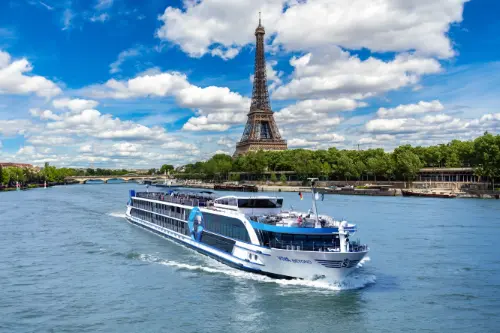
Rejs rzeczny · 03.03.2027 – 10.03.2027 · 7 nocy
Spotkanie w Paryżu i Sekwanie
Cena i dostępność kajutTrasa i informacje o rejsie
Premium| Data | Port | Przypłynięcie | Wypłynięcie |
|---|---|---|---|
| 03.03.2027 |
Paryż
Francja
|
— | — |
| 04.03.2027 |
Paryż
Francja
|
— | 05:00 |
| 04.03.2027 |
Poissy
Francja
|
12:30 | 19:00 |
| 05.03.2027 |
Rouen
Francja
|
07:00 | — |
| 06.03.2027 |
Rouen
Francja
|
— | 03:00 |
| 06.03.2027 |
Les Andelys
Francja
|
08:00 | 14:00 |
| 07.03.2027 |
Paryż
Francja
|
04:30 | — |
| 08.03.2027 |
Paryż
Francja
|
— | — |
| 09.03.2027 |
Paryż
Francja
|
— | — |
| 10.03.2027 |
Paryż
Francja
|
— | — |
-
 Dzień 1:
Paryż / Francja
the capital of France, on the Seine River; population 2,203,817 (2006). Paris was held by the Romans, who called it Lutetia, and by the Franks, and was established as the capital in 987 under Hugh Capet. It was organized into three parts—the Île de la Cité (an island in the Seine), the Right Bank, and the Left Bank—during the reign of Philippe-Auguste 1180–1223. The city's neoclassical architecture dates from the modernization of the Napoleonic era, which continued under Napoleon III, when the bridges and boulevards of the modern city were built.
-
Dzień 2: 05:00
Paryż / Francja
the capital of France, on the Seine River; population 2,203,817 (2006). Paris was held by the Romans, who called it Lutetia, and by the Franks, and was established as the capital in 987 under Hugh Capet. It was organized into three parts—the Île de la Cité (an island in the Seine), the Right Bank, and the Left Bank—during the reign of Philippe-Auguste 1180–1223. The city's neoclassical architecture dates from the modernization of the Napoleonic era, which continued under Napoleon III, when the bridges and boulevards of the modern city were built.
-
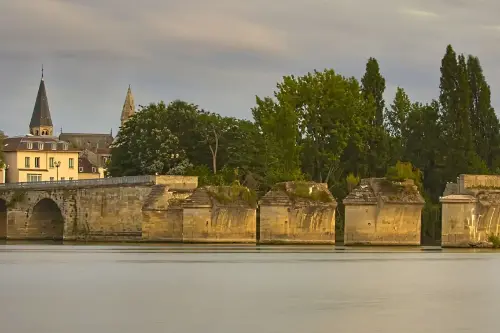 Dzień 2: 12:30–19:00
Poissy / Francja
-
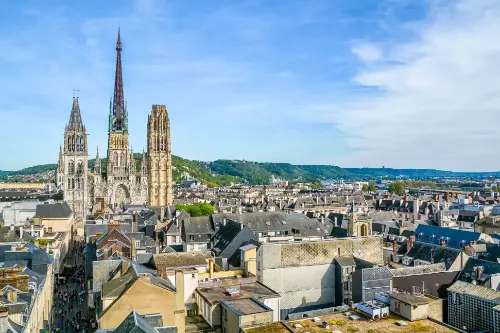 Dzień 3: 07:00
Rouen / Francja
Rouen jest miastem nad Sekwaną w północnej Francji. Jest stolicą regionu Normandia. Niegdyś jedno z największych i najbogatszych miast średniowiecznej Europy, Rouen było siedzibą Skarbu Normandii w średniowieczu. Było jedną ze stolic dynastii anglonormańskich, które rządziły Anglią i znacznymi częściami współczesnej Francji od XI do XV wieku.
Populacja obszaru metropolitalnego (po francusku: agglomération) według spisu z 2011 roku wynosiła 655 013, a szacunkowa populacja samego miasta to 111 557. Mieszkańcy Rouen są znani jako Rouennais.
-
Dzień 4: 03:00
Rouen / Francja
Rouen jest miastem nad Sekwaną w północnej Francji. Jest stolicą regionu Normandia. Niegdyś jedno z największych i najbogatszych miast średniowiecznej Europy, Rouen było siedzibą Skarbu Normandii w średniowieczu. Było jedną ze stolic dynastii anglonormańskich, które rządziły Anglią i znacznymi częściami współczesnej Francji od XI do XV wieku.
Populacja obszaru metropolitalnego (po francusku: agglomération) według spisu z 2011 roku wynosiła 655 013, a szacunkowa populacja samego miasta to 111 557. Mieszkańcy Rouen są znani jako Rouennais.
-
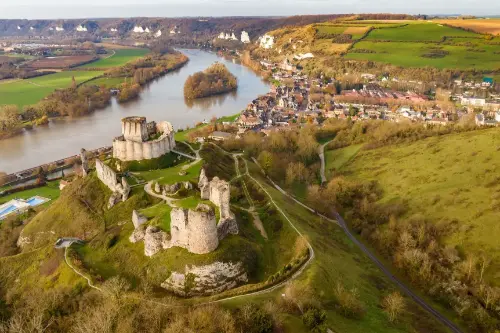 Dzień 4: 08:00–14:00
Les Andelys / Francja
Les Andelys – miejscowość i gmina we Francji, w regionie Normandia, w departamencie Eure, położona nad wschodnim (prawym) brzegiem Sekwany.
-
Dzień 5: 04:30
Paryż / Francja
the capital of France, on the Seine River; population 2,203,817 (2006). Paris was held by the Romans, who called it Lutetia, and by the Franks, and was established as the capital in 987 under Hugh Capet. It was organized into three parts—the Île de la Cité (an island in the Seine), the Right Bank, and the Left Bank—during the reign of Philippe-Auguste 1180–1223. The city's neoclassical architecture dates from the modernization of the Napoleonic era, which continued under Napoleon III, when the bridges and boulevards of the modern city were built.
-
Dzień 6:
Paryż / Francja
the capital of France, on the Seine River; population 2,203,817 (2006). Paris was held by the Romans, who called it Lutetia, and by the Franks, and was established as the capital in 987 under Hugh Capet. It was organized into three parts—the Île de la Cité (an island in the Seine), the Right Bank, and the Left Bank—during the reign of Philippe-Auguste 1180–1223. The city's neoclassical architecture dates from the modernization of the Napoleonic era, which continued under Napoleon III, when the bridges and boulevards of the modern city were built.
-
Dzień 7:
Paryż / Francja
the capital of France, on the Seine River; population 2,203,817 (2006). Paris was held by the Romans, who called it Lutetia, and by the Franks, and was established as the capital in 987 under Hugh Capet. It was organized into three parts—the Île de la Cité (an island in the Seine), the Right Bank, and the Left Bank—during the reign of Philippe-Auguste 1180–1223. The city's neoclassical architecture dates from the modernization of the Napoleonic era, which continued under Napoleon III, when the bridges and boulevards of the modern city were built.
-
Dzień 8:
Paryż / Francja
the capital of France, on the Seine River; population 2,203,817 (2006). Paris was held by the Romans, who called it Lutetia, and by the Franks, and was established as the capital in 987 under Hugh Capet. It was organized into three parts—the Île de la Cité (an island in the Seine), the Right Bank, and the Left Bank—during the reign of Philippe-Auguste 1180–1223. The city's neoclassical architecture dates from the modernization of the Napoleonic era, which continued under Napoleon III, when the bridges and boulevards of the modern city were built.
VIVA All-Inclusive
Śniadanie, obiad, kolacja
Pełne wyżywienie: śniadanie w formie bufetu, obiad i kolacja (menu gourmet serwowane do stolika) oraz przekąski. Swobodny wybór stolika i elastyczne godziny posiłków.
Napoje przez cały dzień
Gorące i zimne napoje bezalkoholowe oraz wybór napojów alkoholowych. Szczegóły w menu baru.
Podwieczorek
Raz na rejs: słodkie i słone przekąski — bułeczki, kanapki, babeczki, czekoladki, makaroniki. Różnorodne herbaty w cenie.
Napój powitalny
Ciepłe powitanie lampką szampana — gwarancja wspaniałego pobytu na pokładzie.
Produkty kosmetyczne RITUALS
Wybrane produkty do pielęgnacji i relaksu.
Minibar i butelka na wodę
Codziennie uzupełniany minibar i butelka wielokrotnego użytku w kabinie.
Wi-Fi na pokładzie
Bezpłatny i stabilny internet dla komfortowego korzystania.
Napiwki wliczone w cenę
Wszystkie usługi dla załogi są wliczone w cenę.
Płatność
Wymagany jest 30% depozyt w momencie rezerwacji.
Ostateczna płatność musi zostać dokonana najpóźniej 60 dni przed rozpoczęciem rejsu.
Anulowanie
Powyżej 120 dni przed rozpoczęciem rejsu – 10% całkowitego kosztu.
119–90 dni – 20%.
89–30 dni – 40%.
29–15 dni – 60%.
14–1 dzień – 80%.
W dniu rozpoczęcia rejsu – 100%.
Zmiana rezerwacji
Zmiany w rezerwacji są możliwe najpóźniej na 90 dni przed rozpoczęciem rejsu.
Opłata – 50 EUR za osobę.
Zamiana pasażera
Dozwolona najpóźniej na 9 dni przed rozpoczęciem rejsu.
Opłata – 50 EUR.
Ceny podane w EUR — orientacyjnie 1 EUR ≈ 4,59 zł według kursu z dnia rezerwacji
Proszę czekać…
Organizator
Biznes i Turystyka Piotr Skupiewski
- ul. Łukowa 41, 32-823 Szczepanów
- NIP 8691148381
- REGON 850455159
- +48 576 977 555
- +48 570 700 273
Organizator jest wpisany do Centralnej Ewidencji Organizatorów Turystyki i Przedsiębiorców Ułatwiających Nabywanie Powiązanych Usług Turystycznych. Posiada gwarancję ubezpieczeniową UNIQA nr 3800003856, ważną od 5 maja 2026 r. do 4 maja 2027 r. Suma gwarancyjna wynosi 379 404,00 zł. Organizator odprowadza składki do Turystycznego Funduszu Gwarancyjnego i Turystycznego Funduszu Pomocowego.
Masz jeszcze pytania?
Pomożemy wybrać rejs i odpowiemy na Twoje pytania.