
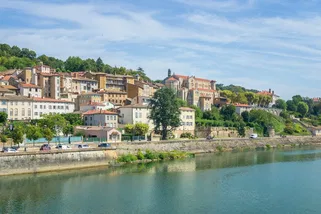

Rejs rzeczny · 14.05.2028 – 28.05.2028 · 14 nocy
Intensywny kurs na trasie Rodanu 2028
Cena i dostępność kajutTrasa i informacje o rejsie
Premium- Lyon
- Lyon
- Tournus
- Chalon-sur-Saone
- Tournus
- Mâcon
- Mâcon
- Trévoux
- Viviers-lès-Montagnes
- Port-Saint-Louis-du-Rhône
- Arles
- Arles
- Arles
- Awinion
- Awinion
- Chateauneuf-du-Pape
- Tain-l'Hermitage
- Wiedeń
- Lyon
| Data | Port | Przypłynięcie | Wypłynięcie |
|---|---|---|---|
| 14.05.2028 |
Lyon
Francja
|
— | — |
| 15.05.2028 |
Lyon
Francja
|
— | 18:00 |
| 16.05.2028 |
Tournus
Francja
|
05:00 | 09:00 |
| 16.05.2028 |
Chalon-sur-Saone
Francja
|
12:30 | 23:59 |
| 17.05.2028 |
Tournus
Francja
|
06:00 | 14:30 |
| 17.05.2028 |
Mâcon
Francja
|
17:00 | — |
| 18.05.2028 |
Mâcon
Francja
|
— | 23:30 |
| 19.05.2028 |
Trévoux
Francja
|
04:00 | 12:00 |
| 20.05.2028 |
Viviers-lès-Montagnes
Francja
|
06:00 | 20:00 |
| 21.05.2028 |
Port-Saint-Louis-du-Rhône
Francja
|
08:00 | 19:00 |
| 21.05.2028 |
Arles
Francja
|
23:00 | — |
| 22.05.2028 |
Arles
Francja
|
— | — |
| 23.05.2028 |
Arles
Francja
|
— | 23:30 |
| 24.05.2028 |
Awinion
Francja
|
03:30 | — |
| 25.05.2028 |
Awinion
Francja
|
— | 14:00 |
| 25.05.2028 |
Chateauneuf-du-Pape
Francja
|
17:00 | 19:30 |
| 26.05.2028 |
Tain-l'Hermitage
Francja
|
08:30 | 23:00 |
| 27.05.2028 |
Wiedeń
Austria
|
05:00 | 20:30 |
| 28.05.2028 |
Lyon
Francja
|
00:01 | — |
-
 Dzień 1:
Lyon / Francja
Lyon is the third-largest city and second-largest urban area of France. It is located in the country's east-central part at the confluence of the rivers Rhône and Saône,about 470 km (292 mi) south from Paris, 320 km (199 mi) north from Marseille and 56 km (35 mi) northeast from Saint-Étienne. Inhabitants of the city are called Lyonnais.
Lyon had a population of 513,275 in 2015. It is the capital of the Metropolis of Lyon and the region of Auvergne-Rhône-Alpes. The Lyon metropolitan area had a population of 2,265,375 in 2014, the second-largest urban area in France. The city is known for its cuisine and gastronomy, and historical and architectural landmarks; part of it is a registered as a UNESCO World Heritage site. Lyon was historically an important area for the production and weaving of silk. Lyon played a significant role in the history of cinema: it is where Auguste and Louis Lumièreinvented the cinematograph. It is also known for its light festival, the Fête des Lumières, which begins every 8 December and lasts for four days, earning Lyon the title of Capital of Lights.
Economically, Lyon is a major centre for banking, as well as for the chemical, pharmaceutical, and biotech industries. The city contains a significant software industry with a particular focus on video games, and in recent years has fostered a growing local start-up sector. Lyon hosts the international headquarters of Interpol, the International Agency for Research on Cancer and Euronews. It was ranked 19th globally and second in France for innovation in 2014. It ranked second in France and 39th globally in Mercer's 2015 liveability rankings.
-
Dzień 2: 18:00
Lyon / Francja
Lyon is the third-largest city and second-largest urban area of France. It is located in the country's east-central part at the confluence of the rivers Rhône and Saône,about 470 km (292 mi) south from Paris, 320 km (199 mi) north from Marseille and 56 km (35 mi) northeast from Saint-Étienne. Inhabitants of the city are called Lyonnais.
Lyon had a population of 513,275 in 2015. It is the capital of the Metropolis of Lyon and the region of Auvergne-Rhône-Alpes. The Lyon metropolitan area had a population of 2,265,375 in 2014, the second-largest urban area in France. The city is known for its cuisine and gastronomy, and historical and architectural landmarks; part of it is a registered as a UNESCO World Heritage site. Lyon was historically an important area for the production and weaving of silk. Lyon played a significant role in the history of cinema: it is where Auguste and Louis Lumièreinvented the cinematograph. It is also known for its light festival, the Fête des Lumières, which begins every 8 December and lasts for four days, earning Lyon the title of Capital of Lights.
Economically, Lyon is a major centre for banking, as well as for the chemical, pharmaceutical, and biotech industries. The city contains a significant software industry with a particular focus on video games, and in recent years has fostered a growing local start-up sector. Lyon hosts the international headquarters of Interpol, the International Agency for Research on Cancer and Euronews. It was ranked 19th globally and second in France for innovation in 2014. It ranked second in France and 39th globally in Mercer's 2015 liveability rankings.
-
 Dzień 3: 05:00–09:00
Tournus / Francja
Tournus to gmina w departamencie Saône-et-Loire w regionie Burgundia we wschodniej Francji.
Tournus znajduje się na prawym brzegu rzeki Saône, 20 km na północny wschód od Mâcon, przy linii kolejowej Paryż-Lyon.
Kościół św. Filiberta (wczesny XI wiek) jest głównym zachowanym budynkiem dawnej benedyktyńskiej opactwa w Tournus, zlikwidowanego w 1785 roku. Jest w stylu burgundzkiego romańskiego. Fasada nie ma jednej z dwóch wież flankujących, które pierwotnie miały zostać zaprojektowane. Nawa jest przykryta sklepieniem kolebkowym, wspartym na wysokich cylindrycznych kolumnach. Zarówno chór, jak i XI-wieczna krypta pod nim mają ambit oraz boczne kaplice.
Na Place de l'Hôtel de Ville stoi posąg Jean-Baptiste'a Greuze, urodzonego w mieście w 1725 roku.
Tournus jest ważnym regionem turystycznym, z jednym hotelem czterogwiazdkowym (Greuze) i jednym hotelem trzygwiazdkowym (Rempart). W 2013 roku cztery restauracje miały gwiazdkę Michelin: Greuze, Quartier Gourmand, Aux Terasses oraz Meulien.
W okolicach znajdują się winnice, a miasto i jego port prowadzą znaczną wymianę handlową w winie oraz w kamieniu z pobliskich kamieniołomów. Wytwarzanie krzeseł jest ważnym przemysłem.
W okolicach północnych i południowo-zachodnich znajdują się strefy przemysłowe. Miasto produkuje dużą ilość sprzętu AGD w fabryce Groupe SEB, a także naczynia kuchenne w fabryce Tefal.
W każdą sobotę rano odbywa się targ.
-
 Dzień 3: 12:30–23:59
Chalon-sur-Saone / Francja
Chalon-sur-Saône jest gminą w departamencie Saône-et-Loire w regionie Burgundia-Franche-Comté we wschodniej Francji.
Jest podprefekturą departamentu. Jest największym miastem w departamencie; jednak stolicą departamentu jest mniejsze miasto Mâcon.
Chalon-sur-Saône leży na południu regionu Burgundia-Franche-Comté we Francji. Położone jest nad rzeką Saoną i było niegdyś ruchliwym portem, pełniącym rolę punktu dystrybucji lokalnych win, które transportowano w górę i w dół Saony oraz Kanałem Centralnym, otwartym w 1792 roku.
Chociaż to miejsce (starożytne Cabillonum) było stolicą Eduów i wydobyto tu z dna rzeki przedmioty kultury lateńskiej, pierwsza wzmianka o Cavillonum znajduje się w Commentarii de Bello Gallico (VII, rozdz. 42 i 90). Rzymskie miasto już wtedy służyło jako port rzeczny i węzeł komunikacji drogowej, Via Agrippa i dróg bocznych. W 354 roku n.e. cesarz rzymski Konstancjusz II stacjonował w Chalon (wówczas zwanym Cabyllona) VII Legion Rzymski w celu inwazji na braci-królów, Gundomadusa i Vadomariusa z Alamanów. Jednak nie otrzymawszy zaopatrzenia, wojska rzymskie zbuntowały się i zostały spacyfikowane pieniędzmi przez wielkiego szambelana Euzebiusza. W późnym antyku miasto tak się skurczyło, że otaczający je mur obejmował piętnaście hektarów.
Święty Marceli z Chalon (Święty Marcel) miał tu ponieść męczeńską śmierć w 179 roku n.e. Chalon stało się jedną z de facto stolic królestwa Burgundii za panowania Guntrama, króla w latach 561-592, który tu zmarł. Guntram promował także kult Świętego Marcelego. Biskupstwo Chalon-sur-Saône, sufragania archidiecezji lyońskiej, zostało tu ustanowione w tym samym stuleciu, a sobór kościelny odbył się tu w latach 644-655. Stolica została włączona do diecezji Autun krótko po Rewolucji Francuskiej.
Chalon w XIX wieku najbardziej znane jest jako miejsce narodzin fotografii. Jego najsłynniejszy mieszkaniec, Nicéphore Niépce, ma także liceum (szkołę średnią) nazwane jego imieniem. W mieście, na Quai des Messageries, znajduje się muzeum, które zawiera wczesne relikwie fotograficzne, ponad dwa miliony fotografii i wiele starych artefaktów, takich jak aparaty i inny sprzęt do starej i nowoczesnej fotografii. Wystawiony jest również Pyréolophore Niépce'a z 1807 roku, prawdopodobnie pierwszy na świecie silnik spalinowy, oraz jego implementacja drezyny z 1818 roku, dla której ukuł słowo vélocipède.
Innym słynnym mieszkańcem jest Dominique Vivant Denon (1747-1825), który brał udział w tworzeniu muzeum w Luwrze, przekształcając dawny pałac królewski w muzeum po Rewolucji Francuskiej.
-
Dzień 4: 06:00–14:30
Tournus / Francja
Tournus to gmina w departamencie Saône-et-Loire w regionie Burgundia we wschodniej Francji.
Tournus znajduje się na prawym brzegu rzeki Saône, 20 km na północny wschód od Mâcon, przy linii kolejowej Paryż-Lyon.
Kościół św. Filiberta (wczesny XI wiek) jest głównym zachowanym budynkiem dawnej benedyktyńskiej opactwa w Tournus, zlikwidowanego w 1785 roku. Jest w stylu burgundzkiego romańskiego. Fasada nie ma jednej z dwóch wież flankujących, które pierwotnie miały zostać zaprojektowane. Nawa jest przykryta sklepieniem kolebkowym, wspartym na wysokich cylindrycznych kolumnach. Zarówno chór, jak i XI-wieczna krypta pod nim mają ambit oraz boczne kaplice.
Na Place de l'Hôtel de Ville stoi posąg Jean-Baptiste'a Greuze, urodzonego w mieście w 1725 roku.
Tournus jest ważnym regionem turystycznym, z jednym hotelem czterogwiazdkowym (Greuze) i jednym hotelem trzygwiazdkowym (Rempart). W 2013 roku cztery restauracje miały gwiazdkę Michelin: Greuze, Quartier Gourmand, Aux Terasses oraz Meulien.
W okolicach znajdują się winnice, a miasto i jego port prowadzą znaczną wymianę handlową w winie oraz w kamieniu z pobliskich kamieniołomów. Wytwarzanie krzeseł jest ważnym przemysłem.
W okolicach północnych i południowo-zachodnich znajdują się strefy przemysłowe. Miasto produkuje dużą ilość sprzętu AGD w fabryce Groupe SEB, a także naczynia kuchenne w fabryce Tefal.
W każdą sobotę rano odbywa się targ.
-
 Dzień 4: 17:00
Mâcon / Francja
Malowniczo położone nad brzegiem rzeki Saona, Macon zachwyca atmosferą południowej Burgundii. To francuskie miasto łączy elegancką architekturę, starożytne tradycje winiarskie i spokojne tempo życia. Macon znane jest jako miejsce urodzenia poety Alphonse’a de Lamartine’a oraz centrum regionu winiarskiego Mâconnais, słynącego z chardonnay.
Spacerując po starym mieście, można podziwiać kwitnące balkony, przytulne kawiarenki i zabytki, takie jak kościół Saint-Pierre czy drewniany dom z XV wieku. Miłośnicy natury i dobrej kuchni mogą wybrać się na szlaki winiarskie lub podziwiać widoki z mostu Saint-Laurent. Macon to idealne miejsce, by poczuć francuski urok z dala od zgiełku dużych miast.
-
Dzień 5: 23:30
Mâcon / Francja
Malowniczo położone nad brzegiem rzeki Saona, Macon zachwyca atmosferą południowej Burgundii. To francuskie miasto łączy elegancką architekturę, starożytne tradycje winiarskie i spokojne tempo życia. Macon znane jest jako miejsce urodzenia poety Alphonse’a de Lamartine’a oraz centrum regionu winiarskiego Mâconnais, słynącego z chardonnay.
Spacerując po starym mieście, można podziwiać kwitnące balkony, przytulne kawiarenki i zabytki, takie jak kościół Saint-Pierre czy drewniany dom z XV wieku. Miłośnicy natury i dobrej kuchni mogą wybrać się na szlaki winiarskie lub podziwiać widoki z mostu Saint-Laurent. Macon to idealne miejsce, by poczuć francuski urok z dala od zgiełku dużych miast.
-
 Dzień 6: 04:00–12:00
Trévoux / Francja
Trévoux is a commune in the Ain department in eastern France. The inhabitants are known as Trévoltiens.
It is a suburb of Lyon, built on the steeply sloping left bank of the river Saône.
In AD 943, the treaty of Verdun divided up the empire of Charlemagne. The river Saône became the frontier between France and the Empire. It is thanks to this border location that Trévoux gained its particular political status.
From the 13th century, the Trévoux river toll became important, and the town built a castle and walls.
On the 30th of June 1417, the local baron issued a decree allowing the local Jewish population to continue to study the Talmud, contrary to the decision taken in Chambéry in January 1417 as a result of which Jewish books had been seized and burned.
In 1523, the French king François the 1st confiscated the Dombes region and founded a parliament for the region in Lyon.
At the end of the 17th century, two important sovereign princes, Anne-Marie Louise of Orléans, Duchess of Montpensier known as "la Grande Mademoiselle", and her successor Louis-Auguste of Bourbon, duke of Maine, raised two monuments which are still notable in the landscape - the Montpensier hospital and the Palace of the Dombes Parliament.
In 1560, the Dombes region fell to the Bourbons. The town became rich as the capital of Dombes principality and seat of its parliament from 1697 to 1771. The town is also known at this time for a dictionary, printed there from 1704 to 1771 by the Jesuits.
In 1762, the principality of the Dombes was definitively absorbed into France.
The town was a sub-prefecture of Ain until 1926.
From the end of the 19th century until the 1950s, Trévoux was the global capital of the manufacture of synthetic diamonds.
-
 Dzień 7: 06:00–20:00
Viviers-lès-Montagnes / Francja
-
 Dzień 8: 08:00–19:00
Port-Saint-Louis-du-Rhône / Francja
-
 Dzień 8: 23:00
Arles / Francja
Arles jest miastem i gminą w południowej Francji, w departamencie Delta Rodanu (Bouches-du-Rhône), którego jest podprefekturą, w dawnej prowincji Prowansja.
Znaczna część Camargue znajduje się na terytorium gminy, co czyni ją największą gminą we Francji metropolitalnej pod względem powierzchni (chociaż Maripasoula w Gujanie Francuskiej jest znacznie większa). Miasto ma długą historię i miało znaczne znaczenie w rzymskiej prowincji Gallia Narbonensis. Rzymskie i romańskie zabytki Arles zostały wpisane na Listę Światowego Dziedzictwa UNESCO w 1981 roku. Holenderski postimpresjonistyczny malarz Vincent van Gogh mieszkał w Arles w latach 1888-1889 i stworzył tam ponad 300 obrazów i rysunków. Międzynarodowy festiwal fotografii odbywa się w mieście od 1970 roku.
-
Dzień 9:
Arles / Francja
Arles jest miastem i gminą w południowej Francji, w departamencie Delta Rodanu (Bouches-du-Rhône), którego jest podprefekturą, w dawnej prowincji Prowansja.
Znaczna część Camargue znajduje się na terytorium gminy, co czyni ją największą gminą we Francji metropolitalnej pod względem powierzchni (chociaż Maripasoula w Gujanie Francuskiej jest znacznie większa). Miasto ma długą historię i miało znaczne znaczenie w rzymskiej prowincji Gallia Narbonensis. Rzymskie i romańskie zabytki Arles zostały wpisane na Listę Światowego Dziedzictwa UNESCO w 1981 roku. Holenderski postimpresjonistyczny malarz Vincent van Gogh mieszkał w Arles w latach 1888-1889 i stworzył tam ponad 300 obrazów i rysunków. Międzynarodowy festiwal fotografii odbywa się w mieście od 1970 roku.
-
Dzień 10: 23:30
Arles / Francja
Arles jest miastem i gminą w południowej Francji, w departamencie Delta Rodanu (Bouches-du-Rhône), którego jest podprefekturą, w dawnej prowincji Prowansja.
Znaczna część Camargue znajduje się na terytorium gminy, co czyni ją największą gminą we Francji metropolitalnej pod względem powierzchni (chociaż Maripasoula w Gujanie Francuskiej jest znacznie większa). Miasto ma długą historię i miało znaczne znaczenie w rzymskiej prowincji Gallia Narbonensis. Rzymskie i romańskie zabytki Arles zostały wpisane na Listę Światowego Dziedzictwa UNESCO w 1981 roku. Holenderski postimpresjonistyczny malarz Vincent van Gogh mieszkał w Arles w latach 1888-1889 i stworzył tam ponad 300 obrazów i rysunków. Międzynarodowy festiwal fotografii odbywa się w mieście od 1970 roku.
-
 Dzień 11: 03:30
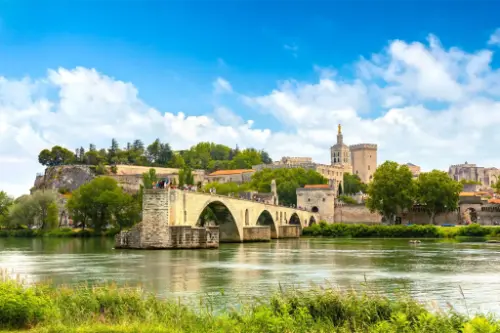
Awinion / Francja
Avignon is a commune in south-eastern France in the department of Vaucluse on the left bank of the Rhône river. Of the 90,194 inhabitants of the city (as of 2011), about 12,000 live in the ancient town centre enclosed by its medieval ramparts.
Between 1309 and 1377, during the Avignon Papacy, seven successive popes resided in Avignon and in 1348 Pope Clement VI bought the town from Joanna I of Naples. Papal control persisted until 1791 when, during the French Revolution, it became part of France. The town is now the capital of the Vaucluse department and one of the few French cities to have preserved its ramparts.
The historic centre, which includes the Palais des Papes, the cathedral, and the Pont d'Avignon, became a UNESCOWorld Heritage Site in 1995. The medieval monuments and the annual Festival d'Avignon have helped to make the town a major centre for tourism.
-
Dzień 12: 14:00
Awinion / Francja
Avignon is a commune in south-eastern France in the department of Vaucluse on the left bank of the Rhône river. Of the 90,194 inhabitants of the city (as of 2011), about 12,000 live in the ancient town centre enclosed by its medieval ramparts.
Between 1309 and 1377, during the Avignon Papacy, seven successive popes resided in Avignon and in 1348 Pope Clement VI bought the town from Joanna I of Naples. Papal control persisted until 1791 when, during the French Revolution, it became part of France. The town is now the capital of the Vaucluse department and one of the few French cities to have preserved its ramparts.
The historic centre, which includes the Palais des Papes, the cathedral, and the Pont d'Avignon, became a UNESCOWorld Heritage Site in 1995. The medieval monuments and the annual Festival d'Avignon have helped to make the town a major centre for tourism.
-
 Dzień 12: 17:00–19:30
Chateauneuf-du-Pape / Francja
-
 Dzień 13: 08:30–23:00
Tain-l'Hermitage / Francja
Tain-l'Hermitage jest gminą w departamencie Drôme w południowo-wschodniej Francji.
Położone jest na lewym brzegu Rodanu, naprzeciwko Tournon-sur-Rhône, które znajduje się w Ardèche. Widok z pokrytego winoroślą wzgórza nad miastem przyciągnął wielu turystów, w tym Thomasa Jeffersona.
Jest to znacząca gmina produkująca wino, w tym Hermitage AOC, Crozes-Hermitage AOC i Cornas AOC. Wina czerwone produkowane są z Syrah, a białe z Marsanne i/lub Roussanne. W Tain-l'Hermitage znajduje się wiele winiarni, w tym Maison M. Chapoutier, Caves de Tain i Paul Jaboulet Âiné, a także wiele mniejszych posiadłości.
W 1818 roku w gminie założono francuskiego negocjanta winnego Calvet, założonego przez Jeana-Marie Calvet. Wkrótce potem rozszerzył swoją działalność na Bordeaux, osiedlając się w samym mieście i budując château w Médoc w 1870 roku.
-
 Dzień 14: 05:00–20:30
Wiedeń / Austria
Vienna is the federal capital and largest city of Austria, and one of the nine states of Austria. Vienna is Austria's primate city, with a population of about 1.9 million (2.6 million within the metropolitan area, nearly one third of Austria's population), and its cultural, economic, and political centre. It is the 7th-largest city by population within city limits in the European Union. Until the beginning of the 20th century, it was the largest German-speaking city in the world, and before the splitting of the Austro-Hungarian Empire in World War I, the city had 2 million inhabitants. Today, it has the second largest number of German speakers after Berlin.Vienna is host to many major international organizations, including the United Nations and OPEC. The city is located in the eastern part of Austria and is close to the borders of the Czech Republic, Slovakia, and Hungary. These regions work together in a European Centrope border region. Along with nearby Bratislava, Vienna forms a metropolitan region with 3 million inhabitants. In 2001, the city centre was designated a UNESCO World Heritage Site. In July 2017 it was moved to the list of World Heritage in Danger.
Apart from being regarded as the City of Music[ because of its musical legacy, Vienna is also said to be "The City of Dreams" because it was home to the world's first psychoanalyst – Sigmund Freud. The city's roots lie in early Celticand Roman settlements that transformed into a Medieval and Baroque city, and then the capital of the Austro-Hungarian Empire. It is well known for having played an essential role as a leading European music centre, from the great age of Viennese Classicism through the early part of the 20th century. The historic centre of Vienna is rich in architectural ensembles, including Baroque castles and gardens, and the late-19th-century Ringstraße lined with grand buildings, monuments and parks.
Vienna is known for its high quality of life. In a 2005 study of 127 world cities, the Economist Intelligence Unit ranked the city first (in a tie with Vancouver and San Francisco) for the world's most liveable cities. Between 2011 and 2015, Vienna was ranked second, behind Melbourne. In 2018, it replaced Melbourne as the number one spot. For eight consecutive years (2009–2016), the human-resource-consulting firm Mercer ranked Vienna first in its annual "Quality of Living" survey of hundreds of cities around the world, a title the city still held in 2016. Monocle's 2015 "Quality of Life Survey" ranked Vienna second on a list of the top 25 cities in the world "to make a base within."
The UN-Habitat classified Vienna as the most prosperous city in the world in 2012/2013. The city was ranked 1st globally for its culture of innovation in 2007 and 2008, and sixth globally (out of 256 cities) in the 2014 Innovation Cities Index, which analyzed 162 indicators in covering three areas: culture, infrastructure, and markets. Vienna regularly hosts urban planning conferences and is often used as a case study by urban planners.
Between 2005 and 2010, Vienna was the world's number-one destination for international congresses and conventions. It attracts over 6.8 million tourists a year.
-
Dzień 15: 00:01
Lyon / Francja
Lyon is the third-largest city and second-largest urban area of France. It is located in the country's east-central part at the confluence of the rivers Rhône and Saône,about 470 km (292 mi) south from Paris, 320 km (199 mi) north from Marseille and 56 km (35 mi) northeast from Saint-Étienne. Inhabitants of the city are called Lyonnais.
Lyon had a population of 513,275 in 2015. It is the capital of the Metropolis of Lyon and the region of Auvergne-Rhône-Alpes. The Lyon metropolitan area had a population of 2,265,375 in 2014, the second-largest urban area in France. The city is known for its cuisine and gastronomy, and historical and architectural landmarks; part of it is a registered as a UNESCO World Heritage site. Lyon was historically an important area for the production and weaving of silk. Lyon played a significant role in the history of cinema: it is where Auguste and Louis Lumièreinvented the cinematograph. It is also known for its light festival, the Fête des Lumières, which begins every 8 December and lasts for four days, earning Lyon the title of Capital of Lights.
Economically, Lyon is a major centre for banking, as well as for the chemical, pharmaceutical, and biotech industries. The city contains a significant software industry with a particular focus on video games, and in recent years has fostered a growing local start-up sector. Lyon hosts the international headquarters of Interpol, the International Agency for Research on Cancer and Euronews. It was ranked 19th globally and second in France for innovation in 2014. It ranked second in France and 39th globally in Mercer's 2015 liveability rankings.
Oferujemy dwa różne rodzaje rezerwacji, aby sprostać różnym potrzebom: A‑ROSA Premium All‑Inclusive z nieograniczonym komfortem oraz A‑ROSA Basic z pełnym wyżywieniem, zapewniającą bardziej elastyczne warunki.
Premium All-Inclusive
Rozkoszuj się przez cały dzień, każdego dnia, dzięki wysokiej jakości bufetom.
Wysokiej jakości napoje wliczone w cenę przez cały dzień: herbata, kawa i specjały kawowe, woda, napoje bezalkoholowe, piwo, prosecco, a także wybór win.
Obniżone ceny dodatkowych usług i ofert na pokładzie, np. Zabiegi SPA, warsztaty (z wyjątkiem A-ROSA ALEA i A-ROSA CLEA)
Bezpłatne korzystanie z udogodnień na pokładzie, takich jak sauna i siłownia (sauna nie jest dostępna na statkach A-ROSA ALEA i A-ROSA CLEA)
Transfer między lotniskiem lub dworcem kolejowym TGV a statkiem po przylocie zarezerwowanym przez A-ROSA
Klub dla dzieci na rejsach rodzinnych oraz przez cały rok na statkach A-ROSA SENA
Przybory toaletowe w kabinie i szlafroki na życzenie
Specjalne kolacje powitalne i pożegnalne dla rejsów trwających 5 nocy i dłużej
Dział Obsługi Gości do dyspozycji gości
Różnorodne rozrywki na pokładzie dla rejsów trwających 7 nocy i dłużej z lokalnymi artystami
Obsługa pokoju w każdej klasie kabiny, w godzinach otwarcia baru**
Bezpłatny rower elektryczny w zależności od dostępności
A-ROSA Basic z pełnym wyżywieniem
A-ROSA Basic z pełnym wyżywieniem to idealna alternatywa dla bardziej spontanicznych gości A-ROSA, którzy mają elastyczny wybór dat i tras rejsów.
Ta rezerwacja obejmuje następujące udogodnienia:
Pełne wyżywienie: Obfite śniadanie, lunch i kolacja w formie bufetu, dodatkowa przekąska w dniu wejścia na pokład oraz kawa i herbata
Codziennie urozmaicona rozrywka na pokładzie
Bezpłatne korzystanie z udogodnień na pokładzie, takich jak sauna i strefa fitness
Bezpłatny wybór daty, statku, trasy i kategorii kabiny
Wszystkie opłaty portowe
Pełne wyżywienie A-ROSA Basic jest dostępne tylko w przypadku wybranych rejsów, z ograniczoną dostępnością. Numer kabiny zostanie podany na pokładzie.
Apartamenty, oferty specjalne rejsów A-ROSA, pakiety A-ROSA i inne korzyści, takie jak zniżki za wcześniejszą rezerwację lub bezpłatny pobyt dzieci, nie są dostępne w przypadku rezerwacji A-ROSA Basic.
Stan na 01.11.2026
Poniższe usługi nie są wliczone w cenę rejsu i wymagają dodatkowej opłaty:
- Wycieczki
- Napiwki dla personelu
- Korzystanie ze strefy spa i zabiegów kosmetycznych
- Przelot samolotem
- Transfery przed i/lub po rejsie
- Ubezpieczenie medyczne
Warunki rezerwacji rejsu A-ROSA
Minimalny depozyt przy rezerwacji - 40%
Ostateczna płatność 60 dni przed rozpoczęciem rejsu - 100%
Warunki anulowania rejsu:
a) Standardowa stawka dla cen „A-ROSA Premium All-Inclusive”
• Do 31 dni przed wyjazdem - 40%
• Do 30 dni przed wyjazdem - 60%
• Do 24 dni przed wyjazdem - 70%
• Do 17 dni przed wyjazdem - 80%
• Do 10 dni przed wyjazdem - 85%
• Do 3 dni przed wyjazdem do dnia wyjazdu, anulowanie rezerwacji tego samego dnia lub niepojawienie się - 90%
b) Specjalna stawka dla cen „A-ROSA Basic Full Board”
• Do 31 dni przed wyjazdem - 50%
• Do 30 dni przed wyjazdem - 70%
• Do 24 dni przed wyjazdem - 80%
• Do 17 dni lub mniej przed odlotem – 85%
• Do 10 dni lub mniej przed odlotem – 85%
• Do 3 dni przed odlotem lub nieobecność – 90%
Proszę czekać…
Organizator
Biznes i Turystyka Piotr Skupiewski
- ul. Łukowa 41, 32-823 Szczepanów
- NIP 8691148381
- REGON 850455159
- +48 576 977 555
- +48 570 700 273
Organizator jest wpisany do Centralnej Ewidencji Organizatorów Turystyki i Przedsiębiorców Ułatwiających Nabywanie Powiązanych Usług Turystycznych. Posiada gwarancję ubezpieczeniową UNIQA nr 3800003856, ważną od 5 maja 2026 r. do 4 maja 2027 r. Suma gwarancyjna wynosi 379 404,00 zł. Organizator odprowadza składki do Turystycznego Funduszu Gwarancyjnego i Turystycznego Funduszu Pomocowego.
Masz jeszcze pytania?
Pomożemy wybrać rejs i odpowiemy na Twoje pytania.