
Sea cruise · 06.01.2028 – 19.02.2028 · 44 nights
Sun, sand & seas of stars
Cabin prices and availabilityRoute and cruise information
Premium- Los Angeles
- Ensenada
- Cabo San Lucas
- Acapulco
- Puerto Quetzal
- Puntarenas
- Cartagena (Bolívar)
- Leesburg
- Miami
- PHILIPSBURG
- Fort-de-France, Martinique (island)
- Castries
- Saint-Georges
- Aruba (Oranjestad)
- Miami
- San Juan
- Charlotte Amalie, Fr. St. Thomas
- Basseterre, Saint Kitts
- Pointe-à-Pitre
- Tortola
- Miami
- San Miguel, Cozumel Island
- Cocksen Hole
- Harvest Caye
- Costa Maya
- Miami
| Date | Port | Arrival | Departure |
|---|---|---|---|
| 06.01.2028 |
Los Angeles
USA
|
07:00 | 17:00 |
| 07.01.2028 |
Ensenada
Mexico
|
07:00 | 15:00 |
| 08.01.2028 |
Day at sea
|
— | — |
| 09.01.2028 |
Cabo San Lucas
Mexico
|
09:00 | 17:00 |
| 10.01.2028 |
Day at sea
|
— | — |
| 11.01.2028 |
Acapulco
Mexico
|
09:00 | 17:00 |
| 12.01.2028 |
Day at sea
|
— | — |
| 13.01.2028 |
Puerto Quetzal
Guatemala
|
07:00 | 19:00 |
| 14.01.2028 |
Day at sea
|
— | — |
| 15.01.2028 |
Puntarenas
Costa Rica
|
07:00 | 17:00 |
| 16.01.2028 |
Day at sea
|
— | — |
| 17.01.2028 |
Day at sea
|
— | — |
| 18.01.2028 |
Cartagena (Bolívar)
Colombia
|
11:00 | 19:00 |
| 19.01.2028 |
Day at sea
|
— | — |
| 20.01.2028 |
Leesburg
USA
|
08:00 | 16:00 |
| 21.01.2028 |
Day at sea
|
— | — |
| 22.01.2028 |
Miami
USA
|
07:00 | 17:00 |
| 23.01.2028 |
Day at sea
|
— | — |
| 24.01.2028 |
Day at sea
|
— | — |
| 25.01.2028 |
PHILIPSBURG
Anguilla
|
07:00 | 16:00 |
| 26.01.2028 |
Fort-de-France, Martinique (island)
Martinique
|
08:00 | 18:00 |
| 27.01.2028 |
Castries
Saint Lucia
|
07:00 | 17:00 |
| 28.01.2028 |
Saint-Georges
French Guiana
|
07:00 | 17:00 |
| 29.01.2028 |
Day at sea
|
— | — |
| 30.01.2028 |
Aruba (Oranjestad)
Aruba
|
07:00 | 17:00 |
| 31.01.2028 |
Day at sea
|
— | — |
| 01.02.2028 |
Day at sea
|
— | — |
| 02.02.2028 |
Miami
USA
|
07:00 | 19:00 |
| 03.02.2028 |
Day at sea
|
— | — |
| 04.02.2028 |
Day at sea
|
— | — |
| 05.02.2028 |
San Juan
Puerto Rrico
|
07:00 | 17:00 |
| 06.02.2028 |
Charlotte Amalie, Fr. St. Thomas
Virgin Islands
|
07:00 | 17:00 |
| 07.02.2028 |
Basseterre, Saint Kitts
Saint Kitts and Nevis
|
08:00 | 18:00 |
| 08.02.2028 |
Pointe-à-Pitre
Guadeloupe
|
08:00 | 16:00 |
| 09.02.2028 |
Tortola
British Virgin Islands
|
09:00 | 17:00 |
| 10.02.2028 |
Day at sea
|
— | — |
| 11.02.2028 |
Day at sea
|
— | — |
| 12.02.2028 |
Miami
USA
|
07:00 | 17:00 |
| 13.02.2028 |
Day at sea
|
— | — |
| 14.02.2028 |
San Miguel, Cozumel Island
Mexico
|
07:00 | 17:00 |
| 15.02.2028 |
Cocksen Hole
Honduras
|
09:00 | 17:00 |
| 16.02.2028 |
Harvest Caye
|
07:00 | 17:00 |
| 17.02.2028 |
Costa Maya
Mexico
|
09:00 | 17:00 |
| 18.02.2028 |
Day at sea
|
— | — |
| 19.02.2028 |
Miami
USA
|
07:00 | 19:00 |
-
 Day 1: 07:00–17:00
Los Angeles / USA
Los Angeles officially the City of Los Angeles and often known colloquially by its initials L.A., is the most populous city in California and the second most populous city in the United States, after New York. With an estimated population of four million, Los Angeles is the cultural, financial, and commercial center of Southern California. Nicknamed the "City of Angels" partly because of its name's Spanish meaning, Los Angeles is known for its Mediterranean climate, ethnic diversity, Hollywood, and the entertainment industry, and sprawling metropolis.
Los Angeles is in a large basin bounded by the Pacific Ocean on one side and by mountains as high as 10,000 feet (3,000 m) on the others. The city proper, which covers about 469 square miles (1,210 km2), is the seat of Los Angeles County, the most populated county in the country. Los Angeles is also the principal city of the Los Angeles metropolitan area, the second largest in the United States after that of New York City, with a population of 13.1 million. It is part of the Los Angeles-Long Beach combined statistical area, also the nation's second most populous area with a 2015 estimated population of 18.7 million.
Los Angeles is one of the most substantial economic engines within the United States, with a diverse economy in a broad range of professional and cultural fields. Los Angeles is also famous as the home of Hollywood, a major center of the world entertainment industry. A global city, it has been ranked 6th in the Global Cities Index and 9th in the Global Economic Power Index. The Los Angeles combined statistical area also has a gross metropolitan productof $831 billion (as of 2008), making it the third-largest in the world, after the Tokyo and New York metropolitan areas. Los Angeles hosted the 1932 and 1984 Summer Olympics and will host the event for a third time in 2028. The city also hosted the Miss Universe pageant twice, in 1990 and 2006, and was one of 9 American cities to host the 1994 FIFA men's soccer World Cup and one of 8 to host the 1999 FIFA women's soccer World Cup, hosting the finalmatch for both tournaments.
Historically home to the Chumash and Tongva, Los Angeles was claimed by Juan Rodríguez Cabrillo for Spain in 1542 along with the rest of what would become Alta California. The city was officially founded on September 4, 1781, by Spanish governor Felipe de Neve. It became a part of Mexico in 1821 following the Mexican War of Independence. In 1848, at the end of the Mexican–American War, Los Angeles and the rest of California were purchased as part of the Treaty of Guadalupe Hidalgo, becoming part of the United States. Los Angeles was incorporated as a municipality on April 4, 1850, five months before California achieved statehood. The discovery of oil in the 1890s brought rapid growth to the city. The completion of the Los Angeles Aqueduct in 1913, delivering water from Eastern California, later assured the city's continued rapid growth.
-
 Day 2: 07:00–15:00
Ensenada / Mexico
Ensenada is a coastal city in Mexico, the third-largest in Baja California. Lying 125 kilometres (78 mi) south of San Diego on the Baja California Peninsula, it is locally referred to as La Cenicienta del Pacífico, "The Cinderella of the Pacific."
One of the first settlements founded in the Californias, Ensenada has emerged as a cruise ship destination, aerospace center, and a jumping-off point for Valle de Guadalupe, a local wine region. It is said that the first Vitis vinifera made it to the region's San Ignacio Mission in 1703, when Jesuit Padre Juan de Ugarte planted the first vineyards there.
Situated on the coastline of Bahía de Todos Santos—an inlet of the Pacific Ocean on the peninsula's Gold Coast—the Port of Ensenada is an important commercial, fishing, and tourist port. The city is home to a navy base, army base, and Ensenada Airport, a military airfield which doubles as an airport of entry into Mexico.
Ensenada is the municipal seat and cultural and commercial center of Ensenada Municipality, one of five into which the state is divided. As of 2015, the municipality had a population of 519,813.
Ensenada is backed by small mountain ranges. Proximity to the Pacific and a warm Mediterranean latitude create mild year-round weather. The rainy season during the winter is short and the area is prone to prolonged droughts, which can threaten its grape harvests. The National Park Constitution of 1857 created the Sierra de Juarez and San Pedro Martir National Parks, which maintain one of the best astronomical observatories in the country.
Ensenada is part of UNESCO´s Creative Cities Network since 2015.
-
Day 3:
Day at sea / Sea
-
 Day 4: 09:00–17:00
Cabo San Lucas / Mexico
Cabo San Lucas or simply Cabo, is a resort city at the southern tip of the Baja California Peninsula, in the Mexican state of Baja California Sur. As of 2015, the population of the city was 81,111 inhabitants. Cabo San Lucas together with San José del Cabo is known as Los Cabos. Together they form a metropolitan area of 305,983 inhabitants.
Cabo has been rated as one of Mexico's top 5 tourist destinations; it is known for its beaches, scuba diving locations, balnearios, the sea arch El Arco de Cabo San Lucas, and marine life. The Los Cabos Corridor has become a heavily trafficked vacation destination for tourists, with numerous resorts and timeshares along the coast between Cabo San Lucas and San José del Cabo.
Cabo houses a range of wildlife, including rays, sharks, birds, and a range of fish, such as mahi-mahi (dorado), and striped marlin.
-
Day 5:
Day at sea / Sea
-
 Day 6: 09:00–17:00
Acapulco / Mexico
-
Day 7:
Day at sea / Sea
-
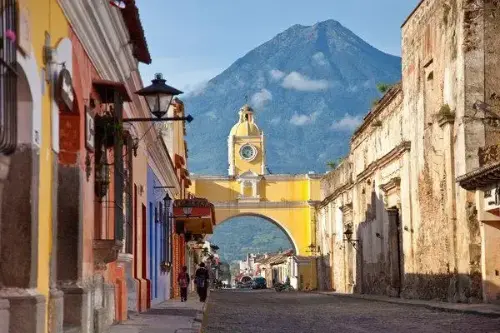 Day 8: 07:00–19:00
Puerto Quetzal / Guatemala
Puerto Quetzal is an important port city on the Pacific coast of Guatemala. It is one of the most popular cruise destinations, making it a key transport hub and a gateway for travelers arriving in the country. Puerto Quetzal is also a starting point for exploring Guatemala’s natural wonders, including famous volcanoes and picturesque beaches. Nearby attractions include the Acatenango Volcano and the Monterico National Park, renowned for its ecosystem and beaches suitable for surfing.
In addition to its natural beauty, Puerto Quetzal offers travelers a unique atmosphere. The city retains the charm of the Pacific coastline, with cozy fishing villages and restaurants where visitors can enjoy fresh seafood. Its strategic location and developed infrastructure make Puerto Quetzal a convenient starting point for exploring Guatemala, whether for those wishing to discover ancient Mayan ruins like Tikal or for those seeking a relaxing beach vacation.
-
Day 9:
Day at sea / Sea
-
 Day 10: 07:00–17:00
Puntarenas / Costa Rica
Puntarenas is the capital and largest city in the Province of Puntarenas, on the Pacific coast of Costa Rica.
-
Day 11:
Day at sea / Sea
-
Day 12:
Day at sea / Sea
-
 Day 13: 11:00–19:00
Cartagena (Bolívar) / Colombia
Ancient fortress walls, street musicians, and the Caribbean sun create an unforgettable atmosphere in Cartagena (Bolívar) — the gem of Colombia's coast. This city, listed as a UNESCO World Heritage Site, enchants visitors with its colonial architecture, charming courtyards, and the aroma of fresh coffee wafting from countless cafés.
Immerse yourself in the vibrant rhythm of Cartagena, strolling through the cobbled streets of the Old Town, where every corner holds tales of pirates and Spanish conquistadors. And the sunset near the ancient Castillo San Felipe de Barajas is the perfect ending to a day filled with culture, history, and tropical romance.
-
Day 14:
Day at sea / Sea
-
 Day 15: 08:00–16:00
Leesburg / USA
-
Day 16:
Day at sea / Sea
-
 Day 17: 07:00–17:00
Miami / USA
Miami, officially the City of Miami, is the cultural, economic and financial center of South Florida. Miami is the seat of Miami-Dade County, the most populous county in Florida. The city covers an area of about 56.6 square miles (147 km2), between the Everglades to the west and Biscayne Bay on the east; with a 2017 estimated population of 463,347, Miami is the sixth most densely populated major city in the United States. The Miami metropolitan area is home to 6.1 million people and the seventh-largest metropolitan area in the nation. Miami's metro area is the second-most populous metropolis in the southeastern United States and fourth-largest urban area in the U.S.
Miami is a major center, and a leader in finance, commerce, culture, media, entertainment, the arts, and international trade. The Miami Metropolitan Area is by far the largest urban economy in Florida and the 12th largest in the United States with a GDP of $344.9 billion as of 2017. In 2012, Miami was classified as an "Alpha−" level world city in the World Cities Study Group's inventory. In 2010, Miami ranked seventh in the United States and 33rd among global cities in terms of business activity, human capital, information exchange, cultural experience, and political engagement. In 2008, Forbes magazine ranked Miami "America's Cleanest City", for its year-round good air quality, vast green spaces, clean drinking water, clean streets, and citywide recycling programs. According to a 2009 UBS study of 73 world cities, Miami was ranked as the richest city in the United States, and the world's seventh-richest city in terms of purchasing power. Miami is nicknamed the "Capital of Latin America" and is the largest city with a Cuban-American plurality.
Greater Downtown Miami has one of the largest concentrations of international banks in the United States, and is home to many large national and international companies. The Civic Center is a major center for hospitals, research institutes, medical centers, and biotechnology industries. For more than two decades, the Port of Miami, known as the "Cruise Capital of the World", has been the number one cruise passenger port in the world. It accommodates some of the world's largest cruise ships and operations, and is the busiest port in both passenger traffic and cruise lines. Metropolitan Miami is also a major tourism hub in the southeastern U.S. for international visitors, ranking number two in the country after New York City.
-
Day 18:
Day at sea / Sea
-
Day 19:
Day at sea / Sea
-
Day 20: 07:00–16:00
PHILIPSBURG / Anguilla
-
 Day 21: 08:00–18:00
Fort-de-France, Martinique (island) / Martinique
Fort-de-France – The Heart of Martinique
Fort-de-France is the capital of the island of Martinique, located in the southwest of the island. This picturesque port city blends French elegance with Caribbean exoticism. Strolling through its streets, visitors can enjoy the old architecture, the atmosphere of local markets, and stunning views of the bay. The main architectural landmark is the Fort-de-France Citadel, from which a panoramic view of the city and island can be admired.
For visitors, Fort-de-France offers a rich cultural experience: visiting museums, including the Martinique Museum, exploring local cuisine and traditions. The island's nature is captivating: white beaches, palm trees, tropical forests, and volcanic mountains — all of which make Fort-de-France an ideal destination for relaxation and discovering the unique Caribbean culture. -
 Day 22: 07:00–17:00
Castries / Saint Lucia
-
 Day 23: 07:00–17:00
Saint-Georges / French Guiana
-
Day 24:
Day at sea / Sea
-
 Day 25: 07:00–17:00
Aruba (Oranjestad) / Aruba
Aruba is an island and a constituent country of the Kingdom of the Netherlands in the southern Caribbean Sea, located about 1,600 kilometres (990 mi) west of the main part of the Lesser Antilles and 29 kilometres (18 mi) north of the coast of Venezuela. It measures 32 kilometres (20 mi) long from its northwestern to its southeastern end and 10 kilometres (6 mi) across at its widest point. Together with Bonaire and Curaçao, Aruba forms a group referred to as the ABC islands. Collectively, Aruba and the other Dutch islands in the Caribbean are often called the Dutch Caribbean.
Aruba is one of the four countries that form the Kingdom of the Netherlands, along with the Netherlands, Curaçao, and Sint Maarten; the citizens of these countries are all Dutch nationals. Aruba has no administrative subdivisions, but, for census purposes, is divided into eight regions. Its capital is Oranjestad.
Unlike much of the Caribbean region, Aruba has a dry climate and an arid, cactus-strewn landscape. This climate has helped tourism as visitors to the island can reliably expect warm, sunny weather. It has a land area of 179 km2(69.1 sq mi) and is densely populated, with a total of 102,484 inhabitants at the 2010 Census. It lies outside Hurricane Alley.
-
Day 26:
Day at sea / Sea
-
Day 27:
Day at sea / Sea
-
Day 28: 07:00–19:00
Miami / USA
Miami, officially the City of Miami, is the cultural, economic and financial center of South Florida. Miami is the seat of Miami-Dade County, the most populous county in Florida. The city covers an area of about 56.6 square miles (147 km2), between the Everglades to the west and Biscayne Bay on the east; with a 2017 estimated population of 463,347, Miami is the sixth most densely populated major city in the United States. The Miami metropolitan area is home to 6.1 million people and the seventh-largest metropolitan area in the nation. Miami's metro area is the second-most populous metropolis in the southeastern United States and fourth-largest urban area in the U.S.
Miami is a major center, and a leader in finance, commerce, culture, media, entertainment, the arts, and international trade. The Miami Metropolitan Area is by far the largest urban economy in Florida and the 12th largest in the United States with a GDP of $344.9 billion as of 2017. In 2012, Miami was classified as an "Alpha−" level world city in the World Cities Study Group's inventory. In 2010, Miami ranked seventh in the United States and 33rd among global cities in terms of business activity, human capital, information exchange, cultural experience, and political engagement. In 2008, Forbes magazine ranked Miami "America's Cleanest City", for its year-round good air quality, vast green spaces, clean drinking water, clean streets, and citywide recycling programs. According to a 2009 UBS study of 73 world cities, Miami was ranked as the richest city in the United States, and the world's seventh-richest city in terms of purchasing power. Miami is nicknamed the "Capital of Latin America" and is the largest city with a Cuban-American plurality.
Greater Downtown Miami has one of the largest concentrations of international banks in the United States, and is home to many large national and international companies. The Civic Center is a major center for hospitals, research institutes, medical centers, and biotechnology industries. For more than two decades, the Port of Miami, known as the "Cruise Capital of the World", has been the number one cruise passenger port in the world. It accommodates some of the world's largest cruise ships and operations, and is the busiest port in both passenger traffic and cruise lines. Metropolitan Miami is also a major tourism hub in the southeastern U.S. for international visitors, ranking number two in the country after New York City.
-
Day 29:
Day at sea / Sea
-
Day 30:
Day at sea / Sea
-
 Day 31: 07:00–17:00
San Juan / Puerto Rrico
San Juan
-
 Day 32: 07:00–17:00
Charlotte Amalie, Fr. St. Thomas / Virgin Islands
-
 Day 33: 08:00–18:00
Basseterre, Saint Kitts / Saint Kitts and Nevis
-
 Day 34: 08:00–16:00
Pointe-à-Pitre / Guadeloupe
Pointe-a-Pitre is the largest city and economic center of Guadeloupe, located on the island of Grande-Terre in the Caribbean Sea. Founded in the 18th century, the city retains elements of colonial architecture and serves as an important regional port. Its lively markets, such as the Saint-Antoine market, invite travelers to experience local life, sample spices, tropical fruits, and handmade crafts. The historic city center, with its narrow streets and Creole-style buildings, reflects a rich blend of French and Caribbean traditions.
Pointe-à-Pitre is also a starting point for exploring Guadeloupe's natural wonders. Nearby are the famous Guadeloupe National Park and the La Soufrière volcano, popular with outdoor enthusiasts. Those interested in history can visit the Memorial ACTe, a museum dedicated to the history of slavery. With its mix of cultural heritage, vibrant atmosphere, and convenient location, Pointe-à-Pitre remains an attractive destination for travelers seeking authentic Caribbean experiences.
-
 Day 35: 09:00–17:00
Tortola / British Virgin Islands
-
Day 36:
Day at sea / Sea
-
Day 37:
Day at sea / Sea
-
Day 38: 07:00–17:00
Miami / USA
Miami, officially the City of Miami, is the cultural, economic and financial center of South Florida. Miami is the seat of Miami-Dade County, the most populous county in Florida. The city covers an area of about 56.6 square miles (147 km2), between the Everglades to the west and Biscayne Bay on the east; with a 2017 estimated population of 463,347, Miami is the sixth most densely populated major city in the United States. The Miami metropolitan area is home to 6.1 million people and the seventh-largest metropolitan area in the nation. Miami's metro area is the second-most populous metropolis in the southeastern United States and fourth-largest urban area in the U.S.
Miami is a major center, and a leader in finance, commerce, culture, media, entertainment, the arts, and international trade. The Miami Metropolitan Area is by far the largest urban economy in Florida and the 12th largest in the United States with a GDP of $344.9 billion as of 2017. In 2012, Miami was classified as an "Alpha−" level world city in the World Cities Study Group's inventory. In 2010, Miami ranked seventh in the United States and 33rd among global cities in terms of business activity, human capital, information exchange, cultural experience, and political engagement. In 2008, Forbes magazine ranked Miami "America's Cleanest City", for its year-round good air quality, vast green spaces, clean drinking water, clean streets, and citywide recycling programs. According to a 2009 UBS study of 73 world cities, Miami was ranked as the richest city in the United States, and the world's seventh-richest city in terms of purchasing power. Miami is nicknamed the "Capital of Latin America" and is the largest city with a Cuban-American plurality.
Greater Downtown Miami has one of the largest concentrations of international banks in the United States, and is home to many large national and international companies. The Civic Center is a major center for hospitals, research institutes, medical centers, and biotechnology industries. For more than two decades, the Port of Miami, known as the "Cruise Capital of the World", has been the number one cruise passenger port in the world. It accommodates some of the world's largest cruise ships and operations, and is the busiest port in both passenger traffic and cruise lines. Metropolitan Miami is also a major tourism hub in the southeastern U.S. for international visitors, ranking number two in the country after New York City.
-
Day 39:
Day at sea / Sea
-
 Day 40: 07:00–17:00
San Miguel, Cozumel Island / Mexico
-
 Day 41: 09:00–17:00
Cocksen Hole / Honduras
-
 Day 42: 07:00–17:00
Harvest Caye
-
 Day 43: 09:00–17:00
Costa Maya / Mexico
-
Day 44:
Day at sea / Sea
-
Day 45: 07:00–19:00
Miami / USA
Miami, officially the City of Miami, is the cultural, economic and financial center of South Florida. Miami is the seat of Miami-Dade County, the most populous county in Florida. The city covers an area of about 56.6 square miles (147 km2), between the Everglades to the west and Biscayne Bay on the east; with a 2017 estimated population of 463,347, Miami is the sixth most densely populated major city in the United States. The Miami metropolitan area is home to 6.1 million people and the seventh-largest metropolitan area in the nation. Miami's metro area is the second-most populous metropolis in the southeastern United States and fourth-largest urban area in the U.S.
Miami is a major center, and a leader in finance, commerce, culture, media, entertainment, the arts, and international trade. The Miami Metropolitan Area is by far the largest urban economy in Florida and the 12th largest in the United States with a GDP of $344.9 billion as of 2017. In 2012, Miami was classified as an "Alpha−" level world city in the World Cities Study Group's inventory. In 2010, Miami ranked seventh in the United States and 33rd among global cities in terms of business activity, human capital, information exchange, cultural experience, and political engagement. In 2008, Forbes magazine ranked Miami "America's Cleanest City", for its year-round good air quality, vast green spaces, clean drinking water, clean streets, and citywide recycling programs. According to a 2009 UBS study of 73 world cities, Miami was ranked as the richest city in the United States, and the world's seventh-richest city in terms of purchasing power. Miami is nicknamed the "Capital of Latin America" and is the largest city with a Cuban-American plurality.
Greater Downtown Miami has one of the largest concentrations of international banks in the United States, and is home to many large national and international companies. The Civic Center is a major center for hospitals, research institutes, medical centers, and biotechnology industries. For more than two decades, the Port of Miami, known as the "Cruise Capital of the World", has been the number one cruise passenger port in the world. It accommodates some of the world's largest cruise ships and operations, and is the busiest port in both passenger traffic and cruise lines. Metropolitan Miami is also a major tourism hub in the southeastern U.S. for international visitors, ranking number two in the country after New York City.
Your World Included
With Your World Included, you’ll enjoy a wide array of included amenities for the ultimate comfort and value in ultra-premium cruising.
Unforgettable dining experiences at a variety of exquisite restaurants — all at no extra charge.
Complimentary specialty coffees, sodas, freshly pressed juices, and still and sparkling Vero Water® served throughout the ship.
Unlimited free Wi-Fi available in your suite, stateroom, and all public areas.
In-room dining with a superb variety of hot and cold selections.
Smoothies, milkshakes, gelato, and signature Humphry Slocombe ice cream — always included.
Group fitness classes at Aquamar® Spa + Vitality Center are complimentary.
Gratuities are included for your convenience.
Laundry is free for all guests.
With complimentary self-service launderettes on board, plus laundry and pressing services for Concierge and Suite categories, you’ll always look your finest.
Along with our hallmark personalized service, you’ll enjoy an enriching cruise experience with no hidden costs or nickel-and-diming.
Elevate Your Experience
Concierge Level Veranda Staterooms offer an unrivaled combination of luxury, privilege, and value. A wealth of amenities and exclusive benefits elevate your experience to the sublime — from in-room dining selections from The Grand Dining Room and complimentary laundry services to unlimited access to the Aquamar Spa Terrace.
On board Oceania Marina and Oceania Riviera, you’ll also enjoy the services of a dedicated Concierge and exclusive access to the private Concierge Lounge.
Located in the most desired areas of the ship, Concierge Level Veranda Staterooms are far more than just staterooms — they are an experience in themselves.
Concierge Level Veranda — Exclusive Privileges
Expanded in-room dining menu for lunch and dinner from The Grand Dining Room
Laundry service — up to 3 bags per stateroom
Exclusive key-card access to the private Concierge Lounge aboard Oceania Marina, Oceania Riviera, Oceania Vista, and Oceania Allura, featuring complimentary beverages, coffees, snacks, and the services of a dedicated Concierge
Welcome bottle of fine Italian Prosecco
Priority online reservations for specialty restaurants
Unlimited access to the Aquamar Spa Terrace
Oceania Cruises logo tote bag
Cashmere lap blankets — perfect for relaxing or snuggling
Pressing of garments upon embarkation
Complimentary shoeshine service
Deposit and Payments – Oceania Cruises
General Deposit:
For Owner’s, Vista, and Oceania Suites, a deposit of 20% of the cruise fare per person is required.
For all other suite/stateroom categories, the deposit is $500 per person.
For Grand Voyages, the deposit is $1,500 per person.
Deposit and Final Payment Deadlines:
Bookings more than 150 days from sailing:
Deposit 20% for Owner’s, Vista, and Oceania Suites and $500 for all other categories is required within 5 days of booking.
Bookings 90–120 days from sailing:
Full payment required within 3 days of booking.
Bookings 0–90 days from sailing:
Full payment due on the day of booking.
Important:
Bookings that are not deposited or paid in full according to this schedule will be automatically cancelled.
Unless otherwise noted, final payment must be received by Oceania Cruises 150 days prior to departure for cruises less than 15 days, and 150 days for cruises 15 days or longer.
Oceania Cruises reserves the right to cancel any booking not fully paid at the time of final payment.
Additional Information:
Passport details and special onboard service requests are due at final payment.
Payment may be made by personal check, American Express, Discover, MasterCard, or Visa.
For convenience, final payment may be automatically charged to the credit card used for the initial deposit.
Oceania Cruises is not responsible for foreign currency or transaction fees independently charged by issuing banks. These fees do not benefit Oceania Cruises.
Third-party credit card payments are accepted only with valid authorization from the cardholder.
Deposit and Payment – 180-Day Voyages
For 180-day voyages, a deposit of 20% of the cruise fare per person for all suites and staterooms is required within 7 days of booking.
Final payment must be received no later than 181 days prior to departure, along with passport details and any special onboard service requests.
Otherwise, the booking may be immediately cancelled, and applicable penalties will apply.
Form of Payment (FORM OF PAYMENT)
Oceania Cruises accepts payment for reservations by credit/debit card or bank transfer.
Unfortunately, personal checks are not accepted.
Credit/Debit Cards:
American Express, Visa, and Mastercard are accepted.
Please note: Oceania Cruises assumes no responsibility for foreign currency/transaction processing fees assessed by your issuing bank.
Prices are quoted in USD — roughly 1 USD ≈ 4,11 zł at the exchange rate on the day of booking
Please wait…
Tour operator
Biznes i Turystyka Piotr Skupiewski
- ul. Łukowa 41, 32-823 Szczepanów
- NIP 8691148381
- REGON 850455159
- +48 576 977 555
- +48 570 700 273
The tour operator is entered in the Central Register of Tour Operators and Entrepreneurs Facilitating the Purchase of Linked Travel Arrangements. It holds UNIQA insurance guarantee no. 3800003856, valid from 5 May 2026 to 4 May 2027. The guarantee sum is PLN 379,404.00. The operator pays contributions to the Tourist Guarantee Fund and the Tourist Assistance Fund.
Still have a question?
We'll help you choose a cruise and answer your questions.