


River cruise · 01.10.2026 – 08.10.2026 · 7 nights
Rhone Reverie: Lyon
Route and cruise information
Premium- Arles
- Arles
- Avignon
- Avignon
- Viviers-lès-Montagnes
- Tournon-sur-Rhone
- Tournon-sur-Rhone
- Lyon
- Lyon
- Mâcon
- Chalon-sur-Saône
- Chalon-sur-Saône
- Lyon
- Lyon
| Date | Port | Arrival | Departure |
|---|---|---|---|
| 01.10.2026 |
Arles
France
|
— | — |
| 02.10.2026 |
Arles
France
|
— | 13:30 |
| 02.10.2026 |
Avignon
France
|
18:00 | — |
| 03.10.2026 |
Avignon
France
|
— | 00:01 |
| 03.10.2026 |
Viviers-lès-Montagnes
France
|
07:00 | 14:00 |
| 03.10.2026 |
Tournon-sur-Rhone
France
|
22:30 | — |
| 04.10.2026 |
Tournon-sur-Rhone
France
|
— | 12:00 |
| 04.10.2026 |
Lyon
France
|
21:30 | — |
| 05.10.2026 |
Lyon
France
|
— | 03:30 |
| 05.10.2026 |
Mâcon
France
|
12:00 | 21:00 |
| 06.10.2026 |
Chalon-sur-Saône
France
|
02:30 | — |
| 06.10.2026 |
Chalon-sur-Saône
France
|
— | 20:00 |
| 07.10.2026 |
Lyon
France
|
08:30 | — |
| 08.10.2026 |
Lyon
France
|
— | — |
-
 Day 1:
Arles / France
Arles is a city and commune in the south of France, in the Bouches-du-Rhône department, of which it is a subprefecture, in the former province of Provence.
A large part of the Camargue is located on the territory of the commune, making it the largest commune in Metropolitan France in terms of territory (though Maripasoula, French Guiana, is much larger). The city has a long history, and was of considerable importance in the Roman province of Gallia Narbonensis. The Roman and Romanesque Monuments of Arles were listed as UNESCO World Heritage Sites in 1981. The Dutch post-Impressionist painter Vincent van Goghlived in Arles from 1888 to 1889 and produced over 300 paintings and drawings during his time there. An international photography festival has been held in the city since 1970.
-
Day 2: 13:30
Arles / France
Arles is a city and commune in the south of France, in the Bouches-du-Rhône department, of which it is a subprefecture, in the former province of Provence.
A large part of the Camargue is located on the territory of the commune, making it the largest commune in Metropolitan France in terms of territory (though Maripasoula, French Guiana, is much larger). The city has a long history, and was of considerable importance in the Roman province of Gallia Narbonensis. The Roman and Romanesque Monuments of Arles were listed as UNESCO World Heritage Sites in 1981. The Dutch post-Impressionist painter Vincent van Goghlived in Arles from 1888 to 1889 and produced over 300 paintings and drawings during his time there. An international photography festival has been held in the city since 1970.
-
 Day 2: 18:00
Avignon / France
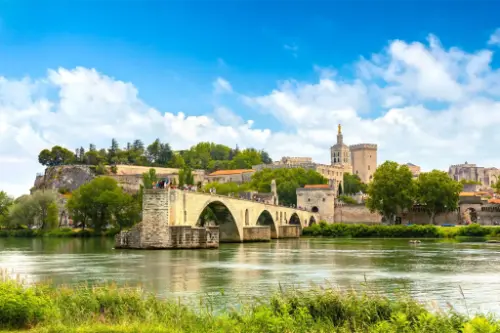
Avignon is a commune in south-eastern France in the department of Vaucluse on the left bank of the Rhône river. Of the 90,194 inhabitants of the city (as of 2011), about 12,000 live in the ancient town centre enclosed by its medieval ramparts.
Between 1309 and 1377, during the Avignon Papacy, seven successive popes resided in Avignon and in 1348 Pope Clement VI bought the town from Joanna I of Naples. Papal control persisted until 1791 when, during the French Revolution, it became part of France. The town is now the capital of the Vaucluse department and one of the few French cities to have preserved its ramparts.
The historic centre, which includes the Palais des Papes, the cathedral, and the Pont d'Avignon, became a UNESCOWorld Heritage Site in 1995. The medieval monuments and the annual Festival d'Avignon have helped to make the town a major centre for tourism.
-
Day 3: 00:01
Avignon / France
Avignon is a commune in south-eastern France in the department of Vaucluse on the left bank of the Rhône river. Of the 90,194 inhabitants of the city (as of 2011), about 12,000 live in the ancient town centre enclosed by its medieval ramparts.
Between 1309 and 1377, during the Avignon Papacy, seven successive popes resided in Avignon and in 1348 Pope Clement VI bought the town from Joanna I of Naples. Papal control persisted until 1791 when, during the French Revolution, it became part of France. The town is now the capital of the Vaucluse department and one of the few French cities to have preserved its ramparts.
The historic centre, which includes the Palais des Papes, the cathedral, and the Pont d'Avignon, became a UNESCOWorld Heritage Site in 1995. The medieval monuments and the annual Festival d'Avignon have helped to make the town a major centre for tourism.
-
 Day 3: 07:00–14:00
Viviers-lès-Montagnes / France
-
 Day 3: 22:30
Tournon-sur-Rhone / France
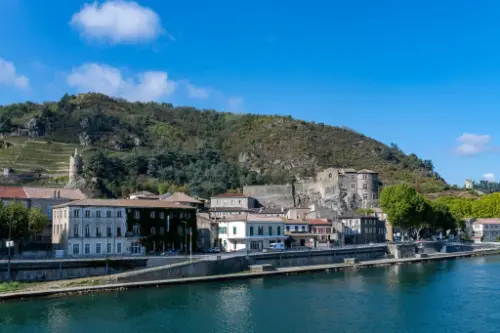
On the right bank of the Rhône River, the town of Tournon is cozily nestled. When visiting this charming town, you will be amazed by the beauty of its nature. The town is immersed in lush greenery, and vineyards stretch around it. Tournon is connected to the town of Tain by a suspension bridge across the river, reminiscent of Thornton Wilder’s work The Bridge of San Luis Rey.
In Tournon, you can embark on a sightseeing tour of the town, traveling 33 kilometers by train through tunnels and over bridges, powered by a locomotive that fills the sky with the sound of steam.
This peaceful little town offers the perfect opportunity to enjoy the beauty of nature, architecture, the gentle aroma of wine, and simply the serene and happy life of France.
-
Day 4: 12:00
Tournon-sur-Rhone / France
On the right bank of the Rhône River, the town of Tournon is cozily nestled. When visiting this charming town, you will be amazed by the beauty of its nature. The town is immersed in lush greenery, and vineyards stretch around it. Tournon is connected to the town of Tain by a suspension bridge across the river, reminiscent of Thornton Wilder’s work The Bridge of San Luis Rey.
In Tournon, you can embark on a sightseeing tour of the town, traveling 33 kilometers by train through tunnels and over bridges, powered by a locomotive that fills the sky with the sound of steam.
This peaceful little town offers the perfect opportunity to enjoy the beauty of nature, architecture, the gentle aroma of wine, and simply the serene and happy life of France.
-
 Day 4: 21:30
Lyon / France
Lyon is the third-largest city and second-largest urban area of France. It is located in the country's east-central part at the confluence of the rivers Rhône and Saône,about 470 km (292 mi) south from Paris, 320 km (199 mi) north from Marseille and 56 km (35 mi) northeast from Saint-Étienne. Inhabitants of the city are called Lyonnais.
Lyon had a population of 513,275 in 2015. It is the capital of the Metropolis of Lyon and the region of Auvergne-Rhône-Alpes. The Lyon metropolitan area had a population of 2,265,375 in 2014, the second-largest urban area in France. The city is known for its cuisine and gastronomy, and historical and architectural landmarks; part of it is a registered as a UNESCO World Heritage site. Lyon was historically an important area for the production and weaving of silk. Lyon played a significant role in the history of cinema: it is where Auguste and Louis Lumièreinvented the cinematograph. It is also known for its light festival, the Fête des Lumières, which begins every 8 December and lasts for four days, earning Lyon the title of Capital of Lights.
Economically, Lyon is a major centre for banking, as well as for the chemical, pharmaceutical, and biotech industries. The city contains a significant software industry with a particular focus on video games, and in recent years has fostered a growing local start-up sector. Lyon hosts the international headquarters of Interpol, the International Agency for Research on Cancer and Euronews. It was ranked 19th globally and second in France for innovation in 2014. It ranked second in France and 39th globally in Mercer's 2015 liveability rankings.
-
Day 5: 03:30
Lyon / France
Lyon is the third-largest city and second-largest urban area of France. It is located in the country's east-central part at the confluence of the rivers Rhône and Saône,about 470 km (292 mi) south from Paris, 320 km (199 mi) north from Marseille and 56 km (35 mi) northeast from Saint-Étienne. Inhabitants of the city are called Lyonnais.
Lyon had a population of 513,275 in 2015. It is the capital of the Metropolis of Lyon and the region of Auvergne-Rhône-Alpes. The Lyon metropolitan area had a population of 2,265,375 in 2014, the second-largest urban area in France. The city is known for its cuisine and gastronomy, and historical and architectural landmarks; part of it is a registered as a UNESCO World Heritage site. Lyon was historically an important area for the production and weaving of silk. Lyon played a significant role in the history of cinema: it is where Auguste and Louis Lumièreinvented the cinematograph. It is also known for its light festival, the Fête des Lumières, which begins every 8 December and lasts for four days, earning Lyon the title of Capital of Lights.
Economically, Lyon is a major centre for banking, as well as for the chemical, pharmaceutical, and biotech industries. The city contains a significant software industry with a particular focus on video games, and in recent years has fostered a growing local start-up sector. Lyon hosts the international headquarters of Interpol, the International Agency for Research on Cancer and Euronews. It was ranked 19th globally and second in France for innovation in 2014. It ranked second in France and 39th globally in Mercer's 2015 liveability rankings.
-
 Day 5: 12:00–21:00
Mâcon / France
Nestled along the banks of the Saône River, Macon enchants visitors with the charm of southern Burgundy. This French town blends elegant architecture, ancient winemaking traditions, and a relaxed pace of life. Macon is known as the birthplace of poet Alphonse de Lamartine and as a hub for the Mâconnais wine region, especially renowned for its Chardonnay.
A stroll through the old town reveals blooming balconies, cozy cafés, and historic landmarks like the Church of Saint-Pierre and a 15th-century timber-framed house. Nature lovers and gourmets alike can explore wine trails or enjoy sweeping views from the Saint-Laurent Bridge. Macon is the perfect place to experience the charm of France without the bustle of big cities.
-
 Day 6: 02:30
Chalon-sur-Saône / France
Chalon-sur-Saône is a commune in the Saône-et-Loire department in the region of Bourgogne-Franche-Comté in eastern France.
It is a sub-prefecture of the department. It is the largest city in the department; however, the department capital is the smaller city of Mâcon.
Chalon-sur-Saône lies in the south of the Bourgogne-Franche-Comté region of France. It is located on the Saône river, and was once a busy port, acting as a distribution point for local wines which were sent up and down the Saône river and the Canal du Centre, opened in 1792.
Though the site (ancient Cabillonum) was a capital of the Aedui and objects of La Tène culture have been retrieved from the bed of the river here, the first mention of Cavillonum is found in Commentarii de Bello Gallico (VII, chs. 42 and 90). The Roman city already served as a river port and hub of road communications, of the Via Agrippa and side routes. In 354 AD the Roman Emperor, Constantius II stationed the Roman 7th Army in Chalon (then called Cabyllona) for an invasion against the brother kings, Gundomadus and Vadomarius of the Alamanni. However, not having received supplies, the Roman troops revolted, and were pacified by the grand chamberlain Eusebiuswith money. In Late Antiquity the city had dwindled so much that a wall round it encircled fifteen hectares.
Saint Marcellus of Chalons (Saint Marcel) is said to have been martyred here in 179 AD. Chalon became one of the de facto capitals of the kingdom of Burgundy under Guntram, king from 561 to 592, who died here. Guntram also promoted the cult of Saint Marcellus. The bishopric of Chalon-sur-Saône, a suffragan of the Archdiocese of Lyon, was established here in the same century, and a Church Council was held here from 644–655. The see was merged into the diocese of Autunshortly after the French Revolution.
Chalon in the 19th century is best known as the birthplace of photography. Its most famous resident, Nicéphore Niépcealso has a lycée (secondary school) named after him. There is a museum which contains some early photography relics, located on the Quai des Messageries in the town, containing more than two million photographs and many old artefacts such as cameras and other equipment for old and modern photography. Also on display are Niépce's 1807 Pyréolophore which is probably the world's first internal combustion engine, plus his 1818 implementation of a dandy horse, for which he coined the word vélocipède.
Another famous resident is Dominique Vivant Denon (1747–1825) who was involved in the creation of the Louvre museum, converting the former royal palace into a museum after the French Revolution
-
Day 6: 20:00
Chalon-sur-Saône / France
Chalon-sur-Saône is a commune in the Saône-et-Loire department in the region of Bourgogne-Franche-Comté in eastern France.
It is a sub-prefecture of the department. It is the largest city in the department; however, the department capital is the smaller city of Mâcon.
Chalon-sur-Saône lies in the south of the Bourgogne-Franche-Comté region of France. It is located on the Saône river, and was once a busy port, acting as a distribution point for local wines which were sent up and down the Saône river and the Canal du Centre, opened in 1792.
Though the site (ancient Cabillonum) was a capital of the Aedui and objects of La Tène culture have been retrieved from the bed of the river here, the first mention of Cavillonum is found in Commentarii de Bello Gallico (VII, chs. 42 and 90). The Roman city already served as a river port and hub of road communications, of the Via Agrippa and side routes. In 354 AD the Roman Emperor, Constantius II stationed the Roman 7th Army in Chalon (then called Cabyllona) for an invasion against the brother kings, Gundomadus and Vadomarius of the Alamanni. However, not having received supplies, the Roman troops revolted, and were pacified by the grand chamberlain Eusebiuswith money. In Late Antiquity the city had dwindled so much that a wall round it encircled fifteen hectares.
Saint Marcellus of Chalons (Saint Marcel) is said to have been martyred here in 179 AD. Chalon became one of the de facto capitals of the kingdom of Burgundy under Guntram, king from 561 to 592, who died here. Guntram also promoted the cult of Saint Marcellus. The bishopric of Chalon-sur-Saône, a suffragan of the Archdiocese of Lyon, was established here in the same century, and a Church Council was held here from 644–655. The see was merged into the diocese of Autunshortly after the French Revolution.
Chalon in the 19th century is best known as the birthplace of photography. Its most famous resident, Nicéphore Niépcealso has a lycée (secondary school) named after him. There is a museum which contains some early photography relics, located on the Quai des Messageries in the town, containing more than two million photographs and many old artefacts such as cameras and other equipment for old and modern photography. Also on display are Niépce's 1807 Pyréolophore which is probably the world's first internal combustion engine, plus his 1818 implementation of a dandy horse, for which he coined the word vélocipède.
Another famous resident is Dominique Vivant Denon (1747–1825) who was involved in the creation of the Louvre museum, converting the former royal palace into a museum after the French Revolution
-
Day 7: 08:30
Lyon / France
Lyon is the third-largest city and second-largest urban area of France. It is located in the country's east-central part at the confluence of the rivers Rhône and Saône,about 470 km (292 mi) south from Paris, 320 km (199 mi) north from Marseille and 56 km (35 mi) northeast from Saint-Étienne. Inhabitants of the city are called Lyonnais.
Lyon had a population of 513,275 in 2015. It is the capital of the Metropolis of Lyon and the region of Auvergne-Rhône-Alpes. The Lyon metropolitan area had a population of 2,265,375 in 2014, the second-largest urban area in France. The city is known for its cuisine and gastronomy, and historical and architectural landmarks; part of it is a registered as a UNESCO World Heritage site. Lyon was historically an important area for the production and weaving of silk. Lyon played a significant role in the history of cinema: it is where Auguste and Louis Lumièreinvented the cinematograph. It is also known for its light festival, the Fête des Lumières, which begins every 8 December and lasts for four days, earning Lyon the title of Capital of Lights.
Economically, Lyon is a major centre for banking, as well as for the chemical, pharmaceutical, and biotech industries. The city contains a significant software industry with a particular focus on video games, and in recent years has fostered a growing local start-up sector. Lyon hosts the international headquarters of Interpol, the International Agency for Research on Cancer and Euronews. It was ranked 19th globally and second in France for innovation in 2014. It ranked second in France and 39th globally in Mercer's 2015 liveability rankings.
-
Day 8:
Lyon / France
Lyon is the third-largest city and second-largest urban area of France. It is located in the country's east-central part at the confluence of the rivers Rhône and Saône,about 470 km (292 mi) south from Paris, 320 km (199 mi) north from Marseille and 56 km (35 mi) northeast from Saint-Étienne. Inhabitants of the city are called Lyonnais.
Lyon had a population of 513,275 in 2015. It is the capital of the Metropolis of Lyon and the region of Auvergne-Rhône-Alpes. The Lyon metropolitan area had a population of 2,265,375 in 2014, the second-largest urban area in France. The city is known for its cuisine and gastronomy, and historical and architectural landmarks; part of it is a registered as a UNESCO World Heritage site. Lyon was historically an important area for the production and weaving of silk. Lyon played a significant role in the history of cinema: it is where Auguste and Louis Lumièreinvented the cinematograph. It is also known for its light festival, the Fête des Lumières, which begins every 8 December and lasts for four days, earning Lyon the title of Capital of Lights.
Economically, Lyon is a major centre for banking, as well as for the chemical, pharmaceutical, and biotech industries. The city contains a significant software industry with a particular focus on video games, and in recent years has fostered a growing local start-up sector. Lyon hosts the international headquarters of Interpol, the International Agency for Research on Cancer and Euronews. It was ranked 19th globally and second in France for innovation in 2014. It ranked second in France and 39th globally in Mercer's 2015 liveability rankings.
VIVA All-Inclusive
Breakfast, Lunch, Dinner
Full board: breakfast buffet, lunch and dinner (gourmet menus served at the table) plus snacks. Free choice of table and flexible meal times.
Drinks all day
Hot and cold non-alcoholic beverages, plus a selection of alcoholic drinks. See bar menu for details.
High Tea
Once per trip: sweet and savory treats — scones, sandwiches, cupcakes, chocolates, macarons. Variety of teas included.
Welcome Drink
A warm welcome with a glass of champagne — to a wonderful stay on board.
RITUALS Beauty Products
Selected products for care and relaxation.
Minibar and Water Bottle
Daily replenished minibar and reusable bottle in the cabin.
Wi-Fi on board
Free and stable internet for comfortable use.
Tips included
All crew services are included in the price.
As of 01.11.2026
Payment
A 30% deposit is required at the time of booking.
Final payment must be made no later than 60 days before the cruise starts.
Cancellation
More than 120 days before departure – 10% of the total cost.
119–90 days – 20%.
89–30 days – 40%.
29–15 days – 60%.
14–1 day – 80%.
On the day of departure – 100%.
Rebooking
Changes to the booking are possible no later than 90 days before the cruise starts.
Fee – 50 EUR per person.
Passenger substitution
Allowed no later than 9 days before the cruise starts.
Fee – 50 EUR.
Prices are quoted in EUR — roughly 1 EUR ≈ 4,59 zł at the exchange rate on the day of booking
As of 03.11.2026
Tour operator
Biznes i Turystyka Piotr Skupiewski
- ul. Łukowa 41, 32-823 Szczepanów
- NIP 8691148381
- REGON 850455159
- +48 576 977 555
- +48 570 700 273
The tour operator is entered in the Central Register of Tour Operators and Entrepreneurs Facilitating the Purchase of Linked Travel Arrangements. It holds UNIQA insurance guarantee no. 3800003856, valid from 5 May 2026 to 4 May 2027. The guarantee sum is PLN 379,404.00. The operator pays contributions to the Tourist Guarantee Fund and the Tourist Assistance Fund.
Still have a question?
We'll help you choose a cruise and answer your questions.