

Sea cruise · 06.01.2027 – 07.05.2027 · 121 nights
121 nights France,Spain,Gibraltar,Morocco,Cape Verde,Brazil,Argentina,Falkland Islands (Malvinas),Chile,Pitcair
Cabin prices and availabilityRoute and cruise information
- Marseille
- Barcelona
- Gibraltar
- Casablanca
- Mindelo
- Salvador
- Rio de Janeiro
- Rio de Janeiro
- Buenos Aires
- Buenos Aires
- Puerto Madryn
- Ushuaia
- Ushuaia
- Puerto Montt
- Valparaíso
- Valparaíso
- Hanga Roa
- Bounty Bay
- Papeete
- Papeete
- Moorea Islands Society
- Aitutaki
- Rarotonga
- Cocksen Hole
- Oakland
- Tauranga
- Christchurch
- Dunedin
- Milford Sound
- Tasmania (Hobart)
- Tasmania (Hobart)
- Sydney
- Sydney
- Noumea
- Apia
- Pago-Pago
- Honolulu, Oahu, Hawaii
- Honolulu, Oahu, Hawaii
- Los Angeles
- Cabo San Lucas
- Puntarenas
- Balboa
- BLB - Panama Canal
- Panama Canal
- La Romana
- Road Town, Tortola
- Philipsburg
- Las Palmas (Gran Canaria)
- Ibiza
- Naples
- Rome (Civitavecchia)
- Genoa
- Marseille
| Date | Port | Arrival | Departure |
|---|---|---|---|
| 06.01.2027 |
Marseille
France
|
— | 18:00 |
| 07.01.2027 |
Barcelona
Spain
|
07:00 | 18:00 |
| 08.01.2027 |
Day at sea
|
— | — |
| 09.01.2027 |
Gibraltar
Great Britain
|
08:00 | 18:00 |
| 10.01.2027 |
Casablanca
Morocco
|
07:00 | 22:00 |
| 11.01.2027 |
Day at sea
|
— | — |
| 12.01.2027 |
Day at sea
|
— | — |
| 13.01.2027 |
Day at sea
|
— | — |
| 14.01.2027 |
Mindelo
Cape Verde
|
06:30 | 18:00 |
| 15.01.2027 |
Day at sea
|
— | — |
| 16.01.2027 |
Day at sea
|
— | — |
| 17.01.2027 |
Day at sea
|
— | — |
| 18.01.2027 |
Day at sea
|
— | — |
| 19.01.2027 |
Salvador
Brazil
|
07:00 | 16:00 |
| 20.01.2027 |
Day at sea
|
— | — |
| 21.01.2027 |
Rio de Janeiro
Brazil
|
— | 23:59 |
| 22.01.2027 |
Rio de Janeiro
Brazil
|
00:01 | 16:00 |
| 23.01.2027 |
Day at sea
|
— | — |
| 24.01.2027 |
Day at sea
|
— | — |
| 25.01.2027 |
Buenos Aires
Argentina
|
— | 23:59 |
| 26.01.2027 |
Buenos Aires
Argentina
|
00:01 | 20:00 |
| 27.01.2027 |
Day at sea
|
— | — |
| 28.01.2027 |
Day at sea
|
— | — |
| 29.01.2027 |
Puerto Madryn
Argentina
|
07:00 | 18:00 |
| 30.01.2027 |
Day at sea
|
— | — |
| 02.02.2027 |
Day at sea
|
— | — |
| 03.02.2027 |
Ushuaia
Argentina
|
— | 23:59 |
| 04.02.2027 |
Ushuaia
Argentina
|
00:01 | 16:00 |
| 05.02.2027 |
Day at sea
|
— | — |
| 06.02.2027 |
Day at sea
|
— | — |
| 07.02.2027 |
Puerto Montt
Chile
|
09:00 | 18:00 |
| 08.02.2027 |
Day at sea
|
— | — |
| 09.02.2027 |
Valparaíso
Chile
|
— | 23:59 |
| 10.02.2027 |
Valparaíso
Chile
|
00:01 | 18:00 |
| 11.02.2027 |
Day at sea
|
— | — |
| 12.02.2027 |
Day at sea
|
— | — |
| 13.02.2027 |
Day at sea
|
— | — |
| 14.02.2027 |
Day at sea
|
— | — |
| 15.02.2027 |
Hanga Roa
Chile
|
07:00 | 17:00 |
| 16.02.2027 |
Day at sea
|
— | — |
| 17.02.2027 |
Day at sea
|
— | — |
| 18.02.2027 |
Bounty Bay
Pitcairn Islands
|
08:00 | 11:00 |
| 19.02.2027 |
Day at sea
|
— | — |
| 20.02.2027 |
Day at sea
|
— | — |
| 21.02.2027 |
Papeete
French Polynesia
|
— | 23:59 |
| 22.02.2027 |
Papeete
French Polynesia
|
00:01 | 18:00 |
| 23.02.2027 |
Moorea Islands Society
French Polynesia
|
08:00 | 18:00 |
| 24.02.2027 |
Day at sea
|
— | — |
| 25.02.2027 |
Aitutaki
Cook Islands
|
08:00 | 19:00 |
| 26.02.2027 |
Rarotonga
Cook Islands
|
08:00 | 18:00 |
| 27.02.2027 |
Day at sea
|
— | — |
| 28.02.2027 |
Day at sea
|
— | — |
| 01.03.2027 |
Day at sea
|
— | — |
| 02.03.2027 |
Day at sea
|
— | — |
| 03.03.2027 |
Day at sea
|
— | — |
| 04.03.2027 |
Cocksen Hole
Honduras
|
07:00 | 18:00 |
| 05.03.2027 |
Oakland
New Zealand
|
08:00 | 18:00 |
| 06.03.2027 |
Tauranga
New Zealand
|
08:00 | 18:00 |
| 07.03.2027 |
Day at sea
|
— | — |
| 08.03.2027 |
Christchurch
New Zealand
|
08:00 | 18:00 |
| 09.03.2027 |
Dunedin
New Zealand
|
08:00 | 16:00 |
| 10.03.2027 |
Milford Sound
New Zealand
|
13:00 | 17:00 |
| 11.03.2027 |
Day at sea
|
— | — |
| 12.03.2027 |
Tasmania (Hobart)
Australia
|
— | 23:59 |
| 13.03.2027 |
Tasmania (Hobart)
Australia
|
00:01 | 18:00 |
| 14.03.2027 |
Day at sea
|
— | — |
| 15.03.2027 |
Sydney
Australia
|
— | 23:59 |
| 16.03.2027 |
Sydney
Australia
|
00:01 | 20:00 |
| 17.03.2027 |
Day at sea
|
— | — |
| 18.03.2027 |
Day at sea
|
— | — |
| 19.03.2027 |
Noumea
New Caledonia
|
09:00 | 18:00 |
| 20.03.2027 |
Day at sea
|
— | — |
| 23.03.2027 |
Day at sea
|
— | — |
| 24.03.2027 |
Day at sea
|
— | — |
| 25.03.2027 |
Apia
Samoa
|
08:00 | 18:00 |
| 25.03.2027 |
Pago-Pago
Samoa
|
08:00 | 18:00 |
| 26.03.2027 |
Day at sea
|
— | — |
| 27.03.2027 |
Day at sea
|
— | — |
| 28.03.2027 |
Day at sea
|
— | — |
| 29.03.2027 |
Day at sea
|
— | — |
| 30.03.2027 |
Day at sea
|
— | — |
| 31.03.2027 |
Honolulu, Oahu, Hawaii
Hawaii
|
07:00 | 23:59 |
| 01.04.2027 |
Honolulu, Oahu, Hawaii
Hawaii
|
00:01 | 17:00 |
| 02.04.2027 |
Day at sea
|
— | — |
| 03.04.2027 |
Day at sea
|
— | — |
| 04.04.2027 |
Day at sea
|
— | — |
| 05.04.2027 |
Day at sea
|
— | — |
| 06.04.2027 |
Day at sea
|
— | — |
| 07.04.2027 |
Los Angeles
USA
|
09:00 | 20:00 |
| 08.04.2027 |
Day at sea
|
— | — |
| 09.04.2027 |
Day at sea
|
— | — |
| 10.04.2027 |
Cabo San Lucas
Mexico
|
07:00 | 15:00 |
| 11.04.2027 |
Day at sea
|
— | — |
| 12.04.2027 |
Day at sea
|
— | — |
| 13.04.2027 |
Day at sea
|
— | — |
| 14.04.2027 |
Puntarenas
Costa Rica
|
10:00 | 18:00 |
| 15.04.2027 |
Day at sea
|
— | — |
| 16.04.2027 |
Balboa
Panama
|
08:00 | 18:00 |
| 17.04.2027 |
BLB - Panama Canal
Panama
|
05:00 | 05:15 |
| 17.04.2027 |
Panama Canal
Panama
|
17:00 | 17:15 |
| 18.04.2027 |
Day at sea
|
— | — |
| 19.04.2027 |
Day at sea
|
— | — |
| 20.04.2027 |
La Romana
Dominican Republic
|
08:00 | 17:00 |
| 21.04.2027 |
Road Town, Tortola
Virgin Islands
|
09:00 | 20:00 |
| 22.04.2027 |
Philipsburg
Saint Martin
|
08:00 | 18:00 |
| 23.04.2027 |
Day at sea
|
— | — |
| 24.04.2027 |
Day at sea
|
— | — |
| 25.04.2027 |
Day at sea
|
— | — |
| 26.04.2027 |
Day at sea
|
— | — |
| 27.04.2027 |
Day at sea
|
— | — |
| 28.04.2027 |
Day at sea
|
— | — |
| 29.04.2027 |
Las Palmas (Gran Canaria)
Spain
|
08:00 | 19:00 |
| 30.04.2027 |
Day at sea
|
— | — |
| 01.05.2027 |
Day at sea
|
— | — |
| 02.05.2027 |
Ibiza
Spain
|
12:00 | 20:00 |
| 03.05.2027 |
Day at sea
|
— | — |
| 04.05.2027 |
Naples
Italy
|
08:00 | 19:00 |
| 05.05.2027 |
Rome (Civitavecchia)
Italy
|
08:00 | 19:00 |
| 06.05.2027 |
Genoa
Italy
|
08:00 | 18:00 |
| 07.05.2027 |
Marseille
France
|
08:00 | — |
-
 Day 1: 18:00
Marseille / France
Marseille is the second-largest city of France. The main city of the historical province of Provence, it nowadays is the prefecture of the department of Bouches-du-Rhône and region of Provence-Alpes-Côte d'Azur. It is located on France's south coast near the mouth of the Rhône river. The city covers an area of 241 km2 (93 sq mi) and had a population of 852,516 in 2012. Its metropolitan area, which extends over 3,173 km2 (1,225 sq mi) is the third-largest in France after Paris and Lyon, with a population of 1,831,500 as of 2010.
Known to the ancient Greeks and Romans as Massalia, Marseille was an important European trading centre and remains the main commercial port of the French Republic. Marseille is now France's largest city on the Mediterranean coast and the largest port for commerce, freight and cruise ships. The city was European Capital of Culture in 2013 and European Capital of Sport in 2017; it hosted matches at the 1998 World Cup and Euro 2016. It is home to Aix-Marseille University.
-
 Day 2: 07:00–18:00
Barcelona / Spain
Barcelona is a city in Spain. It is the capital and largest city of Catalonia, as well as the second most populous municipality of Spain. With a population of 1.6 million within city limits, its urban area extends to numerous neighbouring municipalities within the Province of Barcelona and is home to around 4.8 million people, making it the sixth most populous urban area in the European Union after Paris, London, Madrid, the Ruhr area and Milan. It is one of the largest metropolises on the Mediterranean Sea, located on the coast between the mouths of the rivers Llobregat and Besòs, and bounded to the west by the Serra de Collserola mountain range, the tallest peak of which is 512 metres (1,680 feet) high.
Founded as a Roman city, in the Middle Ages Barcelona became the capital of the County of Barcelona. After merging with the Kingdom of Aragon, Barcelona continued to be an important city in the Crown of Aragon as an economic and administrative centre of this Crown and the capital of the Principality of Catalonia. Barcelona has a rich cultural heritage and is today an important cultural centre and a major tourist destination. Particularly renowned are the architectural works of Antoni Gaudí and Lluís Domènech i Montaner, which have been designated UNESCO World Heritage Sites. The headquarters of the Union for the Mediterranean are located in Barcelona. The city is known for hosting the 1992 Summer Olympics as well as world-class conferences and expositions and also many international sport tournaments.
Barcelona is one of the world's leading tourist, economic, trade fair and cultural centres, and its influence in commerce, education, entertainment, media, fashion, science, and the arts all contribute to its status as one of the world's major global cities. It is a major cultural and economic centre in southwestern Europe, 24th in the world (before Zürich, after Frankfurt) and a financial centre. In 2008 it was the fourth most economically powerful city by GDP in the European Union and 35th in the world with GDP amounting to €177 billion. In 2012 Barcelona had a GDP of $170 billion; and it was leading Spain in employment rate in that moment.
In 2009 the city was ranked Europe's third and one of the world's most successful as a city brand. In the same year the city was ranked Europe's fourth best city for business and fastest improving European city, with growth improved by 17% per year, and the city has been experiencing strong and renewed growth for the past three years. Since 2011 Barcelona has been a leading smart city in Europe. Barcelona is a transport hub, with the Port of Barcelona being one of Europe's principal seaports and busiest European passenger port, an international airport, Barcelona–El Prat Airport, which handles over 50 million passengers per year, an extensive motorway network, and a high-speed rail line with a link to France and the rest of Europe.
-
Day 3:
Day at sea / Sea
-
 Day 4: 08:00–18:00
Gibraltar / Great Britain
Gibraltar is a British Overseas Territory located at the southern tip of the Iberian Peninsula. It has an area of 6.7 km2 (2.6 sq mi) and is bordered to the north by Spain. The landscape is dominated by the Rock of Gibraltar at the foot of which is a densely populated town area, home to over 30,000 people, primarily Gibraltarians. It shares a maritime border with Morocco.
In 1704, Anglo-Dutch forces captured Gibraltar from Spain during the War of the Spanish Succession on behalf of the Habsburg claim to the Spanish throne. The territory was ceded to Great Britain in perpetuity under the Treaty of Utrechtin 1713. During World War II it was an important base for the Royal Navy as it controlled the entrance and exit to the Mediterranean Sea, which is only 8 miles (13 km) wide at this naval choke point. It remains strategically important, with half the world's seaborne trade passing through the strait. Today Gibraltar's economy is based largely on tourism, online gambling, financial services and cargo ship refuelling.
The sovereignty of Gibraltar is a point of contention in Anglo-Spanish relations because Spain asserts a claim to the territory. Gibraltarians rejected proposals for Spanish sovereignty in a 1967 referendum and, in a 2002 referendum, the idea of shared sovereignty was also rejected.
-
 Day 5: 07:00–22:00
Casablanca / Morocco
Casablanca located in the central-western part of Morocco and bordering the Atlantic Ocean, is the largest city in Morocco. It is also the largest city in the Maghreb region, as well as one of the largest and most important cities in Africa, both economically and demographically.
Casablanca is Morocco's chief port and one of the largest financial centers on the continent. According to the 2014 population estimate, the city has a population of about 3.35 million in the urban area and over 6.8 million in the Casablanca-Settat region. Casablanca is considered the economic and business center of Morocco, although the national political capital is Rabat.
The leading Moroccan companies and international many corporations doing business in the country have their headquarters and main industrial facilities in Casablanca. Recent industrial statistics show Casablanca retains its historical position as the main industrial zone of the country. The Port of Casablanca is one of the largest artificial ports in the world, and the second largest port of North Africa, after Tanger-Med 40 km (25 mi) east of Tangier. Casablanca also hosts the primary naval base for the Royal Moroccan Navy.
-
Day 6:
Day at sea / Sea
-
Day 7:
Day at sea / Sea
-
Day 8:
Day at sea / Sea
-
 Day 9: 06:30–18:00
Mindelo / Cape Verde
The turquoise waves of the Atlantic embrace the bay of Mindelo on the island of São Vicente, inviting travelers to dive into the rhythms of Cape Verdean music and its warm atmosphere. Known as the cultural capital of Cape Verde, this city enchants with its colorful colonial buildings, the live sounds of morna and coladeira, and street cafés where you can taste fresh seafood to the sound of guitars.
In Mindelo, visitors can stroll along the waterfront with views of the mountains and port, discover cozy shops with local crafts, and relax on sandy beaches where the soft breeze carries the scent of the ocean. This city offers a chance to feel the slow pace of island life, immerse yourself in music that plays on every corner, and take home memories of true Cape Verde, full of smiles and warm sunshine.
-
Day 10:
Day at sea / Sea
-
Day 11:
Day at sea / Sea
-
Day 12:
Day at sea / Sea
-
Day 13:
Day at sea / Sea
-
 Day 14: 07:00–16:00
Salvador / Brazil
Salvador is the capital of Bahia state and was formerly the first capital of Brazil. Salvador is known for its endless number of churches, as well as for being a land of majestic fortresses. After visiting these places, it is also worth taking a look at the Chapada Diamantina National Park – the most interesting natural park in Brazil. In Salvador, there reigns an atmosphere of joy, revelry, and holidays – this is due to the fact that the local population was influenced by Africa. In Salvador, you can always admire the natural beauty of this area. You will be enchanted by the sensuality of this land, and you will be able to discover a piece of its mysterious power.
-
Day 15:
Day at sea / Sea
-
 Day 16: 23:59
Rio de Janeiro / Brazil
Rio de Janeiro is the second-most populous municipality in Brazil and the sixth-most populous in the Americas. The metropolis is anchor to the Rio de Janeiro metropolitan area, the second-most populous metropolitan area in Brazil and sixth-most populous in the Americas. Rio de Janeiro is the capital of the state of Rio de Janeiro, Brazil's third-most populous state. Part of the city has been designated as a World Heritage Site, named "Rio de Janeiro: CariocaLandscapes between the Mountain and the Sea", by UNESCO on 1 July 2012 as a Cultural Landscape.
Founded in 1565 by the Portuguese, the city was initially the seat of the Captaincy of Rio de Janeiro, a domain of the Portuguese Empire. Later, in 1763, it became the capital of the State of Brazil, a state of the Portuguese Empire. In 1808, when the Portuguese Royal Court transferred itself from Portugal to Brazil, Rio de Janeiro became the chosen seat of the court of Queen Maria I of Portugal, who subsequently, in 1815, under the leadership of her son, the Prince Regent, and future King João VI of Portugal, raised Brazil to the dignity of a kingdom, within the United Kingdom of Portugal, Brazil, and Algarves. Rio stayed the capital of the pluricontinental Lusitanian monarchy until 1822, when the War of Brazilian Independence began. This is one of the few instances in history that the capital of a colonising country officially shifted to a city in one of its colonies. Rio de Janeiro subsequently served as the capital of the independent monarchy, the Empire of Brazil, until 1889, and then the capital of a republican Brazil until 1960 when the capital was transferred to Brasília.
-
Day 17: 00:01–16:00
Rio de Janeiro / Brazil
Rio de Janeiro is the second-most populous municipality in Brazil and the sixth-most populous in the Americas. The metropolis is anchor to the Rio de Janeiro metropolitan area, the second-most populous metropolitan area in Brazil and sixth-most populous in the Americas. Rio de Janeiro is the capital of the state of Rio de Janeiro, Brazil's third-most populous state. Part of the city has been designated as a World Heritage Site, named "Rio de Janeiro: CariocaLandscapes between the Mountain and the Sea", by UNESCO on 1 July 2012 as a Cultural Landscape.
Founded in 1565 by the Portuguese, the city was initially the seat of the Captaincy of Rio de Janeiro, a domain of the Portuguese Empire. Later, in 1763, it became the capital of the State of Brazil, a state of the Portuguese Empire. In 1808, when the Portuguese Royal Court transferred itself from Portugal to Brazil, Rio de Janeiro became the chosen seat of the court of Queen Maria I of Portugal, who subsequently, in 1815, under the leadership of her son, the Prince Regent, and future King João VI of Portugal, raised Brazil to the dignity of a kingdom, within the United Kingdom of Portugal, Brazil, and Algarves. Rio stayed the capital of the pluricontinental Lusitanian monarchy until 1822, when the War of Brazilian Independence began. This is one of the few instances in history that the capital of a colonising country officially shifted to a city in one of its colonies. Rio de Janeiro subsequently served as the capital of the independent monarchy, the Empire of Brazil, until 1889, and then the capital of a republican Brazil until 1960 when the capital was transferred to Brasília.
-
Day 18:
Day at sea / Sea
-
Day 19:
Day at sea / Sea
-
 Day 20: 23:59
Buenos Aires / Argentina
the capital city and chief port of Argentina, in the eastern central part of the country, on the Plata River; population 3,042,600 (est. 2008).
-
Day 21: 00:01–20:00
Buenos Aires / Argentina
the capital city and chief port of Argentina, in the eastern central part of the country, on the Plata River; population 3,042,600 (est. 2008).
-
Day 22:
Day at sea / Sea
-
Day 23:
Day at sea / Sea
-
 Day 24: 07:00–18:00
Puerto Madryn / Argentina
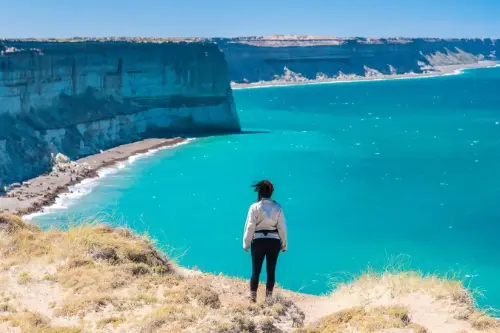
Nestled on the shores of the Golfo Nuevo, Puerto Madryn invites travelers to witness some of the most unforgettable wildlife encounters in South America. Renowned as the gateway to the Valdés Peninsula—a UNESCO World Heritage Site—this coastal town offers the chance to spot Southern Right Whales from the beach, a truly unique spectacle that few places on Earth can match.
Beyond its marine wonders, Puerto Madryn boasts charming streets lined with artisan shops, cafes, and welcoming locals eager to share the region’s Patagonian traditions. With opportunities for snorkeling with sea lions, exploring rugged landscapes, and enjoying fresh seafood, it’s no wonder this destination continues to captivate nature lovers and adventurers alike.
-
Day 25:
Day at sea / Sea
-
Day 28:
Day at sea / Sea
-
 Day 29: 23:59
Ushuaia / Argentina
Ushuaia is the capital of Tierra del Fuego, Antártida e Islas del Atlántico Sur Province, Argentina. It is commonly regarded as the southernmost city in the world. Ushuaia is located in a wide bay on the southern coast of Isla Grande de Tierra del Fuego, bounded on the north by the Martial mountain range, and on the south by the Beagle Channel. It is the only municipality in the Department of Ushuaia, which has an area of 9,390 km2 (3,625 sq mi). It was founded October 12 of 1884 by Augusto Lasserreand is located on the shores of the Beagle Channel surrounded by the mountain range of the Martial Glacier, in the Bay of Ushuaia. Besides being an administrative center, it is a light industrial port and tourist hub.
-
Day 30: 00:01–16:00
Ushuaia / Argentina
Ushuaia is the capital of Tierra del Fuego, Antártida e Islas del Atlántico Sur Province, Argentina. It is commonly regarded as the southernmost city in the world. Ushuaia is located in a wide bay on the southern coast of Isla Grande de Tierra del Fuego, bounded on the north by the Martial mountain range, and on the south by the Beagle Channel. It is the only municipality in the Department of Ushuaia, which has an area of 9,390 km2 (3,625 sq mi). It was founded October 12 of 1884 by Augusto Lasserreand is located on the shores of the Beagle Channel surrounded by the mountain range of the Martial Glacier, in the Bay of Ushuaia. Besides being an administrative center, it is a light industrial port and tourist hub.
-
Day 31:
Day at sea / Sea
-
Day 32:
Day at sea / Sea
-
 Day 33: 09:00–18:00
Puerto Montt / Chile
Puerto Montt is a port city and commune in southern Chile, located at the northern end of the Reloncaví Sound in the Llanquihue Province, Los Lagos Region, 1,055 km to the south of the capital, Santiago. The commune spans an area of 1,673 km2 (646 sq mi) and has a population of 245,902 in 2017. It is bounded by the communes of Puerto Varas to the north, Cochamó to the east and southeast, Calbuco to the southwest and Maullín and Los Muermos to the west.
Founded as late as 1853 during the German colonization of southern Chile, Puerto Montt soon outgrew older neighboring cities due to its strategic position at the southern end of the Chilean Central Valley being a gateway city into Chiloé Archipelago, Llanquihue and Nahuel Huapi lakes and Western Patagonia.
Puerto Montt has gained renown and grown significantly due to the rise of Chile as the second largest salmon producer of the world during the 1990s and 2000s. However, the Chilean salmon aquaculture crisis of the late 2000s resulted at least temporarily in severe unemployment and exposed weaknesses in the local economy. The city's cultural heritage mixes elements of Chiloé culture with German heritage although the city has attracted a significant number of newcomers from all over Chile in the last 30 years due to employment opportunities.
-
Day 34:
Day at sea / Sea
-
 Day 35: 23:59
Valparaíso / Chile
-
Day 36: 00:01–18:00
Valparaíso / Chile
-
Day 37:
Day at sea / Sea
-
Day 38:
Day at sea / Sea
-
Day 39:
Day at sea / Sea
-
Day 40:
Day at sea / Sea
-
 Day 41: 07:00–17:00
Hanga Roa / Chile
Surrounded by the vast Pacific Ocean and mysterious moai statues, Hanga Roa serves as the picturesque gateway to the enigmatic world of Easter Island. It is the island’s only town and the heart of local life, home to cozy cafes, art galleries, and archaeological museums that tell the story of the ancient Rapa Nui civilization.
Hanga Roa is more than just a tourist stop — it’s the cultural heart of Chile in one of the most remote places on Earth. Here, visitors can immerse themselves in local traditions, witness ceremonial dances, and taste ocean-fresh fish dishes prepared according to ancestral recipes. The sunsets over the volcanic coastline are truly breathtaking and unforgettable.
-
Day 42:
Day at sea / Sea
-
Day 43:
Day at sea / Sea
-
 Day 44: 08:00–11:00
Bounty Bay / Pitcairn Islands
Where calm waters and picturesque shores meet with a mysterious history, Bounty Bay Passage offers a unique spot for travelers looking to feel the spirit of the sea and explore its uncharted corners. This narrow strait between islands is not only an important part of local navigation but also a popular spot for water sports enthusiasts, such as kayaking and sailing. Discover the tranquility and beauty of this place, enjoying its serene atmosphere and extraordinary views.
The strait holds not only natural significance but also cultural value. It was part of the history of famous sailors and was used as an important trade route in the past. Today, Bounty Bay Passage attracts tourists with its scenic landscapes and opportunities to relax on secluded parts of the coastline. Whether it’s beach walks or exploring the surrounding waters, this place offers not only stunning nature but also a chance to touch the sea’s history.
-
Day 45:
Day at sea / Sea
-
Day 46:
Day at sea / Sea
-
 Day 47: 23:59
Papeete / French Polynesia
Papeete is the capital city of French Polynesia, an overseas collectivity of France in the Pacific Ocean. The commune of Papeete is located on the island of Tahiti, in the administrative subdivision of the Windward Islands, of which Papeete is the administrative capital. The French High Commissioner also resides in Papeete. It is the primary center of Tahitian and French Polynesian public and private governmental, commercial, industrial and financial services, the hub of French Polynesian tourism and a commonly used port of call. The Windward Islands are themselves part of the Society Islands. The name Papeete means "water from a basket".
The urban area of Papeete had a total population of 136,771 inhabitants at the August 2017 census, 26,926 of whom lived in the commune of Papeete proper.
-
Day 48: 00:01–18:00
Papeete / French Polynesia
Papeete is the capital city of French Polynesia, an overseas collectivity of France in the Pacific Ocean. The commune of Papeete is located on the island of Tahiti, in the administrative subdivision of the Windward Islands, of which Papeete is the administrative capital. The French High Commissioner also resides in Papeete. It is the primary center of Tahitian and French Polynesian public and private governmental, commercial, industrial and financial services, the hub of French Polynesian tourism and a commonly used port of call. The Windward Islands are themselves part of the Society Islands. The name Papeete means "water from a basket".
The urban area of Papeete had a total population of 136,771 inhabitants at the August 2017 census, 26,926 of whom lived in the commune of Papeete proper.
-
 Day 49: 08:00–18:00
Moorea Islands Society / French Polynesia
The island was formed as a volcano 1.5 to 2.5 million years ago, the result of a Society hotspot in the mantle under the oceanic plate that formed the whole of the Society Archipelago. It is theorized that the current bays were formerly river basins that filled during the Holocene searise.
Mo'orea is about 10 miles in width from the west to the east. There are two small, nearly symmetrical bays on the north shore. The one to the west is called 'Ōpūnohu Bay, which is not very populated but many travelers have come into the bay. The main surrounding communes of the bay are Piha'ena in the east and Papetō'ai to the west. The one to the east is Cook's Bay, also called Pao Pao Bay since the largest commune of Mo'orea is at the bottom of the bay. The other communes are Piha'ena to the west and busy Maharepa to the east. The highest point is Mount Tohi'e'a, near the center of Mo'orea. It dominates the vista from the two bays and can be seen from Tahiti. There are also hiking trails in the mountains. The Vai'are Bay is another small inlet, smaller than the two main bays, on the east shore. This bay has been settled a lot and has a lot of business. The main village is located just south of the bay.
-
Day 50:
Day at sea / Sea
-
 Day 51: 08:00–19:00
Aitutaki / Cook Islands
Aitutaki is one of the most picturesque islands of the Cook Islands archipelago, located in the southern part of the Pacific Ocean. This small island is famous for its stunning lagoon with crystal-clear waters and numerous tiny islets (motu) surrounded by white sand. Aitutaki is often called a "paradise on Earth," and its lagoon is considered one of the most beautiful in the world. Life here flows at a relaxed pace, preserving the traditions of Polynesian culture, which can be felt in the dances, songs, and crafts of the islanders.
Beyond relaxing on the beaches, Aitutaki offers travelers unique experiences: excursions on traditional canoes, snorkeling among vibrant corals, and visits to uninhabited islets. One of the highlights is a trip to One Foot Island, where visitors can get a unique passport stamp. Despite its remoteness, the island provides comfortable conditions for relaxation, harmoniously combining unspoiled nature with the warm hospitality of the locals.
-
 Day 52: 08:00–18:00
Rarotonga / Cook Islands
Rarotonga is the most populous island of the Cook Islands, with a population of 10,572 (census 2011), out of the country's total resident population of 14,974. Captain John Dibbs, master of the colonial brig Endeavour, is credited as the European discoverer on 25 July 1823, while transporting the missionary Rev. John Williams.
The Cook Islands' Parliament buildings and international airport are on Rarotonga. Rarotonga is a very popular tourist destination with many resorts, hotels and motels. The chief town, Avarua, on the north coast, is the capital of the Cook Islands.
-
Day 53:
Day at sea / Sea
-
Day 54:
Day at sea / Sea
-
Day 55:
Day at sea / Sea
-
Day 56:
Day at sea / Sea
-
Day 57:
Day at sea / Sea
-
 Day 58: 07:00–18:00
Cocksen Hole / Honduras
-
 Day 59: 08:00–18:00
Oakland / New Zealand
-
 Day 60: 08:00–18:00
Tauranga / New Zealand
-
Day 61:
Day at sea / Sea
-
 Day 62: 08:00–18:00
Christchurch / New Zealand
-
 Day 63: 08:00–16:00
Dunedin / New Zealand
-
 Day 64: 13:00–17:00
Milford Sound / New Zealand
It’s hard to believe that hidden among tropical rainforests and sheer cliffs, Milford Sound in New Zealand offers a world of misty peaks and shimmering waterfalls dropping over 150 meters straight into the fjord’s blue waters. This corner of the South Island surprises visitors with its mystical atmosphere: rain is frequent here, yet it creates dozens of temporary waterfalls that turn Milford Sound into a living painting. Dolphins, seals, and penguins inhabit the fjord’s waters, and on clear days, you can see the reflection of the majestic Mitre Peak on the calm surface.
The best way to feel the power of this place is to take a cruise or kayak, passing by the famous Stirling Falls and the towering cliffs that rise hundreds of meters above the water. For a more intimate experience, visitors can walk the Milford Track, one of the world’s most scenic hiking trails, leading through rainforests and suspension bridges to breathtaking views of Milford Sound. Here, every rainfall becomes part of the magic that stays with you long after you leave these shores.
-
Day 65:
Day at sea / Sea
-
 Day 66: 23:59
Tasmania (Hobart) / Australia
Where mountains and wild forests meet the Pacific Ocean, Hobart on the island of Tasmania invites you to explore a city where colonial architecture blends with contemporary art and cuisine. At the foot of Mount Wellington, you will find views over the bay where yachts sway on the waves and the fresh breeze carries the scent of the ocean. At Hobart markets, you can try the freshest seafood and the famous Tasmanian oysters, while the city streets are filled with cozy cafes and galleries showcasing local artists.
Those who love active recreation can hike the trails of Mount Wellington with views over the Derwent Bay and take marine tours to seal and seabird colonies. In Hobart, you can feel the rhythm of Tasmania: local festivals, nearby wineries, and proximity to untouched nature make it an ideal starting point to discover this unique island, where each day brings new impressions.
-
Day 67: 00:01–18:00
Tasmania (Hobart) / Australia
Where mountains and wild forests meet the Pacific Ocean, Hobart on the island of Tasmania invites you to explore a city where colonial architecture blends with contemporary art and cuisine. At the foot of Mount Wellington, you will find views over the bay where yachts sway on the waves and the fresh breeze carries the scent of the ocean. At Hobart markets, you can try the freshest seafood and the famous Tasmanian oysters, while the city streets are filled with cozy cafes and galleries showcasing local artists.
Those who love active recreation can hike the trails of Mount Wellington with views over the Derwent Bay and take marine tours to seal and seabird colonies. In Hobart, you can feel the rhythm of Tasmania: local festivals, nearby wineries, and proximity to untouched nature make it an ideal starting point to discover this unique island, where each day brings new impressions.
-
Day 68:
Day at sea / Sea
-
 Day 69: 23:59
Sydney / Australia
Sydney is the state capital of New South Wales and the most populous city in Australiaand Oceania. Located on Australia's east coast, the metropolis surrounds Port Jackson and extends about 70 km (43.5 mi) on its periphery towards the Blue Mountains to the west, Hawkesbury to the north, and Macarthur to the south. Sydney is made up of 658 suburbs, 40 local government areas and 15 contiguous regions. Residents of the city are known as "Sydneysiders". As of June 2017, Sydney's estimated metropolitan population was 5,131,326, and is home to approximately 65% of the state's population.
-
Day 70: 00:01–20:00
Sydney / Australia
Sydney is the state capital of New South Wales and the most populous city in Australiaand Oceania. Located on Australia's east coast, the metropolis surrounds Port Jackson and extends about 70 km (43.5 mi) on its periphery towards the Blue Mountains to the west, Hawkesbury to the north, and Macarthur to the south. Sydney is made up of 658 suburbs, 40 local government areas and 15 contiguous regions. Residents of the city are known as "Sydneysiders". As of June 2017, Sydney's estimated metropolitan population was 5,131,326, and is home to approximately 65% of the state's population.
-
Day 71:
Day at sea / Sea
-
Day 72:
Day at sea / Sea
-
 Day 73: 09:00–18:00
Noumea / New Caledonia
Nouméa is the capital and largest city of the French special collectivity of New Caledonia. It is situated on a peninsula in the south of New Caledonia's main island, Grande Terre, and is home to the majority of the island's European, Polynesian (Wallisians, Futunians, Tahitians), Indonesian, and Vietnamesepopulations, as well as many Melanesians, Ni-Vanuatu and Kanaks who work in one of the South Pacific's most industrialised cities. The city lies on a protected deepwater harbour that serves as the chief port for New Caledonia.
At the August 2014 census, there were 179,509 inhabitants in the metropolitan area of Greater Nouméa (French: agglomération du Grand Nouméa), 99,926 of whom lived in the city (commune) of Nouméa proper. 66.8% of the population of New Caledonia live in Greater Nouméa, which covers the communes of Nouméa, Le Mont-Dore, Dumbéa and Païta.
-
Day 74:
Day at sea / Sea
-
Day 77:
Day at sea / Sea
-
Day 78:
Day at sea / Sea
-
 Day 79: 08:00–18:00
Apia / Samoa
Apia is the capital and the largest city of Samoa. From 1900 to 1919, it was the capital of German Samoa. The city is located on the central north coast of Upolu, Samoa's second largest island. Apia is the only city in Samoa and falls within the political district (itūmālō) of Tuamasaga.
The Apia Urban Area has a population of 36,735 (2011 census) and is generally referred to as the City of Apia. The geographic boundaries of Apia Urban Area is mainly from Letogo village to the new industrialized region of Apia known as Vaitele.
-
 Day 79: 08:00–18:00
Pago-Pago / Samoa
Pago Pago is the territorial capital of American Samoa. It is in Maoputasi County on the main island of American Samoa, Tutuila. It is home to one of the best and deepest natural deepwater harbors in the South Pacific Ocean, sheltered from wind and rough seas, and strategically located. The harbor is also one of the best protected in the South Pacific, which gives American Samoa a natural advantage with respect to landing fish for processing. Tourism, entertainment, food, and tunacanning are its main industries. Pago Pago was the world's 4th largest tuna processor as of 1993. It was home to two of the largest tuna companies in the world: Chicken of the Sea and StarKist, which exported an estimated $445 million in canned tuna to the U.S. mainland.
Pago Pago is the only modern urban center in American Samoa. The Greater Pago Pago Metropolitan Area encompasses several villages strung together along Pago Pago Harbor. One of the villages is itself named Pago Pago, and in 2010 had a population of 3,656. The constituent villages are, in order, Utulei, Fagatogo, Malaloa, Pago Pago, Satala and Atu'u. Fagatogo is the downtown area referred to as Town and is home to the legislature, while the executive is located in Utulei. In Fagatogo is the Fono, Police Department, Port of Pago Pago, many shops and hotels. The Greater Pago Pago Area was home to 8,000 residents in 2000.
Rainmaker Mountain (Mount Pioa) is located in Pago Pago, and gives the city the highest annual rainfall of any harbor in the world.
-
Day 80:
Day at sea / Sea
-
Day 81:
Day at sea / Sea
-
Day 82:
Day at sea / Sea
-
Day 83:
Day at sea / Sea
-
Day 84:
Day at sea / Sea
-
 Day 85: 07:00–23:59
Honolulu, Oahu, Hawaii / Hawaii
Honolulu is the capital and largest city of the U.S. state of Hawaiʻi. It is an unincorporated part of and the county seat of the City and County of Honolulu along the southeast coast of the island of Oʻahu. The city is the main gateway to Hawaiʻi and a major portal into the United States. The city is also a major hub for international business, military defense, as well as famously being host to a diverse variety of east-west and Pacific culture, cuisine, and traditions.
Honolulu is the most remote city of its size in the world and is the westernmost major U.S. city. For statistical purposes, the United States Census Bureau recognizes the approximate area commonly referred to as "City of Honolulu" (not to be confused with the "City and County") as a census county division (CCD). Honolulu is a major financial center of the islands and of the Pacific Ocean. The population of the Honolulu census designated place(CDP) was 359,870 as of the 2017 population estimate, while the Honolulu CCD was 390,738 and the population of the consolidated city and county was 953,207.
Honolulu means "sheltered harbor" or "calm port". The old name is Kou, a district roughly encompassing the area from Nuʻuanu Avenue to Alakea Street and from Hotel Street to Queen Street which is the heart of the present downtown district. The city has been the capital of the Hawaiian Islands since 1845 and gained historical recognition following the attack on Pearl Harbor by Japan near the city on December 7, 1941.
As of 2015, Honolulu was ranked high on world livability rankings, and was also ranked as the 2nd safest city in the U.S. It is also the most populated Oceanian city outside Australasia and ranks second to Auckland as the most-populous city in Polynesia.
-
Day 86: 00:01–17:00
Honolulu, Oahu, Hawaii / Hawaii
Honolulu is the capital and largest city of the U.S. state of Hawaiʻi. It is an unincorporated part of and the county seat of the City and County of Honolulu along the southeast coast of the island of Oʻahu. The city is the main gateway to Hawaiʻi and a major portal into the United States. The city is also a major hub for international business, military defense, as well as famously being host to a diverse variety of east-west and Pacific culture, cuisine, and traditions.
Honolulu is the most remote city of its size in the world and is the westernmost major U.S. city. For statistical purposes, the United States Census Bureau recognizes the approximate area commonly referred to as "City of Honolulu" (not to be confused with the "City and County") as a census county division (CCD). Honolulu is a major financial center of the islands and of the Pacific Ocean. The population of the Honolulu census designated place(CDP) was 359,870 as of the 2017 population estimate, while the Honolulu CCD was 390,738 and the population of the consolidated city and county was 953,207.
Honolulu means "sheltered harbor" or "calm port". The old name is Kou, a district roughly encompassing the area from Nuʻuanu Avenue to Alakea Street and from Hotel Street to Queen Street which is the heart of the present downtown district. The city has been the capital of the Hawaiian Islands since 1845 and gained historical recognition following the attack on Pearl Harbor by Japan near the city on December 7, 1941.
As of 2015, Honolulu was ranked high on world livability rankings, and was also ranked as the 2nd safest city in the U.S. It is also the most populated Oceanian city outside Australasia and ranks second to Auckland as the most-populous city in Polynesia.
-
Day 87:
Day at sea / Sea
-
Day 88:
Day at sea / Sea
-
Day 89:
Day at sea / Sea
-
Day 90:
Day at sea / Sea
-
Day 91:
Day at sea / Sea
-
 Day 92: 09:00–20:00
Los Angeles / USA
Los Angeles officially the City of Los Angeles and often known colloquially by its initials L.A., is the most populous city in California and the second most populous city in the United States, after New York. With an estimated population of four million, Los Angeles is the cultural, financial, and commercial center of Southern California. Nicknamed the "City of Angels" partly because of its name's Spanish meaning, Los Angeles is known for its Mediterranean climate, ethnic diversity, Hollywood, and the entertainment industry, and sprawling metropolis.
Los Angeles is in a large basin bounded by the Pacific Ocean on one side and by mountains as high as 10,000 feet (3,000 m) on the others. The city proper, which covers about 469 square miles (1,210 km2), is the seat of Los Angeles County, the most populated county in the country. Los Angeles is also the principal city of the Los Angeles metropolitan area, the second largest in the United States after that of New York City, with a population of 13.1 million. It is part of the Los Angeles-Long Beach combined statistical area, also the nation's second most populous area with a 2015 estimated population of 18.7 million.
Los Angeles is one of the most substantial economic engines within the United States, with a diverse economy in a broad range of professional and cultural fields. Los Angeles is also famous as the home of Hollywood, a major center of the world entertainment industry. A global city, it has been ranked 6th in the Global Cities Index and 9th in the Global Economic Power Index. The Los Angeles combined statistical area also has a gross metropolitan productof $831 billion (as of 2008), making it the third-largest in the world, after the Tokyo and New York metropolitan areas. Los Angeles hosted the 1932 and 1984 Summer Olympics and will host the event for a third time in 2028. The city also hosted the Miss Universe pageant twice, in 1990 and 2006, and was one of 9 American cities to host the 1994 FIFA men's soccer World Cup and one of 8 to host the 1999 FIFA women's soccer World Cup, hosting the finalmatch for both tournaments.
Historically home to the Chumash and Tongva, Los Angeles was claimed by Juan Rodríguez Cabrillo for Spain in 1542 along with the rest of what would become Alta California. The city was officially founded on September 4, 1781, by Spanish governor Felipe de Neve. It became a part of Mexico in 1821 following the Mexican War of Independence. In 1848, at the end of the Mexican–American War, Los Angeles and the rest of California were purchased as part of the Treaty of Guadalupe Hidalgo, becoming part of the United States. Los Angeles was incorporated as a municipality on April 4, 1850, five months before California achieved statehood. The discovery of oil in the 1890s brought rapid growth to the city. The completion of the Los Angeles Aqueduct in 1913, delivering water from Eastern California, later assured the city's continued rapid growth.
-
Day 93:
Day at sea / Sea
-
Day 94:
Day at sea / Sea
-
 Day 95: 07:00–15:00
Cabo San Lucas / Mexico
Cabo San Lucas or simply Cabo, is a resort city at the southern tip of the Baja California Peninsula, in the Mexican state of Baja California Sur. As of 2015, the population of the city was 81,111 inhabitants. Cabo San Lucas together with San José del Cabo is known as Los Cabos. Together they form a metropolitan area of 305,983 inhabitants.
Cabo has been rated as one of Mexico's top 5 tourist destinations; it is known for its beaches, scuba diving locations, balnearios, the sea arch El Arco de Cabo San Lucas, and marine life. The Los Cabos Corridor has become a heavily trafficked vacation destination for tourists, with numerous resorts and timeshares along the coast between Cabo San Lucas and San José del Cabo.
Cabo houses a range of wildlife, including rays, sharks, birds, and a range of fish, such as mahi-mahi (dorado), and striped marlin.
-
Day 96:
Day at sea / Sea
-
Day 97:
Day at sea / Sea
-
Day 98:
Day at sea / Sea
-
 Day 99: 10:00–18:00
Puntarenas / Costa Rica
Puntarenas is the capital and largest city in the Province of Puntarenas, on the Pacific coast of Costa Rica.
-
Day 100:
Day at sea / Sea
-
Day 101: 08:00–18:00
Balboa / Panama
-
Day 102: 05:00–05:15
BLB - Panama Canal / Panama
-
 Day 102: 17:00–17:15
Panama Canal / Panama
The Panama Canal is an artificial 82 km (51 mi) waterway in Panama that connects the Atlantic Ocean with the Pacific Ocean. The canal cuts across the Isthmus of Panama and is a conduit for maritime trade. Canal locks are at each end to lift ships up to Gatun Lake, an artificial lake created to reduce the amount of excavation work required for the canal, 26 m (85 ft) above sea level, and then lower the ships at the other end. The original locks are 34 m (110 ft) wide. A third, wider lane of locks was constructed between September 2007 and May 2016. The expanded canal began commercial operation on June 26, 2016. The new locks allow transit of larger, post-Panamax ships, capable of handling more cargo.
France began work on the canal in 1881, but stopped due to engineering problems and a high worker mortality rate. The United States took over the project in 1904 and opened the canal on August 15, 1914. One of the largest and most difficult engineering projects ever undertaken, the Panama Canal shortcut greatly reduced the time for ships to travel between the Atlantic and Pacific Oceans, enabling them to avoid the lengthy, hazardous Cape Horn route around the southernmost tip of South America via the Drake Passage or Strait of Magellan.
Colombia, France, and later the United States controlled the territory surrounding the canal during construction. The US continued to control the canal and surrounding Panama Canal Zone until the 1977 Torrijos–Carter Treatiesprovided for handover to Panama. After a period of joint American–Panamanian control, in 1999, the canal was taken over by the Panamanian government. It is now managed and operated by the government-owned Panama Canal Authority.
-
Day 103:
Day at sea / Sea
-
Day 104:
Day at sea / Sea
-
 Day 105: 08:00–17:00
La Romana / Dominican Republic
-
 Day 106: 09:00–20:00
Road Town, Tortola / Virgin Islands
In the heart of the Caribbean, on the island of Tortola, lies one of the most lively and interesting ports — Road Town. This city is not only the capital of the British Virgin Islands but also an important point for sailors and tourists traveling around the Caribbean. Here, you can enjoy the atmosphere of a vibrant tropical city, stroll along picturesque streets with colonial architecture, and discover local markets with exotic goods and souvenirs. Road Town is the perfect place to experience the culture and traditions of the archipelago while enjoying stunning views of the ocean and neighboring islands.
The city is also renowned for its proximity to incredible natural beauty, such as coral reefs and untouched beaches. Travelers can embark on tours, including boat rides, snorkeling, or diving, to explore the underwater world, as well as visit historical landmarks and nature reserves. For adventure lovers, Road Town offers the perfect blend of active leisure and relaxation amidst breathtaking landscapes.
-
 Day 107: 08:00–18:00
Philipsburg / Saint Martin
-
Day 108:
Day at sea / Sea
-
Day 109:
Day at sea / Sea
-
Day 110:
Day at sea / Sea
-
Day 111:
Day at sea / Sea
-
Day 112:
Day at sea / Sea
-
Day 113:
Day at sea / Sea
-
 Day 114: 08:00–19:00
Las Palmas (Gran Canaria) / Spain
-
Day 115:
Day at sea / Sea
-
Day 116:
Day at sea / Sea
-
 Day 117: 12:00–20:00
Ibiza / Spain
Ibiza is a Spanish island in the Mediterranean Sea, part of the Balearic Islands. It is famous for its beaches, turquoise waters and vibrant nightlife. Ibiza Town and San Antonio are world capitals of clubs, discos and electronic music.
The island also has a quieter side – picturesque villages, hidden coves and sandy beaches. The old town Dalt Vila, a UNESCO World Heritage site, impresses with its medieval walls and views over the harbour. -
Day 118:
Day at sea / Sea
-
 Day 119: 08:00–19:00
Naples / Italy
Naples is the regional capital of Campania and the third-largest municipality in Italyafter Rome and Milan. In 2017, around 967,069 people lived within the city's administrative limits while its province-level municipality has a population of 3,115,320 residents. Its continuously built-up metropolitan area (that stretches beyond the boundaries of the Metropolitan City of Naples) is the second or third largest metropolitan area in Italy and one of the most densely populated cities in Europe.
First settled by Greeks in the second millennium BC, Naples is one of the oldest continuously inhabited urban areas in the world. In the ninth century BC, a colony known as Parthenope or Παρθενόπη was established on the Island of Megaride, later refounded as Neápolis in the sixth century BC. The city was an important part of Magna Graecia, played a major role in the merging of Greek and Roman society and a significant cultural centre under the Romans. It served as the capital of the Duchy of Naples (661–1139), then of the Kingdom of Naples (1282–1816) and finally of the Two Sicilies until the unification of Italy in 1861.
Between 1925 and 1936, Naples was expanded and upgraded by Benito Mussolini's government but subsequently sustained severe damage from Allied bombing during World War II, which led to extensive post-1945 reconstruction work. Naples has experienced significant economic growth in recent decades, helped by the construction of the Centro Direzionale business district and an advanced transportation network, which includes the Alta Velocità high-speed rail link to Rome and Salerno and an expanded subway network. Naples is the third-largest urban economy in Italy, after Milan and Rome. The Port of Naples is one of the most important in Europe and home of the Allied Joint Force Command Naples, the NATO body that oversees North Africa, the Sahel and Middle East.
Naples' historic city centre is the largest in Europe and a UNESCO World Heritage Site, with a wide range of culturally and historically significant sites nearby, including the Palace of Caserta and the Roman ruins of Pompeii and Herculaneum. Naples is also known for its natural beauties such as Posillipo, Phlegraean Fields, Nisida, and Vesuvius.
Neapolitan cuisine is synonymous with pizza – which originated in the city – but it also includes many lesser-known dishes; Naples has the greatest number of accredited stars from the Michelin Guide of any Italian city.
The best-known sports team in Naples is the Serie A club S.S.C. Napoli, two-time Italian champions who play at the San Paolo Stadium in the southwest of the city, in the Fuorigrotta quarter.
-
 Day 120: 08:00–19:00
Rome (Civitavecchia) / Italy
Rome is the capital city and a special comune of Italy (named Comune di Roma Capitale). Rome also serves as the capital of the Lazio region. With 2,872,800 residents in 1,285 km2(496.1 sq mi), it is also the country's most populated comune. It is the fourth-most populous city in the European Union by population within city limits. It is the centre of the Metropolitan City of Rome, which has a population of 4,355,725 residents, thus making it the most populous metropolitan city in Italy. Rome is located in the central-western portion of the Italian Peninsula, within Lazio (Latium), along the shores of the Tiber. The Vatican City (the smallest country in the world) is an independent country inside the city boundaries of Rome, the only existing example of a country within a city: for this reason Rome has been often defined as capital of two states.
Rome's history spans 28 centuries. While Roman mythology dates the founding of Rome at around 753 BC, the site has been inhabited for much longer, making it one of the oldest continuously occupied sites in Europe. The city's early population originated from a mix of Latins, Etruscans, and Sabines. Eventually, the city successively became the capital of the Roman Kingdom, the Roman Republic and the Roman Empire, and is regarded as the birthplace of Western civilization and by some as the first ever metropolis. It was first called The Eternal City (Latin: Urbs Aeterna; Italian: La Città Eterna) by the Roman poet Tibullus in the 1st century BC, and the expression was also taken up by Ovid, Virgil, and Livy. Rome is also called the "Caput Mundi" (Capital of the World). After the fall of the Western Empire, which marked the beginning of the Middle Ages, Rome slowly fell under the political control of the Papacy, which had settled in the city since the 1st century AD, until in the 8th century it became the capital of the Papal States, which lasted until 1870. Beginning with the Renaissance, almost all the popes since Nicholas V (1447–1455) pursued over four hundred years a coherent architectural and urban programme aimed at making the city the artistic and cultural centre of the world. In this way, Rome became first one of the major centres of the Italian Renaissance, and then the birthplace of both the Baroque style and Neoclassicism. Famous artists, painters, sculptors and architects made Rome the centre of their activity, creating masterpieces throughout the city. In 1871, Rome became the capital of the Kingdom of Italy, which, in 1946, became the Italian Republic.
Rome has the status of a global city. In 2016, Rome ranked as the 14th-most-visited city in the world, 3rd most visited in the European Union, and the most popular tourist attraction in Italy. Its historic centre is listed by UNESCO as a World Heritage Site. The famous Vatican Museums are among the world's most visited museums while the Colosseum was the most popular tourist attraction in world with 7.4 million visitors in 2018. Host city for the 1960 Summer Olympics, Rome is the seat of several specialized agencies of the United Nations, such as the Food and Agriculture Organization (FAO), the World Food Programme (WFP) and the International Fund for Agricultural Development (IFAD). The city also hosts the Secretariat of the Parliamentary Assembly of the Union for the Mediterranean (UfM) as well as the headquarters of many international business companies such as Eni, Enel, TIM, Leonardo S.p.A., and national and international banks such as Unicredit and BNL. Its business district, called EUR, is the base of many companies involved in the oil industry, the pharmaceutical industry, and financial services. Rome is also an important fashion and design centre thanks to renowned international brands centered in the city. Rome's Cinecittà Studios have been the set of many Academy Award–winning movies.
-
 Day 121: 08:00–18:00
Genoa / Italy
Genoa is the capital of the Italian region of Liguria and the sixth-largest city in Italy. In 2015, 594,733 people lived within the city's administrative limits. As of the 2011 Italian census, the Province of Genoa, which in 2015 became the Metropolitan City of Genoa, counted 855,834 resident persons. Over 1.5 million people live in the wider metropolitan area stretching along the Italian Riviera.
Located on the Gulf of Genoa in the Ligurian Sea, Genoa has historically been one of the most important ports on the Mediterranean: it is currently the busiest in Italy and in the Mediterranean Sea and twelfth-busiest in the European Union. Genoa has been nicknamed la Superba ("the proud one") due to its glorious past and impressive landmarks. Part of the old town of Genoa was inscribed on the World Heritage List (UNESCO) in 2006 as Genoa: Le Strade Nuove and the system of the Palazzi dei Rolli. The city's rich cultural history in art, music and cuisine allowed it to become the 2004 European Capital of Culture. It is the birthplace of Christopher Columbus, Andrea Doria, Niccolò Paganini, Giuseppe Mazzini, Renzo Piano and Grimaldo Canella, founder of the House of Grimaldi, among others.
Genoa, which forms the southern corner of the Milan-Turin-Genoa industrial triangle of Northwest Italy, is one of the country's major economic centers. The city has hosted massive shipyards and steelworks since the 19th century, and its solid financial sector dates back to the Middle Ages. The Bank of Saint George, founded in 1407, is among the oldest in the world and has played an important role in the city's prosperity since the middle of the 15th century. Today a number of leading Italian companies are based in the city, including Fincantieri, Selex ES, Ansaldo Energia, Ansaldo STS, Edoardo Raffinerie Garrone, Piaggio Aerospace, Mediterranean Shipping Company and Costa Cruises.
-
Day 122: 08:00
Marseille / France
Marseille is the second-largest city of France. The main city of the historical province of Provence, it nowadays is the prefecture of the department of Bouches-du-Rhône and region of Provence-Alpes-Côte d'Azur. It is located on France's south coast near the mouth of the Rhône river. The city covers an area of 241 km2 (93 sq mi) and had a population of 852,516 in 2012. Its metropolitan area, which extends over 3,173 km2 (1,225 sq mi) is the third-largest in France after Paris and Lyon, with a population of 1,831,500 as of 2010.
Known to the ancient Greeks and Romans as Massalia, Marseille was an important European trading centre and remains the main commercial port of the French Republic. Marseille is now France's largest city on the Mediterranean coast and the largest port for commerce, freight and cruise ships. The city was European Capital of Culture in 2013 and European Capital of Sport in 2017; it hosted matches at the 1998 World Cup and Euro 2016. It is home to Aix-Marseille University.
- Accommodation in a cabin of the selected category
- Meals in the restaurant (buffet) on the "buffet" system, including breakfast, lunch and dinner, as well as snacks in the cafe and pizzeria throughout the day. Water, juices, tea, coffee from machines are available in the buffet free of charge 24 hours.
- Meals in the main restaurant "a la carte". As a rule, all liners have two or three main restaurants with menu service. The dishes in such restaurants are more refined and varied than in the buffet. Drinks are ordered for an additional fee.
- Entertainment on board, such as animation, master classes, aerobics, evening performances in the theatre, live music in bars, discos.
- Access to all public areas of the liner: fitness center (gym), swimming pools, jacuzzis by the pools, water park, library, mini-clubs for children.
- Services of educators in mini-clubs for children from 6 months to 17 years
- Games on sports grounds, including tennis, mini-football, basketball, badminton, mini-golf and others.
- Use of watercraft during embarkation or disembarkation in ports if the liner does not enter the port.
- Luggage transportation at the beginning and end of the cruise.
- Service charge, of 12 euros per night per guest.
- Depending on the cabin category, you may be provided with additional services free of charge. For example, ALL INCLUSIVE drinks in bars and restaurants, cabin service with free delivery 24 hours, use of the spa center.
Important: MSC reserves the right to change the cabin to the same category or higher. However, MSC will do everything possible to avoid changing the cabin.
Additional costs:
- insurance (medical insurance, travel cancellation insurance)
- airfare, rail transport (transportation costs to the port of departure and from the port of arrival of the ship)
- transfers (from the airport/train station to the sea port and back)
- excursions
- pre- and post-cruise hotel reservations if you want to extend your holiday on land.
Additionally paid on the liner:
- visiting alternative bars and restaurants
- services of spa centers, hairdressers, beauty salons
- medical services
- laundry, ironing
- casino
- slot machines, etc. depending on the specific liner.
For any purchase of goods on the liner in bars, restaurants, shops and services in the spa center, hairdresser, etc. you will be additionally charged a service fee, which will average 15% of the purchase price.
Drink packages for the seasons "Winter 2025-2026", "Summer 2026", "Winter 2026-2027"
Drink packages must be booked by all guests staying in the same cabin, including children over 3 years old (they book the MINORS PACKAGE for children);
Seating at the same table in the main restaurant for dinner is only possible if all guests have booked the same drink package (or if all guests do not have one);
Packages are intended for personal use, the cruise card is not transferable to other people. Only one drink can be ordered per request. In case of violation of the rules for using the package, the cruise company reserves the right to block this package without a refund for unused days;
Packages are valid every day during the cruise and cannot be purchased per day;
In accordance with Saudi Arabian law, alcoholic beverages are not served during port calls in Saudi Arabia (only soft drinks are available). Alcoholic beverages will only be available once the ship has left port and is at sea;
The price of drink packages when purchased on board will be higher than when booking a cruise;
A detailed list of drinks included in drink packages will be provided in the bar menus on board the ship;
Drink packages are also valid on Sir Bani Yas and Ocean Cay;
The cruise line reserves the right to suspend drink packages at any time;
The price is per person per day.
Where applicable:
Mediterranean; Northern Europe; UAE and Gulf; Canary Islands; Caribbean from Fort-de-France; Round-the-World Routes
EASY PACKAGE (for adults aged 18 and over)
A limited selection of alcoholic and non-alcoholic drinks by the glass:
Beer (1 type) and non-alcoholic beer
Wine (white, pink, red)
Alcoholic and non-alcoholic cocktails
Limited selection of spirits
Solid drinks and juices
Classic hot drinks: espresso, americano, cappuccino, latte, tea
Bottled mineral water
There is a limit on alcoholic drinks:
15 drinks per day (non-alcoholic drinks – unlimited).
A detailed list of drinks is presented in the bar menus on board the ship.
Those who wish can take advantage of a €7 discount on a more expensive drink that is not included in the Easy package (a 15% service charge will be added to the price difference).
Where it applies:
24 hours a day in certain bars on board, in the main restaurants and in the buffet restaurant.
Where it does not apply:
in alternative restaurants, in Venchi 1878, Jean-Philippe Maury, MSC Virtuosa Starship Club, MSC World Europa & America Coffee Emporium, MSC World Europa Raj Polo Tea Room.
Note:
The package must be booked by all guests staying in the same cabin or traveling together, in which case seating in the main restaurant will be at the same table. This rule also applies to children aged three and over, for whom the MINORS PACKAGE (for children) is purchased.
The package price does not include: minibar, bottled alcoholic beverages, some brands of drinks, ice cream.
Cruises from 1 to 4 days 40 €/day
Cruises from 5 to 10 days 40 €/day
Cruises from 11 days and more 36 €/day
EASY PLUS PACKAGE (for adults from 18 years)
A wide selection of alcoholic and non-alcoholic drinks by the glass, costing up to 9 €:
Draught, craft, bottled and non-alcoholic beer
Wine (white, pink, red, and sparkling)
Drink of the day
Alcoholic and non-alcoholic cocktails
Strong alcoholic drinks of famous brands
Carbonated drinks and juices
A wide selection of classic hot drinks: espresso, americano, cappuccino, latte, iced coffee, tea, etc.
Bottled mineral water
There is a limit on alcoholic drinks:
15 drinks per day (non-alcoholic drinks - unlimited).
The Easy plus package gives a 10% discount on the purchase of bottles of wine on board.
Those who wish can take advantage of a €9 discount on a more expensive drink that is not included in the Easy plus package (a 15% service charge will be added to the difference in price).
Where it applies:
24 hours a day in the onboard bars, main restaurants, buffet restaurant and alternative restaurants.
Where it does not apply:
Venchi 1878, Jean-Philippe Maury and MSC Virtuosa Starship Club.
Note:
The package must be booked by all guests staying in the same cabin or traveling together, in which case seating in the main restaurant will be at the same table. This rule also applies to children aged three and over, for whom the MINORS PACKAGE (for children) is purchased.
The following items are not included in the package price: minibar, bottled alcoholic beverages, some brands of drinks, ice cream.
Cruises from 1 to 4 days 54 €/day
Cruises from 5 to 10 days 54 €/day
Cruises from 11 days and more 50 €/day
PREMIUM EXTRA PACKAGE (for adults from 18 years)
A wide selection of alcoholic and non-alcoholic drinks by the glass, costing up to 14 €:
Draught, craft, bottled and non-alcoholic beer A wide selection of wines and champagne
Drink of the day
Alcoholic and non-alcoholic cocktails
Premium spirits
Carbonated drinks and juices
A wide selection of classic hot drinks: espresso, americano, cappuccino, latte, iced coffee, tea, etc.
Bottled mineral water
Limit on alcoholic drinks:
15 drinks per day (unlimited soft drinks).
The Premium Extra package offers a 25% discount on bottles of wine and champagne on board.
Where it is valid:
24 hours a day in the onboard bars, main restaurants, buffet restaurant and alternative restaurants.
Where it is not valid:
Venchi 1878, Jean-Philippe Maury and MSC Virtuosa Starship Club.
Note:
The package must be booked by all guests staying in the same cabin or travelling together, in which case seating in the main restaurant will be at the same table. This rule also applies to children aged three and over, for whom the MINORS PACKAGE (for children) is purchased.
The package price does not include: minibar, bottled alcoholic drinks, some brands of drinks, ice cream.
Cruises from 1 to 4 days 75 €/day
Cruises from 5 to 10 days 75 €/day
Cruises from 11 days and more 70 €/day
ALCOHOL-FREE PACKAGE (for adults from 18 years)
A wide selection of soft drinks, carbonated and energy drinks, bottled mineral water, fruit juices, a wide range of coffee drinks, tea and ice cream "to go".
Where it is valid:
24 hours a day in certain bars on board, in the main restaurants and in the buffet restaurant.
Where it is not valid:
in alternative restaurants, in Venchi 1878, Jean-Philippe Maury, MSC Virtuosa Starship Club.
Note:
The package must be booked by all guests staying in the same cabin or traveling together, in this case the seating in the main restaurant will be at the same table. This rule also applies to children who have reached the age of three, for whom the MINORS PACKAGE (for children) is purchased.
The package price does not include: mini-bar, alcoholic drinks.
Cruises from 1 to 4 days 26 €/day
Cruises from 5 to 10 days 26 €/day
Cruises from 11 days and more 24 €/day
MINORS PACKAGE (for children aged 3 to 17)
A wide selection of soft drinks, carbonated and energy drinks, bottled mineral water, fruit juices, a wide range of coffee drinks, tea and ice cream to go.
Where it is valid:
24 hours a day in certain bars on board, in the main restaurants and in the buffet restaurant.
Where it is not valid:
in alternative restaurants, in Venchi 1878, Jean-Philippe Maury, MSC Virtuosa Starship Club.
Note:
This package is bookable for children aged 3 to 17 years old, traveling in the same cabin with adults. However, adult passengers must book adult drink packages.
The following are not included in the package price: minibar, alcoholic drinks.
Cruises from 1 to 4 days 17 € / day
Cruises from 5 to 10 days 17 € / day
Cruises from 11 days and more 17 € / day
Caribbean from Miami; North America; Alaska
EASY PACKAGE (for adults from 21 years)
A limited selection of alcoholic and non-alcoholic drinks by the glass:
Beer (1 type) and non-alcoholic beer
Wine (white, pink, red)
Alcoholic and non-alcoholic cocktails
Limited selection of spirits
Sodas and juices
Classic hot drinks: espresso, americano, cappuccino, latte, tea
Bottled mineral water
There is a limit on alcoholic drinks:
15 drinks per day (non-alcoholic drinks - unlimited).
A detailed list of drinks is presented in the bar menus on board the liner.
Those who wish can take advantage of a $10 discount on the purchase of a more expensive drink that is not included in the Easy package (an 18% service charge will be added to the difference in price).
Where it applies:
24 hours a day in certain bars on board, in the main restaurants and in the buffet restaurant.
Where it does not apply:
in alternative restaurants, in Venchi 1878, Jean-Philippe Maury, MSC Virtuosa Starship Club, MSC World Europa & America Coffee Emporium, MSC World Europa Raj Polo Tea Room.
Note:
The package must be booked by all guests staying in the same cabin or traveling together, in this case, seating in the main restaurant will be at the same table. This rule also applies to children aged three and over, for whom the MINORS PACKAGE (for children) is purchased.
Not included in the package price: minibar, bottled alcoholic drinks, some brands of drinks, ice cream.
Cruises from 1 to 4 days 40 €/day
Cruises from 5 to 10 days 40 €/day
Cruises from 11 days and more 36 €/day
EASY PLUS PACKAGE (for adults 21 and older)
A wide selection of alcoholic and non-alcoholic drinks by the glass, priced up to $14:
Draft, craft, bottled and non-alcoholic beer
Wine (white, pink, red, and sparkling)
Drink of the day
Alcoholic and non-alcoholic cocktails
Strong alcoholic drinks of famous brands
Carbonated drinks and juices
A wide selection of classic hot drinks: espresso, americano, cappuccino, latte, iced coffee, tea, etc.
Bottled mineral water
There is a limit on alcoholic drinks:
15 drinks per day (non-alcoholic drinks - unlimited).
The Easy plus package gives a 10% discount on the purchase of bottles of wine on board.
Those who wish can take advantage of a $14 discount on a more expensive drink that is not included in the Easy plus package (an 18% service charge will be added to the difference in price).
Where it applies:
24 hours a day in the onboard bars, main restaurants, buffet restaurant and alternative restaurants.
Where it does not apply:
Venchi 1878, Jean-Philippe Maury and MSC Virtuosa Starship Club.
Note:
The package must be booked by all guests staying in the same cabin or traveling together, in this case, seating in the main restaurant will be at the same table. This rule also applies to children aged three and over, for whom the MINORS PACKAGE (for children) is purchased.
The package does not include: minibar, bottled alcoholic beverages, some brands of drinks, ice cream.
Cruises from 1 to 4 days 54 €/day
Cruises from 5 to 10 days 54 €/day
Cruises from 11 days and more 50 €/day
PREMIUM EXTRA PACKAGE (for adults from 21 years old)
A wide selection of alcoholic and non-alcoholic drinks by the glass, costing up to $16:
Draft, craft, bottled and non-alcoholic beer
A wide selection of wines and champagne
Drink of the day
Alcoholic and non-alcoholic cocktails
Premium spirits
Soft drinks and juices
A wide selection of classic hot drinks: espresso, americano, cappuccino, latte, iced coffee, tea, etc.
Bottled mineral water
Limit on alcoholic drinks:
15 drinks per day (unlimited soft drinks).
The Premium Extra package offers a 25% discount on bottles of wine and champagne on board.
Where it is valid:
24 hours a day in the onboard bars, main restaurants, buffet restaurant and alternative restaurants.
Where it is not valid:
Venchi 1878, Jean-Philippe Maury and MSC Virtuosa Starship Club.
Note:
The package must be booked by all guests staying in the same cabin or travelling together, in which case seating in the main restaurant will be at the same table. This rule also applies to children aged three and over, for whom the MINORS PACKAGE (for children) is purchased.
The package price does not include: minibar, bottled alcoholic drinks, some brands of drinks, ice cream.
Cruises from 1 to 4 days 75 €/day
Cruises from 5 to 10 days 75 €/day
Cruises from 11 days and more 70 €/day
ALCOHOL-FREE PACKAGE (for adults from 21 years)
A wide selection of soft drinks, carbonated and energy drinks, bottled mineral water, fruit juices, a wide range of coffee drinks, tea and ice cream "to go".
Where it is valid:
24 hours a day in certain bars on board, in the main restaurants and in the buffet restaurant.
Where it is not valid:
in alternative restaurants, in Venchi 1878, Jean-Philippe Maury, MSC Virtuosa Starship Club.
Note:
The package must be booked by all guests staying in the same cabin or traveling together, in this case the seating in the main restaurant will be at the same table. This rule also applies to children aged three and over, for whom a MINORS PACKAGE (for children) is purchased.
The following are not included in the package price: minibar, alcoholic beverages.
Cruises from 1 to 4 days 26 €/day
Cruises from 5 to 10 days 26 €/day
Cruises from 11 days and more 24 €/day
MINORS PACKAGE (for children aged 3 to 20)
A wide selection of soft drinks, carbonated and energy drinks, bottled mineral water, fruit juices, a wide range of coffee drinks, tea and ice cream "to go".
Where it applies:
24 hours a day in certain bars on board, in the main restaurants and in the buffet restaurant.
Where it does not apply:
in alternative restaurants, in Venchi 1878, Jean-Philippe Maury, MSC Virtuosa Starship Club.
Note:
This package is bookable for children aged 3 to 20 years old, travelling in the same cabin with adults. In this case, adult passengers must book adult drink packages.
The following items are not included in the package price: minibar, alcoholic drinks.
Cruises from 1 to 4 days 17 €/day
Cruises from 5 to 10 days 17 €/day
Cruises from 11 days and more 17 €/day
Asia; Far East
EASY PACKAGE (for adults 20 years and older)
A limited selection of alcoholic and non-alcoholic drinks by the glass:
Beer (1 type) and non-alcoholic beer
Wine (white, pink, red)
Alcoholic and non-alcoholic cocktails
Limited selection of spirits
Carbonated drinks and juices
Classic hot drinks: espresso, americano, cappuccino, latte, tea
Bottled mineral water
There is a limit on alcoholic drinks:
15 drinks per day (non-alcoholic drinks - unlimited).
A detailed list of drinks is presented in the bar menus on board the liner.
Those who wish can take advantage of an $8 discount on the purchase of a more expensive drink that is not included in the Easy package (an 18% service charge will be added to the difference in price).
Where it applies:
24 hours a day in certain bars on board, in the main restaurants and in the buffet restaurant.
Where it does not apply:
in alternative restaurants, in Venchi 1878, Jean-Philippe Maury, MSC Virtuosa Starship Club, MSC World Europa & America Coffee Emporium, MSC World Europa Raj Polo Tea Room.
Note:
The package must be booked by all guests staying in the same cabin or traveling together, in which case seating in the main restaurant will be at the same table. This rule also applies to children aged three and over, for whom the MINORS PACKAGE (for children) is purchased.
The package price does not include: minibar, bottled alcoholic beverages, some brands of drinks, ice cream.
Cruises from 1 to 4 days 40 €/day
Cruises from 5 to 10 days 40 €/day
Cruises from 11 days and more 36 €/day
EASY PLUS PACKAGE (for adults from 20 years old)
A wide selection of alcoholic and non-alcoholic drinks by the glass, costing up to $10:
Draft, craft, bottled and non-alcoholic beer
Wine (white, pink, red, and sparkling)
Drink of the day
Alcoholic and non-alcoholic cocktails
Strong alcoholic drinks of famous brands
Carbonated drinks and juices
A wide selection of classic hot drinks: espresso, americano, cappuccino, latte, iced coffee, tea, etc.
Bottled mineral water
Limit on alcoholic drinks:
15 drinks per day (unlimited soft drinks).
The Easy plus package gives a 10% discount on bottles of wine on board.
A $10 discount on a more expensive drink not included in the Easy plus package (an 18% service charge will be added to the difference in price).
Where it applies:
24 hours a day in the onboard bars, main restaurants, buffet restaurant and alternative restaurants.
Where it does not apply:
Venchi 1878, Jean-Philippe Maury and MSC Virtuosa Starship Club.
Note:
The package must be booked by all guests staying in the same cabin or traveling together, in which case seating in the main restaurant will be at the same table. This rule also applies to children aged three and over, for whom the MINORS PACKAGE (for children) must be purchased.
Not included in the package price: minibar, bottled alcoholic drinks, some brands of drinks, ice cream.
Cruises from 1 to 4 days 54 € / day
Cruises from 5 to 10 days 54 € / day
Cruises from 11 days and more 50 € / day
PREMIUM EXTRA PACKAGE (for adults 20 years and older)
A wide selection of alcoholic and non-alcoholic drinks by the glass, priced up to $16:
Draft, craft, bottled and non-alcoholic beer A wide selection of wines and champagne
Drink of the day
Alcoholic and non-alcoholic cocktails
Premium spirits
Carbonated drinks and juices
A wide selection of classic hot drinks: espresso, americano, cappuccino, latte, iced coffee, tea, etc.
Bottled mineral water
There is a limit on alcoholic drinks:
15 drinks per day (non-alcoholic drinks - unlimited).
The Premium Extra package gives a 25% discount on the purchase of bottles of wine and champagne on board.
Where it applies:
24 hours a day in the onboard bars, main restaurants, buffet restaurant and alternative restaurants.
Where it does not apply:
Venchi 1878, Jean-Philippe Maury and MSC Virtuosa Starship Club.
Note:
The package must be booked by all guests staying in the same cabin or travelling together, in which case seating in the main restaurant will be at the same table. This rule also applies to children aged three and over, for whom the MINORS PACKAGE (for children) is purchased.
The package price does not include: minibar, bottled alcoholic beverages, some brands of drinks, ice cream.
Cruises from 1 to 4 days 75 €/day
Cruises from 5 to 10 days 75 €/day
Cruises from 11 days and more 70 €/day
ALCOHOL-FREE PACKAGE (for adults from 20 years)
A wide selection of soft drinks, carbonated and energy drinks, bottled mineral water, fruit juices, a wide range of coffee drinks, tea and ice cream "to go".
Where it is valid:
24 hours a day in certain bars on board, in the main restaurants and in the buffet restaurant.
Where it is not valid:
in alternative restaurants, in Venchi 1878, Jean-Philippe Maury, MSC Virtuosa Starship Club.
Note:
The package must be booked by all guests staying in the same cabin or traveling together, in this case the seating in the main restaurant will be at the same table. This rule also applies to children aged three and over, for whom a MINORS PACKAGE (for children) is purchased.
The following are not included in the package price: minibar, alcoholic beverages.
Cruises from 1 to 4 days 26 €/day
Cruises from 5 to 10 days 26 €/day
Cruises from 11 days and more 24 €/day
MINORS PACKAGE (for children aged 3 to 19)
A wide selection of soft drinks, carbonated and energy drinks, bottled mineral water, fruit juices, a wide range of coffee drinks, tea and ice cream "to go".
Where it applies:
24 hours a day in certain bars on board, in the main restaurants and in the buffet restaurant.
Where it does not apply:
in alternative restaurants, in Venchi 1878, Jean-Philippe Maury, MSC Virtuosa Starship Club.
Note:
This package is booked for children from 3 to 19 years old, traveling in the same cabin with adults. However, adult passengers must book adult drink packages.
The following are not included in the package price: minibar, alcoholic drinks.
Cruises from 1 to 4 days 17 € / day
Cruises from 5 to 10 days 17 € / day
Cruises from 11 days and more 17 € / day
Prices are quoted in USD — roughly 1 USD ≈ 4,12 zł at the exchange rate on the day of booking
Prices are quoted in EUR — roughly 1 EUR ≈ 4,59 zł at the exchange rate on the day of booking
The cruise booking conditions may vary depending on the itinerary, season, and selected package. However, the basic conditions include:
1. **Deposit and Full Payment:**
- A deposit of 30% is required to confirm the booking.
- Full payment is usually required 60-90 days prior to departure. For late bookings, full payment may be required immediately.
2. **Cancellation and Penalties:**
- Cancellation penalties depend on the time remaining before departure. The closer to the departure date, the higher the penalties.
- More than 60 days before departure: €50 per person
- 59 to 30 days: 30% of the total price
- 29 to 22 days: 50%
- 21 to 15 days: 70%
- Less than 14 days before departure: 100%
3. **Booking Changes:**
- Passenger substitutions are subject to an additional fee of €50 per person.
4. **Insurance:**
- It is recommended to purchase travel or medical insurance to cover potential costs in case of cancellation or changes to the booking, as well as medical expenses during the cruise.
5. **Document Requirements:**
- All passengers must have valid passports and visas for visiting countries (if required by the destination) on the cruise itinerary. The responsibility for obtaining visas lies with the passengers.
Prices are quoted in EUR — roughly 1 EUR ≈ 4,59 zł at the exchange rate on the day of booking
The YouTube video appears once you allow marketing cookies.
Please wait…
Tour operator
Biznes i Turystyka Piotr Skupiewski
- ul. Łukowa 41, 32-823 Szczepanów
- NIP 8691148381
- REGON 850455159
- +48 576 977 555
- +48 570 700 273
The tour operator is entered in the Central Register of Tour Operators and Entrepreneurs Facilitating the Purchase of Linked Travel Arrangements. It holds UNIQA insurance guarantee no. 3800003856, valid from 5 May 2026 to 4 May 2027. The guarantee sum is PLN 379,404.00. The operator pays contributions to the Tourist Guarantee Fund and the Tourist Assistance Fund.
Still have a question?
We'll help you choose a cruise and answer your questions.