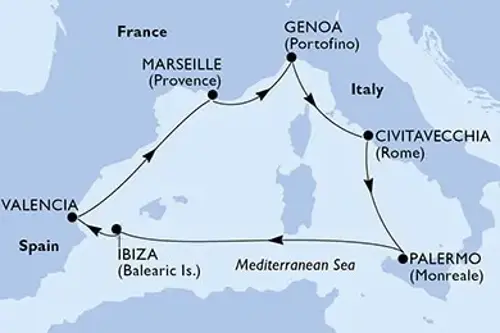
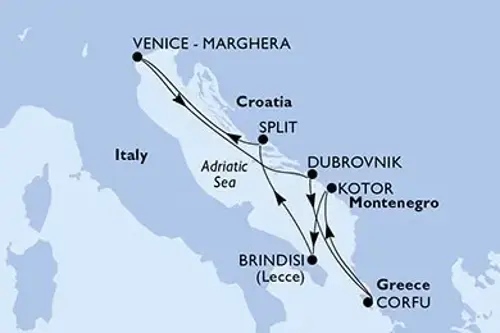
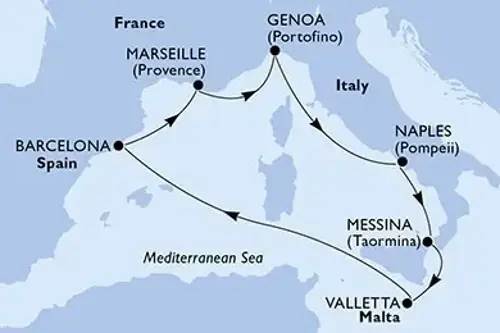
Italy sends out more sailings than any other country in our inventory.
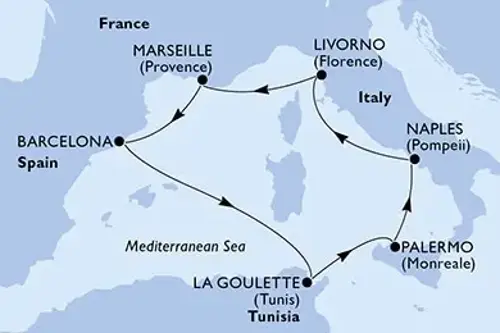
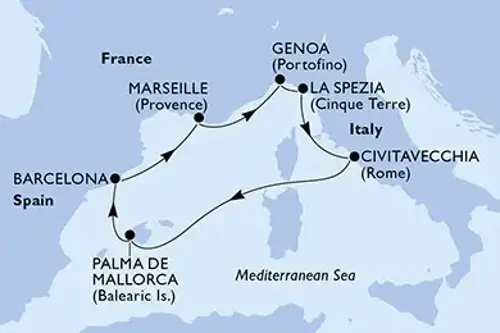
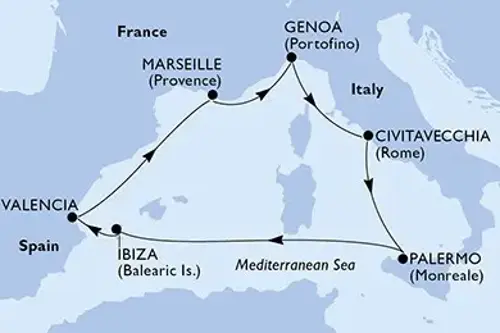
It is not one destination but four different holidays: Liguria and the French Riviera from Genoa, Rome and Tuscany from Civitavecchia, Naples with Pompeii and the Amalfi Coast, and finally Sicily and Malta from Palermo. Your embarkation port shapes the itinerary more than the operator does.
The number of sailings on offer sits above the list and moves with the operators’ inventory; below we explain which port to choose and what each route actually gives you.
Choosing your Italian port
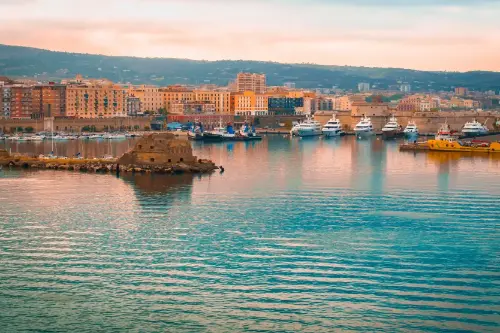
Civitavecchia (Rome) is the usual start in central Italy. The port lies some eighty kilometres from Rome, so the train or a transfer takes well over an hour — allow for it rather than timing your flight to the minute.
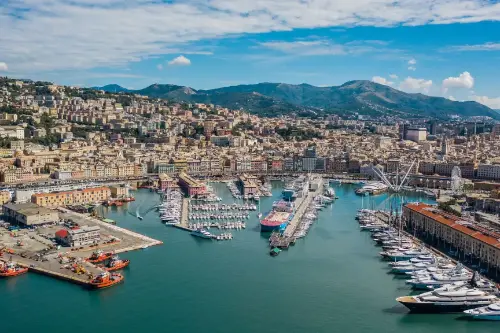
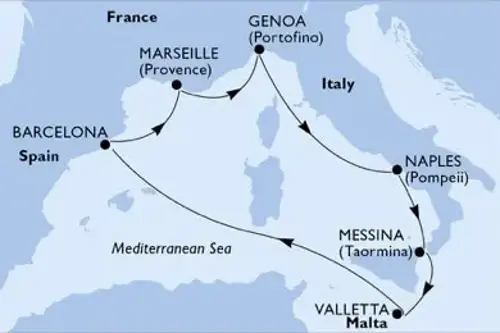
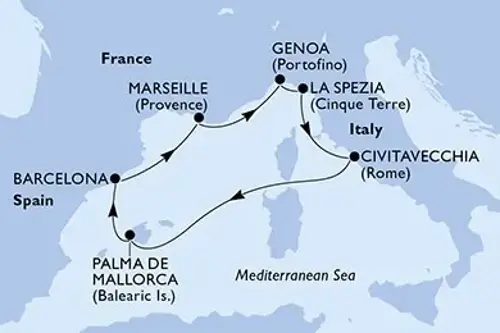
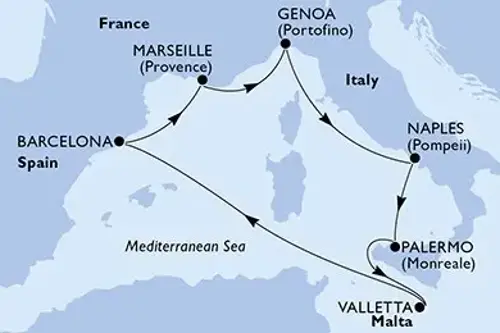
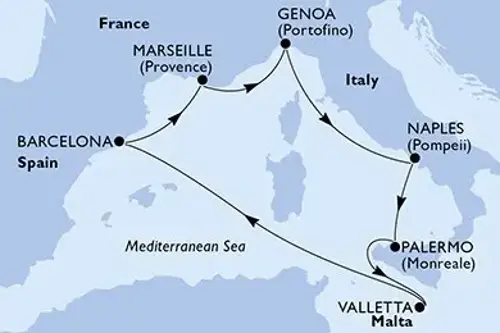
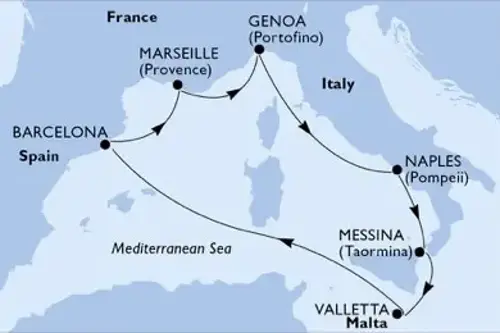
Genoa is one of the handiest options if you are driving from southern Poland. The terminal sits inside the city, parking beside it is paid and booked separately from the cruise. Itineraries from here run around the western basin, usually calling at Marseille and Barcelona.
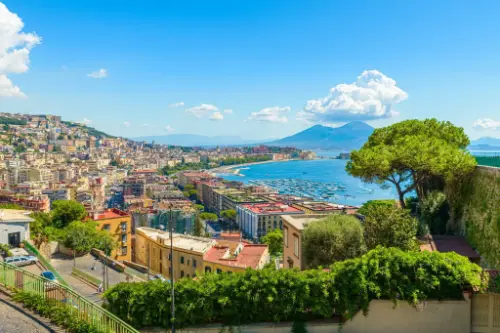
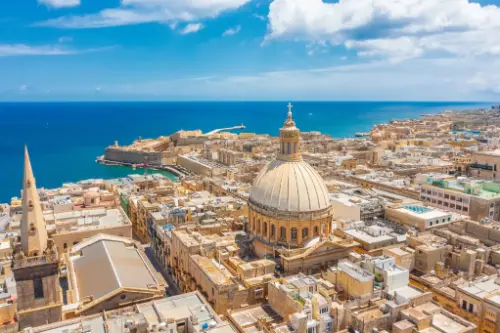
Naples lets you board in the city itself: Pompeii and the Amalfi Coast are within a day before you even embark. Palermo and the Sicilian ports open the southern routes, often with Valletta on Malta included.
Savona and Livorno appear less often, and usually as a port of call rather than an embarkation port. If a cruise description shows Livorno, check which of the two it is — your air ticket depends on the answer.
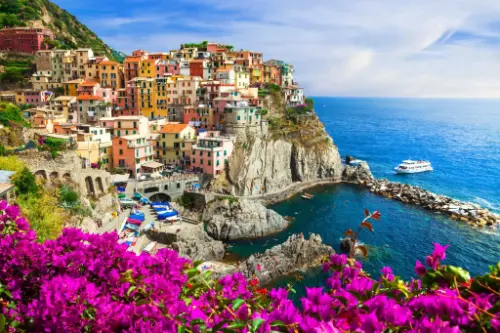
La Spezia usually appears in connection with the Cinque Terre, and it is a port of call rather than a place to start a cruise. The villages are reachable from there by train or by boat, while starting a sailing from that port rarely works out conveniently.
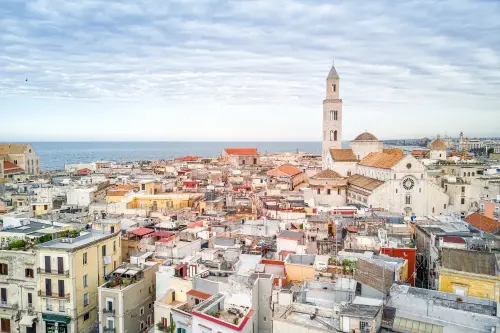
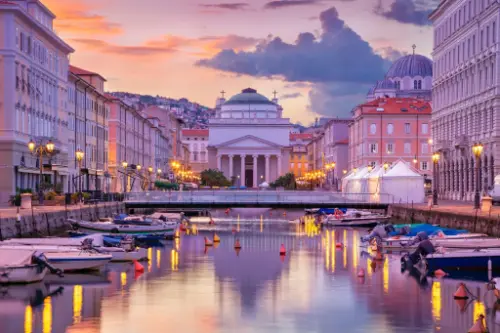
Kraków has direct flights to Rome, Milan, Naples, Genoa and Venice. From Wrocław you can reach Rome, Milan, Naples, Venice and Bari, and from Poznań Rome, Milan via Bergamo, Venice via Treviso and Bari. Warsaw comes into play when your own region has no convenient connection.
All of these ports are reachable from Poland, some routes with one change. We check the flight schedule for your specific dates, because it shifts from season to season.
Check-in closes two to three hours before departure, and being at the port well ahead of that limit is the safe reading of it. The five-hour figure means two different things here: at Civitavecchia it is time spent at the port, because the journey from Rome is added on top, while at the other ports it is a transfer arranged by the cruise line and nothing to do with the port itself.
| Port | What it offers |
|---|
| Rome (Civitavecchia) | The port for Rome, but eighty kilometres from the city. Allow time for the transfer. |
| Genoa | The port drivers usually pick. The terminal is in the city, Liguria close at hand. |
| Naples | You board in the city itself. Pompeii and the Amalfi Coast are within a day. |
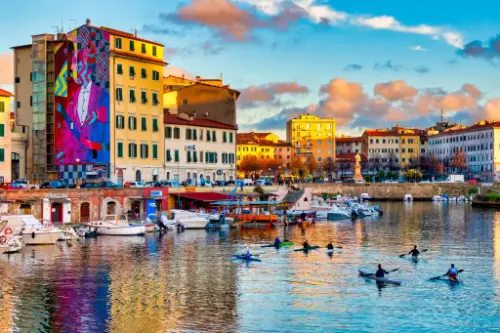
| Livorno | The gateway to Tuscany — Pisa and Florence. More often a call than an embarkation port. |
| Savona | An alternative to Genoa on western routes. Convenient if you are driving. |
| Palermo | The start of the southern routes. Sicily, Malta and the Aeolian Islands on one loop. |
What the itineraries actually cover
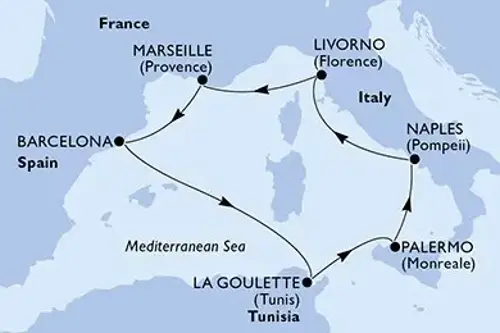
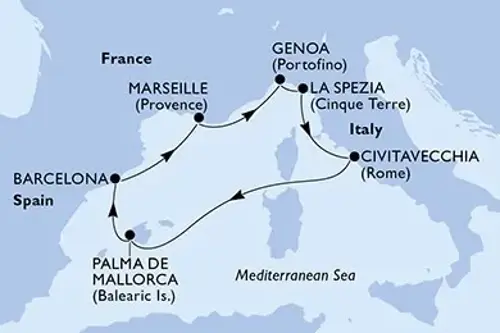
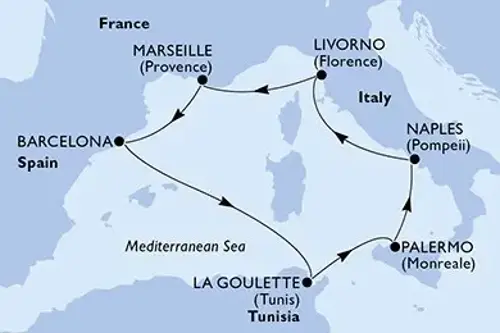
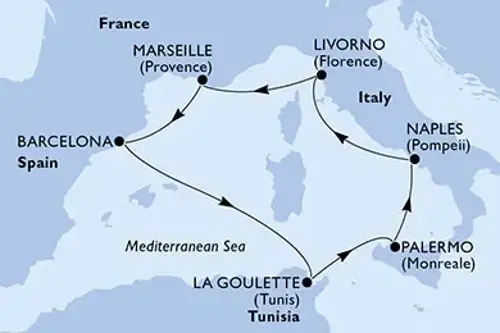
A week from Civitavecchia or Genoa is normally a loop around the western basin: Italy, southern France, the Balearics, sometimes mainland Spain. The ship stays in port for several hours up to a full day, so each city gets one day, not two.
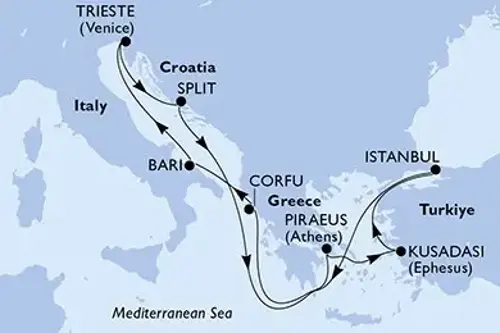
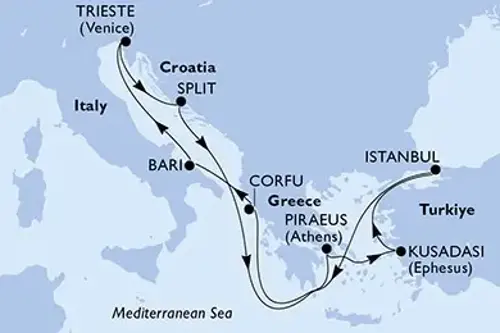
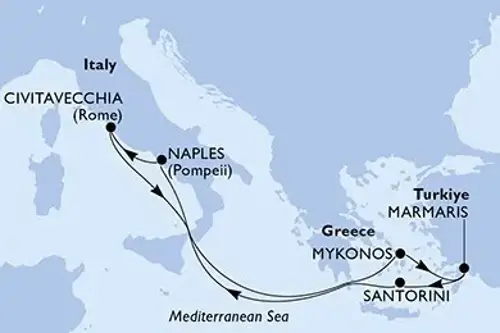
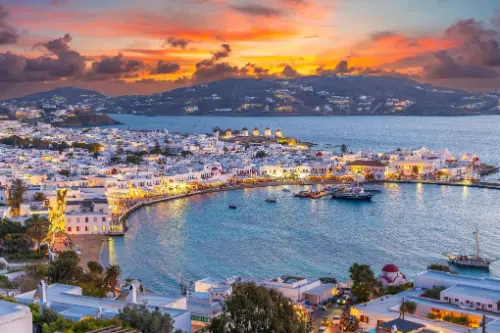
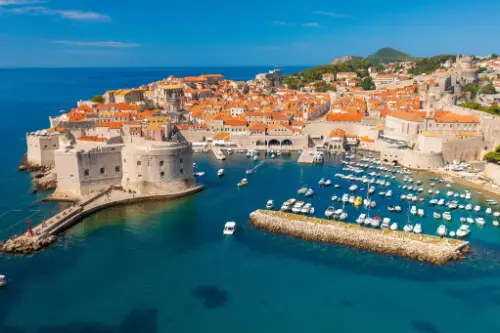
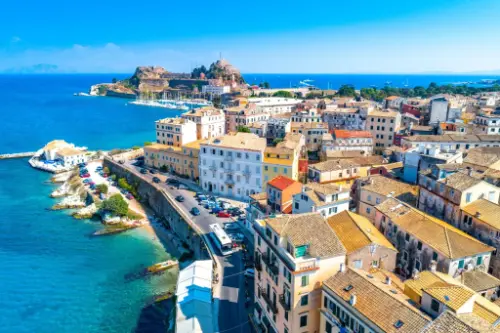
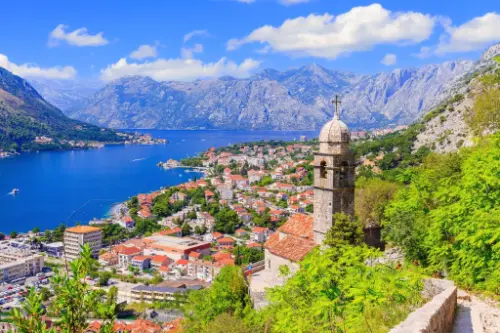
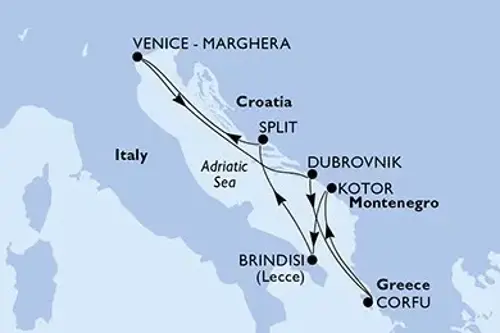
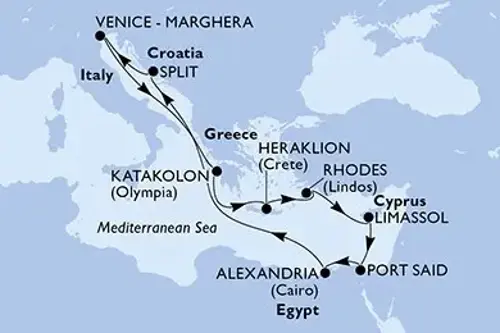
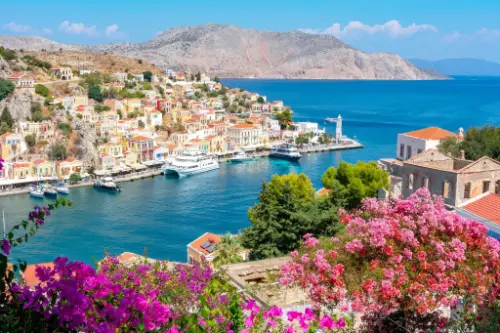
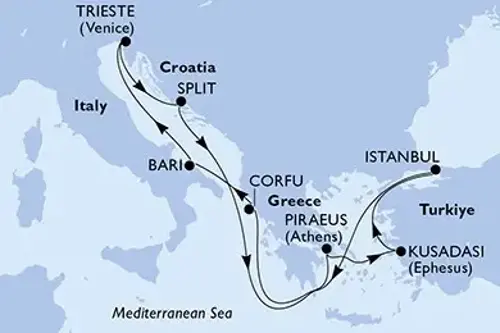
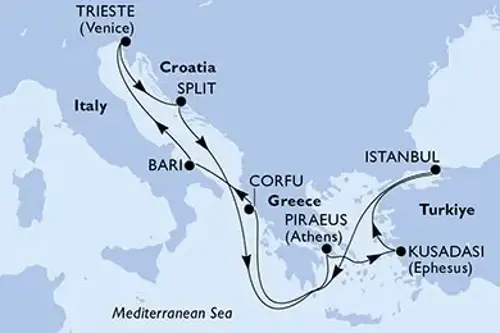
Longer sailings, from ten nights upwards, reach Greece and the Adriatic: Corfu, Santorini, Dubrovnik, Kotor. If the Greek islands are the point of the trip, look at those rather than at the short loops.
The ship usually returns to the port it left, so you buy a return ticket to the same city. One-way repositioning routes appear mainly in spring and autumn, at the turn of the season, and they need two different airports.
A shore excursion in each port is paid separately. You can buy it from the operator or explore on your own — at Pompeii and Amalfi do count the travelling time, because the ship will not wait.
When to sail from Italy
May, June and September give you a warm sea without the July crowds, and fares are lower than at the peak of the holidays. That is the best compromise if school terms do not tie you down.
July and August are the warmest and the dearest, with several ships in port at once. With small children it can be wearing — Pompeii at one in the afternoon is not a treat in that heat.
From November to March the Italian offer shrinks but does not disappear: some ships stay in the western basin for the winter, and fares are then at their lowest of the year.
Who sells this and who is responsible
The organiser is Piotr Skupiewski, trading as Biznes i Turystyka Piotr Skupiewski, with its registered office at ul. Łukowa 41, 32-823 Szczepanów, Poland; NIP: 869-114-83-81, REGON: 850455159.
The organiser is entered in the Central Register of Tour Operators and Entrepreneurs Facilitating the Purchase of Linked Travel Arrangements (CEOTiPUNPUT). It holds an insurance guarantee, UNIQA nr 3800003856, valid from 5 May 2026 to 4 May 2027. The sum guaranteed is PLN 379,404.00.
The contract is concluded in euros or US dollars, depending on the booking. Payment can be made by transfer in euros or in zloty. Payments made through the payment link are settled in zloty. We do not offer instalment payments.
The contract is with us, not with a foreign intermediary.
At Center Cruises we answer the telephone in Polish between 9:00–18:00 on +48 576 977 555. We do not vanish once you have paid: a cabin change, a question about paperwork or a problem during the sailing is still ours to handle.