| Cruise Region : Mediterranean Sea, Northern Europe, Europe |
| Company : MSC Yacht Club |
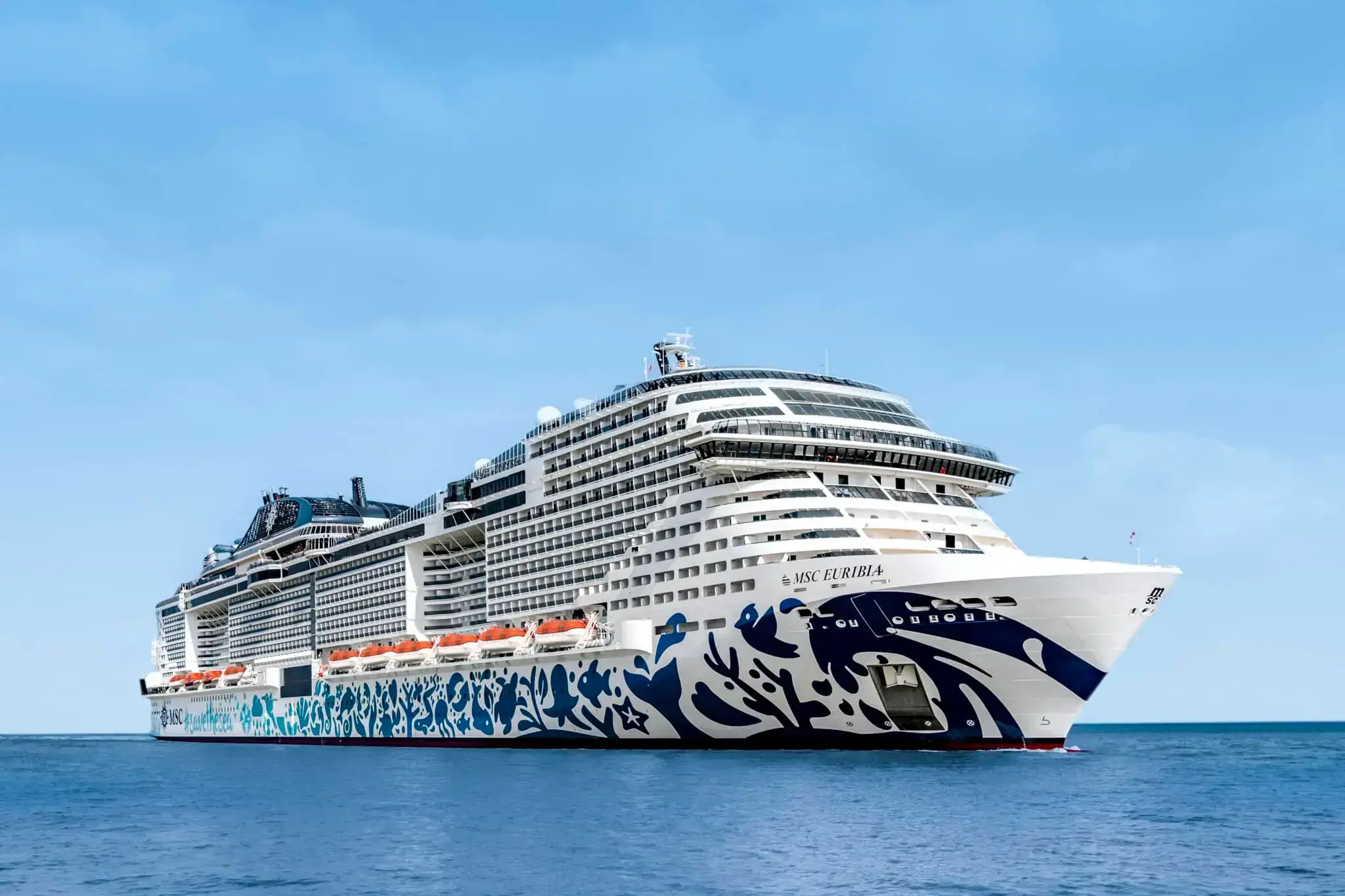
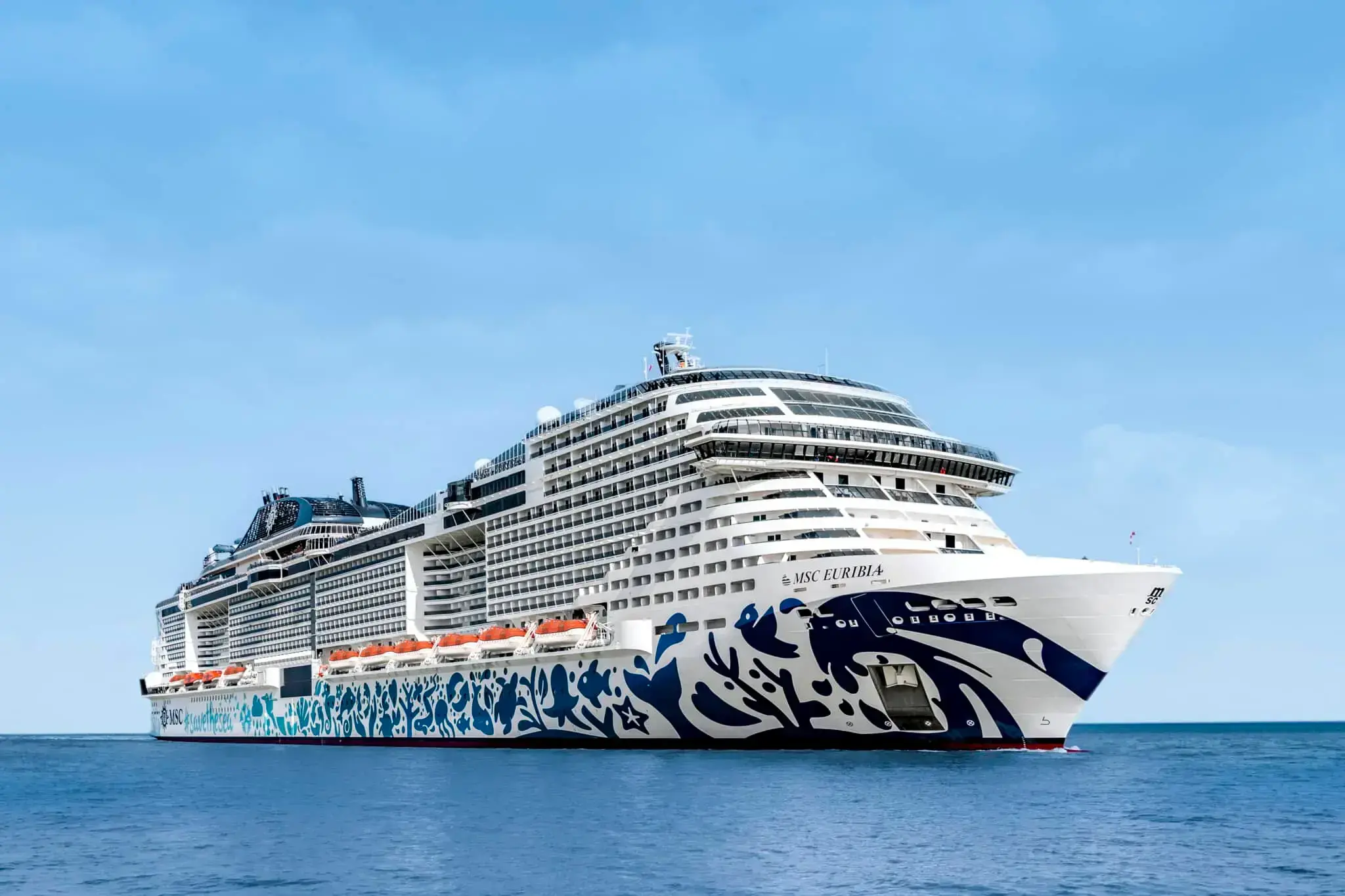
| Ship : MSC Yacht Club Euribia |
| Journey Start : Wed 14 Apr 2027 |
| Journey End : Sat 24 Apr 2027 |
| Count Nights : 10 nights |
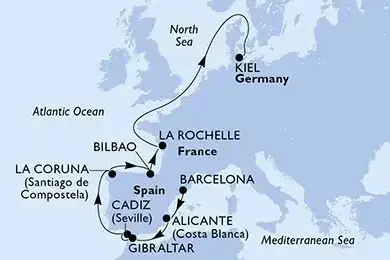
| Day | Date | Port | Arrival | Departure |
|---|---|---|---|---|
| 1 | 14.04 Wed | Barcelona / Spain | 18:00 | |
| 2 | 15.04 Thu | Alicante / Spain | 08:00 | 17:00 |
| 3 | 16.04 Fri | Gibraltar / Great Britain | 10:00 | 18:00 |
| 4 | 17.04 Sat | Cadiz / Spain | 08:00 | 18:00 |
| 5 | 18.04 Sun | Day at sea / Sea | ||
| 6 | 19.04 Mon | La Coruna / Spain | 08:00 | 17:00 |
| 7 | 20.04 Tue | Bilbao / Spain | 08:00 | 18:00 |
| 8 | 21.04 Wed | La Rochelle / France | 08:00 | 15:00 |
| 9 | 22.04 Thu | Day at sea / Sea | ||
| 10 | 23.04 Fri | Day at sea / Sea | ||
| 11 | 24.04 Sat | Keel / Germany | 09:00 |
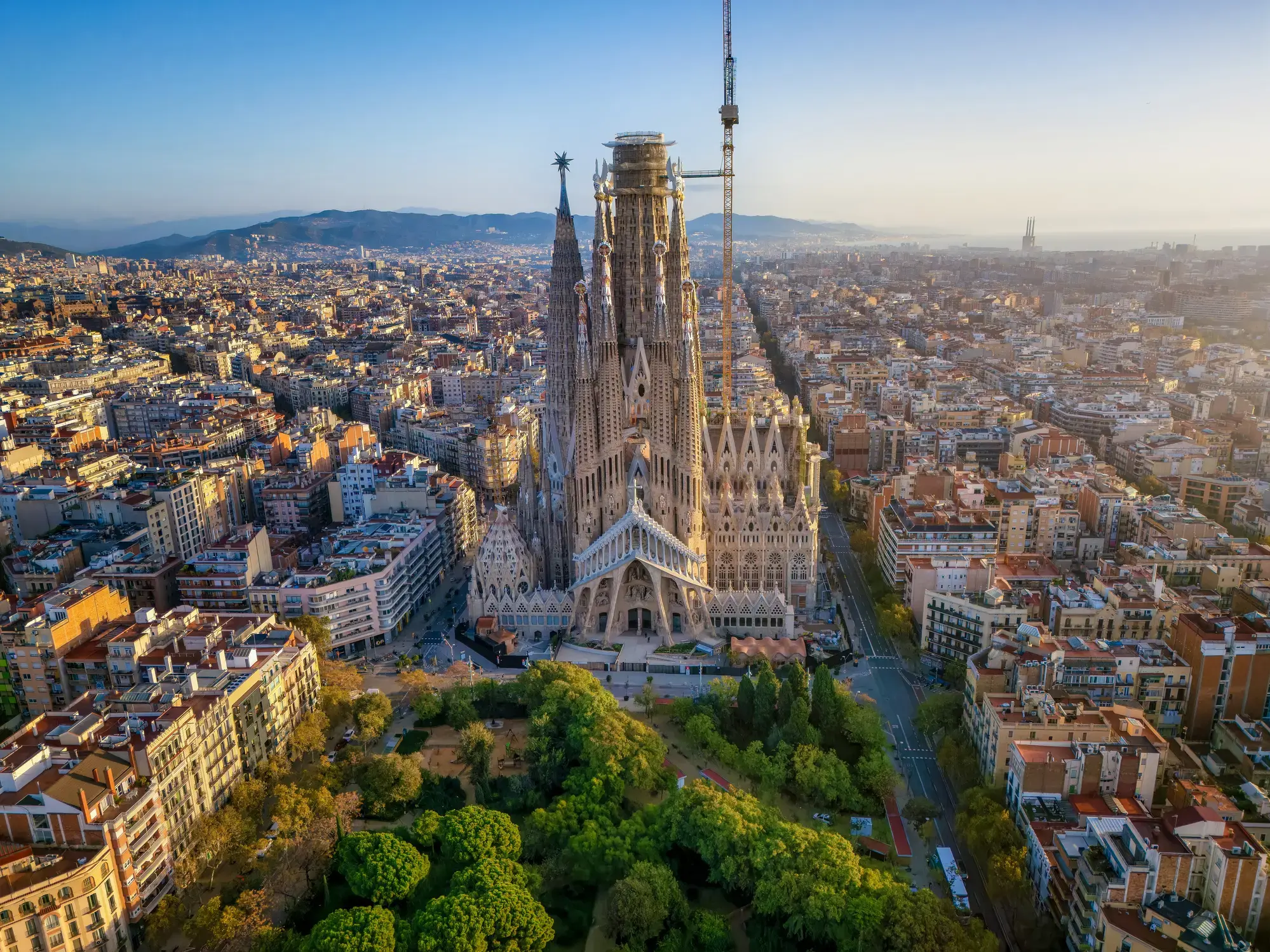
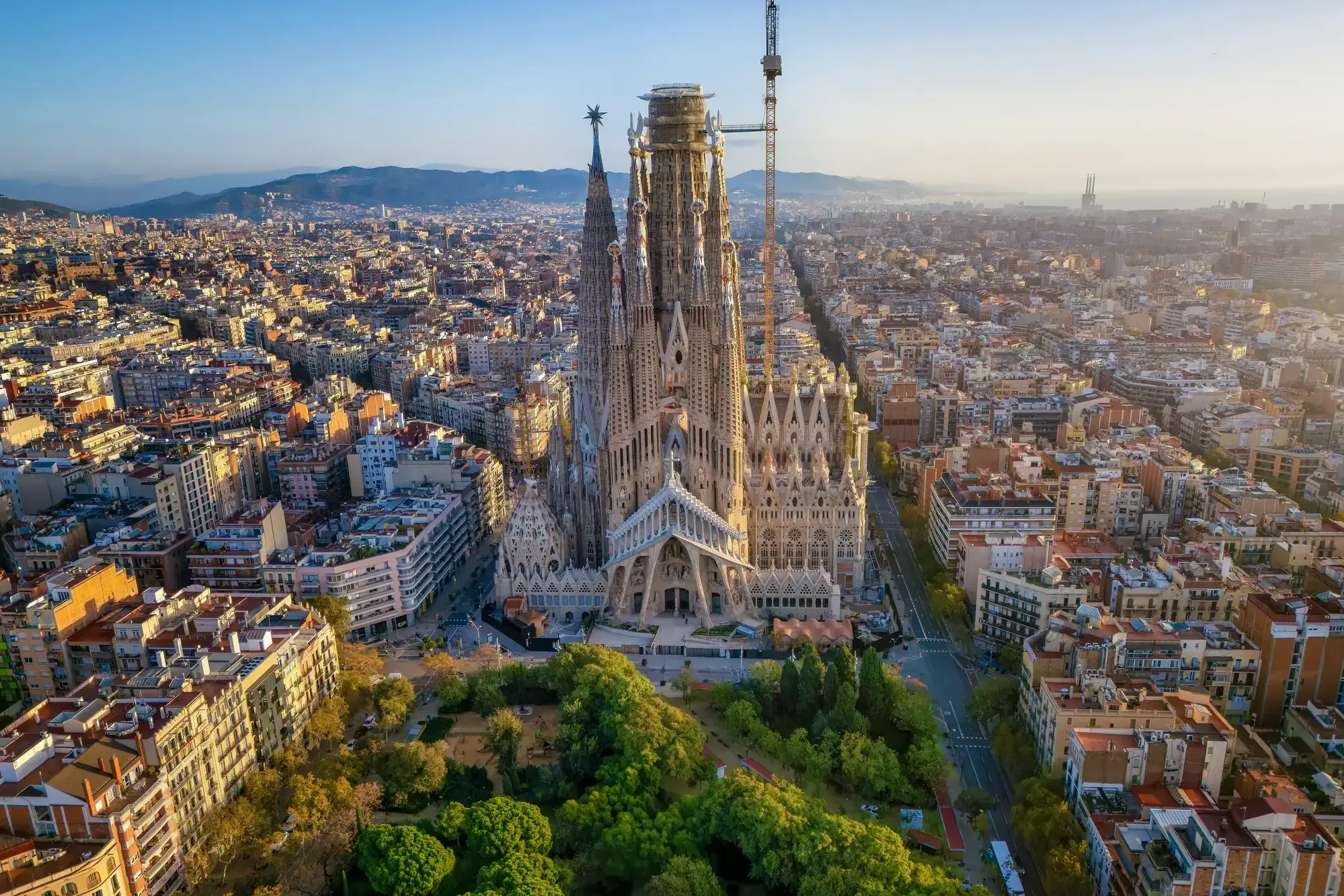
Barcelona is a city in Spain. It is the capital and largest city of Catalonia, as well as the second most populous municipality of Spain. With a population of 1.6 million within city limits, its urban area extends to numerous neighbouring municipalities within the Province of Barcelona and is home to around 4.8 million people, making it the sixth most populous urban area in the European Union after Paris, London, Madrid, the Ruhr area and Milan. It is one of the largest metropolises on the Mediterranean Sea, located on the coast between the mouths of the rivers Llobregat and Besòs, and bounded to the west by the Serra de Collserola mountain range, the tallest peak of which is 512 metres (1,680 feet) high.
Founded as a Roman city, in the Middle Ages Barcelona became the capital of the County of Barcelona. After merging with the Kingdom of Aragon, Barcelona continued to be an important city in the Crown of Aragon as an economic and administrative centre of this Crown and the capital of the Principality of Catalonia. Barcelona has a rich cultural heritage and is today an important cultural centre and a major tourist destination. Particularly renowned are the architectural works of Antoni Gaudí and Lluís Domènech i Montaner, which have been designated UNESCO World Heritage Sites. The headquarters of the Union for the Mediterranean are located in Barcelona. The city is known for hosting the 1992 Summer Olympics as well as world-class conferences and expositions and also many international sport tournaments.
Barcelona is one of the world's leading tourist, economic, trade fair and cultural centres, and its influence in commerce, education, entertainment, media, fashion, science, and the arts all contribute to its status as one of the world's major global cities. It is a major cultural and economic centre in southwestern Europe, 24th in the world (before Zürich, after Frankfurt) and a financial centre. In 2008 it was the fourth most economically powerful city by GDP in the European Union and 35th in the world with GDP amounting to €177 billion. In 2012 Barcelona had a GDP of $170 billion; and it was leading Spain in employment rate in that moment.
In 2009 the city was ranked Europe's third and one of the world's most successful as a city brand. In the same year the city was ranked Europe's fourth best city for business and fastest improving European city, with growth improved by 17% per year, and the city has been experiencing strong and renewed growth for the past three years. Since 2011 Barcelona has been a leading smart city in Europe. Barcelona is a transport hub, with the Port of Barcelona being one of Europe's principal seaports and busiest European passenger port, an international airport, Barcelona–El Prat Airport, which handles over 50 million passengers per year, an extensive motorway network, and a high-speed rail line with a link to France and the rest of Europe.
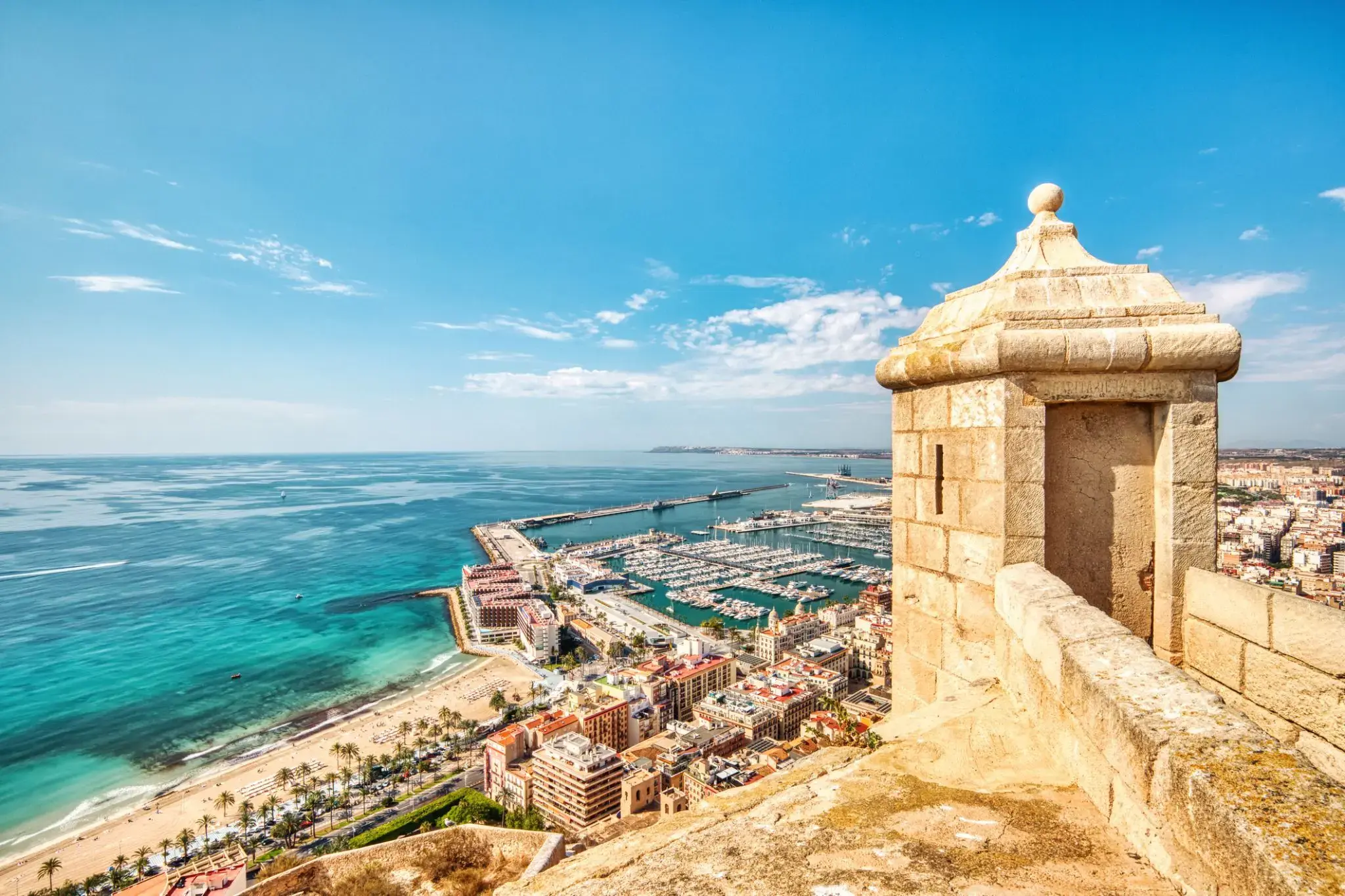
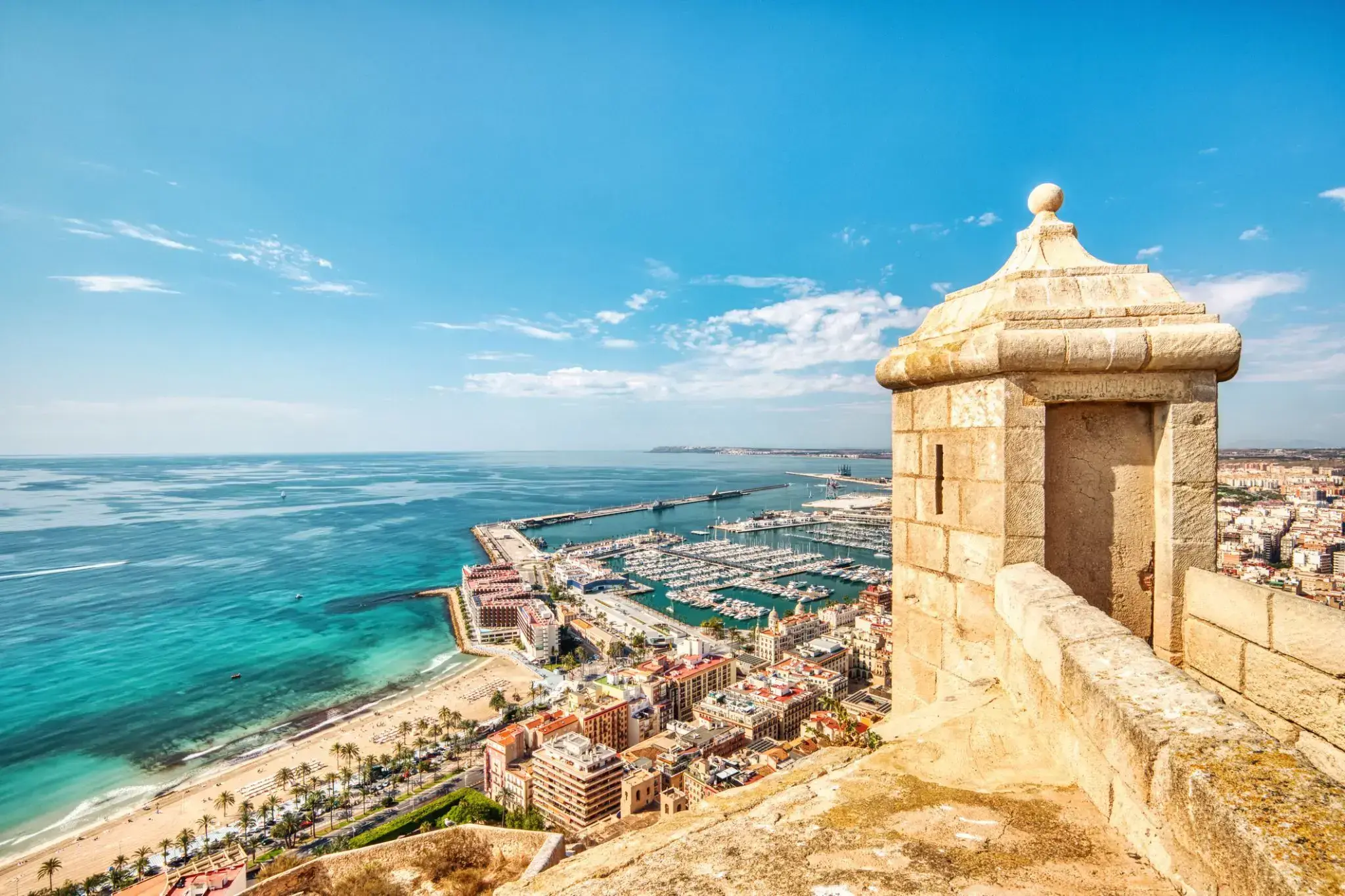
Alicante, or Alacant , both the Spanish and Valencian being official names, is a city and port in Spain on the Costa Blanca, the capital of the province of Alicante and of the comarca of Alacantí, in the south of the Valencian Community. It is also a historic Mediterranean port. The population of the city of Alicante proper was 330,525, estimated as of 2016, ranking as the second-largest Valencian city. Including nearby municipalities, the Alicante conurbation had 452,462 residents. The population of the metropolitan area (including Elche and satellite towns) was 757,085 as of 2014 estimates, ranking as the eighth-largest metropolitan area of Spain.
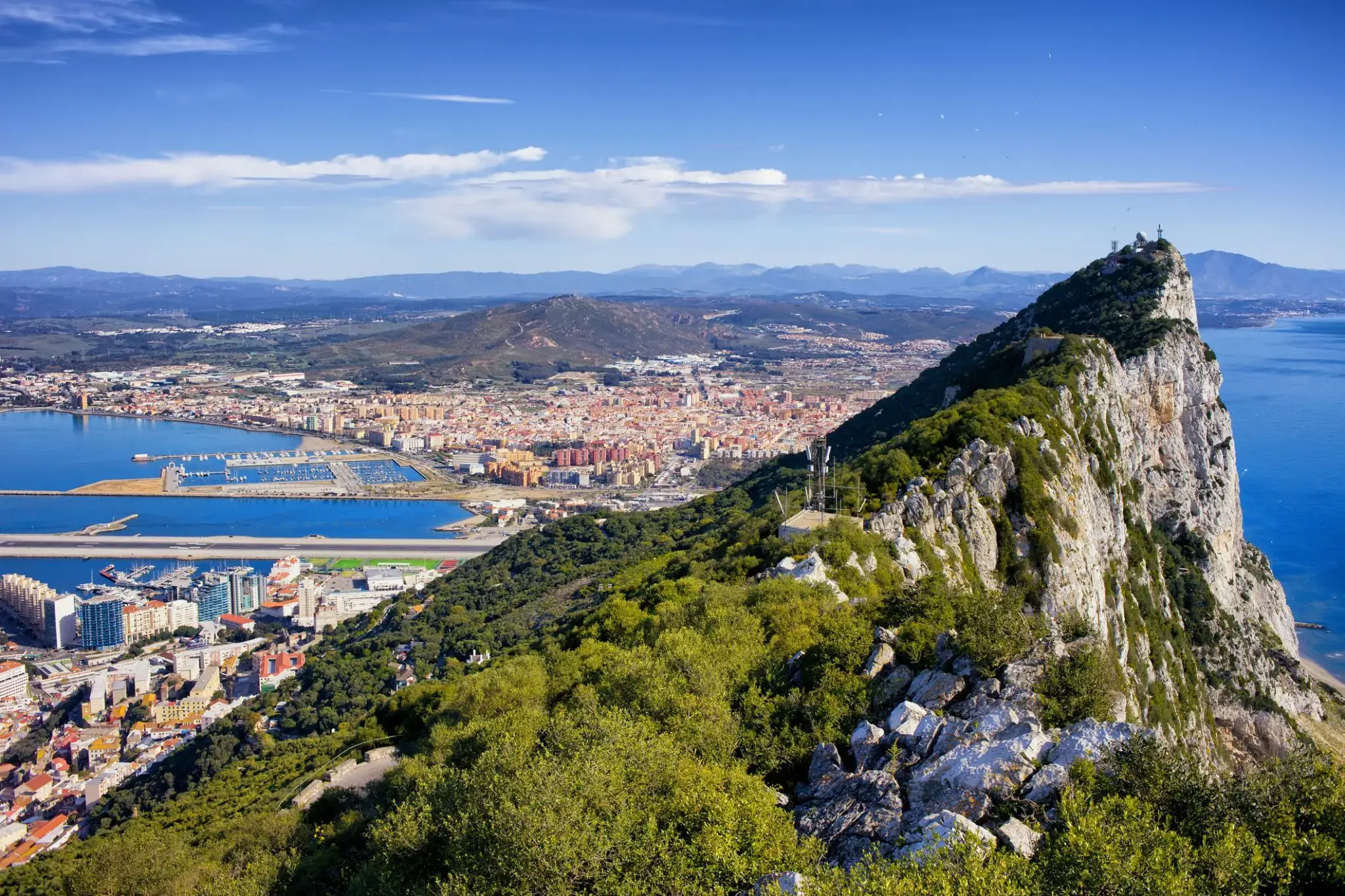
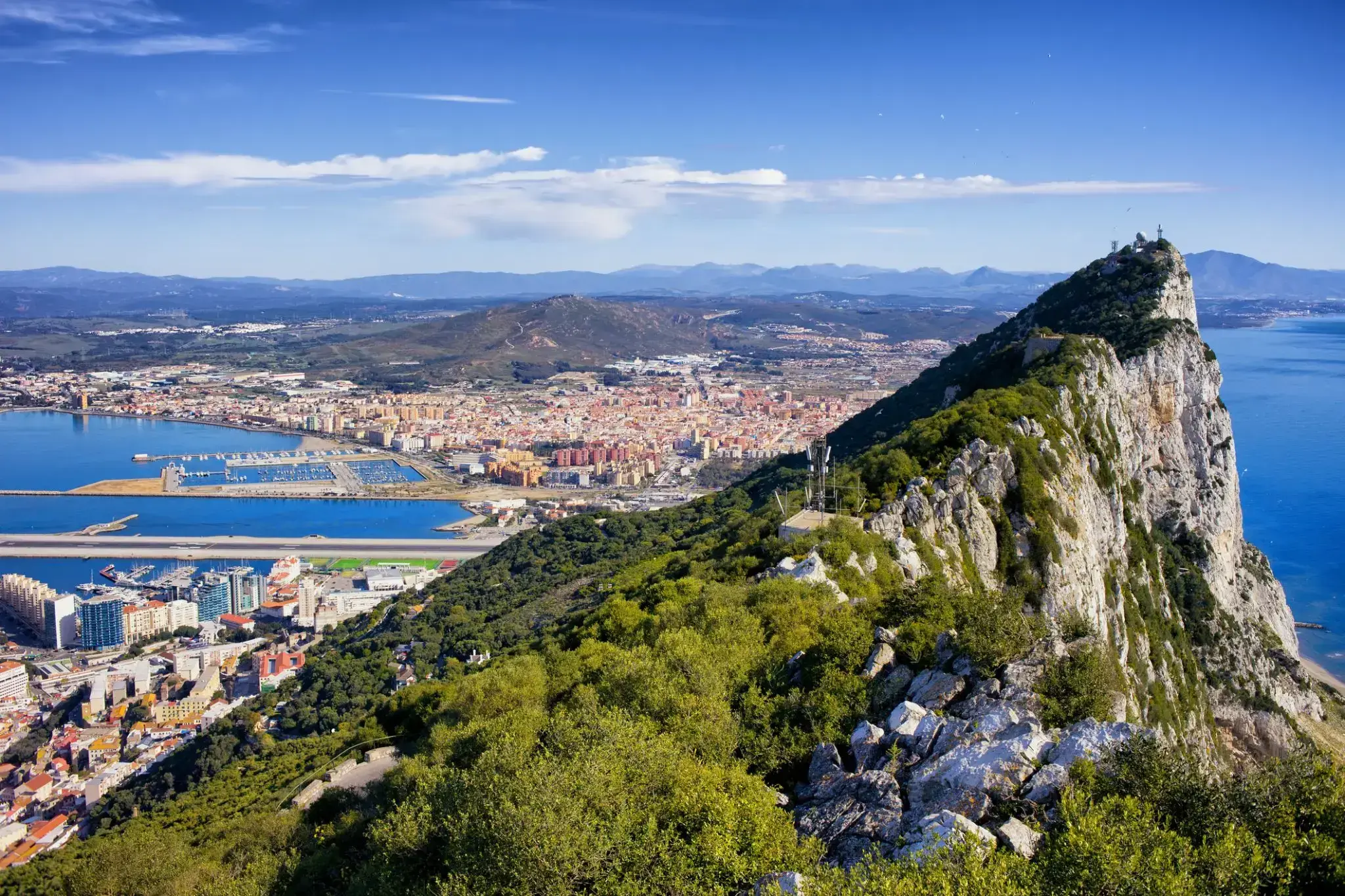
Gibraltar is a British Overseas Territory located at the southern tip of the Iberian Peninsula. It has an area of 6.7 km2 (2.6 sq mi) and is bordered to the north by Spain. The landscape is dominated by the Rock of Gibraltar at the foot of which is a densely populated town area, home to over 30,000 people, primarily Gibraltarians. It shares a maritime border with Morocco.
In 1704, Anglo-Dutch forces captured Gibraltar from Spain during the War of the Spanish Succession on behalf of the Habsburg claim to the Spanish throne. The territory was ceded to Great Britain in perpetuity under the Treaty of Utrechtin 1713. During World War II it was an important base for the Royal Navy as it controlled the entrance and exit to the Mediterranean Sea, which is only 8 miles (13 km) wide at this naval choke point. It remains strategically important, with half the world's seaborne trade passing through the strait. Today Gibraltar's economy is based largely on tourism, online gambling, financial services and cargo ship refuelling.
The sovereignty of Gibraltar is a point of contention in Anglo-Spanish relations because Spain asserts a claim to the territory. Gibraltarians rejected proposals for Spanish sovereignty in a 1967 referendum and, in a 2002 referendum, the idea of shared sovereignty was also rejected.
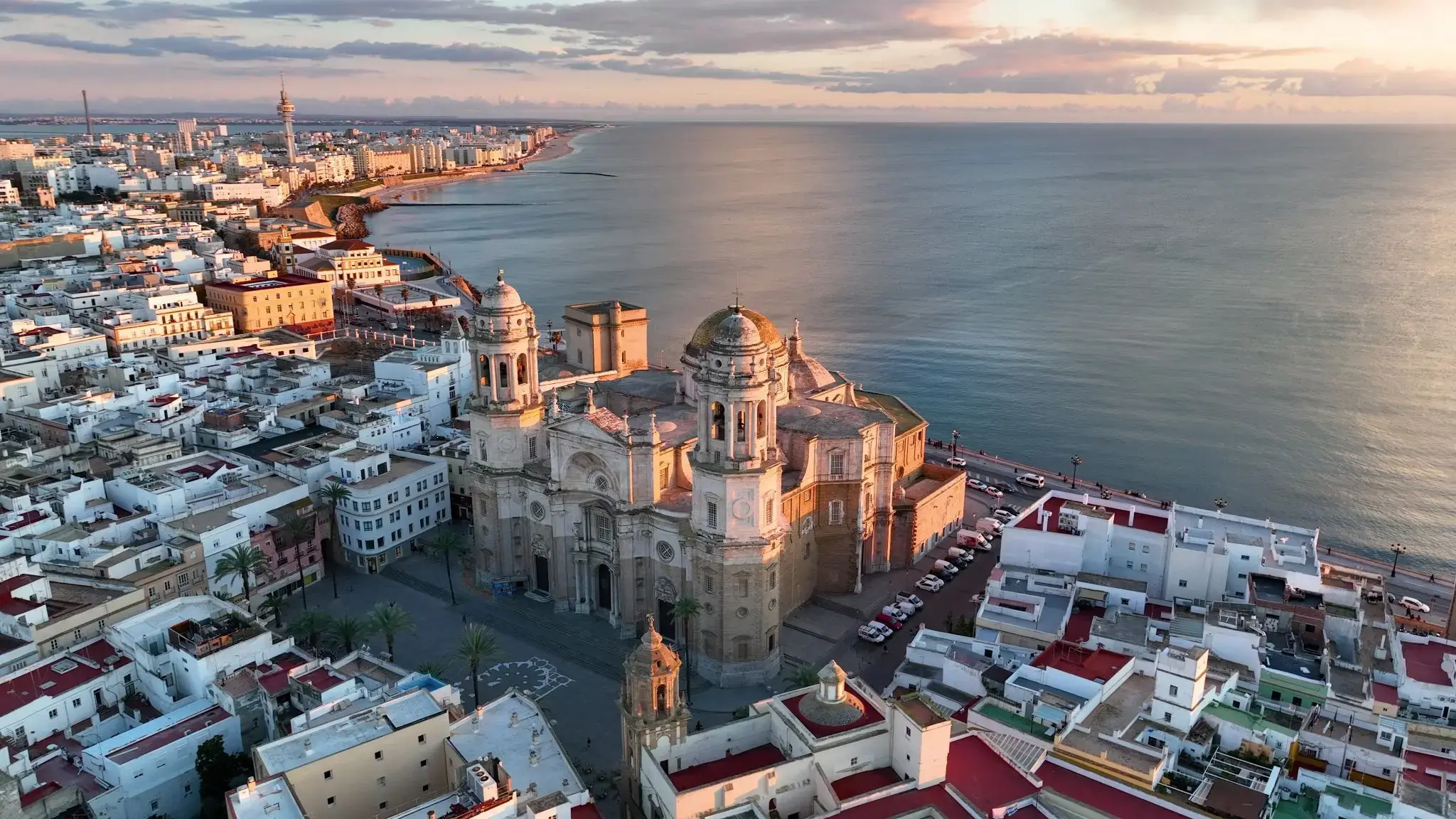
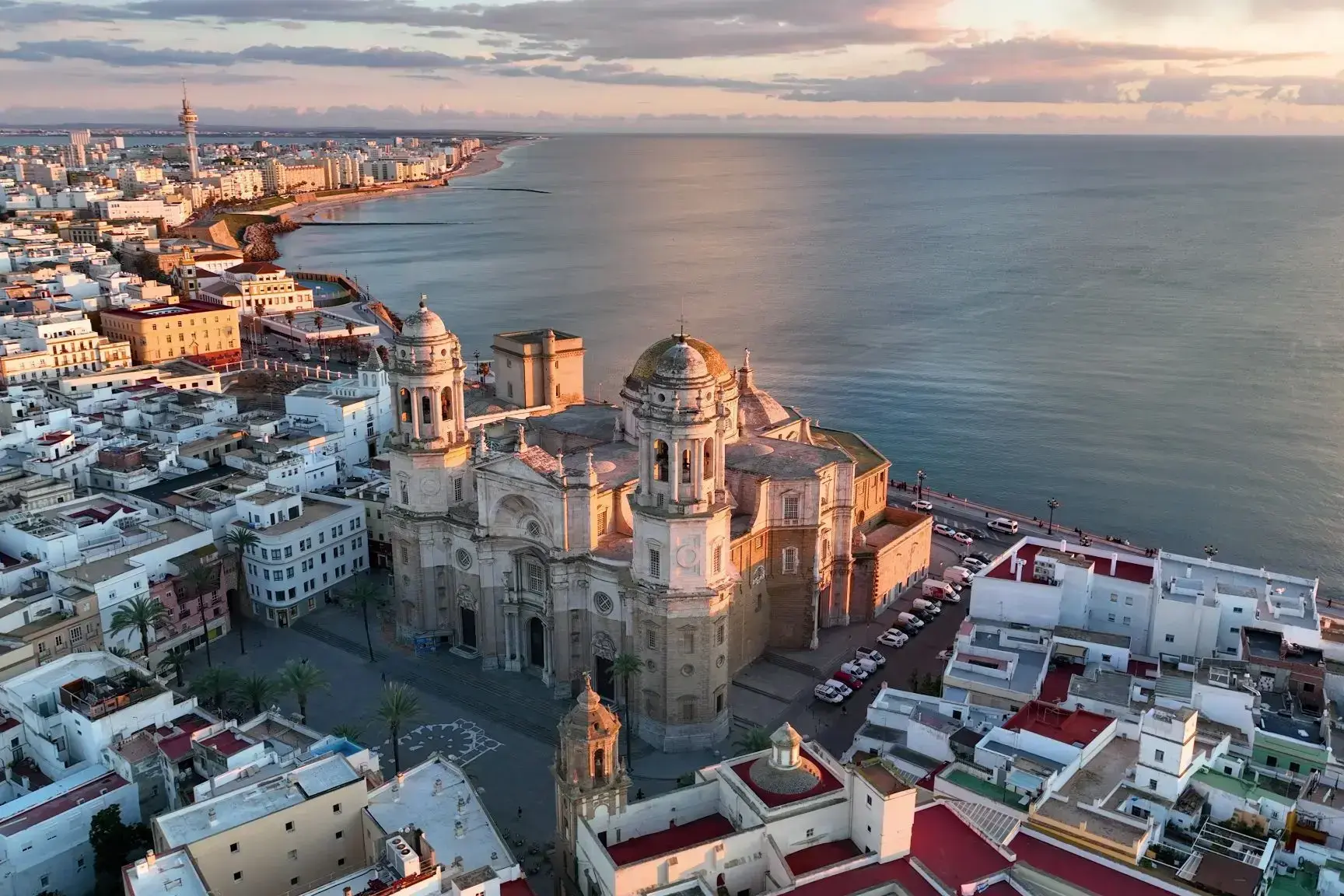
Cadiz is one of the oldest cities in Europe, located on the southwest coast of Spain in the heart of Andalusia. The city stands on a peninsula surrounded by the Atlantic Ocean, which gives it a unique atmosphere. Cadiz is known for its picturesque beaches, such as Playa de la Victoria, as well as its ancient streets with white houses and magnificent facades, reflecting its Moorish and colonial history. In the historic center of the city stands the famous cathedral, whose construction took more than a century, offering an impressive view of the ocean.
The city is also famous for its carnival traditions and delicious cuisine, which is dominated by seafood. The local carnival is considered one of the brightest in Spain, attracting thousands of tourists every year.

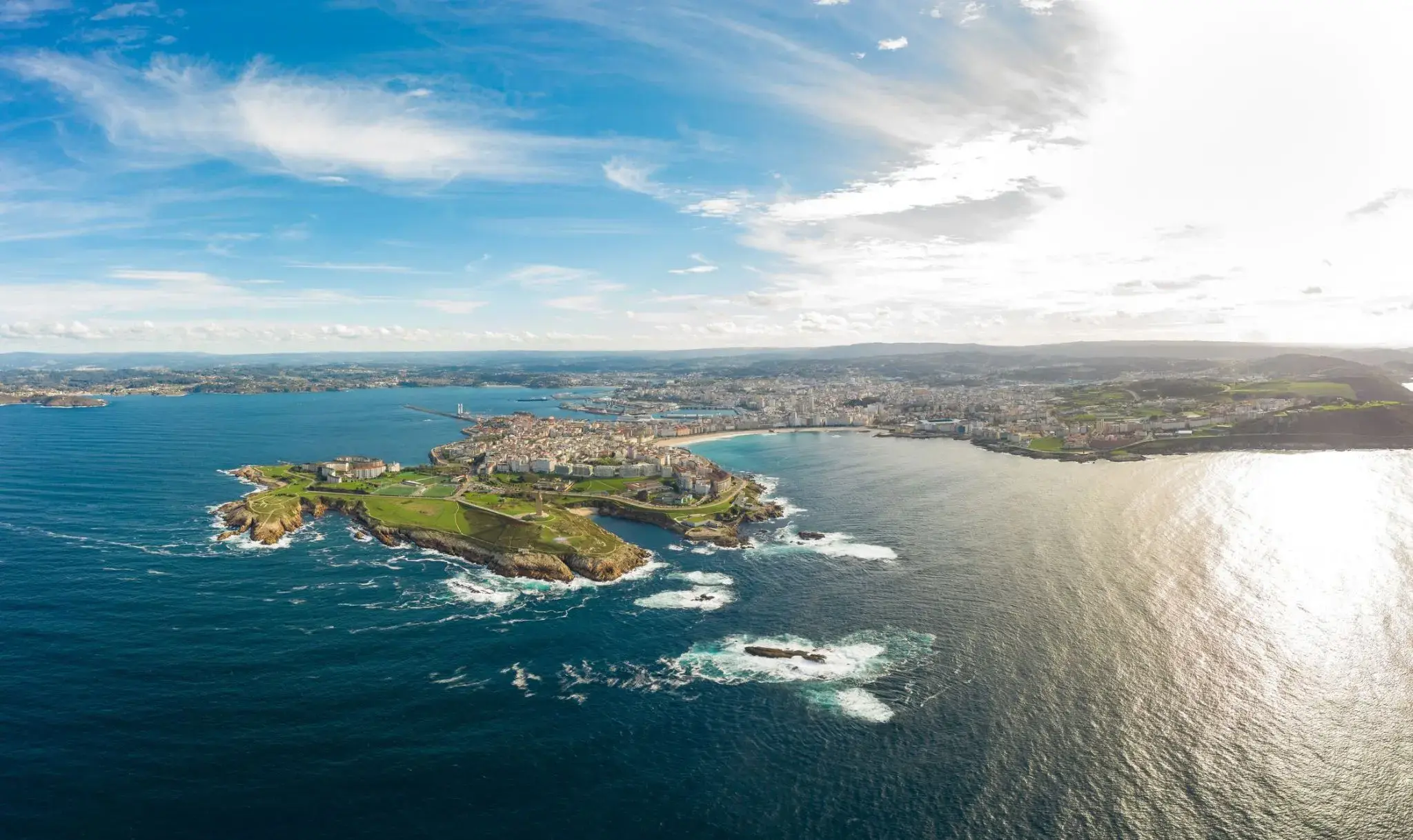
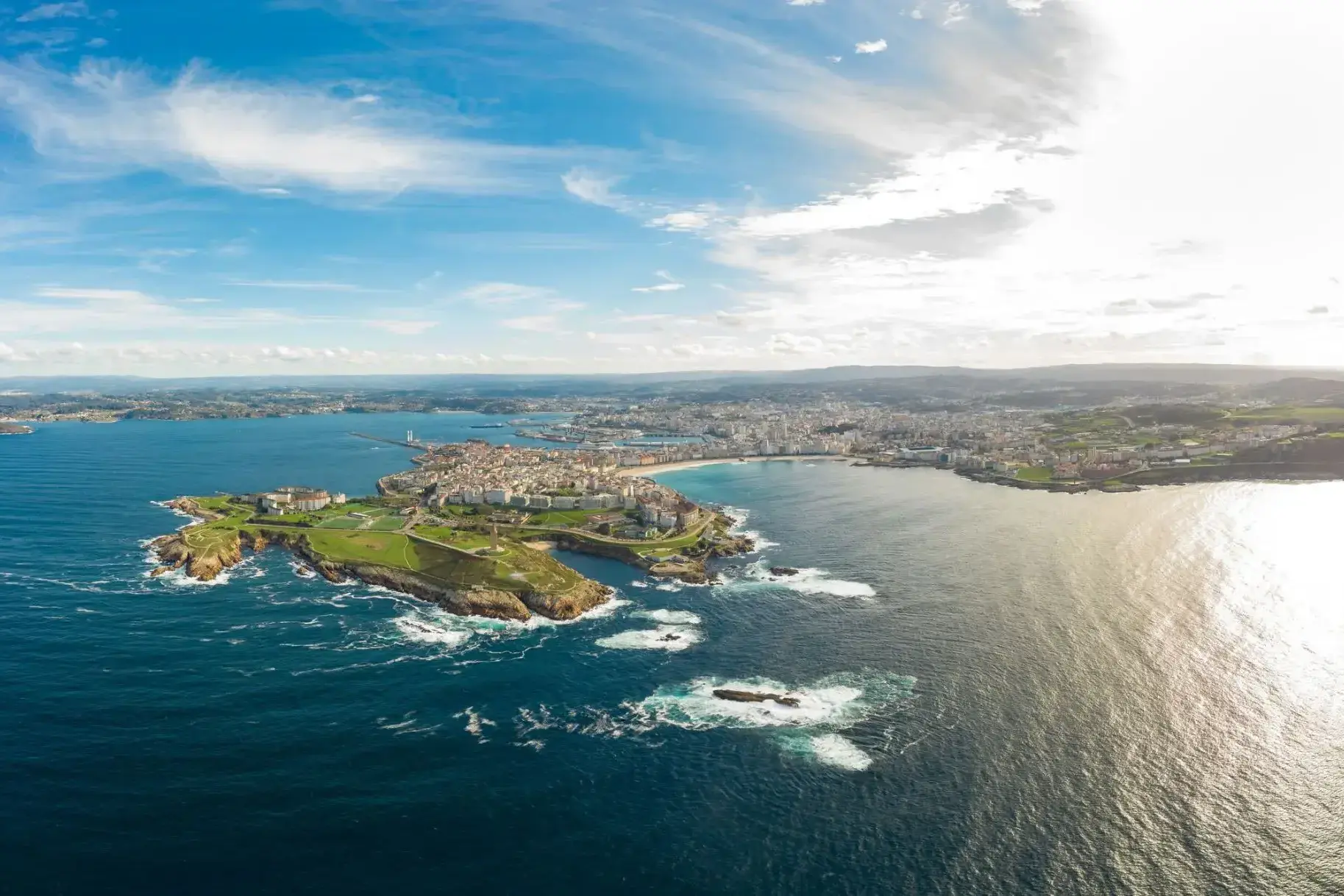
Travelers find in La Coruña the perfect place to experience the atmosphere of Spain’s Atlantic coast, where modern promenades meet historical landmarks and cozy beaches. The city is known for having the world’s oldest functioning Roman lighthouse – the Tower of Hercules, built nearly 2000 years ago and still guiding ships today. Here, you can enjoy a stroll along one of Europe’s longest seafront promenades, taking in ocean panoramas and the fresh breeze.
In La Coruña, guests discover the rich Galician gastronomic culture, with seafood served in traditional tapas bars and contemporary restaurants. Local markets delight with fresh products, while the city’s cultural life is filled with festivals, exhibitions, and live street music. This destination offers travelers a unique blend of historical depth, sea views, and warm Spanish atmosphere, leaving a sense of lightness and inspiration after the visit.
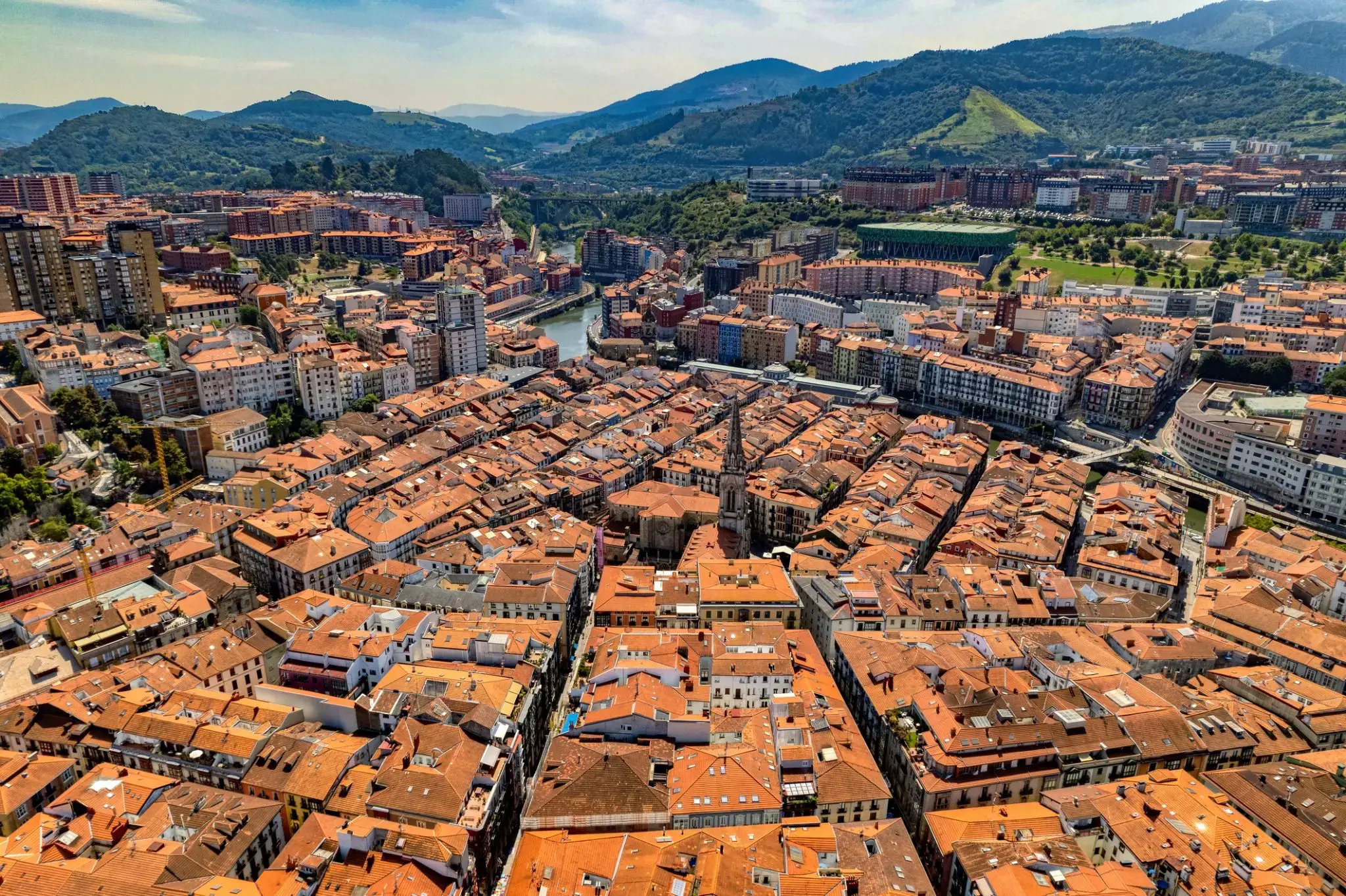
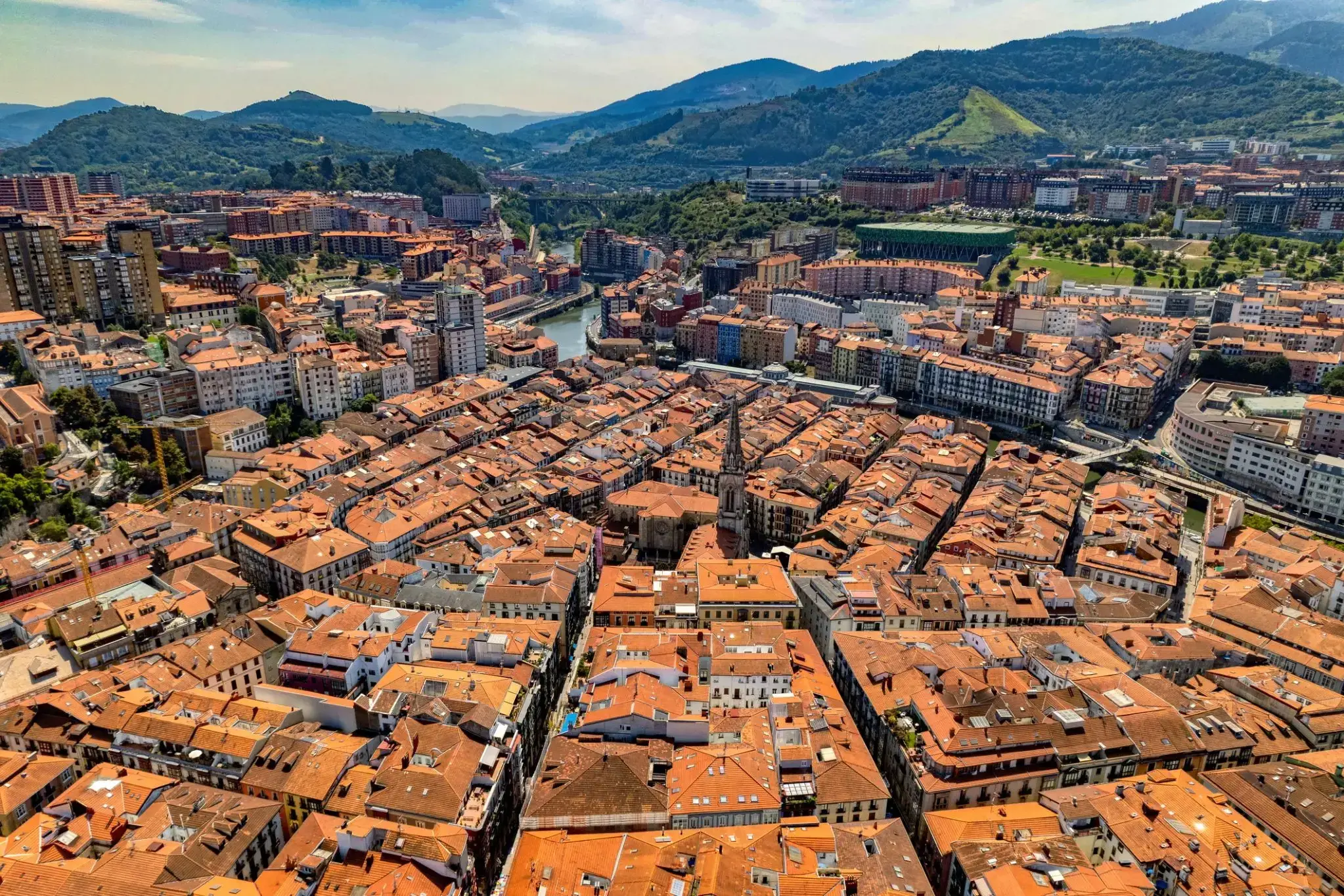
Bilbao is a city in northern Spain, the largest city in the province of Biscay and in the Basque Country as a whole. It is also the largest city proper in northern Spain. Bilbao is the tenth largest city in Spain, with a population of 345,141 as of 2015. The Bilbao metropolitan area has roughly 1 million inhabitants, making it one of the most populous metropolitan areas in northern Spain; with a population of 875,552 the comarca of Greater Bilbao is the fifth-largest urban area in Spain. Bilbao is also the main urban area in what is defined as the Greater Basque region.
Bilbao is situated in the north-central part of Spain, some 16 kilometres (10 mi) south of the Bay of Biscay, where the economic social development is located, where the estuary of Bilbao is formed. Its main urban core is surrounded by two small mountain ranges with an average elevation of 400 metres (1,300 ft). Its climate is shaped by the Bay of Biscay low-pressure systems and mild air, moderating summer temperatures by Iberian standards, with low sunshine and high rainfall. The annual temperature range is low for its latitude.
After its foundation in the early 14th century by Diego López V de Haro, head of the powerful Haro family, Bilbao was a commercial hub of the Basque Country that enjoyed significant importance in Green Spain. This was due to its port activity based on the export of iron extracted from the Biscayan quarries. Throughout the nineteenth century and the beginning of the twentieth, Bilbao experienced heavy industrialisation, making it the centre of the second-most industrialised region of Spain, behind Barcelona. At the same time an extraordinary population explosion prompted the annexation of several adjacent municipalities. Nowadays, Bilbao is a vigorous service city that is experiencing an ongoing social, economic, and aesthetic revitalisation process, started by the iconic Bilbao Guggenheim Museum, and continued by infrastructure investments, such as the airport terminal, the rapid transit system, the tram line, the Azkuna Zentroa, and the currently under development Abandoibarra and Zorrozaurrerenewal projects.
Bilbao is also home to football club Athletic Club de Bilbao, a significant symbol for Basque nationalism due to its promotion of only Basque players and one of the most successful clubs in Spanish football history.
On 19 May 2010, the city of Bilbao was recognised with the Lee Kuan Yew World City Prize, awarded by the city state of Singapore, in collaboration with the Swedish Nobel Academy. Considered the Nobel Prize for urbanism, it was handed out on 29 June 2010. On 7 January 2013, its mayor, Iñaki Azkuna, received the 2012 World Mayor Prize awarded every two years by the British foundation The City Mayors Foundation, in recognition of the urban transformation experienced by the Biscayan capital since the 1990s. On 8 November 2017, Bilbao was chosen the Best European City 2018 at The Urbanism Awards 2018, awarded by the international organisation The Academy of Urbanism.