| Cruise Region : Caribbean |
| Company : MSC Yacht Club |
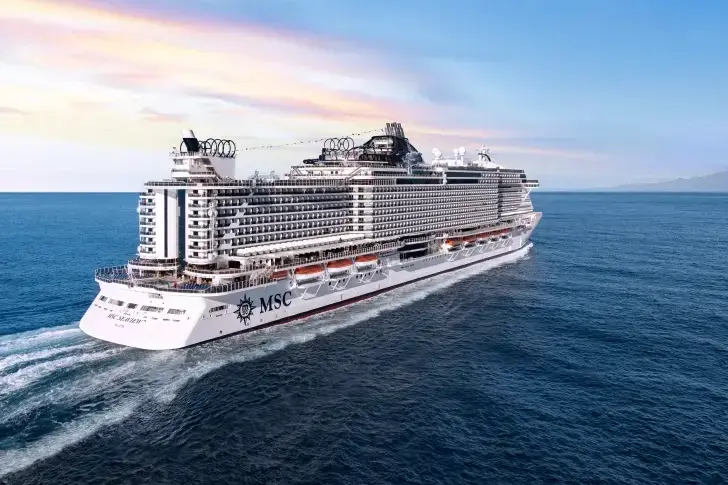
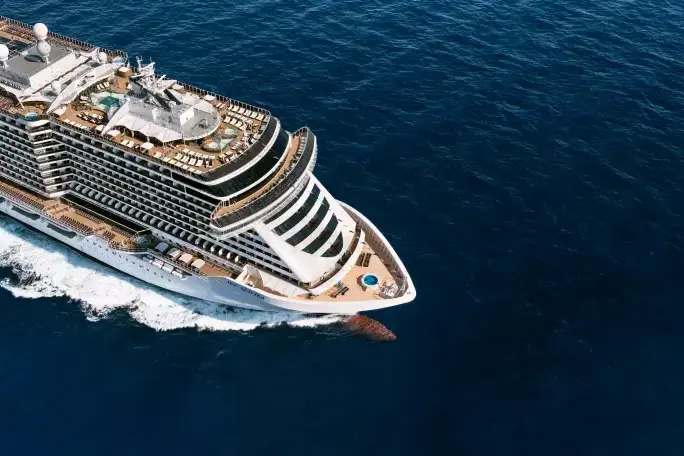
| Ship : MSC Yacht Club Seaview |
| Journey Start : Tue 06 Apr 2027 |
| Journey End : Sun 25 Apr 2027 |
| Count Nights : 19 nights |
| Day | Date | Port | Arrival | Departure |
|---|---|---|---|---|
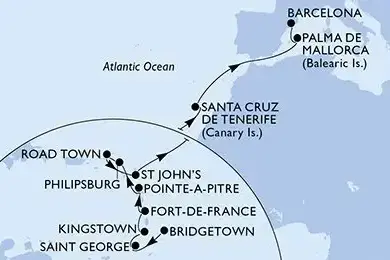
| 1 | 6.04 Tue | Bridgetown / Barbados | 21:00 | |
| 2 | 7.04 Wed | Day at sea / Sea | ||
| 3 | 8.04 Thu | Freetown / Antigua and Barbuda | 08:00 | 19:00 |
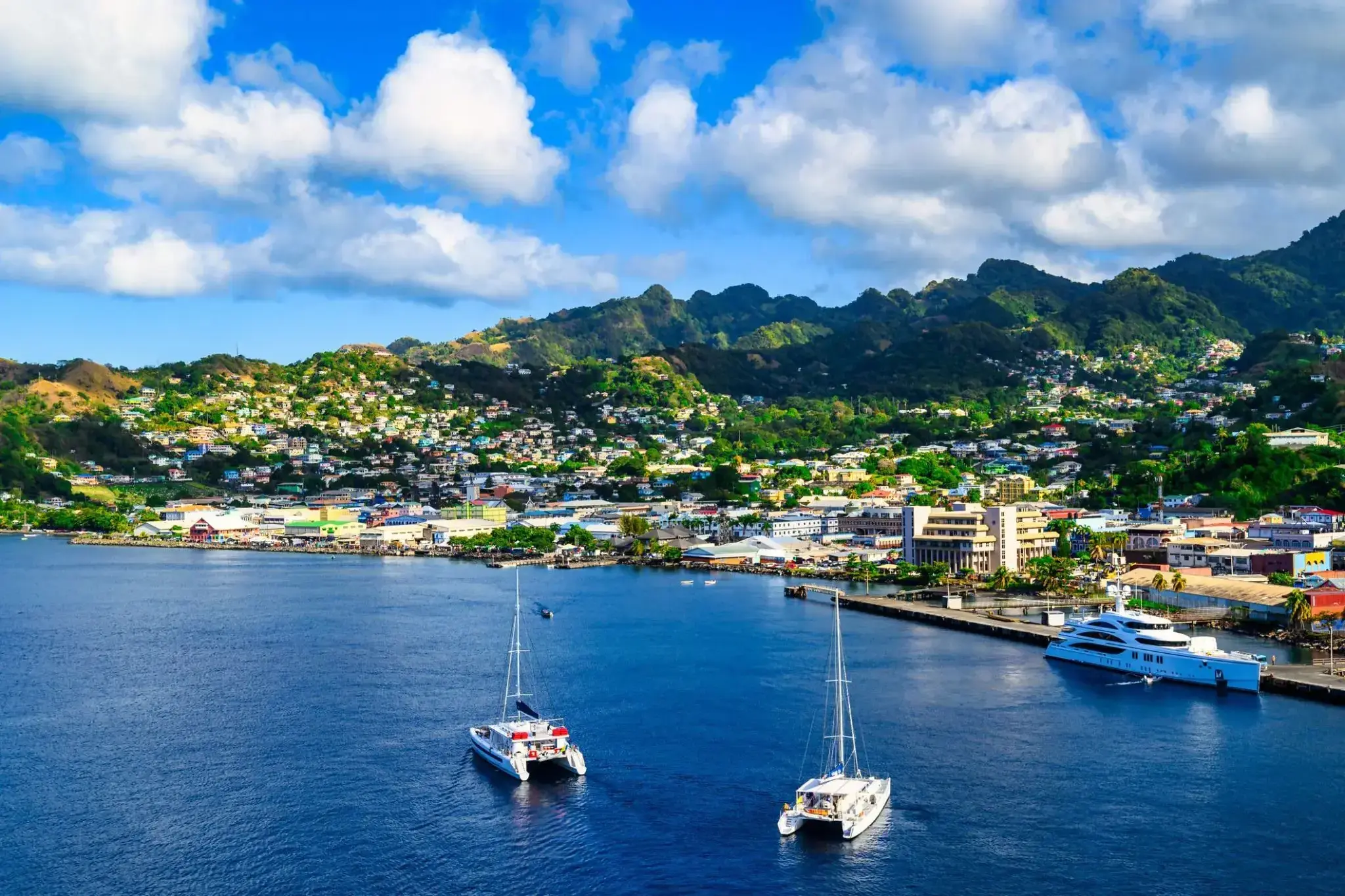
| 4 | 9.04 Fri | Kingstown / Saint Vincent and the Grenadines | 08:00 | 19:00 |
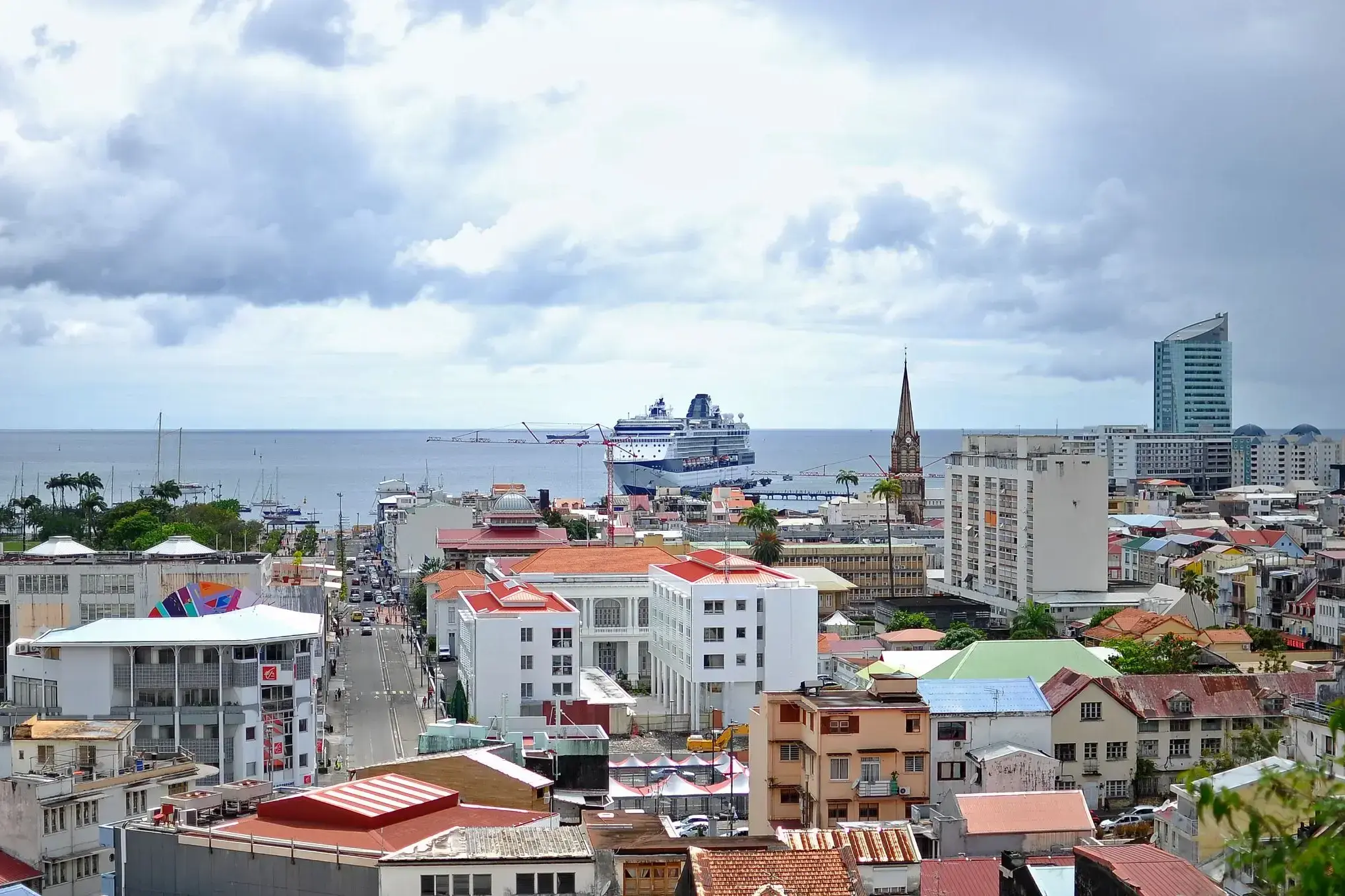
| 5 | 10.04 Sat | Fort-de-France, Martinique (island) / Martinique | 07:00 | 19:00 |
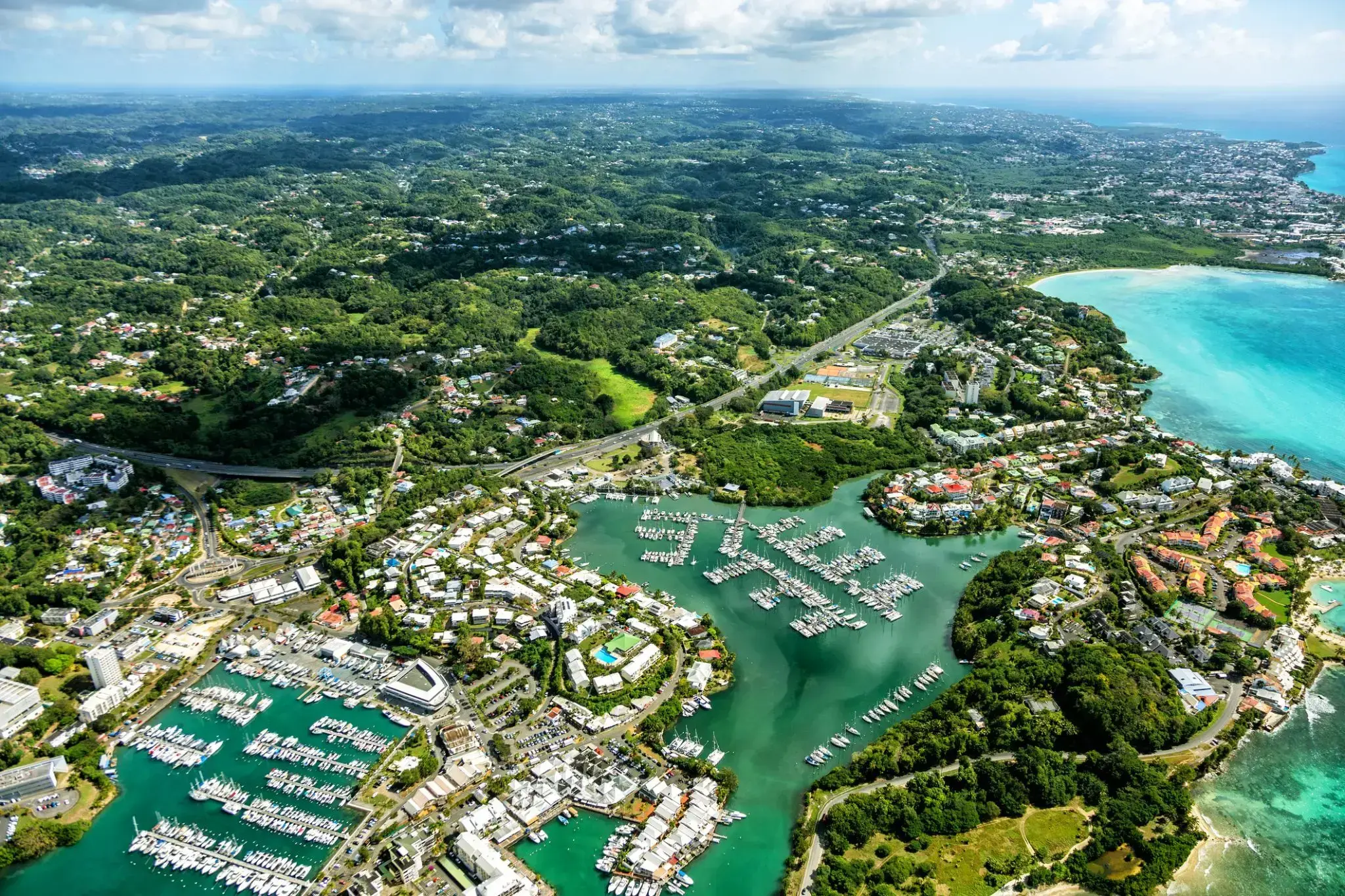
| 6 | 11.04 Sun | Pointe-à-Pitre / Guadeloupe | 07:00 | 19:00 |
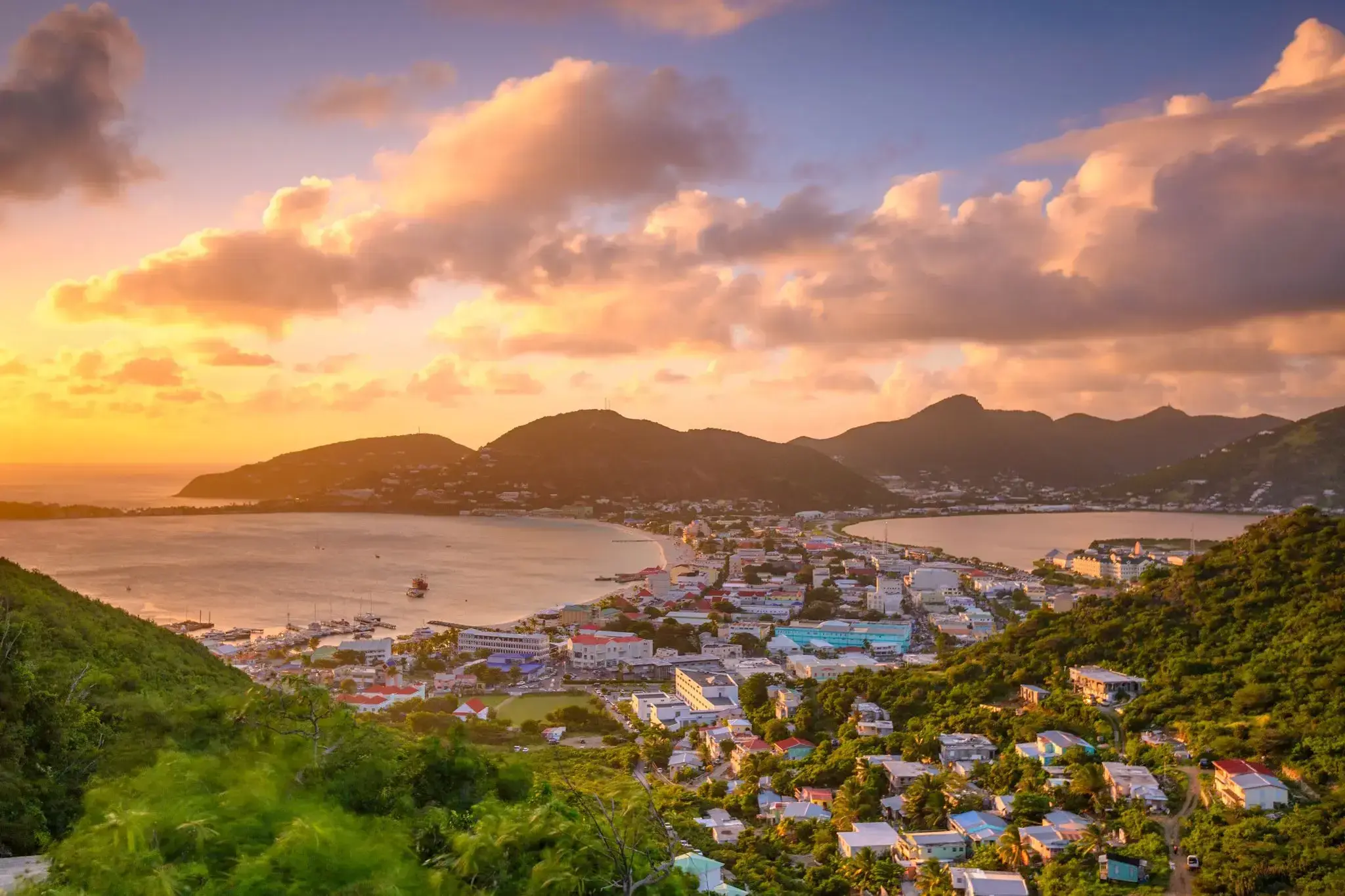
| 7 | 12.04 Mon | Philipsburg / Saint Martin | 09:00 | 19:00 |
| 8 | 13.04 Tue | Road Town, Tortola / Virgin Islands | 08:00 | 18:00 |
| 9 | 14.04 Wed | Saint John / Antigua and Barbuda | 08:00 | 18:00 |
| 10 | 15.04 Thu | Day at sea / Sea | ||
| 11 | 16.04 Fri | Day at sea / Sea | ||
| 12 | 17.04 Sat | Day at sea / Sea | ||
| 13 | 18.04 Sun | Day at sea / Sea | ||
| 14 | 19.04 Mon | Day at sea / Sea | ||
| 15 | 20.04 Tue | Day at sea / Sea | ||
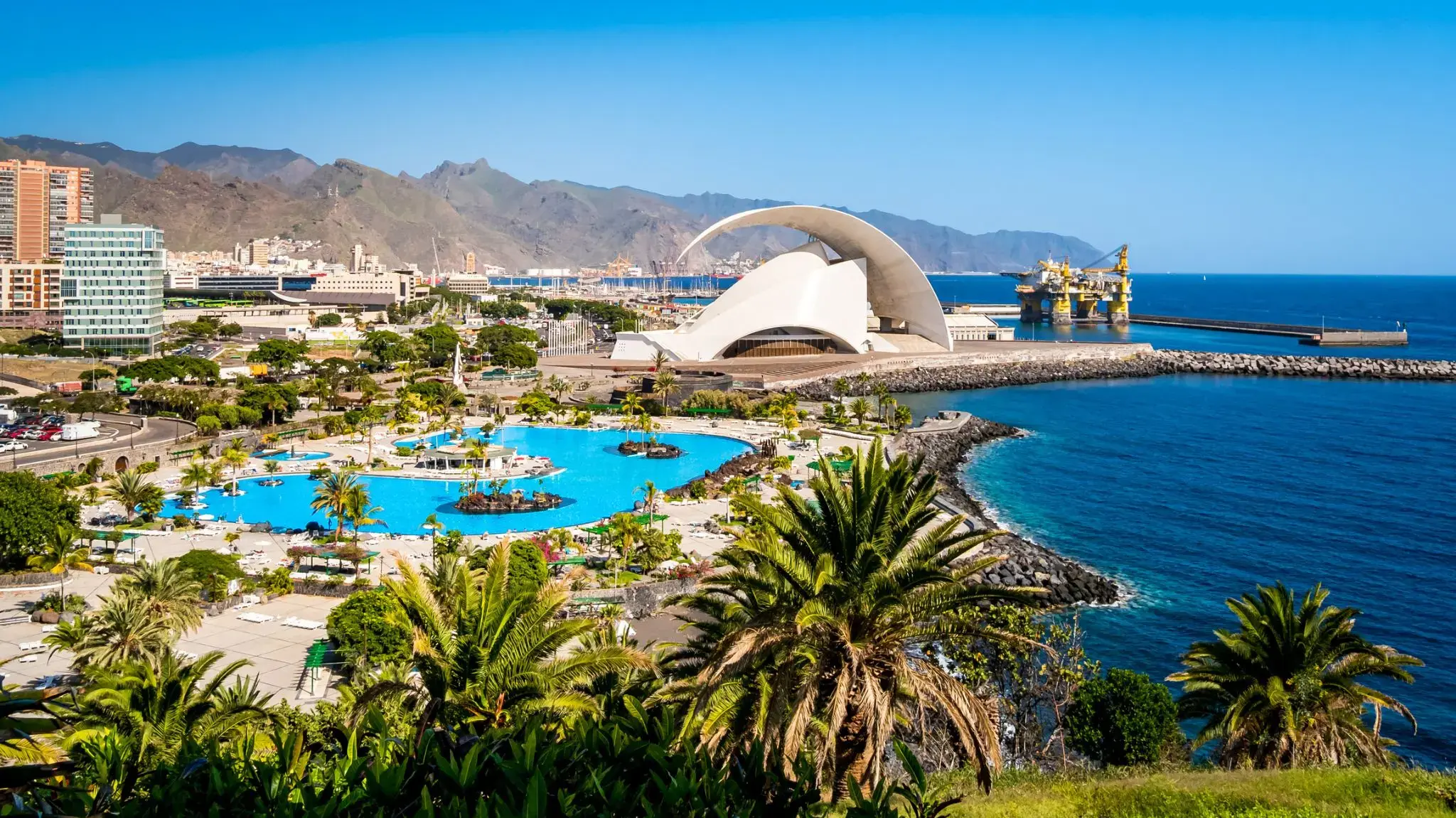
| 16 | 21.04 Wed | Santa Cruz de Tenerife(Canary Islands) / Spain | 07:00 | 16:00 |
| 17 | 22.04 Thu | Day at sea / Sea | ||
| 18 | 23.04 Fri | Day at sea / Sea | ||
| 19 | 24.04 Sat | Palma de Mallorca / Spain | 10:00 | 20:00 |
| 20 | 25.04 Sun | Barcelona / Spain | 07:30 |
MSC Yacht Club – Included Privileges
Privileges
As an MSC Yacht Club guest, you enjoy a wealth of included privileges designed to make every момент круиза максимально комфортным:
Dedicated priority check‑in and check‑out, as well as priority disembarkation and embarkation on excursion days.
24‑hour butler service and a dedicated concierge desk, available whenever you need assistance.
24‑hour Room Service, so you can dine in the privacy of your suite at any time of day or night.
Premium Extra Drink Package included, covering beverages priced up to €14 / $16 in all bars, lounges and restaurants across the ship, from classic cocktails and premium spirits to wines by the glass, beers, soft drinks, coffee and teas.
Browse Internet package (Unlimited Internet Package for 2 devices per guest), allowing you to stay connected throughout your voyage.
Complimentary access to the Thermal Suite in the MSC Aurea Spa for the duration of the cruise, offering saunas, steam rooms and relaxation areas.
Relaxation amenities in each suite, including plush bathrobe and slippers, plus enhanced bathroom amenities.
Additional personal touches, such as luggage packing and unpacking service on request and newspaper delivery to your suite (where available).
MSC for Me wristband, giving convenient, hands‑free access to your suite and onboard purchases.
MSC Yacht Club – Exclusivity on Board
Exclusivity
MSC Yacht Club is a private sanctuary of exclusivity at the top of the ship, reserved solely for its guests:
Dedicated and private area of the ship, accessible only with a Yacht Club key card.
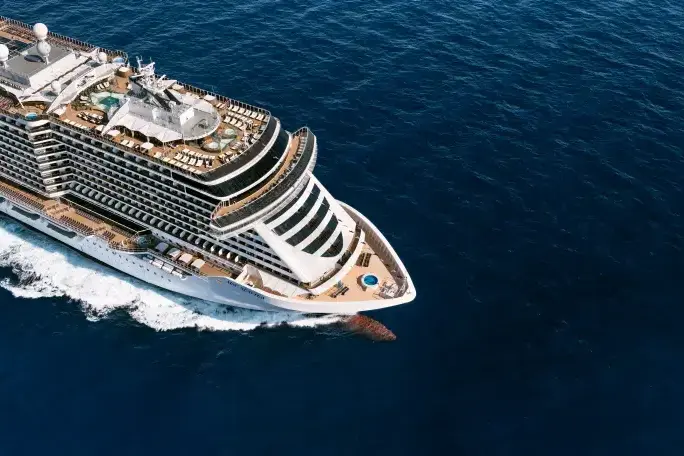
Lavishly appointed suites located on the foredecks, offering outstanding comfort and some of the best views on board.
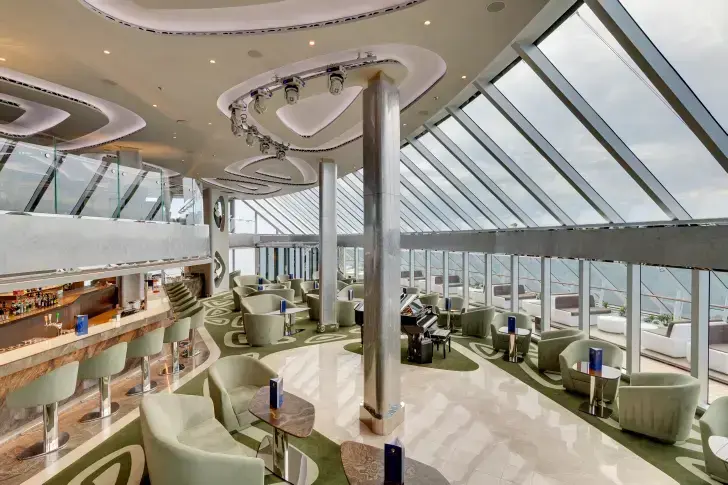
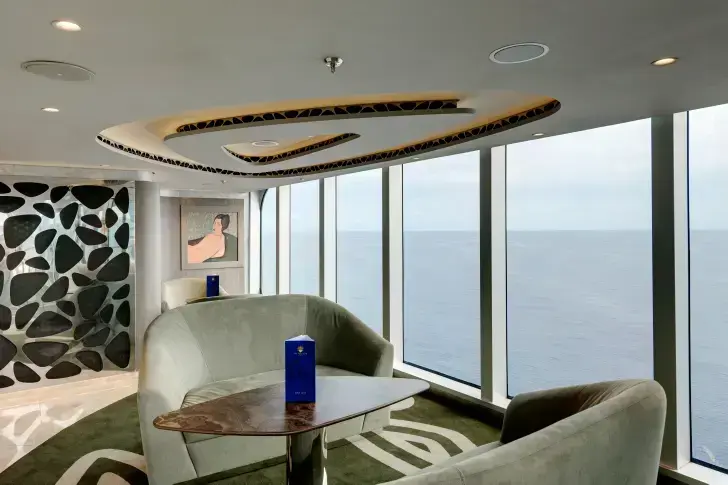
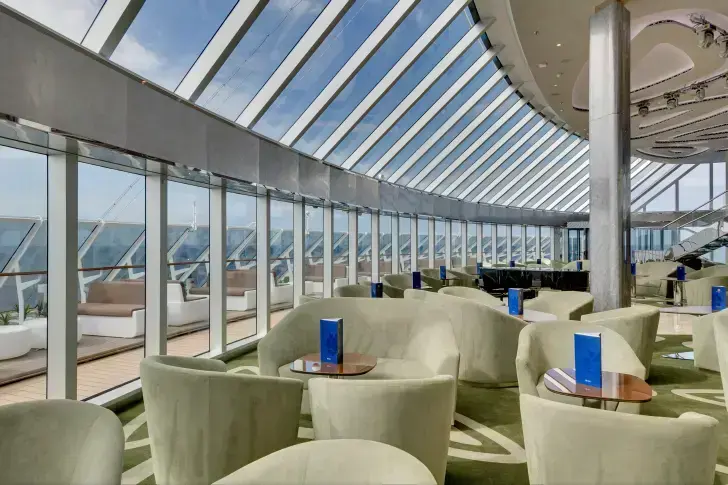
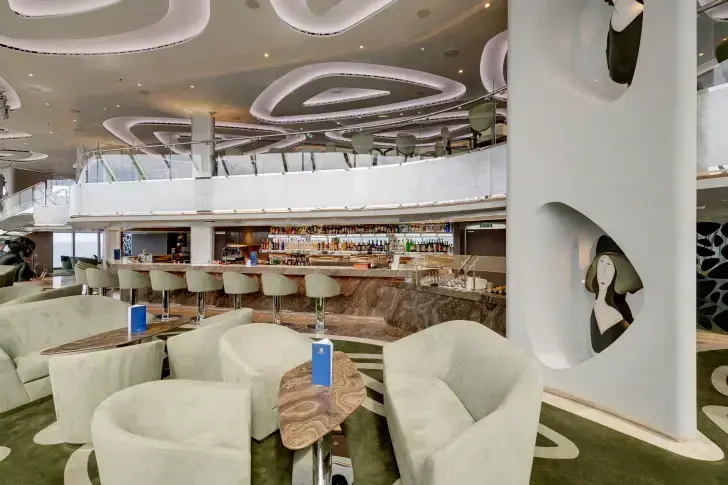
Panoramic Top Sail Lounge with a full‑service bar, afternoon tea service, light bites available throughout the day and night, and live entertainment in the evening.
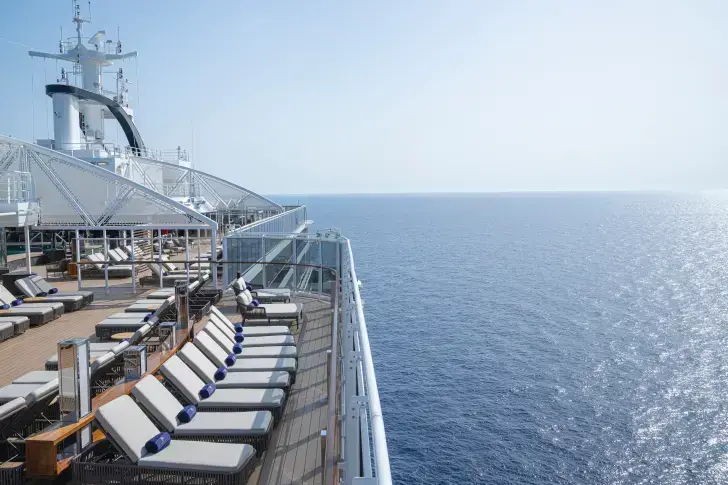
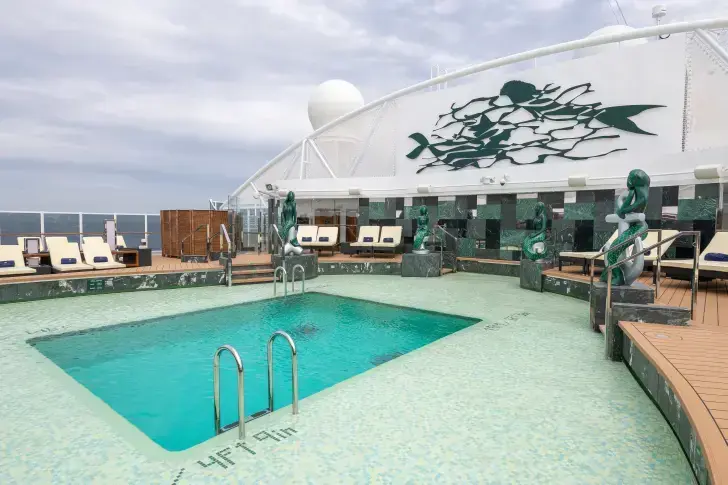
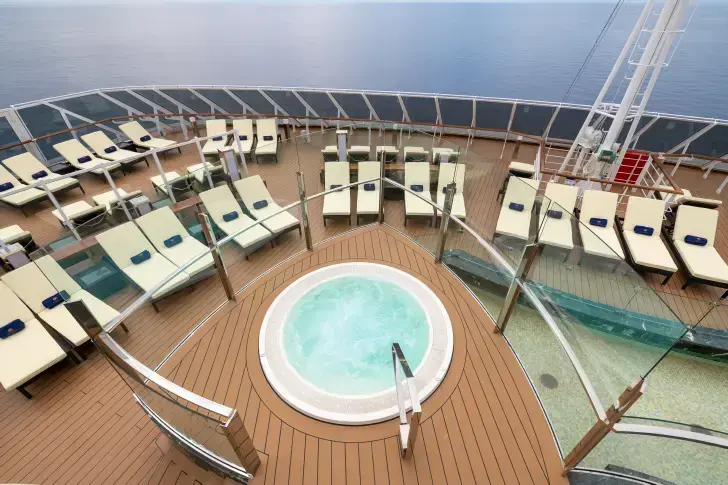
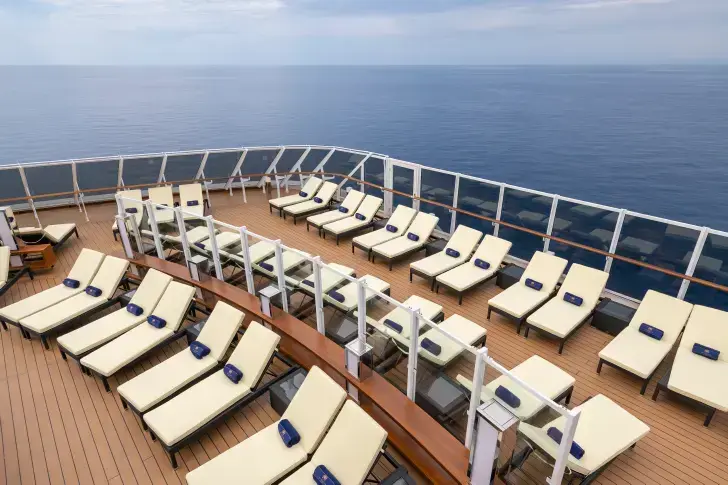
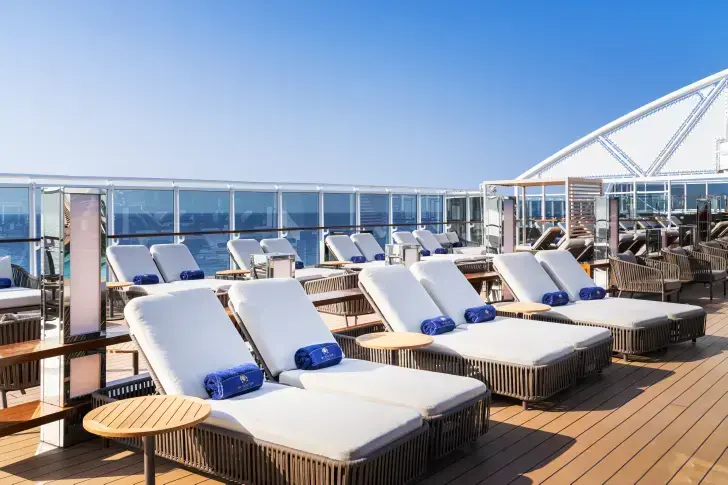
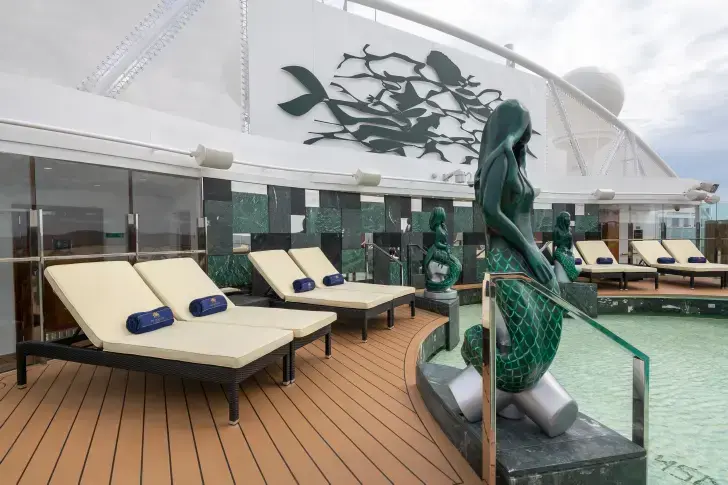
Private and spacious pool deck reserved for Yacht Club guests, featuring pool, whirlpool baths, dedicated sunbathing area and outdoor bar with exceptional sea views.
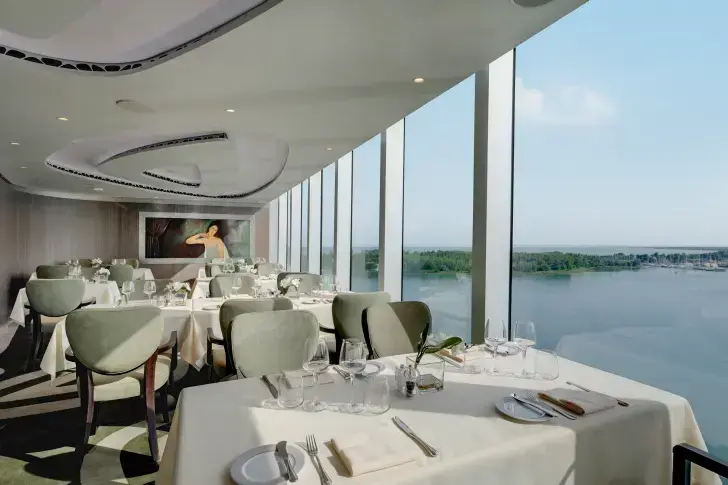
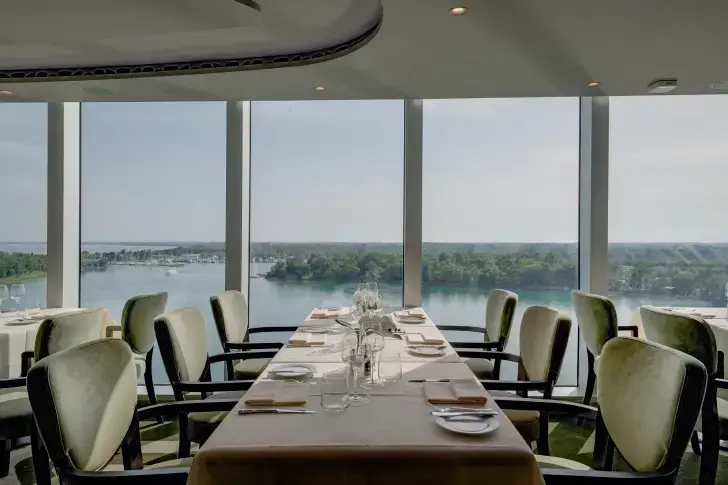
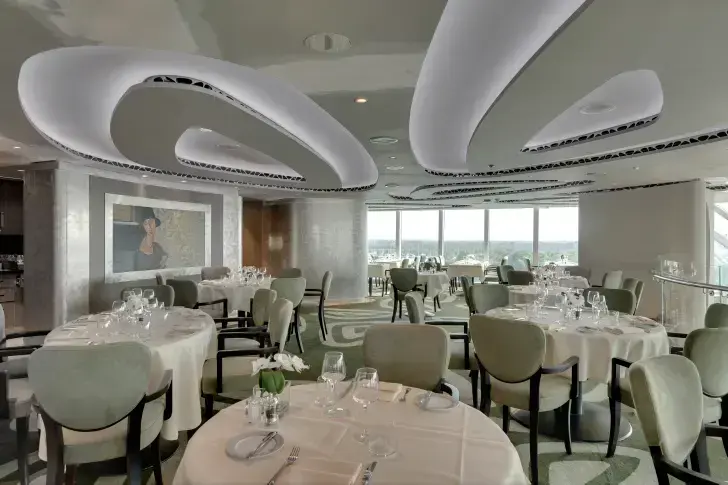
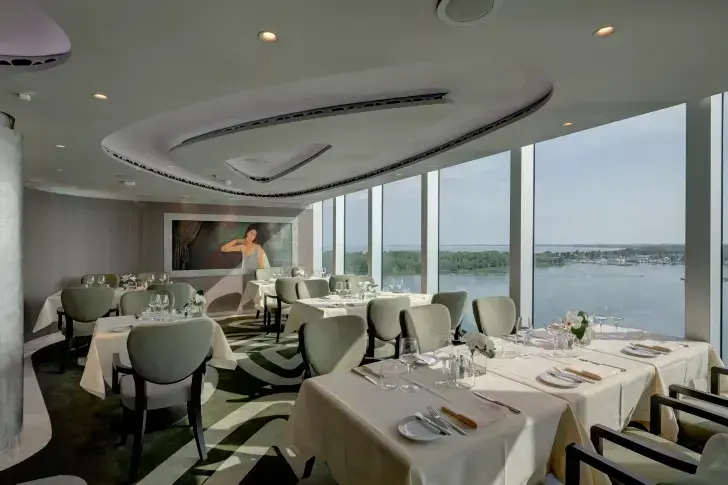
Gourmet restaurant exclusive to MSC Yacht Club, serving à la carte breakfast, lunch and dinner with flexible, open seating and no fixed dining times.
Tailor‑made experiences, from bespoke shopping assistance to curated shore excursions, organized by the Yacht Club concierge and butler team.
MSC Yacht Club – World of Choice
World of Choice
Beyond the private world of MSC Yacht Club, guests enjoy a full range of flexible benefits before and during their cruise:
Pre‑Cruise Benefits
1 free cruise change*, offering extra flexibility if your plans change.
Option to book discounted Specialty Restaurant packages at the time of cruise booking.
Option to pre‑book discounted Balinese massage packages in the MSC Aurea Spa.
The free cruise change must be requested at least 30 calendar days before departure and applied to a new sailing within 90 days of the original departure date.
Onboard Choice
Yacht Club guests also have full access to all facilities and entertainment across the entire ship:
A wide choice of bars and lounges, speciality restaurants, pools and open‑deck areas.
Premium buffet with extended opening hours and a variety of international dishes.
A rich programme of Broadway and Las Vegas‑style theatre shows every evening.
Recreational activities for children of all ages, including dedicated kids’ clubs.
Daytime and evening entertainment for adults, families and children.
A full menu of MSC Aurea Spa treatments, with complimentary access to the Thermal Suite for Yacht Club guests (treatments and spa packages charged separately).
Services Not Included for MSC Yacht Club Guests
Even with the extensive inclusions of MSC Yacht Club, some services remain at an extra charge:
Spa & beauty
All MSC Aurea Spa treatments: massages, body and facial treatments, rituals.
Hair & beauty salon: haircuts, styling, colouring, barber services, manicure and pedicure.
Spa packages and special wellness programs (even if offered at a discount for Yacht Club).
Shore excursions
All shore excursions (group and private), including premium/VIP experiences, boat trips, flightseeing, etc., are chargeable.
Speciality dining & gourmet concepts
Speciality restaurants such as steakhouses, sushi bars and other à la carte venues.
Tasting menus, wine and champagne pairing dinners, chef’s table experiences.
Certain high‑end items (fine wines/champagnes by the bottle, rare spirits, signature chocolates).
Bars, cafés & sweets
Purchases in chocolate bars, gelato counters, pastry shops, and some branded coffee specialties.
Internet upgrades & communication
Upgrade from Browse to Streaming Wi‑Fi (for video calls/streaming) is at an extra cost per device.
Satellite phone calls and some premium communication services.
Photo & video services
Professional photo packages, studio sessions, printed photos and photo books.
Video services and special event packages (weddings, celebrations).
Onboard entertainment & activities
Selected premium activities such as F1 simulators, VR games, bowling and similar attractions (varies by ship).
Paid workshops, games with prizes and some special themed events.
Shopping & onboard purchases
All purchases in duty free and onboard boutiques (fashion, jewellery, watches, perfume, cosmetics, souvenirs).
Laundry & housekeeping extras
Laundry and dry‑cleaning services, pressing and express options.
Service charges & gratuities
Hotel Service Charge / Gratuities (per person, per night) are usually not included in the cruise fare unless specified for a particular market.
Service charges (around 15%) are typically added to bar, restaurant and spa bills.
Passenger name change
The passenger may replace himself/herself with a third party, provided that:
The new guest meets all conditions to join the cruise (travel documents, visas, age, etc.).
A written request (via the sales agent or directly to MSC) is received by MSC no later than 7 calendar days before departure.
If these conditions are met, the name change is subject to an administration fee per guest:
YACHT CLUB – EUR 50 per passenger.
Name change requests made within 7 calendar days of departure are treated as a cancellation and subject to standard cancellation charges.
The original passenger and the new assignee are jointly liable for payment of the cruise fare and any additional costs arising from the change.
One free cruise change (Yacht Club)
In addition to the name change rules, MSC allows guests (except on World Cruise) to change their booked Holiday Package once, under the following conditions:
The departure date of the new cruise is later than the original one.
The request to substitute the New Holiday Package for the Original Holiday Package is received by MSC no later than 30 calendar days before the original departure date.
There is availability on the new cruise.
The departure date of the new cruise falls within 90 calendar days of the original departure date.
If all conditions are met, the change is subject to the following fee per passenger:
YACHT CLUB – one change free of charge; from the second change onward a fee (typically EUR 50 pp) applies.
You can formulate for the website as, for example:
1 free cruise change when requested at least 30 days before departure and when the new cruise departs within 90 days of the original sailing (subject to availability).
Cancellation by the passenger – MSC Yacht Club
For MSC Yacht Club, a specific cancellation scale applies (for all cruises, excluding World Cruise):
YACHT CLUB – Cancellation charges
120 days or more before departure – fixed fee EUR 100 (or loss of deposit, whichever is greater).
119–90 days before departure – 25% of the holiday package price.
89–60 days before departure – 40% of the holiday package price.
59–30 days before departure – 60% of the holiday package price.
29–15 days before departure – 80% of the holiday package price.
14–0 days before departure – 100% of the holiday package price.
If, after a cancellation, the cabin remains occupied by a single guest, then:
The withdrawing passenger is charged according to the scale above (but not less than EUR 100 plus any insurance premium).
The remaining passenger occupying the cabin for single use will be charged a single supplement of 100% (or a lower single supplement if in force at that time).
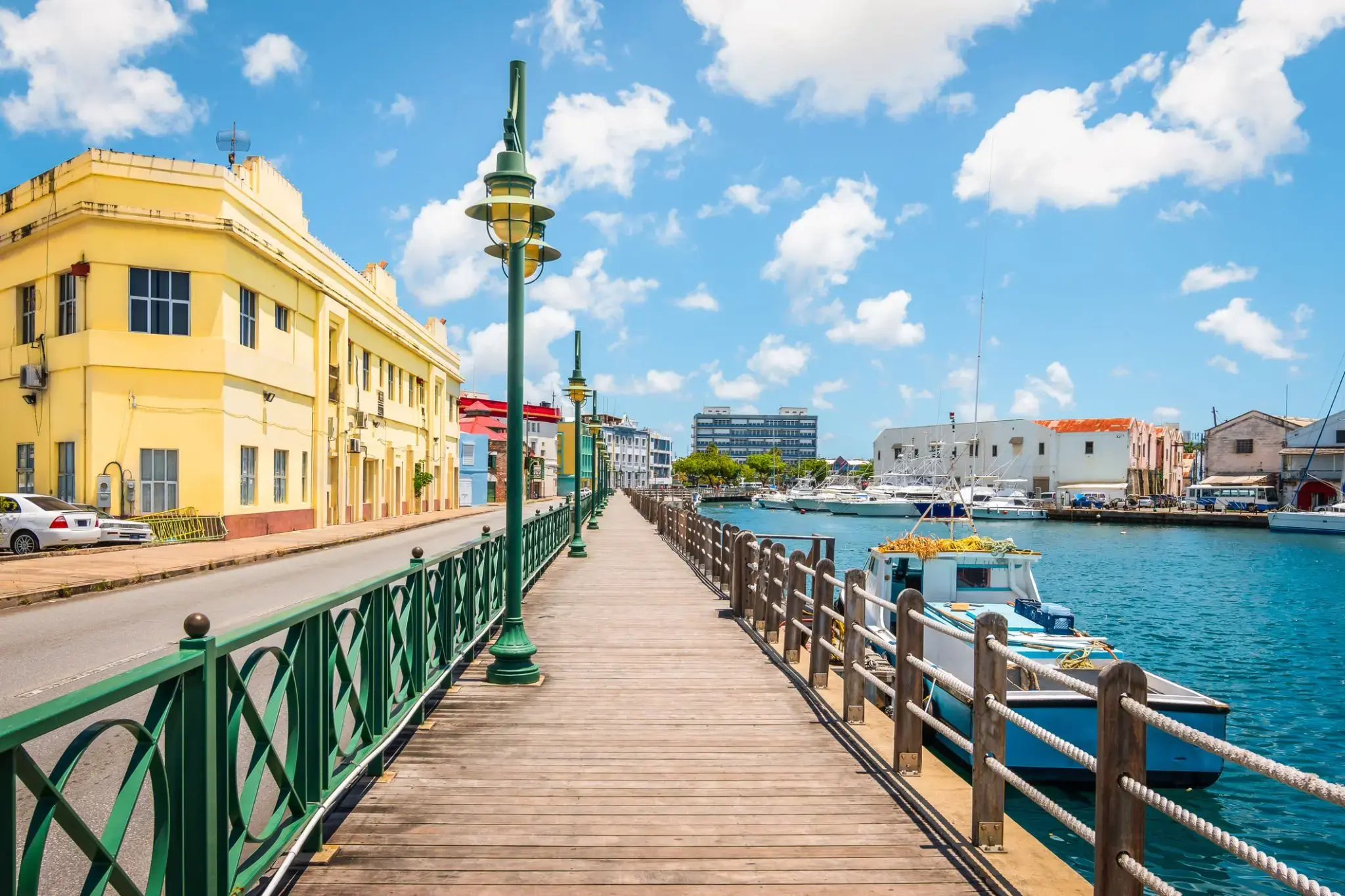
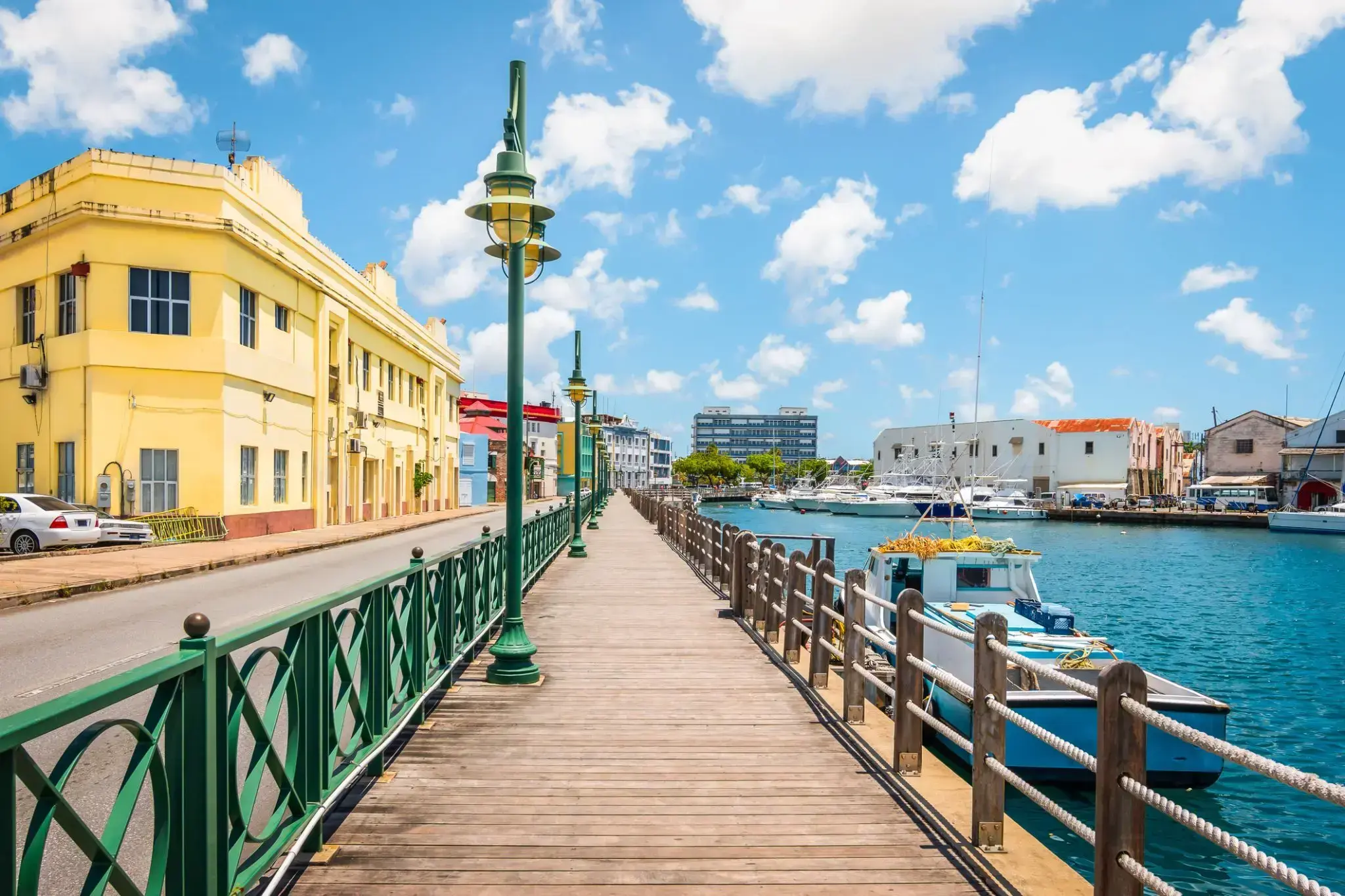
Bridgetown is the capital and largest city of Barbados. Formerly The Town of Saint Michael, the Greater Bridgetown area is located within the parish of Saint Michael. Bridgetown is sometimes locally referred to as "The City", but the most common reference is simply "Town". As of 2014, its metropolitan population stands at roughly 110,000.
The Bridgetown port, found along Carlisle Bay (at 13.106°N 59.632°W) lies on the southwestern coast of the island. Parts of the Greater Bridgetown area (as roughly defined by the Ring Road Bypass or more commonly known as the ABC Highway), sit close to the borders of the neighbouring parishes Christ Church and St. James. The Grantley Adams International Airport for Barbados, is located 16 kilometres (10 mi) southeast of Bridgetown city centre, and has daily flights to major cities in the United Kingdom, United States, Canada and the Caribbean. There is no longer a local municipal government, but it is a constituency of the national Parliament. During the short-lived 1950s-1960s Federation of the British West Indian Territories, Bridgetown was one of three capital cities within the region being considered to be the Federal capital of region.
The present-day location of the city was established by English settlers in 1628; a previous settlement under the authority of Sir William Courten was at St. James Town. Bridgetown is a major West Indies tourist destination, and the city acts as an important financial, informatics, convention centre, and cruise ship port of call in the Caribbean region. On 25 June 2011, "Historic Bridgetown and its Garrison" was added as a World Heritage Site of UNESCO.

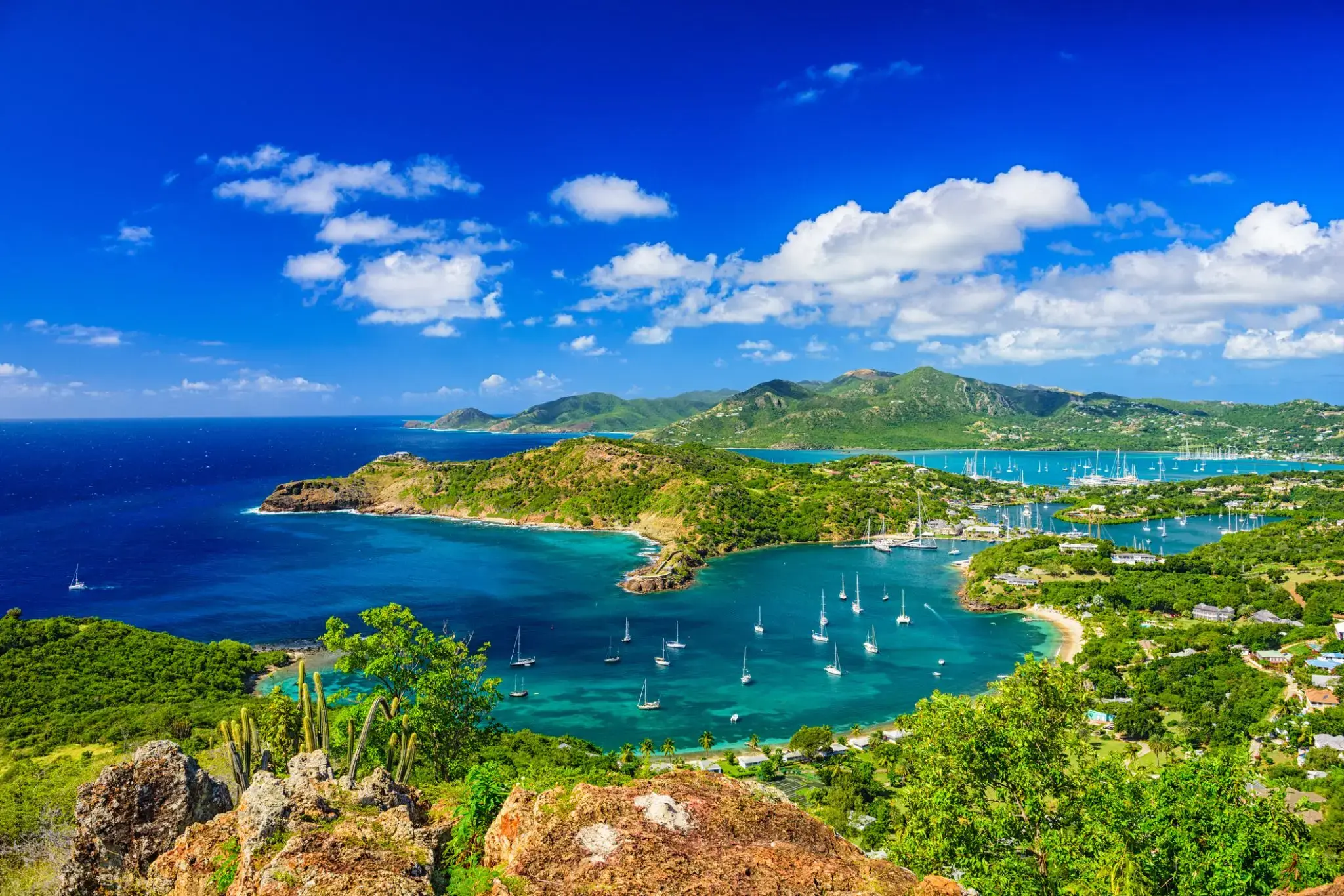
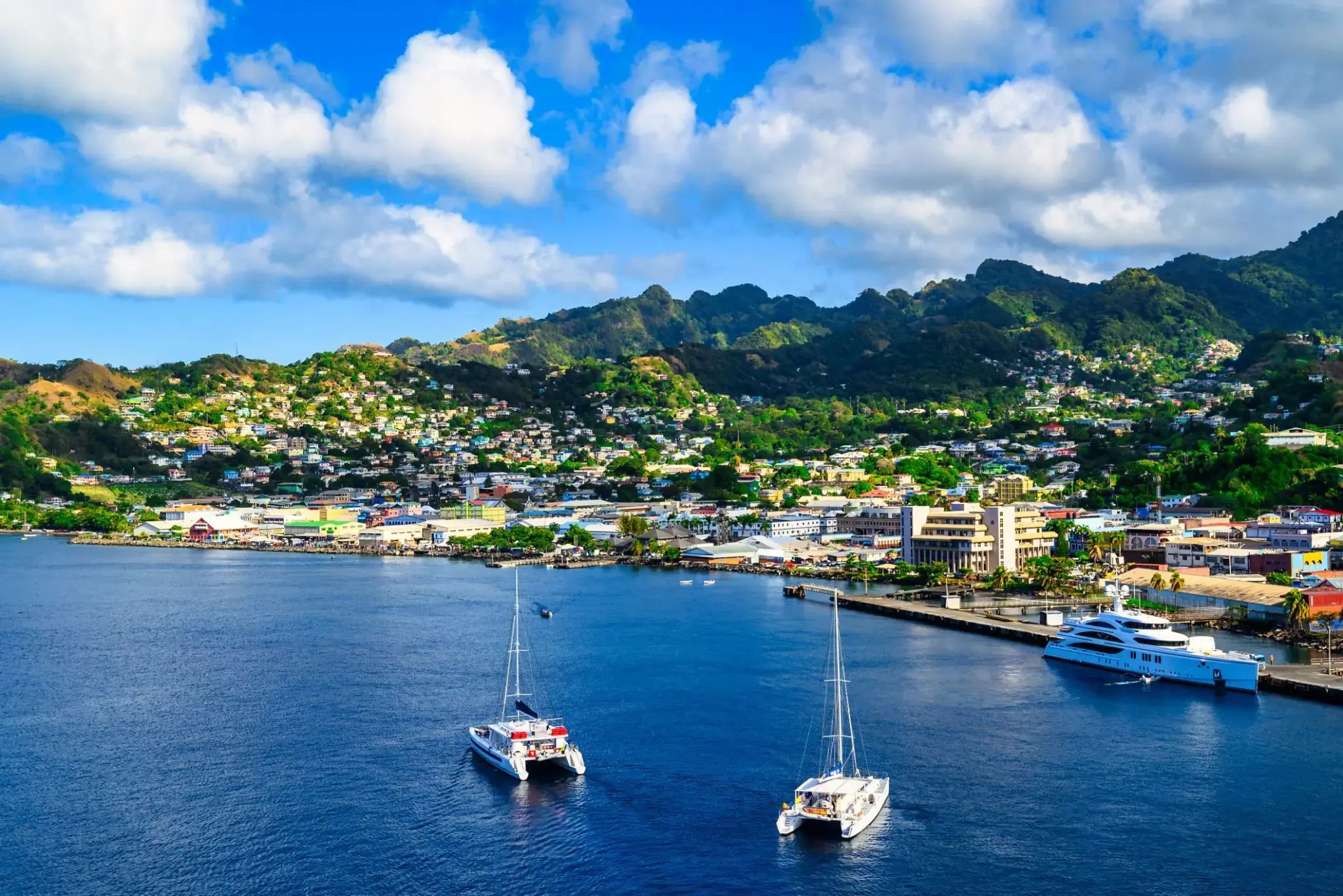
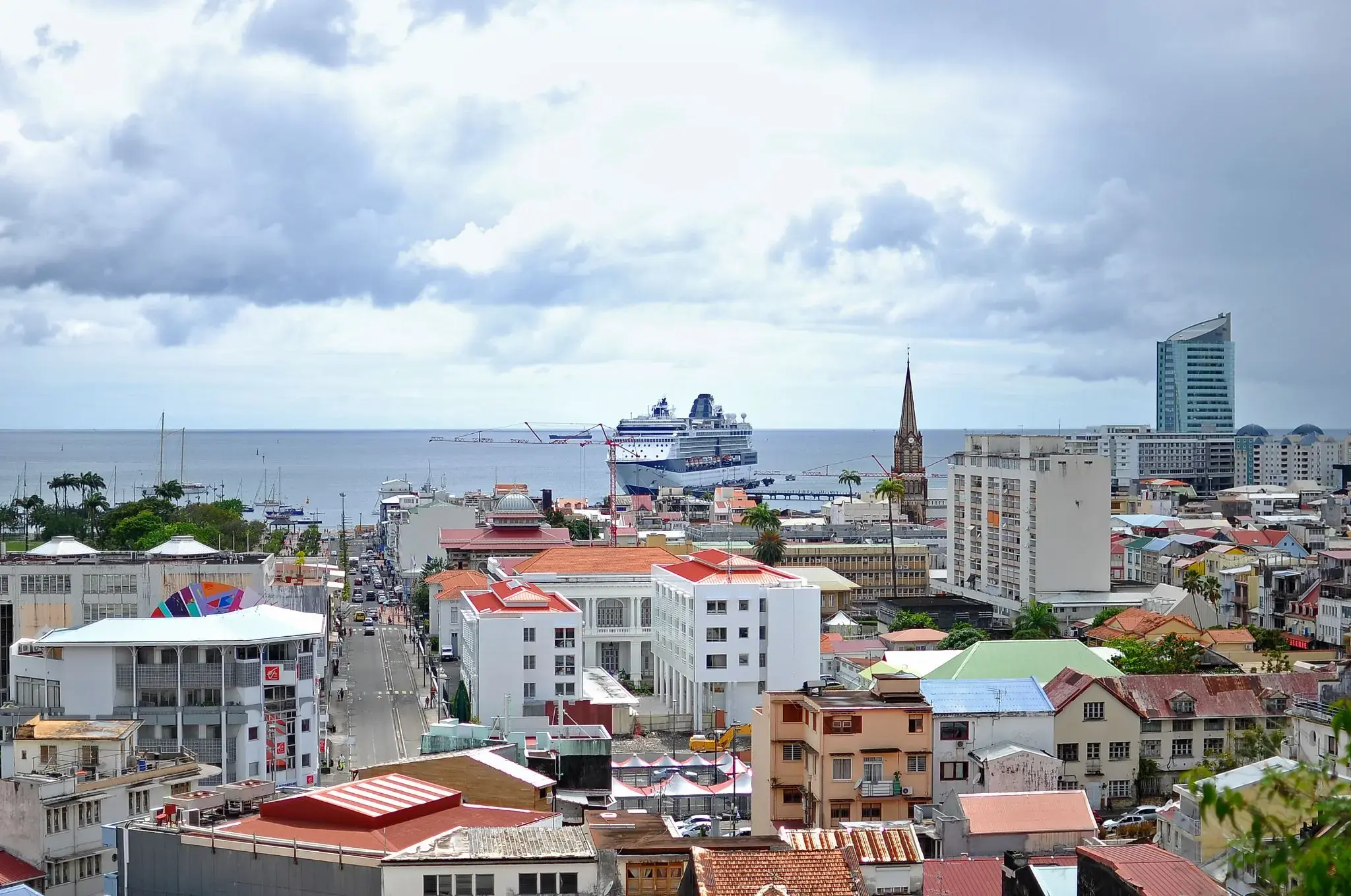
Fort-de-France – The Heart of Martinique
Fort-de-France is the capital of the island of Martinique, located in the southwest of the island. This picturesque port city blends French elegance with Caribbean exoticism. Strolling through its streets, visitors can enjoy the old architecture, the atmosphere of local markets, and stunning views of the bay. The main architectural landmark is the Fort-de-France Citadel, from which a panoramic view of the city and island can be admired.
For visitors, Fort-de-France offers a rich cultural experience: visiting museums, including the Martinique Museum, exploring local cuisine and traditions. The island's nature is captivating: white beaches, palm trees, tropical forests, and volcanic mountains — all of which make Fort-de-France an ideal destination for relaxation and discovering the unique Caribbean culture.
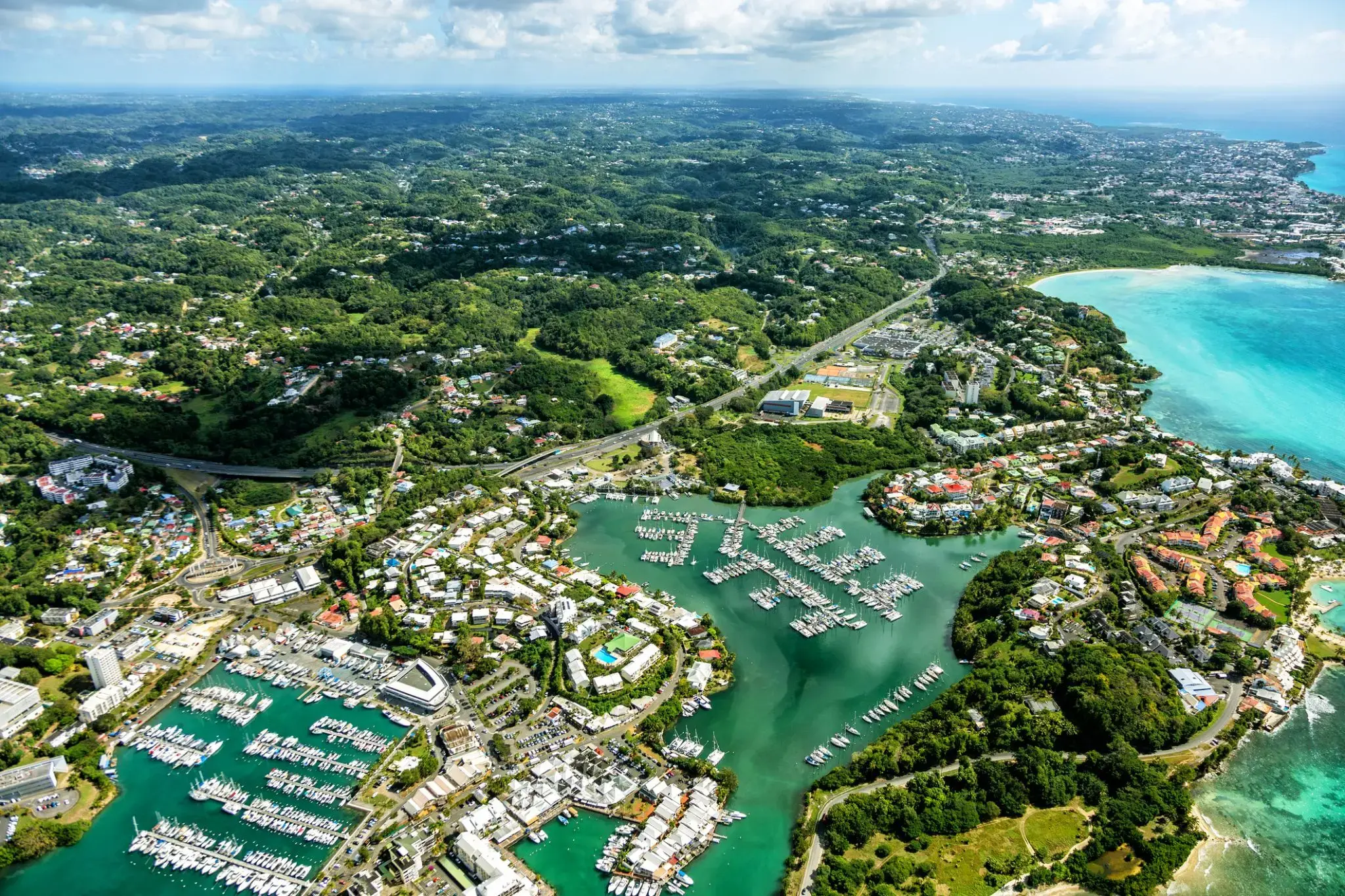
Pointe-a-Pitre is the largest city and economic center of Guadeloupe, located on the island of Grande-Terre in the Caribbean Sea. Founded in the 18th century, the city retains elements of colonial architecture and serves as an important regional port. Its lively markets, such as the Saint-Antoine market, invite travelers to experience local life, sample spices, tropical fruits, and handmade crafts. The historic city center, with its narrow streets and Creole-style buildings, reflects a rich blend of French and Caribbean traditions.
Pointe-à-Pitre is also a starting point for exploring Guadeloupe's natural wonders. Nearby are the famous Guadeloupe National Park and the La Soufrière volcano, popular with outdoor enthusiasts. Those interested in history can visit the Memorial ACTe, a museum dedicated to the history of slavery. With its mix of cultural heritage, vibrant atmosphere, and convenient location, Pointe-à-Pitre remains an attractive destination for travelers seeking authentic Caribbean experiences.
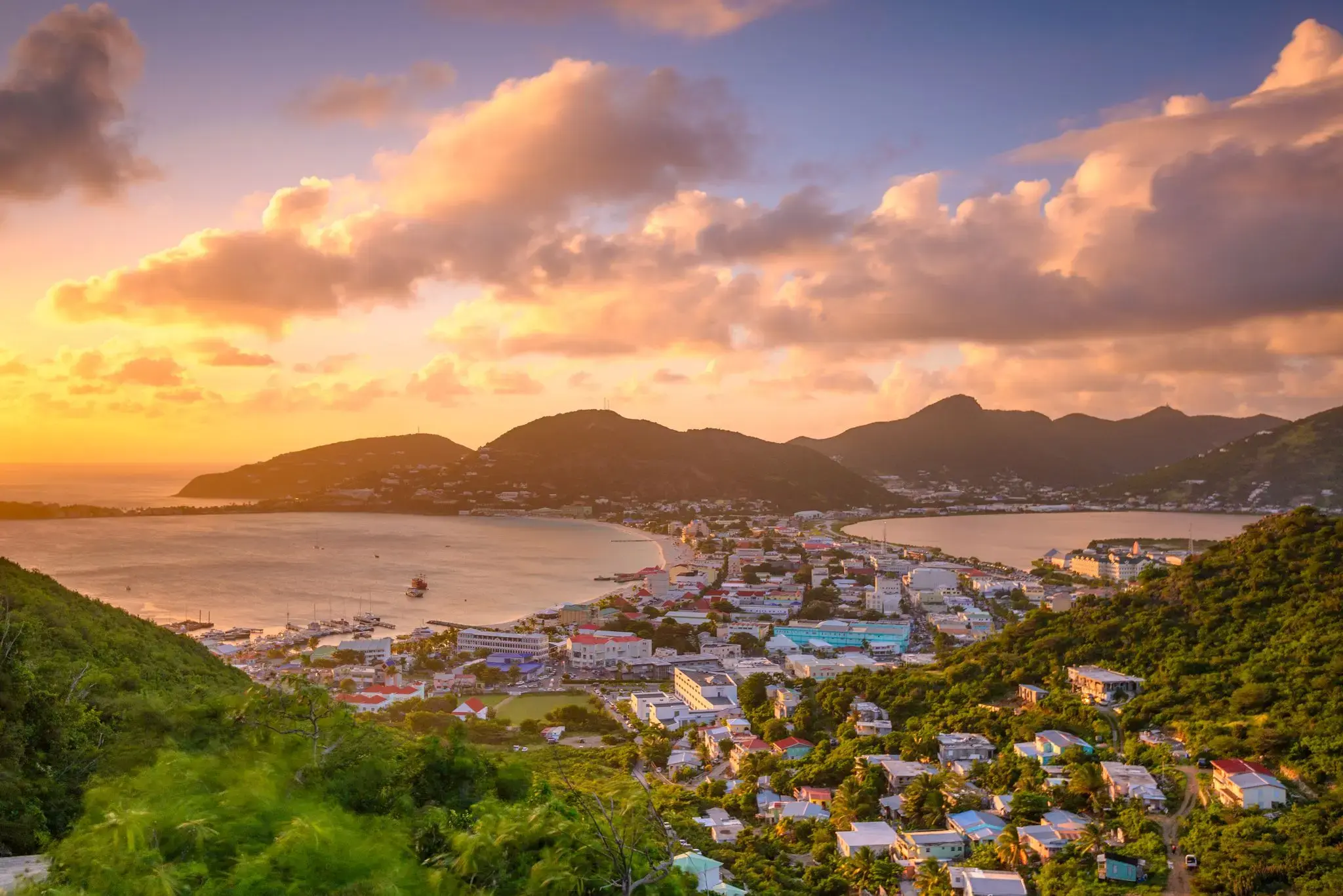
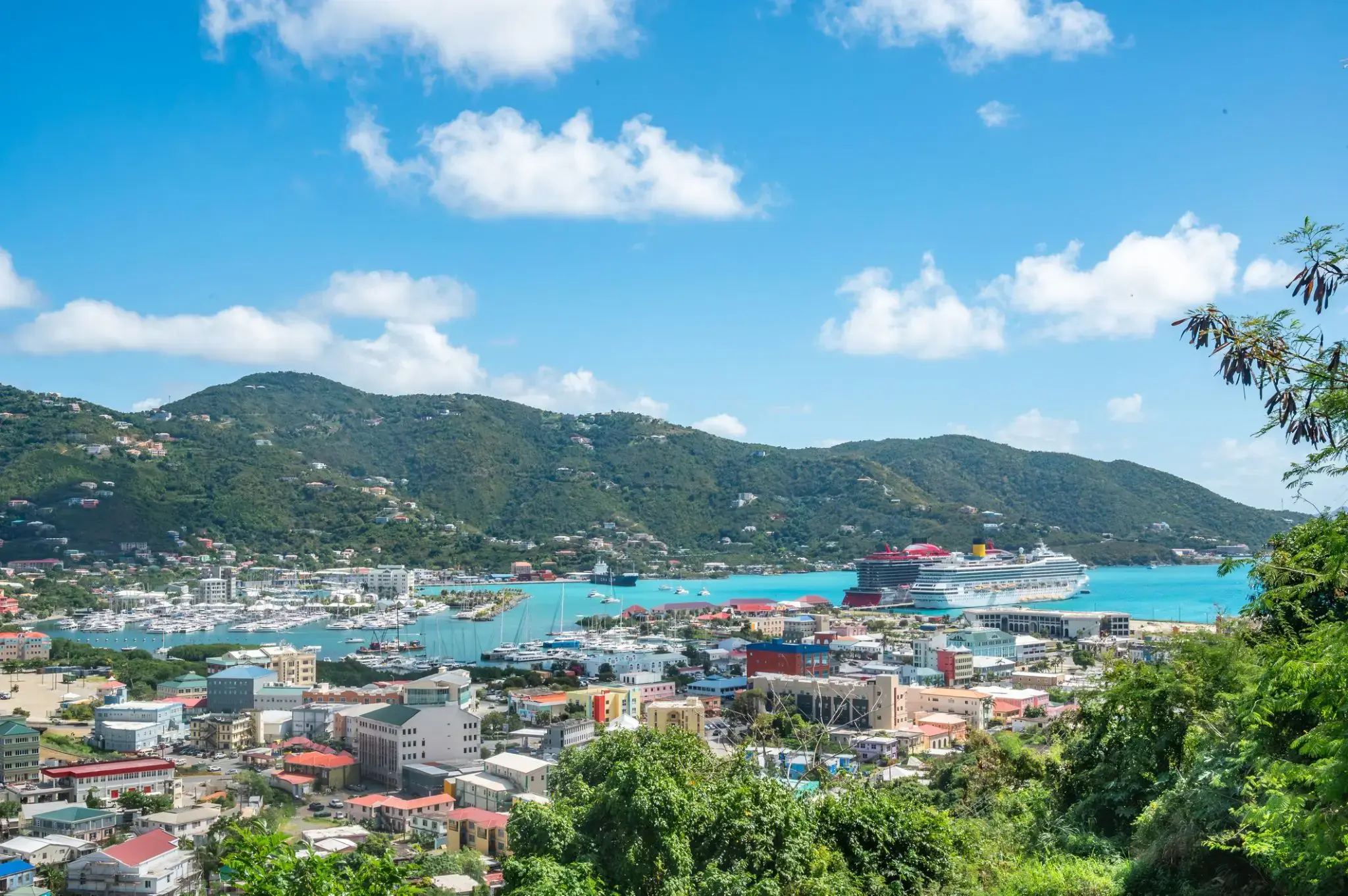
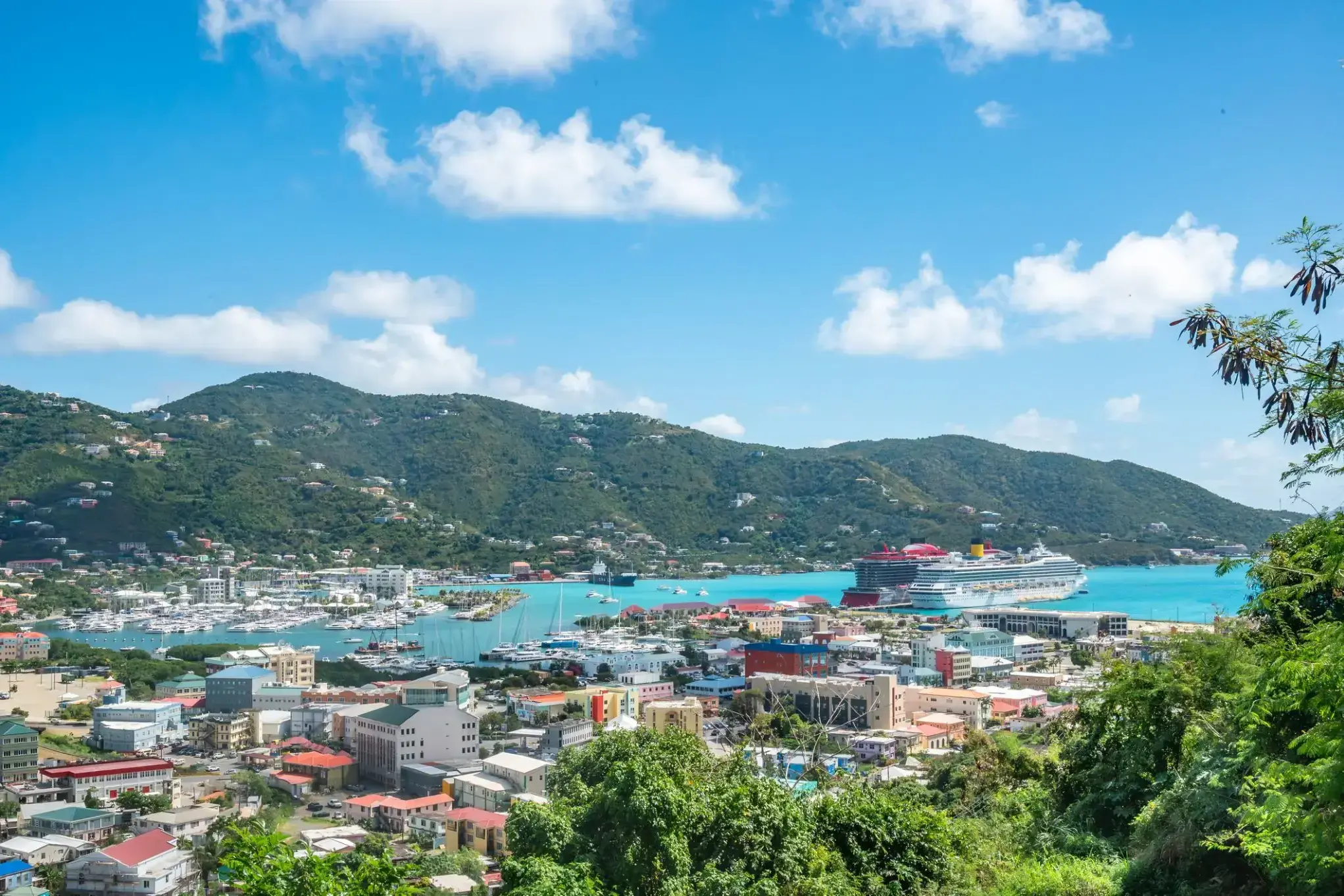
In the heart of the Caribbean, on the island of Tortola, lies one of the most lively and interesting ports — Road Town. This city is not only the capital of the British Virgin Islands but also an important point for sailors and tourists traveling around the Caribbean. Here, you can enjoy the atmosphere of a vibrant tropical city, stroll along picturesque streets with colonial architecture, and discover local markets with exotic goods and souvenirs. Road Town is the perfect place to experience the culture and traditions of the archipelago while enjoying stunning views of the ocean and neighboring islands.
The city is also renowned for its proximity to incredible natural beauty, such as coral reefs and untouched beaches. Travelers can embark on tours, including boat rides, snorkeling, or diving, to explore the underwater world, as well as visit historical landmarks and nature reserves. For adventure lovers, Road Town offers the perfect blend of active leisure and relaxation amidst breathtaking landscapes.
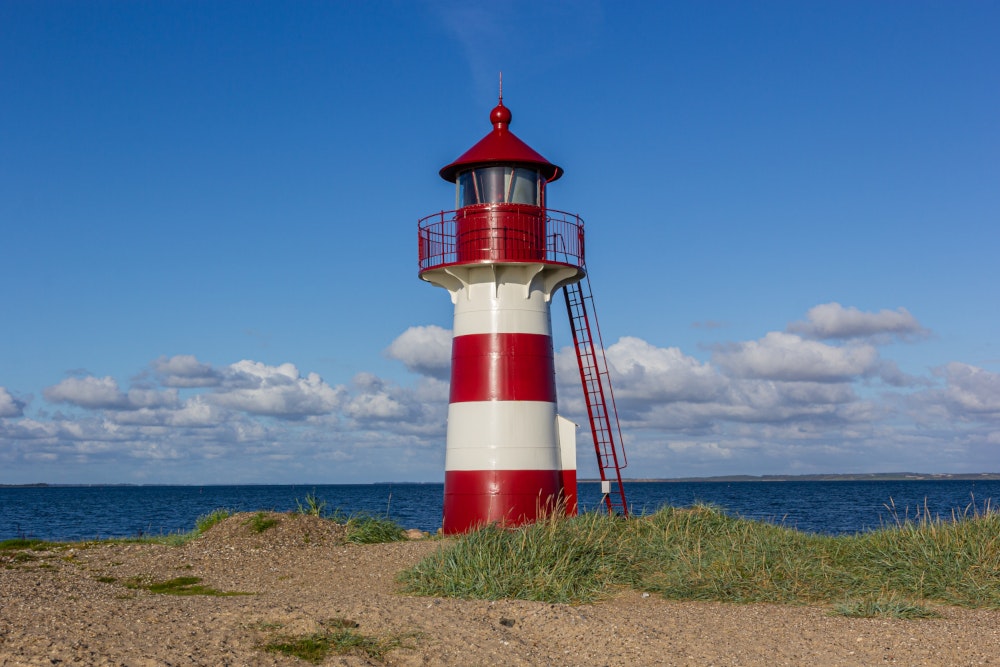
A hidden paradise among the turquoise waves of the Caribbean Sea — that’s how one could describe St. John. This picturesque island, part of the U.S. Virgin Islands, is considered one of the least urbanized in the region. Most of its territory is protected by the Virgin Islands National Park, preserving the natural beauty of tropical forests, coral reefs, and white-sand beaches.
St. John attracts those seeking peace, untouched nature, and the chance to explore a vibrant underwater world. You can snorkel at Trunk Bay, visit the ruins of old sugar plantations, or hike through lush green hills. The absence of large resorts only enhances the feeling of truly escaping civilization — that’s why this island is so cherished by travelers looking for authentic experiences.
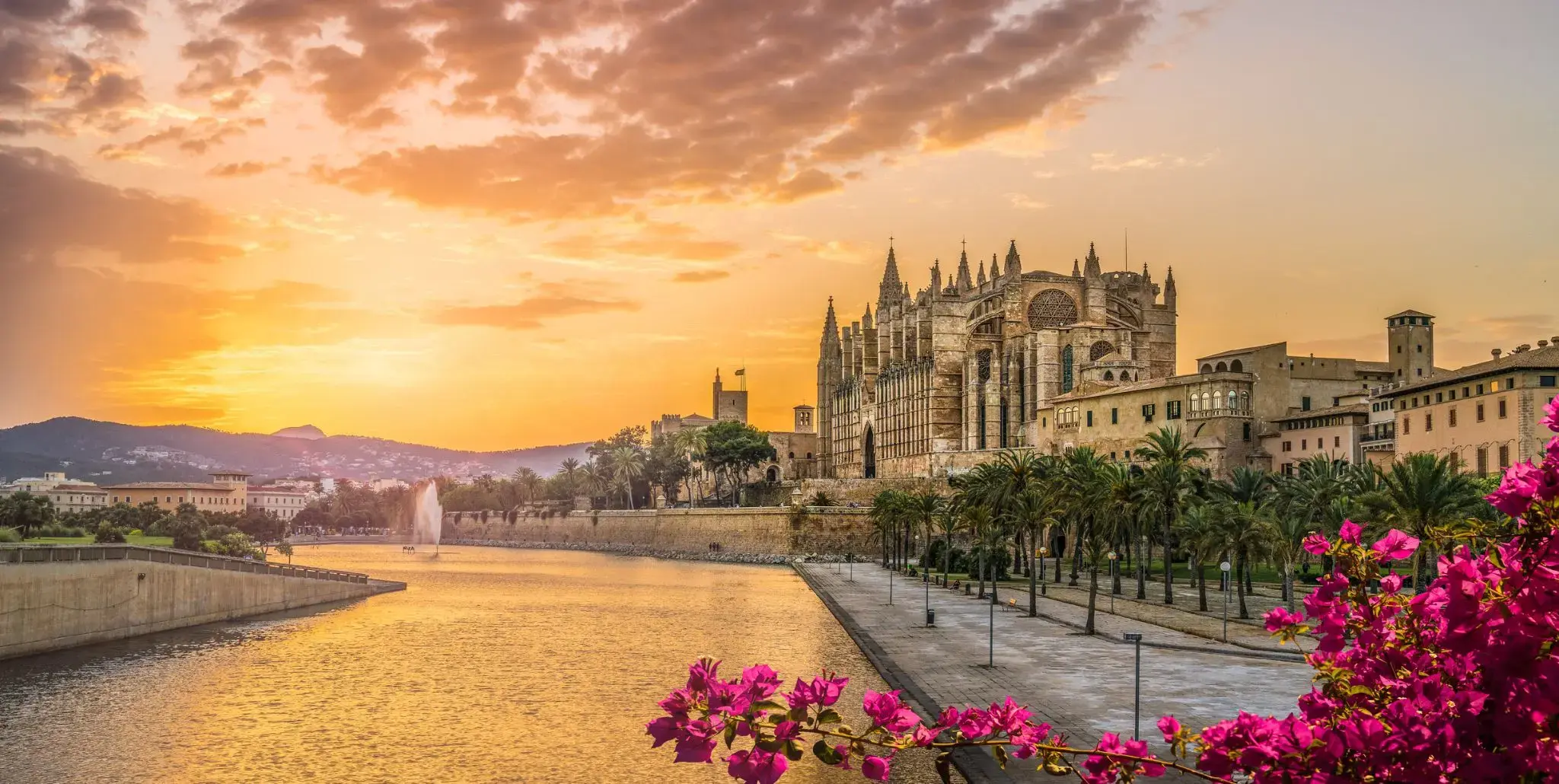
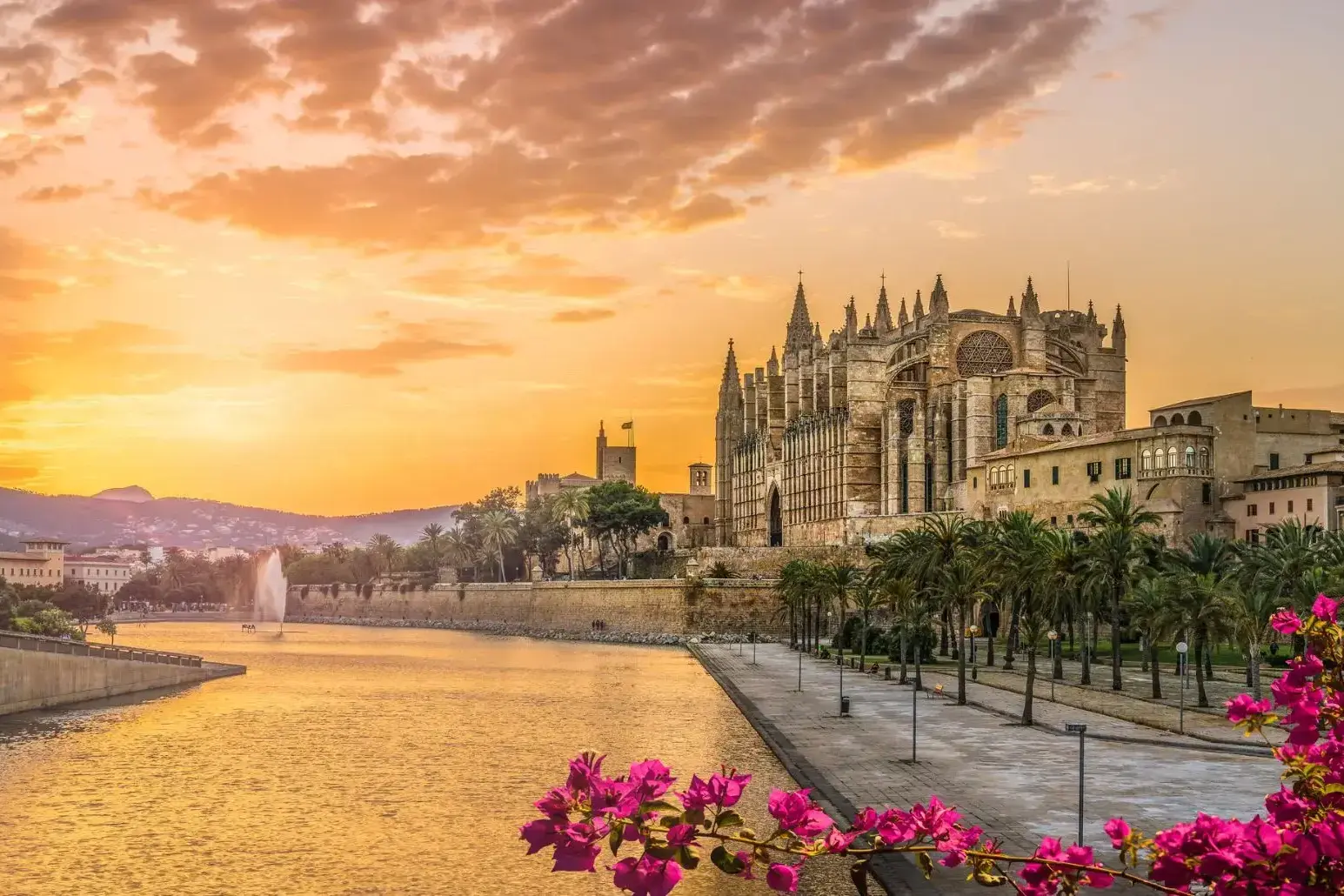
Mallorca is the largest island in the Balearic Islands, which are part of Spain and located in the Mediterranean. The native language, as on the rest of the Balearic Islands, is Catalan, which is co-official with Spanish.
The capital of the island, Palma, is also the capital of the autonomous community of the Balearic Islands. The Balearic Islands have been an autonomous region of Spain since 1983. There are two small islands off the coast of Mallorca: Cabrera (southeast of Palma) and Dragonera (west of Palma). The anthem of Mallorca is "La Balanguera".
Like the other Balearic Islands of Menorca, Ibiza and Formentera, the island is an extremely popular holiday destination, particularly for tourists from Germany and the United Kingdom. The international airport, Palma de Mallorca Airport, is one of the busiest in Spain; it was used by 28.0 million passengers in 2017, increasing every year since 2012.
The name derives from Classical Latin insula maior, "larger island". Later, in Medieval Latin, this became Maiorica, "the larger one", in comparison to Menorca, "the smaller one".
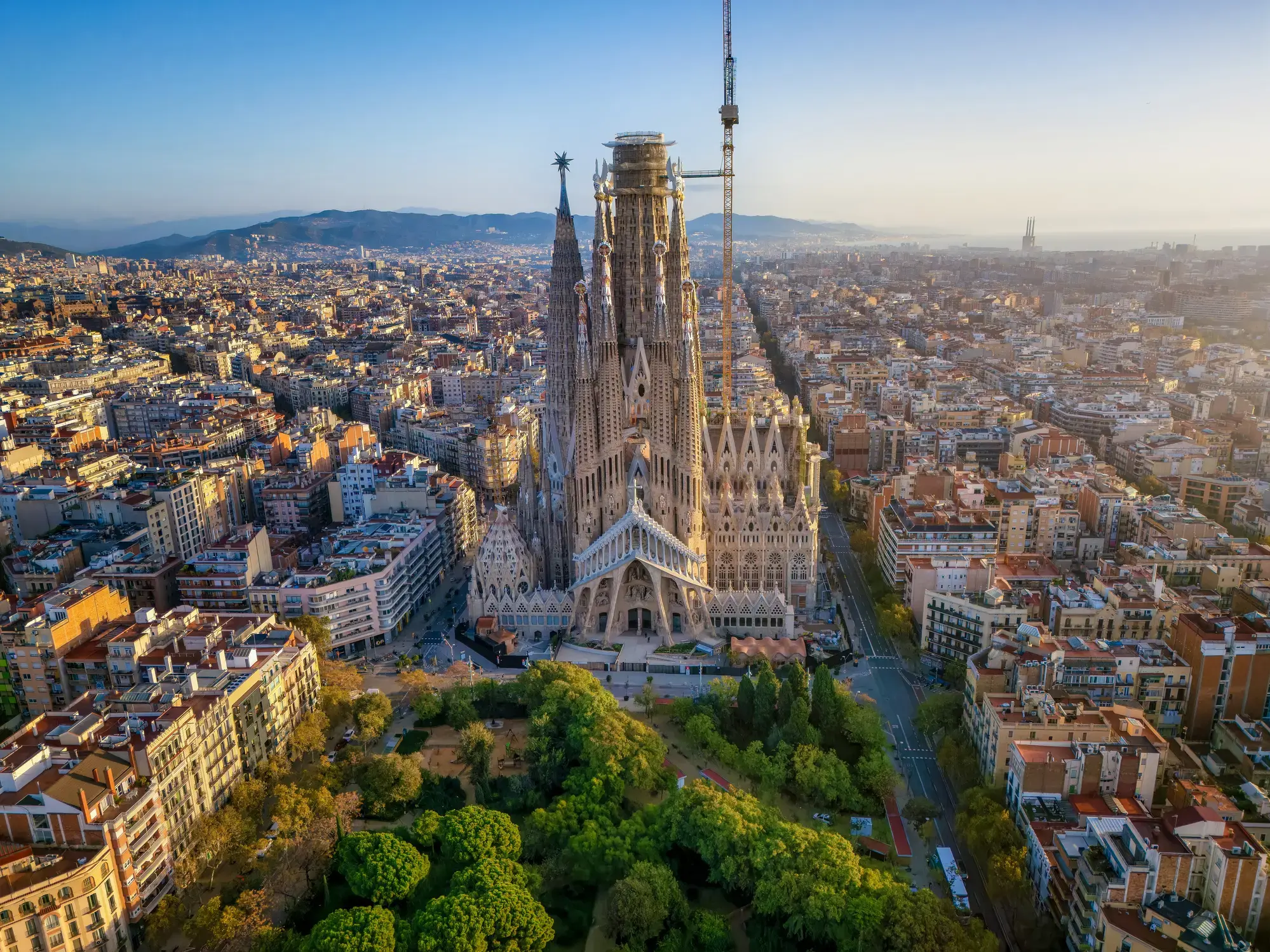
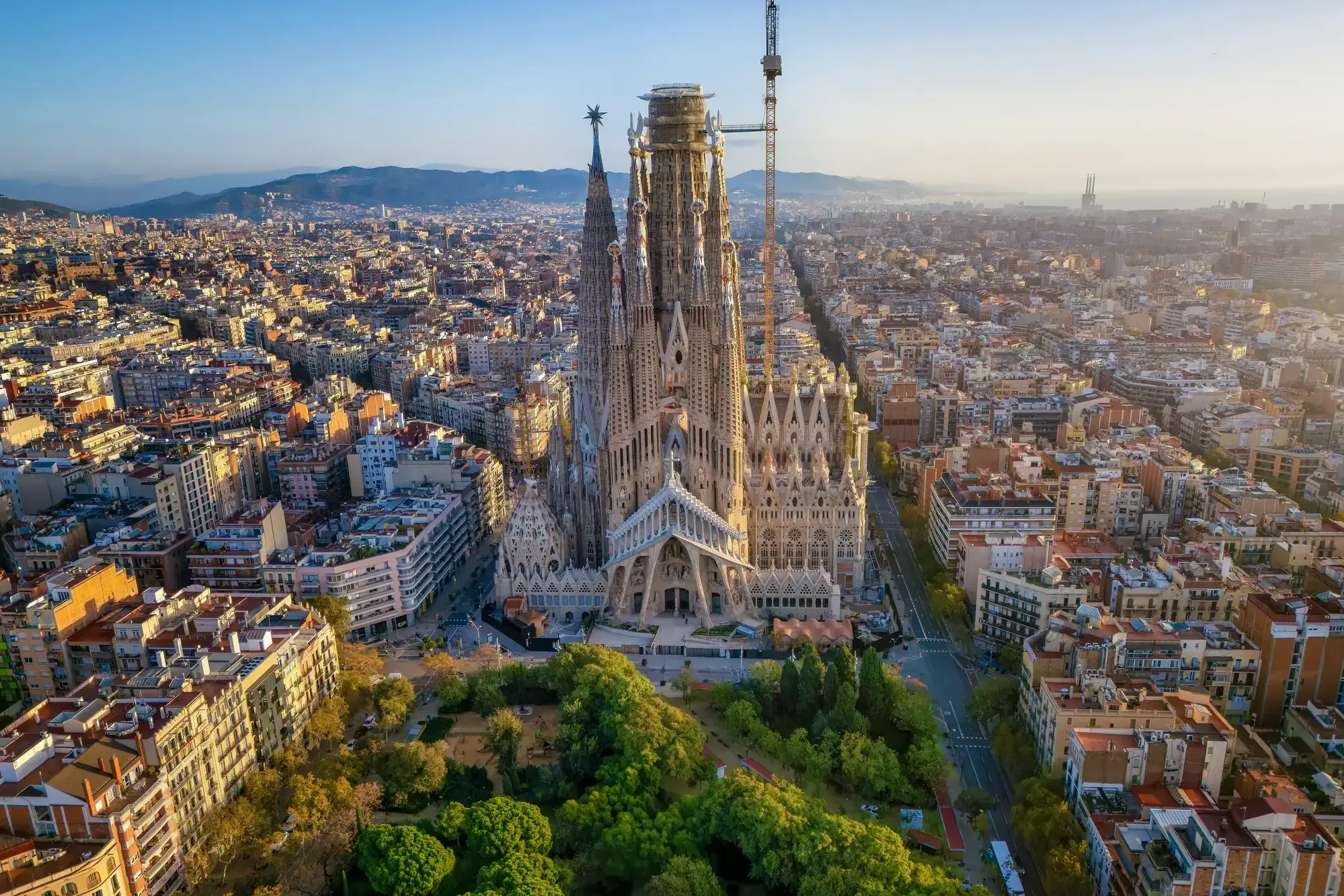
Barcelona is a city in Spain. It is the capital and largest city of Catalonia, as well as the second most populous municipality of Spain. With a population of 1.6 million within city limits, its urban area extends to numerous neighbouring municipalities within the Province of Barcelona and is home to around 4.8 million people, making it the sixth most populous urban area in the European Union after Paris, London, Madrid, the Ruhr area and Milan. It is one of the largest metropolises on the Mediterranean Sea, located on the coast between the mouths of the rivers Llobregat and Besòs, and bounded to the west by the Serra de Collserola mountain range, the tallest peak of which is 512 metres (1,680 feet) high.
Founded as a Roman city, in the Middle Ages Barcelona became the capital of the County of Barcelona. After merging with the Kingdom of Aragon, Barcelona continued to be an important city in the Crown of Aragon as an economic and administrative centre of this Crown and the capital of the Principality of Catalonia. Barcelona has a rich cultural heritage and is today an important cultural centre and a major tourist destination. Particularly renowned are the architectural works of Antoni Gaudí and Lluís Domènech i Montaner, which have been designated UNESCO World Heritage Sites. The headquarters of the Union for the Mediterranean are located in Barcelona. The city is known for hosting the 1992 Summer Olympics as well as world-class conferences and expositions and also many international sport tournaments.
Barcelona is one of the world's leading tourist, economic, trade fair and cultural centres, and its influence in commerce, education, entertainment, media, fashion, science, and the arts all contribute to its status as one of the world's major global cities. It is a major cultural and economic centre in southwestern Europe, 24th in the world (before Zürich, after Frankfurt) and a financial centre. In 2008 it was the fourth most economically powerful city by GDP in the European Union and 35th in the world with GDP amounting to €177 billion. In 2012 Barcelona had a GDP of $170 billion; and it was leading Spain in employment rate in that moment.
In 2009 the city was ranked Europe's third and one of the world's most successful as a city brand. In the same year the city was ranked Europe's fourth best city for business and fastest improving European city, with growth improved by 17% per year, and the city has been experiencing strong and renewed growth for the past three years. Since 2011 Barcelona has been a leading smart city in Europe. Barcelona is a transport hub, with the Port of Barcelona being one of Europe's principal seaports and busiest European passenger port, an international airport, Barcelona–El Prat Airport, which handles over 50 million passengers per year, an extensive motorway network, and a high-speed rail line with a link to France and the rest of Europe.