| Company : MSC Yacht Club |
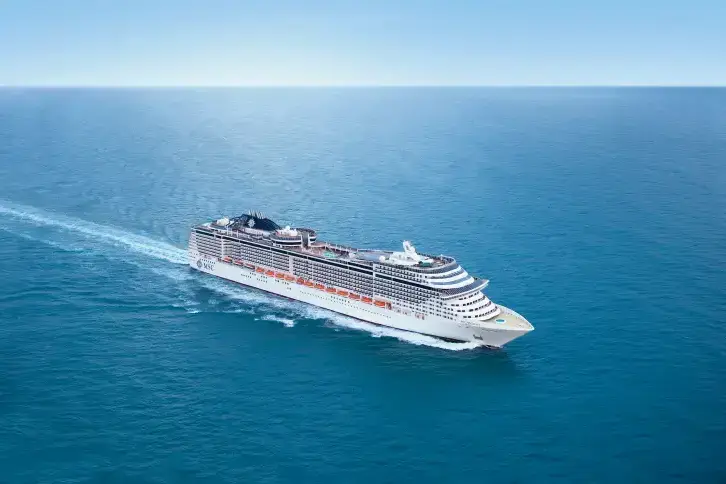
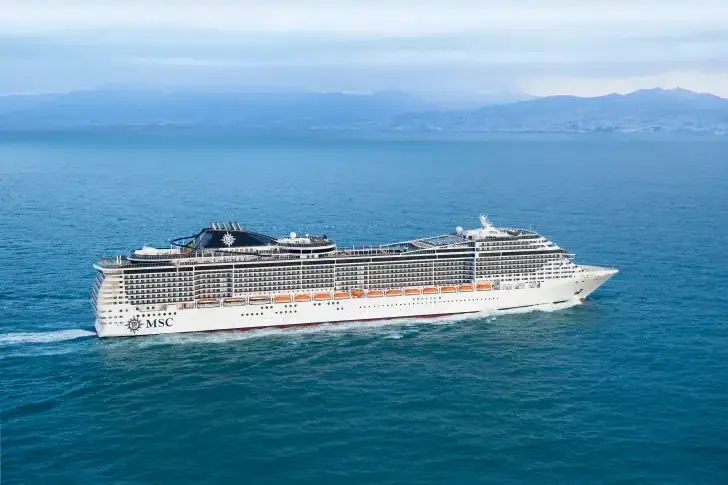
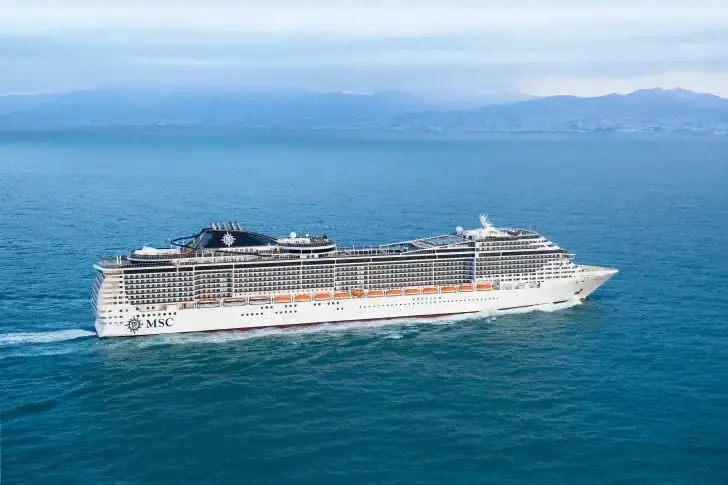
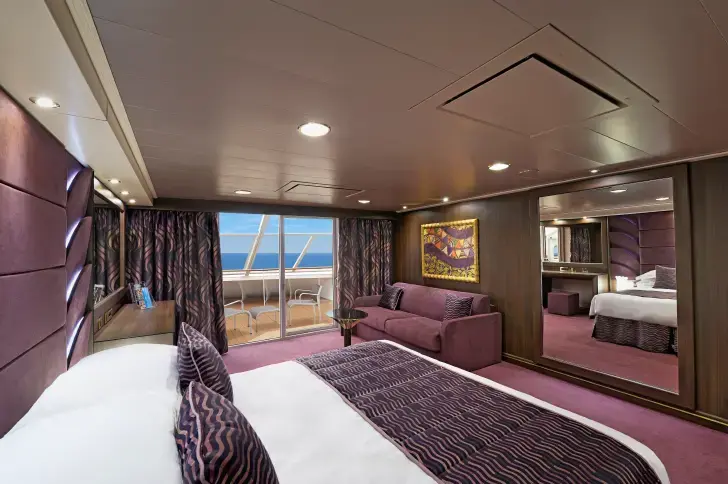
| Ship : MSC Yacht Club Preziosa |
| Journey Start : Tue 14 Apr 2026 |
| Journey End : Sun 26 Apr 2026 |
| Count Nights : 12 nights |
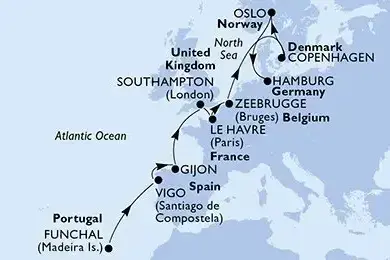
| Day | Date | Port | Arrival | Departure |
|---|---|---|---|---|
| 1 | 14.04 Tue | Madeira / Portugal | 19:00 | |
| 2 | 15.04 Wed | Day at sea / Sea | ||
| 3 | 16.04 Thu | Viggo / Spain | 09:00 | 17:00 |
| 4 | 17.04 Fri | Gijon / Spain | 09:00 | 18:00 |
| 5 | 18.04 Sat | Day at sea / Sea | ||
| 6 | 19.04 Sun | Southampton / Great Britain | 07:00 | 20:00 |
| 7 | 20.04 Mon | Le Havre / France | 07:00 | 20:00 |
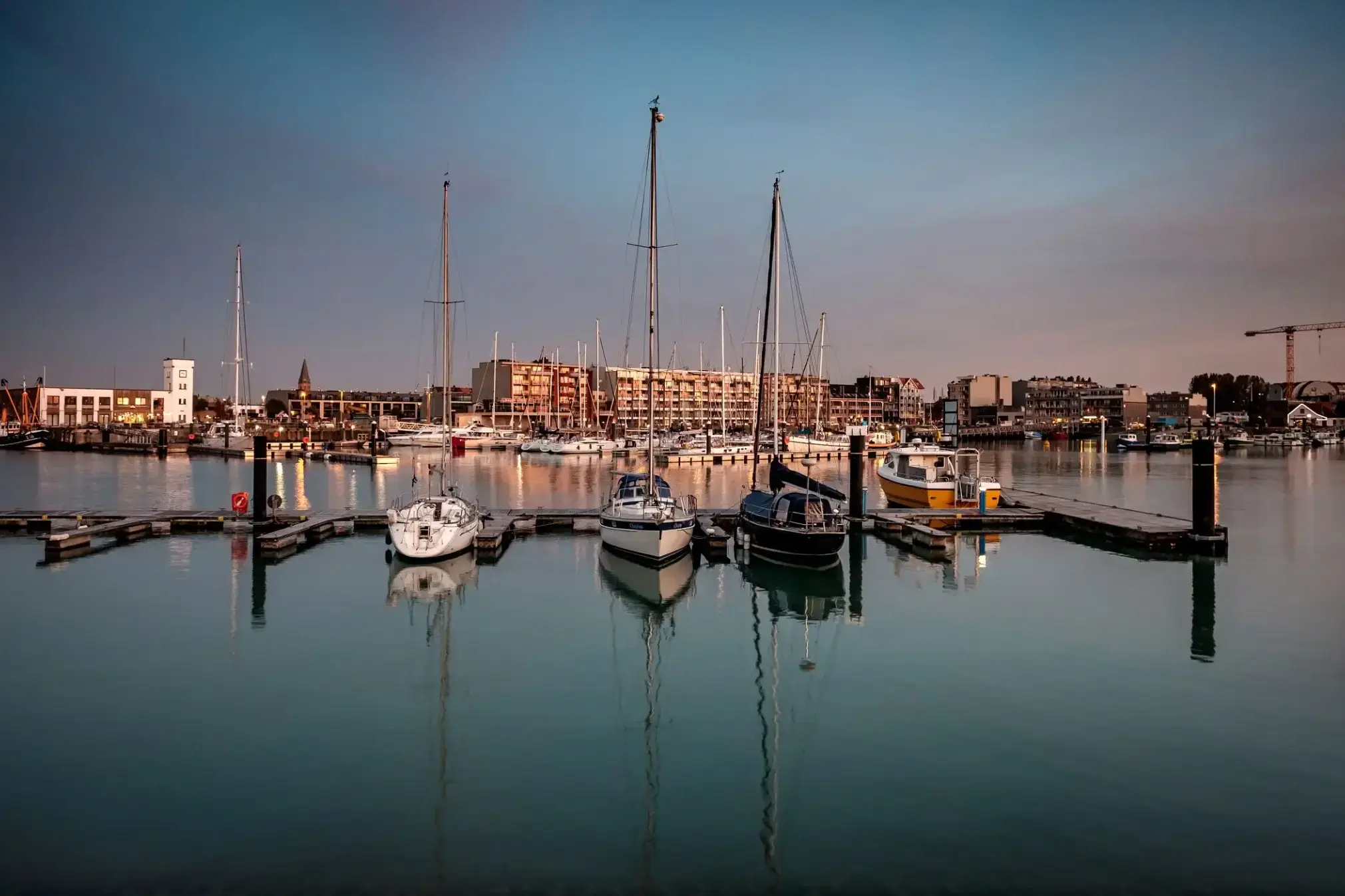
| 8 | 21.04 Tue | Zeebrugge / Belgium | 09:00 | 18:00 |
| 9 | 22.04 Wed | Day at sea / Sea | ||
| 10 | 23.04 Thu | Copenhagen / Denmark | 08:00 | 16:00 |
| 11 | 24.04 Fri | Oslo / Norway | 09:00 | 18:00 |
| 12 | 25.04 Sat | Day at sea / Sea | ||
| 13 | 26.04 Sun | Hamburg / Germany | 08:00 |
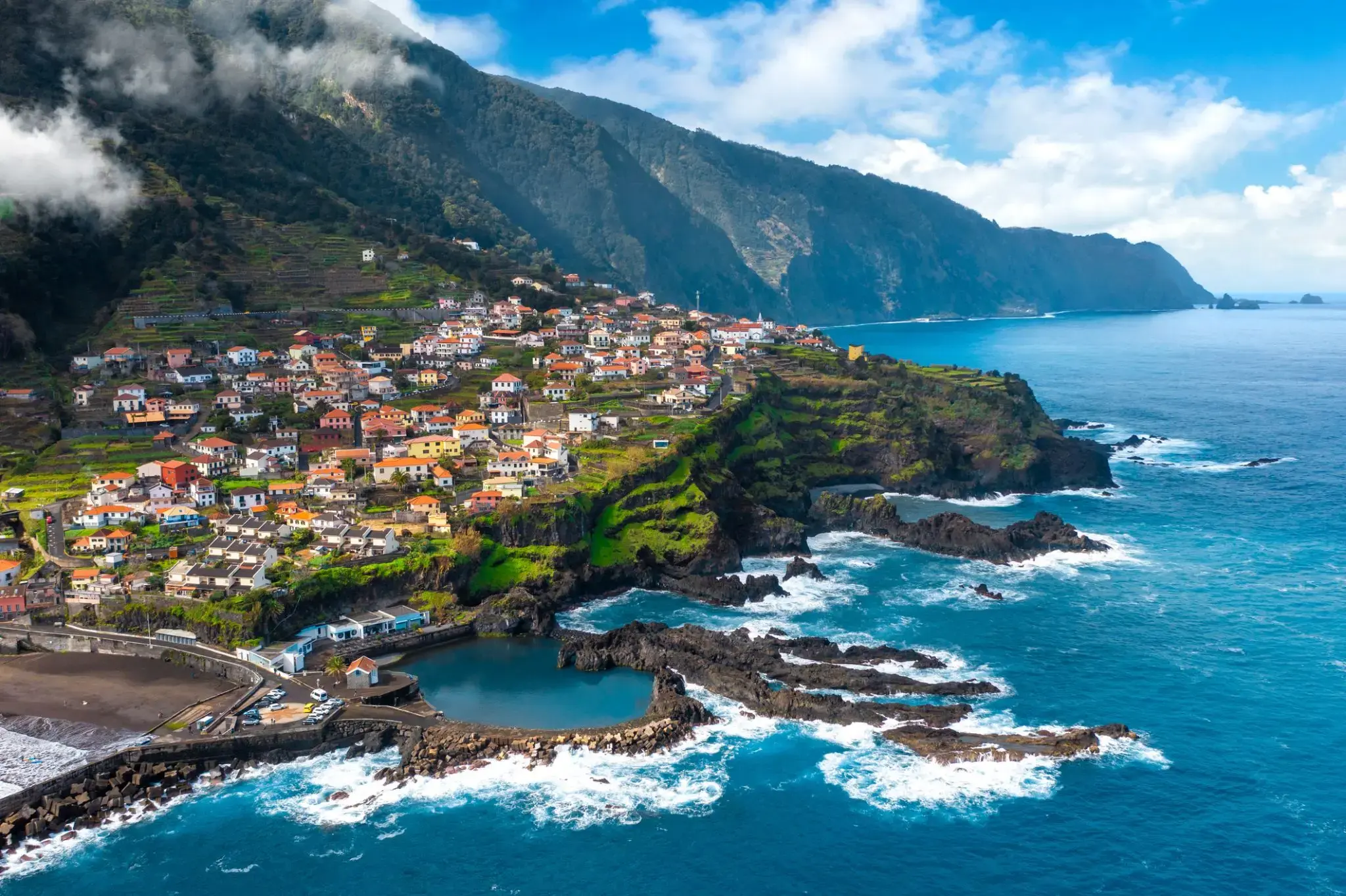
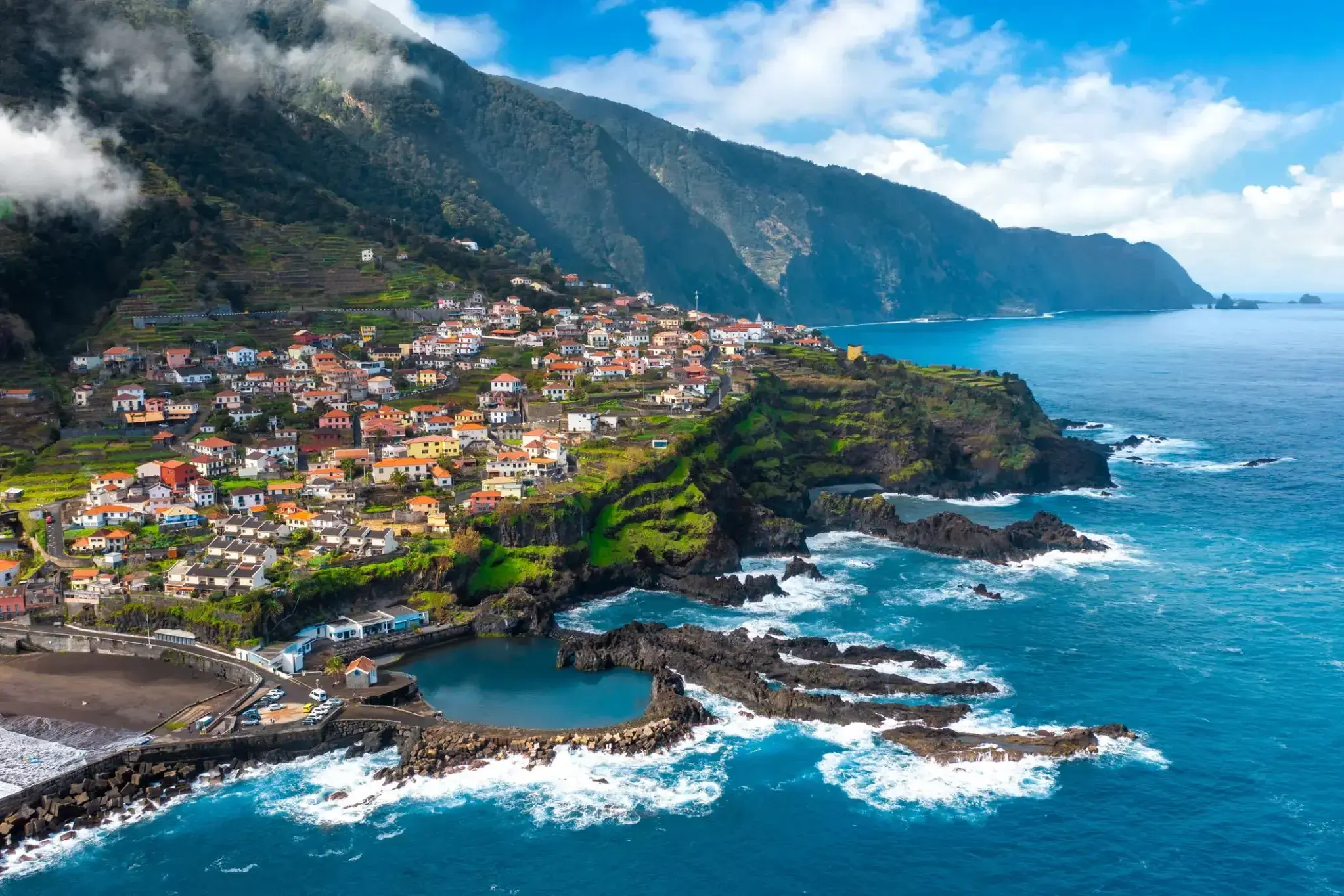
Madeira, officially the Autonomous Region of Madeira, is one of the two autonomous regions of Portugal (along with the Azores). It is an archipelago situated in the north Atlantic Ocean, southwest of Portugal. Its total population was estimated in 2011 at 267,785. The capital of Madeira is Funchal, which is located on the main island's south coast.
The archipelago is just under 400 kilometres (250 mi) north of Tenerife, Canary Islands. Bermuda and Madeira, a few time zones apart, are the only land in the Atlantic on the 32nd parallel north. It includes the islands of Madeira, Porto Santo, and the Desertas, administered together with the separate archipelago of the Savage Islands. The region has political and administrative autonomy through the Administrative Political Statue of the Autonomous Region of Madeiraprovided for in the Portuguese Constitution. The autonomous region is an integral part of the European Union as an outermost region.
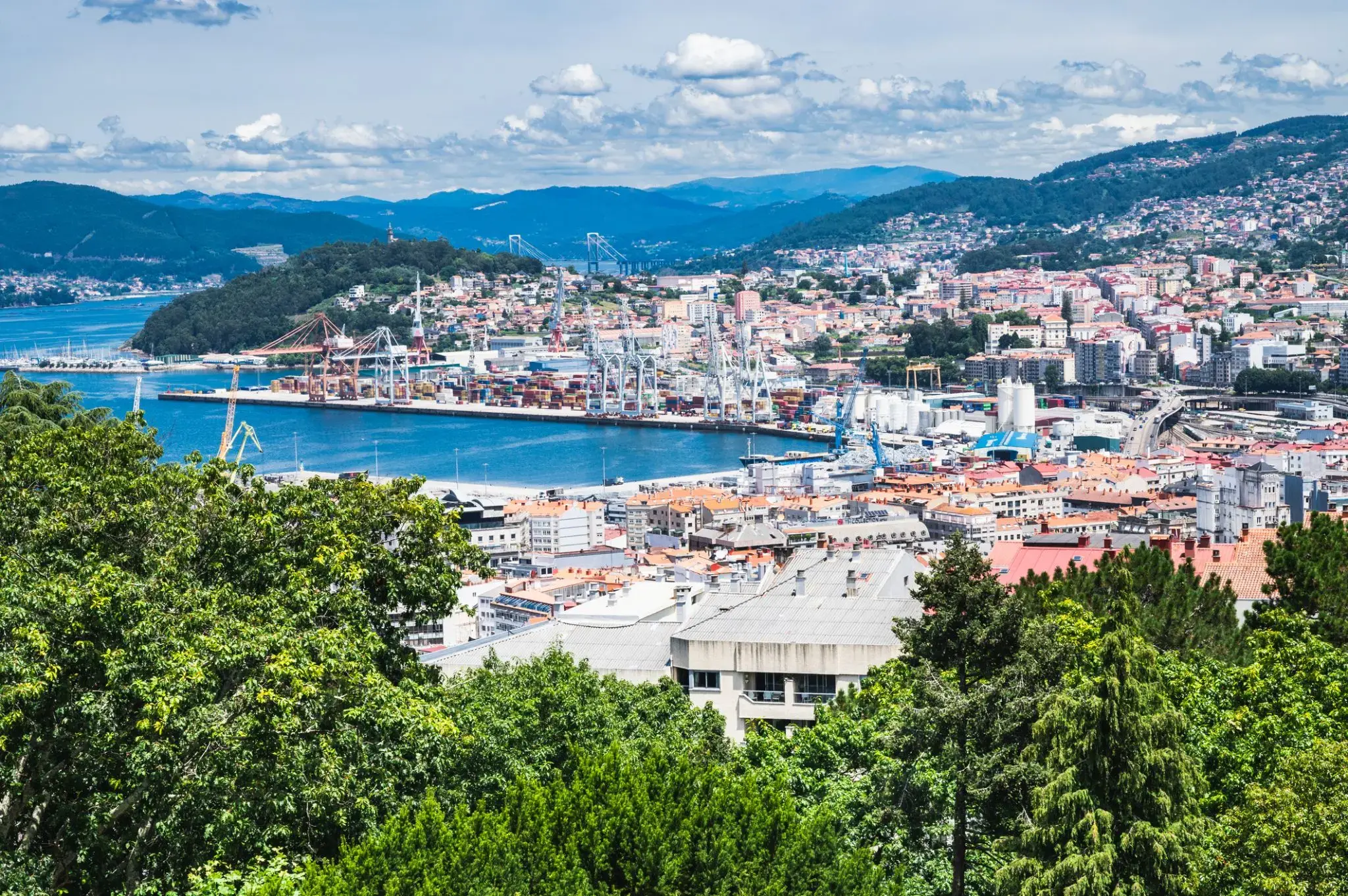
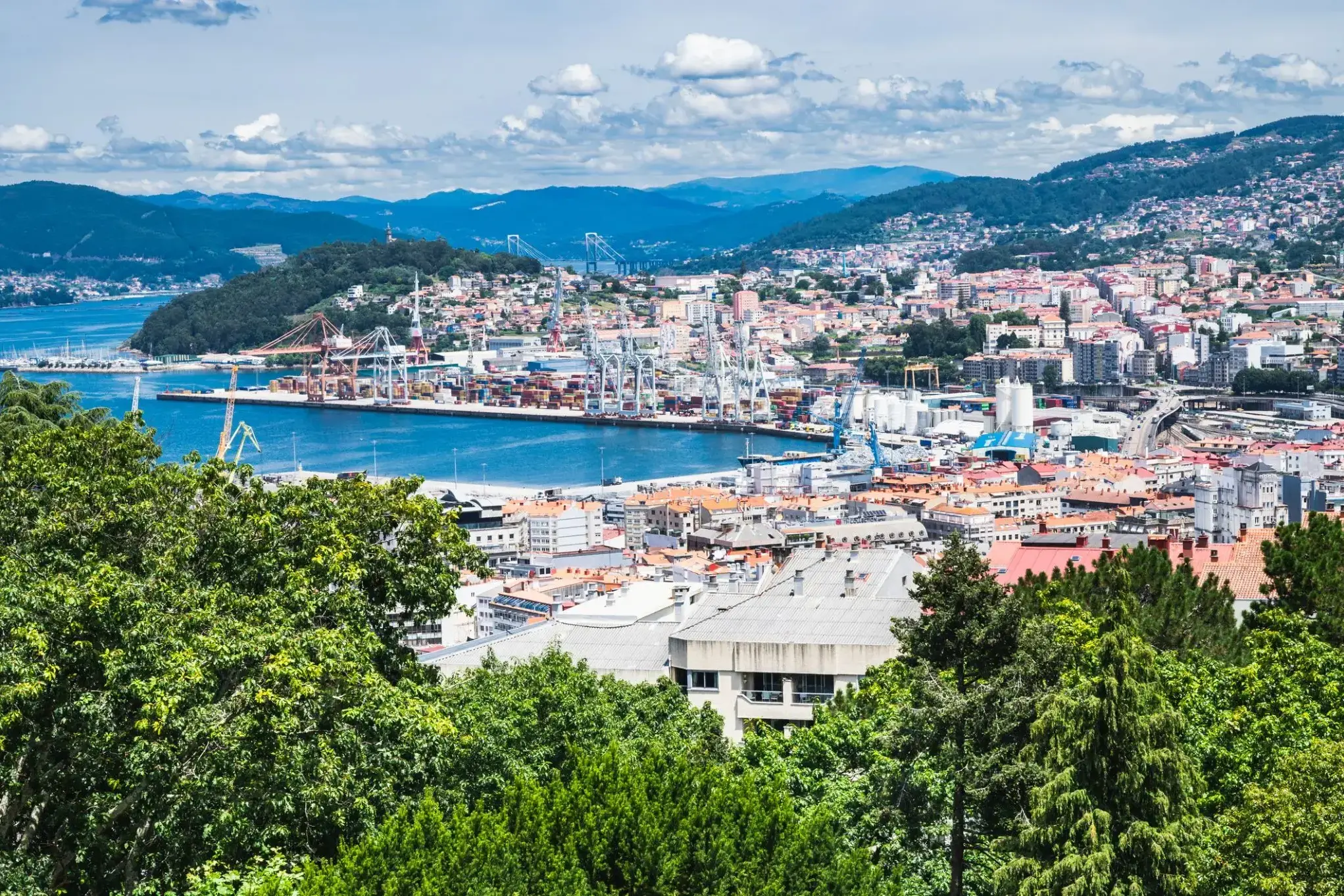
Vigo is a city and municipality adjoining the Atlantic Ocean in the province of Pontevedra in Galicia, northwest Spain. It is the capital of the comarca of Vigo and Vigo metropolitan area.
Vigo is the most populous municipality of Galicia, the 14th in Spain, and the most populous Spanish municipality that is not the capital of a province. It has an area of 109.06 km2 (42.11 sq mi) and had a population of 292,817 in 2016.
The city is located in the southwest of Galicia, in the southern part of Vigo Ria, one of Europe's rainiest areas. In the northeast, it borders the municipality of Redondela; in the east, Mos; in the south, O Porriño and Gondomar; and in the southwest, Nigrán. On the other side of its bay are the municipalities of Cangas and Moaña. They are all part of the southern Galician region called Rías Baixas. Vigo is just north of the border with Portugal; its nearest larger city is Porto, Portugal's second-largest city.
Vigo and its metropolitan area are one of the region's primary economic agents.
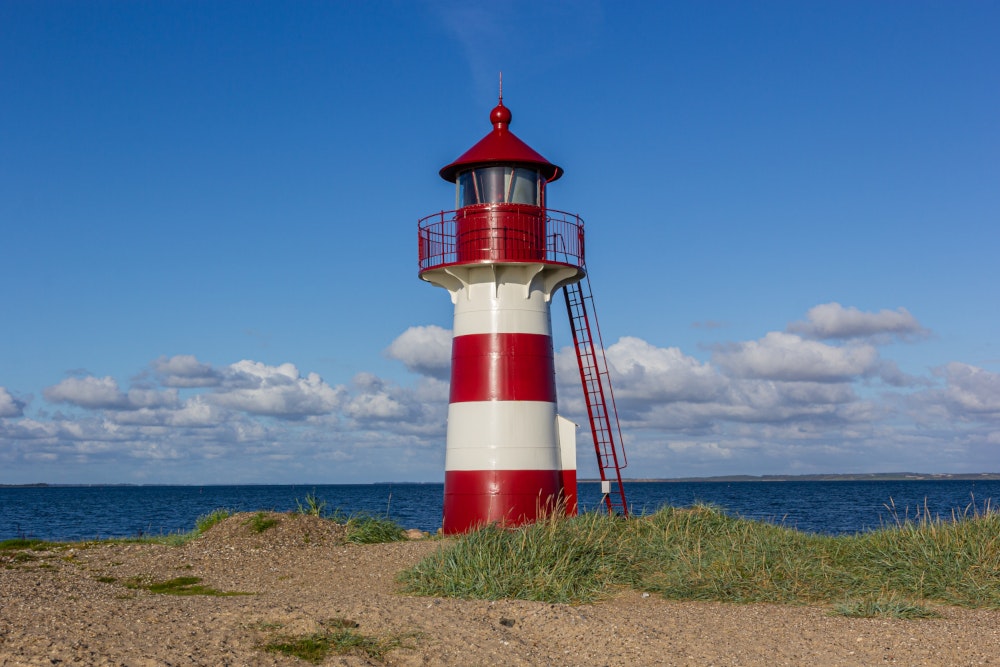
Along the scenic coast of the Bay of Biscay in the Spanish region of Asturias lies the charming city of Gijon, captivating visitors with its unique blend of culture, nature, and gastronomy. Here, you can enjoy walks along the picturesque San Lorenzo beaches, visit numerous contemporary art museums, and taste the famous Asturian cider in traditional “chigres.”
Gijon is the perfect destination for those who appreciate a mix of history and modern life. Beyond its beautiful beaches and cozy streets, the city is known for lively festivals like the Sea Festival and Song Festival, which add vibrant colors to any trip. For active travelers, there are various water sports and hiking routes that reveal breathtaking coastal views.
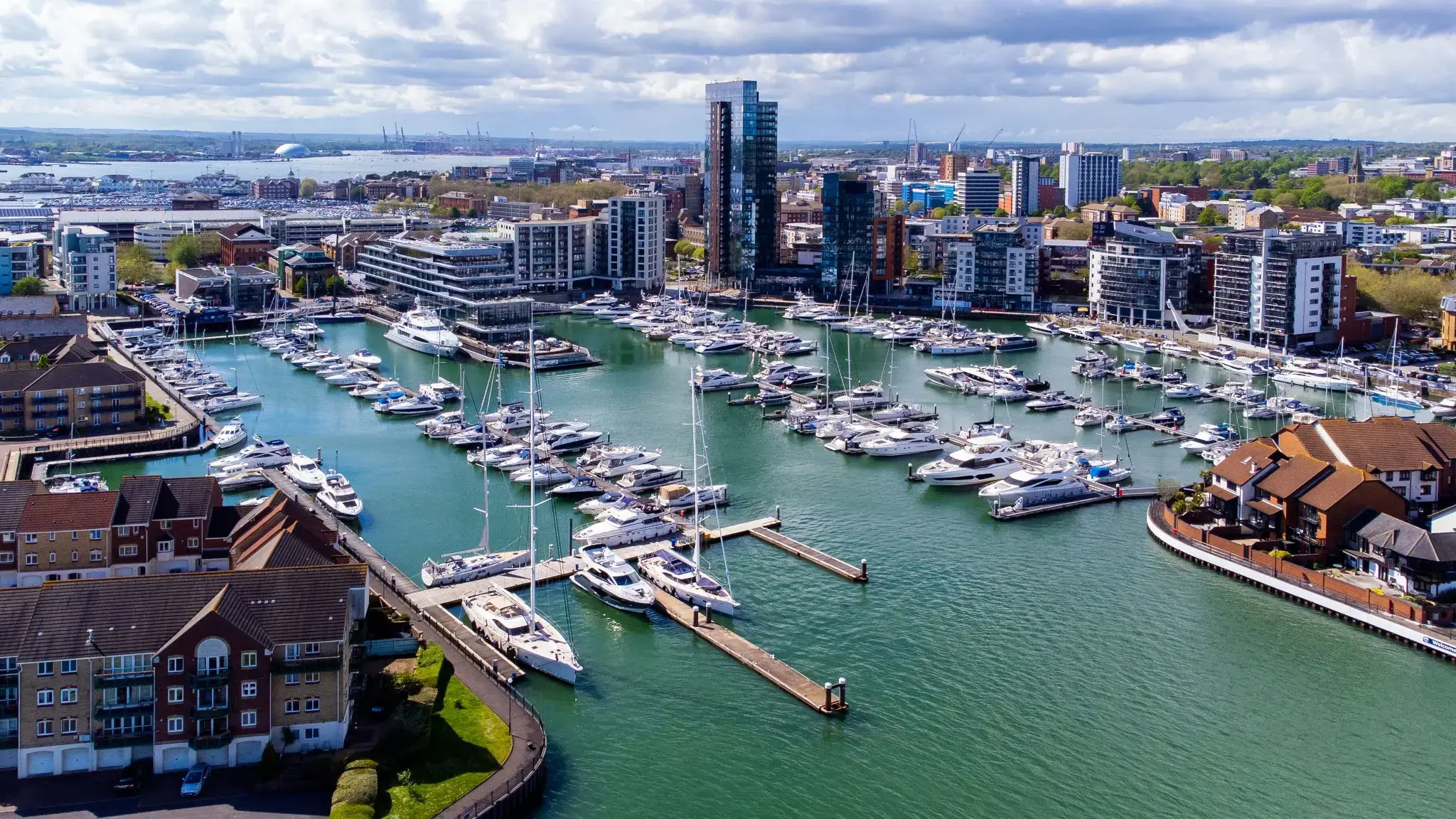
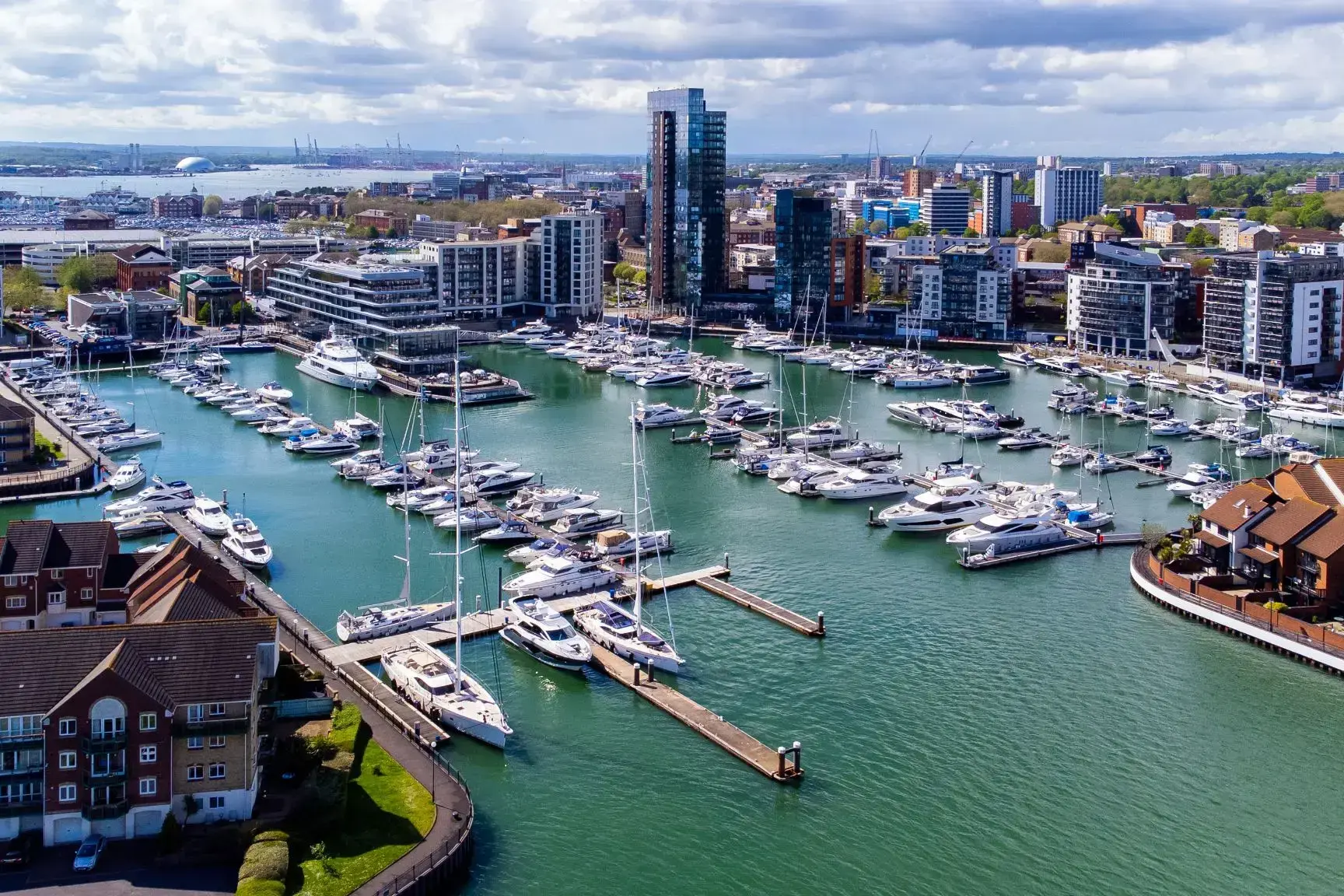
Southampton is the largest city in the ceremonial county of Hampshire, England. It is 69 miles (111 km) south-west of London and 15 miles (24 km) west north-west of Portsmouth. Southampton is a major port and the closest city to the New Forest. It lies at the northernmost point of Southampton Water at the confluence of the Rivers Test and Itchen, with the River Hamble joining to the south of the urban area. The city, which is a unitary authority, has an estimated population of 253,651. The city's name is sometimes abbreviated in writing to "So'ton" or "Soton", and a resident of Southampton is called a Sotonian.
Significant employers in the city include Southampton City Council, the University of Southampton, Solent University, Southampton Airport, Ordnance Survey, BBC South, the NHS, ABP and Carnival UK. Southampton is noted for its association with the RMS Titanic, the Spitfire and more generally in the World War II narrative as one of the departure points for D-Day, and more recently as the home port of a number of the largest cruise ships in the world. Southampton has a large shopping centre and retail park, Westquay. In 2014, the city council approved a neighbouring followup Westquay South which opened in 2016–2017.
In the 2001 census Southampton and Portsmouth were recorded as being parts of separate urban areas; however by the time of the 2011 census they had merged apolitically to become the sixth-largest built-up area in England with a population of 855,569. This built-up area is part of the metropolitan area known as South Hampshire, which is also known as Solent City, particularly in the media when discussing local governance organisational changes. With a population of over 1.5 million this makes the region one of the United Kingdom's most populous metropolitan areas.
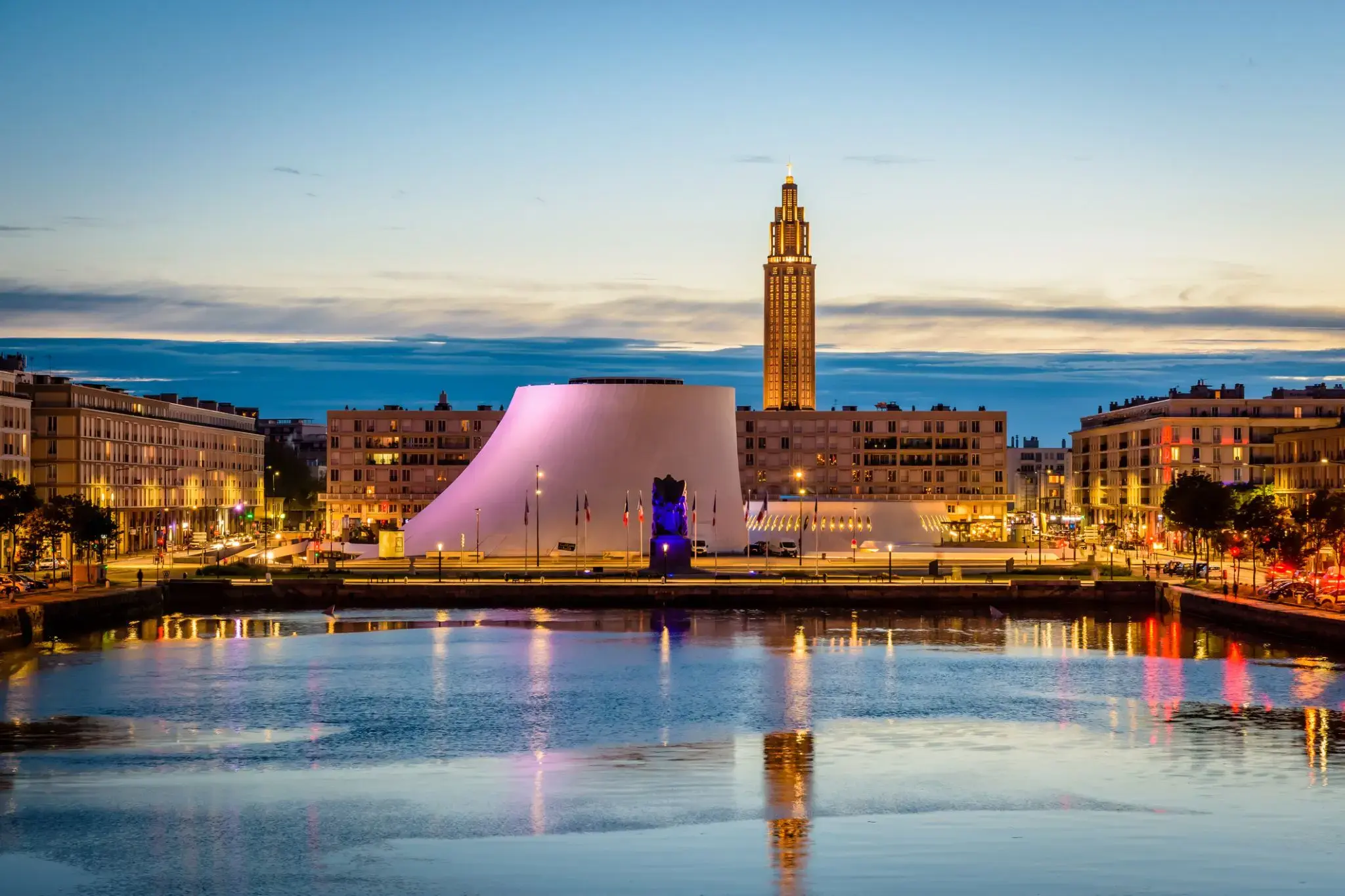
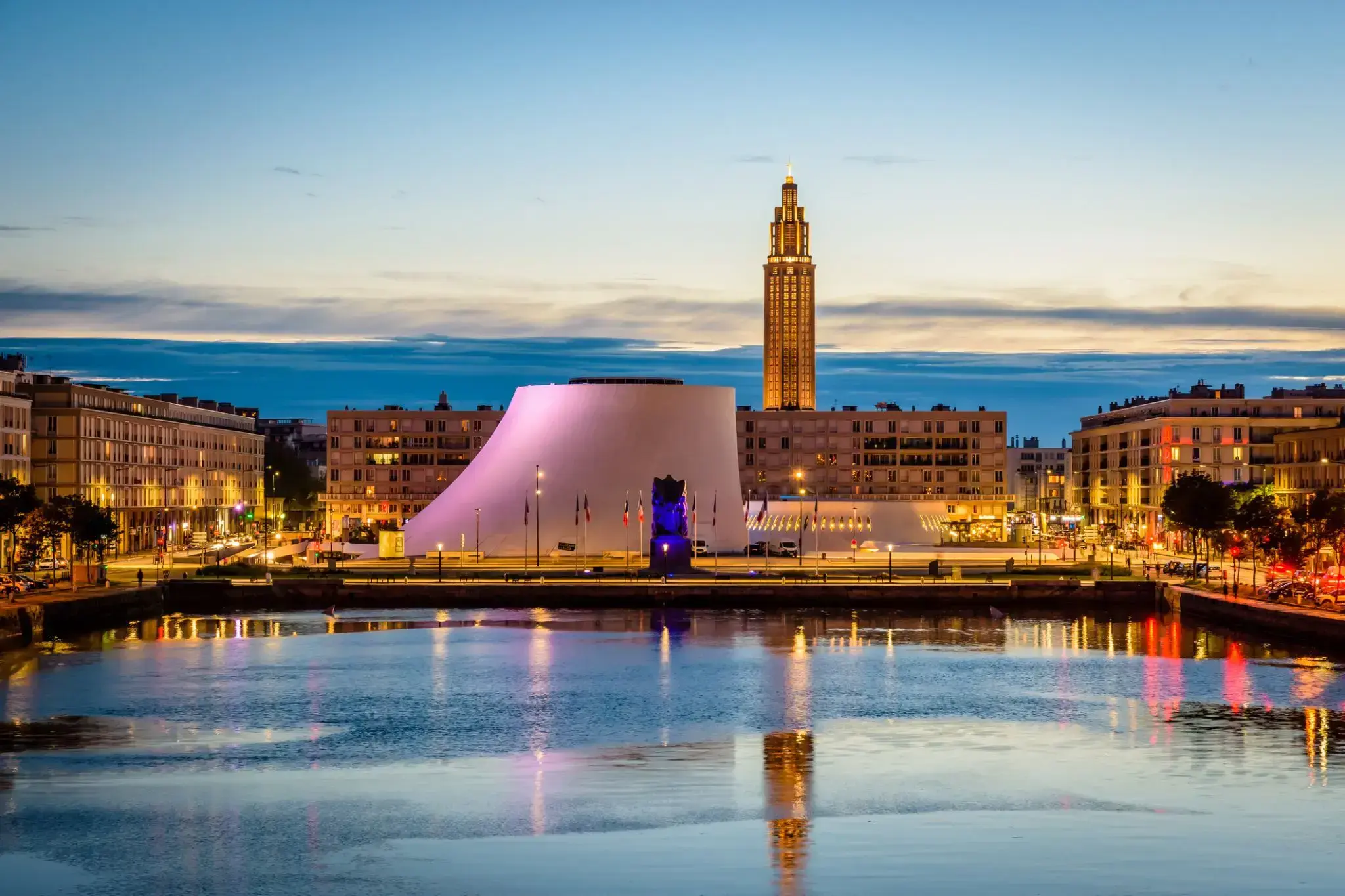
Le Havre is a port city located in the northwest of France, on the coast of the English Channel. It is an important center of maritime trade and shipbuilding. Founded in the 16th century, Le Havre quickly developed thanks to its strategic location, becoming one of the largest ports in the country. The city is known for its modern architecture, carefully planned after the destructions of World War II. In 2005, the historic center of the city was included in the UNESCO World Heritage list, and the famous architectural ensemble designed by Auguste Perret became an essential part of the city's identity.
Today, Le Havre attracts tourists with its unique atmosphere, blending old and new elements. One of its main attractions is the Notre-Dame-de-Grâce, as well as the Dunkirk Cultural Center, which hosts concerts, exhibitions, and theatrical performances. The local beaches and promenades are perfect places for walks and relaxation, while numerous restaurants offer fresh seafood dishes. Le Havre has also become an important cultural and economic center, welcoming guests not only from France but also from all over the world.
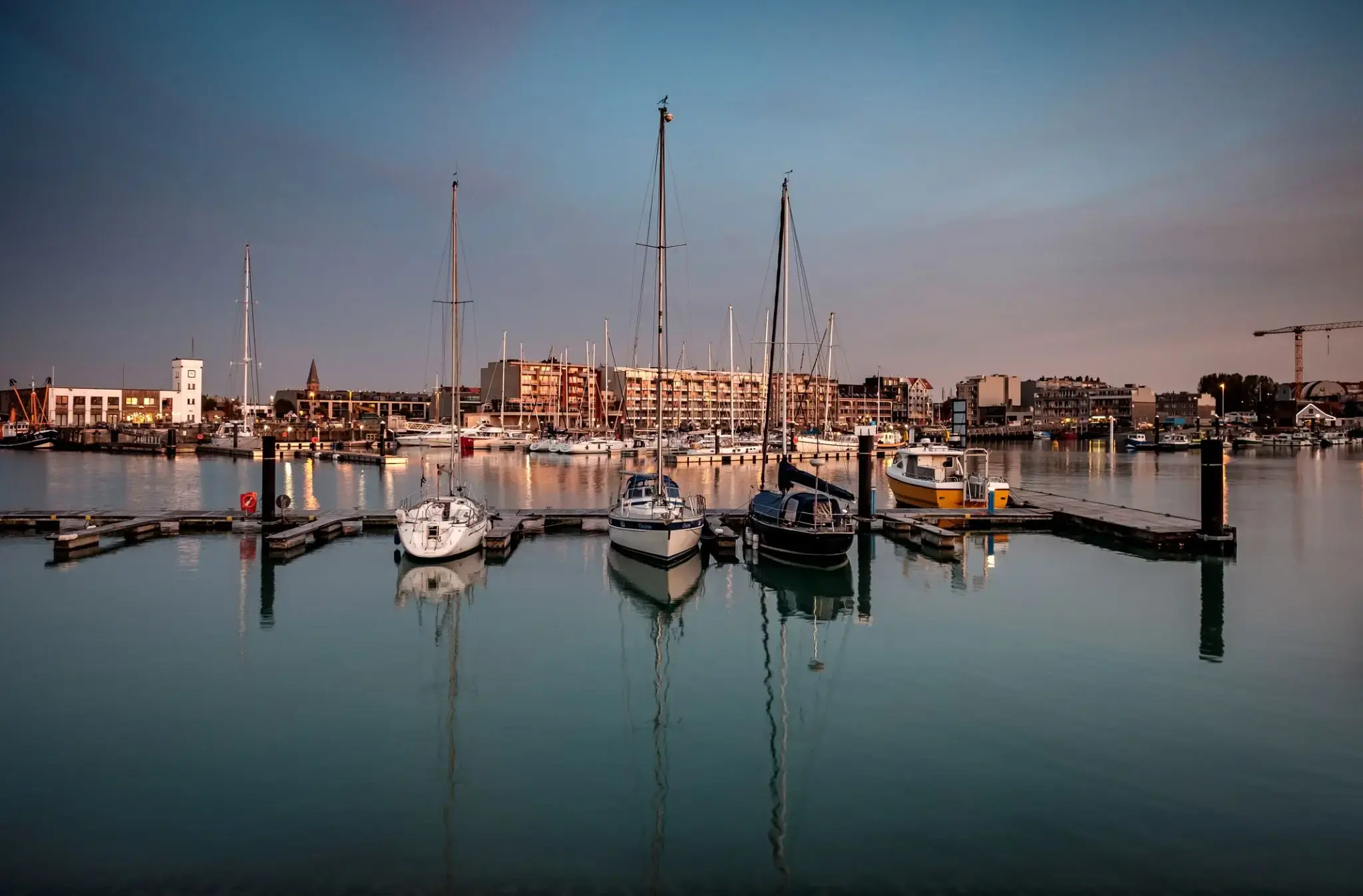
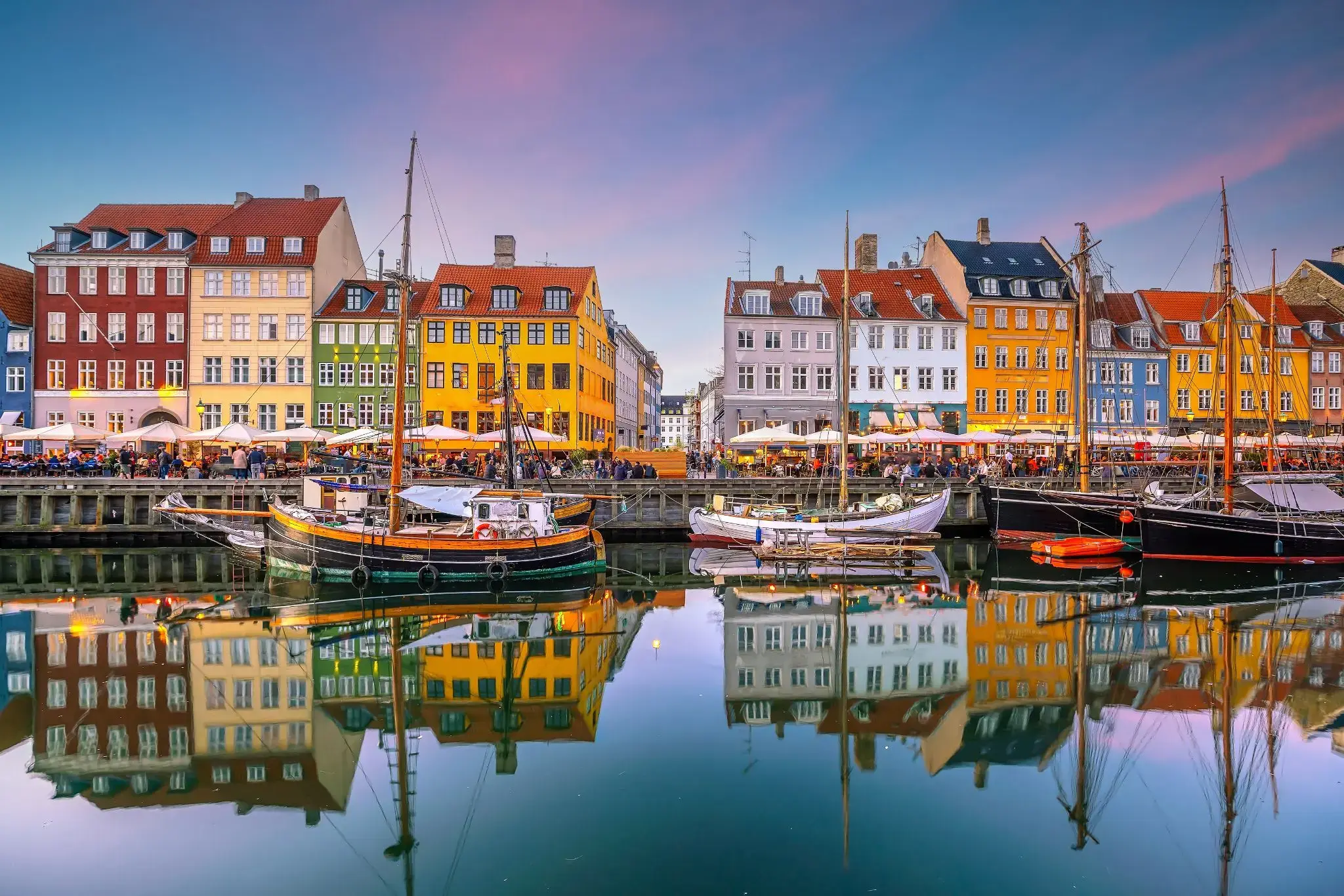
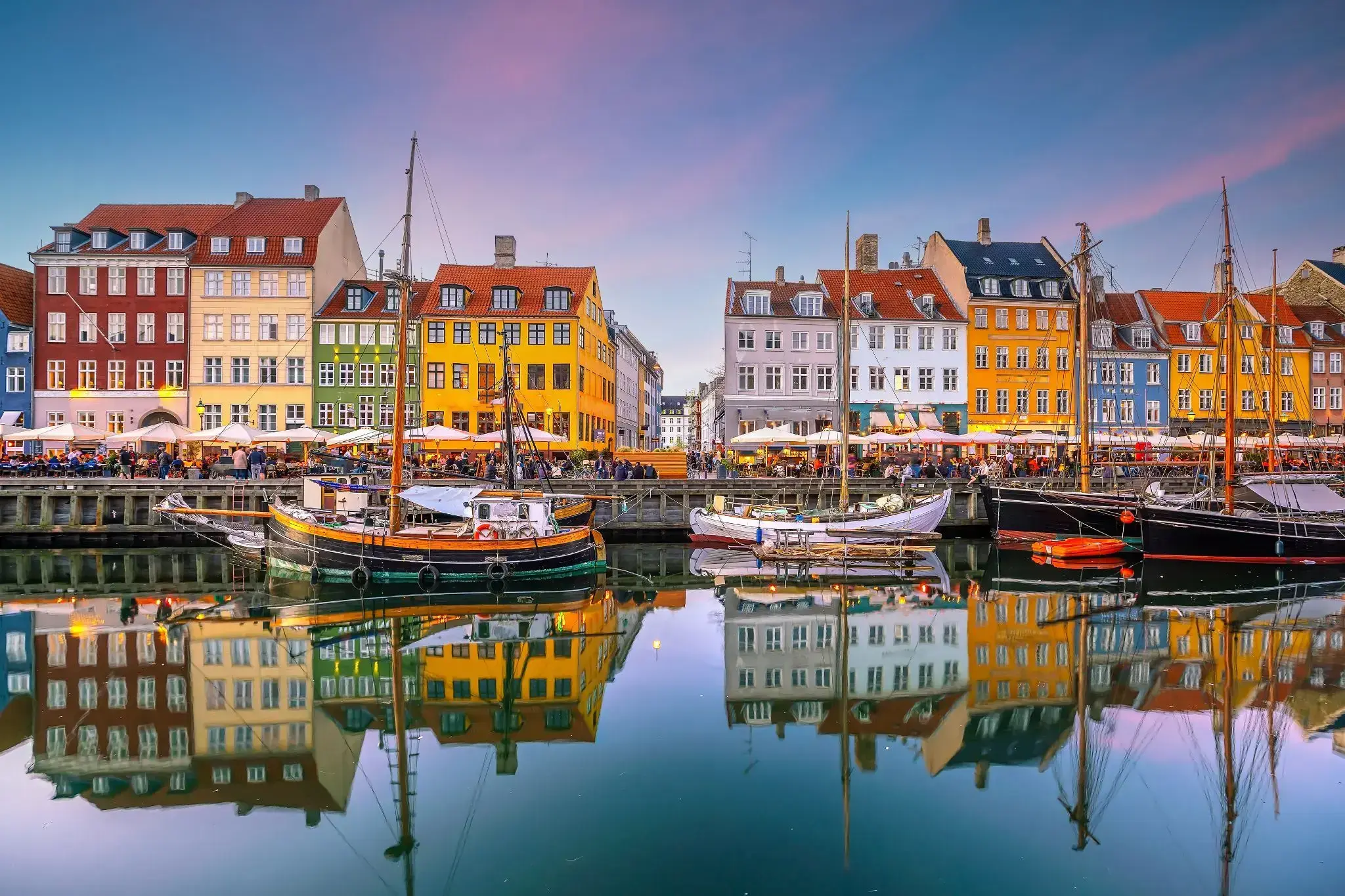
the capital and chief port of Denmark, a city that occupies the eastern part of Zealand and northern part of the island of Amager; population 518,574 (2009).
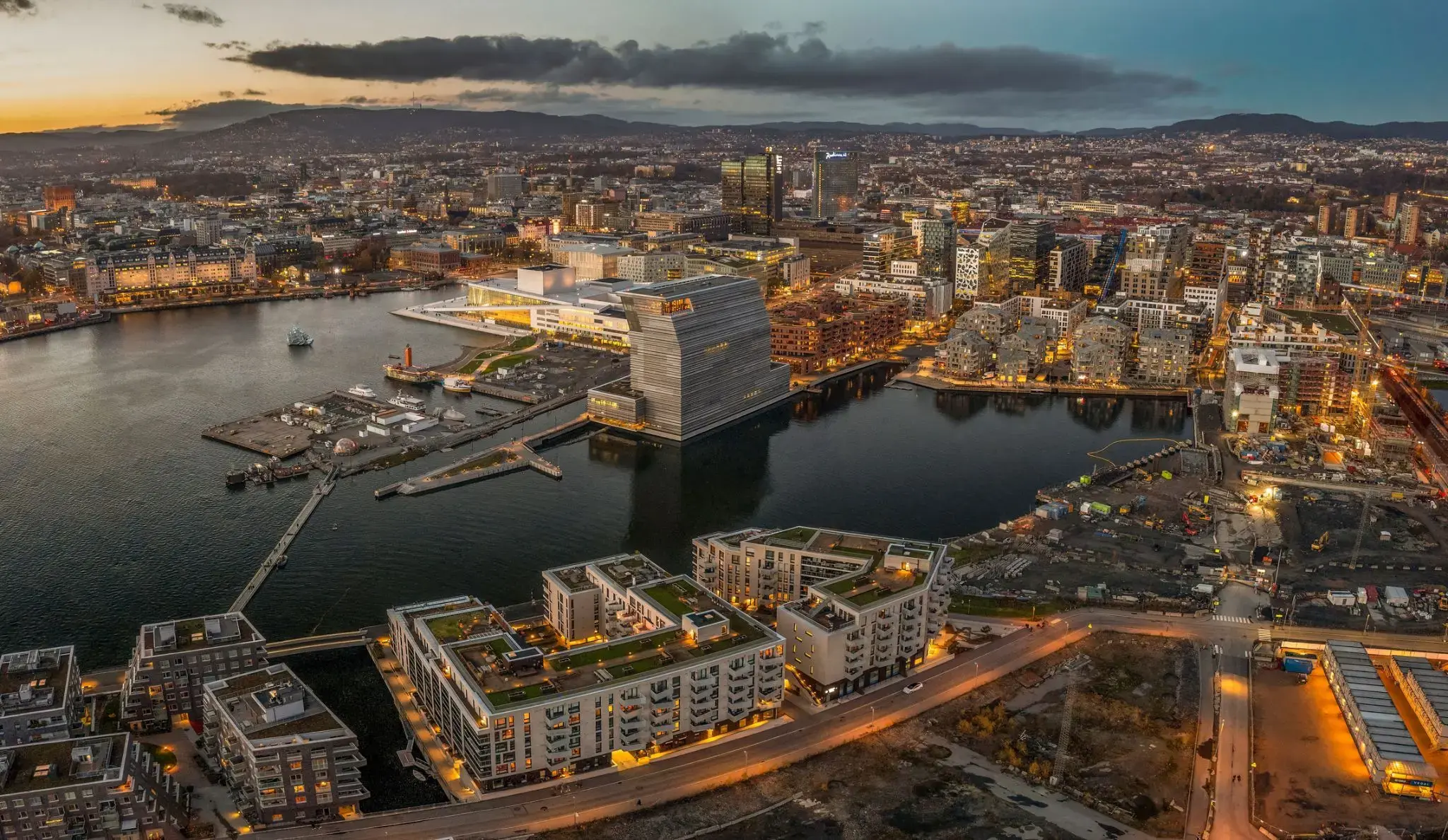
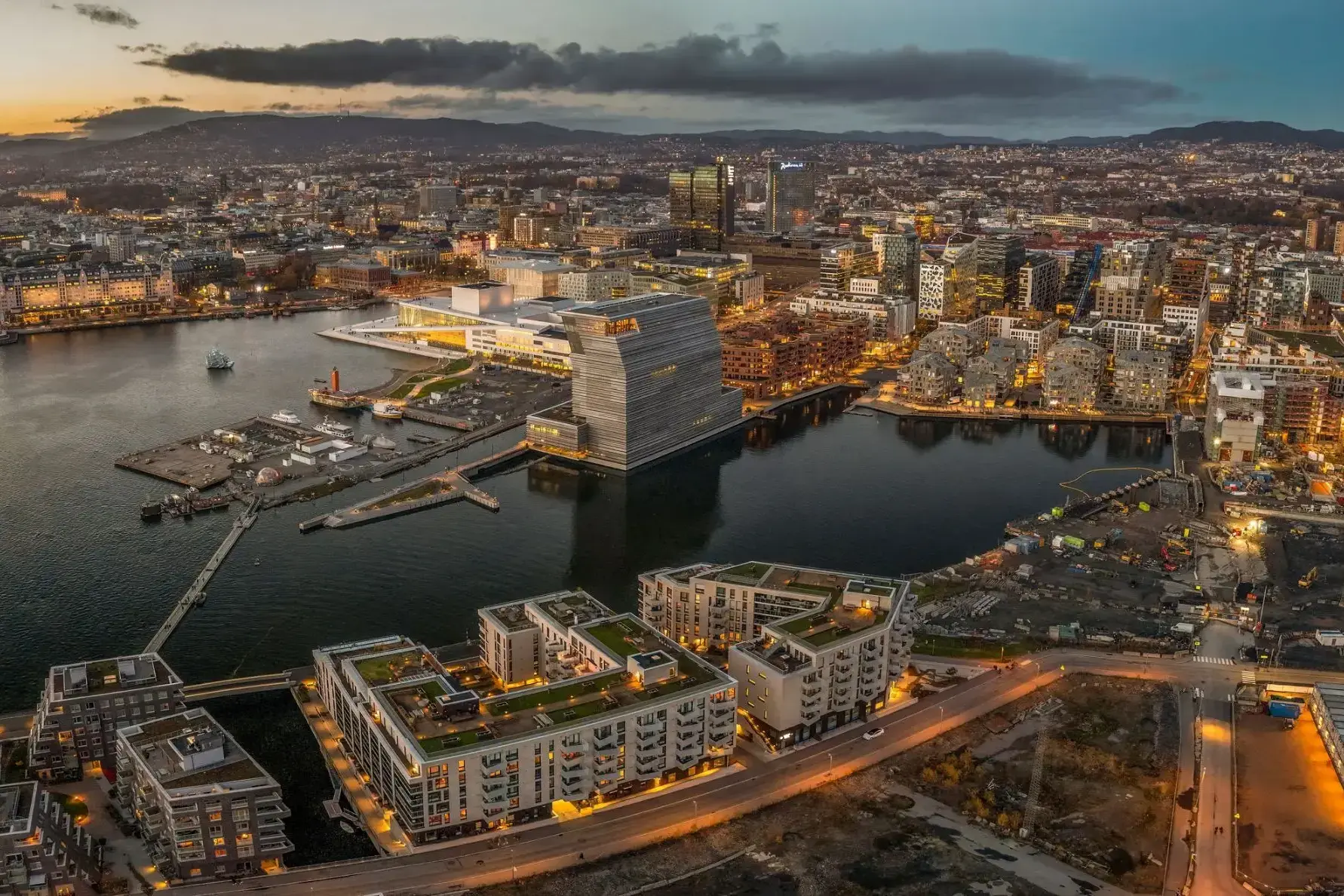
Oslo is the capital and most populous city of Norway. It constitutes both a county and a municipality. Founded in the year 1040 as Ánslo, and established as a trading place in 1048 by Harald Hardrada, the city was elevated to a bishopric in 1070 and a capital under Haakon V of Norway around 1300. Personal unions with Denmark from 1397 to 1523 and again from 1536 to 1814 reduced its influence, and with Sweden from 1814 to 1905 it functioned as a co-official capital. After being destroyed by a fire in 1624, during the reign of King Christian IV, a new city was built closer to Akershus Fortress and named Christiania in the king's honour. It was established as a municipality on 1 January 1838. The city's name was spelled Kristiania between 1877 and 1897 by state and municipal authorities. In 1925 the city was renamed Oslo.
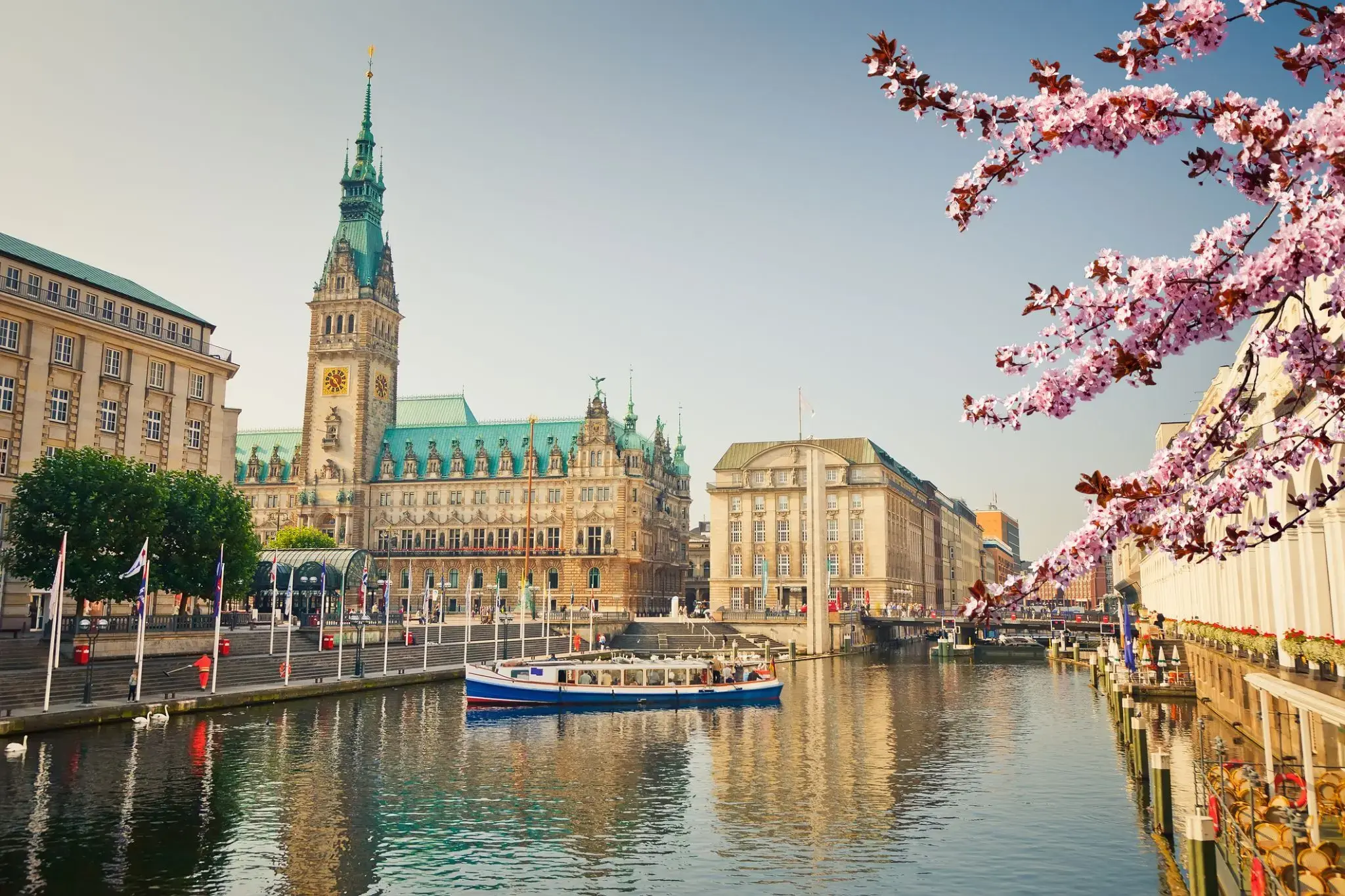
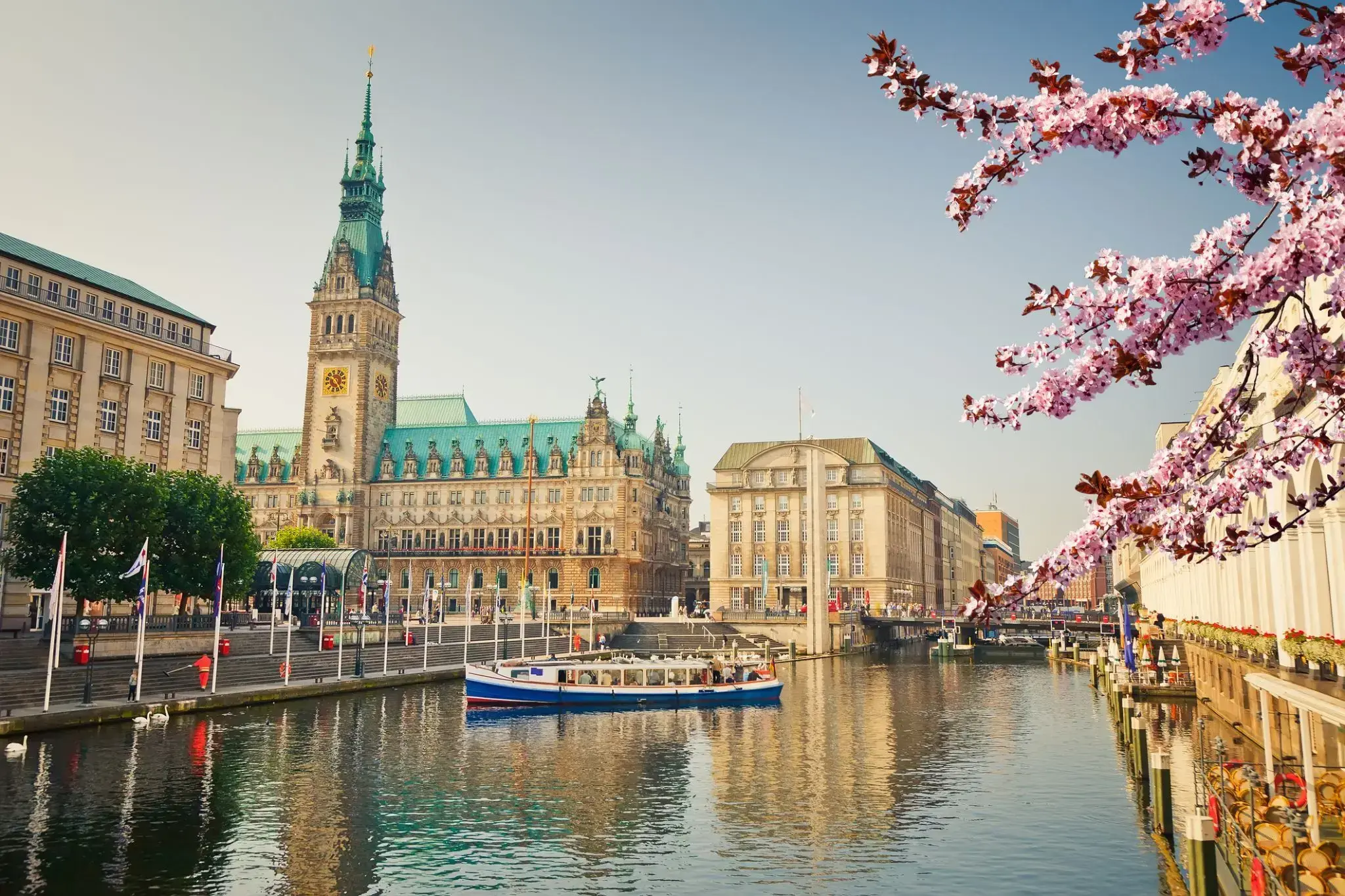
Hamburg ; officially the Free and Hanseatic City of Hamburg is the second-largest city in Germany with a population of over 1.8 million.
One of Germany's 16 federal states, it is surrounded by Schleswig-Holstein to the north and Lower Saxony to the south. The city's metropolitan region is home to more than five million people. Hamburg lies on the River Elbe and two of its tributaries, the River Alster and the River Bille.