| Cruise Region : South America / Antarctica |
| Company : Croisi Europe |
| Ship : RV Brasilian Dream |
| Journey Start : Sat 13 Mar 2027 |
| Journey End : Fri 26 Mar 2027 |
| Count Nights : 13 nights |
| Day | Date | Port |
|---|---|---|
| 1 | 13.03 Sat | Rio de Janeiro / Brazil |
| 2 | 14.03 Sun | Rio de Janeiro / Brazil |
| 3 | 15.03 Mon | Rio de Janeiro / Brazil |
| 4 | 16.03 Tue | Rio de Janeiro / Brazil |
| 4 | 16.03 Tue | Manaus / Brazil |
| 4 | 16.03 Tue | Black river |
| 5 | 17.03 Wed | Black river |
| 6 | 18.03 Thu | Black river |
| 7 | 19.03 Fri | Black river |
| 7 | 19.03 Fri | RIO ALREADY |
| 8 | 20.03 Sat | RIO ALREADY |
| 9 | 21.03 Sun | RIO ALREADY |
| 9 | 21.03 Sun | Black river |
| 10 | 22.03 Mon | Black river |
| 11 | 23.03 Tue | Black river |
| 11 | 23.03 Tue | RIO ARIAU |
| 12 | 24.03 Wed | Manaus / Brazil |
| 13 | 25.03 Thu | JANAUACA LAKE |
| 13 | 25.03 Thu | Manaus / Brazil |
| 14 | 26.03 Fri | Manaus / Brazil |
All inclusive on board:
All meals included - DRINKS INCLUDED with meals and at the bar
Refined French cuisine - Gala dinner and evening - Welcome cocktail
Free Wi-Fi onboard
Headsets are included for excursions
Official welcome from the captain and crew
Onboard activities
Travel assistance and repatriation insurance
All port fees included
Additional expenses:
Airfare and transfers to/from the departure and arrival ports
Personal expenses (e.g., souvenirs, extra drinks beyond those included)
Tips for crew and guides (recommended) from €9 per day per guest
Medical insurance (optional, at your own discretion)
Excursions and activities not included in the program
Additional onboard services (spa, massage, laundry, etc.)
PAYMENT AND BOOKING CONDITIONS:
A deposit 30 % is due within 4 days after confirmation if you pay credit card, bank transfer, or personal check. If you pay by credit card, you must sign an authorization form. If paying by wire transfer, the transfer must be received within 8 days after confirmation. Final payment is due at least 90 days prior to departure. Vouchers will be sent by email at 30 days prior to departure and only when full payment has been made. You are considered confirmed when we receive your deposit of 30 % of the price of the cruise, or, if you are confirmed within 90 days before departure, you are confirmed when we receive your full payment. Failure to pay the balance by the 90-day deadline is a default that entitles us to cancel your agreement and retain your deposit if you do not pay within eight days after notice of nonpayment.
CANCELLATION:
1) TRAVELLER’S RIGHT OF CANCELLATION
The traveller may cancel the contract at any time prior to the start of the trip or stay, subject to the payment of appropriate cancellation fees or, where applicable, standard cancellation fees charged by the organiser or retailer, in accordance with Article L. 211-14 I of the French Tourism Code.
2) CANCELLATION COSTS
In the event of cancellation by the customer, and in accordance with Article L 211-14 of the French Tourism Code, the sums paid will be reimbursed minus the cancellation fees per person specified below, depending on the date of cancellation in relation to the departure date, and the non-refundable costs of insurance, reservation fees and visa fees, as well as all other insurance and cancellation fees required by our suppliers. If one of the passengers in a double room or cabin cancels his/her reservation, the remaining passenger will have to pay the double room or cabin supplement for individual use. All cancellations must be sent to the seller by registered mail with acknowledgment of receipt..
Cost of cancelling CroisiEurope river cruises:
• More than 90 days before date of departure: 150 €, not including VAT, in administration fees will be charged per person (fees for themed-weekend and Christmas-market cruises are listed after)
• From 90 to 60 days: 20 % of total amount of cruise package
• From 59 to 30 days: 50 % of total amount of cruise package
• From 29 to 19 days: 60 % of total amount of cruise package
• From 18 to 9 days: 75 % of total amount of cruise package
• 8 days or less before departure: 100 % of total amount of cruise package
For CroisiEurope themed-weekend and Christmas-market river cruises, a cancellation fee of 50 €, not including VAT, will be charged per person at more than 90 days before departure. The fee schedule listed above remains unchanged for these cruises.
Cost of cancelling CroisiEurope seafaring cruises:
• More than 90 days before date of departure: 300 €, not including VAT, in administration fees will be charged per person
• From 90 to 60 days: 40 % of total amount of cruise package
• From 59 to 30 days: 60 % of total amount of cruise package
• From 29 to 9 days: 75 % of total amount of cruise package
• 8 days or less before departure: 100 % of total amount of cruise package
Cancellation terms and conditions above, the cancellation fees for CroisiEurope “New Year’s Eve” river and seafaring cruises are as follows:
• More than 90 days before date of departure: 300 €, not including
VAT, in administration fees will be charged per person
• From 90 to 60 days: 40 % of total amount of cruise package
• From 59 to 30 days: 60 % of total amount of cruise package
• From 29 to 20 days: 75 % of total amount of cruise package
• 19 days or less before departure: 100 % of total amount of cruise package
Cancellation fees for the cruises on the Mekong, Ganges, Nile and in Southern Africa:
• More than 90 days before date of departure: 300 €, not including VAT, in administration fees will be charged per person
• From 90 to 61 days: 35 % of total amount of cruise package
• From 60 to 31 days: 50 % of total amount of cruise package
• From 30 to 20 days: 70 % of total amount of cruise package
• From 19 to 9 days: 80 % of total amount of cruise package
• 8 days or less before departure: 100 % of total amount of cruise package
By accepting these general terms and conditions of sale, the traveller expressly acknowledges that he/she has been previously informed and agrees to the cancellation fees in the manner set out above.
IMPORTANT: All packages including air transport are subject to the general and specific cancellation conditions of the designated airline companies. In the event of cancellation by one or more passengers, the following cancellation conditions shall be applied:
• River, maritime and coastal services: pursuant to the general terms and conditions of CroisiEurope.
• Air transport: terms and conditions of the designated airline company, available on the web sites of the respective airlines or from our booking departments on request.
In addition, the amount of cancellation fees relating to land-based services (hotel, for example) will correspond to the amount of actual fees invoiced by the partner to CroisiEurope.
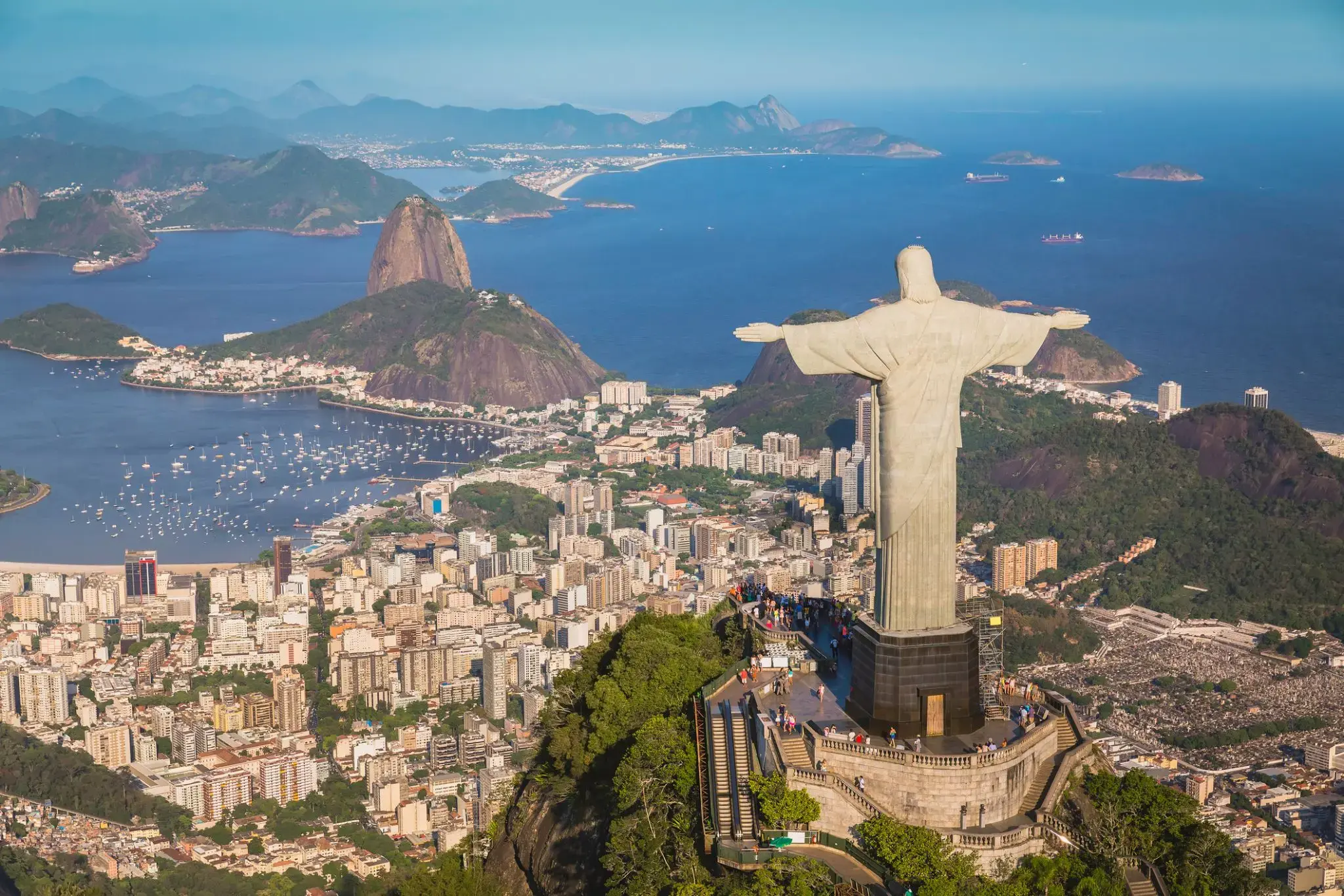
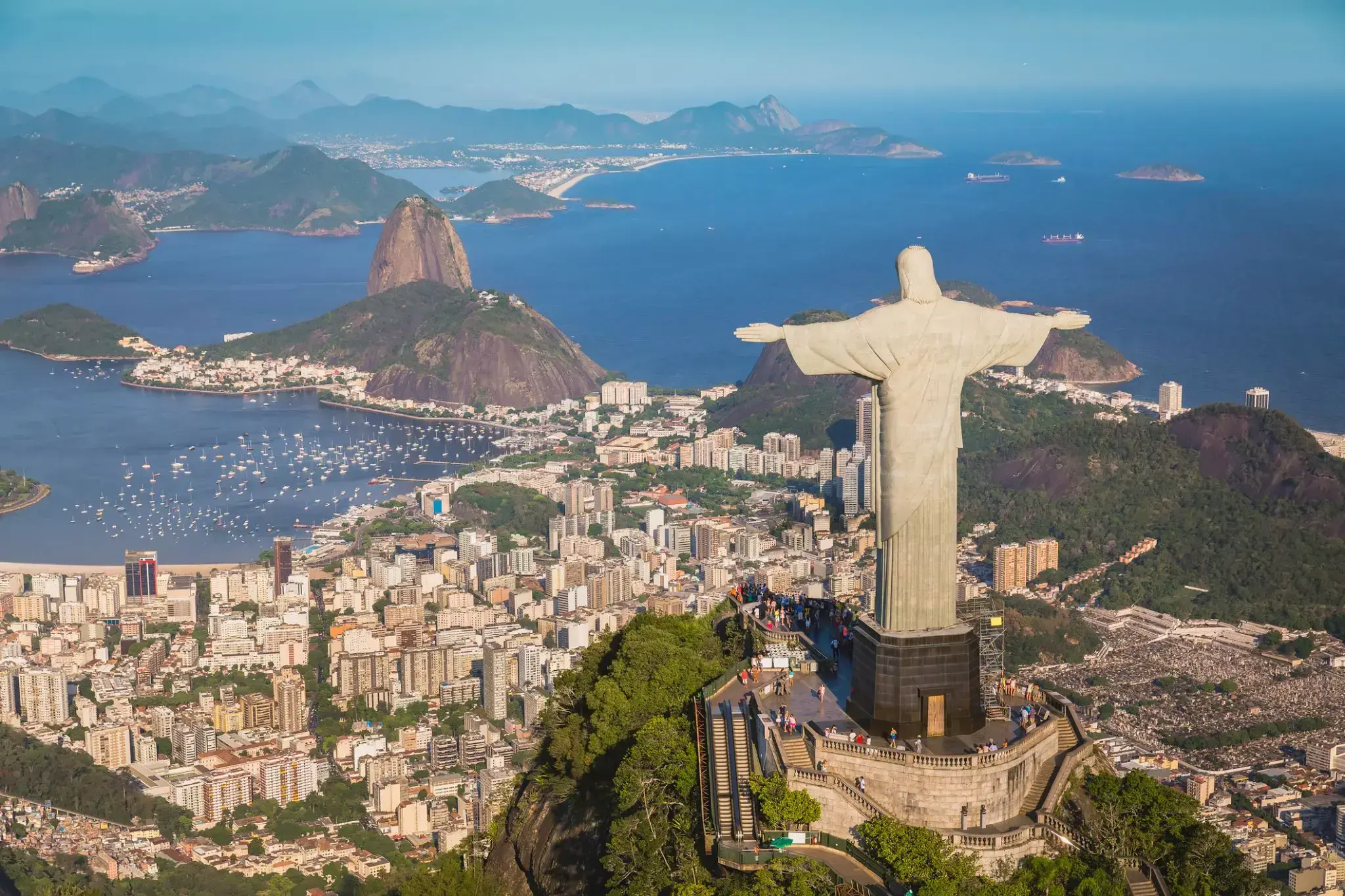
Rio de Janeiro is the second-most populous municipality in Brazil and the sixth-most populous in the Americas. The metropolis is anchor to the Rio de Janeiro metropolitan area, the second-most populous metropolitan area in Brazil and sixth-most populous in the Americas. Rio de Janeiro is the capital of the state of Rio de Janeiro, Brazil's third-most populous state. Part of the city has been designated as a World Heritage Site, named "Rio de Janeiro: CariocaLandscapes between the Mountain and the Sea", by UNESCO on 1 July 2012 as a Cultural Landscape.
Founded in 1565 by the Portuguese, the city was initially the seat of the Captaincy of Rio de Janeiro, a domain of the Portuguese Empire. Later, in 1763, it became the capital of the State of Brazil, a state of the Portuguese Empire. In 1808, when the Portuguese Royal Court transferred itself from Portugal to Brazil, Rio de Janeiro became the chosen seat of the court of Queen Maria I of Portugal, who subsequently, in 1815, under the leadership of her son, the Prince Regent, and future King João VI of Portugal, raised Brazil to the dignity of a kingdom, within the United Kingdom of Portugal, Brazil, and Algarves. Rio stayed the capital of the pluricontinental Lusitanian monarchy until 1822, when the War of Brazilian Independence began. This is one of the few instances in history that the capital of a colonising country officially shifted to a city in one of its colonies. Rio de Janeiro subsequently served as the capital of the independent monarchy, the Empire of Brazil, until 1889, and then the capital of a republican Brazil until 1960 when the capital was transferred to Brasília.
Rio de Janeiro is the second-most populous municipality in Brazil and the sixth-most populous in the Americas. The metropolis is anchor to the Rio de Janeiro metropolitan area, the second-most populous metropolitan area in Brazil and sixth-most populous in the Americas. Rio de Janeiro is the capital of the state of Rio de Janeiro, Brazil's third-most populous state. Part of the city has been designated as a World Heritage Site, named "Rio de Janeiro: CariocaLandscapes between the Mountain and the Sea", by UNESCO on 1 July 2012 as a Cultural Landscape.
Founded in 1565 by the Portuguese, the city was initially the seat of the Captaincy of Rio de Janeiro, a domain of the Portuguese Empire. Later, in 1763, it became the capital of the State of Brazil, a state of the Portuguese Empire. In 1808, when the Portuguese Royal Court transferred itself from Portugal to Brazil, Rio de Janeiro became the chosen seat of the court of Queen Maria I of Portugal, who subsequently, in 1815, under the leadership of her son, the Prince Regent, and future King João VI of Portugal, raised Brazil to the dignity of a kingdom, within the United Kingdom of Portugal, Brazil, and Algarves. Rio stayed the capital of the pluricontinental Lusitanian monarchy until 1822, when the War of Brazilian Independence began. This is one of the few instances in history that the capital of a colonising country officially shifted to a city in one of its colonies. Rio de Janeiro subsequently served as the capital of the independent monarchy, the Empire of Brazil, until 1889, and then the capital of a republican Brazil until 1960 when the capital was transferred to Brasília.
Rio de Janeiro is the second-most populous municipality in Brazil and the sixth-most populous in the Americas. The metropolis is anchor to the Rio de Janeiro metropolitan area, the second-most populous metropolitan area in Brazil and sixth-most populous in the Americas. Rio de Janeiro is the capital of the state of Rio de Janeiro, Brazil's third-most populous state. Part of the city has been designated as a World Heritage Site, named "Rio de Janeiro: CariocaLandscapes between the Mountain and the Sea", by UNESCO on 1 July 2012 as a Cultural Landscape.
Founded in 1565 by the Portuguese, the city was initially the seat of the Captaincy of Rio de Janeiro, a domain of the Portuguese Empire. Later, in 1763, it became the capital of the State of Brazil, a state of the Portuguese Empire. In 1808, when the Portuguese Royal Court transferred itself from Portugal to Brazil, Rio de Janeiro became the chosen seat of the court of Queen Maria I of Portugal, who subsequently, in 1815, under the leadership of her son, the Prince Regent, and future King João VI of Portugal, raised Brazil to the dignity of a kingdom, within the United Kingdom of Portugal, Brazil, and Algarves. Rio stayed the capital of the pluricontinental Lusitanian monarchy until 1822, when the War of Brazilian Independence began. This is one of the few instances in history that the capital of a colonising country officially shifted to a city in one of its colonies. Rio de Janeiro subsequently served as the capital of the independent monarchy, the Empire of Brazil, until 1889, and then the capital of a republican Brazil until 1960 when the capital was transferred to Brasília.
Rio de Janeiro is the second-most populous municipality in Brazil and the sixth-most populous in the Americas. The metropolis is anchor to the Rio de Janeiro metropolitan area, the second-most populous metropolitan area in Brazil and sixth-most populous in the Americas. Rio de Janeiro is the capital of the state of Rio de Janeiro, Brazil's third-most populous state. Part of the city has been designated as a World Heritage Site, named "Rio de Janeiro: CariocaLandscapes between the Mountain and the Sea", by UNESCO on 1 July 2012 as a Cultural Landscape.
Founded in 1565 by the Portuguese, the city was initially the seat of the Captaincy of Rio de Janeiro, a domain of the Portuguese Empire. Later, in 1763, it became the capital of the State of Brazil, a state of the Portuguese Empire. In 1808, when the Portuguese Royal Court transferred itself from Portugal to Brazil, Rio de Janeiro became the chosen seat of the court of Queen Maria I of Portugal, who subsequently, in 1815, under the leadership of her son, the Prince Regent, and future King João VI of Portugal, raised Brazil to the dignity of a kingdom, within the United Kingdom of Portugal, Brazil, and Algarves. Rio stayed the capital of the pluricontinental Lusitanian monarchy until 1822, when the War of Brazilian Independence began. This is one of the few instances in history that the capital of a colonising country officially shifted to a city in one of its colonies. Rio de Janeiro subsequently served as the capital of the independent monarchy, the Empire of Brazil, until 1889, and then the capital of a republican Brazil until 1960 when the capital was transferred to Brasília.
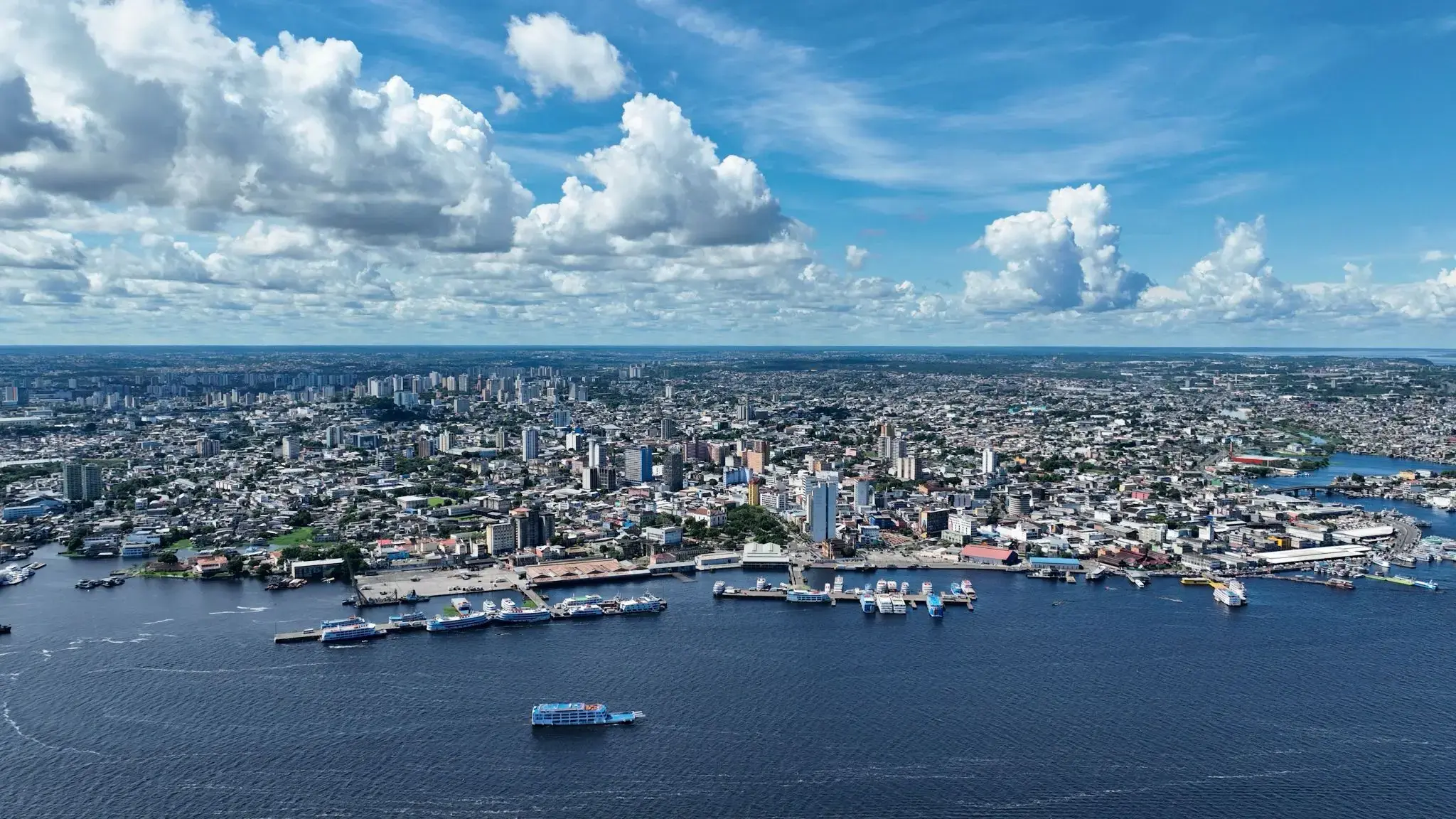
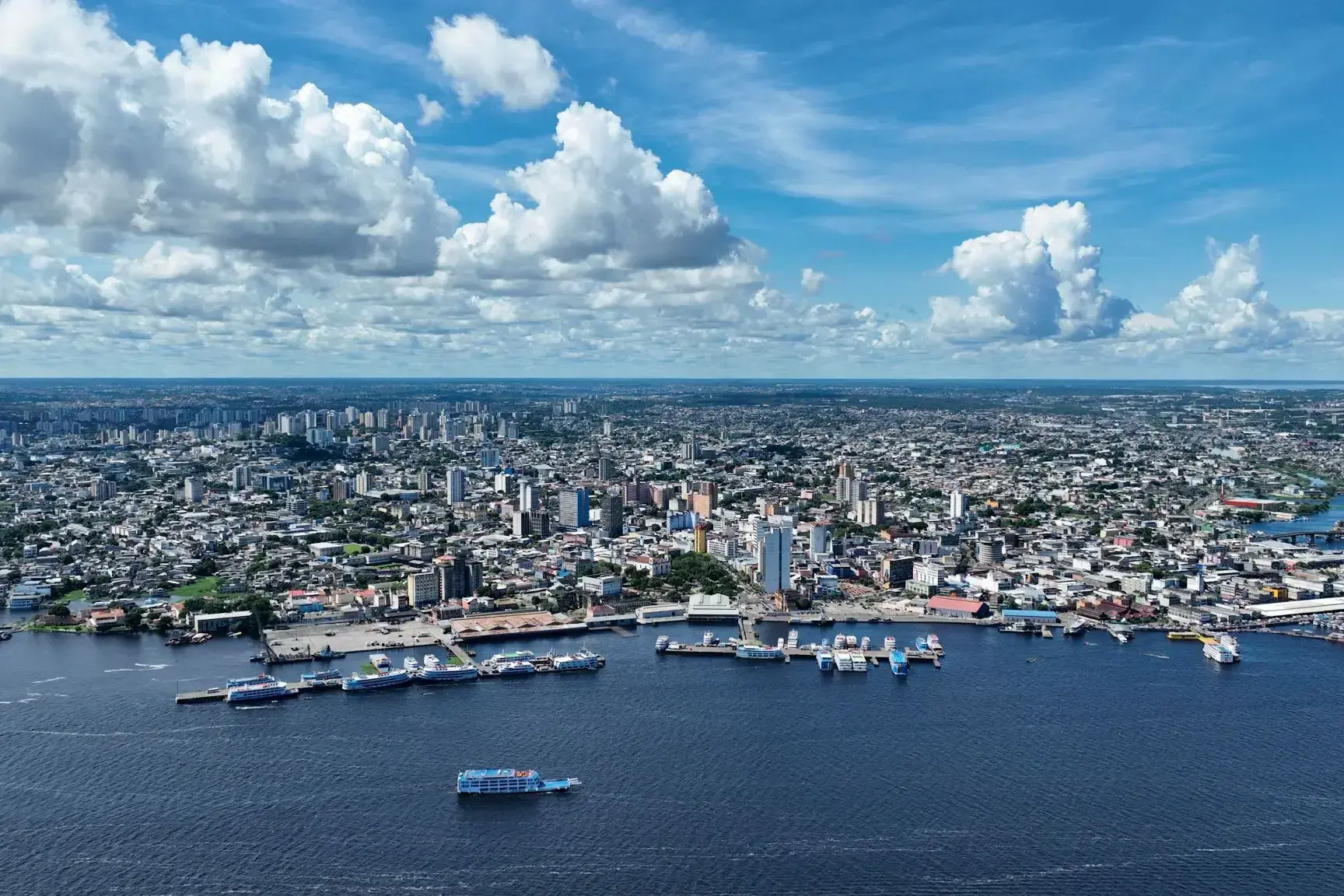
In the heart of the Amazon, where nature and history blend uniquely, lies the city of Manaus — the capital of the Amazonas state and the largest city in the region with over a million inhabitants. It gained fame during the rubber boom of the last century, when the luxurious Opera House was built in 1896 using materials imported from Europe despite the high costs. Surrounded by jungle on three sides, Manaus stands apart from European cities with its shaded streets, small parks, and traditional boot cleaners. Just a ten-minute walk from the city center, you can find palm-thatched stilt houses inhabited by indigenous families, offering a genuine Amazonian experience.
One of the city’s natural wonders is the "Meeting of the Waters." Here, the dark mineral-rich waters of the Rio Negro merge with the yellowish waters of the Solimões River to form the mighty Amazon. For about two kilometers, these waters flow side by side without mixing due to their temperature difference, creating a stunning natural spectacle. Manaus is considered one of the cleanest ecological cities in the world and is located just five hours by plane from Rio de Janeiro — a perfect starting point for exploring the amazing Amazon rainforest.
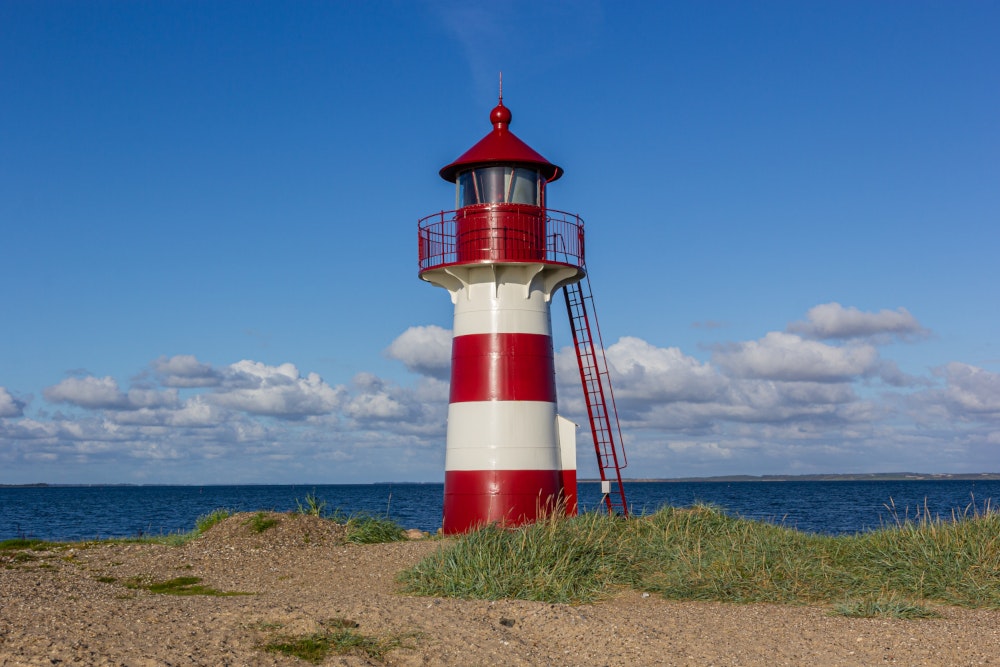
In the heart of the Amazon, where nature and history blend uniquely, lies the city of Manaus — the capital of the Amazonas state and the largest city in the region with over a million inhabitants. It gained fame during the rubber boom of the last century, when the luxurious Opera House was built in 1896 using materials imported from Europe despite the high costs. Surrounded by jungle on three sides, Manaus stands apart from European cities with its shaded streets, small parks, and traditional boot cleaners. Just a ten-minute walk from the city center, you can find palm-thatched stilt houses inhabited by indigenous families, offering a genuine Amazonian experience.
One of the city’s natural wonders is the "Meeting of the Waters." Here, the dark mineral-rich waters of the Rio Negro merge with the yellowish waters of the Solimões River to form the mighty Amazon. For about two kilometers, these waters flow side by side without mixing due to their temperature difference, creating a stunning natural spectacle. Manaus is considered one of the cleanest ecological cities in the world and is located just five hours by plane from Rio de Janeiro — a perfect starting point for exploring the amazing Amazon rainforest.
In the heart of the Amazon, where nature and history blend uniquely, lies the city of Manaus — the capital of the Amazonas state and the largest city in the region with over a million inhabitants. It gained fame during the rubber boom of the last century, when the luxurious Opera House was built in 1896 using materials imported from Europe despite the high costs. Surrounded by jungle on three sides, Manaus stands apart from European cities with its shaded streets, small parks, and traditional boot cleaners. Just a ten-minute walk from the city center, you can find palm-thatched stilt houses inhabited by indigenous families, offering a genuine Amazonian experience.
One of the city’s natural wonders is the "Meeting of the Waters." Here, the dark mineral-rich waters of the Rio Negro merge with the yellowish waters of the Solimões River to form the mighty Amazon. For about two kilometers, these waters flow side by side without mixing due to their temperature difference, creating a stunning natural spectacle. Manaus is considered one of the cleanest ecological cities in the world and is located just five hours by plane from Rio de Janeiro — a perfect starting point for exploring the amazing Amazon rainforest.
In the heart of the Amazon, where nature and history blend uniquely, lies the city of Manaus — the capital of the Amazonas state and the largest city in the region with over a million inhabitants. It gained fame during the rubber boom of the last century, when the luxurious Opera House was built in 1896 using materials imported from Europe despite the high costs. Surrounded by jungle on three sides, Manaus stands apart from European cities with its shaded streets, small parks, and traditional boot cleaners. Just a ten-minute walk from the city center, you can find palm-thatched stilt houses inhabited by indigenous families, offering a genuine Amazonian experience.
One of the city’s natural wonders is the "Meeting of the Waters." Here, the dark mineral-rich waters of the Rio Negro merge with the yellowish waters of the Solimões River to form the mighty Amazon. For about two kilometers, these waters flow side by side without mixing due to their temperature difference, creating a stunning natural spectacle. Manaus is considered one of the cleanest ecological cities in the world and is located just five hours by plane from Rio de Janeiro — a perfect starting point for exploring the amazing Amazon rainforest.