| Cruise Region : Caribbean, Panama Canal |
| Company : Azamara Cruises |
| Ship : Azamara Onward |
| Journey Start : Wed 05 Jan 2028 |
| Journey End : Thu 29 Jun 2028 |
| Count Nights : 176 nights |
| Day | Date | Port | Arrival | Departure |
|---|---|---|---|---|
| 1 | 5.01 Wed | Miami / USA | 18:00 | |
| 2 | 6.01 Thu | Day at sea / Sea | ||
| 3 | 7.01 Fri | Day at sea / Sea | ||
| 4 | 8.01 Sat | Aruba (Oranjestad) / Aruba | 13:30 | 22:00 |
| 5 | 9.01 Sun | Curaçao / Curacao | 08:00 | 22:00 |
| 6 | 10.01 Mon | Day at sea / Sea | 15:00 | |
| 7 | 11.01 Tue | Cartagena (Bolívar) / Colombia | 08:00 | |
| 8 | 12.01 Wed | Cartagena (Bolívar) / Colombia | 13:00 | |
| 9 | 13.01 Thu | Column / Panama | 08:00 | 16:00 |
| 10 | 14.01 Fri | Panama Canal / Panama | 16:05 | 23:59 |
| 11 | 15.01 Sat | Panama City, Florida / USA | 02:00 | 17:00 |
| 12 | 16.01 Sun | Day at sea / Sea | ||
| 13 | 17.01 Mon | Manta rays / Ecuador | 08:00 | 13:30 |
| 14 | 18.01 Tue | Day at sea / Sea | ||
| 15 | 19.01 Wed | Callao / Peru | 13:00 | |
| 16 | 20.01 Thu | Callao / Peru | 09:00 | 17:00 |
| 17 | 21.01 Fri | Day at sea / Sea | ||
| 18 | 22.01 Sat | Day at sea / Sea | ||
| 19 | 23.01 Sun | Day at sea / Sea | ||
| 20 | 24.01 Mon | Day at sea / Sea | ||
| 21 | 25.01 Tue | Day at sea / Sea | ||
| 22 | 26.01 Wed | Easter Island / Chile | 08:00 | |
| 23 | 27.01 Thu | Easter Island / Chile | 13:00 | |
| 24 | 28.01 Fri | Day at sea / Sea | ||
| 25 | 29.01 Sat | Day at sea / Sea | ||
| 26 | 30.01 Sun | oh. Pitcairn | 09:00 | 17:00 |
| 27 | 31.01 Mon | Day at sea / Sea | 15:00 | |
| 28 | 1.02 Tue | Day at sea / Sea | ||
| 29 | 2.02 Wed | Fakarava / French Polynesia | 09:00 | 14:00 |
| 30 | 3.02 Thu | Moorea Islands Society / French Polynesia | 09:00 | |
| 31 | 4.02 Fri | Papeete / French Polynesia | 18:00 | |
| 32 | 5.02 Sat | Moorea Islands Society / French Polynesia | 15:30 | |
| 33 | 6.02 Sun | Papeete / French Polynesia | 09:00 | 18:00 |
| 34 | 7.02 Mon | Bora Bora, Society Islands / French Polynesia | 08:00 | |
| 35 | 8.02 Tue | Bora Bora, Society Islands / French Polynesia | 18:00 | |
| 36 | 9.02 Wed | Day at sea / Sea | 15:00 | |
| 37 | 10.02 Thu | Day at sea / Sea | ||
| 38 | 11.02 Fri | Day at sea / Sea | 15:00 | |
| 39 | 12.02 Sat | Day at sea / Sea | ||
| 40 | 13.02 Sun | Day at sea / Sea | ||
| 41 | 14.02 Mon | Day at sea / Sea | ||
| 42 | 15.02 Tue | Day at sea / Sea | ||
| 43 | 16.02 Wed | Cocksen Hole / Honduras | 08:00 | 19:00 |
| 44 | 17.02 Thu | Oakland / New Zealand | 07:00 | 18:00 |
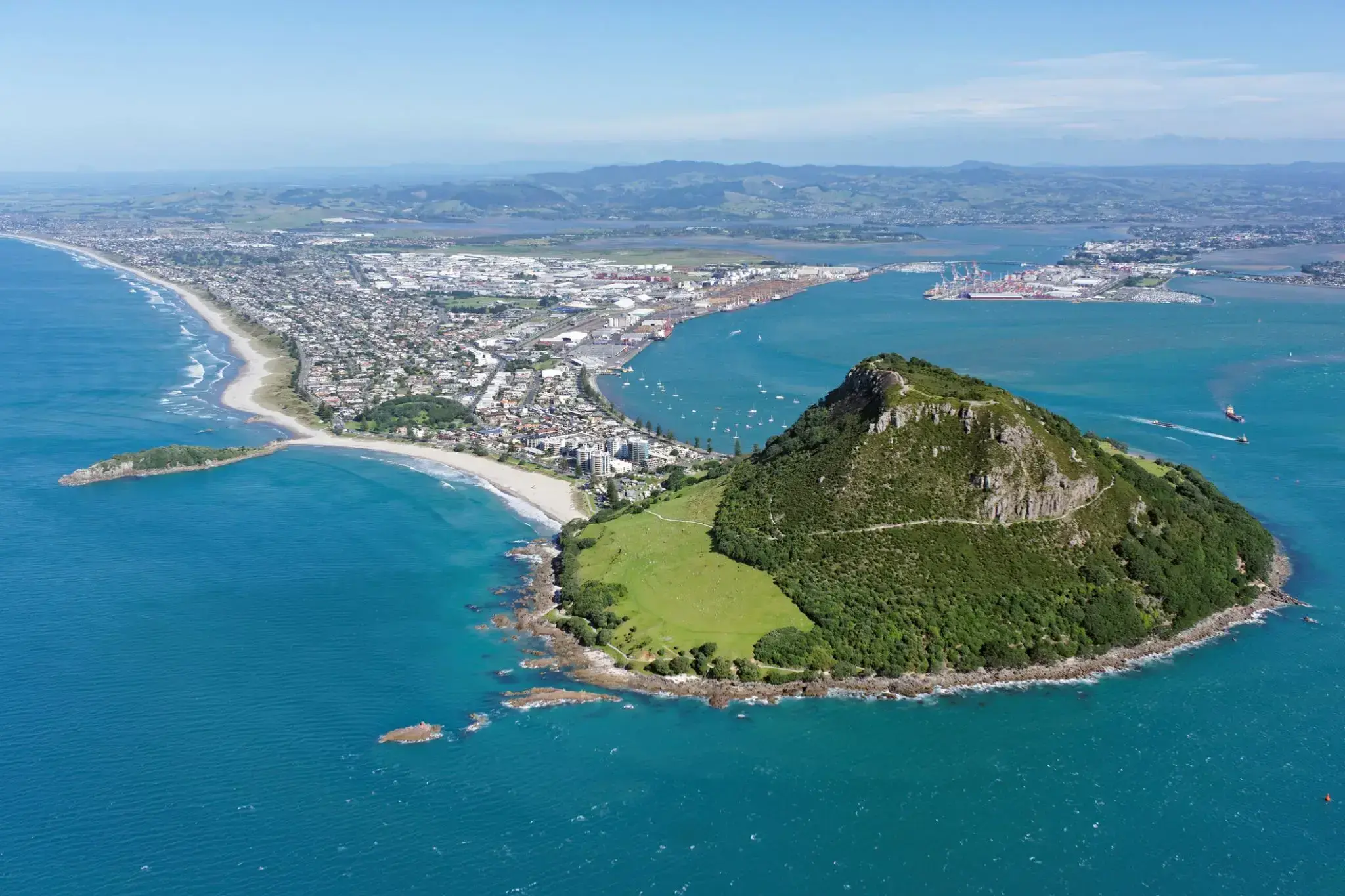
| 45 | 18.02 Fri | Tauranga / New Zealand | 08:00 | 18:00 |
| 46 | 19.02 Sat | Napier / New Zealand | 14:00 | 21:00 |
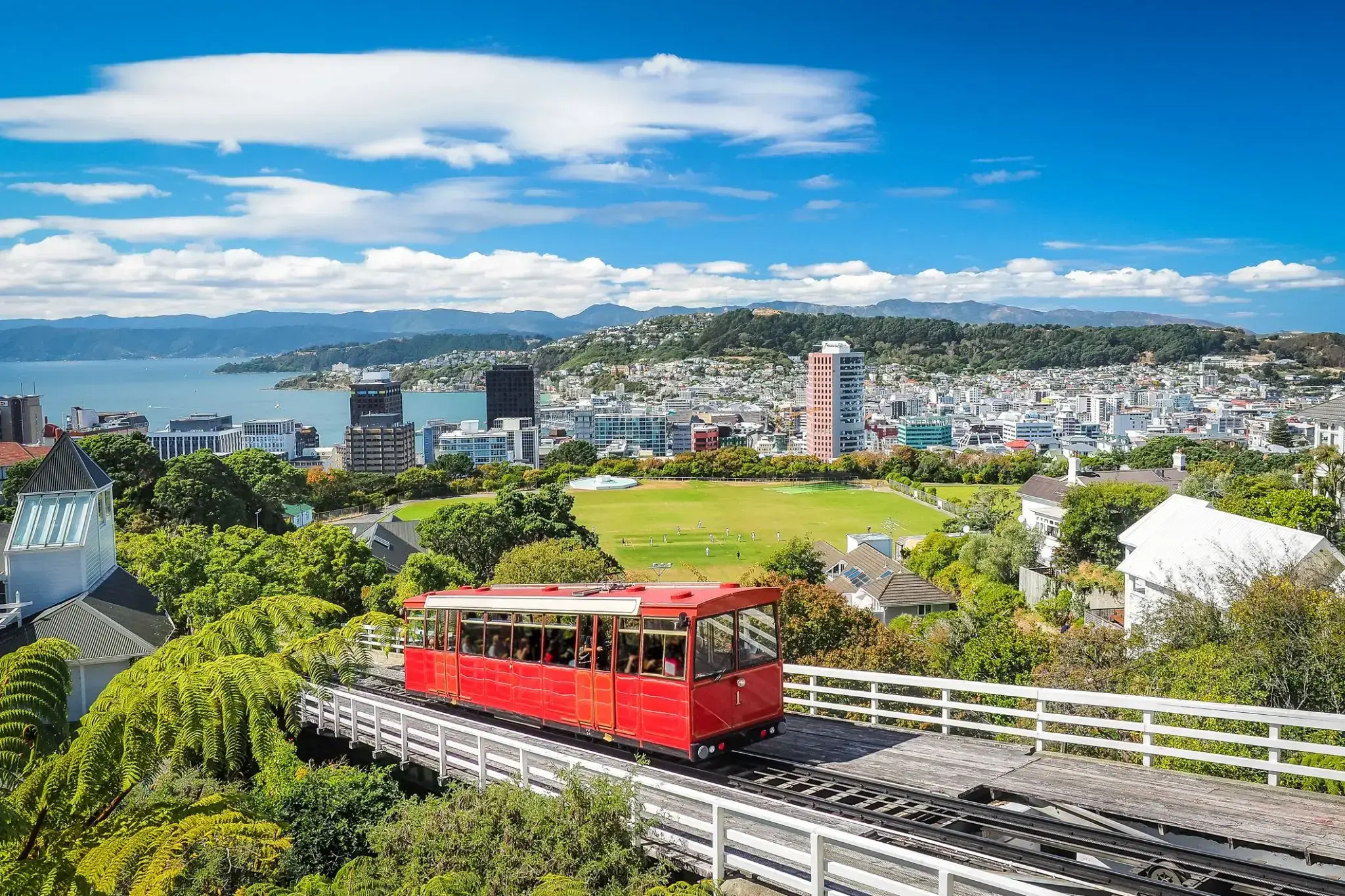
| 47 | 20.02 Sun | Wellington / New Zealand | 13:00 | 22:00 |
| 48 | 21.02 Mon | Goal Goal / Australia | 08:00 | 17:00 |
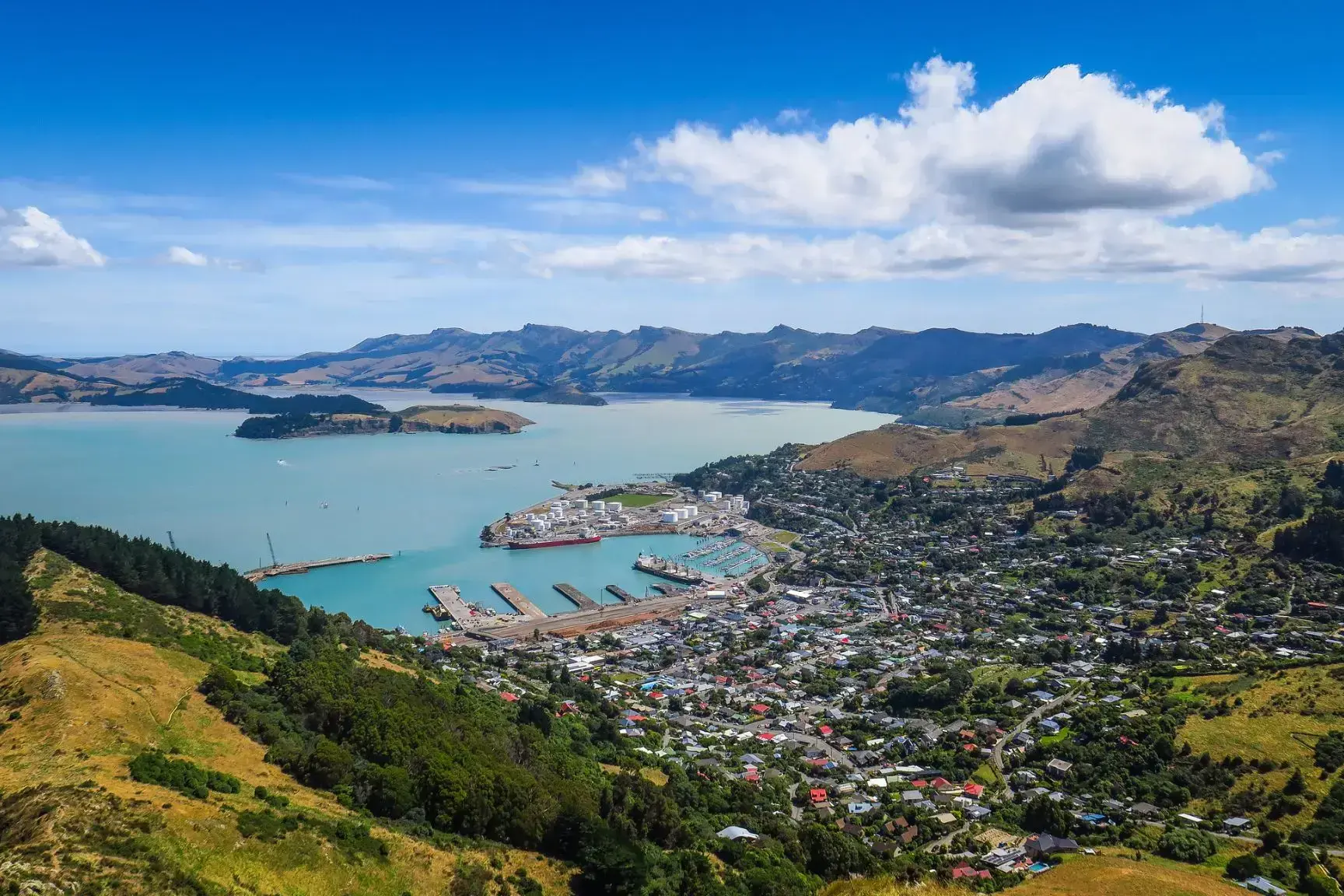
| 49 | 22.02 Tue | Christchurch / New Zealand | 08:00 | 17:00 |
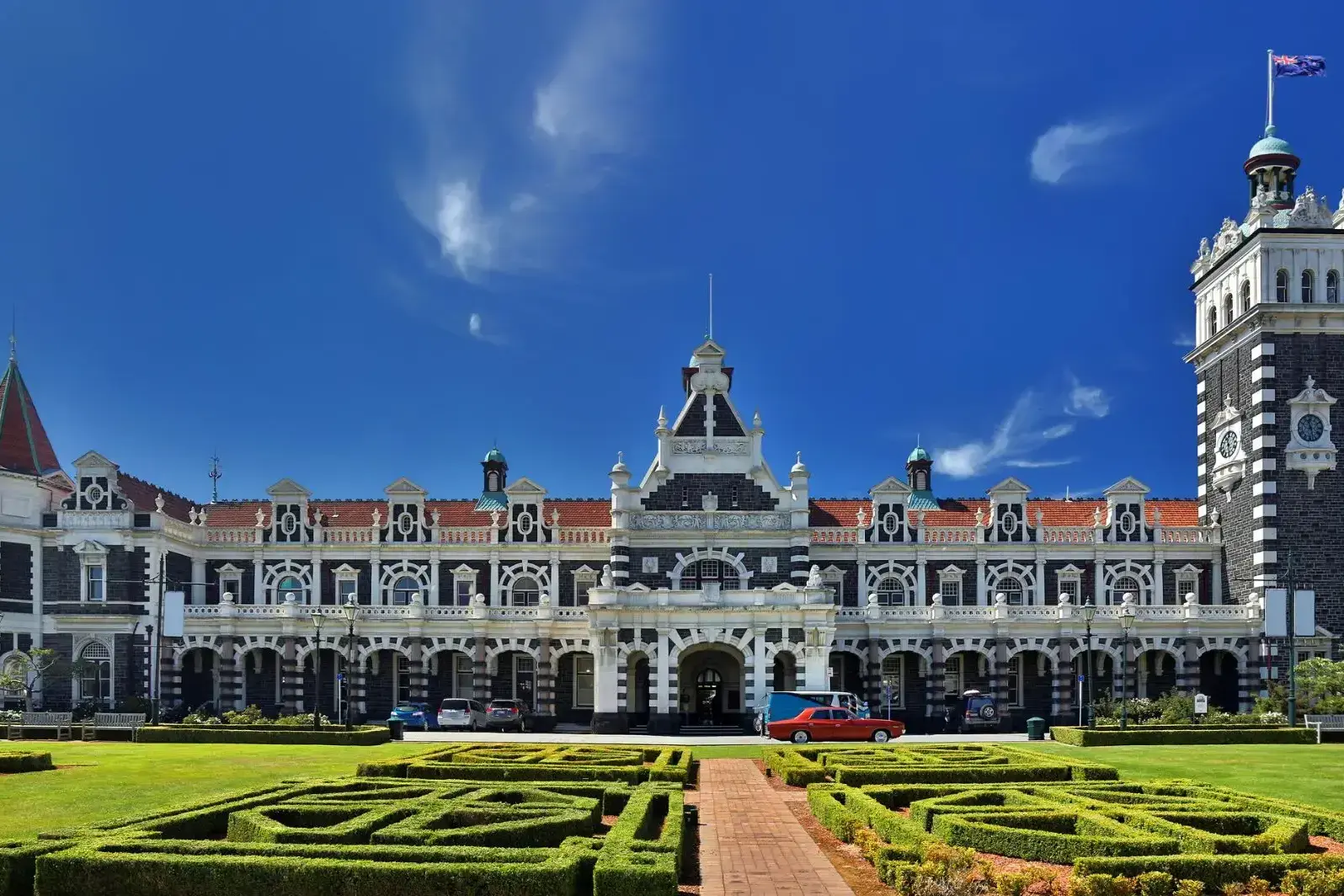
| 50 | 23.02 Wed | Dunedin / New Zealand | 07:30 | 16:00 |
| 51 | 24.02 Thu | Milford Sound / New Zealand | 16:00 | 19:00 |
| 52 | 25.02 Fri | Day at sea / Sea | ||
| 53 | 26.02 Sat | Day at sea / Sea | ||
| 54 | 27.02 Sun | Gobart Tasmania / Australia | 08:00 | |
| 55 | 28.02 Mon | Gobart Tasmania / Australia | 22:00 | |
| 56 | 29.02 Tue | Day at sea / Sea | ||
| 57 | 1.03 Wed | Eden Valley / Australia | 07:30 | 14:00 |
| 58 | 2.03 Thu | Sydney / Australia | 08:00 | |
| 59 | 3.03 Fri | Sydney / Australia | 09:00 | 22:00 |
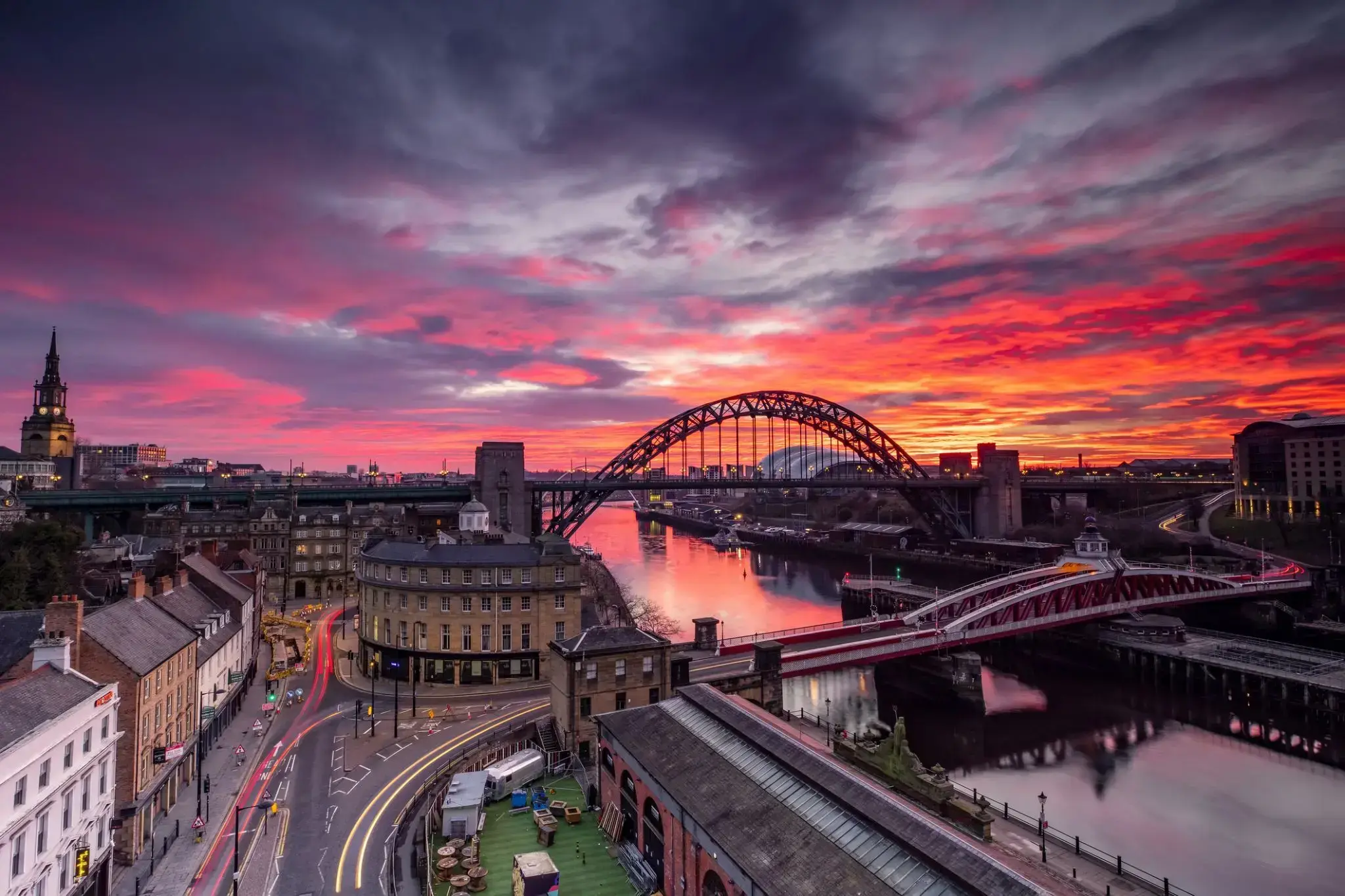
| 60 | 4.03 Sat | Newcastle / Great Britain | 08:00 | 20:00 |
| 61 | 5.03 Sun | Day at sea / Sea | ||
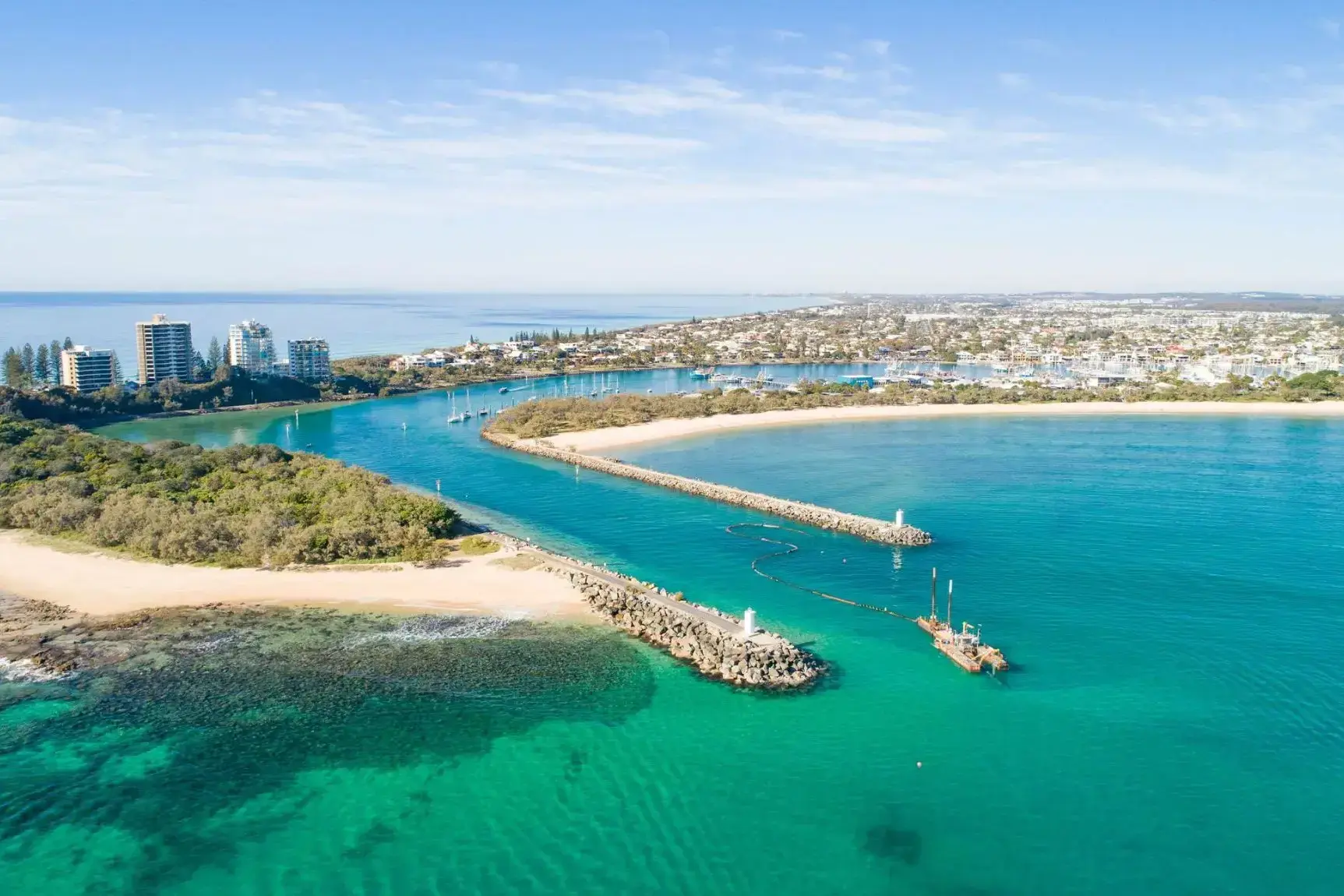
| 62 | 6.03 Mon | Mooloolaba / Australia | 08:00 | 20:00 |
| 63 | 7.03 Tue | Day at sea / Sea | ||
| 64 | 8.03 Wed | Airlie Beach Queensland / Australia | 08:00 | 17:00 |
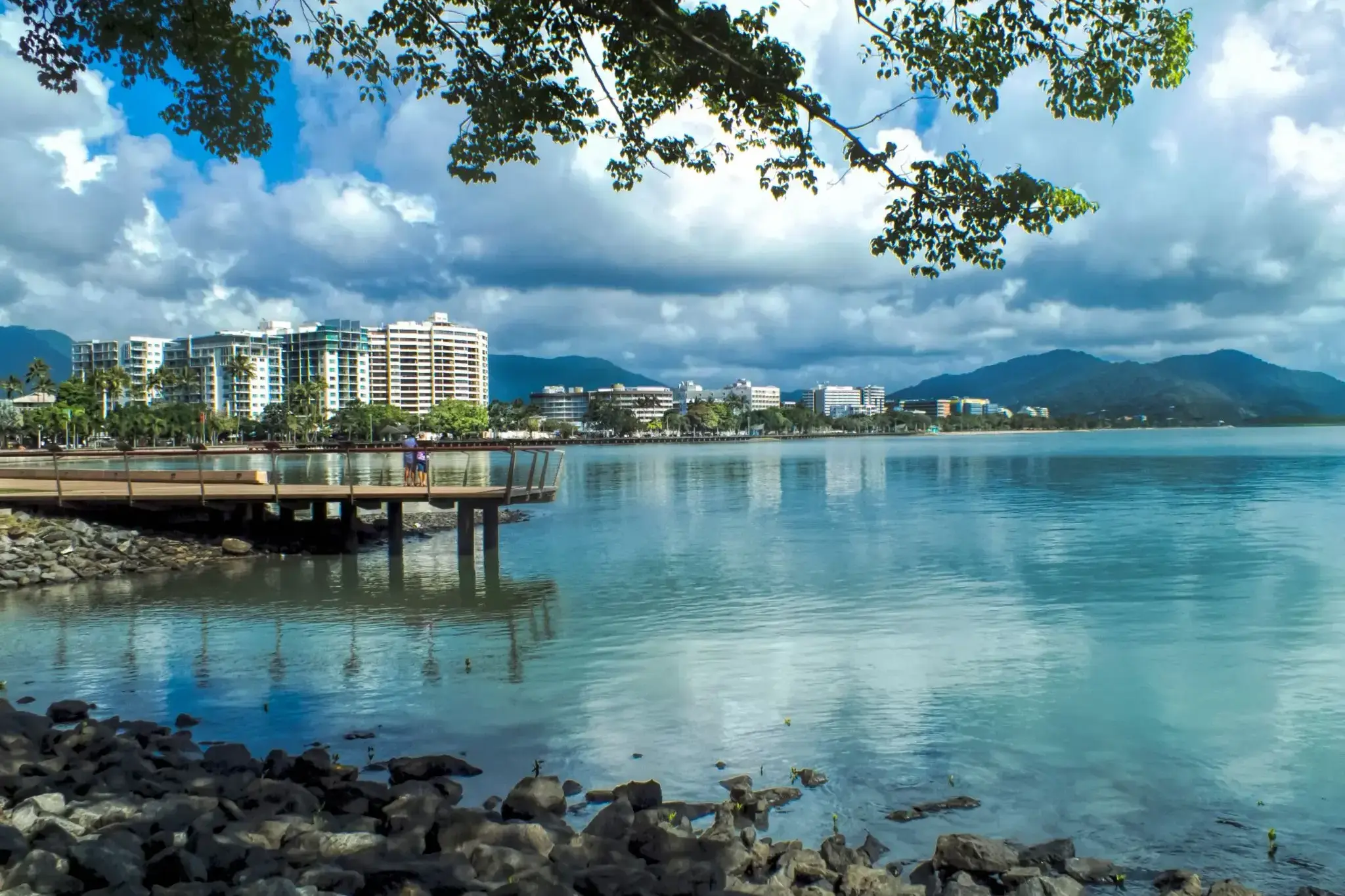
| 65 | 9.03 Thu | Cairns / Australia | 13:00 | |
| 66 | 10.03 Fri | Cairns / Australia | 20:00 | |
| 67 | 11.03 Sat | Day at sea / Sea | ||
| 68 | 12.03 Sun | Day at sea / Sea | ||
| 69 | 13.03 Mon | Day at sea / Sea | ||
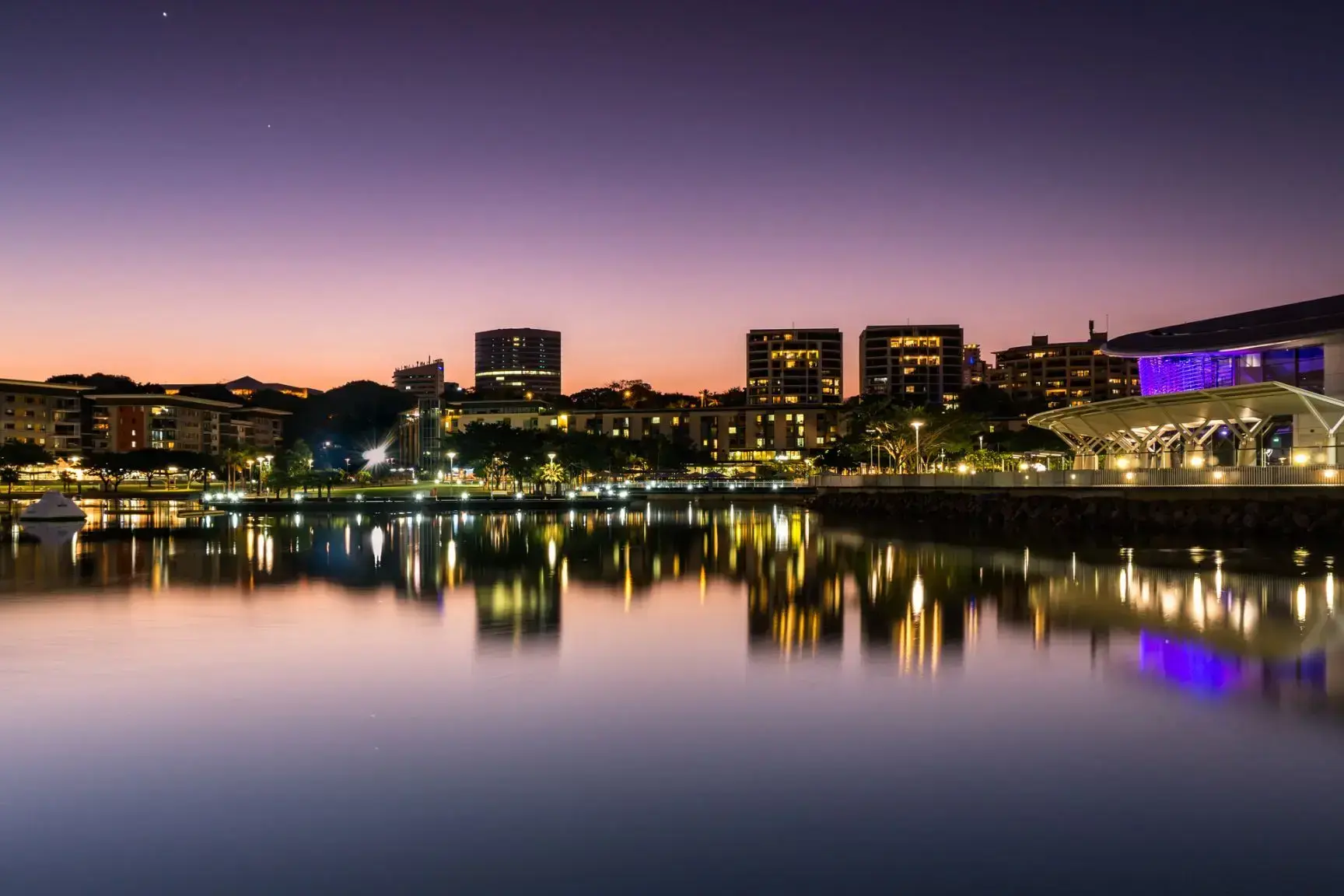
| 70 | 14.03 Tue | Darwin / Australia | 08:00 | |
| 71 | 15.03 Wed | Darwin / Australia | 13:00 | |
| 72 | 16.03 Thu | Day at sea / Sea | ||
| 73 | 17.03 Fri | KOMODO ISLAND | 13:00 | 17:00 |
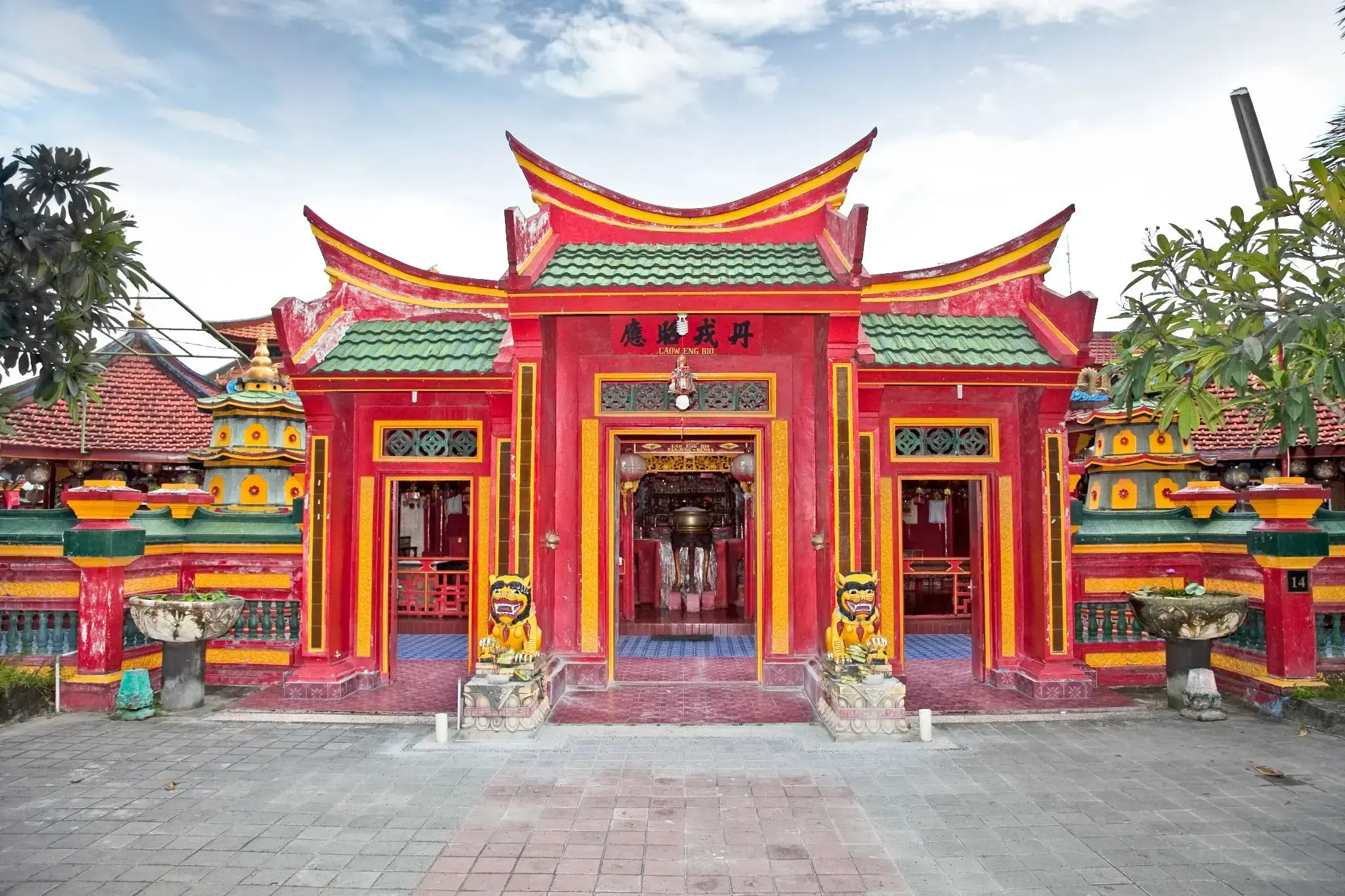
| 74 | 18.03 Sat | Tangjung Benoa / Indonesia | 13:30 | |
| 75 | 19.03 Sun | Tangjung Benoa / Indonesia | 09:00 | 22:00 |
| 76 | 20.03 Mon | Chelukan-Bawang | 08:00 | 16:00 |
| 77 | 21.03 Tue | Day at sea / Sea | ||
| 78 | 22.03 Wed | Day at sea / Sea | ||
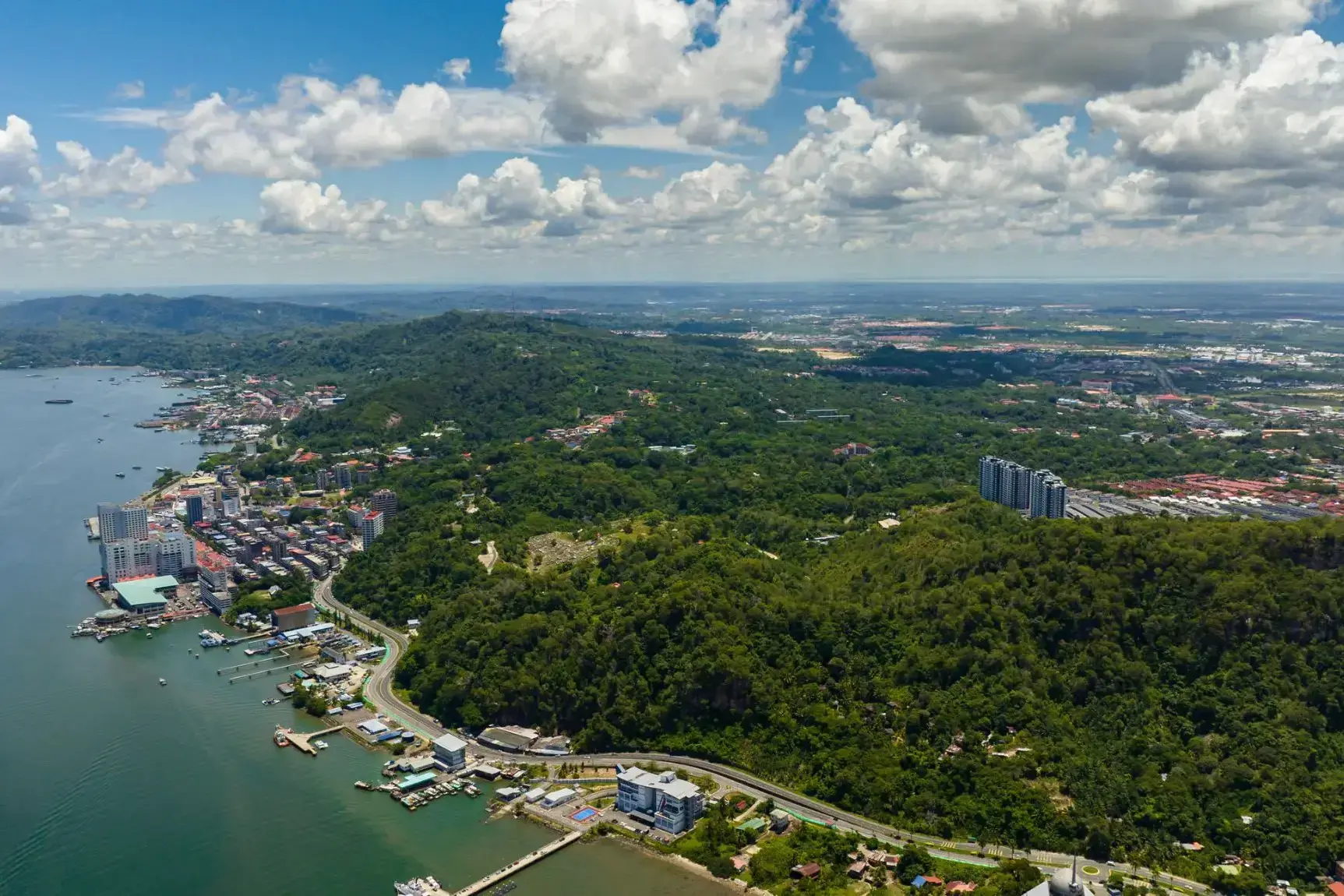
| 79 | 23.03 Thu | Sandakan / Malaysia | 08:00 | 17:00 |
| 80 | 24.03 Fri | Puerto Princesa / Philippine Islands | 10:30 | 17:30 |
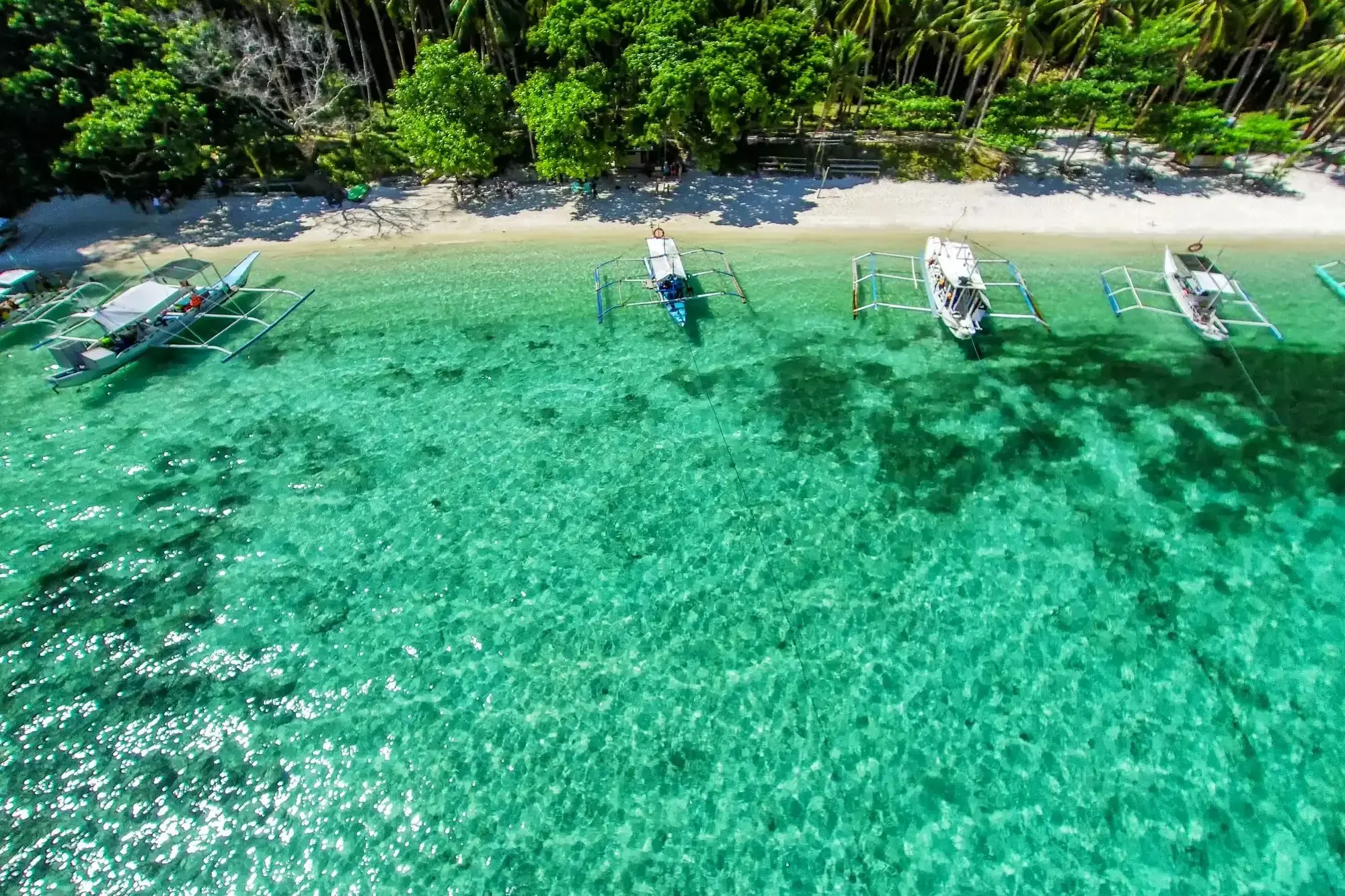
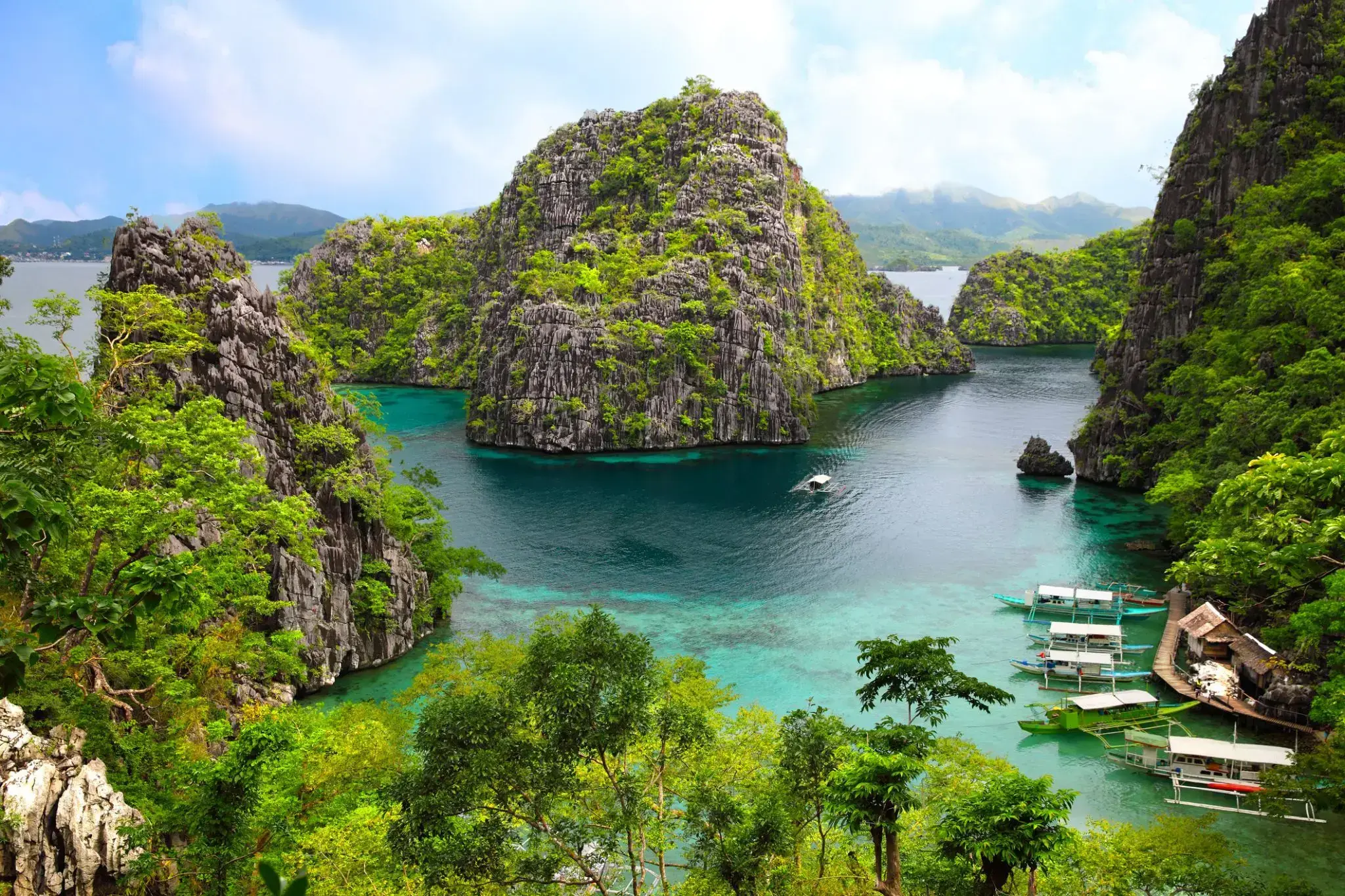
| 81 | 25.03 Sat | Coron Island / Philippine Islands | 13:00 | 19:00 |
| 82 | 26.03 Sun | Manila / Philippine Islands | 09:30 | |
| 83 | 27.03 Mon | Manila / Philippine Islands | 14:00 | |
| 84 | 28.03 Tue | Day at sea / Sea | ||
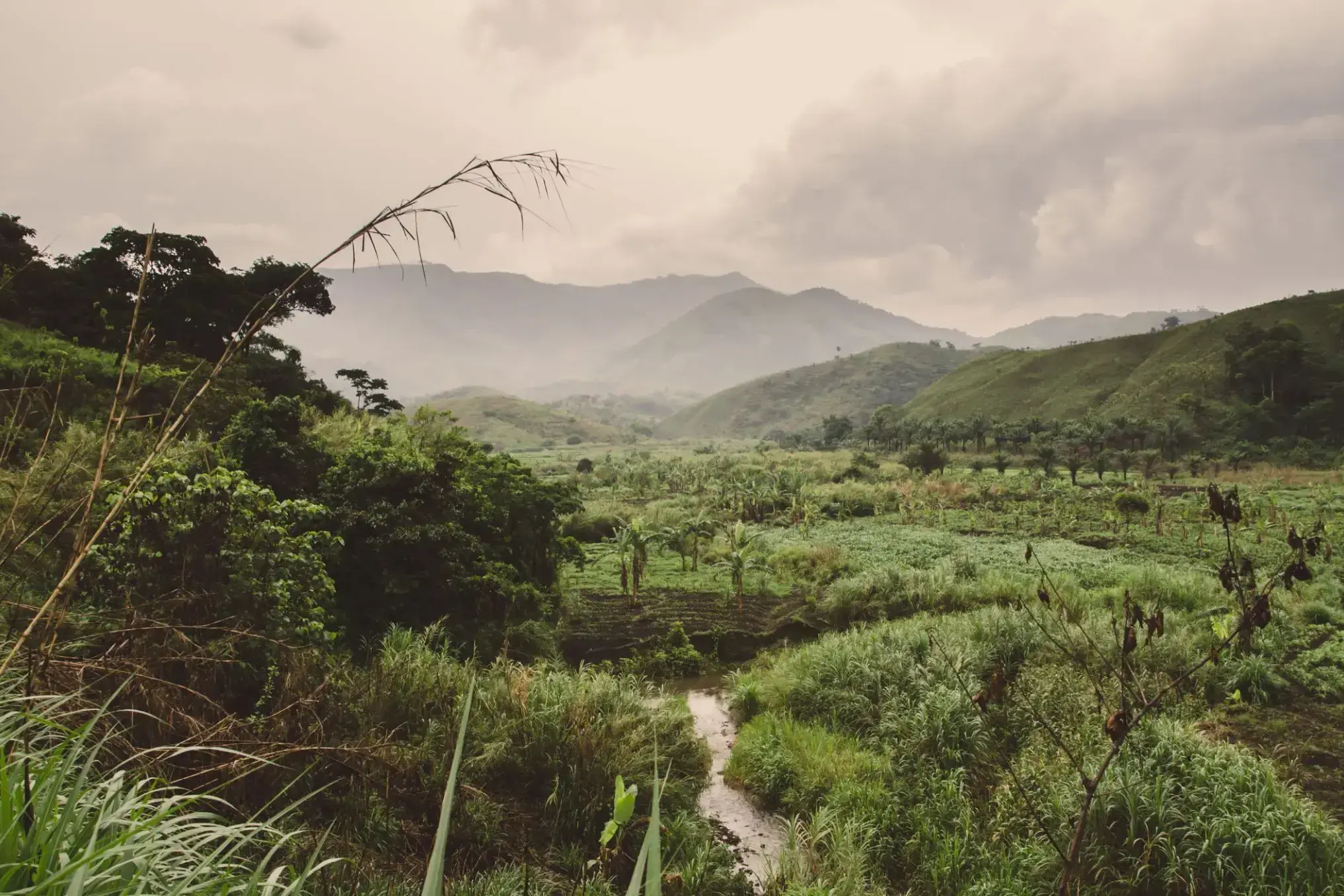
| 85 | 29.03 Wed | Limbe / Cameroon | 08:00 | |
| 86 | 30.03 Thu | Limbe / Cameroon | 09:00 | 20:00 |
| 87 | 31.03 Fri | Day at sea / Sea | ||
| 88 | 1.04 Sat | Da Nang / Vietnam | 08:00 | 20:00 |
| 89 | 2.04 Sun | Day at sea / Sea | ||
| 90 | 3.04 Mon | Ho Chi Minh / Vietnam | 10:00 | |
| 91 | 4.04 Tue | Ho Chi Minh / Vietnam | 14:00 | |
| 92 | 5.04 Wed | Day at sea / Sea | ||
| 93 | 6.04 Thu | Bangkok / Thailand | 08:00 | |
| 94 | 7.04 Fri | Bangkok / Thailand | ||
| 95 | 8.04 Sat | Bangkok / Thailand | 14:00 | |
| 96 | 9.04 Sun | Samui Island / Koh Samui / Thailand | 08:00 | 14:00 |
| 97 | 10.04 Mon | Day at sea / Sea | ||
| 98 | 11.04 Tue | Singapore / Singapore | 08:00 | |
| 99 | 12.04 Wed | Singapore / Singapore | 09:00 | 17:00 |
| 100 | 13.04 Thu | Kuala Lumpur / Malaysia | 08:00 | 20:00 |
| 101 | 14.04 Fri | Day at sea / Sea | ||
| 102 | 15.04 Sat | Sabang / Indonesia | 08:00 | 17:00 |
| 103 | 16.04 Sun | Day at sea / Sea | ||
| 104 | 17.04 Mon | Day at sea / Sea | ||
| 105 | 18.04 Tue | Hambantota / Sri Lanka | 08:00 | 18:00 |
| 106 | 19.04 Wed | Colombo / Sri Lanka | 08:00 | 20:00 |
| 107 | 20.04 Thu | Kochi / India | 17:00 | |
| 108 | 21.04 Fri | Kochi / India | 22:00 | |
| 109 | 22.04 Sat | Day at sea / Sea | ||
| 110 | 23.04 Sun | Male / Maldives | 08:00 | 17:00 |
| 111 | 24.04 Mon | Day at sea / Sea | ||
| 112 | 25.04 Tue | Day at sea / Sea | ||
| 113 | 26.04 Wed | Day at sea / Sea | ||
| 114 | 27.04 Thu | Day at sea / Sea | ||
| 115 | 28.04 Fri | Port Louis / Mauritius | 13:00 | |
| 116 | 29.04 Sat | Port Louis / Mauritius | 08:00 | 21:00 |
| 117 | 30.04 Sun | PEBBLE POINT | 08:00 | 18:00 |
| 118 | 1.05 Mon | Day at sea / Sea | ||
| 119 | 2.05 Tue | Tolanaro Tolanaro / Madagascar | 08:00 | 18:00 |
| 120 | 3.05 Wed | Day at sea / Sea | ||
| 121 | 4.05 Thu | Day at sea / Sea | ||
| 122 | 5.05 Fri | Richards Bay / South Africa | 07:00 | 20:00 |
| 123 | 6.05 Sat | Durban / South Africa | 08:00 | 20:00 |
| 124 | 7.05 Sun | Day at sea / Sea | ||
| 125 | 8.05 Mon | Port Elizabeth / South Africa | 07:00 | 20:00 |
| 126 | 9.05 Tue | Day at sea / Sea | ||
| 127 | 10.05 Wed | Cape Town / South Africa | 08:00 | |
| 128 | 11.05 Thu | Cape Town / South Africa | 07:00 | 20:00 |
| 129 | 12.05 Fri | Day at sea / Sea | ||
| 130 | 13.05 Sat | Luderitz / Namibia | 08:00 | 16:00 |
| 131 | 14.05 Sun | Walvis Bay / Namibia | 11:00 | |
| 132 | 15.05 Mon | Walvis Bay / Namibia | 20:00 | |
| 133 | 16.05 Tue | Day at sea / Sea | ||
| 134 | 17.05 Wed | Day at sea / Sea | ||
| 135 | 18.05 Thu | Day at sea / Sea | ||
| 136 | 19.05 Fri | Jamestown / Saint Helena | 08:00 | 17:00 |
| 137 | 20.05 Sat | Day at sea / Sea | ||
| 138 | 21.05 Sun | Day at sea / Sea | ||
| 139 | 22.05 Mon | Day at sea / Sea | ||
| 140 | 23.05 Tue | Day at sea / Sea | ||
| 141 | 24.05 Wed | Day at sea / Sea | ||
| 142 | 25.05 Thu | Praia / Cape Verde | 09:00 | 17:00 |
| 143 | 26.05 Fri | Day at sea / Sea | ||
| 144 | 27.05 Sat | Day at sea / Sea | ||
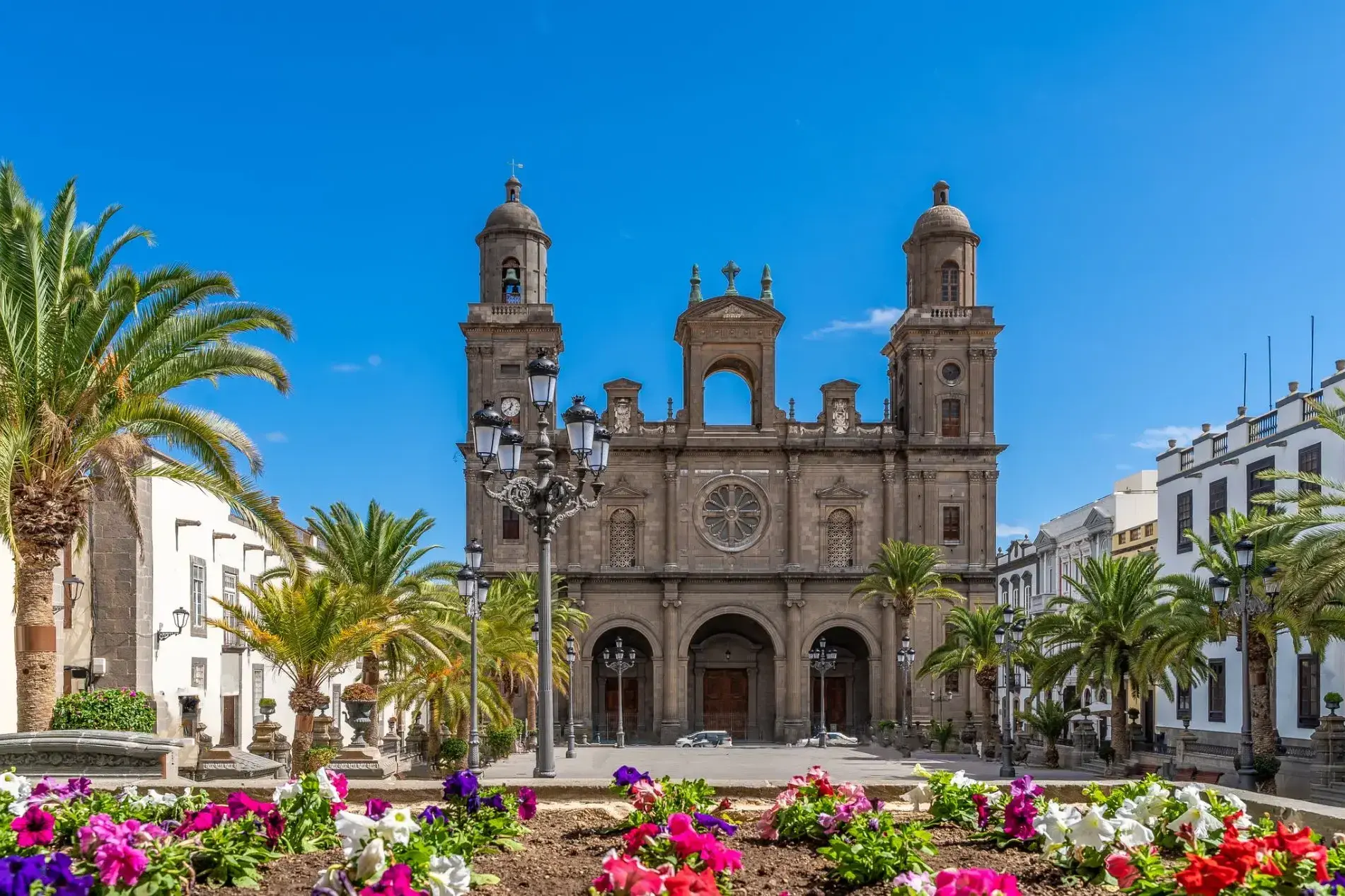
| 145 | 28.05 Sun | Las Palmas (Gran Canaria) / Spain | 06:00 | 20:00 |
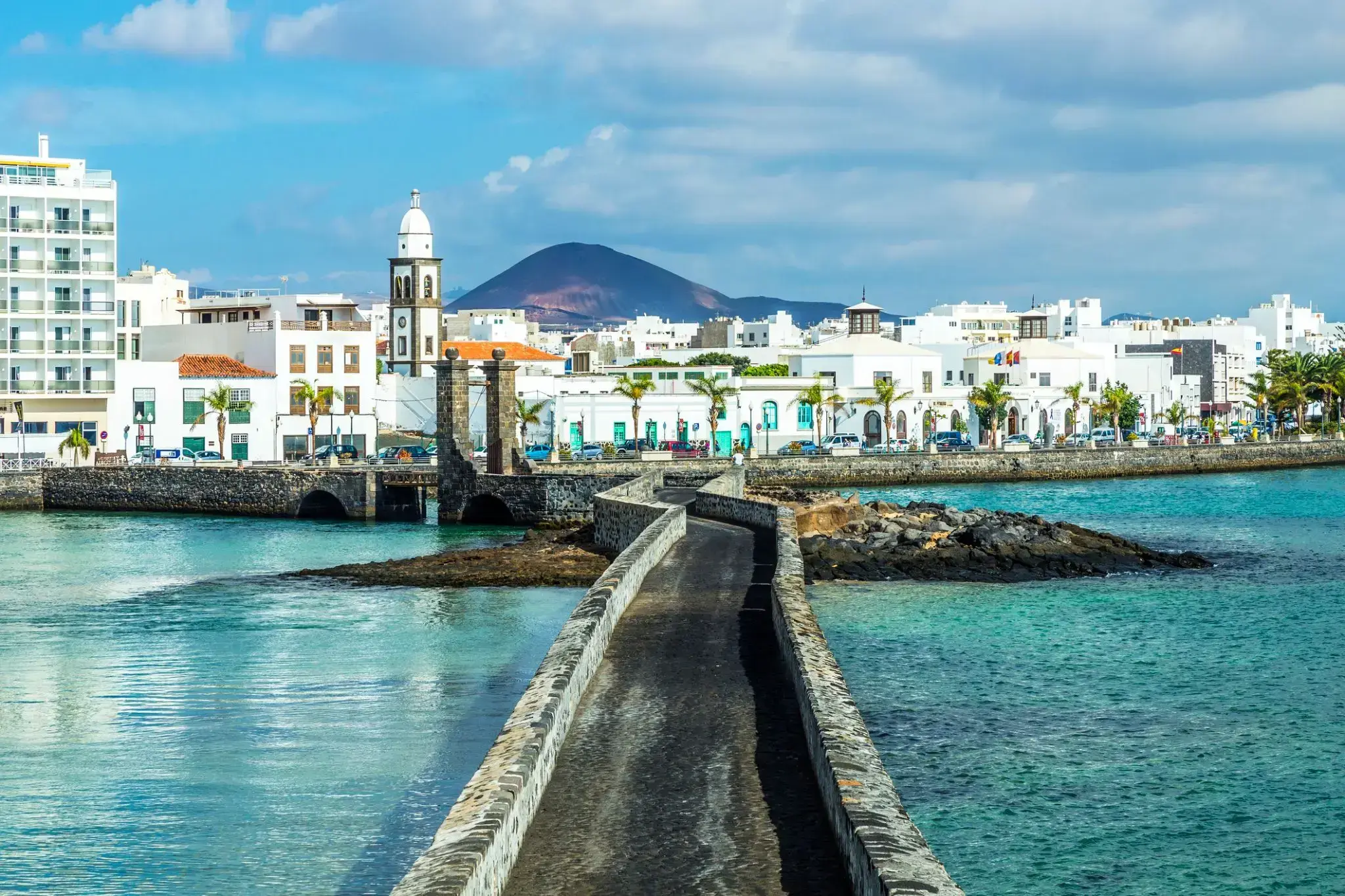
| 146 | 29.05 Mon | Arrecife / Spain | 08:00 | 17:00 |
| 147 | 30.05 Tue | Agadir / Morocco | 08:00 | 14:00 |
| 148 | 31.05 Wed | Casablanca / Morocco | 09:00 | 22:00 |
| 149 | 1.06 Thu | Gibraltar / Great Britain | 13:00 | 22:00 |
| 150 | 2.06 Fri | Malaga / Spain | 08:00 | 22:00 |
| 151 | 3.06 Sat | Day at sea / Sea | ||
| 152 | 4.06 Sun | Barcelona / Spain | 06:00 | 20:00 |
| 153 | 5.06 Mon | Marseille / France | 09:30 | 20:00 |
| 154 | 6.06 Tue | Nice / France | 07:00 | 22:00 |
| 155 | 7.06 Wed | Portovenere / Italy | 08:00 | 20:00 |
| 156 | 8.06 Thu | FLORENCE PISA | 08:00 | |
| 157 | 9.06 Fri | FLORENCE PISA | 22:00 | |
| 158 | 10.06 Sat | Porto Santo Stefano | 08:00 | 18:00 |
| 159 | 11.06 Sun | Rome (Civitavecchia) / Italy | 06:00 | 20:00 |
| 160 | 12.06 Mon | Sorrento, Capri / Italy | 09:00 | 22:00 |
| 161 | 13.06 Tue | Amalfi / Italy | 08:00 | 20:00 |
| 162 | 14.06 Wed | Syracuse / Italy | 13:00 | 22:00 |
| 163 | 15.06 Thu | Valletta / Malta | 08:00 | 22:00 |
| 164 | 16.06 Fri | Day at sea / Sea | ||
| 165 | 17.06 Sat | Kotor / Montenegro | 09:30 | 20:00 |
| 166 | 18.06 Sun | Split / Croatia | 08:00 | 18:00 |
| 167 | 19.06 Mon | Dill / Slovenia | 09:00 | 22:00 |
| 168 | 20.06 Tue | Venice / Italy | 08:00 | |
| 169 | 21.06 Wed | Venice / Italy | 07:00 | 20:00 |
| 170 | 22.06 Thu | Rovinj / Croatia | 08:00 | 14:00 |
| 171 | 23.06 Fri | Dubrovnik / Croatia | 08:00 | 21:00 |
| 172 | 24.06 Sat | Corfu / Greece | 13:00 | 22:00 |
| 173 | 25.06 Sun | Argostoli, Kefalonia (Ionian Islands) / Greece | 08:00 | 16:00 |
| 174 | 26.06 Mon | Monemvasia / Greece | 09:30 | 20:00 |
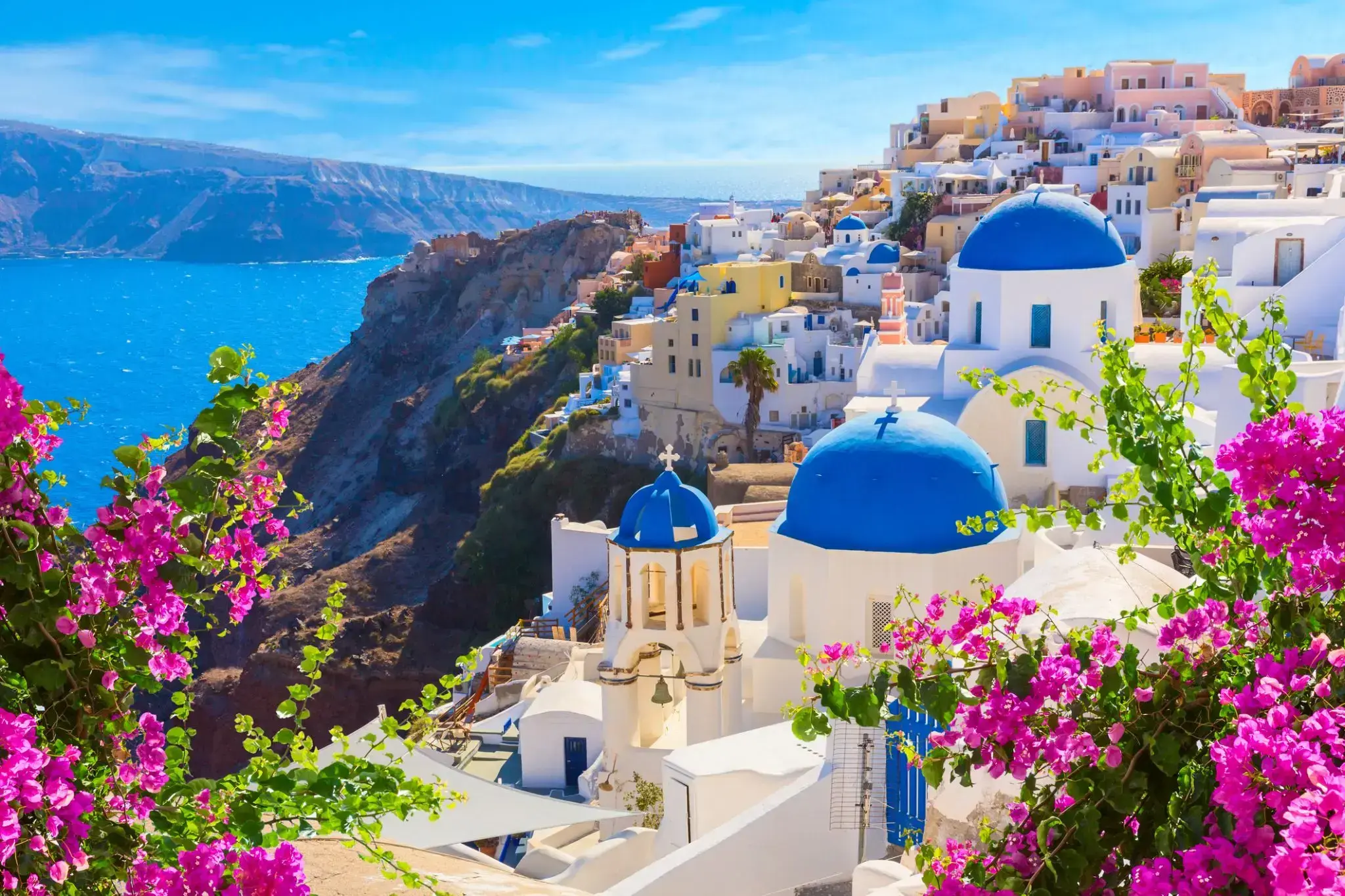
| 175 | 27.06 Tue | Santorini, Cyclades / Greece | 08:00 | 20:00 |
| 176 | 28.06 Wed | Rhodes / Greece | 08:00 | 22:00 |
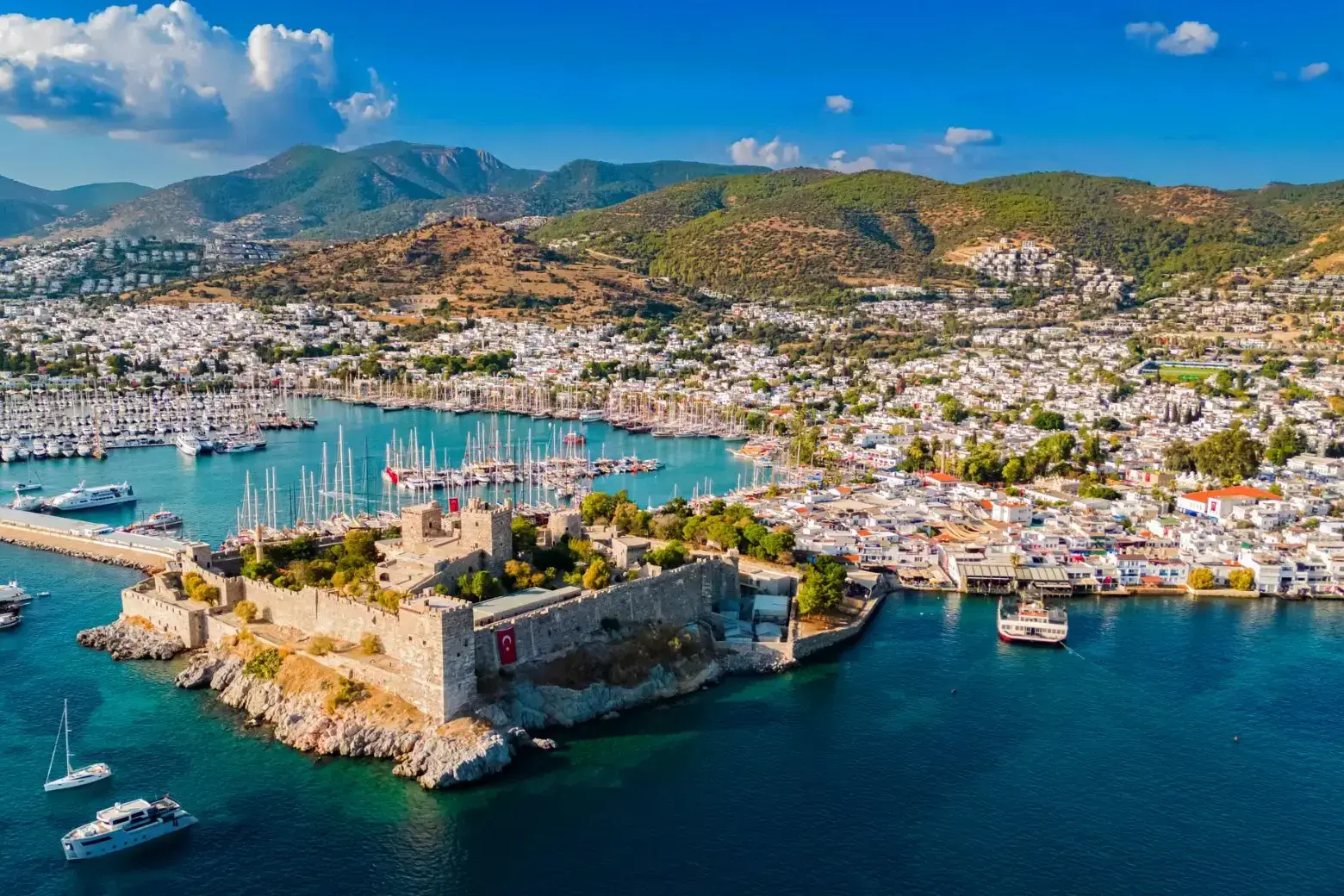
| 177 | 29.06 Thu | Bodrum / Turkey | 08:00 | 20:00 |
| 178 | 30.06 Fri | Syros / Greece | 08:00 | 17:00 |
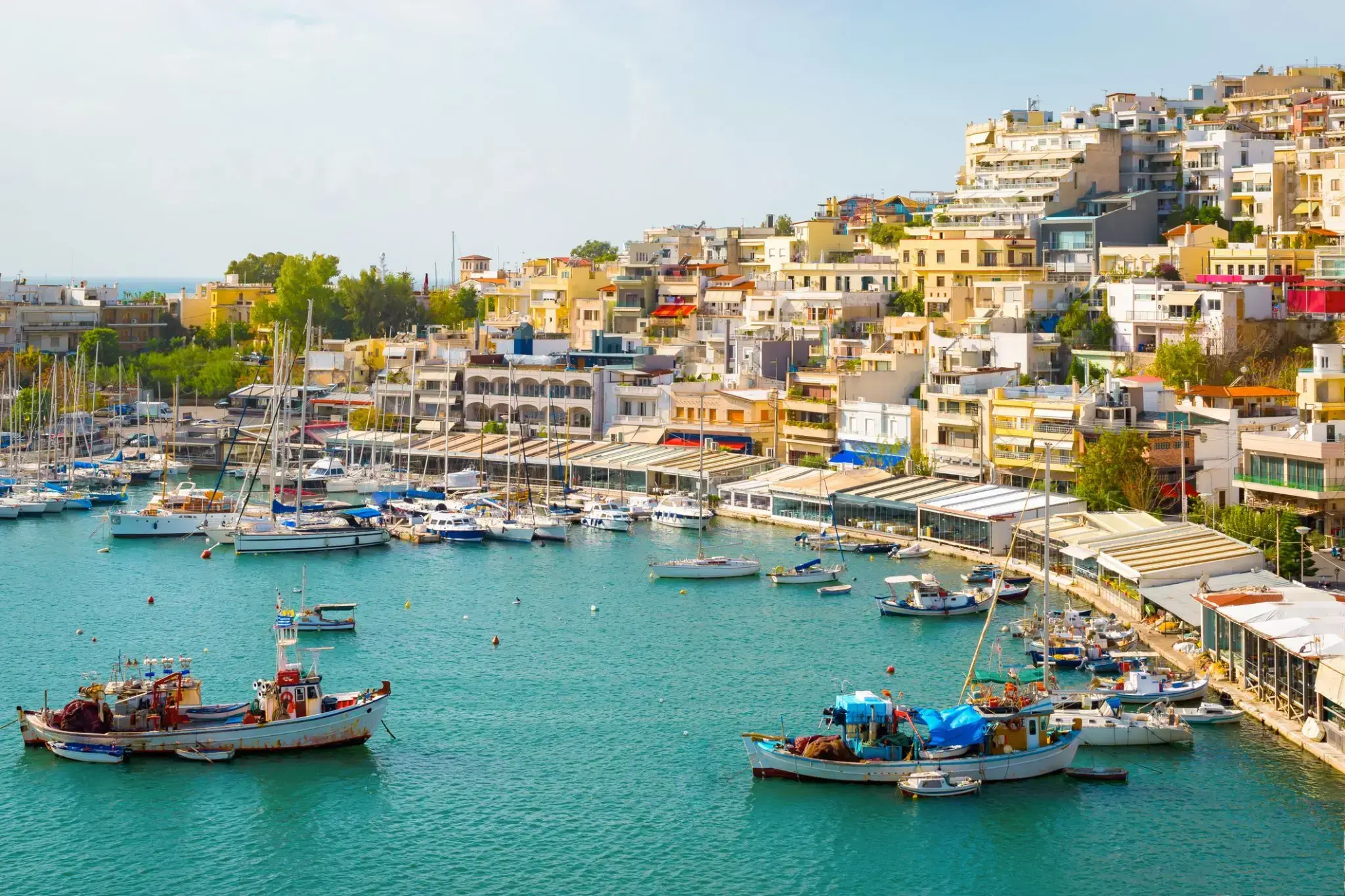
| 179 | 1.07 Sat | Piraeus (Athens) / Greece | 05:00 |
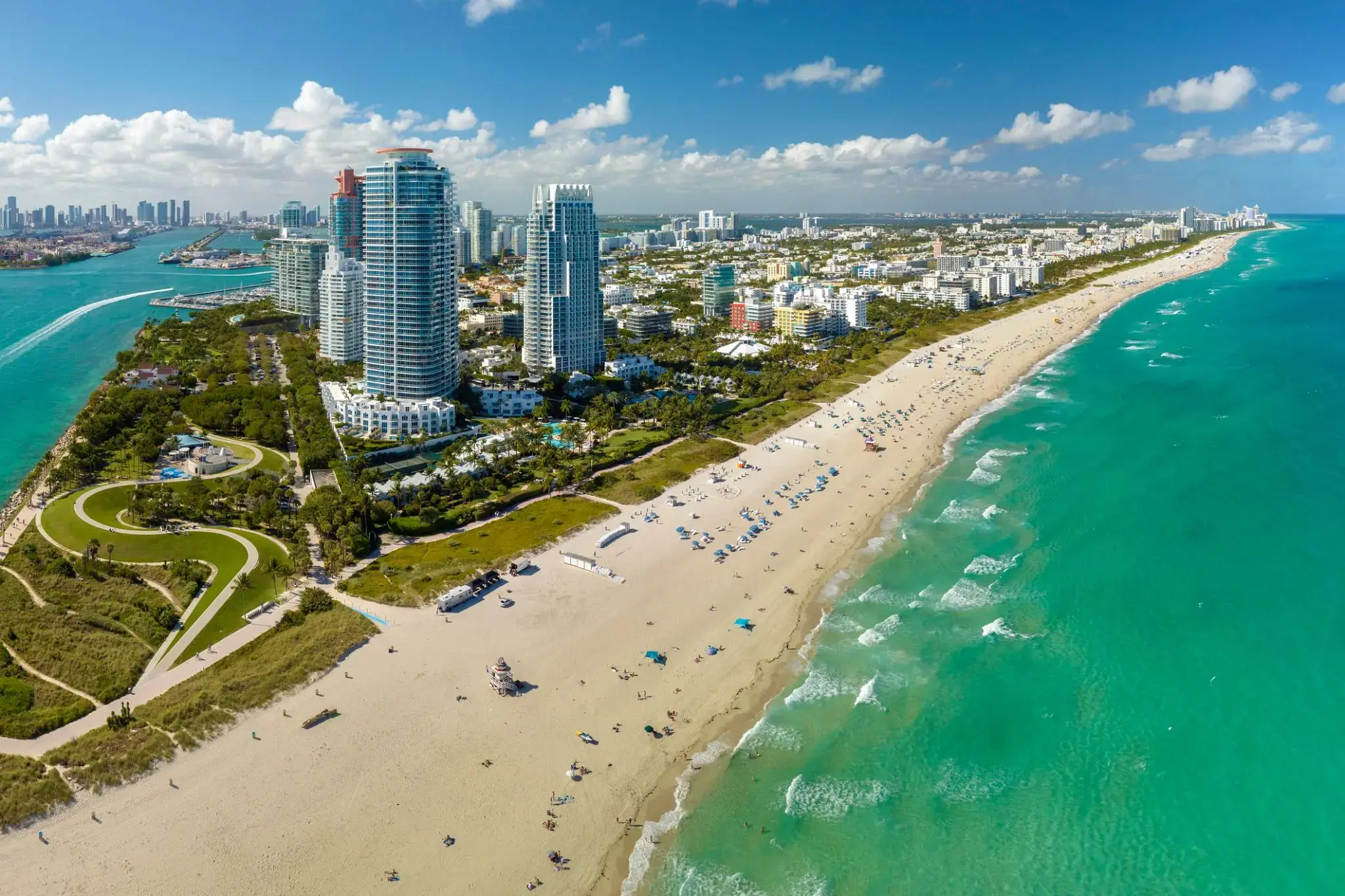
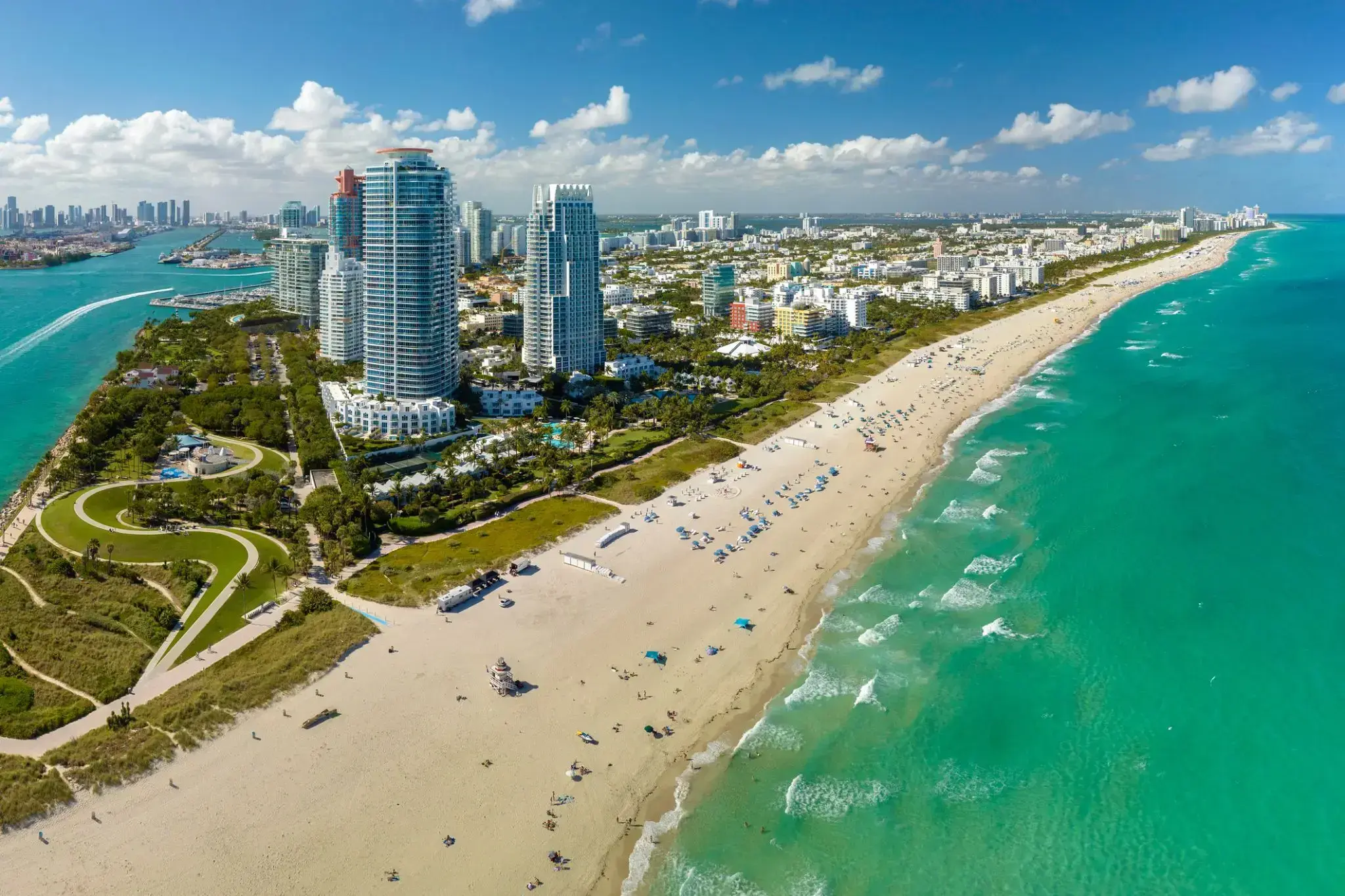
Miami, officially the City of Miami, is the cultural, economic and financial center of South Florida. Miami is the seat of Miami-Dade County, the most populous county in Florida. The city covers an area of about 56.6 square miles (147 km2), between the Everglades to the west and Biscayne Bay on the east; with a 2017 estimated population of 463,347, Miami is the sixth most densely populated major city in the United States. The Miami metropolitan area is home to 6.1 million people and the seventh-largest metropolitan area in the nation. Miami's metro area is the second-most populous metropolis in the southeastern United States and fourth-largest urban area in the U.S.
Miami is a major center, and a leader in finance, commerce, culture, media, entertainment, the arts, and international trade. The Miami Metropolitan Area is by far the largest urban economy in Florida and the 12th largest in the United States with a GDP of $344.9 billion as of 2017. In 2012, Miami was classified as an "Alpha−" level world city in the World Cities Study Group's inventory. In 2010, Miami ranked seventh in the United States and 33rd among global cities in terms of business activity, human capital, information exchange, cultural experience, and political engagement. In 2008, Forbes magazine ranked Miami "America's Cleanest City", for its year-round good air quality, vast green spaces, clean drinking water, clean streets, and citywide recycling programs. According to a 2009 UBS study of 73 world cities, Miami was ranked as the richest city in the United States, and the world's seventh-richest city in terms of purchasing power. Miami is nicknamed the "Capital of Latin America" and is the largest city with a Cuban-American plurality.
Greater Downtown Miami has one of the largest concentrations of international banks in the United States, and is home to many large national and international companies. The Civic Center is a major center for hospitals, research institutes, medical centers, and biotechnology industries. For more than two decades, the Port of Miami, known as the "Cruise Capital of the World", has been the number one cruise passenger port in the world. It accommodates some of the world's largest cruise ships and operations, and is the busiest port in both passenger traffic and cruise lines. Metropolitan Miami is also a major tourism hub in the southeastern U.S. for international visitors, ranking number two in the country after New York City.
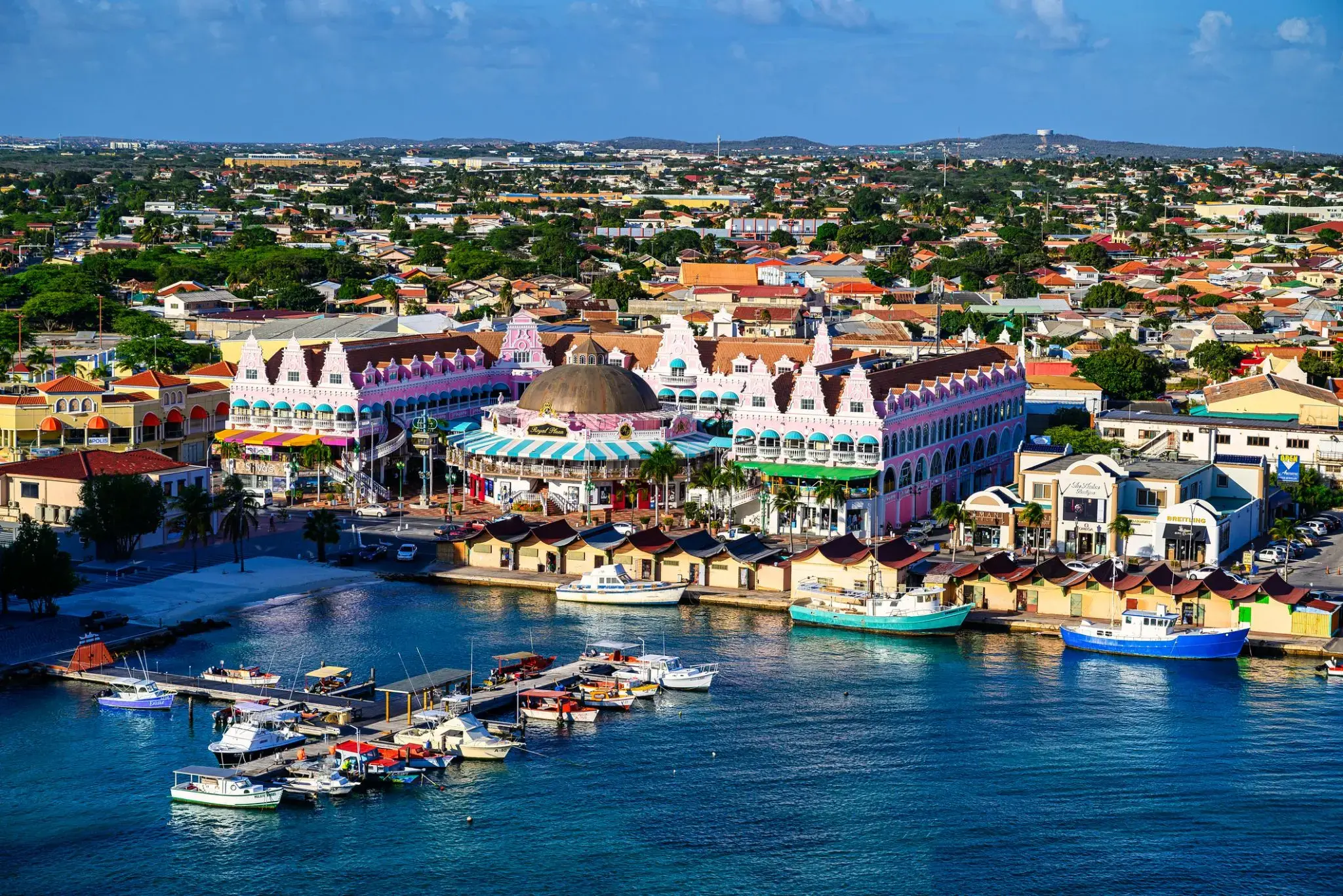
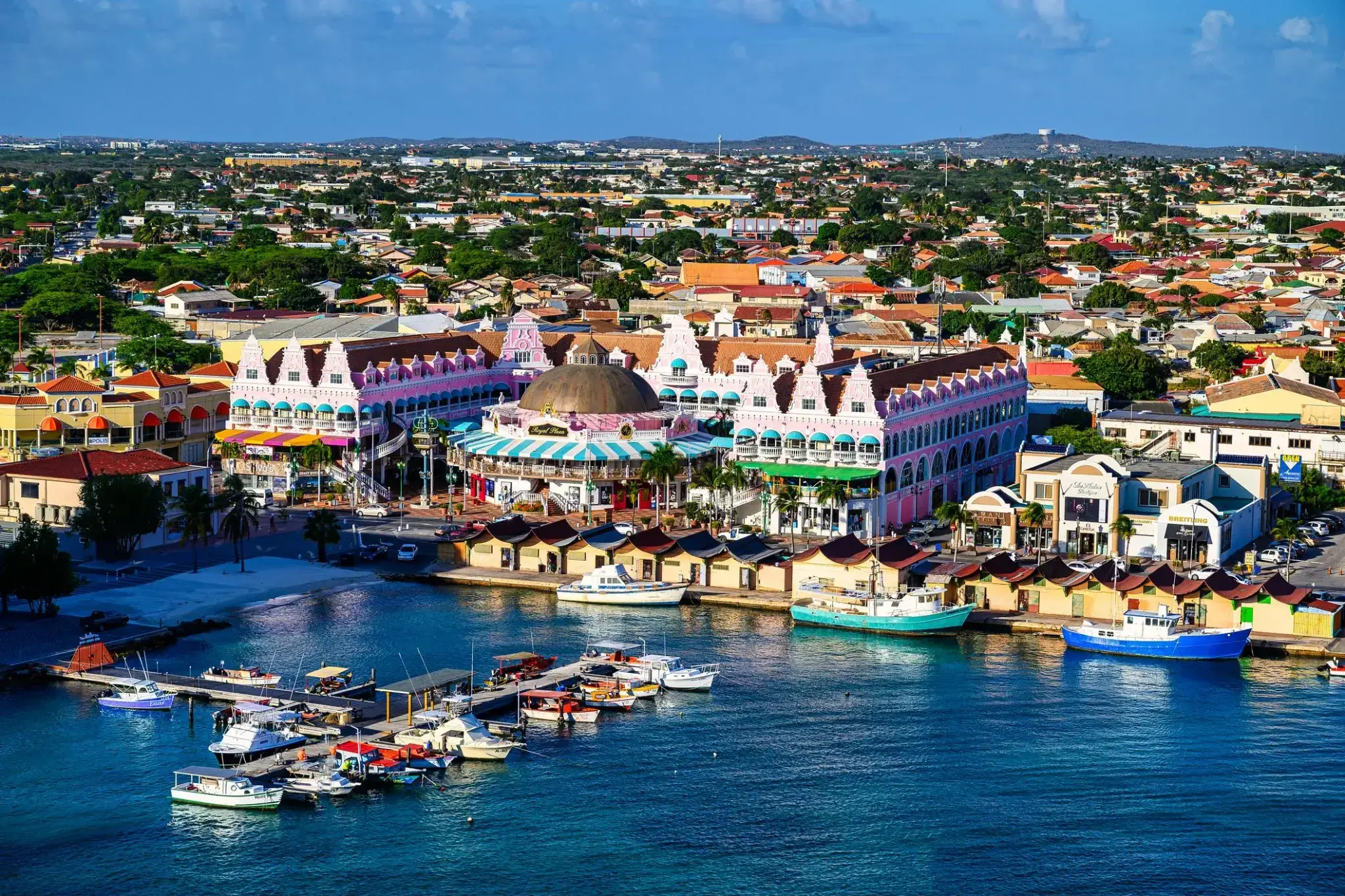
Aruba is an island and a constituent country of the Kingdom of the Netherlands in the southern Caribbean Sea, located about 1,600 kilometres (990 mi) west of the main part of the Lesser Antilles and 29 kilometres (18 mi) north of the coast of Venezuela. It measures 32 kilometres (20 mi) long from its northwestern to its southeastern end and 10 kilometres (6 mi) across at its widest point. Together with Bonaire and Curaçao, Aruba forms a group referred to as the ABC islands. Collectively, Aruba and the other Dutch islands in the Caribbean are often called the Dutch Caribbean.
Aruba is one of the four countries that form the Kingdom of the Netherlands, along with the Netherlands, Curaçao, and Sint Maarten; the citizens of these countries are all Dutch nationals. Aruba has no administrative subdivisions, but, for census purposes, is divided into eight regions. Its capital is Oranjestad.
Unlike much of the Caribbean region, Aruba has a dry climate and an arid, cactus-strewn landscape. This climate has helped tourism as visitors to the island can reliably expect warm, sunny weather. It has a land area of 179 km2(69.1 sq mi) and is densely populated, with a total of 102,484 inhabitants at the 2010 Census. It lies outside Hurricane Alley.
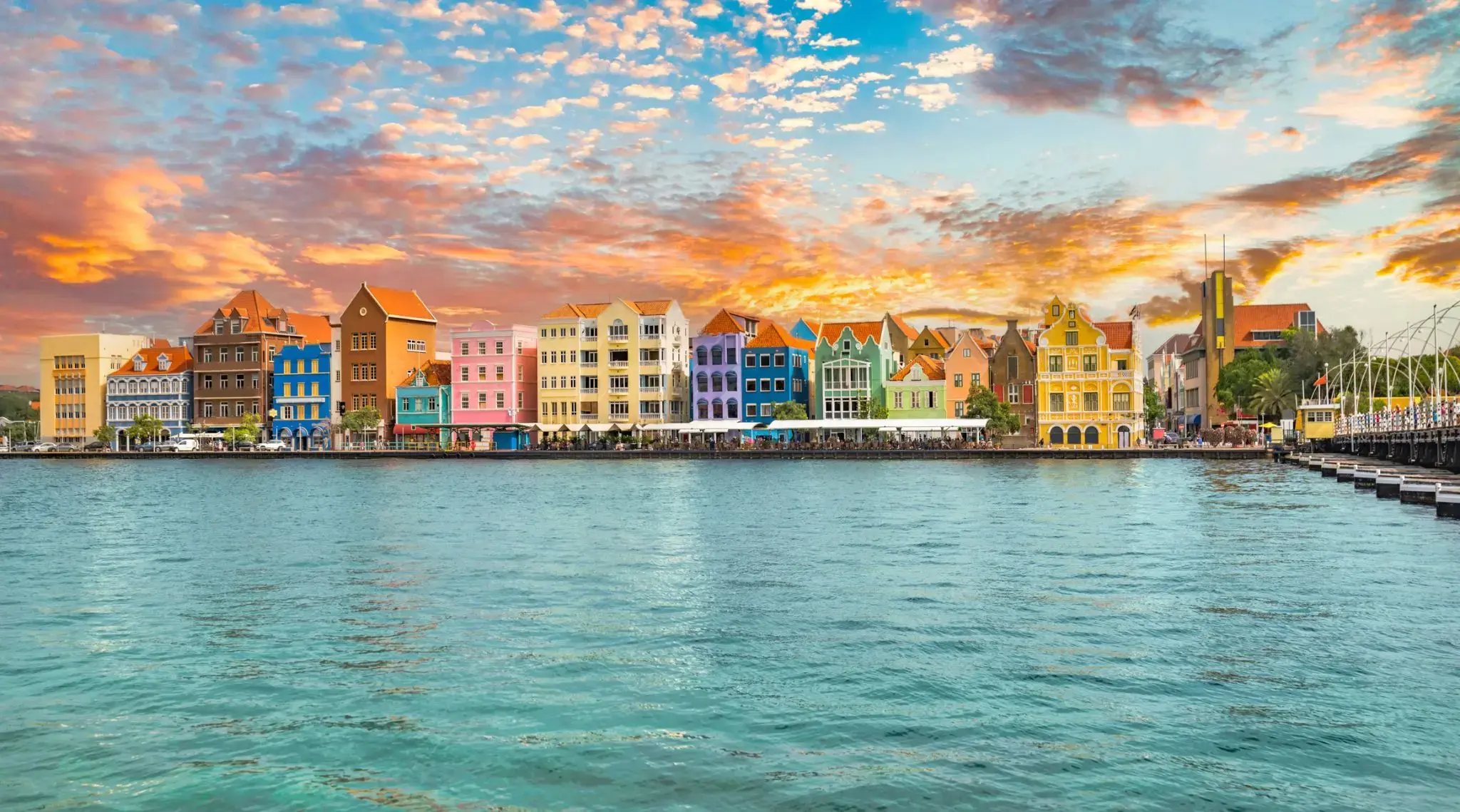
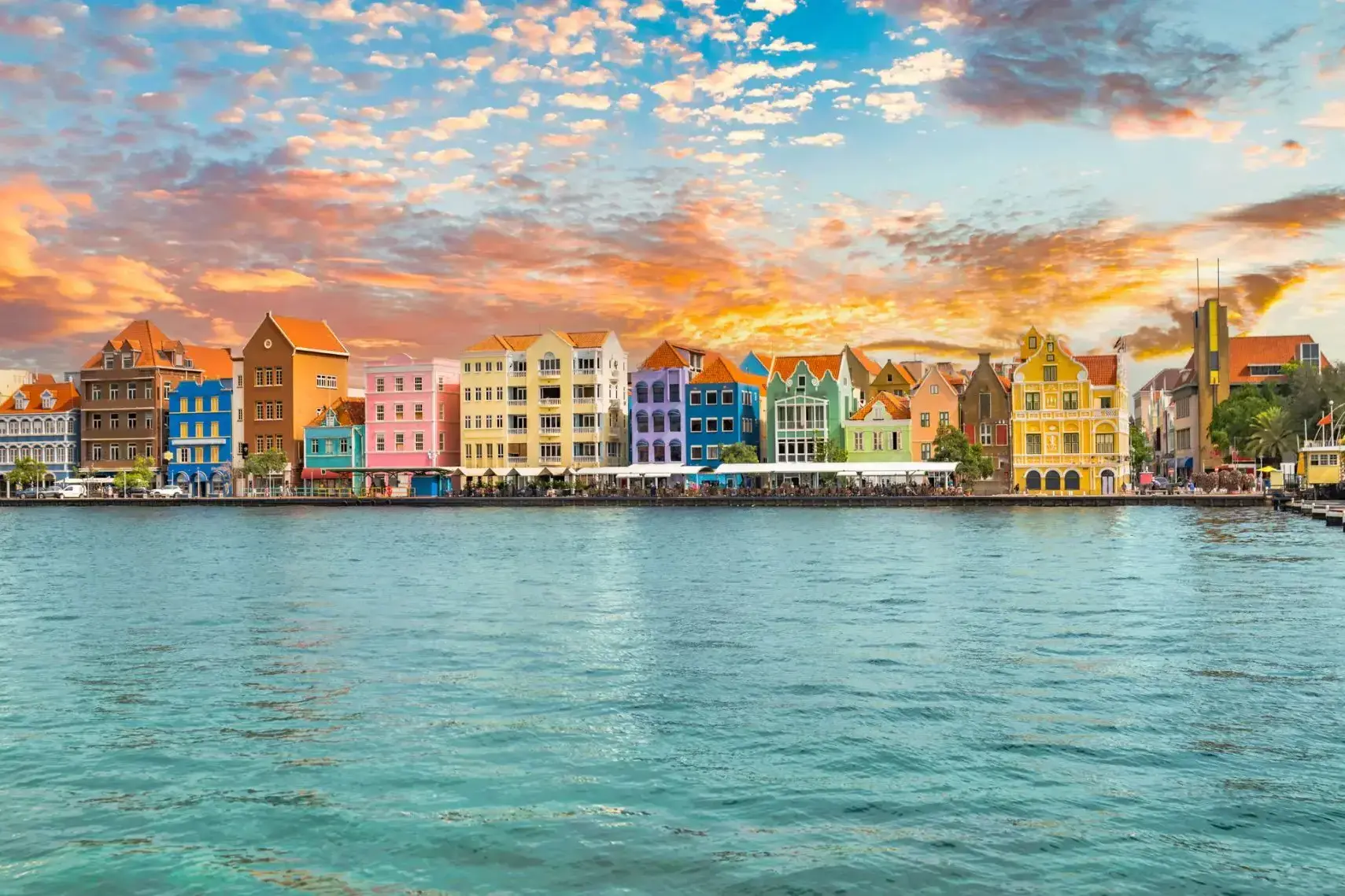
Curaçao is a Lesser Antilles island in the southern Caribbean Sea and the Dutch Caribbean region, about 65 km (40 mi) north of the Venezuelan coast. It is a constituent country (Dutch: land) of the Kingdom of the Netherlands.
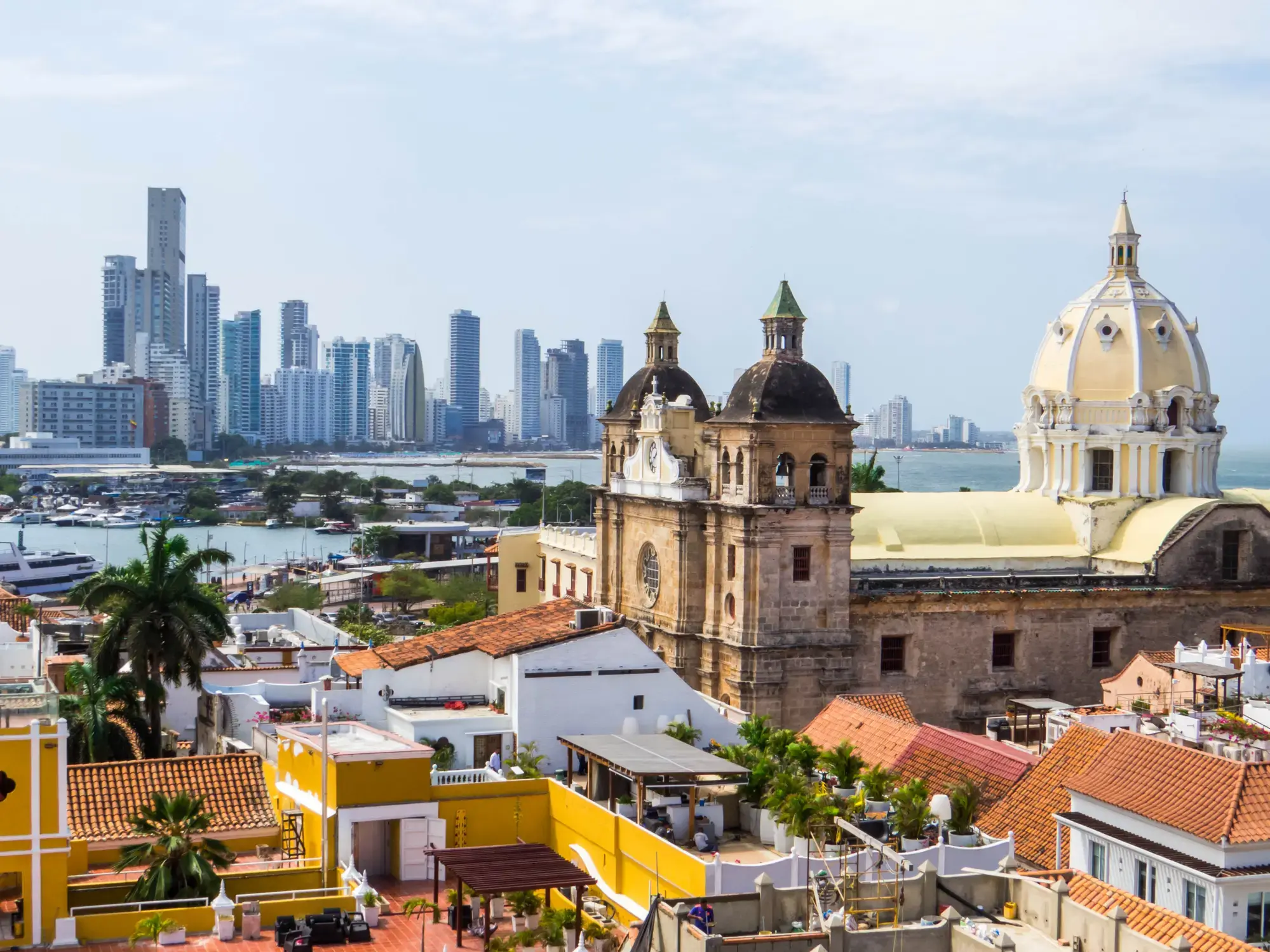
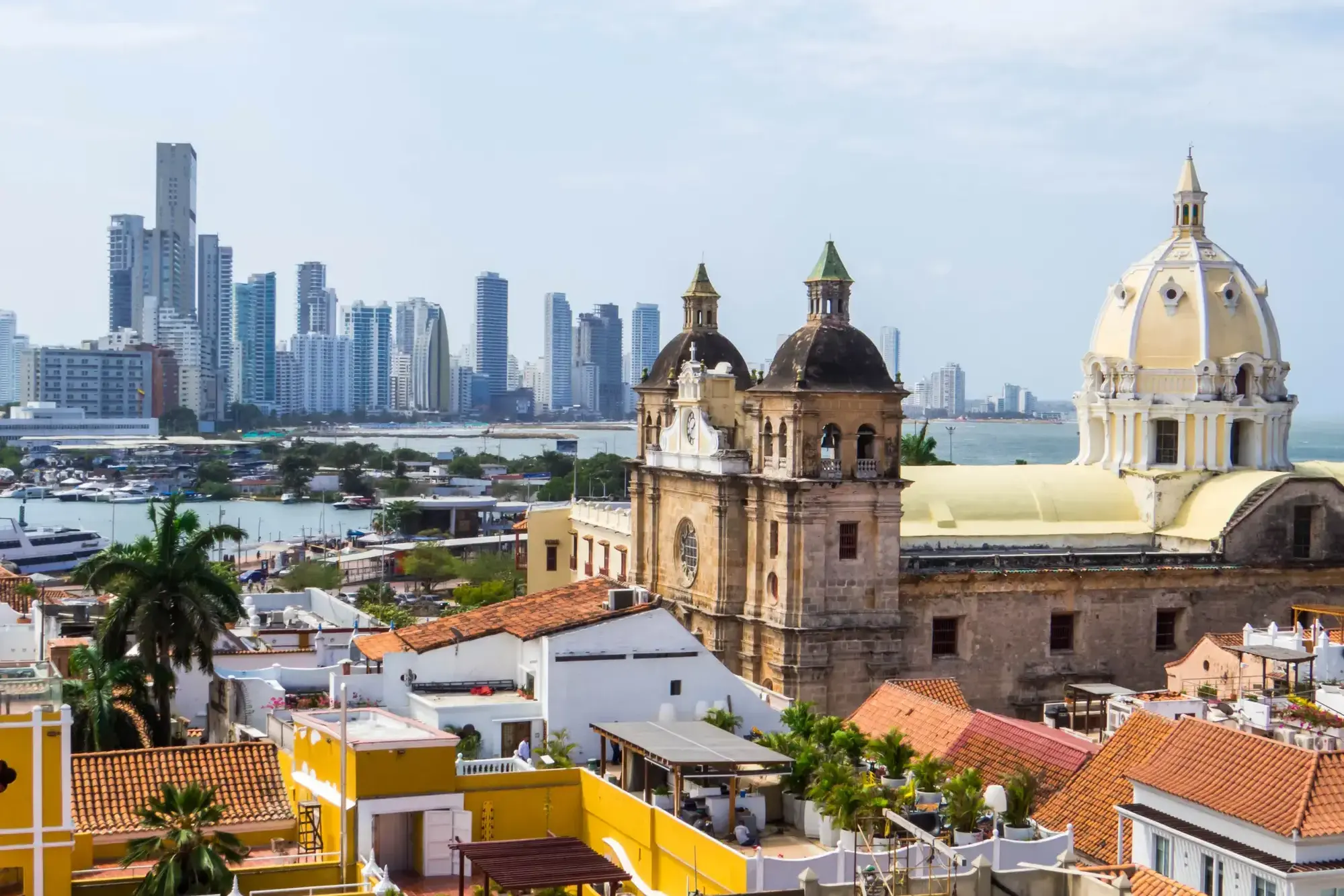
Ancient fortress walls, street musicians, and the Caribbean sun create an unforgettable atmosphere in Cartagena (Bolívar) — the gem of Colombia's coast. This city, listed as a UNESCO World Heritage Site, enchants visitors with its colonial architecture, charming courtyards, and the aroma of fresh coffee wafting from countless cafés.
Immerse yourself in the vibrant rhythm of Cartagena, strolling through the cobbled streets of the Old Town, where every corner holds tales of pirates and Spanish conquistadors. And the sunset near the ancient Castillo San Felipe de Barajas is the perfect ending to a day filled with culture, history, and tropical romance.
Ancient fortress walls, street musicians, and the Caribbean sun create an unforgettable atmosphere in Cartagena (Bolívar) — the gem of Colombia's coast. This city, listed as a UNESCO World Heritage Site, enchants visitors with its colonial architecture, charming courtyards, and the aroma of fresh coffee wafting from countless cafés.
Immerse yourself in the vibrant rhythm of Cartagena, strolling through the cobbled streets of the Old Town, where every corner holds tales of pirates and Spanish conquistadors. And the sunset near the ancient Castillo San Felipe de Barajas is the perfect ending to a day filled with culture, history, and tropical romance.
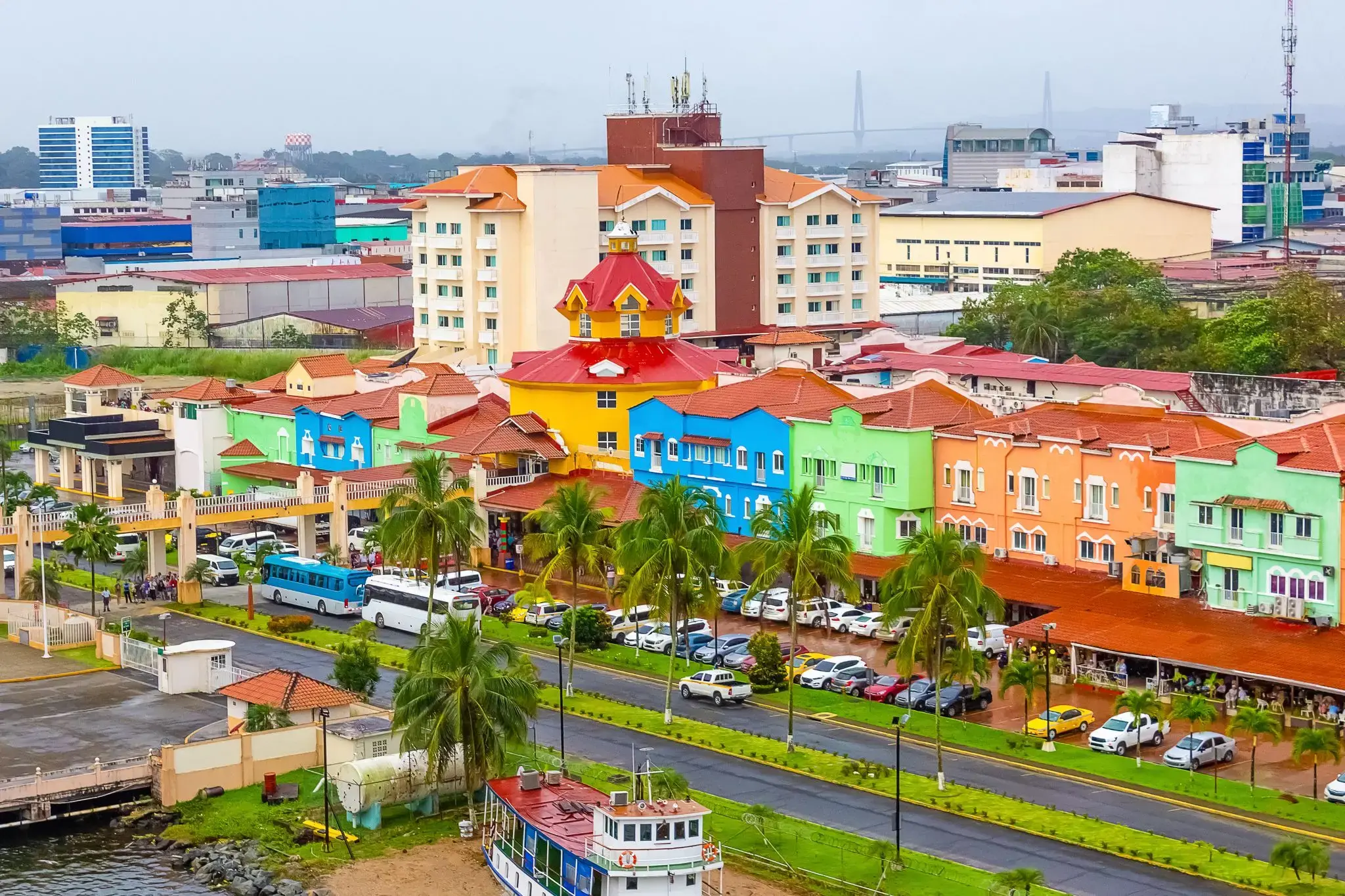
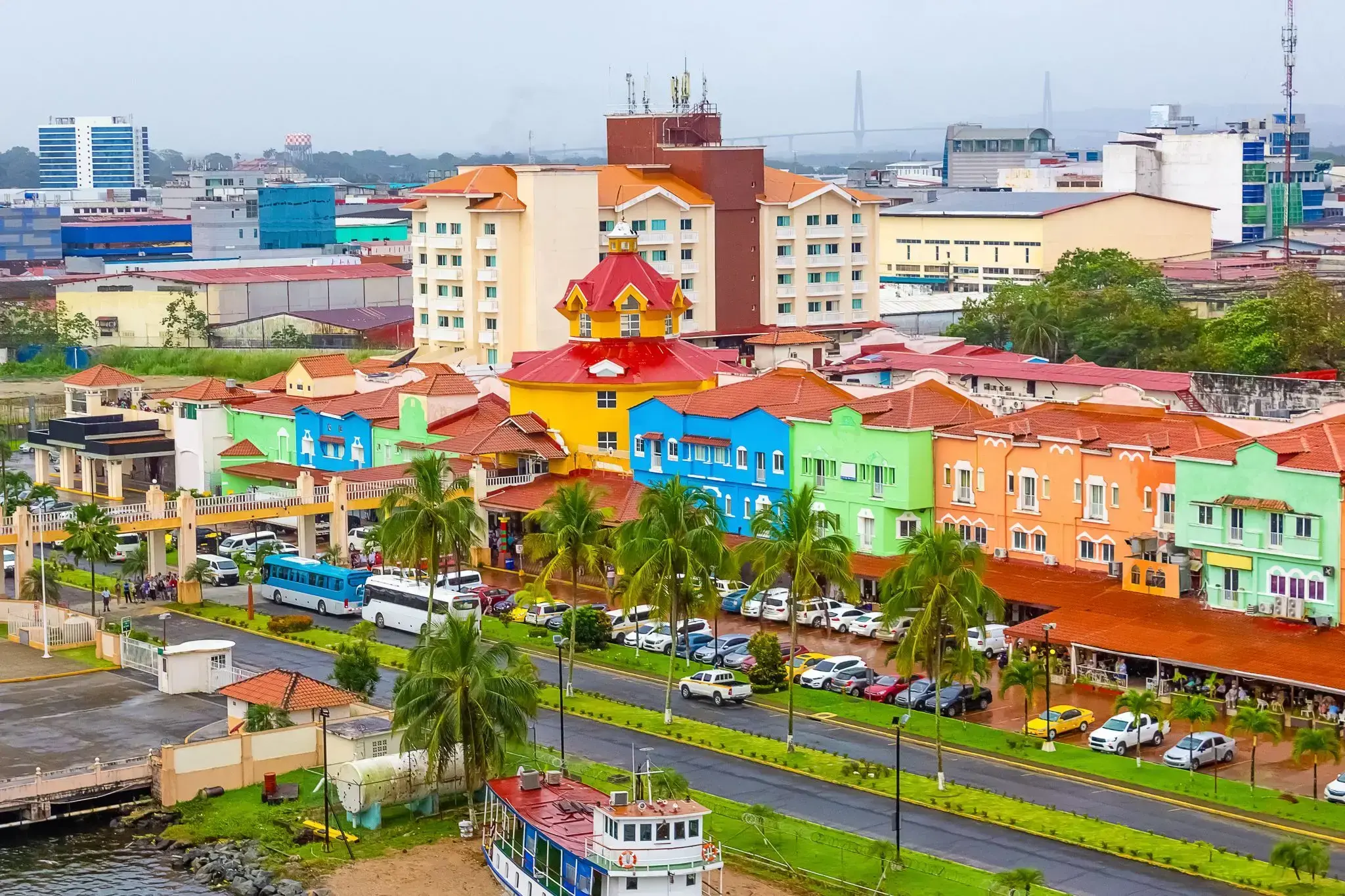
Colon
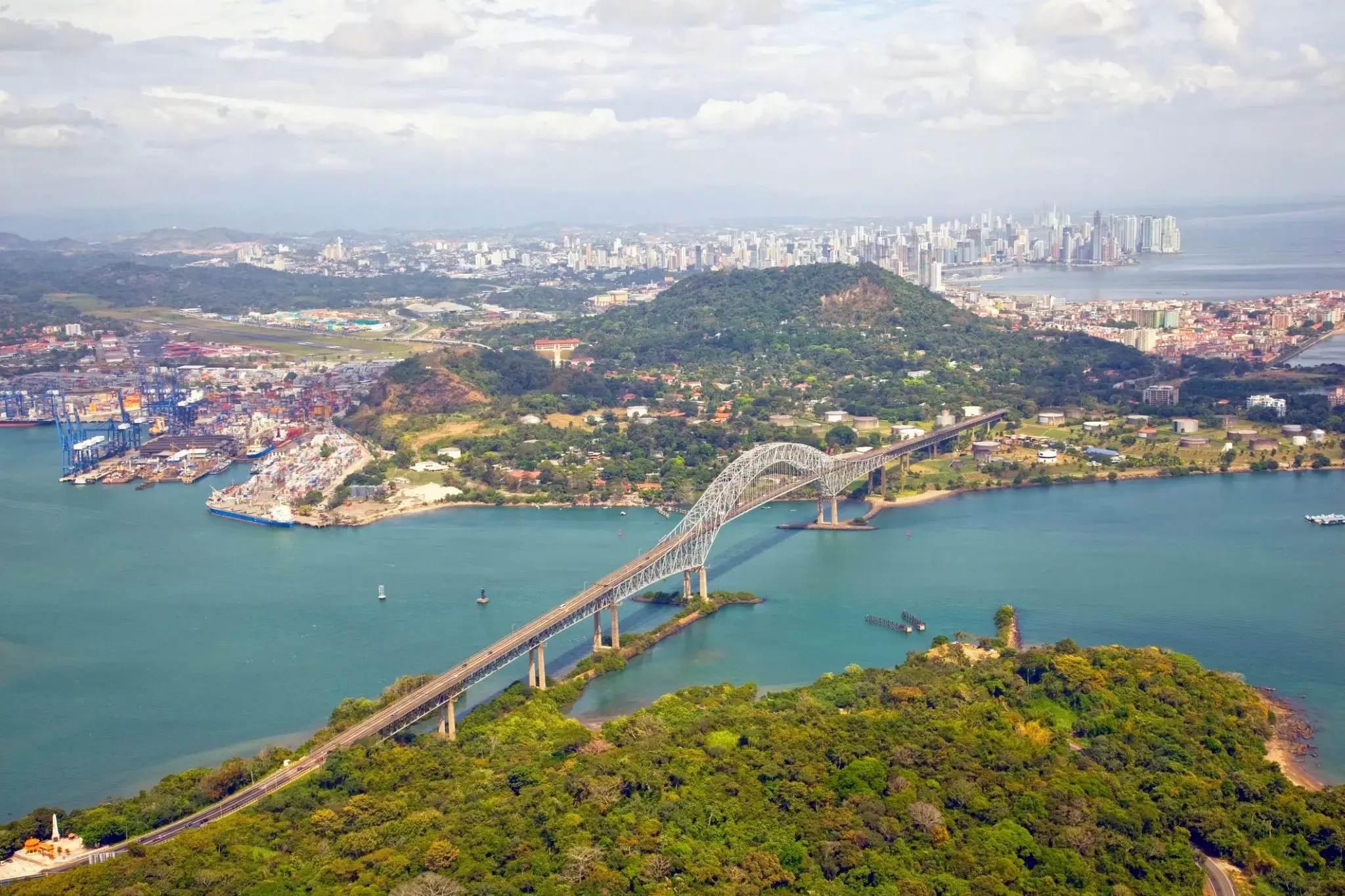
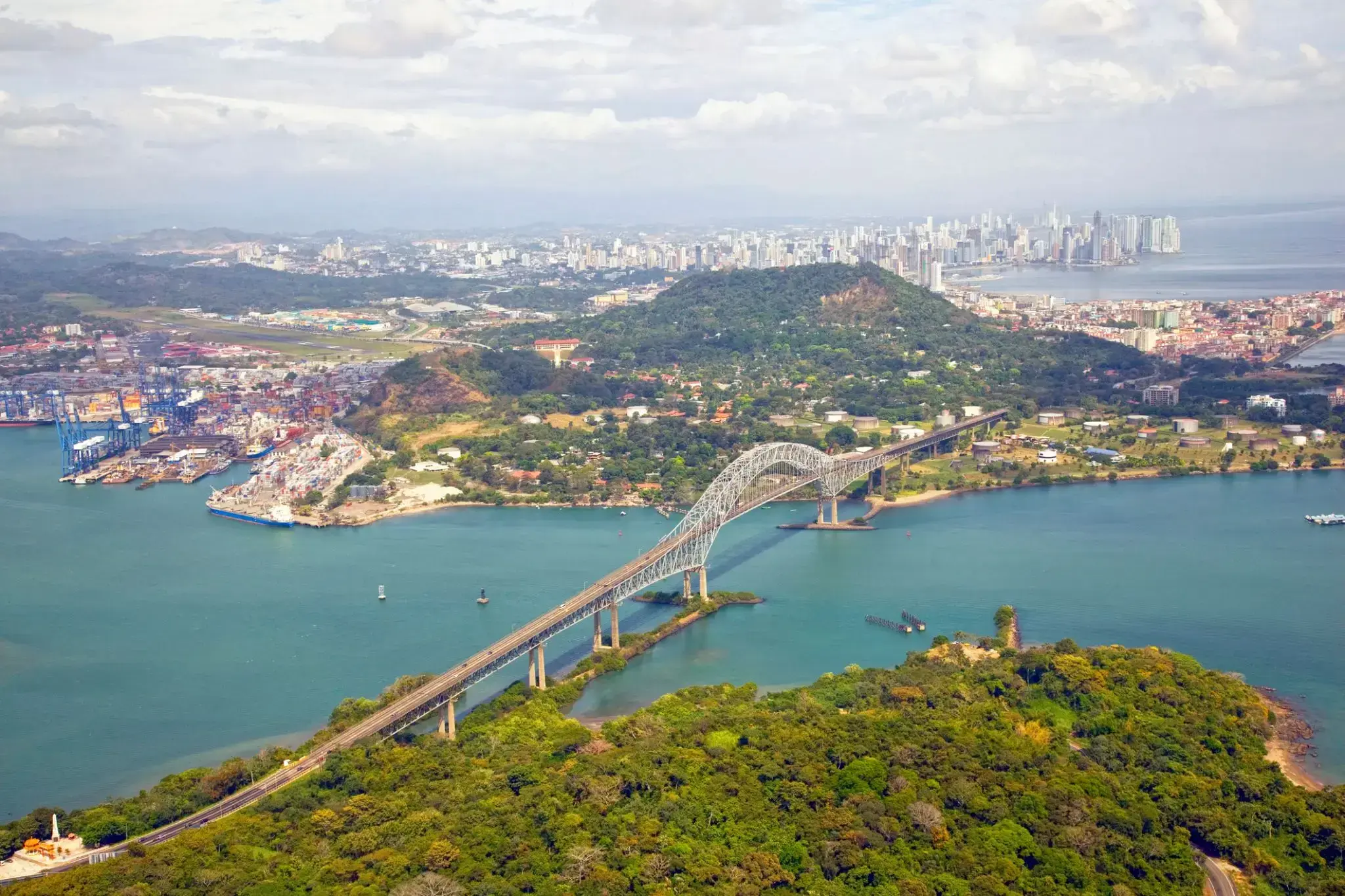
The Panama Canal is an artificial 82 km (51 mi) waterway in Panama that connects the Atlantic Ocean with the Pacific Ocean. The canal cuts across the Isthmus of Panama and is a conduit for maritime trade. Canal locks are at each end to lift ships up to Gatun Lake, an artificial lake created to reduce the amount of excavation work required for the canal, 26 m (85 ft) above sea level, and then lower the ships at the other end. The original locks are 34 m (110 ft) wide. A third, wider lane of locks was constructed between September 2007 and May 2016. The expanded canal began commercial operation on June 26, 2016. The new locks allow transit of larger, post-Panamax ships, capable of handling more cargo.
France began work on the canal in 1881, but stopped due to engineering problems and a high worker mortality rate. The United States took over the project in 1904 and opened the canal on August 15, 1914. One of the largest and most difficult engineering projects ever undertaken, the Panama Canal shortcut greatly reduced the time for ships to travel between the Atlantic and Pacific Oceans, enabling them to avoid the lengthy, hazardous Cape Horn route around the southernmost tip of South America via the Drake Passage or Strait of Magellan.
Colombia, France, and later the United States controlled the territory surrounding the canal during construction. The US continued to control the canal and surrounding Panama Canal Zone until the 1977 Torrijos–Carter Treatiesprovided for handover to Panama. After a period of joint American–Panamanian control, in 1999, the canal was taken over by the Panamanian government. It is now managed and operated by the government-owned Panama Canal Authority.
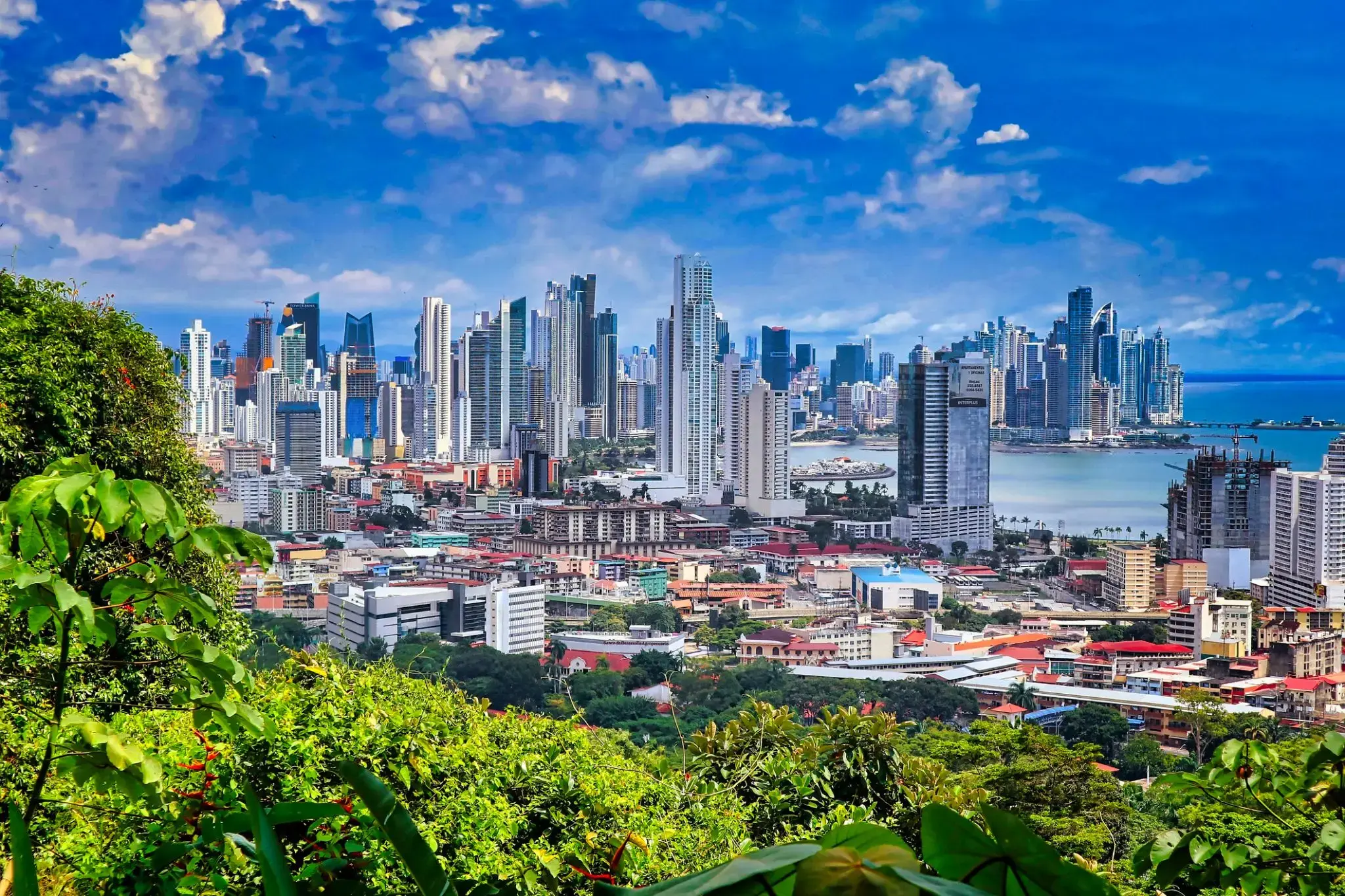
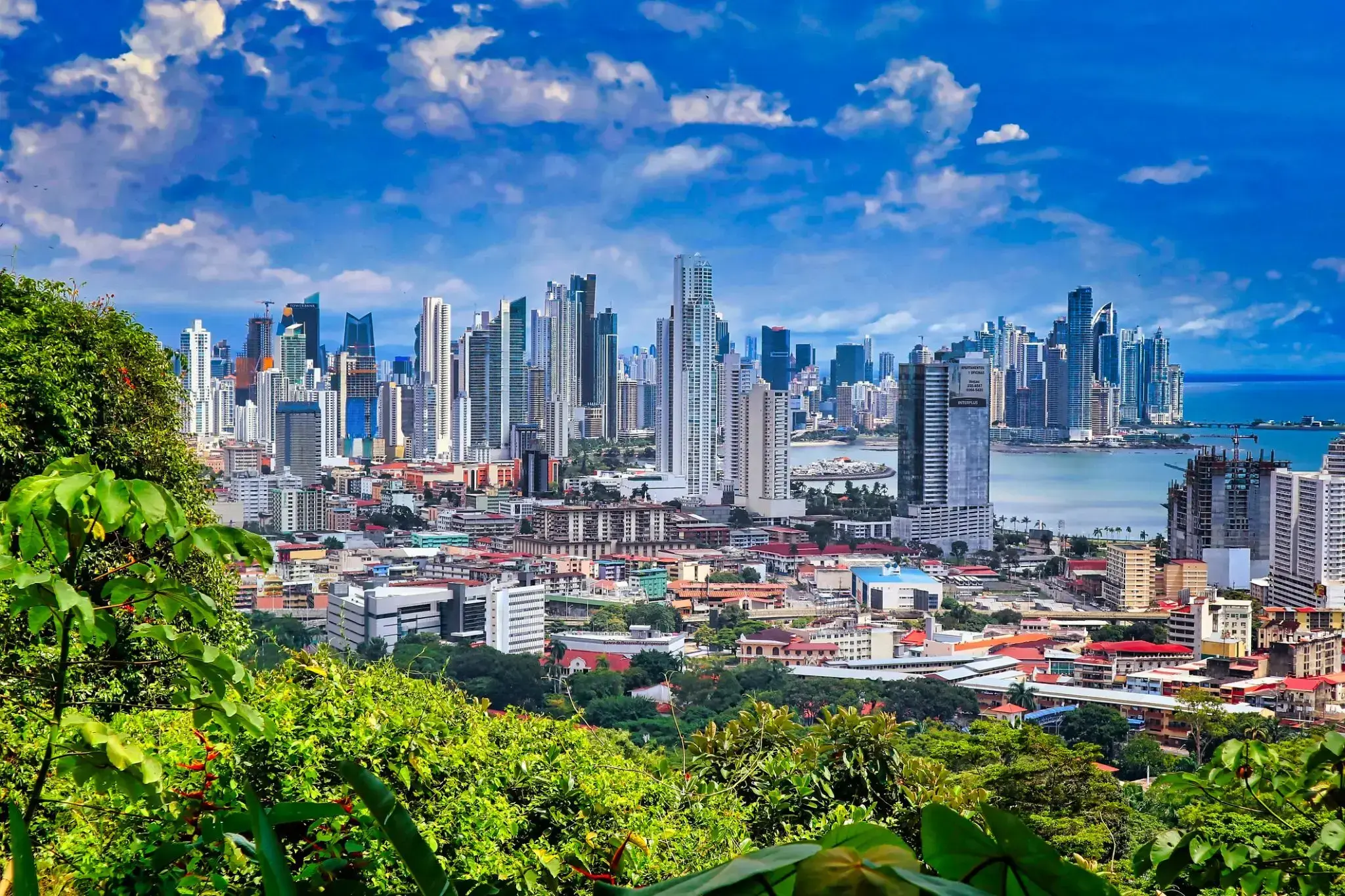
Panama City, located on the northwestern coast of Florida, is known for its long white beaches with soft quartz sand and the warm emerald waters of the Gulf of Mexico. This resort town is popular among both family vacationers and lovers of water activities: here you can enjoy kayaking, parasailing, diving, and fishing. One of the highlights is the local promenade — Pier Park — home to shops, restaurants, and entertainment venues.
In addition to beach relaxation, Panama City offers unique natural attractions. Nearby is the St. Andrews State Park, where visitors can watch dolphins, walk along trails through dunes and pine forests, or take a trip to Shell Island, a place of untouched nature. The city blends a resort atmosphere with Southern charm, offering a peaceful yet activity-filled vacation experience.
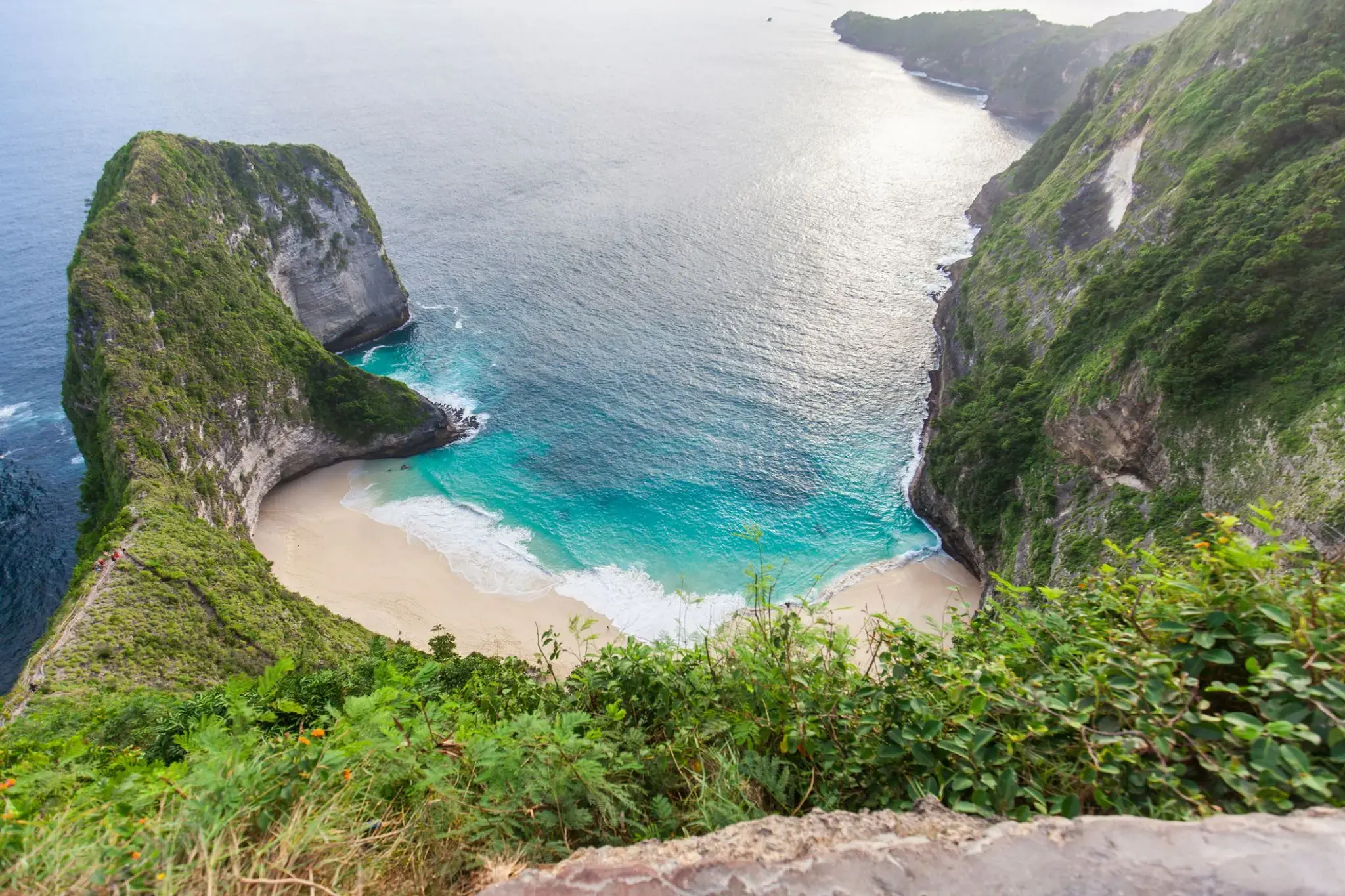
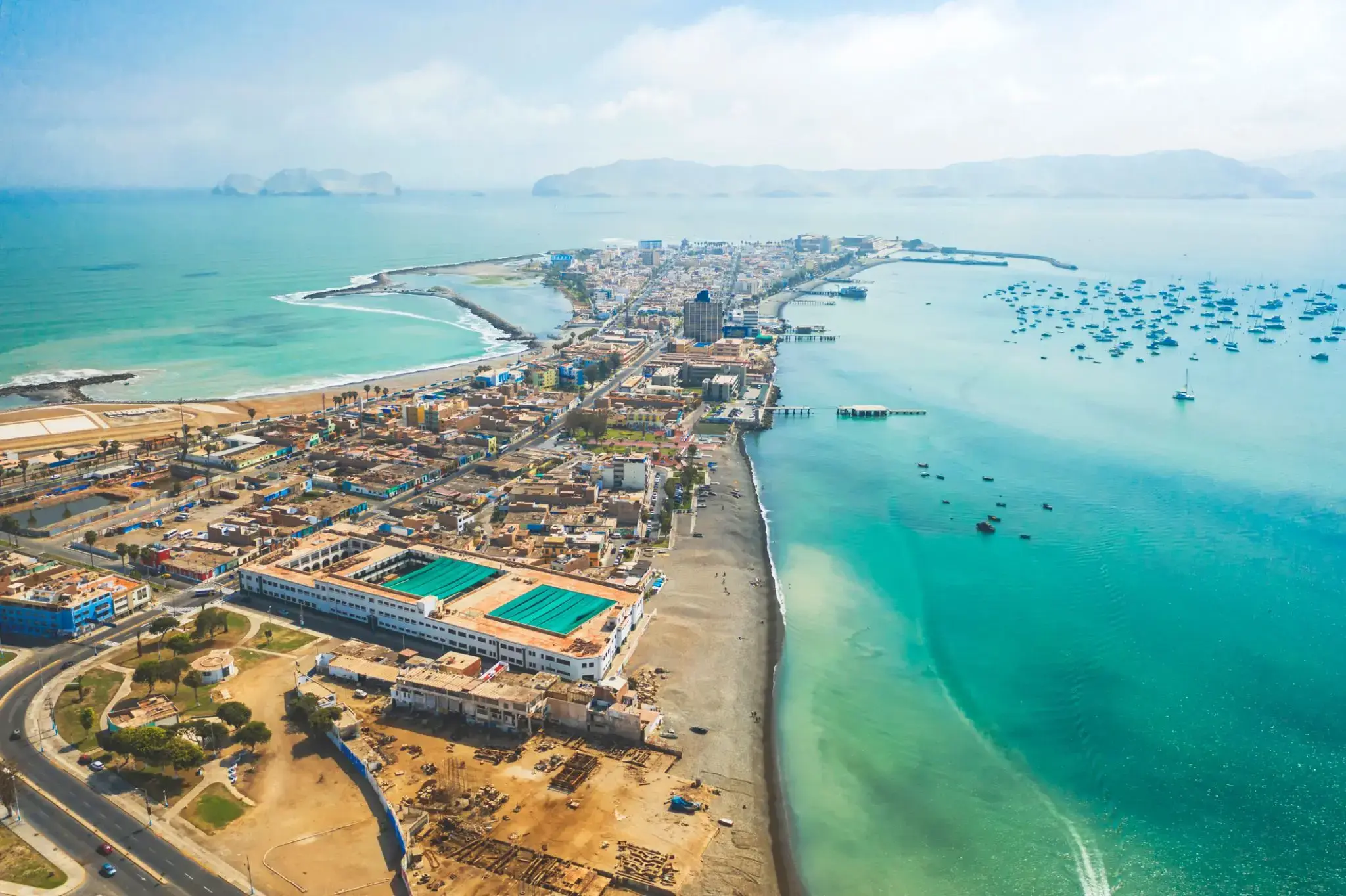
Manta
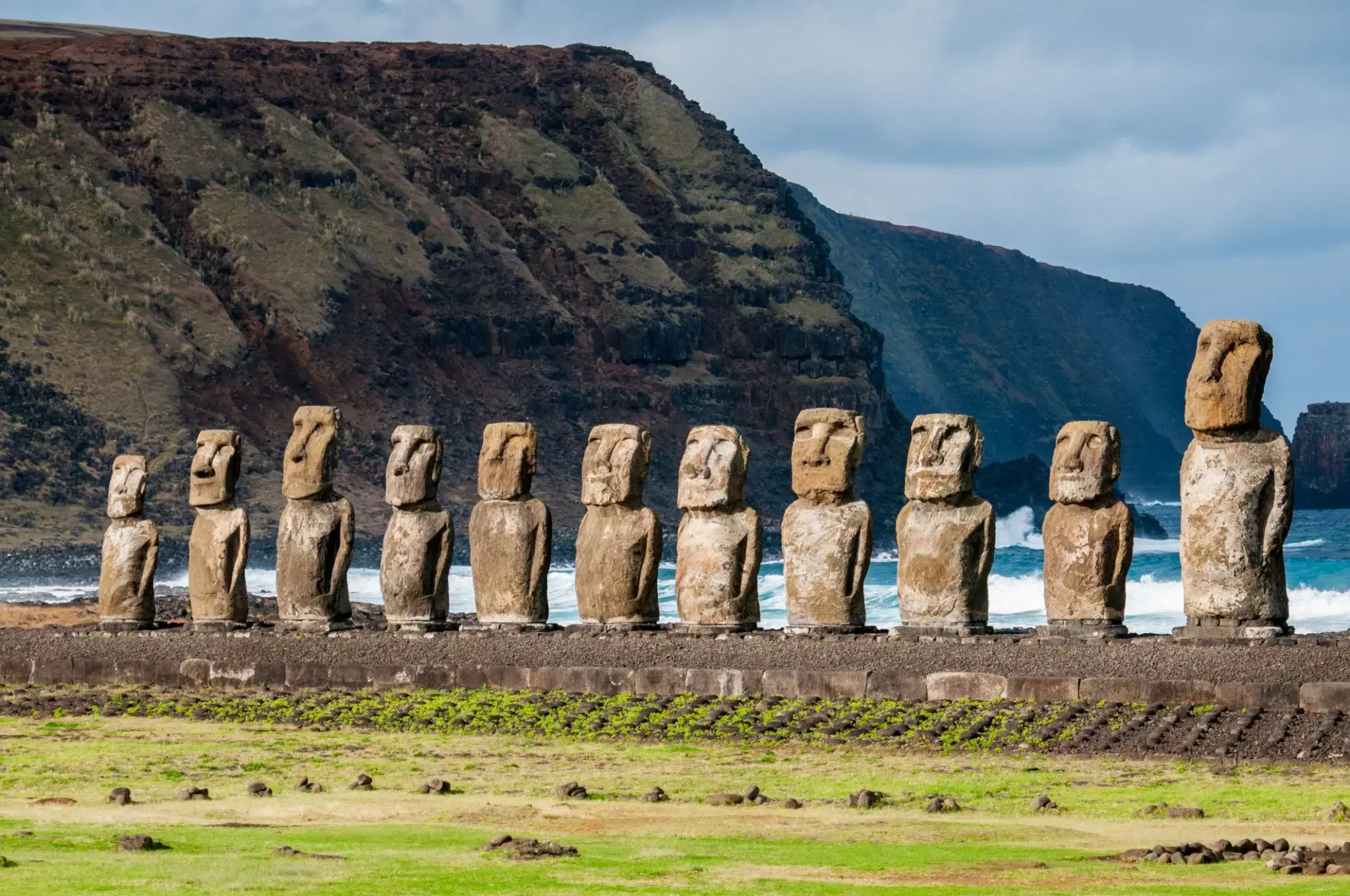
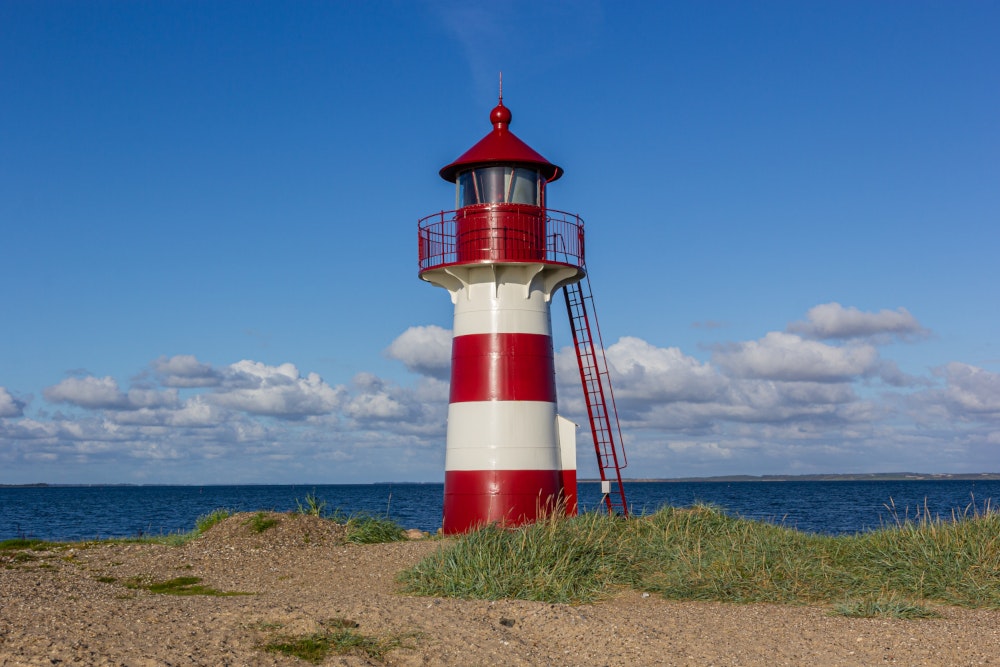
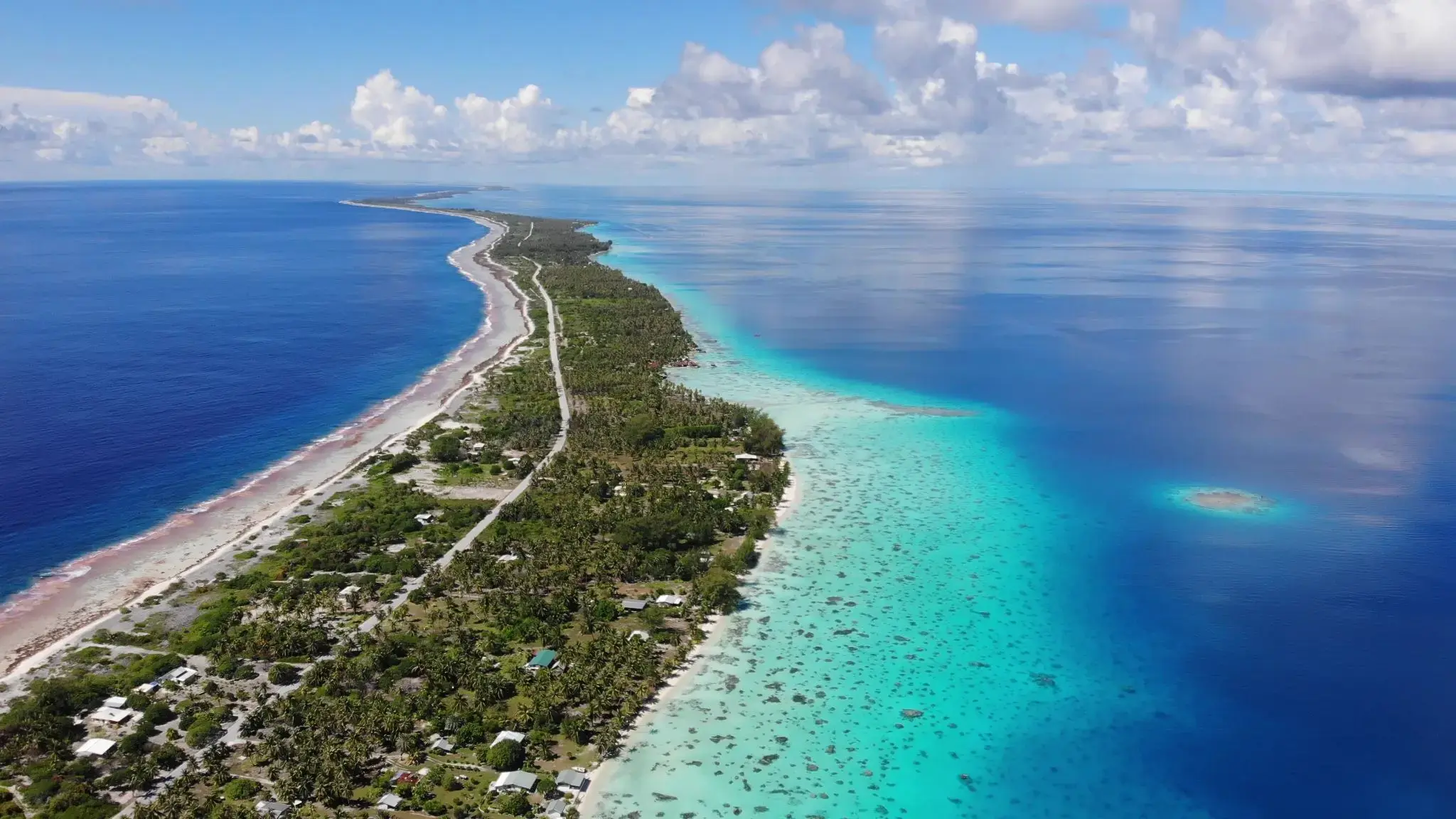
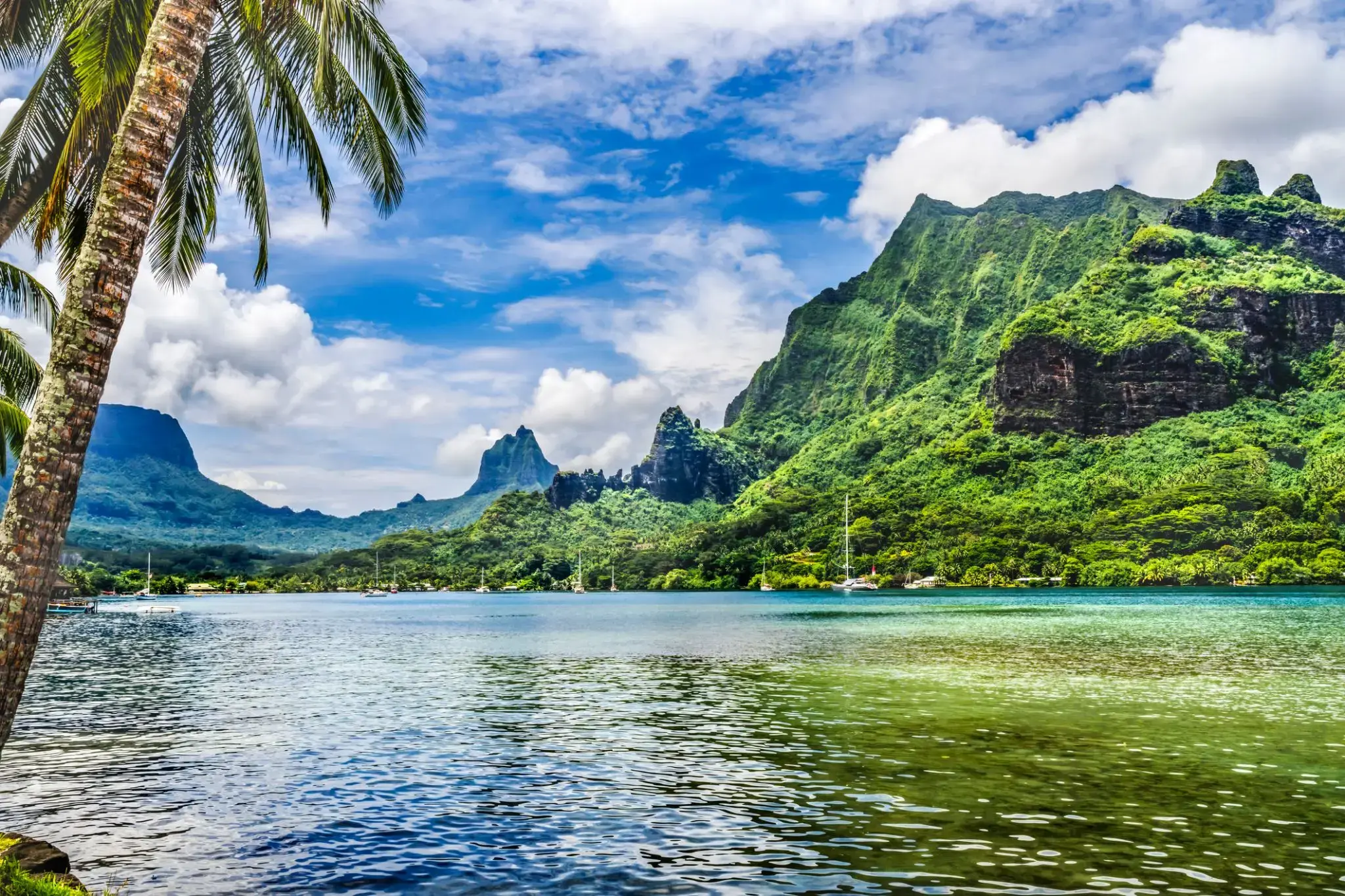
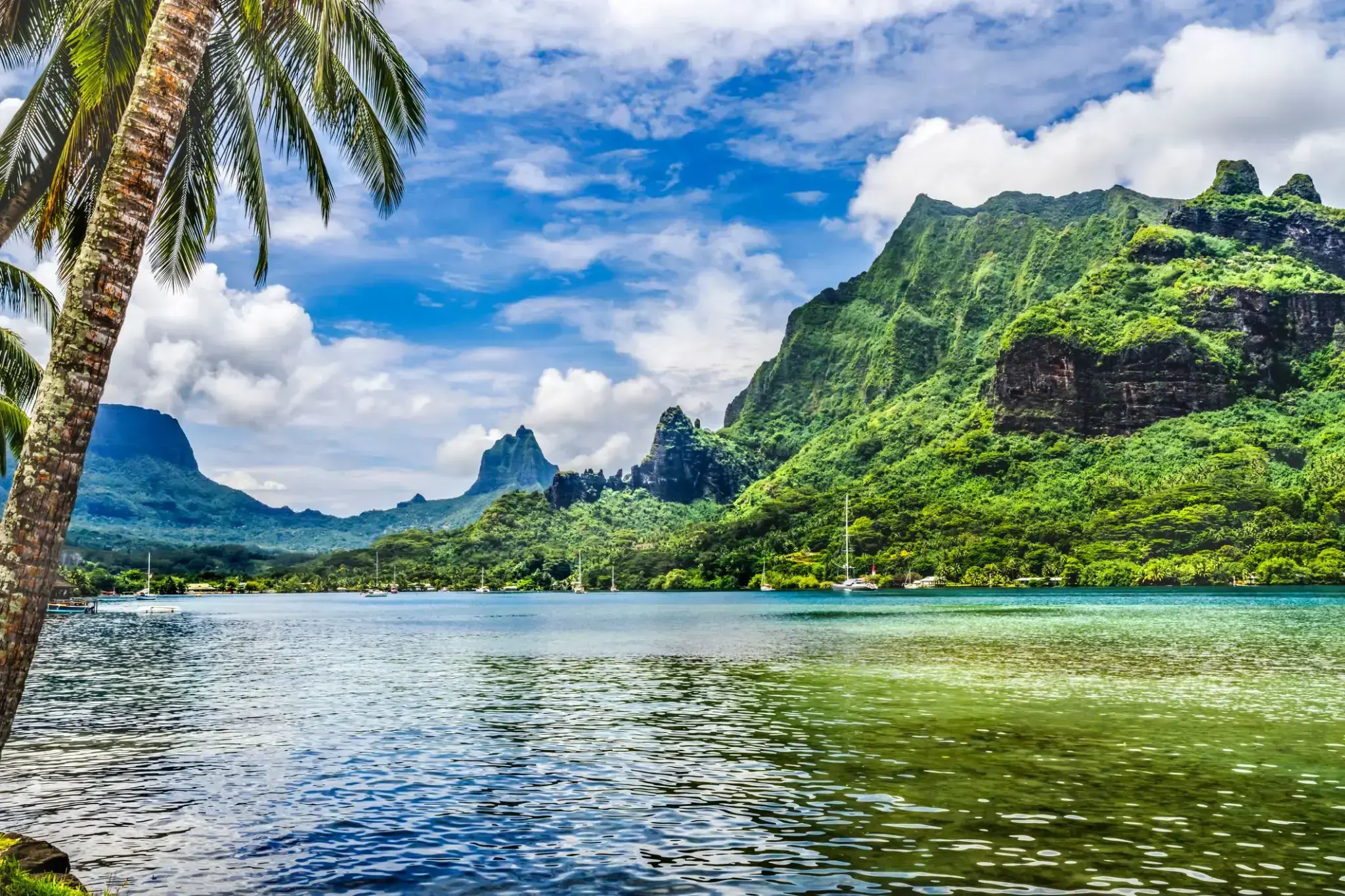
The island was formed as a volcano 1.5 to 2.5 million years ago, the result of a Society hotspot in the mantle under the oceanic plate that formed the whole of the Society Archipelago. It is theorized that the current bays were formerly river basins that filled during the Holocene searise.
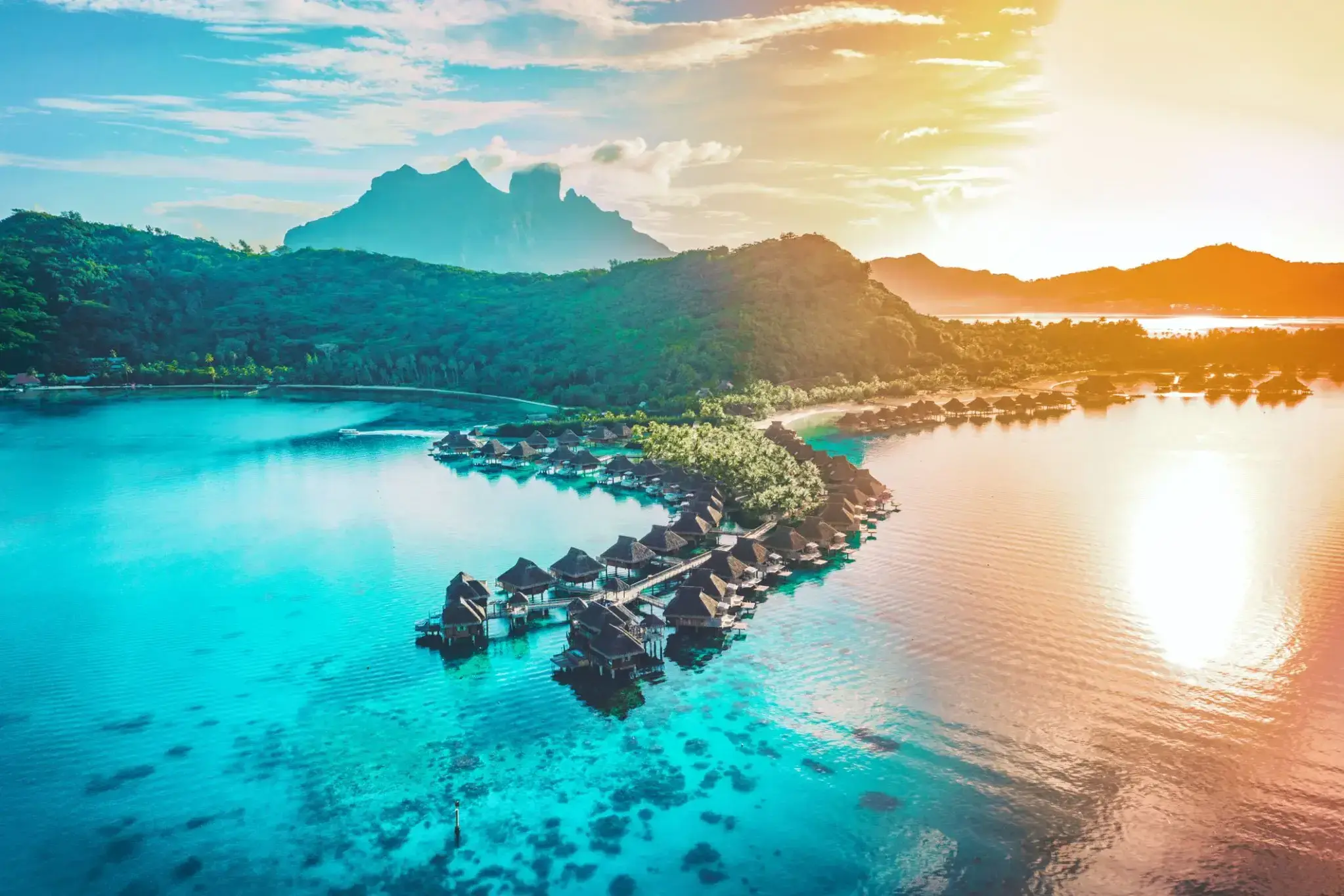
Mo'orea is about 10 miles in width from the west to the east. There are two small, nearly symmetrical bays on the north shore. The one to the west is called 'Ōpūnohu Bay, which is not very populated but many travelers have come into the bay. The main surrounding communes of the bay are Piha'ena in the east and Papetō'ai to the west. The one to the east is Cook's Bay, also called Pao Pao Bay since the largest commune of Mo'orea is at the bottom of the bay. The other communes are Piha'ena to the west and busy Maharepa to the east. The highest point is Mount Tohi'e'a, near the center of Mo'orea. It dominates the vista from the two bays and can be seen from Tahiti. There are also hiking trails in the mountains. The Vai'are Bay is another small inlet, smaller than the two main bays, on the east shore. This bay has been settled a lot and has a lot of business. The main village is located just south of the bay.
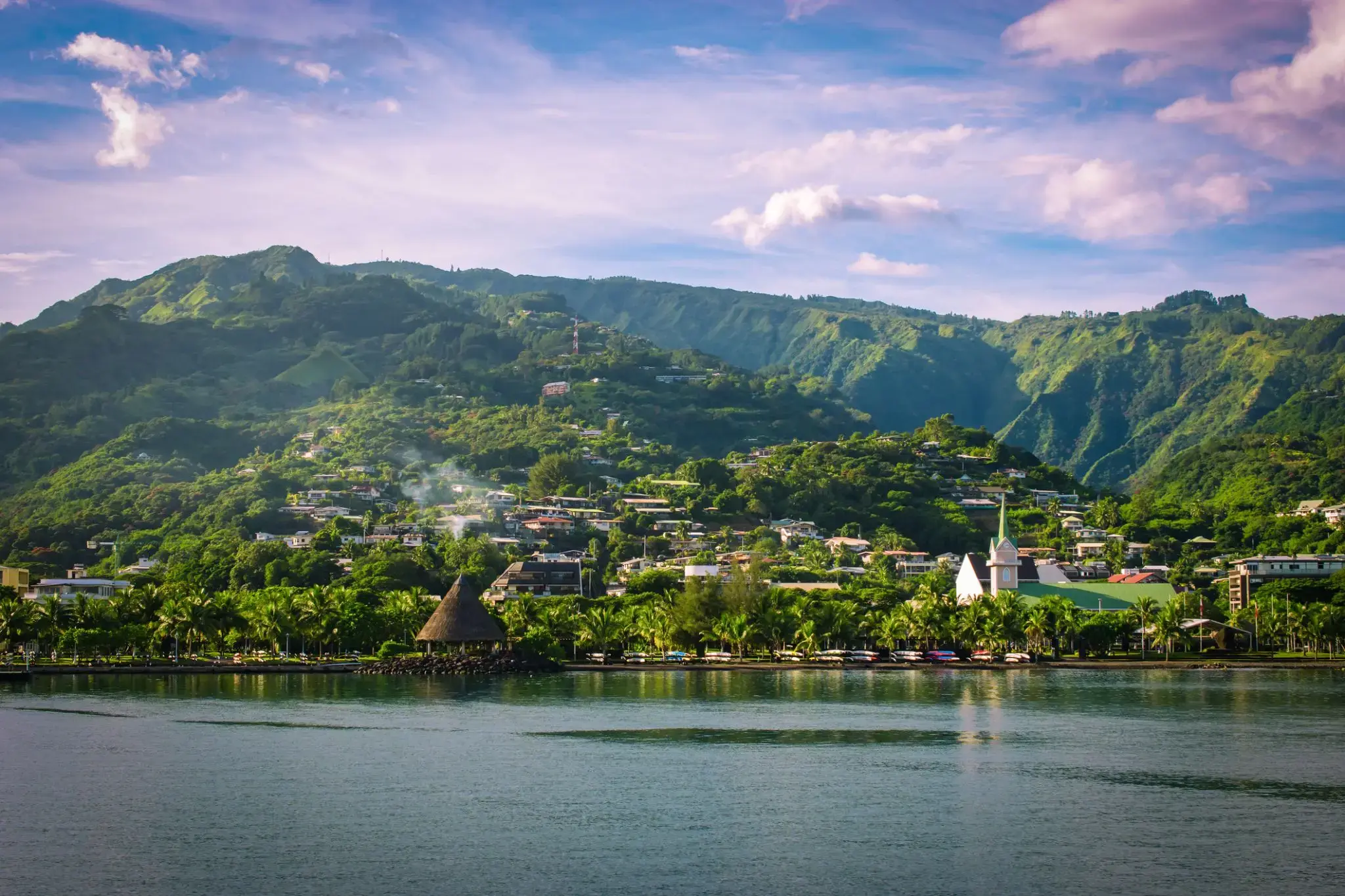
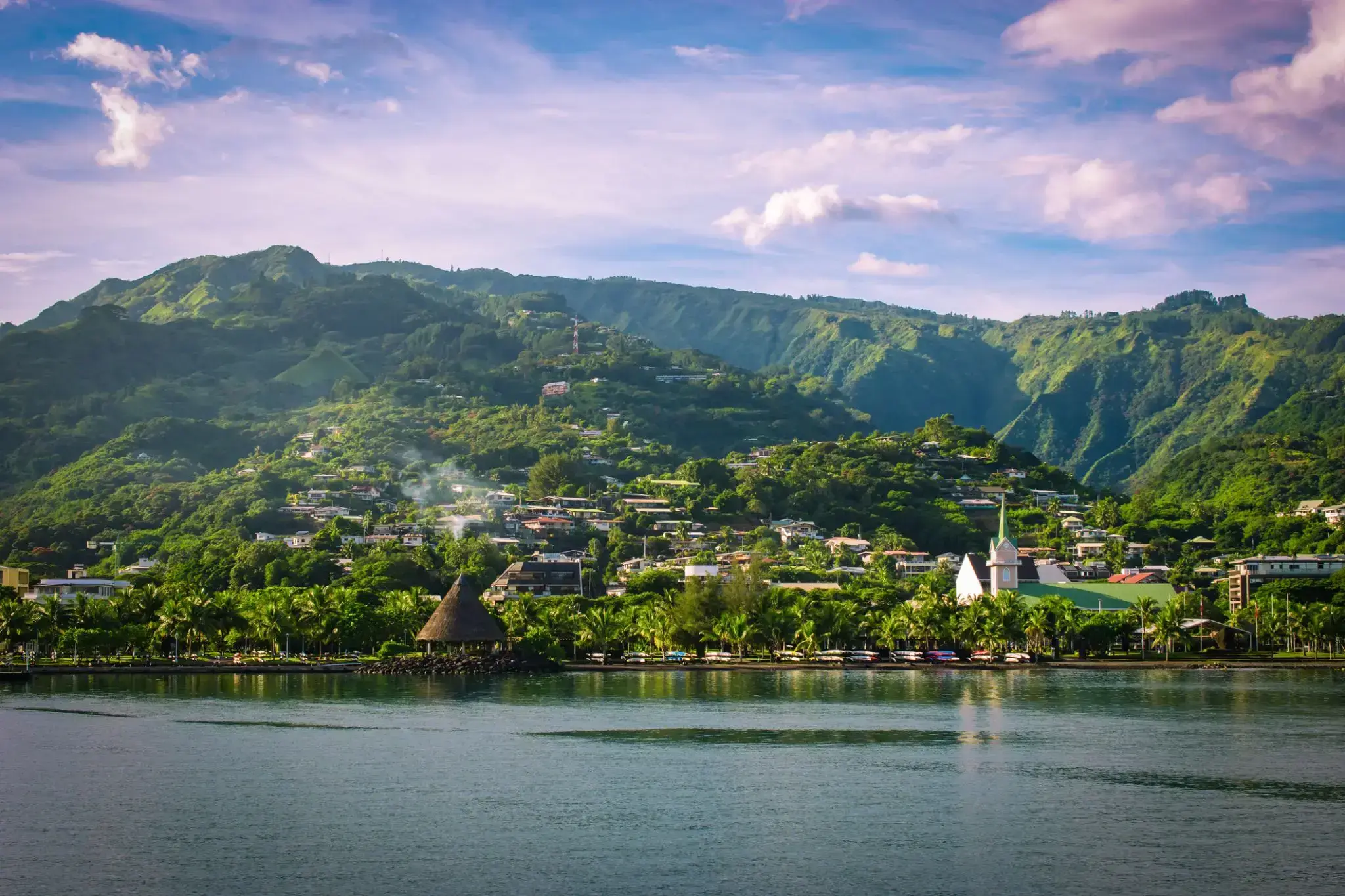
Papeete is the capital city of French Polynesia, an overseas collectivity of France in the Pacific Ocean. The commune of Papeete is located on the island of Tahiti, in the administrative subdivision of the Windward Islands, of which Papeete is the administrative capital. The French High Commissioner also resides in Papeete. It is the primary center of Tahitian and French Polynesian public and private governmental, commercial, industrial and financial services, the hub of French Polynesian tourism and a commonly used port of call. The Windward Islands are themselves part of the Society Islands. The name Papeete means "water from a basket".
The urban area of Papeete had a total population of 136,771 inhabitants at the August 2017 census, 26,926 of whom lived in the commune of Papeete proper.
The island was formed as a volcano 1.5 to 2.5 million years ago, the result of a Society hotspot in the mantle under the oceanic plate that formed the whole of the Society Archipelago. It is theorized that the current bays were formerly river basins that filled during the Holocene searise.
Mo'orea is about 10 miles in width from the west to the east. There are two small, nearly symmetrical bays on the north shore. The one to the west is called 'Ōpūnohu Bay, which is not very populated but many travelers have come into the bay. The main surrounding communes of the bay are Piha'ena in the east and Papetō'ai to the west. The one to the east is Cook's Bay, also called Pao Pao Bay since the largest commune of Mo'orea is at the bottom of the bay. The other communes are Piha'ena to the west and busy Maharepa to the east. The highest point is Mount Tohi'e'a, near the center of Mo'orea. It dominates the vista from the two bays and can be seen from Tahiti. There are also hiking trails in the mountains. The Vai'are Bay is another small inlet, smaller than the two main bays, on the east shore. This bay has been settled a lot and has a lot of business. The main village is located just south of the bay.
Papeete is the capital city of French Polynesia, an overseas collectivity of France in the Pacific Ocean. The commune of Papeete is located on the island of Tahiti, in the administrative subdivision of the Windward Islands, of which Papeete is the administrative capital. The French High Commissioner also resides in Papeete. It is the primary center of Tahitian and French Polynesian public and private governmental, commercial, industrial and financial services, the hub of French Polynesian tourism and a commonly used port of call. The Windward Islands are themselves part of the Society Islands. The name Papeete means "water from a basket".
The urban area of Papeete had a total population of 136,771 inhabitants at the August 2017 census, 26,926 of whom lived in the commune of Papeete proper.
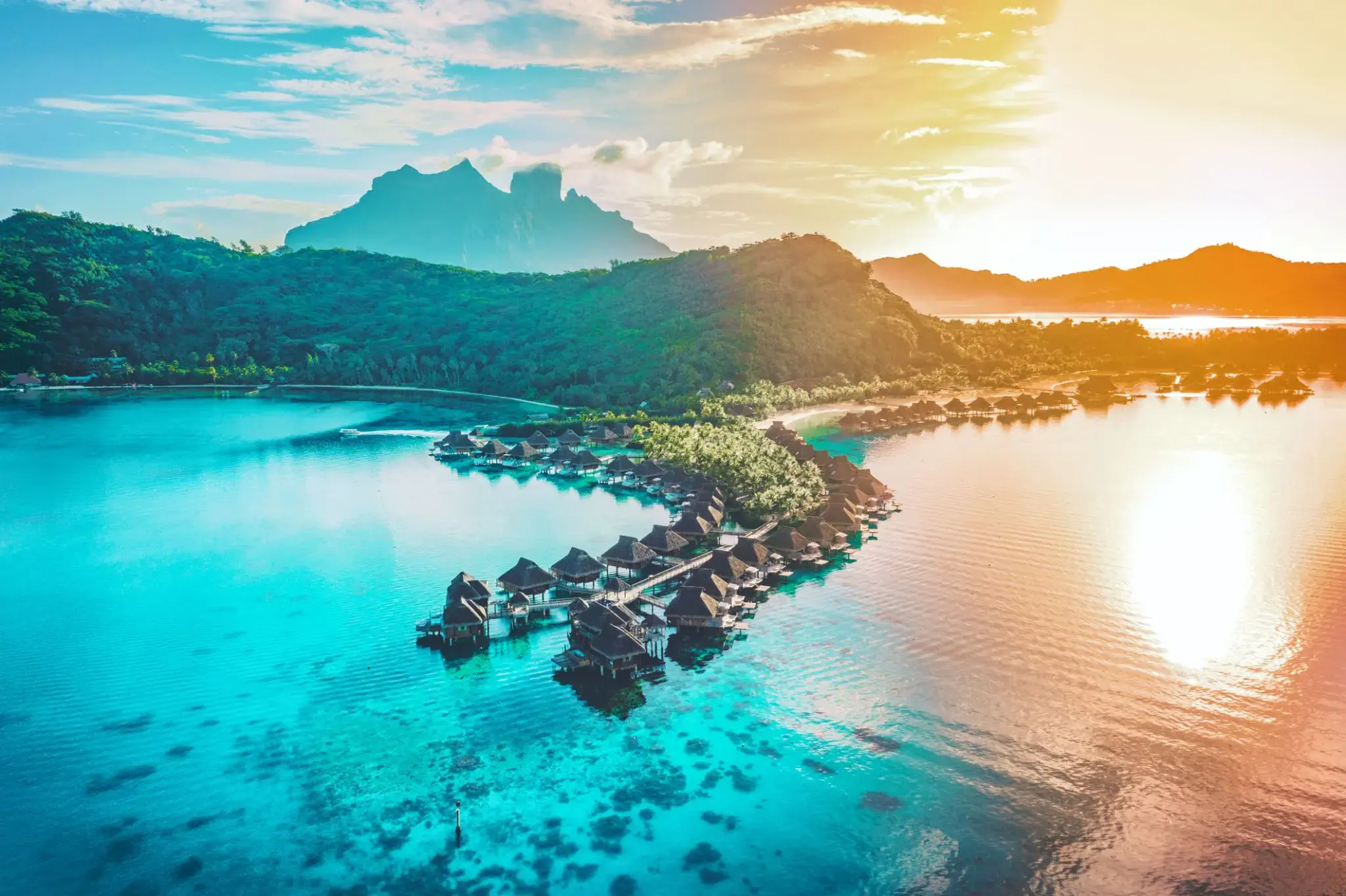
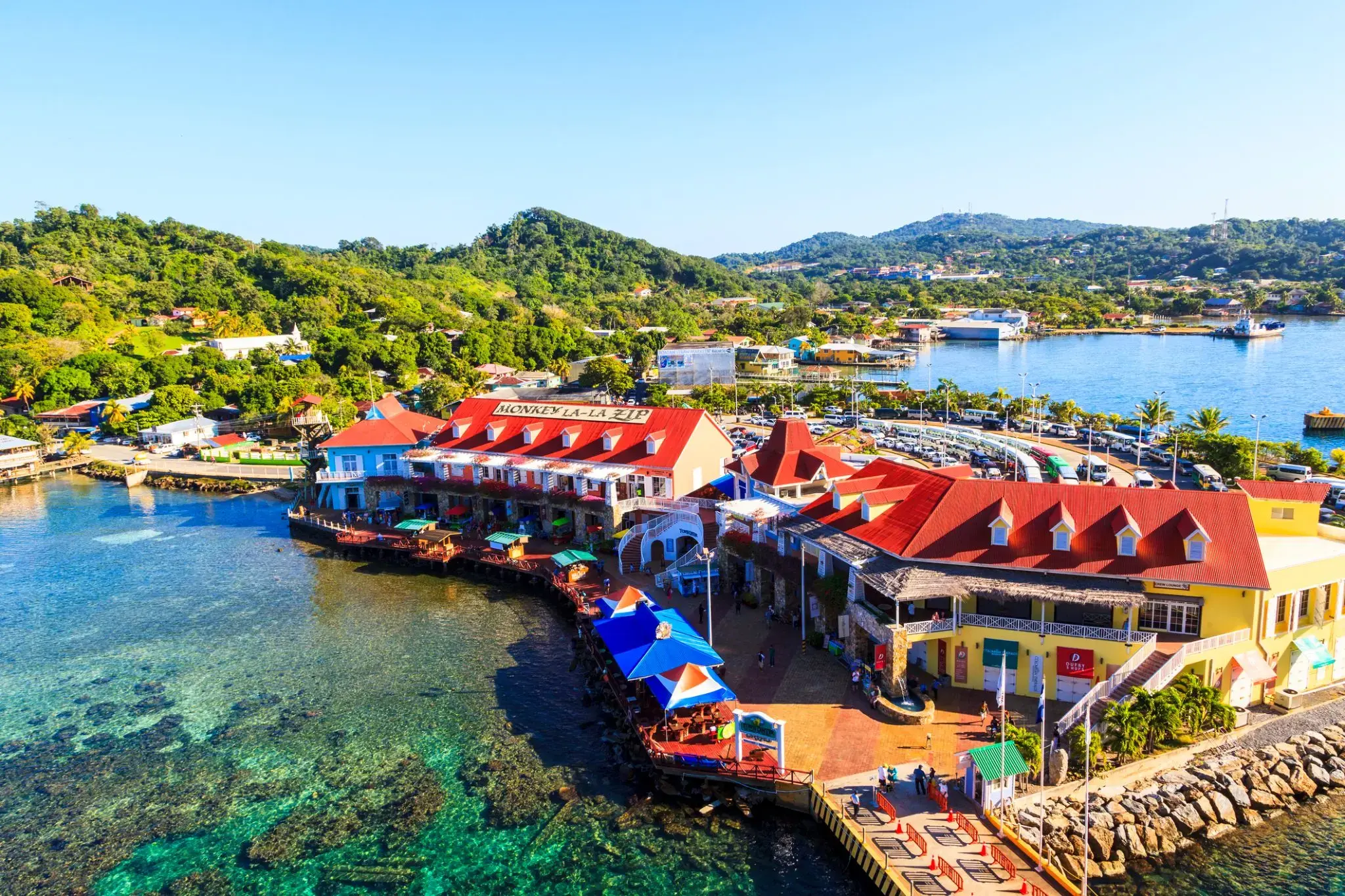
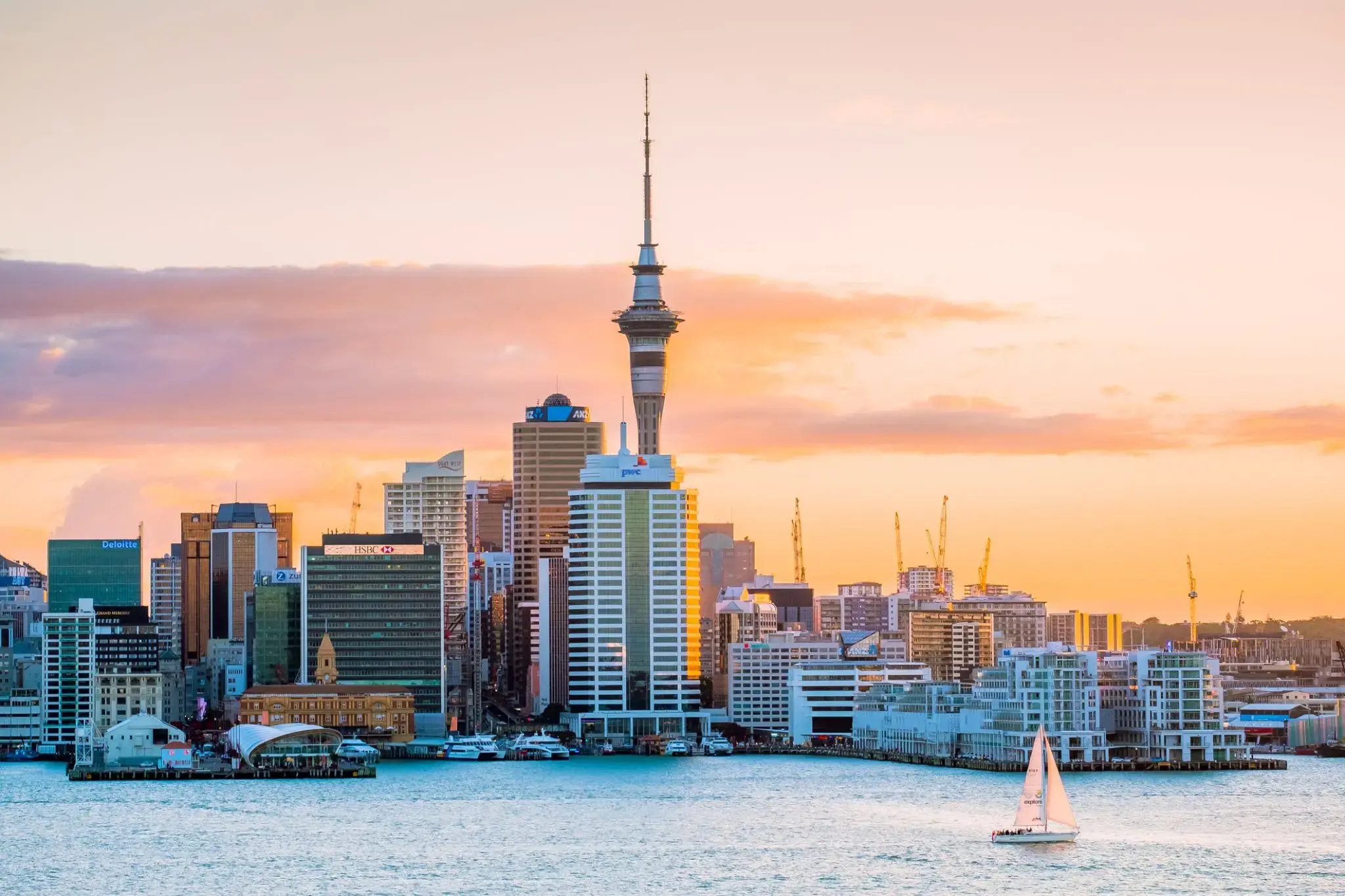
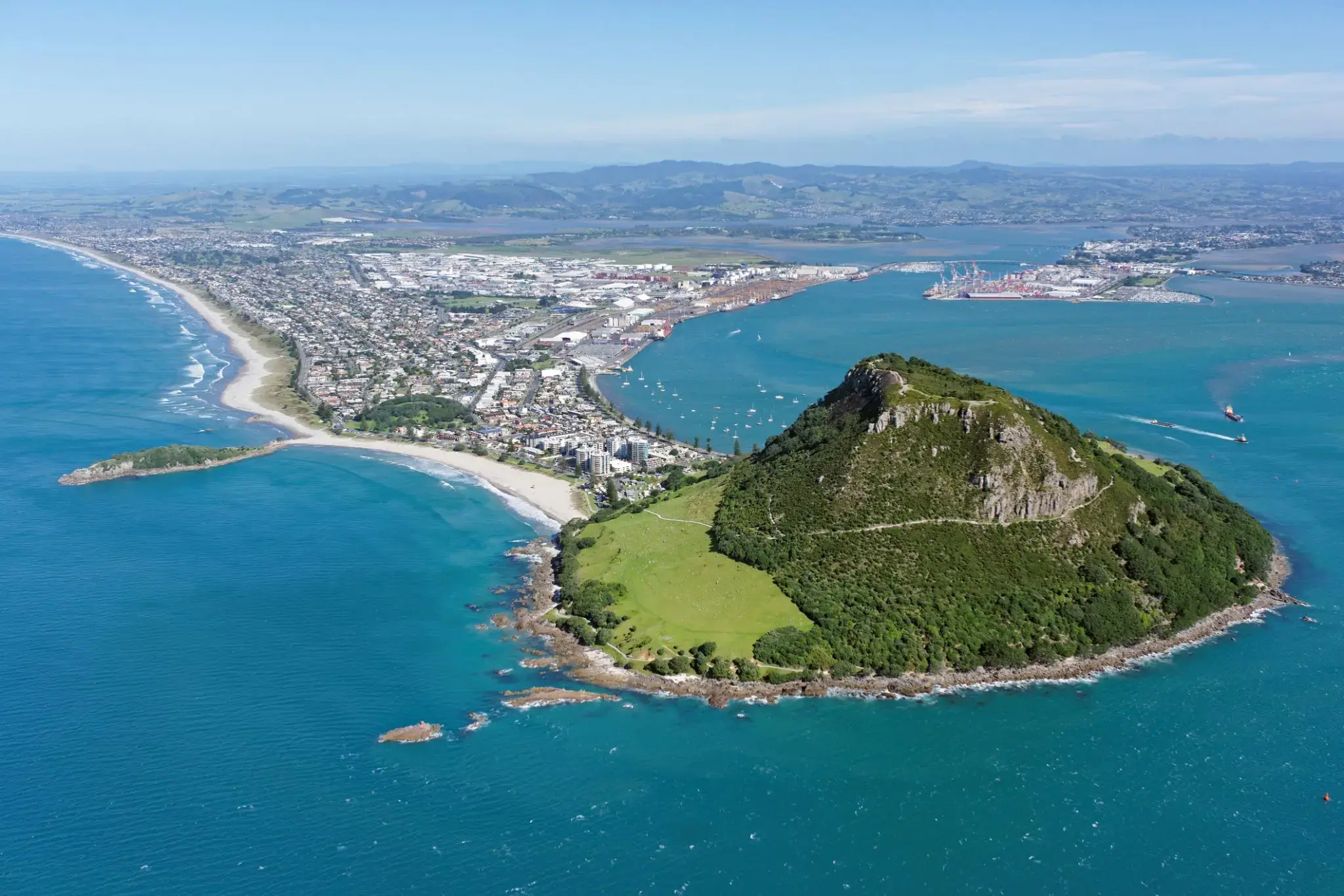
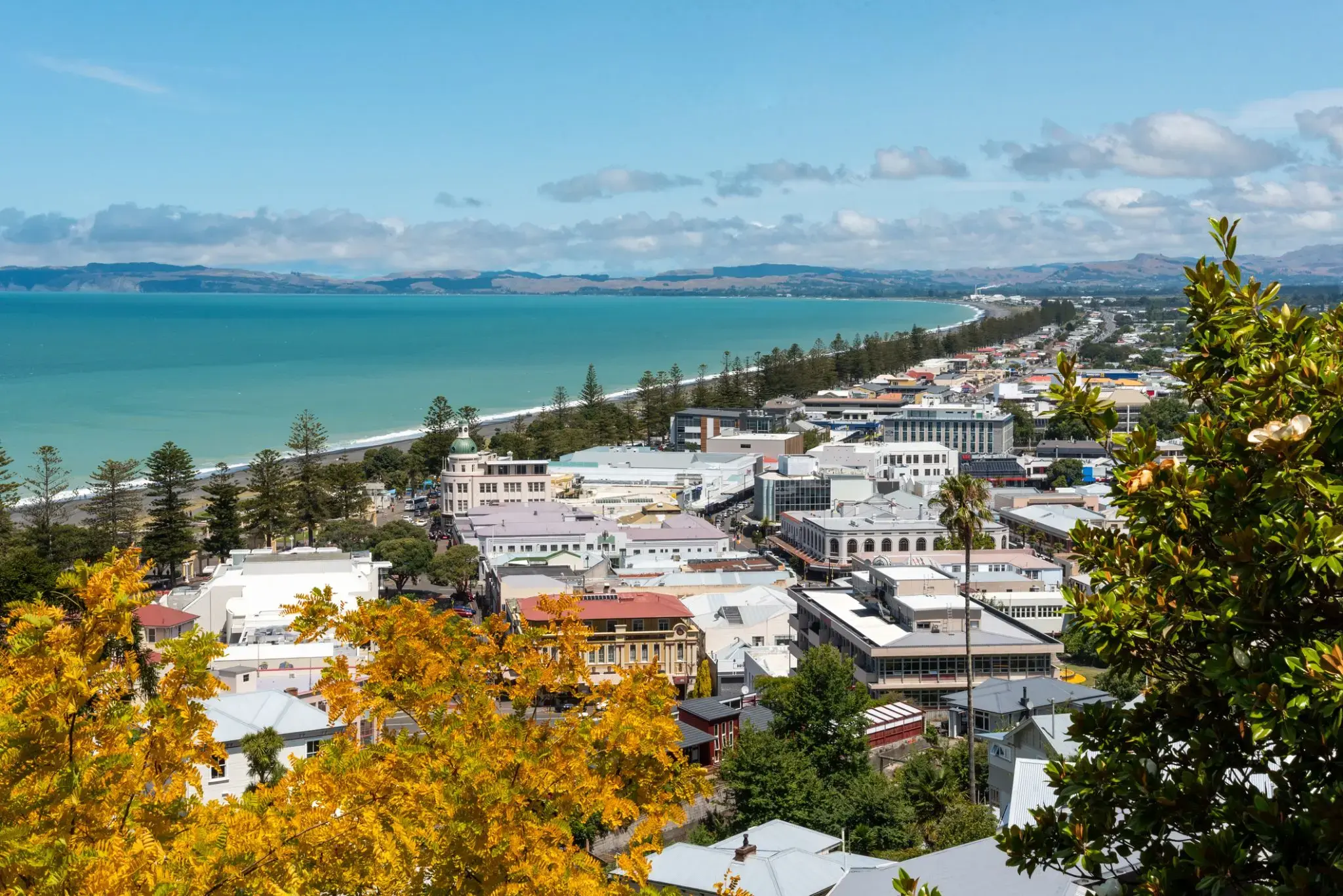
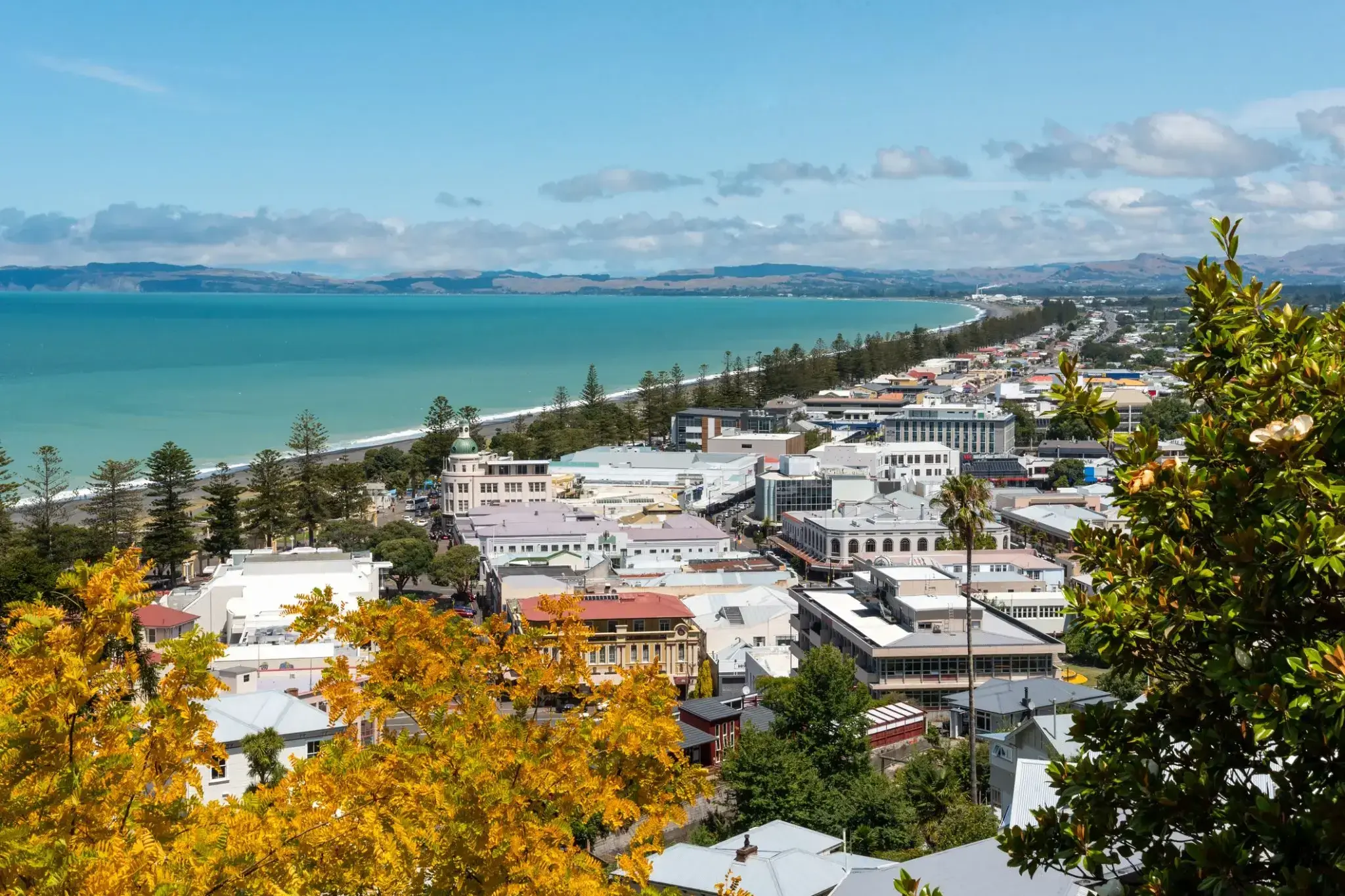
Napier is a New Zealand city with a seaport, located in Hawke's Bay on the eastern coast of the North Island. The population of Napier is about 63,900 as of the June 2018. About 18 kilometres (11 mi) south of Napier is the inland city of Hastings. These two neighbouring cities are often called "The Bay Cities" or "The Twin Cities" of New Zealand. The total population of the Napier-Hastings Urban Area is 134,500 people, which makes it the sixth-largest urban area in New Zealand, closely followed by Dunedin (122,000), and trailing Tauranga(141,600).
Napier is about 320 kilometres (200 mi) northeast of the capital city of Wellington. Napier (63,900) has a smaller population than its neighbouring city of Hastings (70,600) but is seen as the main centre due to it being closer in distance to both the seaport and the main airport that service Hawke's Bay, and Hastings' population figure includes 13,000 people living in Havelock North, which is often considered a town in its own right. The City of Napier has a land area of 106 square kilometres (41 sq mi) and a population density of 540.0 per square kilometre.
Napier is the nexus of the largest wool centre in the Southern Hemisphere, and it has the primary export seaport for northeastern New Zealand – which is the largest producer of apples, pears, and stone fruit in New Zealand. Napier has also become an important grape and wine production area, with the grapes grown around Hastings and Napier being sent through the Port of Napier for export. Large amounts of sheep's wool, frozen meat, wood pulp, and timber also pass through Napier annually for export. Smaller amounts of these materials are shipped via road and railway to the large metropolitan areas of New Zealand itself, such as Auckland, Wellington and Hamilton.
Napier is a popular tourist city, with a unique concentration of 1930s Art Deco architecture, built after much of the city was razed in the 1931 Hawke's Bay earthquake. It also has one of the most photographed tourist attractions in the country, a statue on Marine Parade called Pania of the Reef. Thousands of people flock to Napier every February for the Tremains Art Deco Weekend event, a celebration of its Art Deco heritage and history. Other notable tourist events attracting many outsiders to the region annually include F.A.W.C! Food and Wine Classic events, and the Mission Estate Concert at Mission Estate and Winery in the suburb of Taradale.
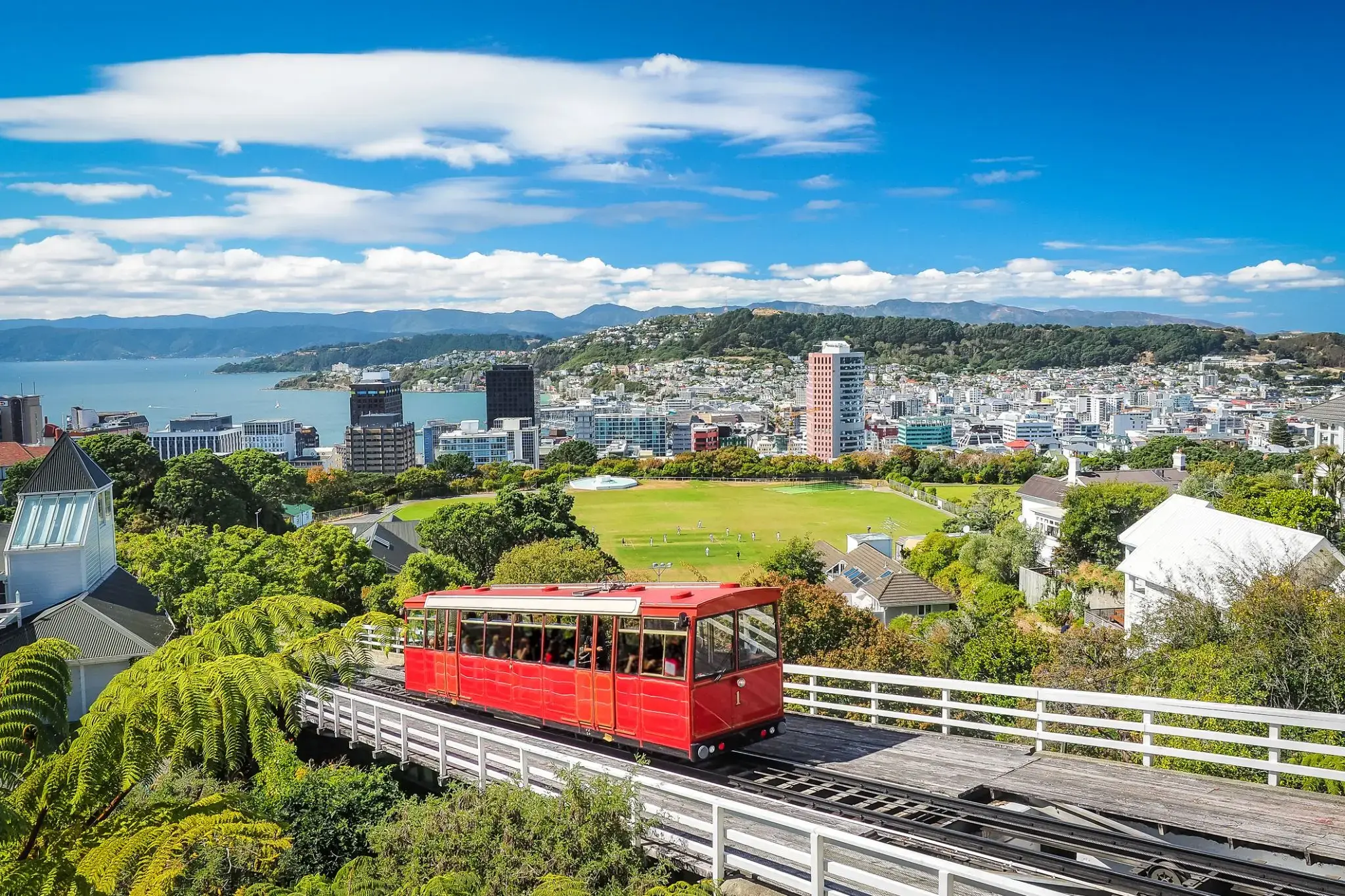
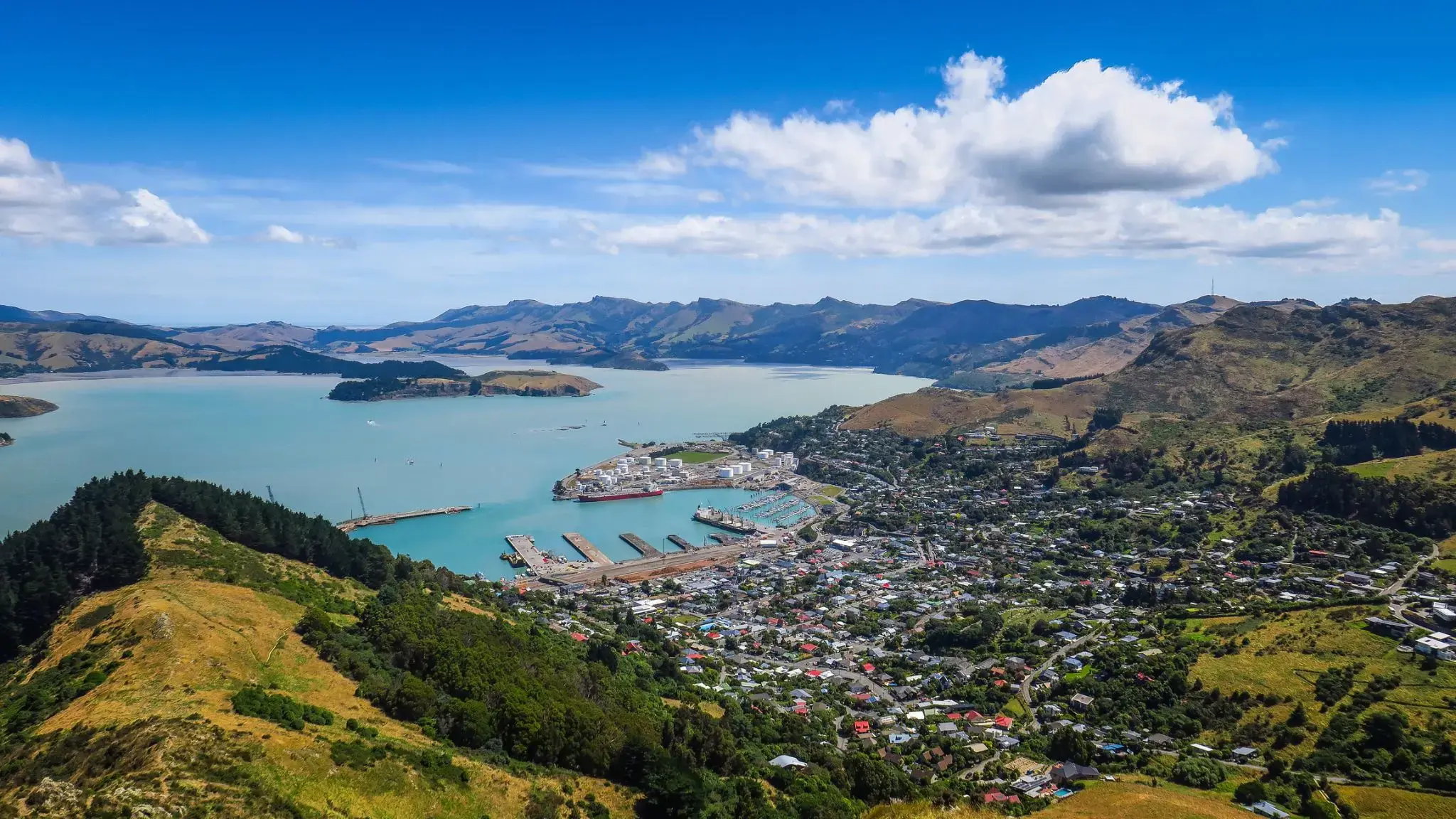
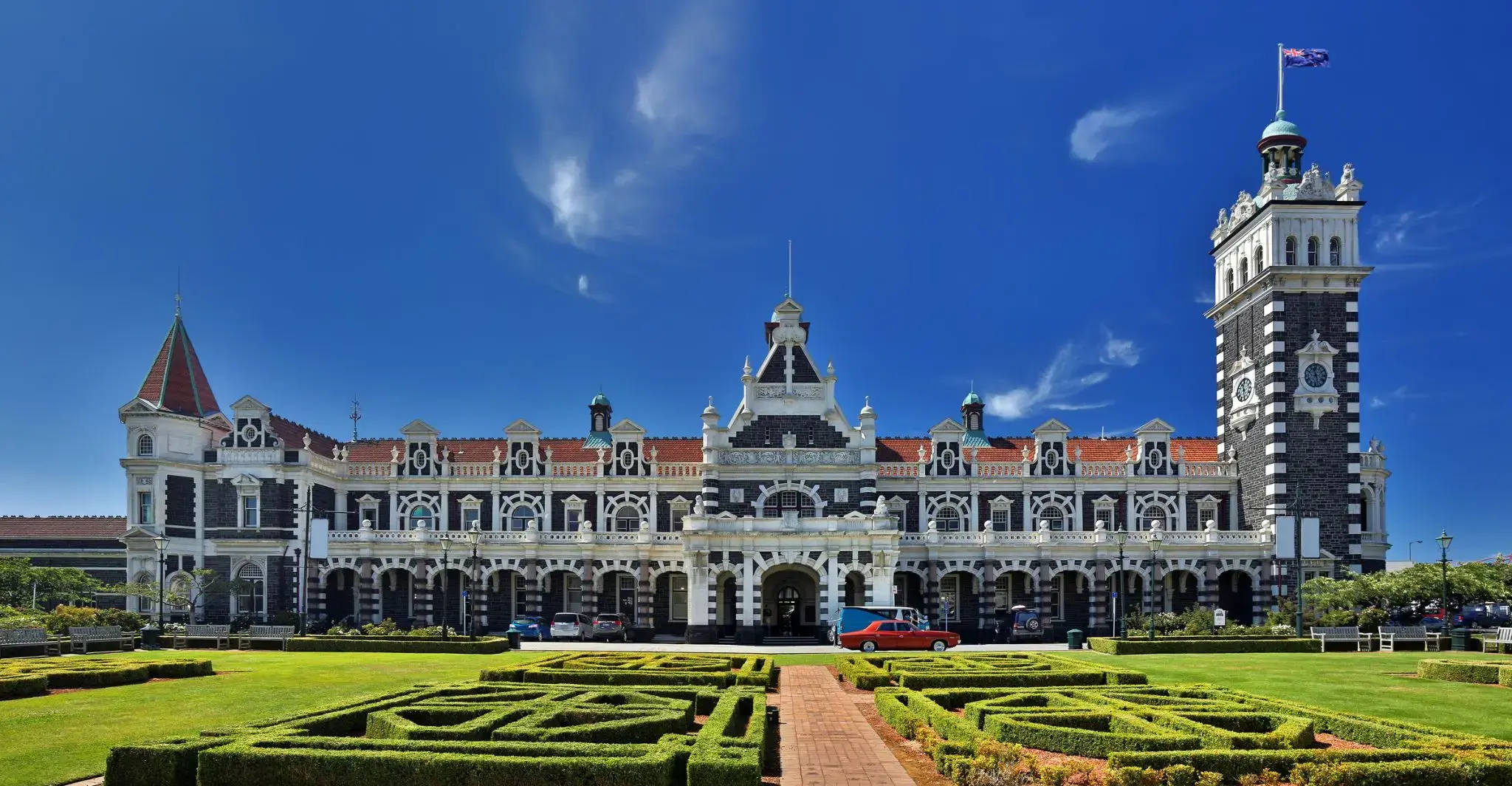
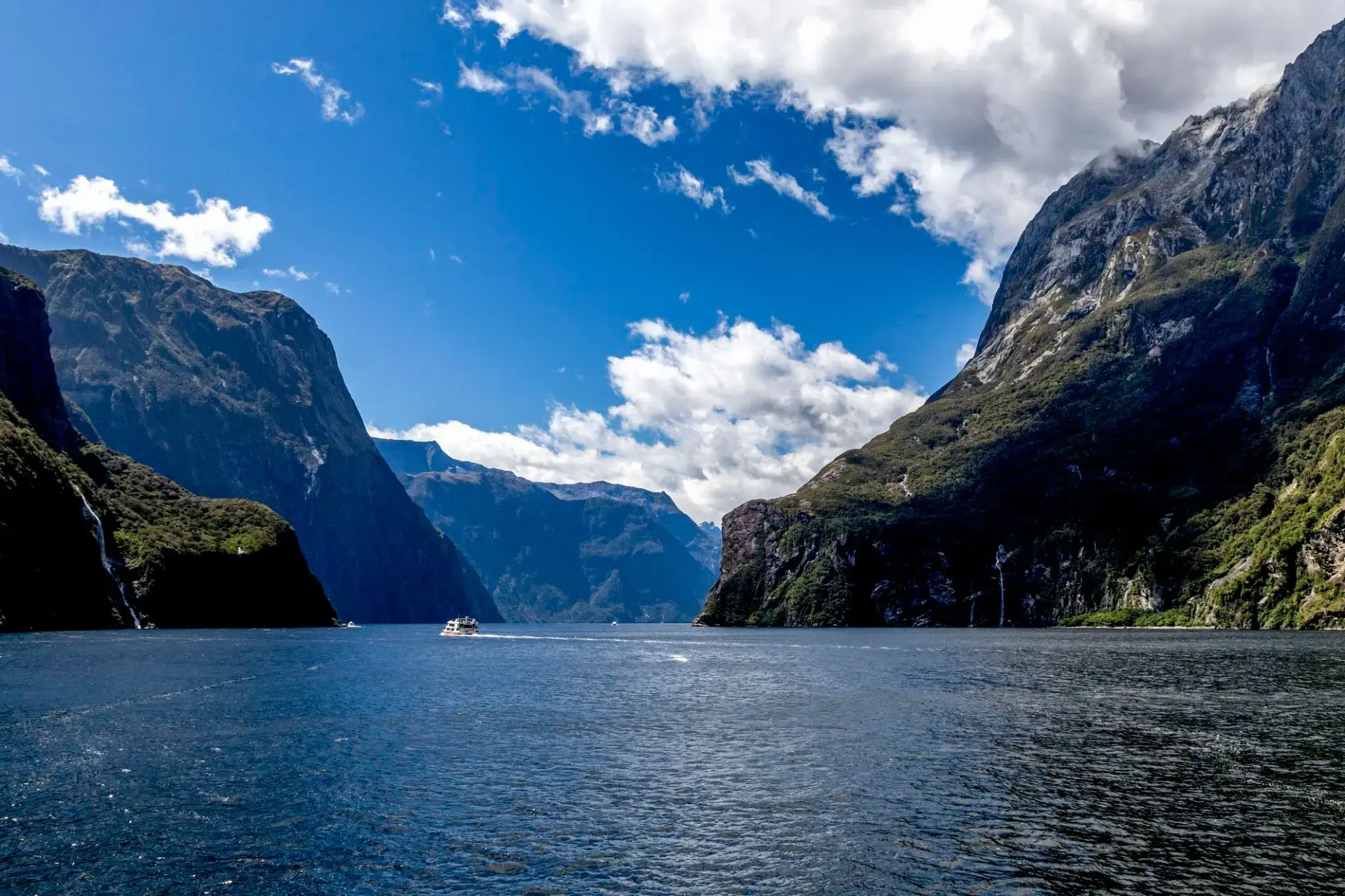
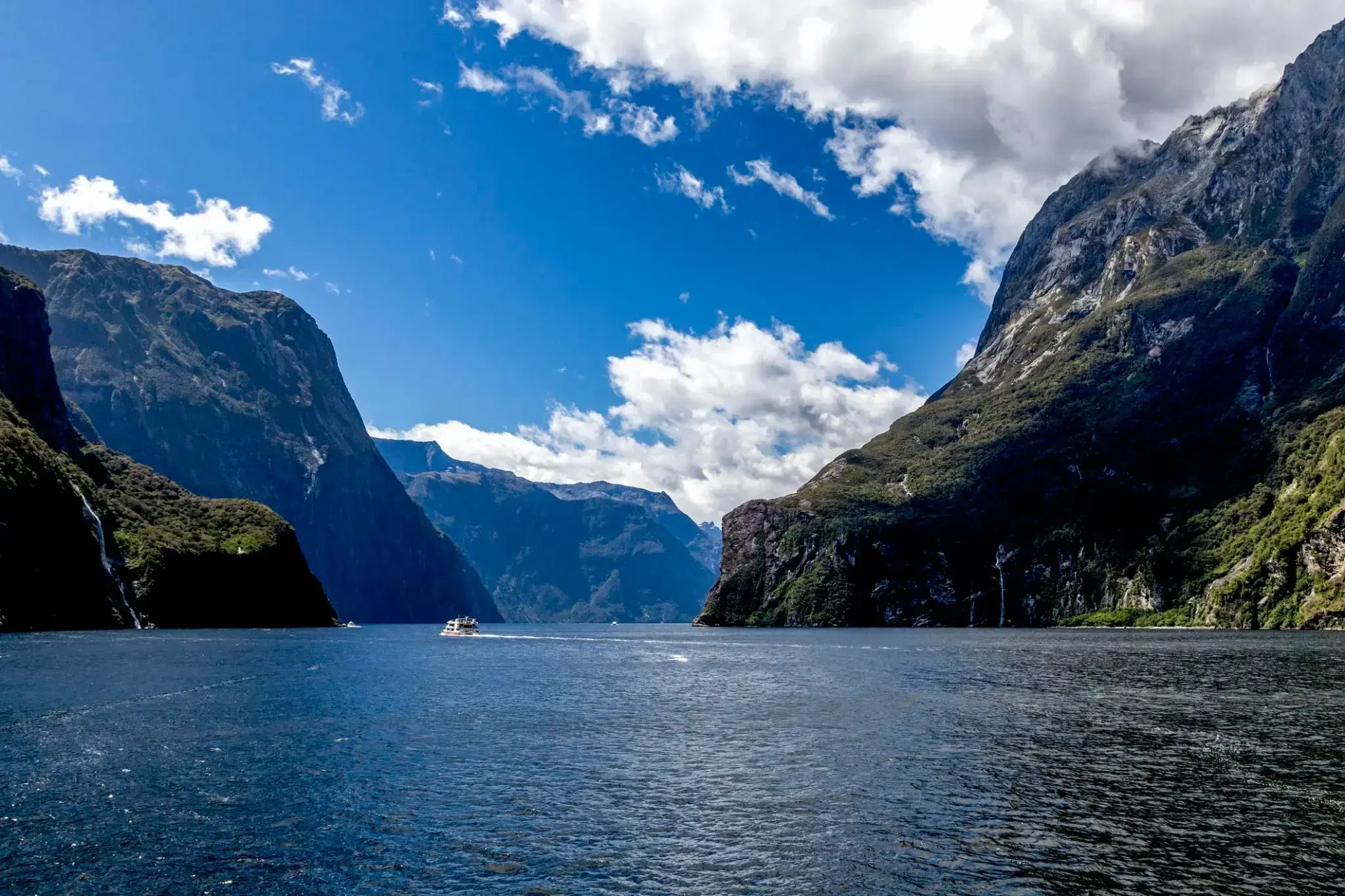
It’s hard to believe that hidden among tropical rainforests and sheer cliffs, Milford Sound in New Zealand offers a world of misty peaks and shimmering waterfalls dropping over 150 meters straight into the fjord’s blue waters. This corner of the South Island surprises visitors with its mystical atmosphere: rain is frequent here, yet it creates dozens of temporary waterfalls that turn Milford Sound into a living painting. Dolphins, seals, and penguins inhabit the fjord’s waters, and on clear days, you can see the reflection of the majestic Mitre Peak on the calm surface.
The best way to feel the power of this place is to take a cruise or kayak, passing by the famous Stirling Falls and the towering cliffs that rise hundreds of meters above the water. For a more intimate experience, visitors can walk the Milford Track, one of the world’s most scenic hiking trails, leading through rainforests and suspension bridges to breathtaking views of Milford Sound. Here, every rainfall becomes part of the magic that stays with you long after you leave these shores.
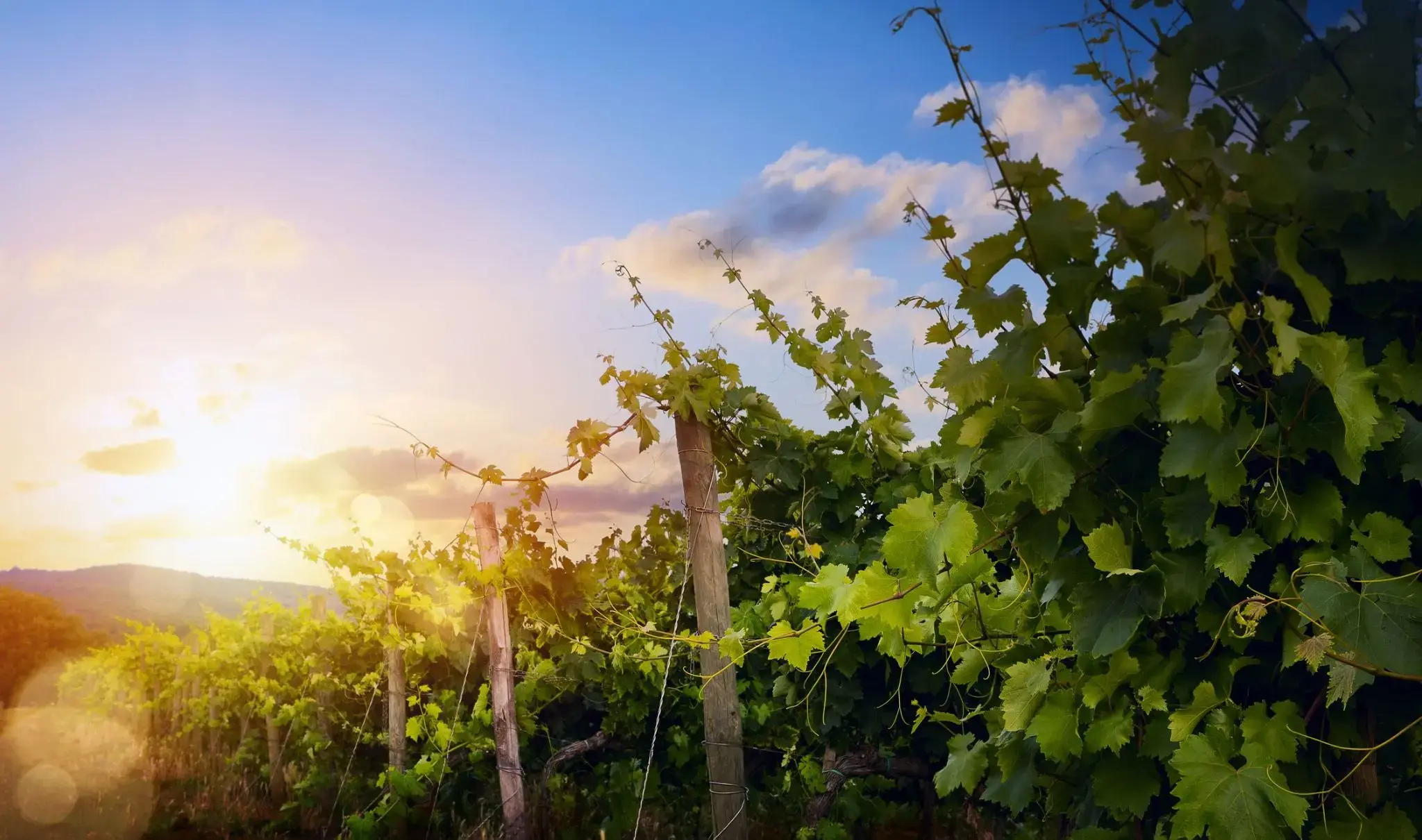
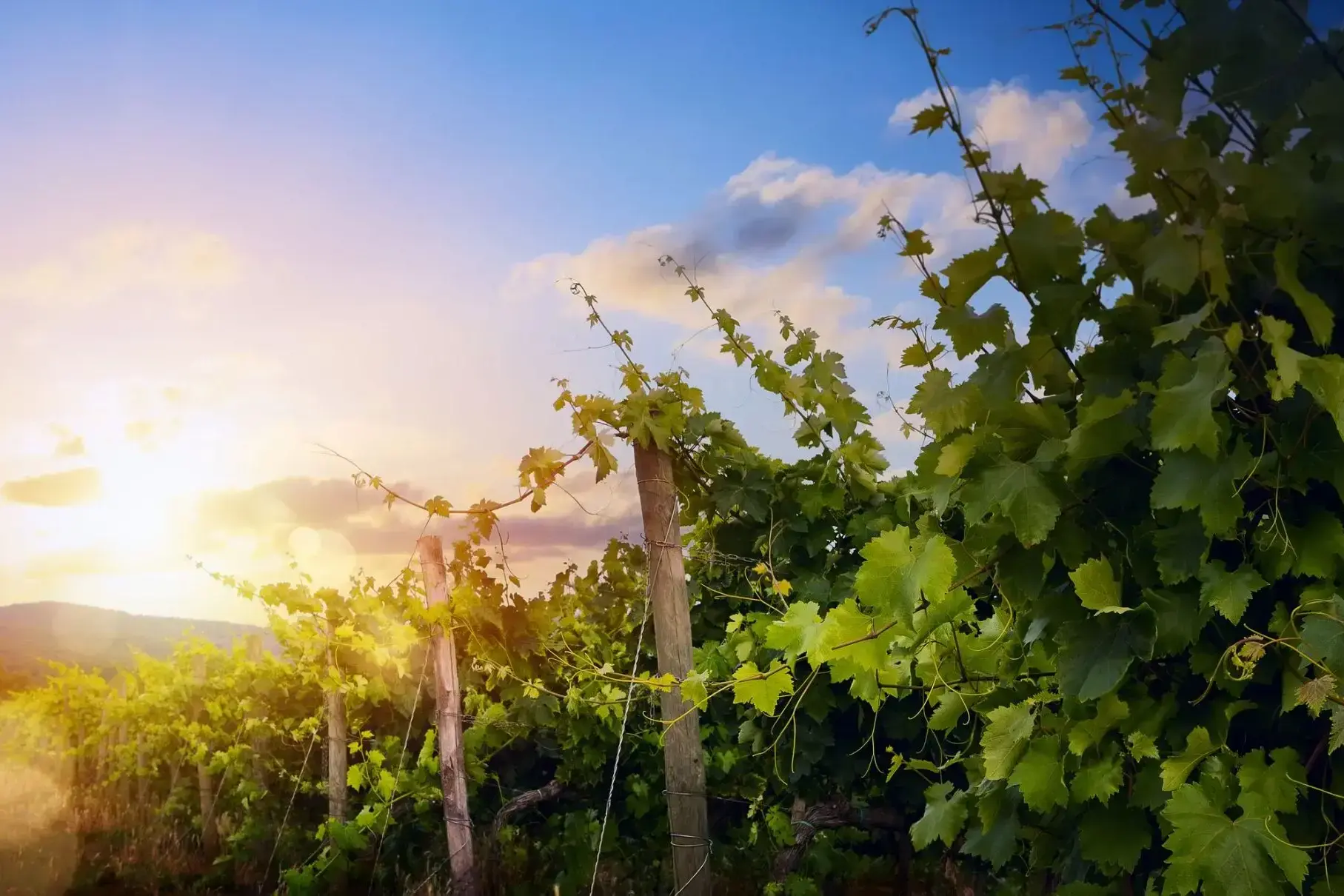
Eden Valley is a picturesque valley located in the heart of Australia, in the state of South Australia. Known for its unique natural beauty, abundant wildlife, and fertile agricultural lands, this area is home to thriving vineyards and the production of famous local wines. The landscapes of Eden Valley are enchanting both in the warm seasons and during winter, when the rolling hills are covered in greenery, and snowy peaks glisten on the horizon. It is also one of the best regions for wine tours and excursions, where tourists can not only enjoy local wines but also learn about the winemaking process.
For travelers, Eden Valley offers not just natural beauty but a wide range of outdoor activities. The region is perfect for hiking, camping, and wildlife watching. Rare animals, such as koalas and kangaroos, can be spotted here, along with stunning panoramic views of the valley. Summer in Eden Valley is a time for festivals and cultural events, attracting both locals and visitors. It is a place for those seeking a blend of nature, adventure, and culinary delights without straying far from civilization.
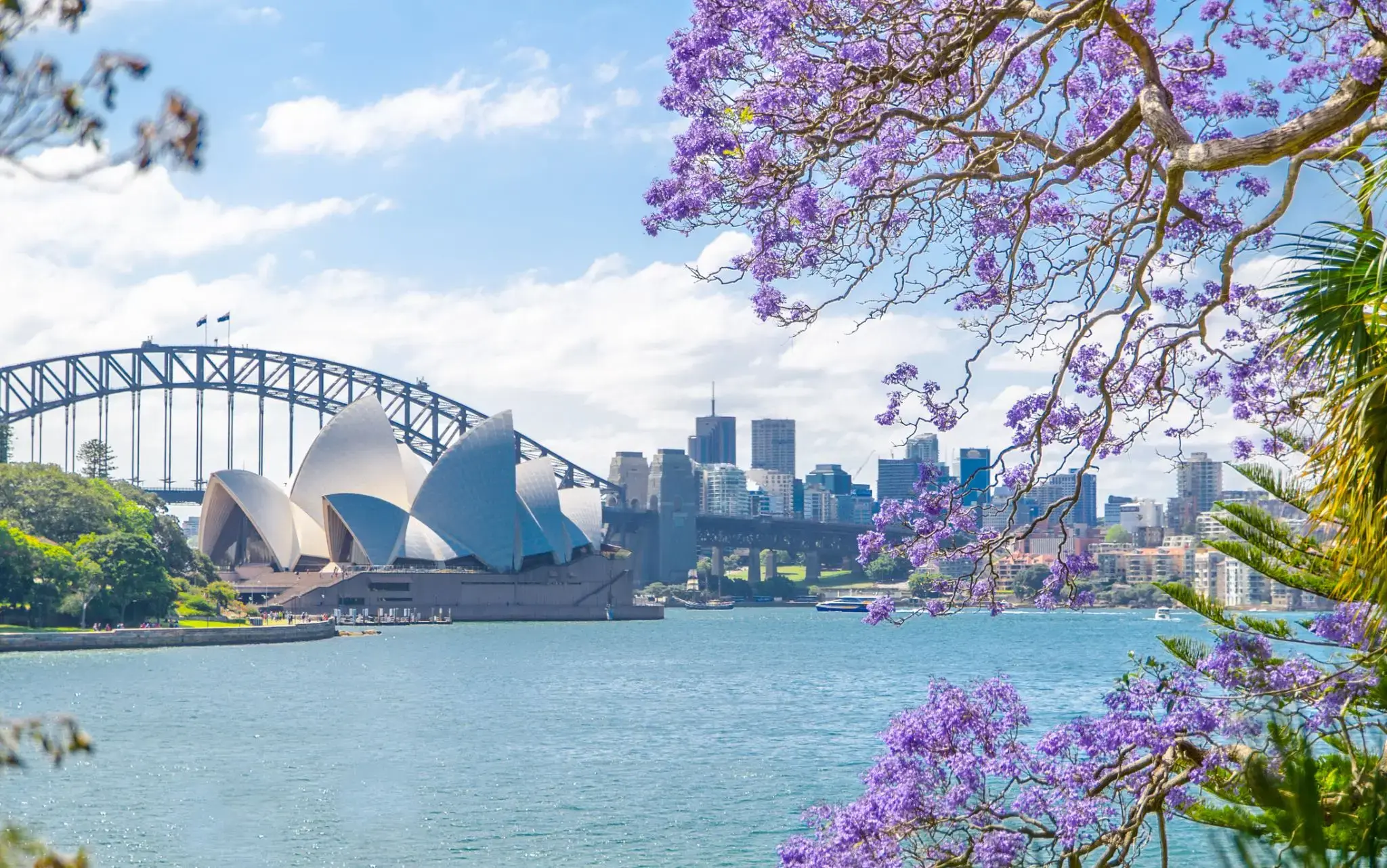
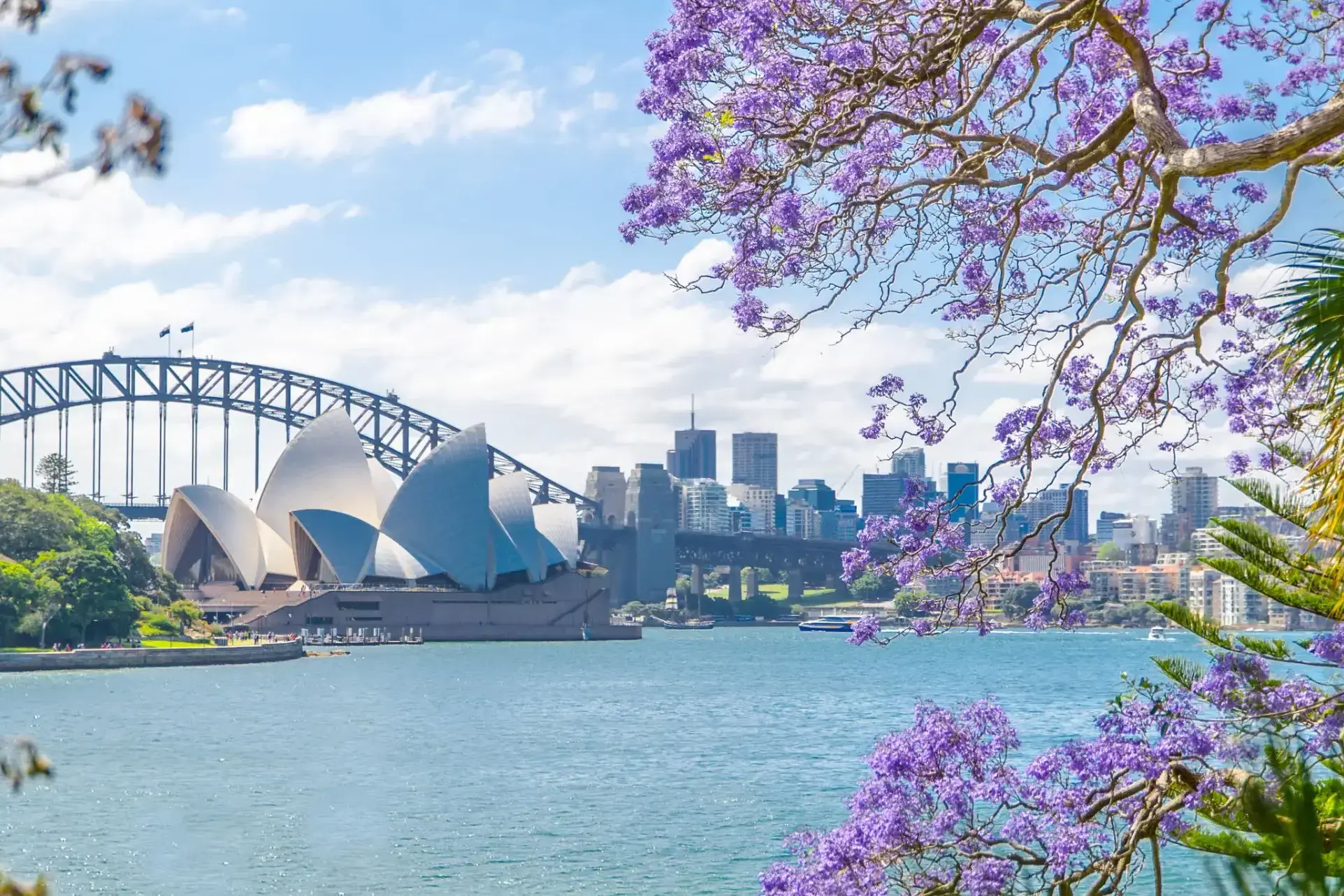
Sydney is the state capital of New South Wales and the most populous city in Australiaand Oceania. Located on Australia's east coast, the metropolis surrounds Port Jackson and extends about 70 km (43.5 mi) on its periphery towards the Blue Mountains to the west, Hawkesbury to the north, and Macarthur to the south. Sydney is made up of 658 suburbs, 40 local government areas and 15 contiguous regions. Residents of the city are known as "Sydneysiders". As of June 2017, Sydney's estimated metropolitan population was 5,131,326, and is home to approximately 65% of the state's population.
Sydney is the state capital of New South Wales and the most populous city in Australiaand Oceania. Located on Australia's east coast, the metropolis surrounds Port Jackson and extends about 70 km (43.5 mi) on its periphery towards the Blue Mountains to the west, Hawkesbury to the north, and Macarthur to the south. Sydney is made up of 658 suburbs, 40 local government areas and 15 contiguous regions. Residents of the city are known as "Sydneysiders". As of June 2017, Sydney's estimated metropolitan population was 5,131,326, and is home to approximately 65% of the state's population.
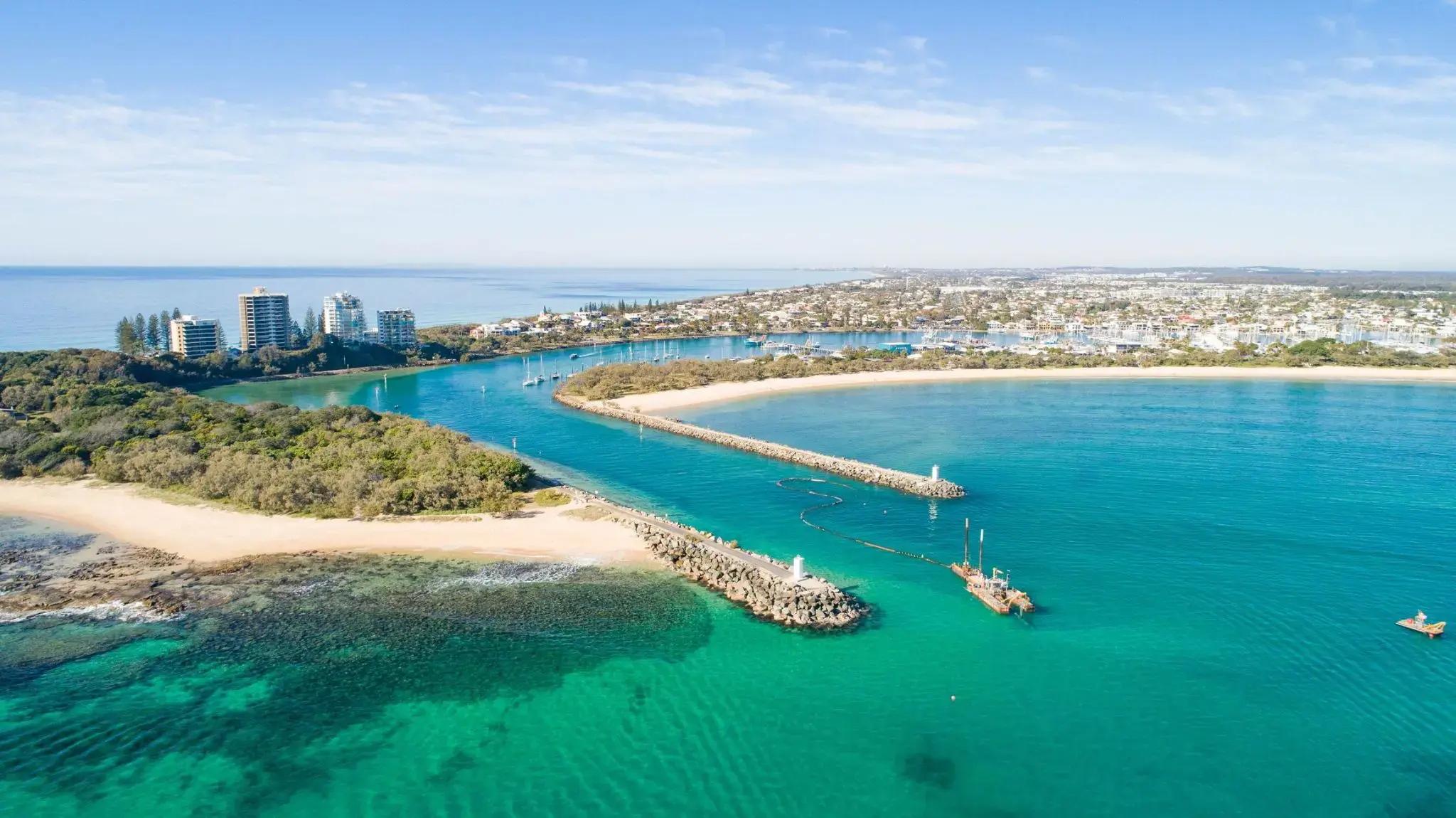
Mooloolaba is a picturesque coastal town on the Sunshine Coast in Queensland, Australia, known for its ideal conditions for beach holidays and water sports. The town boasts one of the region's most popular beaches, attracting tourists with its clean sand, calm waters, and excellent opportunities for surfing, swimming, and fishing. Mooloolaba is also famous for its beautiful promenade lined with cafes, restaurants, and shops where visitors can enjoy local cuisine and pick up souvenirs.
In addition to its beaches, Mooloolaba offers a variety of natural attractions. The surrounding area is home to the Mooloolaba National Park and a marine center where visitors can learn about the local flora and fauna, including dolphins and sea turtles. For those seeking seclusion and an opportunity to explore unique ecosystems, islands like Moreton Island are easily accessible. Mooloolaba is the perfect place for active outdoor activities and relaxing seaside moments.
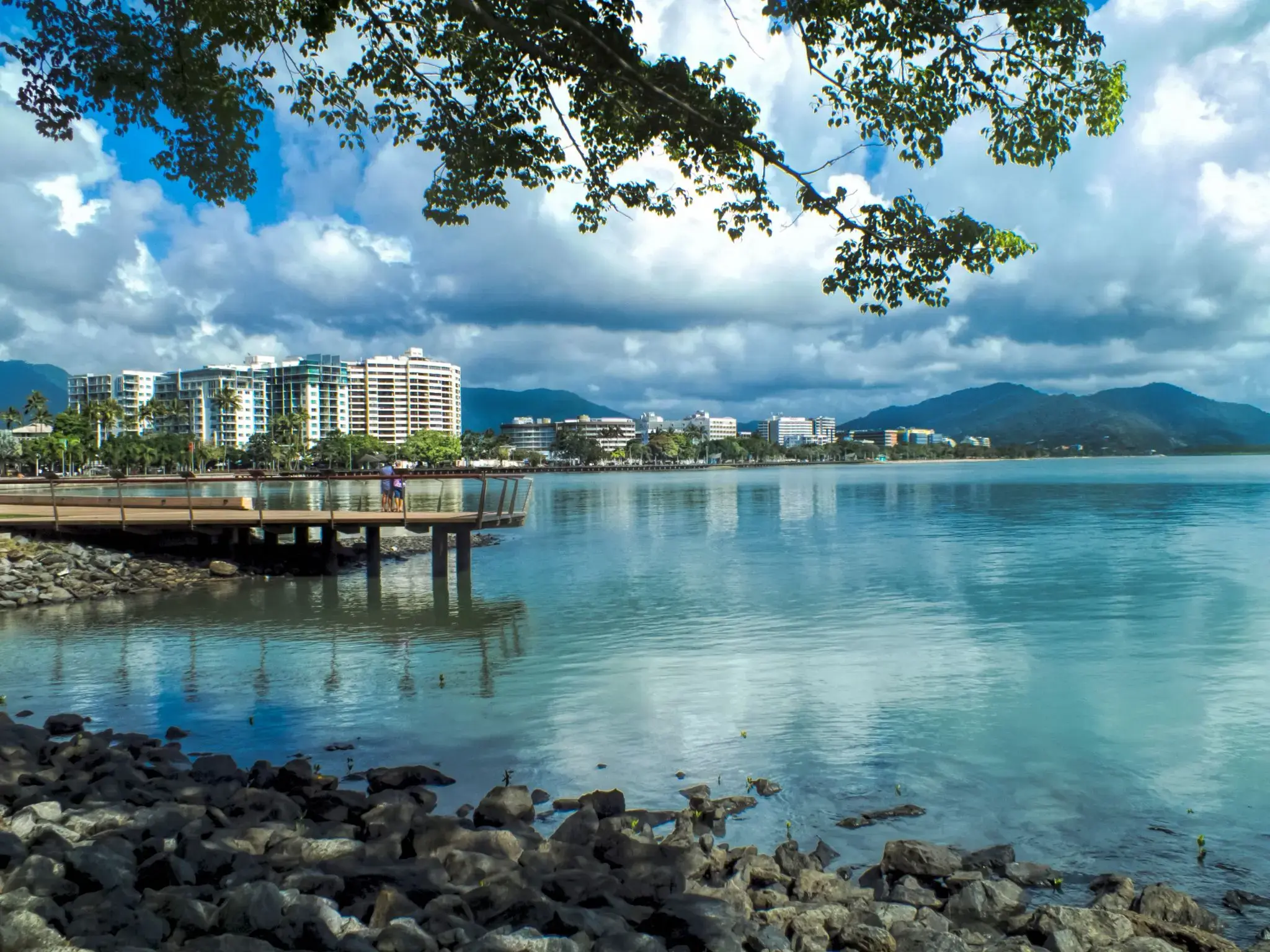
Cairns City is the suburb at the centre of Cairns in the local government area of Cairns Region, Queensland, Australia.It can also be referred to as the Cairns Central Business District (CBD). In the 2011 census, the population of Cairns City was 2,737 people.
Cairns City is the suburb at the centre of Cairns in the local government area of Cairns Region, Queensland, Australia.It can also be referred to as the Cairns Central Business District (CBD). In the 2011 census, the population of Cairns City was 2,737 people.
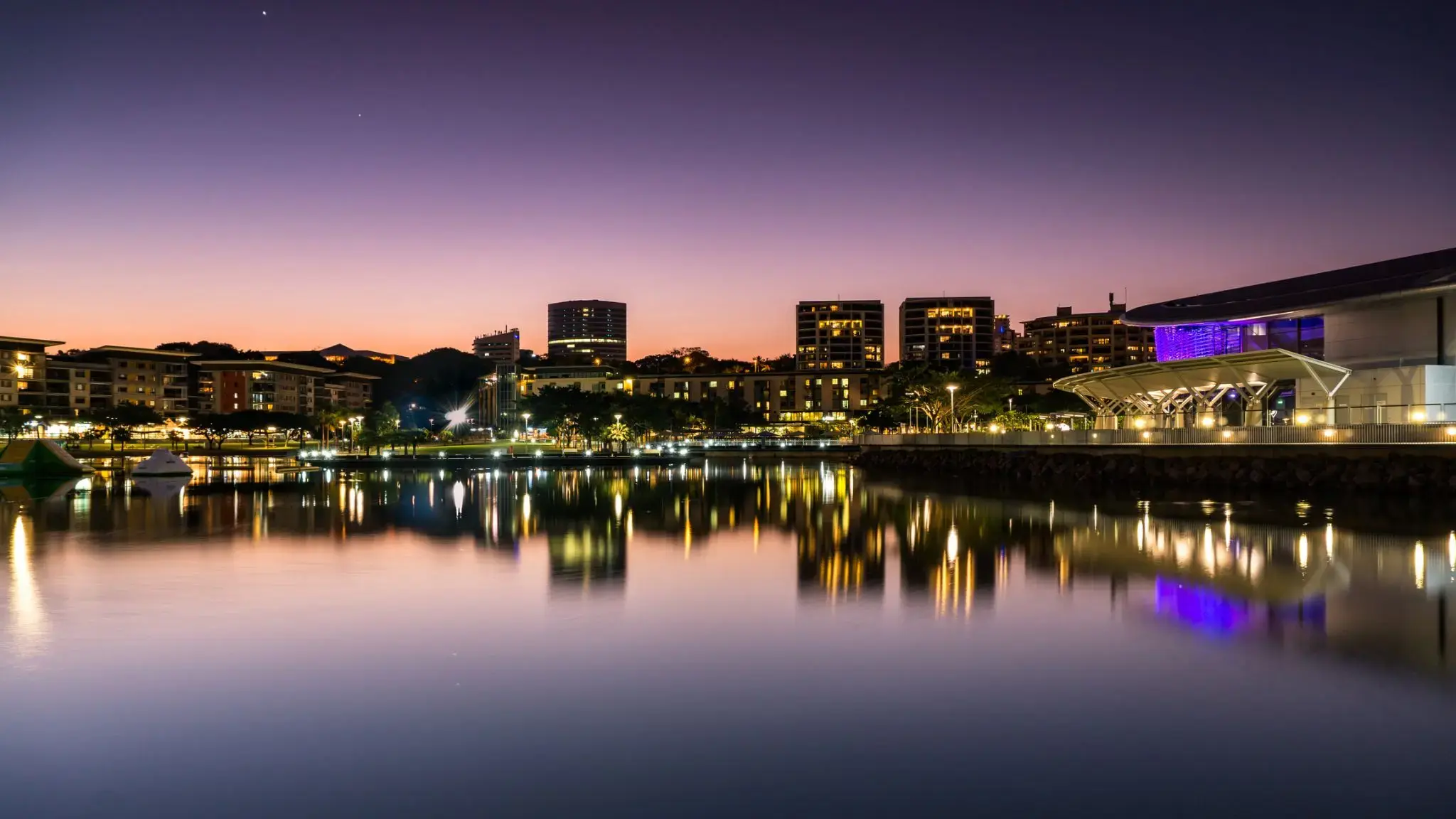
Darwin is the capital city of the Northern Territory of Australia, situated on the Timor Sea. It is the largest city in the sparsely populated Northern Territory, with a population of 145,916. It is the smallest and most northerly of the Australian capital cities, and acts as the Top End's regional centre.
Darwin is the capital city of the Northern Territory of Australia, situated on the Timor Sea. It is the largest city in the sparsely populated Northern Territory, with a population of 145,916. It is the smallest and most northerly of the Australian capital cities, and acts as the Top End's regional centre.
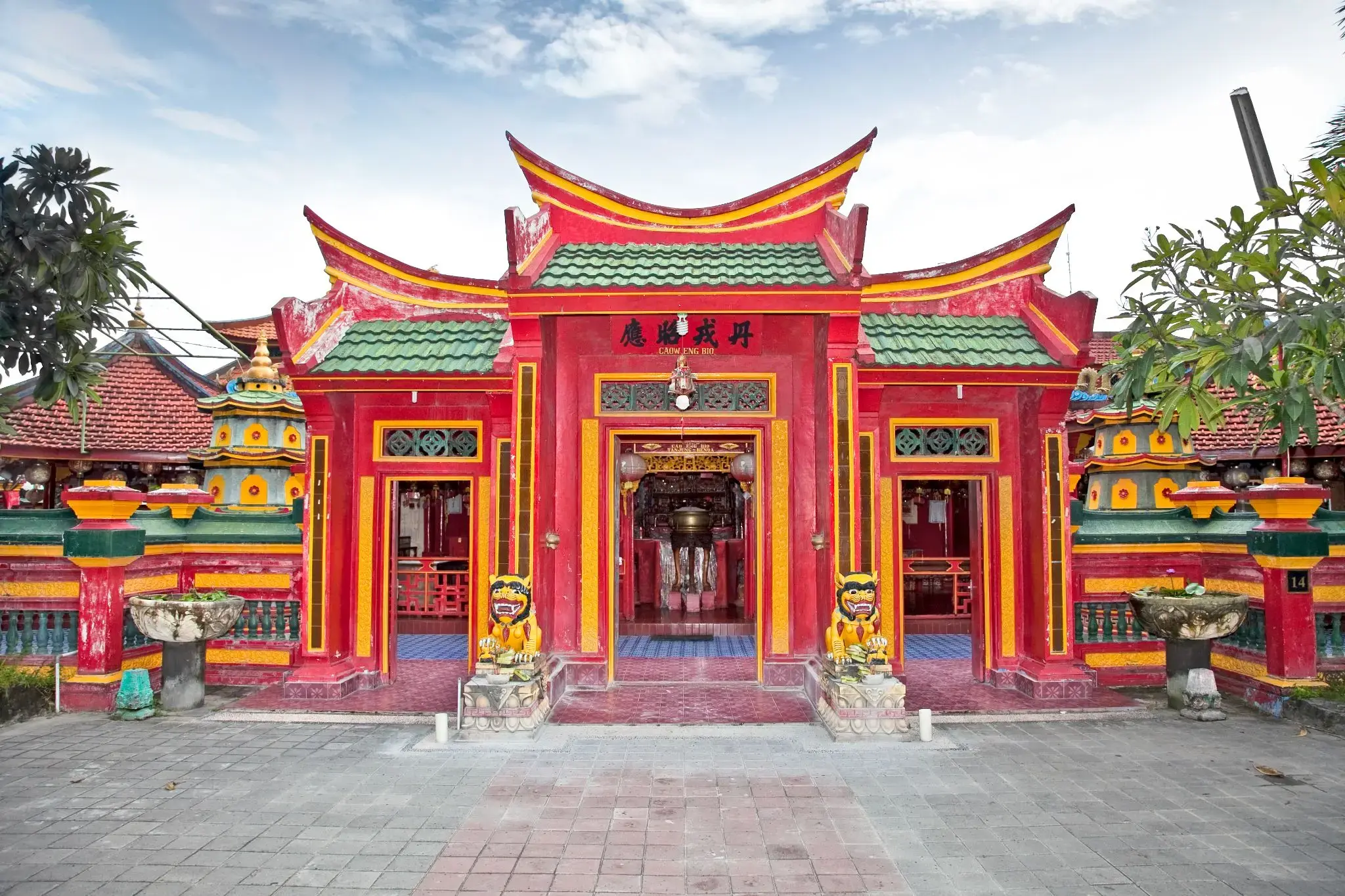
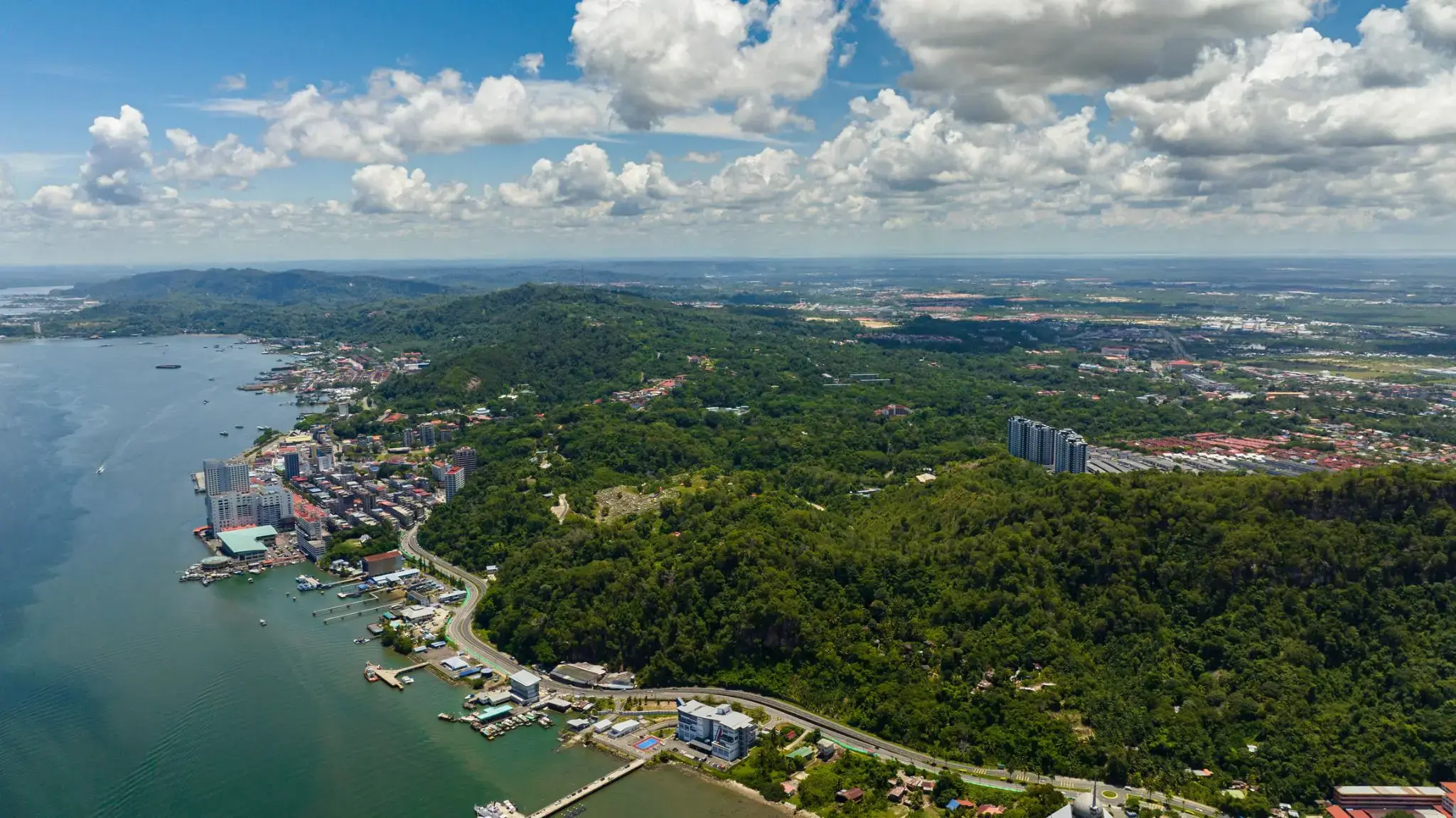
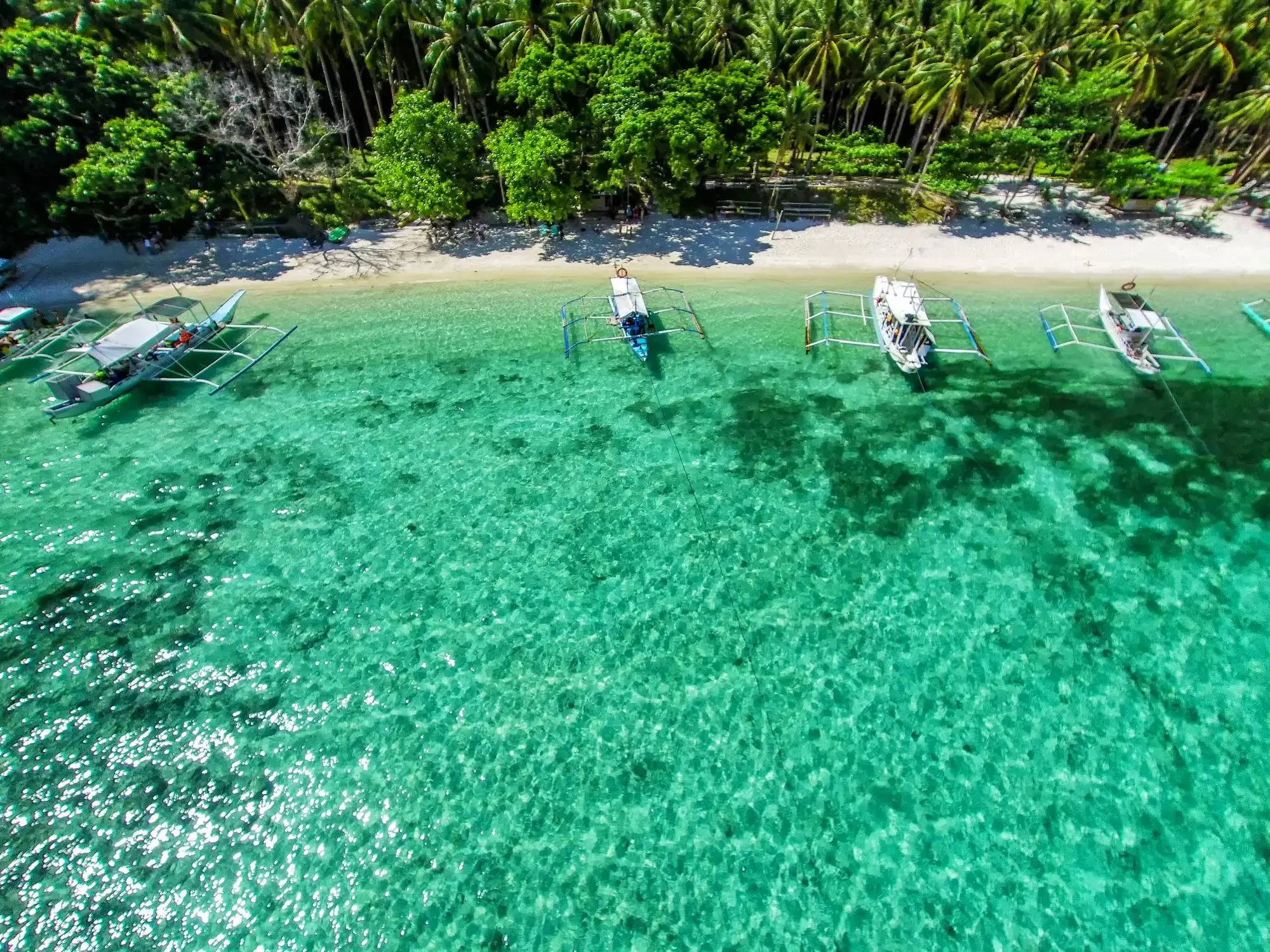
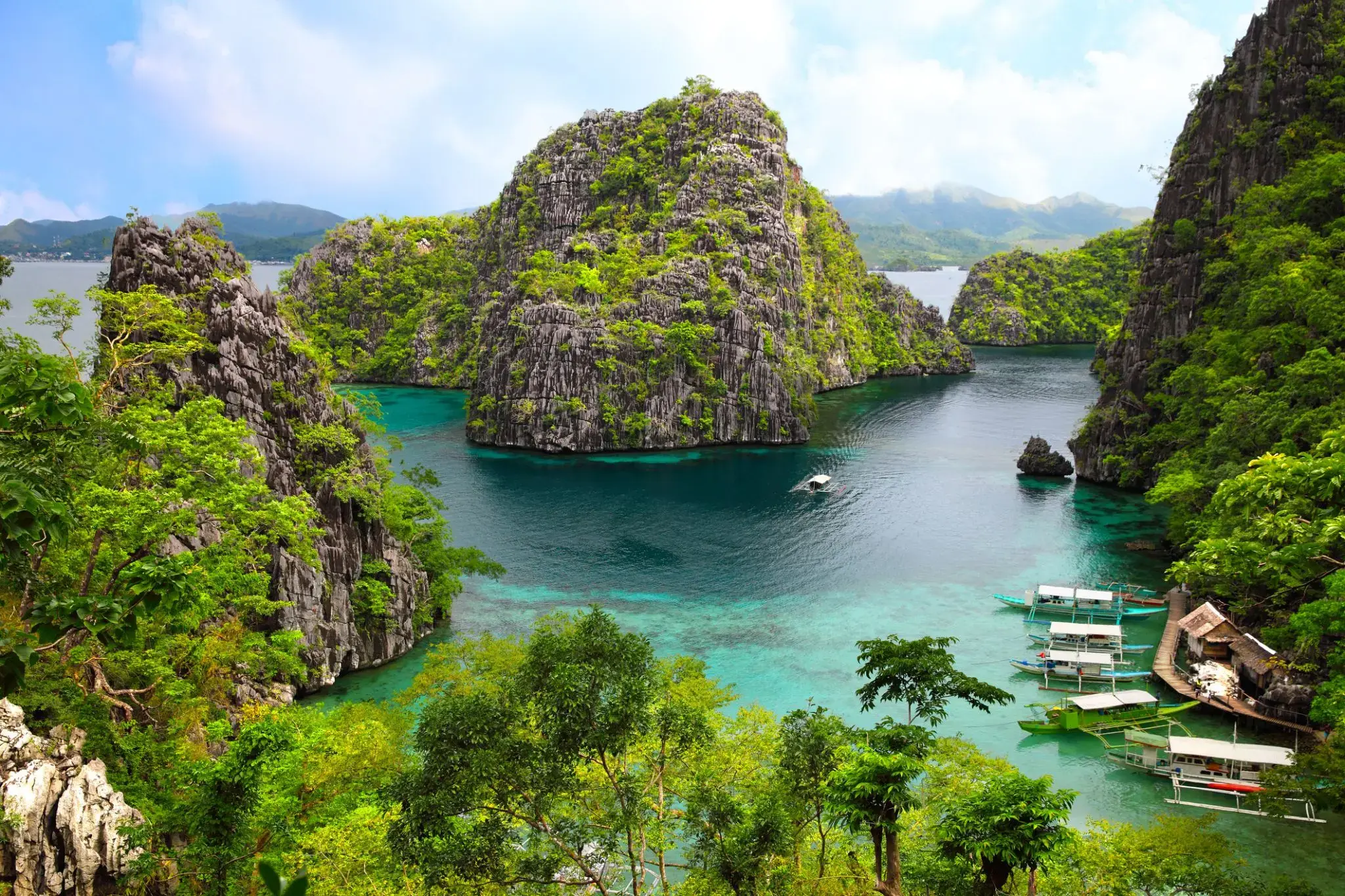
Puerto Princesa is a city on the island of Palawan in the Philippines, widely known for one of the natural wonders of the world — the Puerto Princesa Underground River, a UNESCO World Heritage Site. This subterranean system of caves and rivers, passing through limestone formations, attracts travelers from around the globe with the opportunity to ride a boat along the river and see stalactites, stalagmites, and a unique ecosystem. The city also serves as a starting point for exploring the breathtaking nature of Palawan: tropical forests, coastlines, and nature reserves.
In addition to its natural attractions, Puerto Princesa is known for its clean streets, friendly atmosphere, and well-developed tourist infrastructure. Here you can taste fresh seafood, visit night markets, or go on island-hopping tours in Honda Bay. The city actively promotes ecotourism, maintaining a balance between development and environmental preservation. For travelers seeking a combination of adventure, relaxation, and immersion in Filipino culture, Puerto Princesa is becoming an increasingly attractive destination.
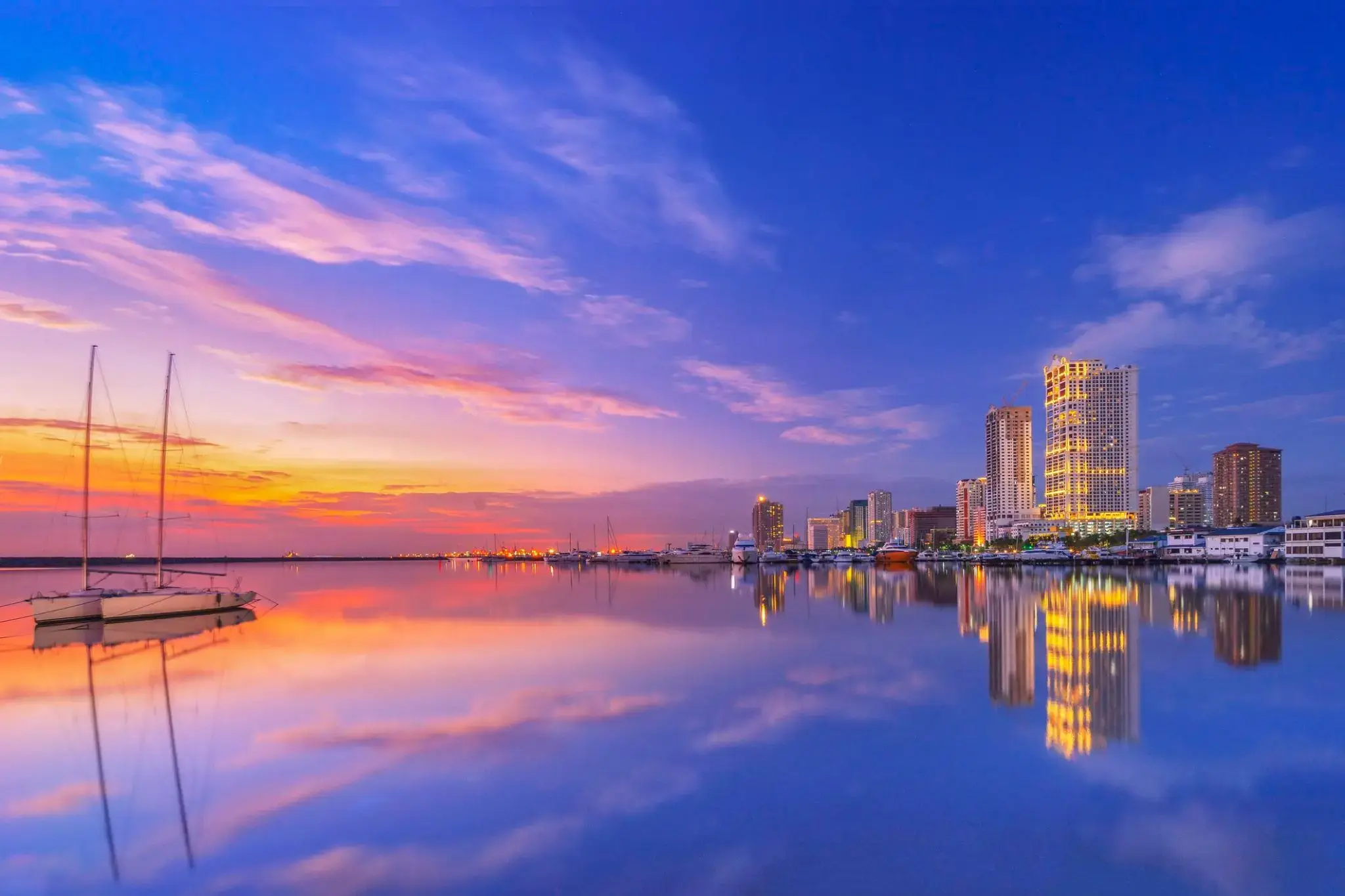
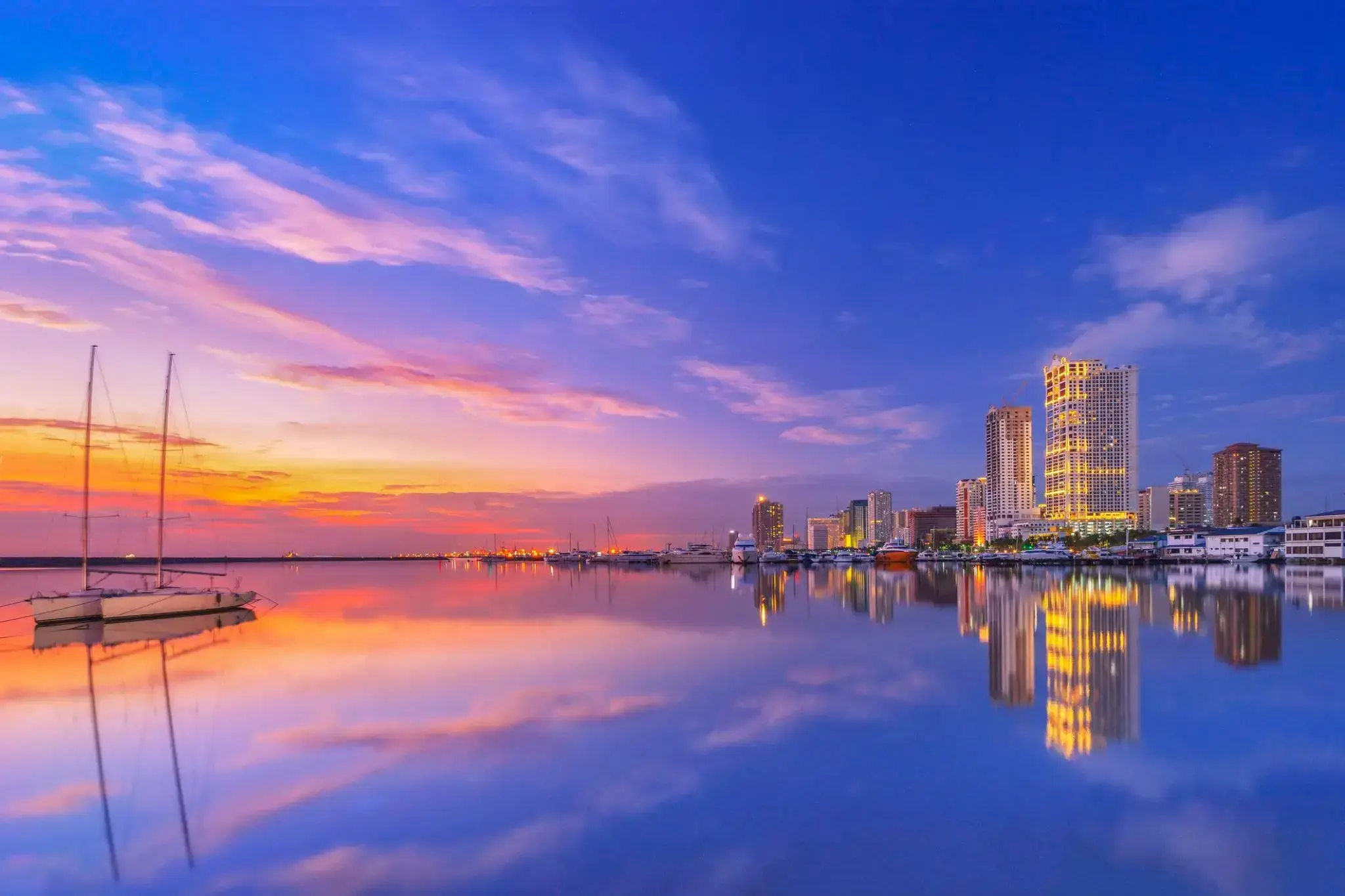
Manila, the capital of the Philippines, is located on the shores of Luzon Island and bordered by Manila Bay. Within the old city of Intramuros, built by the Spanish in 1571, you can find preserved Spanish architectural monuments and churches. The city is also home to the country's main port, which plays a vital role in the Philippine economy. Manila is famous for industries such as chemical, electronics, textiles, food production, and tobacco manufacturing.
For tourists, the Chinatown district is particularly interesting, where pearl and gold products can be purchased. Visitors can also explore various museums and basilicas and enjoy the beauty of Rizal Park. Moreover, Manila is a shopping paradise, offering all the world-famous brands at prices significantly lower than those in Europe.
Manila, the capital of the Philippines, is located on the shores of Luzon Island and bordered by Manila Bay. Within the old city of Intramuros, built by the Spanish in 1571, you can find preserved Spanish architectural monuments and churches. The city is also home to the country's main port, which plays a vital role in the Philippine economy. Manila is famous for industries such as chemical, electronics, textiles, food production, and tobacco manufacturing.
For tourists, the Chinatown district is particularly interesting, where pearl and gold products can be purchased. Visitors can also explore various museums and basilicas and enjoy the beauty of Rizal Park. Moreover, Manila is a shopping paradise, offering all the world-famous brands at prices significantly lower than those in Europe.
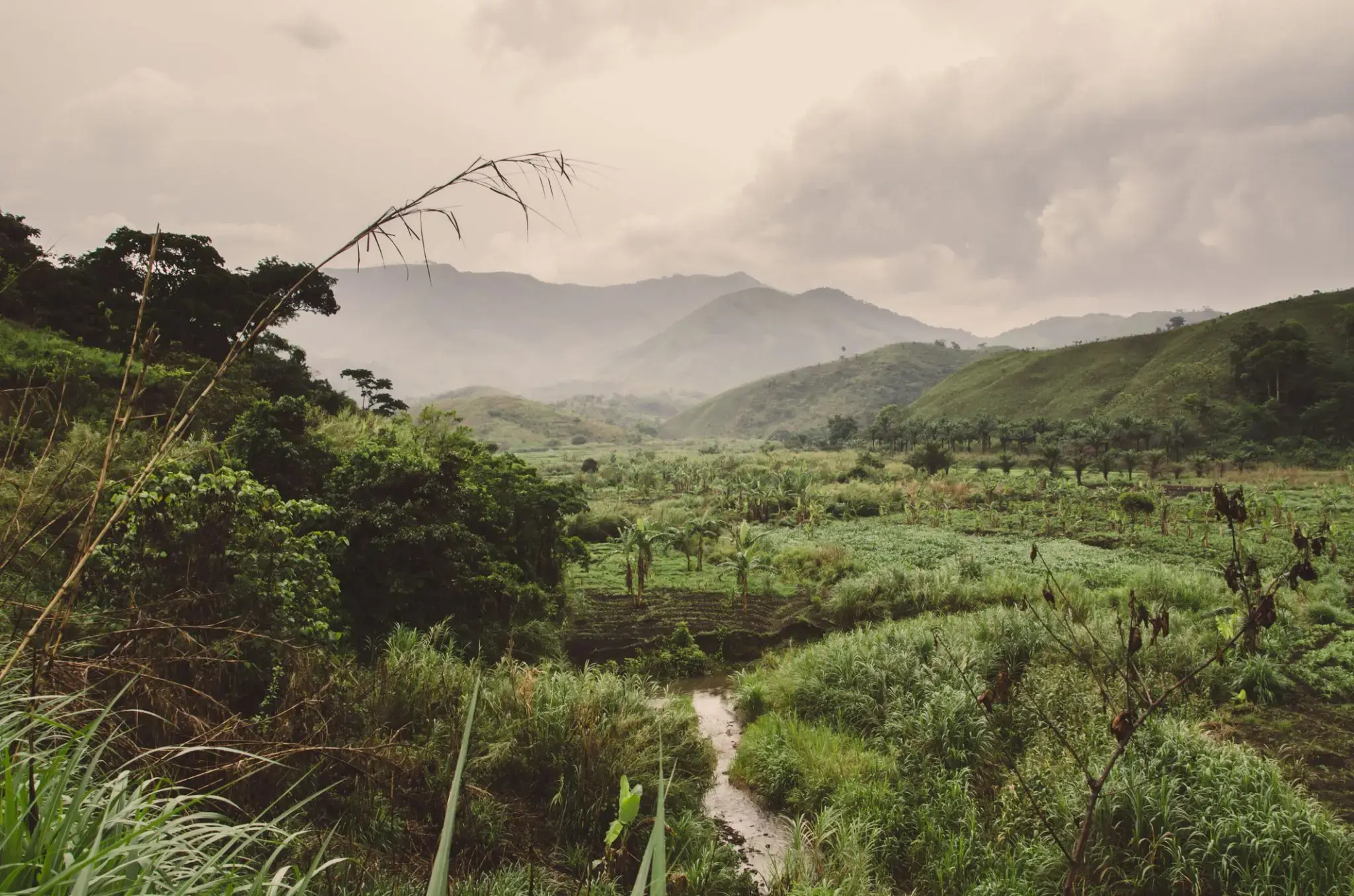
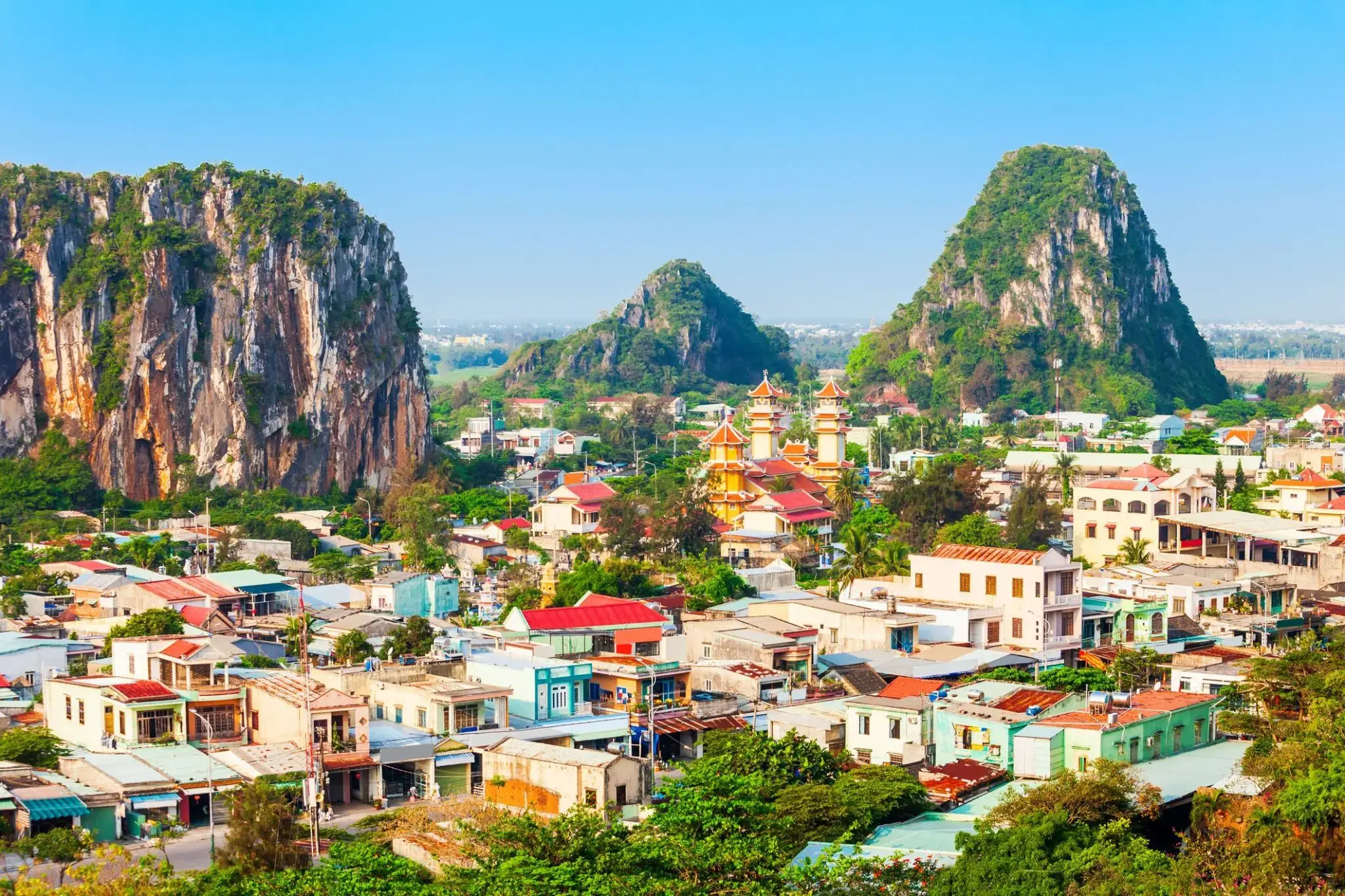
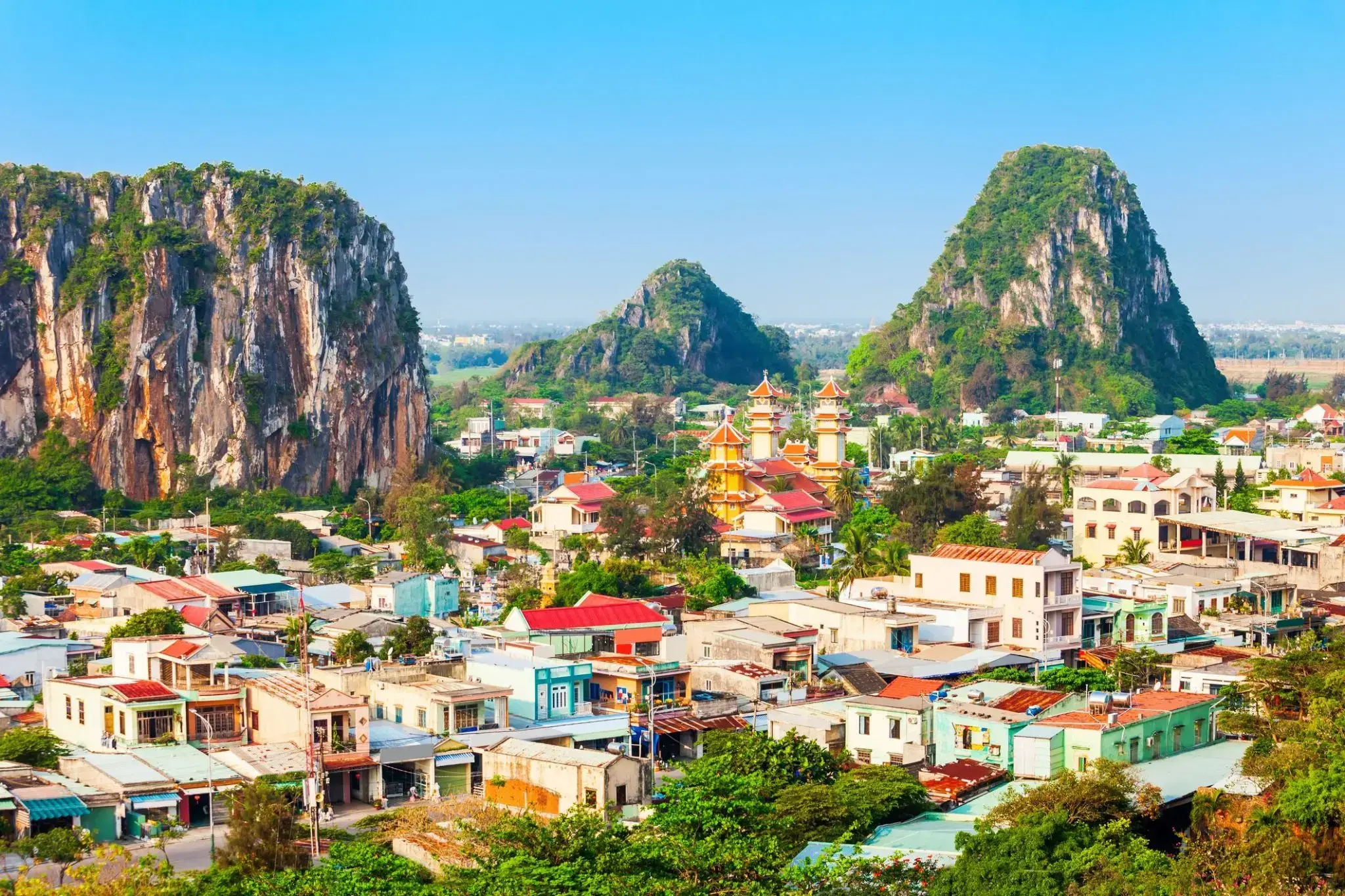
A warm sea breeze and soft sand make Da Nang the perfect place for those seeking seaside relaxation and lightness in every step. Here, modern cafés sit next to traditional markets, while the evening promenade fills with lights and the aroma of fresh seafood. You can enjoy long walks along My Khe and Non Nuoc beaches, ranked among Asia’s best, and discover cozy corners with Vietnamese coffee and the smiles of locals.
For lovers of history and nature, Da Nang offers unique routes to the Marble Mountains with caves and pagodas, providing breathtaking views of the coastline. From here, it is easy to reach the ancient town of Hoi An, preserving the atmosphere of the past, or to take a trip along the Hai Van Pass, where each turn reveals new panoramas of mountains and sea. The city combines a relaxing beach holiday with the chance to discover Vietnam’s beauty and breathe in the fresh sea air that fills you with energy and lightness.
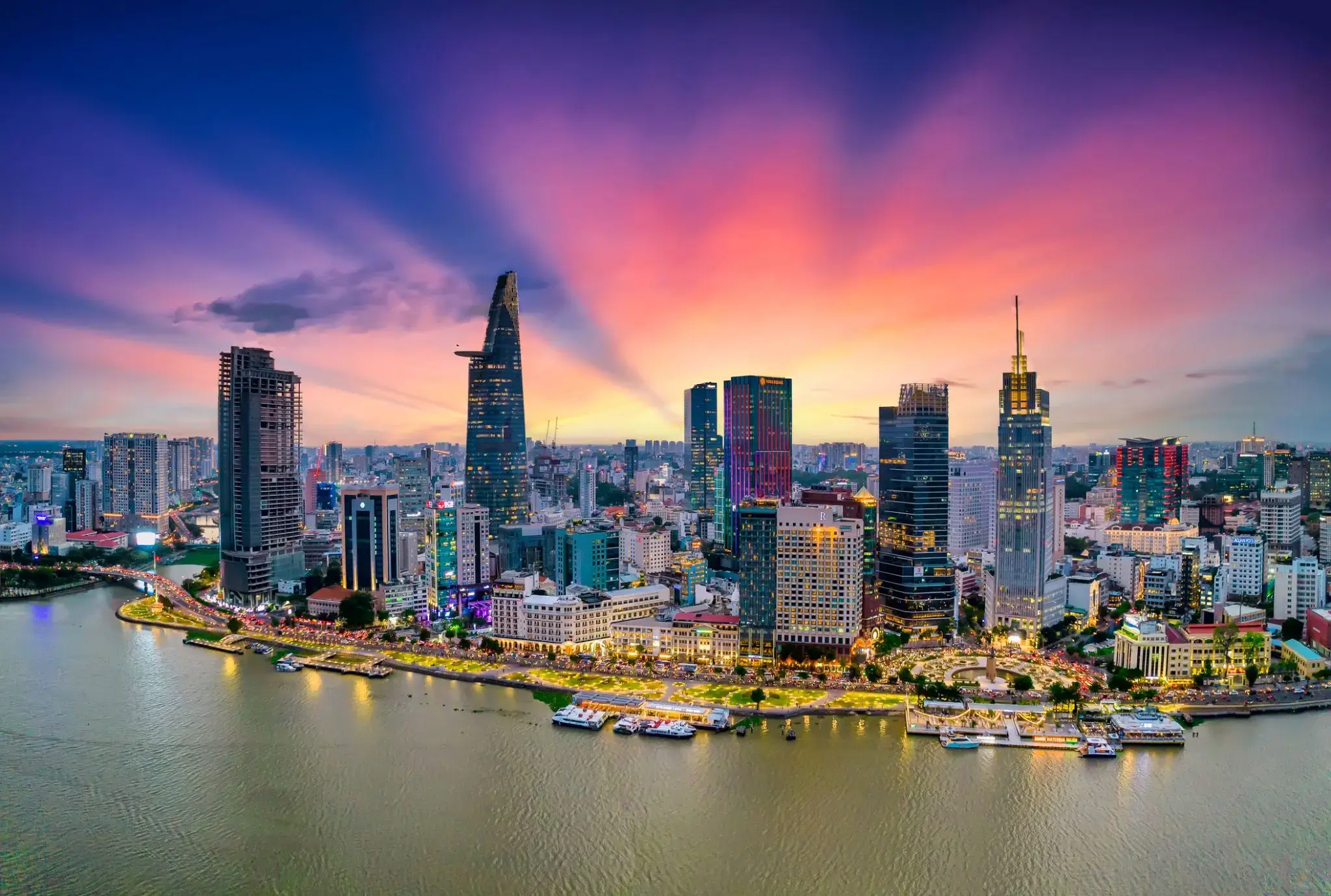
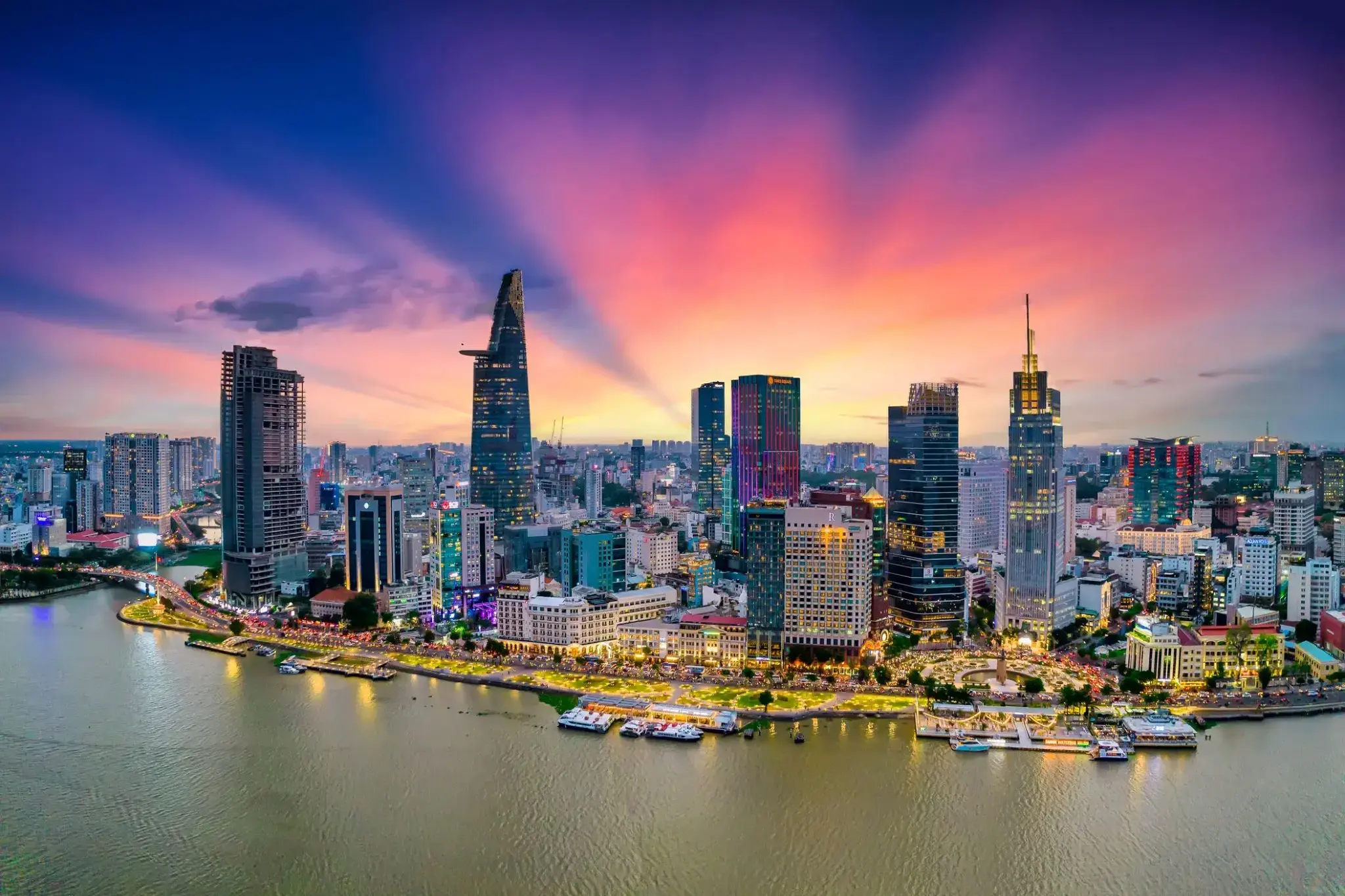
Ho Chi Minh City, also known by its former name of Saigon is the most populous city in Vietnam with a population of 8.4 million (13 million in the metropolitan area) as of 2017. Located in southeast Vietnam, the metropolis surrounds the Saigon River and covers about 2,061 square kilometres (796 square miles).
Under the name Saigon, it was the capital of French Indochina from 1887 to 1902 and again from 1945 to 1954. Saigon would later become the capital of South Vietnam from 1955 until its fall in 1975. On 2 July 1976, Saigon merged with the surrounding Gia Định Province and was officially renamed Ho Chi Minh City after revolutionary leader Hồ Chí Minh (although the name Sài Gòn is still widely used).
Ho Chi Minh City is the financial centre of Vietnam and is classifed as a Beta+ World City by Globalization and World Cities Research Network. It is home to the Ho Chi Minh City Stock Exchange, the largest stock exchange by total market capitalization in Vietnam and the headquarters of many national and international banks and companies.
Ho Chi Minh City is the most visited city in Vietnam, with 6.3 million visitors in 2017. Many of the city's landmarks which are well known to international visitors include the Bến Thành Market, Ho Chi Minh City Hall, Notre-Dame Cathedral Basilica of Saigon, Independence Palace and the Municipal Theatre. The main passenger airport serving the metropolitan area is Tan Son Nhat International Airport, it is the busiest airport in Vietnam handling 36 million passengers in 2017.
Ho Chi Minh City, also known by its former name of Saigon is the most populous city in Vietnam with a population of 8.4 million (13 million in the metropolitan area) as of 2017. Located in southeast Vietnam, the metropolis surrounds the Saigon River and covers about 2,061 square kilometres (796 square miles).
Under the name Saigon, it was the capital of French Indochina from 1887 to 1902 and again from 1945 to 1954. Saigon would later become the capital of South Vietnam from 1955 until its fall in 1975. On 2 July 1976, Saigon merged with the surrounding Gia Định Province and was officially renamed Ho Chi Minh City after revolutionary leader Hồ Chí Minh (although the name Sài Gòn is still widely used).
Ho Chi Minh City is the financial centre of Vietnam and is classifed as a Beta+ World City by Globalization and World Cities Research Network. It is home to the Ho Chi Minh City Stock Exchange, the largest stock exchange by total market capitalization in Vietnam and the headquarters of many national and international banks and companies.
Ho Chi Minh City is the most visited city in Vietnam, with 6.3 million visitors in 2017. Many of the city's landmarks which are well known to international visitors include the Bến Thành Market, Ho Chi Minh City Hall, Notre-Dame Cathedral Basilica of Saigon, Independence Palace and the Municipal Theatre. The main passenger airport serving the metropolitan area is Tan Son Nhat International Airport, it is the busiest airport in Vietnam handling 36 million passengers in 2017.
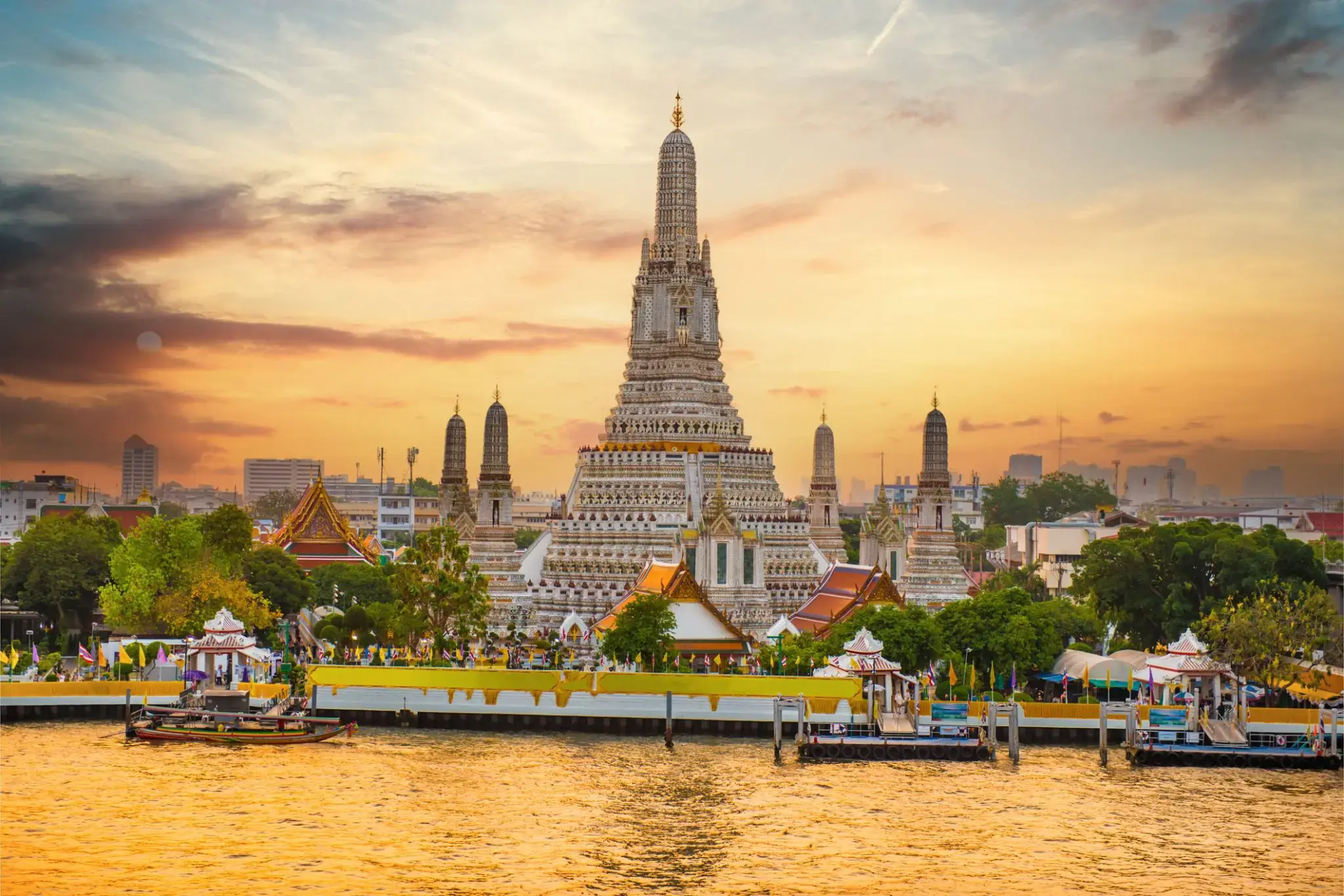
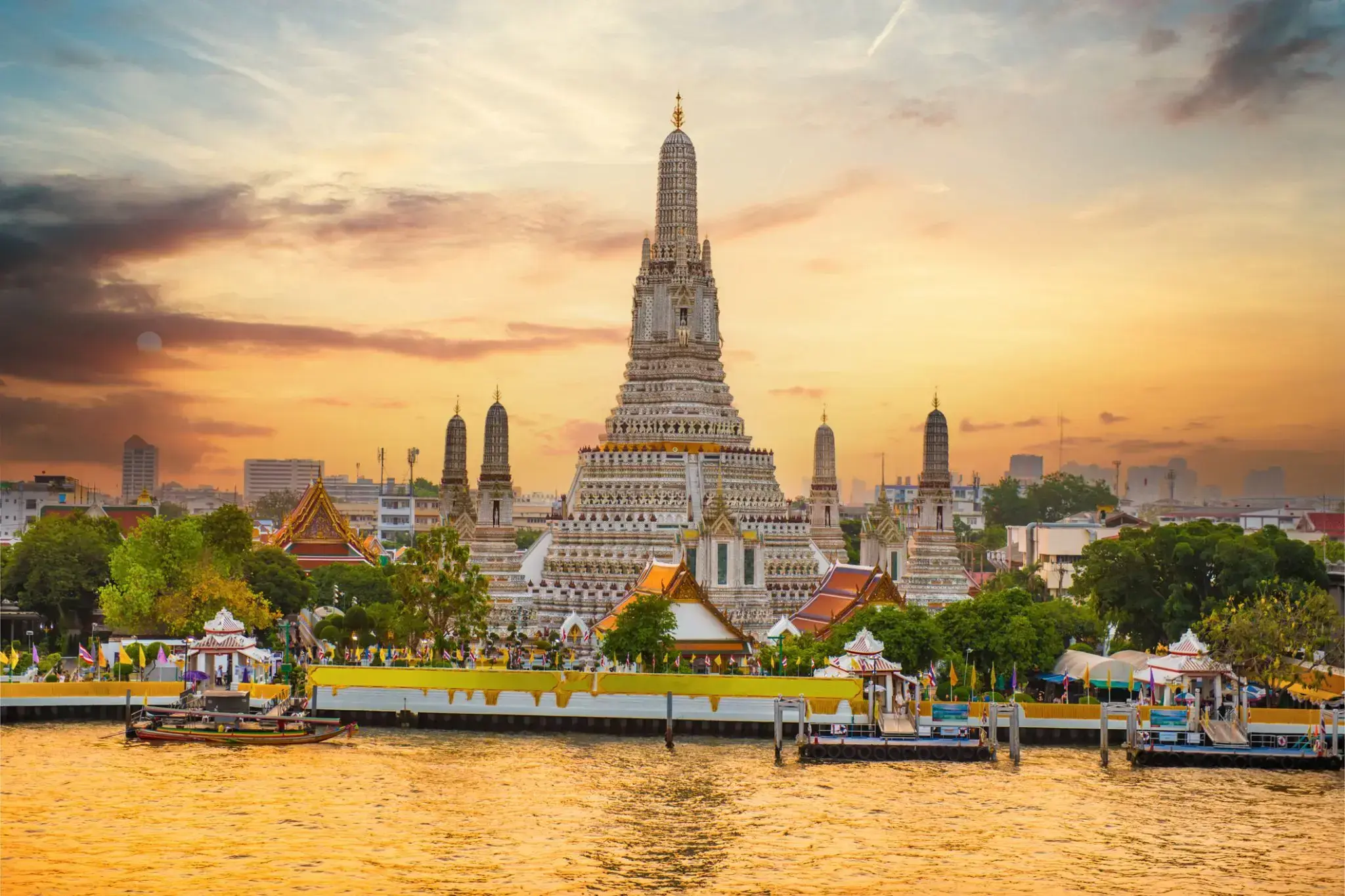
Bangkok is the capital and most populous city of Thailand. It is known in Thai as Krung Thep Maha Nakhon or simply Krung Thep. The city occupies 1,568.7 square kilometres (605.7 sq mi) in the Chao Phraya River delta in central Thailand, and has a population of over eight million, or 12.6 percent of the country's population. Over fourteen million people (22.2 percent) lived within the surrounding Bangkok Metropolitan Region at the 2010 census, making Bangkok the nation's primate city, significantly dwarfing Thailand's other urban centres in terms of importance.
Bangkok is the capital and most populous city of Thailand. It is known in Thai as Krung Thep Maha Nakhon or simply Krung Thep. The city occupies 1,568.7 square kilometres (605.7 sq mi) in the Chao Phraya River delta in central Thailand, and has a population of over eight million, or 12.6 percent of the country's population. Over fourteen million people (22.2 percent) lived within the surrounding Bangkok Metropolitan Region at the 2010 census, making Bangkok the nation's primate city, significantly dwarfing Thailand's other urban centres in terms of importance.
Bangkok is the capital and most populous city of Thailand. It is known in Thai as Krung Thep Maha Nakhon or simply Krung Thep. The city occupies 1,568.7 square kilometres (605.7 sq mi) in the Chao Phraya River delta in central Thailand, and has a population of over eight million, or 12.6 percent of the country's population. Over fourteen million people (22.2 percent) lived within the surrounding Bangkok Metropolitan Region at the 2010 census, making Bangkok the nation's primate city, significantly dwarfing Thailand's other urban centres in terms of importance.
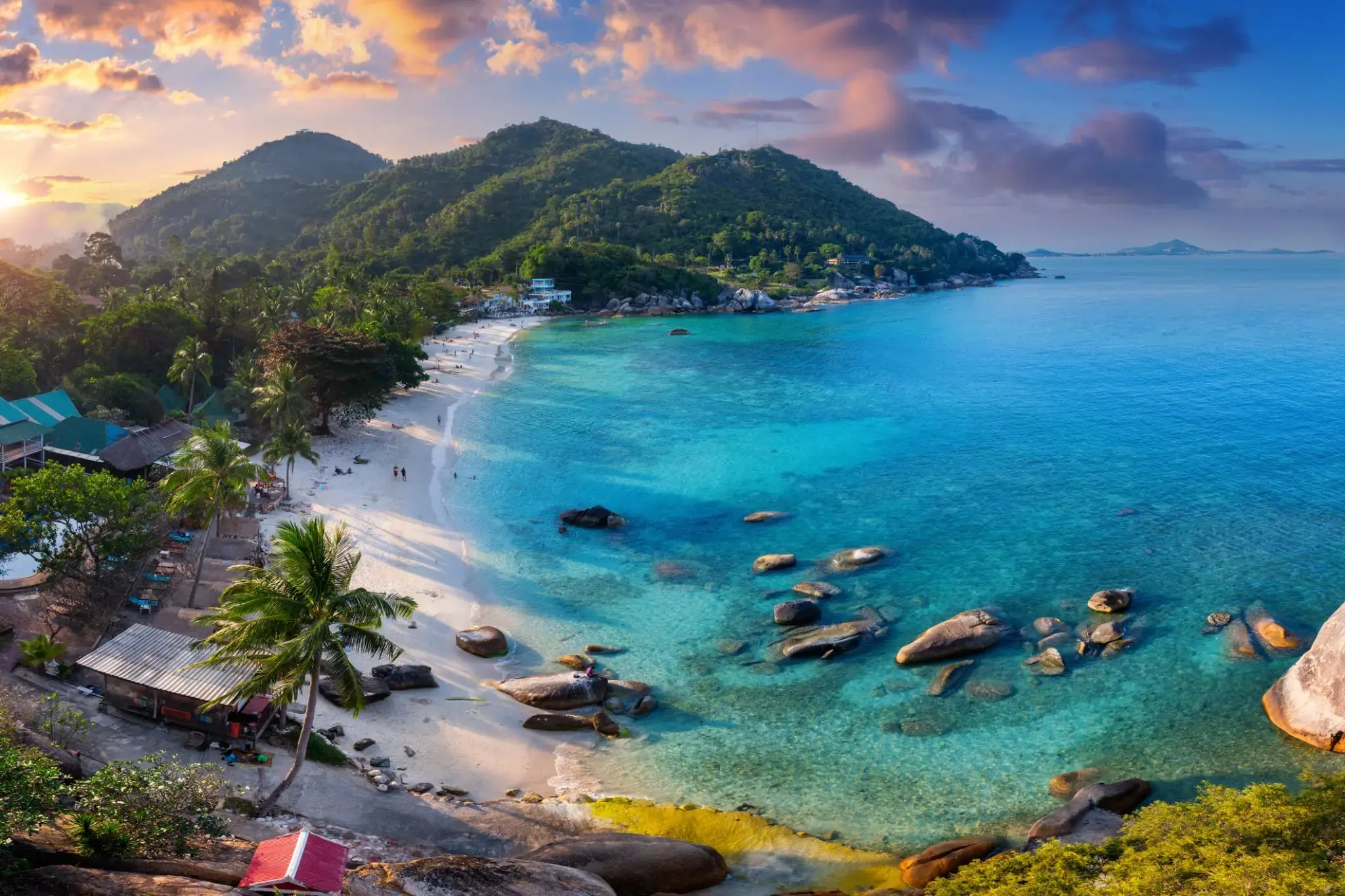
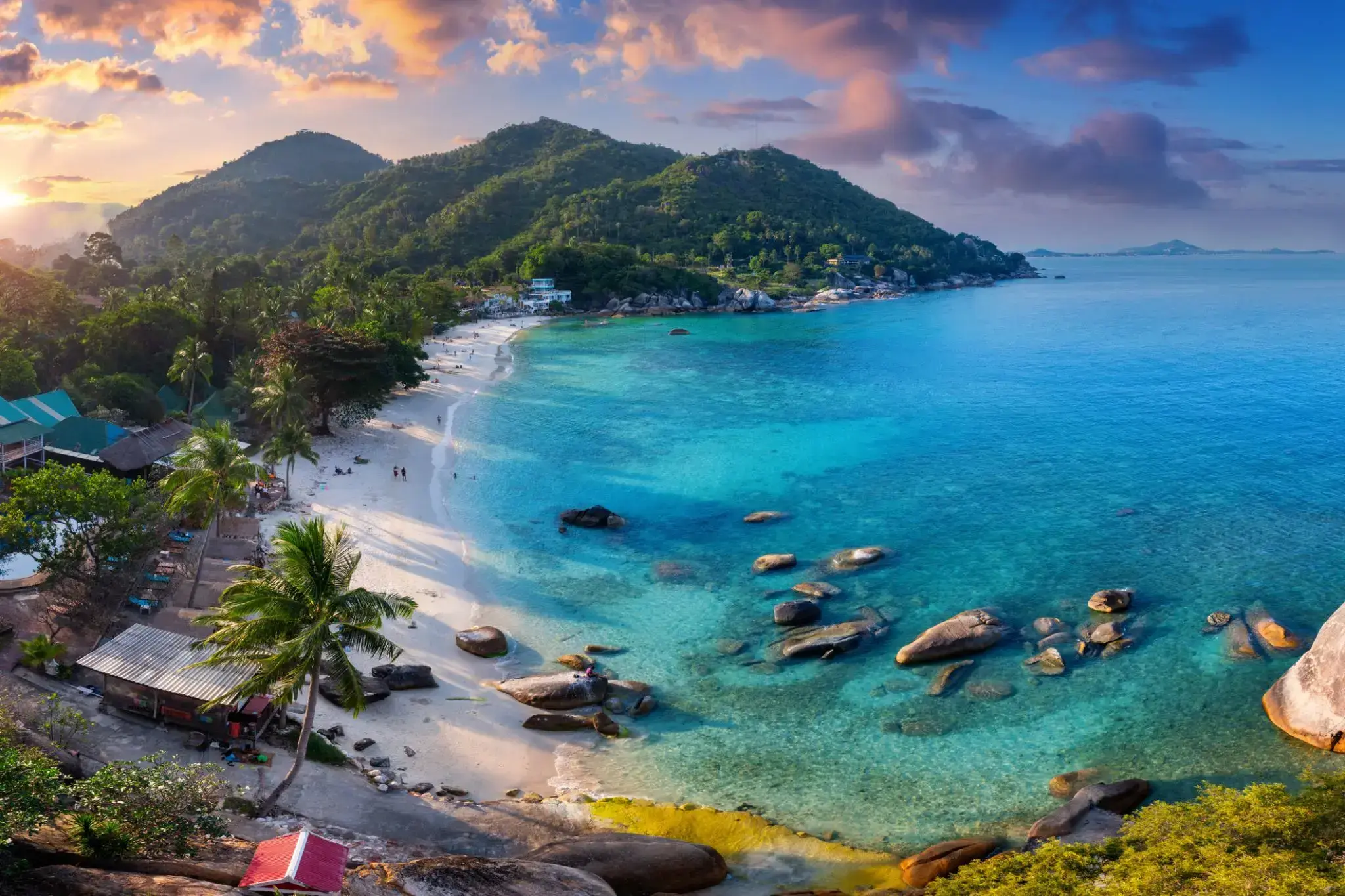
Among the tropical islands of Thailand, Koh Samui stands out with its unique nature and atmosphere. This island attracts travelers from all over the world with its white sandy beaches, picturesque waterfalls, and dense jungles. It's an ideal place for relaxation, whether it’s engaging in water sports, exploring nature, or simply enjoying peace and beauty.
Moreover, Koh Samui is known for its cultural heritage, including many Buddhist temples and sanctuaries. One of the most famous is the Big Buddha Temple, which is not only a religious center but also one of the island's main attractions. The local cuisine, featuring fresh seafood and exotic fruits, will make the trip even more exciting and delicious.
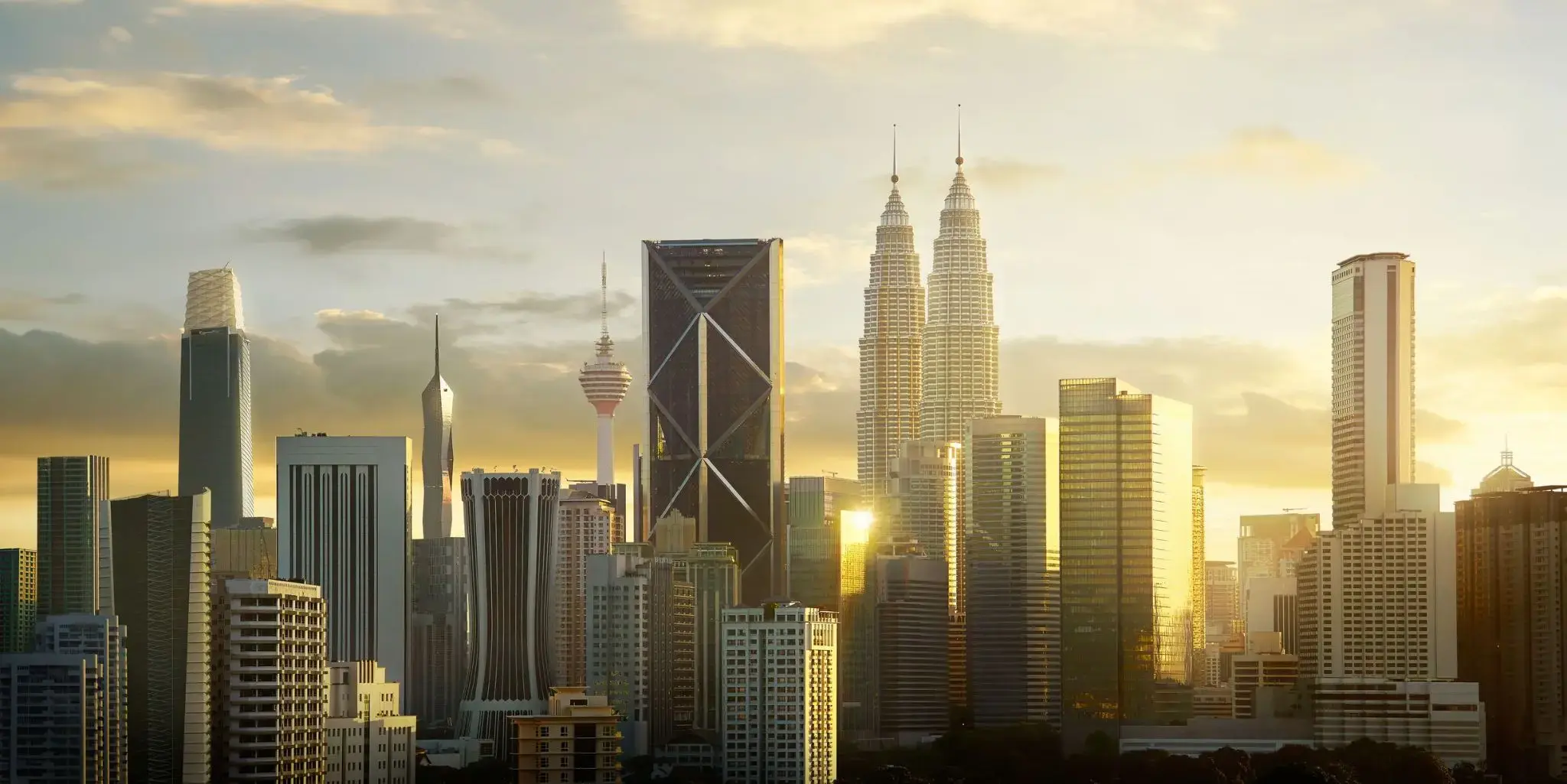
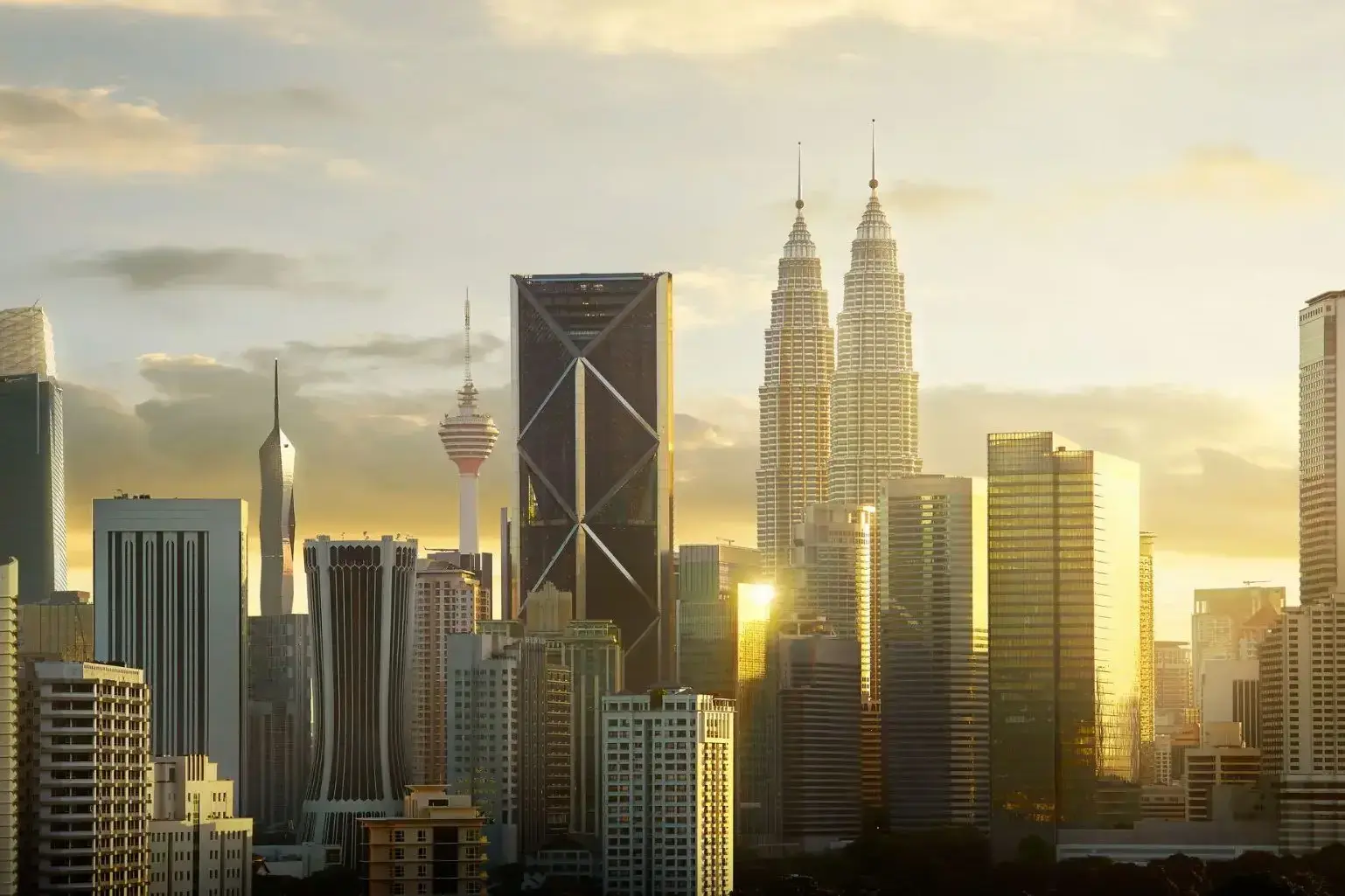
Kuala Lumpur is the dynamic capital of Malaysia, where futuristic skyscrapers stand alongside colonial buildings and traditional markets. The city emerged in the mid-19th century at the confluence of the Klang and Gombak rivers as a mining settlement and has since evolved into the nation's largest economic and cultural hub. Its iconic landmark is the Petronas Twin Towers, once the tallest buildings in the world, which remain a symbol of Malaysian progress and innovation.
For tourists, Kuala Lumpur offers a diverse array of experiences: from a morning stroll through the colonial-era Merdeka Square to evening shopping in the ultra-modern Bukit Bintang district. Visitors can explore the Islamic Arts Museum, savor street food in the Jalan Alor area, visit the Hindu temple in the Batu Caves, or relax under tropical trees in the Lake Gardens. The city, enriched by Malay, Chinese, and Indian cultures, invites exploration through its architecture, cuisine, and the rhythm of contemporary life.
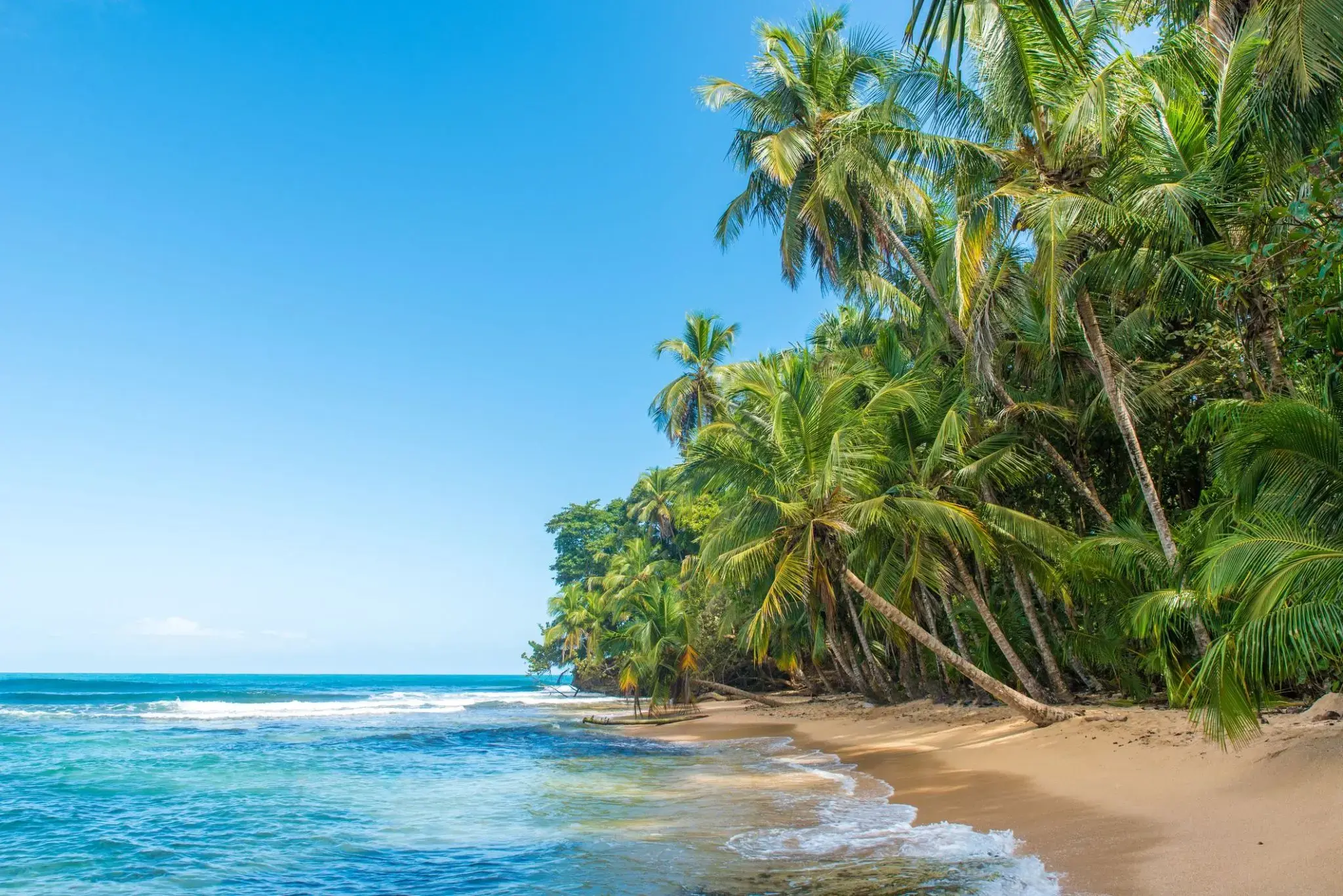
Hidden on the southern coast of Sri Lanka, Hambantota serves as a gateway to a region where exotic nature meets the country's modern ambitions. Deserted beaches give way to green hills, and cozy fishing villages sit alongside major infrastructure projects, including a modern port and airport, making the city a key strategic hub.
Hambantota is perfect for travelers seeking off-the-beaten-path adventures: safaris in nearby Yala National Park, birdwatching in the Bundala sanctuary, or exploring local Buddhist temples offer unforgettable experiences. The local cuisine, based on the freshest seafood and fragrant spices, completes the picture of an ideal retreat away from the tourist crowds.
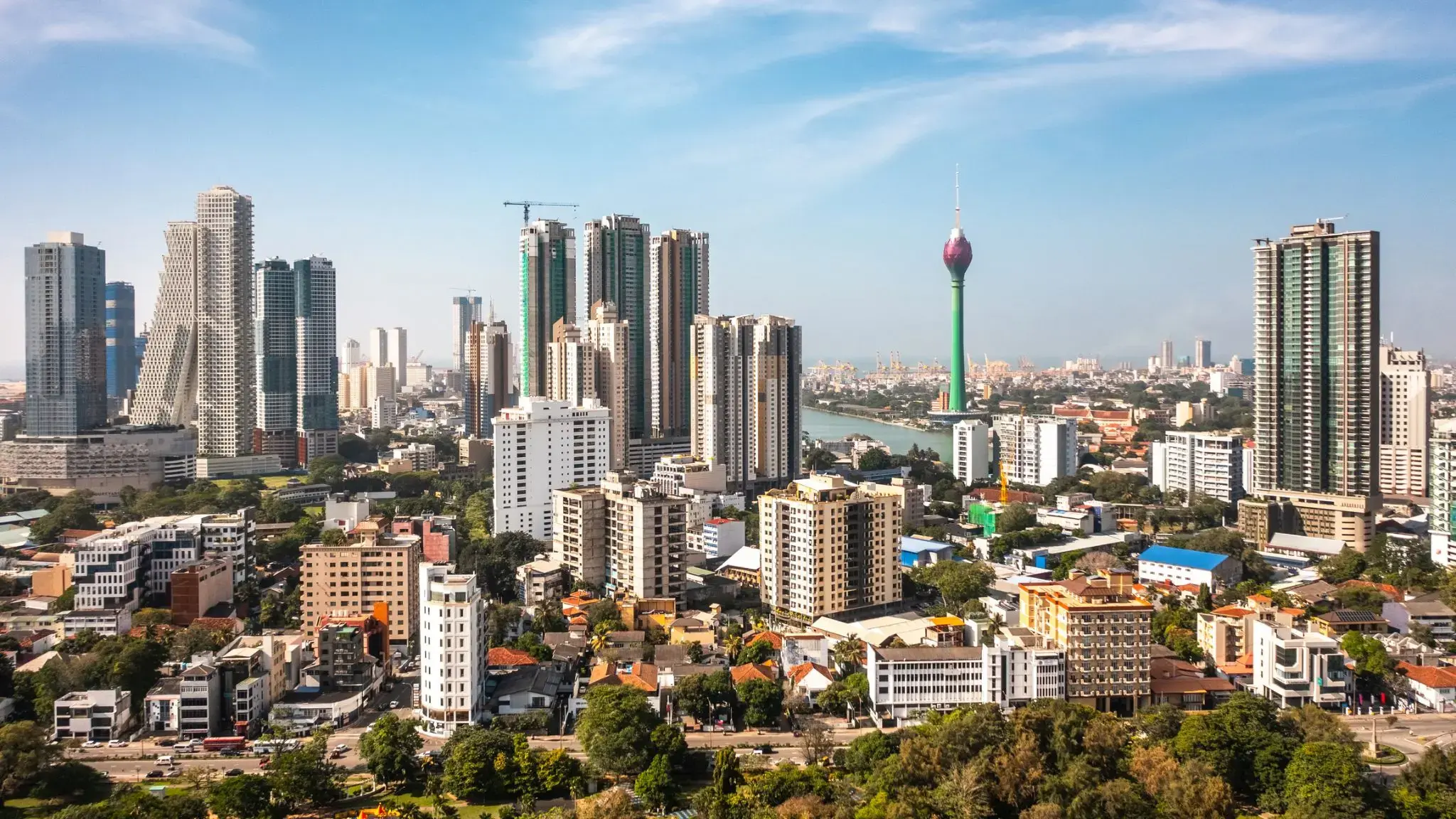
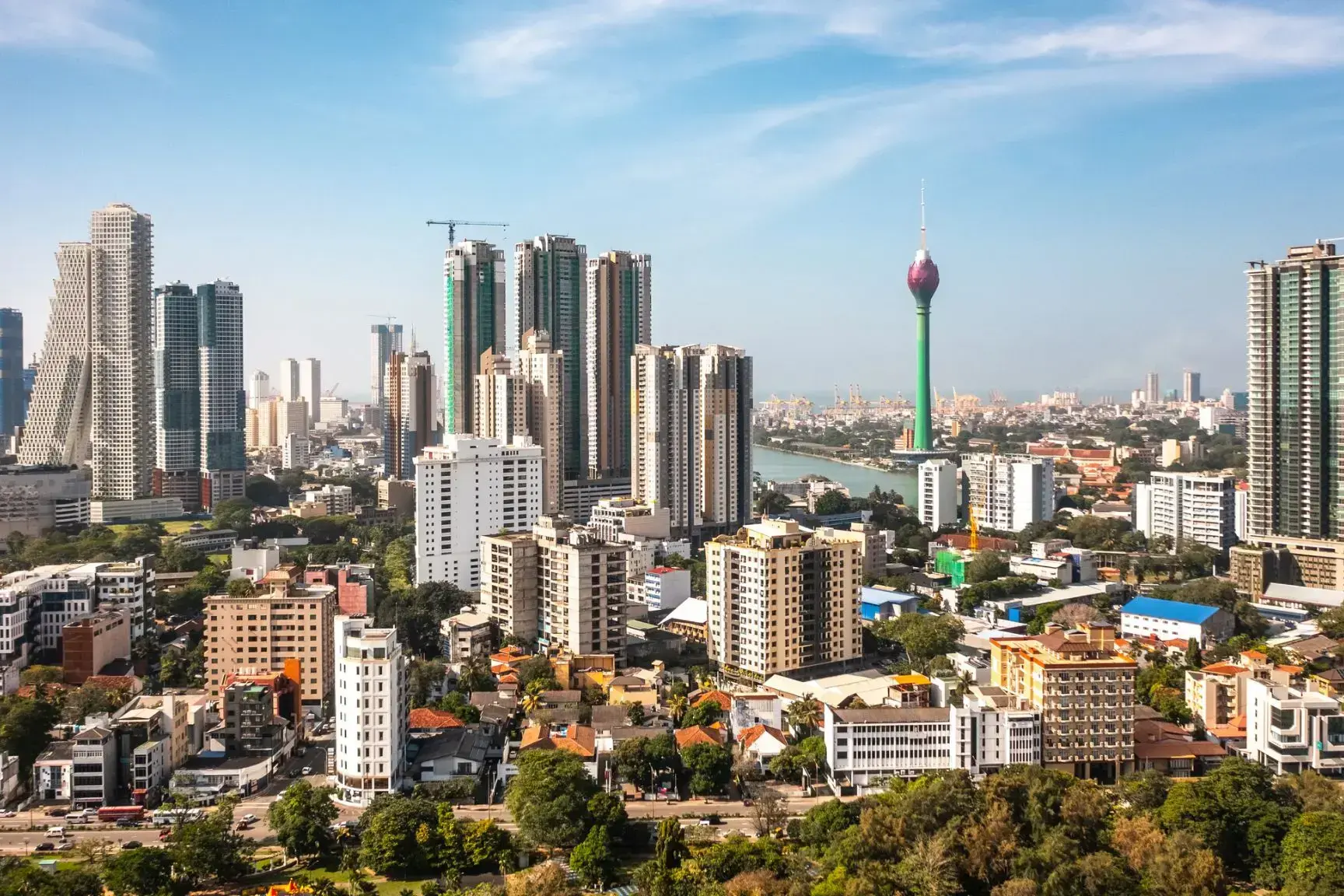
Colombo is the commercial capital and largest city of Sri Lanka. According to the Brookings Institution, Colombo metropolitan area has a population of 5.6 million, and 752,993 in the city proper. It is the financial centre of the island and a popular tourist destination. It is located on the west coast of the island and adjacent to the Greater Colombo area which includes Sri Jayawardenepura Kotte, the legislative capital of Sri Lanka and Dehiwala-Mount Lavinia. Colombo is often referred to as the capital since Sri Jayawardenepura Kotte is within the urban area of, and a suburb of, Colombo. It is also the administrative capital of the Western Province and the district capital of Colombo District. Colombo is a busy and vibrant place with a mixture of modern life and colonial buildings and ruins. It was the legislative capital of Sri Lanka until 1982.
Due to its large harbour and its strategic position along the East-West sea trade routes, Colombo was known to ancient traders 2,000 years ago. It was made the capital of the island when Sri Lanka was ceded to the British Empire in 1815, and its status as capital was retained when the nation became independent in 1948. In 1978, when administrative functions were moved to Sri Jayawardenepura Kotte, Colombo was designated as the commercial capital of Sri Lanka.
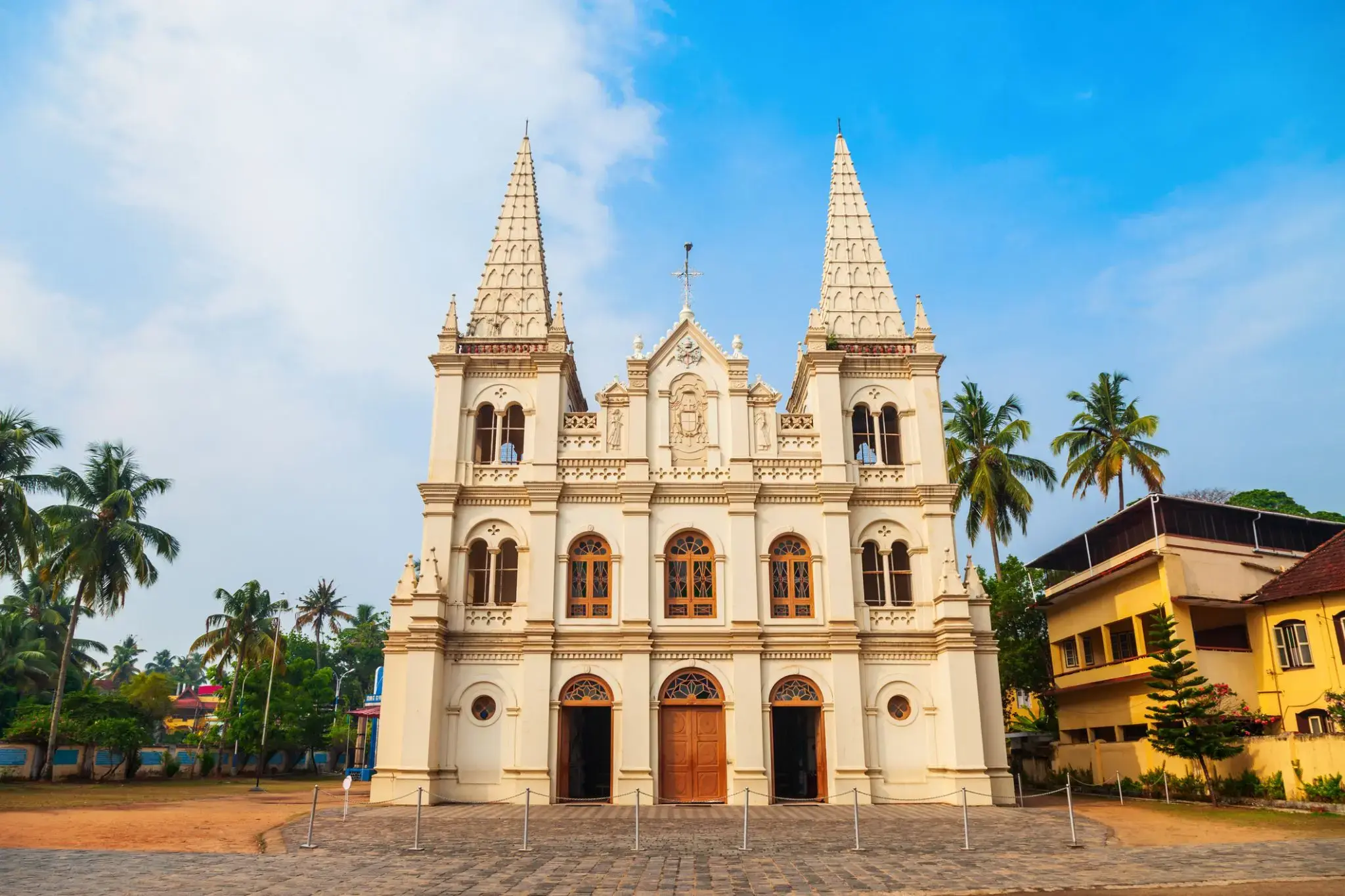
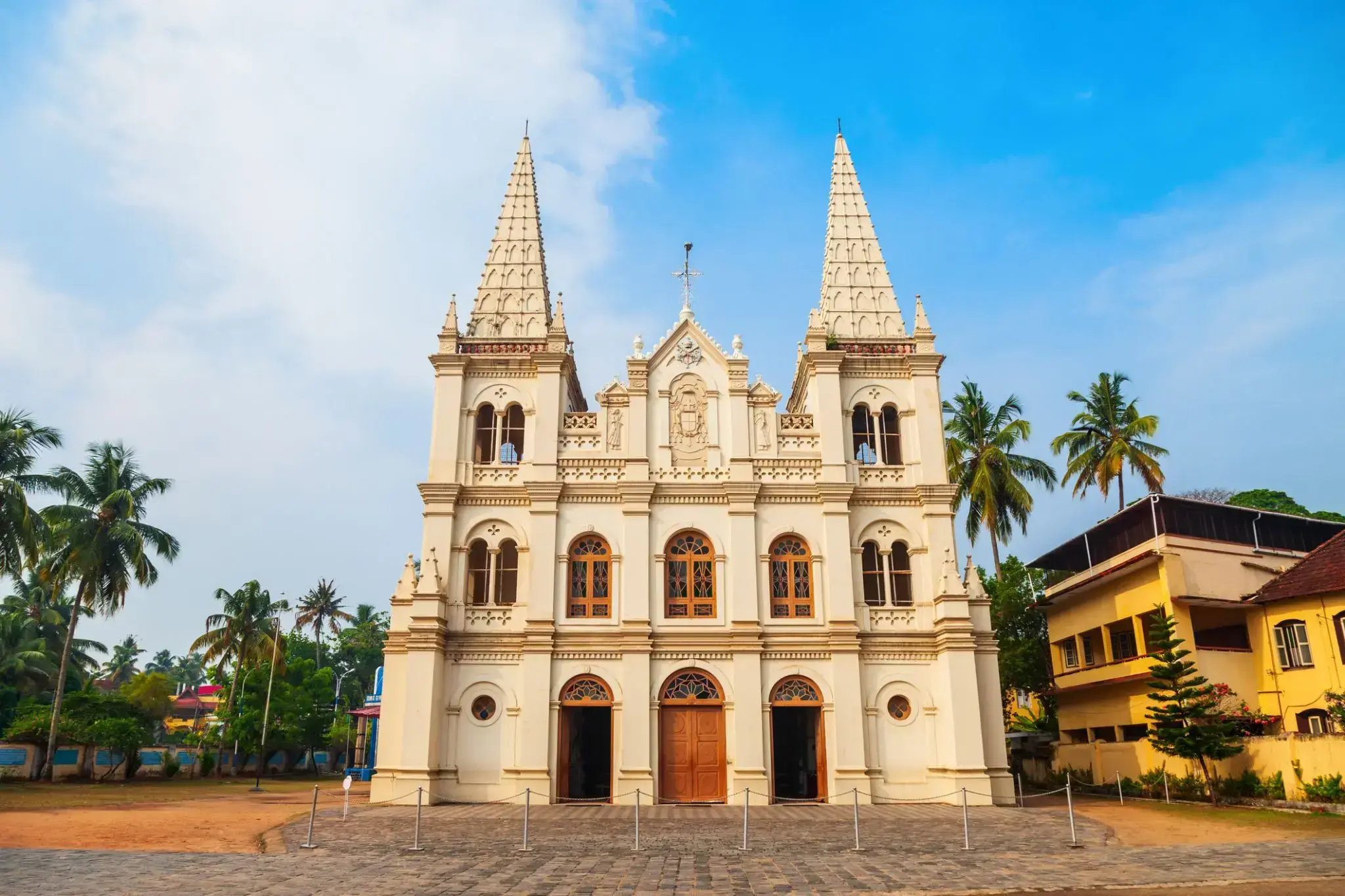
a seaport and naval base on the Malabar Coast of southwestern India, in the state of Kerala; population 254,500 (est. 2009).
a seaport and naval base on the Malabar Coast of southwestern India, in the state of Kerala; population 254,500 (est. 2009).
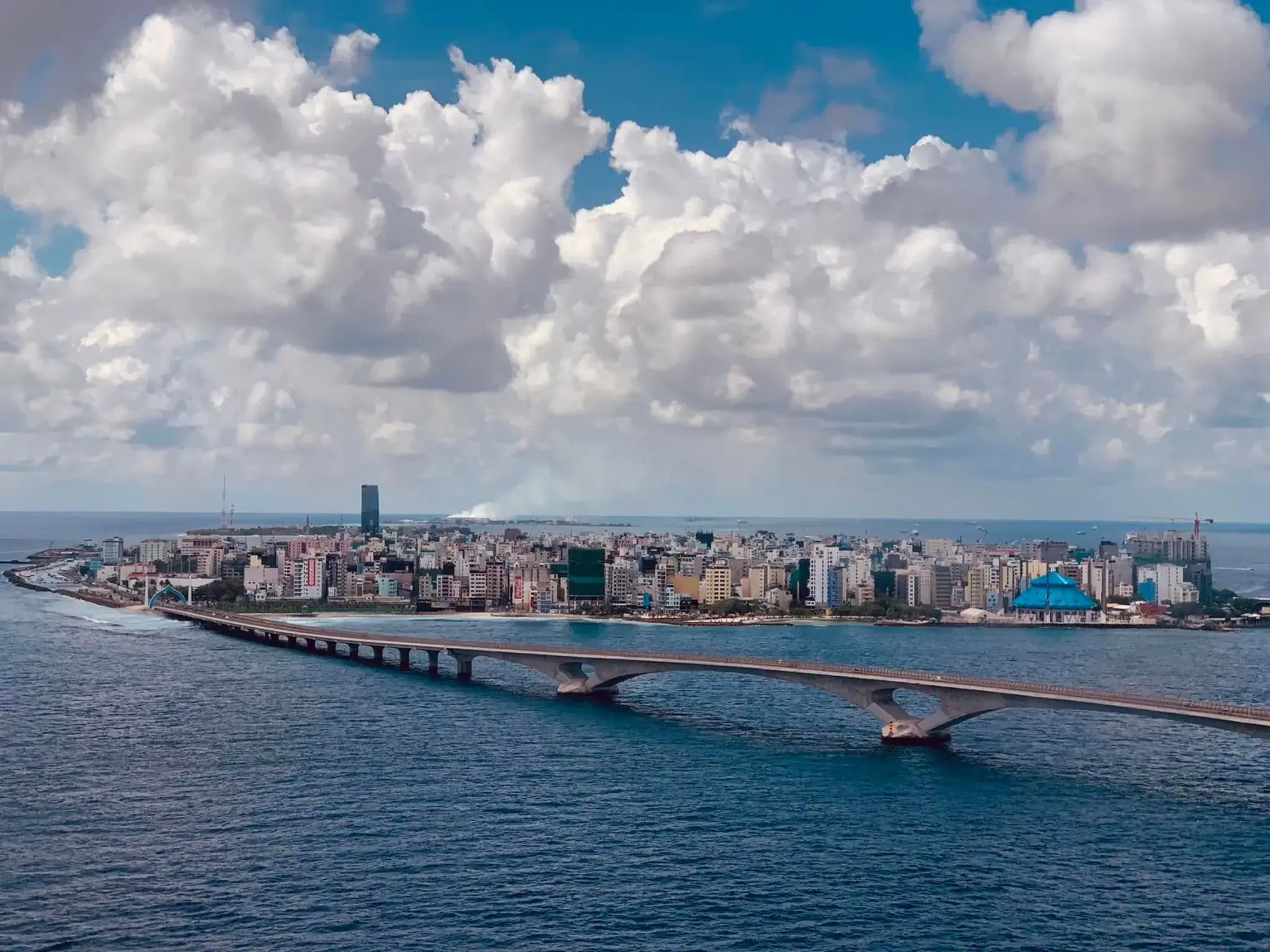
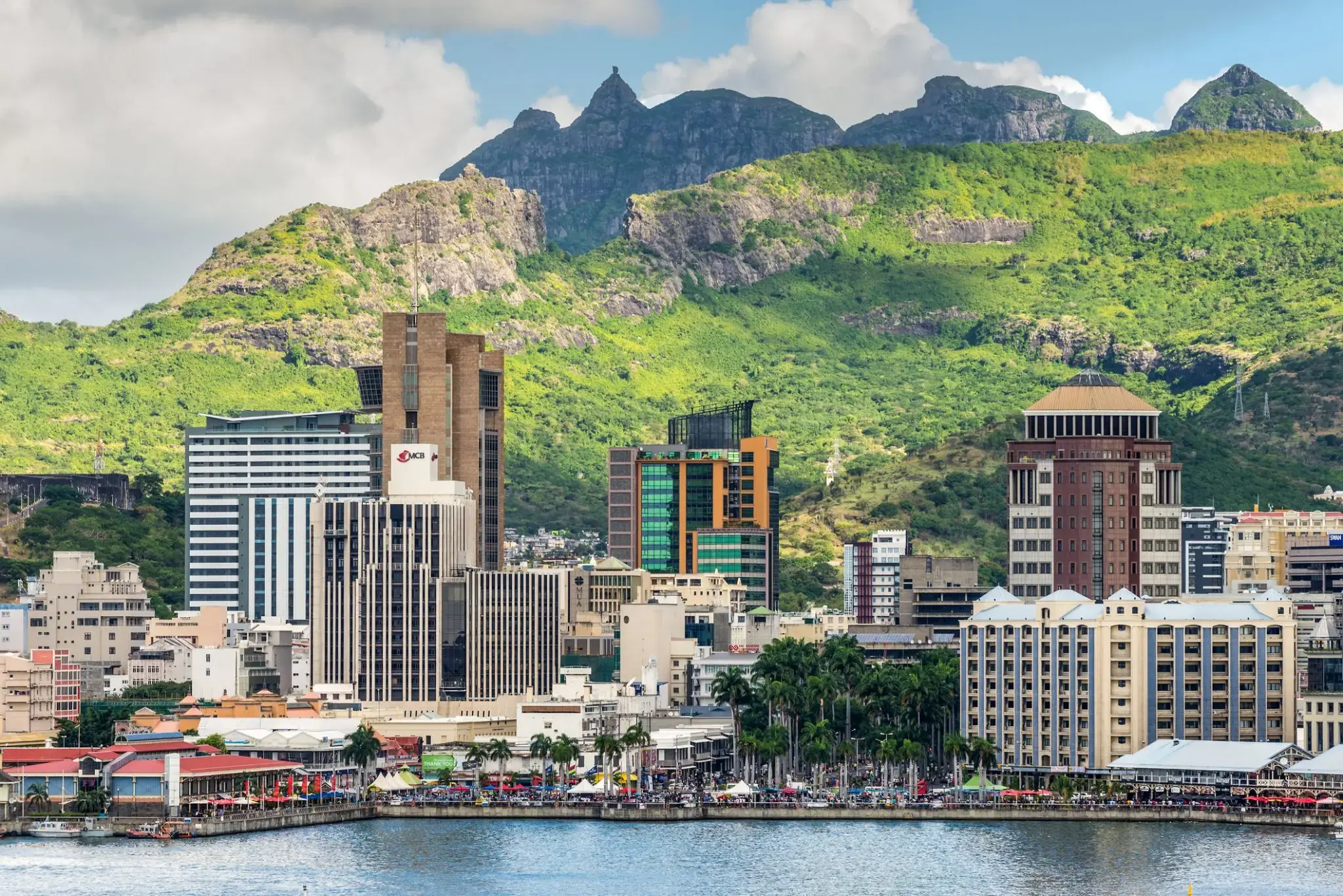
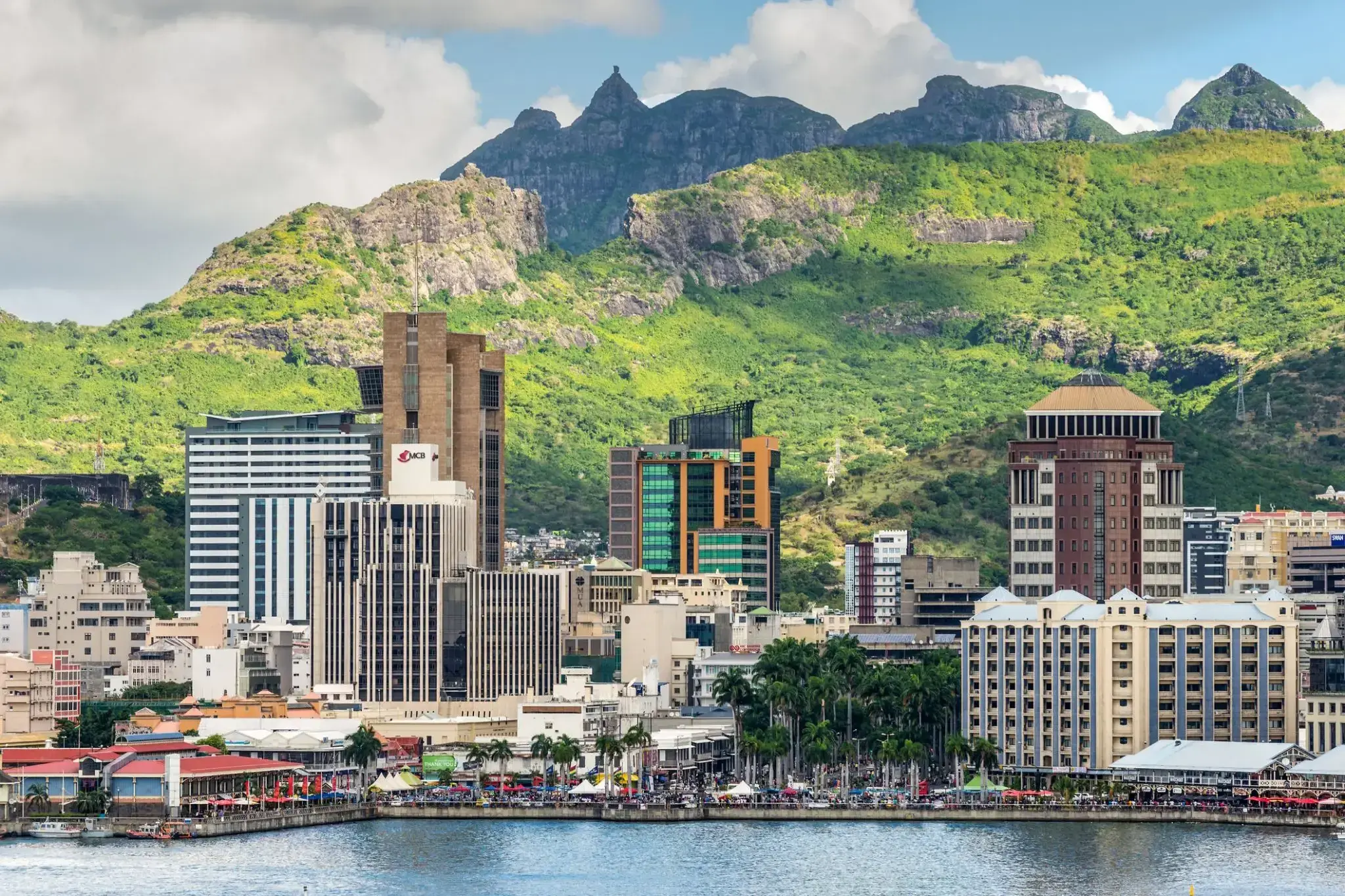
Port Louis is the capital and main port of Mauritius, located on the island’s northwest coast. This lively city combines colonial heritage, modern business hubs, and vibrant Creole culture. The historic center of Port Louis preserves buildings from the French and British eras, with Fort Adelaide (also known as the Citadel) standing out as a key attraction offering panoramic views of the city and harbor. Nearby is the Port Louis Market, a colorful center of local life where visitors can find spices, fruits, textiles, and handcrafted goods.
The city is also renowned for its museums, including the Mauritius Postal Museum, which displays the island’s first postage stamp — the famous “Blue Mauritius.” In addition to its cultural landmarks, Port Louis offers a wide range of culinary experiences influenced by Indian, Chinese, African, and European traditions. In the evening, the Caudan Waterfront becomes a favorite spot for strolls, shopping, and enjoying the vibrant atmosphere.
Port Louis is the capital and main port of Mauritius, located on the island’s northwest coast. This lively city combines colonial heritage, modern business hubs, and vibrant Creole culture. The historic center of Port Louis preserves buildings from the French and British eras, with Fort Adelaide (also known as the Citadel) standing out as a key attraction offering panoramic views of the city and harbor. Nearby is the Port Louis Market, a colorful center of local life where visitors can find spices, fruits, textiles, and handcrafted goods.
The city is also renowned for its museums, including the Mauritius Postal Museum, which displays the island’s first postage stamp — the famous “Blue Mauritius.” In addition to its cultural landmarks, Port Louis offers a wide range of culinary experiences influenced by Indian, Chinese, African, and European traditions. In the evening, the Caudan Waterfront becomes a favorite spot for strolls, shopping, and enjoying the vibrant atmosphere.
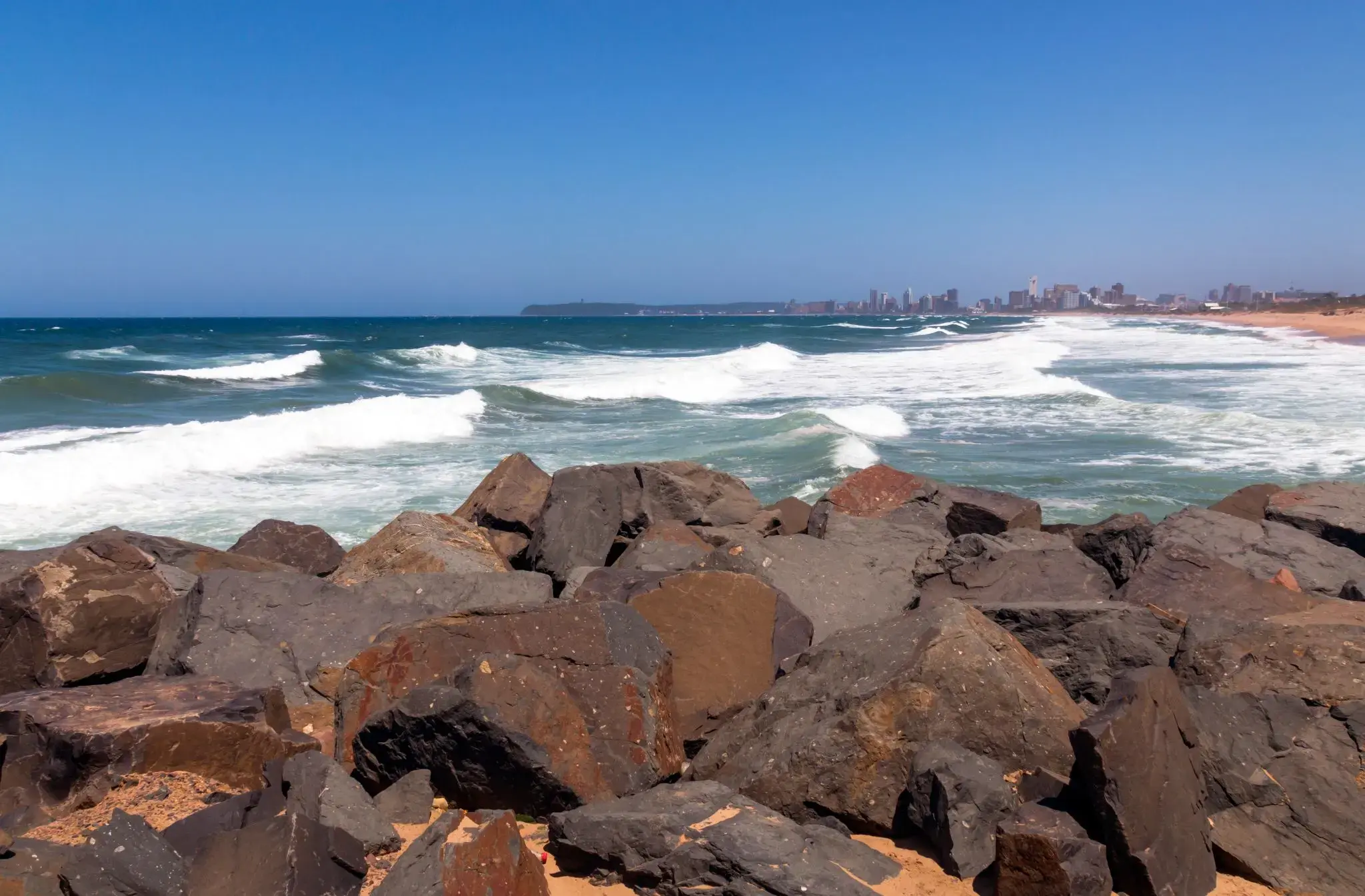
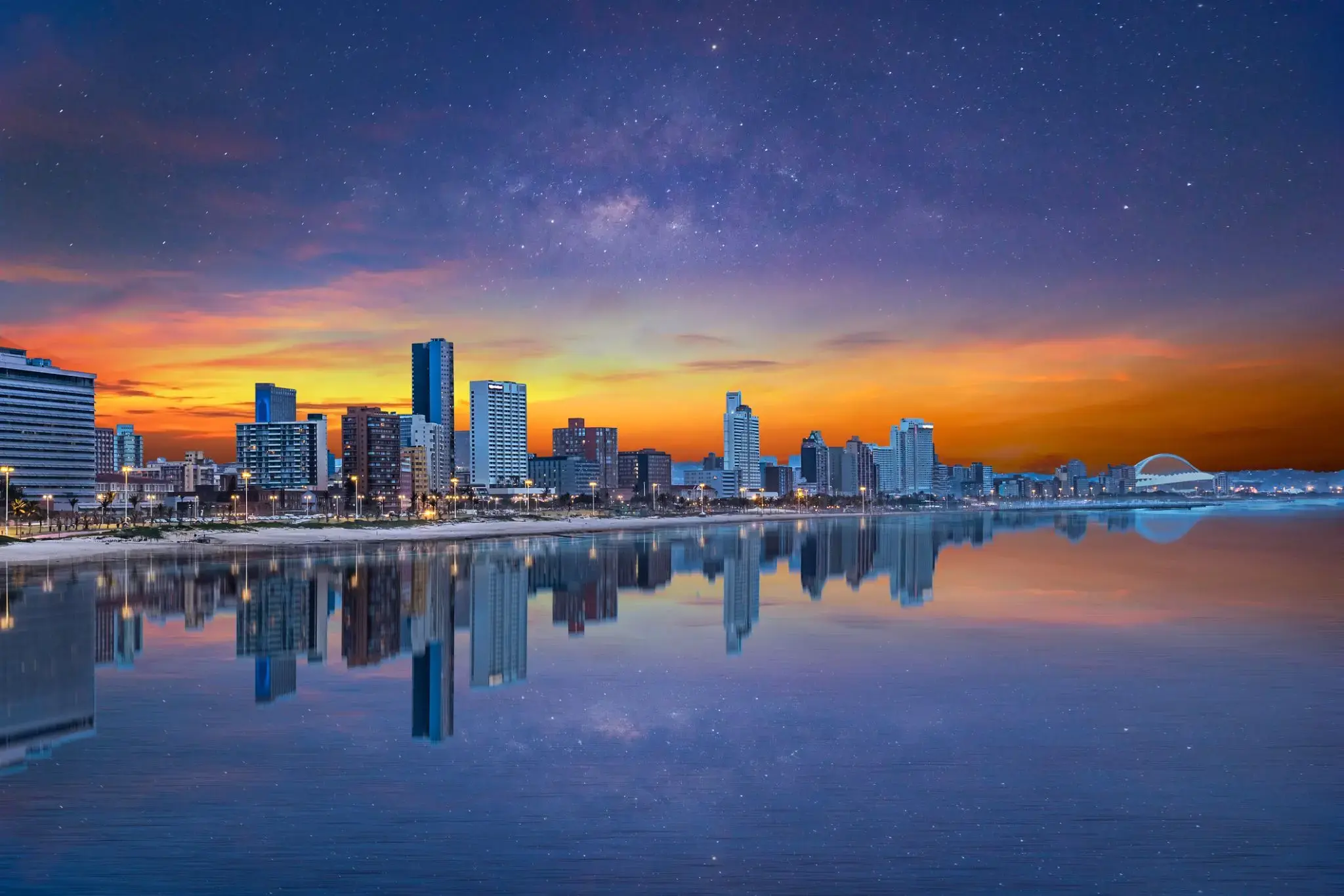
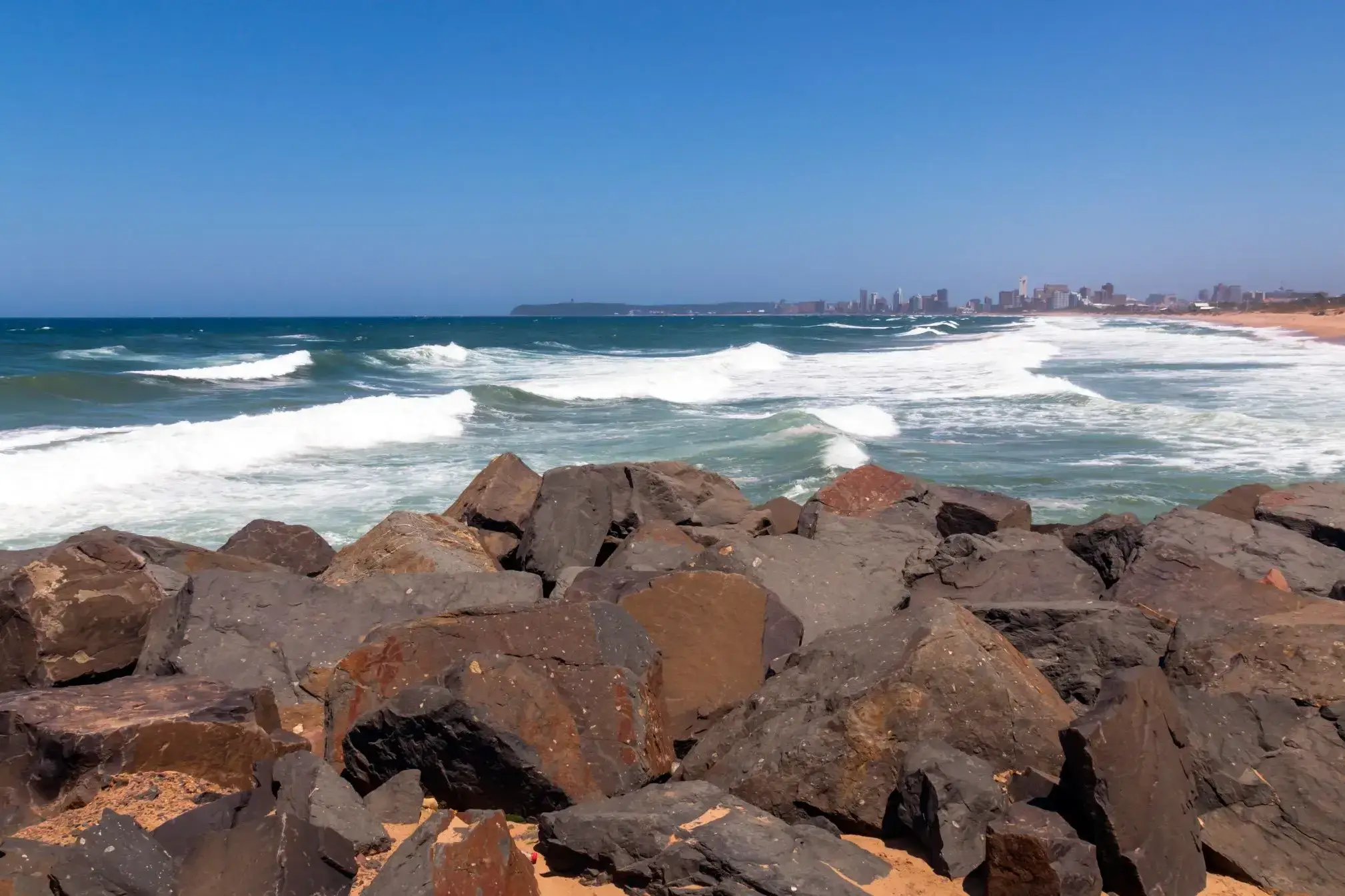
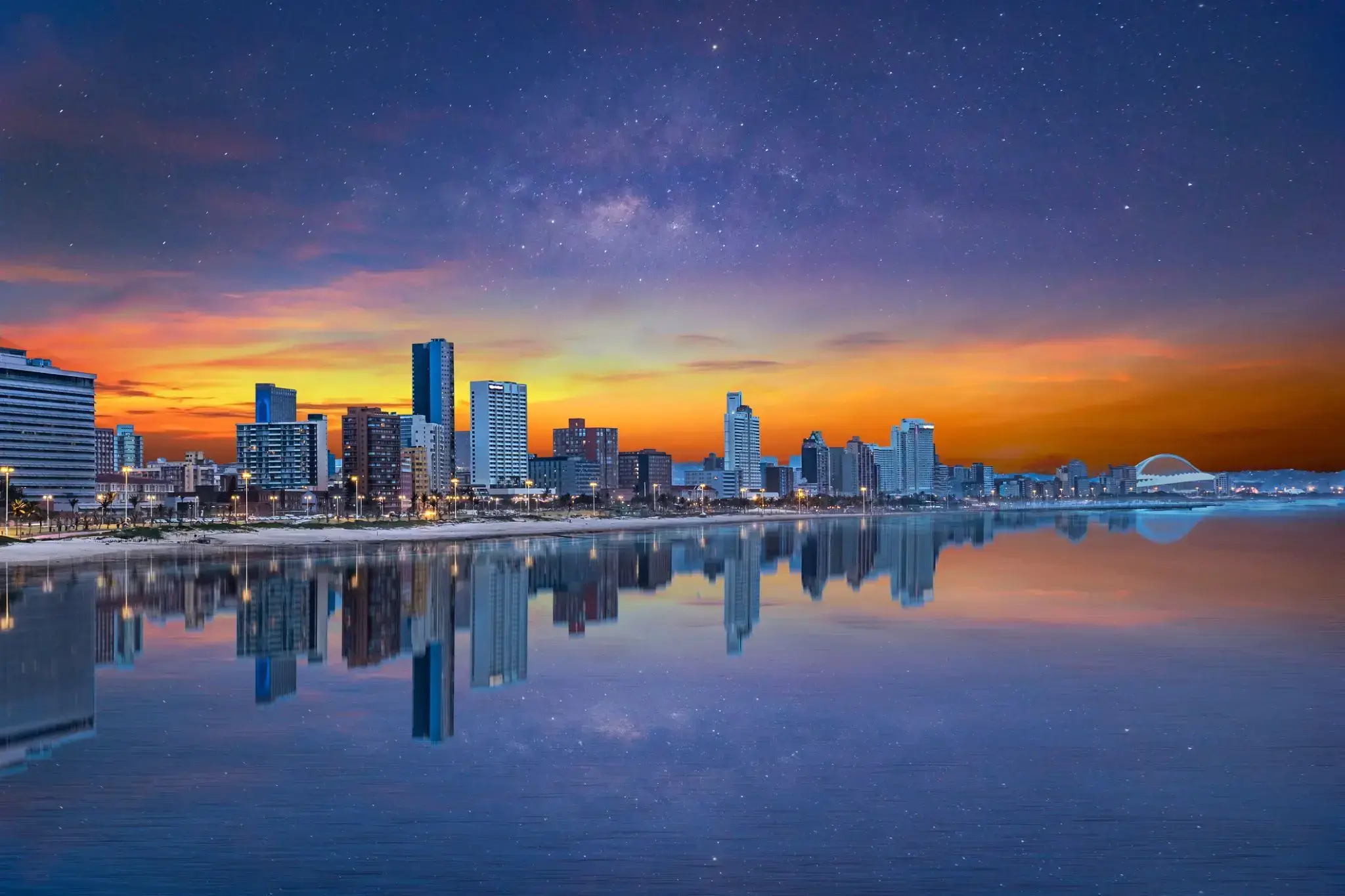
Durban is the third most populous city in South Africa—after Johannesburg and Cape Town—and the largest city in the South African province of KwaZulu-Natal. Located on the east coast of South Africa, Durban is famous for being the busiest port in the country. It is also seen as one of the major centres of tourism because of the city's warm subtropical climate and extensive beaches. Durban forms part of the eThekwini Metropolitan Municipality, which includes neighboring towns and has a population of about 3.44 million, making the combined municipality one of the biggest cities on the Indian Ocean coast of the African continent. It is also the second most important manufacturing hub in South Africa after Johannesburg. In 2015, Durban was recognised as one of the New7Wonders Cities (along with Vigan, Doha, La Paz, Havana, Beirut, and Kuala Lumpur).
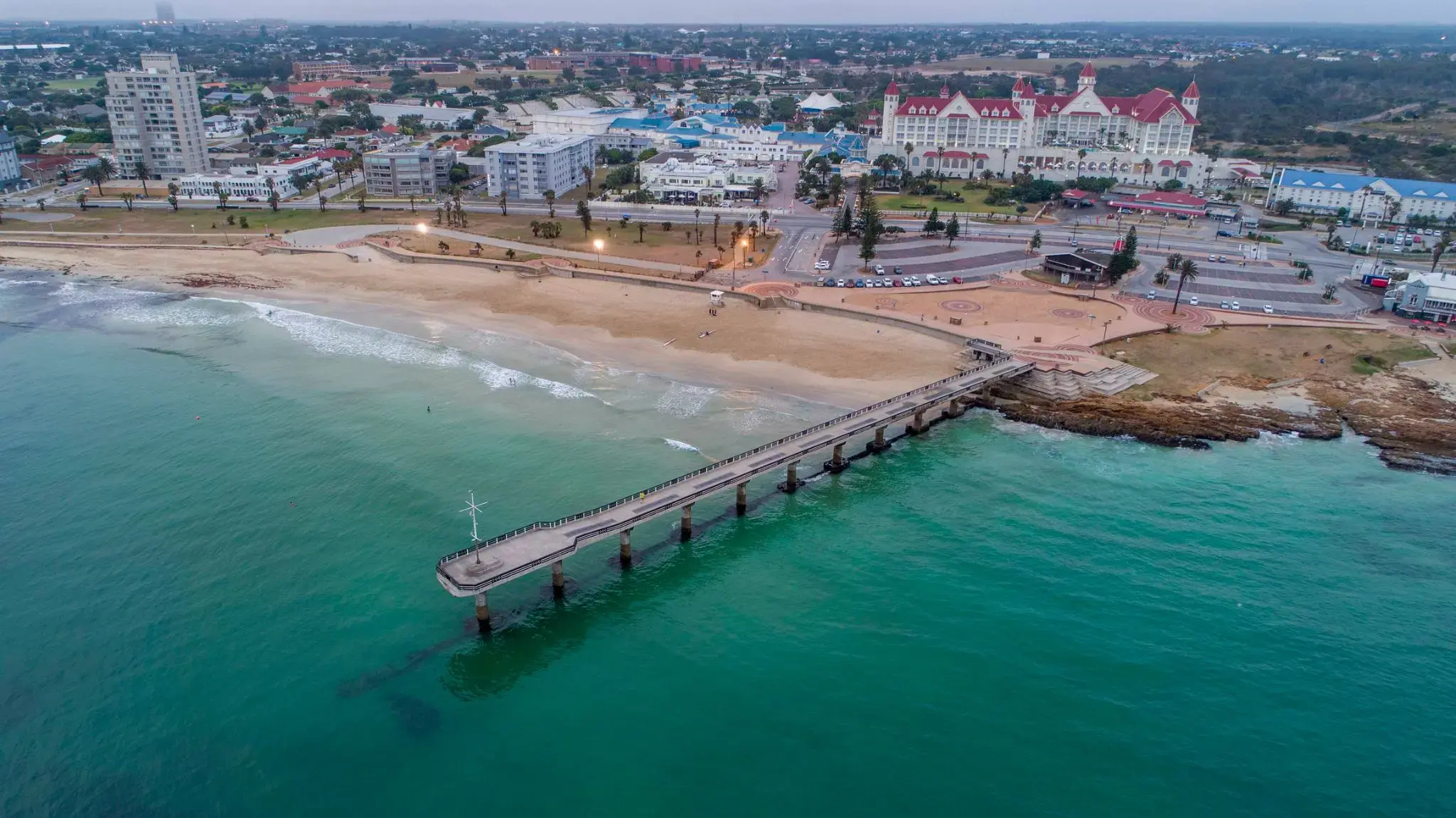
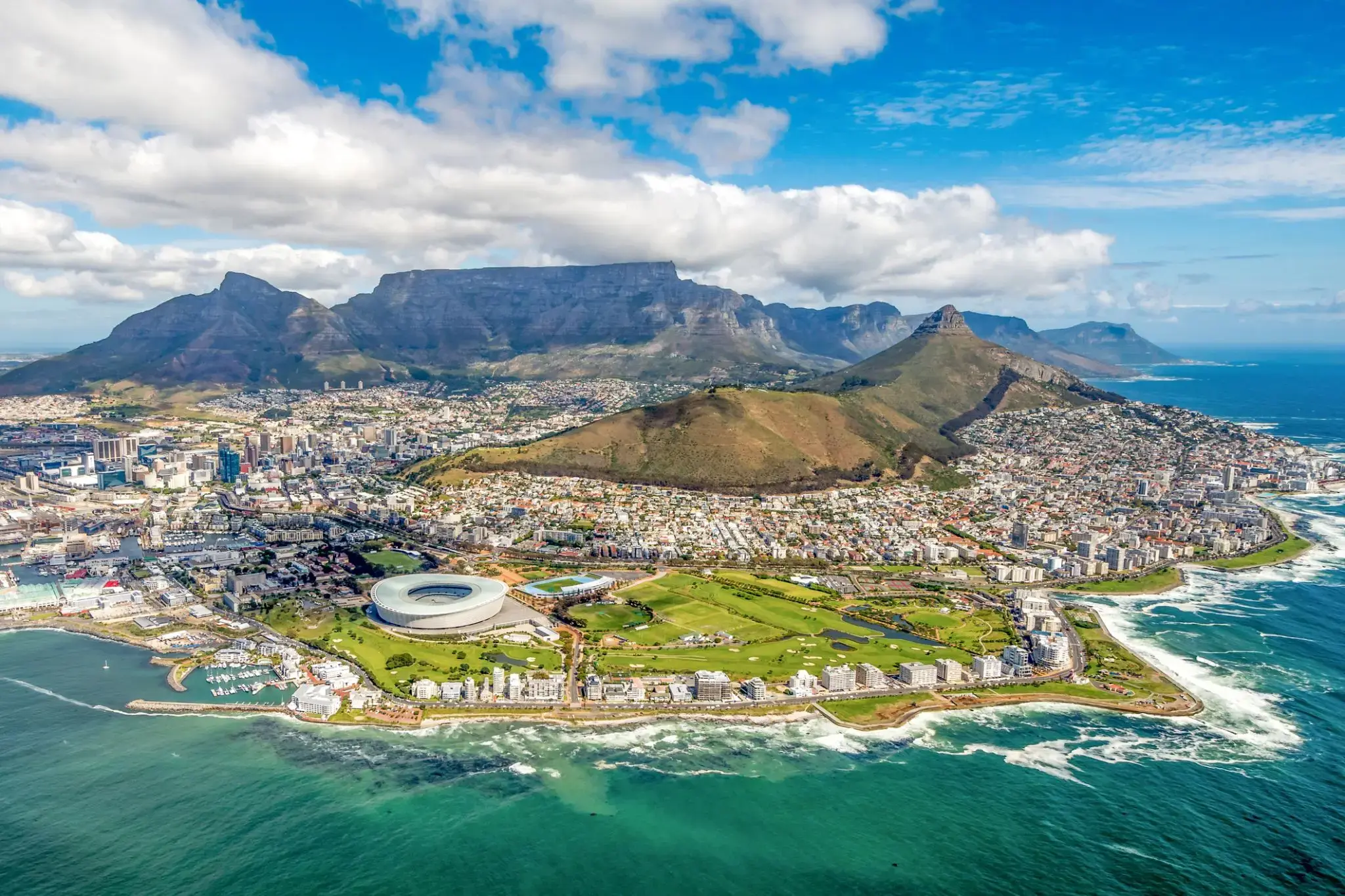
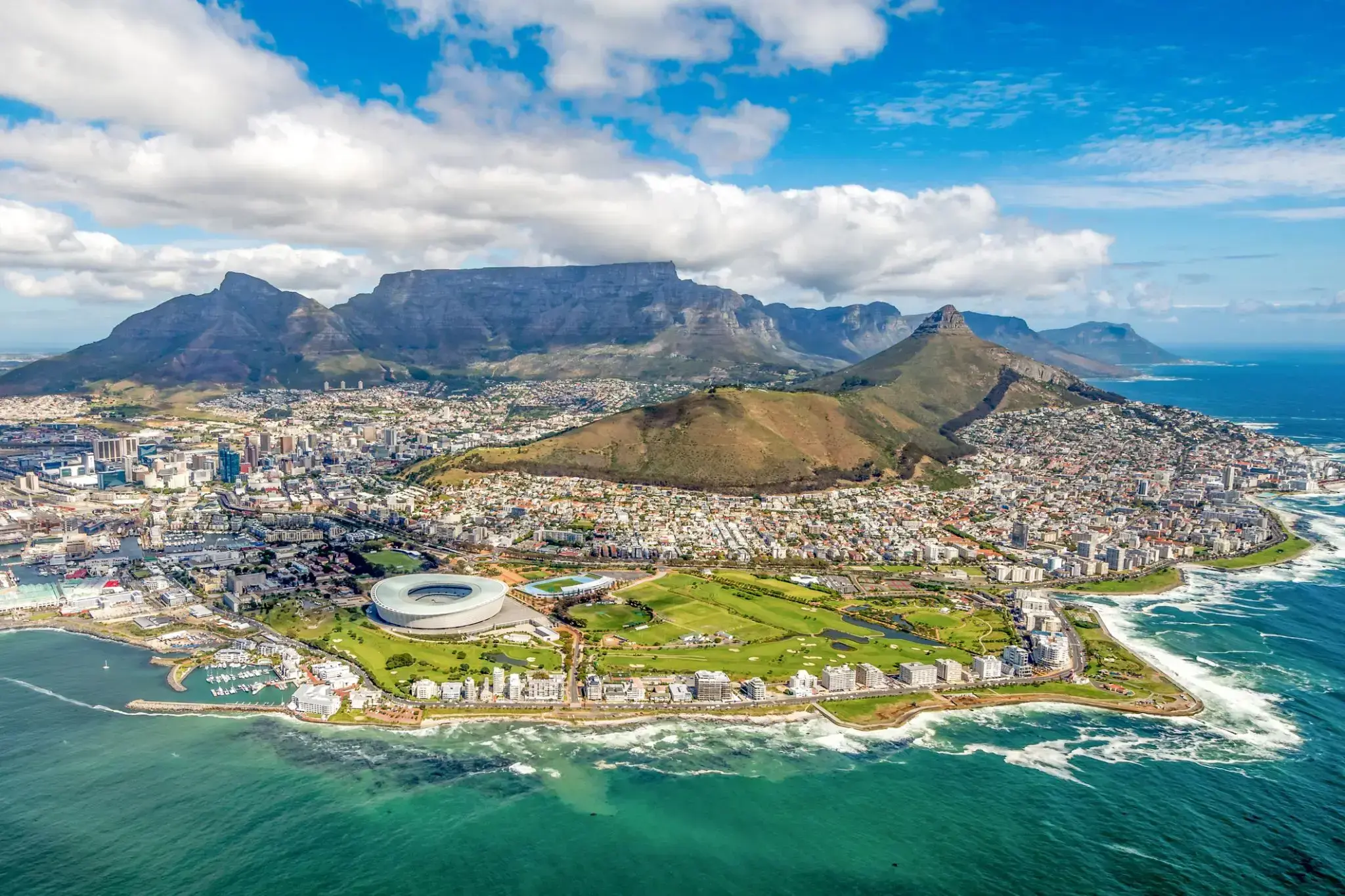
Cape Town is the oldest city in South Africa, colloquially named the Mother City. It is the legislative capital of South Africa and primate city of the Western Cape province. It forms part of the City of Cape Town metropolitan municipality.
The Parliament of South Africa sits in Cape Town. The other two capitals are located in Pretoria (the administrative capital where the Presidency is based) and Bloemfontein (the judicial capital where the Supreme Court of Appeal is located). The city is known for its harbour, for its natural setting in the Cape Floristic Region, and for landmarks such as Table Mountain and Cape Point. As of 2014, it is the 10th most populous city in Africa and home to 64% of the Western Cape's population. It is one of the most multicultural cities in the world, reflecting its role as a major destination for immigrants and expatriates to South Africa. The city was named the World Design Capital for 2014 by the International Council of Societies of Industrial Design. In 2014, Cape Town was named the best place in the world to visit by both The New York Times and The Daily Telegraph.
Located on the shore of Table Bay, Cape Town, as the oldest urban area in South Africa, was developed by the Dutch East India Company (VOC) as a supply station for Dutch ships sailing to East Africa, India, and the Far East. Jan van Riebeeck's arrival on 6 April 1652 established Dutch Cape Colony, the first permanent European settlement in South Africa. Cape Town outgrew its original purpose as the first European outpost at the Castle of Good Hope, becoming the economic and cultural hub of the Cape Colony. Until the Witwatersrand Gold Rush and the development of Johannesburg, Cape Town was the largest city in South Africa.
Cape Town is the oldest city in South Africa, colloquially named the Mother City. It is the legislative capital of South Africa and primate city of the Western Cape province. It forms part of the City of Cape Town metropolitan municipality.
The Parliament of South Africa sits in Cape Town. The other two capitals are located in Pretoria (the administrative capital where the Presidency is based) and Bloemfontein (the judicial capital where the Supreme Court of Appeal is located). The city is known for its harbour, for its natural setting in the Cape Floristic Region, and for landmarks such as Table Mountain and Cape Point. As of 2014, it is the 10th most populous city in Africa and home to 64% of the Western Cape's population. It is one of the most multicultural cities in the world, reflecting its role as a major destination for immigrants and expatriates to South Africa. The city was named the World Design Capital for 2014 by the International Council of Societies of Industrial Design. In 2014, Cape Town was named the best place in the world to visit by both The New York Times and The Daily Telegraph.
Located on the shore of Table Bay, Cape Town, as the oldest urban area in South Africa, was developed by the Dutch East India Company (VOC) as a supply station for Dutch ships sailing to East Africa, India, and the Far East. Jan van Riebeeck's arrival on 6 April 1652 established Dutch Cape Colony, the first permanent European settlement in South Africa. Cape Town outgrew its original purpose as the first European outpost at the Castle of Good Hope, becoming the economic and cultural hub of the Cape Colony. Until the Witwatersrand Gold Rush and the development of Johannesburg, Cape Town was the largest city in South Africa.
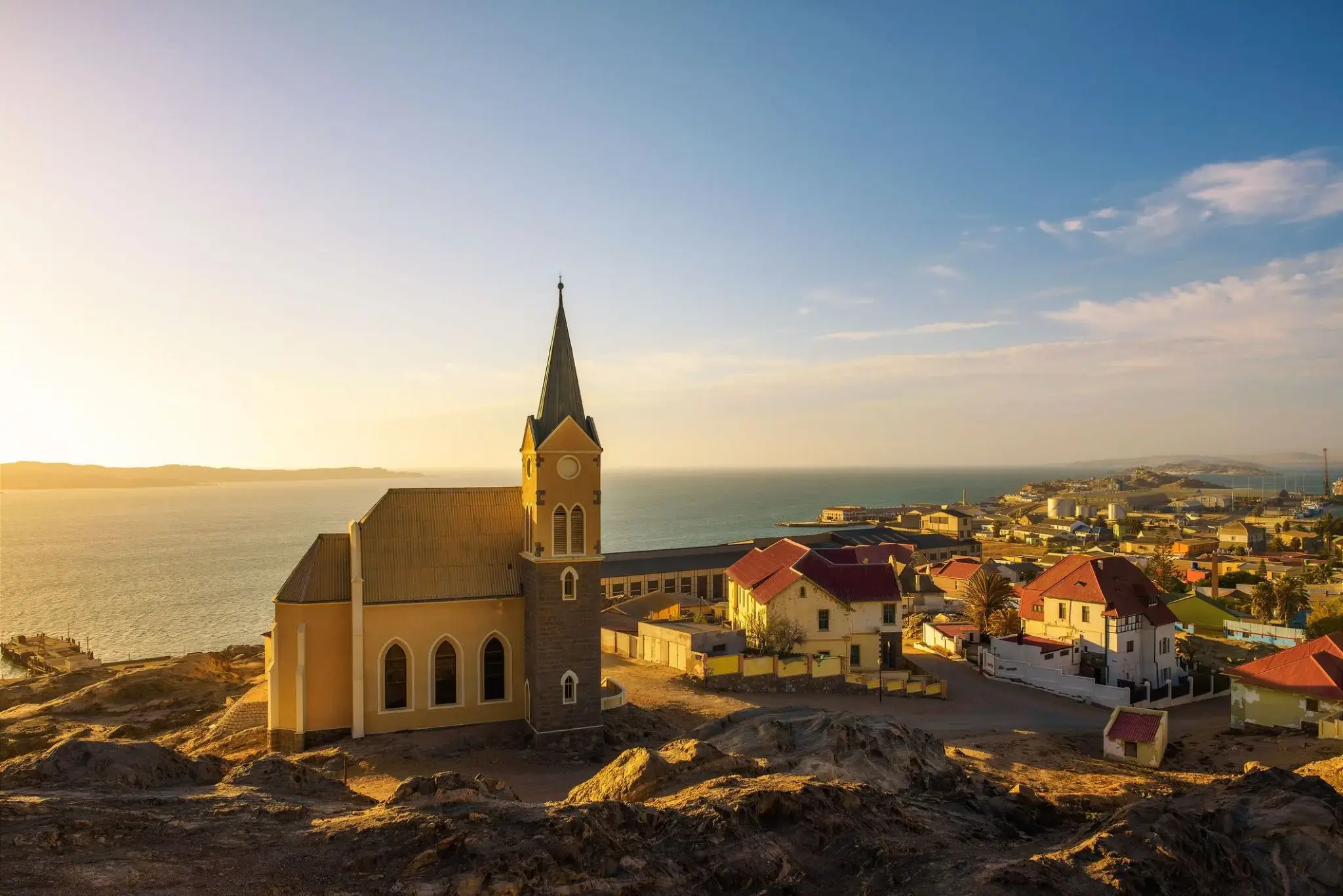
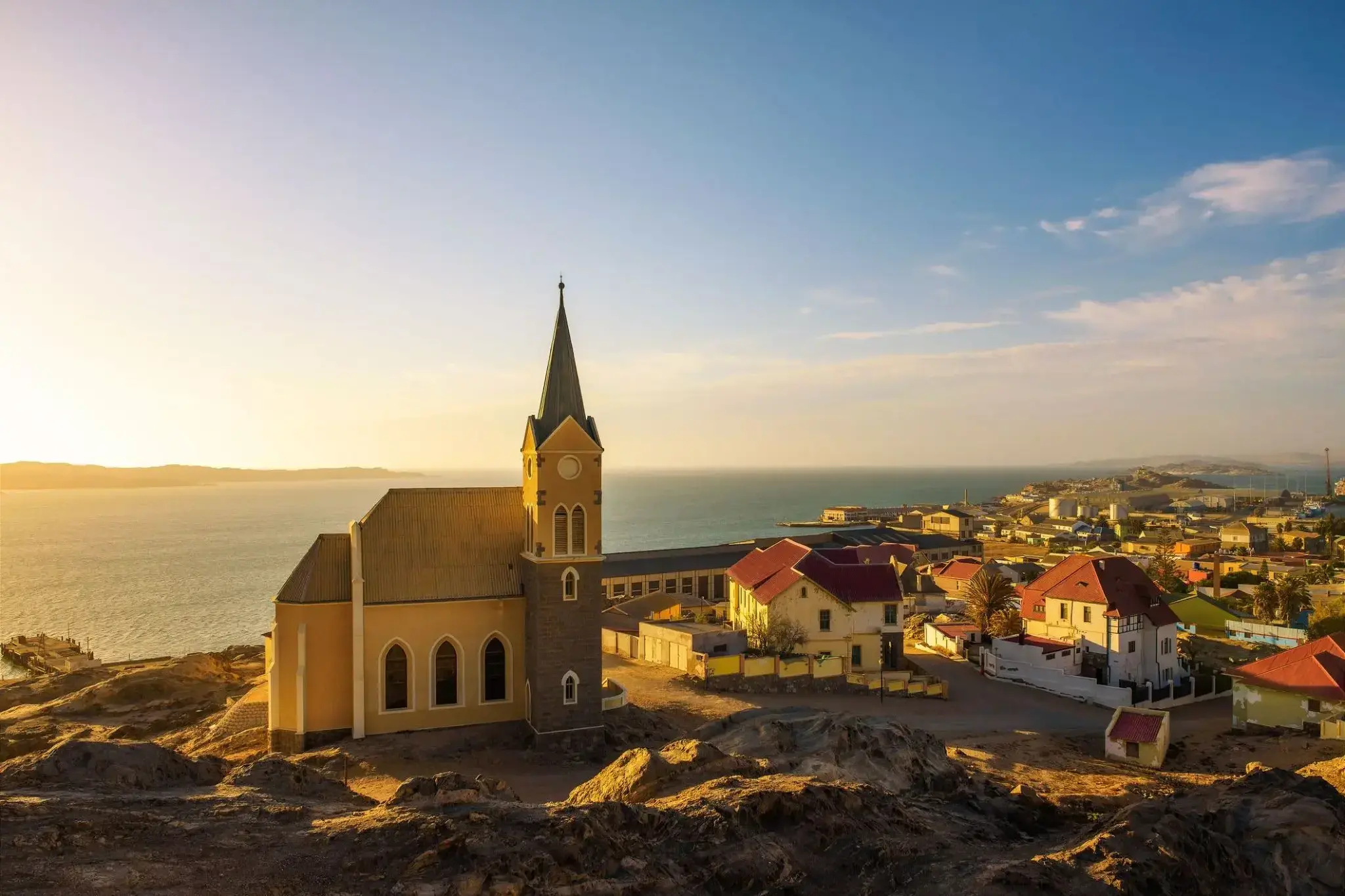
Narrow cobbled streets lead to colorful pastel houses, welcoming visitors to Luderitz. Nestled between desert dunes and the Atlantic Ocean, this town retains a unique charm reminiscent of the early 20th century. Colonial architecture blends with the sea air, while cozy cafes reflect the town’s German past.
Luderitz is renowned for its breathtaking coastal landscapes: turquoise waters of the bay and rugged coves merge seamlessly with golden desert sands. Adventurers can explore the abandoned diamond mining settlement of Kolmanskop or wander through lagoons where pelicans and flamingos gather. This corner of Namibia offers a unique blend of culture, history, and nature, waiting to be discovered.
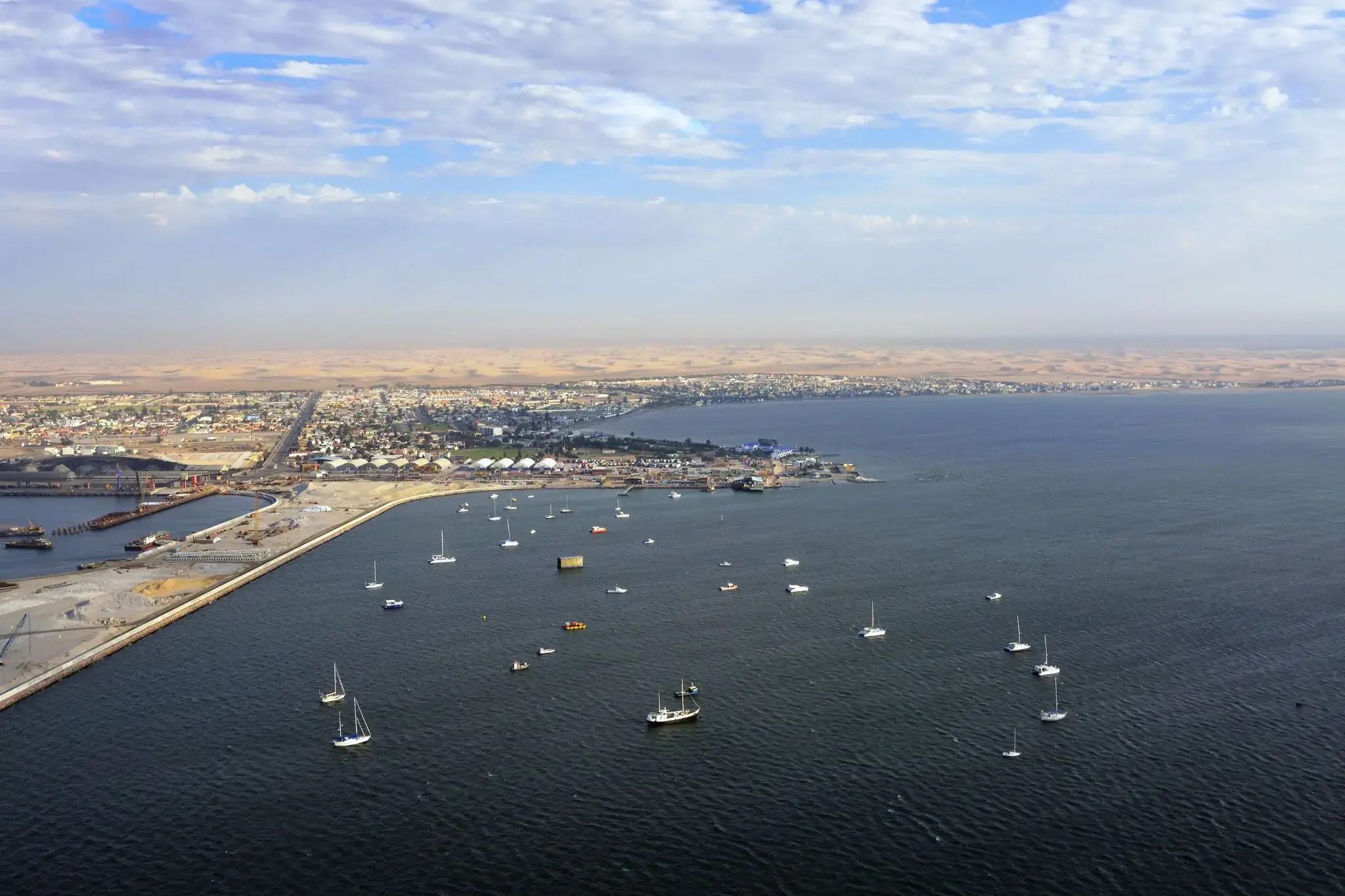
Walvis Bay — Namibia’s Maritime Gateway
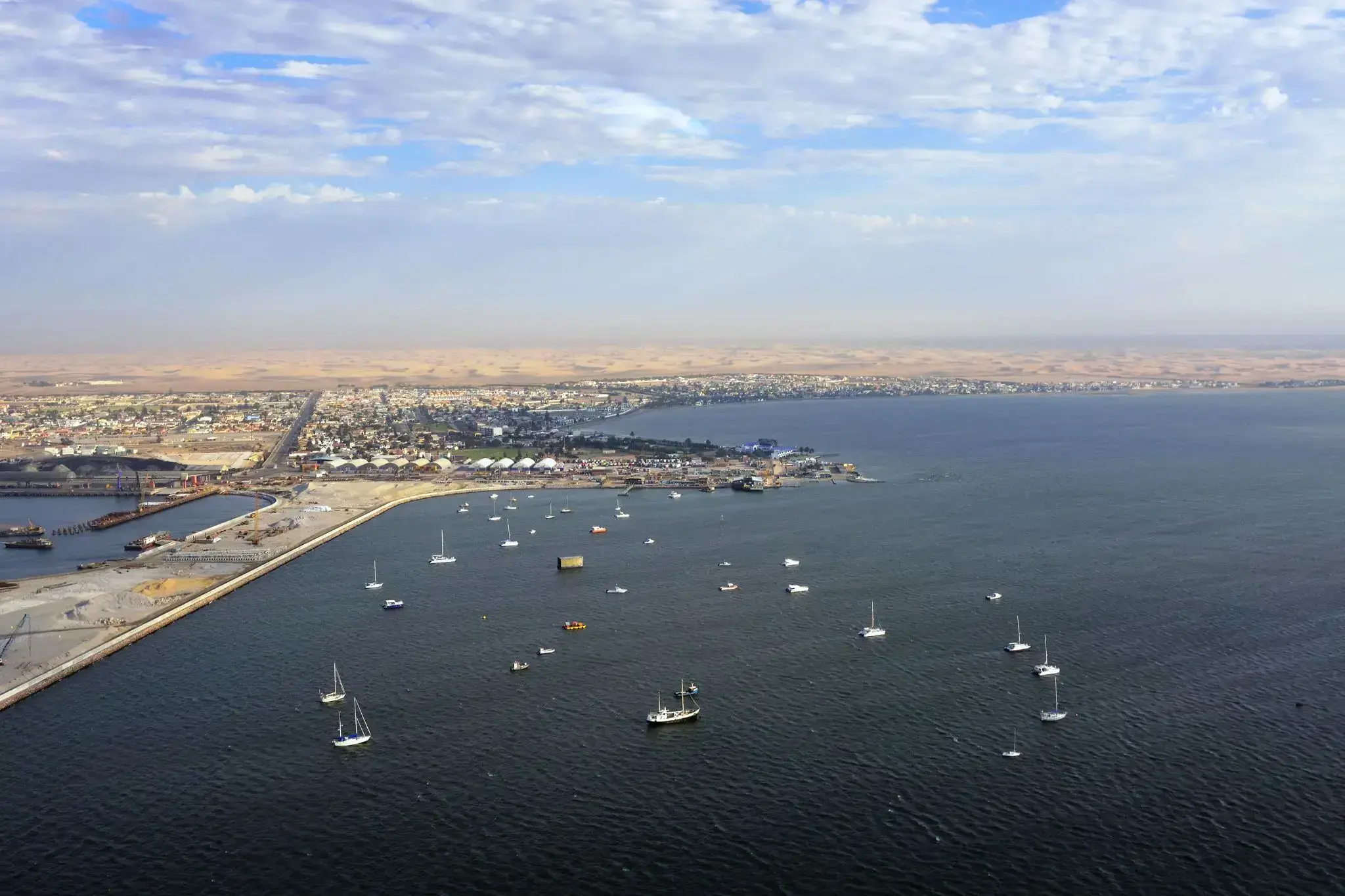
Walvis Bay, located on the Atlantic coast of Namibia, offers a rare blend of an industrial port and a natural haven. The town is famous for its vast lagoon—one of the largest in Africa—where flamingos, pelicans, and other water birds can be observed year-round. It's also one of the top places on the continent to witness marine life: visitors often take boat trips to spot seals, dolphins, and sometimes even whales. The lagoon is also popular among kite surfers and windsurfers, thanks to steady winds and wide open waters.
The city plays a key economic role as Namibia’s main port and a hub for the fishing industry. Yet, Walvis Bay attracts not only through its utility, but also through the stunning desert landscapes of the Namib, which begin just outside the town. The famous dunes and lunar scenery create a unique contrast with the ocean. This rare meeting of sea and desert makes Walvis Bay an unforgettable stop on any journey through southwestern Africa.
Walvis Bay — Namibia’s Maritime Gateway
Walvis Bay, located on the Atlantic coast of Namibia, offers a rare blend of an industrial port and a natural haven. The town is famous for its vast lagoon—one of the largest in Africa—where flamingos, pelicans, and other water birds can be observed year-round. It's also one of the top places on the continent to witness marine life: visitors often take boat trips to spot seals, dolphins, and sometimes even whales. The lagoon is also popular among kite surfers and windsurfers, thanks to steady winds and wide open waters.
The city plays a key economic role as Namibia’s main port and a hub for the fishing industry. Yet, Walvis Bay attracts not only through its utility, but also through the stunning desert landscapes of the Namib, which begin just outside the town. The famous dunes and lunar scenery create a unique contrast with the ocean. This rare meeting of sea and desert makes Walvis Bay an unforgettable stop on any journey through southwestern Africa.
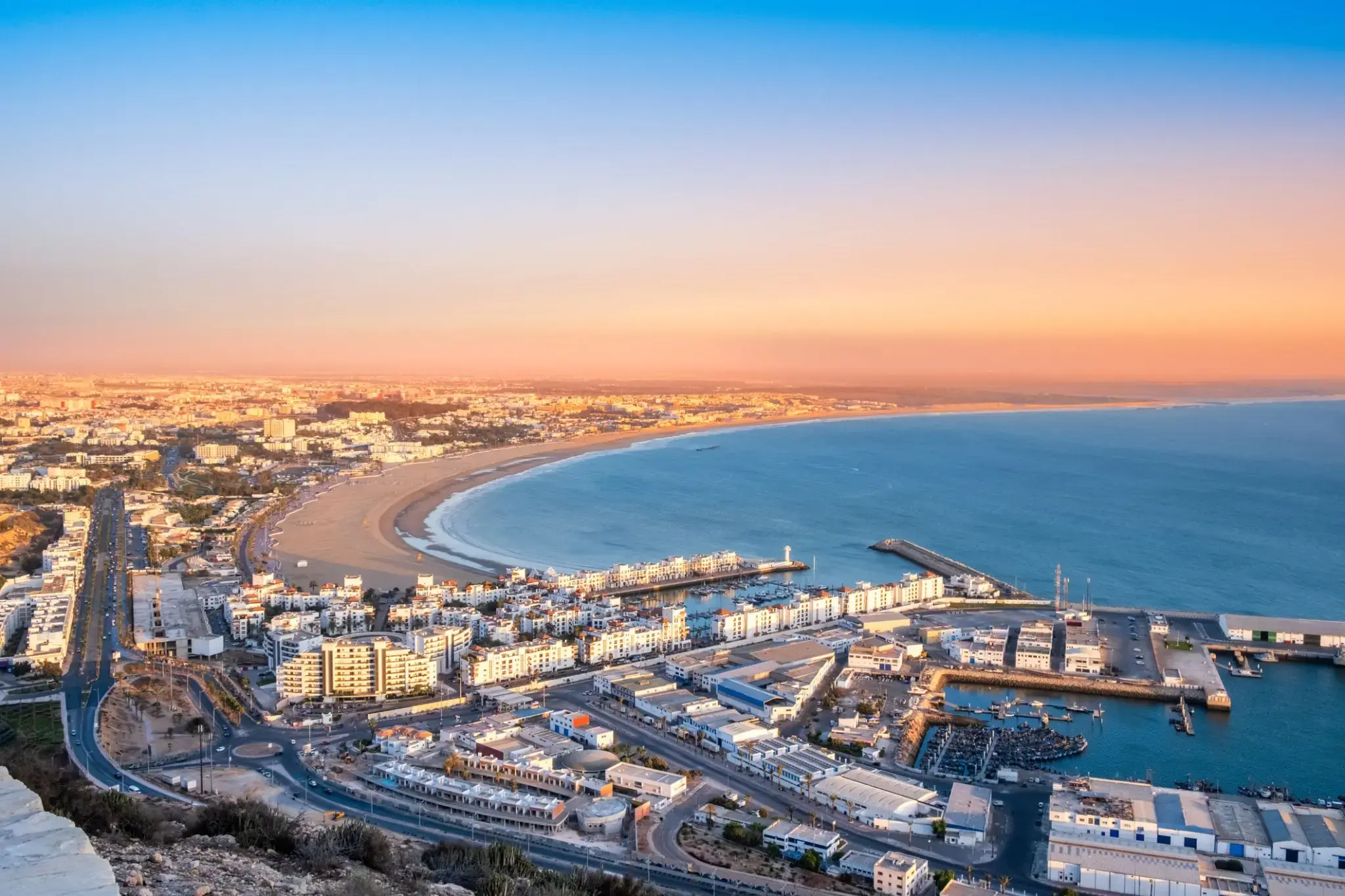
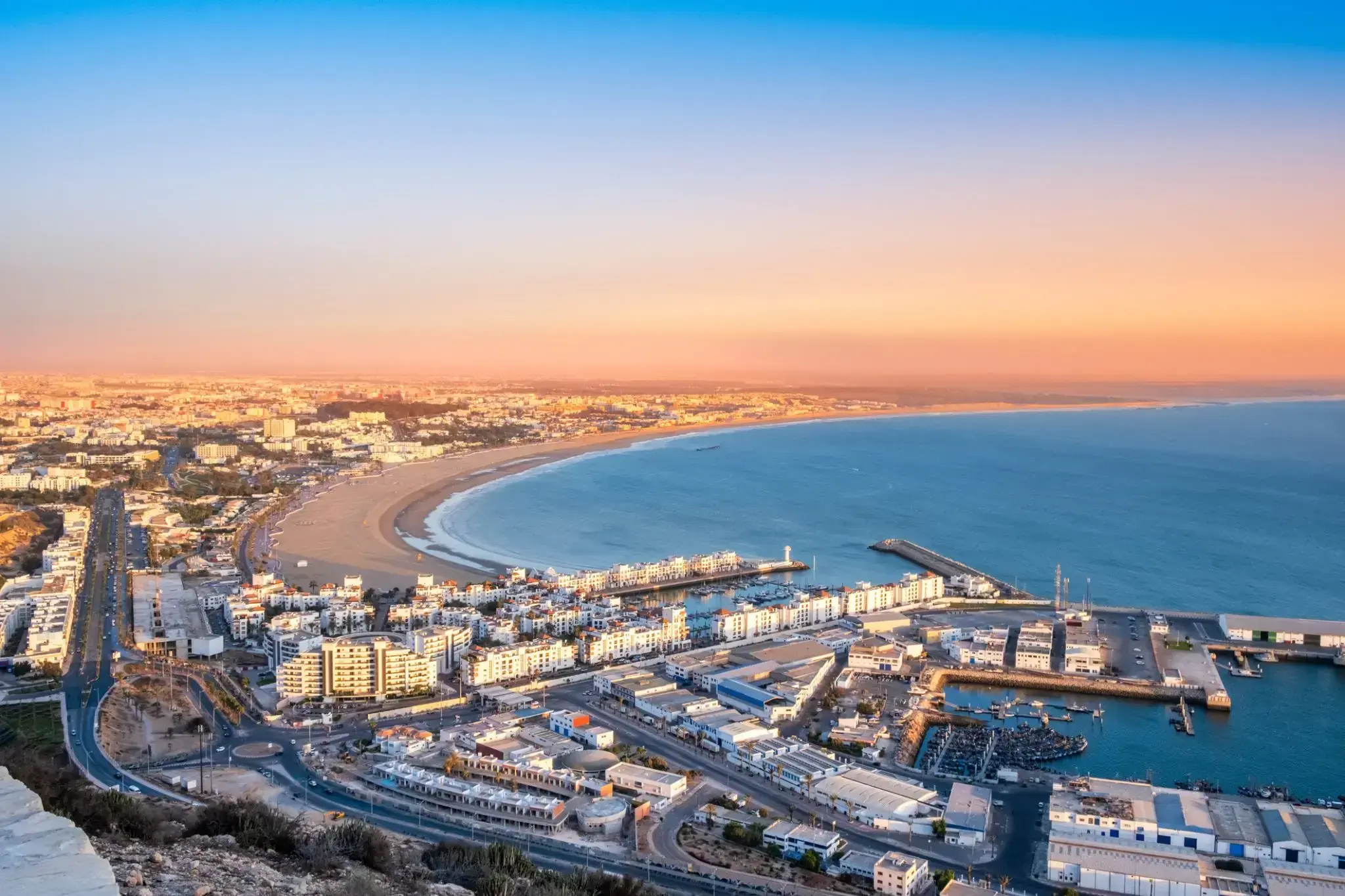
Agadir is the center of modern tourism in Morocco. Agadir Beach stretches for 10 km. The beautiful golden beach, surrounded by eucalyptus greenery and pine trees, is the most beautiful place among all Moroccan resorts. In Agadir, tourists will always find entertainment to their liking. Here you can ride camels or thoroughbred horses, play golf and tennis, smoke hookah, or experience all the delights of sea fishing. In the city's restaurants, you can taste the freshest and most delicious seafood, the assortment of which is simply magnificent: sea bass, sardines, tuna, shrimp, lobsters, crayfish. You can buy alcohol everywhere, but remember to do it before eight in the evening. And don't forget to visit the Medina of Agadir – a city built by an Italian architect. Inside the Medina, there are more than 30 shops and workshops.
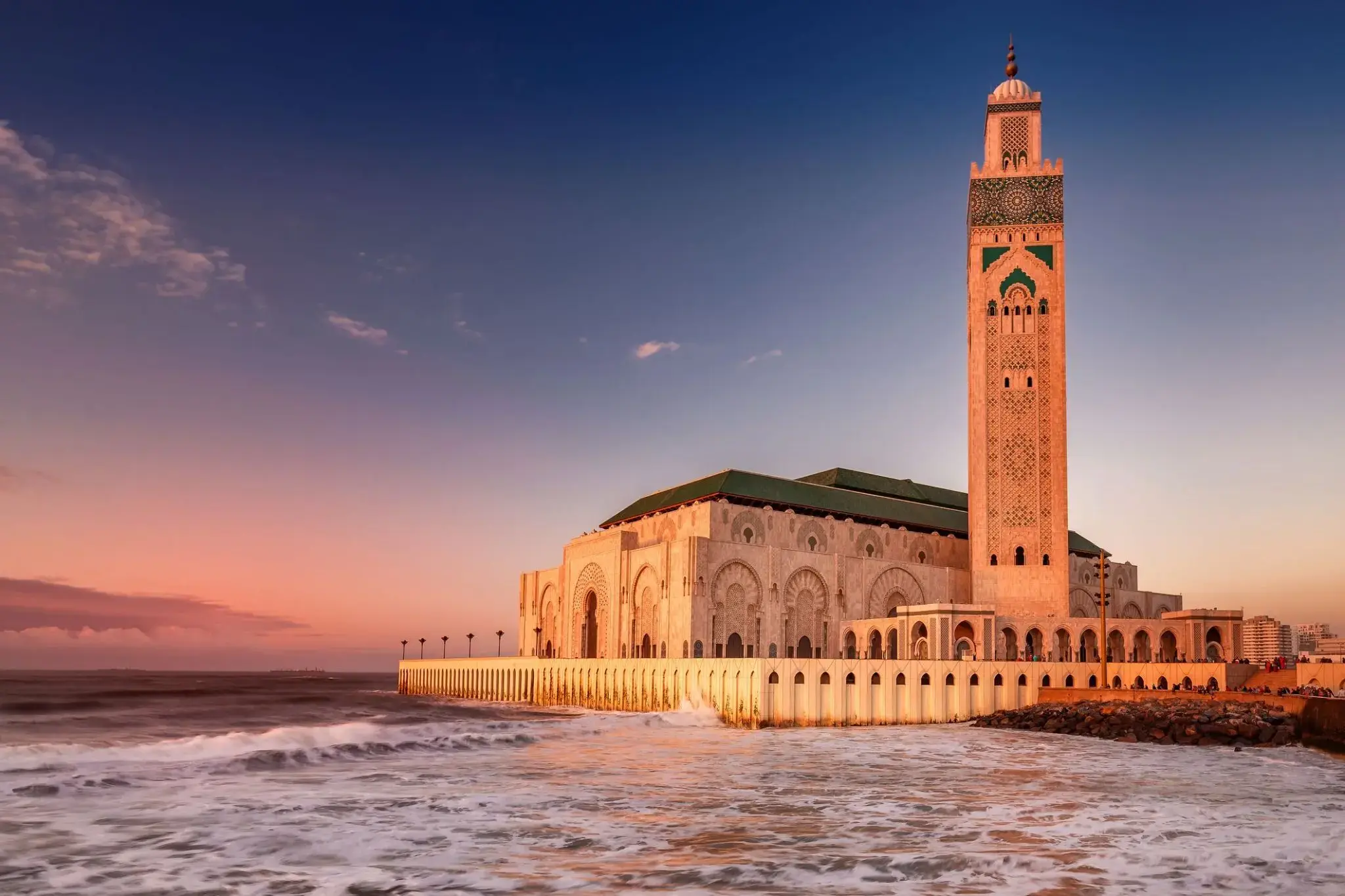
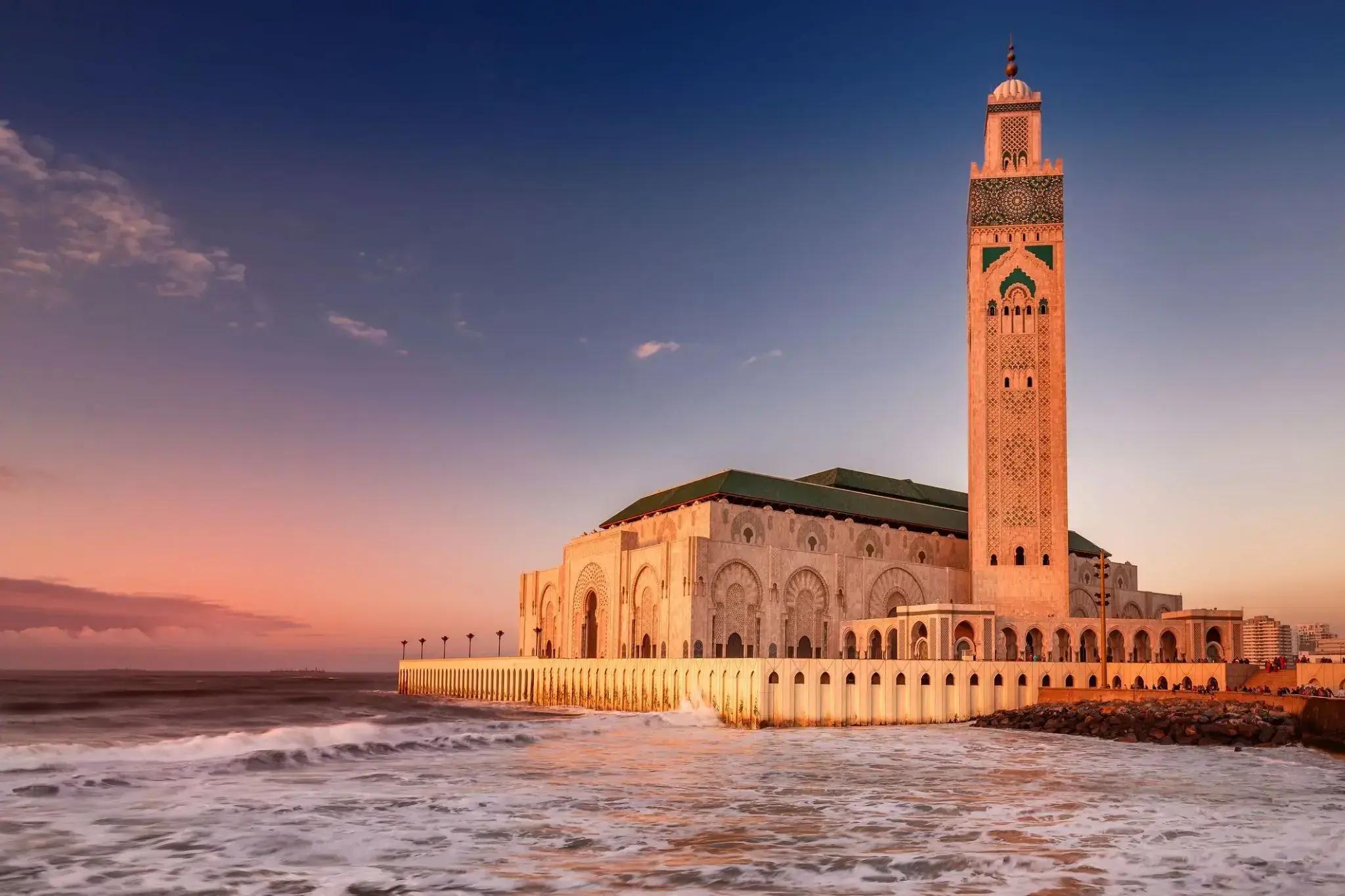
Casablanca located in the central-western part of Morocco and bordering the Atlantic Ocean, is the largest city in Morocco. It is also the largest city in the Maghreb region, as well as one of the largest and most important cities in Africa, both economically and demographically.
Casablanca is Morocco's chief port and one of the largest financial centers on the continent. According to the 2014 population estimate, the city has a population of about 3.35 million in the urban area and over 6.8 million in the Casablanca-Settat region. Casablanca is considered the economic and business center of Morocco, although the national political capital is Rabat.
The leading Moroccan companies and international many corporations doing business in the country have their headquarters and main industrial facilities in Casablanca. Recent industrial statistics show Casablanca retains its historical position as the main industrial zone of the country. The Port of Casablanca is one of the largest artificial ports in the world, and the second largest port of North Africa, after Tanger-Med 40 km (25 mi) east of Tangier. Casablanca also hosts the primary naval base for the Royal Moroccan Navy.
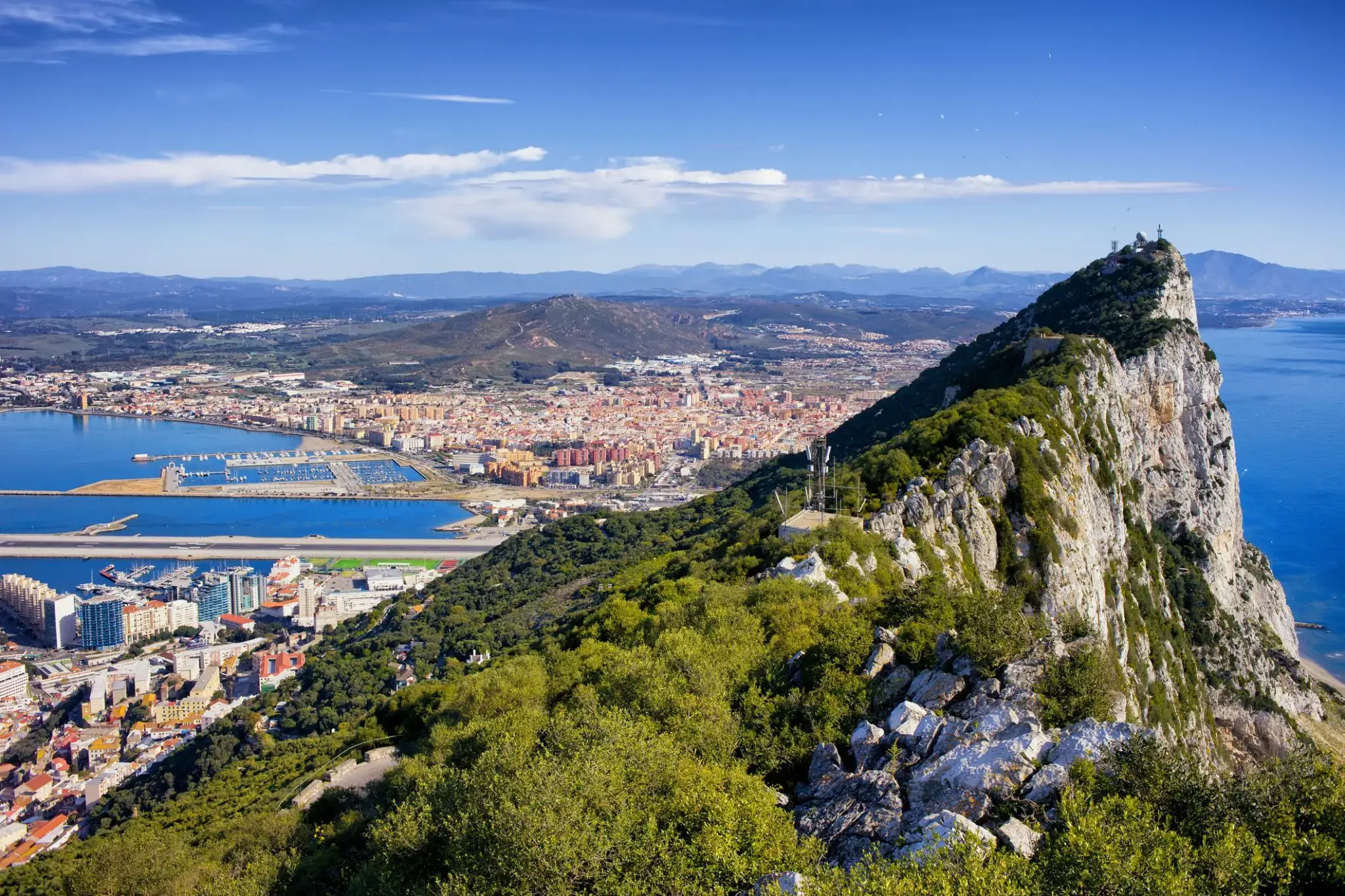
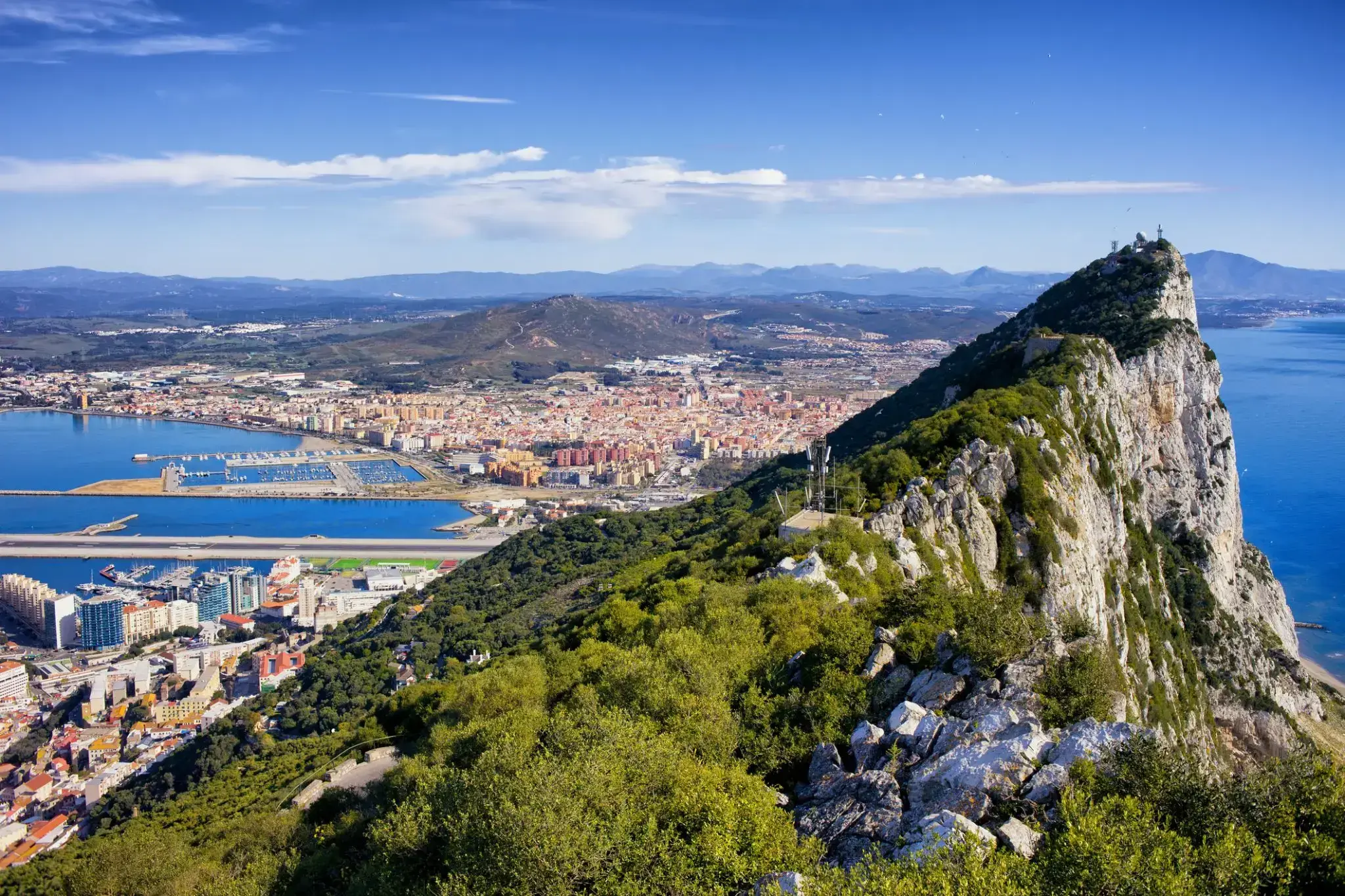
Gibraltar is a British Overseas Territory located at the southern tip of the Iberian Peninsula. It has an area of 6.7 km2 (2.6 sq mi) and is bordered to the north by Spain. The landscape is dominated by the Rock of Gibraltar at the foot of which is a densely populated town area, home to over 30,000 people, primarily Gibraltarians. It shares a maritime border with Morocco.
In 1704, Anglo-Dutch forces captured Gibraltar from Spain during the War of the Spanish Succession on behalf of the Habsburg claim to the Spanish throne. The territory was ceded to Great Britain in perpetuity under the Treaty of Utrechtin 1713. During World War II it was an important base for the Royal Navy as it controlled the entrance and exit to the Mediterranean Sea, which is only 8 miles (13 km) wide at this naval choke point. It remains strategically important, with half the world's seaborne trade passing through the strait. Today Gibraltar's economy is based largely on tourism, online gambling, financial services and cargo ship refuelling.
The sovereignty of Gibraltar is a point of contention in Anglo-Spanish relations because Spain asserts a claim to the territory. Gibraltarians rejected proposals for Spanish sovereignty in a 1967 referendum and, in a 2002 referendum, the idea of shared sovereignty was also rejected.
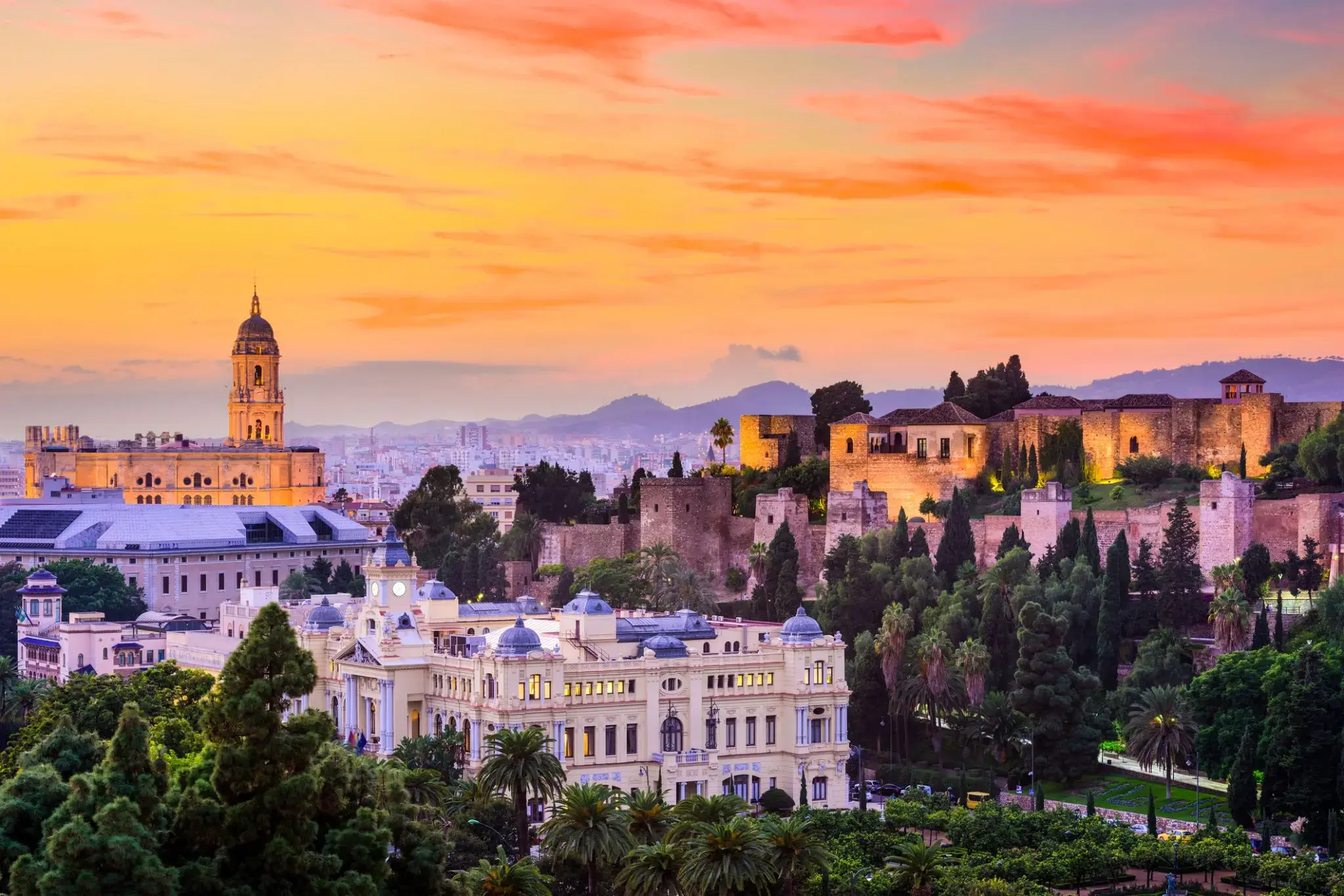
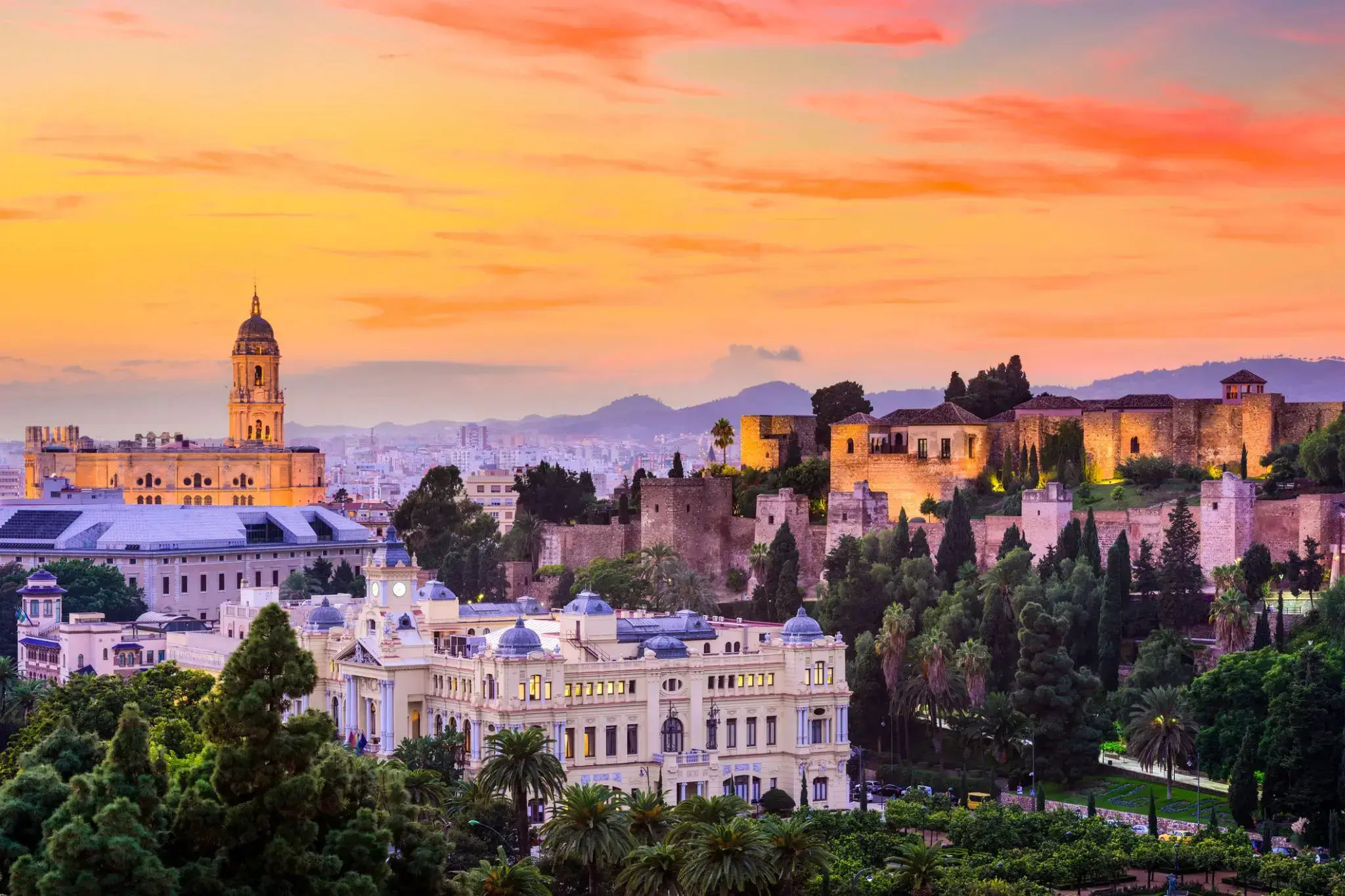
Málaga is a municipality, capital of the Province of Málaga, in the Autonomous Community of Andalusia, Spain. With a population of 569,130 in 2015, it is the second-most populous city of Andalusia and the sixth-largest in Spain. The southernmost large city in Europe, it lies on the Costa del Sol (Coast of the Sun) of the Mediterranean, about 100 kilometres (62.14 miles) east of the Strait of Gibraltar and about 130 km (80.78 mi) north of Africa.
Málaga's history spans about 2,800 years, making it one of the oldest cities in the world. According to most scholars, it was founded about 770 BC by the Phoenicians as Malaka From the 6th century BC the city was under the hegemony of Ancient Carthage, and from 218 BC, it was ruled by the Roman Republic and then empire as Malaca (Latin). After the fall of the empire and the end of Visigothic rule, it was under Islamic rule as Mālaqah for 800 years, but in 1487, the Crown of Castille gained control after the Reconquista. The archaeological remains and monuments from the Phoenician, Roman, Arabic and Christian eras make the historic center of the city an "open museum", displaying its history of nearly 3,000 years.
This important cultural infrastructure and the artistic heritage have culminated in the nomination of Málaga as a candidate for the 2016 European Capital of Culture.
The painter and sculptor Pablo Picasso, Hebrew poet and Jewish philosopher Solomon Ibn Gabirol and the actor Antonio Banderas were born in Málaga. The magnum opus of Cuban composer Ernesto Lecuona, "Malagueña", is named after the music of this region of Spain.
The most important business sectors in Málaga are tourism, construction and technology services, but other sectors such as transportation and logistics are beginning to expand. The Andalusia Technology Park (PTA), located in Málaga, has enjoyed significant growth since its inauguration in 1992. Málaga is the main economic and financial centre of southern Spain, home of the region's largest bank, Unicaja, and the fourth-ranking city in economic activity in Spain behind Madrid, Barcelona and Valencia.
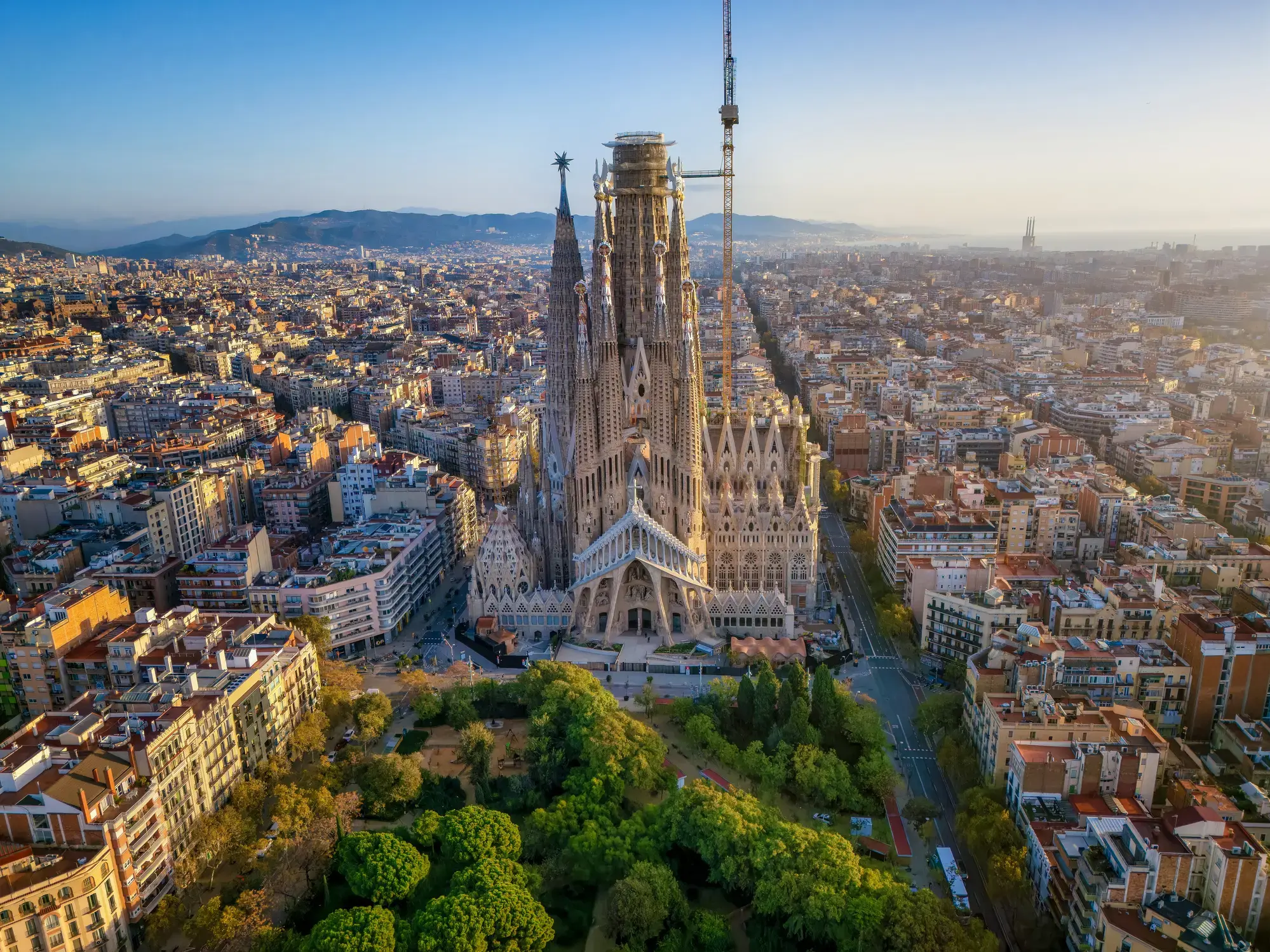
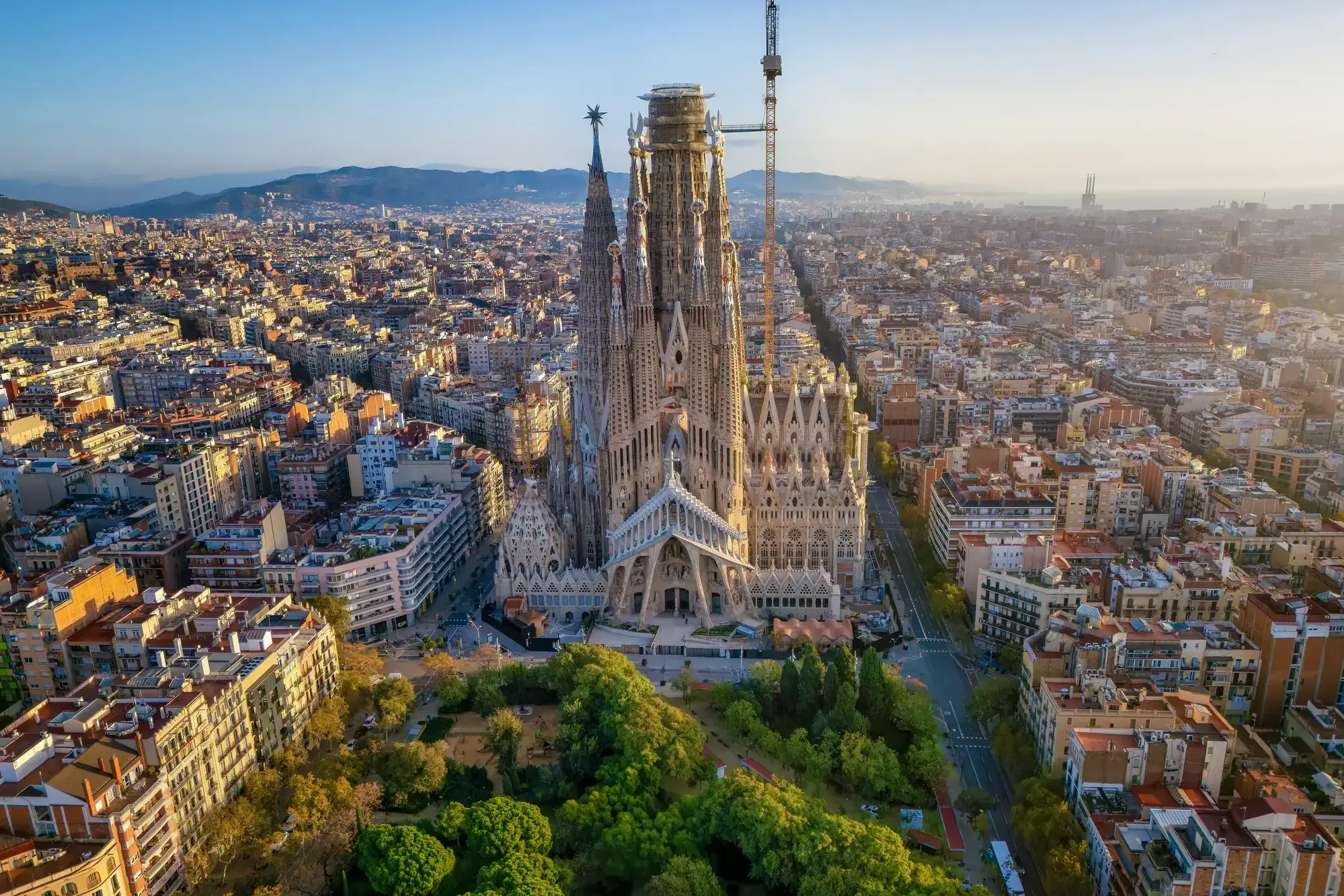
Barcelona is a city in Spain. It is the capital and largest city of Catalonia, as well as the second most populous municipality of Spain. With a population of 1.6 million within city limits, its urban area extends to numerous neighbouring municipalities within the Province of Barcelona and is home to around 4.8 million people, making it the sixth most populous urban area in the European Union after Paris, London, Madrid, the Ruhr area and Milan. It is one of the largest metropolises on the Mediterranean Sea, located on the coast between the mouths of the rivers Llobregat and Besòs, and bounded to the west by the Serra de Collserola mountain range, the tallest peak of which is 512 metres (1,680 feet) high.
Founded as a Roman city, in the Middle Ages Barcelona became the capital of the County of Barcelona. After merging with the Kingdom of Aragon, Barcelona continued to be an important city in the Crown of Aragon as an economic and administrative centre of this Crown and the capital of the Principality of Catalonia. Barcelona has a rich cultural heritage and is today an important cultural centre and a major tourist destination. Particularly renowned are the architectural works of Antoni Gaudí and Lluís Domènech i Montaner, which have been designated UNESCO World Heritage Sites. The headquarters of the Union for the Mediterranean are located in Barcelona. The city is known for hosting the 1992 Summer Olympics as well as world-class conferences and expositions and also many international sport tournaments.
Barcelona is one of the world's leading tourist, economic, trade fair and cultural centres, and its influence in commerce, education, entertainment, media, fashion, science, and the arts all contribute to its status as one of the world's major global cities. It is a major cultural and economic centre in southwestern Europe, 24th in the world (before Zürich, after Frankfurt) and a financial centre. In 2008 it was the fourth most economically powerful city by GDP in the European Union and 35th in the world with GDP amounting to €177 billion. In 2012 Barcelona had a GDP of $170 billion; and it was leading Spain in employment rate in that moment.
In 2009 the city was ranked Europe's third and one of the world's most successful as a city brand. In the same year the city was ranked Europe's fourth best city for business and fastest improving European city, with growth improved by 17% per year, and the city has been experiencing strong and renewed growth for the past three years. Since 2011 Barcelona has been a leading smart city in Europe. Barcelona is a transport hub, with the Port of Barcelona being one of Europe's principal seaports and busiest European passenger port, an international airport, Barcelona–El Prat Airport, which handles over 50 million passengers per year, an extensive motorway network, and a high-speed rail line with a link to France and the rest of Europe.
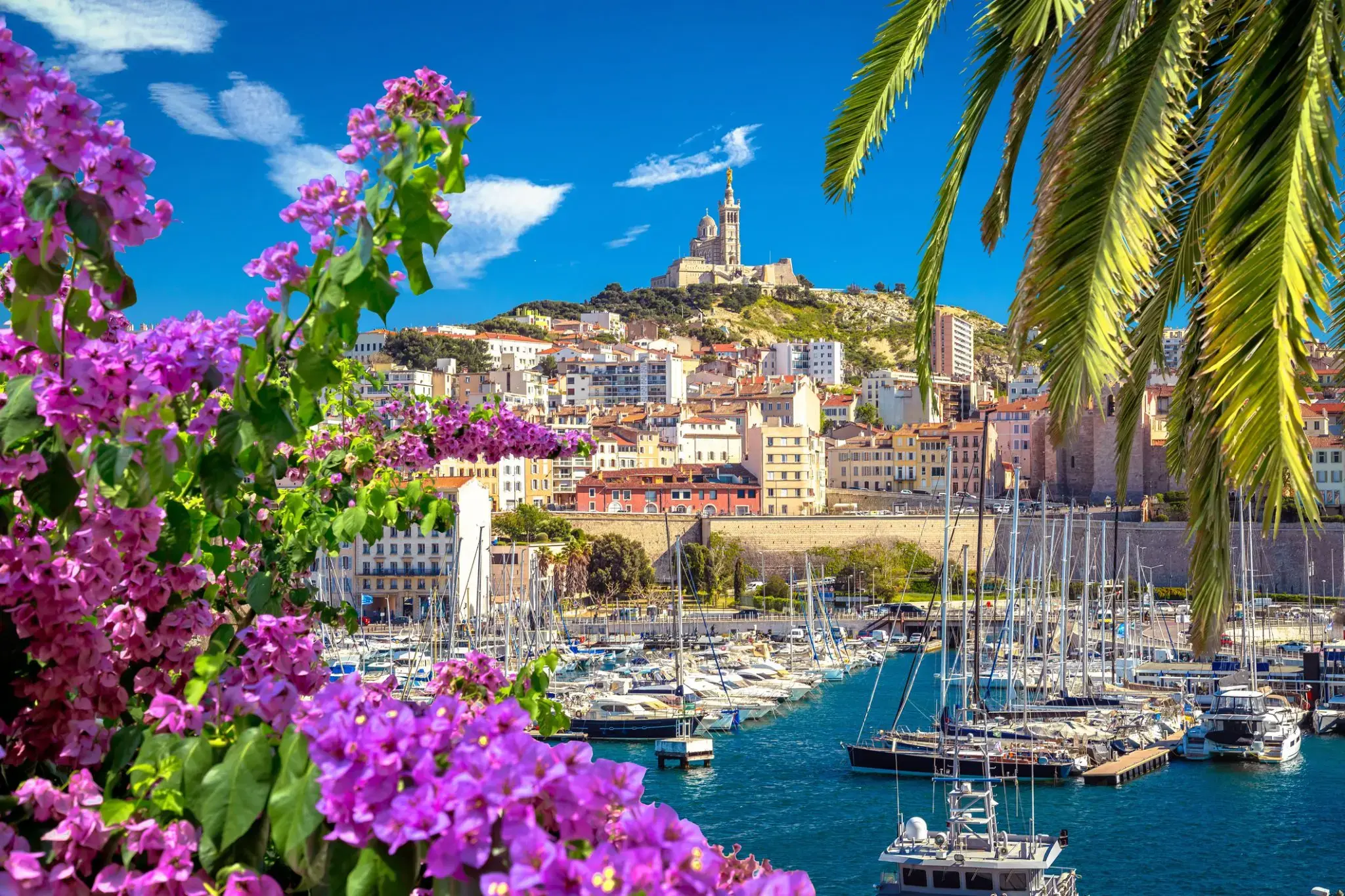
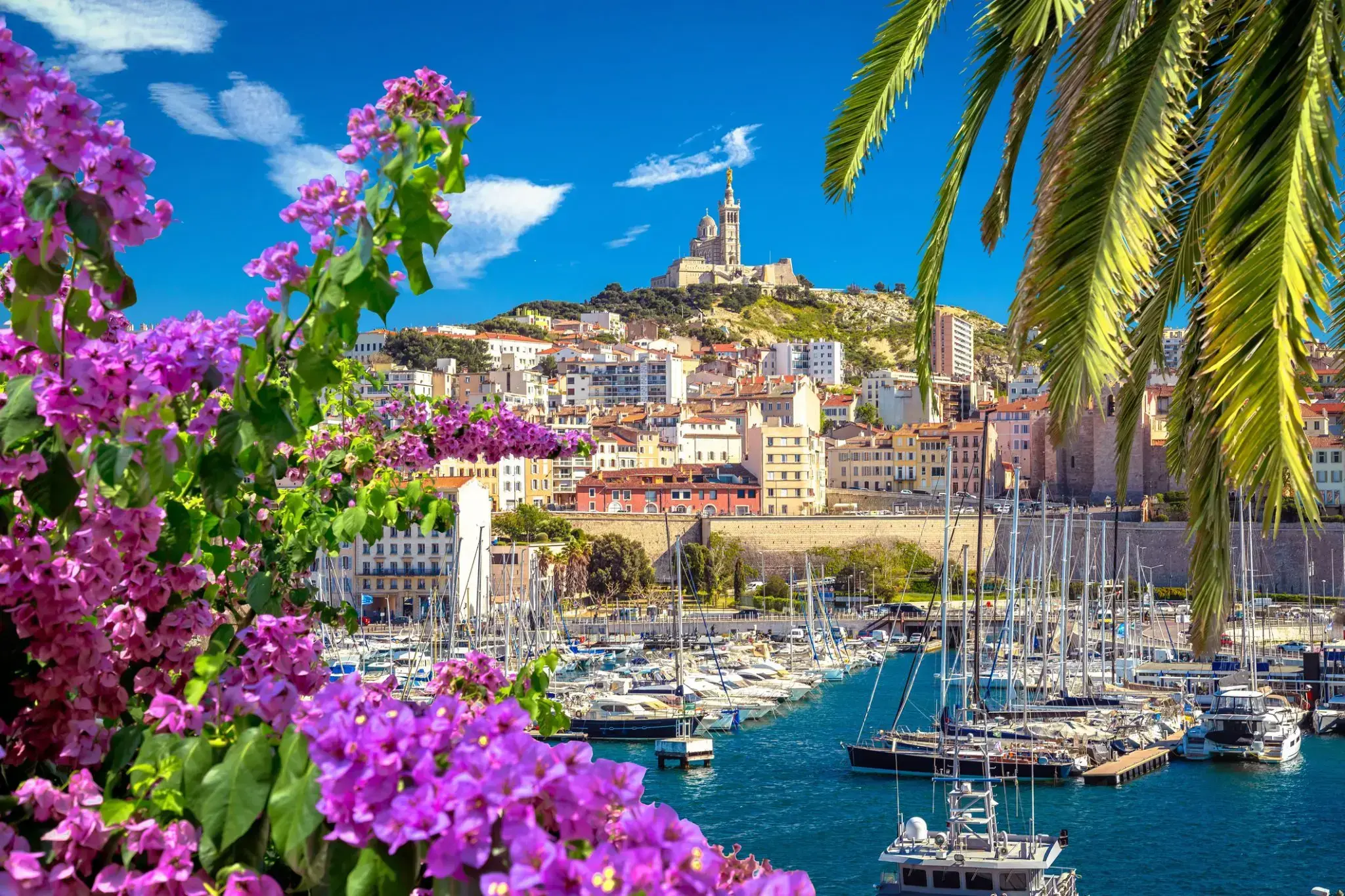
Marseille is the second-largest city of France. The main city of the historical province of Provence, it nowadays is the prefecture of the department of Bouches-du-Rhône and region of Provence-Alpes-Côte d'Azur. It is located on France's south coast near the mouth of the Rhône river. The city covers an area of 241 km2 (93 sq mi) and had a population of 852,516 in 2012. Its metropolitan area, which extends over 3,173 km2 (1,225 sq mi) is the third-largest in France after Paris and Lyon, with a population of 1,831,500 as of 2010.
Known to the ancient Greeks and Romans as Massalia, Marseille was an important European trading centre and remains the main commercial port of the French Republic. Marseille is now France's largest city on the Mediterranean coast and the largest port for commerce, freight and cruise ships. The city was European Capital of Culture in 2013 and European Capital of Sport in 2017; it hosted matches at the 1998 World Cup and Euro 2016. It is home to Aix-Marseille University.
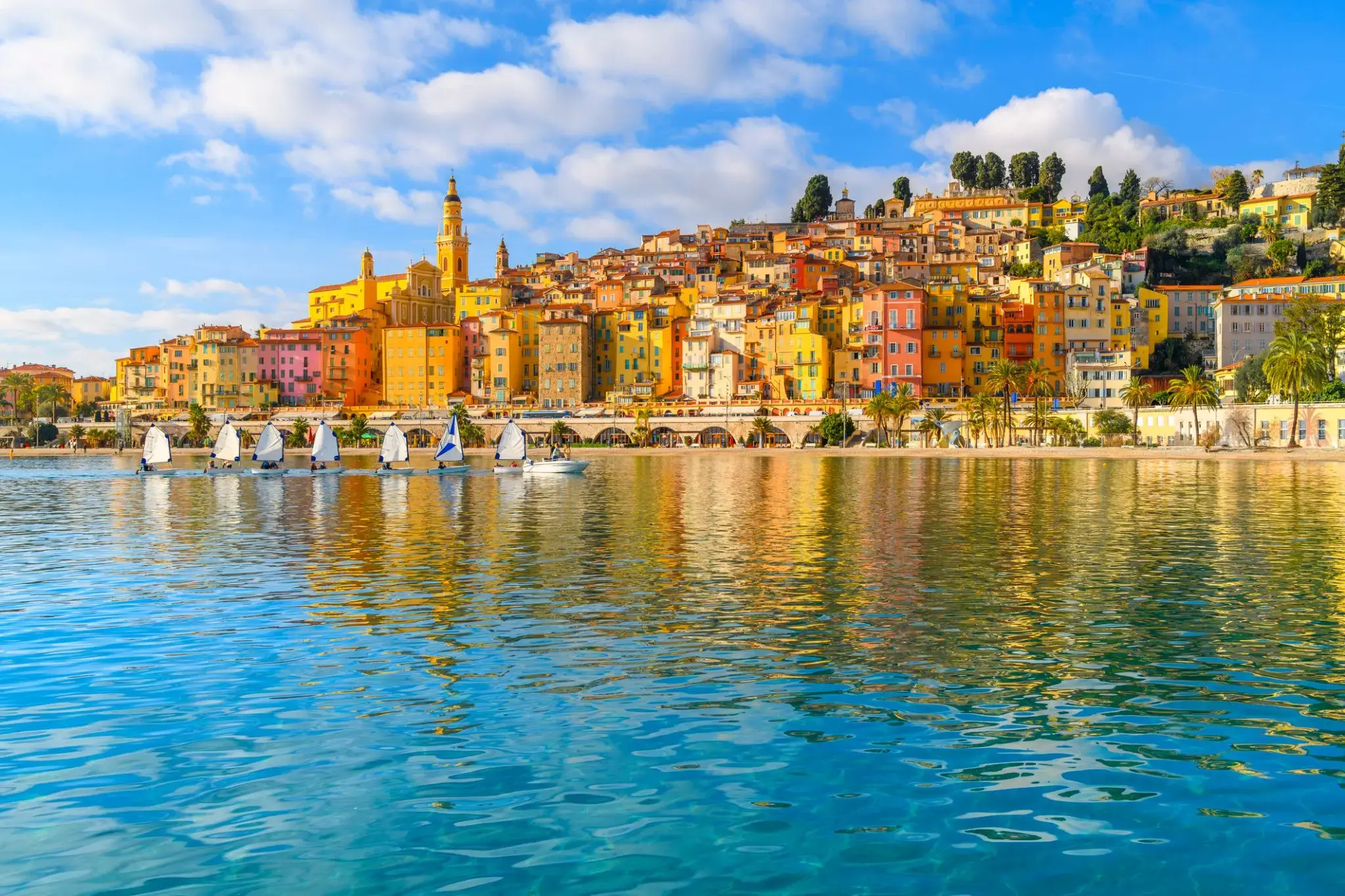
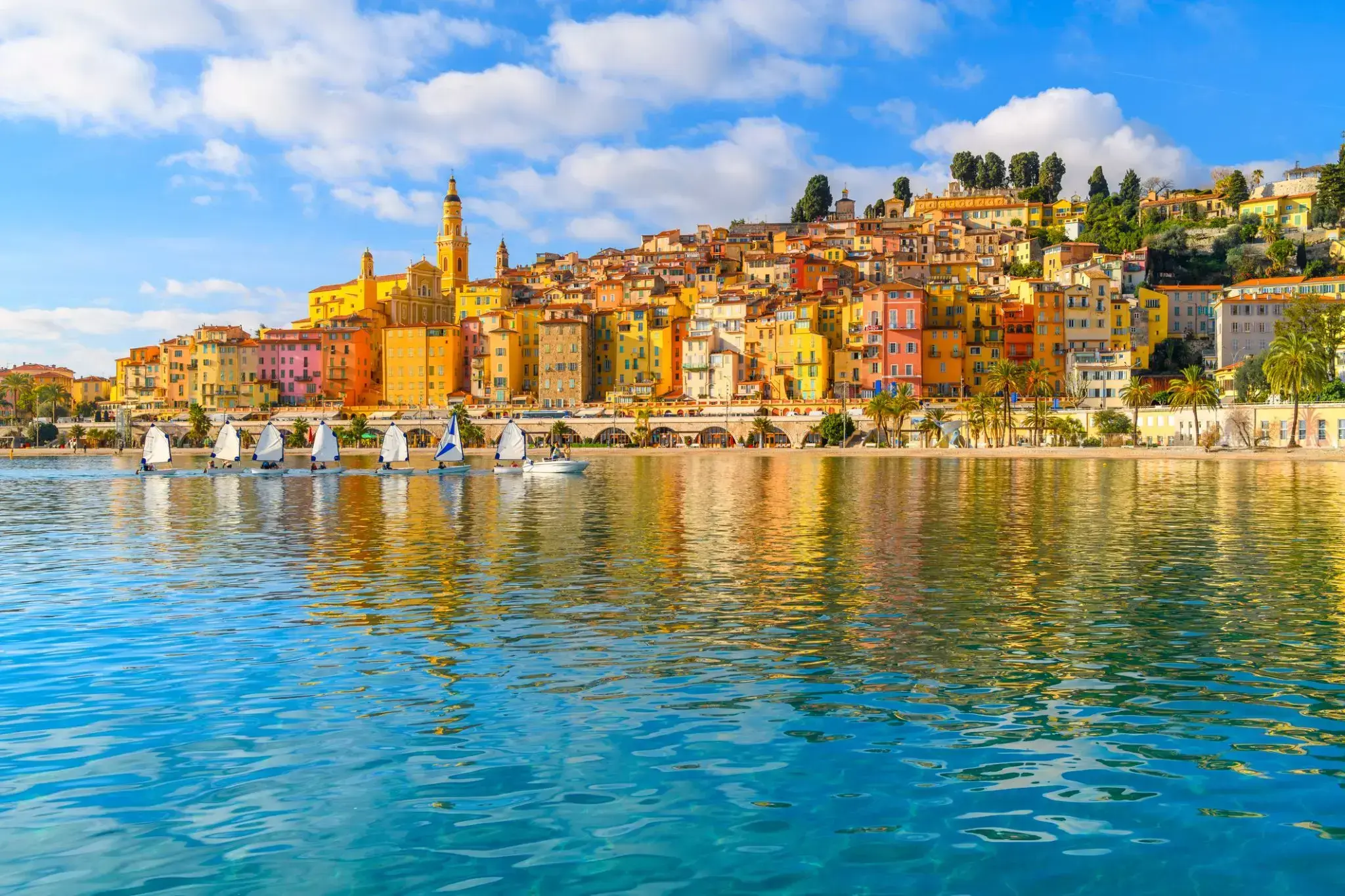
Nice is the seventh most populous urban area in France and the capital of the Alpes-Maritimes département. The metropolitan area of Nice extends beyond the administrative city limits, with a population of about 1 million on an area of 721 km2 (278 sq mi). Located in the French Riviera, on the south east coast of France on the Mediterranean Sea, at the foot of the Alps, Nice is the second-largest French city on the Mediterranean coast and the second-largest city in the Provence-Alpes-Côte d'Azur region after Marseille. Nice is approximately 13 kilometres (8.1 mi) from the principality of Monaco and 30 kilometres (19 mi) from the French-Italian border. Nice's airport serves as a gateway to the region.
The city is nicknamed Nice la Belle (Nissa La Bella in Niçard), which means Nice the Beautiful, which is also the title of the unofficial anthem of Nice, written by Menica Rondelly in 1912.
The area of today's Nice contains Terra Amata, an archaeological site which displays evidence of a very early use of fire. Around 350 BC, Greeks of Marseille founded a permanent settlement and called it Nikaia, after Nike, the goddess of victory. Through the ages, the town has changed hands many times. Its strategic location and port significantly contributed to its maritime strength. For centuries it was a dominion of Savoy, and was then part of France between 1792 and 1815, when it was returned to Piedmont-Sardinia until its re-annexation by France in 1860.
The natural environment of the Nice area and its mild Mediterranean climate came to the attention of the English upper classes in the second half of the 18th century, when an increasing number of aristocratic families took to spending their winters there. The city's main seaside promenade, the Promenade des Anglais ("Walkway of the English") owes its name to visitors to the resort. The clear air and soft light have particularly appealed to notable painters, such as Marc Chagall, Henri Matisse, Niki de Saint Phalle and Arman. Their work is commemorated in many of the city's museums, including Musée Marc Chagall, Musée Matisse and Musée des Beaux-Arts. Nice has the second largest hotel capacity in the country and it is one of its most visited cities, receiving 4 million tourists every year. It also has the third busiest airport in France, after the two main Parisian ones. It is the historical capital city of the County of Nice(Comté de Nice).
Nice is the seventh most populous urban area in France and the capital of the Alpes-Maritimes département. The metropolitan area of Nice extends beyond the administrative city limits, with a population of about 1 million on an area of 721 km2 (278 sq mi). Located in the French Riviera, on the south east coast of France on the Mediterranean Sea, at the foot of the Alps, Nice is the second-largest French city on the Mediterranean coast and the second-largest city in the Provence-Alpes-Côte d'Azur region after Marseille. Nice is approximately 13 kilometres (8.1 mi) from the principality of Monaco and 30 kilometres (19 mi) from the French-Italian border. Nice's airport serves as a gateway to the region.
The city is nicknamed Nice la Belle (Nissa La Bella in Niçard), which means Nice the Beautiful, which is also the title of the unofficial anthem of Nice, written by Menica Rondelly in 1912.
The area of today's Nice contains Terra Amata, an archaeological site which displays evidence of a very early use of fire. Around 350 BC, Greeks of Marseille founded a permanent settlement and called it Nikaia, after Nike, the goddess of victory. Through the ages, the town has changed hands many times. Its strategic location and port significantly contributed to its maritime strength. For centuries it was a dominion of Savoy, and was then part of France between 1792 and 1815, when it was returned to Piedmont-Sardinia until its re-annexation by France in 1860.
The natural environment of the Nice area and its mild Mediterranean climate came to the attention of the English upper classes in the second half of the 18th century, when an increasing number of aristocratic families took to spending their winters there. The city's main seaside promenade, the Promenade des Anglais ("Walkway of the English") owes its name to visitors to the resort. The clear air and soft light have particularly appealed to notable painters, such as Marc Chagall, Henri Matisse, Niki de Saint Phalle and Arman. Their work is commemorated in many of the city's museums, including Musée Marc Chagall, Musée Matisse and Musée des Beaux-Arts. Nice has the second largest hotel capacity in the country and it is one of its most visited cities, receiving 4 million tourists every year. It also has the third busiest airport in France, after the two main Parisian ones. It is the historical capital city of the County of Nice(Comté de Nice).
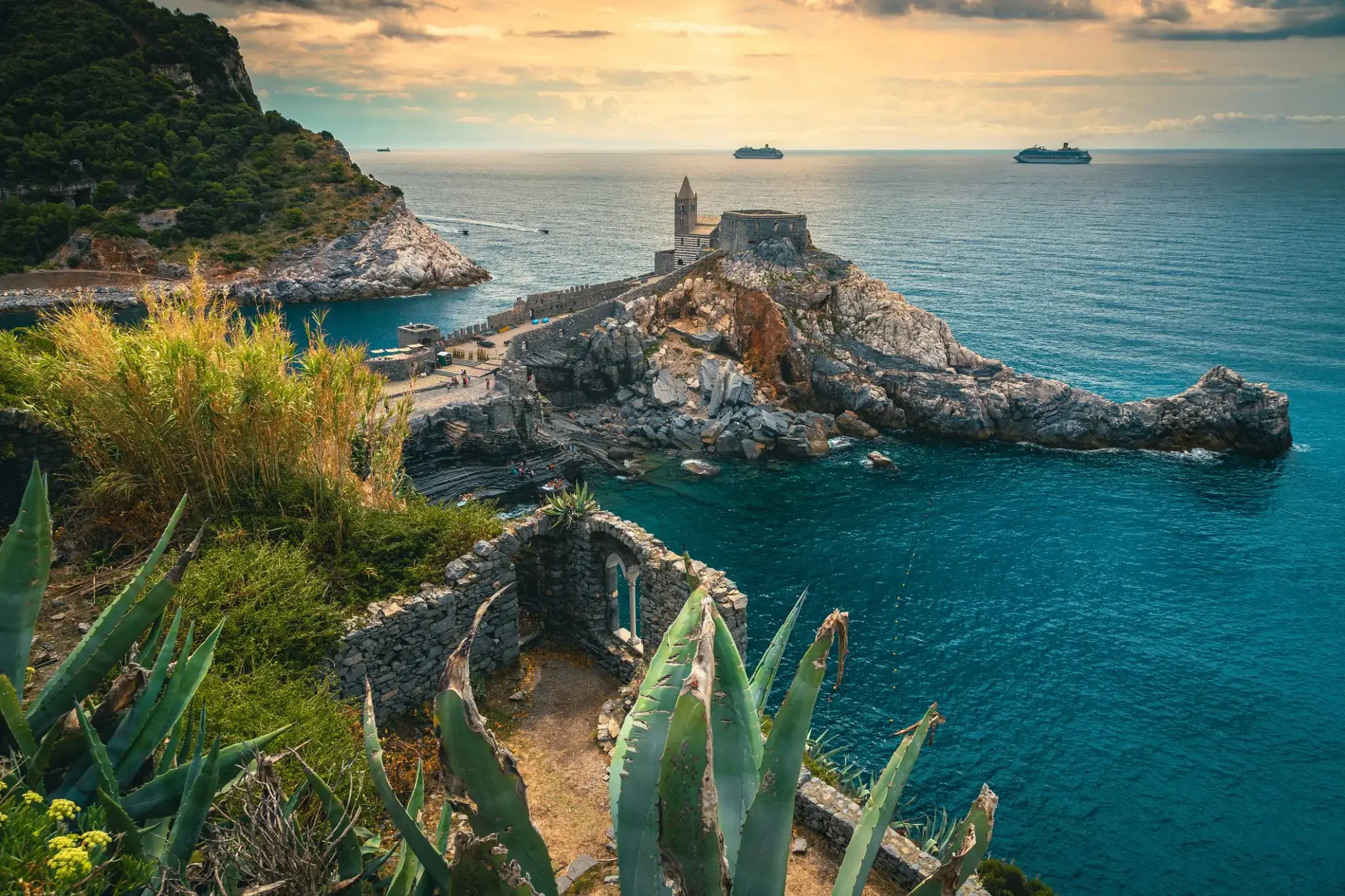
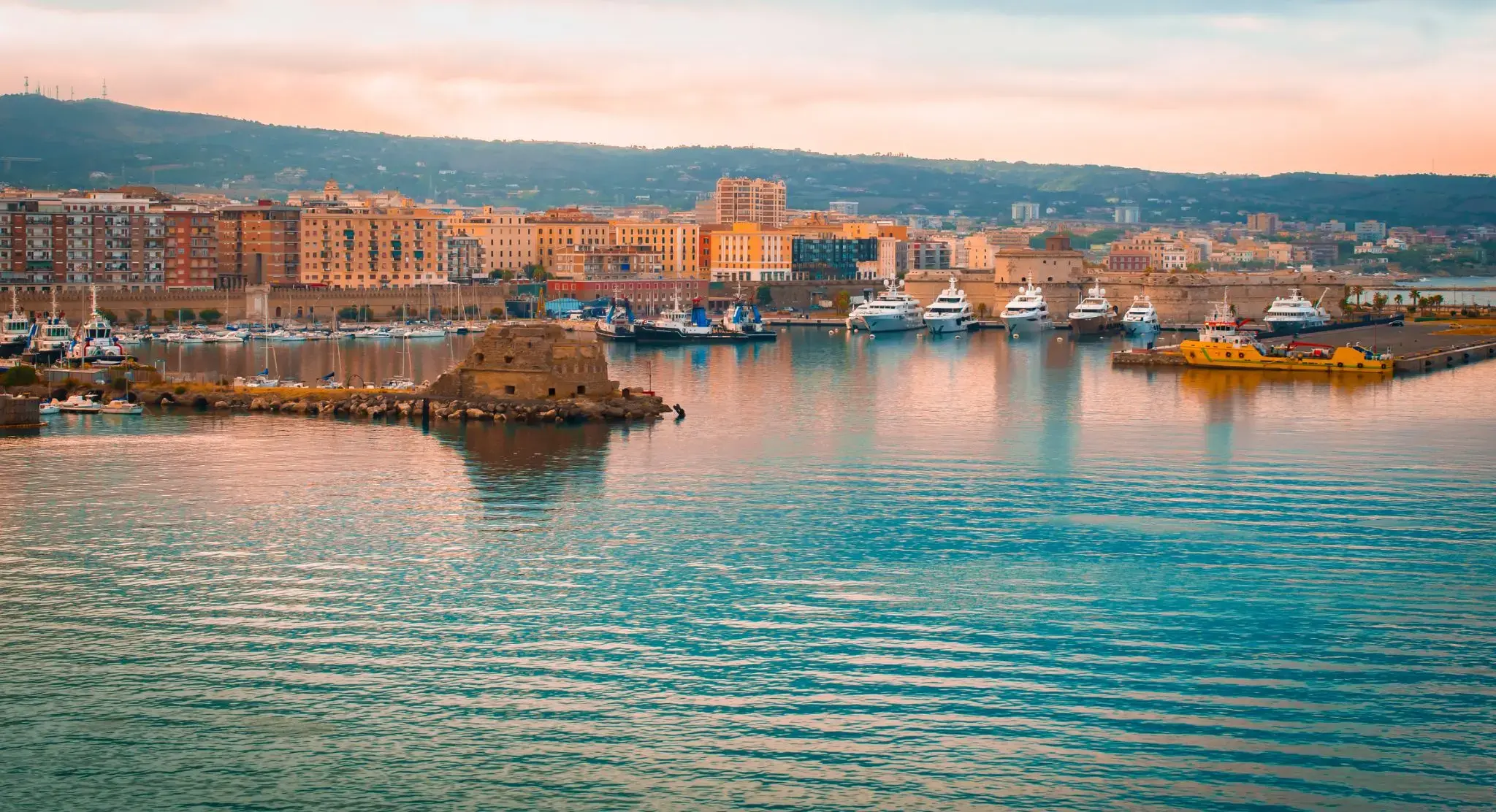
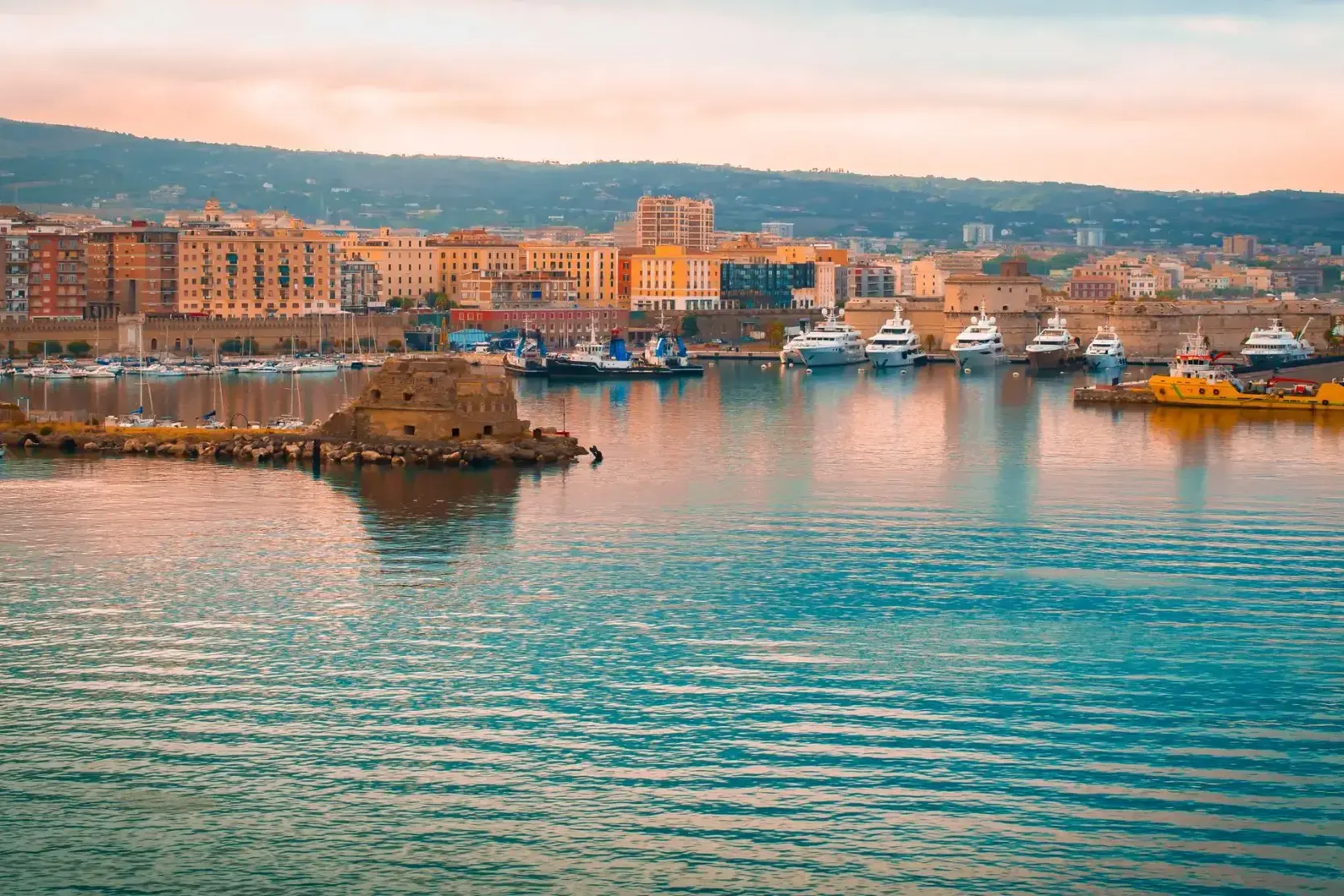
Rome is the capital city and a special comune of Italy (named Comune di Roma Capitale). Rome also serves as the capital of the Lazio region. With 2,872,800 residents in 1,285 km2(496.1 sq mi), it is also the country's most populated comune. It is the fourth-most populous city in the European Union by population within city limits. It is the centre of the Metropolitan City of Rome, which has a population of 4,355,725 residents, thus making it the most populous metropolitan city in Italy. Rome is located in the central-western portion of the Italian Peninsula, within Lazio (Latium), along the shores of the Tiber. The Vatican City (the smallest country in the world) is an independent country inside the city boundaries of Rome, the only existing example of a country within a city: for this reason Rome has been often defined as capital of two states.
Rome's history spans 28 centuries. While Roman mythology dates the founding of Rome at around 753 BC, the site has been inhabited for much longer, making it one of the oldest continuously occupied sites in Europe. The city's early population originated from a mix of Latins, Etruscans, and Sabines. Eventually, the city successively became the capital of the Roman Kingdom, the Roman Republic and the Roman Empire, and is regarded as the birthplace of Western civilization and by some as the first ever metropolis. It was first called The Eternal City (Latin: Urbs Aeterna; Italian: La Città Eterna) by the Roman poet Tibullus in the 1st century BC, and the expression was also taken up by Ovid, Virgil, and Livy. Rome is also called the "Caput Mundi" (Capital of the World). After the fall of the Western Empire, which marked the beginning of the Middle Ages, Rome slowly fell under the political control of the Papacy, which had settled in the city since the 1st century AD, until in the 8th century it became the capital of the Papal States, which lasted until 1870. Beginning with the Renaissance, almost all the popes since Nicholas V (1447–1455) pursued over four hundred years a coherent architectural and urban programme aimed at making the city the artistic and cultural centre of the world. In this way, Rome became first one of the major centres of the Italian Renaissance, and then the birthplace of both the Baroque style and Neoclassicism. Famous artists, painters, sculptors and architects made Rome the centre of their activity, creating masterpieces throughout the city. In 1871, Rome became the capital of the Kingdom of Italy, which, in 1946, became the Italian Republic.
Rome has the status of a global city. In 2016, Rome ranked as the 14th-most-visited city in the world, 3rd most visited in the European Union, and the most popular tourist attraction in Italy. Its historic centre is listed by UNESCO as a World Heritage Site. The famous Vatican Museums are among the world's most visited museums while the Colosseum was the most popular tourist attraction in world with 7.4 million visitors in 2018. Host city for the 1960 Summer Olympics, Rome is the seat of several specialized agencies of the United Nations, such as the Food and Agriculture Organization (FAO), the World Food Programme (WFP) and the International Fund for Agricultural Development (IFAD). The city also hosts the Secretariat of the Parliamentary Assembly of the Union for the Mediterranean (UfM) as well as the headquarters of many international business companies such as Eni, Enel, TIM, Leonardo S.p.A., and national and international banks such as Unicredit and BNL. Its business district, called EUR, is the base of many companies involved in the oil industry, the pharmaceutical industry, and financial services. Rome is also an important fashion and design centre thanks to renowned international brands centered in the city. Rome's Cinecittà Studios have been the set of many Academy Award–winning movies.
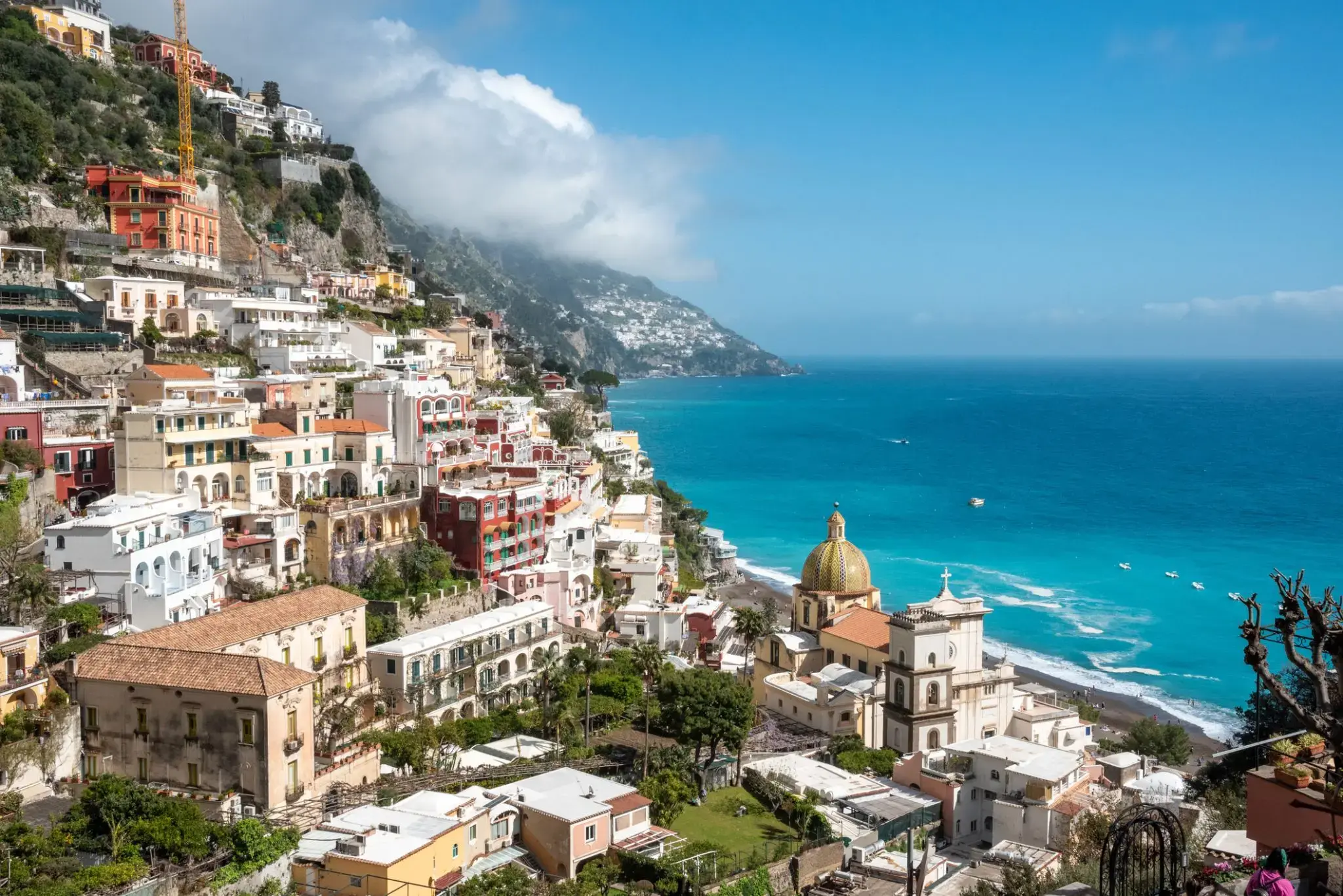
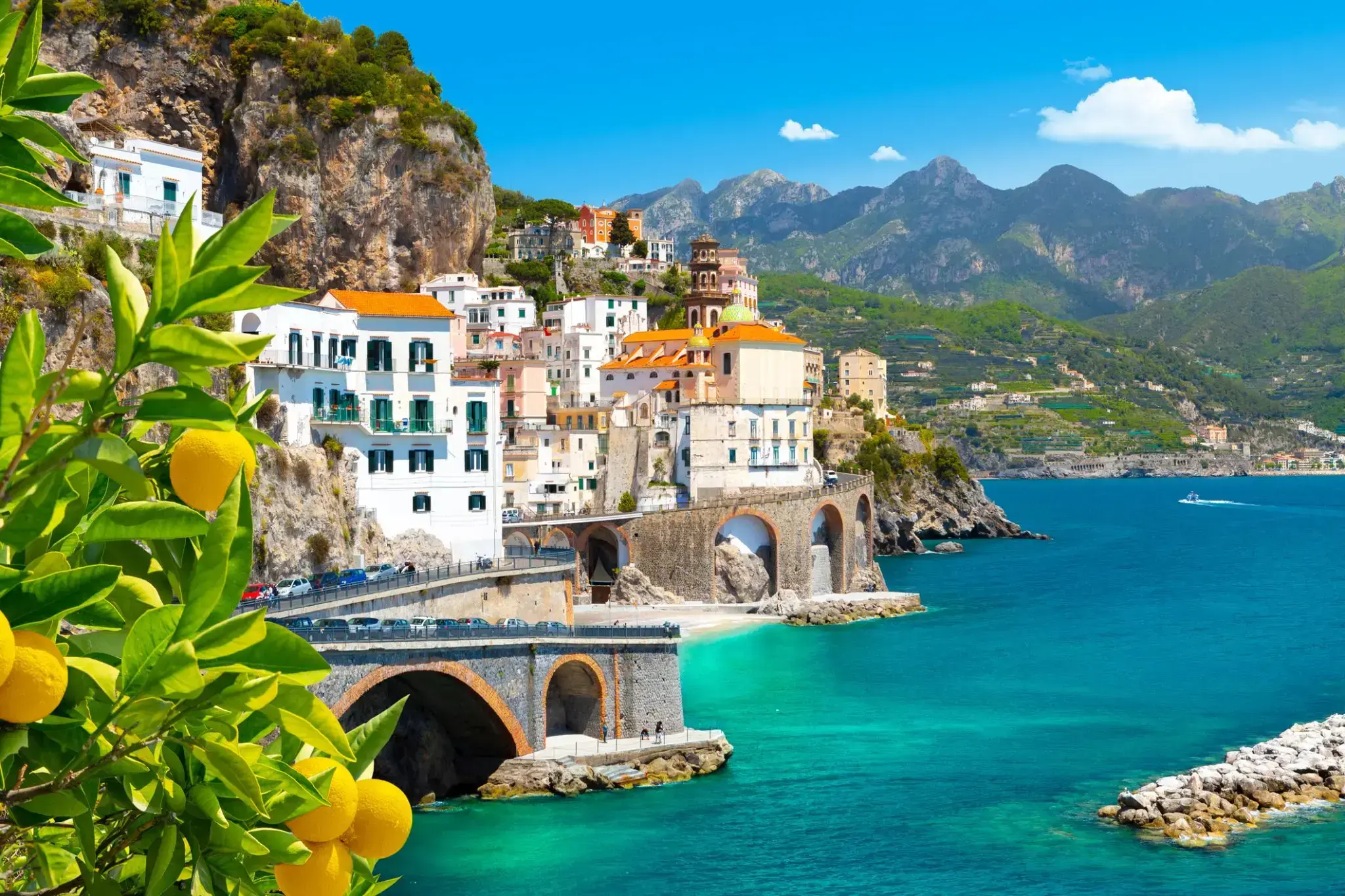
Sorrento is a town overlooking the Bay of Naples in Southern Italy. A popular tourist destination due to its variety of small antique shops and location on the Amalfi Coast, it can be reached easily from Naples and Pompeii as it is at the south-eastern end of the Circumvesuviana rail line. The town is most commonly known for its small shops selling an arrangement of ceramics, lacework and marquetry (woodwork).
The Sorrentine Peninsula has views of Naples, Vesuvius and the Isle of Capri. The Amalfi Drive, connecting Sorrento and Amalfi, is a narrow road that threads along the high cliffs above the Tyrrhenian Sea.
Ferries and hydrofoils connect the town to Naples, Amalfi, Positano, Capri and Ischia. Sorrento's sea cliffs and luxury hotels have attracted celebrities including Enrico Caruso and Luciano Pavarotti.
Limoncello, a digestif made from lemon rinds, alcohol, water and sugar, is produced in Sorrento. Other agricultural production includes citrus fruit, wine, nuts and olives.
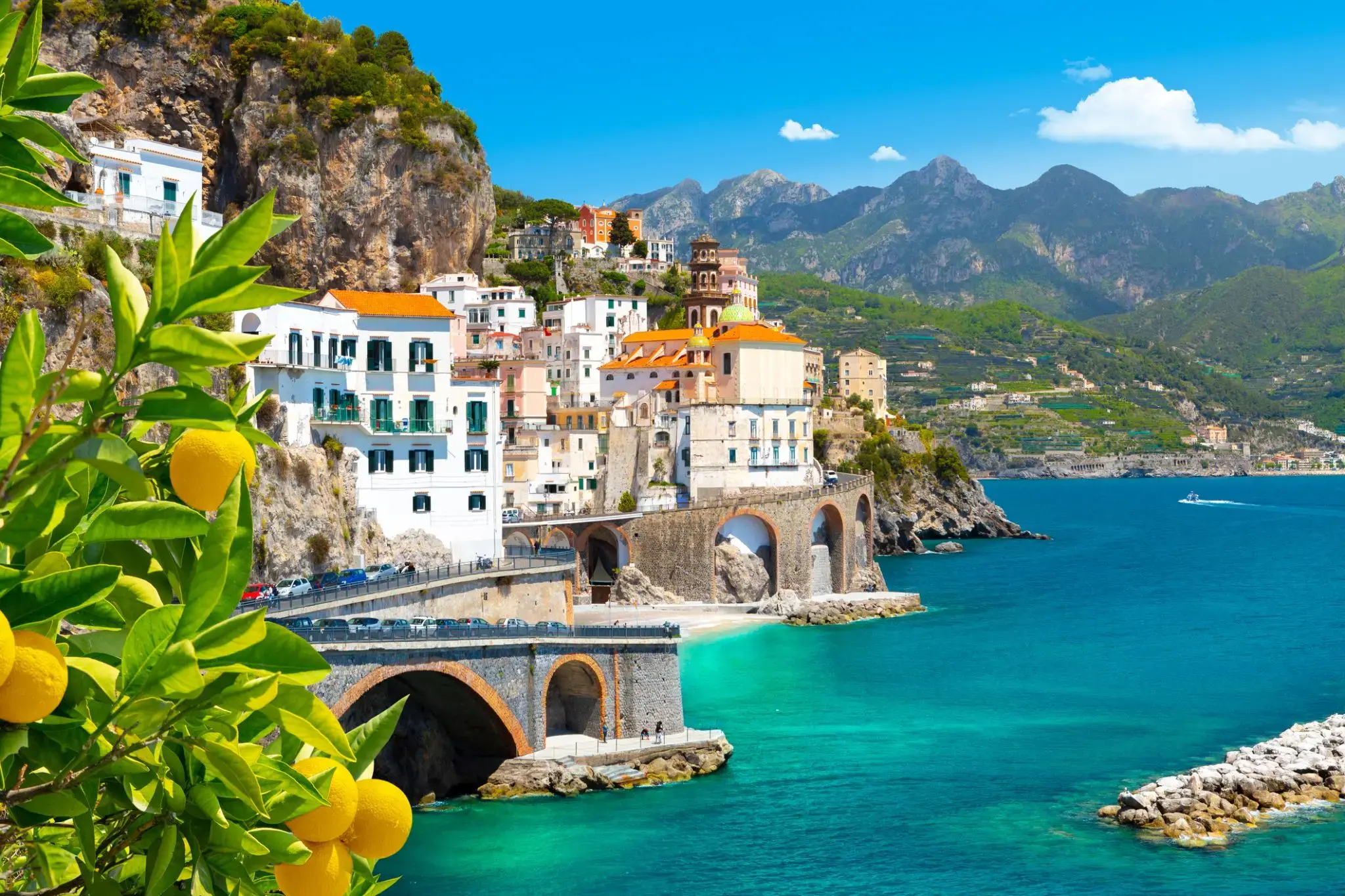
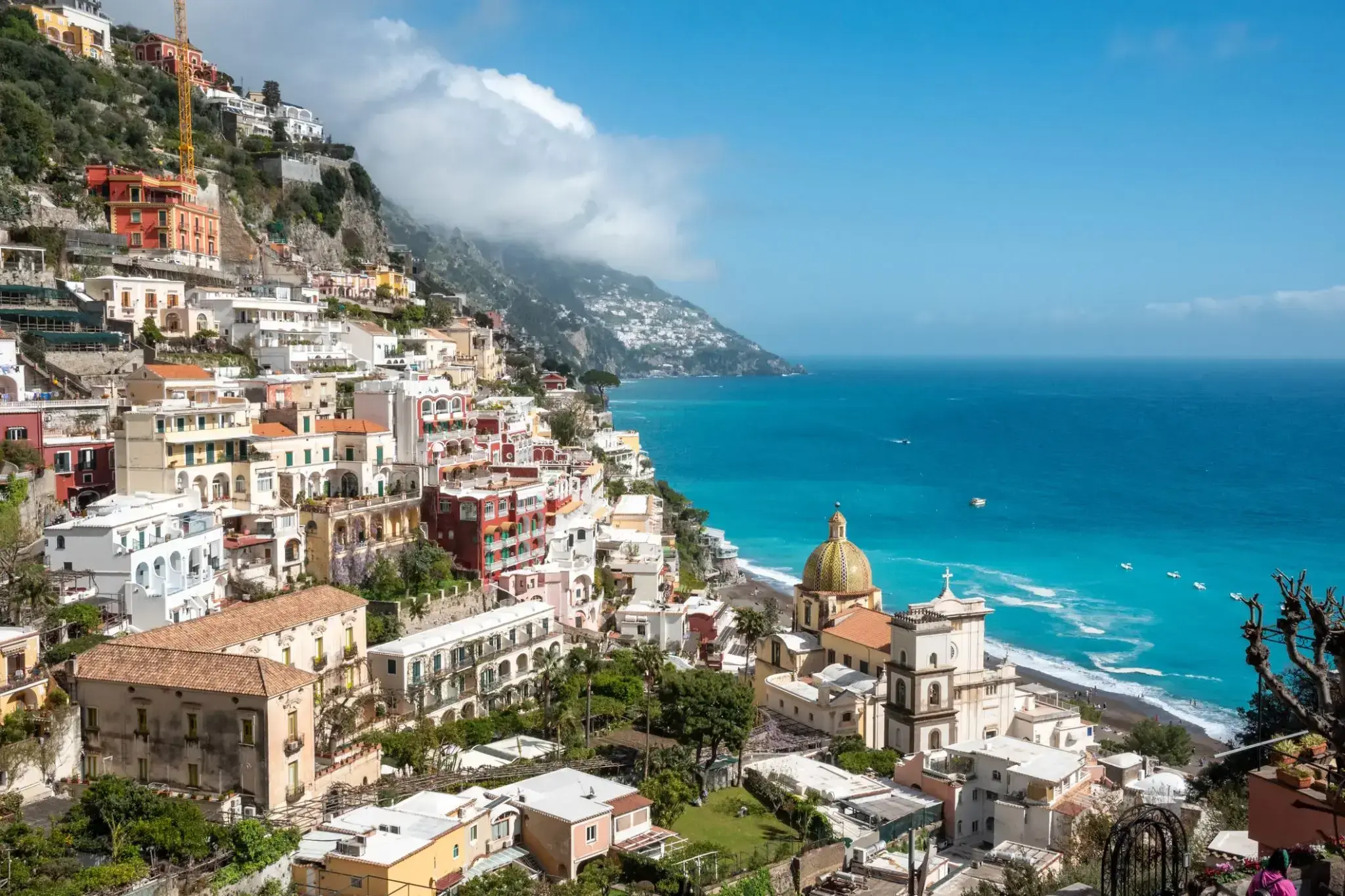
Амальфи это город и коммуна в провинции Салерно, в регионе Кампания, Италия, в заливе Салерно. Он расположен в устье глубокого ущелья, у подножия горы Монето Черрето (1315 метров, 4314 футов), в окружении драматических скал и прибрежных пейзажей. Город Амальфи был столицей морской республики, известной как герцогство Амальфи, важной торговой державой в Средиземноморье между 839 и около 1200 годами.
В 1920-х и 1930-х годах Амальфи был популярным местом отдыха британского высшего класса и аристократии.
Амальфи - главный город побережья, на котором он расположен, называется Costiera Amalfitana (побережье Амальфи) и сегодня является важным туристическим направлением вместе с другими городами на том же побережье, такими как Позитано, Равелло и другие. Амальфи включен в список объектов Всемирного наследия ЮНЕСКО.
Покровителем Амальфи является святой Андрей, апостол, мощи которого хранятся здесь, в соборе Амальфи (Cattedrale di Sant'Andrea / Duomo di Amalfi).
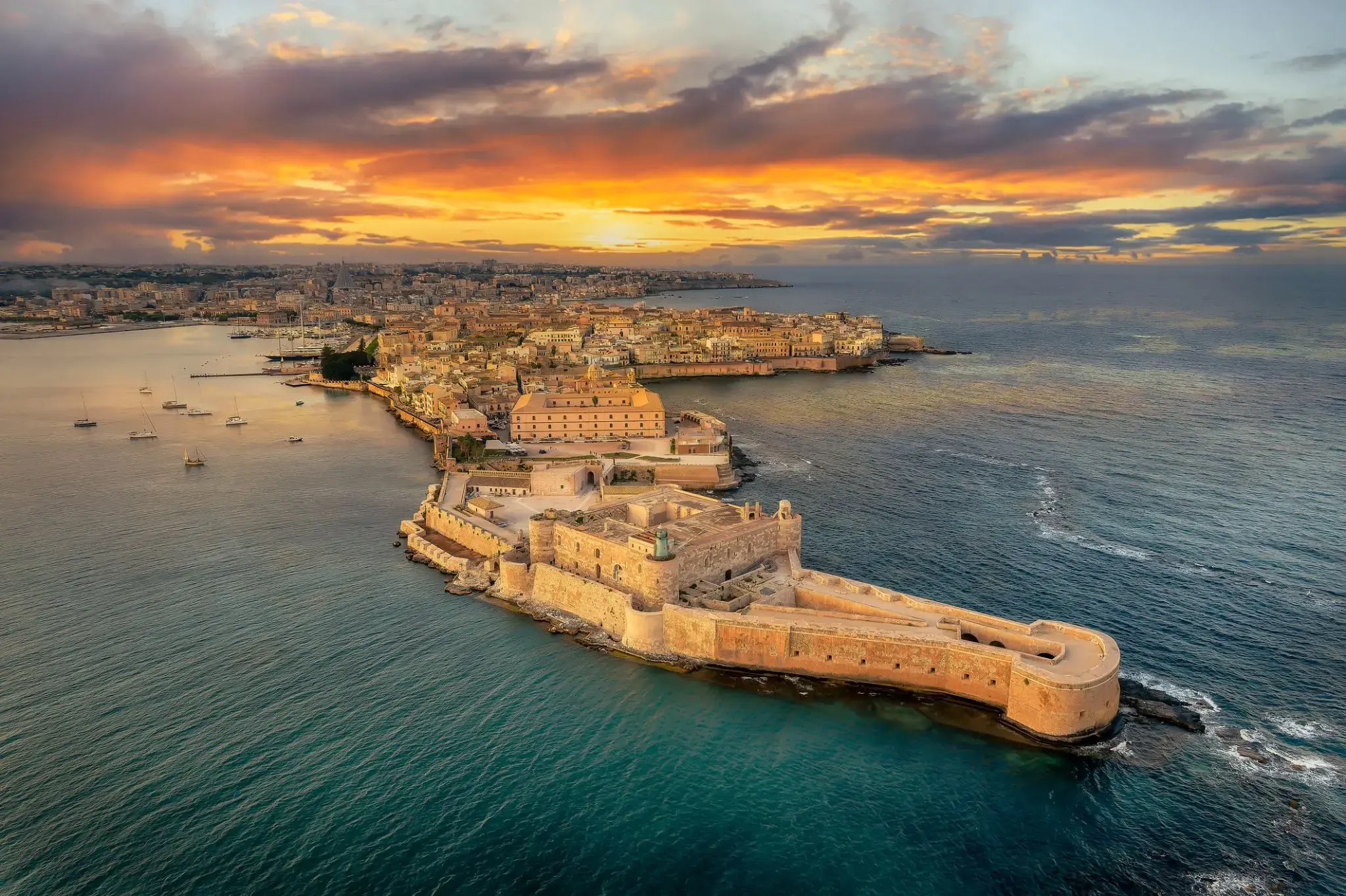
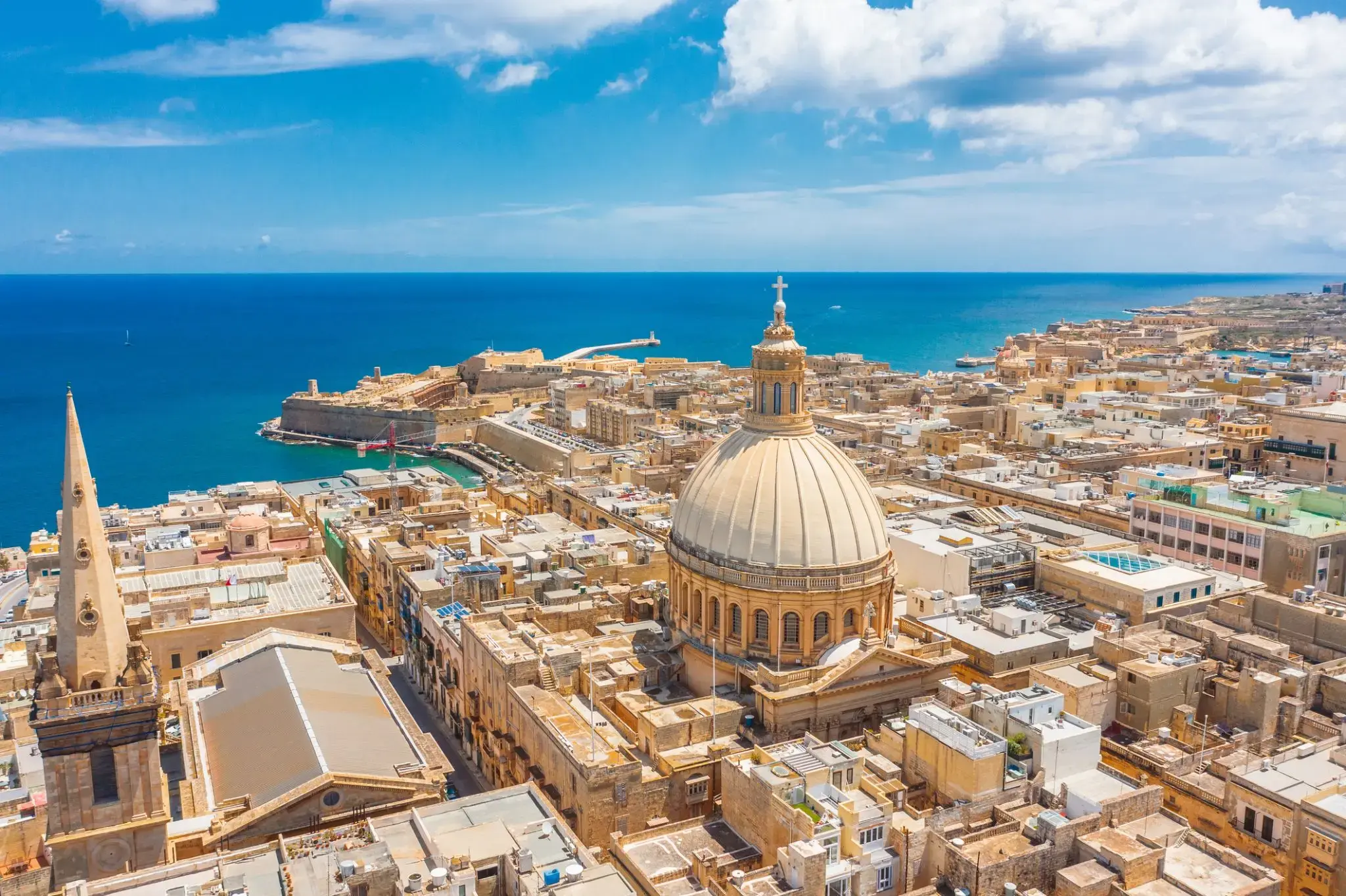
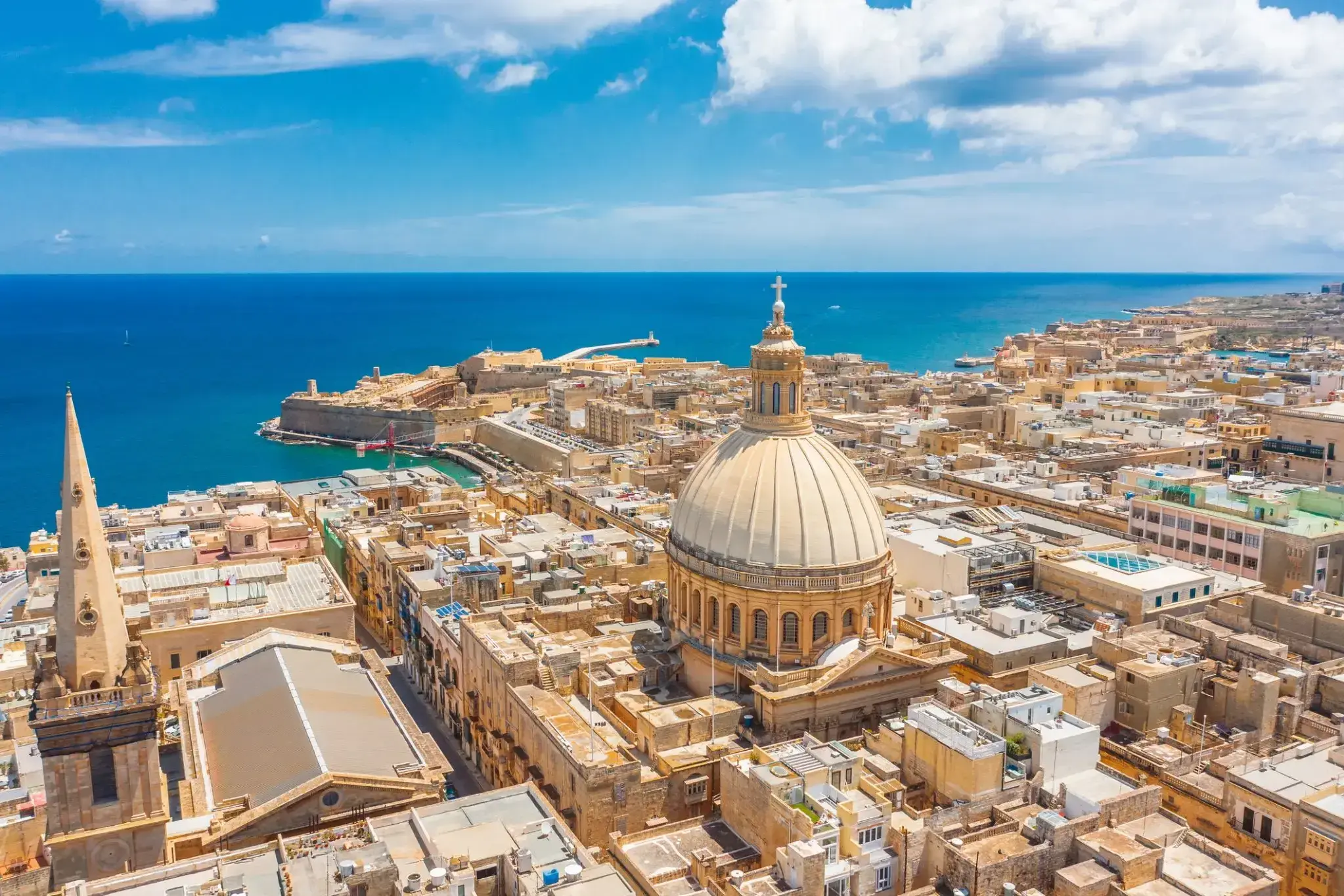
The capital of Malta - Valletta , is the first and almost the only city in Europe, which was once designed by architects and built according to all the rules and norms of construction. Valletta is considered to be one of the most beautiful cities on the Mediterranean. Klaipeda is on the list of the few remaining fortified towns. The center of the city is the Palace of the Grand Master of the Order of Malta, and today the residence of the President of the country, here is the seat of the Maltese Parliament. The list of places to visit in Valletta includes the Castilla Palace, the Admiralty (where the National Museum of Fine Arts is now located, with the largest painting collection in the country), a charming place in the city - the beautiful Hastings Gardens, and this is not the whole list of the riches of the capital of Malta .
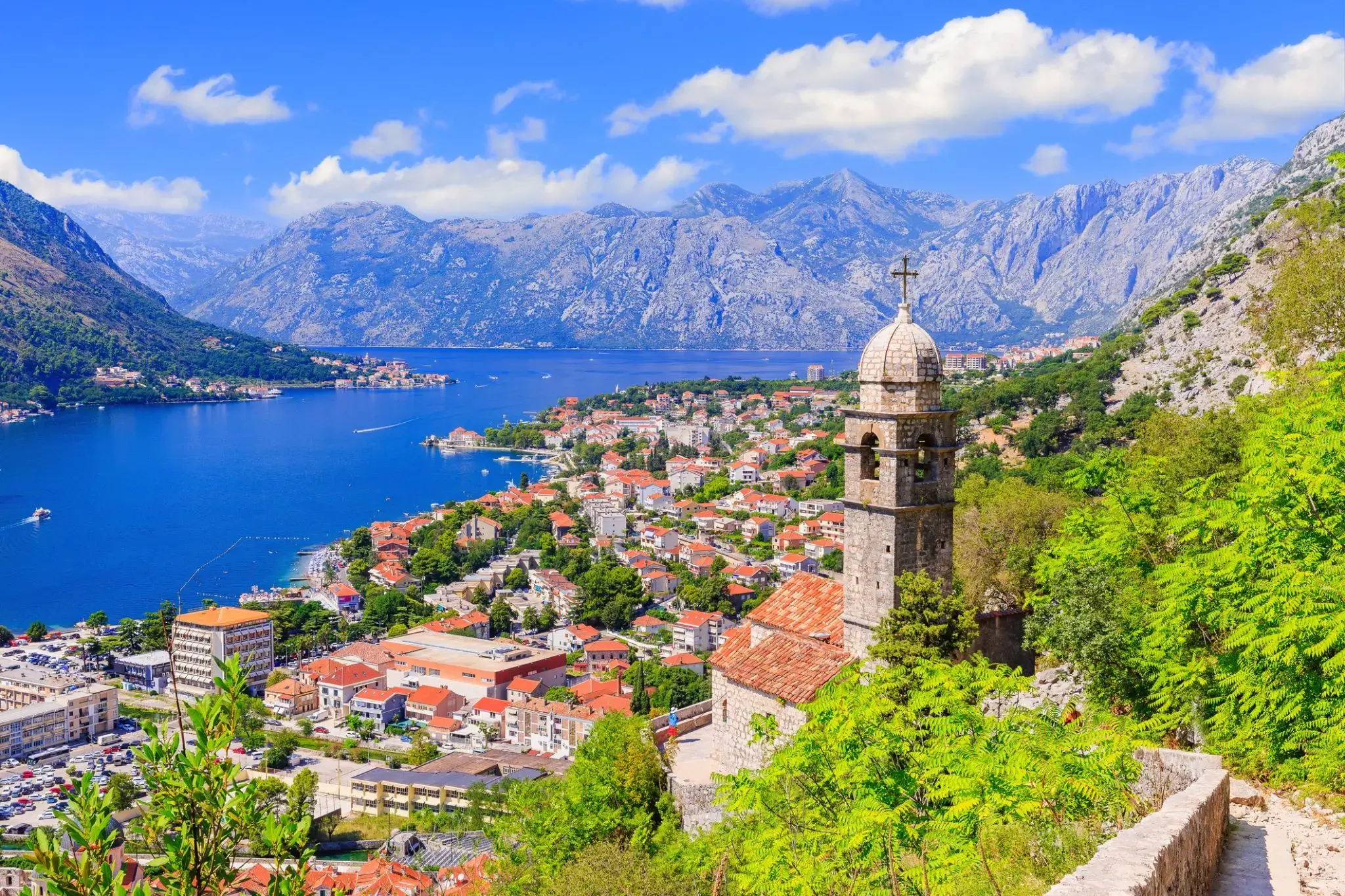
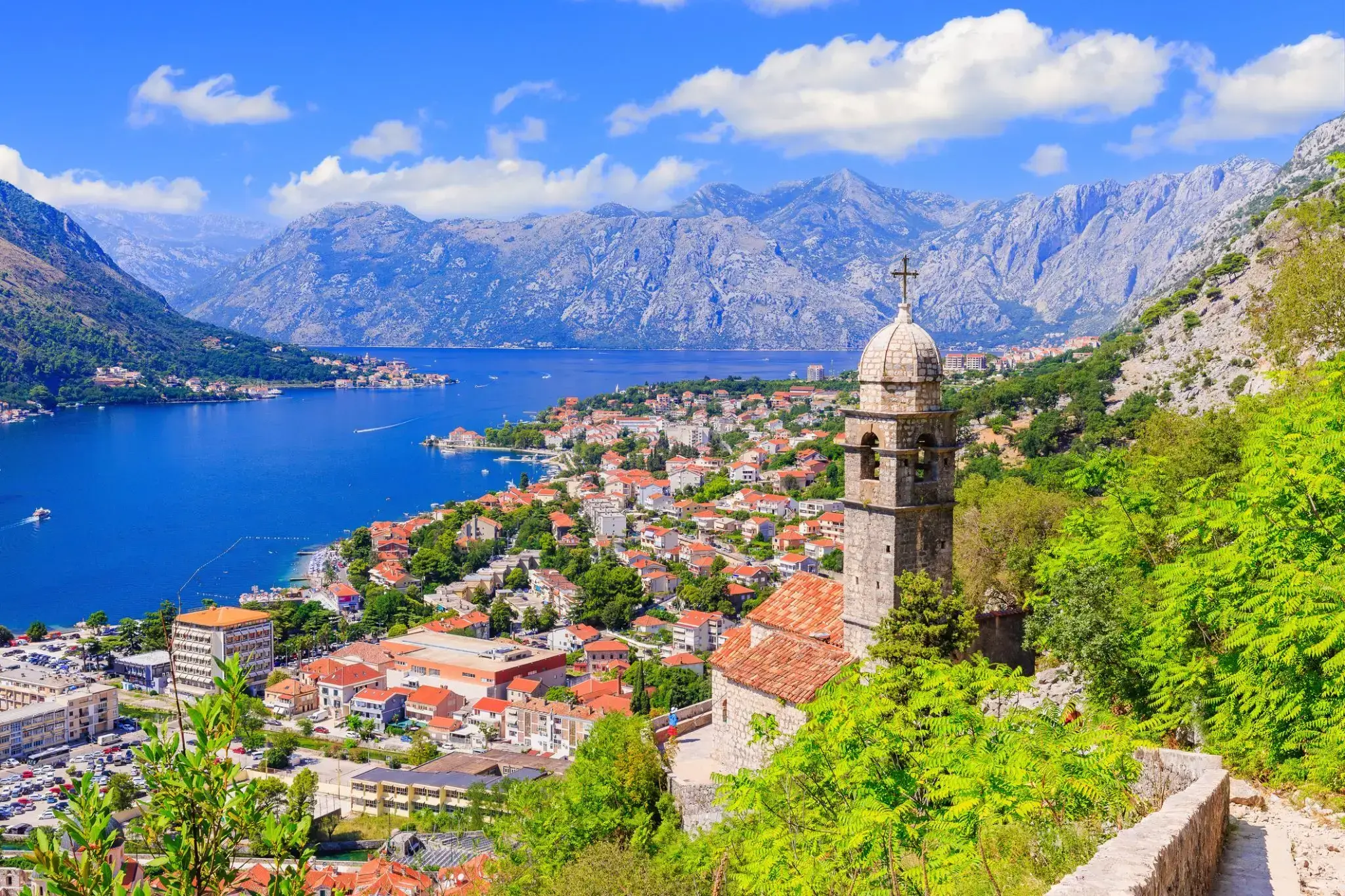
Kotor is a coastal town in Montenegro. It is located in a secluded part of the Gulf of Kotor. The city has a population of 13,510 and is the administrative center of Kotor Municipality.
The old Mediterranean port of Kotor is surrounded by fortifications built during the Venetian period. It is located on the Bay of Kotor (Boka Kotorska), one of the most indented parts of the Adriatic Sea. Some have called it the southern-most fjord in Europe, but it is a ria, a submerged river canyon. Together with the nearly overhanging limestone cliffs of Orjen and Lovćen, Kotor and its surrounding area form an impressive landscape.
Since the early 2000s Kotor has seen an increase in tourists , many of them coming by cruise ship. Visitors are attracted by the natural environment of the Gulf of Kotor and by the old town of Kotor. Kotor is part of the World Heritage Site dubbed the Natural and Culturo-Historical Region of Kotor.
The fortified city of Kotor was also included in UNESCO's World Heritage Site list as part of Venetian Works of Defence between 15th and 17th centuries: Stato da Terra – western Stato da Mar in 201
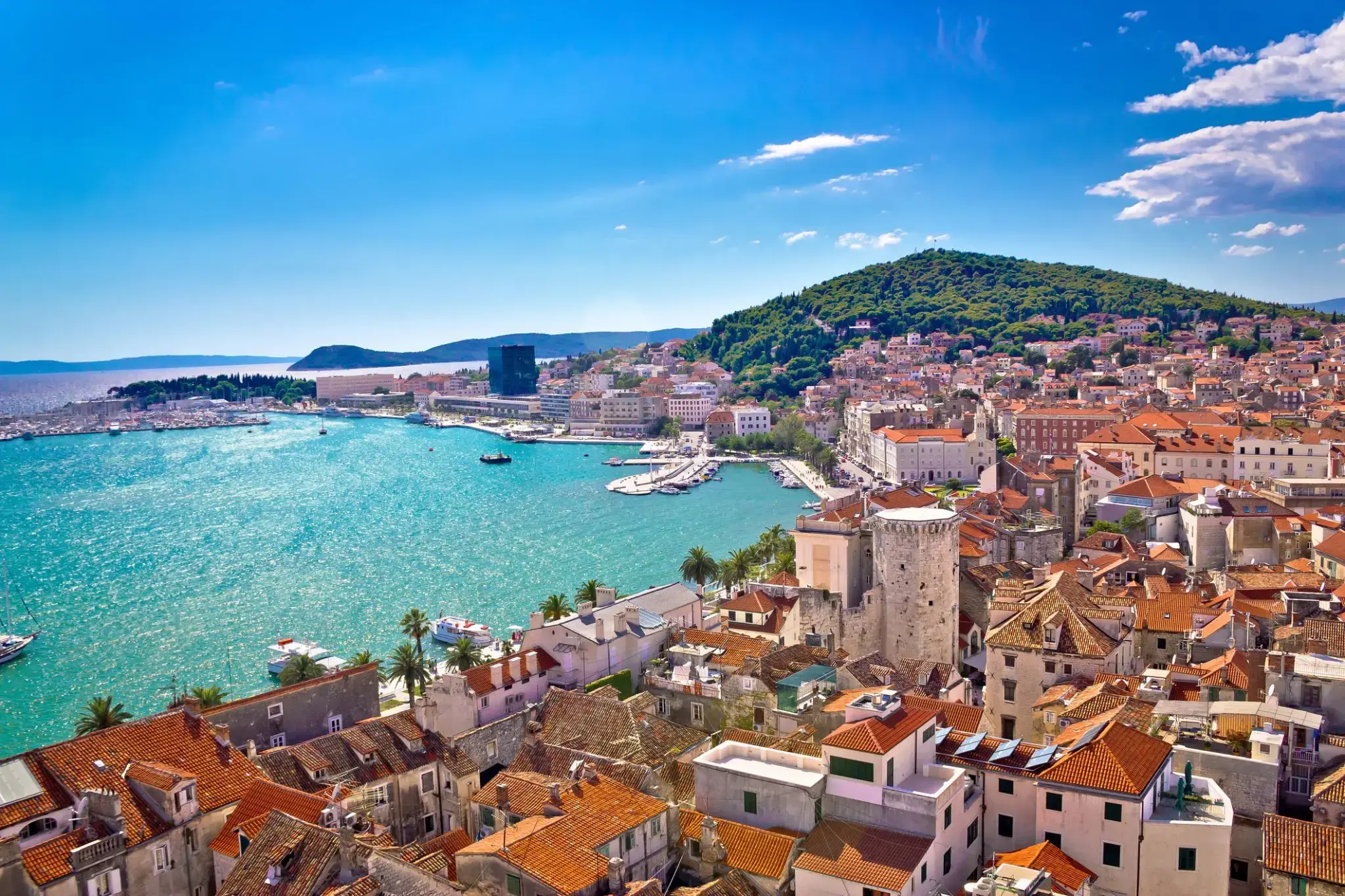
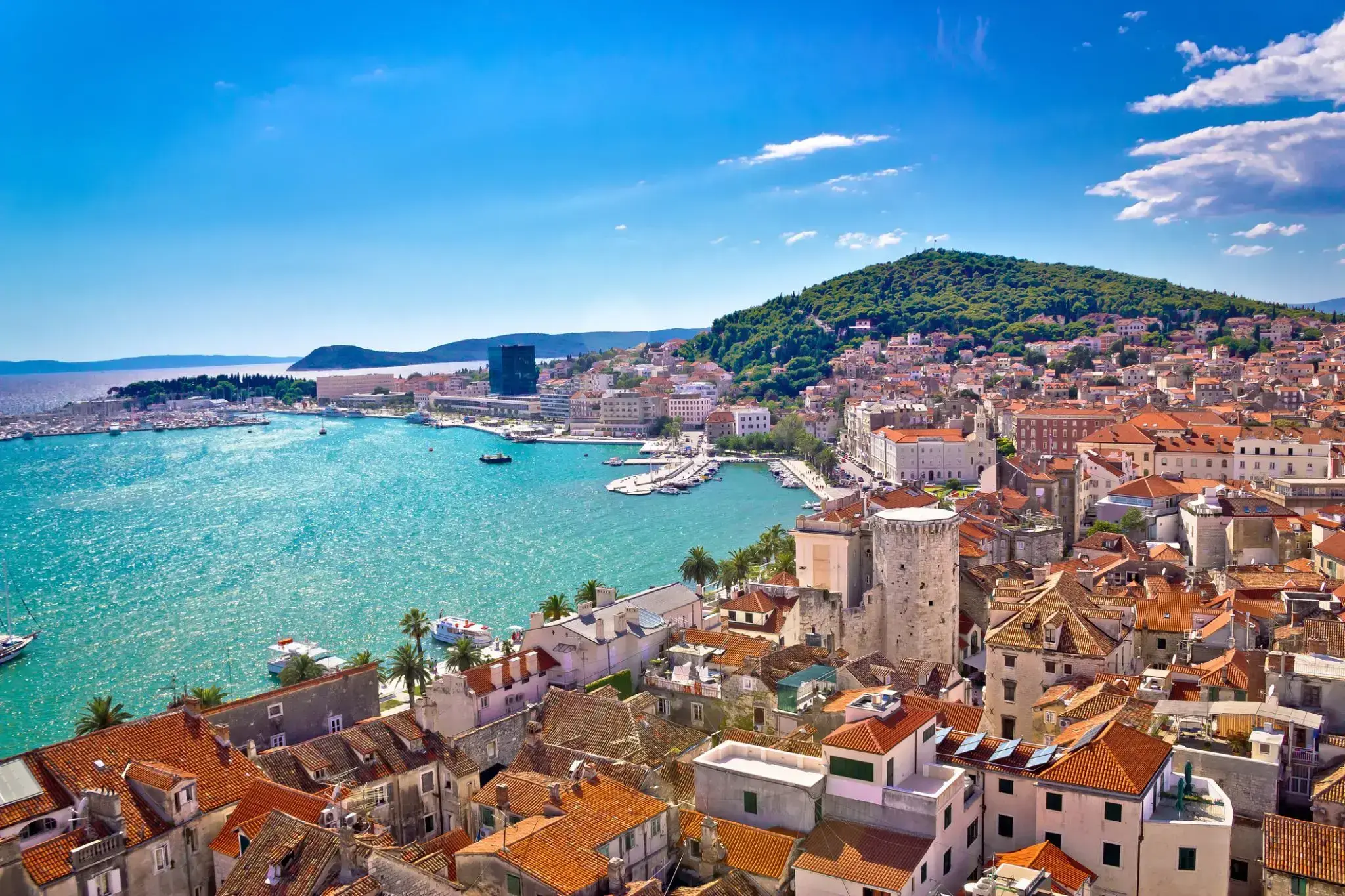
Split – the Pearl of Dalmatia
Split is Croatia’s second-largest city on the Adriatic coast. Its landmark is the Diocletian’s Palace, a UNESCO site, surrounded by narrow streets and the Cathedral of St. Domnius.
Life pulses along the Riva promenade, lined with cafés and restaurants. Nearby are beaches, including the famous Bacvice.
Split is also an important port, offering easy access to Croatian islands such as Hvar, Brač and Korčula. Its Mediterranean atmosphere and Dalmatian cuisine make it a perfect holiday destination.
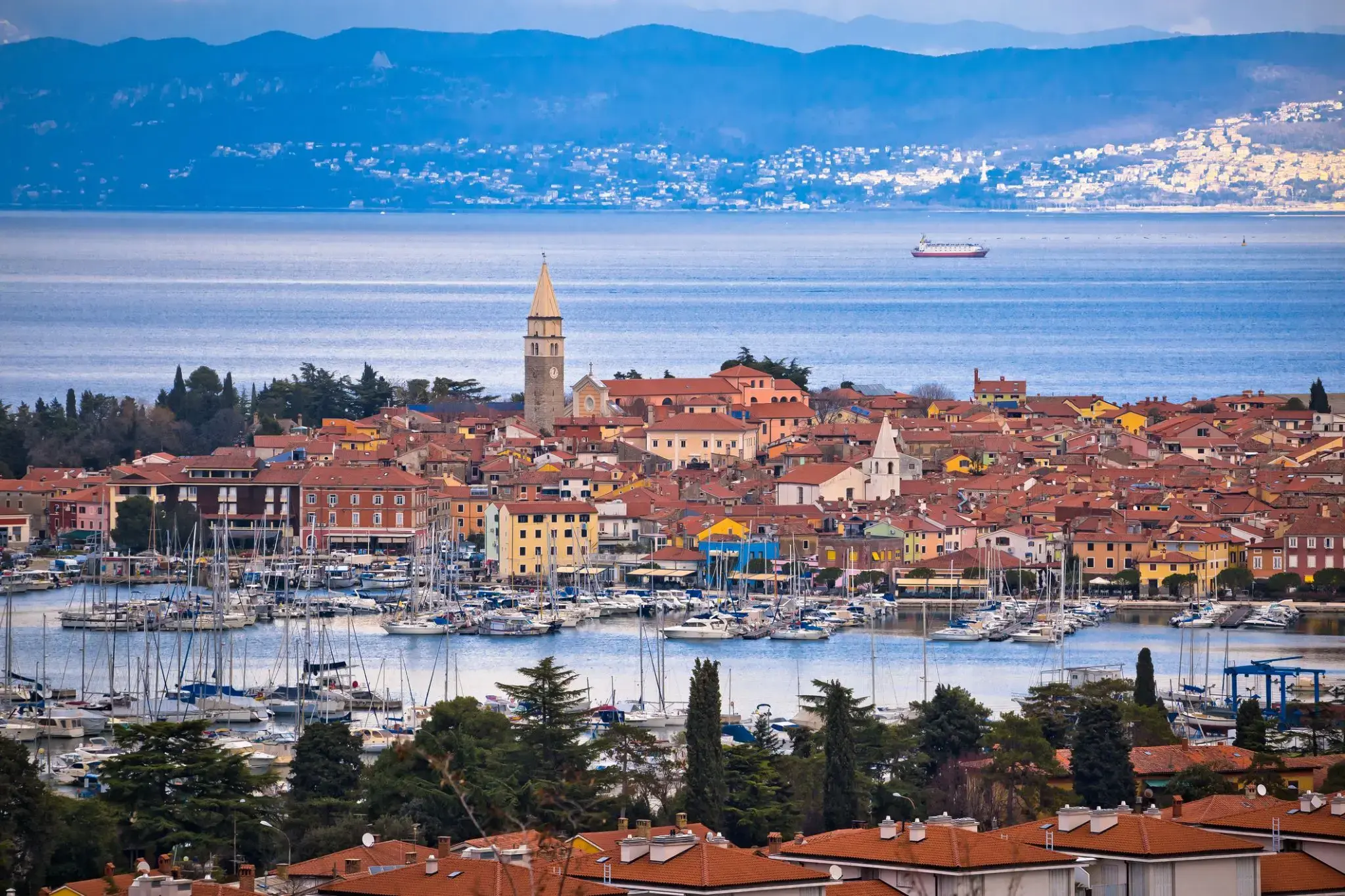
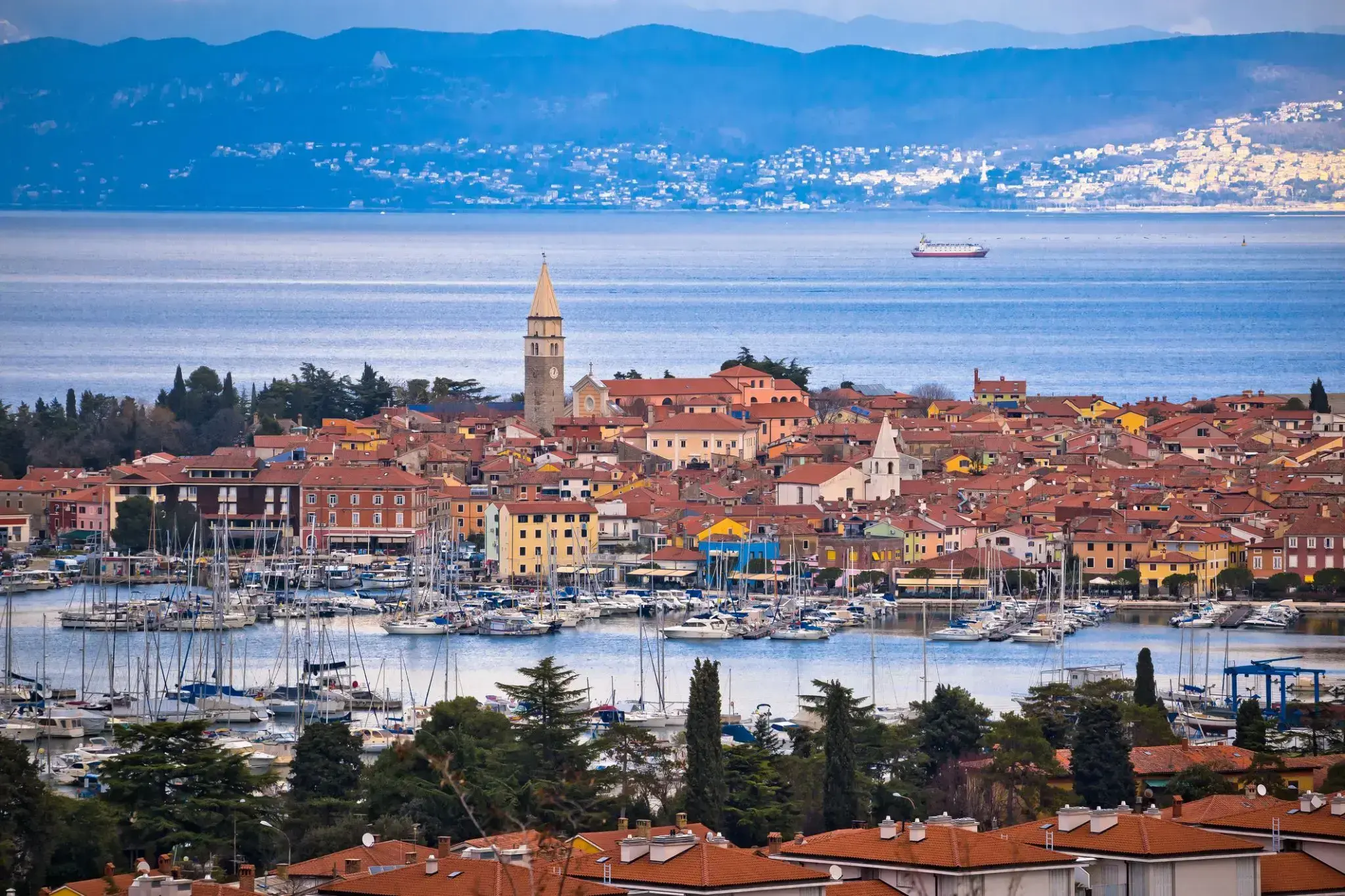
Koper is the fifth largest city in Slovenia. Located in the southwestern part of the country, approximately five kilometres (3.1 miles) south of the border with Italy and 20 kilometers (12 miles) from Trieste, Koper is the largest coastal city in the country. It is bordered by the satellite towns of Izola and Ankaran, and anchors the Istrian region. With a unique ecology and biodiversity, it is considered an important national natural resource. It is the oldest recorded urban settlement in Slovenia. The city's Port of Koper is the major contributor to the economy of the eponymous city municipality. With only one percent of Slovenia having a coastline, the influence that the Port of Koper also has on tourism was a factor in Ankaran deciding to leave the municipality in a referendum in 2011 to establish its own. The city is a destination on a number of Mediterranean cruising lines. In 2016, the city expects 65 cruise ship arrivals (for example: Norwegian Spirit, MSC Magnifica, Norwegian Jade, MS Rhapsody of the Seas...) with the season spanning from March to December. Koper is the main urban centre of the Slovenian Istria, with a population of about 25,000.
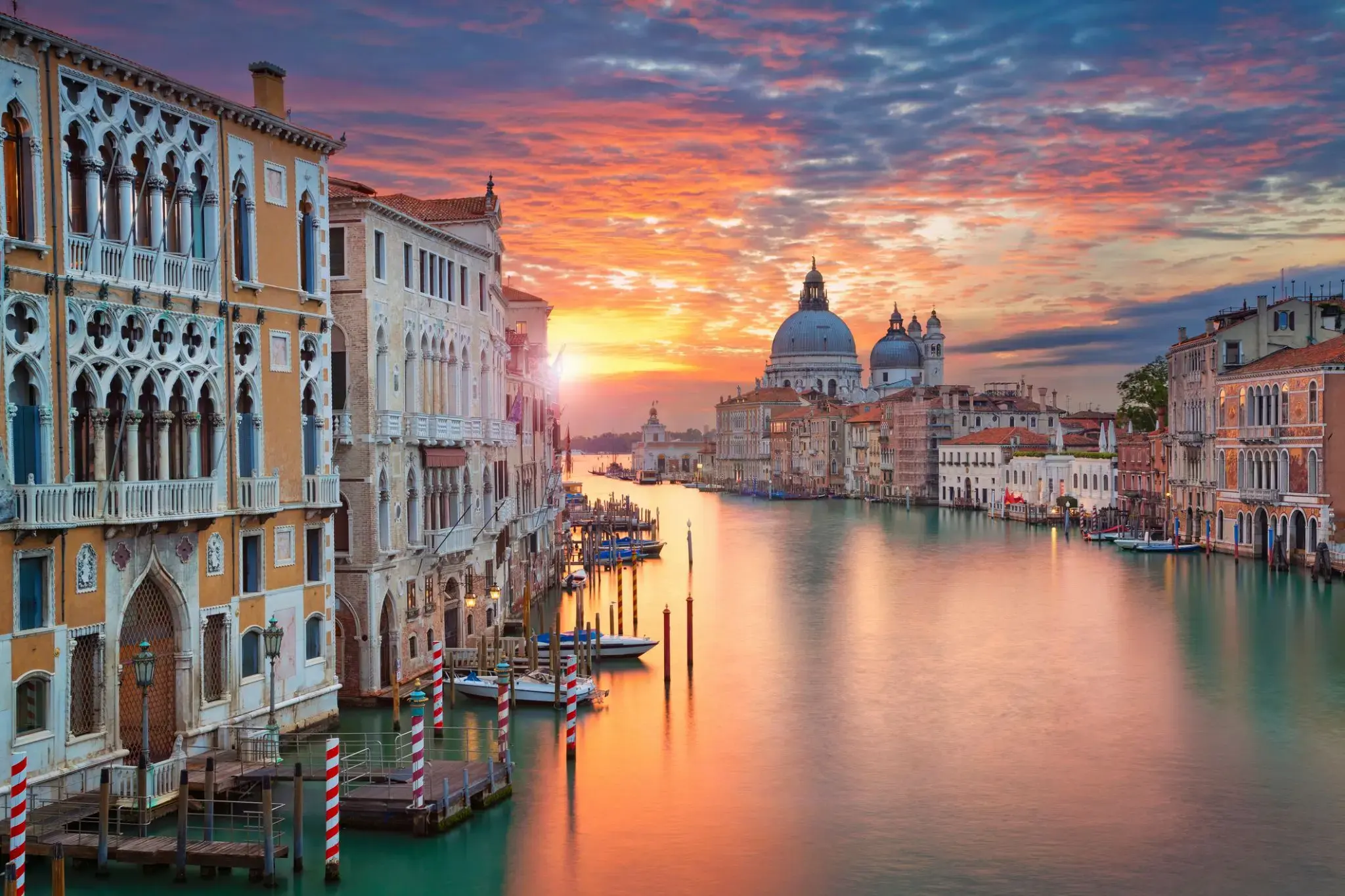
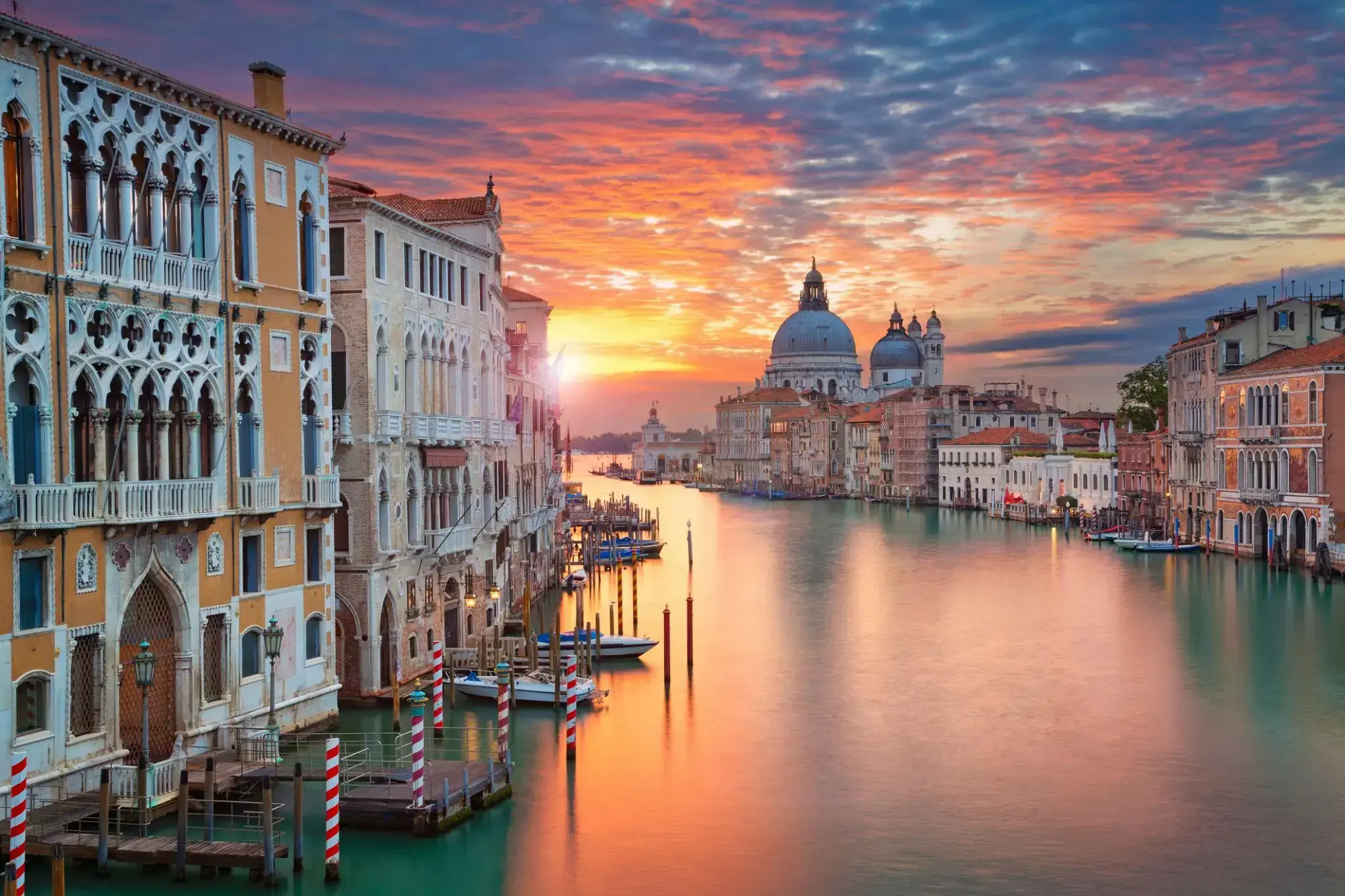
Venice is the most famous and unusual city in the world. It is located in northern Italy on the Adriatic coast. The territory of the city is cut by more than 150 canals and ducts through which more than 400 bridges are thrown.
Venice is a resort city, which is a center of international tourism of world significance, a venue for art and architectural exhibitions, international film festivals. Absolutely unusual atmosphere reigning in the city falls in love with itself at first sight. Narrow streets, with small cozy cafes, sliding gondolas and serenades of gondoliers, set in a romantic mood, and attract lovers from all over the world.
Venice is the most famous and unusual city in the world. It is located in northern Italy on the Adriatic coast. The territory of the city is cut by more than 150 canals and ducts through which more than 400 bridges are thrown.
Venice is a resort city, which is a center of international tourism of world significance, a venue for art and architectural exhibitions, international film festivals. Absolutely unusual atmosphere reigning in the city falls in love with itself at first sight. Narrow streets, with small cozy cafes, sliding gondolas and serenades of gondoliers, set in a romantic mood, and attract lovers from all over the world.
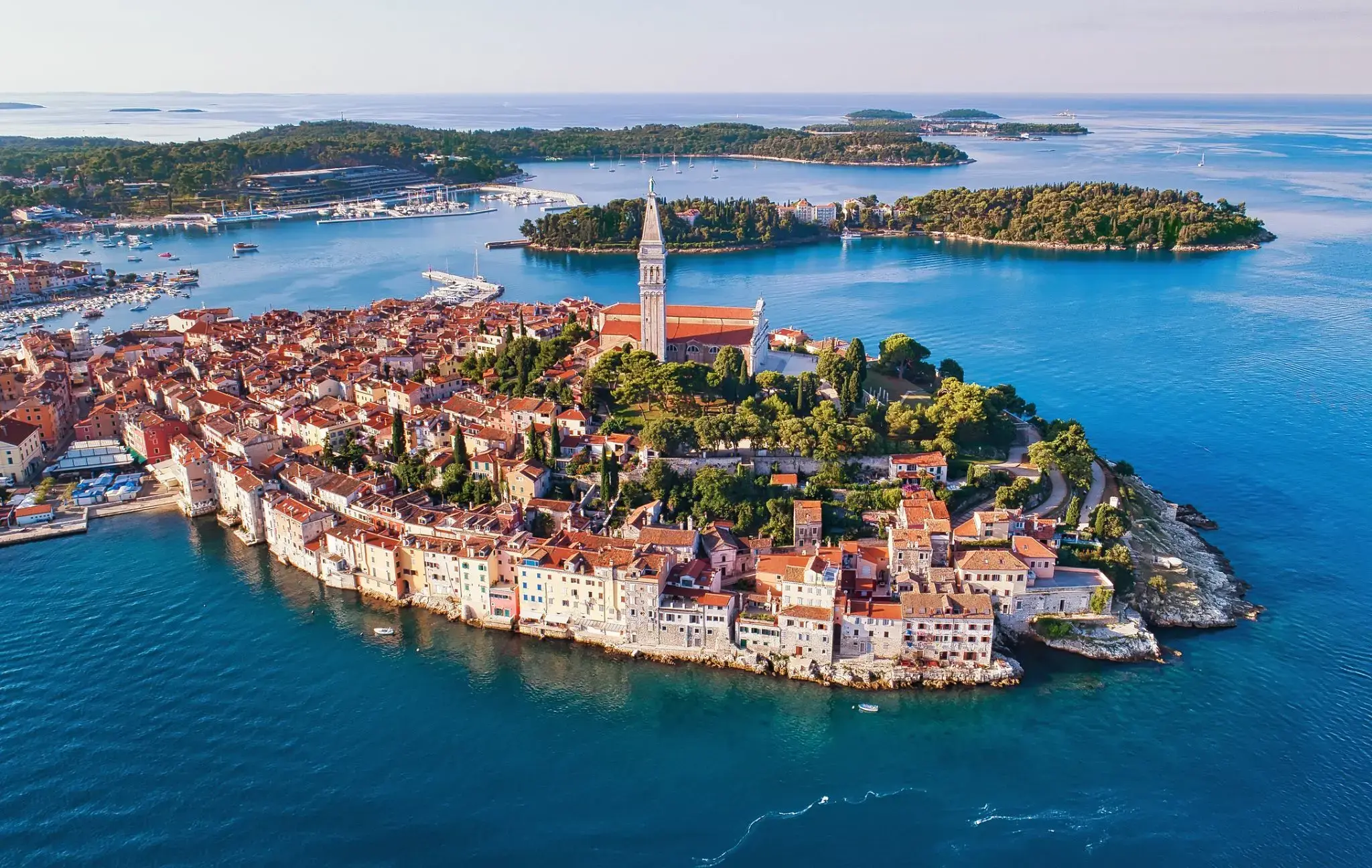
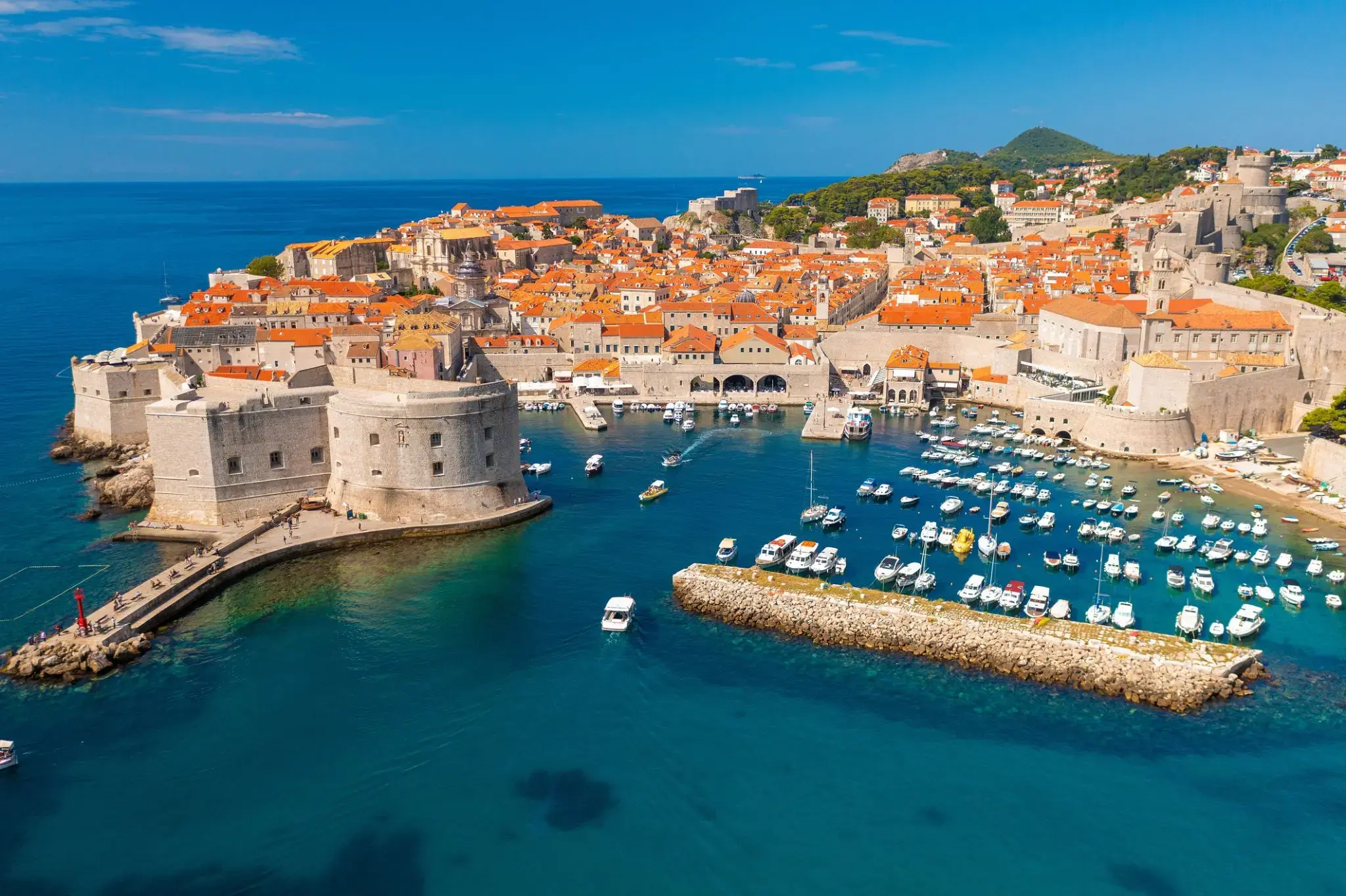
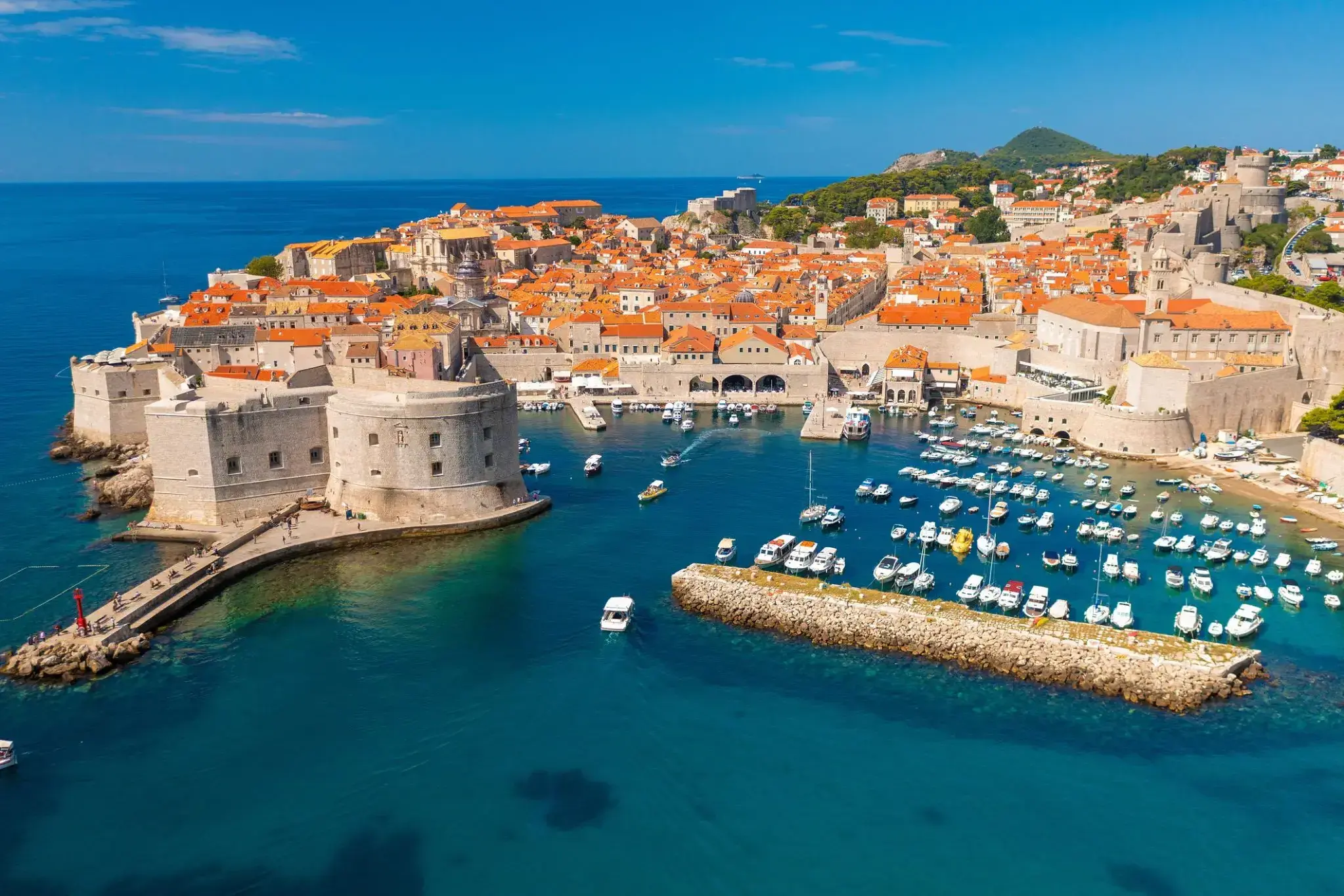
Dubrovnik is a Croatian city on the Adriatic Sea. It is one of the most prominent tourist destinations in the Mediterranean Sea, a seaport and the centre of Dubrovnik-Neretva County. Its total population is 42,615 (census 2011). In 1979, the city of Dubrovnik joined the UNESCO list of World Heritage sites.
The prosperity of the city was historically based on maritime trade; as the capital of the maritime Republic of Ragusa, it achieved a high level of development, particularly during the 15th and 16th centuries, as it became notable for its wealth and skilled diplomacy.
In 1991, after the break-up of Yugoslavia, Dubrovnik was besieged by Serbian and Montenegrin soldiers of the Yugoslav People's Army (JNA) for seven months and suffered significant damage from shelling. After repair and restoration works in the 1990s and early 2000s, Dubrovnik re-emerged as one of the top tourist destinations in the Mediterranean.
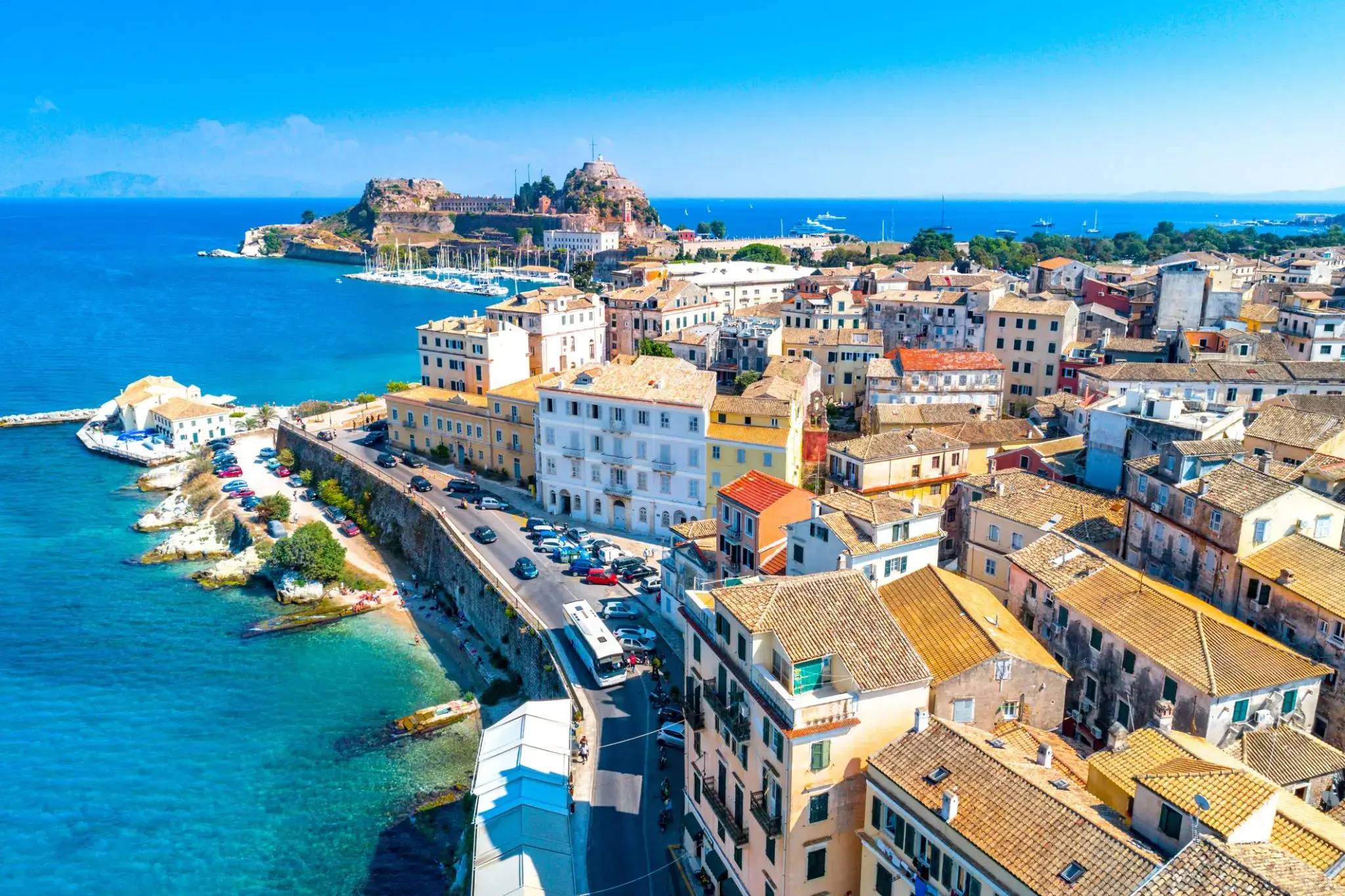
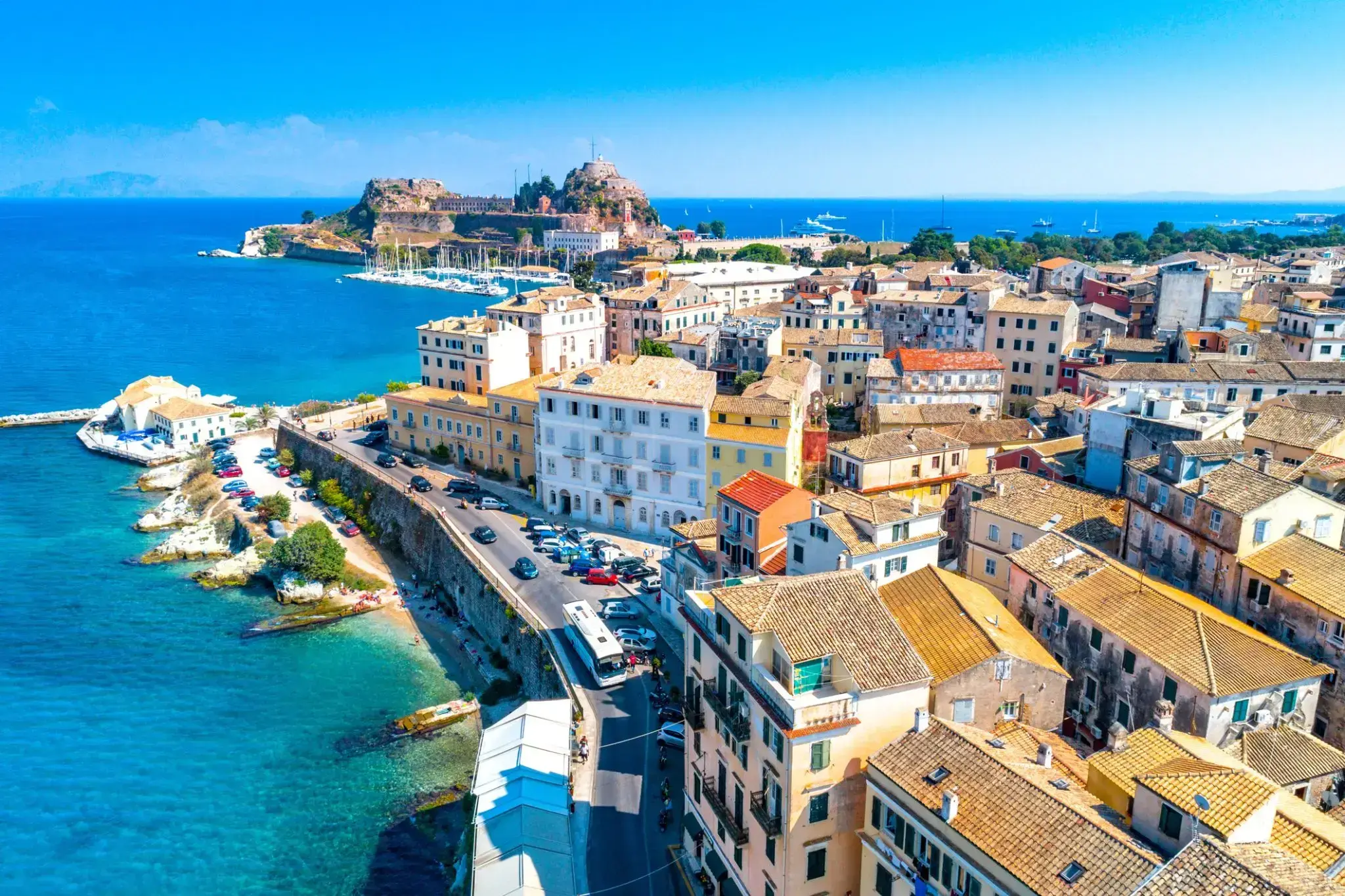
Corfu or Kerkyra is a Greek island in the Ionian Sea. It is the second largest of the Ionian Islands, and, including its small satellite islands, forms the northwesternmost part of Greece. The island is part of the Corfu regional unit, and is administered as a single municipality, which also includes the smaller islands of Ereikoussa, Mathraki and Othonoi. The municipality has an area of 610,9 km2, the island proper 592,8 km2. The principal city of the island and seat of the municipality (pop. 32,095) is also named Corfu. Corfu is home to the Ionian University.
The island is bound up with the history of Greece from the beginnings of Greek mythology. Its history is full of battles and conquests. Ancient Korkyra took part in the Battle of Sybota which was a catalyst for the Peloponnesian War, and, according to Thucydides, the largest naval battle between Greek city states until that time. Thucydides also reports that Korkyra was one of the three great naval powers of fifth century BC Greece, along with Athens and Corinth. Medieval castles punctuating strategic locations across the island are a legacy of struggles in the Middle Ages against invasions by pirates and the Ottomans. Two of these castles enclose its capital, which is the only city in Greece to be surrounded in such a way. As a result, Corfu's capital has been officially declared a Kastropolis ("castle city") by the Greek government. From medieval times and into the 17th century, the island, having successfully repulsed the Ottomans during several sieges, was recognised as a bulwark of the European States against the Ottoman Empireand became one of the most fortified places in Europe. The fortifications of the island were used by the Venetians to defend against Ottoman intrusion into the Adriatic. Corfu eventually fell under British rule following the Napoleonic Wars. Corfu was eventually ceded by the British Empire along with the remaining islands of the United States of the Ionian Islands, and unification with modern Greece was concluded in 1864 under the Treaty of London.
In 2007, the city's old quarter was added to the UNESCO World Heritage List, following a recommendation by ICOMOS.
Corfu is a very popular tourist destination. The island was the location of the 1994 European Union summit.
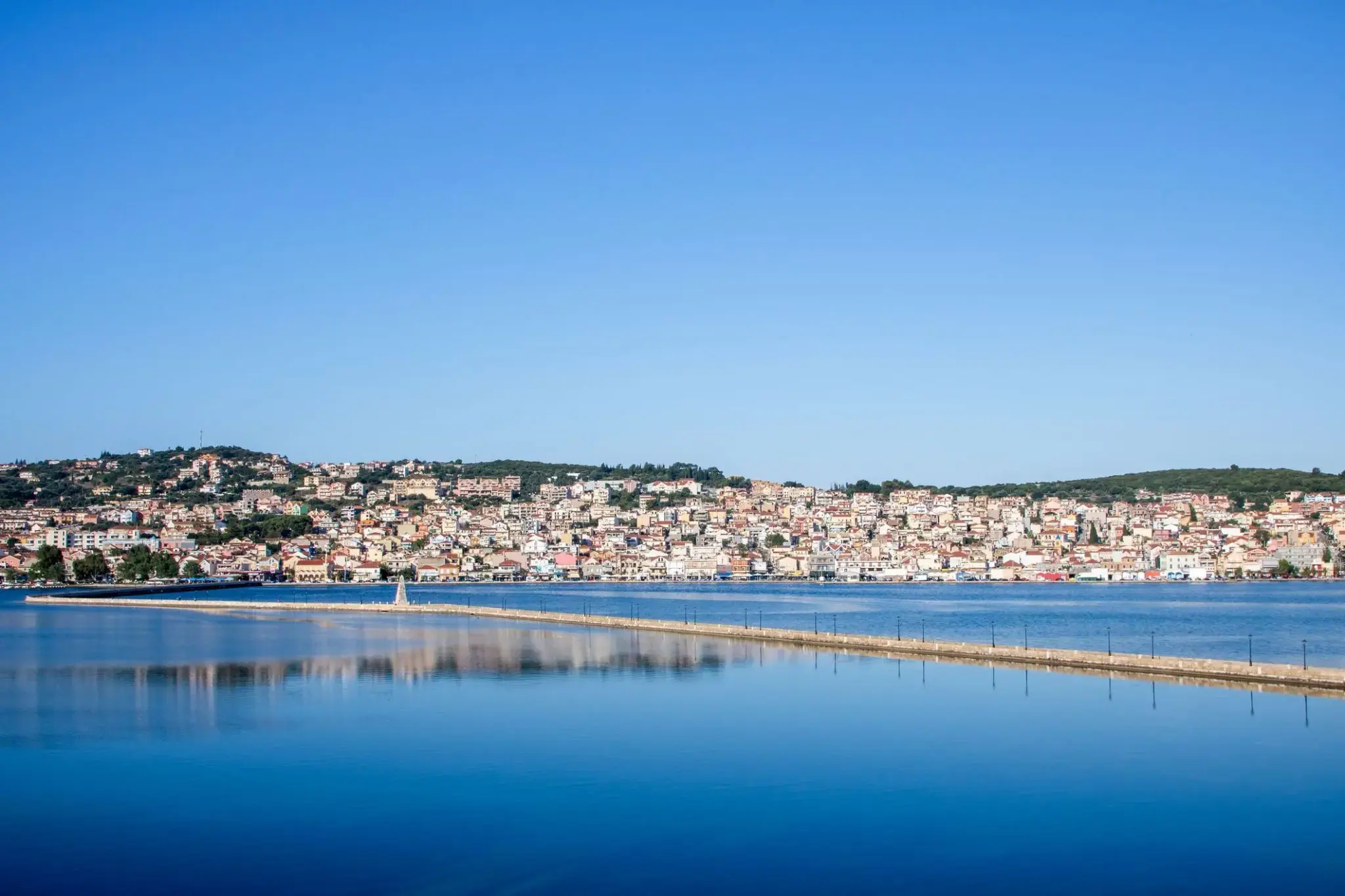
Argostoli is the capital of Kefalonia, the largest island of the Ionian archipelago in Greece. Located on the western coast of the island, the city is known for its picturesque promenades, charming cafes, and neoclassical buildings. Argostoli is also home to many historical landmarks, including the Archaeological Museum of Kefalonia and Valiianos Square, where visitors can see remnants of the destruction caused by the 1953 earthquake that nearly destroyed the city. Strolling through its streets, travelers can enjoy the harmonious blend of traditional Greek architecture and modern life.
The city is also an excellent starting point for exploring Kefalonia’s natural beauty. Just a few kilometers from Argostoli are famous beaches like Lourdas and Melissani, as well as the famous Dragonera Cave, where visitors can admire stalactites and stalagmites. From Argostoli, it is also easy to go on excursions to unique nature reserves, such as the turtle sanctuary, home to the rare Caretta caretta sea turtles. The city is an ideal place to combine cultural tourism with the exploration of the island's natural wonders.
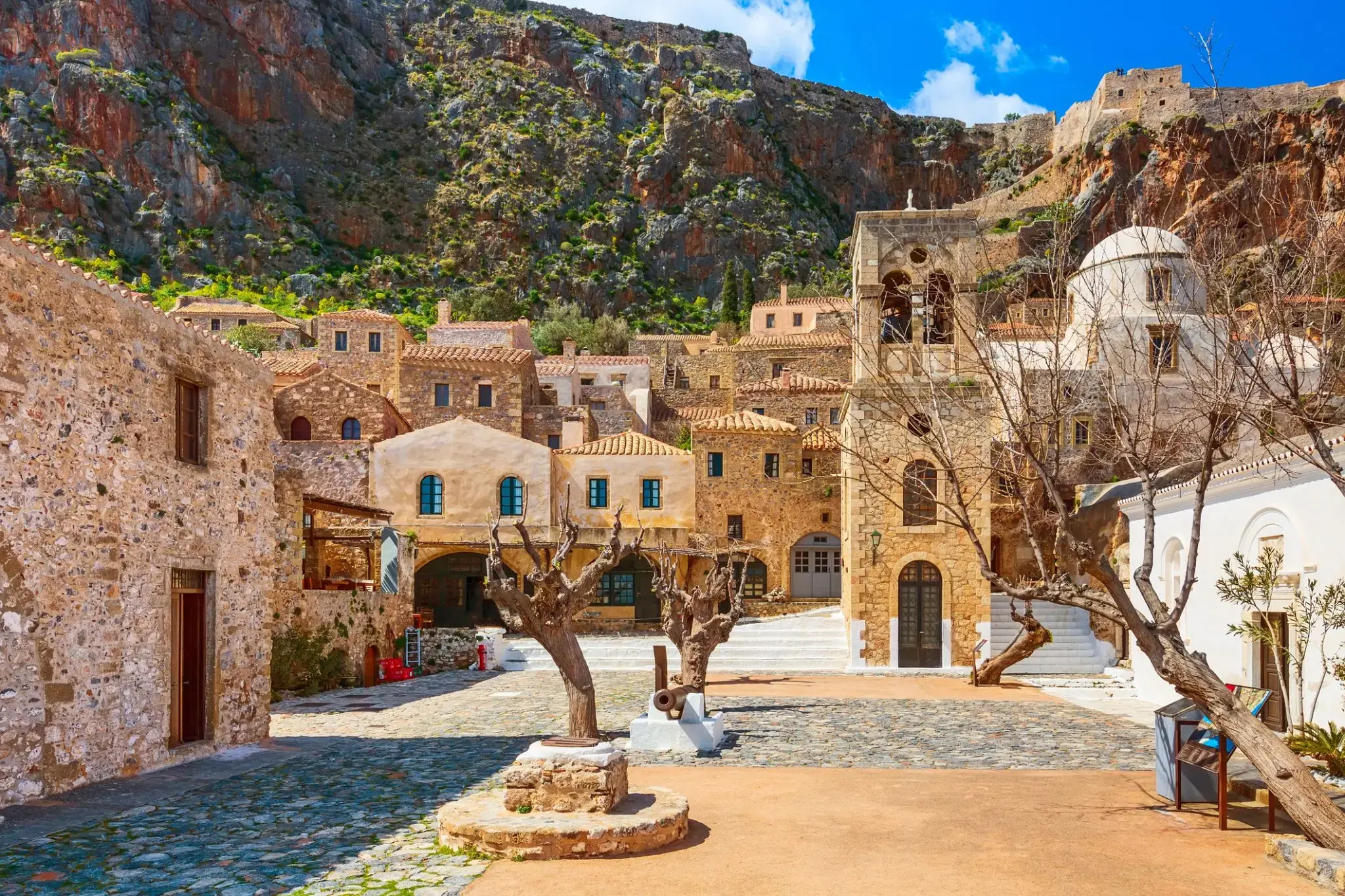
Monemvasia — The Rock Fortress of the Aegean
Monemvasia is a unique fortified town carved into a massive rock on an island off the southeastern coast of the Peloponnese (Laconia). Nearly invisible from the mainland, its name means "single entrance," reflecting its strategic importance during the Byzantine, Venetian, and Ottoman periods.
Today, Monemvasia enchants visitors with its preserved medieval architecture, cobbled streets, Byzantine churches, and stunning views of the Aegean Sea. It offers a timeless atmosphere, inviting travelers to immerse themselves in history and tranquility.
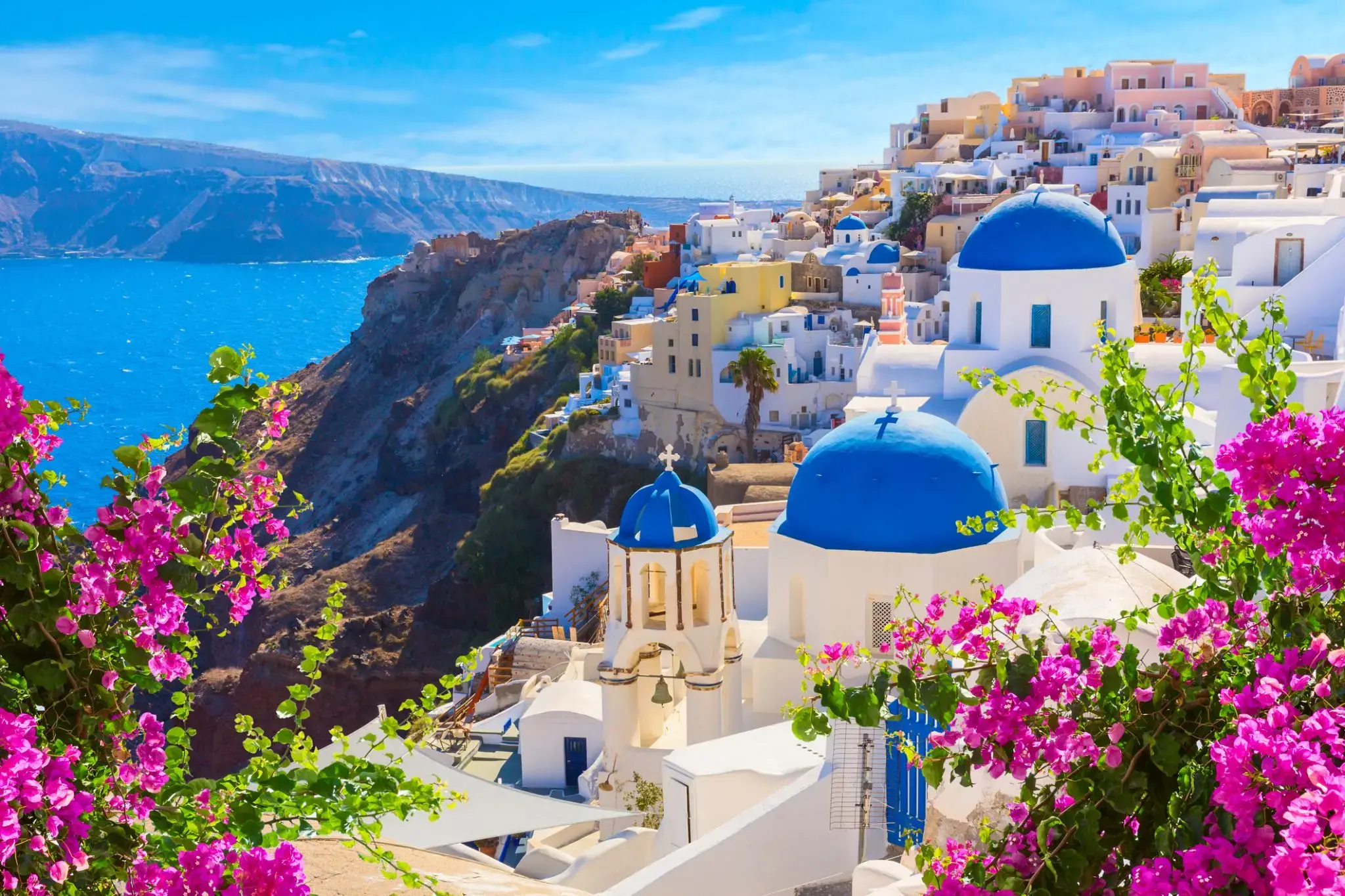
Santorini, classically Thera, and officially Thira, is an island in the southern Aegean Sea, about 200 km (120 mi) southeast of Greece's mainland. It is the largest island of a small, circular archipelago, which bears the same name and is the remnant of a volcanic caldera. It forms the southernmost member of the Cyclades group of islands, with an area of approximately 73 km2 (28 sq mi) and a 2011 census population of 15,550. The municipality of Santorini includes the inhabited islands of Santorini and Therasia and the uninhabited islands of Nea Kameni, Palaia Kameni, Aspronisi, and Christiana. The total land area is 90.623 km2 (34.990 sq mi).Santorini is part of the Thira regional unit.
The island was the site of one of the largest volcanic eruptions in recorded history: the Minoan eruption(sometimes called the Thera eruption), which occurred about 3,600 years ago at the height of the Minoan civilization. The eruption left a large caldera surrounded by volcanic ash deposits hundreds of metres deep. It may have led indirectly to the collapse of the Minoan civilization on the island of Crete, 110 km (68 mi) to the south, through a gigantic tsunami. Another popular theory holds that the Thera eruption is the source of the legend of Atlantis.
It is the most active volcanic centre in the South Aegean Volcanic Arc, though what remains today is chiefly a water-filled caldera. The volcanic arc is approximately 500 km (310 mi) long and 20 to 40 km (12 to 25 mi) wide. The region first became volcanically active around 3–4 million years ago[citation needed], though volcanism on Thera began around 2 million years ago with the extrusion of dacitic lavas from vents around the Akrotiri.
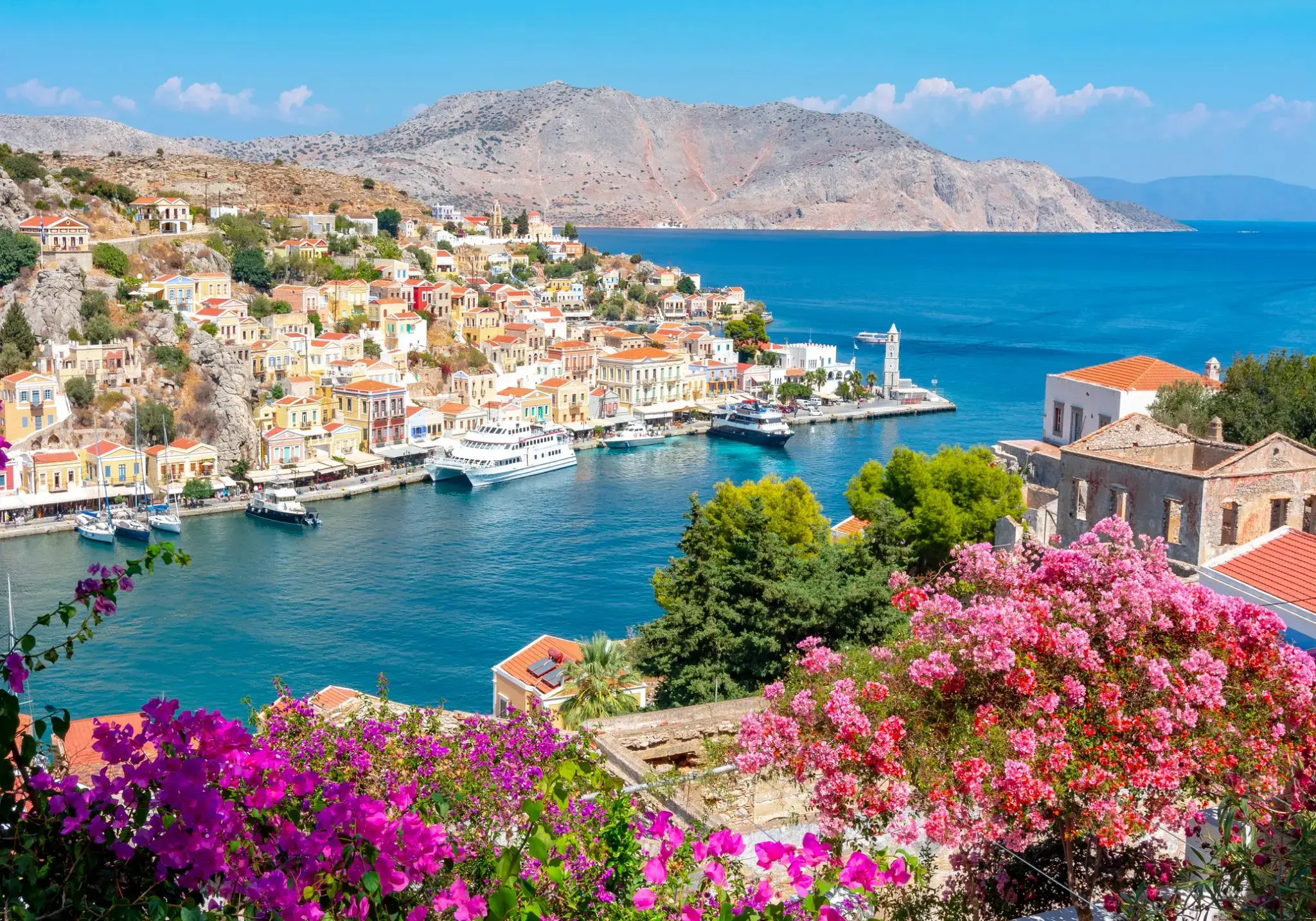
Rhodes is the largest of the Dodecanese islands of Greece and is also the island group's historical capital. Administratively the island forms a separate municipality within the Rhodes regional unit, which is part of the South Aegean administrative region. The principal town of the island and seat of the municipality is Rhodes. The city of Rhodes had 50,636 inhabitants in 2011. It is located northeast of Crete, southeast of Athens and just off the Anatolian coast of Turkey. Rhodes' nickname is The island of the Knights, named after the Knights of Saint John of Jerusalem, who once conquered the land.
Historically, Rhodes was famous worldwide for the Colossus of Rhodes, one of the Seven Wonders of the Ancient World. The Medieval Old Town of the City of Rhodes has been declared a World Heritage Site. Today, it is one of the most popular tourist destinations in Europe. The name of the U.S. state of Rhode Island is thought to be based on this island.
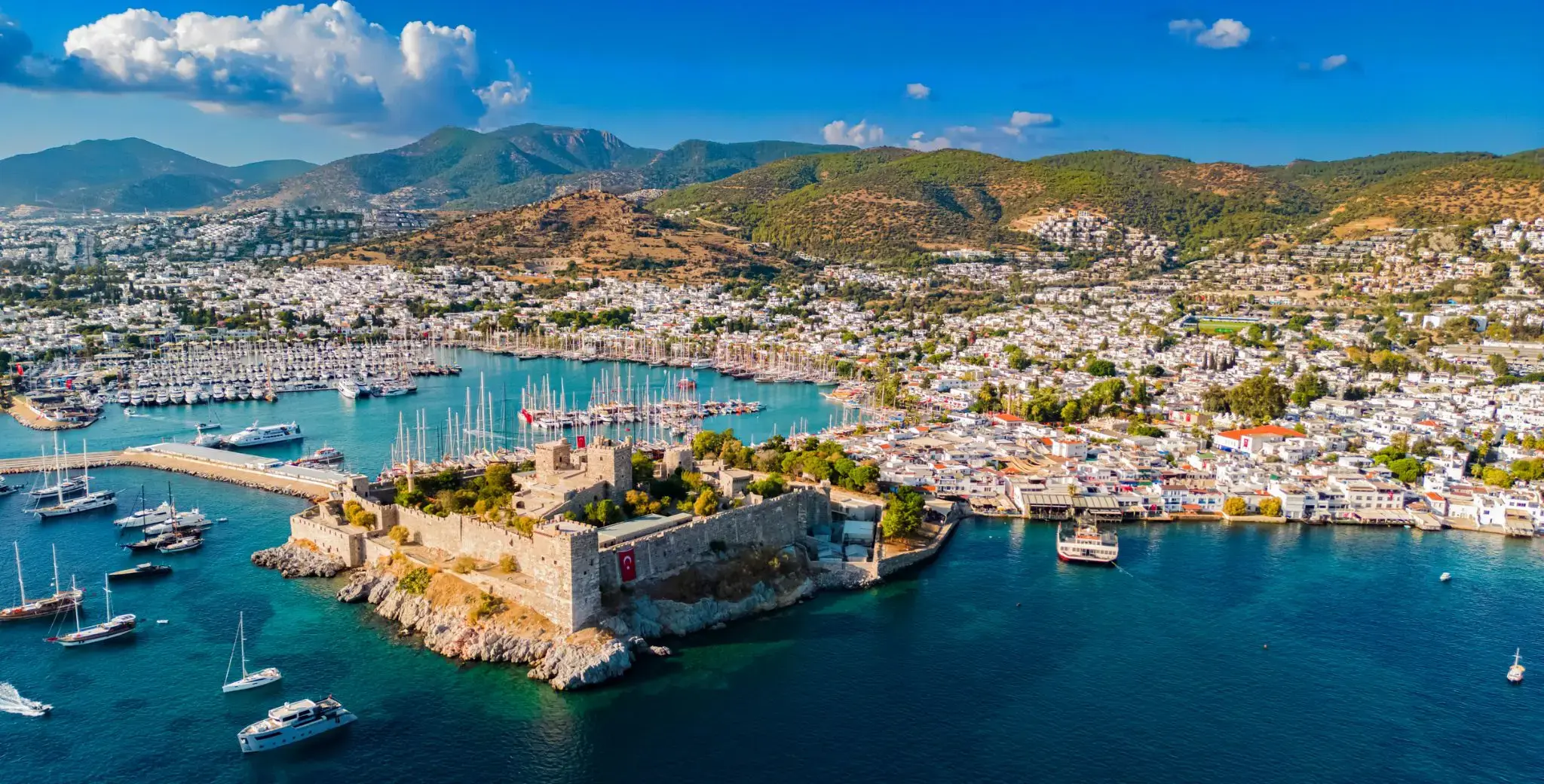
Bodrum is a famous Turkish resort on the Aegean Sea, located in the province of Mugla. The city is located in the extreme southwest of the country, on the coast of ancient Caria, which today is called the Turkish Riviera. Bodrum is perhaps the most international of all cities in Turkey. It is famous for its restaurants, night clubs, the atmosphere of eternal celebration and the bohemian lifestyle. This combination is especially attractive for young people from Europe and liberated Turks who come here in the summer to swim, soak up the sun, and “hang out” in open-air pubs, discos and bars. Curious tourists in these parts are attracted by the desire to get acquainted with the millenary history of the region, to see the ancient and medieval monuments located here.
Syros is a picturesque island in the Cyclades, known for its rich history and diverse architecture. Its capital, Ermoupoli, is one of the few Greek towns where Byzantine churches stand alongside neoclassical mansions. Once Greece’s major maritime hub, the city still retains an air of elegance and cultural depth.
The island is perfect for travelers seeking more than just beach vacations. It offers peaceful coves, scenic trails, and delicious local cuisine — from fresh seafood to "lagano," a traditional bread baked with olive oil. Fun fact: Ermoupoli is home to one of the oldest theaters in Greece — Apollon, modeled after Milan's La Scala.
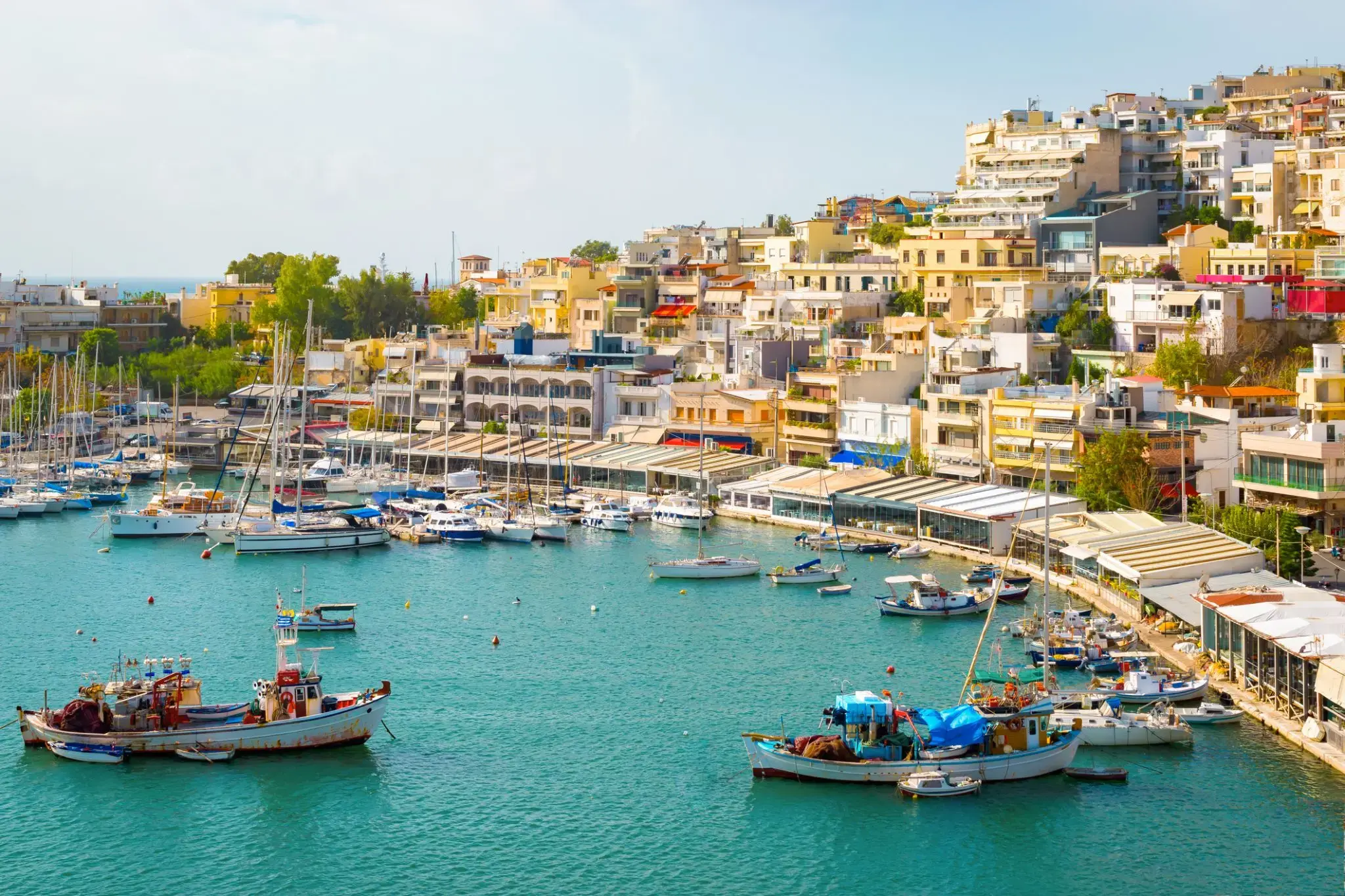
Piraeus is the gateway to Athens , which, in turn, is rightfully considered the center of the centers of the whole world, with the main attraction - the acropolis. Piraeus is an old port city serving the port of Athens, the largest port in Greece to date. Piraeus is part of the great Athens, which boasts an abundance of attractions, including unique monuments of national fine art. More than two hundred museums and galleries, including the University History Museum, the Ceramics Archaeological Museum and many others, will hospitably welcome you within their walls and familiarize themselves with the culture of this area.