| Cruise Region : Mediterranean Sea |
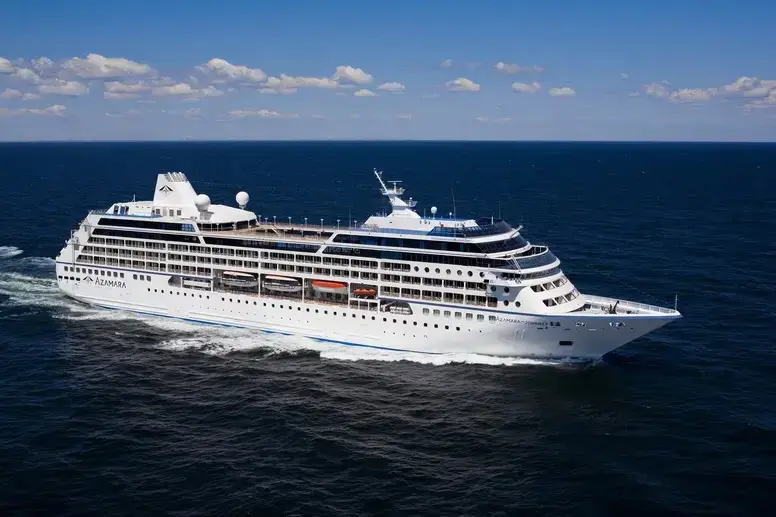
| Company : Azamara Cruises |
| Ship : Azamara Journey |
| Journey Start : Tue 06 Jun 2028 |
| Journey End : Sun 23 Jul 2028 |
| Count Nights : 47 nights |
| Day | Date | Port | Arrival | Departure |
|---|---|---|---|---|
| 1 | 6.06 Tue | Barcelona / Spain | 18:00 | |
| 2 | 7.06 Wed | Valencia / Spain | 07:30 | 22:00 |
| 3 | 8.06 Thu | Cartagena (Bolívar) / Colombia | 11:00 | 18:00 |
| 4 | 9.06 Fri | Malaga / Spain | 08:30 | 22:00 |
| 5 | 10.06 Sat | Gibraltar / Great Britain | 08:00 | 20:00 |
| 6 | 11.06 Sun | Seville / Spain | 13:30 | |
| 7 | 12.06 Mon | Seville / Spain | ||
| 8 | 13.06 Tue | Seville / Spain | 16:00 | |
| 9 | 14.06 Wed | Portman / Portugal | 08:00 | 16:00 |
| 10 | 15.06 Thu | Lisbon / Portugal | 06:00 | 17:00 |
| 11 | 16.06 Fri | Porto / Portugal | 09:00 | 20:00 |
| 12 | 17.06 Sat | Day at sea / Sea | 15:00 | |
| 13 | 18.06 Sun | Bilbao / Spain | 08:00 | 22:00 |
| 14 | 19.06 Mon | Pasaia Pasaia / Spain | 06:45 | 15:00 |
| 15 | 20.06 Tue | Bordeaux / France | 07:00 | |
| 16 | 21.06 Wed | Bordeaux / France | 19:00 | |
| 17 | 22.06 Thu | Day at sea / Sea | 15:00 | |
| 18 | 23.06 Fri | Saint-Malo / France | 08:00 | 20:00 |
| 19 | 24.06 Sat | Le Havre / France | 08:00 | 18:00 |
| 20 | 25.06 Sun | Dover / Great Britain | 07:00 | 17:00 |
| 21 | 26.06 Mon | Amsterdam / Netherlands | 08:00 | 20:00 |
| 22 | 27.06 Tue | Day at sea / Sea | 15:00 | |
| 23 | 28.06 Wed | Rosendal / Norway | 08:00 | 17:00 |
| 24 | 29.06 Thu | Olden / Norway | 09:00 | 20:00 |
| 25 | 30.06 Fri | Alesund / Norway | 08:00 | 22:00 |
| 26 | 1.07 Sat | Day at sea / Sea | 15:00 | |
| 27 | 2.07 Sun | Svolvaer / Norway | 07:00 | 17:00 |
| 28 | 3.07 Mon | TROLL FJORD | 18:30 | 19:00 |
| 29 | 4.07 Tue | Tromsø / Norway | 09:00 | 22:00 |
| 30 | 5.07 Wed | Honninswog / Norway | 14:00 | 20:00 |
| 31 | 6.07 Thu | Honninswog / Norway | 23:59 | |
| 32 | 7.07 Fri | Alta / Norway | 09:00 | 17:00 |
| 33 | 8.07 Sat | Honninswog / Norway | 06:00 | |
| 34 | 9.07 Sun | Harstad / Norway | 08:00 | 22:00 |
| 35 | 10.07 Mon | Bodo / Norway | 08:30 | 17:00 |
| 36 | 11.07 Tue | Trondheim / Norway | 13:30 | 22:00 |
| 37 | 12.07 Wed | Kristiansand / Norway | 08:00 | 20:00 |
| 38 | 13.07 Thu | Day at sea / Sea | 15:00 | |
| 39 | 14.07 Fri | Arendal / Norway | 08:00 | 22:00 |
| 40 | 15.07 Sat | Skagen / Denmark | 08:00 | 17:00 |
| 41 | 16.07 Sun | Copenhagen / Denmark | 07:00 | 17:00 |
| 42 | 17.07 Mon | Warnemünde / Germany | 07:30 | 21:00 |
| 43 | 18.07 Tue | Ronne / Denmark | 08:00 | 17:00 |
| 44 | 19.07 Wed | Gdańsk / Poland | 08:00 | 22:00 |
| 45 | 20.07 Thu | Klaipeda (Memel) / Lithuania | 08:30 | 14:30 |
| 46 | 21.07 Fri | Riga / Latvia | 08:00 | 22:00 |
| 47 | 22.07 Sat | Day at sea / Sea | 15:00 | |
| 48 | 23.07 Sun | Tallinn / Estonia | 08:00 | 22:00 |
| 49 | 24.07 Mon | Helsinki / Finland | 08:00 | 18:00 |
| 50 | 25.07 Tue | Stockholm / Sweden | 13:00 | |
| 51 | 26.07 Wed | Stockholm / Sweden | 09:00 |
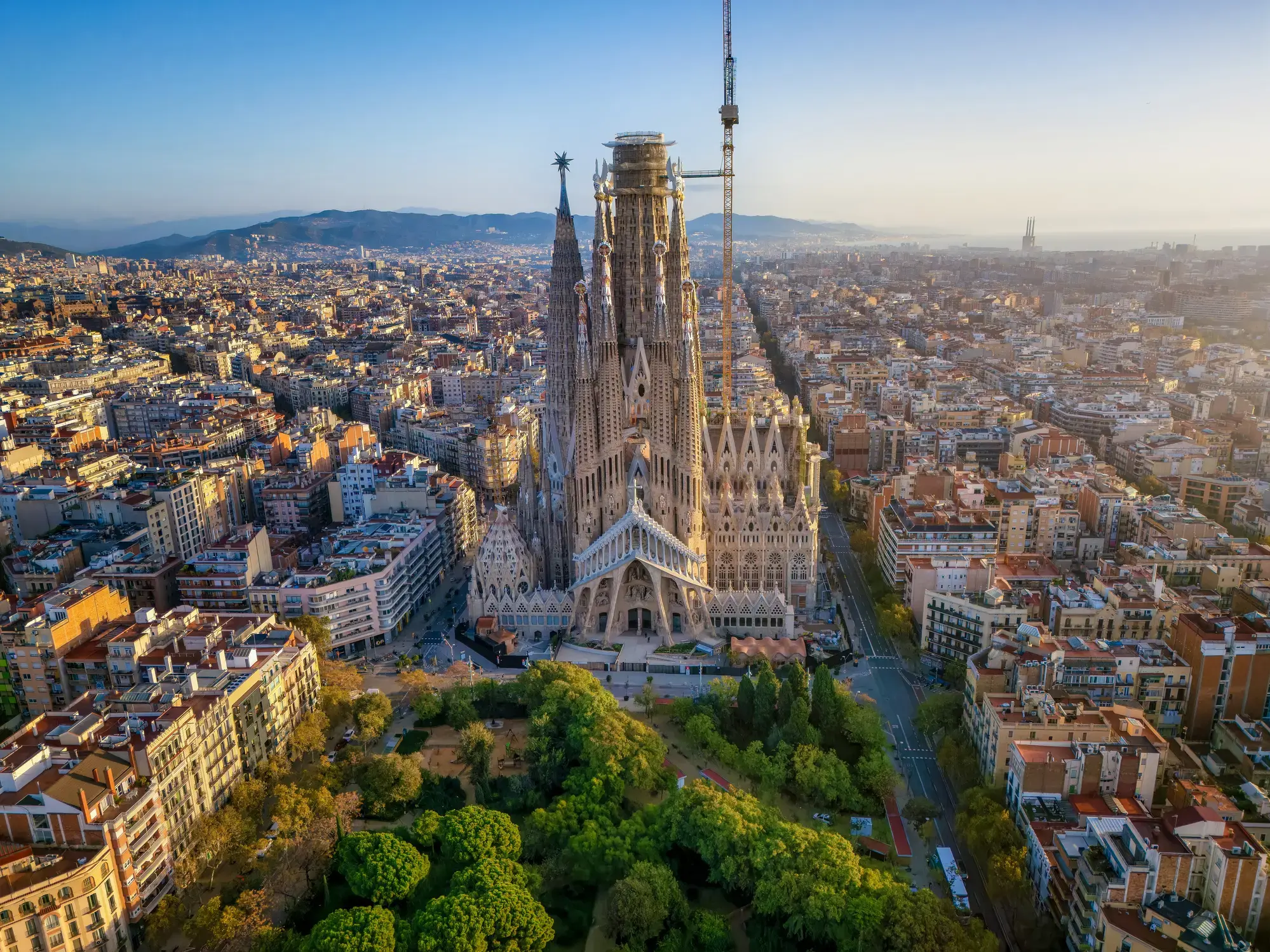
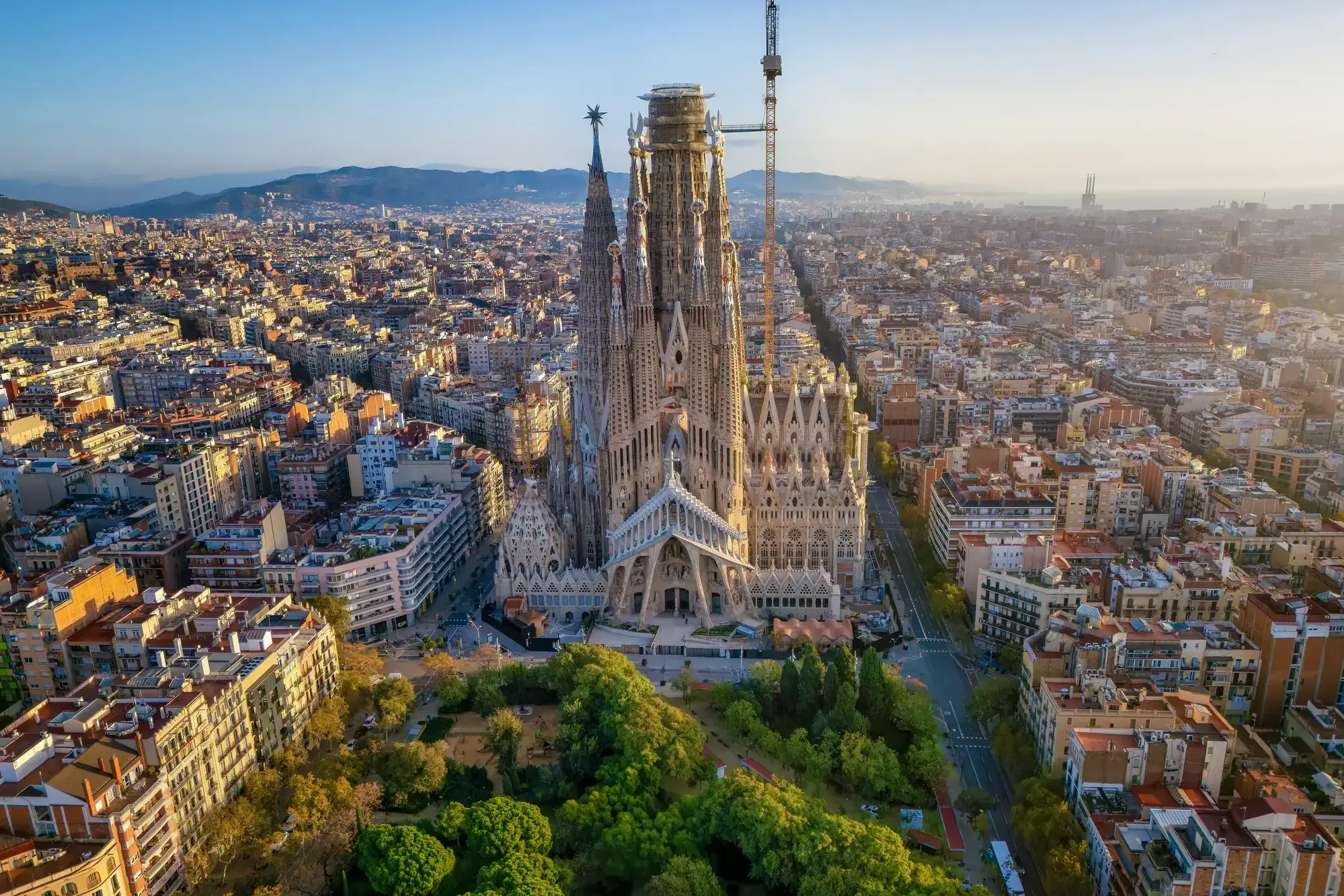
Barcelona is a city in Spain. It is the capital and largest city of Catalonia, as well as the second most populous municipality of Spain. With a population of 1.6 million within city limits, its urban area extends to numerous neighbouring municipalities within the Province of Barcelona and is home to around 4.8 million people, making it the sixth most populous urban area in the European Union after Paris, London, Madrid, the Ruhr area and Milan. It is one of the largest metropolises on the Mediterranean Sea, located on the coast between the mouths of the rivers Llobregat and Besòs, and bounded to the west by the Serra de Collserola mountain range, the tallest peak of which is 512 metres (1,680 feet) high.
Founded as a Roman city, in the Middle Ages Barcelona became the capital of the County of Barcelona. After merging with the Kingdom of Aragon, Barcelona continued to be an important city in the Crown of Aragon as an economic and administrative centre of this Crown and the capital of the Principality of Catalonia. Barcelona has a rich cultural heritage and is today an important cultural centre and a major tourist destination. Particularly renowned are the architectural works of Antoni Gaudí and Lluís Domènech i Montaner, which have been designated UNESCO World Heritage Sites. The headquarters of the Union for the Mediterranean are located in Barcelona. The city is known for hosting the 1992 Summer Olympics as well as world-class conferences and expositions and also many international sport tournaments.
Barcelona is one of the world's leading tourist, economic, trade fair and cultural centres, and its influence in commerce, education, entertainment, media, fashion, science, and the arts all contribute to its status as one of the world's major global cities. It is a major cultural and economic centre in southwestern Europe, 24th in the world (before Zürich, after Frankfurt) and a financial centre. In 2008 it was the fourth most economically powerful city by GDP in the European Union and 35th in the world with GDP amounting to €177 billion. In 2012 Barcelona had a GDP of $170 billion; and it was leading Spain in employment rate in that moment.
In 2009 the city was ranked Europe's third and one of the world's most successful as a city brand. In the same year the city was ranked Europe's fourth best city for business and fastest improving European city, with growth improved by 17% per year, and the city has been experiencing strong and renewed growth for the past three years. Since 2011 Barcelona has been a leading smart city in Europe. Barcelona is a transport hub, with the Port of Barcelona being one of Europe's principal seaports and busiest European passenger port, an international airport, Barcelona–El Prat Airport, which handles over 50 million passengers per year, an extensive motorway network, and a high-speed rail line with a link to France and the rest of Europe.
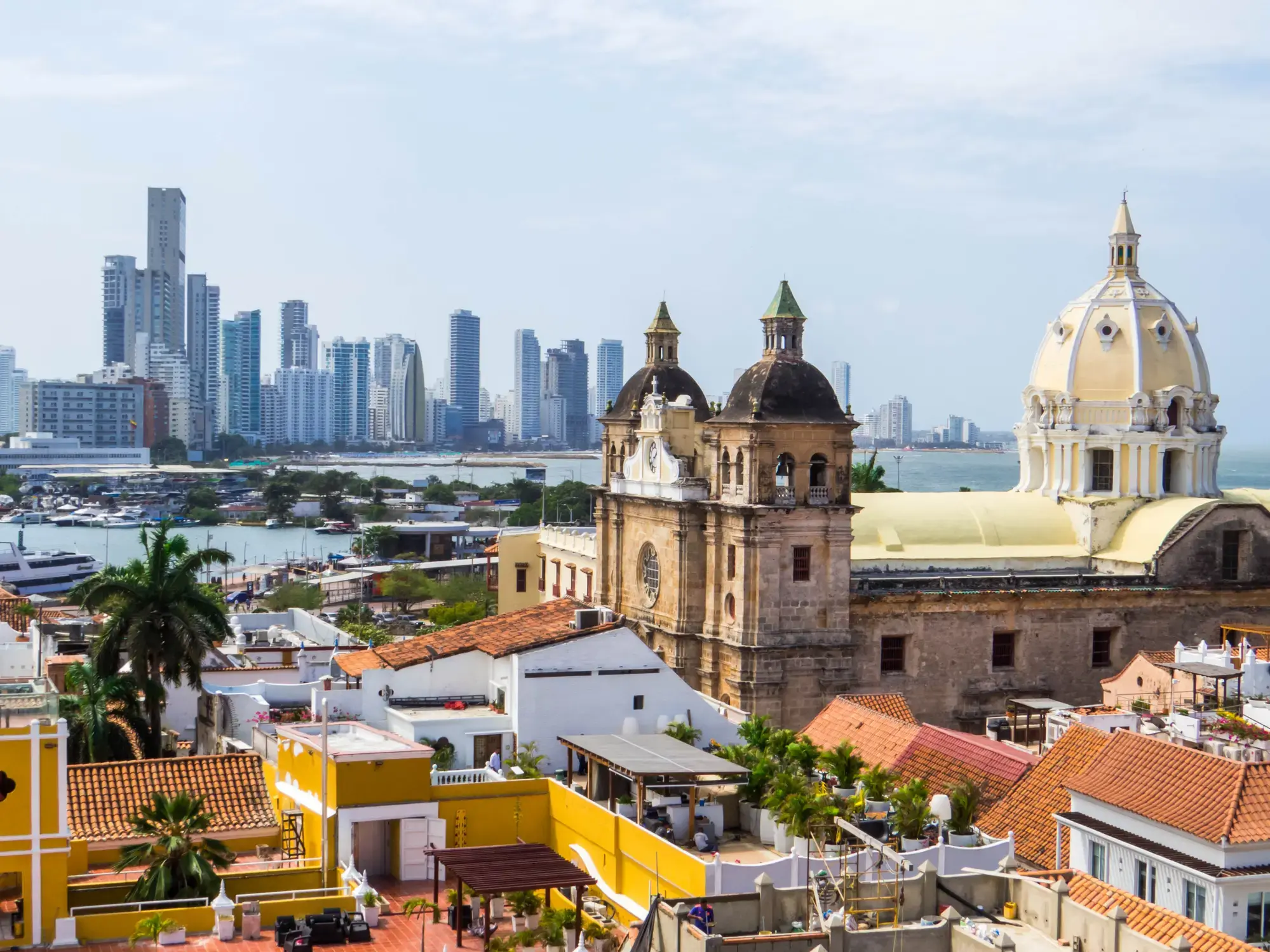
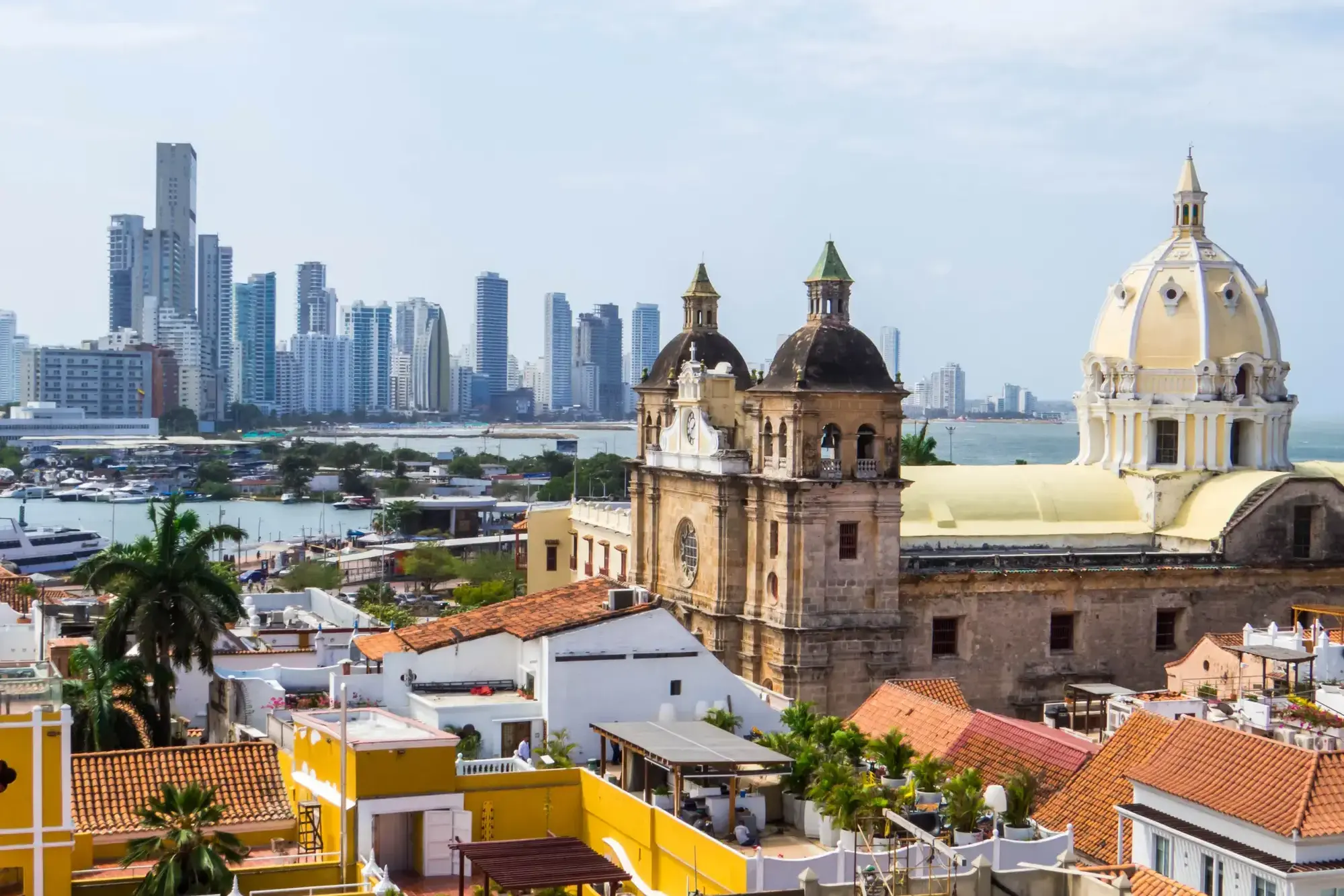
Ancient fortress walls, street musicians, and the Caribbean sun create an unforgettable atmosphere in Cartagena (Bolívar) — the gem of Colombia's coast. This city, listed as a UNESCO World Heritage Site, enchants visitors with its colonial architecture, charming courtyards, and the aroma of fresh coffee wafting from countless cafés.
Immerse yourself in the vibrant rhythm of Cartagena, strolling through the cobbled streets of the Old Town, where every corner holds tales of pirates and Spanish conquistadors. And the sunset near the ancient Castillo San Felipe de Barajas is the perfect ending to a day filled with culture, history, and tropical romance.
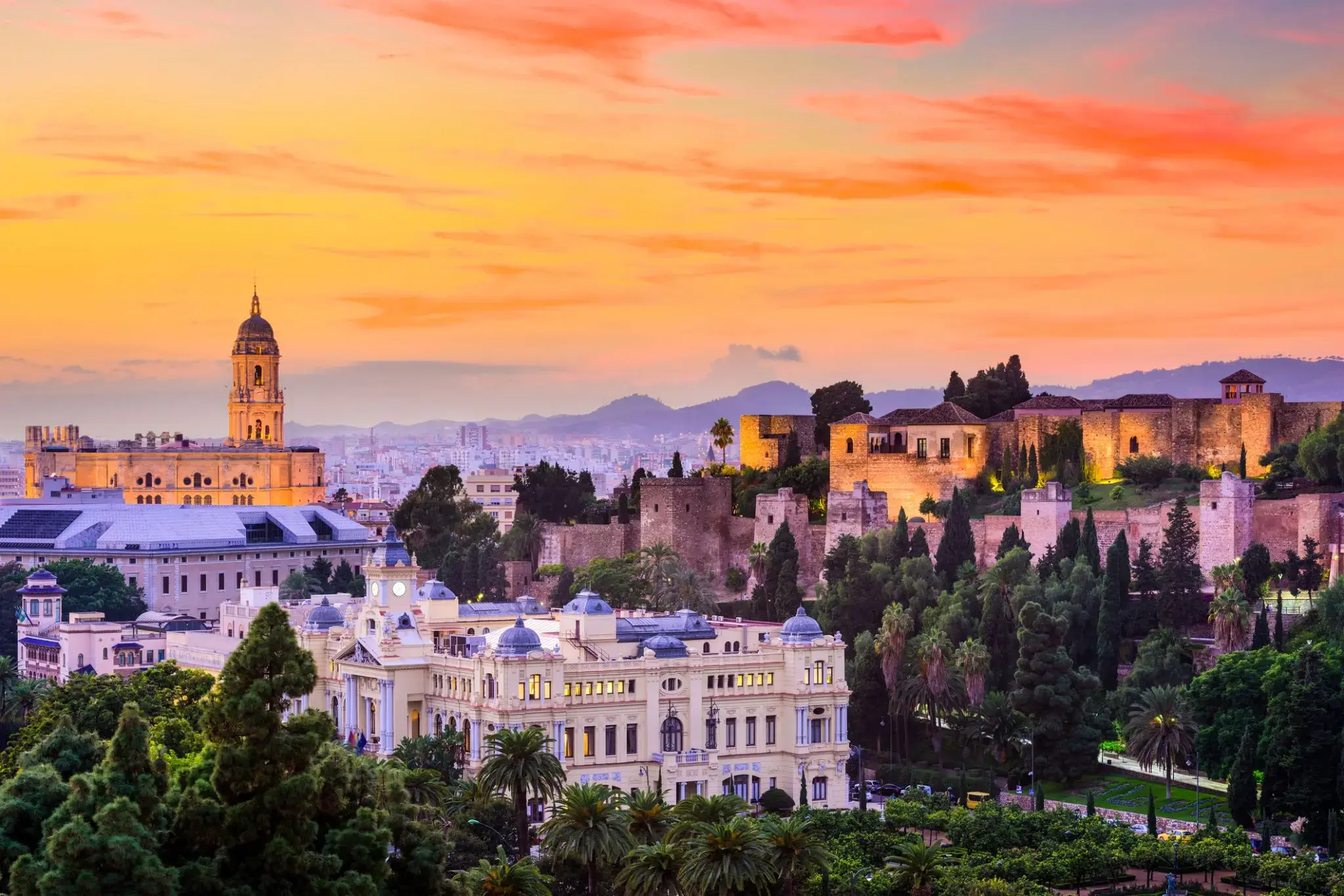
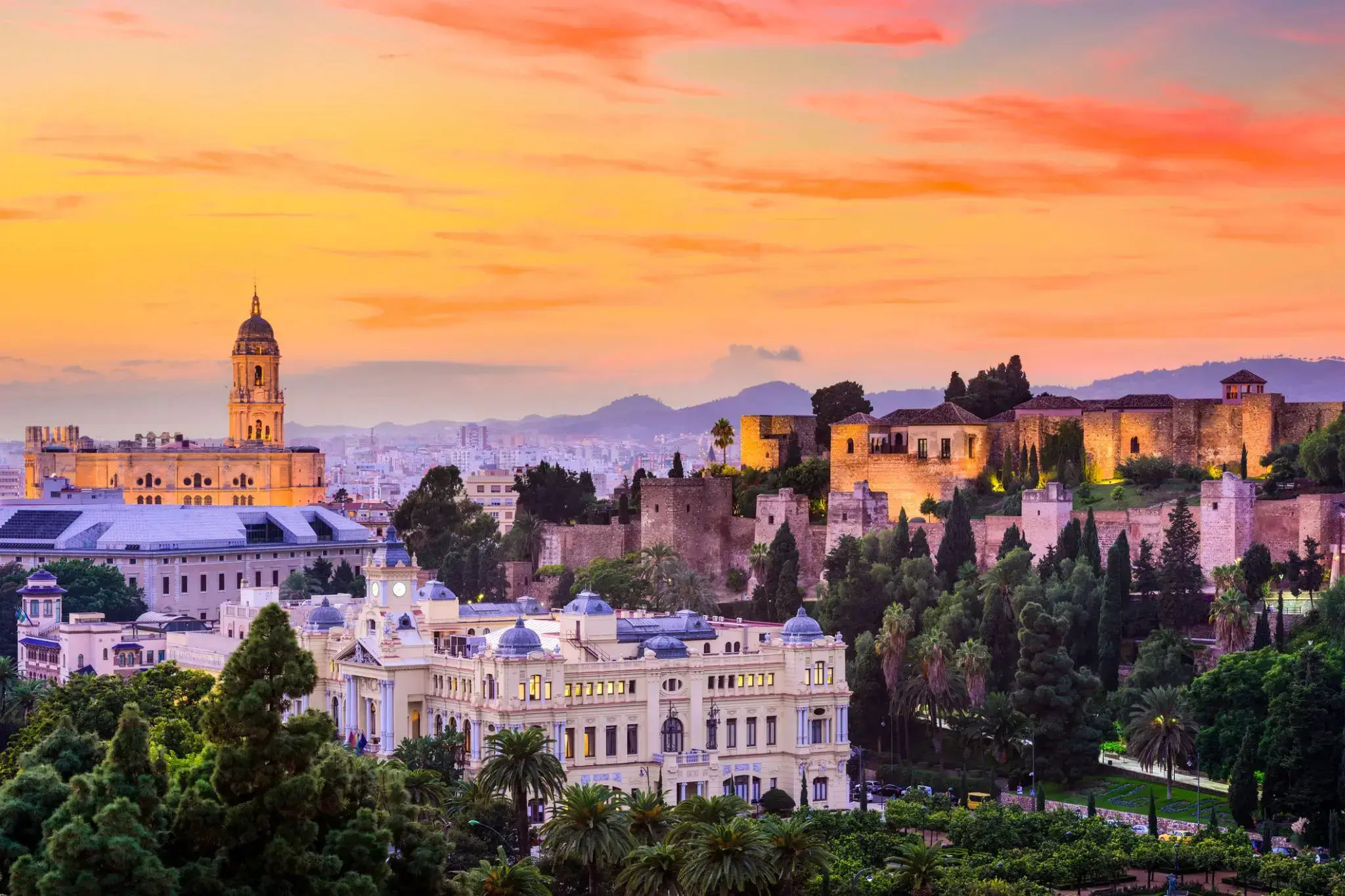
Málaga is a municipality, capital of the Province of Málaga, in the Autonomous Community of Andalusia, Spain. With a population of 569,130 in 2015, it is the second-most populous city of Andalusia and the sixth-largest in Spain. The southernmost large city in Europe, it lies on the Costa del Sol (Coast of the Sun) of the Mediterranean, about 100 kilometres (62.14 miles) east of the Strait of Gibraltar and about 130 km (80.78 mi) north of Africa.
Málaga's history spans about 2,800 years, making it one of the oldest cities in the world. According to most scholars, it was founded about 770 BC by the Phoenicians as Malaka From the 6th century BC the city was under the hegemony of Ancient Carthage, and from 218 BC, it was ruled by the Roman Republic and then empire as Malaca (Latin). After the fall of the empire and the end of Visigothic rule, it was under Islamic rule as Mālaqah for 800 years, but in 1487, the Crown of Castille gained control after the Reconquista. The archaeological remains and monuments from the Phoenician, Roman, Arabic and Christian eras make the historic center of the city an "open museum", displaying its history of nearly 3,000 years.
This important cultural infrastructure and the artistic heritage have culminated in the nomination of Málaga as a candidate for the 2016 European Capital of Culture.
The painter and sculptor Pablo Picasso, Hebrew poet and Jewish philosopher Solomon Ibn Gabirol and the actor Antonio Banderas were born in Málaga. The magnum opus of Cuban composer Ernesto Lecuona, "Malagueña", is named after the music of this region of Spain.
The most important business sectors in Málaga are tourism, construction and technology services, but other sectors such as transportation and logistics are beginning to expand. The Andalusia Technology Park (PTA), located in Málaga, has enjoyed significant growth since its inauguration in 1992. Málaga is the main economic and financial centre of southern Spain, home of the region's largest bank, Unicaja, and the fourth-ranking city in economic activity in Spain behind Madrid, Barcelona and Valencia.
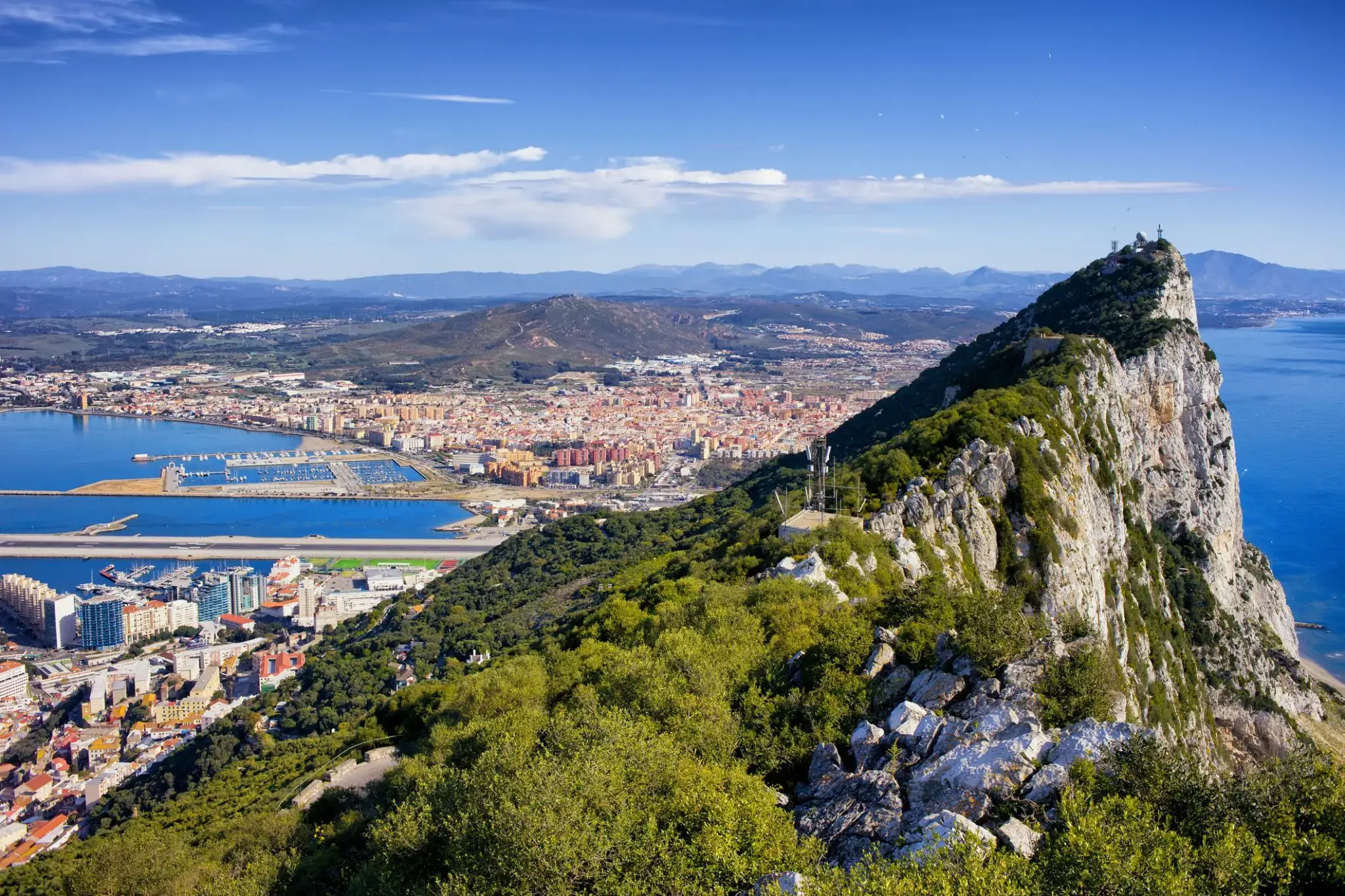
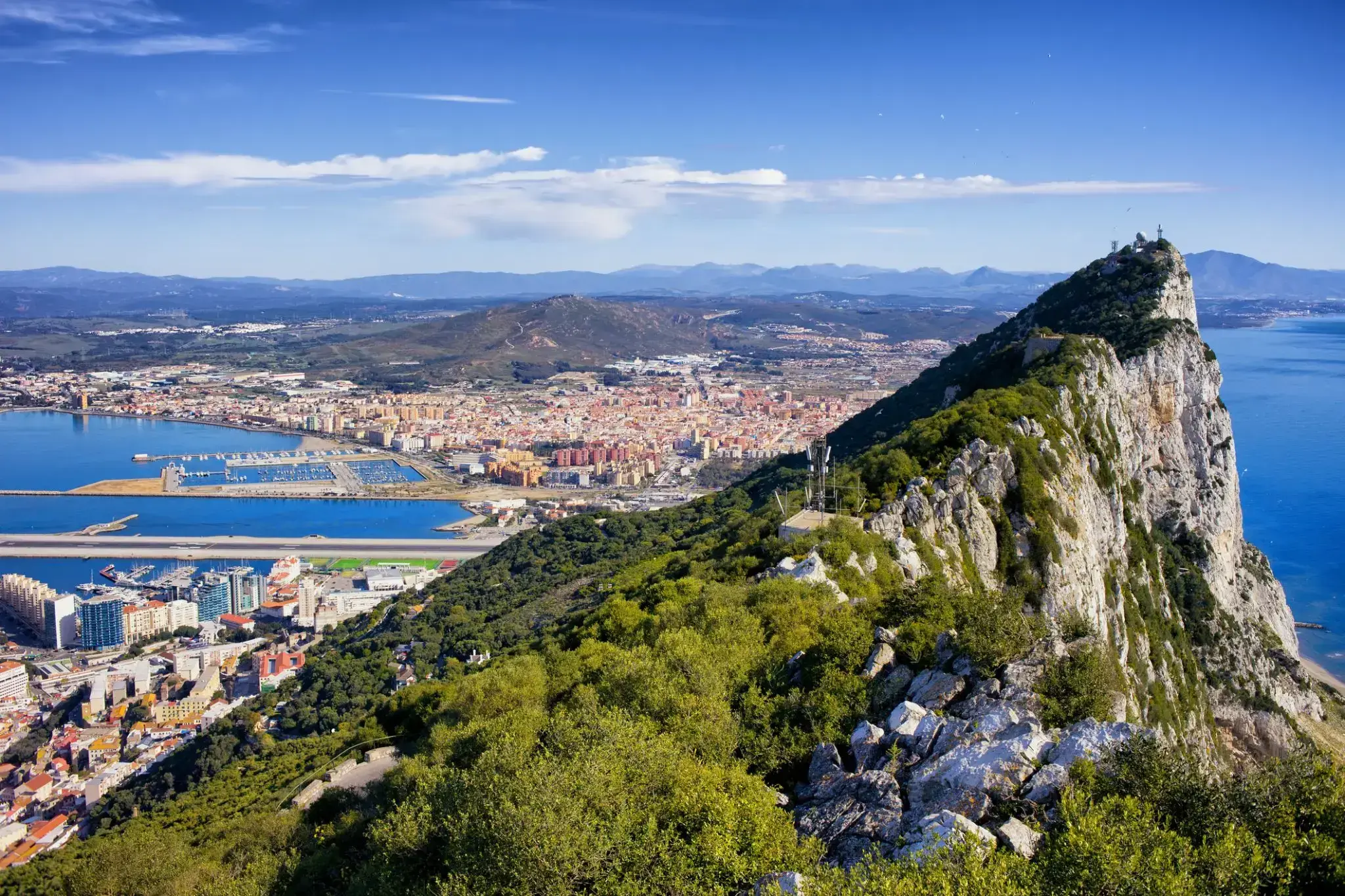
Gibraltar is a British Overseas Territory located at the southern tip of the Iberian Peninsula. It has an area of 6.7 km2 (2.6 sq mi) and is bordered to the north by Spain. The landscape is dominated by the Rock of Gibraltar at the foot of which is a densely populated town area, home to over 30,000 people, primarily Gibraltarians. It shares a maritime border with Morocco.
In 1704, Anglo-Dutch forces captured Gibraltar from Spain during the War of the Spanish Succession on behalf of the Habsburg claim to the Spanish throne. The territory was ceded to Great Britain in perpetuity under the Treaty of Utrechtin 1713. During World War II it was an important base for the Royal Navy as it controlled the entrance and exit to the Mediterranean Sea, which is only 8 miles (13 km) wide at this naval choke point. It remains strategically important, with half the world's seaborne trade passing through the strait. Today Gibraltar's economy is based largely on tourism, online gambling, financial services and cargo ship refuelling.
The sovereignty of Gibraltar is a point of contention in Anglo-Spanish relations because Spain asserts a claim to the territory. Gibraltarians rejected proposals for Spanish sovereignty in a 1967 referendum and, in a 2002 referendum, the idea of shared sovereignty was also rejected.
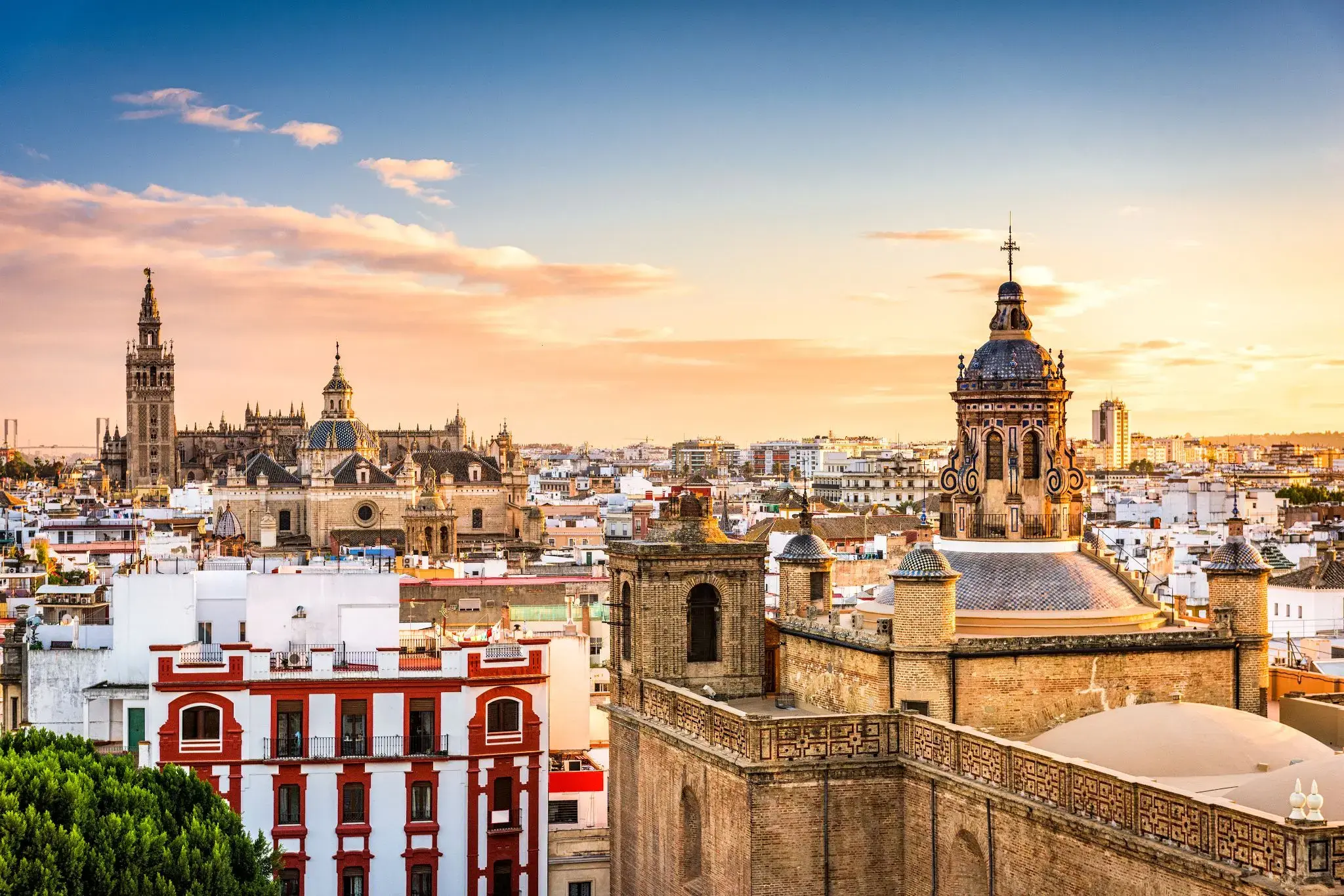
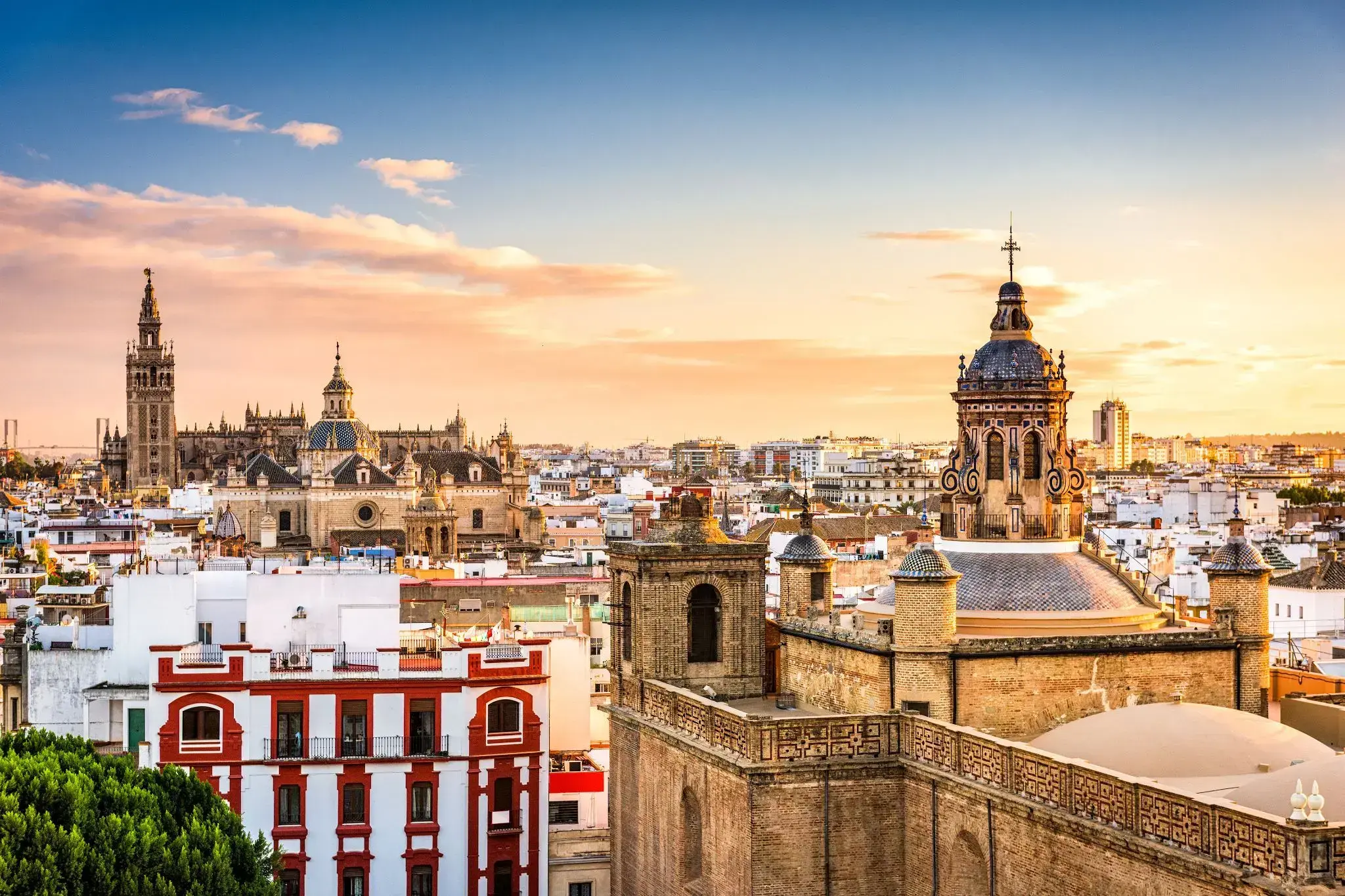
Seville is the capital and largest city of the autonomous community of Andalusia and the province of Seville, Spain. It is situated on the plain of the river Guadalquivir. The inhabitants of the city are known as sevillanos (feminine form: sevillanas) or hispalenses, after the Roman name of the city, Hispalis. Seville has a municipal population of about 690,000 as of 2016, and a metropolitan population of about 1.5 million, making it the fourth-largest city in Spain and the 30th most populous municipality in the European Union. Its Old Town, with an area of 4 square kilometres (2 sq mi), contains three UNESCO World Heritage Sites: the Alcázar palace complex, the Cathedral and the General Archive of the Indies. The Seville harbour, located about 80 kilometres (50 miles) from the Atlantic Ocean, is the only river port in Spain. Seville is also the hottest major metropolitan area in the geographical Southwestern Europe, with summer average high temperatures of above 35 °C (95 °F).
Seville was founded as the Roman city of Hispalis. It later became known as Ishbiliyya after the Muslim conquest in 712. During the Muslim rule in Spain, Seville came under the jurisdiction of the Caliphate of Córdoba before becoming the independent Taifa of Seville; later it was ruled by the Muslim Almoravids and the Almohads until finally being incorporated into the Christian Kingdom of Castile under Ferdinand III in 1248. After the discovery of the Americas, Seville became one of the economic centres of the Spanish Empire as its port monopolised the trans-oceanic trade and the Casa de Contratación (House of Trade) wielded its power, opening a Golden Age of arts and literature. In 1519, Ferdinand Magellan departed from Seville for the first circumnavigation of the Earth. Coinciding with the Baroque period of European history, the 17th century in Seville represented the most brilliant flowering of the city's culture; then began a gradual economic and demographic decline as silting in the Guadalquivirforced the trade monopoly to relocate to the nearby port of Cádiz.
The 20th century in Seville saw the tribulations of the Spanish Civil War, decisive cultural milestones such as the Ibero-American Exposition of 1929 and Expo '92, and the city's election as the capital of the Autonomous Community of Andalusia.
Seville is the capital and largest city of the autonomous community of Andalusia and the province of Seville, Spain. It is situated on the plain of the river Guadalquivir. The inhabitants of the city are known as sevillanos (feminine form: sevillanas) or hispalenses, after the Roman name of the city, Hispalis. Seville has a municipal population of about 690,000 as of 2016, and a metropolitan population of about 1.5 million, making it the fourth-largest city in Spain and the 30th most populous municipality in the European Union. Its Old Town, with an area of 4 square kilometres (2 sq mi), contains three UNESCO World Heritage Sites: the Alcázar palace complex, the Cathedral and the General Archive of the Indies. The Seville harbour, located about 80 kilometres (50 miles) from the Atlantic Ocean, is the only river port in Spain. Seville is also the hottest major metropolitan area in the geographical Southwestern Europe, with summer average high temperatures of above 35 °C (95 °F).
Seville was founded as the Roman city of Hispalis. It later became known as Ishbiliyya after the Muslim conquest in 712. During the Muslim rule in Spain, Seville came under the jurisdiction of the Caliphate of Córdoba before becoming the independent Taifa of Seville; later it was ruled by the Muslim Almoravids and the Almohads until finally being incorporated into the Christian Kingdom of Castile under Ferdinand III in 1248. After the discovery of the Americas, Seville became one of the economic centres of the Spanish Empire as its port monopolised the trans-oceanic trade and the Casa de Contratación (House of Trade) wielded its power, opening a Golden Age of arts and literature. In 1519, Ferdinand Magellan departed from Seville for the first circumnavigation of the Earth. Coinciding with the Baroque period of European history, the 17th century in Seville represented the most brilliant flowering of the city's culture; then began a gradual economic and demographic decline as silting in the Guadalquivirforced the trade monopoly to relocate to the nearby port of Cádiz.
The 20th century in Seville saw the tribulations of the Spanish Civil War, decisive cultural milestones such as the Ibero-American Exposition of 1929 and Expo '92, and the city's election as the capital of the Autonomous Community of Andalusia.
Seville is the capital and largest city of the autonomous community of Andalusia and the province of Seville, Spain. It is situated on the plain of the river Guadalquivir. The inhabitants of the city are known as sevillanos (feminine form: sevillanas) or hispalenses, after the Roman name of the city, Hispalis. Seville has a municipal population of about 690,000 as of 2016, and a metropolitan population of about 1.5 million, making it the fourth-largest city in Spain and the 30th most populous municipality in the European Union. Its Old Town, with an area of 4 square kilometres (2 sq mi), contains three UNESCO World Heritage Sites: the Alcázar palace complex, the Cathedral and the General Archive of the Indies. The Seville harbour, located about 80 kilometres (50 miles) from the Atlantic Ocean, is the only river port in Spain. Seville is also the hottest major metropolitan area in the geographical Southwestern Europe, with summer average high temperatures of above 35 °C (95 °F).
Seville was founded as the Roman city of Hispalis. It later became known as Ishbiliyya after the Muslim conquest in 712. During the Muslim rule in Spain, Seville came under the jurisdiction of the Caliphate of Córdoba before becoming the independent Taifa of Seville; later it was ruled by the Muslim Almoravids and the Almohads until finally being incorporated into the Christian Kingdom of Castile under Ferdinand III in 1248. After the discovery of the Americas, Seville became one of the economic centres of the Spanish Empire as its port monopolised the trans-oceanic trade and the Casa de Contratación (House of Trade) wielded its power, opening a Golden Age of arts and literature. In 1519, Ferdinand Magellan departed from Seville for the first circumnavigation of the Earth. Coinciding with the Baroque period of European history, the 17th century in Seville represented the most brilliant flowering of the city's culture; then began a gradual economic and demographic decline as silting in the Guadalquivirforced the trade monopoly to relocate to the nearby port of Cádiz.
The 20th century in Seville saw the tribulations of the Spanish Civil War, decisive cultural milestones such as the Ibero-American Exposition of 1929 and Expo '92, and the city's election as the capital of the Autonomous Community of Andalusia.
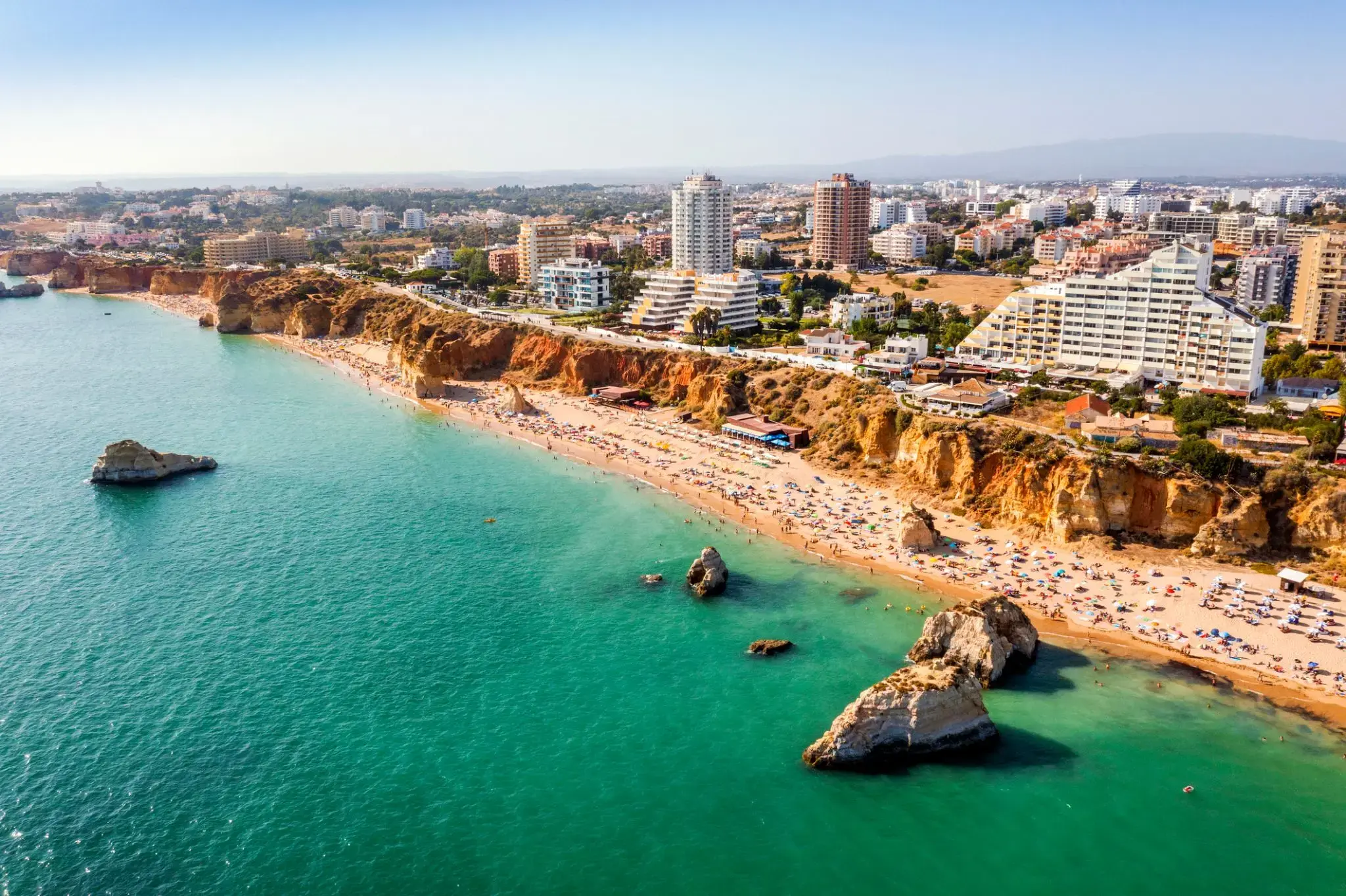
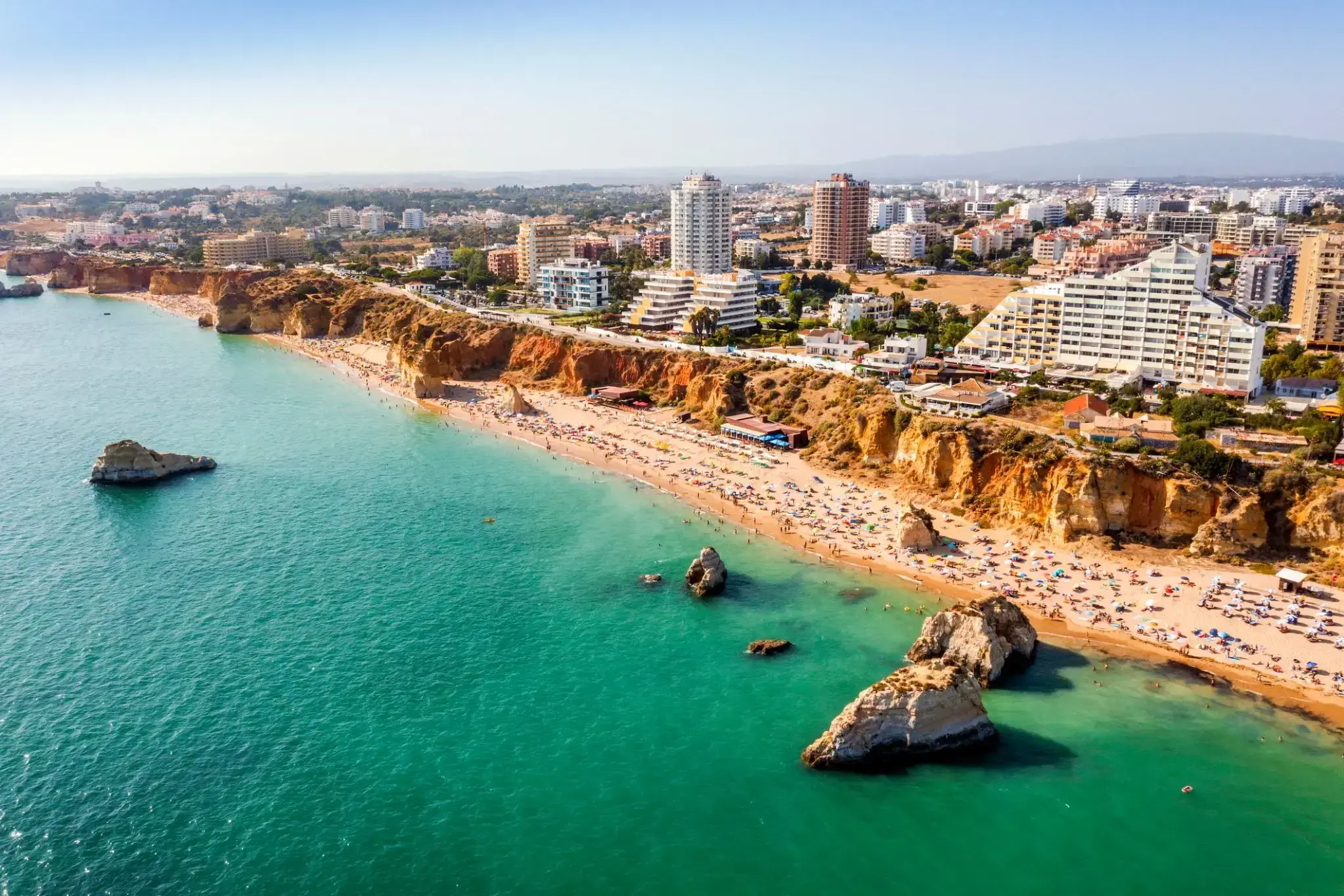
Portimão is a town and a municipality in the district of Faro, in the Algarve region of southern Portugal. The population in 2011 was 55,614, in an area of 182.06 km². It was formerly known as Vila Nova de Portimão. In 1924, it was incorporated as a cidadeand became known merely as Portimão. Historically a fishing and shipbuilding centre, it has nonetheless developed into a strong tourist centre oriented along its beaches and southern coast. The two most populous towns in the Algarve are Portimão and Faro.
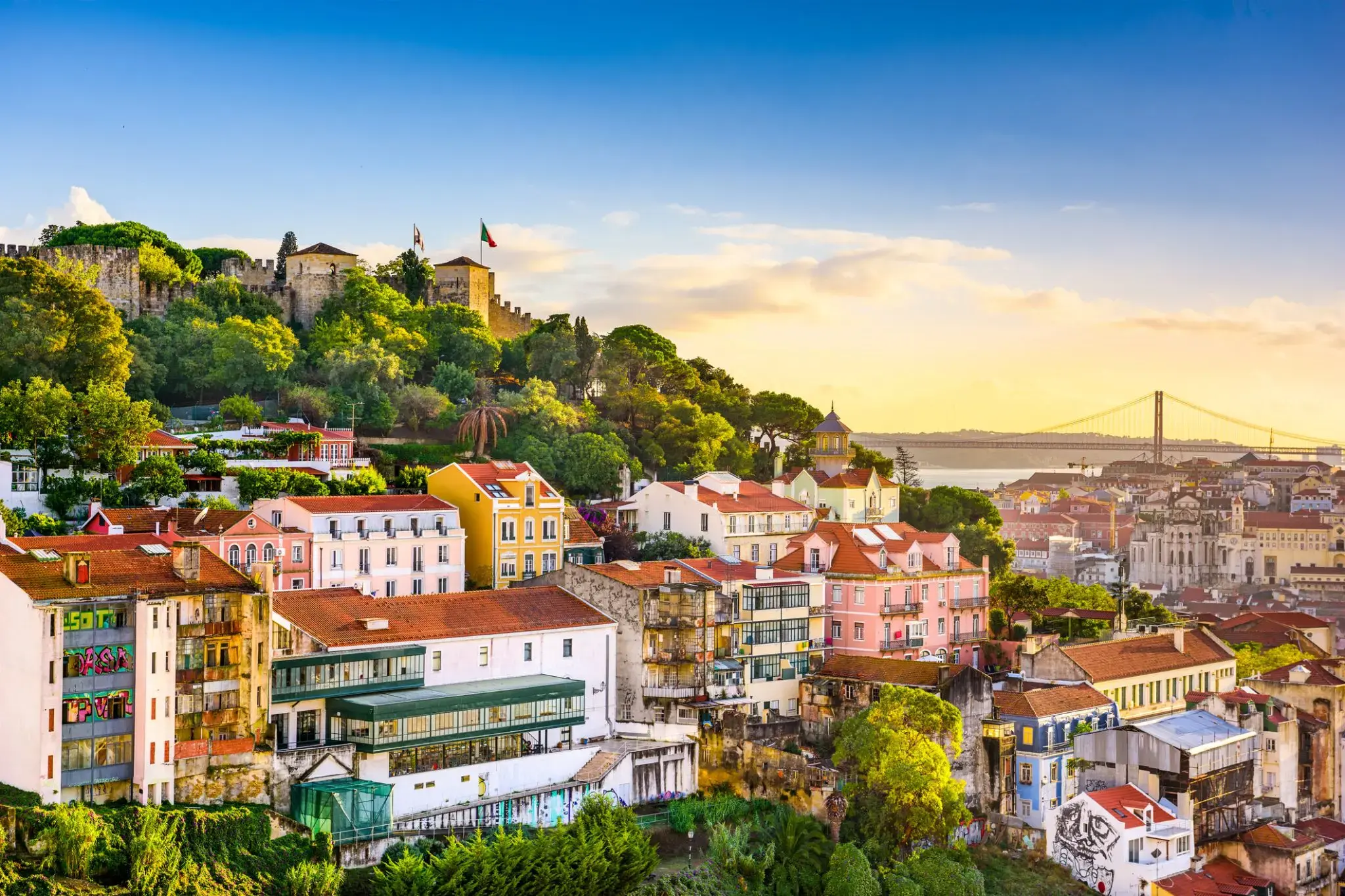
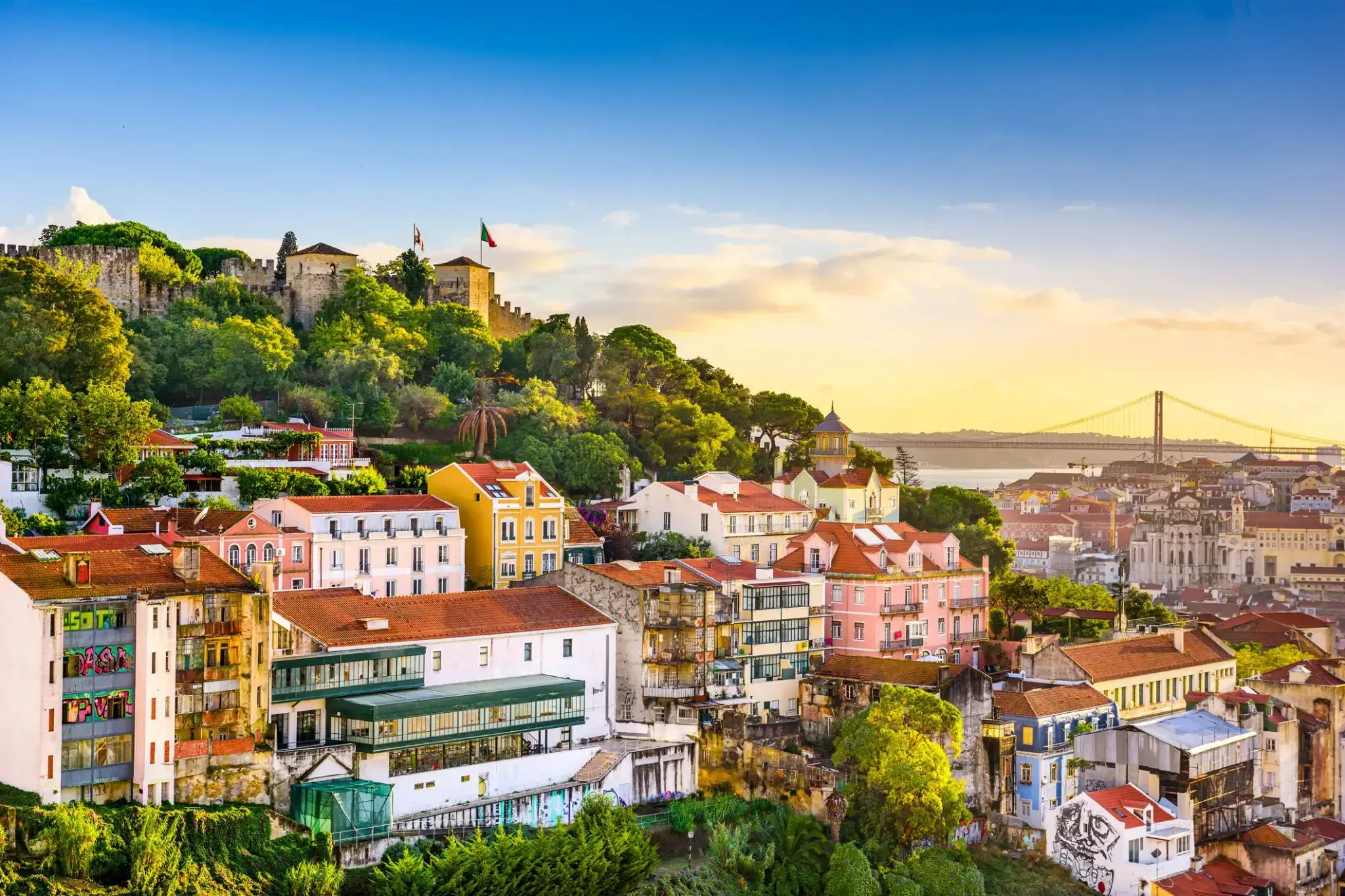
Lisbon is the capital and the largest city of Portugal, with an estimated population of 505,526 within its administrative limits in an area of 100.05 km2. Its urban area extends beyond the city's administrative limits with a population of around 2.8 million people, being the 11th-most populous urban area in the European Union. About 3 million people live in the Lisbon Metropolitan Area (which represents approximately 27% of the country's population). It is mainland Europe's westernmost capital city and the only one along the Atlantic coast. Lisbon lies in the western Iberian Peninsula on the Atlantic Ocean and the River Tagus. The westernmost areas of its metro area form the westernmost point of Continental Europe, which is known as Cabo da Roca, located in the Sintra Mountains.
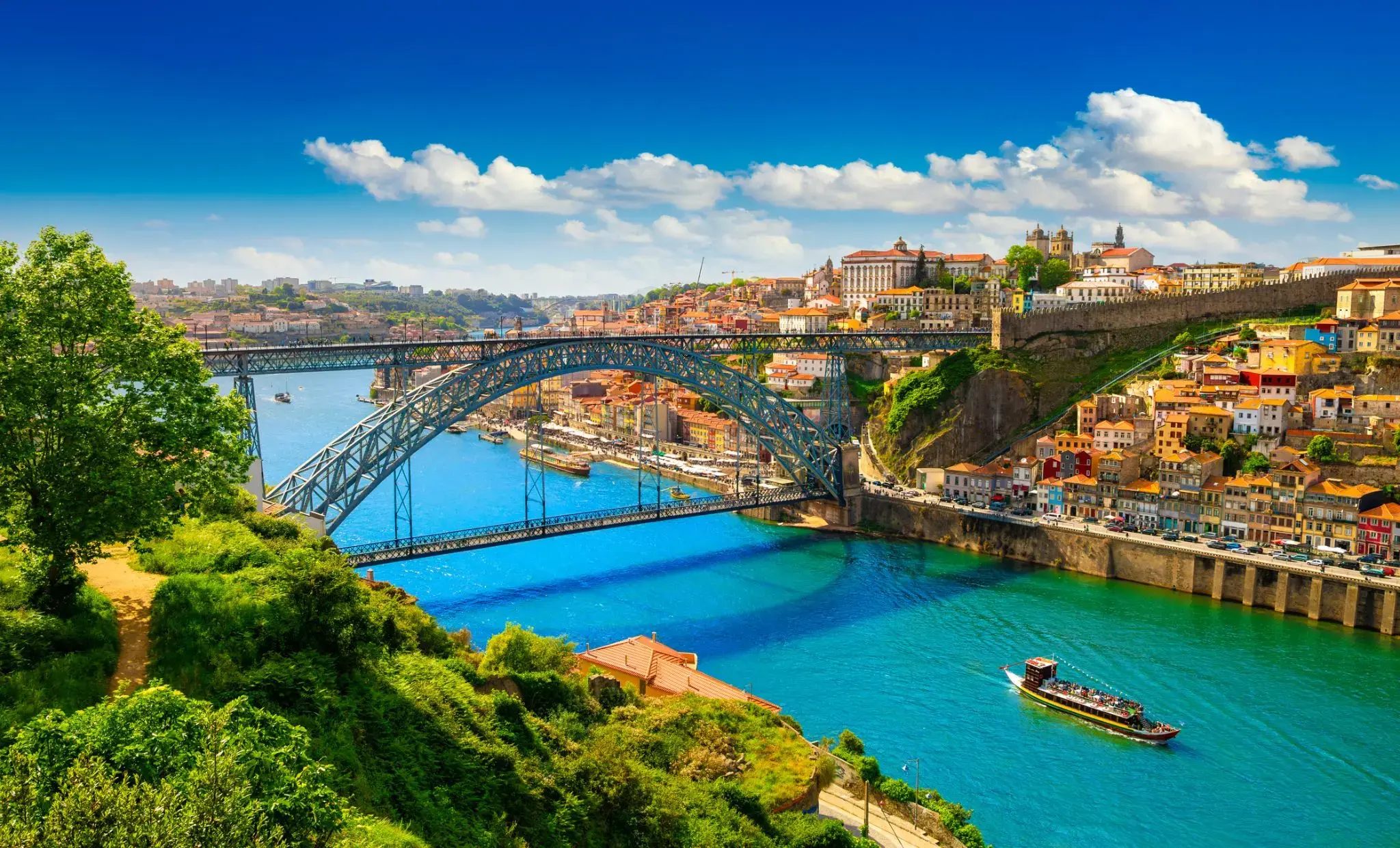
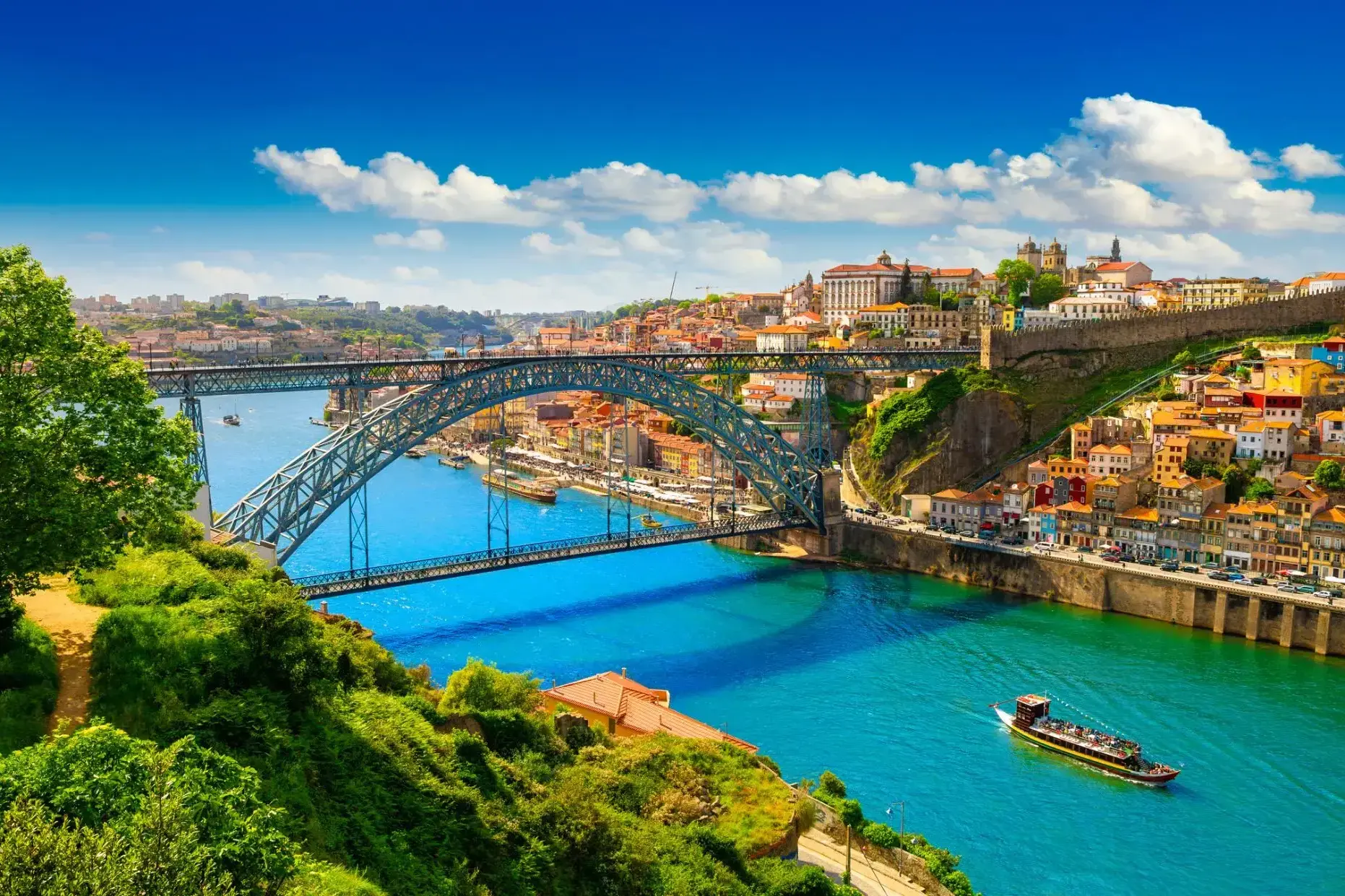
Порту является вторым по величине городом Португалии после Лиссабона и одним из крупных городских районов Пиренейского полуострова. Население самого города составляет 237 591 человек, а в столичном районе Порту, который выходит за административные пределы города, проживает 1,9 миллиона человек (2011 год) на площади 2 395 км2 (925 кв. Миль), что делает его вторым самый большой городской район в Португалии. Он признан глобальным городом гамма-уровня Исследовательской группой по глобализации и глобальным городам (GaWC), единственным португальским городом, кроме Лиссабона, который был признан глобальным городом.
Расположенный вдоль устья реки Дору на севере Португалии, Порту является одним из старейших европейских центров, и его историческое ядро было объявлено ЮНЕСКО объектом Всемирного наследия в 1996 году. Западная часть его городской территории простирается до береговой линии Атлантического океана. Его поселение датируется много веков, когда он был форпостом Римской империи. Его объединенное кельтско-латинское имя, Portus Cale, было названо происхождением названия «Португалия», основанного на транслитерации и устной эволюции от латыни. На португальском языке название города пишется с определенной статьей о Порту ; следовательно, его английское название произошло от неправильного толкования устного произношения и упоминается как Опорто в современной литературе и многими ораторами.
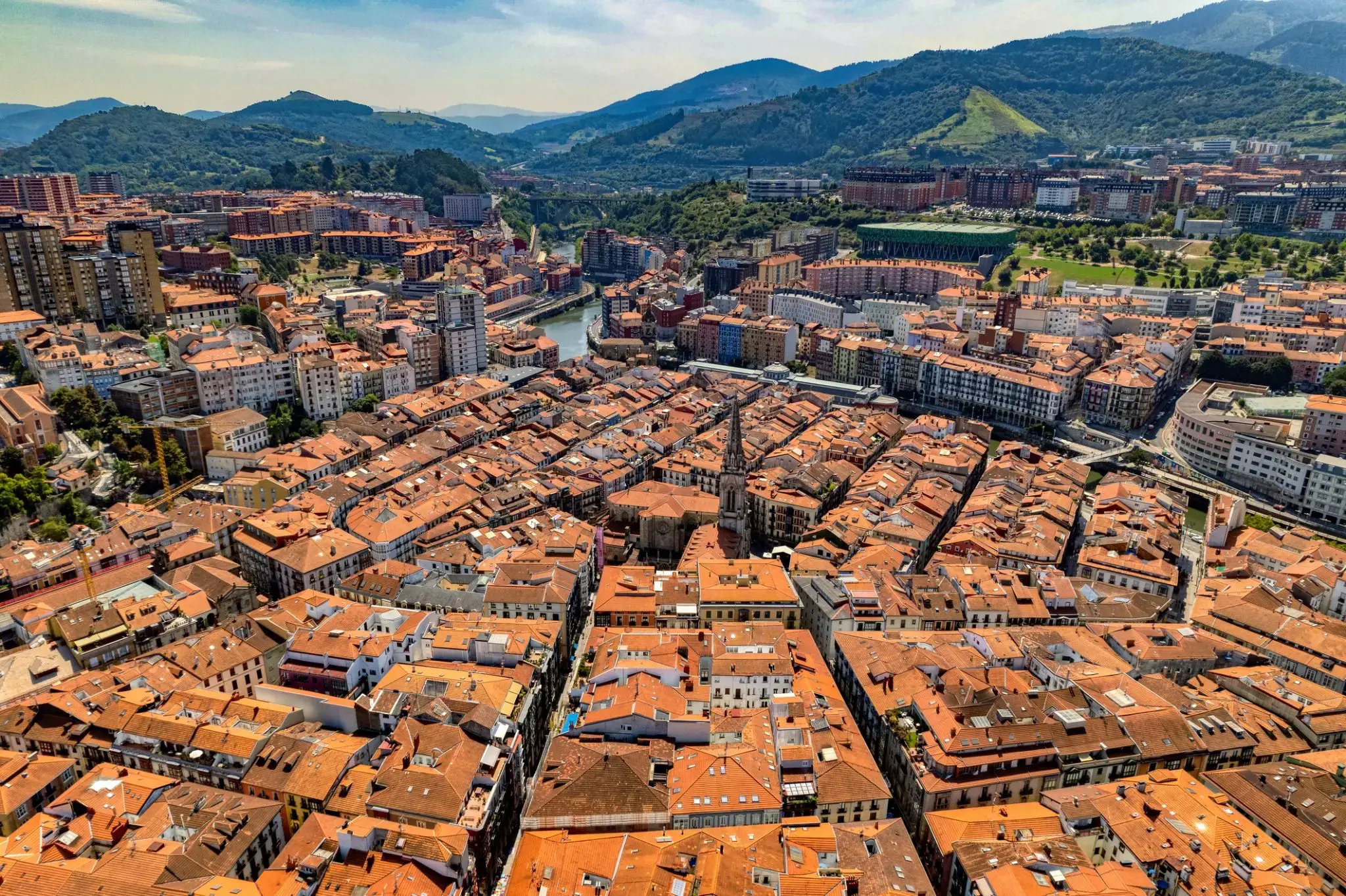
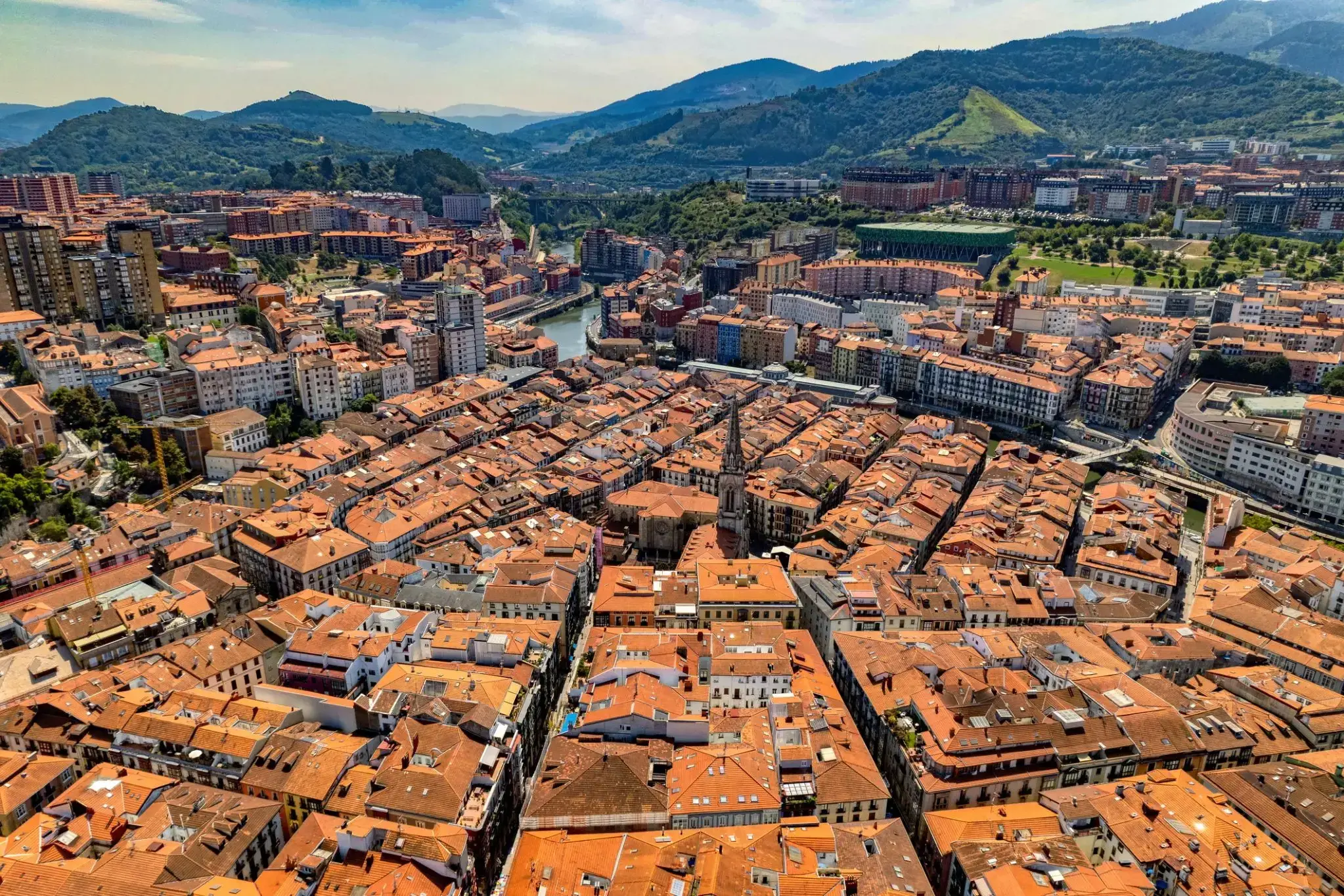
Bilbao is a city in northern Spain, the largest city in the province of Biscay and in the Basque Country as a whole. It is also the largest city proper in northern Spain. Bilbao is the tenth largest city in Spain, with a population of 345,141 as of 2015. The Bilbao metropolitan area has roughly 1 million inhabitants, making it one of the most populous metropolitan areas in northern Spain; with a population of 875,552 the comarca of Greater Bilbao is the fifth-largest urban area in Spain. Bilbao is also the main urban area in what is defined as the Greater Basque region.
Bilbao is situated in the north-central part of Spain, some 16 kilometres (10 mi) south of the Bay of Biscay, where the economic social development is located, where the estuary of Bilbao is formed. Its main urban core is surrounded by two small mountain ranges with an average elevation of 400 metres (1,300 ft). Its climate is shaped by the Bay of Biscay low-pressure systems and mild air, moderating summer temperatures by Iberian standards, with low sunshine and high rainfall. The annual temperature range is low for its latitude.
After its foundation in the early 14th century by Diego López V de Haro, head of the powerful Haro family, Bilbao was a commercial hub of the Basque Country that enjoyed significant importance in Green Spain. This was due to its port activity based on the export of iron extracted from the Biscayan quarries. Throughout the nineteenth century and the beginning of the twentieth, Bilbao experienced heavy industrialisation, making it the centre of the second-most industrialised region of Spain, behind Barcelona. At the same time an extraordinary population explosion prompted the annexation of several adjacent municipalities. Nowadays, Bilbao is a vigorous service city that is experiencing an ongoing social, economic, and aesthetic revitalisation process, started by the iconic Bilbao Guggenheim Museum, and continued by infrastructure investments, such as the airport terminal, the rapid transit system, the tram line, the Azkuna Zentroa, and the currently under development Abandoibarra and Zorrozaurrerenewal projects.
Bilbao is also home to football club Athletic Club de Bilbao, a significant symbol for Basque nationalism due to its promotion of only Basque players and one of the most successful clubs in Spanish football history.
On 19 May 2010, the city of Bilbao was recognised with the Lee Kuan Yew World City Prize, awarded by the city state of Singapore, in collaboration with the Swedish Nobel Academy. Considered the Nobel Prize for urbanism, it was handed out on 29 June 2010. On 7 January 2013, its mayor, Iñaki Azkuna, received the 2012 World Mayor Prize awarded every two years by the British foundation The City Mayors Foundation, in recognition of the urban transformation experienced by the Biscayan capital since the 1990s. On 8 November 2017, Bilbao was chosen the Best European City 2018 at The Urbanism Awards 2018, awarded by the international organisation The Academy of Urbanism.
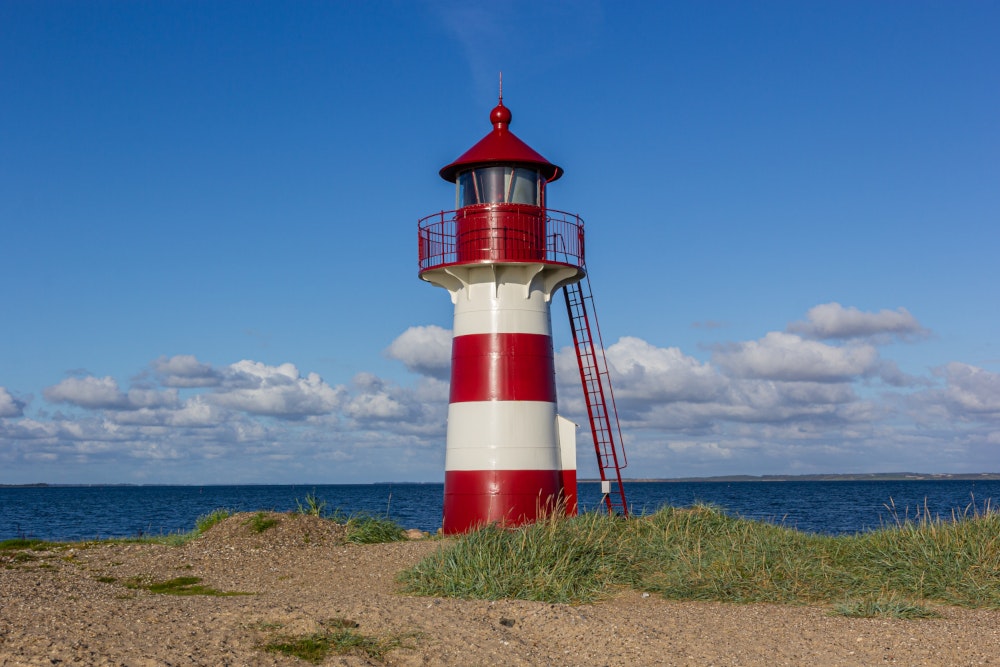
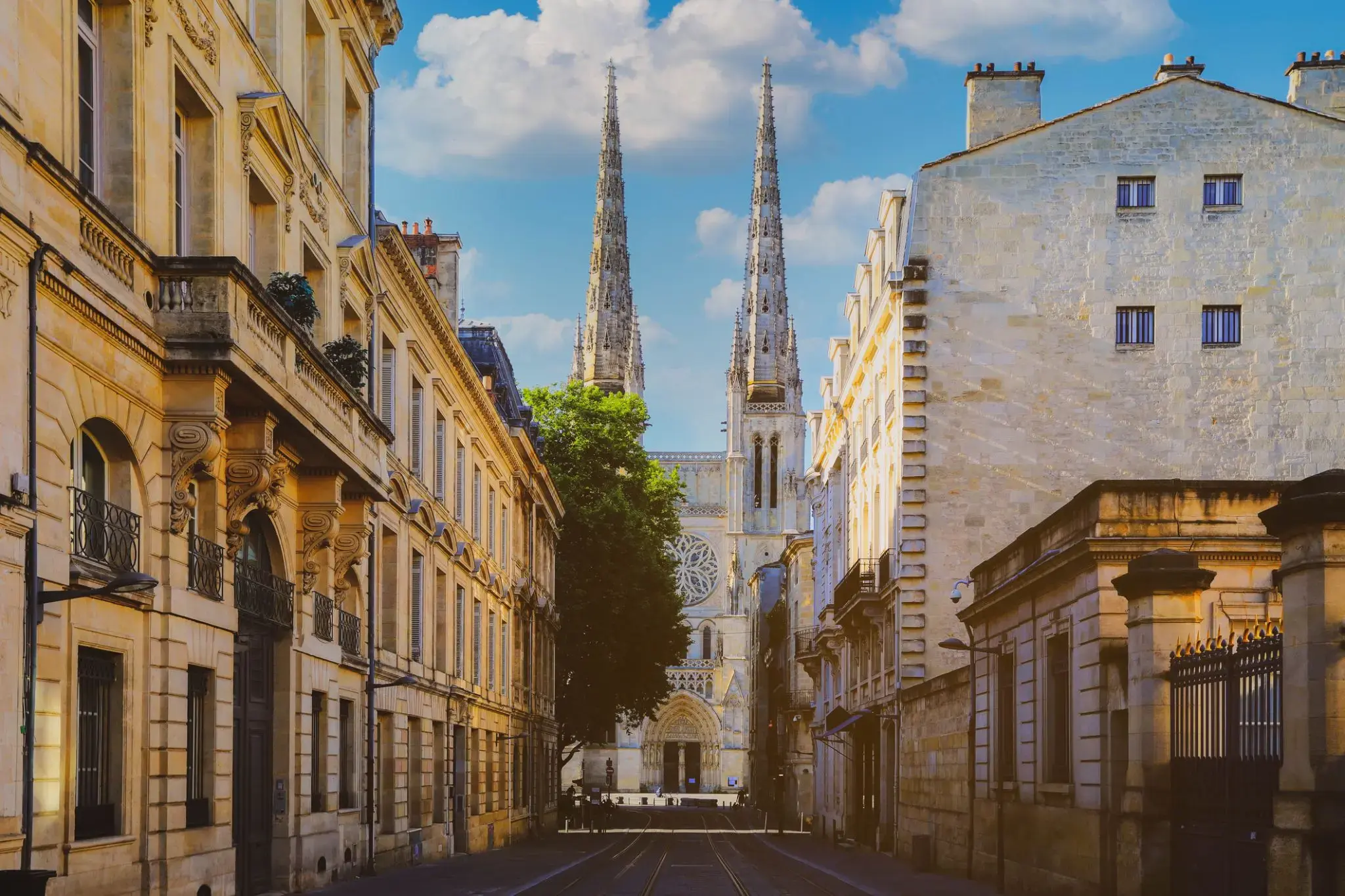
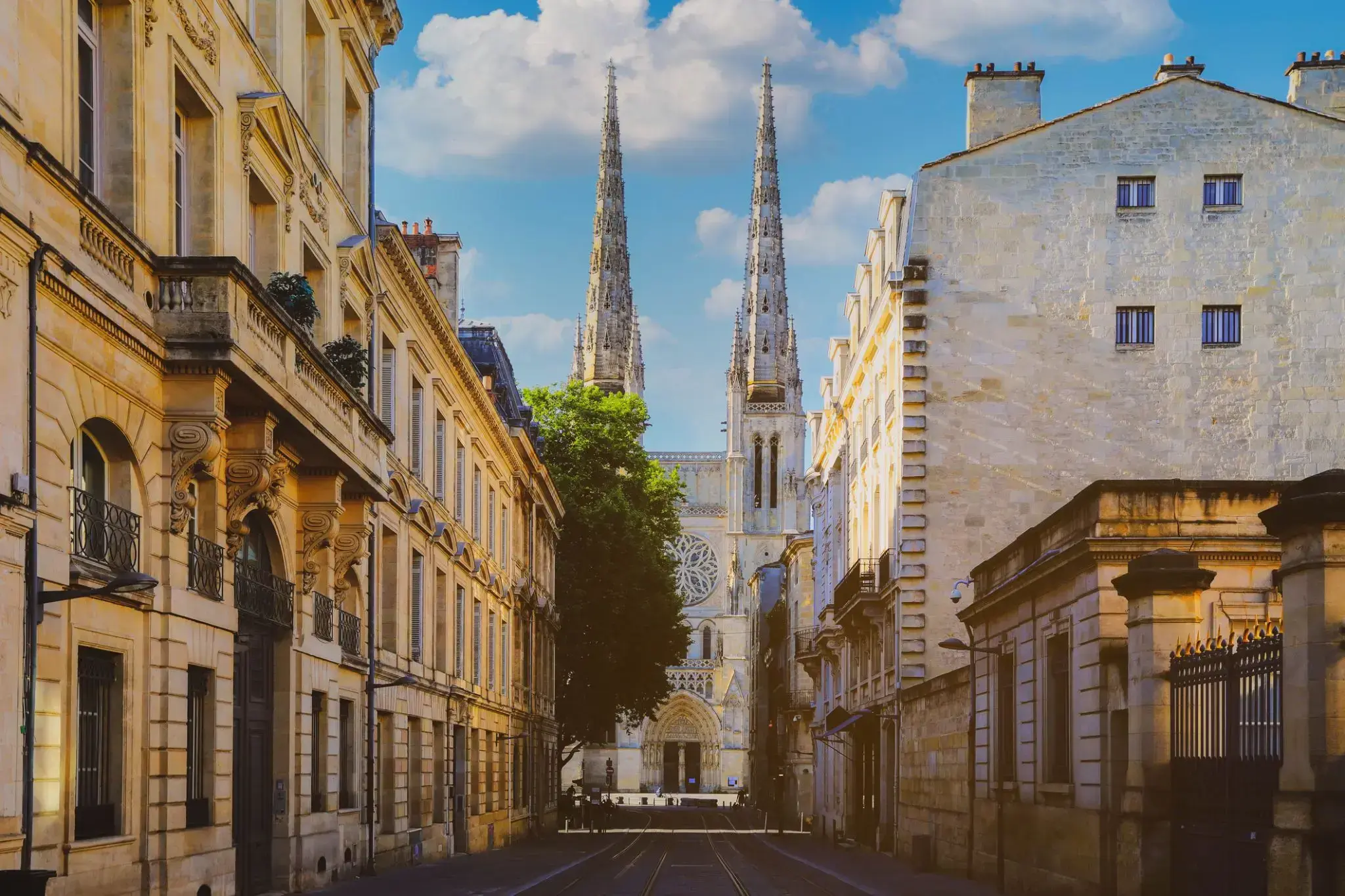
Bordeaux is a port city on the Garonne in the Gironde department in Southwestern France.
The municipality (commune) of Bordeaux proper has a population of 246,586 (2014). Together with its suburbs and satellite towns, Bordeaux is the centre of the Bordeaux Métropole. With 1,195,335 in the metropolitan area, it is the sixth-largest in France, after Paris, Marseille, Lyon, Toulouse, and Lille. It is the capital of the Nouvelle-Aquitaineregion, as well as the prefecture of the Gironde department. Its inhabitants are called "Bordelais" (for men) or "Bordelaises" (women). The term "Bordelais" may also refer to the city and its surrounding region.
Being at the center of a major wine-growing and wine-producing region, Bordeaux remains a prominent powerhouse and exercises significant influence on the world wine industry although no wine production is conducted within the city limits. It is home to the world's main wine fair, Vinexpo, and the wine economy in the metro area takes in 14.5 billion euros each year. Bordeaux wine has been produced in the region since the 8th century. The historic part of the city is on the UNESCO World Heritage List as "an outstanding urban and architectural ensemble" of the 18th century.[7] After Paris, Bordeaux has the highest number of preserved historical buildings of any city in France.
Bordeaux is a port city on the Garonne in the Gironde department in Southwestern France.
The municipality (commune) of Bordeaux proper has a population of 246,586 (2014). Together with its suburbs and satellite towns, Bordeaux is the centre of the Bordeaux Métropole. With 1,195,335 in the metropolitan area, it is the sixth-largest in France, after Paris, Marseille, Lyon, Toulouse, and Lille. It is the capital of the Nouvelle-Aquitaineregion, as well as the prefecture of the Gironde department. Its inhabitants are called "Bordelais" (for men) or "Bordelaises" (women). The term "Bordelais" may also refer to the city and its surrounding region.
Being at the center of a major wine-growing and wine-producing region, Bordeaux remains a prominent powerhouse and exercises significant influence on the world wine industry although no wine production is conducted within the city limits. It is home to the world's main wine fair, Vinexpo, and the wine economy in the metro area takes in 14.5 billion euros each year. Bordeaux wine has been produced in the region since the 8th century. The historic part of the city is on the UNESCO World Heritage List as "an outstanding urban and architectural ensemble" of the 18th century.[7] After Paris, Bordeaux has the highest number of preserved historical buildings of any city in France.
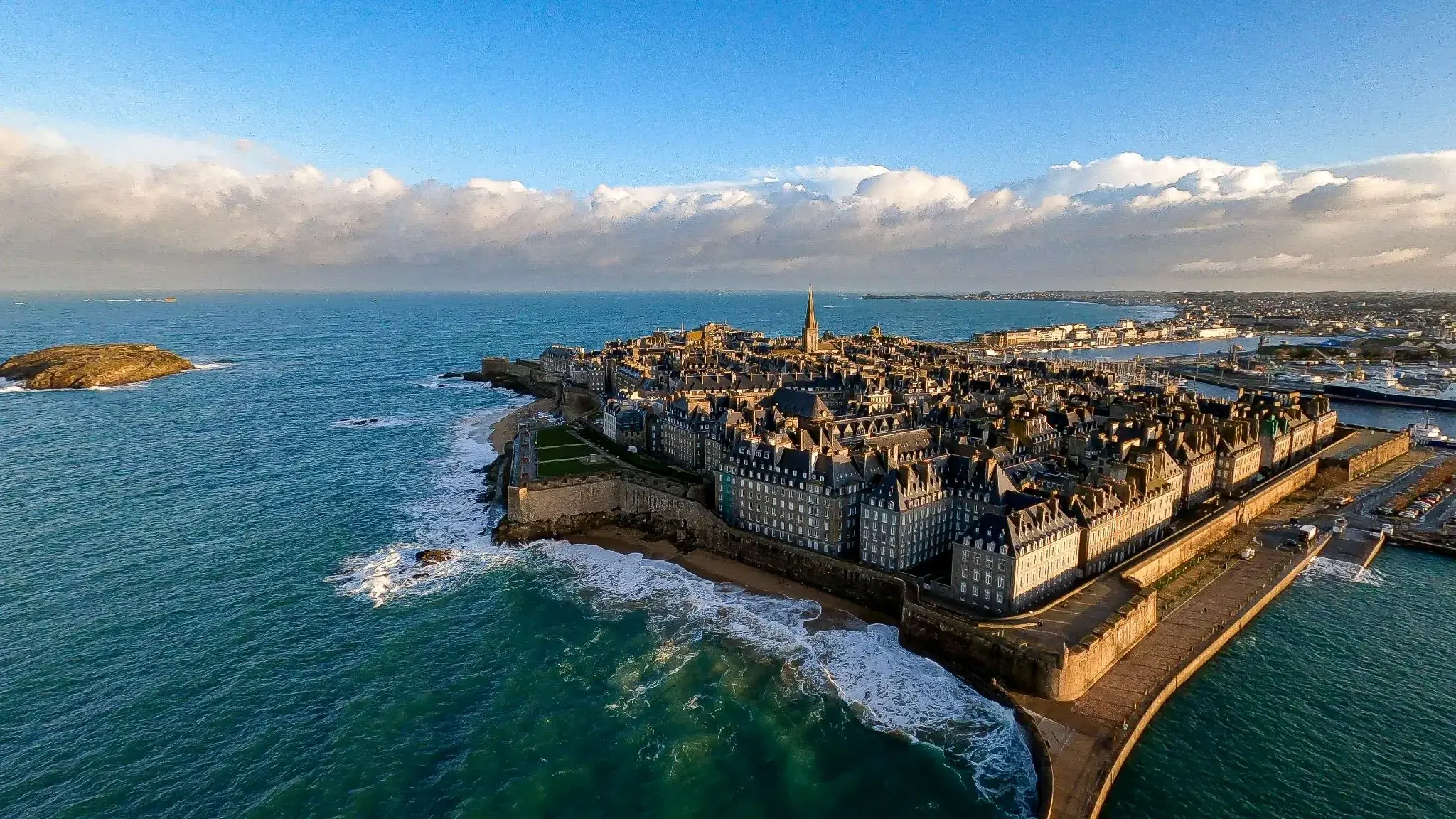
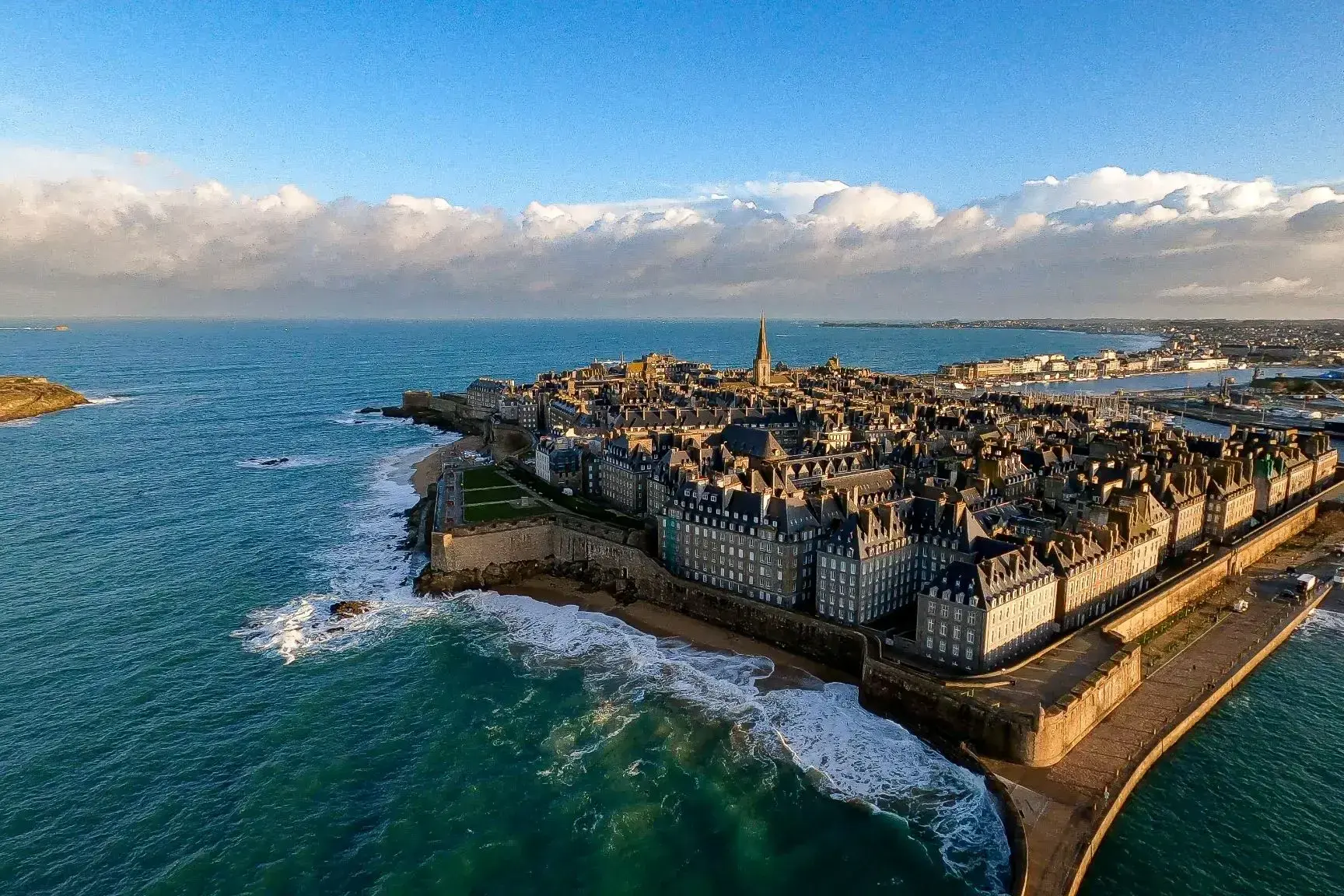
The sea breeze and the cries of seagulls accompany you in Saint-Malo, a city on the Brittany coast that has preserved its spirit of maritime adventure and independence. Here, high fortress walls embrace narrow streets, while cobblestone paths lead you to cozy cafes overlooking the ocean. The history of pirates and sailors comes alive as you walk along the ramparts, watch the tides transform the coastline, or take a boat to visit the famous Grand Bé island, where the writer Chateaubriand is buried.
In Saint-Malo, you can enjoy fresh seafood in local restaurants, taste oysters harvested from nearby waters, or simply have a picnic on the sandy beaches revealed at low tide. The city offers a sense of both coziness and freedom, blending picturesque architecture with the energy of the Atlantic, while the sea breeze and salty air remind you that here, history and nature always walk beside you.
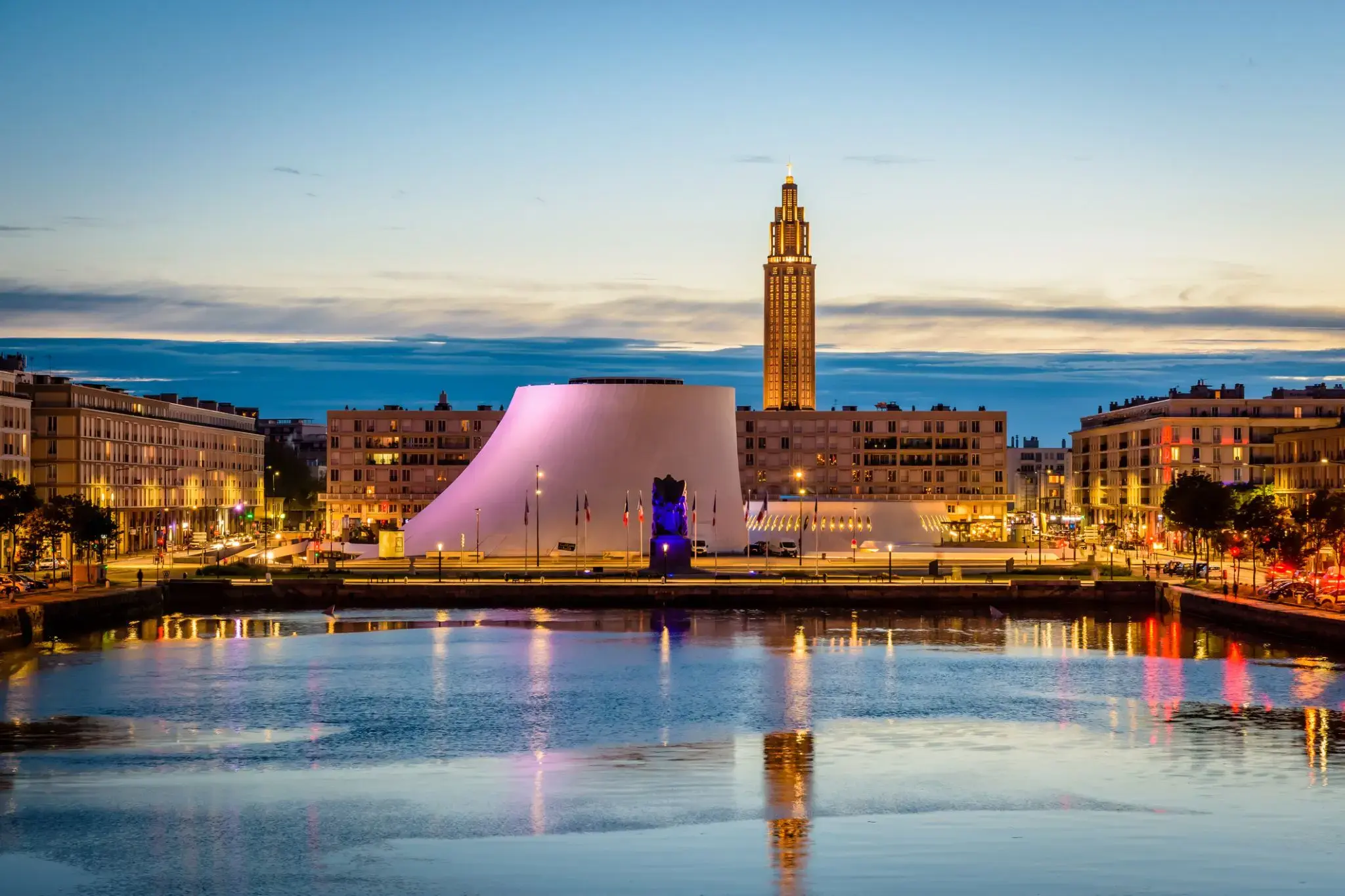
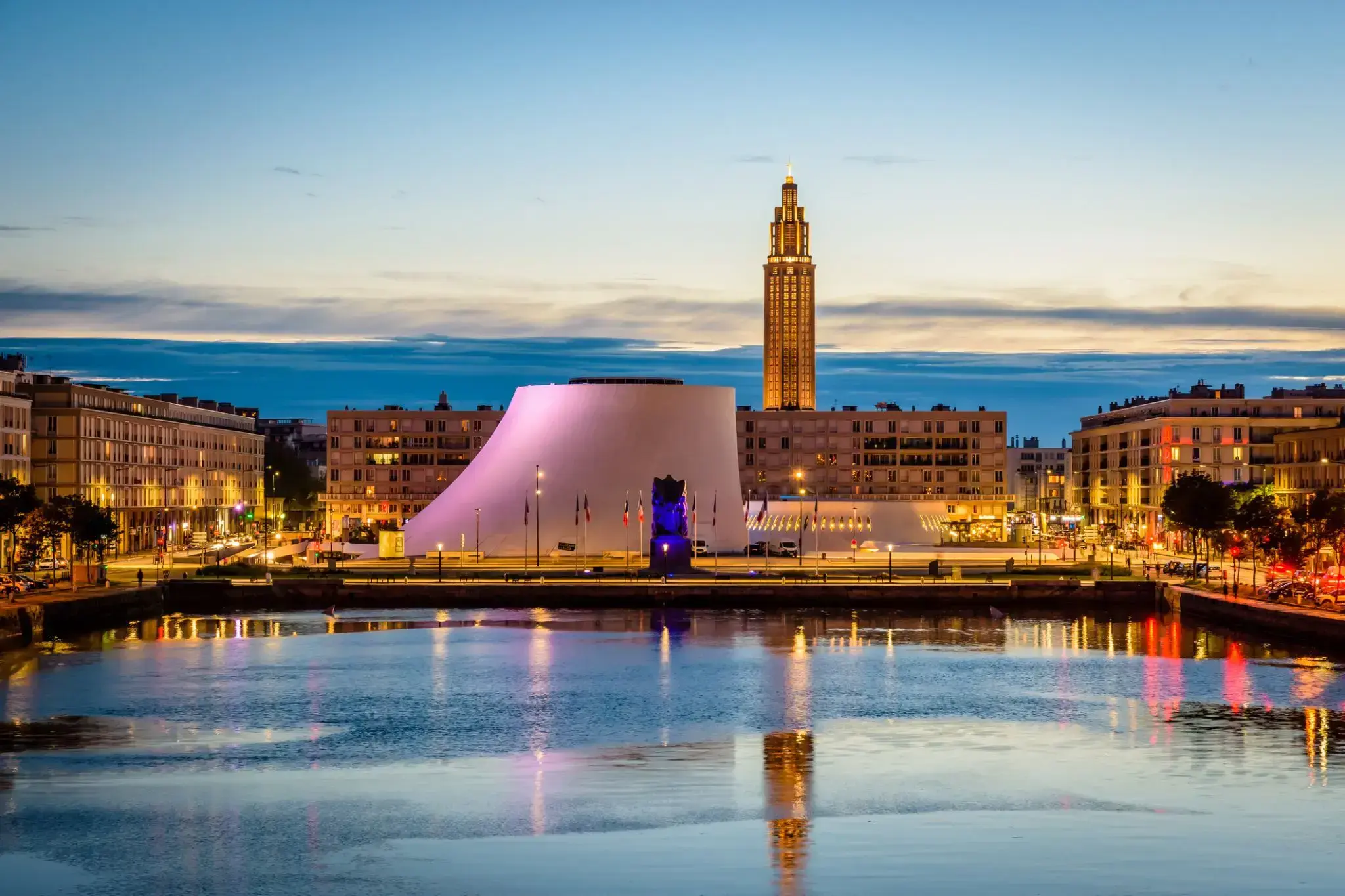
Le Havre is a port city located in the northwest of France, on the coast of the English Channel. It is an important center of maritime trade and shipbuilding. Founded in the 16th century, Le Havre quickly developed thanks to its strategic location, becoming one of the largest ports in the country. The city is known for its modern architecture, carefully planned after the destructions of World War II. In 2005, the historic center of the city was included in the UNESCO World Heritage list, and the famous architectural ensemble designed by Auguste Perret became an essential part of the city's identity.
Today, Le Havre attracts tourists with its unique atmosphere, blending old and new elements. One of its main attractions is the Notre-Dame-de-Grâce, as well as the Dunkirk Cultural Center, which hosts concerts, exhibitions, and theatrical performances. The local beaches and promenades are perfect places for walks and relaxation, while numerous restaurants offer fresh seafood dishes. Le Havre has also become an important cultural and economic center, welcoming guests not only from France but also from all over the world.

Dover is a major ferry port in Kent, South East England. It faces France across the Strait of Dover, the narrowest part of the English Channel, and lies south-east of Canterbury and east of Maidstone. The town is the administrative centre of the Dover District and home of the Dover Calais ferry through the Port of Dover. The surrounding chalk cliffs are known as the White Cliffs of Dover.
Archaeological finds have revealed that the area has always been a focus for peoples entering and leaving Britain. The name derives from the River Dour that flows through it.
The Port of Dover provides much of the town's employment, as does tourism.
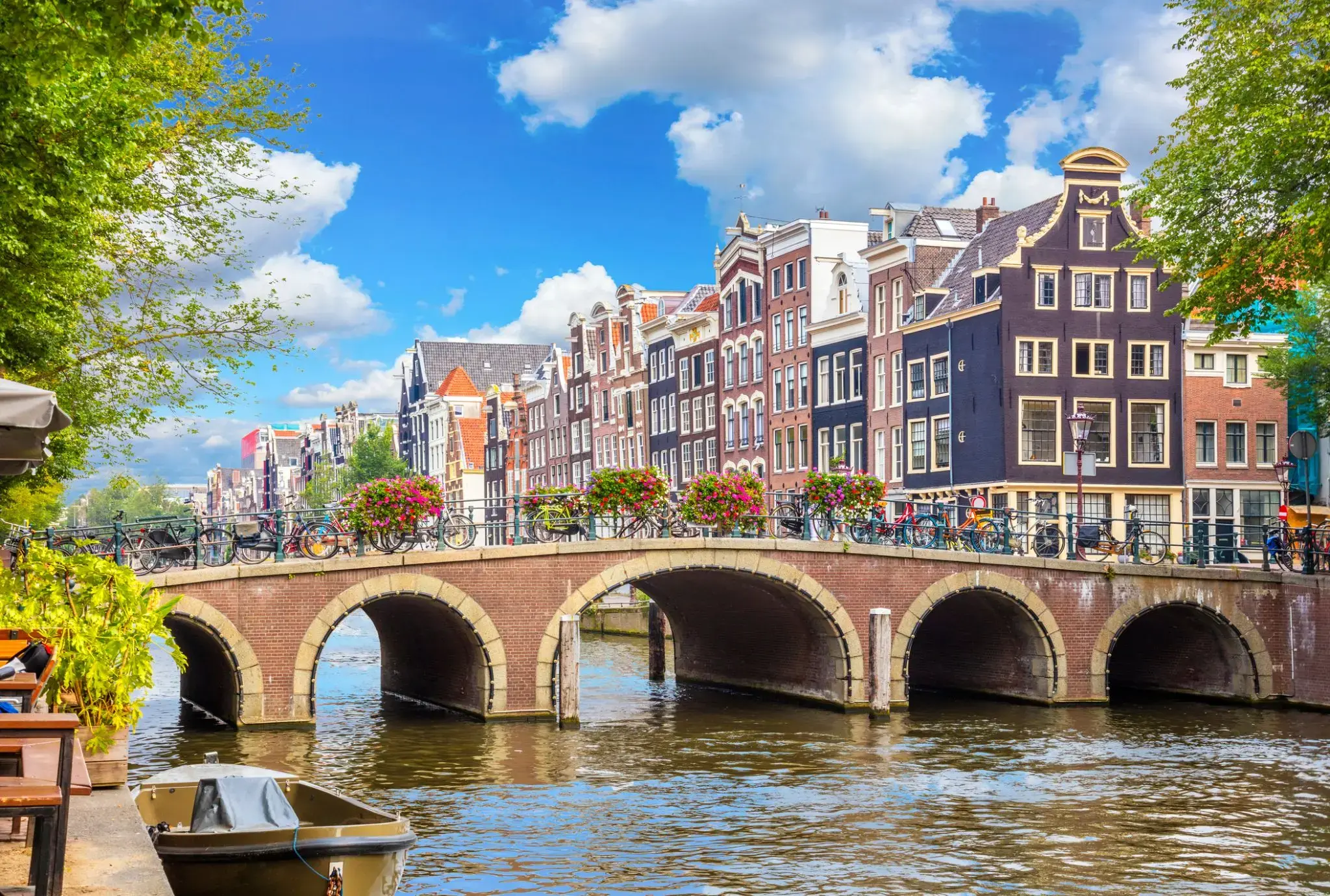
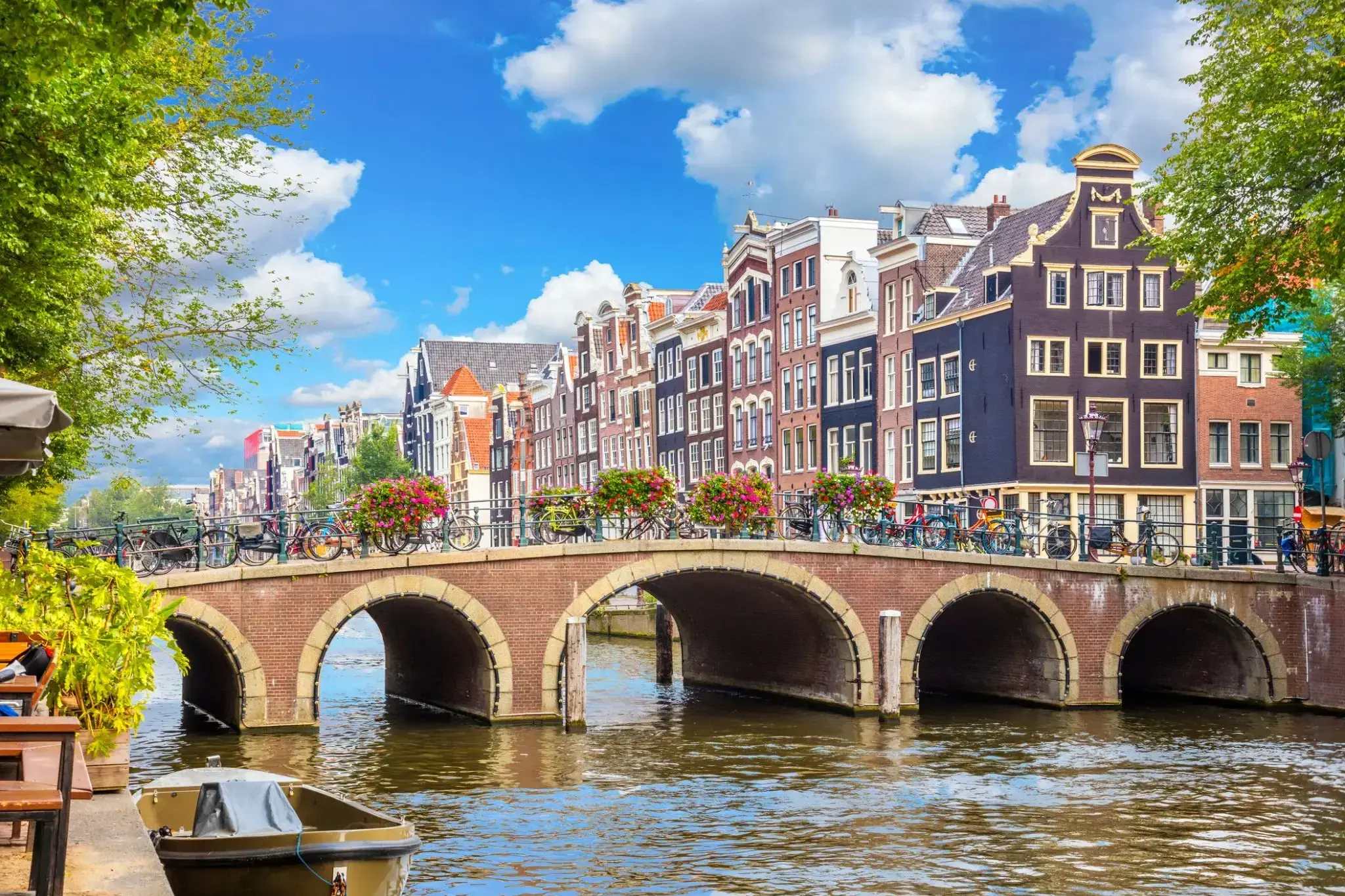
Amsterdam is the capital city and most populous municipality of the Netherlands. Its status as the capital is mandated by the Constitution of the Netherlands, although it is not the seat of the government, which is The Hague. Amsterdam has a population of 851,373 within the city proper, 1,351,587 in the urban area] and 2,410,960 in the metropolitan area. The city is located in the province of North Holland in the west of the country but is not its capital, which is Haarlem. The metropolitan area comprises much of the northern part of the Randstad, one of the larger conurbations in Europe, with a population of approximately 8 million.
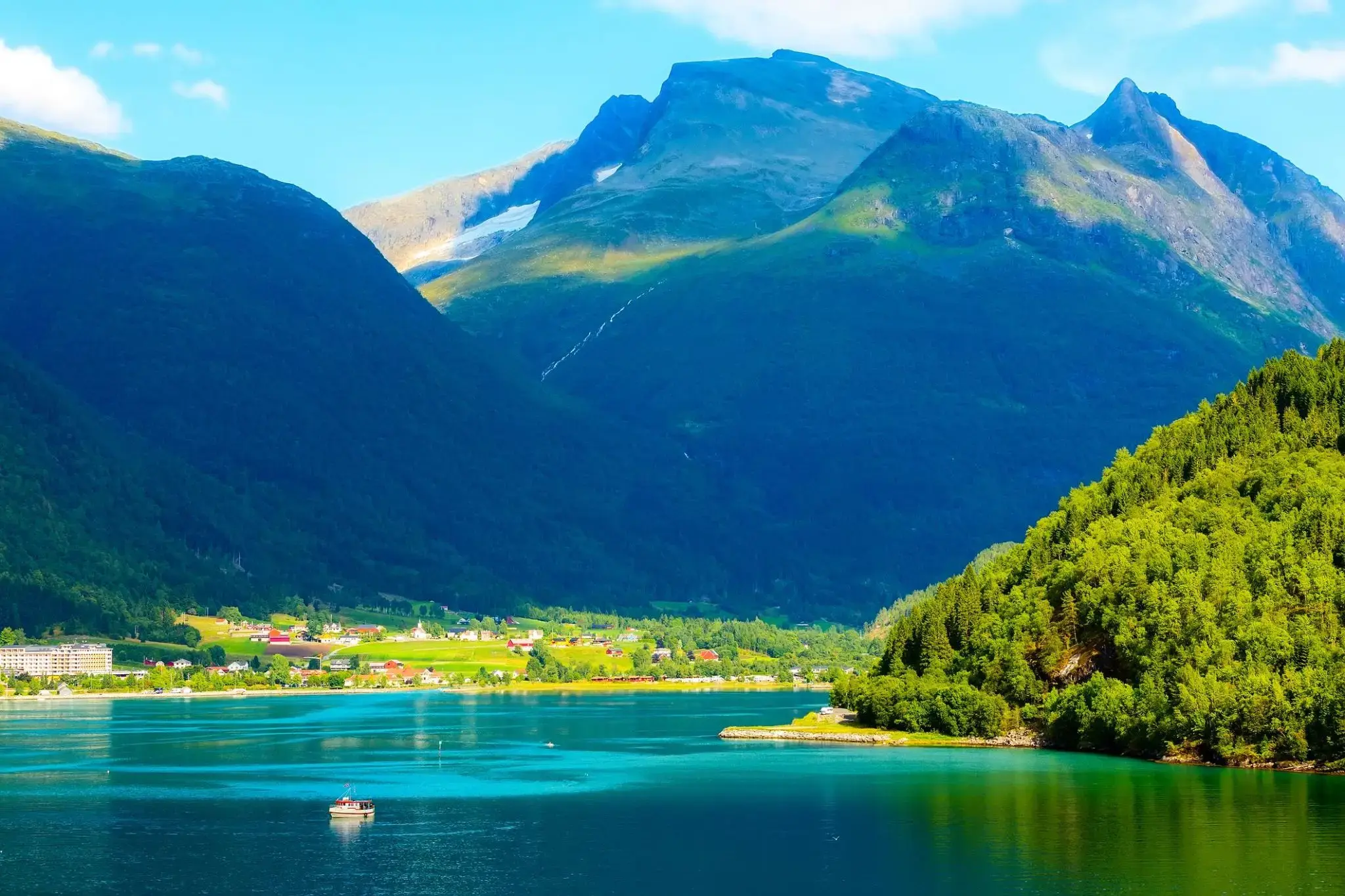
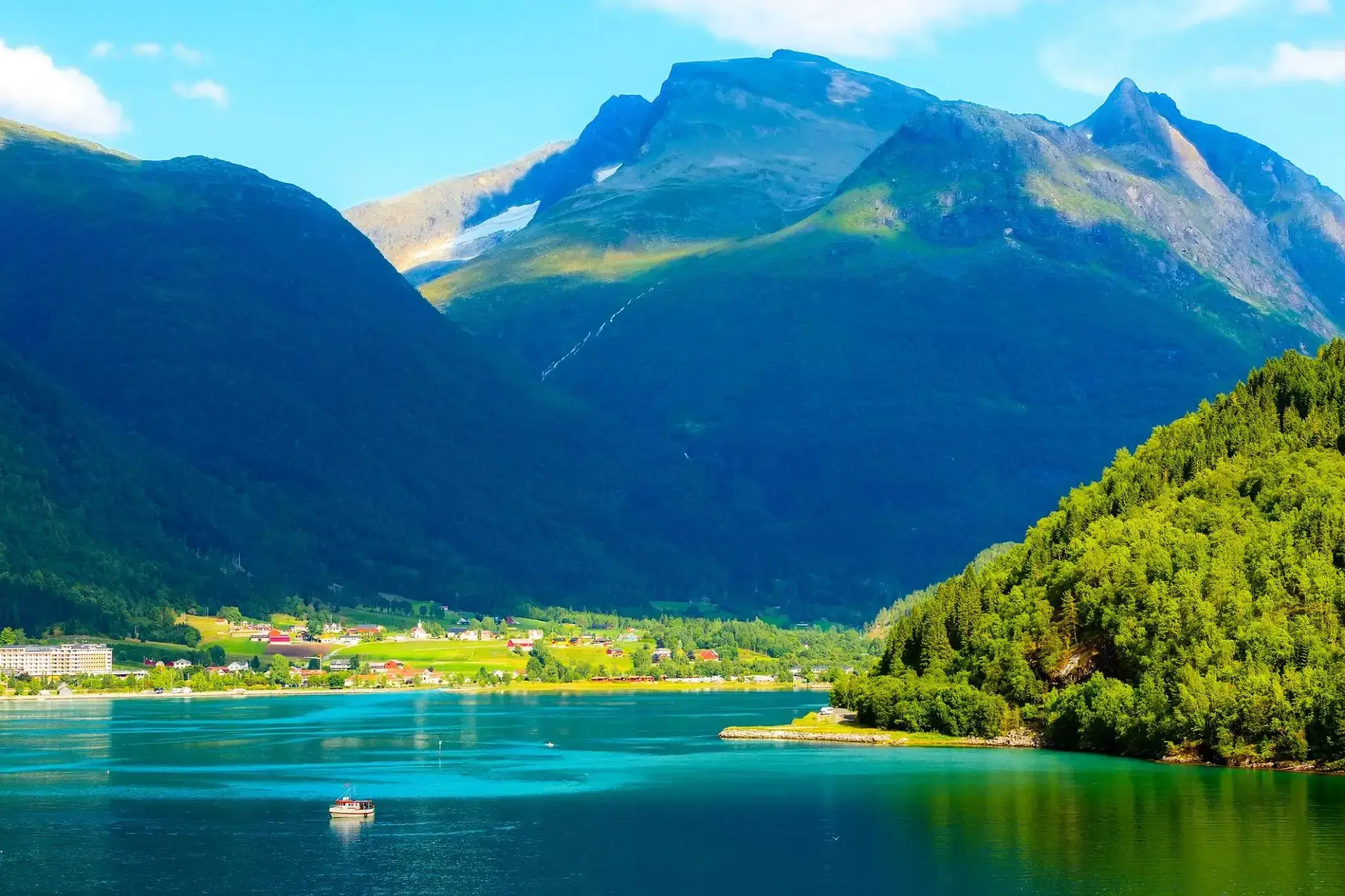
The soft morning mist and mirror-like waters greet travelers in Olden, revealing views of glaciers and emerald valleys seemingly painted by nature for unhurried walks. This small Norwegian village by the Nordfjord offers a rare sense of seclusion, where the sounds of waterfalls and seagulls become your only company while you breathe in the crystal-clear air.
Olden is known for its proximity to the Briksdal Glacier, where hiking trails begin with breathtaking panoramas of blue ice masses and mountain peaks. Along the way, you will pass small farms with red houses, and in local cafes, you can taste freshly baked cinnamon buns while enjoying views of the fjord and the slow rhythm of life in this corner of Norway.
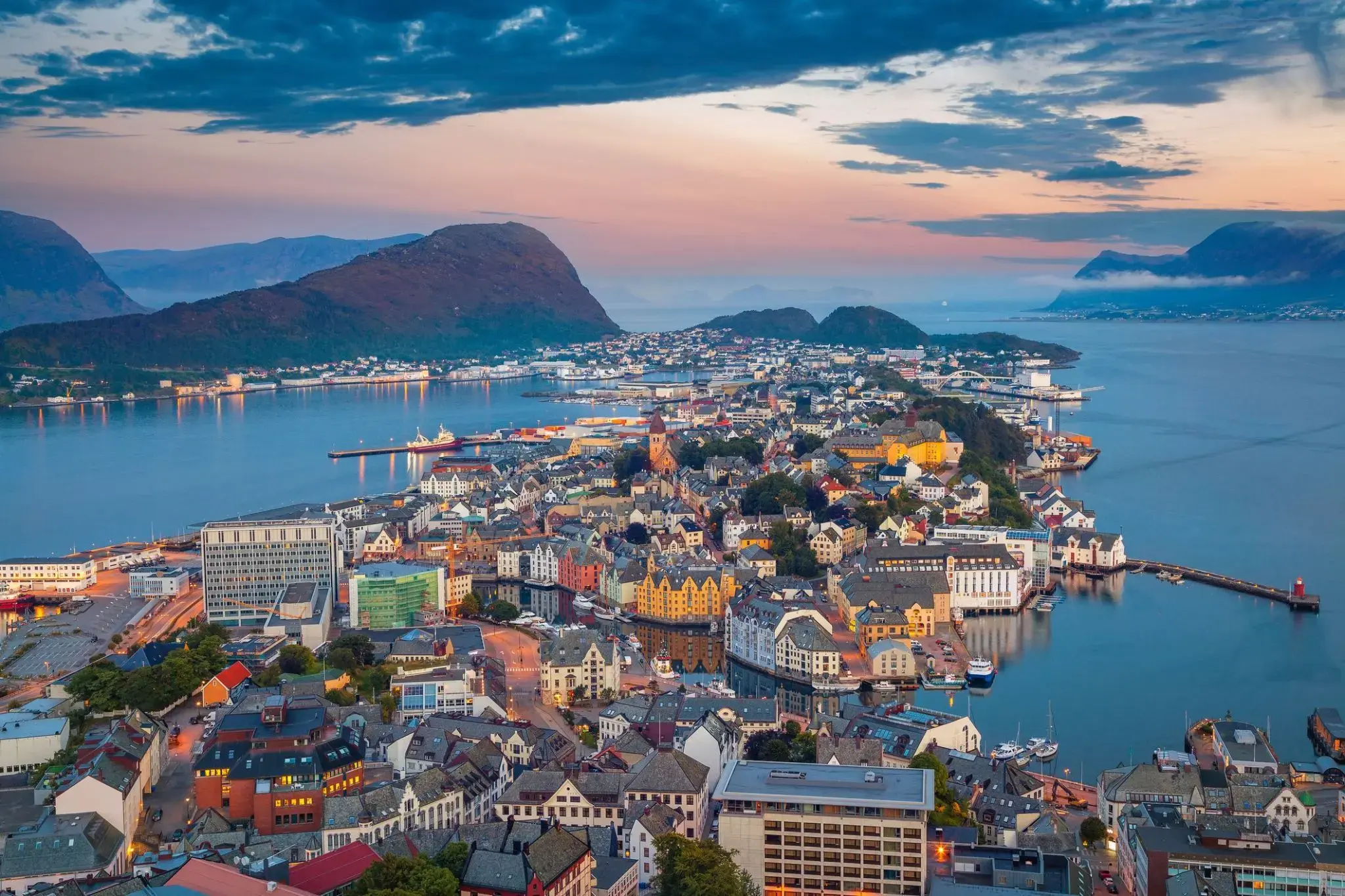
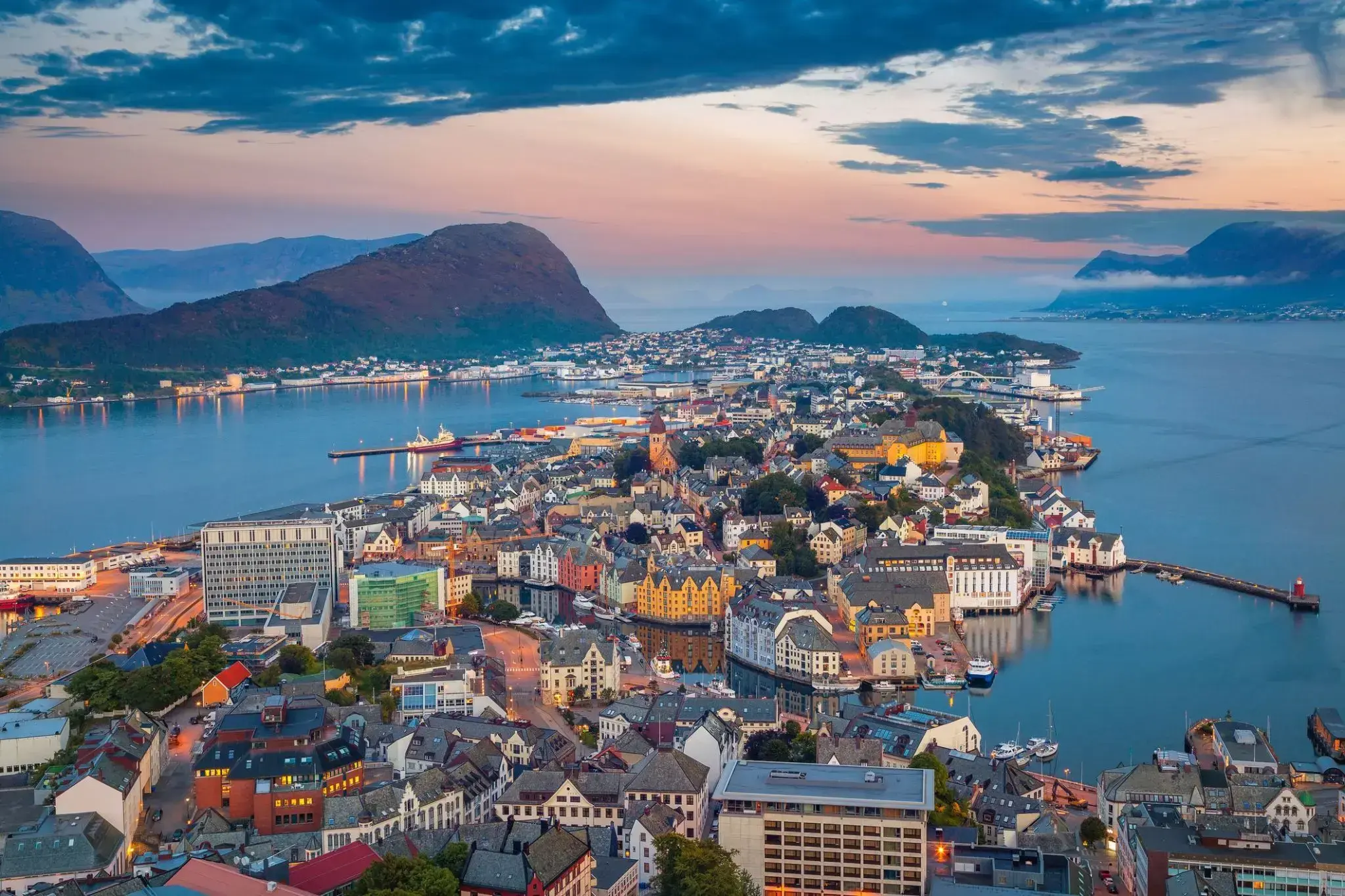
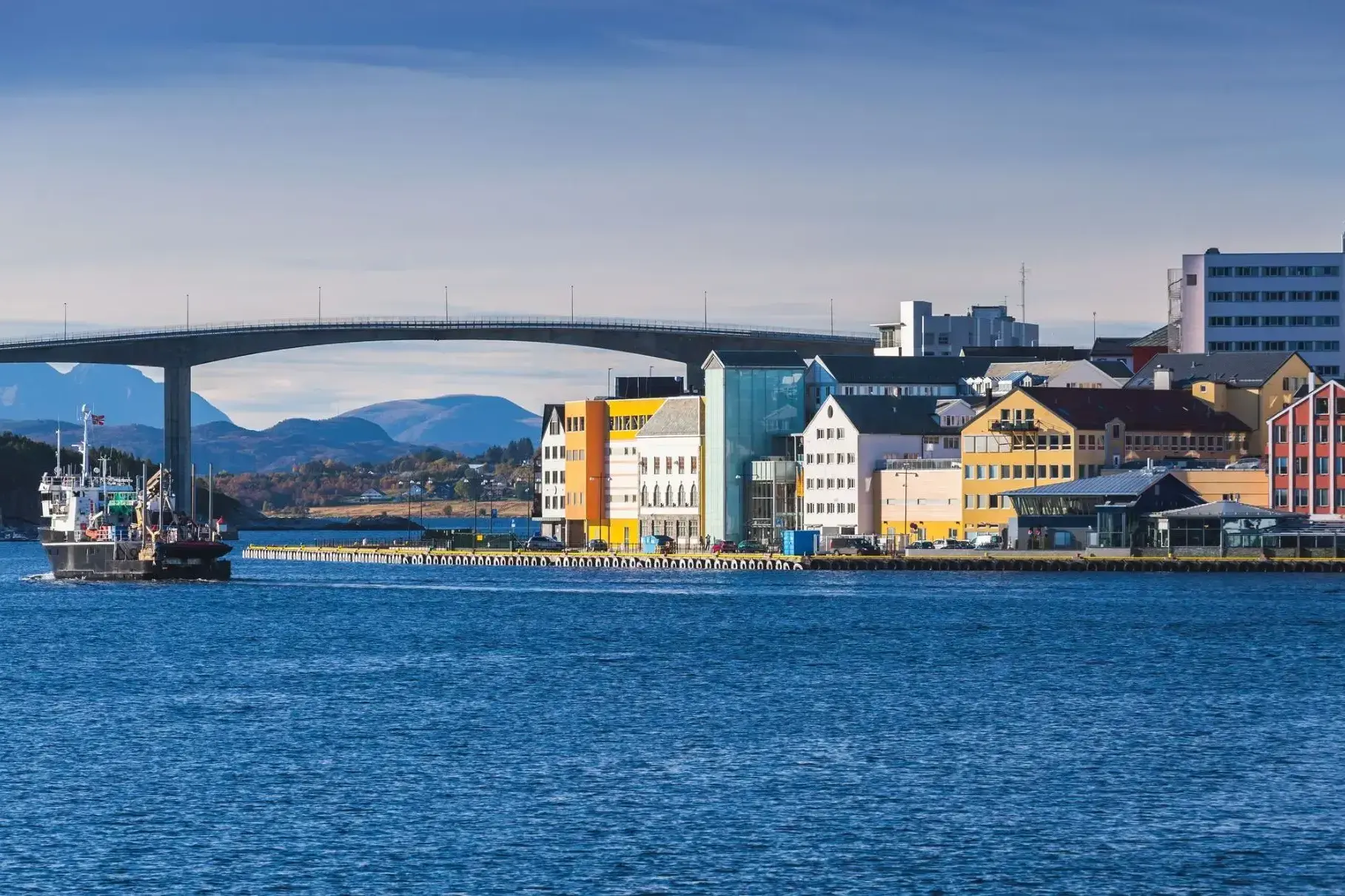
Nestled between majestic fjords and the open sea, Ålesund captivates visitors with its unique blend of natural beauty and distinctive architecture. Known for its stunning Art Nouveau style, rebuilt after a devastating fire in 1904, the town offers a charming atmosphere where colorful buildings line the waterfront, creating a picturesque setting unlike any other in Norway.
Adventurers and culture lovers alike find plenty to enjoy in Ålesund. From hiking up the viewpoint at Aksla Hill for panoramic views of the archipelago to exploring local museums and fresh seafood markets, this coastal town invites travelers to immerse themselves in Norway’s maritime heritage and breathtaking landscapes. Whether cruising the nearby fjords or wandering the narrow streets, every moment in Ålesund promises memorable discoveries.
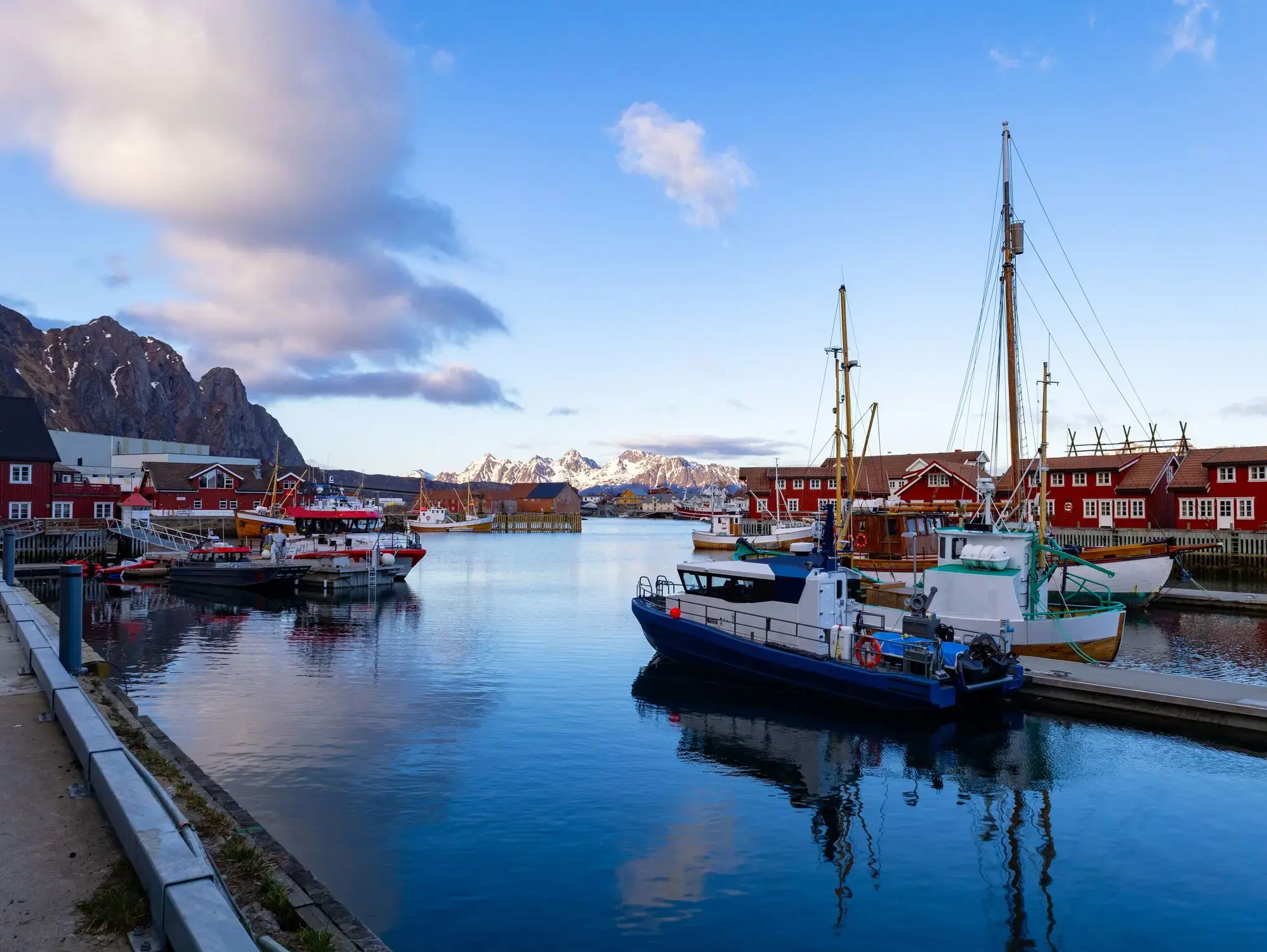
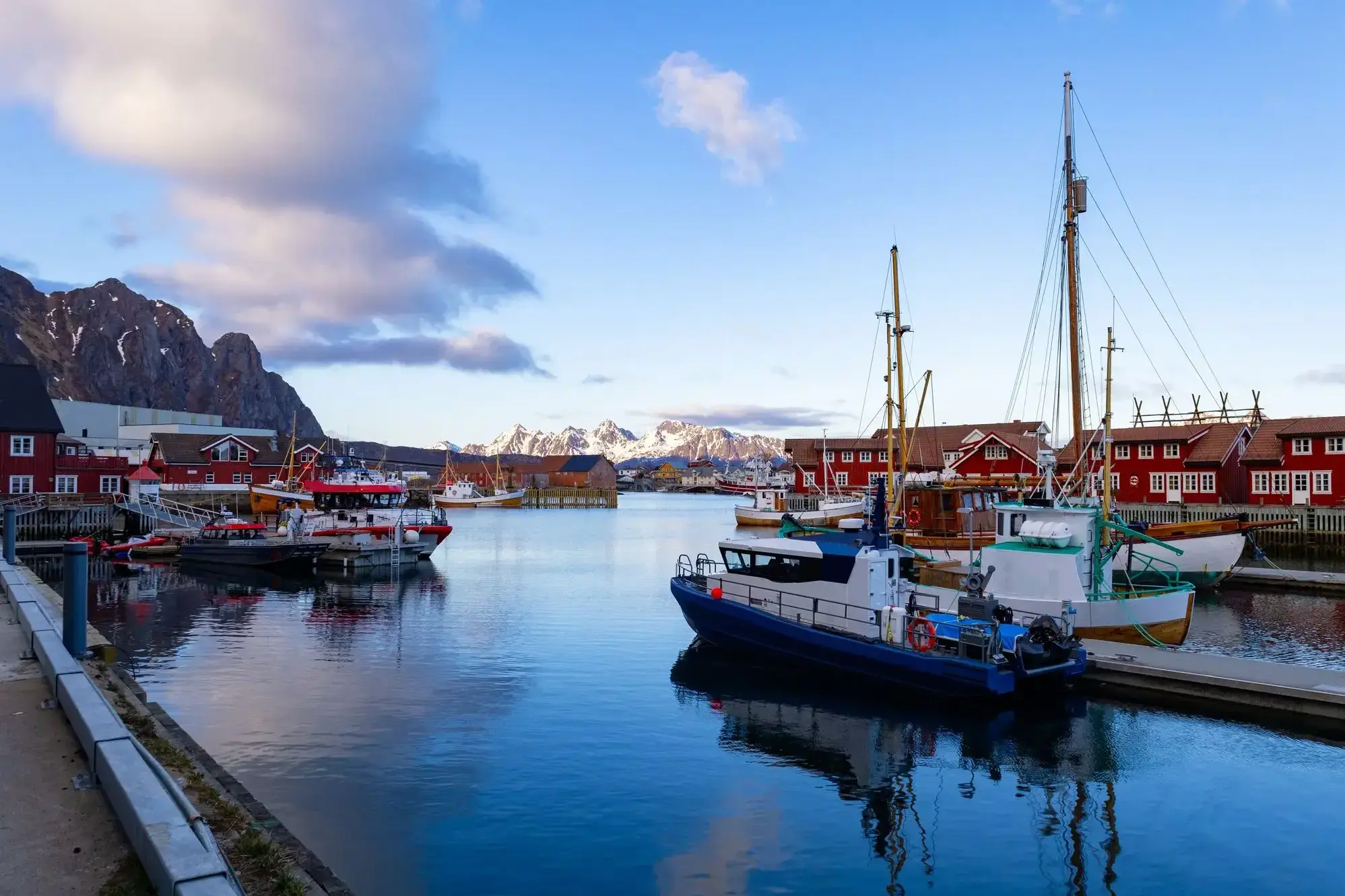
Nestled within the dramatic archipelago of the Lofoten Islands, Svolvaer (Svolvær) offers a captivating blend of rugged natural beauty and lively cultural experiences. Visitors here can admire towering peaks that rise sharply from the sea, enjoy vibrant fishing traditions, and explore a charming town filled with colorful wooden houses lining the harbor.
The town of Svolvaer (Svolvær) is also famous for its rich artistic scene, including galleries showcasing local painters and craftsmen. Outdoor enthusiasts can embark on thrilling activities like sea kayaking, hiking, or even joining a Northern Lights safari during winter months, making it a perfect destination for those seeking adventure and authentic Arctic charm.
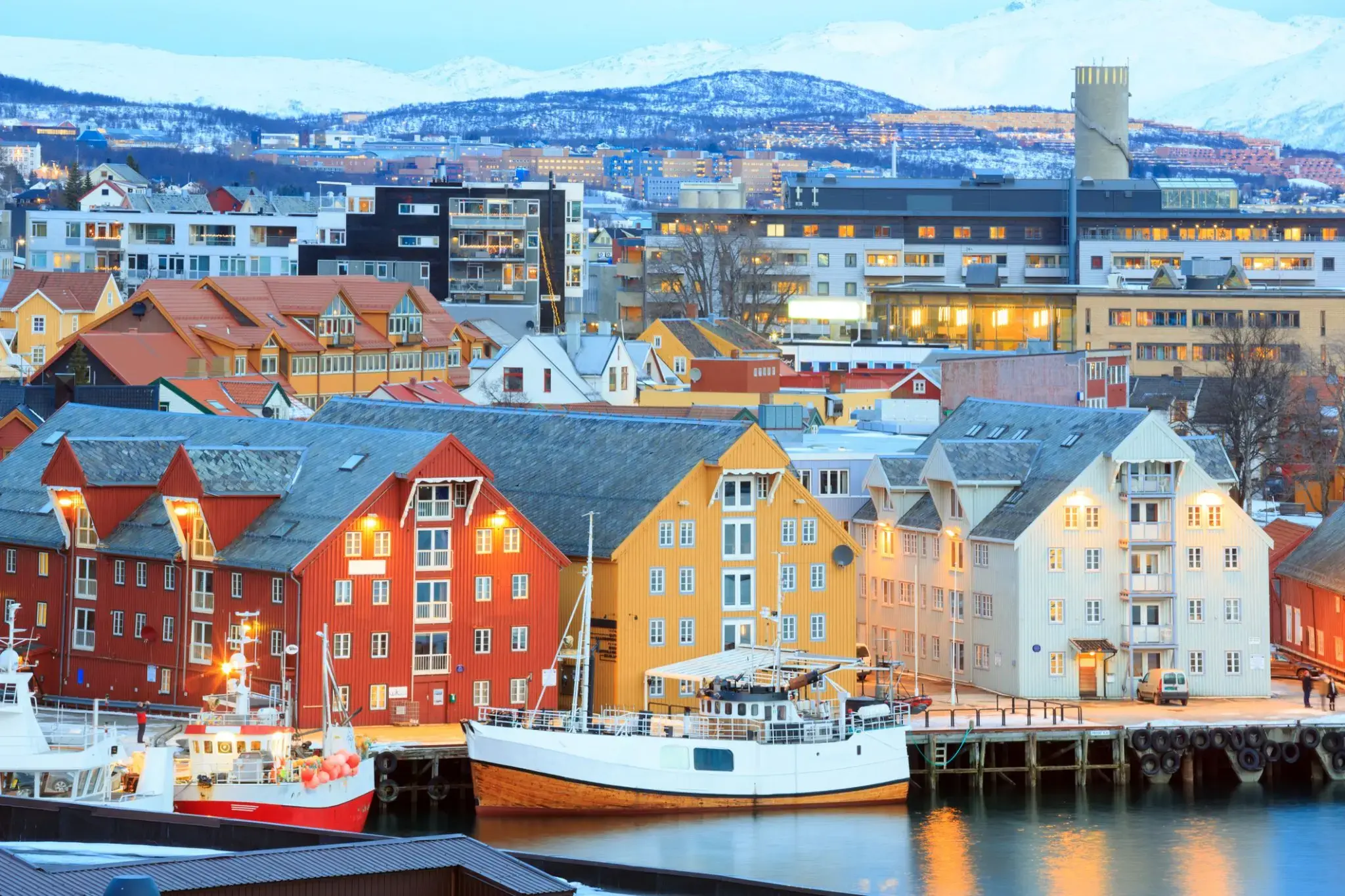
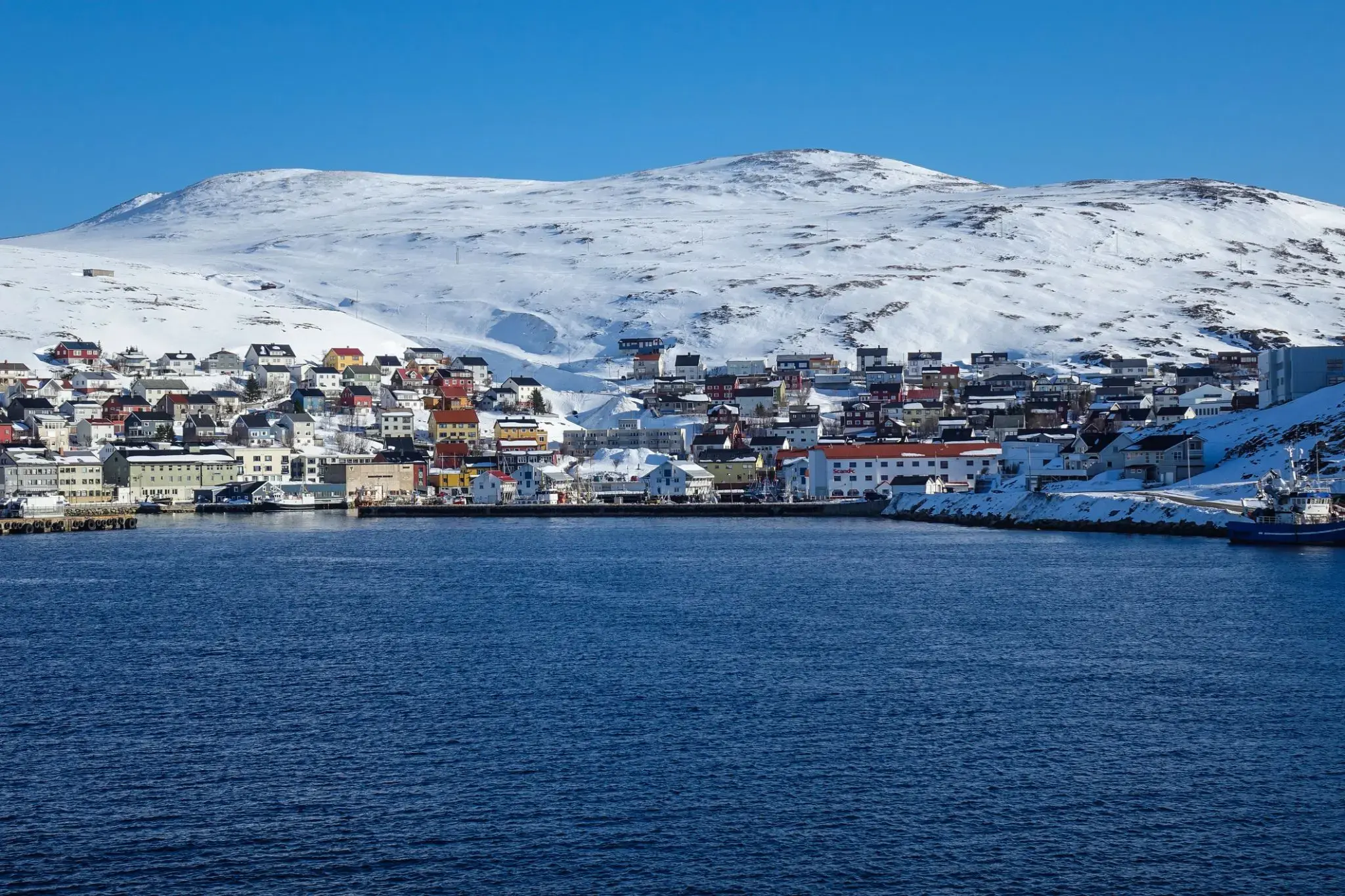
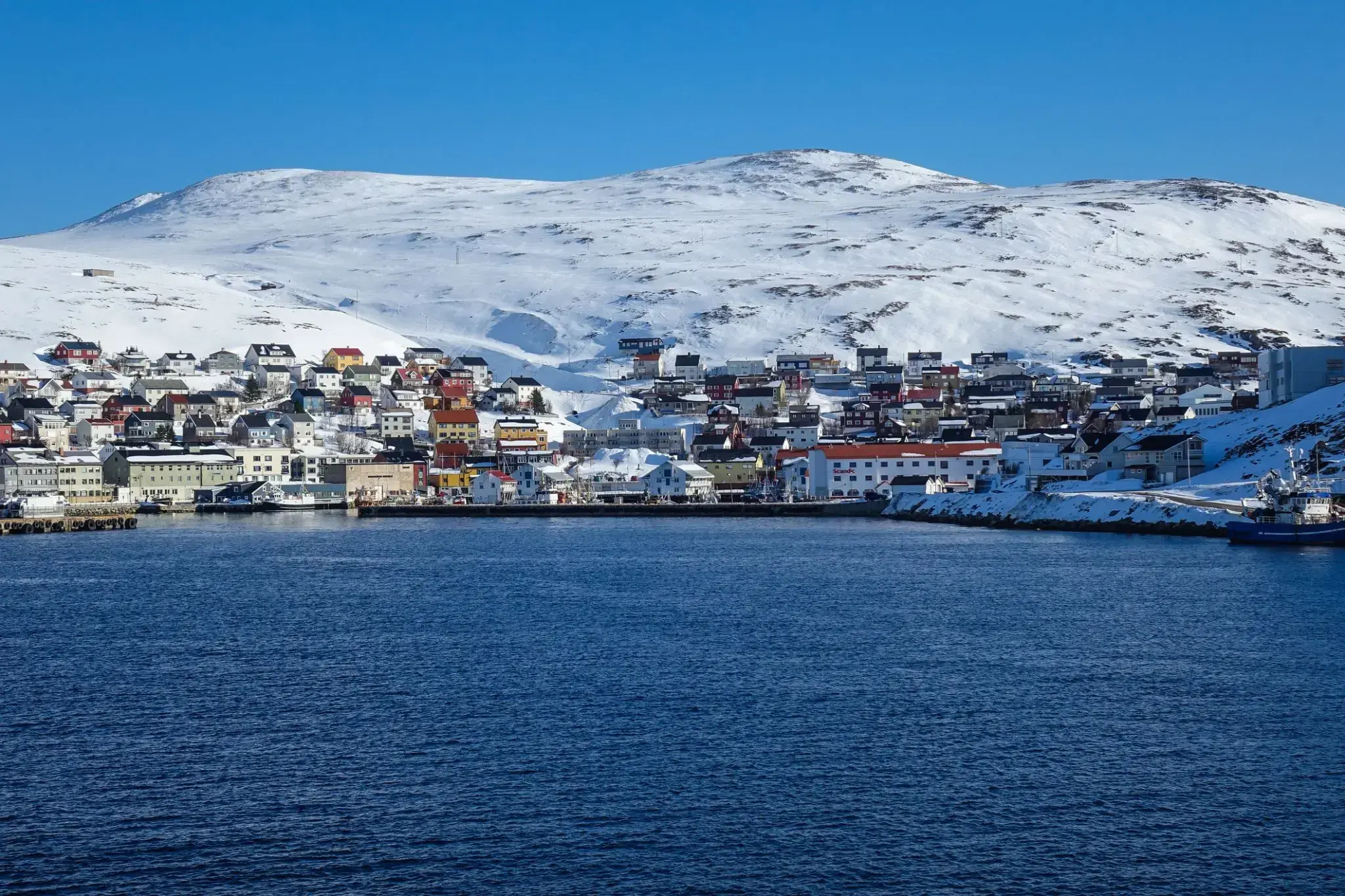
Honningsvåg is the northernmost city in Norway. It is located in Nordkapp Municipality in Finnmark county. Legislation effective in 1997 states that a Norwegian city/town (same word in Norwegian) must have at least 5,000 inhabitants, but Honningsvåg was declared a city in 1996, thus exempt from this legislation, so it is also one of the smallest cities in Norway. The 1.05-square-kilometre (260-acre) town has a population (2017) of 2,484 which gives the town a population density of 2,366 inhabitants per square kilometre (6,130/sq mi).
Honningsvåg is situated at a bay on the southeastern side of the large island of Magerøya, while the famous North Cape and its visitor center is on the northern side of the island. Honningsvåg is a port of call for cruise ships, especially in the summer months. The ice-free ocean (southwestern part of the Barents Sea) provides rich fisheries and tourism is also important to the town. Even at 71°N, many private gardens in Honningsvåg have trees, although rarely more than 3 to 4 metres (9.8 to 13.1 ft) tall.
Honningsvåg is the northernmost city in Norway. It is located in Nordkapp Municipality in Finnmark county. Legislation effective in 1997 states that a Norwegian city/town (same word in Norwegian) must have at least 5,000 inhabitants, but Honningsvåg was declared a city in 1996, thus exempt from this legislation, so it is also one of the smallest cities in Norway. The 1.05-square-kilometre (260-acre) town has a population (2017) of 2,484 which gives the town a population density of 2,366 inhabitants per square kilometre (6,130/sq mi).
Honningsvåg is situated at a bay on the southeastern side of the large island of Magerøya, while the famous North Cape and its visitor center is on the northern side of the island. Honningsvåg is a port of call for cruise ships, especially in the summer months. The ice-free ocean (southwestern part of the Barents Sea) provides rich fisheries and tourism is also important to the town. Even at 71°N, many private gardens in Honningsvåg have trees, although rarely more than 3 to 4 metres (9.8 to 13.1 ft) tall.
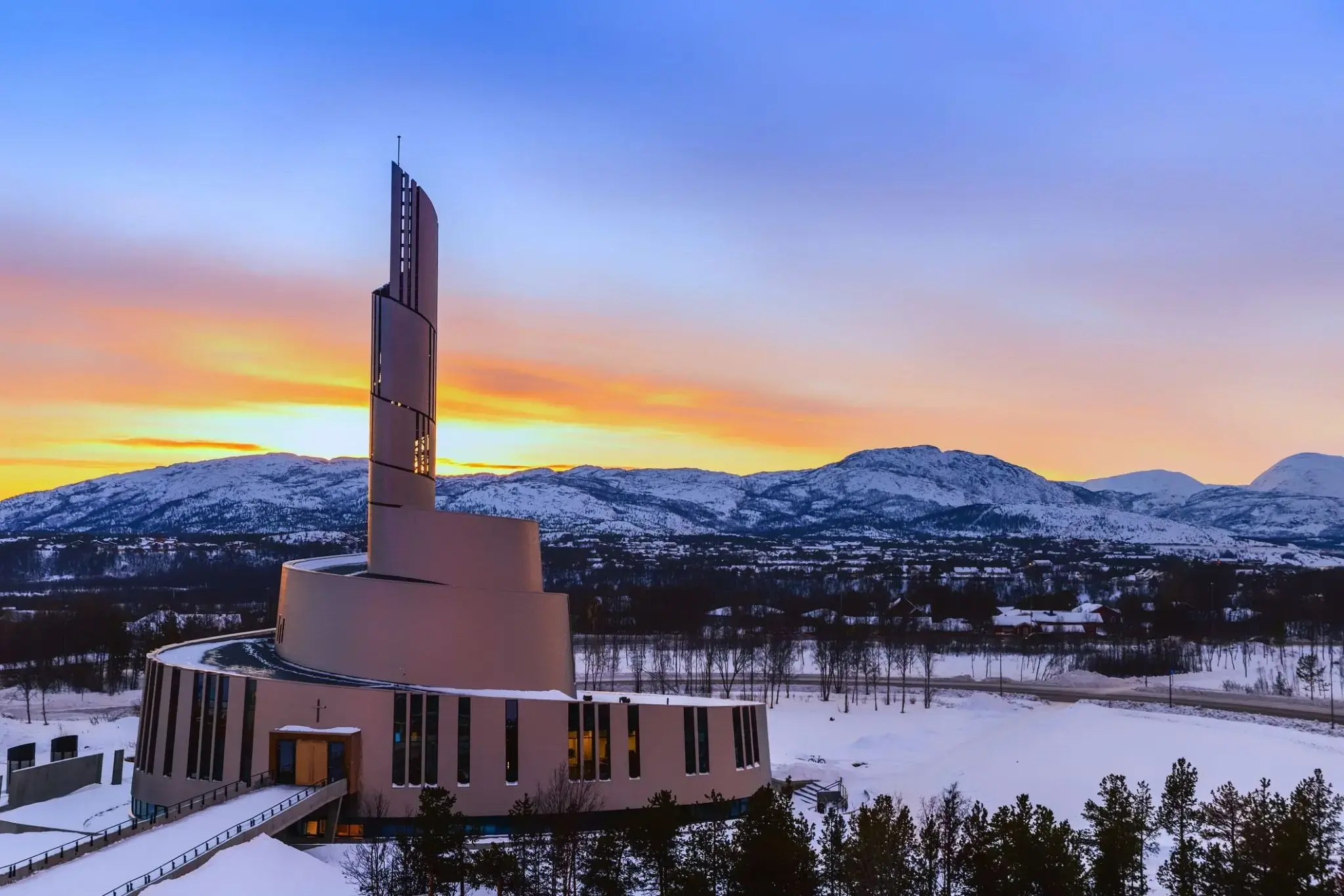
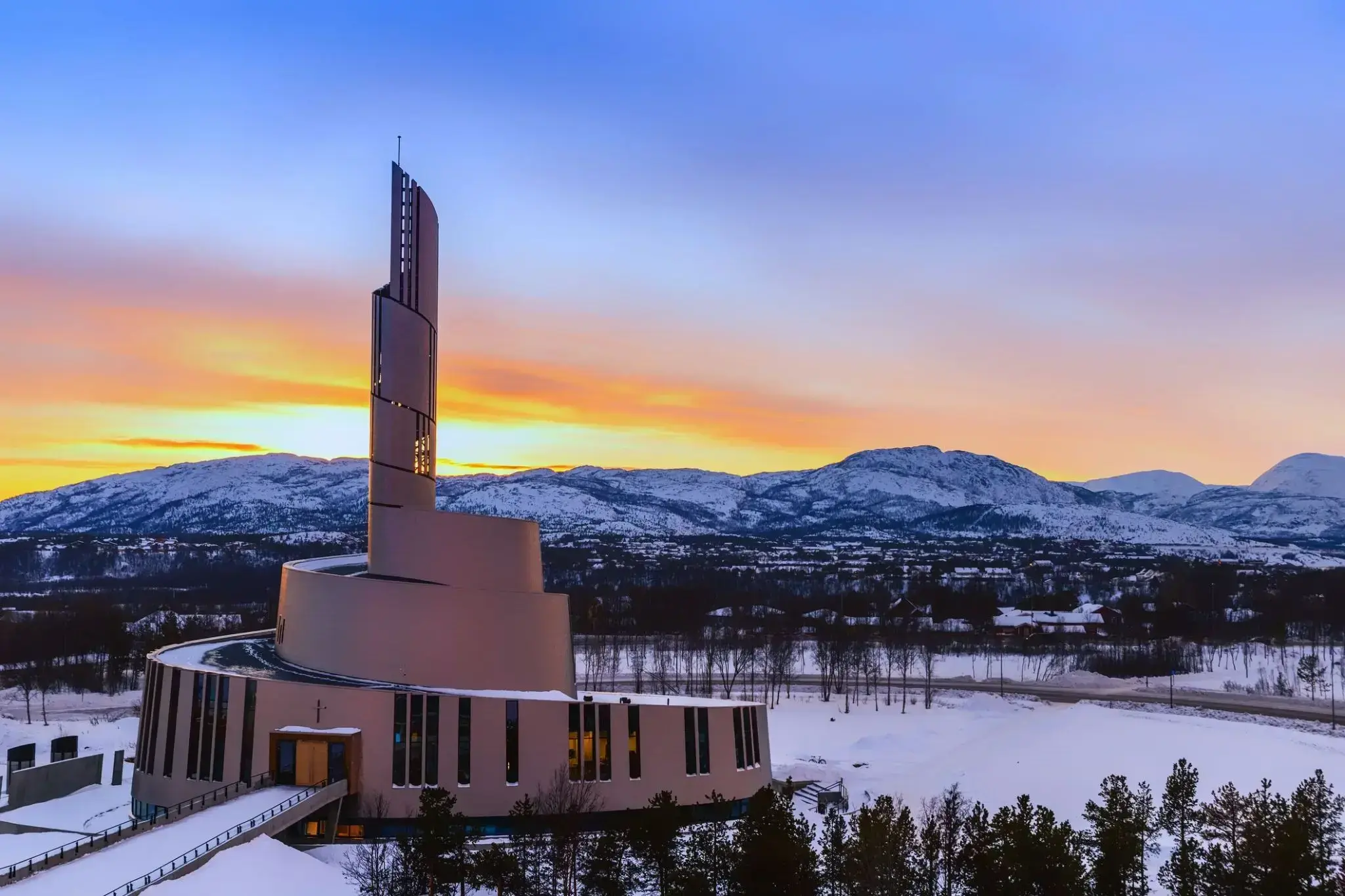
Immersed in the atmosphere of the majestic North, Alta in Norway offers a unique combination of wilderness, cultural heritage, and Arctic serenity. This town in the Finnmark region is famous for its ancient rock carvings, listed as a UNESCO World Heritage Site, and for being one of the best places in the country to witness the dazzling Northern Lights. Alta is also a gateway to Arctic plateau expeditions and unforgettable tours through icy caves and snowy forests.
Alta is not only a land of natural wonders but also a center of modern Arctic life, where Sámi traditions blend harmoniously with Norwegian innovation. Visitors can experience the famous Sorrisniva Igloo Hotel, taste Arctic fish stew, or ride a dog sled. In every season, the town welcomes travelers to rediscover the North—with warmth, hospitality, and unforgettable polar adventures.
Honningsvåg is the northernmost city in Norway. It is located in Nordkapp Municipality in Finnmark county. Legislation effective in 1997 states that a Norwegian city/town (same word in Norwegian) must have at least 5,000 inhabitants, but Honningsvåg was declared a city in 1996, thus exempt from this legislation, so it is also one of the smallest cities in Norway. The 1.05-square-kilometre (260-acre) town has a population (2017) of 2,484 which gives the town a population density of 2,366 inhabitants per square kilometre (6,130/sq mi).
Honningsvåg is situated at a bay on the southeastern side of the large island of Magerøya, while the famous North Cape and its visitor center is on the northern side of the island. Honningsvåg is a port of call for cruise ships, especially in the summer months. The ice-free ocean (southwestern part of the Barents Sea) provides rich fisheries and tourism is also important to the town. Even at 71°N, many private gardens in Honningsvåg have trees, although rarely more than 3 to 4 metres (9.8 to 13.1 ft) tall.
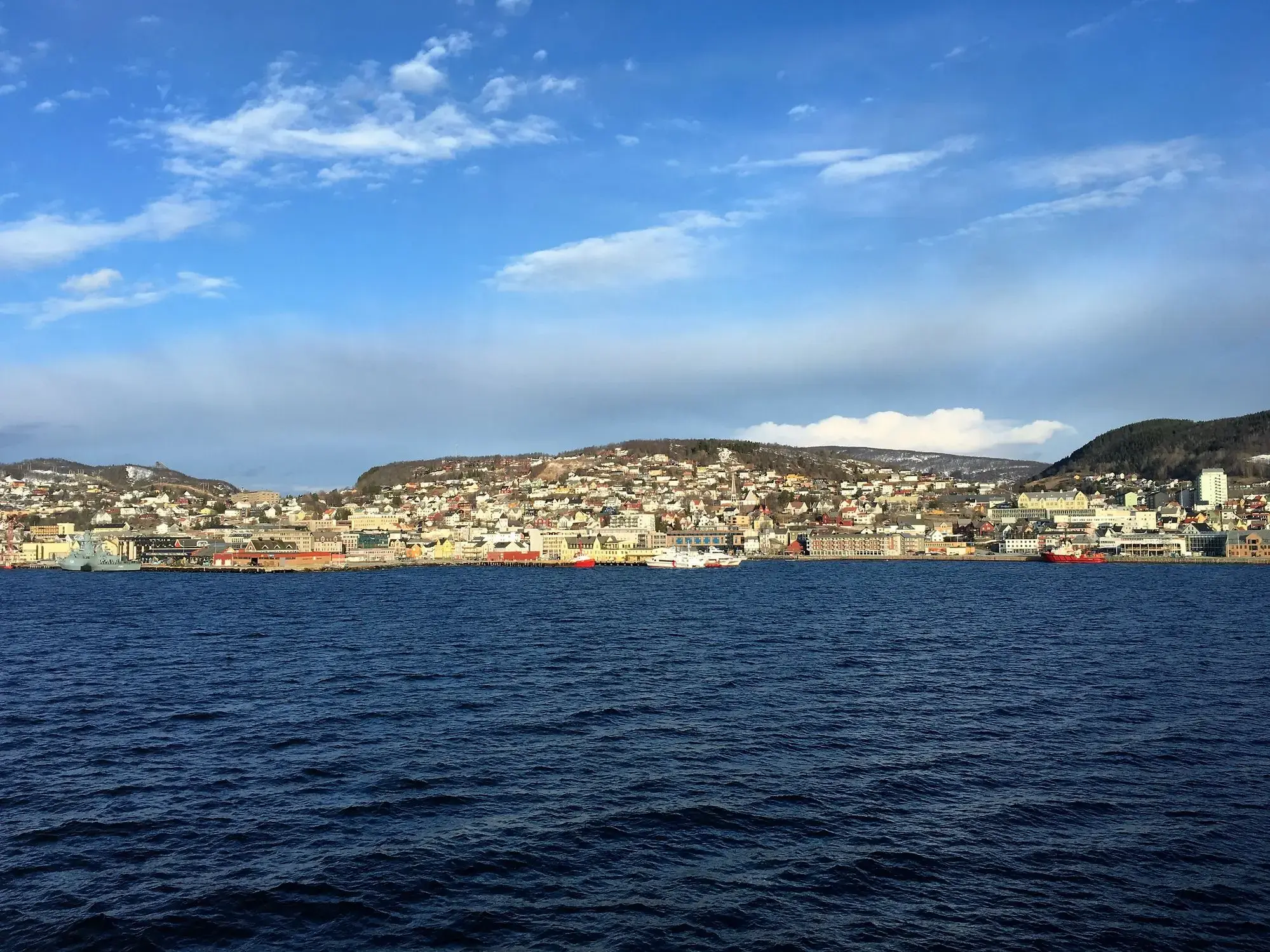
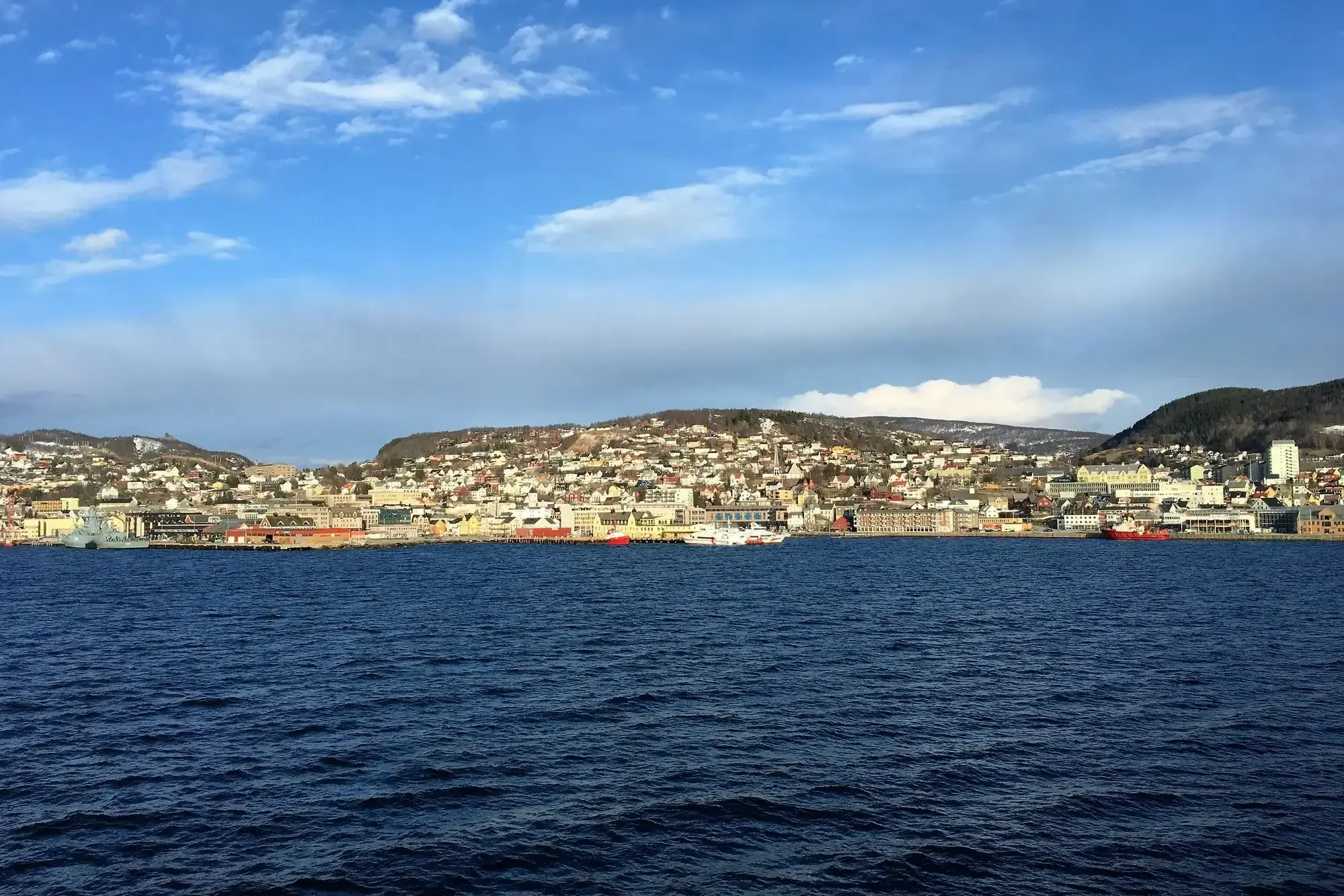
Between fjords and green hills, Harstad in northern Norway delights visitors with a cozy city atmosphere and impressive Arctic landscapes. The city is known as the “music capital of Northern Norway” thanks to the annual Northern Norway Festival, which fills the streets with music and creative energy. Here you can stroll along the picturesque waterfront, watch fishing boats in the harbor, and enjoy views of the fjords where sea eagles are often seen.
Visitors to Harstad can discover the northern coast by going kayaking or taking a sea cruise to feel a true closeness to nature. Nearby is the historic Trøndelag center and the ruins of the oldest church in Northern Norway – Trondenes, where you can touch the history of the Vikings. This place offers peace, inspiration, and the true beauty of Norway’s Arctic north.
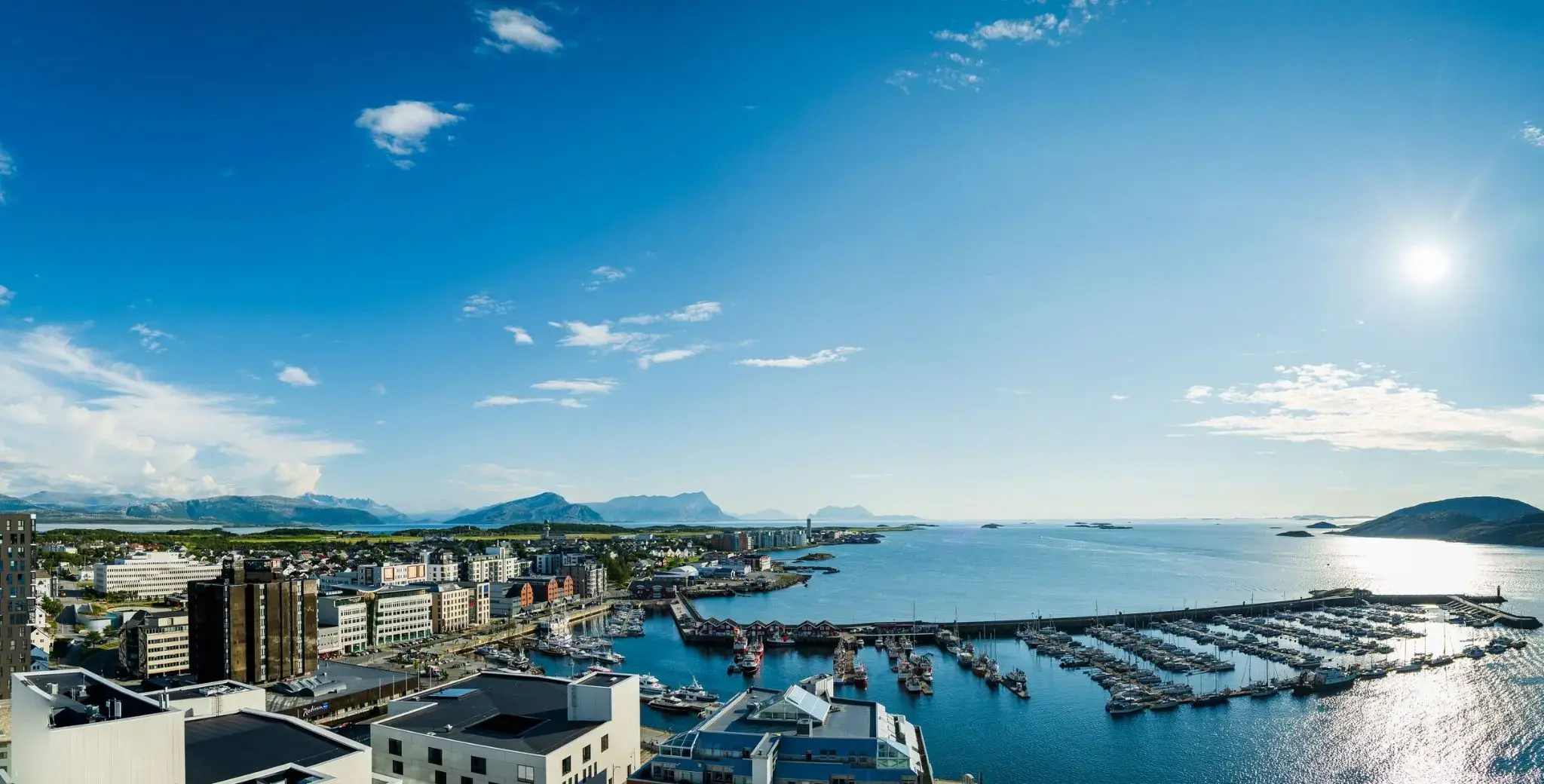
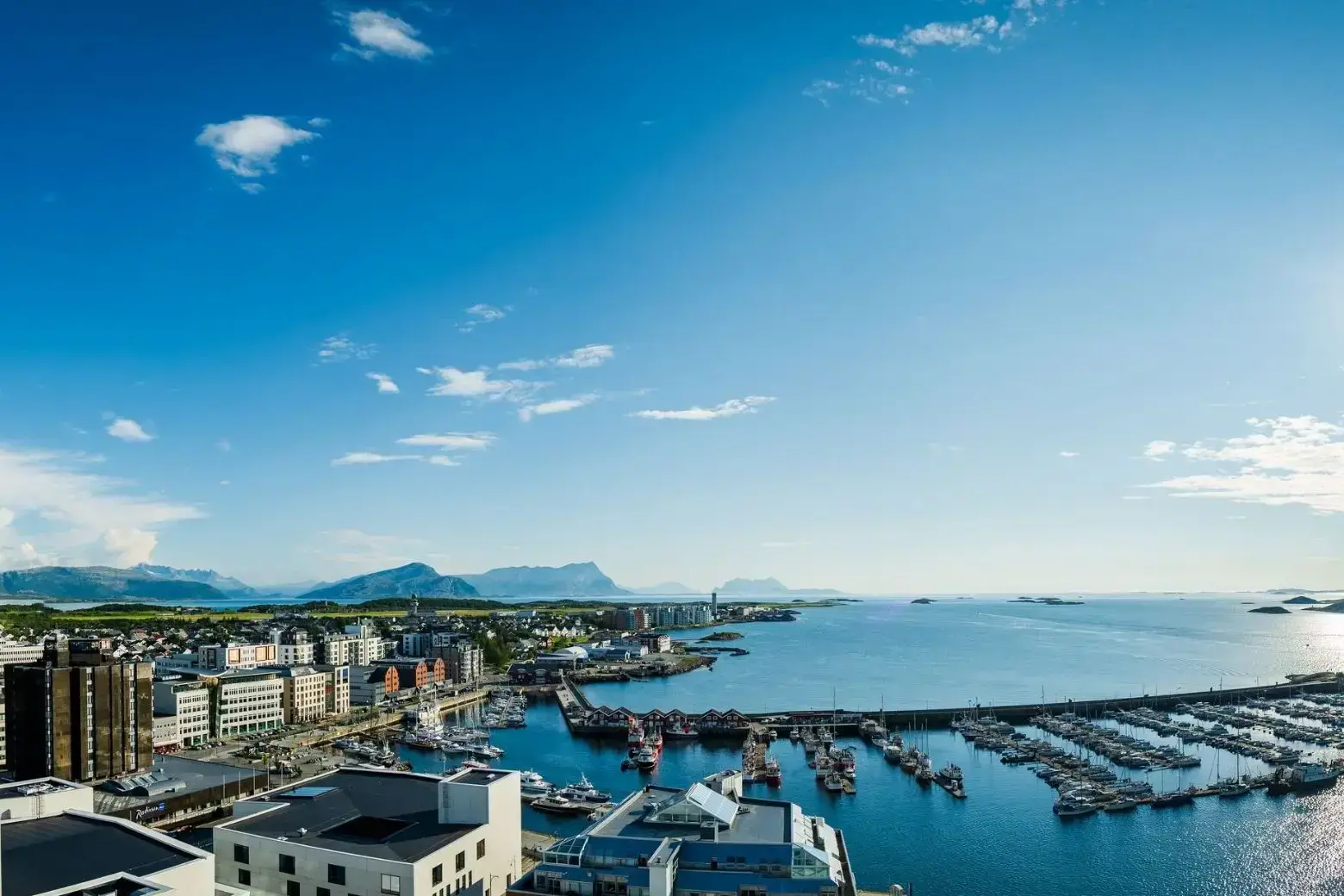
Situated on the picturesque coast of Northern Norway, this city attracts travelers with its unique nature and vibrant cultural life. Bodø is an important port and gateway to the Arctic, where visitors can enjoy breathtaking views of fjords and mountains, as well as witness one of the most impressive natural phenomena — the Northern Lights.
In Bodø, everyone will find something to their taste: from outdoor activities like hiking, fishing, and boating to exploring local history in museums and contemporary art spaces. The city is also famous for its proximity to the Saltfjellet Nature Reserve and Rondane National Park, making it an excellent starting point for exploring northern landscapes.
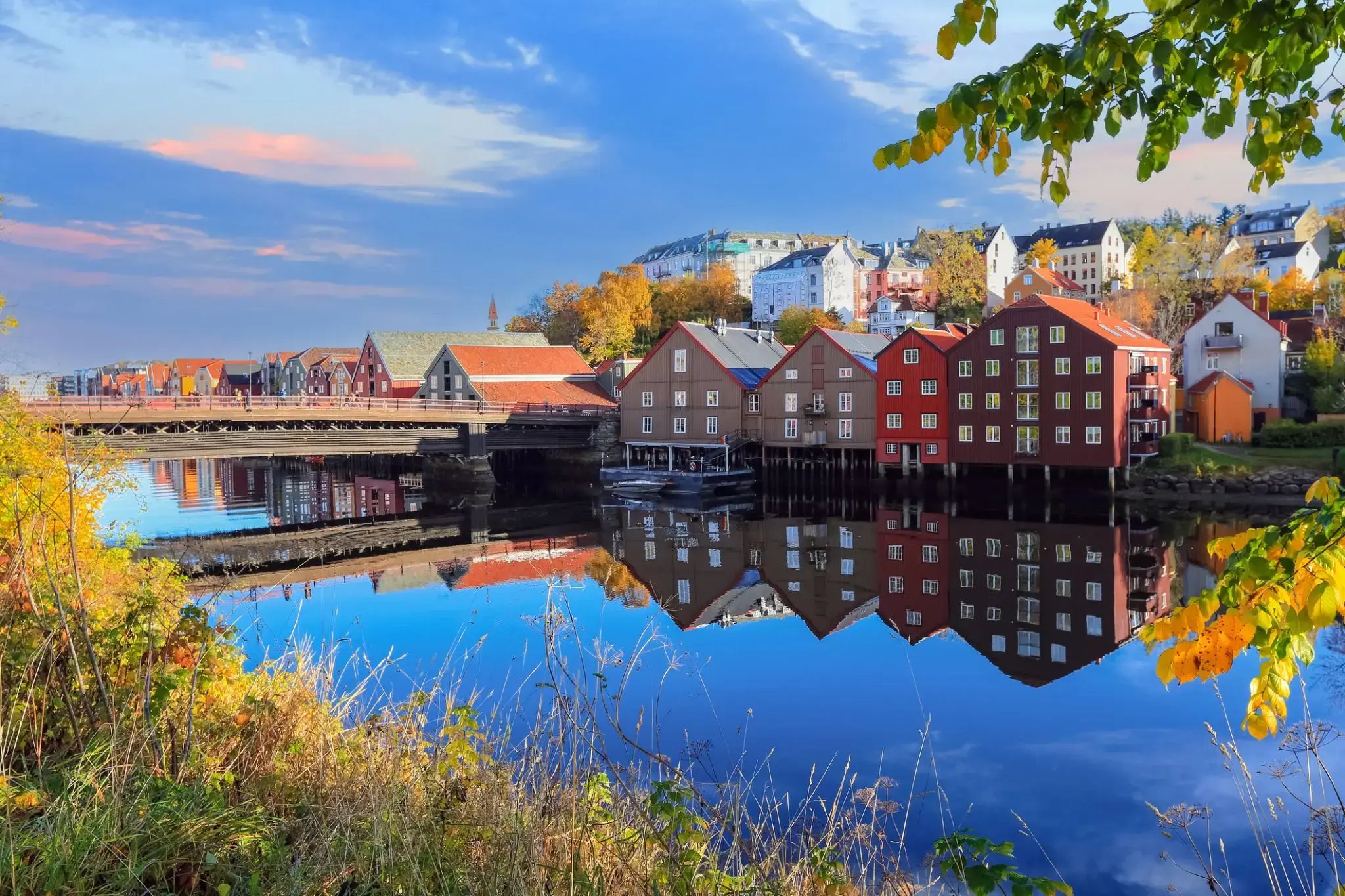
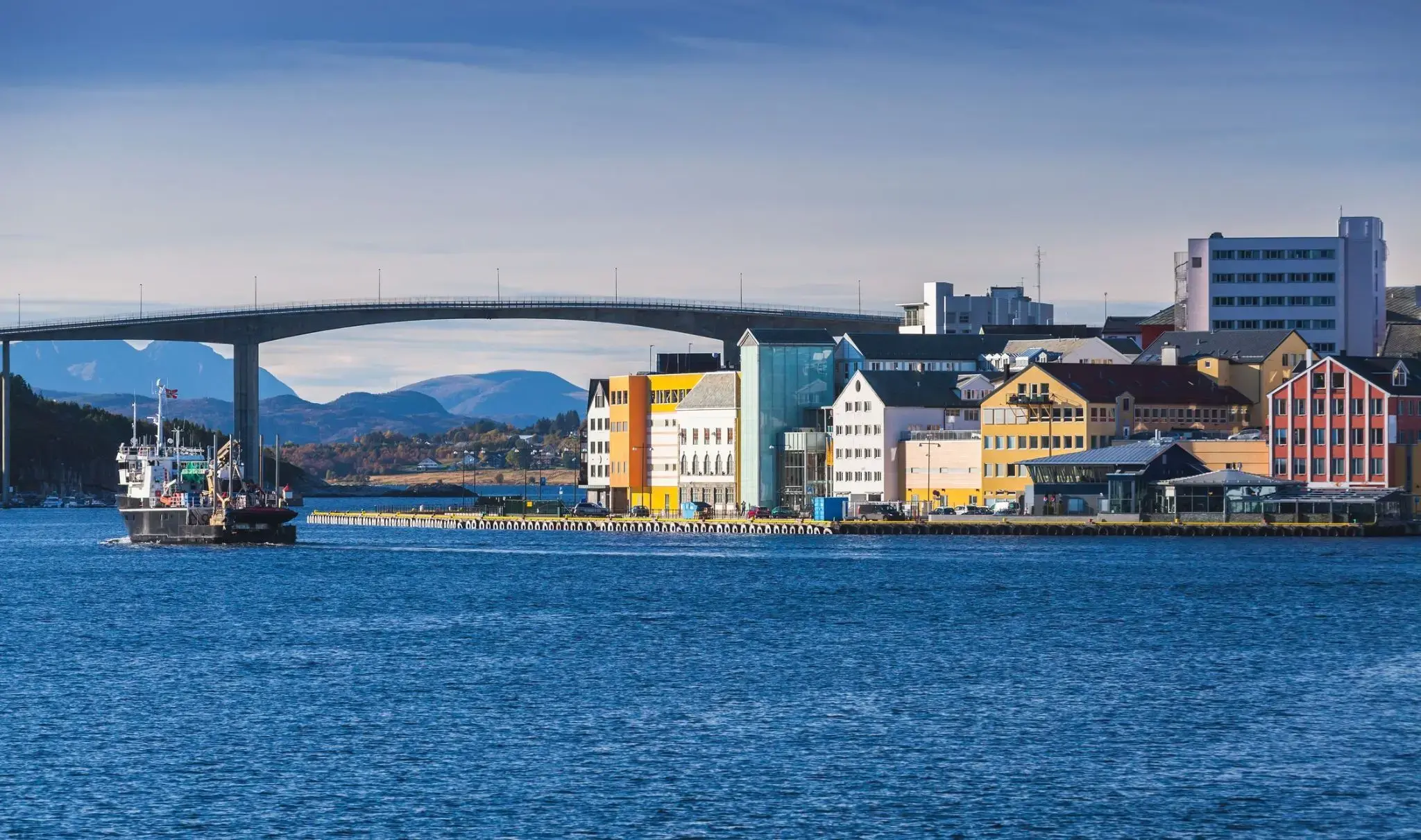
The southernmost coast of Norway invites you to discover the amazing city of Kristiansand. This charming town is surrounded by the sea on three sides. It is the fifth-largest city in the country, and although its center fits within a small area of just 1 km², Kristiansand has much to offer its visitors. It’s not only about the incredibly clean Norwegian air but also many other interesting attractions.
Among them is Norway’s largest zoo, home to 80 species of animals. A visit here will delight both children and adults. You can enjoy rides on carousels, laugh wholeheartedly at the circus, and take the whole family on a sea excursion or spend time together at a playground.
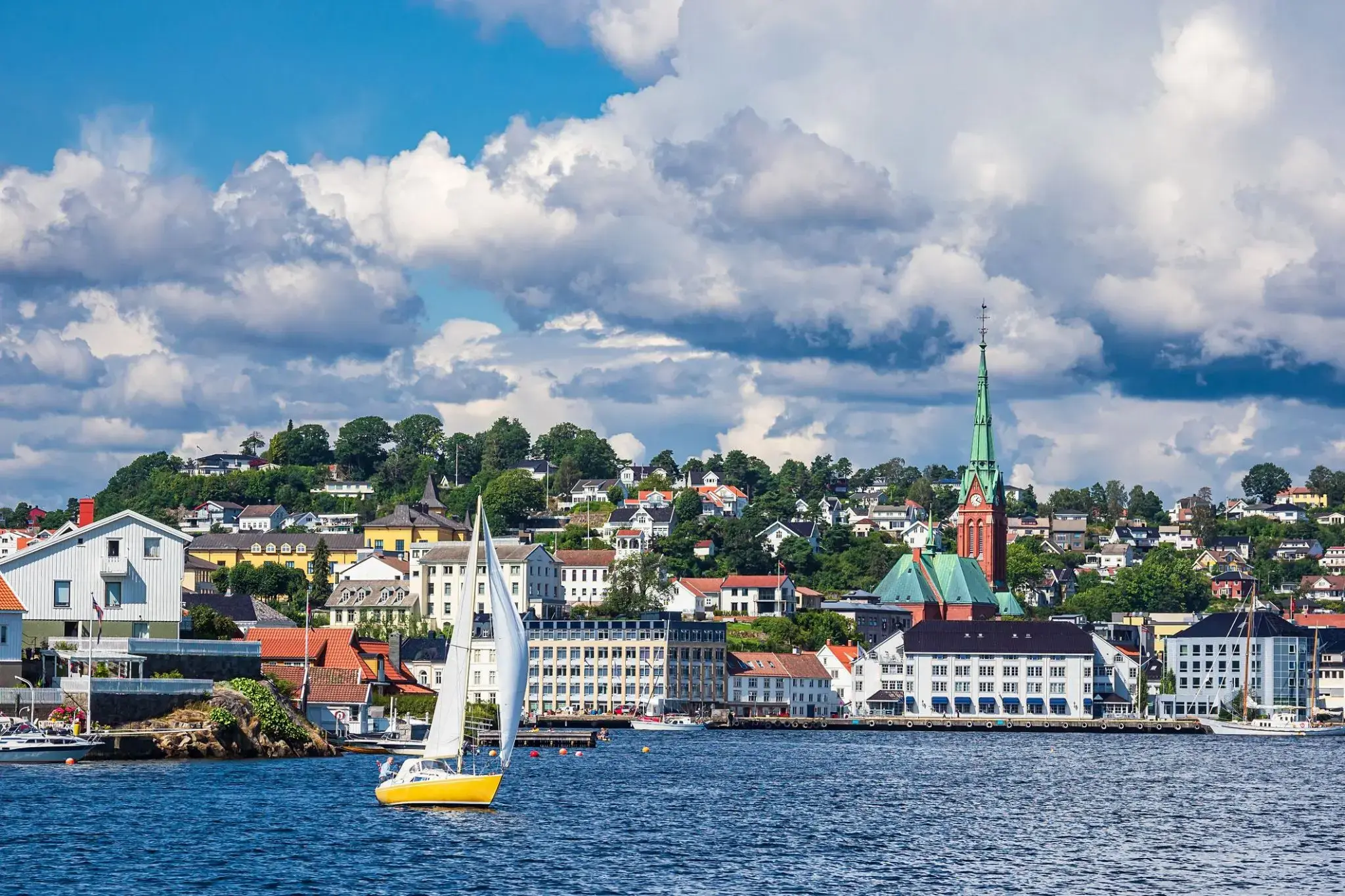
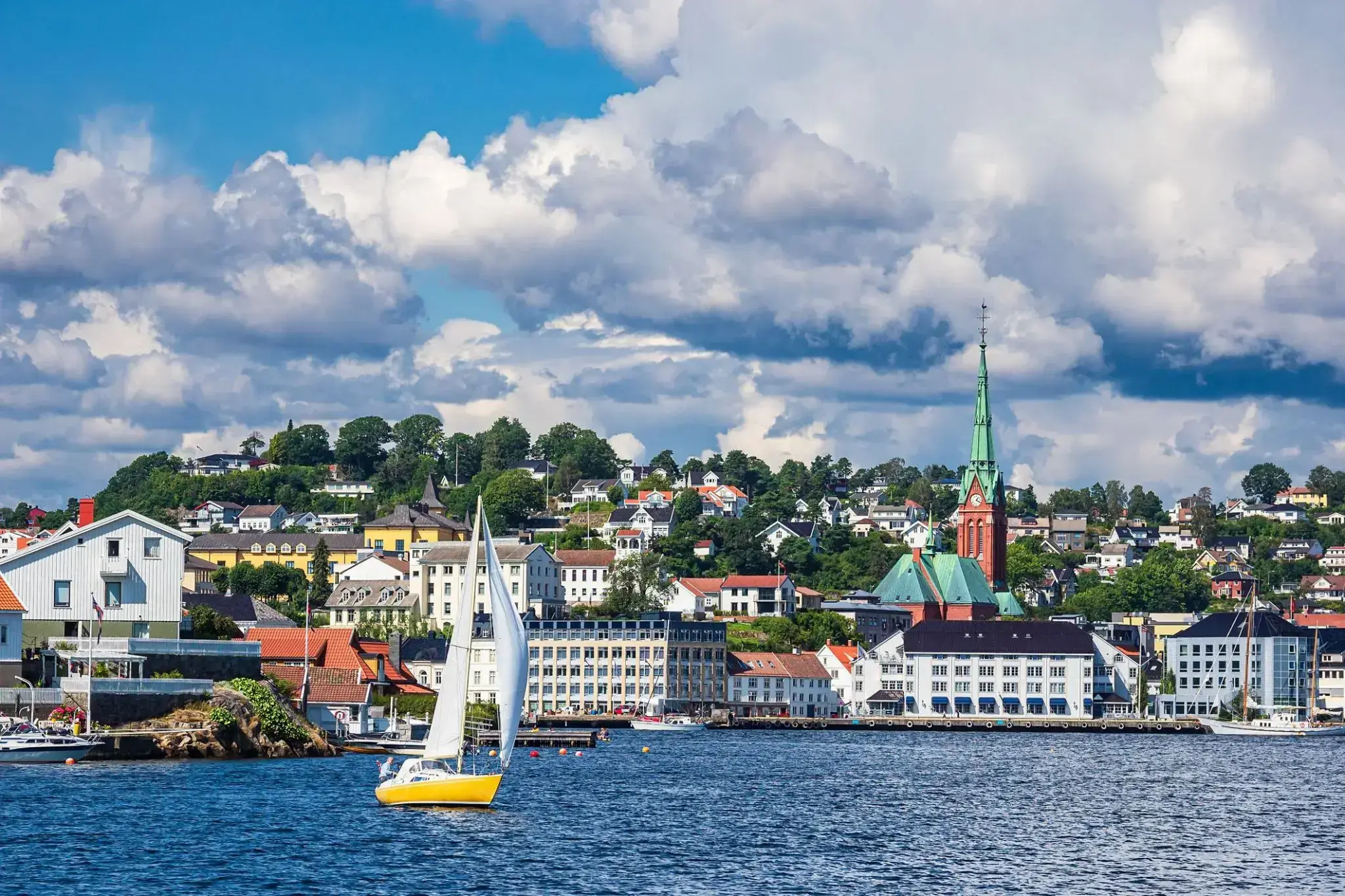
Nestled along the southern coast of Norway, Arendal charms with its cozy maritime atmosphere and historic Scandinavian appeal. This picturesque port town, famous for its colorful wooden houses and narrow streets, is perfect for leisurely strolls and discovering the Norwegian way of life. The Trefoldigheten district, one of the oldest residential areas, features houses dating back to the 18th century.
Arendal also draws visitors with its maritime festivals, museums, and opportunities to explore the nearby archipelago by boat. During summer, the city comes alive with yachts, outdoor cafes, and open-air exhibitions, creating a warm and welcoming vibe. It is a place where nature, history, and modern life blend harmoniously, offering tourists a genuine cultural experience.
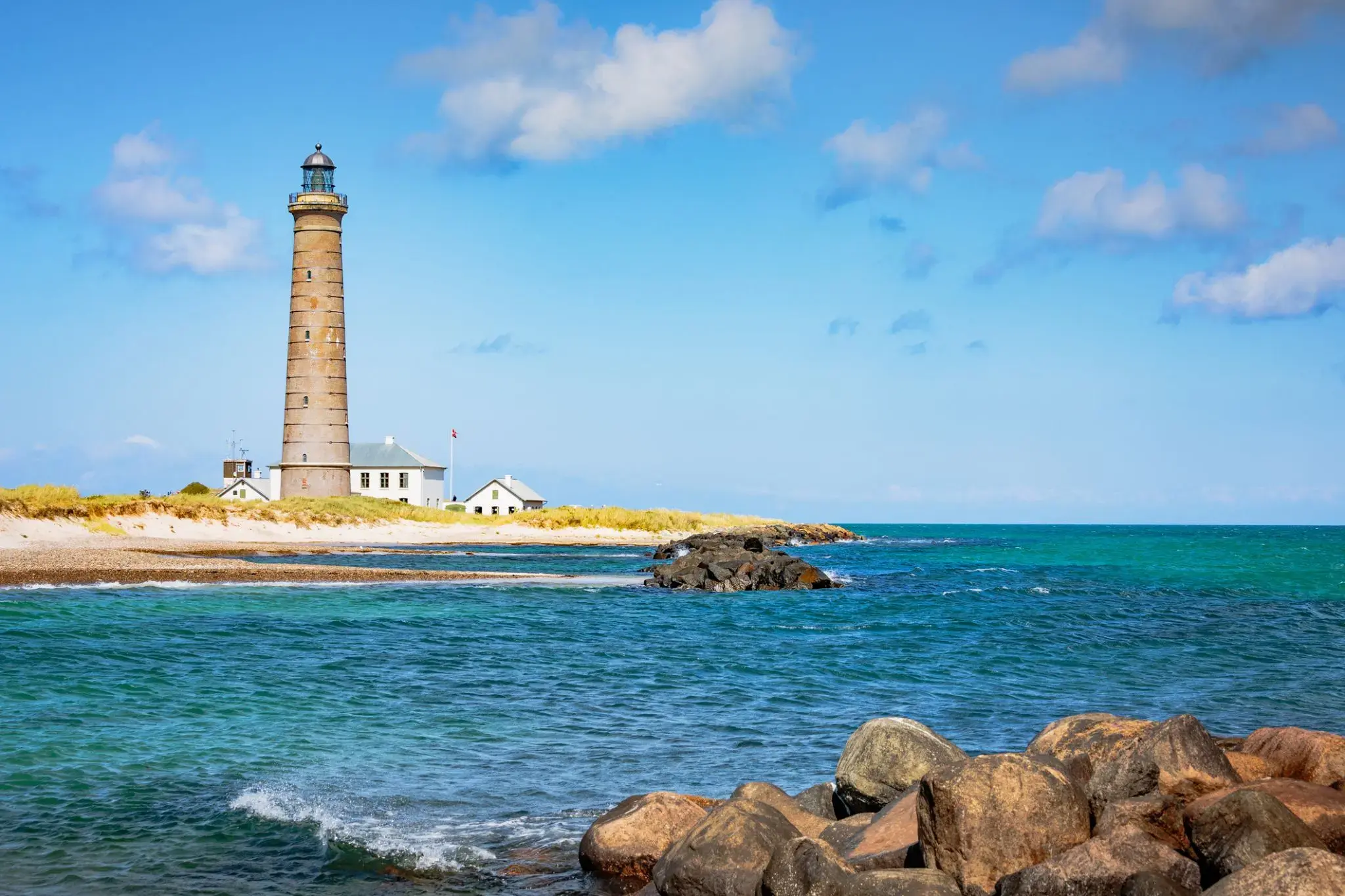
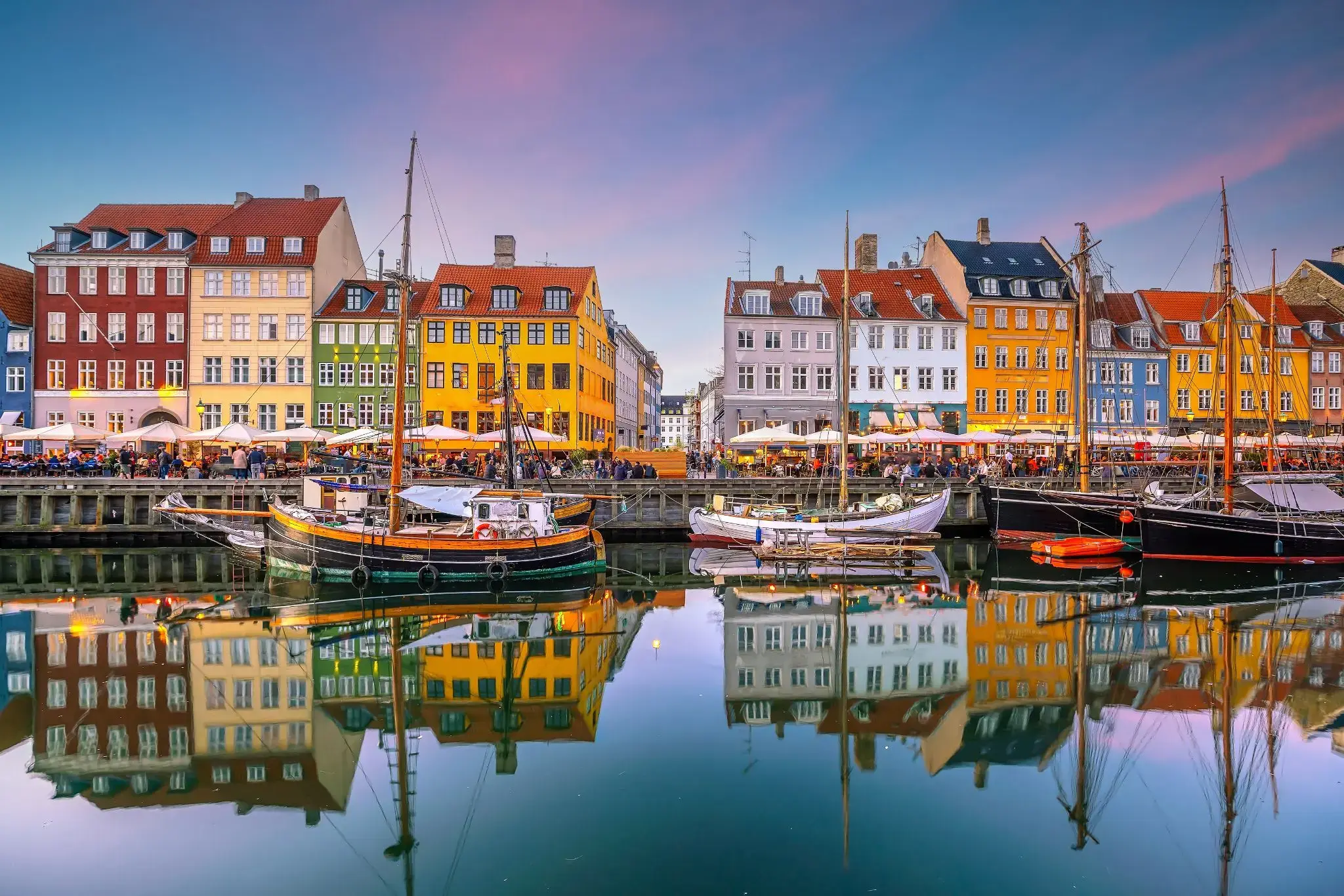
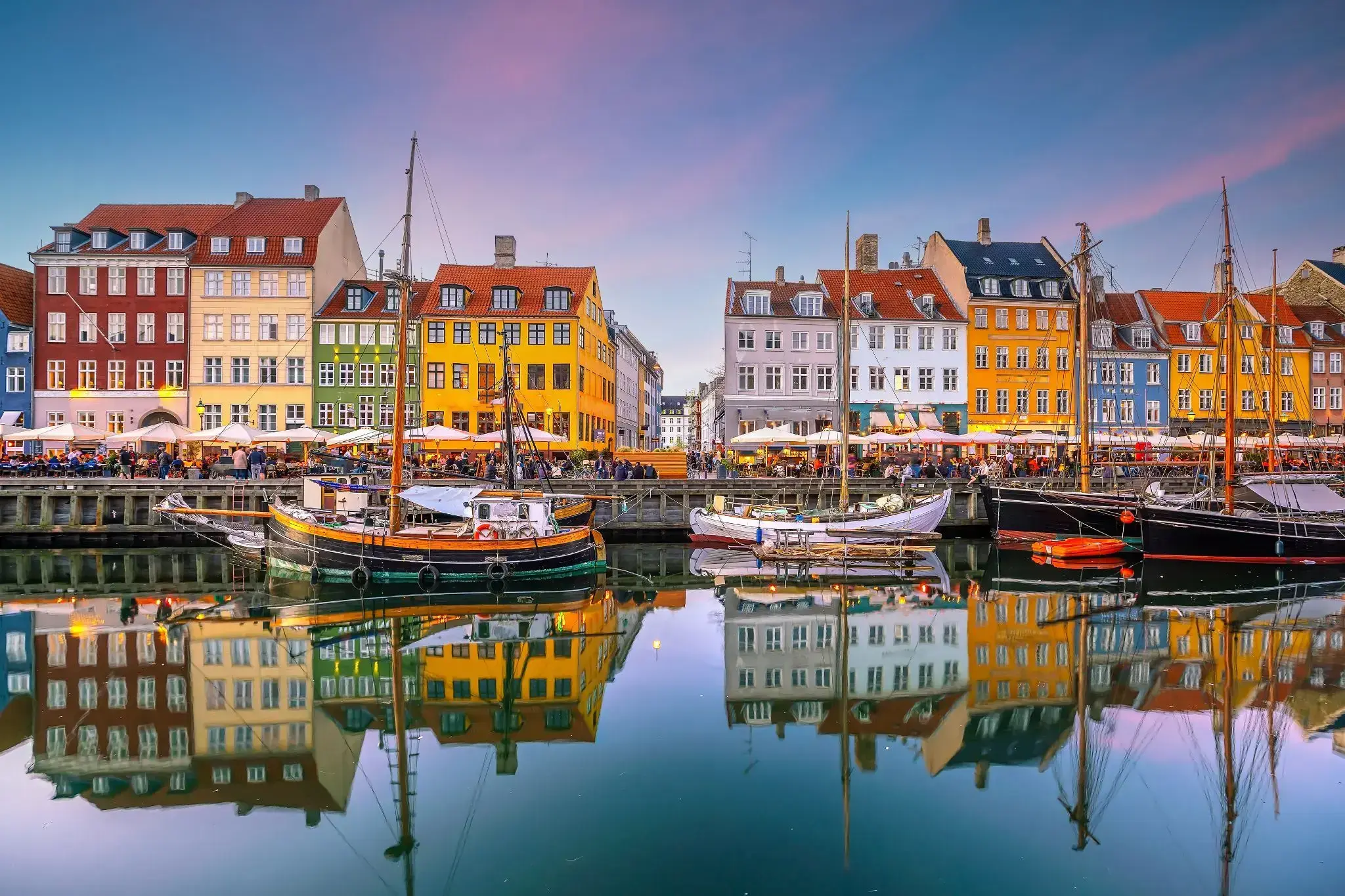
the capital and chief port of Denmark, a city that occupies the eastern part of Zealand and northern part of the island of Amager; population 518,574 (2009).
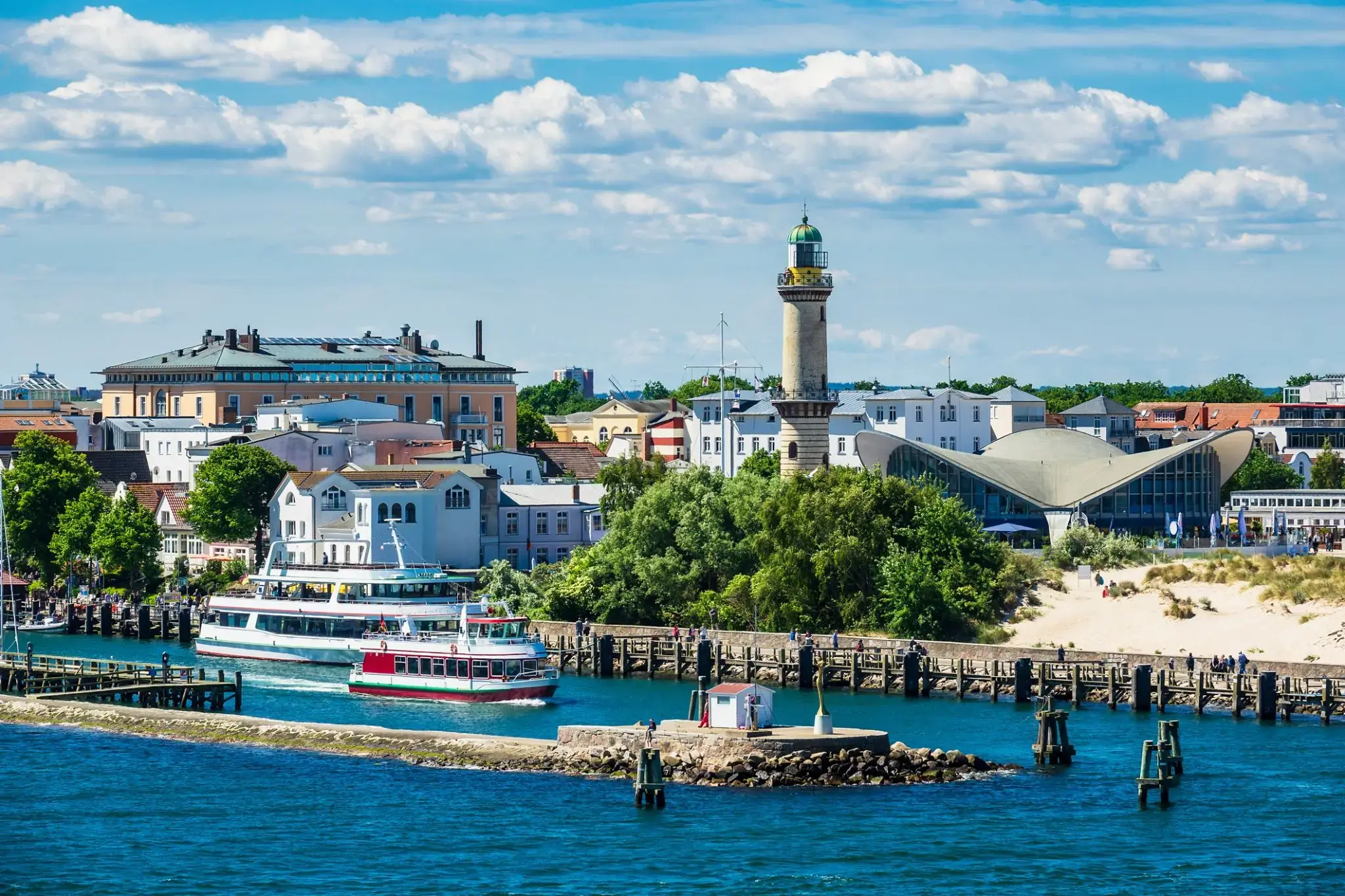
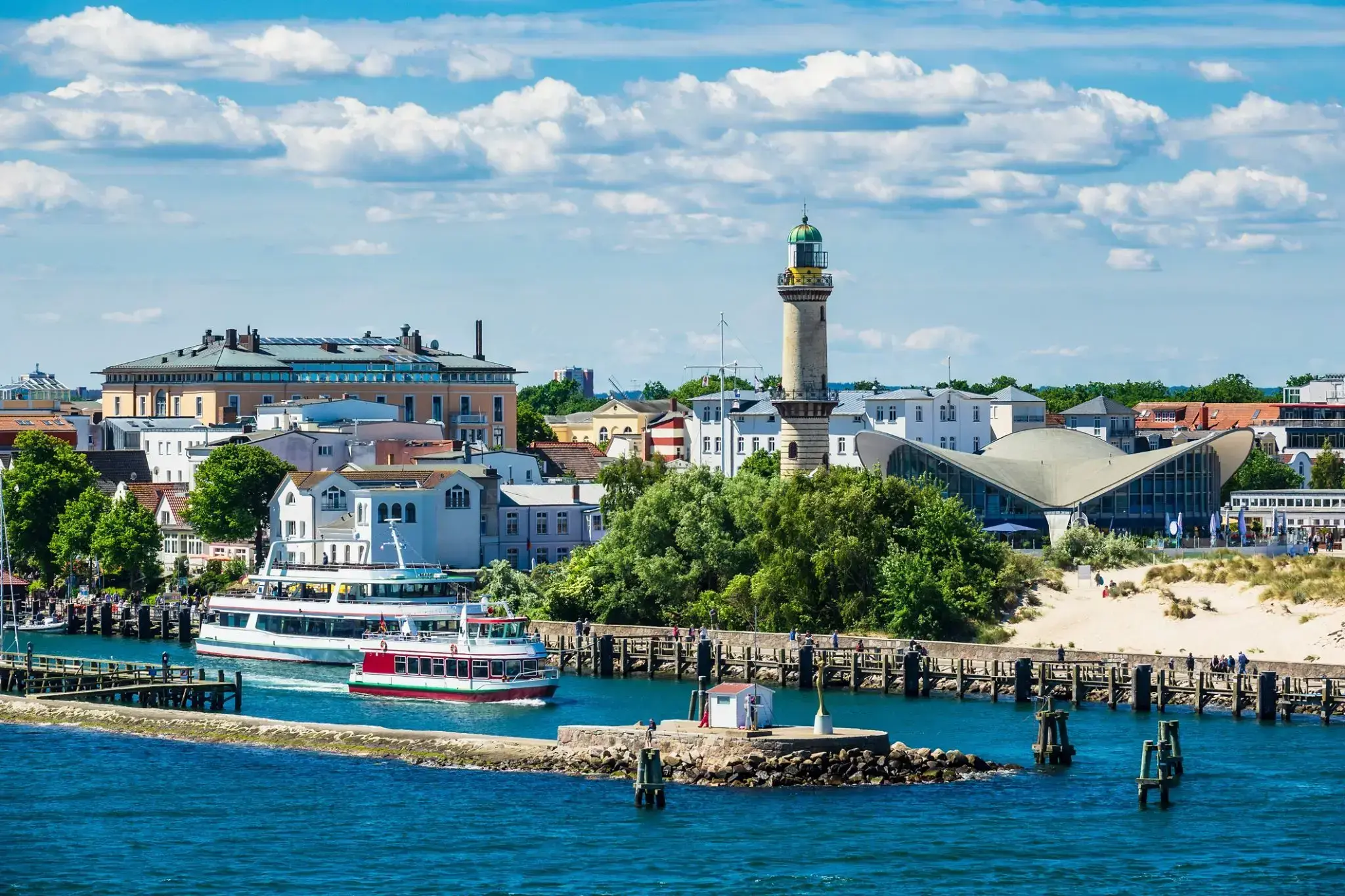
Baltic Sea resort in the northern part of the city of Rostock. The area was named along the Varnov River, which flows into the Baltic Sea here. The sandy beach is Germany's largest Baltic beach.
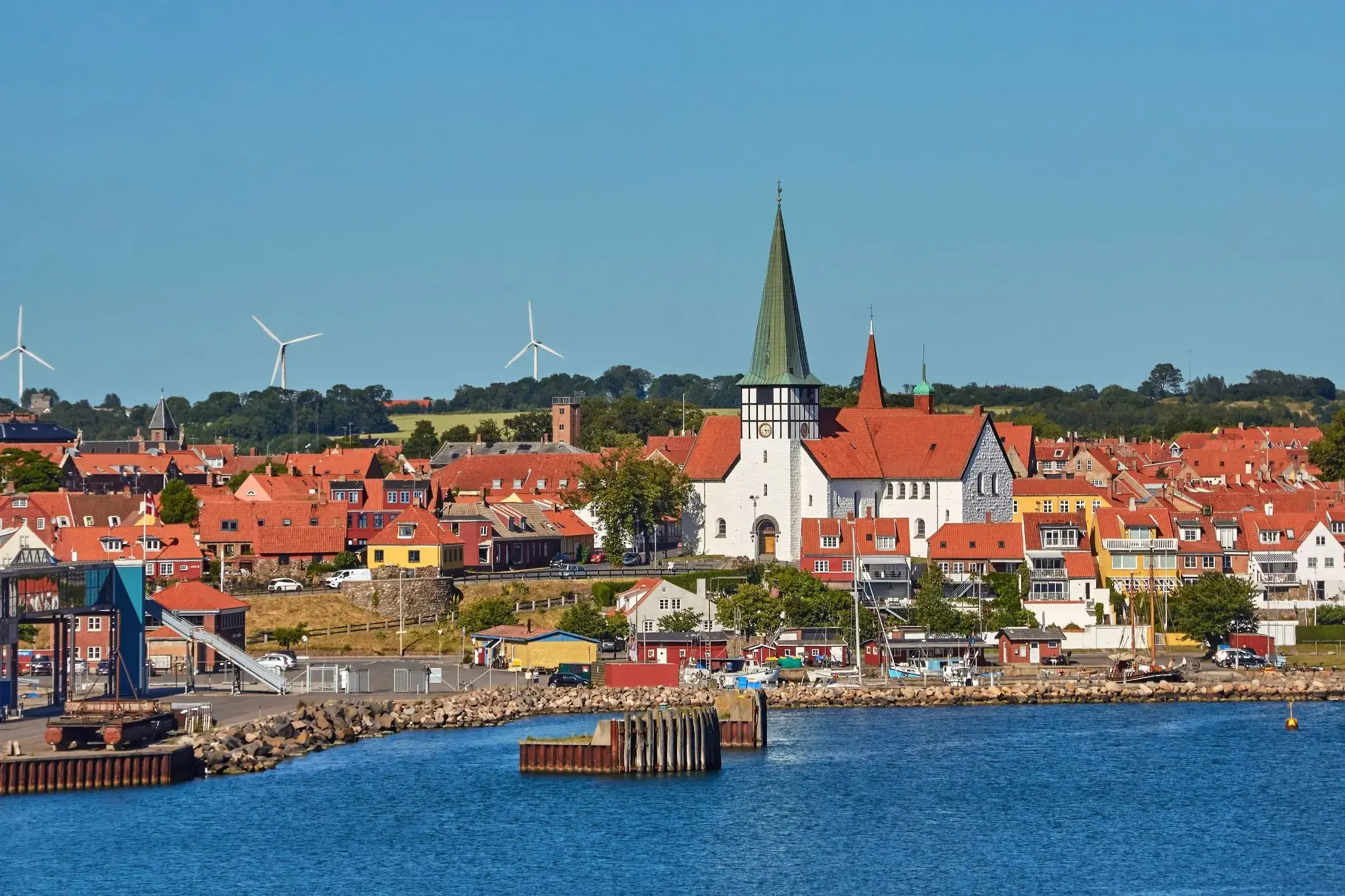
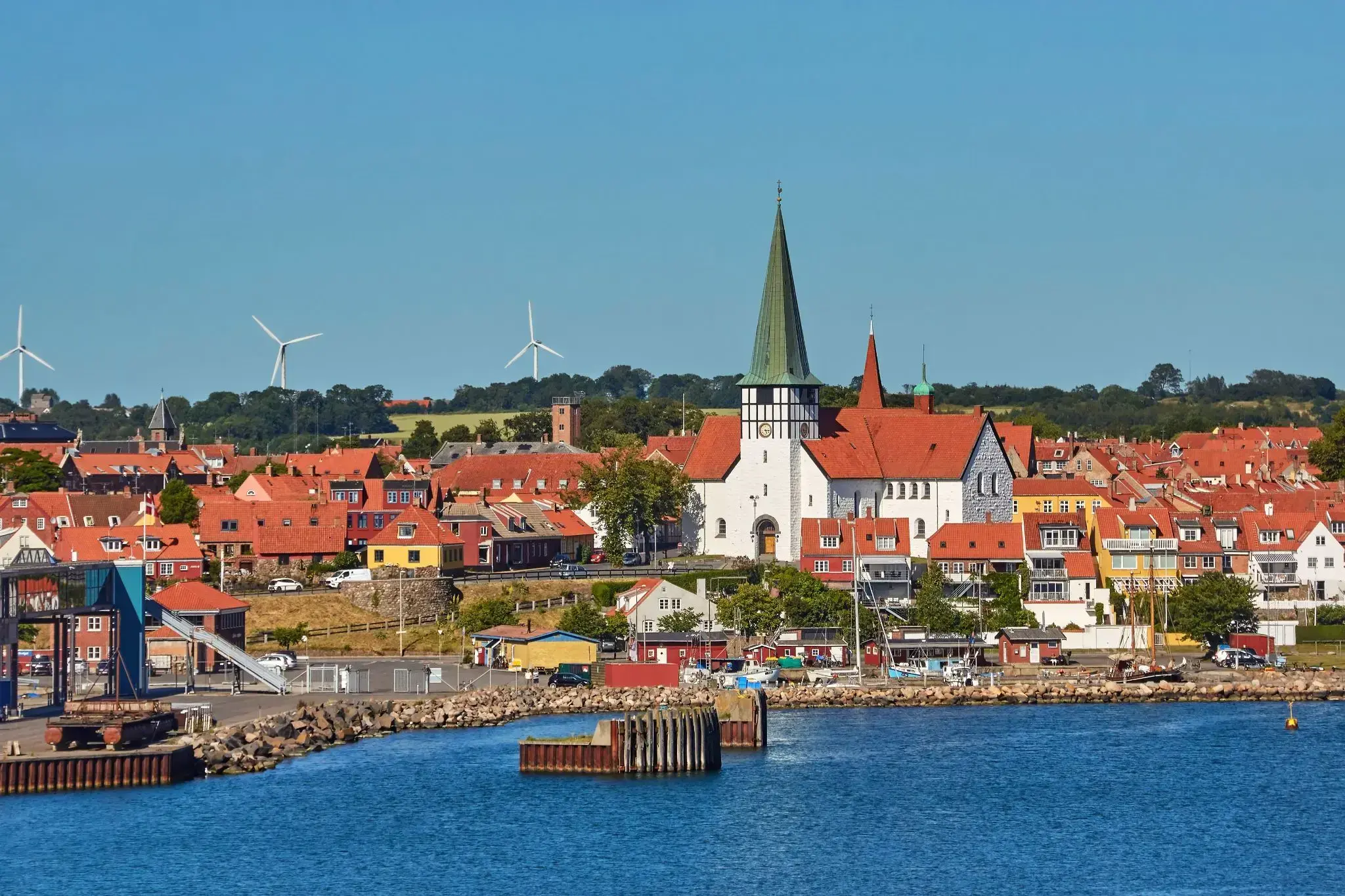
Quiet streets lined with half-timbered houses make Ronne (Rønne) a cozy corner on the Danish island of Bornholm, where every step is filled with the scent of the sea and fresh pastries from local bakeries. The town is known for its ceramics and glass workshops, as well as the cozy atmosphere of its fishing port, where you can taste freshly smoked herring while watching ships slowly enter the harbor. Here, time seems to slow down, allowing you to enjoy strolls through the old town with its cobblestone streets and picturesque houses that have preserved their 18th-century charm.
In Ronne, travelers will find a peaceful retreat with a touch of Danish coziness and the creative spirit of the island. The Bornholm Museum offers insights into the island's history and maritime traditions, while walks along the coast reveal rocky shores and clean beaches inviting relaxation year-round. This town is the perfect place for those who wish to experience authentic Denmark, breathe in the sea air, and discover the warm hospitality of Bornholm.
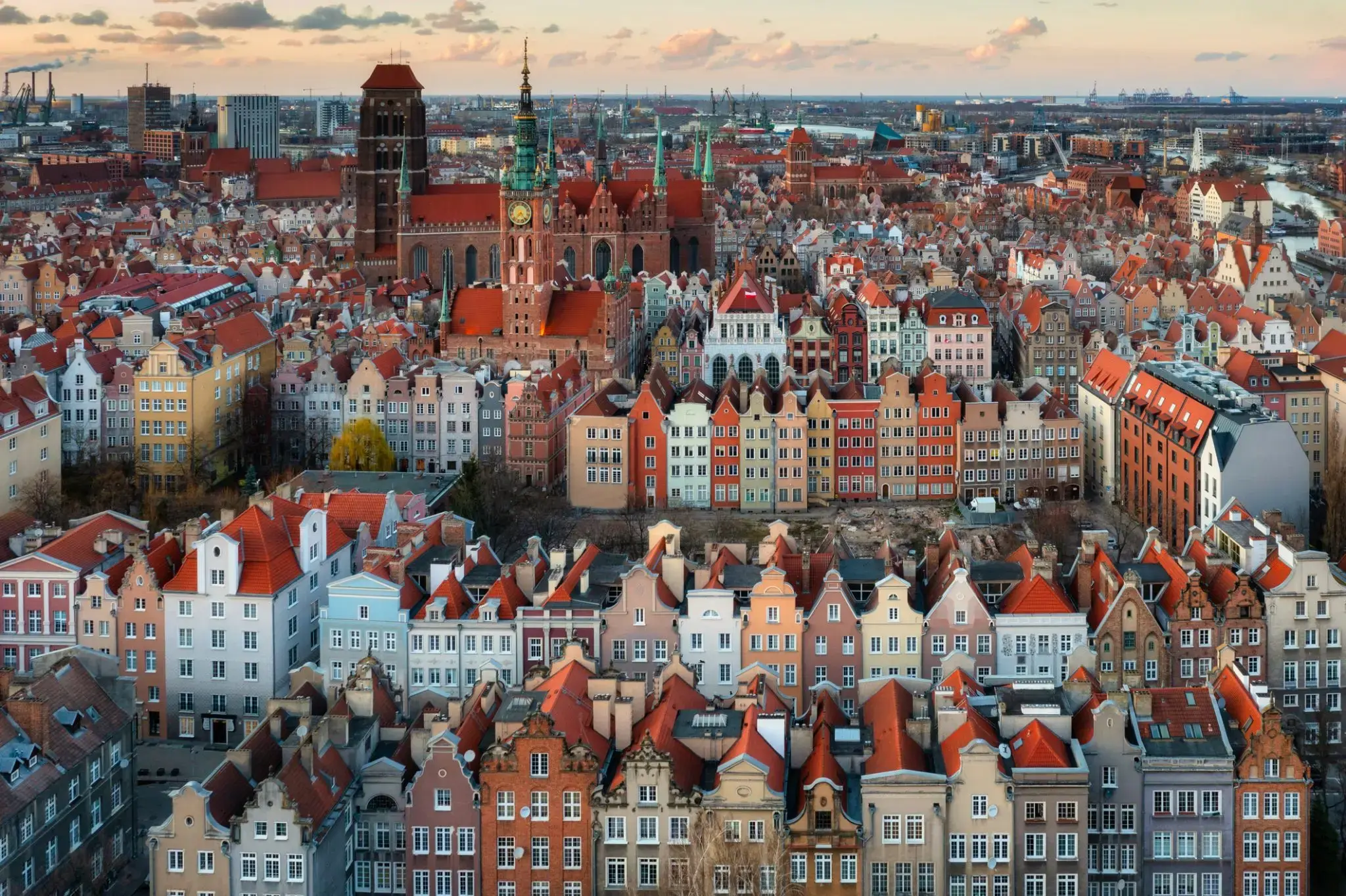
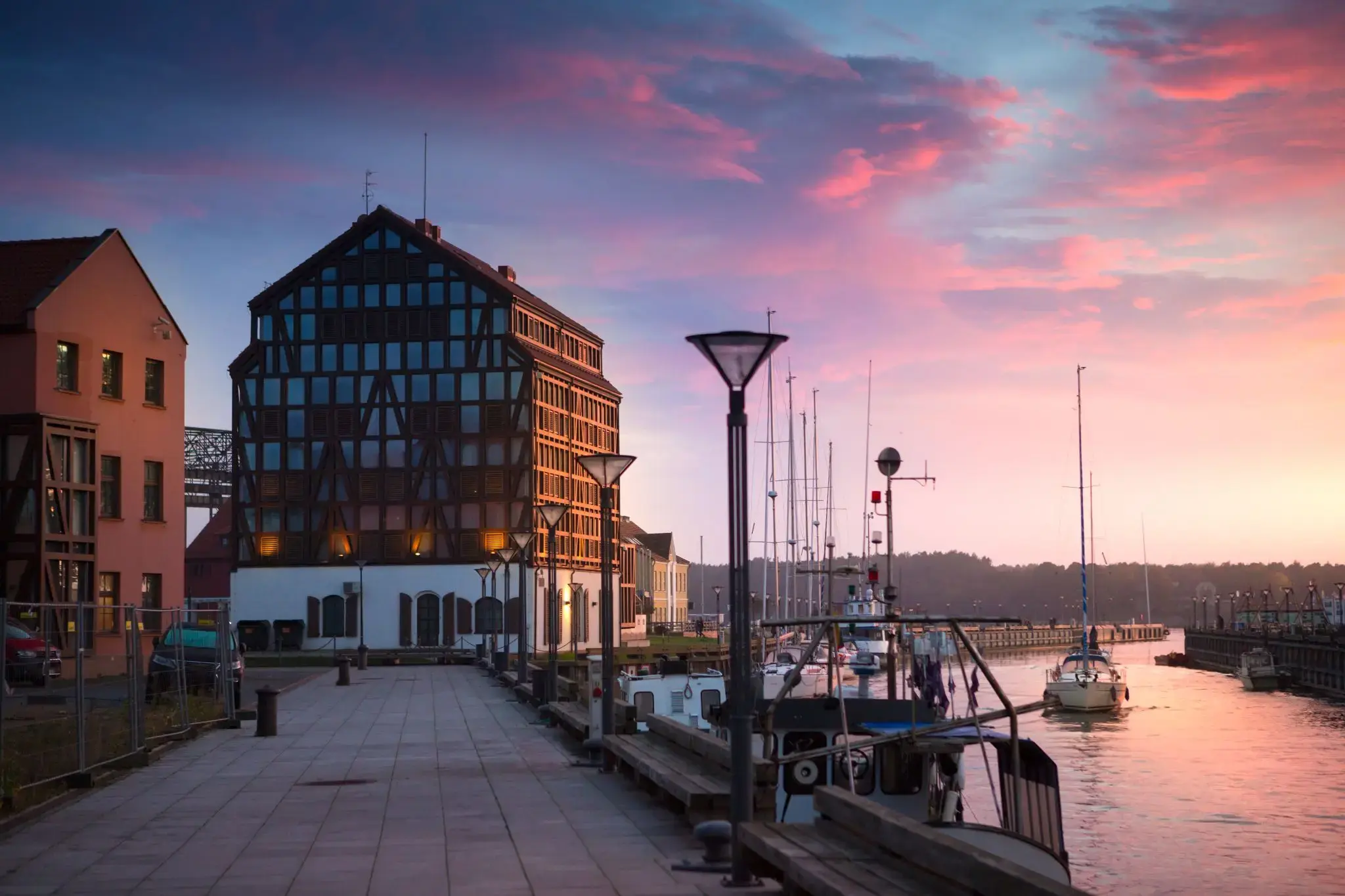
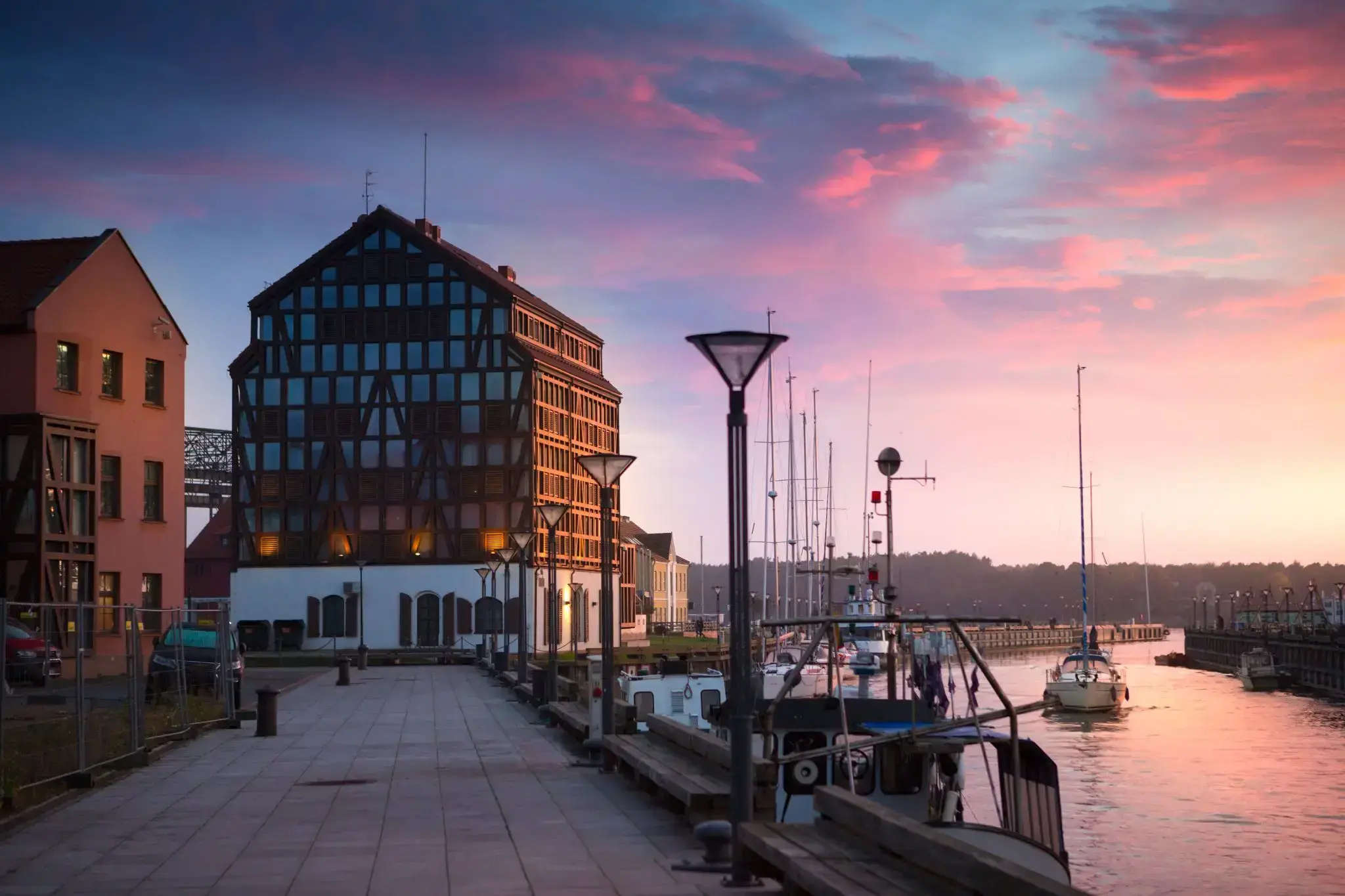
Klaipėda is a city in Lithuania on the Baltic Sea coast. It is the third largest city in Lithuania and the capital of Klaipėda County.
The city has a complex recorded history, partially due to the combined regional importance of the usually ice-free Port of Klaipėda at the mouth of the Akmena-Danė River. It was controlled by successive German states until the 1919 Treaty of Versailles. As a result of the 1923 Klaipėda Revolt it was added to Lithuania and has remained with Lithuania to this day, except for the period between 1939 and 1945 when it returned to Germany following the 1939 German ultimatum to Lithuania and the German–Soviet Union Molotov–Ribbentrop Pact.
The population has shrunk from the city to suburbs and the hinterland. The city had a population of 207,100 in 1992 to 157,350 in 2014 but the city is growing again. Popular seaside resorts found close to Klaipėda are Nida to the south on the Curonian Spit and Palanga to the north.
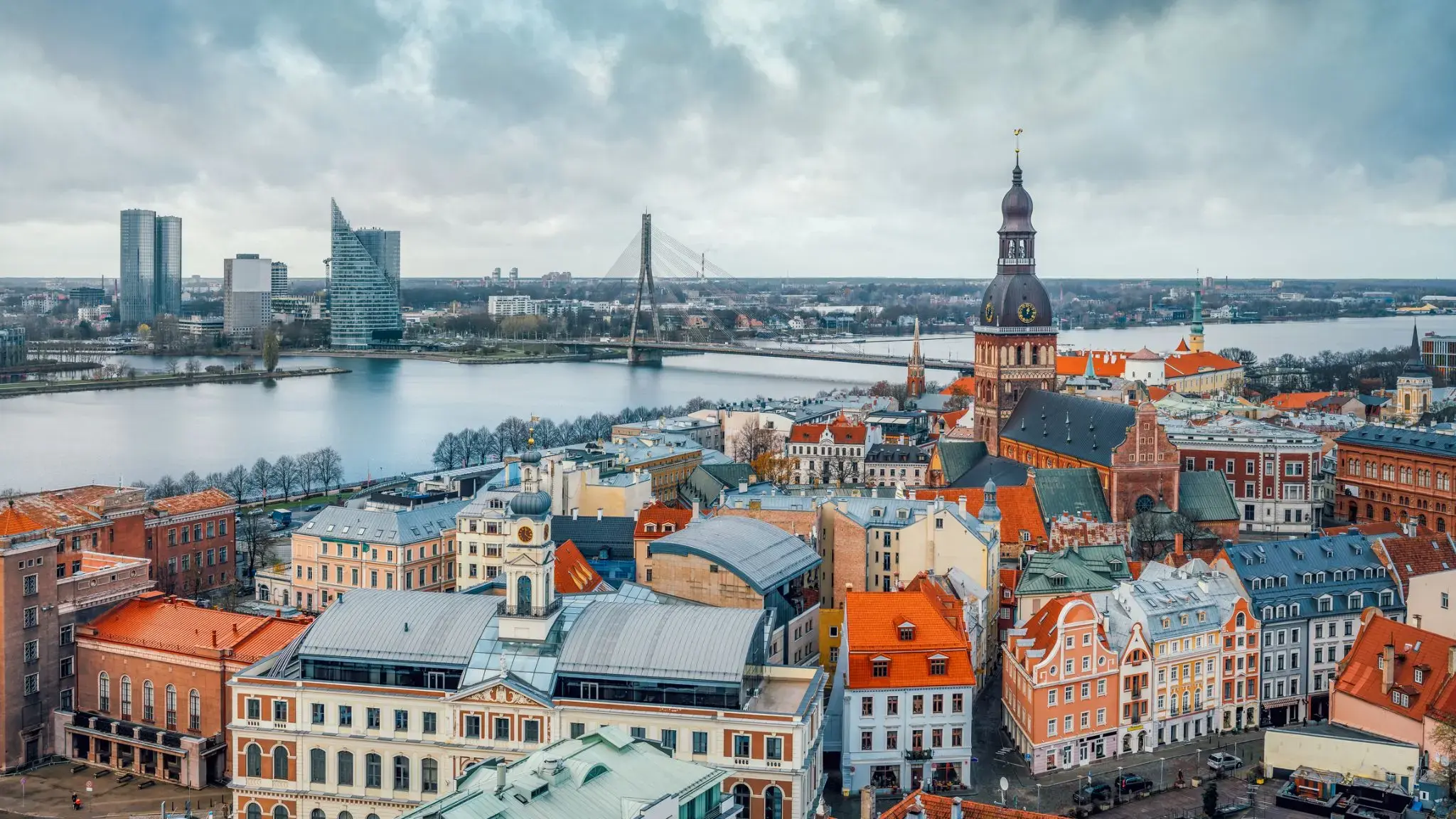
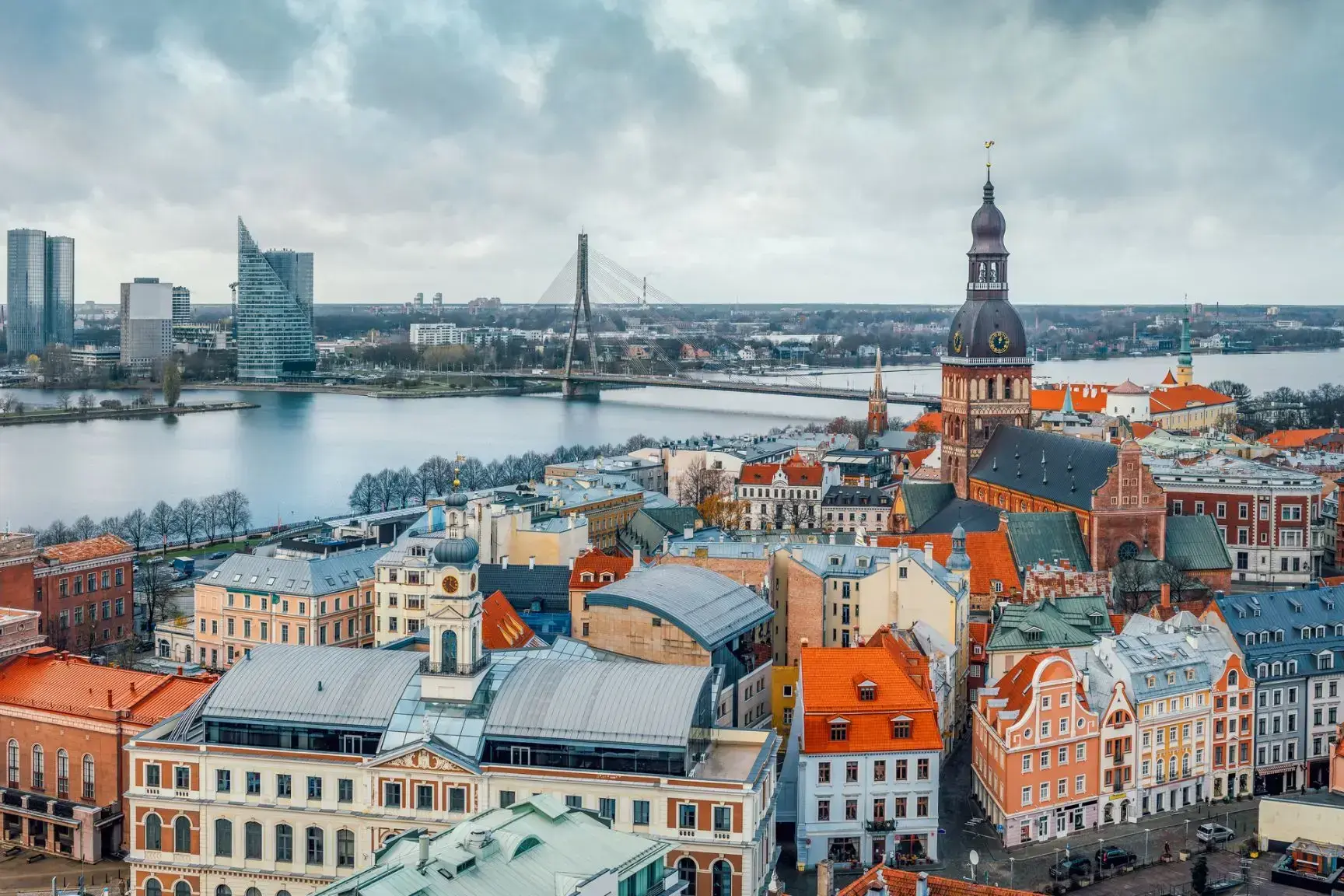
Riga is the capital and largest city of Latvia. With 637,827 inhabitants (2018), it is also the largest city in the three Baltic states, home to one third of Latvia's population and one tenth of the three Baltic states' combined population. The city lies on the Gulf of Riga, at the mouth of the Daugava. Riga's territory covers 307.17 km2 (118.60 sq mi) and lies 1–10 m (3 ft 3 in–32 ft 10 in) above sea level, on a flat and sandy plain.
Riga was founded in 1201 and is a former Hanseatic League member. Riga's historical centre is a UNESCO World Heritage Site, noted for its Art Nouveau/Jugendstil architecture and 19th century wooden architecture. Riga was the European Capital of Culture during 2014, along with Umeå in Sweden. Riga hosted the 2006 NATO Summit, the Eurovision Song Contest 2003, the 2006 IIHF Men's World Ice Hockey Championships and the 2013 World Women's Curling Championship. It is home to the European Union's office of European Regulators for Electronic Communications (BEREC).
In 2016, Riga received over 1.4 million visitors. It is served by Riga International Airport, the largest and busiest airport in the Baltic states. Riga is a member of Eurocities, the Union of the Baltic Cities (UBC) and Union of Capitals of the European Union (UCEU).
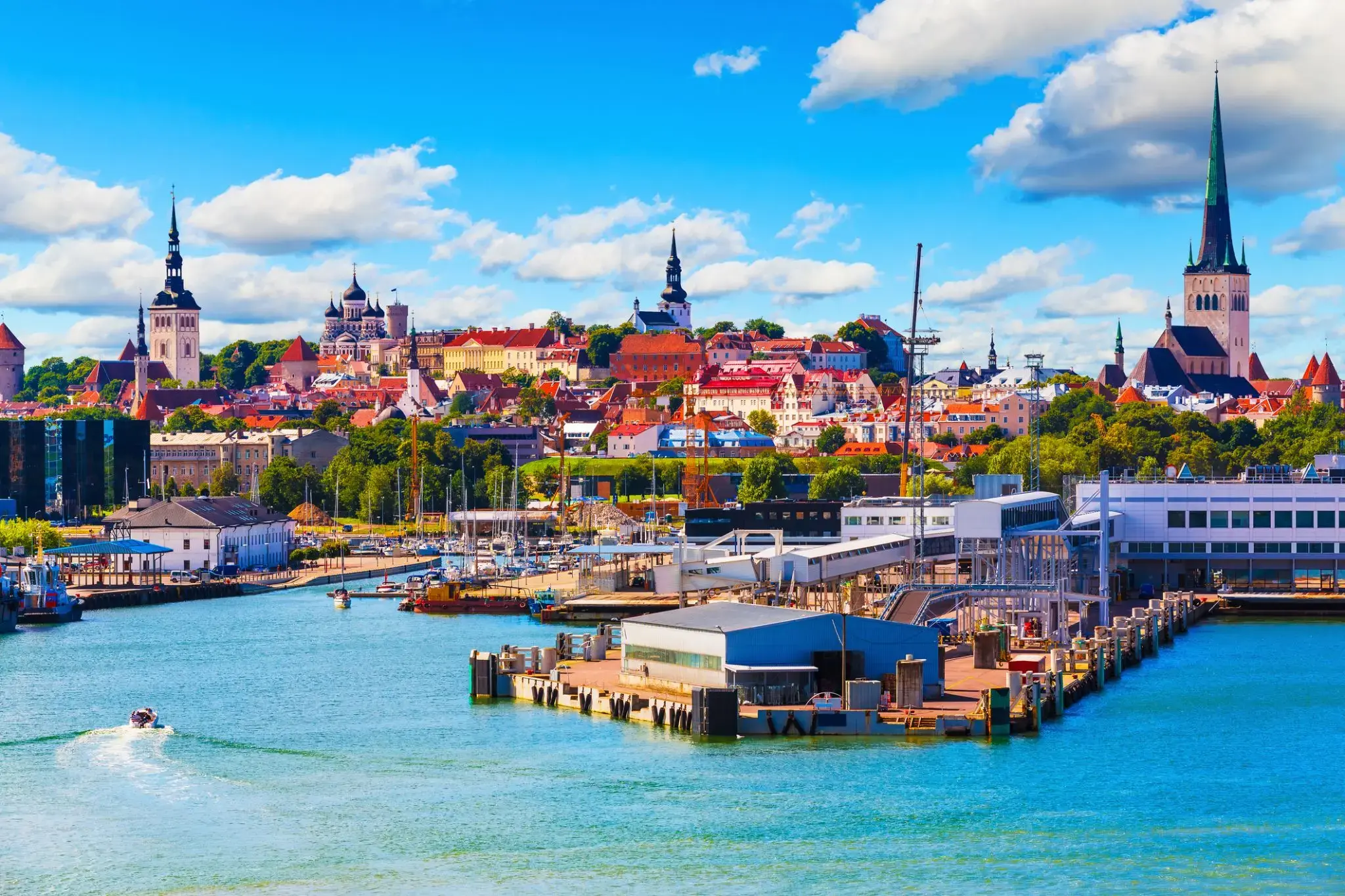
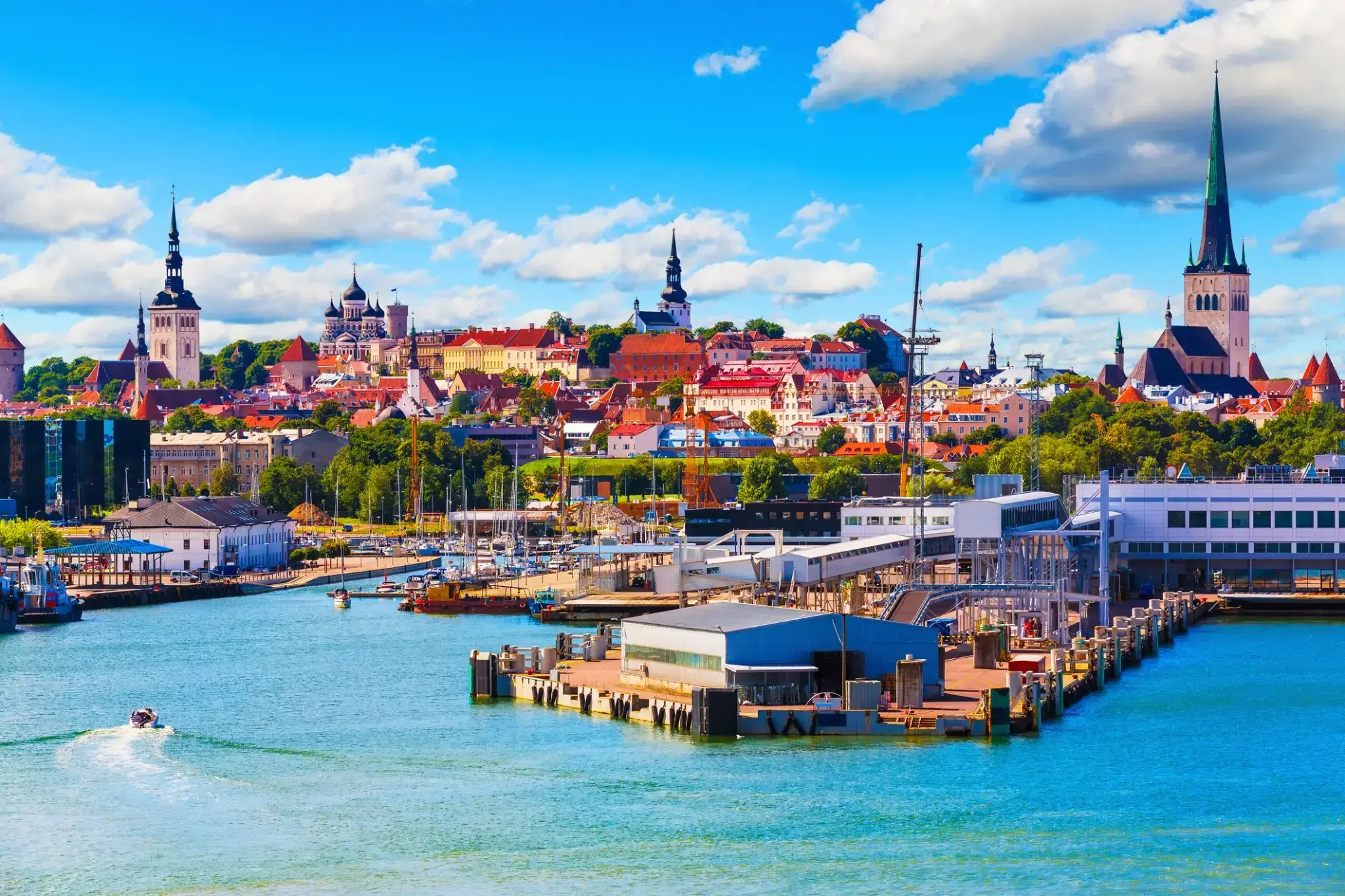
Tallinn is the capital and largest city of Estonia. It is on the northern coast of the country, on the shore of the Gulf of Finland in Harju County. From the 13th century until 1918 (and briefly during the Nazi occupation of Estonia from 1941 to 1944), the city was known as Reval. Tallinn occupies an area of 159.2 km2 (61.5 sq mi) and has a population of 453,033.
Tallinn, first mentioned in 1219, received city rights in 1248, but the earliest human settlements date back 5,000 years. The initial claim over the land was laid by the Danes in 1219, after a successful raid of Lindanise led by Valdemar II of Denmark, followed by a period of alternating Scandinavian and German rule. Due to its strategic location, the city became a major trade hub, especially from the 14th to the 16th century, when it grew in importance as part of the Hanseatic League.
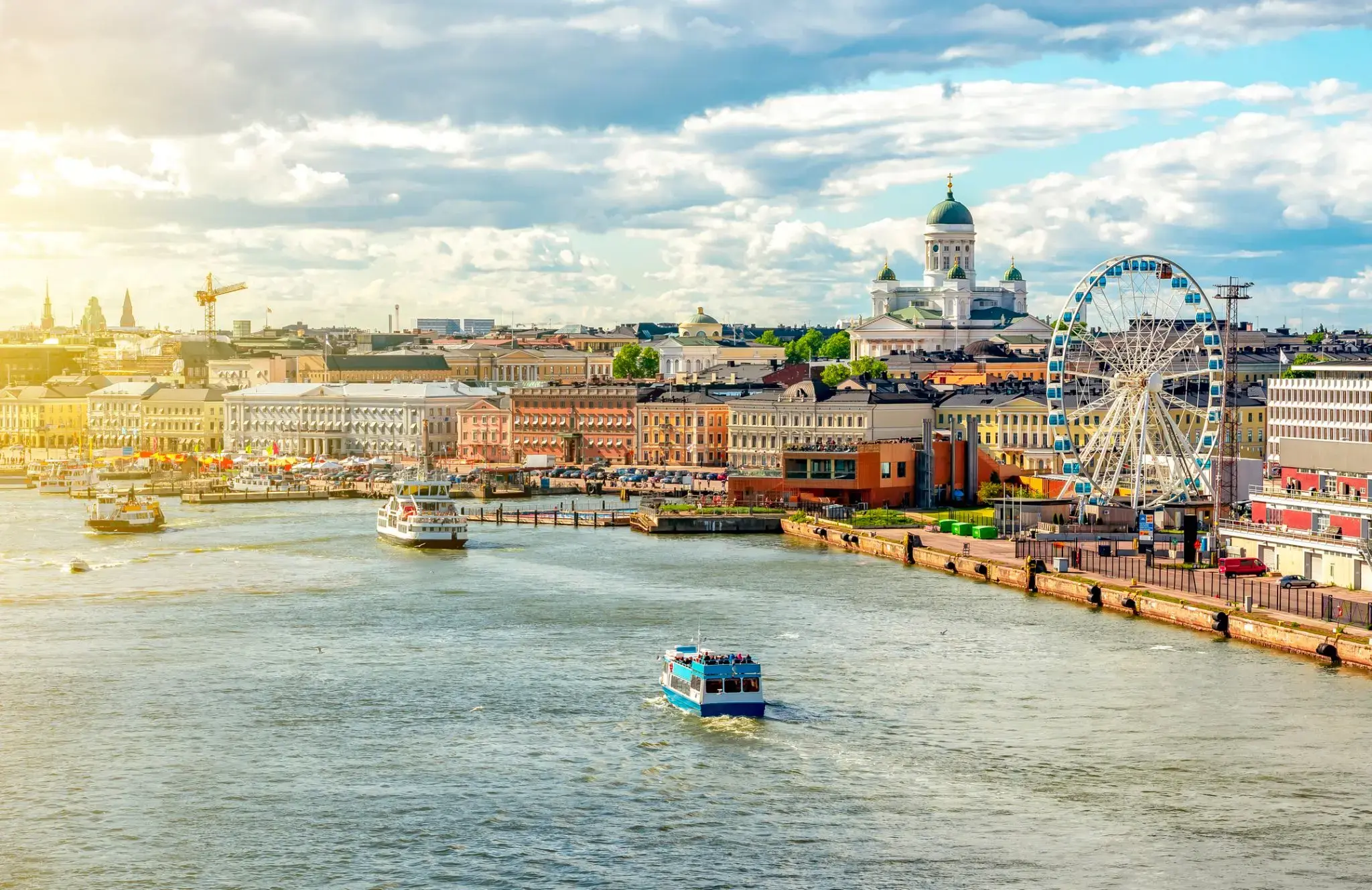
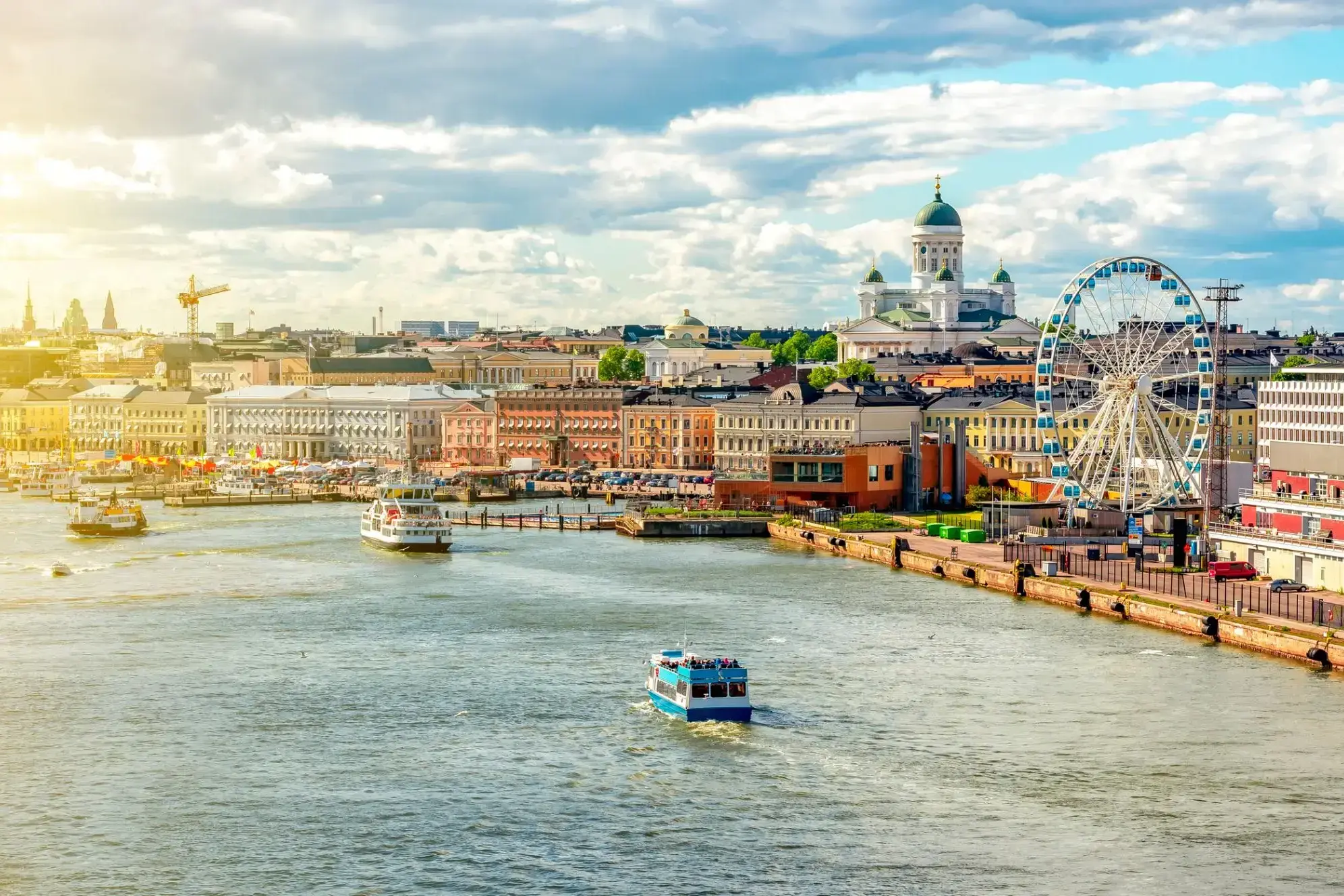
Helsinki located in the southern Finland, and has a population of 648,650. The city's urban area has a population of 1,268,296, it’s the most important center for politics, education, finance, culture, and research. Helsinki is located 80 kilometers (50 mi) north of Tallinn, Estonia, 400 km (250 mi) east of Stockholm, Sweden, and 390 km (240 mi) west of Saint Petersburg, Russia. It has close ties with these three cities.
Together with the cities of Espoo, Vantaa, and Kauniainen, and the surrounding commuter towns, Helsinki forms the Greater Helsinki metropolitan area, which has a population of nearly 1.5 million. Often being considered a metropolis of the EU member state. After Stockholm and Oslo, Helsinki is the third largest city in the Nordic countries. It is located in the city of Vantaa and is located in the city of Vantaa.
Helsinki was the World Design Capital for 2012, the 1952 Summer Olympics and the 52nd Eurovision Song Contest.
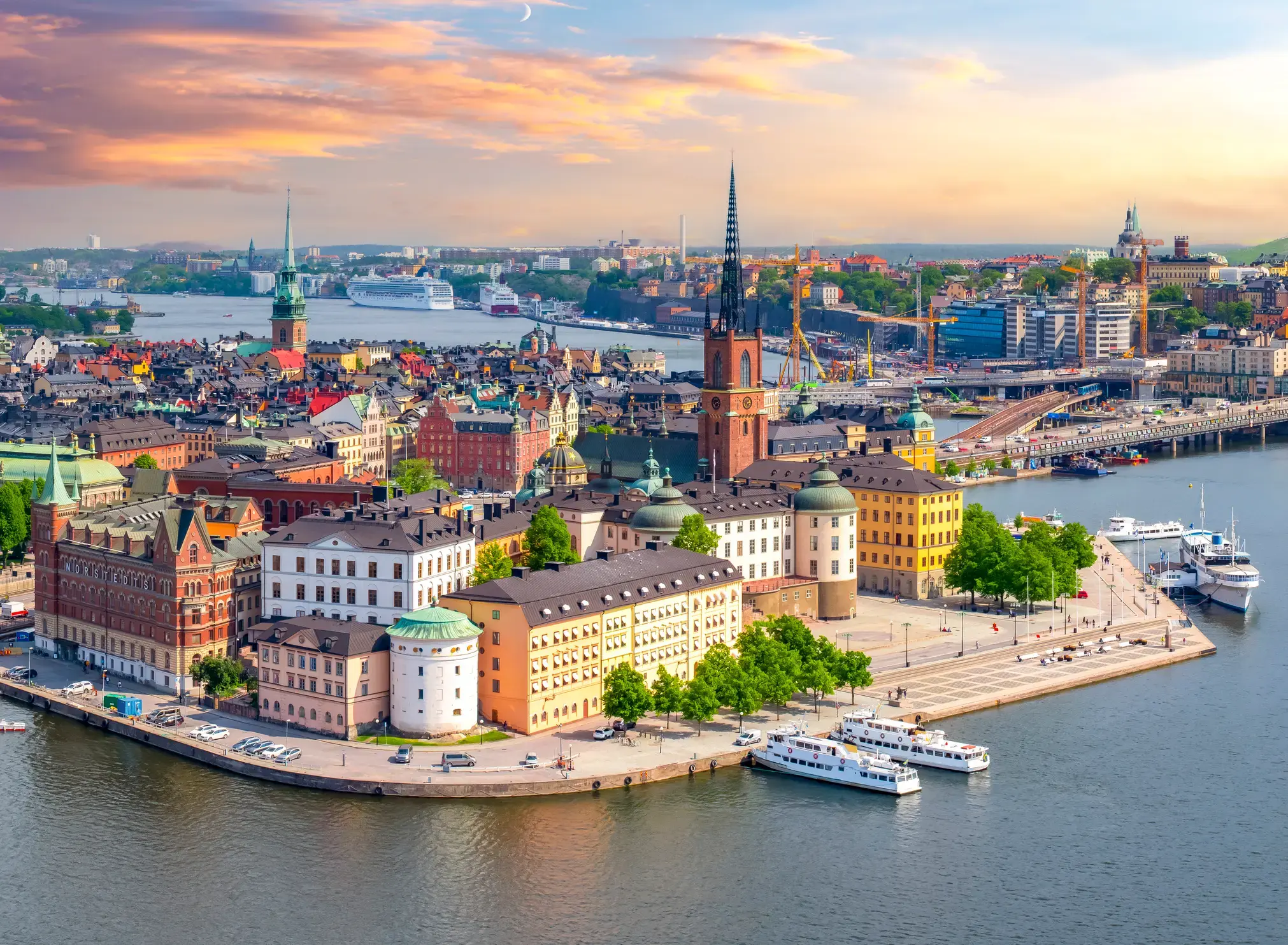
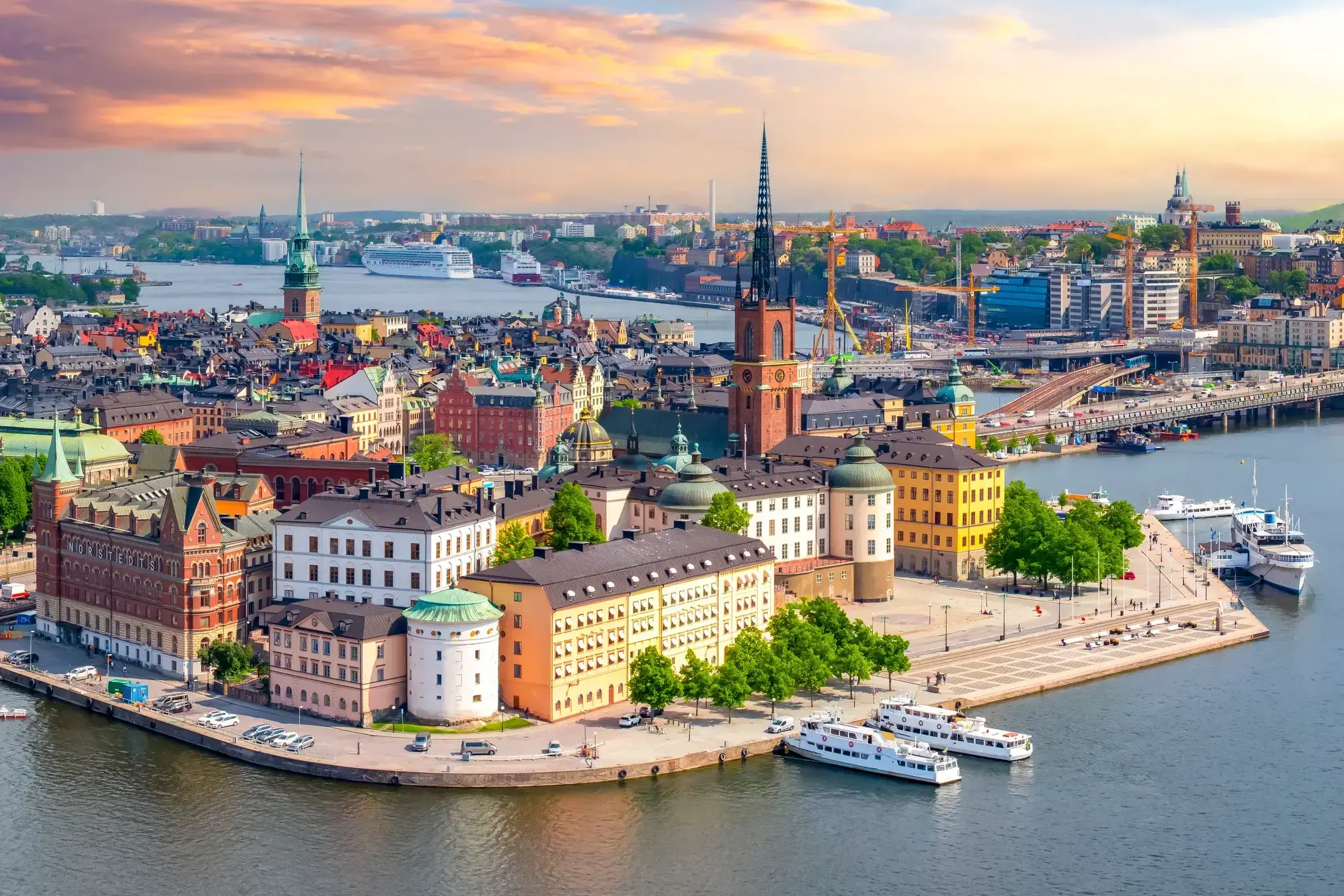
Stockholm is the capital of Sweden and the most populous urban area in the Nordic countries; 960,031 people live in the municipality, approximately 1.5 million in the urban area, and 2.3 million in the metropolitan area. The city stretches across fourteen islands where Lake Mälaren flows into the Baltic Sea. Just outside the city and along the coast is the island chain of the Stockholm archipelago. The area has been settled since the Stone Age, in the 6th millennium BC, and was founded as a city in 1252 by Swedish statesman Birger Jarl. It is also the capital of Stockholm County.
Stockholm is the cultural, media, political, and economic centre of Sweden. The Stockholm region alone accounts for over a third of the country's GDP, and is among the top 10 regions in Europe by GDP per capita. It is an important global city, and the main centre for corporate headquarters in the Nordic region. The city is home to some of Europe's top ranking universities, such as the Stockholm School of Economics, Karolinska Institute and Royal Institute of Technology (KTH). It hosts the annual Nobel Prize ceremonies and banquet at the Stockholm Concert Hall and Stockholm City Hall. One of the city's most prized museums, the Vasa Museum, is the most visited non-art museum in Scandinavia. The Stockholm metro, opened in 1950, is well known for the decor of its stations; it has been called the longest art gallery in the world. Sweden's national football arena is located north of the city centre, in Solna. Ericsson Globe, the national indoor arena, is in the southern part of the city. The city was the host of the 1912 Summer Olympics, and hosted the equestrian portion of the 1956 Summer Olympicsotherwise held in Melbourne, Victoria, Australia.
Stockholm is the seat of the Swedish government and most of its agencies, including the highest courts in the judiciary, and the official residencies of the Swedish monarch and the Prime Minister. The government has its seat in the Rosenbad building, the Riksdag (Swedish parliament) is seated in the Parliament House, and the Prime Minister's residence is adjacent at Sager House. Stockholm Palace is the official residence and principal workplace of the Swedish monarch, while Drottningholm Palace, a World Heritage Site on the outskirts of Stockholm, serves as the Royal Family's private residence.
Stockholm is the capital of Sweden and the most populous urban area in the Nordic countries; 960,031 people live in the municipality, approximately 1.5 million in the urban area, and 2.3 million in the metropolitan area. The city stretches across fourteen islands where Lake Mälaren flows into the Baltic Sea. Just outside the city and along the coast is the island chain of the Stockholm archipelago. The area has been settled since the Stone Age, in the 6th millennium BC, and was founded as a city in 1252 by Swedish statesman Birger Jarl. It is also the capital of Stockholm County.
Stockholm is the cultural, media, political, and economic centre of Sweden. The Stockholm region alone accounts for over a third of the country's GDP, and is among the top 10 regions in Europe by GDP per capita. It is an important global city, and the main centre for corporate headquarters in the Nordic region. The city is home to some of Europe's top ranking universities, such as the Stockholm School of Economics, Karolinska Institute and Royal Institute of Technology (KTH). It hosts the annual Nobel Prize ceremonies and banquet at the Stockholm Concert Hall and Stockholm City Hall. One of the city's most prized museums, the Vasa Museum, is the most visited non-art museum in Scandinavia. The Stockholm metro, opened in 1950, is well known for the decor of its stations; it has been called the longest art gallery in the world. Sweden's national football arena is located north of the city centre, in Solna. Ericsson Globe, the national indoor arena, is in the southern part of the city. The city was the host of the 1912 Summer Olympics, and hosted the equestrian portion of the 1956 Summer Olympicsotherwise held in Melbourne, Victoria, Australia.
Stockholm is the seat of the Swedish government and most of its agencies, including the highest courts in the judiciary, and the official residencies of the Swedish monarch and the Prime Minister. The government has its seat in the Rosenbad building, the Riksdag (Swedish parliament) is seated in the Parliament House, and the Prime Minister's residence is adjacent at Sager House. Stockholm Palace is the official residence and principal workplace of the Swedish monarch, while Drottningholm Palace, a World Heritage Site on the outskirts of Stockholm, serves as the Royal Family's private residence.